Home Blog Page 399

Maharashtra poll results show there’s a limit to electoral tricks

1

Over the last 30 to 40 years Indian politics had slid into an era of power coalitions. Two reasons stand out, if we go to the roots of this shift: Loss in credibility of national leaderships that was caused by power-led corruption (Congress); And the inability to win nation’s confidence by alternatives till the 1990s (BJP). So, this is how it began– the meteoric rise of regional leaderships at state levels. Unfortunately, regional politics instead of being driven by genuine larger vision, simply became a localized-version of corruption, as in national-politics.

When tall trees begin to diminish their stature, mushroom-like pigmies naturally begin to look big. What else but caste-driven divisive politics could have been expected from these narrow minded leaderships? Limited in their vision, they opted to align with communities they knew best (for survival and growth), while destroying the long existing harmonious social-fabric for quick political gains. National leadership also, instead of guarding against fatal aberrations, began to delve in these divisive games. They failed the nation, once again, in worse ways. First, by power-led corruption, and next by dividing the society through caste-based politics. Ideologies became merely convenient empty facades to hide behind, when opportunism faltered in outdoing rivals.

It is amazing how even exemplary individuals having the fervour of doing larger good succumb to selfishness to such extents that the nation is doomed, time and again. Barring a few handful exceptions, this is the real story of politicians in India today. If anything changes, it is just the further slide in their character.

It is in this larger context, that we need to review the current political scenario in Maharashtra. So much so that we may consider this as an opportunity to begin turning the political tide in India upside down: From “any-how election-winning machinations” to “rise of genuine political leaderships”!

Today the BJP, in whatever form, is blessed with personally spotless leadership, which has been nurtured under the spiritual wings of RSS (Rashtriya Swayamsevak Sangh). Can it dare to initiate a new era in politics? Why should it not cleanse from within, in every sense and at all levels? How long the nation would remain a victim of hypocrisy in politics? On one hand, they talk of Deendayal Upadhyaya and Shyama Prasad Mukherjee, their valour and integrity and on the other hand they simply surrender to the dictum that “winnability in elections cannot be achieved by integrity-driven individuals”! Is this lack of self-confidence or no faith in citizens, or both?

New breed of youth are rising in the country with genuine aspirations for self and society. If the nation has to make a true mark in the world, it simply cannot happen without first ensuring integrity at its core. Destiny has given a blunt shock to BJP through the Maharashtra elections, and a clear message too. This is the limit to growth, through electoral politics of machinations. One cannot go any further through this route, as in the game of pygmies. There is no shortage of talented and experienced ones in the country, nor there ever will be. Yet, if not treaded righteously the nation will revert back to similar ‘dirty’ coalition era, once again!

It’s time for India to rise, above board, politically too! Can BJP dare?
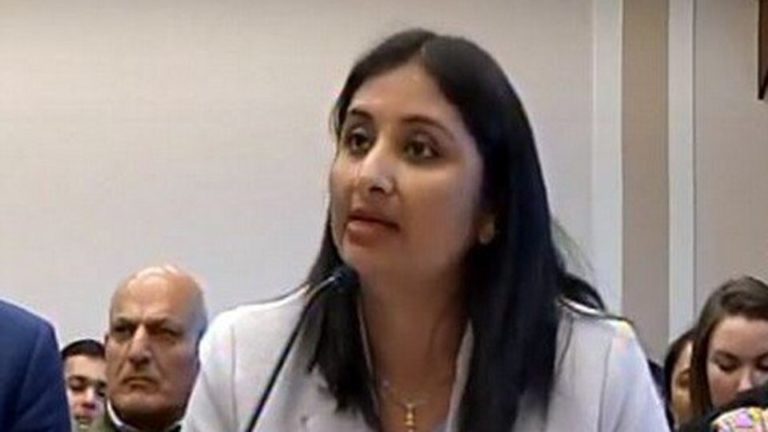
US Congressional “bipartisan” hearing on Kashmir stands exposed

0

A remarkable narration by Sunanda Vashisht, about Pakistan-sponsored barbarism in Kashmir in 1990 that led to the exodus of Kashmiri Pandit community from their millennium-old homeland, deserves the highest accolades. Vashisht is a Kashmiri columnist and political commentator and she rendered this significant commentary at a US Congressional Hearing (Tom Lantos Human Rights Commission) on November 15th, 2019. She was brutal, blunt, and logical in telling the absolute truth. “I am glad these hearings are happening here today because when my family and everyone like me lost our homes, our livelihood and our way of life, the world remained silent,” she said before narrating a few horrifying but true incidents of barbarity perpetuated upon her community by Pakistani terrorists who had infiltrated into Kashmir in large numbers and were assisted in their sadistic agenda by some local Muslim leaders who had a vested interest or had been won over with money power.

Sunanda spoke of a young woman who was gang raped and then cut into two halves while she was still alive; an engineer who was shot by terrorists through the rice container in which he was hiding and a woman who was forced to eat rice soaked in her husband’s blood. “I could go on and on,” she said.

Sunanda expressed delight at the scrapping of Article 370 an act which, according to her, would give citizens of the state the same rights and privileges as enjoyed by all Indian citizens.

Sunanda’s spirited address put paid to the arguments put forward at the Congressional hearing by some American Congressmen and Congresswomen, belonging to the American Democratic Party, who are known to be India baiters. They have invoked the Tom Lantos Human Rights Commission twice in three weeks to put pressure upon India in the wake of the constitutionally valid decision to bifurcate the state of Jammu and Kashmir into two Union Territories and also tone down of certain provisions of Article 370 that were curtailing rights of the people.

Sadly, those who spoke against the Indian decision included Pramila Jayapal, an Indian-American Congresswoman and Arunima Bhargava, Commissioner from the US Commission on International Religious Freedom, also of Indian origin. That somebody with Indian origin would be so misinformed about the situation on ground in Kashmir is appalling. They spoke about curtailed movement and communication without showing any sensitivity to the all important aspect of security which made temporary imposition of such constraints imperative. They showed no concerns for the lives lost and sacrifices made by Indian security personnel, especially the brave soldiers of Indian Army who have been martyred during their duty to quell the barbarism unleashed on common people by Pakistani terrorists for nearly three decades now.

The Congresswomen and other speakers against India also glossed over the fact that the temporary constraints have been removed for many weeks now and that the new status of the region has been accepted by the people. Admittedly, there have been some small incidents of violence but these are insignificant in the face of the lager will demonstrated by the people with their peaceful acceptance.

Tom Lantos Human Rights Commission

Thomas Peter Lantos was an American politician who served as a Democratic member of the United States House of Representatives from California, from 1981 until his death in 2008. In 2011, the Tom Lantos Institute was set up in Budapest to promote tolerance and support minority issues in the world. This platform has been extensively used by the US Democrats to lobby Pakistani interests. The frequent meeting of the US Congressional hearings under aegis of this institution is a true example of the same.

The Congressional hearing was called on the premise that UN High Commissioner for Human Rights (OHCHR) has found little improvement in human rights violations in both Pakistan-occupied Kashmir and in the portion of Kashmir with India. The hearing, as such, was required to reiterate the “urgent need to address past and ongoing human rights violations and to deliver justice for all people in Kashmir.”

In the meeting there was a lot of talk about the changed status and other restrictions in Kashmir. The fact is that while Jammu and Kashmir continues to remain calm and peaceful with the process of reorganisation moving ahead smoothly, there is great upheaval in Pakistan-Occupied Jammu and Kashmir (POJK). October 22nd is marked as “Black Day” by the people of the POJK. On this day, in 1947, the perfidious and brutal Razakars (mercenaries) from Pakistan invaded the princely state of Jammu and Kashmir with full support of the Pakistan Army. Earlier, a few dozen people used to come out to register a weak protest on this day. This year, the number of people on the street was in thousands. The Pakistani police responded with unprecedented brutality and the outcome was the death of two innocent civilians, even as more than 80 sustained serious injuries. Nobody from the US Congressional hearing had anything to say about this blatant and state-sponsored human rights violation in POJK.

It is quite evident that the Tom Lantos Human Rights Commission, said to be bipartisan, has been consistently blaming Indian government for repressive rule, while ignoring real denial of basic rights in POJK.

One cannot but agree with Sunanda Vashisht when she demands assistance from the international community for India’s fight against Pakistan-sponsored “radical Islamist terror” in the whole world and more so on Indian soil. The best way forward for Kashmir is to replace those who are encouraging toxicity for personal gains with those like Sunanda Vashisht who stand for all that is just and righteous.

On the diplomatic front, India need not be very worried by the venom being spread by a few politicians of the US. President Trump is convinced about India’s ability to handle the Kashmir issue internally. Once Uncle Sam has spoken, others become irrelevant.

It is hoped that, in future, American politicians will heed the unmatched democratic and secular credentials of India and not support the neighbouring country which is a known haven of jihadi terrorism the world over.

Philosophical and Historical Foundations of American Secularism 10 – Women’s Freethought from the Founding

1

Dr. Herb Silverman is the Founder of the Secular Coalition for America, the Founder of the Secular Humanists of the Lowcountry, and the Founder of the Atheist/Humanist Alliance student group at the College of Charleston. He authored Complex variables (1975), Candidate Without a Prayer: An Autobiography of a Jewish Atheist in the Bible Belt (2012) and An Atheist Stranger in a Strange Religious Land: Selected Writings from the Bible Belt (2017). He co-authored The Fundamentals of Extremism: The Christian Right in America (2003) with Kimberley Blaker and Edward S. Buckner, Complex Variables with Applications (2007) with Saminathan Ponnusamy, and Short Reflections on Secularism (2019).

Here we talk about the British and the Americans, and the American Revolutionary War.

Scott Douglas Jacobsen: One of the groups of people who received more universalized rights as persons within the United States apart from the aristocratic, white, wealthy, slave-owning males were white women. What were some of the firmaments of women’s anger at the injustices? Who were some of the original movers of this anger into positive action and progressive change? How has women’s anger been a catalytic force for women’s self-empowerment? Also, how has women’s anger been an unacknowledged, potentially, force for other positive movements for greater societal provision of equal rights and treatment to all constituents of the United States of America?

Dr. Herb Silverman: White women certainly had more rights than black slaves, but I don’t think women in general have ever been privileged. There are even some parallels between how women and enslaved people were treated. Both were expected to be passive, cooperative, and obedient to their master-husbands.

Next to my wife Sharon, my favorite women are Sarah and Angelina Grimké, sisters from Charleston, South Carolina, who lived in the 18th century and deserve to be better known than they are. Their father, Judge John Grimké, was a strong advocate of slavery and of the subordination of women. He had hundreds of slaves, and served as chief judge of the South Carolina Supreme Court. Though raised with slaves, the Grimké sisters grew to despise slavery after witnessing its cruel effects at a young age.

In 1836 Angelina wrote her Appeal to the Christian Women of the South, imploring white southern women to embrace the antislavery cause. She said, “I know you do not make the laws, but I also know that you are the wives and mothers, the sisters and daughters of those who do; and if you really suppose you can do nothing to overthrow slavery, you are greatly mistaken.” Her writing drew the ire of many southerners. By the late 1830s, Sarah and Angelina were known not only as abolitionists but also as proponents of women’s rights.

The Grimké sisters left the South in the 1820s and moved to Philadelphia, where I was born, and became Quakers. At a time when it was not considered respectable (even in the North) for women to speak before mixed audiences of men and women, Sarah and Angelina boldly spoke out against slavery at public meetings. Some male abolitionists, like Frederick Douglass, supported the right of women to speak and participate equally with men in antislavery activities.  

The Grimkés grew up in a Charleston house built in 1789, three blocks away from where I now live. In 2015, the Friends of the Library at the College of Charleston (where I was a math professor) unveiled a much-deserved historical marker outside the Grimké home.

The Grimké sisters were good friends with Elizabeth Cady Stanton, an abolitionist and a leading figure of the early women’s rights movement. Her Declaration of Sentiments, presented at the Seneca Falls Convention in 1848, parallels the American Declaration of Independence, but with women included. It asserts that both men and women are endowed with unalienable rights to life, liberty, and the pursuit of happiness. It explains how women are oppressed by the government and a patriarchal society. Stanton calls for women’s suffrage as well as participation and representation in the government. She also refers to women’s lack of property rights, and inequality in divorce law, education, and employment opportunities. The document insists that women be full citizens, granted all the rights and privileges that are granted to men. The Seneca Falls Convention marked the start of the women’s rights movement in the United States.

Suffragette Susan B. Anthony was a good friend and collaborator with Elizabeth Cady Stanton. However, even though Anthony was an agnostic, she didn’t like Stanton’s open criticism of religion because she feared it would lose supporters for the suffragette movement. In particular, Anthony was displeased with Stanton’s publication of The Woman’s Bible, which was justifiably critical of religion. Stanton said, “The Bible and the church have been the greatest stumbling blocks in the emancipation of women,” and “Surely the immutable laws of the universe can teach more impressive lessons than the holy books of all the religions on earth.” Stanton also said, ‘I have endeavored to dissipate religious superstitions from the minds of women, and base their faith on science and reason, where I found for myself at last that peace and comfort I could never find in the Bible and the church.”

After a 72-year battle for women ‘s suffrage, women finally got the vote in 1920 with the ratification of the 19th Amendment to the United States Constitution. Women fighting for equality during the early part of the twentieth century focused on political equality. Yet to come were issues like workplace inequality, gender pay gap, sexual harassment, violence against women, and #MeToo.

Wifehood and motherhood are no longer regarded as women’s most significant professions. Women now have more educational opportunities than ever before. Nurse and teacher (and maybe Catholic nun, if you consider this a profession) used to be pretty much the only professional positions open to women. In 1900, women earned only19 percent of bachelor’s degrees. Since 1980, women have surpassed men in the number of bachelor’s degrees conferred annually in the United States.

Regarding the question of women’s anger, women have been socialized to suppress anger and even question whether their anger is justified. A case can be made that getting angry might first be necessary before being motivated to work for change. People don’t change the world by being apathetic; they do it by getting angry and refusing to take injustice any more. Anger can be used constructively by women (and men) to fight intolerance and discrimination. Recently, female anger at Donald Trump’s 2016 presidential win spurred historic numbers of women to run for public office in 2018 and today.

Jacobsen: Thank you for the opportunity and your time, Dr. Silverman.

Photo by Julia Caesar on Unsplash

J&K and Ladakh in India’s new map has raised tempers in Pak and China

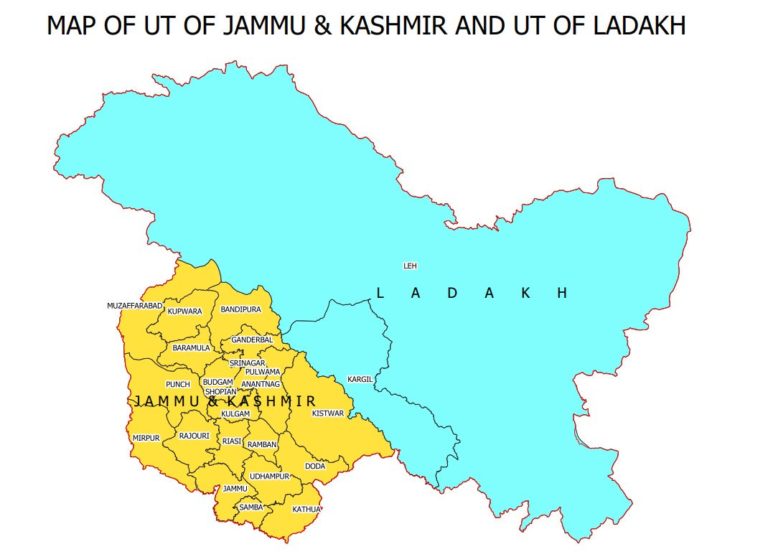
Within two days of the momentous and historical bifurcation of the state of Jammu and Kashmir into two Union Territories being implemented, New Delhi issued the modified map of India that was released by the Survey of India. The territories of Pakistan-Occupied Jammu and Kashmir (POJK) were shown in their new dispensations with their respective Union Territories.

The Union Territory of Jammu and Kashmir now comprises 22 districts that includes Muzaffarabad and Mirpur areas of Pakistan-Occupied Jammu and Kashmir (POJK) and the Union Territory of Ladakh comprises the two districts of Kargil and Leh, including the POJK territories of Gilgit-Baltistan. The Indian Union is now formed of 28 States and 9 Union Territories as against 29 States and seven Union Territories earlier. The whole of India including the reorganised territories are celebrating the successful and seamless implementation of this historic correction. It is considered to be the best post-Diwali gift given by any government to the nation. The National Democratic Alliance (NDA) government under the dynamic stewardship of Prime Minister Narendra Modi is drawing accolades for its courage, maturity and probity that it has exhibited in steering this big challenge to its rightful culmination.

Our neighbouring countries, sadly, are not ready to join us in the celebration, which is not surprising since they never thought of becoming good neighbours. The publication of the modified map by India immediately after the reorganisation of Jammu and Kashmir has sent these countries and their proxy allies into a tizzy. In their panic they are making wild statements as usual. “[The political maps] displaying Jammu and Kashmir region and seeking to depict parts of Gilgit-Baltistan and Azad Jammu and Kashmir within the territorial jurisdiction of India, are incorrect, legally untenable, void and in complete violation of the relevant United Nations Security Council Resolutions,” a statement from Pakistan’s Foreign Office said.

Pakistan added that no decision taken by India can change the “disputed” status, adding that such measures by the Indian administration would not be able to “prejudice the right of self-determination of the Kashmiris.”

China has chosen to stay quiet but it has prevailed upon good friend, Malaysia, to come to the aid of Pakistan. Mohd Azmi Abdul Hamid, the so-called President of the shady Malaysian Consultative Council of Islamic Organisations (MAPIM) said, “The implication of the new map is bound to create a strong public response amongst Kashmiris when the complete denial of their rights for self determination for the Kashmiris is now confirmed.” He went on to add that India was clearly violating the UN Security Council (UNSC) resolution and called upon the UN to take strong action.

Such pathetic attempts to influence the situation are laughable. It is a known fact that all nations as well as the United Nations look upon the Indian act of reorganisation of the legitimate states of its Union as an internal matter. So, to whom are such statements directed? Is it simply saying something just for the sake of saying? And, who on earth is Mohd Azmi to be pontificating to the UN? He must stay within his boots.

It is notable here that in March this year China destroyed nearly 30,000 maps of India produced within the country because they depicted the irrefutable reality of showing Arunachal Pradesh as part of India. Again in April 2019, China in the course of its second Belt and Road Initiative (BRI) Summit, removed maps showing Jammu and Kashmir and Arunachal Pradesh as part of India from the BRI website. Obviously, in China, the left hand does not know what the right hand is doing.

Such belligerent, diplomatically obtuse, stupid and intemperate actions by the two nations have become a norm since the reorganisation action has been initiated by India. On October 31st, when the reorganised status of Jammu and Kashmir came into effect China openly declared the move as “null and Void” in a dim-witted departure from all diplomatic norms that enjoin nations to desist from interfering in internal affairs of other countries. China had the gall to make this abrasive comment despite being in illegal occupation of vast tracts of Indian territories in Gilgit-Baltistan that have been notoriously been handed over to them by Pakistan.

Surprisingly, Pakistan also used more or less the same language in a statement that emanated from its foreign office. “These changes are ‘illegal and void’ as per the relevant UNSC Resolutions……,” the statement said.

Nothing of what Pakistan and China are doing is going to affect the irretrievable changes that have been brought about in the erstwhile state of Jammu and Kashmir. It is so because the changes have come into effect in accordance with the constitution of India and they are for the betterment of people living in the affected areas who have been suffering corruption, misrule and disruption for too long now. The bigger worry for them is the action that India may take to get back its occupied territories (POJK). This issue is giving to them sleepless night since they have large economic stakes in these colonised territories. Hence, these panic stricken statements. The infantile statements also indicate that the two countries are running out of options to deal with the situation, and in their frightened state, they are clutching at straws. It would be best for them to accept the reality and work towards coexistence as good neighbours. If this is done, the people of all sides will benefit tremendously.

India would do well to raise in international channels the issue of getting back the occupied territories from both Pakistan and China. It is the undeniable right of the country and more so in view of the manner in which large scale suppression of the people and exploitation of natural resources is being carried out over there. What is depicted on the map should become a reality on ground.

Balochistan has historic rights for a separate nation: Dr. Murad Baloch

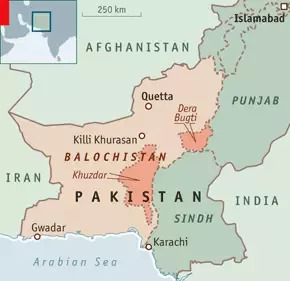
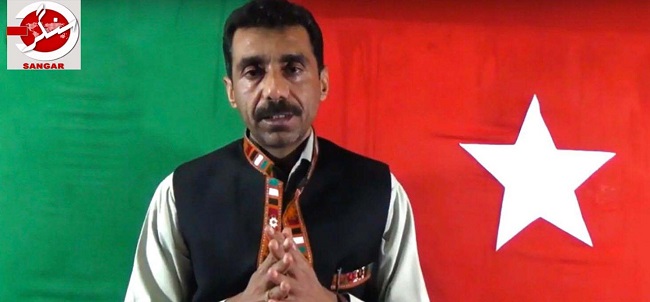
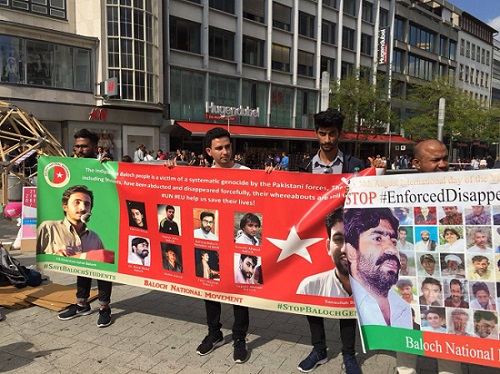
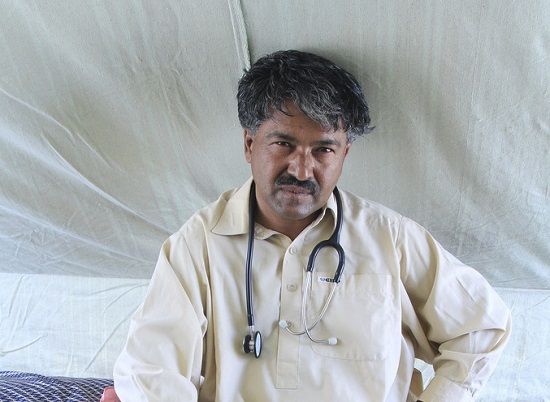
The world watched silently when Pakistan captured Balochistan in 1948 through brute force. Even today, the world continues to remain mute when Pakistan’s military commits worst human rights violations across mineral rich Balochistan. But the Baloch refuse to be cowed down and have been valiantly fighting Pakistani occupation and are resisting Chinese plunder of their natural resources. Baloch National Movement (BNM) spearheads the freedom struggle of Balochistan, and BNM’s Secretary General Dr. Murad Baloch tells Vivek Sinha in his first ever interview that Baloch struggle should not be dismissed as just another armed insurgency, rather it is a genuine freedom struggle for a separate country, Balochistan. Dr. Murad Baloch requested News Intervention not to publish his photograph as he faces grave threats to his life from the Pakistani deep state.

Vivek Sinha: Why are Baloch up in arms against Pakistan? What exactly do they want?

Dr. Murad Baloch: 71 years ago, at the time of British withdrawal from the Indian subcontinent, Balochistan was declared as a free, autonomous and sovereign state. Balochistan was treated much differently than other princely states of the subcontinent. For eight months after British withdrawal from India, Balochistan was an independent nation. But eight months later, Pakistan annexed the free and sovereign state of Balochistan through the barrel of guns. Since then the Balochistan nation has been primarily resisting the Pakistani occupation. Baloch want to regain their lost sovereignty and the free status of Balochistan which is guaranteed in the Charter of UN (United Nations) to each nation.

VS: We keep hearing about the human rights violations in Balochistan by the Pakistan armed forces. Why does this happen regularly?

Dr. Murad Baloch: Yes, Pakistani security agencies have created a havoc with their barbarism. They have sealed Balochistan and made it almost impossible for international human rights and media organizations to operate here. This has allowed them to continue with their gross human rights violations. As mentioned earlier, the notorious “Kill and Dump” policy against the Baloch people, enforced disappearances of Baloch youth and elders, women and children are a daily routine. More than forty thousand Baloch have been forcibly disappeared. The desensitization of world powers has allowed Pakistan to continue this slow-motion genocide with complete impunity.

VS: Please give a historical perspective about the Balochistan freedom struggle.

Dr. Murad Baloch: The Baloch nation had been struggling against British colonization in different periods and then against Pakistan. But the British had exerted power on Balochistan through different treaties and agreements while Pakistan used brute force to occupy and colonize Balochistan and is even doing the same in this modern era of the 21st century. The Baloch nation resisted this forceful occupation from the first day onwards and has continued the struggle to defend themselves and regain their freedom.

Khalil Baloch, Chairman of the Baloch National Movement (BNM)

VS: Very few people in the world know or understand about the Balochistan freedom struggle. Several people brush aside the Balochistan freedom struggle as just another armed resistance, which is aimed at destabilizing Pakistan. Your comments.

Dr. Murad Baloch:  I will answer the second part of your question first. I reject the notion that the Baloch movement is to destabilize Pakistan, we merely want our lost freedom. As I told you earlier that our movement is even older than Pakistan itself and has roots in our freedom struggle against the British colonizers. Pakistan has merely replaced the British as a more wicked and brutal occupier.

And you are right that the world doesn’t know about the miseries and troubles of the Baloch nation because there is a total media blackout in Balochistan. The internet is blocked in the interiors of Balochistan. Secondly, Pakistan is suppressing the Baloch nation in various ways. Pakistan is carrying out a systematic cultural genocide and has kept the dwellers of mineral-rich areas illiterate to deprive them of a voice. Further, we are also cornered in the international arena and our voice is still not loud, multifaceted and more frequent in the international arena. That is why the world knows little about the Pakistani brutalities in Balochistan.

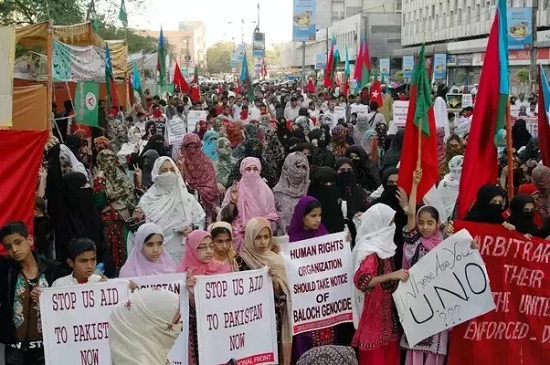
Baloch women and children protesting against Pakistan’s atrocities on Balochistan

VS: How can you justify your demand for an independent nation of Balochistan?

Dr. Murad Baloch: First of all, I want to state that Pakistan does not have any right to force its writ upon us. We have had an independent state and we are now unlawfully occupied by Pakistan. Thus we have a historical right of a State. Secondly, the Baloch nation is the second-largest nation after the Kurds that do not have their own free state. We have our own language, culture, history and land. Our people have a common psyche. We have all those components that are essential for a state. Moreover, right after Pakistani occupation, the State of Pakistan has with all its military, economic, religious, cultural and soft power tried to assimilate the Baloch nation into the British drawn lines which we know by the name of Pakistan. Pakistan does not, and will not, recognize diversity within its boundaries and is carrying out a systematic genocide in its quest for nation-building. That being said is obviously a question of do or die for us. Our whole survival is on the line and it can only be guaranteed if we acquire our own free and sovereign state based on democratic and secular values. And above all, the ideology of Pakistan’s “pure country” is itself a fascist ideology comparable to the NAZI ideologies. You can see the brute fascism in its global fascist agenda of supporting Islamic terrorism throughout the world and in its domestic politics of religion and military rule, which compels us to resist its existence.

Baloch protest against the “Kill and Dump” policy of Pakistani deep state. Every year thousands of political leaders, doctors, students and activists across Balochistan are abducted and killed by Pakistan’s military.

VS: China has invested immensely in Balochistan for the CPEC. Don’t you think that infrastructure development by the Chinese has helped create jobs in Balochistan?

Dr. Murad Baloch: No. Never. The CPEC (China-Pakistan Economic Corridor) is an imperialistic project. Baloch have not benefited from it or got any jobs due to CPEC, instead it has accelerated the exploitation and plunder of our national wealth and is only benefiting the Punjab province of Pakistan and China. The Baloch people are left to deal with pollution, mass displacement and the environmental damage done by these projects. The major fishing grounds from our seas have been already depleted by the Punjabi (Pakistan’s province) and Chinese fishing companies and the way of life of thousands of our coastal people has been drastically and irrevocably changed. In addition to that, all peaceful voices against this project have been silenced with enforced disappearances and the notorious “Kill and Dump” policy. Hence this project brought only death and destruction to the Baloch people and is in no way for the welfare of the Baloch. I do not want to sound anti-development but in simple words, on one hand, this project is a part of Pakistan’s genocide machinery against the Baloch nation and on the other hand its part of a Chinese bid for regional and international hegemony.

VS: What is your view about the ongoing violence in other parts of Pakistan (FATA, NWFP, PTM, etc.)

Dr. Murad Baloch: I think that Pashtoons are also realizing that they are being oppressed and their identity is being annihilated like the Baloch and Sindhi nations.

VS: Kurds had been at the forefront of the war against ISIS, yet they have been left midway by the US. And now Kurds are being attacked by Turkish forces which is supported by Pakistan. Your comments on these developments in the Middle East.

Dr. Murad Baloch: You are right that the Kurds were betrayed by the USA and now Turkey has been allowed to attack the Kurds. It is the nature of world powers’ foreign policy that they have no permanent friends and enemies. We know that Pakistan is the base of terrorism and fascism and has historically committed genocide in Bangladesh and so has Turkey committed the historic Armenian genocide and is now carrying out the Kurdish genocide. Both, Genocide and Terrorism are their (Pakistan and Turkey’s) tools of foreign policies. These similarities make these two birds of a feather flock together. But the support of world powers like the USA and the EU countries is disappointing. It is also disappointing to see that Pakistan benefits from the EU’s GSP+ (Generalised Scheme of Preferences) trading system despite having such a horrific human rights record in Balochistan.

VS: Though the US betrayed their Kurdish allies, yet US remains the center of world politics. I want to understand what relations has BNM achieved in world politics including the USA. Over last few years we have seen only the Pashtun and Sindhi voices echo in the US congress. The sole speech for Baloch people was by Dana Rohrabacher, which was five years ago.

Dr. Murad Baloch: I do agree with you, and as in my previous answer I said that there still is a lack of tactics in oppressed nations. Nowadays Sindhi and Pashto have a large diaspora around the world. They both have nation states like India and Afghanistan. Unfortunately Baloch do not have any other way than to consistently struggle until the world realizes the miseries of the Baloch nation and comes to support us.

Dr Mannan Baloch, a popular leader of Balochistan, was killed in cold blood by the Pakistan Army in 2016.

VS: You took over after Dr. Mannan Baloch’s murder by Pakistani forces in 2016. He was famous to visit every corner of Balochistan for mass mobilization. Can you or your team do this? Or is it even possible in today’s circumstances? If not possible, then what steps have you taken to engage the Baloch mass in the freedom struggle for Balochistan?

Dr. Murad Baloch: No doubt Dr. Mannan Baloch was a hero and a great political worker and a teacher. Although the circumstances do not allow me to do what Dr. Mannan Sahib has done, but we have kept his work going on. We have changed our tactics of mass mobilization completely. Now we are in touch with our people in day to day activities through other means which can be both covert and overt. Our political workers and activists also play the role to convey the policy of our party to the masses.

‘Ayaz Nizami’ Needs Far More Attention

1

Ayaz Nizami’ is a part of a hashtag.#FreeAyazNizami, others, against him, posted a hashtag #HangAyazNizami, i.e., calls for the hanging of a public human rights activist., as reported in 2017.

He is the Vice President of Atheist & Agnostic Alliance Pakistan. He was placed in an anti-terrorism cell. ‘Nizami’ is an ex-Muslim and has been punished for organizing as one in Pakistan.

This case and its concomitant issues need more coverage and wider activism, as this has been over two years ongoing in terms of imprisonment of him. Obviously, the alias name was for self-protection, as with others who utilize fake names in order to hide identity for safety and livelihood.

As previously reported, “Who is Ayaz, though? He is a religious scholar and ex-Muslim. He pursued religious training after standard, mainstream education. He was admitted to an Islamic studies school. He began to doubt the authenticity of the claims of his faith at the time. I suspect that not being an easy thing to undergo or endure, especially being part of an orthodox religious family. Even with the doubts, he accomplished accreditation in the Islamic studies. He was not only a religious scholar in general, but an Islamic scholar in particular.”

This was part of a larger wave, and an ongoing one, of charges against bloggers and writers. ‘Nizami’ has expertise in Tafseer and the principles of it. Tafseer is the tradition of providing explanations for the purportedly holy Quran. He has an expertise in the Hadith and its principles. It is the words, actions, and implicit approvals of Muhammad. 

Furthermore, ‘Nizami’ holds expertise in Fiqh and its principles, as well as philosophy and logic, and the Arabic language. Fiqh is the Islamic Jurisprudence. He has a wide range of expertise and knowledge on the religion, on Islam, and can be a powerful ally in the world of those who may wish to leave the religion. The Atheist & Agnostic Alliance Pakistan is the organization of Fauzia Ilyas and ‘Ayaz Nizami.’

Mr. Nizami stated the religious creations seen here. They are not from above, the divine, another transcendent realm, or an otherworldly place that can engrave the messages of the Theity upon the hearts and minds of the prophets.

No, “[They are] a mere creation of the human brain and are a bi-product of culture and civilisations in the world especially the Middle East,” Mr. Nizami said, where he wants to “educate and enlighten his fellow countrymen and share his findings with them.”

This mission can be a basis for human rights activism and secularization of the nation-state in the midst of a troublesome setup. Problem: his communication, with me — and presumably others, went dark. 

As noted at the time:

It seemed suspicious. The common knowledge in the educated secular community is bloggers with critiques of religion or religious patriarchs, or practices, can be killed, given lashings, or stigmatised and ostracised in their communities.

So the answer to the latter two questions: no, and no. Answer to the former query: as far as I can tell, he existed as a non-believer, especially an ex-Muslim, with self-confidence rather than acculturated diffidence and spoke out on religion and Islam, and with highly educated, scholarly authority in the relevant subject matter. It was taken as terrorism and blasphemy.

Whether or not the statements are true or not, and whether or not you’re religious or not — and especially if you’re religious take the parable of the hypocrite and the Golden Rule into account, ask, “Should someone be imprisoned on blasphemy or terrorism charges — even threatened with a hashtag hanging campaign (#HangAyazNizami) based on belief, in particular non-belief, in the public arena?”

There were comments with the #HangAyazNizami hashtag on social media with calls for hanging him in a variety of forms. Some of these went alongisde a claim of “fuck with freedom of speech” from Sardar Waqar, an admission with “call us terrorist or extremist or whatever by Daniyal Ahmed, that first “he must be drag in the streets” prior to the proposed justice of hanging by Nida Ahmed, and so on.

These claims of violence over doubts and founding a non-religious organization — one for atheists and agnostics — seems fundamentally unjust, unfair, and the root of the attitudes of religious privileges within societies to openly call for violence with no reprisals in kind other than requests for respect for freedom of expression and reversal of arbitrary imprisonment.

I think the original query from over two years ago still stands:

At root, some subset of Pakistani Muslims are offended, and some non-Muslims. But does this justify the sentiments and the very real consequences on the life of Mr. Nizami? No, and take the footnote about the hypocrite and the Golden Rule into account, I get it.

But if in his situation, if something you did was that offensive, would others be justified in imprisoning or threatening to hang you? I feel offence at the offence around Mr. Nizami. Does this justify blasphemy charges and imprisonment, and public threats of hanging? No, and I would not condone it, as I do not condone the same for the offence — which from that perspective, I can feel sympathy for — felt by some Pakistani Muslims, and others.

These are environments for cyber-dissidents. These are the lives some will live. Some will be killed. Others imprisoned for years or even life. Still others, they will not see the light of day due to mob justice, as we found in some of the cases of the Bangladeshi bloggers. This is the world in which the Internet provides a space for freedom of expression and a furtherance of the destruction and emaciation of the lives and livelihoods, respectively, of those in difficult circumstances. Lives of the arbitrary precarity of health and wellbeing. This can be stopped. It has to start one at a time, to show how these cases can pass, how the authoritarian efforts and regimes are, in fact, fragile, and, therefore, can be overcome.

This is why ‘Ayaz Nizami’ deserves a whole lot more attention now and into the future until he is released.

Photo by Sameer Akhtari on Unsplash

Climate change poses ‘lifelong’ child health risk

Experts at the Lancet Countdown, which is a coalition of 35 institutions including the World Health Organization and the World Bank, has said that climate change will damage the health of an entire generation unless there are immediate cuts to fossil fuel emissions, from a rise in deadly infectious diseases to surging malnutrition.

Children across the world were already suffering the ill effects of air pollution and extreme weather events, said The Lancet Countdown in its annual report on the impact of climate change on human health. And far worse is to come for future generations, it warned: air-borne diseases, malnutrition due to mass crop failures, and even mental and physical trauma from increased flash flooding and wildfires.

Their warning comes as some of Australia’s worst wildfires in living memory continue to burn across its eastern seaboard, and after a global youth strike inspired by Swedish schoolgirl Greta Thunberg.

August was the hottest month ever recorded and Earth has already warmed one degree Celsius (1.8 Farenheit) since industrialisation.

The Paris Climate treaty of 2015 enjoins nations to limit temperature rises to 2C, or preferably to 1.5C if possible. Yet emissions continue to rise year on year, putting Earth on a path that could lead to a 4C temperature rise by the end of the century — bringing peril for human health. The report said “nothing short” of a 7.4 percent year-on-year cut in CO2 emissions until 2050 would limit global warming to 1.5C.

The report, compiled by 120 experts, used the latest available data and climate modelling to predict global health trends as the mercury climbs throughout the decades.

In parts of the world already, the health effects from climate change start in the first weeks of a baby’s life.

In the last 30 years, the global yield potential of staple crops such as maize, winter wheat and rice, have all declined, putting infants and small children at heightened risk of malnutrition. Infant malnutrition impacts every stage of a child’s life, stunting growth, weakening the immune system and throwing up long-term developmental problems.

More children will also be susceptible to infectious disease outbreaks. In three just three decades, the number of days worldwide of prime infectiousness for the Vibrio bacteria — which causes much of child diarrhoeal disease worldwide — has doubled. This not only increases the likelihood of children contracting diseases such as cholera in at-risk regions, it also enlarges their spread. The report found that mosquito-borne diseases such as dengue and malaria were also on the march, putting half of the world’s current population at risk.

And people in cities are already suffering premature disease and death from air pollution — coal plants alone contributed a likely one million premature deaths worldwide in 2016.

Extreme weather events are likely to proliferate as temperatures climb, posing increasingly frequent economic disruption. For example, in 2018, 45 billion hours of work were lost due to extreme heat globally compared with 2000. The study found that last year an additional 220 million over-65s were exposed to extreme heat, compared with the historical average.

PM proposes first meeting of BRICS Water Ministers in India

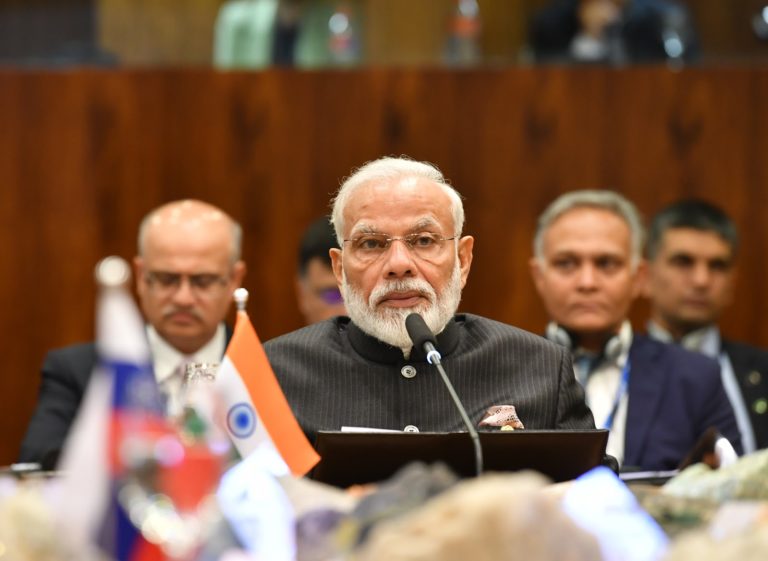
While addressing the Plenary session of XI BRICS Summit in Brazil today Prime Minister Narendra Modi said that sustainable water management and sanitation are important challenges in urban areas and proposed to hold the first meeting of BRICS Water Ministers in India.

Recalling about the recent ‘Fit India Movement’ started in India, he said that he wanted to increase contacts and exchanges between the BRICS in the field of fitness and health.

Speaking on the occasion, Prime Minister said that the theme of this summit – “Economic growth for an innovative future” is very apt. He said that Innovation has become the basis of our development. He emphasized that it is necessary for strengthening the cooperation under BRICS for innovation.

Prime Minister said that now we have to consider the direction of BRICS, and mutual cooperation should be more effective in the next ten years. He highlighted that despite success in many areas, there is considerable scope to increase efforts in some areas. PM called for paying special attention to mutual trade and investment, as Intra-BRICS trade accounts for just 15% of world trade, while the combined population is more than 40% of the world’s population.

He was happy that the first Seminar on BRICS Strategies for Countering Terrorism was organized and hoped that such efforts and activities of the five working groups will increase strong BRICS Security Cooperation against terrorism and other organized crimes.

PM concluded that with the mutual recognition of visas, social security agreement and qualifications, we will give people of the five countries a more conducive environment for mutual travel and work.

Kejriwal has raised pollution awareness through the odd-even scheme

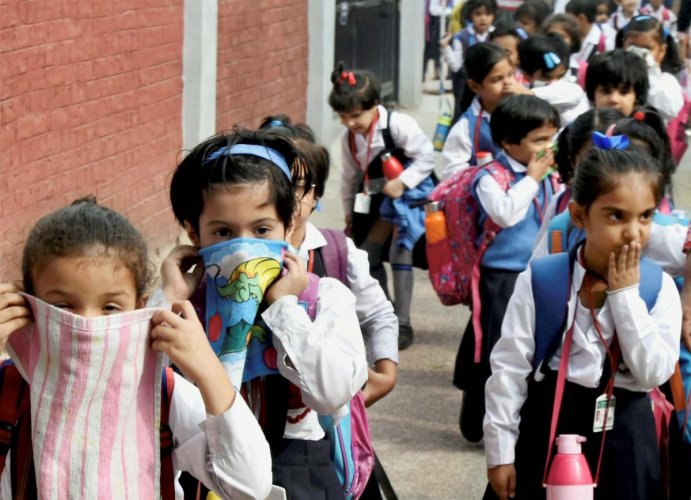
Delhi government’s ambitious “odd-even” scheme for vehicles draws to a close on November 15, even as the air quality once again plunged to “severe” category in National Capital Region (NCR). The jury is still out on the level of impact this scheme has had on controlling pollution and Dilli walas seem to be divided on its implementation.

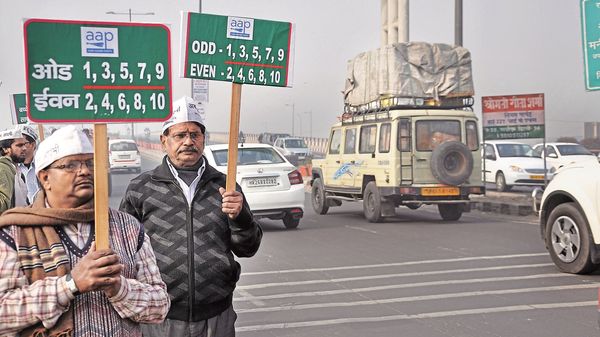
Delhi Chief Minister Arvind Kejriwal had first implemented the odd-even scheme in January 2016 to keep pollution levels under check in Delhi-NCR. Under this scheme a vehicle can ply only on alternate days on the Delhi roads depending on the last digit of its registration number. On dates ending with an even digit, a vehicle with its registration number ending with an even digit can ply. Ditto for odd dates. Touted as an out of the box measure, it was aimed at reducing vehicular emissions in Delhi.

Has it worked? Yes and no.

The good news and perhaps the biggest achievement of the scheme has been to churn awareness. The debate today is about the extent of this impact. That’s for the environmentalists to study and come up with a report. Importantly, the implementation of the odd-even scheme is an acceptance of the pollution menace. For the first time a chief minister in the country has shown courage to acknowledge this problem of pollution and thrash out an out of the box formula.

Any experiment that aims to address the issue of pollution must be supported wholeheartedly even if its results are below our expectations. Even Kejriwal’s strongest critics will admit that with the odd-even scheme, awareness on pollution has gone up significantly. Political differences aside, the war against pollution has to be a joint effort, simply because the poisonous air doesn’t distinguish political leanings among Delhi’s denizens.

Let’s also understand why the scheme may have had limited success. With several exemptions, the number of cars on Delhi roads had not reduced drastically which could have led to a massive drop in vehicular emissions. Yet, despite the limitations, the need of the hour is to tackle this menace head on and continue to think out of the box.

Air quality in Delhi and its neighbouring states is never very healthy — it is a problem which we brave throughout the year. Though burning of paddy stubble in the neighbouring states contributes the lion’s share in Delhi pollution, vehicular emission which also contributes to deterioration of the air quality needs to be curtailed as well.

The sceptics of odd-even scheme have challenged it in the Supreme Court. Questioning the efficacy of the scheme, the petition against odd-even underlines that the scheme is in violation of the fundamental rights especially when there is no restriction on two wheelers. The apex court has sought data on AQI (Air Quality Index) during the odd-even scheme from the state government. Yet we need to realise that pollution is an emergency and we need to address it on a priority basis if we want socio-economic development.

It is imperative to have clean air – not only to ensure health of our citizens but to create a conducive business environment in the country. After all New Delhi is the country’s capital city. The least the governments—both central and state—can do is to ensure that there is clean air and less pollution. This will make this country a more attractive investment destination. With economic growth slowing down, the NDA government is trying to thrash out various measures to boost demand and attract investments. But it is absolutely disheartening to see that pollution does not feature in any of these reform measures. To ensure long term sustainable growth and investments, we need to have clean air.   

EU delegation’s Kashmir visit was comforting, say Kashmiris

0

The ruling BJP-led NDA Government took a major political decision of amending the Constitution by revoking Article 370 and bifurcating the state into two Union Territories that formally came into being on October 31.  Girish Chandra Murmu and  RK Mathur have assumed the office of Lieutenant  Governors of Jammu & Kashmir and Ladakh respectively.

Though this momentous decision has ruffled many feathers in political circles, it has received a ‘thumbs up’ from the public. Keeping the region under central rule will assist in provision of good governance and speed up the development process. New Delhi has already committed to give full statehood to Jammu and Kashmir when things stabilise.

The credibility of J&K’s ‘mainstream’ political parties in the state had already hit rock bottom since the key players misused the trust that the people of Kashmir reposed on them. Irrespective of which party came into power, corruption and misgovernance continued unabated. The lackadaisical approach towards governance caused immense suffering to the people; even the very basic aspirations of the people remained a distant dream.

While the mainstream political parties are making much hue and cry over abrogation of Article 370 and bifurcation of J&K into two Union Territories, the fact is that they themselves have forced New Delhi to take steps to break their monopoly. Decades of dynastic rule in J&K had created an atmosphere of sycophancy and this prevented capable and dedicated youth from finding their rightful place as leaders of political parties.

To suit their self-serving interests, many have been exploiting the situation by painting a doomsday picture. Inimical forces have been portraying conditions in Kashmir to be inhuman with the locals “caged” by security forces. Weird analogies such as the Nazi movement that resulted in persecution of Jews are being played out.

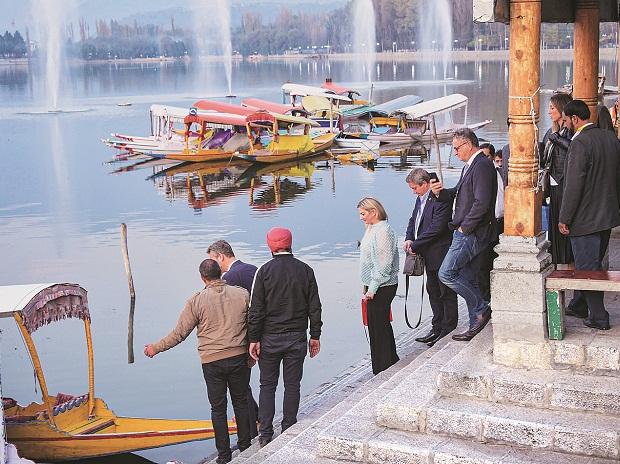
It is under these circumstances that the Government of India invited a delegation of 27 European Union MPs from nine countries to visit Jammu and Kashmir. This author got an opportunity to personally interact with the members of the delegation and get their views first hand.

After meeting people belonging to different sections of the society in Kashmir the delegation realised that despite getting adequate funds, the local political parties had done nothing for the people, due to which, there had been no development and widespread corruption. While the delegates made it clear that they were not here to interfere with Indian politics, they fully understood that abrogating Article 370 is India’s internal matter. A delegate pointed out that “Kashmir is backward because of the situation. The message we got from the people we met was that there is hope that the change in status will help reverse the situation.” The delegation said that the people of Kashmir want peace and development; they want schools and hospitals and not guns and ammunition.

Expressing concern over Pakistan-sponsored militancy as it is the major factor for instability in Kashmir and is claiming lives of innocent people, one of the members said, “First of all, this visit in my view is of very high importance. In Kashmir, militancy is severe and this is a global question. Police and army have apprised us of how militants have been sent from Pakistan.” The delegation members said that they do not want to see Kashmir becoming another Afghanistan. One delegate said, “Terrorists can destroy a country. I have been to Afghanistan and Syria and I have seen what terrorism has done. We stand with India in its fight against terrorism.”

Newton Dunn from the UK described the visit as an “eye-opener”, adding that the delegation would advocate what they had seen on ground zero. “We belong to a place Europe which is peaceful after years of fighting. And we want to see India becoming the most peaceful country in the world. And for that we need to stand by India in its fight against global terrorism. The delegation expressed hope that the change in status will improve the situation of the state.

Kashmir is a flashpoint between two nuclear countries. Tensions in Indo-Pak relations worry the international community and thus the visit of the EU MPs delegation to Kashmir after New Delhi scrapped Article 370 is timely. Business suffered an estimated loss of Rs 10,000 crore in this current turmoil while tourism and education has been badly affected. Apple industry, which is the main component in Kashmir’s economy, was hit the most due to prevailing situation and has been further harmed by targeted killings of those connected with apple trade industry by militants.

For the people of Kashmir, it’s important to get over petty issues and look at the larger picture so that they are not left behind in their quest for improving their economic status. If Kashmir does not open out to India and onwards to the world, it will be left out of the development loop and will regress by many centuries. The effort of the elected government is to ensure that nothing of this sort happens and that’s why all energies are being channelized towards bringing the region at par with the rest of the country. The idea, in fact, is to see the region surging ahead on the basis of the abundant economic possibilities that are available there.

People of Kashmir are hopeful that members of the European Union delegation after returning to their respective countries will spread a word at different forums that will prove more productive for the cause of Jammu and Kashmir especially the common people of Kashmir Valley so that the festering wound is healed once and for all. Nevertheless, it’s also the foremost duty of every citizen that they should leverage the commitment of the nation to their advantage by rejecting the divisive voices, shun violence and concentrate on issues of development.