Professor
Gordon Guyatt, MD, MSc, FRCP, OC is a Distinguished University Professor in the
Department of Health Research Methods, Evidence and Impact and Medicine at
McMaster University. He is a Fellow of the Canadian Academy of Health Sciences.
The British Medical Journal or BMJ had a
list of 117 nominees in 2010 for the Lifetime Achievement Award. Guyatt was
short-listed and came in second-place in the end. He earned the title of an
Officer of the Order of Canada based on contributions from evidence-based
medicine and its teaching.
He was elected a Fellow of the Royal
Society of Canada in 2012 and a Member of the Canadian Medical Hall of Fame in
2015. He lectured on public vs. private healthcare funding in March of 2017,
which seemed a valuable conversation to publish in order to have this in the
internet’s digital repository with one of Canada’s foremost academics.
For those with an interest in standardized
metrics or academic rankings, he is the 14th most cited academic in the world in terms of
H-Index at 240 and has a total citation count of more than 247,000. That is, he
probably has among the highest H-Indexes, of any Canadian academic living or
dead.
Scott Douglas Jacobsen:
So, you’ve also done some work with
regards to fractures of bones. Now, it is not necessarily your main stream of
research. We were talking off tape about two particular narratives.
One with regards to the pluses and minuses of a big nail
and a small nail with the regards to the tibia. Another with regards to an
ultrasound device. You noted the devices have a less strict qualification
system to get them certified than do pharmaceuticals or drugs.
Distinguished
Professor Gordon Guyatt: Yes! It is dramatic. The standards to get a drug on
the market are moderately high. They are not as tough as they used to be, and
that is an area of controversy, but they are still substantially more stringent
than devices.
Devices can get
out there much easier than you can drugs. The review process and the barriers
you have to jump over are much less with devices than drugs.
Jacobsen: That also leads to of question that is a
preface to all of this. Why did the strictures for pharmaceuticals go down? Why
are devices less strict than pharmaceuticals in general?
Guyatt: In terms of the first question, there is a controversy, so there is a trade-off. So, some people would say, “Let’s get new drugs out to people, where previously it took too long.” We had these drugs that are beneficial.
There are all
these obstructions and the poor patients are suffering because the drugs are
not coming out soon enough. On the other hand, there is another argument that
it is not infrequent that drugs come out. We find out bad things about them
later; that even apparent benefits do not benefit people. So, on the one hand,
good drugs get out, and do not make people wait.
On the other hand,
be appropriately cautious, make sure that people are benefiting, and make sure
and be more careful about the potential adverse effects, that is the argument
back and forth. I am not sure that there is any definitive right or wrong.
But there are many
of us who have concerns about the pharmaceutical industry and the way the
pharmaceutical industry operates. We are on the side of, “Come on. Wait. Do not
do it too soon. Make sure it is right, and better too. There are lots of good
drugs on the market now.”
“Unless, something
is a real breakthrough. Wait to make sure that it is a breakthrough,” it is
more of an small incremental game. Let’s test it before it gets out. So, that
is the tension as far as that is concerned.
Jacobsen: To the second question, it had to do with devices having
much lower standards.
Guyatt: It is a historical
accident. So, way back in the early 60s, what changed the landscape with respect
to drugs was thalidomide, it was given to women to prevent the nausea of
pregnancy. It ameliorated the problem.
However, it caused
these horrible limb abnormalities in the kids. People said, “Oh! You’ve got to
do things differently here. This is bad news.” So, it changed the environment
as far as drugs. Where I suppose, there haven’t been any particular catastrophes
in terms of devices.
They are seen as
potentially less dangerous and the culture of tough regulation has never grown
up.
Jacobsen: Now with regards to fractures of bones, what is the background with regards to doing some side research with Jason W. Busse regarding?
Guyatt: First, there is Mohit Bhandari. So, Mohit
Bhandari is an orthopaedic surgeon who came to me when he was still in his
training as an ambitious young guy. He came to me wanting to train in research
methods, which is what I train people in. He said, “I’d like to do a big orthopaedic
trial.”
So, I said, “I
tell you what. Here is the trial you want to do,” and it was this trial of when
people fractured their tibia. You need to put a nail in to hold the pieces of
the tibia together again properly.
There are two ways
of putting the nail in. You put in a little nail that maintains the blood
supply in the bone marrow. Or you put in a big nail that requires reaming out
the bone marrow and the little nail has the advantage of maintaining the blood
supply, which is promoting healing.
The big nail has
the advantage of the structural bed being a better structure. So, Mohit said, “It
is a real controversy whether we should be using these big nails or small nails.
We should sort that out.”
So, I said, “Okay,
tell you what, tell me who the leading guy in North America is in this field. Let’s
see if he would be interested in heading up a trial where we do this.”
So, we got in
touch with him. He is in the States. Let’s talk to him. So, we talked to him.
We said, “We are want to do clinical trials. Would you be interested in leading
the trial because we need some established authority to lead to trial?” So, he
said, “Sure.”
So, he helped us gain
access to leading orthopaedic colleagues.” Eventually, we got the trial funded
in part in Canada and in the States. Mohit led the trial. By the time the trial
was finished, he was on faculty as an investigator and ended up leading the
trial to completion and getting the appropriate credit as the leader of the
trial.
So, we enrolled
over twelve hundred patients, which was a big trial at the time. It was one of
the biggest in orthopaedic trauma that had previously been done. It found out
that, overall, it did not make much difference whether you used a big nail or
the small nail, but possibly a small nail was better in the more severe
fractures.
The big nail was
better in the less severe fractures and ended up as one of the first big major orthopaedic
trauma trials.
Jacobsen: Why the small nail for big fractures and the big nail for the small fractures?
Guyatt: The theory: surgeons
before they started had this suspicion. They said, “In the cases of the more
serious fractures, the maintaining of the blood supply may be more important. In
the less serious fractures, the maintaining of the blood supply is not as
important.”
That was the
rationale beforehand. They had the idea. So, it became more credible because
they had the idea in advance when we found that the small nail seemed to be
better in the more serious fractures. The big nail in the less serious.
It made us more
inclined to believe that because that was the hypothesis that the surgeons
stated and they had some biology for it before the trial started.
Jacobsen: with regards to the last part of the research which
regards to fracture bones at least that we have talked about on tape one of
them has to do with an ultrasound device.
Guyatt: Okay! So, story,
there is so a guy named Jason W. Busse. Another guy who did a Ph.D. with me. By
training, he is a chiropractor, but he got interested in research. He came to
work with us. He was also working closely with Mohit.
So, the
opportunity came along; I am sure through Mohit. I do not remember the details.
It was with a company that makes an ultrasound device, which was reportedly
enhancing the healing of fractures and in keeping with the lower standards of
evidence for our devices.
This device has
been licensed for use on the basis of some evidence – not convincing, not strong.
These are not high quality studies. It is based on the enhanced radial x-ray healing
of fractures and the company then said, “We think our device is great. Let’s
get some randomized trials strong and randomised trial evidence about the
effect of the device.”
So, we arranged. We
made a deal with the company. Jason W. Busse was leading the trial. He set up a
randomized trial of this ultrasound device. We got some funding from the
industry. We got some funding from the Canadian Institute of Health Research.
So, off we go, we are doing our trial, early on when we were doing the trial.
Jason did a
systematic review of all the evidence that was available thus far. The evidence
said, “We are not so sure of this radiological healing. There is no evidence at
all that anybody functionally benefits from this. Because if your x-ray looks
better, and if you cannot walk sooner or have less pain or something like this,
who cares if the x-ray looks better?”
We published this
in the British Medical Journal (BMJ), this review. The company was not
thrilled. In fact, Jason was the first author of this. The company told Mohit, “We
want nothing more to do with Jason, get rid of this Jason. He has stabbed us in
the back.”
However, Jason was
the principal investigator in the study. We were not going to Jettison Jason.
So, although, the company did not want in on meetings and so on. Anyway Jason
continued to lead the trial. So, usually with these studies, we are committed
to go to the end to get as definitive an answer as possible.
We do not go
looking at the data partway. However, the company had access to the data part
way. They looked at the data. They find nothing good is happening. They say, “Let’s
stop the trial.”
So, we fought with
them. We managed to continue longer than we would otherwise. However, eventually,
they stopped the trial, but not before we would have enrolled 500 patients.
That was enough to get a reasonable conclusion.
Then we did not get
the complete follow up. Some because they stopped it, but not bad. So, the
trial is finished. No benefit whatsoever either on fracture healing or on
function in the patients. One of the issues was there was only about 70% or 80%
compliance with the device not bad.
What about in terms
of what you would expect out in the real world anyway, they obviously did not get
the result. So, the first thing, they made all sorts of arguments about how we
should present the results.
Either the results
said that this compliance was so low, it is not a problem or there is a
subgroup that benefits. Anyway, we went through a prolonged discussion about
that. We said, “No, sorry, there are not any subgroups who benefit from this
device as far as we can tell. It does not do any good.”
So, they tried.
They delayed us. They threatened us all with a couple of years between when we
would have had to publish and when we published. Because of all their
obstruction and so on. Then, of course, they fund going to meetings and say, “Do
not pay any attention to this trial and so on.”
But eventually, we
published that in the British Medical Journal. In addition, we have another
initiative that tries to get ground-breaking evidence that might be practiced,
changing out to clinicians as soon as possible.
Then we published
one of these rapid recommendations about do not use this ultrasound along with
the trial. So, that was an adventure.
Jacobsen: Thanks for the opportunity, anytime.
Guyatt: A pleasure.
We conducted an extensive interview for In-Sight: Independent Interview-Based Journal before: here, here, here, here, here, and here. We have other interviews in Canadian Atheist (here and here), Canadian Science (here), Canadian Students for Sensible Drug Policy, Conatus News, Humanist Voices, News Intervention (here and here), and The Good Men Project (here, here, here, here, here, here, here, here, here, here, and here).
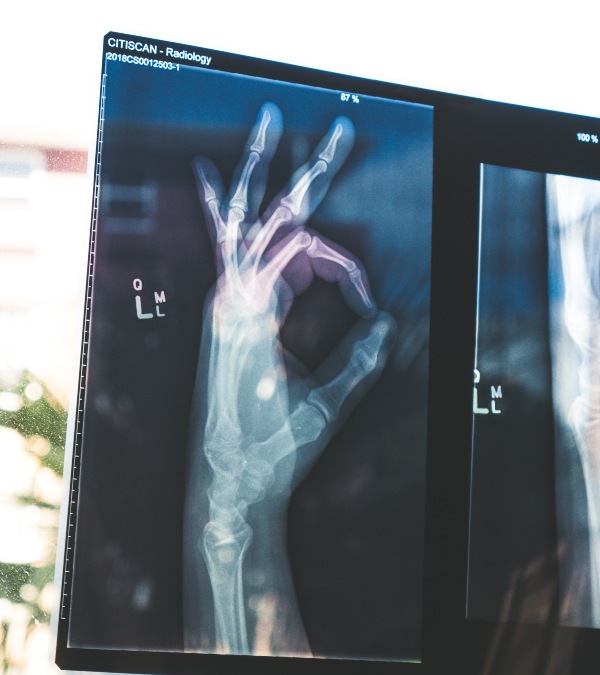
Photo by Owen Beard on Unsplash