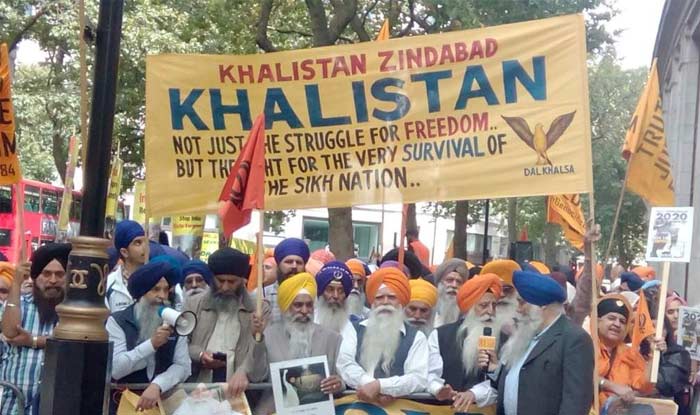
Desperate times require desperate measures. And when desperation sets within the Pakistani Deep State, they resort to their most potent weapon: Disinformation. Over the last seven decades Pakistan’s Deep State has been running their disinformation campaign in Kashmir, but New Delhi’s relentless hot pursuit of terrorists, separatists and their sympathisers has now pushed them into a corner. With their tactics failing in Kashmir, Pakistani Deep State has now directed its sinister disinformation campaign towards Punjab.
Pakistan’s Deep State comprises an elite coterie of officers from the Pakistan Army, its propaganda arm ISPR (Inter-Services Public Relations), and their rogue intelligence agency ISI (Inter-Services Intelligence). After being cornered in Kashmir, they have chosen Operation Woodrose as part of their disinformation campaign. A few disgruntled and criminal elements from Punjab have been bribed, who, in turn, have put out videos, articles and online propaganda literature that point to excesses by the Indian Army during Operation Woodrose that was launched close on the heels of Operation Blue Star.
It’s being said that during Operation Woodrose, the Indian Army arrested over 100,000 Sikhs across Punjab and of these around 20,000 Sikhs were brutally murdered in cold blood. “…it was a state-sponsored pogrom that was aimed at wiping out Sikhism from Punjab,” claims the disinformation propaganda videos and other literature.
All of this is false. I spoke to several officers from the Indian Army, intelligence services and the Punjab Police who were at the helm of affairs during the eighties and were privy to inside information during Operation Woodrose. All of these officers, several of whom are Sikh, denied any such systematic massacre by the Indian Army.
Background
Operation Blue Star was launched on June 1st, 1984, when Indian Army, after receiving orders from Indira Gandhi, the then Indian Prime Minister, launched an attack on Shri Harminder Sahib (Golden Temple), the holiest shrine of Sikhs at Amritsar, Punjab. This extreme step was necessitated due to the presence of a Sikh militant leader Jarnail Singh Bhindranwala who, along with his close aides, was holed up inside the Gurdwara complex. Operation Blue Star was aimed at flushing out these militants who were using the holy Gurdwara as their base since 1982. The operation was hastily planned and executed. Major General (later Lt. Gen) KS Brar, the Indian Army officer who was tasked to conduct this operation, was all set to leave on a vacation along with his wife when he was called upon to cancel his leave plans and execute the Operation Blue Star.
Army veterans recollect that there was a strong probability of Pakistan’s direct attack on India during this operation and hence the Amritsar-based 15 Infantry Division was not put into this operation, instead the Meerut-based 9 Infantry Division was put in charge of this sensitive operation.
After laying siege around the Gurdwara, the Indian Army first sanitised the area and when it finally entered the premises it encountered heavy fire from machine guns and automatic weapons. The hastily planned operation met with difficulties and was extended to over a week. There were several casualties on both sides before the holy place (by then badly damaged) was cleared.
Operation Blue Star had two specific parts: Operation Metal and Operation Shop. While the Operation Metal was meant to clean up the Gurdwara complex of militants, the Operation Shop’s objective was to raid militant hideouts across Punjab and to arrest remainder militants hiding in the countryside.
Operation Woodrose
Alongside the Operation Blue Star, Operation Woodrose was conducted by operational divisions deployed along the international border with Pakistan to strengthen our guard on the border areas. This was done by replacing BSF (Border Security Force) pickets with regular troops.
It is here that the propaganda and disinformation campaign is being created at the behest of Pakistan to say that Operation Woodrose was carried out in the months after Operation Blue Star to “prevent the outbreak of widespread public protest in Punjab”. It is being widely circulated that the Indian Army, by virtue of special powers given to it, took about 100,000 Sikh youths into custody within four to six weeks after launch of this operation. And that several thousands of these young men, mostly innocent boys, “disappeared” from Army’s custody. It’s also alleged that several others crossed over to Pakistan for their safety.
Jaibans Singh, a retired Indian Army officer and author of several books on geo-strategy, strongly contests these allegations. “The first question to be asked is where and in which prison were these one lakh Sikhs detained. It is not an easy task to imprison around 100,000 people without the world knowing about it. Secondly, it is utterly baseless to say that Indian Army murdered 20,000 Sikhs in cold blood. No dead bodies of 20, 000 boys alleged to be murdered by the Army was ever found. They cannot be made to disappear overnight. The contention that they crossed over is not plausible since the Indian Army, post Operation Blue Star, had effectively sealed the border,” explains Singh. Jaibans Singh is himself a Sikh and has keenly followed Punjab politics over the last several years. He further explains that there was a media censorship during Operation Blue Star but it was revoked immediately afterwards. “In fact, foreign media had turned a keen eye on the happenings in Punjab. Under the circumstances, such widespread carnage could not have gone unnoticed,” he adds.
Brigadier (retd.) SK Chatterjee agrees. “…Operation Woodrose was carried out in conjunction with the Punjab police. It is a fine example of not just a successful counter-insurgency operation but also about keeping collateral damage to the minimum. The operation carried out by the forces were intelligence based and executed most professionally,” Brig. Chatterjee reminisced about the operation. He went on to explain that till today Punjab sends a higher percentage of officers and soldiers to the Indian Army as compared to other states of India, and as such no gross violation of human rights can possibly be even contemplated in Punjab, and “…perhaps that’s the reason why Indian Army is still close to the people of Punjab even today.”
A senior officer of the Intelligence Bureau (IB) who had handled Sikh militancy during eighties also concurred that the allegation of thousands killed by the Army is baseless. “It is a mischievous propaganda that is apparently being carried out at the behest of Pakistan’s ISI,” the officer said, who requested not to be named. The IB officer added that those few Sikhs who are working to further this Pakistani disinformation campaign and are now spearheading this malicious campaign are doing a great disservice to their brethren who have seamlessly integrated into the political and economic system of India.
Iqbal Singh Lalpura, who was the AIG (Additional Inspector General) in Punjab Police during the execution of Operation Blue Star and Operation Woodrose flatly denied any wrong doing by the Indian Army. It was Iqbal Singh Lalpura who spearheaded the operations against miscreants in Punjab during those tough times in the eighties. “The Army did not kill anyone in Punjab. Their role was to support the Punjab Police,” he said. Lalpura is a Sikh and categorically refused to acknowledge that Sikhs are against India or want a separate state.
Details about Operation Blue Star is well documented and much is already known about it. There has been considerable criticism about this operation both in the political as well as military domain. However, not many know about Operation Woodrose, and this is where the Pakistani Deep State sniffed an opportunity to drive its propaganda and foment trouble in Punjab.
It’s true that for a few days after the attack on Shri Harmandir Sahib (Golden Temple) the Indian Army carried out mopping operations under Operation Shop. Premises of Gurdwaras across the state and other suspect areas were searched. A considerable cache of arms and ammunition were found that were handed over to the police and state government authorities.
A few days later the Army formation (9 Division) finished its task and went back to its permanent location. Operation Woodrose was then carried out by the holding formations along the international border with Pakistan.
Further, several logical deductions also puncture hole into the Pakistan’s sinister campaign. For instance, Indian Army never carried out such barbaric acts even while fighting peak insurgency in the North-East and in Jammu and Kashmir, where the intensity has been far greater and have simmered for a longer time than in Punjab. Also, the army was taken by surprise during their execution of Operation Blue Star, how could it create facilities and infrastructure to detain 100,000 people and also torture them?
The media censorship was immediately removed after Operation Blue Star. Thereafter all happenings across Punjab took place under the watchful eyes of media. Under these circumstances, such massive carnage could not have gone unnoticed. Also, the Army personnel in charge of these operations that range from officers and junior commissioned officers and include thousands of Sikh soldiers deny any such widespread atrocity committed by the Indian Army.
All allegations of extra judicial atrocity by Army personnel in Punjab under Operation Woodrose or otherwise are false and designed to tarnish the good name of Indian Army and foment trouble in Punjab.