Home Blog Page 429

A year after Mehbooba’s departure as Jammu Kashmir’s Chief Minister

A year ago, on this day, Prime Minister Narendra Modi and BJP chief Amit Shah pulled the plug on the coalition government of the Peoples Democratic Party (PDP) and the BJP in Jammu & Kashmir. They decided that the government headed by Mehbooba Mufti needed to be sent packing as its continuation was harming their party.

It is most likely that none of 25 party MLAs, nor its 11 MLCs knew anything about Modi-Shah plans. Most of them were happy being part of the ruling dispensation of the state.

Before that, voters across Jammu region were getting alienated from the BJP from where it had won all its 25 seats in the 2014 Legislative Assembly elections. Besides other factors, abrasive manner of the handling of the infamous Ressana case by Mehbooba had damaged the ties with the BJP badly.

If is often said that hindsight is 20:20 and yet we cannot avoid looking at things in rear-view mirror, so to say. There is little doubt that most BJP ministers in the Mehbooba government had failed to deliver. From March 1, 2015, to June 19, 2018, what stood out more starkly was their incompetence, and failure to lead, rather than any imaginative and innovative solutions they applied in the ministries they headed.

Of course, these people from the BJP were totally raw as far as governance goes. But contrast their performance with that of Dr Jitendra Singh in the Modi ministry at the Centre. He had the PM’s backing, and that became possible only because he did what was expected of him. It can thus be said that he acquitted himself well in the ministries he handled.

Unfortunately, the same could not be said about Dr Nirmal Singh, who was the Deputy Chief Minister to Mufti Mohammed Sayeed as also to his daughter Mehbooba later. On the very first day of becoming Deputy CM, perhaps within two hours or so, he was wrong footed by Mufti when the latter praised Pakistan and argued for the release of Massarat Alam. Nirmal watched in awe and could not utter a word of protest, or reservation against Mufti.

This was Mufti’s first major blow to the trust put in him by the top leadership of the BJP, and of course the RSS. His manner of articulation served to alienate them so completely. In November 2015, Mufti again managed to rile Modi at a public meeting in Srinagar when he advocated talks with Pakistan. Modi reacted almost instantly when he chided Mufti in his speech later that he did not need “anyone’s advice” on that score.

This clearly showed that Modi and Mufti, the BJP and the PDP, were not on the same page on various issues. Both parties knew from day one their deep rooted differences but ultimately failed to keep them from snowballing. The PDP had higher stakes in the coalition government for it was leading the government.

Of course, it lost far more than the BJP when the latter decided to pull the rug from under Mehbooba’s feet last year. Mehbooba often acted in haste, as she had done in case of Finance Minister Haseeb Drabu whom she dismissed summarily.

Her systematic undermining of senior party leaders like Basharat Bukhari and Imran Reza Ansari also served to weaken the party. Propping up her brother, Tassaduq Mufti, as virtual number two in the cabinet did not help either.

The elder Mufti kept on harping about the Vajpayee doctrine on Kashmir even when he was dealing with Modi. Mehbooba did the same during her tenure, perhaps unnecessarily rubbing Modi the wrong way. This only acted as a catalyst in Modi developing a strong antipathy for them. This sense of unease and unfriendly overtures from Modi become clear when we consider the fact that he did not go to meet ailing Mufti at the All India Institute of Medical Sciences (AIIMS) in New Delhi.

Mehbooba sure overestimated invincibility vis-a-vis the BJP after she became the CM on her father’s demise. She used to behave in an imperious manner earlier when her father was around. He was there to protect her and act as a shield against her detractors.

Her unchanged behaviour as CM was the single most important factor for her fall. Mehbooba’s abrasive way of reacting to any developments did nothing to help her cause. When some party leaders left the PDP, she compared them to garbage and this is likely to haunt her for a long time.

She has a long and bumpy road ahead in trying to rebuild the PDP. With many party leaders choosing to part ways with her, it is not easy for her to regroup party workers. Her garbage remark, made in extreme anger and carelessness, will perhaps impede reconciliation with many of the leaders in the future as well.

The father-daughter duo did all within their powers to undermine party veteran Muzaffar Beigh. They virtually excluded him from any role in the party’s day to day functioning in the state. It is ironical that Mehbooba could think of no other person than Beigh to try to revive the party once she lost the Chief Ministership.

Undermining people like Beigh, Bukhari, Drabu and Ansari caused grievous injury to the party apparatus. Beigh can only try to help Mehbooba revive the PDP but the damage done by the latter runs too deep.

In a meeting with Governor SP Malik on Tuesday, Mehbooba exchanged pleasantries, as also her ideas about the state. Had she been meeting him as CM then had things would not have gone against her on June 19, 2018!

Mehbooba Mufti often acted in haste in her heydays and she can now brood over each of her actions leisurely. Modi is around till May 2024 and there is little optimism for her party managing to reach even double digits when the elections are held for the state assembly. Whenever.

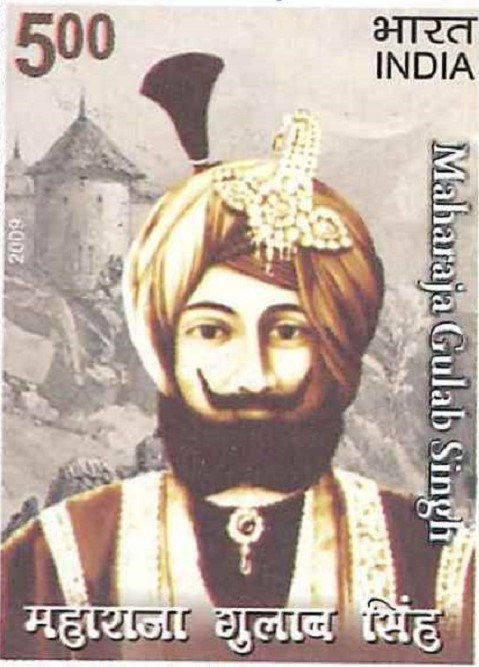
June 17, 1822: The day Maharaja Ranjit Singh crowned Gulab Singh as Maharaja of J&K

One of the most glorious chapters in statecraft and courageous victories was written by Maharaja Ranjit Singh. A Sikh ruler who consolidated his hold over Punjab, not as we know it today, but the Punjab of yore of which Lahore was the seat of power.

The Lahore durbar, as his kingdom was referred to, in popular parlance, ruled large parts of what is Afghanistan today, many parts of what is Pakistan, and Jammu & Kashmir of today, as also parts of J&K under illegal occupation of Pakistan today. Imagine the strength and geographical reach of the Lahore durbar.

Ranjit Singh was not born in a royal family with a silver spoon in his mouth heading a kingdom. He was a very courageous and tireless soldier who created a kingdom from the scratch, virtually.

It was on June 17, 1822, that he visited Akhnoor, for coronation of Gulab Singh, one of his most trusted generals. Dogra Gulab Singh was one among the three brothers from Jammu who worked tirelessly for the expansion, consolidation and smooth running of the Lahore durbar.

The three Dogra brothers hailing from Jammu were, at one time, the most formidable force to reckon with in Maharaja Ranjit Singh’s service. It was a tribute to sagacity of Maharaja Ranjit Singh that he recognised the indomitable spirit of Gulab Singh and chose to reward him for his services. He also took good care to reward two others also, by giving them very important assignments in the Lahore durbar next of him.

Maharaja Ranjit Singh recruited Gulab Singh as a cavalry-man at a very young age of 16 or 17. Credit goes to extraordinary valour and intelligence of Gulab Singh that he became one of the most trusted man of Maharaja Ranjit Singh in about a decade. Every month, every year, Gulab Singh notched up victories, cursed troublemakers on behalf of the Lahore durbar. Maharaja Ranjit Singh sent Gulab Singh on several expeditions to extend boundaries of his kingdom and each time he returned successful.

Over the years, Gulab Singh added Rajouri, Bhimber, Basohli and Kishtwar to the northern territories of Maharaja Ranjit Singh. Besides these, many other successful military expeditions were also led by Gulab Singh and these helped him gain the trust of Maharaja Ranjit Singh. By the time Gulab Singh was anointed on June 17, 1822, he had served the Lahore durbar for about 14 years already and had taken part in many perilous military campaigns.

Almost 200 years ago, Maharaja Ranjit Singh had visited Akhnoor (Akh+Noor) to anoint Gulab Singh. The function of anointment was held on the western (right) bank of the mighty River Chenab on what is now known as Ji Pota Ghat. This that has now become a favourite point of the tourists visiting Akhnoor.

It is said that when Maharaja Ranjit Singh put the Raj Tilak on the forehead of Gulab Singh, he did it in a very peculiar way, departing from what is considered a normal.

Maharaja Ranjit Singh put the Raj Tilak from forehead moving downwards towards nose, opposite of how a tilak is applied in the conventional way, from top of the nose moving upwards to forehead. The Sikh ruler is said to have explained that he wanted Gulab Singh’s roots to go downwards into the earth and become firm. The kingdom of Jammu thus became a reality in 1822 though it was much later, in March 1846 that the contours of the kingdom of Jammu and Kashmir were defined more clearly. After the death of Maharaja Ranjit Singh, internecine intrigues in Lahore durbar and after that the Sikhs lost a war with the British.

For people living in Jammu and Kashmir, the day of June 17 has a special significance but somehow it has remained a day with few celebrations. We may say that historians have done little to record the valorous deeds of Gulab Singh who went on 24 years later to lay the foundations of independent Dogra dynasty which lasted for 101 years.

A grand commemoration function is held on the same spot at Akhnoor on the banks of River Chenab every year now. Far away in Delhi, it was the first day of budget session of 17th Parliament. For Dogras, it turned out to be a very special day as two MPs from the Jammu region, Dr Jitendra Singh, and Jugal Sharma, took oath in Dogri.

Shri Amarnath Yatra: A Pilgrimage of great Sanctity that requires Discipline

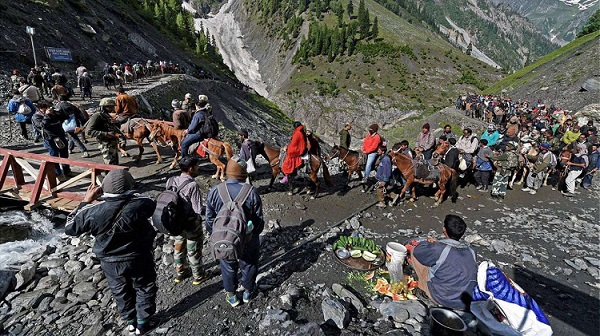
The annual pilgrimage to the holy cave of Amarnath in Kashmir, for this year, is scheduled to commence on 1st July and culminate on 15th August, the auspicious day of “Raksha Bandhan”. The Yatra (pilgrimage) is an event that probably rivals the Kumbh Mela in terms of sanctity and religious significance. Shri Amarnath Shrine is located at the head of the Sind Valley in Kashmir, flanked in the north by the great Himalayan range and in the south by the Sasakat mountain range. It is located besides a small tributary of the Sind River called Amaravati. It is believed that Lord Shiva narrated the Amar Katha (Narrative of eternal life) to Goddess Parvati in this cave. The Amarnath cave has been a place of pilgrimage since many centuries.

There are two routes open for the pilgrimage, one from Sonmarg to Baltal and onwards, and the other from Pahalgam. The Baltal route is shorter but very steep and a difficult climb. The Pahalgan route is much longer but easier to trek. The uniqueness of the pilgrimage lies in the difficult terrain and the inclement weather that has to be overcome in order to reach the holy shrine.

The fact that Kashmir is under the shadow of foreign sponsored terrorism makes security for the pilgrimage a big challenge. Every year, the separatists give a statement assuring the pilgrims of their safety, they have done so this year too. “There is no threat to Amarnath Yatra from Kashmiris as reported by some mischievous media outlets from their cozy studious in New Delhi and these pilgrims are very much safe in the Valley,” said a recently released statement of the All Party Hurriyat Conference.  However, such assurances are not upheld by the terrorists and incidents of violence leading to civilian casualties have taken place in the past. In 2017, a bus carrying civilians was attacked by terrorists leading to the killing of seven innocent civilians and injuries to another 19.

Security arrangements are ogranised jointly by the Indian Army, paramilitary forces and Jammu Kashmir Police. All arrangements are overseen by the Shri Amarnath Shrine Board (SASB) that functions under the Governor of the state.

The task of the security forces begins much before the pilgrims arrive. First and foremost, the army ensures that the entire route is secured against any kind of security threat and is in a fit state to be used by the pilgrims. The soldiers go over the entire route of the pilgrimage, at considerable risk to their life and limb, to set out the trail that the pilgrims ultimately tread. It is only after the Army gives a go ahead that the next step for starting the pilgrimage is taken.

All through the period of the Yatra, the route is sanitised from Jammu onwards. The entire route of the pilgrimage from Pahalgam and Baltal is kept under constant surveillance as are the prefabricated huts that serve as accommodation and other administrative points like the Langars (cook houses) and medical posts, among others.

Apart from security, the Army and also other security establishments provide immense humanitarian aid to the pilgrims. Throughout the Yatra, in addition to the arrangements made by the civil administration and other voluntary organisations, they provide food, refreshment and shelter to thousands of pilgrims.

Helping the aged and feeble negotiate adverse terrains is yet another goodwill gesture extended.

The army also sets up medical aid posts at various points along the route that are open to all civilians day and night. Veterinary camps are also organised to ensure the safety of the ponies, pack mules and other animals used in the Yatra. The army has exigency plans in place to meet any natural calamity. The mere presence of the Indian soldiers gives a sense of security to the pilgrims.

The prominent role played by Indian Army in the conduct of the Yatra by virtue of its size and wherewithal, by no means, belittles the excellent effort put in year after year by the paramilitary forces and the Jammu and Kashmir Police.

The locals of the area are fulcrum for success of the Yatra. Unmoved in their faith and devotion to the shrine, Muslims of the area have never heeded the diktats of terrorists and they participate in the pilgrimage with fervour equal to that of the Hindus.

Hotels, shops, pack ponies, porters and all other related services gear up to welcome the pilgrims. A festive air is visible. The guides and porters of both communities are equally conversant with the legend and mythology and are more than willing to narrate the same. Anybody requiring assistance finds hundreds of hands extended towards him, without knowing whether the hand belongs to a Hindu or a Muslim.

The administration is working overtime to ensure that everything is in place in a timely manner. Home Minister Amit Shah is scheduled to visit the pilgrimage site and inspect the preparations on 30th June before commencement of the pilgrimage – such is the importance being accorded to the same.

By remaining disciplined, the pilgrims can make a big contribution in ensuring that the pilgrimage becomes memorable for all. Elaborate instructions on physical preparation for the Yatra, the manner of conduct, proper clothing for the same, security instructions and actions to be taken during medical and other emergences are available on the internet. There are adequate assistance centers all through the route and rest areas. These should be read, assimilated and strictly adhered to. The most important by far is strict adherence to security rules and regulations. It should never be forgotten that the threat to the Yatra from terrorist violence is palpable and all have to join hands to negate the same.

With all arrangements in place it can be safely said that Kashmir is poised to receive its annual guests to its most revered shrine. It is time to extend best wishes to the organisers as well as those who are undertaking the holy pilgrimage.

World Food India to be held from 1st to 4th November 2019 in New Delhi

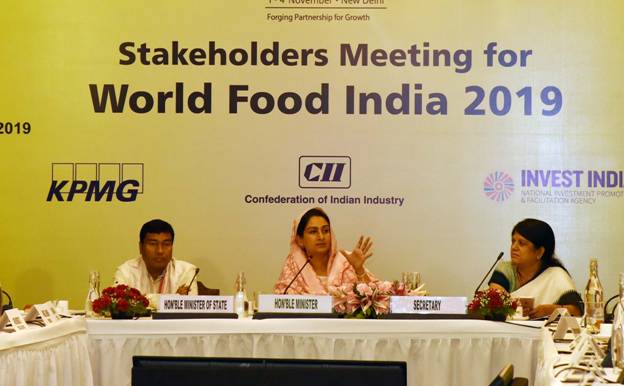
Union Minister for Food Processing Industries Harsimrat Kaur Badal has announced that World Food India (WFI) 2019 will be held from 1-4th November 2019 in New Delhi. It will be the biggest gathering of all global and domestic stakeholders in Food Processing Sector and will position India as Food Processing Destination of the world.

The Minister also chaired a meeting with various stakeholders of WFI 2019 including the associated Ministries and Departments, CEOs of major food processing companies and Industry Associations. This was followed by a second meeting with the Ambassadors/High Commissioners of leading food processing/food retailing countries. The meetings were held to discuss the investment opportunities available in India in the Food Processing Sector and to sensitize the gathering about their participation in WFI 2019. 

The Minister informed the gathering that the second edition of World Food India is planned at a much bigger and grandeur level from 1-4 November 2019 at Vigyan Bhawan and Rajpath Lawns in New Delhi. World Food India 2019 shall consist of several top level seminars, investment opportunities, exhibitions, high level CEO roundtables, country sessions, B2B and B2G networking etc.  For the year 2019, the Ministry is targeting to partner with at least 15 countries and participation from at least 80 countries. The tagline of the event will be “Forging Partnerships for Growth”.

She informed that preparations for the World Food India 2019 have already begun. More than 11 international & 8 domestic roadshows are planned. The roundtable with all top CEOs and ambassadors today was one such high level event showcasing the intent of ministry to engage with Industry- domestic and global. In the next few months, Ministry will reach out to all the states and other players in Industry in particularly the MSMEs. The Minister also invited suggestions from the industry on the 4-day event.

The event has already received interests from several countries and industries interested to becoming part of the event. The minister invited the ambassadors and industries to be a part of this mega celebration of food and witness the immense opportunity that India provides for growth and prosperity.

The government initiated this biennial event- World Food India (WFI) to promote food processing sector at global level. The first such event was conducted in 2017 and received wide success. The event created Brand India in global food map by positioning India as a World Food Factory. It was for the first time in India that all major policy makers and top industrialists across the globe in Food Processing Industries were together under one roof. World Food India 2017 had witnessed presence of India’s top political leadership including the President of India, the Prime Minister, the Finance and Commerce & Industry Minister. CEOs roundtables with Prime Minister, Finance Minister, and Commerce & Industry Minister were the key highlight covering various aspect related to business be it strategic, finance/investment or trade.

World Food India 2017witnessed the participation of 61 countries, ministers from several countries and India, Chief Ministers of various Indian states, 60 Global CEOs and eminent academicians attended the event. The event saw a footfall of more than 75,000 more than 8,000 B2B meetings and signing of MoUs worth USD 14 Billion.

JP Nadda appointed BJP working national president

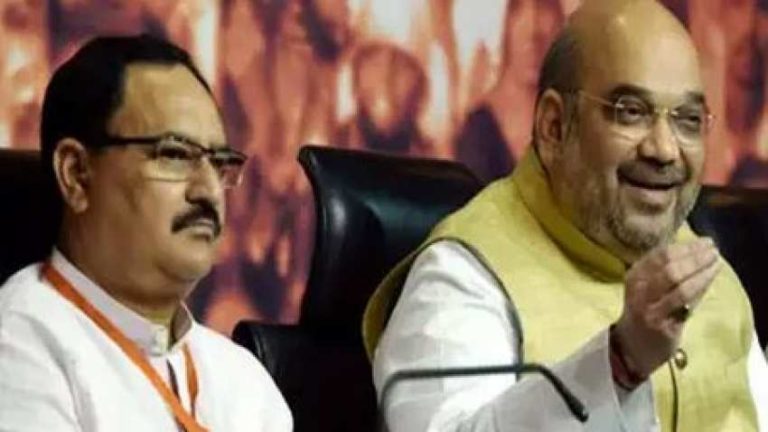
Rajya Sabha member and former health minister JP Nadda has been appointed as the working president of the Bharatiya Janata Party. He has been elected as Amit Shah has now taken charge as Union home minister though, for now, Amit Shah will remain BJP chief, but the workload will be shared with Nadda. In the previous government, Nadda was instrumental in furthering Prime Minister Narendra Modi’s flagship programmes including Ayushman Bharat.

The decision to appoint Nadda was taken in a BJP parliamentary board meeting which was chaired by PM Modi, BJP chief Amit Shah, and senior leader Sushma Swaraj among others. Speaking on JP Nadda’s appointment, Union Defence Minister Rajnath Singh said, “Amit Shah handled the responsibility of being BJP chief successfully for five years. Now that he has become home minister, he [Amit Shah] requested someone else take charge of the party. BJP Parliamentary board has selected JP Nadda as the working president.”

The 59-year-old Nadda, will be overseeing BJP’s election strategy for the upcoming state assembly polls in Haryana, Jammu and Kashmir, Jharkhand and Maharashtra. The BJP will likely get a new president by the start of next year.

Prime Minister Narendra Modi congratulated him in his tweet. “Shri @JPNadda is a diligent Karyakarta of the Party, who has risen through the ranks due to his hardwork and organisational skills. Humble and affable, he is widely respected across the BJP family. Congratulations to him on becoming the Working President of the Party.”

Mr. Nadda thanked PM Modi and Amit Shah on his twitter handle. “I will try to strengthen the party as its worker…serving the party is like worship for me,” he said.

Pakistan continues to breed terrorists on its soil. Modi is right in refusing talks with Imran Khan

With Indo-Pak relations plummeting to an all-time low, anything that can help end the acrimony between these two nuclear powers is most welcome. Perhaps this is why Pakistan’s Prime Minister Imran Khan’s repeated offer for re-commencing Indo-Pak dialogue to resolve all contentious issues has revived the clamour for positive reciprocation within political circles as well as a certain section of our intelligentsia. However, as the Indian government continues to maintain that terror and talks cannot go together, chances of the resumption of Indo-Pak dialogue in the foreseeable future seems quite unlikely.

Those who support reopening of Indo-Pak dialogue apparently draw inspiration from the old Chinese adage of how even a thousand mile long journey has to begin with a single step. These people are incurable optimists who aren’t demoralised by the fact that despite both countries engaging in a series of wide-ranging talks and instituting various Confidence Building Measures (CBMs) over a period of more than seven decades, differences between these two neighbours remain unresolved. The pro-dialogue school of thought strongly believes that even if talks haven’t delivered any positive result as yet, they haven’t had any negative effect either; therefore, there’s no reason to stop the harmless dialogue process.

But then there are others who maintain that the Indo-Pak dialogue process is nothing but a means to create a false illusion of peace and harmony with both sides ‘talking just for the sake of talking’. These people maintain that nothing ever comes out from Indo-Pak dialogues because Islamabad consistently refuses to walk its talk and therefore holding talks under these conditions is a waste of time, energy and money.

To support its viewpoint, the anti-dialogue camp cite instances of Islamabad’s treacherous response to New Delhi’s peace gestures, like Pakistan repaying Prime Minister Atal Behari Vajpayee’s Lahore bus initiative to usher peace with the Kargil intrusions in 1999. They also remind us that it was Pakistan based terrorist group Jaish-e-Mohammad (JeM) that attacked Pathankot air base just a week after Prime Minister Narender Modi’s personal gesture of making an unscheduled stopover in Lahore to personally wish his counterpart Nawaz Sharif on his birthday in an effort to promote Indo-Pak bonhomie.

One can always make light of those who are against Indo-Pak dialogue by dismissing them as ‘hawks’ or even calling them ‘war mongers.’ They can also be accused of doing great dis-service to the nation by promoting animosity and vitiating the environment, which makes any rapprochement well-nigh impossible. But despite this, it cannot be denied that these people are well-grounded in reality and refuse to be carried away by utopian illusions that peace and harmony will miraculously overcome deep-rooted hatred and suspicion created in the minds of people by their politicians on both sides of the Radcliff Line. Even though it may sound negative, but their stand against holding dialogue does make practical sense because what’s the point in siting down, exchanging pleasantries, announcing grandiose CBMs and making pretentious declarations pledging undying commitment to peace that won’t see the light of day?

Those who are in favour of dialogue feel that Imran Khan’s repeated offer for talks is a sign of his genuine desire to normalise Indo-Pak relations and therefore should be accepted by New Delhi. They also contend that since no Prime Minister of Pakistan can take the liberty of extending an olive leaf to India without explicit permission of the military, Khan’s repeated offers for dialogue must certainly be having Rawalpindi’s approval, making it a golden opportunity that New Delhi shouldn’t miss.

Some even say that Pakistan Army could well be goading Khan to talk with New Delhi as it wants to kill two birds with the dialogue ‘offer’. Firstly, it knows that resumption of talks would result in military de-escalation along the Indo-Pak borders giving Pakistan Army (which is at the receiving end of Indian Army’s strong retaliation to Pak Army initiated ceasefire violations along the Line of Control), a much-needed face saver. Secondly, Khan’s unilateral dialogue offer would also project Pakistan as a nation committed to peaceful co-existence with its neighbour and convey the impression to the world that it isn’t the army that’s calling the shots in Pakistan.

However, those who support the viewpoint that terror and talks cannot go together maintain that Islamabad is using the ‘dialogue card’ only to avoid being further isolated by the international community on its selective approach in tackling terrorism. This does make sense as Islamabad is desperately struggling to avoid being placed on the Financial Action Task Force (FATF) ‘blacklist’ for inadequate action to check money laundering and terror financing. So, should Modi accept or reject Imran Khan’s offer for talks?

To talk or not to talk with Islamabad-that is the question!  

By conveying that he is willing to address all contentious issues including terrorism and Kashmir, it may appear that Imran Khan is being extremely magnanimous and resolute in his efforts to usher peace in the region. But, by avoiding to make any commitment on reining in Pakistan based terrorist groups operating inside Kashmir, he has unwittingly confirmed that Islamabad doesn’t intend acting against terrorist groups enjoying state patronage and safe sanctuaries on its soil. While it appears that most pro-dialogue groups in India have apparently not seen through Khan’s devious plan and are continuing to press for recommencement of talks, Islamabad’s ploy hasn’t escaped Washington’s notice.

Washington has welcomed Khan’s offer for dialogue. But it has also listed certain critical issues that are essential for facilitating meaningful Indo-Pak dialogue as also achieving sustained peace, which buttresses the stand of the Indian government that ‘terror and talks cannot go together’.

Firstly, by saying that “underlying tension (between India and Pakistan) has been (due to) the role of terrorist forces that have sanctuary on Pakistani soil and this needs to be addressed,” the US has specifically apportioned the entire blame for strained Indo-Pak relations on Islamabad’s continuing patronage of terrorists. Secondly, by clarifying that “What the United States is really looking for in Pakistan are arrests and prosecutions and not allowing these (terrorist) groups to operate and move around freely, acquire weapons, cross into India, carry out attacks,” Washington has made it absolutely clear that the bottom line is dismantling terrorist infrastructure by Pakistan.

Thirdly, by stating that “Until these (terrorist) groups are put out of business, it’s going to be very difficult for India and Pakistan to achieve a sustained peace,” Washington has made it clear to Islamabad that as long as terrorist infrastructure in Pakistan isn’t dismantled, its yearning for peace and making offers for dialogue is just a charade.  Lastly, by mentioning that “the onus is on Pakistan to ensure that they crack down on these (terrorist) groups,” the US has left nothing to imagination. Therefore, though Khan may wax eloquent on his heartfelt desire to walk the extra mile to normalise Indo-Pak relations and willingness to talk on any issue, New Delhi shouldn’t budge from its principled position that terror and talks can’t go together as this isn’t a precondition but the pre-requisite for any meaningful dialogue!

Creating a better world with her love for animals

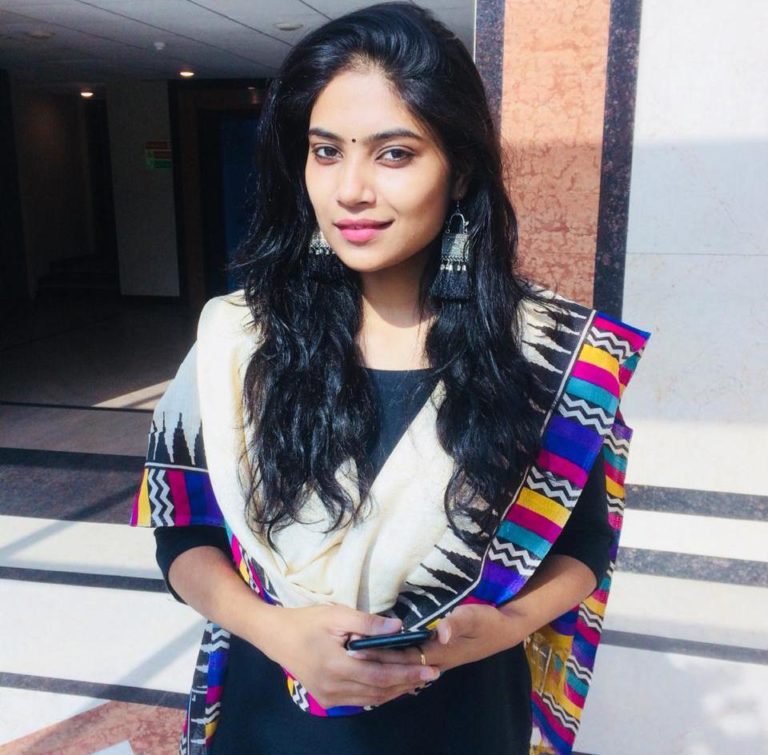
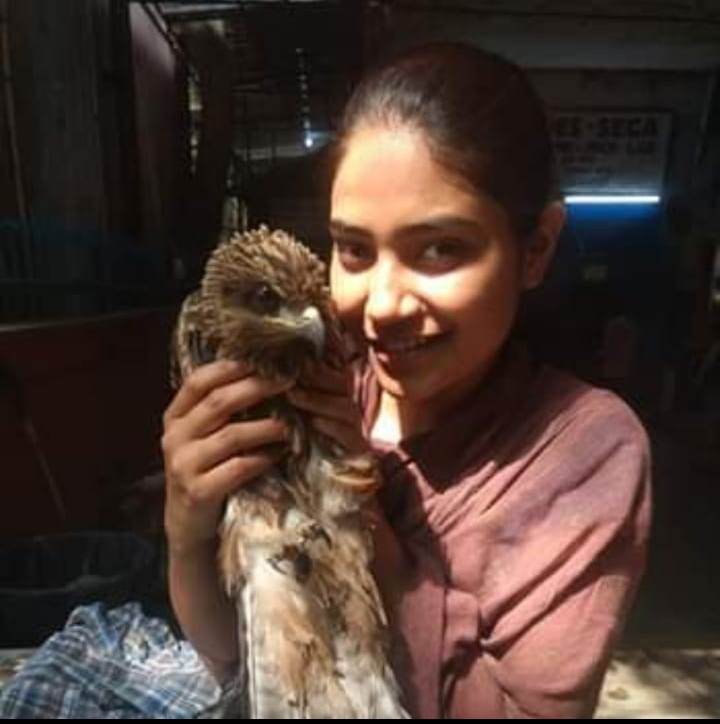
As per British novelist and poet Roald Dahl’s famous quote “Those who don’t believe in magic will never find it.” Shivani Gautam of Taimoor Nagar just found her ‘Magic’ in Connaught Place recently. An avid animal lover, 28-year-old Shivani recently rescued a puppy from a beggar, who was drugged and used as a bait for begging. As Police and NGOs refused to rescue the drugged puppy, due to the threat of beggar mafia, she decided to take action on her own, with support from a male volunteer. After severe resistance by the beggar, she was finally able to rescue the puppy and named her ‘Magic’, as she found her smile magical.

Describing about the incident, she says, “The drugged puppy was used for begging at Connaught Place. A girl named Deepti Sharma, reached out for help to Delhi Police and a few popular NGOs to rescue the puppy. Though Police reached at the location but did not act and since group of beggars were there, nobody from the NGOs wanted to enter into any argument with them. She then posted about the incident on facebook and pleaded to rescue the puppy held captive and drugged by a female beggar. I saw that post and went to CP the very next day with a volunteer. We tried to convince the lady beggar to give the puppy for a routine checkup. As anticipated, the lady denied and started being aggressive.” Finally, Shivani was able to rescue the puppy, after distracting the beggar and escaped from the market.

“The puppy was about 20-days-old and unable to walk because of the drugs and weakness without mother’s milk,” she noticed.  She fed the puppy and paid for her foster care, and now the puppy is healthy and will be soon adopted by a family.

Though ‘Magic’ was rescued by Shivani just few days back, but It was five years ago, when she was fighting her battle with fibroadenoma and struggling with the after-effects of lung bullectomy, that she stumbled upon her first rescue-an indie pup Jeeva. Meeting Jeeva changed her life forever. She saved the puppy after a severe accident and in that she found her biggest morale booster, to help fight her own health battles. Saving one puppy from road inspired her to follow the path of helping animals. “Saving animals and getting them treated, makes my job and house worth something”. Now, she clearly understands the pain of animals and is working to fight against animal cruelty. She turned to a vegan from a hard-core non-vegetarian, as she believes that all lives matter equally.

Shivani, who did her B.com from Gargi, College followed by a Masters in commerce from IGNOU, subsequently worked for a period of two years before she was diagnosed with fibroadenoma. She now mainly focuses on animal welfare, and also has an interest in learning Japanese and preparing for JLPT N3.  She has saved many puppies suffering from diseases like distemper and parvovirus. About 25-30 street dogs rely on her for their food and treatment. She also does advocacy for the pets, who are being mistreated and exploited by their owners.

She believes that saving animals gave her a purpose in life. She has rescued baby squirrels, motherless cats dumped in a dumpster during winter. She calls herself mother to her 7 Indies, who stay with her. Even though it’s hard to raise funds for treatment of animals and other expenses, she has never given up hope. Shivani believes in magic and also knows that it’s her action that will make this magic possible.

Conversation with Faisal Saeed Al Mutar on Ideas Beyond Borders

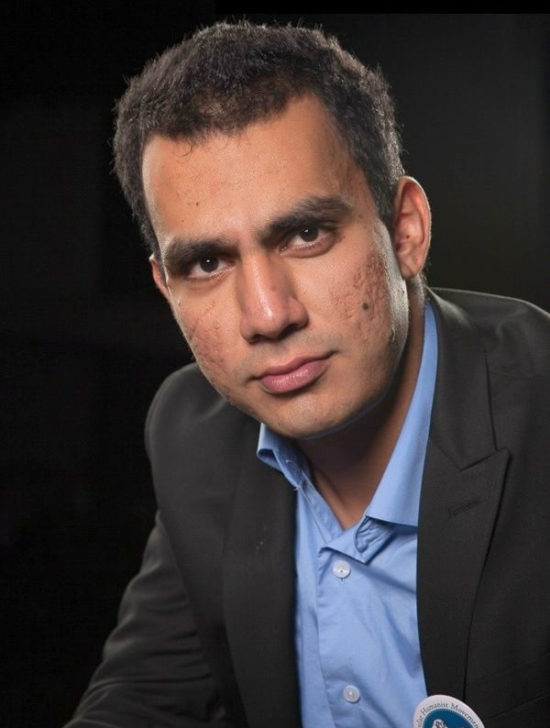
Faisal Saeed Al Mutar is the founder of Ideas Beyond Borders and Bayt Al-Hikma 2.0, Global Secular Humanist Movement. He is an Iraqi refugee, satirist, and human rights activist. He is also a columnist for Free Inquiry. Here, we continue to talk about the recent work.

Scott Douglas Jacobsen: What is new? What is new within the mission and mandate of Ideas Beyond Borders?

Faisal Saeed Al Mutar: There are many things. I want to focus on a few. We have assembled a team of editors and translators to make many of the articles that were not available to be available on Wikipedia.

Only a small portion of the articles are available in Arabic, for a language spoken by more than 400 million people. We have successfully moved the Arabic language to the 16th. There is a lot of work to be done.

But I am confident in the team that is constantly growing. We have translated roughly one million words in less than 6 months. We have a team from all over the region who constantly are trying to fill in the missing elements or information.

That the closed societies try to deal with. We have secured a partnership with Wikimedia Levant. Wikimedia is the mother of Wikipedia and other projects. In partnerships with other wikis, we are able to issue certificates, so that they can advance in their own career.

That element of empowerment that we deal with. On other subjects, on the books, we have translated roughly 10 so far. We are acquiring more and more to be released in our digital library. It is designed by the company of WordPress itself, which has generously featured us in their campaign for doing anything.

For people interested, they have listed IBB as one of their success stories. They have designed our website. They are also designing our library website, which is Bayt al-Hikma 2.0. It will be where there will be most of the content in terms of books.

People can also go to IBB Wikipedia to see the list of articles translated and are translating. It is constantly growing. We are tapping it, to start new programs and features and more stories of some of the heroes – I would say. 

Those who are on the day-to-day basis fighting extremism, not necessarily with a gun. They are sharing a positive counternarrative that is enlightening and counter to the way the extremists tell us how the world is going badly – and the only way to change it is via extremist ideology.

It is why we are glad to have Stephen Pinker in the Advisory Board, who is about the counternarrative. It is Enlightenment values and a positive outlook. That the world is getting much better than the extremists show.

2018 was a tremendous year. It was a year of foundation, of trying to figure out who is who, building relationships, building partnerships, and so on. I see 2019 as the year of growth and constantly trying to expand our team, expand our network, expand our impact.

Our page grows roughly 1,000 likes a day. We have multiple social media managers working all across the region. Today, I got the statistics. We have roughly 5,000 likes from Iraq, 10,000 from Algeria, 7,000 from Egypt. We have an impact all across the world.

That impact is constantly increasing. I am pretty happy. This year is going to be the year of creating more content. As we also continue to do more on the ground, we have campus programs from last year expanding from the east coast to the west coast. 

We are partnering in the creation of workshops. Those are trying to fight extremism through culture, through arts, through positive ideas. Stephen Pinker on the AB said that ideas can change the world.

Extremism is an idea. It can change the world. We are trying to counter the narrative with a positive image. I am pretty excited about what is coming.

Jacobsen: If we are looking at the global threat of extremism and terrorism, according to the 2016 UN Arab Human Development Report within the IBB Annual Report 2018, what does this indicate about the Middle East-North Africa region and work IBB does in terms of education and other means?

Al Mutar: The development report is an important element. It is why we mentioned it in the report. For a region that is very small, it is a source of constant conflicts. It has produced a lot of attacks and a lot of refugees.

On The Rubin Report, I said, “The Middle East is like Las Vegas, but happens in the Middle East doesn’t say in the Middle East.”

Jacobsen: [Laughing].

Al Mutar: What helped as a pre-requisite, it is the language. It is helpful. We are developing these educational projects because many of the wars launched against the region have been dealing with the iceberg. 

Some have been dealing, even with the region defeat of ISIS, with a lot. I definitely celebrate the defeat. But the environment that permits groups like ISIS to exist is still there. The issue of extremism is multilayered, so is the issue of extremism. 

It is multilayered, so is the issue of terrorism. The ideological and ideas element is important. That is why I think we can have the most impact by making the ideas of the Enlightenment accessible in that region.

Russia has its narrative in the Arab world. The extremists have their narrative in the Arab world. There is no institutionalized narrative of Enlightenment in the Arab world. I think that is what IBB can do. That is what we have been successful in doing over the past year. 

I think we will continue to do that.

Jacobsen: In terms of the Universal Declaration of Human Rights, Article 19 speaks to freedom of expression, which is more general than freedom of speech – especially in an international context. 

How does arguing for freedom of expression as one of the most important rights stop the spread of extremism?

Al Mutar: That is a very good question. There is a distinction, in my mind, between conversation and violence. When conversation stops, violence, in general, is the only outlet that people use to justify the spread of their ideas and ideals.

If you look at many of the countries with censorship across the Middle East, you will see this in many extremist groups. Because when you censor or kill anybody who disagrees with you, as many of these dictatorships do, extremists and the people who do not care about life.

They will the only people to show disagreement and most often violently. We take freedom of speech for granted in the Western world. Even though, it is being challenged here. We always have to remember that the element of freedom of expression and combatting censorship in that part of the world.

It is an extreme element of combatting extremism. When people find a way to express themselves through outlets and newspapers, there can always be differences of opinion. I do not think people go to violence as the first route. 

I often think violence is the last resort. I think most issues can be resolved through conversation. It might be heated. It could be the dislike between people with different opinions. But I think the resort to violence will be much less if we allow all the other options for democratic participation.

People with the right to freedom of assembly, freedom of religion, freedom of thought. I was, recently, in a conversation with a representative from a Syrian group in Iraq. He was telling me for ages. Many of their Syrians have existed peacefully in Iraq. But many of them, because of the conflict, are picking up arms to defend themselves.

When there was a peaceful situation in which people were considered citizens and then there were no attacks against them, one of the oldest groups in Iraq have existed in peace and never resorted to violence.

Now, they are doing it, forming militias. When there is a conversation, when human rights are respected, when civil societies can participate and protect rights and advocate for these rights, then, definitely, something positive can happen here. It is a counter to extremism.

Jacobsen: What would be the biggest thing IBB can do, and other individuals and groups can support IBB in doing, in 2019 to further the advancement of the Article 19 right to freedom of expectation from the Universal Declaration of Human Rights in addition to the empowerment of individuals on the ground in the Middle East-North Africa region who may not have access to rights and the information that people, such as ourselves, simply have as a privilege?

Al Mutar: One of the main things that we’re incorporating as part of our growth is building a global network. Building a global network has a lot of positives in which a lot of other people try to help other people achieve their goals, as I say, one of the main elements of IBB is the institutionalization and building the network.

There are many missing elements in the ideas world. There are many individuals working by themselves. They are not getting enough advice. Having one institution, it is allowing things to grow. As you can see, our AB is constantly growing.

This is in addition to the ambassadors and employees. All of these people, they work together. Everybody can play a major role, whether they can donate their skills within the getting involved section of our website or in donating money.

I think building the network is what makes IBB helpful. It is what has been missing in most of these networks. There have never been any successful attempts to bring a network together. I think IBB is doing this already.

I think it will do this successful more and more. I have seen more and more people from the region getting involved.

Jacobsen: If we look at individuals such as Malala Yousafzai, and other human rights activists, what is the importance of women coming forward and adding their voices and being given platforms to add their voices to this progressive work, human rights activism, and advancement of freedom of expression in the Middle East-North Africa region?

Al Mutar: Very good question, I think it is important. There is an Arab proverb that comes from poetry. If we empower women, then we empower the next generation. Women are also not just mothers. But they are also teachers, doctors, and all of that. 

If you look at one of the main things that extremists have been trying to express across the Middle East, they are the number one victim of extremism. One of the major conversations happening right now in Afghanistan is what would a Taliban return to Afghanistan look like.

Many people who have been writing articles and advocating the Taliban is women. Because they would be denied human rights by these terrorist organizations. Malala being one from the region. There are also many others across not just the Arab world but the Muslim world, even the whole world. It is to be involved, as a message, and organized.

I think IBB is definitely playing a role in that. Also, in terms of getting more people to know about these ideas, there are several issues in the region, because of the existence of patriarchy in the Muslim world. Males have to be educated.

Within our translation project, it counters some of these elements within societies. It is exposing many people across the region to the idea of women’s rights, human rights, and civil rights, too. We have done multiple campaigns about that.

These societies will start to become more open. Women, hopefully, will be beneficiaries of it. I think it is their fight as much as our fight as well. That struggle is the struggle against extremism.

Jacobsen: Thank you for the opportunity and your time, Faisal.

Al Mutar: Thank you, Scott!

Image Credit: Faisal Saeed Al Mutar.

Sahitya Akademi announces Bal Sahitya Puraskar and Yuva Puraskar 2019

Sahitya Akademi has selected 22 writers for the Sahitya Akademi Bal Sahitya Puraskar 2019 and 23 writers for Yuva Puraskar 2019. The Executive Board of the Akademi that met in Agartala today, under the Chairmanship of its President, Dr. Chandrashekhar Kambar approved the selection of awardees. The Union Minister for Tourism and Culture (Independent Charge), Shri Prahlad Singh Patel congratulated the award winners. The awardees have been selected on the basis of recommendations made by the Jury comprising of three members each in the concerned language, in accordance with the rules and procedure laid down for the purpose.  According to the procedure, the Executive Board declared the Awards on the basis of unanimous/majority vote by the Jury.  Award in Maithili will be declared on a later date.

For the Bal Sahitya Puraskar, the Awards relate to books first published during the five years immediately preceding the year of Award (i.e. between 1 January 2013 and 31 December 2017). However, during the initial ten years i.e. from 2010 to 2019, the award may also be given to an author based on his/her total contribution to Children Literature.

Meanwhile, eleven books of poetry, six of short story, five of novel and one literary criticism have won the Sahitya Akademi Yuva Puraskar 2019. The Award relates to books published by an author of the age of 35 and below as on 1st January of the year of the award.

The Award in the form of a casket containing an engraved copper-plaque and a cheque of Rs.50,000/- will be presented to the awardees at a special function to be held at a later date.

For List of winners click here: http://164.100.117.97/WriteReadData/userfiles/PR-Sahitya%20Akademi(Bal&Yuv)%20final.pdf

HRD Minister asks VCs of Central Universities to prepare a blueprint to improve rankings

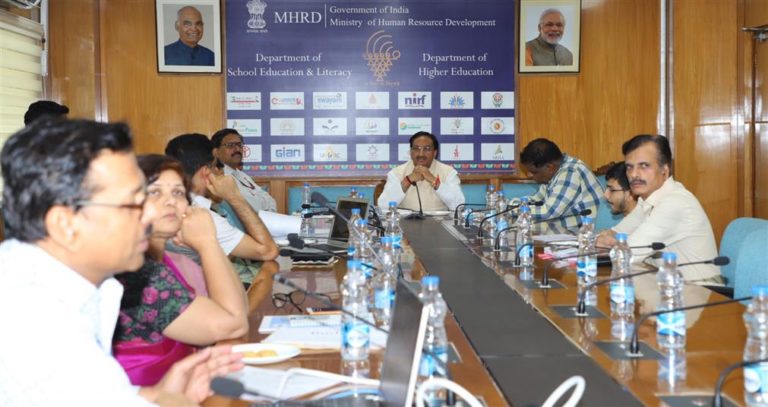
Union Human Resource development Minister Dr. Ramesh Pokhriyal ‘Nishank’ recently chaired a meeting with Vice Chancellors of all the Central Universities in New Delhi. Secretary, Higher Education Shri R. Subrahmanyam was also present in the meeting.

The Minister reviewed the progress and the best practices of the universities. He also reviewed the present infrastructure, maintenance and human resource related aspects. The Minister gave assurance to the chancellors to extend maximum support for the development of universities.

The Minister was concerned over the vacancies and directed UGC to develop a mechanism to fill them quickly, so that young generation may get quality education. Dr Nishank also urged that all universities should prepare a blueprint to improve rankings. The Minister hoped that by providing quality education and research, India can become world leader in the field of education.

The Minister said the Universities should focus on skill based and job oriented education to overcome the challenge of unemployment in the country. And he also congratulated the best performing universities for the good work.