Home Blog Page 450

General Elections 2019: Battle for India’s Soul

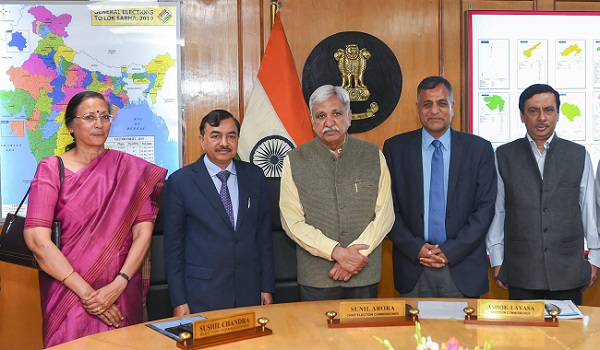
On 10 March 2019, India’s Chief Election Commissioner Sunil Arora announced the much awaited poll dates for elections to the 17th Lok Sabha, in seven phases from 11 April to 19 May. With this, the model code of conduct came into force and the biggest democratic exercise of the world was set in motion. Over the next few weeks, India will see the setting up of over one million polling stations, to enable over 800 million voters to cast their vote to elect the next government. Electronic voting machines will be used in all the polling booths, each of which will have a voter verifiable paper audit trail (VVPAT) to obviate charges of rigging. More than 8,000 contestants will fight for 543 seats. An estimated 1,841 political parties recognised by the Election Commission will contest the polls, which are estimated to cost an unprecedented Rs 500 billion (approx. US$ 7 billion, as per estimates of the Centre for Media Studies, New Delhi). Democracy, obviously, does not come cheap.

But this election is more than a matter of mere statistics. In many ways, General Elections 2019 will be the most defining election for India since the country achieved Independence in 1947. This is an election which will set the course for what India chooses to be. Will the ancient wounded civilisation, colonised and vandalised for over a millennia, seek to rediscover itself and embrace its heritage? After all, India is perhaps the only civilisation that has survived the ravages of time. Or will India continue to be in a state of denial about its true potential, and remain unmindful of its rich heritage, ethos and culture? Election 2019 will determine that too. It is therefore, more than a matter of merely electing its representatives. It is a battle for the Soul of India.

To understand this stream of thought, let us go back in time, first to the early years of the 19th Century and then further back to Indian history dating back 1300 years. It would be interesting to first course through the account of Lt Col James Todd, an officer in the East India Company and the celebrated author of ‘Annals of Rajasthan’. James Todd was born on 20 March 1782 in Islington, London, and died aged 53 on 18 November 1835. When he returned to England, his main job was to advise the Board of Directors of the East India Company on matters concerning India. At that point of time, there was a group of very influential people, including the Governor General of India, Lord William Bentinck who wanted to wipe out all traces of Indian civilisation, which they considered as barbaric. This group was opposed by Col Todd and his friend William Jones Prinseps and also by others at the Asiatic Society who were not only aware of India’s civilisational heritage but were also strong promoters of it. They considered India to be the original source of all knowledge, languages and philosophy of all Europe, and preserving of such a heritage to be in the best interests of not just India, but also for the rest of the world.

The British Parliament consequently held hearings to determine the future course of action by the British Government and the British East India Company. Todd gave sage advice about the wisdom of preserving Indian heritage and allowing local rulers to govern their kingdoms with minimal interference. On the other hand, James Mills, author of History of British India, espoused the cause of proselytisation, and pitched for the whole of India to be taken over by the East India Company, the population converted and put to work as semi-slaves for England and John Company. In his arguments he said: “The entire population should be subdued and cowed. Their role was to be passive and obedient…we take all military power in our hands. Now it is considered what military power implies; that is, in truth, the whole power; the company must get rid of the abomination of indirect rule…” Mills further urged that panopticons be established all over the country. Panopticon is a modern prison system where people are kept under surveillance and control! Finally he said that he found all of Todd’s reasoning in favour of Indians absurd and irrational. “Nothing is more ridiculous” he told the Parliamentary Committee.

The British Parliament went with the arguments put forward by Mills, and that became the policy for the East India Company. It however led to disaffection amongst the Indian population, resulting in the First War of Independence in 1857. Fortuitously for the British, the Crimean War had just ended a year earlier and that enabled them to bring more troops to India to restore the situation, albeit with the help of some turncoats. But the British government had learned its lesson. The British Parliament withdrew the right of the British East India Company to rule India in November 1858 and India came directly under the Crown, through its representative called the Viceroy and Governor General of India. But the cultural invasion continued, albeit with a greater degree of sophistication and finesse, the impact of which is still seen, seven decades after Independence. The heirs of Macaulay and Mills tragically continue to live in our midst, and their narrative forms the dominant discourse in the country.

Now let us go back in time to the eighth century CE, when the Arab hordes began invading India. In 712 CE, Mohammed bin Qasim, invaded Sindh, defeating the local ruler Raja Dahir. The Raja died on the battlefield for his people, his daughters were taken as sex slaves for the Umayyad rulers and the land was pillaged and plundered. Despite that, it is Qasim who he is revered today in Pakistan as the first Pakistani and the Raja, who fought for the honour of his people lies forgotten. This is a classic example of one culture subsuming another. The Arab hordes, whenever they plundered the Indian land mass, desecrated the temples, killed the priests and destroyed all institutions of learning. Nalanda is witness to what such destruction entails as are the thousands of ransacked temples and monuments all across India. That the Indian civilisational structure survived is testimony to its strength and vibrancy. But a thousand plus years of subjugation has dented the psyche of a proud people, many of whom now suffer from the Stockholm syndrome and seek to justify the acts of the perpetrators of violence, as being the customs of those times. India has shed its chains which physically kept the country under subjugation, but the mental chains still hold us captive. These need to be broken as the spirit of India seeks rejuvenation.

This is the battle which now confronts India, as the people go forth to cast their ballots. What is the India we want? And whose idea of India shall prevail. For the first time since Independence, there is a real choice available to the people, with two competing ideologies battling for the soul of India. The elections of 2014 were fought on the plank of rooting out corruption, which had taken a form so venomous and brazen that its perpetrators would openly boast of their misdeeds and flaunt their ill gotten gains. But 2019 is a different matter. The issues are not just about development, jobs and good governance, but also about how we look at ourselves and at our history. Should India be held hostage to ideologies that seek to demean our culture, our heritage and our very way of life? Or should we reclaim with pride the ethos and spirit of a proud people, whose land was pillaged for a thousand years but whose spirit could not be subjugated. The process of rejuvenating the Indian mind began in 2014 and has gone a short distance, but the journey is long and would require to be sustained if we truly wish to unshackle our minds. This too, is what election 2019 is about.

Election 2019 is thus a challenge to the ideologues who deny the very existence of Lord Ram and question his birthplace. The Ram Temple issue at Ayodhya is not just about building a temple, which in any case can be built anywhere. It is about respecting a long held and sacred belief, which transcends religious barriers and which rightly, should not have been disputed in the very first place. It is a challenge to the ideologues who had control of the education system and who used their time in power to corrupt and distort our history. It is a challenge to those who still occupy high positions in India and who with shameless abandon, slipped into the shoes of the British and continued the legacy of Macaulay and his ilk. It is a challenge to the corrupt who so easily looted the land and pillaged it at will. Many of these ideologues who desecrated this sacred land and impoverished its people, still continue to occupy positions of power and pelf, whether in India’s bureaucracy, the media, the corporate sector, the social circles and even in the political space. They, and the institutions created by them, will resist with all their might and all the cunningness at their disposal, the emergence of alternate ideas which can derail the gravy train that they have fed upon.

Election 2019 is thus also about reclaiming our heritage, our culture, and our history. It is about acceptance of the good in our scriptures, our traditions and our way of life and embracing our heritage in full measure and with pride. That is why, Election 2019 is not just about electing the lawmakers to the 17th Lok Sabha. It is, in a very true sense, a battle for the soul of India.

(this article was first published by India Foundation)

Jammu and Kashmir is ready for the polls

Parliamentary elections in India generate a lot of excitement; there are fierce debates and commentaries with predictions of the result being made by one and all. The entire exercise has a festive sheen. Social media has added yet another dimension to the process. Elections throw up a unique and challenging situation in Jammu and Kashmir. While the discussion and anticipation level is the same as the rest of the country, what is different is the security aspect and attempts towards derailment of the process by inimical foreign powers and their stooges.

The upcoming Lok Sabha elections, for which the seven phase process in the state have been declared, are no different.

Controversies, blame game and acute acrimony are a normal process in the politics of the state and during election time they reach a crescendo. It is no surprise then that the decision of the Election Commission to not hold simultaneous elections for the state as well as the national assembly has come under a lot of criticism. The decision of the commission is based on a very thorough ground assessment and is considered by many experts in the field to be correct. Elections in the state are testing in the best of times and to complicate them further by simultaneous polls would be “biting more that what can be chewed.” The political parties would also find it difficult to mobilise at the level that such an exercise would entail.  Successful conduct of the parliamentary round will pave the way for the state assembly elections. It is to the credit of the Election Commission that it has declared a willingness to conduct the state assembly of polls within a month of completion of the Lok Sabha poll process.

The parliamentary election in 2014 witnessed domination by the Peoples Democratic Party (PDP) and the Bhartiya Janata Party (BJP). While PDP took all three seats in Kashmir the BJP took the remainder in Jammu and Ladakh. The Srinagar seat in Kashmir was later won by Farooq Abdullah of the National Conference (NC) in a by-election necessitated by the resignation of Tariq Hamid Karra who switched over from PDP to the NC in 2016.

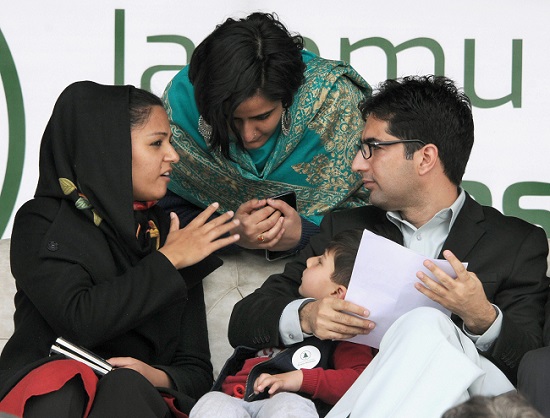
The two winning parties of last year are facing anti-incumbency and others are gearing up to give a good fight. The Congress and National Conference are in talks for seat sharing but the matter is open at the moment. A new dimension to these elections will also be provided by a new party in the fray, the Jammu and Kashmir Peoples Movement (JKPM). The party has been launched by Shah Feasal, a doctor-turned-bureaucrat-turned-politician and with him are some young minds like Shehla Rashid, who gained prominence as the vice president of the Students’ Union in Jawaharlal Nehru University (JNU). How will this party fare remains to be seen but it will definitely energise the democratic process and bring in some new initiatives.

There is some pessimism in the air with respect to voter turnout which is being seen in the context of the low percentage in some areas during the polls for the local bodies in September-October last year. Threats from terrorists do inhibit people from casting their votes but this should not be seen as a restraint to the democratic process; what should be celebrated, on the other hand, is the courage of those who come out to vote against all odds.

While the political parties prepare for the polls in right earnest, focus also has to remain on ensuring that inimical forces are not allowed to derail the process as they would wish to and work for. The election commission will need to remain bold and confident in the face of all odds. Small setbacks, in case they come by, should not be allowed to shake its resolve to go through the process in the manner prescribed; the idea is to remain steadfast despite all provocations.

The security forces have achieved complete domination of the counter-terrorism environment. These gains will definitely give adequate confidence to the common man to come out and vote in large numbers. Beyond this, the traditional apolitical stand of the security forces will convince the people that they will be able to exercise their franchise in a free and fair manner. The terror masters are likely to make a huge effort to fructify their malevolent agenda of disrupting the elections. It is this situation that needs to be absolutely understood and all efforts need to be directed towards containing the same.

Apart from enhancing its domination of the security environment the army and other security forces should now work towards strengthening the already strong bond that they enjoy with the people. Also, the need for proactive operations and relentless vigilance on the line of control, the international border and the interiors cannot be over-emphasised. The security process should be carried out with the support and active participation of the people. Preparations have already started as has been confirmed by the senior officers of the Indian Army, police and the paramilitary forces and now the threshold should be increased in a tacit and low key manner.

Credible steps need to be taken to ensure that false propaganda is not allowed to gain traction. Media has a very important role to play in this regard. The misconceptions, rumours etc. that inimical forces will now try to spread as a part of their propaganda campaign can be effectively countered by the media by giving out the correct picture. By presenting the situation in right perspective and in a timely manner, media can negate the forces aligned against the nation. Political leaders should also restrain themselves from making sweeping statements that can harm the poll process. While campaigning hard for their candidature they have to ensure that nationalism stays in the forefront always and every time.

While there is no reason to be overly worried about conduct of polls in Jammu and Kashmir there is definitely a need to put in the extra effort that this sensitive region demands. Some caution, extra security vigilance, close contact with the people and responsible behaviour will ensure a resounding success.

Killer Trigger Warning-Disclaimer: Mike Drop on Christianity

BET conducted an interview with the rapper Killer Mike, recently. In the interview, as outspoken as Mike has been for years, he may have caused a bit of a ruckus with some commentary on Christianity. His baseline argument: Christianity does more harm than good for black people.

In an episode of Trigger Warning With Killer Mike, which is on Netflix, there was further exploration of the world of African-American communities and the cultural taboos within it.

This particular episode covered the belief in a Jesus who was European, Caucasian, or simply ‘white.’ A Middle East holy figure who was white, think about it. Killer Mike considers this an idea needing deconstruction: directly and without recourse to apologetics. The episode was entitled “Church of Sleep.”

As reported, “Using ‘Church of Sleep,’ a recent Q&A with the Atlanta MC further examines white Jesus, the African Diaspora, ancestral devotion, economic self-sufficiency, the current state of affairs for Black people, and more…”

In the interview, Killer Mike reported on how he viewed African-Americans as imprisoned with the image of a white Jesus and that they are in the “bondage of Christianity.”

“What I ended up discovering is that not only is that image oppressive because it denies the identity of myself — all of it hurts the followers,” Killer Mike explained, “Personally, white Jesus is not good for me. And for my community, it’s not good for them. So I went in with the [intention] of destroying this image, a very patriarchal and racist image.”

In the process of this rapid deconstruction of the image, Mike created a new church entitled the Church of Sleep, hence the title of the episode. He noted prayer simply, for him and his family, is talking to oneself and finding their own inner divinity.

Mike has a shrine devoted to his grandmother and mother with an entire prayer room within the household, where there are women divinity figures.

Astutely, Mike stated, “People find community and stability in religious practices and churches, so I get it. Like, I still go to church. I will go to church with my children and their mothers. ’Cause the sense of community and fellowship — I get that. I ain’t giving no money at the end. I don’t buy or need to buy loyalty to talk to God.”

He noted how he has been questioning the faith, asking critical and probing questions, for years, since about the age of 15. Mike stated that he studied religion and philosophy at Morehouse too.

“Without the African diaspora, particularly the East and Horn and formerly South Sudan — without South Sudan, you wouldn’t have religion. You wouldn’t have Abrahamic religions. All of those religions borrow from folklore, from mythology,” Killer Mike explained, “You wouldn’t have — without the Orishas of Africa, you wouldn’t have Greek gods. So without a basis of calling out the attributes of gods of different names and having different powers, the Greeks would never set up what became figures like Zeus and Hercules, so I’m cool with everything that came before those.”

He noted a binary position or set of responses to his critical inquiry. Either the African-American community likes the message or not. By Mike’s thinking on the issue, the indoctrination into Christianity and, in this particular consideration, into the mythology of a white Middle Eastern Jew named Jesus begins at age 4, approximately.

Killer Mike stated, “You’re put in a school or nursery or something, and you’re not free anymore because you have to agree to the structure of that reality. But before that, your imagination is alive. You’re already in tune with God. You’re already talking to the air. No one knows who you are talking to. You’re walking out into the grass, so that’s appreciating God to me. So to me after that, you kind of agree to the system and you spend the rest of your life trying to un-agree and sometimes you don’t.”

BET’s interviewer was an intriguing person, to say the least. They asked good questions, direct queries getting at the heart of it. They asked about the path to personal enlightenment, of which Killer Mike recommended paying closer attention to the internal voice for them. As a youngster growing up, as with most gifted young people, he simply began to question the foundational belief structures handed down to him. He continued to disbelieve it. Now, he is one among many leading a charge of, at a minimum, critical thinking about Christianity and, at least, a white Jesus in African-American communities.

Photo by Jonathan Cosens – JCP on Unsplash

Pakistan is not irrational adversary

It is an abject falsehood that we allow ourselves to be fooled by this description and outright delusion to describe Pakistan as an ‘irrational adversary’. No, it is not irrational, not in the least, and this nomenclature only leaves an escape hatch open for it.

Pakistan is very rational and all its tactical moves, including using terror proxies, a la Pulwama, are very carefully calibrated. Calling it irrational is a trick of false peaceniks who want India to get pounded and bear it, unnecessarily. The cost benefit ratio is calculated mathematically down to the last decimal point and Pakistan sure is a winner every time it goes unpunished.

Can you hear the LOL (Laughing Out Aloud) of the troika of Jehadi, Military and Political classes while falling over one another? One has to be absolutely an ass, the four-legged beast of burden, if one can’t hear this derisive laughter. The burden has to be carried by India all the time.

It is also a falsehood and third rate cowardice to hide behind a phrase like strategic restraint. Retaliation and escalation are twin natural corollaries suppressed in the most unnatural instinctive manner. A display of pathetic analytical skills and getting caught and be deceived by wrong semantics.

Be a sport.

Draw one on one scoreboard.

Mark each hit and miss on individual boards reserved for the adversaries.

Scores on one board must be compared with number of hits MARKED on the other board. Not having own scoreboard is shutting eyes in the manner of a pigeon when cornered by a wild cat.

The cat’s eyes need to be gauged out.

Hot pursuit is a new normal that needs to be a declared policy. The roof under the cat’s paws must be made red hot.

Surgical Strikes and Balakot Air Strikes are two of the visible hits and that should happen every time in the future when an Uri or a Pulwama happens. Remorseless pounding is the only tactic the adversary understands.

Equate deep state with the state. Pakistan government = Pakistan terror proxies. Please read the equation right and develop the right perspective.

Always and every time in any narrative.

Things seem poised for a change.

After Uri, Prime Minister Narendra Modi had said: ”Blood and water cannot flow together.” Beyond these words, some action is being taken on the ground level and the water going as waste to Pakistan territories south of Madhopur Headworks and from Ujh will stop. These are waters of the Eastern Rivers as described in the Indus Waters Treaty (IWT) which are rightfully Indian shares. We have been profligate with them and allowed them to recharge groundwater in Pakistan Punjab.

Stopping them henceforth and diverting them to help our own farmers in Jammu and Kashmir, Punjab, Haryana and Rajasthan is commendable. Simultaneously, it also accentuates the water scarcity that Pakistan Punjab is facing.

No, the scarcity getting worsened by Indian action is not to be blamed on India as these are legitimate shares it owns. Pakistan has been extremely profligate in the utilisation of its water resources. It has a capacity to store waters for 30 days only while India has the capacity to store water for up to 220 days. There are some countries that manage their water resources better and can store water enough for 1,000 days.

There’s one example that can show to us clearly that Pakistan is not irrational. It just suits it fine to be described in this manner.

On August 27, 2012, six HM (Hizbul Mujahideen) terrorists carried out an attack on the Rs 400 crore ongoing Wullar rejuvenation project. Work stopped.

And, in September 2014, the whole of Kashmir drowned. Why? Partially because Wullar had lost its capacity to handle additional water inflows.

So what is the cost benefit ratio for Pakistan?

Calculate the cost to Pakistan.

Calculate the cost to India.

They are laughing out aloud! If you can’t hear them, you are stone deaf.

Nirav Modi arrested in London, to be produced in court shortly

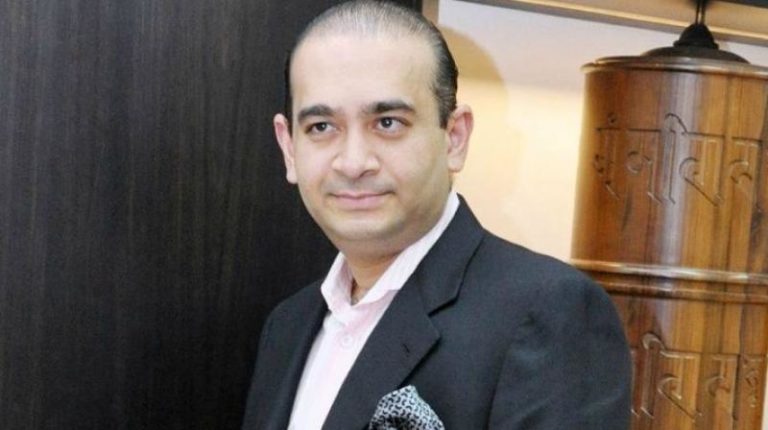
Fugitive jeweler, 48-year-old Nirav Modi, prime accused In the Rs. 13,000-crore PNB fraud case, has been arrested in London. He would be produced in the Westminster Magistrate’s Court shortly. According to the UK police he was picked up yesterday from a metro station Holborn, central London. A week ago, UK issued a warrant against him following the Enforcement Directorate’s request for his extradition.

Earlier this month, Nirav Modi was seen walking in London by a reporter of British newspaper The Telegraph. In a two-minute clip shared by the newspaper, the billionaire, was seen wearing a much-talked about expensive ostrich hide jacket, repeatedly said “no comments”.

Nirav Modi and his uncle Mehul Choksi are the prime accused  in the bank scam involving fake guarantees in the name of the state-run lender PNB to secure loans overseas. Both left India in January last year before the CBI started investigating the PNB scam.

Jet crisis: Pilots threaten to stop flying from April 1

The crisis at Jet has just worsened. Jet airways pilots have set the deadline of March 31 to clear their pending salary. The pilots and other senior staff have not been getting their full salaries since December. The umbrella body of the domestic pilots of the nearly crippled Jet Airways has threatened to stop flying from April 1, if the resolution plan is delayed and salary dues are not cleared by the end of this month.

The decision was taken at the annual meeting of Jet Airways domestic pilots body National Aviators Guild after a meeting here lasting for over 90 minutes. The guild, which came into being almost a decade ago, represents around 1,000 domestic pilots at the airline.

“If there is no proper clarity on the resolution process and salary payments, by March 31, we will stop flying from April 1,” the guild said.

Having failed to get any assurance from the management on salaries, the guild last week had written to Union labor minister Santosh Gangwar, seeking his intervention.

Meanwhile, aviation minister Suresh Prabhu Tuesday also directed his the secretary to hold an emergency meeting on the debt-ridden airline that has been cancelling flights abruptly following grounding of a large part of its fleet.

Naveen Patnaik not sure of his win in Hinjili, will contest from Bijepur also

Odisha Chief Minister Naveen Patnaik’s decision to contest from the Bijepur assembly constituency is in line with a recommendation of state’s intelligence report that found that the incumbent CM will not be able to win from Hinjili. Patnaik has represented the Hinjili assembly seat from south Odisha and has won all elections since 2000.

Odisha is India’s eastern coastal state. Along with the General Elections the people of Odisha will also vote to elect candidates for its 147-member legislative assembly. There will be simultaneous polls in Odisha in four phases on April 11, 18, 23 and 29 for the 21 Lok Sabha seats and for the 147 assembly constituencies.

Naveen Patnaik has been Odisha’s Chief Minister since 2000 and faces a huge anti-incumbency wave in these elections.

Since 2000, Patnaik has represented the Hinjili constituency but the report of State Intelligence Branch (SIB), which flags about the lack of infrastructure and amenities as cause of dissatisfaction among people, gives an indication about the current mood of the electorate in Odisha.

“…but the lack of amenities and infrastructure is causing significant dissatisfaction among the local people…. post-cyclone relief work has reached only those who are close to the local unit of the Biju Janata Dal Party causing resentment in the rest of the constituency. Keeping in mind the above, it is recommended that Hon. CM Naveen Patnaik should not contest the upcoming (Odisha) Assembly elections from Hinjili constituency,” said the state intelligence report which has been signed by Odisha’s Special Director General Police (Intelligence).

Odisha Police’s Intelligence Report clearly says that Naveen Patnaik should not contest from the Hinjili constituency.

This report has further recommended four different constituencies as “alternative options” for Naveen Patnaik “as requested”. The recommended constituencies are: Rourkela, Bijepur, Bolangir and Titlagarh.

Interestingly, Patnaik has promptly announced to contest from the Bijepur assembly seat (one of the constituencies recommended by state intelligence report). However, he will contest from the Hinjili constituency as well.

Political observers say that the incumbent CM’s decision to simultaneously contest from two seats is an indicator that there is a strong wave against the present Naveen Patnaik government.  

More trouble for Jet Airways: Aircraft engineers union writes to DGCA on flight safety risk

Trouble seems to be increasing for the cash-strapped Jet Airways.  The airlines has already grounded 41 aircrafts due to non-payment of lease rentals, resulting in a significant increase in the cancellation of flights. In a fresh development, the airline’s aircraft maintenance engineers’ union have written to the aviation regulator on Tuesday that three months of salary was overdue to them and flight safety “is at risk”.

In a letter written to the Directorate General of Civil Aviation, Jet Aircraft Engineers Welfare Association (JAMEWA) stated: “It has been arduous for us to meet our financial requirements, result of which have adversely affected the psychological condition of Aircraft Engineers at work and therefore the safety of public transport airplanes being flown by Jet Airways across India and the world is at risk.”

“While the senior management is finding a resolution to be in business, we the Engineers who inspect, troubleshoot and certify the public transport airplanes for its airworthiness are in tremendous stress due to non-payment of salaries on time, since last 7 months. As of now, 3 month’s salary is overdue to us,” the letter, said.

Meanwhile, minister Suresh Prabhu has called for an emergency meeting on Jet grounding its flights.

Madrasas Must Weed Out Violent Passages from Islamic Books before they ask for ‘Sovereignty’

“An attack on the sovereignty of madrasas” is how the All India Muslim Personal Law Board secretary described the suggestion to bring the Muslim religious schools under the Right to Education (RTE) Act. Madrasas’ autonomy and independence guaranteed under Articles 29 and 30 of the Indian Constitution will be threatened, Khalid Saifullah Rahmani said.

But, the question is what have Indian madrasas, where more than seven million children go for basic education, made of their autonomy? Even if one concedes that it is okay for them to teach just Islamiyaat, they must be asked what brand of Islam are they teaching these impressionable children?

The concern was also flagged by the National Commission for Protection of Child Rights when last year it proposed bringing madrasas under the RTE to ensure that the children didn’t miss out on their right to education. Children going to madrasas were “as good as out-of-school kids”, the panel said.

I will give just one example and ask madrasa authorities if they are in right minds to be imparting such incendiary ideas to our children and that too in the 21st century. That these teachings cannot be directly linked to any violence yet is beside the point – a ghettoised mind is more toxic than a ghetto. Something that hasn’t happened yet can happen tomorrow.

There is a book called Islami Akhlaq-wo-Aadaab (Islamic behaviour and good manners) for teenage students and part of the course for Aalimiyat (an equivalent of Class 12). Written by Maulana Amjad Ali Azmi Rizvi, this is actually a simplified and summarised version of the 16th volume of Bahar-e-Shariyat, a book of Islamic jurisprudence that is a required study for every Aalim, a scholar trained in Islamic law.

The book claims to seek reforms in the Muslim society. In its chapter on an Islamic dictum Amr bil Maroof wa Nahi anil Munkar (Enjoining Good and Forbidding Evil), it says:

“In attacking mushrikeen (polytheists, usually and wrongly translated as idolaters) all by oneself, there is a possibility that one will be killed but if there is a greater possibility that one will kill their man or injure or defeat them, there is no harm in attacking alone; but if there is a greater possibility that they will not be harmed or defeated, then one should not attack. If there is a possibility that when one stops fasiq (depraved) Muslims from committing sins one would get killed and will not be able to harm the debauched Muslims, still it is best to stop them from sinning, (although not stopping them is also permitted, (Fatawa Alamgiri), because getting killed in this venture does not go in vain. It may not appear to be fruitful at this time but in future it will bring good results (Page 268).”

 [I have tried to be as close to the Urdu text as possible in this translation, even at the cost of some clarity]

This is so utterly senseless that anyone reading this might wonder if I am quoting it out of context. There isn’t any context. This is the last paragraph of the chapter and the one before it gives advice on reporting a theft.

The religious ruling is given as if Muslims regularly need advice on whether, and under what circumstances, it is worth risking life while trying to kill a mushrik or stopping a “wicked Muslim” from committing a sin. This would make sense if one were to assume that Muslims risk their lives in these pursuits, as routinely as, say, they go out to buy vegetables.

Fortunately, that is not the case. But, that is no argument for complacency. Islamic theology, as it is taught unabashedly and senselessly, is full of violence, most of it against Muslims who dare to think a new thought.

Fresh thinking was banned in the 9th Century CE. There are thousand and one grounds for declaring Muslims kafir (infidel) or murtad (heretic, apostate) and sentence them to death. This sentence can be carried out by any Muslim in the absence of an Islamic court.

As for non-Muslims, including those whom Quran considers Ahl-e-Kitab (People of the Book) and deserving the most intimate relations with Muslims, theology considers them permanent denizens of hell. No wonder most religious Muslims conversant with their theology feel nothing but contempt for non-Muslims and can have nothing but reverence for those who are engaged in despatching them to their permanent abode.

A distinction should, however, be made between Islam and Islamic Sharia (laws) or Islam and Islamic Fiqh (jurisprudence) or Islam and its understanding or Kalam (theology). If Muslims want to live honourably in today’s closely connected world, they have to work towards evolving a new jurisprudence and theology of peace and pluralism and gender justice to replace the theological texts that encourage violence, supremacism, xenophobia, intolerance and gender injustice.

At the very least and as an urgent measure, I would request madrasa authorities to weed out from textbooks passages like the one above that beget murderous violence as well as irrelevancies like how to treat female prisoners of war and concubines, etc.

Our ulema cannot be unaware that Muslim youth in large numbers are joining jihadist groups around the world today. We should have been deeply worried when the first time a Sunni Muslim went to a Shia mosque in Pakistan, blew himself up to kill fellow namazis, considering them apostate, and thinking he was doing a pious act for which he will be rewarded by God with a place in heaven. This was several years ago. Today, we have become a society which can produce a whole army of suicide bombers practically anywhere in the world. The blame lies squarely with the kind of education imparted in our madrasas.

RTE will ensure a modern curriculum so that children are more attuned to the world around them. They will study what students in other schools are being taught and will not feel left out once they leave madrasas. A modern education will equip them to a world where technology is shaping lives and changing it at a breath taking pace.

Madrasa education is a serious violation of the human rights of Muslim children. Our children and the world at large deserve better. We simply cannot live in the 21st Century with a 7th-Century mindset.

(This article was first published in New Age Islam)

Rahaf al-Qunun: Differentials in Common Problems

The Metroreported on Rahaf Mohammed al-Qunun from Saudi Arabia, who has been granted asylum to Canada, recently. She fled to Kuwait from alleged abuse and then landed in Bangkok. Following this, she began to seek asylum.

With the surprising effectiveness of the work by al-Qunun and others, and similar social media social justice campaigns including #MeToo, Twitter became a catalytic platform for the improved efficacy of the calls for social justice for Rahaf Mohammed al-Qunun.

As some may note, the socio-political left and the socio-political right tend to disagree on what should be the emphasis of the social justice in most instances, and utilize epithets against the opposition in the cases of that which they disagree.

But the possibility of further abuse of a girl and the killing of an ex-Muslim united the internet for social good, a social justice activist effort. Many Canadian voices were in favor of the work there.

The unifying story was the abuse and the context in which men and women live in the culture. Men and women are grossly unequal in Saudi society.

One interesting story is relayed within the article about the way this works for gay men too. The former Muslim man, who left, had to disengage with family, because of the disagreements in belief.

The author described a sympathy, in common experiences, with leaving religion in an area of the world at this time that takes the violent approach to those who leave. One can see this environment with Christian in the centuries past.

Those who leave in these coerced-into-religion contexts become difficult, dangerous, and even life-threatening. The man felt as though — as a gay Muslim man — he had let down the creator and sustainer of the universe.

As opined, “I know of Christians who have left their faith and converted to Islam who talk of pressures from their families, and where some have had their immediate family stop all communication, sometimes for decades. However, what is troubling is that the levels of pressure and intimidation against ex-Muslims rumbles on and that time and time again,”

To attribute this to innate tendencies is wrong, as if one group is a separate species, while, at the same time, to deny this happening disproportionately in Muslim communities is also wrong, it is happening at a higher rate, insofar as a large number of ex-Muslim communities are showing u — and the subsequent stories coming out connected to them.

The author of the opinion piece explained, “I heard from those I interviewed they feared to leave Islam and when they did, they felt scared all of this, it is important to mention that it is not faith or religions themselves that are the problem. Yes, there are difficult elements of texts, but it is how they are interpreted and how families and individuals implement them in their families. For many of the people I interviewed, a harsh and controlling interpretation of Islam meant that they pushed their loved one away from Islam. Yet, there are just as many families where Islam is interpreted so that people feel accepted, loved and valued.”

Photo by Martin Brechtl on Unsplash