Home Blog Page 65

Gwadar protesters to travel to Turbat after memorial ceremony

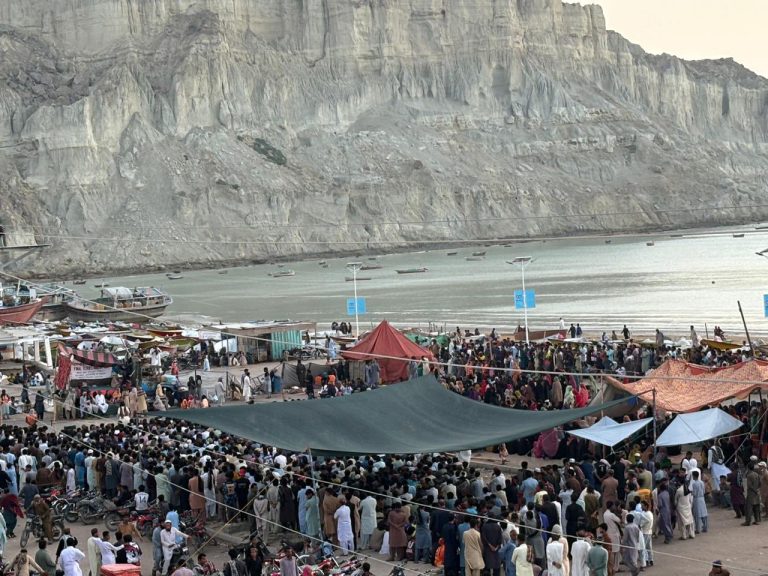
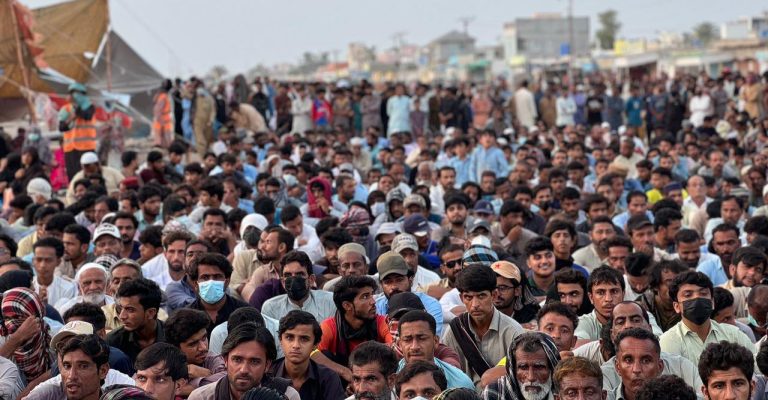
On Thursday evening, a significant rally organized by the Baloch Yakjehti Committee took place on Padi Zer Marine Drive in Gwadar, led by Dr. Mah Rang Baloch. The event saw a large turnout, including many women, demonstrating strong community support.

The rally commenced at Syed Yadgaar Chowk, with the crowd assembling at the designated protest site. Dr. Mah Rang Baloch addressed the gathering, announcing that a Sugandi Deewan, a memorial ceremony, would be held at the protest site at 10 a.m. the following morning. She said that after the ceremony, the ongoing protest in Gwadar would conclude, and participants would proceed in a convoy to Turbat for a 4 p.m. meeting.

In her speech, Dr. Mah Rang Baloch highlighted the significance of the Raaji Muchi event, noting the challenges faced by the Baloch people. Despite severe obstacles and Pak Army repression—including violence, injuries, and the imprisonment of many—Gwadar residents exhibited remarkable bravery and perseverance. She emphasized that the Baloch people’s efforts and sacrifices would be remembered in history.

Dr. Mah Rang Baloch said that Raaji Muchi represents a national movement. She asserted that the Baloch people, regardless of their location—whether in Sistan, Dera Ghazi Khan, or elsewhere—are unified as one nation, transcending borders. She also addressed the hardships endured by Gwadar’s residents during this period, including water shortages, home raids, violence, road blockages, and curfew-like conditions.

BLA attacks Pak Army, targets Independence day event in Quetta

Baloch Liberation Army (BLA) spokesperson Jeeyand Baloch announced that BLA fighters attacked a “so-called” Independence Day celebration organized under the patronage of the “occupying” Pak forces in Quetta. The attack, which occurred around 10 a.m., involved the use of two hand grenades.

An event celebrating Pakistan’s Independence Day in Quetta was struck by a grenade attack on Thursday. The incident occurred at SBK University on Brewery Road, where freedom fighters targeted the ceremony with hand grenades.

Reportedly, at least two explosions were heard. Occupied-authorities have yet to release information regarding the damage or casualties from the attack.

This year, celebrations for Pakistan’s Independence Day in Pak-occupied-Balochistan have been notably subdued compared to previous years. Only a few universities in Quetta are hosting such events under the supervision of the Pak military, with ongoing security concerns.

Meanwhile, the Mach police station in Bolan district was also targeted in a hand grenade attack. Baloch freedom fighters have previously taken responsibility for similar attacks, as the Pak Army organises such events to mislead the world about the conditions in occupied-Balochistan.

Paki Army gains control of 30 kanal of forest land near LoC

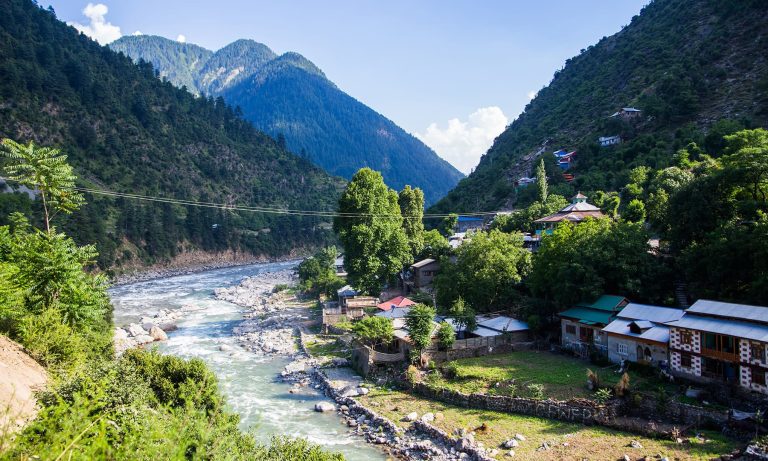
The occupied-Pakistan government has officially confirmed the allocation of 30 kanal (approximately 7.5 acres) of forest land in Noori Top, Neelum Valley, to the Pakistan Army under the pretext of defense needs.

The Forest Department issued a formal notification validating the transfer of this land to the military. The Pakistan Army has previously seized control of thousands of kanal of forest land near the Line of Control (LoC), and additional encroachments are ongoing.

This move has sparked criticism from civil society, which has condemned the decision as disgraceful. The military’s continued expansion into forested areas threatens the local environment and undermines the rights of local communities.

Pak Army tries to deceive Pashtuns after Hyder Kundu shelling

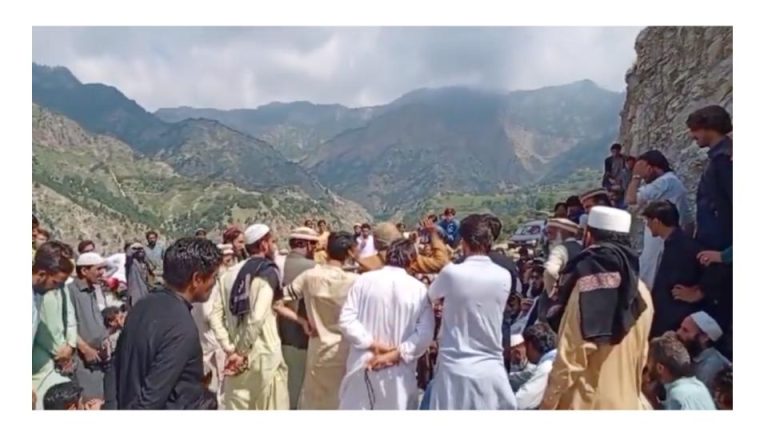
Protests have erupted in Hyder Kundu, with hundreds of residents taking to the streets in response to a recent shelling by the Punjabi Pak Army. The incident occurred on Wednesday when the Army fired shells at the local village from the Tirah Salar Check. Although there were no reported casualties, the attack caused significant psychological trauma and financial damage to the community.

The protests, described as an uprising, reflect deep-seated anger among residents. Protestors expressed outrage over the Army’s actions and criticized the Punjabi Pak Army for their lack of accountability.

During the protest, Army personnel addressed the crowd, defending their actions by claiming they were protecting the local population. They said, “We are Muslims, and we never hurt or lay a finger on anyone.” However, these statements are blatant lies. The Pashtun Tahafuz Movement (PTM) Khyber, labeled these remarks as “shameless lies.”

PTM Khyber denounced the Army’s statements as false and accused them of downplaying the severity of their actions against the Pashtun community. The group highlighted the discrepancy between the Army’s claims and the real impact of the shelling on Hyder Kundu residents.

Protests spread across POB against crackdown on Baloch Raaji Muchi

Protests against the recent crackdown on Baloch Raaji Muchi have spread across Pak-occupied-Balochistan, with demonstrations taking place in Quetta, Nushki, Turbat, and Panjgur.

In Turbat, the central city of Kech District, a significant sit-in protest is underway at Shaheed Fida Chowk. Thousands of participants, including many women, have gathered to express their anger against the Pak Army’s brutality and use of force.

On Tuesday, a seminar titled “State Brutality on Baloch Raji Machi and the Current Situation” was held at the Turbat protest site. Various figures from political, social, and literary backgrounds spoke on the ongoing human rights violations and the unjust treatment of the Baloch people. The seminar concluded with a resolution to maintain the protest until justice is served and Baloch rights are acknowledged.

In Panjgur, protests continue amid an ongoing suspension of internet services. A road blockade in front of the Deputy Commissioner’s office is led by Fahad Asif, Mulla Farhad, and others. They have vowed to keep the protest going until their demands are met.

Panjgur has faced significant disruptions due to the suspension of PTCL’s DSL internet service for the past two weeks and the continued blockage of mobile data services for the past two and a half years. The lack of internet access has caused major difficulties for students, businesses, journalists, and other residents.

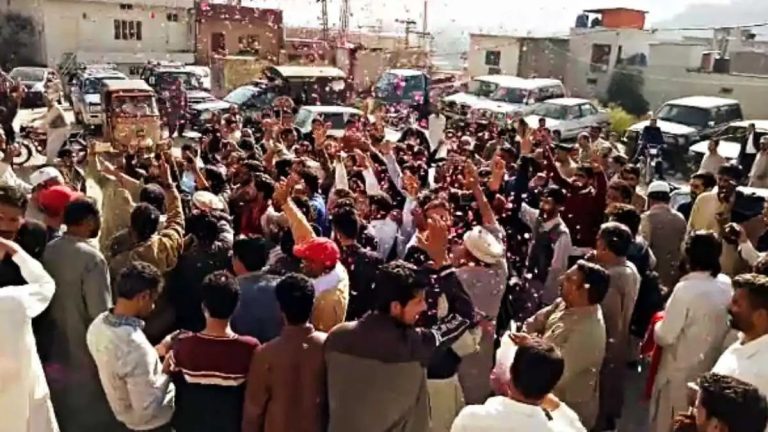
Protests are also active in Quetta and Nushki, where thousands, including women, are participating. On Wednesday, candles were lit in these cities to honor those who lost their lives due to the firing by Pak forces during the Raaji Muchi protests. Demonstrators have pledged to continue their protests until their demands are addressed.

Pak police raid home of journalist Usman Khan covering Baloch Raaji Muchi to Gwadar

A journalist actively covering the recent Baloch Raaji Muchi (Baloch National Gathering) to Gwadar reported on X that police arrived at his house at midnight in an attempt to arrest him. This comes amid a complete media blackout of the Baloch National Gathering in Pakistan.

Usman Khan, a digital journalist and manager of the Zaiwa News channel on YouTube and Facebook, has been targeted by Pakistan police for his reporting on protests over human rights abuses in Pak-occupied-Balochistan. The raid on Khan’s home is an effort to silence the voices of oppressed nations by the Pakistan Army.

According to Khan, police officers, both in uniform and plainclothes, raided his home on July 31, 2 and 5 August. Khan managed to evade arrest by going into hiding. He said that authorities were actively seeking him due to his coverage of the military crackdown on demonstrators heading to Gwadar for a protest on July 28, which addressed issues such as enforced disappearances and extrajudicial killings in POB. The protest resulted in the deaths of three individuals in clashes with security forces.

Khan reported that military officials had previously questioned protesters about him and contacted his father, urging him to return to Quetta, the capital of POB. Despite the intimidation, Khan remains committed to his reporting on the situation in Pak-occupied-Balochistan, where freedom fighters have long sought independence from the occupied Army.

BNM protests in London against Pak Army crackdown on Baloch Raaji Muchi

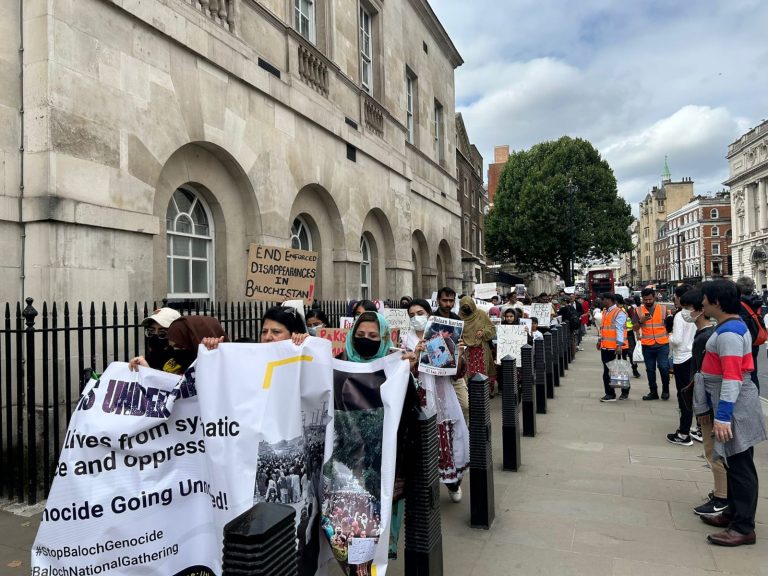
The Baloch National Movement (BNM) UK chapter recently organized a protest rally in London to condemn the crackdown on Baloch Raaji Muchi, a Baloch national gathering. The rally commenced at Trafalgar Square and saw substantial participation from BNM members, as well as from the Sindhi and Baloch communities, including women and children. The protestors marched through various routes to the Commonwealth Office, where they held a vigorous demonstration.

The protest aimed to highlight and denounce the severe violence and brutality inflicted by Pak forces during the Baloch Raaji Muchi in Gwadar, Mastung, and Nushki. Key issues raised included the killing of three participants, injuries to dozens, enforced disappearance of hundreds of Baloch Youth Congress (BYC) activists and the blockade of Gwadar along with road closures.

During the demonstration, participants demanded an end to the Gwadar blockade and called for justice for the victims of state terrorism. They carried placards and banners denouncing Pak forces’ actions and expressing support for the Baloch Raaji Muchi. Protestors urged the international community to take action against the ongoing human rights violations in Pak-occupied-Balochistan.

Organizers condemned the Pakistan forces’ actions in Gwadar, Mastung, and Nushki as intolerable and called for the immediate lifting of the Gwadar blockade to prevent a potential humanitarian crisis.

BNM UK Chapter

Hassan Dost Baloch, the Central Junior Joint Secretary of BNM, addressed the crowd, condemning the crackdown and blockade. He appealed to international and human rights organizations to hold Pakistan accountable for its severe human rights abuses in POB. He criticized the Pak Army’s attempts to conceal its actions through internet and road blockages.

Manzoor Baloch, President of the BNM UK Chapter, praised the leadership and efforts of Baloch women in the struggle for national rights. He highlighted the bravery of Baloch women standing alongside their male counterparts and said that their political awareness and struggle serve as a beacon for oppressed nations.

Female activist Gul Reesani addressed the protestors, emphasizing that their gathering was to show solidarity with victims of Army violence during the Baloch Raaji Muchi and to assert that the Baloch people will not abandon their land or accept exploitative projects like CPEC. She described the blockade of Gwadar and disruptions to food and supplies as signs of the Pak Army’s desperation and asserted that such measures will not silence the people.

Kainat Baloch, another speaker, called the participation of Baloch women in the Baloch Raji Muchi a historic achievement. She credited their current position to the sacrifices of past activists who trusted and included Baloch women in the struggle. Kainat Baloch urged that now is the time for resilience and solidarity in the fight for their cause.

Earlier, BNM organized protest demonstrations in the Netherlands and South Korea to condemn Pak authorities for their suppression of a historic event in Gwadar, Pak-occupied-Balochistan. 

PoGB: Traders block CPEC route; protest enters day

Citizens in occupied-Gilgit-Baltistan have launched sit-ins across various locations in response to severe load shedding in the city, highlighting ongoing frustrations with the power crisis. The protests have intensified, with demonstrations now stretching into the eleventh day, impacting both local residents and international visitors.

At the Sost dry port in Pakistan-occupied Gilgit-Baltistan (PoGB), the protest has severely disrupted customs operations, causing significant delays for international tourists and traders attempting to enter or exit the region. The blockage has extended to the Karakoram Highway, but local authorities have yet to address the issue comprehensively.

Former MLA of PoGB, Javed Hussain, reported that the ongoing protest has led to a complete halt in port operations. He indicated that the disruption is affecting the China-Pakistan Economic Corridor (CPEC) and announced that the protest would continue until all demands are met. “Our port operations have been halted for 25 days, and no trade has occurred since the last consignment arrived eight months ago. Despite court rulings against certain taxes, enforcement remains challenging due to delays and resistance,” Hussain said.

In addition to the protests, issues of corruption among tax officials exacerbate the situation. Traders often face demands for bribes or facilitation payments, further complicating compliance and increasing costs. Delays in processing tax documents and refunds contribute to cash flow problems, making it increasingly difficult for businesses to operate effectively in the region.

Pak Army’s shelling hits residential areas and livestock in Khyber

In the Khyber district’s Barkamber Khel Hyder Kundu area, the Punjabi Pakistan Army has been shelling residential buildings from the Silar check post, using both small and large weapons during the night. While there have been no reported human casualties, the attacks have caused significant harm to livestock and severe financial losses for local residents, exacerbating their already difficult lives.

The turmoil in the region reflects broader historical grievances. Since the Punjabi Pak Army’s occupation of the Khyber region in 1947, the Pashtun community has faced extensive exploitation. The Punjabi Army’s repeated violence, shelling and actions have involved using Pashtuns for sinister purposes, only to later label them as terrorists.

The lack of basic facilities in Khyber, combined with the exploitation of resources by the Pak Army, has made life increasingly difficult for the Pashtuns. Repeated shelling and military actions under the guise of security have resulted in daily casualties among the Pashtun community. Additionally, the Punjabi Pak Army employs tactics such as abduction, extrajudicial killings, and staged encounters, further plunging Khyber Pakhtunkhwa into a state of relentless suffering and instability.

BYC announces week-long tributes to honor Baloch Raaji Muchi martyrs

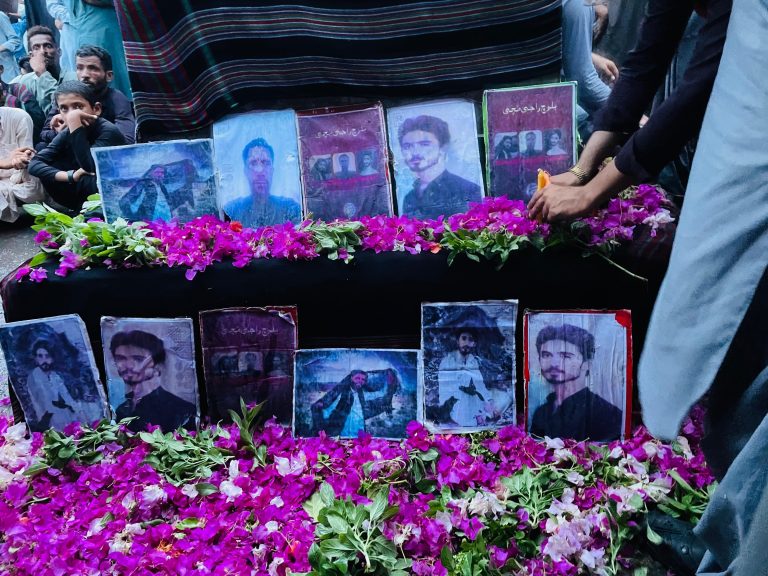
The Baloch Yakjehti Committee has declared that starting Wednesday, a week-long series of candlelight vigils will be held across Pak-occupied-Balochistan to honor the martyrs of Baloch Raaji Muchi. In addition, a Raaji Soghandi Diwan (Raaji Mourning Assembly) will be organized to commemorate their sacrifice.

The spokesperson for the committee urged all zones to prepare extensively for the Diwan and to pay a profound tribute to the martyrs. He emphasized the importance of these events in honoring their memory.

Meanwhile, the sit-in protest in Gwadar, which is now in its ninth day, continues to draw attention to Pak Army’s brutality and savagery in response to the Baloch Raaji Muchi movement. The spokesperson highlighted that despite facing numerous hardships and state oppression, the Baloch people are demonstrating remarkable resilience and determination.

The ongoing protests represent a significant advancement in the public resistance movement within Pak-occupied-Balochistan, though it is acknowledged that this struggle remains long and challenging. The spokesperson called on the Baloch people and the Baloch Yakjehti Committee members to be mentally and intellectually prepared for this extended struggle, as it is crucial for achieving success.

The statement further said that the Pak Army has resorted to extreme measures of brutality in an attempt to undermine Raaji Muchi. However, the courage and resolve of the Baloch people have underscored that public power is the ultimate force, rendering occupied-state power insignificant in comparison.

Moreover, the Baloch Yakjehti Committee (BYC) will host a discussion on X (formerly Twitter), featuring central leadership, intellectuals, and journalists who will address the Pak Army’s crackdown on Raaji Muchi and the current situation in Pak-occupied-Balochistan.