Home Blog Page 79

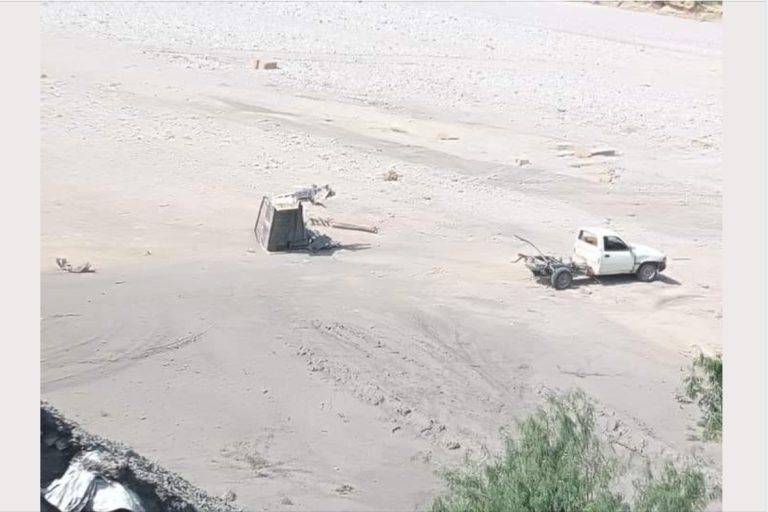
BLA targets Pak Army’s coal mine supply vehicle with powerful explosives in Dukki

A supply vehicle en route to coal mines was hit by a landmine explosion in the Thekedar Nadi area of Dukki district, Pak-occupied-Balochistan, on Wednesday. The powerful blast was so powerful that it could be heard for miles.

Local police officials said that the vehicle was carrying supplies to nearby coal mines when it struck the explosive device. Law enforcement agencies have cordoned off the area and initiated an investigation, collecting evidence from the blast site.

Baloch Liberation Army (BLA) spokesperson Jeeyand Baloch claimed responsibility for an IED attack targeting a Army’s vehicle in Dukki. The attack occurred was aimed at those involved in the exploitation of Baloch national resources.

Jeeyand Baloch detailed that the freedom fighters executed a remote-controlled IED attack at the location of Contractor Nadi, which resulted in the complete destruction of the targeted vehicle and left two individuals injured.

The spokesperson further said that certain individuals in Dukki are collaborating with the Pak Army in the plundering of Baloch resources and opposing the Baloch national movement.

He warned that those aiding the occupying forces would be directly targeted by the BLA. He urged all Army collaborators involved in the exploitation and genocide of the Baloch people to cease their activities immediately, warning that failure to do so would result in severe personal and material consequences.

In Pakistan-occupied Balochistan, pro-independence groups have long been active, resisting and seeking revenge against the forceful control of the Army, which commits numerous atrocities on a daily basis.
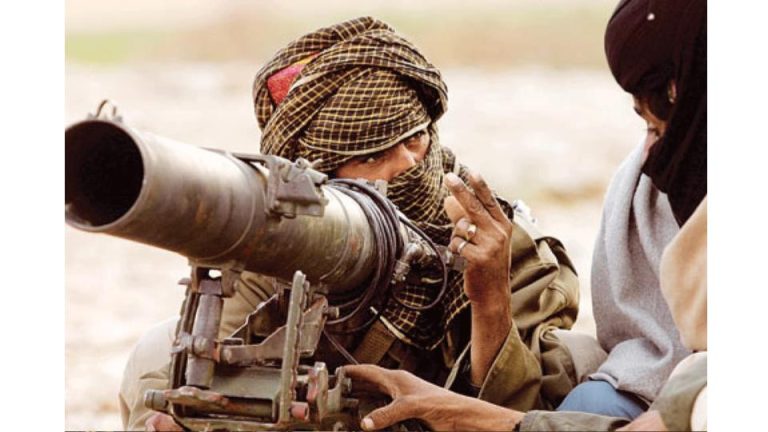
Kech: BLA’s fresh attack on Pak Army kills one soldier and injures four

A Pakistan Army soldier was killed and four others were injured in an attack on security forces in the Sami area of Kech district, Pak-occupied-Balochistan.

The incident occurred when armed men ambushed vehicles carrying Pak Army security personnel along the China-Pakistan Economic Corridor (CPEC) route. The deceased soldier has been identified as Sipahi Abdul Sattar.

The Baloch Liberation Army (BLA), a pro-independence group, has claimed responsibility for the Kech attack. In a statement, BLA spokesman Jeeyand Baloch said that their fighters targeted Pak forces’ vehicles using heavy weapons around 4 p.m. local time.

While the BLA claims to have killed four security personnel and injured three, official sources have only confirmed one fatality and four injuries. The Army’s casualty figures is not a reliable source as they tend to downplay the magnitude the setback of the attack.

Since 1948, the Pakistan Army has forcefully occupied the POB, to exploit it indefinitely, has employed violent tactics such as enforced disappearances, extra-judicial killings, raids etc on the Baloch community. Therefore, BLA conducts resistance against Pakistan Army

PTM condemns FIR against activist Ubaid Khan as Paki suppression of Pashtuns

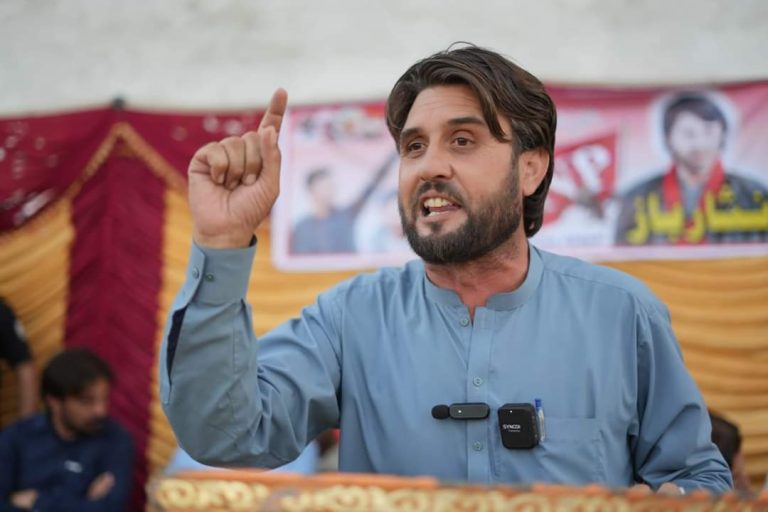
The Pashtun Tahafuz Movement (PTM) has strongly condemned the filing of a First Information Report (FIR) against Ubaid Khan Salarzai, a political worker and human rights activist, following the closure of the Bajaur Press Club in Khyber Pakhtunkhwa. The FIR is frivolous, as it alleges that Salarzai, along with PTM leader Manzoor Pashteen, entered the press club and attempted to incite the public against security forces.

Salarzai, who is affiliated with the Awami National Party (ANP), faces charges that are baseless and politically motivated. The incident has reignited tensions among Pashtun rights activists.

This action is part of a broader pattern of suppression against Pashtun voices. Since 1947, the Punjabi Pak Army has exploited Pashtun lands and people, later labeling them as terrorists or TTP sympathizers after their deed is done.

When Pashtuns became aware of this exploitation, they began to resist peacefully, with PTM emerging as a result of such non-violent efforts. However, the military is employing dubious and violent methods to silence dissent.

Activists, journalists, and even innocent Pashtuns are being abducted regularly, while some are eventually released, others disappear without a trace, and in most cases, bodies are found dumped in remote areas.

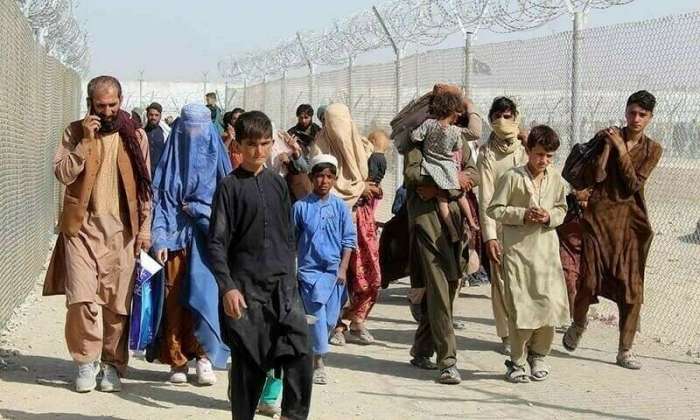
Pakistan suspends deportations of undocumented Afghan refugees following UN talks

Pakistan has suspended its “Illegal Foreigners Repatriation Plan”, according to a statement from the United Nations High Commissioner for Refugees (UNHCR) following a meeting between Pakistan’s Prime Minister and UN High Commissioner for Refugees, Filippo Grandi, in Islamabad.

Grandi expressed appreciation for the suspension of the process and sought assurances that it would remain on hold.

The Afghan Embassy in Islamabad quoted Grandi as saying that the forced deportation of Afghan refugees by Pakistan was largely political. According to an official statement from the Afghan Embassy, Grandi assured Acting Afghan Ambassador Muhammad Shakib that he had discussed the issue with Pakistani authorities, resulting in a further delay of forced deportations.

Grandi proposed a trilateral meeting between Afghanistan, Pakistan, and UNHCR to unify refugee cards and ensure they are valid, protecting refugees’ rights and preventing their political exploitation.

During his three-day visit to Pakistan, Grandi emphasized the need for a timely extension of Proof of Registration cards, a crucial identity document held by over 1.3 million Afghan refugees. He praised Pakistan in hosting Afghan refugees for 45 years while acknowledging the challenges faced by the country.

Afghan refugees

The High Commissioner called for an urgent reset of the aid model, focusing on solutions and responsibility sharing. He proposed developing new partnerships and innovative approaches to address the protracted displacement situation.

Grandi offered to facilitate a dialogue later this year, bringing together key stakeholders to develop solutions benefiting both the Afghan population in Pakistan and the host country. He also committed to intensifying efforts to create conducive conditions for returns to Afghanistan, including improving material conditions, access to services, job opportunities, and rights.

Pakistan unleashed a brutal crackdown last November on all foreigners illegally staying in the country, citing a rise in attacks and attributing them to Afghan people residing among the refugee populations. The move has targeted more than 1 million Afghan migrants and asylum-seekers who lack legal documents or valid visas. 

Reportedly, over 600,000 Afghans have been repatriated to their homeland since the deportation campaign started.

According to the latest UN figures, approximately 1.3 million Afghans are registered refugees in Pakistan, with another 880,000 having legal status to stay. Pakistani officials claim that around 700,000 Afghans seeking asylum have entered Pakistan since the Taliban takeover in August 2021, with only 75,000 moving on to other countries.

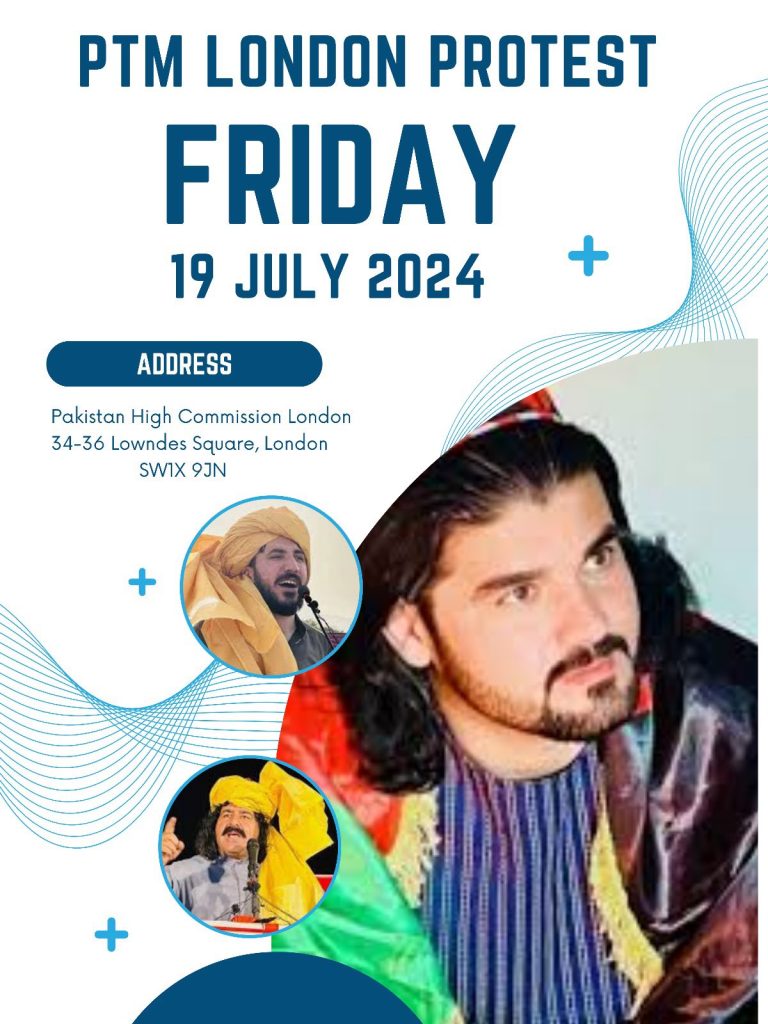
PTM UK to protest in London against Pak military operations on Pashtuns

The Pashtun Tahafuz Movement United Kingdom (PTM UK) has announced its first demonstration against the Pakistan Army’s military operations in the Pashtun tribal areas. The protest is scheduled for Friday, July 19, at 4:00 p.m. in front of the Pakistan Embassy in London.

This demonstration comes in the wake of a brutal attack on Gilaman Wazir, a Pashtun poet and human rights activist, in Islamabad. PTM UK has strongly condemned this attack and is calling on the United Nations to pressure Pakistan to cease the killing and torture of oppressed tribes and to ensure that Wazir’s attackers are punished according to law.

The organization is urging all Afghans and Pashtuns living in the UK to join the protest and make it a success. PTM UK aims to highlight longstanding issues affecting the Pashtun community, including enforced disappearances, extrajudicial killings, and collective punishment inflicted upon Pashtuns under the guise of counter-terrorism operations.

These issues are not new. Since 1947, the Punjabi Pakistan Army has been exploiting Pashtun lands and people for their interests. Wazir’s case is not isolated, previous detentions by Pak intelligence and military agencies have taken place, despite being predominantly peaceful members of PTM often face violence from the Punjabi Pakistan Army.

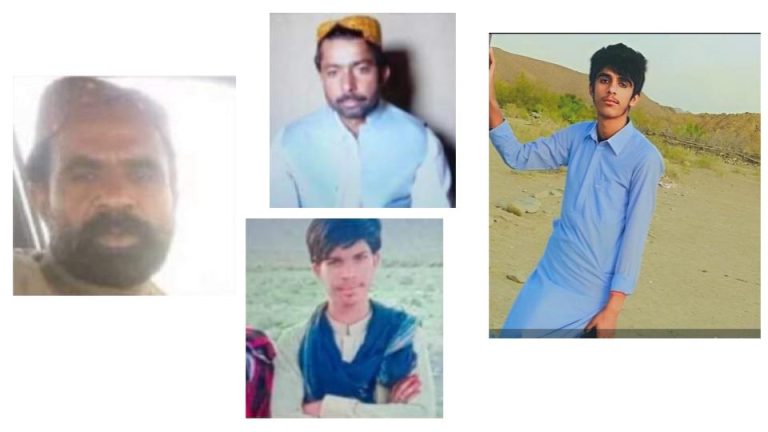
Pak Army abducts four more Baloch youth in Pak occupied Balochistan

In Kalat, Pak Army have reportedly made three individuals disappear after taking them into custody. The missing persons have been identified as Abdul Rahim son of Kannar Khan Lehri, Samandar Khan son of Pasand Khan Lehri, and 13-year-old Bebgar son of Din Muhammad Mengal. All three were traveling in a vehicle in the Makhi area of Kalat when they were detained by Pak forces and subsequently disappeared.

Recent reports from Pak-occupied-Balochistan show a disturbing trend of enforced disappearances, with multiple incidents occurring in rapid succession.

Meanwhile in Tump, Obaid Mirjalal Khan, the brother of BYC Kech activist Zubair Baloch, was abducted by Frontier Corps (FC) personnel from his house in Balicha. Reportedly around 1:30 AM, three vehicles carrying FC personnel raided the house of Jalal Baloch in Tump Balicha, forcibly disappearing his 18-year-old son, Obaid Baloch.

The family of Obaid Baloch has reported being subjected to violence and threats during the raid. They express concern that Army have initiated a systematic plan to kidnap young individuals in the region.

Since 1948, the region has been under Pak Army control, with them exploiting the resources and human rights abuses. Enforced disappearances, marginalization, and extrajudicial killings have been used as tools of oppression against the Baloch community.

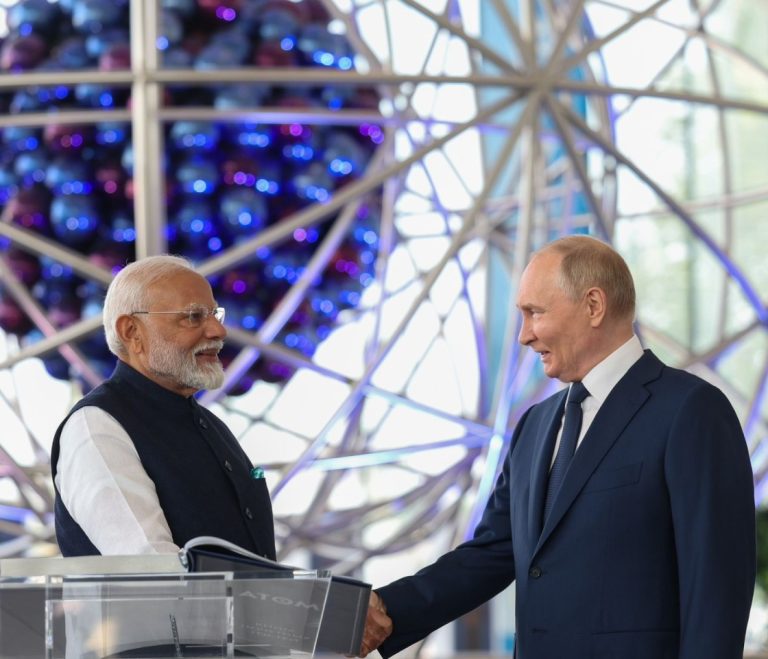
PM Modi advocates for stronger India-Russia ties during Moscow visit

Prime Minister Narendra Modi, was on a two-day visit to Russia. On Monday, Russian President Vladimir Putin warmly welcomed the PM upon his arrival in Russia. The eyes of countries around the world were on this visit. Meanwhile, the friendship between Modi and Putin has become a cause of concern for the United States. In fact, India has good relations with both the US and Russia. However, the tension between the US and Russia is well-known. In such a situation, PM Modi’s camaraderie with the Russian President is not sitting well with the US.

In Russia, PM Modi held an informal meeting with President Vladimir Putin. Immediately after this, the United States expressed concern to India regarding its relations with Russia amid Moscow’s invasion of Ukraine. Foreign Department’s spokesperson Matthew Miller said in a press briefing that they would review Prime Minister Modi’s public remarks to see what he discussed with the Russian President. Furthermore, Matthew Miller stated that the United States has already made it clear that it is concerned about India’s relationship with Russia.

Furthermore, spokesperson Matthew Miller stated that the US hopes that when India or any other country engages with Russia, it will make it clear that Moscow should respect the United Nations Charter and the sovereignty and territorial integrity of Ukraine. These statements from the spokesperson clearly indicate that the US is not pleased with the closeness between India and Russia.

US Pressures India to Distance Itself from Russia

Since the war between Russia and Ukraine began in 2022, the US has been consistently pressuring India to distance itself from Russia. India has resisted this pressure, citing its long-term relations with Russia and its economic needs. Despite this, India has called for a peaceful resolution to the ongoing conflict between the two countries. Meanwhile, the US has openly supported Ukraine in this war, providing it with weapons as well.

PM Modi Visits Russia After Nearly 5 Years

For the first time since becoming Prime Minister for the third term, PM Modi visited Russia. This is also his first visit to Russia since the Russia-Ukraine war began. Visiting Russia after nearly 5 years, PM Modi will participate in the 22nd India-Russia Annual Summit.

Since the invasion of Ukraine, Western countries have pressured India to reconsider its relations with Moscow. Despite this, India has maintained its relations with Russia, emphasizing its long-established ties and economic considerations. Russia is under scrutiny from countries worldwide over the war, but India has remained neutral on the issue. The Indian government has neither condemned nor justified Russia’s invasion of Ukraine.

Currently, Western countries are trying to create discord between India, China, and Russia. India’s relationships with both the West and Russia reflect a complex international scenario, where it seeks to balance its interests in this challenging global environment. The West had hoped that India would align with them against Russia, but this has not happened. Despite attempts by the West to pressure India, these efforts have not succeeded. India’s foreign policy is focused on safeguarding its interests without fully siding with any party. It aims to maintain a balance between both sides.

Radical Islamists assault & rape Hindu woman in horrific video from Pakistan

In Dera Ghazi Khan, a Hindu woman named Shahrian Mai was kidnapped by a group of Islamists in a brutal incident. The motive behind this heinous act was her refusal to engage in a friendship and sexual relationship with a man named Zafar Lashairi.

Graphic video footage reveals the severity of the assault, showing Zafar Lashairi violently attacking Shahrian Mai. The brutality culminates in a horrific act where he stabs her in the nose, inflicting severe physical and emotional trauma. The situation escalates further as the video shows the group of assailants, including Zafar Lashairi, gang-raping the traumatized victim.

Earlier, a 15 year minor Hindu girl from Mirpurkhas was reportedly abducted. The girl was forcibly converted to Islam and married to a Muslim man named Ashraf Marri.

This incident is far from isolated. Members of the Hindu community, especially in Sindh province, have long faced threats, abductions, forced conversions, and even murders. These cases highlight a troubling pattern affecting Pakistan’s Hindu community. Young Hindu women and girls have become frequent targets of systematic abductions.