Home Blog Page 127

BYC launches “Unity Initiative” as flood relief efforts in Gwadar

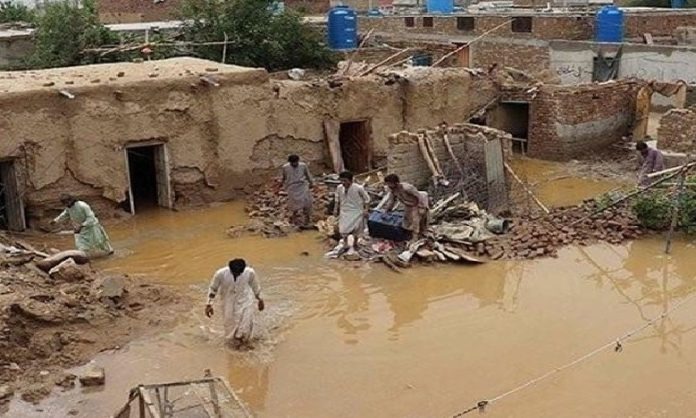
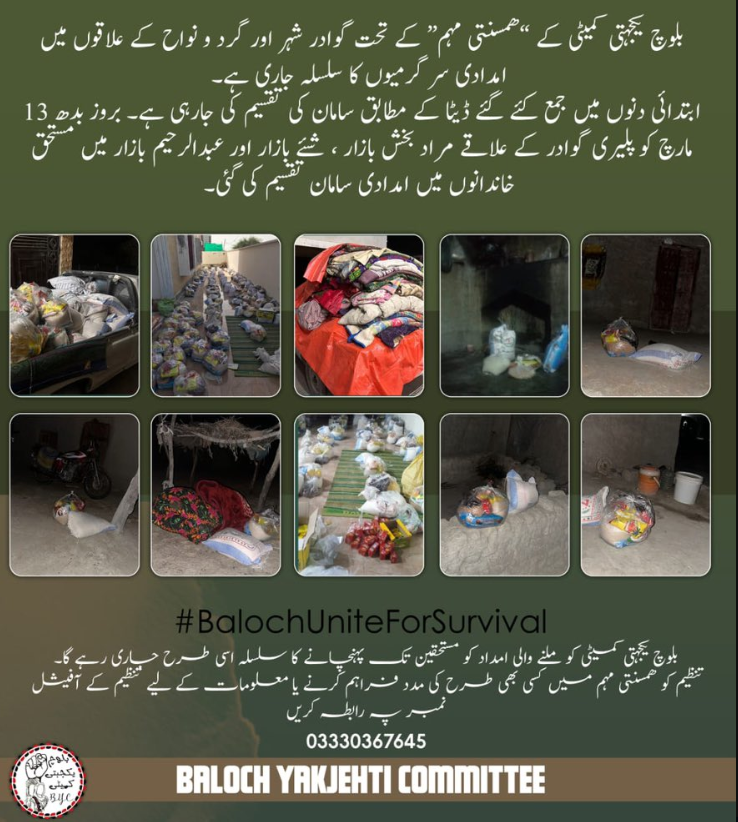
Recently in an effort to aid and meet the immediate needs of the communities in Gwadar City and the surrounding, the Baloch Yakjehti Committee (BYC) has launched the “Unity Initiative”, which aims to give much-needed relief to those who are affected by various challenges.

The committee’s initiative represents a coordinated attempt to lessen the hardships local families endured due to the recent flood. Despite the adversity, the BYC has continued with its unwavering commitment to serving the people of Gwadar and surrounding areas.

It is important to note that, the Pak Army attempted to dismantle the BYC central relief camp in Gwadar on 8 March but due to public outrage, the district administration stole the camp tents the same night.

The recent data gathered during the first few days indicates that the supply distribution is still going on. Relief supplies were given out to qualifying families in the Piri Gwadar region, which includes Abdul Rahim Bazaar, Shae Bazaar, and Morad Bakhsh Bazaar, on Wednesday, March 13.

Reportedly, the process of delivering assistance received by the Baloch Yakjehti Committee to deserving individuals will continue. Undeterred by the challenges, the BYC remains steadfast in its mission to provide aid and support to the needy in the face of adversity.

Kathmandu echoes with calls for monarchy resurgence

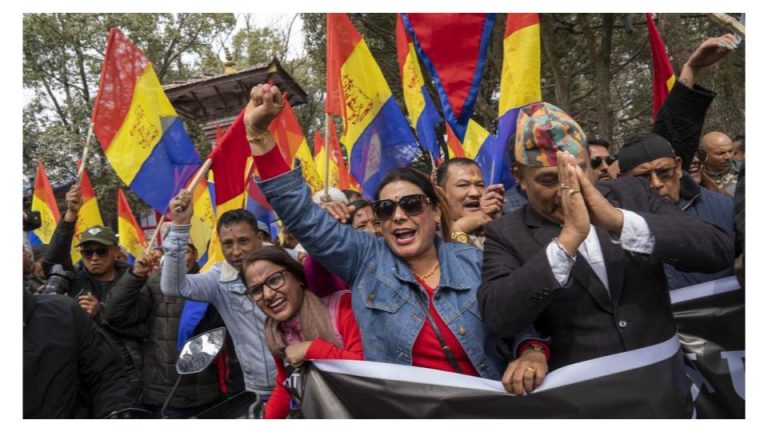
In a surprising turn of events, the streets of Kathmandu have become a focal point for a unique demand that challenges the prevailing global trend towards democratic governance. Thousands of Nepalese protesters are fervently advocating for the reinstatement of their monarchy, shaking the very foundations of their republic.

The voices of these demonstrators resonate with sentiments from a bygone era when the king held supreme authority. Vocal supporters of the former Nepali king claims, “Our country will regain its value and identity only if it returns to a monarchy, with the king reinstated to the throne.” Others, like Pasupathi Khadga, see the monarchy as intrinsic to the nation’s identity, stating, “For Nepal and the Nepali people to persist, we need a monarchy. Without a king, we lack an identity as Nepalese, and we might as well declare ourselves refugees.”

Nepal’s history

This fervor for monarchy is particularly intriguing given Nepal’s recent history. Until 2005, the country operated under a constitutional monarchy. However, King Gyanendra’s authoritarian actions, including dissolving the parliament and restricting civil liberties, led to widespread unrest. Public protests in 2006 demanded the king’s abdication, resulting in the transfer of power to the parliament and the subsequent abolition of the monarchy in 2008.

The clamor for a return to monarchical rule stems from the perceived challenges of Nepal’s democratic experiment. Since becoming a republic, the country has witnessed a remarkable turnover of 13 governments— in just 16 years. Political instability has become the norm, with coalitions forming and dissolving rapidly. The recent reshuffling of coalition partners, reminiscent of past political maneuvers, serves as a stark reminder of this volatility.

Economic struggles fuel discontent

Economic indicators further fuel disillusionment with the democratic system. Nepal’s GDP growth has been sluggish, inflation remains high, and youth unemployment is alarming. The departure of young Nepalese in search of opportunities abroad highlights deep-seated frustrations with domestic prospects.

Even though the grievances are valid, it is not advisable to romanticise the past as they led to the failure of Nepal’s political class—not the democratic system itself—are to be blamed for the current situation. The resurgence of royalist factions within the democratic framework will complex the debate even further.

Charting the path forward

As Nepal grapples with this crucial question is clear: addressing the root causes of dissatisfaction within the democratic framework rather than resorting to a regressive solution. The fate of Nepal’s governance ultimately lies not in the hands of a monarch but in the collective will of its people and the ability of its leaders to govern effectively.

Radical Islamist abducts minor Christian girl in Sindh

In a troubling incident from Tando Ghulam Ali, Sindh, a 15-year-old, minor Christian girl named Muskan Masih has been abducted by Arsalan Khaskheli and his associates. According to Muskan’s family, the police have been hesitant to file a complaint, citing the influence of Arsalan’s father, Salim Khaskheli.

This abduction of minor Christian girl highlights the challenges faced by minority communities, particularly Hindus and Christians, in the region. Instances of abductions, rape and concerns about forceful conversions to Islam have been raised. Families affected have reported difficulties in seeking legal assistance.

Often it has been seen that the minor girls from minority communities, be them Hindu or Christian, are abducted, raped, forcibly converted to Islam and married off to abductor. To the worse, they are patronised by many radical clerics, parts of administration and some times even judiciary. It happens because of a bigoted Islamic ideology running deep into the system which calls the conversion of females of other religion as a pious and religious work of Islam. The minority communities are considered infidels and subsequently, eligible to be killed or converted.

Unfortunately, history tells us that these girls are mostly killed or disbanded after being converted, raped, married and even sold. The gruesome condition of minorities in Pakistan mostly goes unnoticed adding further distress and agony for the victim, their family and community.

It is time that the international community should take cognizance of the issue and take decisive measures in the direction of protecting minority communities and especially girls in Pakistan.

Pak Frontier Corps abduct another youth from Khyber- Pakhtunkhwa

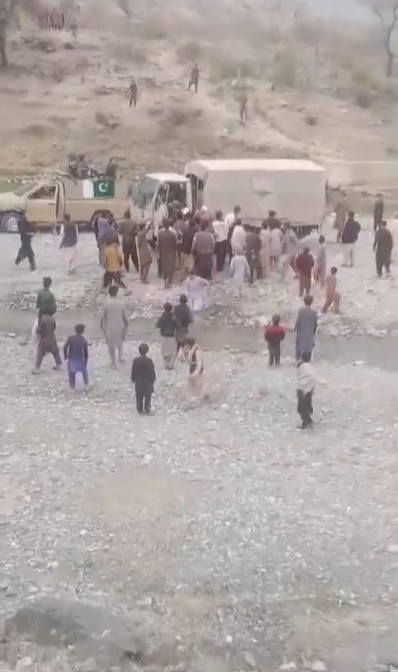
In a disturbing incident that unfolded on March 10, a young boy named Nik Ahmed was abducted by Frontier Corps (FC) personnel from Ali Masjid, Khyber raising concerns about human rights violations and enforced disappearances by Pakistan Army-controlled forces.

Despite having a clean record and no criminal accusations against him, Ahmed was abducted without any apparent legal basis. The incident was captured on video, revealing FC officials in an official vehicle forcibly taking Ahmed while onlookers protested the abduction.

This incident has brought to light a growing pattern of enforced disappearances involving Pakistan Army and its affiliated forces. The victims, often targeted for their dissenting voices, face a harrowing situation as they are neither presented in court nor do their families have access to legal recourse. The Pakistan Army consistently denies involvement in such activities, leaving families in a state of despair.

The video evidence underscores the involvement of Pakistan’s FC in the kidnappings. The whereabouts of Nik Ahmed remain unknown, leaving his family deeply concerned for his safety. Enforced disappearances pose a significant challenge, as the victims often endure years of brutality before being released or, tragically, meet a fatal end.

Of particular concern is the targeting of young boys, some of whom are students, seen as potential dissenting voices in the future. The fear is that the enforced disappearance of these individuals is an attempt to suppress any narrative that could shed light on Pakistani oppression in the region.

BLA’s releases video showing training & use of advanced weapons

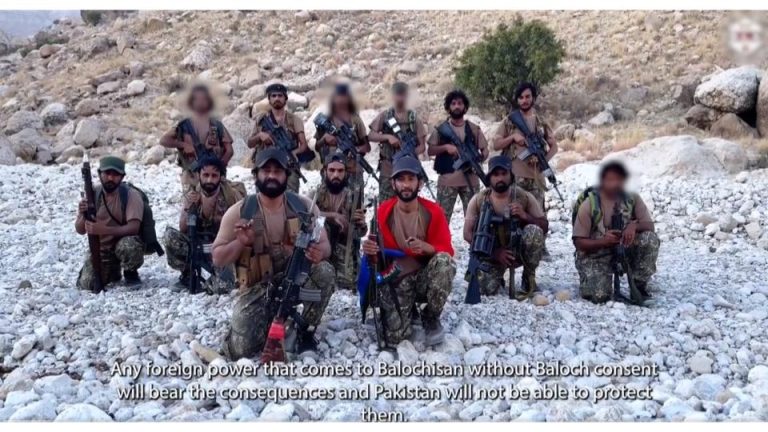
Recently, the Balochistan Liberation Army (BLA) released a 71-minute video about its capture of Mach town. The video showcased close-quarters combat (CQB) training inside a captured Pak Army camp, as well as special forces-level training and the use of advanced tactical weapons such as thermal scopes. The documentary-style video features English-language voice-over narration and was filmed using drones, helmet-mounted cameras, and high-quality cameras.

From the video, it is evident that recent attacks and this footage indicate that the BLA has evolved from a small, ill-equipped group into an organized entity with high-quality resources and manpower. The organization possesses a wide range of assault rifles, grenade launchers, RPGs, and now even tactical vehicles.

One of the most striking aspects of the video is the footage of BLA fighters conducting close-quarters combat training inside a Pakistan Army camp. Reportedly, the camp, located in Sangaan near Sibbi, was captured by the BLA after the Pakistan Army vacated it following a BLA attack.

Some of the combat training shown in the video appears to be at a much higher level than what a conventional paramilitary or military entity would undertake, akin to special forces-level training.

The BLA has increased its efforts to enhance its capabilities to tackle the oppressive Army in the region. However, one thing is certain: the BLA is no longer a threat that can be ignored by the Pak establishment.

The damage inflicted on the Army was significant, demonstrating the BLA’s unwavering commitment to an independent Balochistan. Since the forceful and brutal occupation by the Pakistan Army in 1928, Balochistan has endured a painful environment.

The innocent Baloch population has suffered countless atrocities. In addition to daily home raids, abductions, and a lack of essential infrastructure, Baloch youth are mercilessly shot, and killed, and their bodies are dumped. To liberate their motherland from this brutal occupation, freedom fighters of the BLA and BLF have taken up arms and chosen to resist the evil, oppressive force in power.

Pak Army backed elections: Pakistan’s politics nears boiling point

With the Army engineered ‘General’ elections in Pakistan ensuring that Shehbaz Sharif emerges as Pakistan’s newly ‘selected’ prime minister, Rawalpindi would have certainly celebrated its great success. However, with euphoria of having politically ‘neutered’ the one who gave Pakistani Generals the ungainly moniker of “neutrals” over, it’s time for Pakistan’s real kingmaker Gen Syed Asim Munir [who also doubles up as its army chief] to get down to serious work and take stock of the chaotic situation the military has spawned.

Gen Munir needs no reminding as he is a meticulous person known to be one who neither forgets nor forgives. He’s already on the job of tying up all the loose ends to ensure that Pakistan Tehreek-e-Insaaf [PTI] party chief and former Prime Minister Imran Khan’s political aspirations have no scope of resurrection.  He also knows very well that the widespread public dissatisfaction generated by physical and psychological intimidation of the PTI’s rank and file is a ticking time bomb that needs to be defused quickly and with great finesse.

So, it was expected that the elections and its resultant political fallout would be high on the agenda of the corps commanders’ conference held on March 5, and the post-conference press release issued by the Pakistan Army’s media wing Inter Services Public Relations [ISPR] has confirmed the same.  

The ISPR press release states “The Corps Commanders Conference has expressed satisfaction over the smooth democratic transition of power in the Centre and Provinces” [Emphasis added]. The question that arises is- how can the army endorse untainted conduct of the entire election process so definitely? After all, doesn’t the ISPR statement specifically mention that the “Armed Forces of Pakistan provided [a] security environment for the conduct of General Election-24 as per the given mandate and had nothing to do with the electoral process.”? [Emphasis added].

Given Rawalpindi’s  history of meddling in politics, the recently concluded general elections in Pakistan were closely watched by the international community, various rights organisations as well as independent observers, and the general consensus is that the elections, to say the least,  have been “controversial.” So, it’s but natural for Rawalpindi to try and create an illusion of orders and instructions being implicitly followed during the entire election process- from canvassing to result declaration. How many will believe this is anybody’s guess!

ISPR will surely deny the Army’s involvement in orchestrating elections results, but if this is really the case, then why would there be such a pervasive barrage of accusations against the Army? Moreover, if this allegation lacks substance, then where was the need for ISPR to get so worked up and state that the corps commanders’ conference “expressed dismay that some vested small segments of polity and media especially social media have been maligning Armed Forces of Pakistan with unsubstantiated allegations of interference which is highly deplorable.”?

Similarly, ISPR’s statement mentions that during the conference it was “emphasised that due legal processes should be followed with evidence and proof rather than resorting to unconstitutional and uncalled for baseless political rhetoric and emotional outbursts.” If this menacing statement was meant to silence critics, then Rawalpindi needs to realise that unlike days of yore, such arm twisting doesn’t work anymore, and JUI-F chief Maulana Fazlur Rehman’s hard hitting, no-holds-barred response is proof of the same.

Reacting to the ISPR’s missive, the JUI-F chief highlighted the judiciary’s subservience to the military by saying, “When a politician stands against the establishment [Pakistan Army], the judiciary becomes active” [Emphasis added], and rightly noted that “No decision of the judiciary of Pakistan is presented as a precedent in the world.” One could have rejected these assertions had Rehman been the only one to have raised the issue of an existing nexus between the Army and judiciary, but unfortunately, many others have also done the same.

In 2018, senior Islamabad High Court [IHC] Judge Justice Shaukat Aziz Siddiqui, who was in line to become its chief justice, publicly revealed that “Today the judiciary and media have come in the control of ‘Bandookwala’ [Army] [Emphasis added] and that “Judiciary [in Pakistan] is not independent. He even disclosed that “In different cases, the ISI [Inter Services Intelligence, Pakistan army’s spy agency] forms benches of its choice to get desired results.” [Emphasis added].

There’s yet another far more damning revelation coming from the very horse’s mouth.

In 2016, former President and ex Pakistan Army chief Gen Pervez Musharraf admitted in a TV interview that when he was placed in the ‘exit control list’ by the courts, the then Army chief Gen Raheel Sharif “did help me” to get out of it as “I have been his boss, and I have been the army chief before him . . .” Ruminating that “ . . . our judiciary should move towards justice,” Gen Musharraf revealed that “these courts work under pressure behind the scenes and then give decisions. The Army chief had a role to play in releasing the pressures behind the scenes. [Emphasis added]. 

With the faceoff between the Army aided by the judiciary and the politicians supported by the public likely to gain momentum with passage of time, Pakistani politics has all ingredients of a pot boiler and holds promise of interesting times ahead!

Mahrang Baloch joins family of victim disappeared by Pak Army, supports sit-in protest

Recently in a distressing incident, Abdul Razzaq Baloch, a Baloch youth, was forcibly disappeared on March 11th, at 8 p.m., by the Pak Army personnel who were dressed in plain clothes.

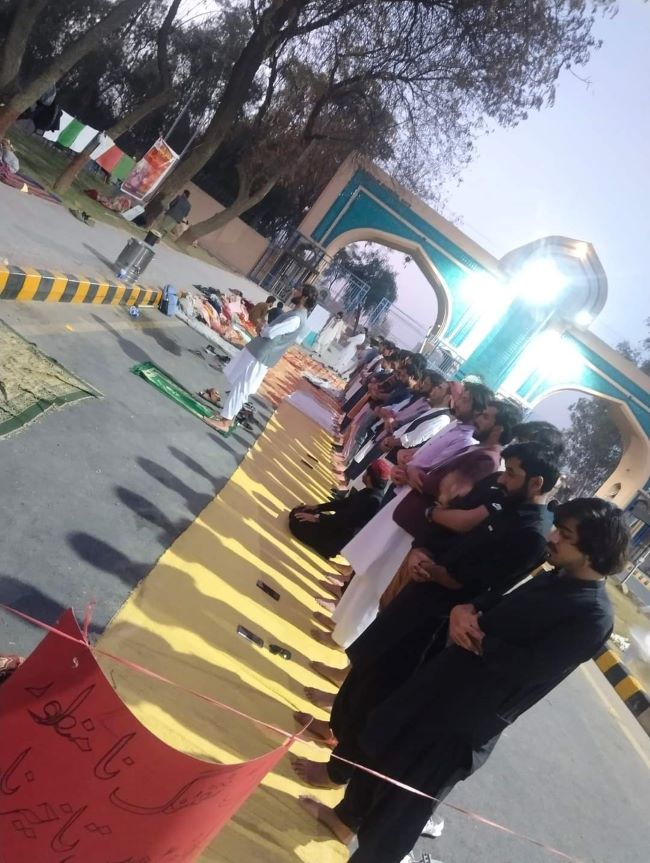
In reaction to this, the family relatives of Abdul Razzaq Baloch blocked the Sorab CD Road in Pak-occupied Balochistan and launched a sit-in protest until he was safely recovered. Dr Mahrang Baloch, head of Baloch Yakjehti Committee (BYC) while addressing Abdul Razzaq Baloch’s father Abdul Khaliq Baloch, stated that it is our constitutional right to resist all forms of coercion against us.

She applauded their initiative and urged the Pak establishment to end their policy of enforced disappearances, otherwise Balochistan population would protest this on the streets. She urged all the Baloch residents in towns and villages to come forward and support the distressed families against this illegality.

It is important to note that, since March 27, 1948, the Pak Army has forcibly occupied Balochistan and subjected the Baloch committees to violence and atrocities. The ongoing pattern of enforced disappearances by the Pak Army in Pak-occupied Balochistan is deeply troubling and demands immediate global attention and cessation.


Tibetans protest outside Chinese embassy in Vienna on 65th Tibetan National Uprising Day

In a powerful demonstration of solidarity and resistance, Tibetans residing in Vienna, under the umbrella of the Tibetan Community Organization and supported by Austrian Volunteer Tibet Advocacy Groups (V-TAGs), gathered outside the Chinese Embassy to protest against China’s occupation of Tibet on Sunday, marking the 65th Tibetan National Uprising Day.

Approximately 200 protesters, draped in Tibetan flags, passionately expressed their discontent with China’s alleged atrocities and genocidal actions in Tibet. Chanting slogans such as “Tibet belongs to Tibetans!” and “China must leave Tibet,” the demonstrators voiced their unwavering commitment to the Tibetan cause.

Austrian politician and member of the Vienna State Parliament and Vienna City Council, Dolores Bakos, lent her support to the protest, brandishing a “Free Tibet” banner. Addressing the crowd on the 65th Tibetan National Uprising Day, Bakos reaffirmed the solidarity of the Austrian people with Tibet and pledged her party’s commitment to advocating for justice at the international level.

Expressing concern over the humanitarian situation in Tibet, Bakos highlighted the violation of cultural and religious rights, as well as the erasure of Tibetan identity under the guise of dam development. Bakos, affiliated with the Austrian political party New Austria and Liberal Forum (NEOS), emphasized the party’s dedication to working closely with Tibetans in Austria.

In a recent move, NEOS MPs presented a resolution in the Austrian Federal Parliament condemning China’s forced transfer of Tibetan children to boarding schools. Accordingly, the resolution is currently under consideration by the Foreign Affairs Committee of the Austrian Federal Parliament.

Notably, earlier this month, Tibetan diaspora also staged a protest outside the Chinese Embassy in Vienna, condemning the arrest of Tibetans peacefully opposing the planned dam construction in Tibet’s Sichuan province.

Nevertheless, following the protest, a rally of around 200 Tibetans marched from the Chinese Embassy in Vienna to Stephan Platz, raising awareness among the Austrian public about the harsh measures implemented by the Chinese Communist Party in Tibet. The event aimed to shed light on the ongoing struggle for Tibetan autonomy and human rights, resonating with a global call for justice and freedom.