Home Blog Page 281

Conversation with Yahya Ekhou on Mauritanian Freethought

By Scott Douglas Jacobsen

Yahya Ekhou is a human rights activist and writer from Mauritania. He earned a master’s degree in NGO Management. He founded and is the President of the Network of Liberals in Mauritania. As well, he is the head of the Estidama Foundation for NGO Capacity Building in Mauritania. Some distinctions include winning the 2017 Arab Youth Excellence Award presented in Cairo, Egypt, by the League of Arab States and the Arab Youth Council. He frequents international conferences. His autobiography will be published this year under the title Free People Cannot Be Tamed.

Scott Douglas Jacobsen: What is the background narrative in freethought for you?

Yahya Ekhou: Free thought for me is to have the right to express my convictions freely and to correct the notion that atheism is a disease or mental deformity that must be cured.

What I believe is unbelief.

Atheism is an instinct.

Jacobsen: How did your scope of the world and critical thinking widen over time in earlier life?

Ekhou: I belong to a very religious family and have studied the Qur’an and Islamic law. The front of the mosque answered me, go pray and do not ask such questions again.

This answer was the beginning of the research journey, the more you delve into the research, new questions appear.

Do religions unite us or divide us?

All religions say that religion unites people.

But the truth is that it unites believers only.

As for the unbelievers, they are the misguided unbelievers, etc.

They must be cursed and hated because they are infidels.

Until I got to Richard Dawkins’ book, The God Delusion

This book has been instrumental in answering many of my questions

The internet really helped me find information

Because there is a severe censorship of information and books in Mauritania.

Jacobsen: What happened to your nationality? Why? How common is this?

Ekhou: Mauritania has the toughest blasphemy law in the world.

Whereas Article 5 of the Mauritanian constitution states that “Islam is the religion of the state and the people,” which means non-Muslims have neither rights nor citizenship, as it is an Islamic republic like Iran and Afghanistan.

Also, Article 306 of the Mauritanian Penal Code states that “Whoever changes or changes his religion shall be killed and shall not be repented.”

Anyone who leaves Islam will move.

A religious fatwa was issued to kill me, and as a result, demonstrations took place in Mauritania calling for my killing, after I wrote an article on Facebook entitled “Why does God not protect the believers in Him?”

An international arrest warrant was issued against me to take me back to Mauritania.

In addition, my Mauritanian citizenship was revoked.

Revocation of citizenship is a type of repression and silencing of various voices demanding equal citizenship rights that are not linked to belief.

With all this, there is a major international media blackout on what is happening inside Mauritania, for several purely economic reasons.

He cares more about the power of the state than the person.

The type of nationality you hold will determine the degree of attention you will receive from the international media and international organizations.

The interest in Iran and Saudi Arabia can be summed up in one word, “oil.”

Jacobsen: What is the state of Mauritania for ex-Muslims now?

Ekhou: Ex-Muslims live in a very miserable situation, as there are many of them in prisons, and many have been executed.

In the shadow of international silence, because as you know, no one knows anything about Mauritania or cares about it because it is not the focus of the world’s attention economically, culturally or politically.

Jacobsen: As you became an atheist, what were some of the consequences in social and professional life? Did this impact life with family?

Ekhou: The social system in Mauritania is a tribal system, and I belong to one of the largest tribes, the “Tijkant” tribe, which leads the religious trend in Mauritania.

And for this reason, my family tried to kill me and disavowed me. It also tried to kill my sister because she supported me and she is now residing in Egypt.

Now I don’t have any contact with my family.

One of the harshest consequences is that the social institution made up of tribes and state institutions unites, so anyone who criticizes religion or embraces a different ideology or religion or calls for the secularization of the state to eliminate religious laws.

His rights are violated by force of law.

Jacobsen: For the founding of The Liberals Network Mauritania, what is the importance of providing a voice to different, more centrist views, in the midst of a highly conservative Islamic context?

Ekhou: The motive for which I founded this organization is my conviction that rights are not given but taken away.

If you don’t claim your rights, you won’t get them automatically.

Dictatorship societies do not change automatically to democratic societies, for example, Europe is experiencing today’s freedom and rights that thousands of writers, activists and intellectuals paid for with their lives.

I believe in the need to change the situation inside Mauritania for the better.

With the efforts of young people who have become aware that we are in an era that no longer accepts selectivity in giving rights.

Everyone deserves equal citizenship rights, no matter what they believe in. I want Mauritania to be secularized so that the rights are for all.

What I’m trying to do is that it’s not just about what happened to me, but about thousands of activists and young people inside Mauritanian prisons. I’m the only one who has the chance to be the voice of the oppressed inside Mauritania.

I will use my stay in Europe to highlight the situation of freedoms in Mauritania.

The Mauritanians tried to silence me with threats, and even force, only I was subjected to an attempted murder inside Germany.

Because it bothers them to tell the world what is happening inside Mauritania.

Jacobsen: How did you get to Germany?

Ekhou: After my family tried to kill me, I ran out of Mauritania.

It was a long road from Mauritania to Mali, Egypt, then Turkey, and then Germany.

Gaining my freedom wasn’t a path strewn with roses.

Jacobsen: How can individuals or organizations contact you?

Ekhou: I’m looking forward to have contact with any person or organization interested about my story or my country through my personal account on Twitter and Facebook “Yahya Ekhou” or the website of the Liberals Network in Mauritania.

https://liberals-mauritania.org

Jacobsen: Thank you for the opportunity and your time, Yahya.

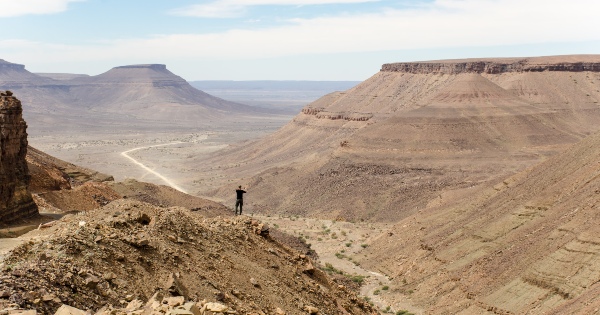
Photo by Daniel Born on Unsplash

Just A Little Shift: Inside the mind of Sri Sri Ravi Shankar

India’s most popular wellness and spiritual guru’s book has words he has said for more than three decades. It is a virtual eye opener.

Sri Sri Ravi Shankar’s recently published tome, An Intimate Note: To The Sincere Seeker, is flying off the bookshelves like freshly baked thin crust pizzas, hundreds want to know from India’s most popular spiritual and wellness guru how to reorient their lives. They have job losses to handle, and then there is the return of Covid in a milder form. And everyone wants an answer from Sri Sri Ravi Shankar. It is not physically possible, the book has some very interesting answers.

For many decades, Sri Sri Ravi Shankar has explained why modern, urban life would lend itself to his form of breathing and meditation. He has impressed upon millions across the globe why it is important to rejuvenate physically, mentally and emotionally. He has explained why people who have a lot to do in life have a greater need to meditate. The New York Times once quoted him as saying on his first visit to Times Square in New York in April 2011: “When you live in the middle of this hustle-bustle, and you have a lot of responsibilities and demands on you, you naturally have a greater longing for it.”

“It is important for people to take a few minutes every day to sit with their eyes closed and look for inner peace,” the daily quoted Sri Sri Ravi Shankar as he walked up Broadway. “You need a source of silence and sanity and it is healthy to clear the mind,” he said.

“It gives you a deeper rest than sleep,” Sri Sri Ravi Shankar said. It adds dimension to your life, and it is so suitable for today’s busy life,” the daily quoted him saying.

The wellness guru founded the non-profit Art of Living (AOL) Foundation in 1982 to help spread the use of meditation to alleviate stress and societal problems and violence, conducting programs for people of all religions and cultures.

Sri Sri Ravi Shankar took a spiritual path early on, and by age 4 was able to recite from the Bhagavad Gita. Interestingly, he was born on the same day of the year as the Hindu philosopher Adi Shankara and followed the Maharishi Mahesh Yogi, developing a rhythmic breathing exercise to help relieve personal suffering. The technique came to him in 1982 “like an intuition” after a 10-day period of silence on the banks of a river in India. The technique, Sudarshan Kriya, has made it the core of his Art of Living courses.

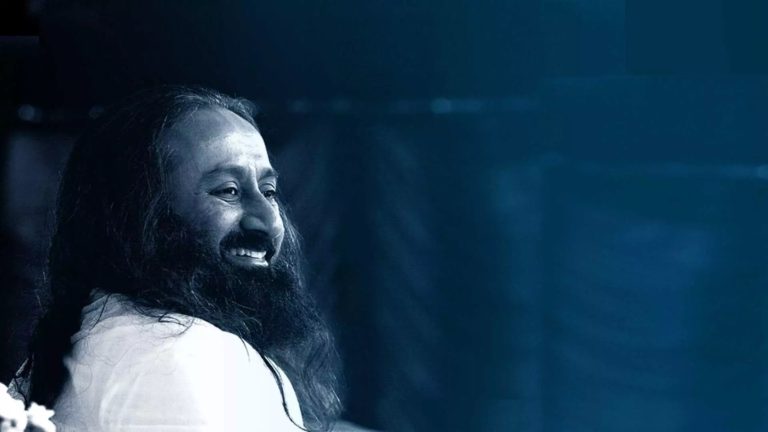
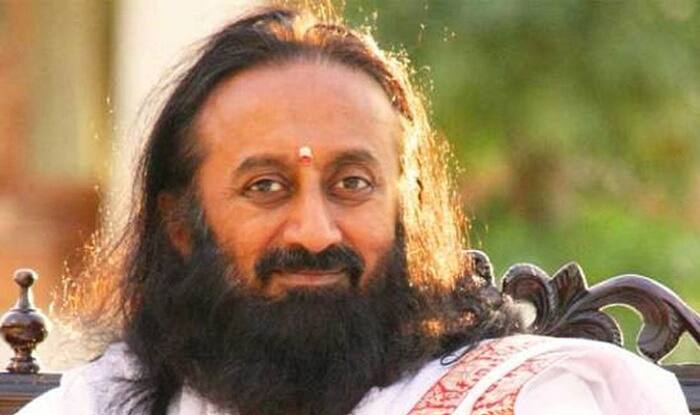
Sri Sri Ravi Shankar, wellness and spiritual Guru

The book is full of discourses and comments made by the spiritual and wellness leader. The book starts with comments offered way back in 1995 in California where Sri Sri Ravi Shankar talked about Just a Little Shift. “The event behind the event is knowledge. The object behind the object is infinity. The person behind the person is love. Maya or delusion is when you are stuck in events, personalities, or objects. Brahman — divine consciousness — is seeing beyond all these. See, just a little shift.”

I remembered having read a report in Newsweek where the wellness leader met up with Arthur Brooks, president of the American Enterprise Institute (AEI), a conservative think tank. An estimated 350 people crowded into AEI’s offices to watch Brooks and the Guru discuss spirituality and economy.

Brooks started with the spiritual questions. “What’s the secret to happiness?” he asked. “Just be yourself,” the wellness guru suggested.

Sri Sri Ravi Shankar was in a humorous mood. Americans struggle with stress, he noted, and he suggested they “go slow—drive behind a bicycle.” He laughed at his own joke, and everyone laughed with him.

“We need a society where people can pursue their own success, and at the same time they can understand their success as being beyond material things,” Brooks told Newsweek in a joint interview with Sri Sri Ravi Shankar before the main event Tuesday. “This is the reason that free enterprise and capitalism matter. It’s not to make us richer but to lift us up so that we can be in a position to be having more transcendent thoughts.”
“Devoid of humanism, capitalism collapses,” Sri Sri Ravi Shankar interjected, explaining his view that spirituality gives people the confidence to take responsibility for their own lives.

“I don’t see there is any conflict between capitalism and compassion,” the spiritual guru said. “Rather, capitalism can flourish well with compassion, and compassion can only happen with people who can afford to show compassion and do something about it.”

Later in the programme, Brooks summarised Sri Sri Ravi Shankar’s outlook as “so wealth is good, but we must underlie it with a sense of proper morality.” “Creation of wealth should always go along with distribution,” Sri Sri Ravi Shankar replied, using a word, distribution.

In 1998, Sri Sri Ravi Shankar — the book notes — told a gathering in Germany as a part of his new year message: “Be in touch with the source and make your life a celebration.”

Spiritual Guru Sri Sri Ravi Shankar

The spiritual leader’s wisdom of secrets, which he talked about during his interactions with visitors at his expansive Bengaluru ashram, fits corporate India perfectly. “Trying to protect a secret causes anxiety and discomfort. An ignorant one is not comfortable with a secret, whether revealed or unrevealed, but the wise one is comfortable with a secret, whether revealed or unrevealed.”

Pages after pages the wellness and spiritual leader explained why it is important for people to stay calm to weather turmoil in life. Sri Sri Ravi Shankar delved deep into the issue of uncertainty, uppermost on the minds of people, especially post Covid-19.

He had, actually, talked about it almost two decades ago during a discourse at his ashram in Bengaluru (it was then called Bangalore): “You can be at ease with the uncertainty of the world when you realise the certainty of consciousness. Usually, people do just the opposite. They are certain about the things in the world and uncertain about God. They rely on something that is not reliable and get upset. Uncertainty causes craving for stability and the most stable thing in the Universe is the Self.”

He talked about it way back in 1999. We are into the start of 2022.

Sri Sri Ravi Shankar also talked about mistakes, which are common to almost anyone and everyone across the globe. Says the spiritual and wellness guru: “Mistakes keep happening all the time. Often you get irritated by them and want to correct them. How much can you correct? There are two situations when you correct others’ mistakes. You correct someone’s mistake because it bothers you. But even if you correct it, this does not work. You correct someone’s mistake not because it bothers you, but for their sake so that they can grow.”

“To correct mistakes, you need authority and love. Authority and love seem to be contradictory, but in reality they are not.”

Loads of anecdotes, drawn from the wellness and spiritual guru’s journeys across the world, makes this one a fascinating read, especially when the mind is in perpetual turmoil because of pandemic-led disasters which, in turn, had wrecked economies across the world.

Farooq Abdullah, from frustration to anger to hatred

Power, popularity and riches came heaping on Farooq Abdullah as the body of his late father Sheikh Abdullah was downed to lay into eternal rest close to the Hazratbal Shrine in Srinagar. Father’s massive socio-political legacy and abounding support from Indira Gandhi, the then Prime Minister of India, were strong factors to shut the mouth of critics and political opponents to Farooq when he stepped into the shoes of his late father with hardly established criterion of an Indian politician.

Along with other traits of character, Farooq has inherited eccentricity as well, which remained with him all his life. He could be whimsical, capricious, and fanciful. But very few people know that he has a method in madness. The Farsi proverb ‘diwana ba kaar-i khud hoshyar‘ very eloquently explains his psyche. In simple translation, it could be ‘a distraught man watchful of his self-interests’.

He became the chief minister of Jammu & Kashmir thrice with the outright support of Congress. He has a history of being on and off the Congress bandwagon. He could endear himself to Atal Bihari Vajpayee who picked him up as his cabinet member to soft-paddle with his Muslim constituency. At one time, he had great expectations that the Congress would nominate him as its candidate as Vice President of India. That did not happen but the BJP inducted his son into the Council of Ministers.

Congress raised the profile of the house of the Sheikh to such heights that people in Kashmir said that the Dogra ruling dynasty was replaced by the Sheikdom of Kashmir. These favours and privileges were strong enough to turn the head of Farooq, who has now given up his weirdness and eccentricity and is talking with a sense of deprivation and despondency.

Farooq Abdullah’s observations on the situation in Kashmir today as reported by the local print media evokes pity for the man who clings to political manoeuvring and power aspiration at the advanced age of 85. What is more, he says he has lost faith in India, her secularism, democratic dispensation, humanism and all that he has been praising and standing by during his long years in power. Most of his observations are focused on asserting that you are all the bad and I am all the good. The party holding power at New Delhi has come to power through due process of the constitution. When Farooq calls it a “communal and divisive force”, he is challenging the will of the majority of Indian voters. He betrays faithlessness in democracy. In such a situation how is he going to define his electoral victories in the elections in J&K especially that of 1986 which gave birth to MUF (Muslim United Front) and its aftermath?

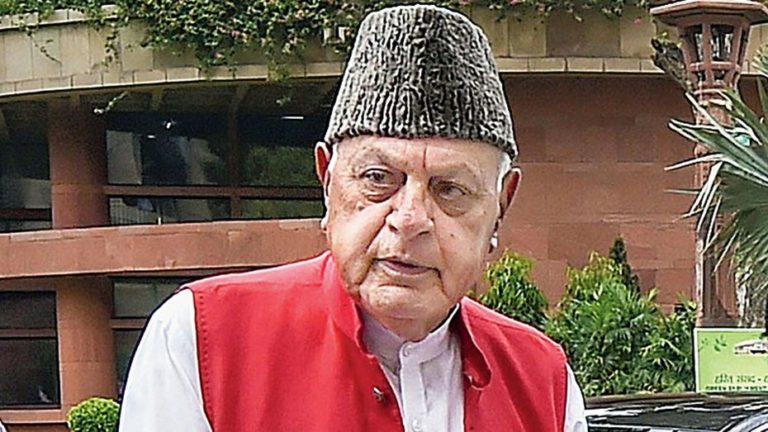
Farooq Abdullah, National Conference President. (File Photo)

What justification has Farooq to call BJP a communal government when in his government thousands of acres of forest and state land were grabbed under a controversial law called the Roshni Act and distributed among blued-eyed Kashmiris at throw-away price? What justification has he to call BJP a communal government and his a secular government when thousands of kanals of forest land was grabbed by his party stalwarts and mandarins clandestinely in Bhatindi and sold with the notification “only Muslims are allowed to apply for allotment”. The result is that Bhatindi is a mini-Pakistan where Farooq holds a patch of 25 kanals (nearly 3 acres) of this general loot. Again in the case of the Siddhra Colony, the Housing Department categorically stated that Kashmiri Muslims would be given preferential treatment.

Farooq and Kashmir leadership embraced communalism and carried the coffin of democracy on their shoulders the day when thousands of Rohingyas were officially re-settled in Jammu along the international border and were provided with facilities like ration cards, aadhaar cards, identity cards, water and power supply etc. all contrary to the then provisions of Article 370 of the Constitution. Farooq cannot accuse BJP of communalism when the PDP government withdrew the Jammu police investigating staff from investigating a criminal case in Kathua and brought the Muslim police staff from Kashmir to conduct the investigation. When Farooq’s goons misbehaved and manhandled the ED staff, including a lady officer, that had arrived from New Delhi to investigate the tax evasion by some big business magnates in Srinagar, his government had sown the seeds for the abrogation of the special status of J&K. Farooq has no ground for making any complaint.

Farooq Abdullah laments that the “Kashmiri youth feel they have no place in modern India and have lost faith in the government in Delhi. I think the tragedy is that every Muslim, whether he belongs to Kashmir or the rest of India, has to continuously prove that he is a nationalist, that he is an Indian. Why? Why can’t it be done for the others? Why can’t they ask the Hindus, ‘Are you Indians?” Farooq should not have said misleading words like these.

Instead, he should have made a moment’s introspection and asked his self why did thousands of Kashmiri youth choose to cross the border clandestinely to go to Pakistan-occupied Kashmir (POK), get themselves enrolled in terrorist camps established by the Pakistan Army, receive training and arms and indoctrination and return to the valley at the risk of their lives and raise the banner of armed insurgency. Farooq should have introspected how his party cadre, colleagues and selected bureaucracy covertly and overtly supported armed insurgency and subverted national interests.

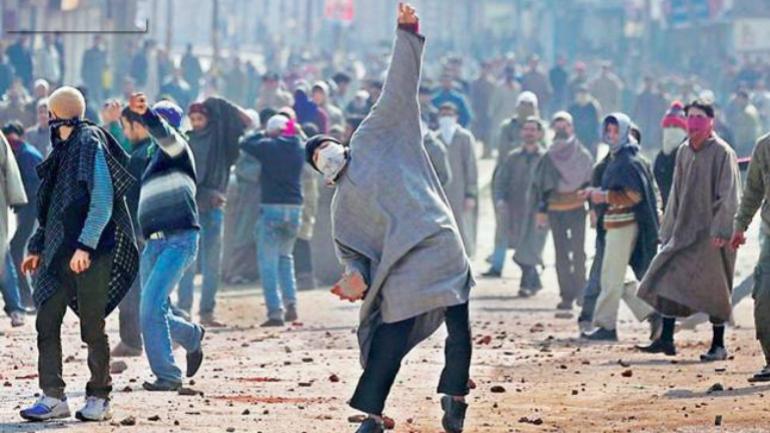
Gullible Kashmiri youth indulge stone pelting at the behest of separatist leaders of Kashmir. (Photo: PTI)
Gullible Kashmiri youth indulge in stone pelting at the behest of separatist leaders of Kashmir. (Photo: PTI)

Farooq should have introspected how he and his party seniors meticulously avoided criticizing the gun-wielding Kashmiris rising in an insurgency, massacring the Kashmiri Pandit community, looting their vacated homes and grabbing their properties. He should have ruminated how he subtly encouraged alienation of the vast masses of Kashmiri people by telling them that the Pandits left homes and hearths on the call of Governor Jagmohan. A leader of his stature should have been true to his conscience and spoken the truth not falsehood. Had he not ordered the release of about 50 Kashmiri boys who had returned after training in terrorism and were facing prosecution? They included murderers like Bitta Karate who said in a televised interview that after killing 22 Kashmiri Pandits, he had lost the count. Was not Farooq hand in glove with them?

He should ruminate how Kashmiri Muslims willingly offered the warmest hospitality to the terrorists from across the ceasefire line calling them “guest mujahid” and providing them with all comforts and guidance they needed. Did Farooq or any one party of the Gupkar Alliance obstruct these activities? Did they ever give a call to the people to refuse hospitality to the terrorists? Did he ever give a call for a mass protest against Pakistan sending armed gangsters to unleash mayhem in Kashmir? Did Farooq ever realize the consequences of government reacting to the armed insurgency and the segments of society that would be affected by the action of the security forces?

If Farooq felt no need at any point of time of taking even one of these steps, why does he now lament that Kashmiri youth feel they have no place in India? It is not the Kashmiri youth alone, it is the Kashmiri of any age who will not find a place for himself in India as long as he carries the Pakistan-provided gun on his shoulders. This applies to the Gupkar Alliance members also.

Farooq Abdullah has raised another question. Let us quote him precisely. He says, “Today, every Muslim, whether he belongs to Kashmir or the rest of India, has to “continuously prove” that he is a nationalist despite his community having shed blood for the country”. Who else but Farooq knows the precise answer to that question? But since providing the answer publicly does not suit his political interests, he will not touch on it. The entire history of terrorism in Kashmir shows that only the Muslims have been the insurgents, accomplices, over or underground conduits, carriers of secret messages and weapons and all that armed insurgency needs. Those providing safe heavens to the terrorists, guiding them across the forests and uncommon routes, providing them intelligence about the police force’s movements or the movement of the security forces, plotting subversion, coming out in thousands as stone-pelting youth and slogan mongering etc. all have been Muslims. Those who have been apprehended by the police while trying to cross the border clandestinely have been Muslims. What has Farooq to say about that?

Farooq has rejected the report of the delimitation commission. There are other groups also who have rejected it for various reasons. We have nothing to say about that. But Farooq has raised the question of why the Kashmiri Pandit and Kashmir Sikh’s demand reservation of seats has not been included in the report. The pot calling the kettle black. Did Farooq during his three stints in office as chief minister ever speak a word about the rights of or reservation for the religious minority of Pandits and Sikhs? Never. Not only that. Twice did the Chairman of the Minorities Commission of India write to him (when he was a chief minister) to recommend to the Home Ministry that the Kashmiri Pandits and Sikhs should be categorized as minorities in the J&K. Farooq never responded.  

When late Mufti Saeed and PM Modi announced after a joint meeting in Delhi the question of the return of the Pandits under the clauses of the Memorandum of Alliance, a total and unprecedented strike was observed in Srinagar for one full day against the announcement. Not only that in the legislative assembly, NC and PDP members jointly clashed with BJP members and came to blows when the former threatened that never will a single Pandit be allowed to return. A general secretary of the National Conference is on record to have said that “if Pandits are allowed to return, each Pandit will bring with him three Israelis”.

We learn that these days some NC activists are approaching the Kashmiri migrants in Jammu directly or indirectly to mollify them into joining hands with NC in the contemplated elections to the assembly. No Kashmiri Pandit worth his salt is going to join hands with those who are accomplices in their genocide and ethnic cleansing.

Farooq says that Muslims have given blood for India and today nationalism of the Muslims is questioned. How many Muslims of Kashmir sacrificed their lives during the thirty years of the NC-led movement against the Dogra autocratic rule? How many of his party workers were killed? Let Farooq compare the numbers with the number of Muslims gunned down by the guest mujahids in Kashmir on charges of being spies (mukhbir). The numbers will speak out the truth.

In the final analysis, what ails Farooq and what makes him lament for the Muslim community of India and not only Kashmir is something else. The dirge is not only of Farooq Abdullah but of all those who refuse to read the writing on the wall, those who want to turn the face away from the realities of history. Farooq laments the loss of Sheikhdom forgetting that if the Duggar Raj could not last beyond the fourth generation, how can the Sheikhdom last beyond the third generation.

The reality is that the Islamic theo-fascism, which sustained the separatist movement in Kashmir and behind which Farooq & Co walked with full expectations, has received a fatal blow from the fountain-head of Islamic authority in Riyadh. Prince Salman has come out as the prophet of deep and drastic reformation of Islam and the ummah. After banning the Tablighi Jama’at, the group that was generously promoted by the regime of Sheikh Abdullah in 1980-81, the violence-loving and terror-adoring Islamic states, organizations and individuals find their spinal cord broken and wrecked. The political Islam that was employed to befool the unsuspecting Muslim masses only for self-aggrandizement has no option but to wind up its shop. Islam is entering a new phase of inclusiveness, openness and universal brotherhood. It wants to deal with its adversaries also based on equality and justice. Prince Salman is trying to replace Islamophobia with Islamic rationale. Farooq Abdullah is a modern man and has seen life in its various forms. He must welcome the rising and outreaching Islam and disassociate himself with the political Islam of the ignorant mullahs. Alas! He has thrown the Gupkar albatross around his neck and is now crying at the world in frustration.

Baloch youth are prime targets of Pakistani abduction: BSO-Azad

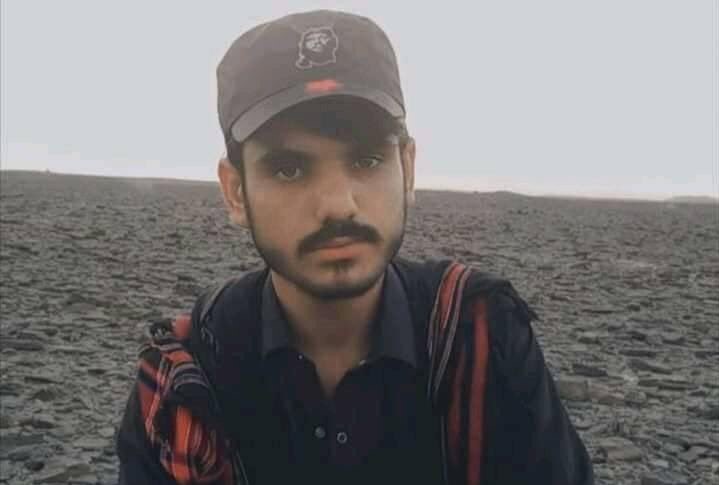
Pakistan Army continues its genocide across occupied Balochistan wherein several innocent Baloch youth are abducted and killed in cold blood. The Baloch Students Organization-Azad (BSO-Azad) in its media statement condemned the brutal killing of Siraj Saleh at the hands of Pakistani soldiers.

“Baloch youth are the prime target of (Pakistani) state that aims to silence the dissenting voices against it and brutalize those who are against the occupation on their land, but such tactics will not succeed as Baloch youth are mature and well-educated,” BSO-Azad said in its media statement.

The spokesperson of BSO-Azad further explained that Pakistani security establishment have full control over everything across Balochistan. “No one makes the (Pakistani) security forces accountable for their crimes which they commit on a daily basis. This killing and brutalizing of a young man has further exposed the state’s face in Balochistan. Siraj Saleh was killed because of being a Baloch and being an educated youth he, like others, did not accept the state occupation of his land, therefore, he was targeted. The international community must intervene to stop the Baloch genocide,” said the BSO-Azad spokesperson.

Pakistan has been abducting and killing Baloch over the last several years. Baloch Human Rights organizations have records of more than 30,000 innocent Baloch who have been abducted by the Pakistani security forces and are now “Missing”. Another 10,000 Baloch have been killed and dumped by the Pakistan Army in various operations conducted across occupied Balochistan.

Arif ul Safar has been abducted by the Pakistani forces from Turbat, Pakistan-occupied Balochistan.

Historically, Balochistan has been a separate nation that came under British imperial rule along with India. On August 11, 1947 Balochistan attained its independence from British colonial rule. However, this independence was short lived and Balochistan was occupied by Pakistan Army on March 27, 1948. The Baloch have been fighting for the independence from Pakistan since this date.

Imran Khan’s blank promises won’t work in Balochistan

After he came to power in 2018, Prime Minister Imran Khan told the Balochs that “Centre will work with Balochistan as a partner,” and assured them that “We will not make any such promise for which we may have to excuse later on.” On National Minority Day, Imran Khan publicly admitted that“Balochistan is impoverished [since] Pakistan has always neglected the region.” Though it’s no secret that the people of Balochistan have been historically marginalised by the country’s powerful Punjab lobby and brutalised by Pakistan Army, Islamabad has never admitted this earlier.

So, when Khan reiterated that the future of Pakistan was linked with that of Balochistan and announced his willingness to talk with Baloch insurgents, his willingness to undo the wrongs of the past expectedly raised a lot of hopes amongst the Baloch. There was another compelling reason why the people of Balochistan had high expectations from him– before becoming Prime Minister, Imran Khan had been vocally quite critical of Pakistan Army’s horrific excesses and atrocities in Balochistan.

Khan’s concern for the pitiful condition of Baloch is apparent from an undated video in which he can be heard saying, “Our Army bombing people in Balochistan, how can we bomb our own people?” Not only this, he even said, “It is our own people with their children, but it is important to understand are we just bombing out people, just think about the immorality of bombing villages with the women and children.” So, the oppressed Baloch genuinely believed that after becoming Prime Minister, the cricketer turned politician would walk his talk.

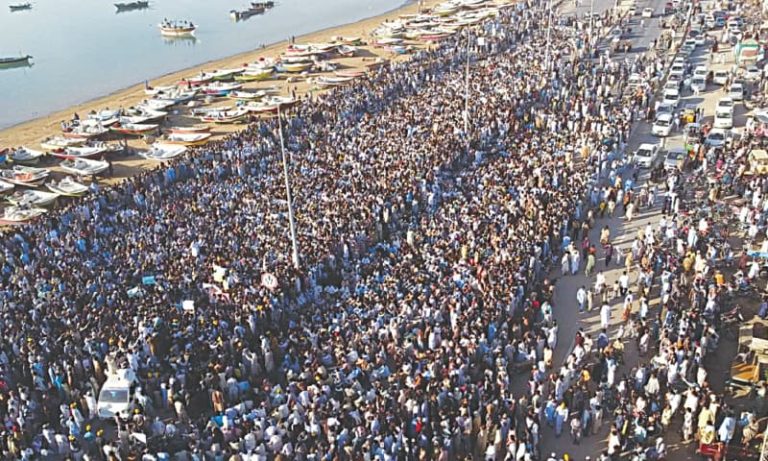
However, while Khan’s assurances fooled the people of Balochistan for two years, his pretense finally crumbled in November when thousands of Baloch in Gwadar city took to the streets in response to a call from Jamaat-i-Islami leader Maulana Hidayat-ur Rehman. Initially, while the government tried to play down this massive protest, Chinese Foreign Ministry Spokesperson Zhao Lijian dismissed reports of this humungous protest as “fake news” aimed at maligning China-Pakistan Economic Corridor [CPEC] project.

Chinese foreign ministry spokesperson Wang Wenbin claimed that “China-Pakistan Gwadar Faqeer Middle School, the vocational training institute in Gwadar, and China-Pakistan Fraternity Emergency Care Center in Gwadar, which have been completed, have played important roles in and made China’s contributions to creating education opportunities, improving employment skills and responding to COVID-19 for the benefit of the local people.” He also said that “… all CPEC projects including the Gwadar Port will play a more positive part in improving people’s livelihood in both countries.”

But with large scale protests continuing for a month, it’s patently clear that while Khan was just making false promises, Beijing was issuing blatantly fallacious statements. So, while the Gwadar Port development project is being touted as the “crown” of the ambitious US $60 billion CPEC project that would boost infrastructural development as well as provide employment to locals on a large scale, what was actually happening on ground was just the opposite. So, the Gwadar protest was both justified as well as expected.

While a series of check posts has made movement of locals in the area a nightmare, security reasons are being cited to prevent fishermen from venturing into the sea. Resultantly, while local traders and commuters are facing severe hardships livelihood of fishermen is being adversely impacted. At the same time, Chinese nationals are moving around freely in Gwadar while Chinese trawlers are having a field day fishing merrily in Pakistani waters. The very fact that the government has accepted 19 demands made by protesters makes it absolutely clear that Islamabad was being grossly unfair to the people of Balochistan.

The tragedy of Balochistan is two-fold- one, its illegally occupation by Pakistan, and two, the step-motherly treatment meted out by successive governments. Balochistan is today inextricably associated with Baloch being abducted, tortured, killed and their corpses simply dumped. The top ten results of Google search for “kill and dump policy” will be about Balochistan!

In his illuminating piece titled ‘The rise of Maulana’ that appeared in ‘Dawn’ on December 1, Muhammad Akbad Notezai quotes Jamaat leader Hidayat-ur-Rehman as saying “There are two main demands in our protest: first, our respect; second, joblessness. Our source of livelihood and employment in the name of security, via fishing, trade, and other businesses have become ruined. In a nutshell, we want our very own employment that has been snatched from us in the wake of development and security, not the one from you to be given to us.”

The important thing to note here is that the people of Gwadar haven’t fallen for the much-hyped claim that CPEC will be a “game changer” and usher in prosperity, being peddled by Beijing and Islamabad. Baloch are quite happy and content with their traditional sources of livelihood and all they want is a fair share of the income accrued from sale of its mineral resources. It also wants that security forces should treat them with due respect and dignity.

However, there is a problem.

Imran Khan is openly pandering to Chinese interests as evident from his priorities. Even when public discontentment in Gwadar was palpable, rather than address concerns of the locals, Khan was busy assuring a Chinese business delegation of support “on a priority basis,” and bending backwards by saying that Pakistan is “grateful to them for their keen interest in accelerating their investment in special economic zones.”

Similarly, Pakistan Army and other security agencies under its command hold Baloch in utter contempt and views them as terrorists. Therefore, the chances that the people of Gwadar would be treated with respect may be difficult to ensure at grass root levels.

What should concern Islamabad is that though spearheaded by a Jamaat-e-Islami cleric, the Gwadar protest isn’t a movement inspired or spurred by religious considerations. Au contraire, it’s a campaign for ensuring that Baloch are given basic amenities guaranteed by the Constitution of Pakistan and that Pakistan Army ends its highhandedness and unlawful actions. The Gwadar protests also highlights the phenomenal rise in regional and ethnic prejudices within Pakistan that are compelling several minority communities to unite and in an act of self-preservation, raise their voices against Islamabad’s discriminatory treatment.

The writing on the wall is clear. Balochistan can no longer be fooled by hollow promises of a bright future or unimaginable riches and prosperity. So, offering cakes to the economically weak who struggle to earn their daily bread will no longer work and thus, Khan has no other option but to act. However, whether he will be able to take the bull by its horns and make Chinese commercial interests in CPEC subservient to those of Balochistan, remains a million dollar question!

Kashmiri Pandits yearn for justice from J&K Delimitation Commission

In the course of its deliberations in union territory of Jammu & Kashmir, the Delimitation Commission met with leaders from the Peoples Conference, National Conference (NC), CPI, CPI (M), Panthers Party, Congress, BJP, Apni Party and Bahujan Samaj Party. The Commission also met with district election officers from Anantnag, Kulgam, Pulwama and Shopian. The Commission also met with various delegations of the people of the union territory from both regions to know their views on issues connected with the delimitation of constituencies.

The purpose of this interaction was to gather first-hand information about conduct of the exercise of carving out new constituencies in Jammu and Kashmir so that the unrepresented or inaccessible people are brought within the ambit of the electoral process in the union territory.

The first question is whether the Delimitation Commission is satisfied with the technicalities of the existing constituent assemblies in the erstwhile state of Jammu & Kashmir, something against which the allegations of bias and discrimination are levelled by the stakeholders since long. The very fact that six new constituencies in Jammu region and one in Kashmir has been recommended indicates that there are definitely technical discrepancies in the existing assembly constituencies which should have been addressed but are not. If the argument is that the terms of reference did not ask for re-examination of existing constituencies, it is implied and the Delimitation Commission should have sought clarification before undertaking the assignment.

The Delimitation Commission has published the draft report and views and observations have been invited to reach it by the end of December 2021. Our experience is that the draft reports are seldom changed partially or fully. The whole thing has been undertaken with hectic haste perhaps the government is in great hurry to constitute an elected government.

Most of the leaders of political parties have found the report unacceptable mostly on emotional rather than nationalistic and realistic count. One impression hyped by the valley-based leadership is that there is a hidden attempt to reduce the representation of the Muslim majority community of the valley by manipulating constituencies in the Jammu region. In simpler words, it is dubbed as a report biased against the valley.

Secondly, the question hotly debated in political circles is whether the report does justice to all segments of the population of the union territory or not. Perhaps the significance of the report will squarely rest on the criterion proposed and the practice followed. There appears a gap between the precept and practice. From the point of view of the internally displaced community of Kashmiri Pandits, the report does not provide them any space in the election process of this country. I will try to elucidate the point.

Similarly, the refugees/migrants from PoJK (Pakistan-occupied Jammu & Kashmir) numbering in lakhs were denied state citizenship ever since independence. Only after the abrogation of Article 370, their seven decades long woe was remedied. Twenty-four assembly seats are reserved for that illegally occupied part of the state. The refugees from PoJK who have now got the domicile status are entitled to proportionate number of assembly seats from this reserved quota of twenty four seats. The draft report is totally silent about their right to reservation of the number of seats due in their favour. Why discriminate against them again?

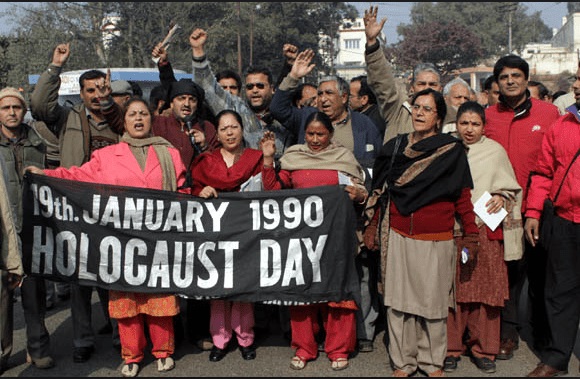
Constituting a Delimitation Commission for the UT of J&K was necessitated by the J&K Reorganization Act 2019. The conversion of J&K into a union territory did away with the state constitution along with amendments that were made to it from time to time. Therefore the validity of the order under which the exercise of delimitation of constituencies was disallowed till 2026 has lost its validity. J&K State Reorganization Act 2019 notwithstanding, the Article 370 was willfully and practically struck down by the J&K Assembly when (a) the Hindu religious minority of the valley was subjected to genocide and ethnic cleansing in 1990 in violation of the fundamental rights of the people in the Indian Constitution and also in the Constitution of the State of J&K, and (b) when thousands of Rohingya Muslims were illegally resettled in Jammu in violation of the permanent statehood law.

Regrettably, the Delimitation Commission is silent on the electoral status of several hundred thousand internally displaced Kashmiri Pandits despite several of their delegations having interacted with the Commission in the course of its field work in both regions.

It has to be noted that firstly, the Commission has unjustly ignored the protest lodged by the internally displaced community of Kashmiri Pandits against the authorities deliberately making incorrect entries in the census records about the community such as Gerrymandering, tampering with numbers and creating hurdles in the voting process etc. Secondly, the Commission has clearly said that besides the 2011 census as the basis of their recommendations, they have taken other factors also into account as well as mandated by Section 9(1)a of the Delimitation Act 2002 read with Section 60(2)(b) of the J&K Reorganization Act 2019.

The Section desires the factors like (a) geographical features (b) public convenience etc. among others to be taken into account. Yes, the Commission has taken into account factors such as “hardships faced by persons living in areas adjoining the international border like Samba and Kathua” as stipulated in the Act and consequently reorganized the constituencies thereof. But it has chosen to ignore the people who fall in the category (a) geographical features (b) public convenience of the same Act. Obviously because the Kashmiri Pandits though falling in this category of the Act are not a vote bank owing to their insignificant numbers, therefore, remain ostracized. Specific mention of Kathua and Samba for special category of borderline areas could be possible (and rightly indeed) because these constituencies had a staunch patriotic leader of high status to lend weight to their cause. The internally displaced persons had no such support whatsoever and could be ignored without a whimper. Had they even an iota of support from the state, they would not have been refugees in their own country.

Unfortunately, an entity called Delimitation Commission that was authorized to recommend enfranchisement of the deprived people of this country has chosen to disenfranchise those who have been subjected to genocide and ethnic cleansing in a secular and democratic India to which their home state acceded in 1947. Such is the apathy of the Commission of their cause that it did not care even to reflect on numerous man-made hurdles created in their way of casting their vote. Imagine an exiled Kashmiri Pandit (KP) from a village in Baramulla eking out a living in a far off town in Maharashtra or Karnataka being asked to vote for any candidate of his original constituency in the Baramulla from where he was forced out 33 years ago and the prospective candidate was not even born at that time. Is there any rationale in this policy of the Election Commission of India? It is simply telling the hapless KP that look Kashmiris have thrown you out of your home and we the Election Commission of India supporting the Kashmiris throw you out of voting domain of India. Is this the equal treatment to Indian citizens promised by the Indian Constitution?

One may ask where the logic of abounding humanitarianism demonstrated by the BJP in supporting permanent residence for PoJK refugees has vanished in thin air in denying them the eligible number of seats out of the reserved quota; or how has their grand slogan of “sab ka sath sab ka vikas” become counterproductive in the case of the extirpated community of Kashmiri Pandits. If the Delimitation Commission has considered the class of population suffering from the shelling of their homes on the international border as eligible criteria for delimitation, does not the populace that has been subjected to genocide and ethnic cleansing deserve to be considered by the same token? Why has the Commission ignored the democratic rights of Kashmiri Pandit internally displaced persons (IDPs) when it was charged with the duty of establishing the rights of the people to the democratic process, is a moot question.

There is still a chance that the Commission sheds bias and rises above certain human weaknesses. It has to remember that it is entrusted with a pious mission by the nation and the piety should not be allowed to be desecrated by anti-national mindset.

Useless to talk about Art 370 as it’s gone forever: Ghulam Nabi Azad

Getting a whiff of the revival of impending assembly elections, politicians in the Union Territory of J&K seem to be preparing for a long and acrimonious election fight in the coming months. The background in which the forthcoming election is likely to be held is different from most of the previous election environments.

Two outstanding mainstream party leaders have directly and indirectly indicated that they would actively participate in the election process. Both Omar Abdullah, the vice president of National Conference and Ghulam Nabi Azad, the senior Congress leader have made it clear in their recent statements that they consider participating in assembly elections as a responsibility.

However, Mehbooba Mufti, the leader of the PDP has not given any indication so far that her party would be boycotting the elections. Sajjad Lone has already disassociated with the Gupkar Alliance. The Hurriyat factions will continue to boycott unless assured that they will not be deprived of the largesse to which they have got used to for more than two decades.

A very exciting scenario is likely to develop with the passing of days. Senior Congress leader, Ghulam Nabi Azad, who was at the head of the group of 23 dissenting Congressites, has been running his agenda of consolidating his Chenab Valley constituency to which he belongs and from which he was elected to the Rajya Sabha.

Ever since he wrote a personal letter to Congress President Sonia Gandhi exhorting her to revive the tradition of election to the various offices in the party, he fell from grace, and was exited from the “kitchen cabinet”.  Soon he strengthened his position by making the group of 23 senior Congressmen sign a memorandum to the Congress president endorsing his demand for elections to various official positions in the party. The Congress was bogged with a rift in which the upholders and supporters of dynastic supremacy in the Congress were pitted against those who asked for its democratization.

The Congress President called a meeting; heard what some of the dissenters had to say and got herself nominated and endorsed as the permanent Congress president and her son Rahul Gandhi as the vice president. Some punitive actions were taken against some of the dissidents but not Ghulam Nabi Azad for the simple reason that he was not only a senior Congress leader but also the only senior Muslim Congress leader. He could not be touched because it would go against the Congress culture of treating the Muslim leadership with kid gloves.

In true Machiavellian fashion, Azad did not resign from the Congress nor did he give teeth to his displeasure against the Congress high command. Nevertheless, apprehensive of the ruthlessness of the elements at work, Azad rushed to his constituency to galvanize the workers into action. After assessing that the existing Kashmir Pradesh Congress Committee (PCC) chief GA Mir was riding the bandwagon of Rahul Gandhi, Azad launched a massive but covert campaign of subversion and the result is that a group of 12 Congress members bearing allegiance to him have resigned from their positions in the Pradesh Congress all giving the reason that they are not taken into confidence by the PCC chief while taking important decisions. Many senior Congressmen from both Jammu and Kashmir regions are among the people who have resigned.

Azad wants to overcome the first hurdle and that is of removing or disabling Mir from his position and himself assuming that role provided the Congress high command approves the plan. If not, then he is also preparing to float his party with a base in the Chenab Valley. However, he has aspirations in the Kashmir Valley as well. Only a couple of days back he held a rally in Kokarnag in the valley where he commands some influence because of brisk interaction between the people of the Kokarnag area and those in the Kishtwar-Semthan region.

In this public rally, Azad made a very important statement which may be the final nail in the coffin of the state congress. He said that there was no sense in demanding the revival of Articles 370 and 35-A which were abrogated by the Parliament on 5 August 2019. But Ghulam Nabi Azad focused on the revival of the state saying that J&K had a definite identity even during the colonial power.

However, in his Kokarnag speech, Azad made some exaggerated claims which many observers did not like. For example, he said that “we worked hard for two years and made the central government commit that the state would be revived”. This is not true. The truth is that the Home Minister while moving the bill for dissolving the statehood of Jammu & Kashmir and creating two union territories, said categorically that when time is ripe the State would be revived and the Centre would not like to deprive it of its statehood. Hence, it is the policy.

Azad said that “the identity of the state was snatched on 5 August” and they demanded its restoration. The truth is that the identity of the Jammu & Kashmir state was snatched not on August 5, 2019 but on January 19, 1990 the day on which the entire Kashmir Hindu minority was forced out of their homes and hearths at gun point. On this day the identity of J&K was changed to a Muslim State of J&K. Abrogation of Articles 370 and 35-A and conversion of the State into two UTs was a compulsive thrust by the Muslim majority and its leadership on Kashmir and its religious minority of Hindus. Things moved as it should have.

Omar Abdullah the vice president of the National Conference has slammed the statement Azad made in the Kokarnag rally. “We were expecting support from other political parties (on the restoration of J&K’s pre-August 5 position and special status) but they are silent. Unfortunate to see Mr Azad saying it’s useless to talk about Article 370. If the special status of J&K was so hollow, why was it snatched,” the former chief minister said at a public speech in the Chenab Valley’s Kishtwar district? Linking Article 370 to the future generations, Omar said, “It was unfortunate to see senior leader Mr Azad stating that it was useless to talk about Article 370 as it has gone forever.”

The standpoint of the top leaders of two mainstream parties differs on the revival of Article 370 and the special status of the State, but it harmonizes on the revival of the status of the State of J&K. Omar Abdullah thinks that Congress leader’s assertion at this point of time that it is useless to talk about Article 370 does great harm to National Conference’s plea before the Supreme Court for the revival of Article 370 and special status.

Why Azad is not eager about the revival of Article 370 and 35-A is that the gross irregularities committed by various State governments under the rubric of the aforementioned Articles had become the source of corruption and alienation of the people from India because it had confirmed for them that the New Delhi government was interested in perpetuating the dynastic rule in Kashmir.

But why Ghulam Nabi Azad and Omar Abdullah both want a revival of the statehood of Jammu & Kashmir under the pretext of identity, historicity, etc., is in reality to revive the domination of politics of the state by Kashmir Valley which enjoys only 7% of the landmass of the state. It is the domination by the Kashmir Valley that is the source of trouble and that source will have to be diluted or paralyzed to bring equitable justice to the people of the state. If the chief secretary has become the Patwari and the DGP a guardsman, nothing is wrong with that. But when a clerk becomes a chief secretary or a patwari becomes the chief justice, all hell breaks loose. A question that the revivalists of the statehood supporters need to answer is: Do you think a revival of statehood will put an end to corruption and nepotism or will it exacerbate them?

Pakistan’s ‘self determination’ charade on Kashmir

0

With Pakistan Peoples’ Party (PPP) chairman Bilawal Bhutto Zardari mocking Prime Minister Imran Khan by saying “Earlier, Pakistan’s policy on Kashmir was on how we will take Srinagar. Now, under Imran Khan’s government, we have been forced to think on how we will save Muzaffarabad,” Kashmir has become a matter of personal prestige for Pakistan’s cricketer turned politician. New Delhi’s decision to abrogate Art 370 and Art 35A of the Indian Constitution [which in any case being temporary provisions was long overdue], was in exercise with its sovereign and legal right and as such could in no way be challenged. Yet, as this move proved to be the proverbial final nail in the coffin of Pakistan’s feeble Kashmir narrative, it so rattled Khan that he started tilting at windmills.   

However, while Khan couldn’t have done anything much in this case, he could have at least saved face by adopting a wait and watch policy to gauge international reaction. Instead, in true cavalier fashion, he initiated a series of knee-jerk reactions that only further strengthened India’s logical and legal stand on the Kashmir issue and simultaneously invalidated Islamabad’s fallacious Kashmir narrative. By refusing to entertain Islamabad’s request for holding a meeting on Article 370 abrogation issue on the plea that this decision violated UN resolutions on Kashmir, the UNSC sent out a clear message on the contrary. 

On Beijing’s request, UNSC did agree to hold informal meetings on Kashmir. Nevertheless, by making it clear that neither would details of the deliberations be recorded nor any official statement or communique be issued on its conclusion, UNSC yet once again firmly reiterated its stand of Kashmir being a bilateral issue between India and Pakistan that needs to be mutually resolved without any third-party involvement. This in turn is completely in line with New Delhi’s view on this subject and renders Islamabad’s incessant demand for UNSC intervention to resolve Kashmir issue totally meaningless.

By announcing that “An in-principle decision has been taken to take the issue of Kashmir to the International Court of Justice [ICJ]”, and then inexplicably developing cold feet, Islamabad has deflated its own Kashmir narrative. This is perhaps by far the best development from India’s point of view as it clearly indicates that even Islamabad knows very well that it has no legal grounds whatsoever to challenge India’s stand on Kashmir. Even though Islamabad’s reluctance in taking up the Kashmir issue to ICJ is irrefutable testimony of its inordinately weak case, New Delhi has unfortunately failed to exploit this aspect to counter Pakistan’s senseless tirade.

That’s why, Islamabad and Pakistani media are celebrating adoption of a resolution on the right to self-determination by the United Nations General Assembly. While the report in ‘Dawn’ has been captioned “‘Hope for Kashmiris’: UNGA adopts Pakistan-sponsored resolution on right to self-determination,the Pakistan Observer, heading is very specific and reads, “UN adopts Pakistan’s flagship resolution on Kashmir.” While the news carried by Pakistani media that the proposal was sponsored by Pakistan is correct, Dawn’s claim that it translated into “hope for Kashmiris” or Pakistan Observer’s interpretation that what was adopted was “Pakistan’s flagship resolution on Kashmir,” are both merely exaggerated conjectures.

However, Pakistan’s media can’t be entirely blamed for carrying misleading captions because their foreign office itself is saying so. Its statement reads “adoption of the resolution with consensus would provide the people of Indian-occupied Kashmir with hope in their just struggle for self-determination and freedom from oppression and occupation.” However, what Pakistan’s foreign office hasn’t disclosed is that since UNSC has itself ruled that the Kashmir issue should be resolved bilaterally by India and Pakistan, “self-determination” cannot be imposed by a third party. So, Pakistan’s foreign office is once again misleading the people of Kashmir by giving them the hope that a miracle in the shape of “self-determination” could perhaps come their way!

Despite its continuing failure to garner international support for its Kashmir narrative, Islamabad still continues to expound its illogical argument and selective stand on Kashmir. Any amount of rhetoric cannot change falsehood into truth, and perhaps this is the reason why mandarins in India’s External Affairs Ministry avoid a slug fest to counter Pakistan foreign office’s unending barrage of absurd statements. This approach certainly has its merits but then, at a time when social media is shaping public perception, one can’t overlook Hitler’s Propaganda Minister Joseph Goebbels’s infamous lines that “If you tell a lie big enough and keep repeating it, people will eventually come to believe it”. So, Pakistan’s slander on Kashmir needs to be demolished on a regular basis so that gullible Kashmiris are not beguiled by Islamabad’s misrepresentation of facts and its own duplicity on this issue.

For example, by contending that J&K is UNSC designated “disputed territory”, Pakistan has unilaterally decided that areas of Kashmir under its own illegal control are not disputed, which to say the least is downright hilarious. Next, if J&K is indeed a disputed territory, then Pakistan per se doesn’t have any territorial rights over Pakistan-occupied Kashmir [PoK]. So, how did Pakistan cede Shaksgam Valley [which is an integral part of J&K] to China in 1963? Furthermore, if J&K is ‘UNSC designated disputed territory’, then how has Pakistan allowed a third party [China] to undertake CPEC projects in this area without seeking prior concurrence of India or explicit sanction from UNSC? 

Next comes Pakistan’s perineal complaint regarding non-implementation of UNSC resolution 47 on Kashmir by India with specific reference to ‘self-determination’. While the uninitiated may find some substance in Islamabad’s portrayed grievance, even a cursory perusal of the well-articulated UNSC resolution 47 will reveal that the onus of fulfilling the preconditions for the conduct of plebiscite in J&K. One such mandatory precondition is ensuring a complete withdrawal of Pakistan’s fighting forces, including the army, tribes and other Pakistani nationals from PoK, which Islamabad has not implemented till date!

Lastly, Section 7 (3) of the “Azad Jammu & Kashmir (read POK) Interim Constitution, 1974” stipulates that “No person or political party in Azad Jammu and Kashmir shall be permitted to propagate against, or take part in activities prejudicial or detrimental to, the ideology of the State’s accession to Pakistan.” It’s high time that New Delhi asks Islamabad that when people of PoK are constitutionally debarred from questioning the ideology of ‘PoK’s accession to Pakistan’, how its people express their genuine choice during the self-determination exercise?

Pakistan has been getting away with its mendacities for too long and its high time New Delhi exposes its brazen lies about J&K!

Military Diplomacy is an essential component of National Diplomacy

World as we see it
For the foreseeable future (two decades), while it is envisaged that humans will continue to be central to the decision-making process, it will be shaped by politics, strategy, society, diplomacy, military power and technology. There will be ever-increasing employment of autonomous systems, disruptive technology and game-changing kinetic and non-kinetic systems which are changing the nature of war/confrontation. There will be less emphasis on emotions, passion and chance.

The international order is transforming with power increasingly diffused within and among states bringing fresh layers of complexities. As there are many more dimensions, variables and cross-effects to it, the prospect of not fully comprehending all its implications is more real. Some of this has unfolded more visibly in the last year, but its contours were evident even before. The salience of China and the re-positioning of the United States are perhaps the two sharpest examples. Change, however, is not just external. If India is the fifth largest economy in the world and third actually by PPP (purchasing power parity) terms, our relationship with the world cannot be the same as when our ranking was much lower. Our stakes in the world have certainly become higher; and correspondingly, so too have the expectations of us. Simply put, India matters more and our worldview must process that in all its aspects.  Just as important, our work style and mindset must adjust to raise the level of our game. We are in an increasingly interdependent world, with many of the accompanying constraints.

The era of unconstrained military conflicts may be behind us but the reality of limited wars and coercive diplomacy is still very much a fact of life. Visualizing and responding to a new range of national security complexities require the willingness to continuously review internal and foreign policy and audit performance. India can emerge as the world’s most influential democracy in the second half of the 21st century, giving it the ability to shape Asia, the Indo-Pacific region and the dynamically evolving global order, for which all dimensions of comprehensive national power (CNP) must synergistically act. Military power in its myriad forms will always remain the ultimate arbiter. Along with military diplomacy (MD) it helps shape foreign policy goals and security interests, and will play an increasingly pivotal role, in maintaining/creating and expanding a nation’s strategic space and achieving national objectives.

Military/Defence Diplomacy: Overview[i]
In the 18th and 19th centuries, the coercive use of militaries (specially navies) by colonial powers led to coining of the term ‘gunboat diplomacy’, which refers to the pursuit of foreign policy objectives with the aid of conspicuous displays of military power, implying or constituting a direct threat or warfare. It followed that the nations had to have the capability and capacity to act; and decision makers the will to call the enemy’s bluff, if required. Concurrently, the peaceful use of military as a tool of national diplomacy to further international relations led to the use of the term ‘military diplomacy’. Military Diplomacy and Defence Diplomacy are used interchangeably (including in this paper). Possibly ‘military’ implies exchanges and interactions between uniformed services; ‘defence’ could be used to identify activities undertaken by entire defence establishments of a country including civil bureaucracy and R&D establishments[ii]. Military Diplomacy does not replace, but supplement the overall foreign and security policy guidelines set by the political leadership.

Military Diplomacy in India: Apprehensive Beginnings
India’s first Prime Minister, Jawaharlal Nehru, was a staunch votary of non-alignment and our foreign policies were centred on charting a path independent and virtually equidistant of the two competing power blocs. Consequently, India’s military diplomacy also remained ‘isolationist’ in its orientation, and military linkages with other nations were frowned upon by India’s new rulers. Its peripheral application and not strictly as part of diplomacy (by both MEA and political leaders) could possibly be due to our nascent democracy, and understandable anxiety of military takeover in keeping with what happened in Pakistan. The exception to this rule was India’s willing participation in UN peacekeeping endeavours. We have come a long way especially in the last decade in projecting military diplomacy.

Methodologies of Military Diplomacy

(1) High-level ministerial and military commanders meetings, ship/aircraft goodwill visits, training (singly or tri-services) both at military institutions and in the field, operational cum logistical exercises, regional defence forums (like Shangri La and Raisina Dialogues), confidence-building measures, cooperation in combating sea piracy, the establishment of air, sea traffic control and communication facilities, construction of specialized infrastructure like ports, airfields, bridges, exchange of specialist military personnel, participation in each other’s military parades, fleet reviews or air shows and the like.

(2) The exchange and positioning of military attaches of the three services in each other’s diplomatic missions has been, since years, an important ingredient of global military diplomacy.

(3) In today’s terror afflicted world, the exchange of timely terrorist related intelligence will also fall under the purview of military diplomacy.

(4) Officers education and training is beneficial specially when the officer reaches senior ranks/influential decision-making positions within their nations.

(5) Stationing liaison officers in each other’s headquarters enhances interoperability and training.

(6) Humanitarian assistance and disaster relief internationally; Lebanon (Operation Sukoon), Libya (Op Safe Homecoming), Yemen (Op Raahat). We have secured the safety of other national citizens, mainly neighbours. Provided humanitarian assistance and disaster relief during the 2004 Indian Ocean tsunami to numerous countries including Indonesia, Sri Lanka; cyclone Nargis – Myanmar, Cyclone Sidr – Bangladesh, Op Maitri – Nepal earthquake.

(7) International military cooperation and joint bilateral/multi-lateral exercises. India has taken military exercises with other nations to a whole new level with lexicons like ‘defence diplomacy’, ‘strategic signalling’ and ‘interoperability’ surrounding a series of war drills that Indian forces have undertaken one after another; Op Indra with Russia (200 Indian soldiers are participating in ‘Zapad’: a 17-country drill in Russia); ‘Kazind’ with Kazakhstan; quadrilateral exercise ‘Malabar’ in which India, US, Japan and Australia take part; in next three months we participate in more bilateral and multilateral exercises which include a ‘Quad-plus-UK’ naval exercise in October, ‘Surya Kiran’ with Nepal, ‘Mitra Shakti’ with Sri Lanka, ‘Ajeya Warrior’ with the UK, ‘Yudh Abhyas’ with the US, ‘Shakti’ with France, and not to forget the first tri-service drill with the UK, where the 65,000-tonne aircraft carrier HMS Queen Elizabeth participated with its 5th-Gen F-35B ‘lightning’ fighters.

(8) Many of these exercises are intended as a signal to our principal adversary, China. As part of a larger plan, our armed forces have also been seeking to scale up its Africa outreach to deter China in its new geo-political playground. It is pertinent to point out that for now, we have stopped the bilateral ‘Hand-in-Hand’ exercise with China; given the escalation in our Northern borders.

(9) New thrust areas in the 2+2 Ministerial Meetings and Strategic Defence Agreements. Meetings between the Foreign Minister and Defence Minister of India with their counterparts in USA, Russia, Japan and Australia strengthens the external dimensions of CNP (comprehensive national power). In addition, four foundational security agreements with USA, exponentially enhances our security status; Basic Exchange and Cooperation Agreement for geo-spatial information (BECA); General Security of Military Information Agreement (GSOMIA); Logistic Support Agreement (LSA); and Communications and Information Security Memorandum of Agreement (CISMOA).

Challenges to Military Diplomacy and Current Status Report   
India has come to be known as a nation where ‘bureaucratic control’ of ‘political policies’ is the norm when it comes to national security, and one can even add the armed forces. The armed forces’ have long felt that India has ignored the importance of military diplomacy as an adjunct to the conduct of foreign policy. The earlier practice of serving military chiefs confining themselves essentially to bread and butter defence and service issues related to equipment, procurement, organisation, manpower, deployments, capacity gaps, and modernisation, and staying clear of issues with foreign policy sensitivities is thankfully being redefined.

Coalition politics too sometimes can be at the cost of national security to appease domestic constituents. India’s relations with Sri Lanka and Bangladesh does get impacted by the domestic local politics in Tamil Nadu and West Bengal. Military Diplomacy specially when India is very reliant on defence systems from abroad (in an era where political considerations often overrode economic) has a vital role to ensure our national security till we achieve some degree of ‘aatma nirbharata’ (self reliance), when the same diplomatic doors would be used for defence exports. There has been a recognition that in today’s multi-polar, multi-domain world, diplomacy and defence are two vital pillars of foreign policy, and India urgently needs to reorient with the changing times.

We have been inconsistent and good in parts. IPKF intervention in Sri Lanka, highlights the total lack of synergy between the political, diplomatic, bureaucratic and military verticals of comprehensive national power. An inspiring example of soft power and military diplomacy is during the Somalia civil war (movie Black Hawk Down), when the Indian military contingent was one of the only militaries which was allowed to evacuate with its complete contingent, equipment and personnel, due to tremendous work done by it which was widely praised and respected.

Other events showcasing national synergy is our successful Maldives intervention (Op Cactus, 1988) at their behest; and UN Peace Keeping Operations (UNPKO). It was amply demonstrated during ‘Op Khukri’, by Indian forces in Sierra Leone (May 2000), where our peace enforcing force carried out the most difficult operation of war; a fighting withdrawal against the rebel RUF (Revolutionary United Front) immaculately, bravely and professionally with just one casualty to our forces. This successful operation received worldwide acclaim and appreciation, but unfortunately little is known within the country.

Recently, there has been noticeable synergy between ministries (specially defence, external affairs and home) on security issues be it the strike across the LoC in the aftermath of the Uri terrorist attack; the low-key operations of neutralizing of IIGs (Indian Insurgent Groups) along the Myanmar border and the Balakot strikes, which signalled India’s resolve, change of intent and policy. Diplomacy to achieve military objectives extends of course beyond issues of sourcing supplies and accessing technology. Today, our maritime domain awareness has been developed through partnerships with other nations. A combination of coastal radar surveillance systems, white shipping agreements, hydrographic cooperation and provision of equipment and training has given the SAGAR doctrine a very strong foundation.

Encouraging Emerging Dimensions to Military Diplomacy
Our late Chief of Defence Staff (CDS) General Bipin Rawat and service chiefs, have been more forthcoming and articulate in public forums about our national security challenges and our service strategic road map. Kanwar Sibal in his recent article[iii] highlights the vocalising by CDS of China’s ambitions and aspirations to global power as an “omnipresent danger” to regional strategic instability and carrying the potential of “threatening India’s territorial integrity and strategic importance”.

The CDS also warned of China’s aggressive interventions which harms our national interests in our immediate and near neighbourhood including the Indian Ocean Region. Collusive actions in all domains between Pakistan and China is a reality. As part of military diplomacy, military bluntness contrasts with a firm but much more diplomatic posture adopted by the External Affairs Minister and studied reticence at the Prime Minister’s level on the China challenge[iv]. The strategy of maintaining military diplomacy pressure spell out the ground realities and aggressiveness against China, and avoid direct involvement in the highest political authority in the LAC impasse retains political manoeuvrability. This signals that the Chinese threat is not being glossed over at the military level. Concurrently, it keeps the window open at the bilateral and multi-lateral political level (India builds new alignments). This is only possible with excellent coordination and consultation between the defence and foreign policy establishments.

The changing scope and nature of war, the multiple domains impacting national security specially the non-kinetic domains of psychological, information, electro-magnetic spectrum (EMS), legal, disruptive and hi-tech technologies (AI, big data, hypersonic weapon systems, massed drones, out of horizon capabilities) has further emphasised the pro-active role of military diplomacy.

Recommendations and the Way Ahead
Increasing use of Military Diplomacy judiciously for influence projection regionally and globally wherever our national interests lie is now an accepted mantra. Increasing competition and confrontation, but conflict prevention regionally and world-wide can best be done using military diplomacy. Adequate impetus in national strategy and national security issues to the defence services must be given and overall synergy achieved. Our three services through the Chief of Defence Staff (CDS) and IDS (Integrated Defence Staff) need to be reoriented. The energetic pursuit of military defence and defence cooperation with nations of interest to India is a natural corollary; immediate and consequential regional neighbours (Iran, Vietnam, Saudi Arabia), with whom our relations do fluctuate from time to time.

As Indo-Pacific assumes increasingly larger strategic significance in the years ahead, military diplomacy is reaching out to Japan, South Korea, Philippines and others. Our military representation, currently restricted to just 44 nations, must be substantially increased. One thought is to place Defence Intelligence Agency (DIA) under CDS, including the responsibility of conducting defence diplomacy in all its manifestations. On behalf of the Ministry of Defence and the three services, the DIA can foster military diplomacy in concert with the Ministry of External Affairs and any other ministries involved. As most nations look up to India for increasing security assistance, India will have to speedily establish integrated institutions and expertise within, to comprehensively reach out to the growing demands and aspirations of friendly foreign nations.

Conclusion
Our growing global status in a multi-polar world, and with our complex internal and external multi-domain threats, national security needs synergised holistic effort, specially between foreign and security policy. Our unsettled borders, years of intense state terrorism (by neighbours), cannot be allowed to challenge our national integrity and unity. Diplomacy will remain vital as we go ahead in evolving into a global balancing power, in which military diplomacy will form a pivotal constituent. Military diplomacy is being conducted very robustly and professionally, and we need to constantly stay ahead of the geo-political and security challenges.


[i] A large number of articles/publications/online material have been perused to write this article. Their central theme has been the increasing importance of military diplomacy as a powerful tool to meet national objectives. Some articles apart from those indicated, and referenced are; ‘Contours of India’s foreign policy” delivered by India’s External Affairs Minister Dr S Jayashankar for the Second Manohar Parikkar Memorial Lecture for FINS (Forum for Integrated National Security) on 13 Dec 2020; Sanjeev Rai, Ahmad Rashidi, Pratik Sharma and Sumati Kumar, Mil Diplomacy – a Critical tool of Statecraft, NDC Journal, Volume 38, Number1, 2017.

[ii] Gen VP Malik, India’s Military Conflicts and Diplomacy: An Inside View of Decision Making, 2013, Harpers Collins Publishers, India

[iii] Kanwal Sibal, India’s New Game Plan to Tackle China Challenge is a Mix of Bluntness & Studied Reticence, October 28, 2021

[iv] ibid

Financial crisis deepens for Islamabad, GHQ Rawalpindi basks in luxury

The bad news is that three years after Sri Lanka was forced to hand over Hambantota port to China on a 99-year lease due to loan repayment default, media reports indicate that Uganda’s Entebbe airport may soon go the Hambantota way for the same reason. However, the good news is that even though China has taken over control of its operations, Gwadar port, is still in Pakistan’s possession [atleast on papers] and with a friendship “sweeter than honey”, between the two, there’s no need for Islamabad to fret [or so it presently seems].

Bad news for Pakistan is that not only has its current debt liabilities crossed the Rs. 50 trillion mark [which exceeds the country’s GDP], but the International Monetary Fund [IMF] has also rejected Islamabad’s contention that taking loans from the central bank to finance its operations was its constitutional right. Yet the good news is that Saudi Arabia has come to Islamabad’s rescue by giving it a US $2 billion loan for a year along with US $1.2 billion oil loan on a deferred facility agreement.

That Saudi Arabia has extended this loan at an interest rate of 4 percent [which is one-fourth times higher than the previous loans] doesn’t seem to bother cash strapped Islamabad, nor does the clause that should Riyadh demand early repayment, Islamabad would have to reimburse this loan within 72 hours. Such an exacting and humiliating clause has probably never ever before been invoked by the House of Saud while extending loans to any other country.

But then, currently, Islamabad can’t be a ‘chooser’.

Normally, any country neck deep in debt would think twice before taking a loan that comes with a ‘72 hours’ reimbursement clause, but then, Islamabad is an exception. Prime Minister Imran Khan sees this loan as “The latest generous gesture by the Kingdom of Saudi Arabia reaffirms the all-weather friendship between the two states.” He also knows that should Riyadh ask for early repayment [like they recently did], he can always bank upon yet another “all weather friend” Beijing to bail out Pakistan, just like it happened when Riyadh demanded premature reimbursement.

Many in Pakistan believe that Beijing’s munificence stems from its “sweeter than honey” relationship with Islamabad. They also feel that Beijing has been a genuine friend and helped Islamabad by extending loans under the bilateral currency swap agreement, which is not required to be reflected in its books, and hence does not appear in Pakistan’s external debt figures. However, there are others who don’t think so. As loans taken under the currency swap agreement aren’t reflected in books as outstanding loans, it doesn’t give an accurate indication of Pakistan’s actual debt position and hence indirectly encourages indiscriminate borrowing.

This is exactly what an eight-year-old report published in Pakistan’s International Tribune [“Money out of nowhere: SBP utilises Chinese currency swap agreement to shore up reserves,” 30 May 2013] had mentioned. An official speaking on the condition of anonymity had warned that the “Use of the Chinese trade financing facility should not be perceived as help from a friendly country. This is a loan Pakistan will have to return.” So, those who contend that by giving unrestricted loans under the currency swap agreement, Beijing is actually pushing Islamabad into an inextricable debt trap, aren’t wrong!

With Riyadh specifically listing ‘sovereign default’ [failure of Islamabad to repay its external debts] as one of the reasons for invoking the ‘72-hour repayment’ clause, it’s evident that apprehensions of Islamabad defaulting on loan repayment isn’t mere speculation, but a distinct possibility. However, Islamabad has rubbished repeated warnings issued by renowned international organisations and think tanks with established non-partisan credentials.

So, with Beijing serving as its proverbial golden egg laying goose, it’s business as usual for Islamabad. It was ironical that in 2020, while Prime Minister Imran Khan was on the one hand requesting rich countries to consider a “global initiative on debt relief” by saying, “We don’t have the money to spend on already the overstretched health services and to stop people from dying of hunger”, on the other hand, his government approved a whopping 11.9 percent increase in Pakistan’s defence budget.  

National security is of paramount importance and non-negotiable and so, while defence expenditure cannot be drastically cut, it can always be reduced. With a pro-Pakistan Taliban regime in Kabul and a ceasefire along the Line of Control [LoC] as well as international boundary with India, there has been a marked reduction in threat perception for Pakistan. Moreover, due to Sino-Indian border tension and reinvigorated Sino-Pak bonhomie, the chances of Indian belligerence on its Western front doesn’t seem likely.

So, while overall threat analysis does not justify a 11.9 per cent increase in defence spending, Rawalpindi’s over obsession in matching India’s military capability is the main reason why it consumes a lion’s share of Pakistan’s national budget. For example, on 25 November, Pakistan test fired its Shaheen-1A surface-to-surface ballistic missile and the reason cited was “re-validating certain design and technical parameters of the weapon system”.

Ballistic missiles cost a fortune and at a time when Pakistan is facing an unprecedented financial crisis, “revalidation” is most certainly an unessential luxury. But then, since India had test fired its Agni -5 intercontinental missile in October end, it was obvious that Rawalpindi would follow suit. Similarly, while the Prime Minister of Pakistan is announcing that “Our biggest problem is that we don’t have enough money to run our country due to which we have to borrow loans,” Pakistan Army is still going through with a US $1.5 billion deal with Turkey for buying 30 Turkish-made T129 Atak helicopters.

In 2019, Rawalpindi announced a “voluntary cut in defence budget” saying that this would not be at the cost of “defence and security” and assured the nation that Pakistan Army would “maintain [an] effective response potential to all threats.” However, this announcement was clearly meant to get into the good books of IMF and far removed from reality, because Pakistan’s defence spending has consistently been heading north thereafter. This has resulted in pragmatists asking if the armed forces of Pakistan were cocksure that they could effectively manage national defence with a budget cut, then why the perpetual increase every year?

For the uninitiated, Pakistan Army has a phenomenal private financial empire and in 2016, while responding to a query raised by Pakistan People’s Party [PPP] Senator Farhatullah Babar, Federal Defence Minister Khwaja Asif responded by disclosing that nearly 50 commercial entities were being operated by Pakistan’s armed forces. These include virtually everything under the sun, be it stud farms, sugar mills, shoes, wool and apparel dealerships, restaurants and wedding halls, insurance, oil, cement, fertilizers, power generation and, believe it or not, even a bank!

Noted Pakistani analyst Ayesha Siddiqa [author of Military Inc: Inside Pakistan’s Military Economy], has pegged the net worth of commercial assets owned by Pakistan’s armed forces at approximately US $20 billion on a conservative scale.

Surprisingly, the same army that so graciously voluntarily recommended a “cut in defence budget,” is unwilling to help in alleviating the country’s fiscal woes by handing over full, or a part of its non-military profit making enterprises to the government. Au contraire, Rawalpindi has been so concerned in protecting and expanding its commercial empire, that just the other day, observing that What the colonels and majors desire, happens”, Chief Justice of Pakistan Justice Gulzar Ahmed sarcastically asked the Defence Secretary Lt Gen Mian Mohammad Hilal Hussain (Retired)- “Were wedding halls, cinemas and housing societies built [by Pakistan Army] for defence purposes?”  

Could there be a more dishonourable observation on the officer cadre of a country’s armed forces?