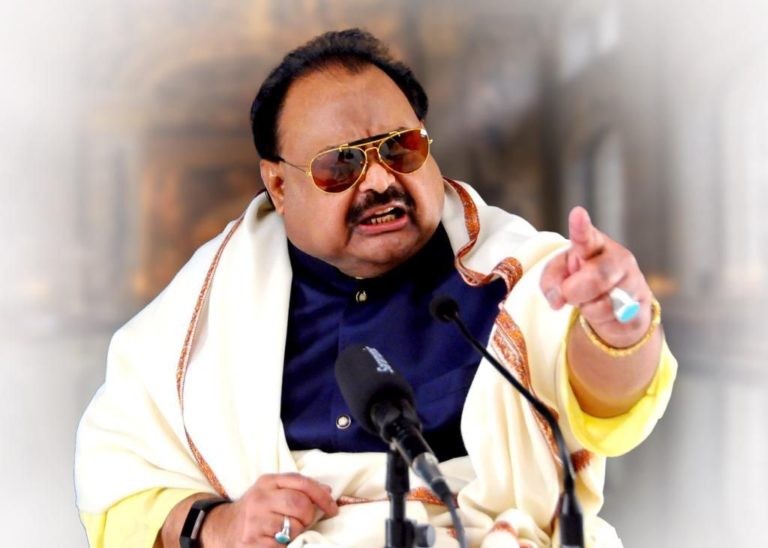
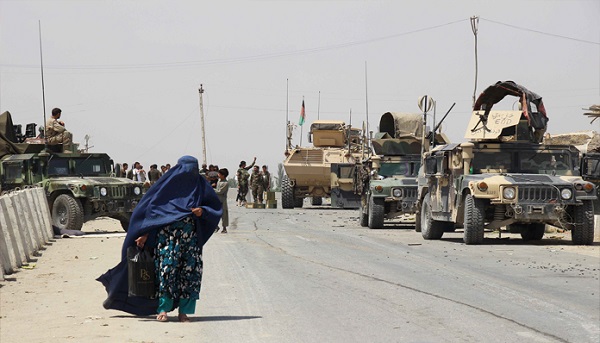
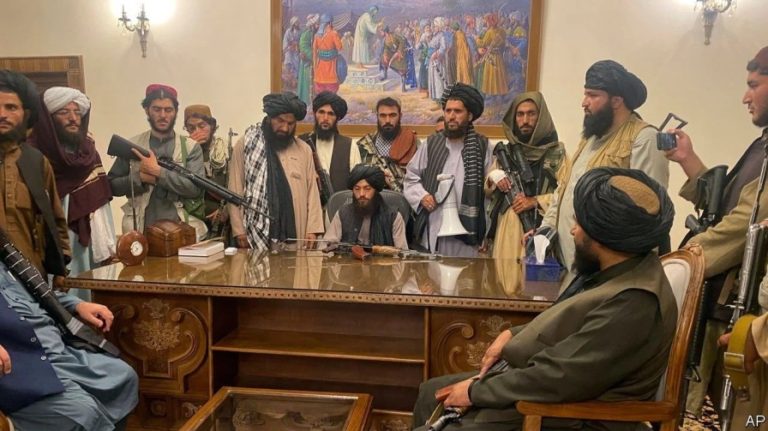
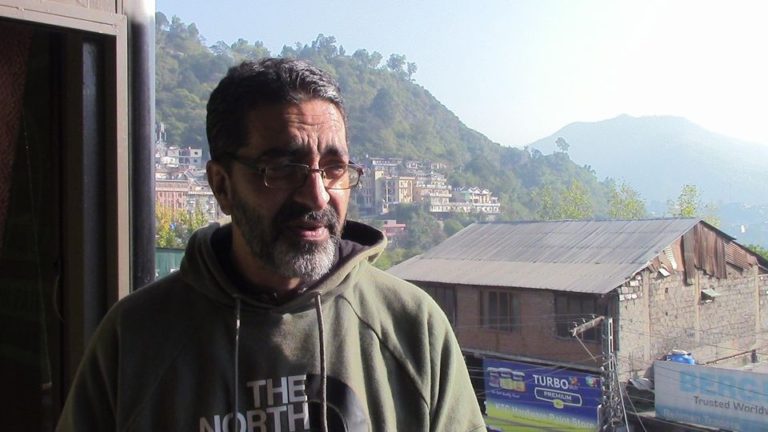
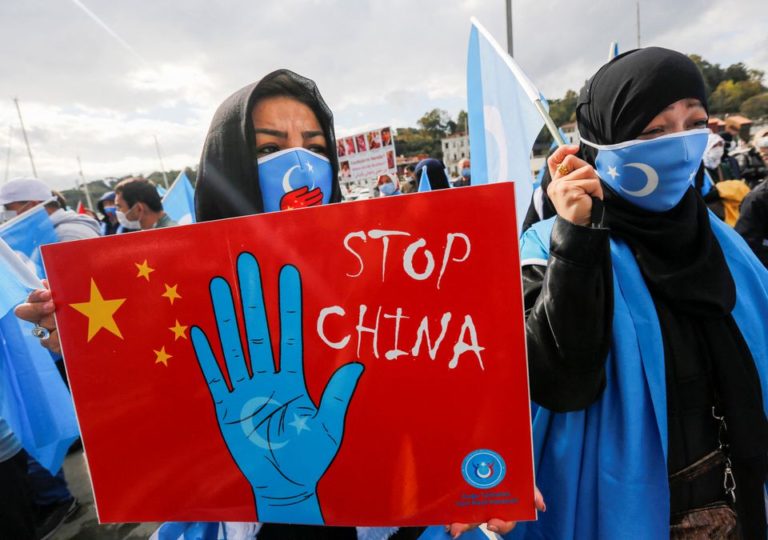
Muttahida Qaumi Movement’s (MQM) founder and Sindh’s mass leader Altaf Hussain exhorted Sindhis to set aside their linguistic differences and form a united front for Sindh’s independence struggle against Pakistan. Hussain said that the devilish Pakistan Army has pawned natural resources, human rights and future of oppressed Mohajirs, Sindhi, Baloch and Pashtuns to China.
Hussain explained that Pakistan has become bankrupt and insolvent. “The country’s economy has collapsed and is devastated. The United States, United Kingdom, IMF and other donor agencies are no longer assisting this failed state of Pakistan. The country is facing acute crises of electricity, gas, oil and petrol.”
Altaf Hussain clarified that Sindh and Balochistan have been fraudulently made a part of CPEC and sold to China by Pakistan. “The youth have understood as to how this devil Pakistani establishment crushes them, causes riots and conspires to turn each ethnic group to become enemy of the other. Fight and rule, fight and capture is the agenda of this demonic and terror-sponsoring state held hostage by this demonic army,” Hussain said without mincing his words.
“I swear by Lal Shahbaz Qalandar, Shah Latif Bhitai and Sain G.M. Syed that no matter how hard the Pakistan Army tries through its agents, I will not allow the division between Sindhis and Mohajirs.”
Challenging the Pakistan Peoples Party (PPP) on its claim over Sindh, Altaf Hussain said that PPP leaders talk about Sindh but they have gifted Sindh’s land to the generals of Pakistan Army. “The (Pakistan) Army has control over Sindh’s power, gas, oil, coal and all other resources. We will take back each inch of Sindh’s land from the occupiers and free Sindh from the slavery of Punjab.”
The MQM founder also came down heavily on the imposters who while pretending to be on the side of Mohajirs had actually betrayed the rights of Mohajirs. “These traitors pleaded in the Sindh Assembly to punish MQM founder with capital punishment under Article 6 of the constitution. They openly asserted that they are not Mohajirs. On 22 August they had declared their disassociation with the founder of the movement,” said Altaf Hussain and asked if traitors and puppets of army such as Farooq Sattar, Khalid Maqbool Siddiqui, Aamir Khan, Afaq Ahmad and Mustafa Kamal got fame on their own or due to the MQM movement?
Addressing the Mohajirs, Hussain said that if anyone utters the word “Mohajir”, then you shouldn’t condemn it because that is what the whole world says and this is our ethnic identity. “Mohajirs can’t go back to India. Sain G.M. Syed had also migrated from Arab but he made Sindh his homeland and fought for her independence all his life. Altaf Hussain also came from India but today he stands like a rock for the independence of Sindh.”
Hussain further added that the people of Sindh have come to the conclusion that Sindh cannot get its legitimate right while being a part of Pakistan. “Sindh’s independence is now the dream of every child of Sindh and every son of Sindh is struggling to realise this dream.”
“We do not hate Punjabis, Pakhtuns and Kashmiris living in Sindh; we do not want to exclude them from the “Democratic Republic of Sindh”, but they also need to raise their voice for the rights and interests of Sindh while living in Sindh,” exhorted Altaf Hussain during his address.
India’s cordial relations with the people of Afghanistan is
traceable in the Vedic times and the hoary past when, according to the antiquarians,
the Aryans had left vast Central Asian dried up grasslands and got dispersed in
different parts of the old world including Northern India for permanent resettlement.
Afghanistan has a long and chequered history. As it lay on the crossroad to the vast Indian plains, the rugged upland got trampled under the hoofs of the horses of adventurous and warlike hordes from the Steppes of Turkestan. Some of those invading hordes raised empires, kingdoms and satrapies and some remained content with loot and predatory activities. In the course of time Afghanistan, better known as Aryana of Vedic times, became a converging point for warriors and camp followers of various ethnic, cultural and linguistic denominators.
The Afghan nation comprises many tribes with indigenous tribal laws and traditions strictly adhered to by the clansmen who choose their leader and owe allegiance to him. Afghans are fiercely independent. Bravery and intrepidity are the characteristics of the Afghan nation.
Though majority of Afghans contribute to the Sunni faith yet they have been tolerant towards other faiths and factions just because the Afghans refused to be brainwashed and indoctrinated against other faiths. Traditionally, they have been liberal and tolerant to people of other religions like Hindus, Sikhs, Jews, and Parsees etc. Predominantly of Pashtun/Pukhtoon ethnicity, speaking Pashto language (southern dialect) and Pukhtoon (northern region dialect) — a mix of Farsi, Punjabi and Hindi languages— the Pukhtoons never accepted the British-drawn Durand Line which separated the Pukhtoons of Afghanistan from their fraternity in Waziristan and NWFP (North West Frontier Province). Afghans, whether Pashtuns, Hazaras, Tajiks or of other ethnicities, have always resisted the unnatural divide. And they are a warlike people who will not accept what they don’t want to accept. This is one of the irritants between the Afghans and Pakistanis.
Afghanistan has been part of the British colonial map of the sub-continent. But despite covert and overt attempts, the British did not succeed in coercing them into subjugation. However, what the British did during their heyday of power is that they managed to strike a deal with the mainstream tribal leadership of North West Frontier Province including Waziristan by virtue of which the tribal chiefs received annual grants besides retaining their autonomous authority of the region. The tribal chiefs committed no interference with the British administered province of Punjab. But owing to their multi-faceted affinity with the ethnic groups on the other side of the Durand Line, they refused to recognize it. The irritant trickled down to the Pakistanis after the partition of India and creation of the new domain of Pakistan.
Pakistan’s relations with Afghanistan have not always been warm. The reason is that exploiting Afghanistan’s land-locked geography the Pakistani military-civilian combine often aspired to make Afghanistan a vassal state almost like Bangladesh. The Afghans do not accept compromise to their freedom. However, when the Soviets foolishly attacked Afghanistan in 1979, Pakistan found an opportunity of fraternizing Afghans by whipping up religious factor under specific necessity. Nursing their political motives, Pakistan and the US together played a significant role in supplying arms to the Afghan mujahedeen and indoctrinating them with Islamic exclusivity. The latter proved disastrous to the Afghan society.
This development had far-reaching consequences for Afghanistan. A new factor has made deep inroads into the Afghan polity. That is of Pakistan. It is multi-pronged, religious, political, anti-India, pro-China and the lurking agenda of keeping Afghanistan distanced from democracy, modernism and openness. Pakistan would want Taliban-led Afghanistan to be a part of the radicalized Islamic front fighting democracy and modernism as the scourges imported from the west and nursed by an atheistic (kuffar) state like India.
How far will Taliban Afghanistan go along with the Pak ideology is a
moot question. Will the Afghan conscience of independence and indigenousness of
Afghans find rebirth and re-assertion is what is to be watched.
Pakistan has succeeded in ousting India out of Afghanistan. She used the Haqqani group as the handmaid for that purpose. The question is how far Haqqani network is going to be powerful to run the errand of Pakistan in Kabul. We have already heard about the differences between the Mulla Omar school of thought and the Jamalu’d Din Haqqani network. It may have subsided for the present under the persuasion of the Pakistani ISI chief but nobody can predict what future events may throw up. Pakistan is happy that India has been ousted from Afghanistan but India lives in the heart of every patriotic Afghan. It is so because India has been in Afghanistan for a long time to provide infrastructure to that country as a goodwill gesture. India, unlike Pakistan, has no political aspirations and selfish interests in Afghanistan. All she cares for is a developed, progressive and peaceful Afghanistan. This is the reason why the then Indian PM Indira Gandhi had warned President Brezhnev of the then Soviet Union of dire consequences of marching Red Army into Afghanistan even if the regime in Kabul was favourably disposed.
Soon after the Taliban captured power in Kabul on 15 August and deposed the elected regime of Ashraf Ghani – of course somewhat mysteriously — the question how India should handle the Afghan crisis was hotly discussed in official and non-official circles in New Delhi. Some observers thought that Afghanistan was a closed chapter for India and that India should restructure its Central Asian policy. Others expected India to openly throw her weight on the side of the resistance force in Panjsher in the hope of regaining its friendship with the masses of Afghan people. Their argument was that India had invested more than three billion dollars in building urgently needed infrastructure in Afghanistan and that labour should not go waste but needed to be reiterated.
But India has shown matured statesmanship and astute diplomacy. It
is not true that India had stonewalled all contacts with the Taliban for the
reason that the Taliban were deficit in the areas of inclusive system of
governance, rights of women and children and many other things close to the
fundamental principles of democracy. Even when the US had engaged the Taliban
for talks in Doha and the Doha Agreement of February 2020 was the outcome,
Indian External Affairs Minister had foreseen the possible destination of Doha
talks and had got into touch with the Taliban leadership through his Qatar
counterpart. India also participated in Moscow meet and again the MEA talked to
the Taliban representative on India’s stand on Afghan question.
India had made it clear to the Taliban that their regime in Kabul
needed time to stabilise before various governments consented to recognize
their regime. India also advised the Taliban to re-assess their position after
they had recaptured Kabul. There were no threats or denials and there were also
no commitments. It was a friendly and honest piece of advice. Events have shown
that the Taliban have been dealing with India with utmost care and
consideration not using even a single syllable that would smack of even the
minimal expression of hostility. Conversely, the Taliban seniors said they
valued and cherished the friendship of India.
The near-bankrupt state of Pakistan, feeling sore at this
humanitarian act of New Delhi, lost no time in announcing that she would not
allow Indian truck to pass with the humanitarian aid to Kabul over its land. Imagine
this was the policy of those who claim to be the champions of Islamic
brotherhood and are beating the breast all around the world that “India is
oppressing the Muslims in Kashmir”. Only when the foreign minister of Taliban
regime in Kabul visited Islamabad and impressed upon the Pakistan authorities
that a harsh human existence issue was involved that Pakistani
authorities relented and allowed the truckloads of Indian wheat to travel
through Pakistan and deliver wheat consignments in Kabul.
The lesson to be drawn from these two instances is that for India everything is not lost in Afghanistan. India should have no hesitation to grant recognition to Taliban regime when New Delhi is convinced that the Taliban have stabilized their hold over entire Afghanistan, and they will not allow Afghan land to be used against the interests of any of her neighbouring countries. By the phrase ‘inclusive government in Kabul’, the observers refer to the representation of women folks and the people of different ethnic identities, cultures and faith in Afghanistan in power sharing and other processes as a matter of inherent right. We think Afghans are capable of running the affairs of their household without the need of called a neighbour to assist them in this regard.
(The opinion expressed in this article are those of the author and do not necessarily reflect the views of News Intervention)
In a damning report the United Nations revealed that the Taliban rule in Afghanistan has been marked with extrajudicial killings, denial of women’s rights, conscription of young boys, early marriages and even “sale of children”.
The UN report argues that since the Taliban takeover in August this year, more than 100 former Afghan national security forces have been extrajudicially killed at the hands of the Taliban. Nada al-Nashif, U.N. Deputy High Commissioner for Human Rights, said that at least 50 suspected members of the local affiliate of the Islamic State known as ISIS-Khorasan – the ideological foe of the Afghan Taliban – have been killed by hanging or beheading by the Taliban.
Nada al-Nashif revealed that at least 72 of the 100 murders have been directly attributed to the Taliban. “In several cases, the bodies were publicly displayed. This has exacerbated fear among this sizeable category of the population,” she added.
In a speech to the UN Human Rights Council, Al-Nashif described the Taliban
rule in Afghanistan as being marked with rampant killings and restrictions of
girls’ and women’s basic rights. “The safety of Afghan judges, prosecutors, and
lawyers – particularly women legal professionals – is a matter for particular
alarm”.
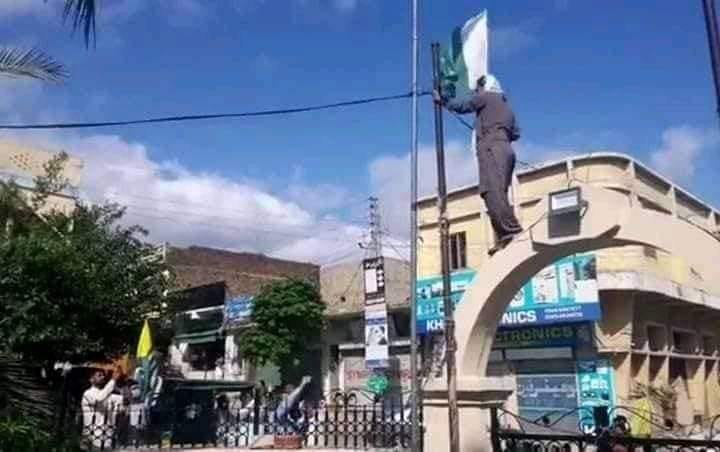
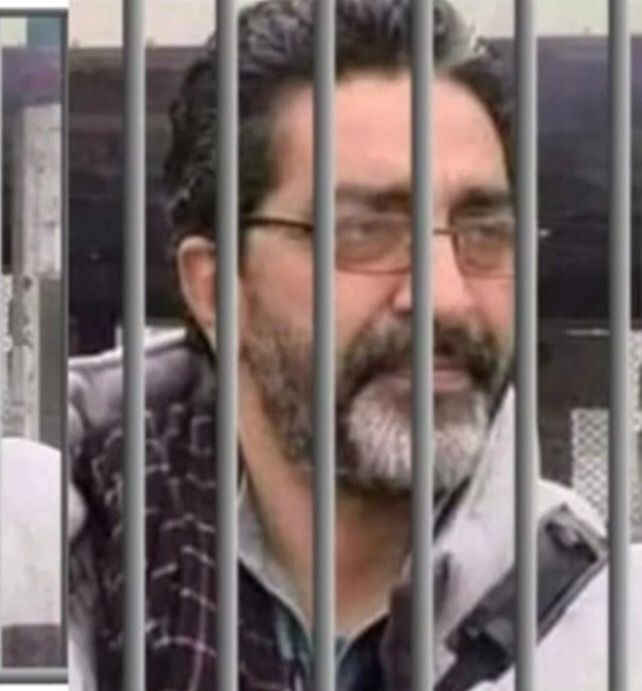
Kashmiri journalist-activist Tanveer Ahmed was arrested from Dadyaal, Pakistan-occupied Kashmir (POK) by Pakistani security forces on August 21, 2020 for taking down the Pakistani flag from Maqbool Bhat Square. In this interview with Vivek Sinha, Editor-in-Chief News Intervention, Tanveer Ahmed describes why he had to endure psychological and physical torture by the Pakistanis, and how his arrest has changed the political landscape of Kashmir.
Vivek Sinha: You were arrested in August 2020 for taking down the flag of a foreign country (Pakistan) from Dadyaal public square. In the video (which went viral across social media platforms) it can be seen that you did not insult the Pakistani flag rather you accorded due respect to it. Why were you arrested, despite raising genuine concerns of Kashmiris? Tanveer Ahmed: I was arrested because I was essentially challenging Pakistan’s hegemony over this territory. Pakistan has always wanted the people of this territory to concentrate on the human rights violations occurring in the Indian controlled Valley of Kashmir, for a variety of reasons including maintaining a perception that it was the sole political entity in the world that remained in ‘selfless solidarity’ with the people of ‘Kashmir’. Raising questions about Pakistan’s role in Jammu Kashmir & Allied areas (JKA) is something that the Pakistanis have never been prepared for, let alone acknowledge. Come the 14th of August 2020, the Pakistani State had been particularly aggressive (compared to previous years) in having its flag hoisted in various parts of the territory, locally described as AJK. It even had a massive Pakistani flag draped over the Supreme Court in Muzaffarabad, which initially dwarfed the AJK flag on the 13th of August and then made the latter totally disappear on the 14th.
In Dadyaal, this was a public square dedicated to Maqbool Bhat (preeminent independence icon popular in both AJK and the Valley of Kashmir) and Pakistan had conducted their ‘fair share’ of persecution of this individual, including charging him as an ‘enemy agent’. By hoisting their flag on this square, the Pakistanis were essentially giving the message that AJK was their sovereign territory. By taking down the Pakistani flag, their ego was jolted and deflated, hence my violent arrest.
Vivek Sinha: After your arrest, why did you resort to hunger strike within the Mirpur Central Jail? Tanveer Ahmed: I had to resort to a series of hunger strikes (13 in total), initially for 52 hours at the public square in Dadyaal, to get our local administration to understand the sensitivity of Pakistan’s aggression. Then a further 12 in custody which were conducted periodically, and gradually increased in length from 60 hours to 152 hours. The purpose was two-fold: One to alert our people (here and in the diaspora) that the Pakistanis were controlling the judicial process to prevent bail and then depriving me of the right to a fair trial. Secondly, to send a message to the rest of the world and particularly the UK government (which we feel had unnecessarily created this political/territorial conflict in 1947) and thus were responsible for inflating Pakistan’s ego, which in turn was the reason why I was being persecuted. As our struggle for rights is strictly peaceful, hunger strikes are a major form of resistance which may not stir the Pakistanis into reflection but they should stir the UK government into reflecting on this dilemma they created, whereby the Pakistanis through a monopoly on sheer force have been given carte blanche to do whatever they want to keep this territory (and Gilgit-Baltistan) under their control.
The UK government should also reflect on the Indian freedom struggle which was led by M. K. Gandhi, who used hunger strikes as his major weapon of resistance against an almost identical adversary, certainly in terms of a monopoly on sheer force.
Tanveer Ahmed taking down Pakistan’s flag at Maqbool Bhatt Square, Dadyaal, POK (Pakistan-occupied Kashmir).
Vivek Sinha: What atrocities did you endure in this infamous ‘flag case’? Tanveer Ahmed: I was punched, thrashed and dragged from the scene (at Maqbool Bhat Shaheed Square in Dadyaal) and continued to be beaten en route to the police station. This violence was intensified at the police station for a further 30 minutes or so. My right to bail and a fair trial being denied have already been mentioned. While in custody, the Pakistani clandestine agencies tried to exert pressure on my family to convince me to agree to leave this territory. When that failed they tried to get me to apologise. When that failed too, they got someone to break and enter my house to try and create a sense of siege in my family.
In jail, I didn’t have access to appropriate healthcare (although this is something that all prisoners suffer from and indeed most of the public outside jail in AJK also suffer from). In jail, I had to sleep under the glare of lights which I was never accustomed to for such a prolonged period of time, This affected me immensely and it took me a couple of months, after release on bail from jail, to recover my senses. After conducting a series of hunger strikes, various requests to be hospitalised were repeatedly denied and on the couple of occasions when I was taken to the hospital while on hunger strike, it was a hurried affair without any consideration for what I was going through. On one of these occasions, I was taken to the hospital and brought back without even being checked!
On the 3rd and final occasion that I was taken to hospital after my 13th and final hunger strike of 152 hours, I was given very heavy medication (and I have hardly ever taken any kind of medication throughout my life) and also injected. After a few days, when I stopped taking the medication I gradually became semi-paralysed. I couldn’t move my limbs freely, there was constant froth in my mouth and I struggled to even speak. That, along with being permanently handcuffed to a hospital bed was perhaps the biggest test of my endurance. It became so painful remaining in hospital that I preferred to return to prison, where at least I wouldn’t be permanently shackled to a bed.
Tanveer Ahmed soon after his arrest after he pulled down the Pakistani flag at Dadyaal, POK (Pakistan-occupied Kashmir) on August 21. (Photo: News Intervention)
The following two weeks were painful for me and in this semi-paralysed condition I was forced to appear at my trial and sentenced, despite informing my lawyer that I didn’t have confidence in the judge during my trial. It later became apparent that this judge (from a refugee quota of those who had migrated from the Kashmir Valley and were living in Pakistan, not AJK) was specifically brought in to hear my case. The original judge had been transferred, and a few days after my trial had ended this judge was also transferred once again. It should be pointed out that Pakistan’s clandestine agencies do not trust local judges when ‘push comes to shove’ and for such matters prefer to use judges who they can influence or control relatively easily, hence the placement of a judge from the refugee quota living in Pakistan. It was even more painful to learn — in the condition that I was in — that my bail had been rejected once again (the 5th time) when my case went to appeal at the Sessions Court, despite a doctor’s reference.
Even when I finally obtained bail from the High Court (currently my appeal against my sentence is at this court) the Pakistani clandestine agencies tried their utmost to prevent my release. They succeeded in delaying it for a few days and then when I was released, they tried to get the Supreme Court (through using the Dadyaal Municipality as a proxy) to cancel my bail.
In summary, the Pakistani State tried all foul means to disgrace and force me to ‘tow their line’. They tried their utmost to recover their imposed perception as ‘all powerful’ on the one hand and benevolent to the cause of justice on the other. I endured all the above and could have easily lost my life just for the sake of a neighbouring country’s self-serving presence in this territory. No country on earth — that all depend on the people they govern for their sustenance — should be afforded such liberty. They have to be made accountable by those very people.
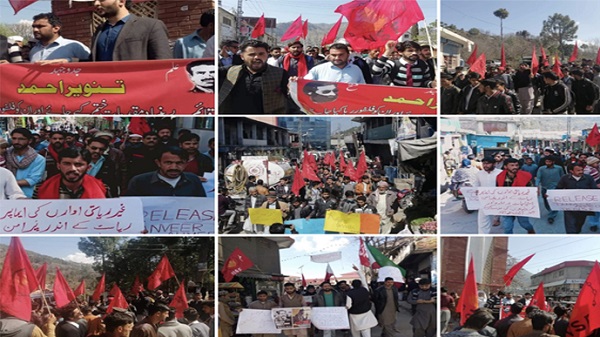
Vivek Sinha: There were widespread protests and demonstrations across POK demanding your release. Did the news of massive support by locals reach you while you were in jail? If yes, then please share your thoughts /emotions about those Kashmiri brethren who came out in large numbers to express solidarity with you. Tanveer Ahmed: Yes, various people coming to meet me in jail did brief me on what was happening outside and I remained reasonably abreast of developments. I felt this to be the plus side of the equation. For all that I endured in question 3 above, the dividends were a sharp increase in awareness and mobilisation of our people. Even in jail, the jail administration as well as fellow inmates were aware of the situation outside and this effectively conferred celebrity status on me. I was well looked after by all according to the extent of everybody’s limited capacities.
This emboldened me further and gave me a heightened sense of responsibility to my people; who had devoted their time, energy and resources to something of significant public interest. It made me think of all those weaknesses and frailties that handicap our freedom struggle against occupation in general and in normal circumstances. This flag case had not only exposed Pakistan’s intentions (to submerge this territory into Pakistan’s federation), it had also instigated a surge of interest and introspection in our people. It made them understand. I feel that we can overcome all those vulnerabilities that have always tended to drag us deeper into the quagmire we have found ourselves in.
Protests and demonstrations across POK for the release of Tanveer Ahmed. (Photo: News Intervention)
In summary, I felt it all vindicated my action of August the 21st, 2020 and created a reference for us to progress further in our struggle for collective rights. This was not stage managed, this was spontaneous and a clear slap in the face for the occupier. The Pakistani State had committed a faux pas by trying to persecute me. It had woken many of our people from slumber. Pakistan’s actions had derived the opposite of what it intended and it was clear for the world to see. The cat had finally been ‘belled’!
Vivek Sinha: How do you look at nationalism amongst locals in Pakistan-occupied Kashmir? Do you see a surge in nationalist feelings amongst youngsters and youth of POK? Tanveer Ahmed: Nationalism has gradually emerged since at least the mid 1950s in what you describe as POK and I describe as AJK (what you use is also correct and the letter A in AJK is suspect for very obvious reasons but we are using it to bring it into public debate and enforce the freedom that Pakistan pretends that we have), ever since people started suspecting that the UN mechanism was simply a cover and a ruse to solidify India and Pakistan’s presence in JKA.
It’s just that our people have had trouble aligning their self interest with public interest for the past so many decades. We have always been our own worst enemy and have always naively thought geopolitics is a benign framework; where supposedly civilised countries will reprimand supposedly less civilised countries and come to the rescue of the enslaved masses. We have devoted all our energies to sharing our problems with the world and expecting them to listen and act accordingly. We have not worked on creating solutions for ourselves and giving an opportunity to our neighbours and the rest of the world to examine the practicality of those solutions. We have also tended to support one neighbour against the other, imagining that this will bring us deliverance from our plight. To date, we have not acted democratically to enforce a democratic outcome and have not acted legally to enforce a legal outcome. Both of which will assist us more than anything else to realise our goals.
Tanveer Ahmed at Sharda Peeth,the seat of learning. At present the Sharda Peeth is in POK. (Photo: News Intervention)
There has been a surge in nationalist feelings amongst the youth here particularly since the widespread availability of social media platforms. This has in large part covered for the absence of such education in schools and in traditional media (both very closely monitored and indoctrinated with the Pakistani narrative). In the past there have also been surges when various student nationalist outfits dominated college and university campuses throughout AJK, until student unions were banned in 1994. However, the current social media infused surge is more sustained and is more widespread than just among the youth. Many traditional ‘ilhaqis’ (those favouring accession to Pakistan) have also become despondent with Pakistan for a number of reasons. The Pakistani State’s own economic and diplomatic woes for example are corresponded with Pakistan’s manner of looting resources from Gilgit-Baltistan and AJK without permission or procedure and its inability to do anything for the Valley of Kashmir. Most people are now convinced that both India and Pakistan are in tacit agreement to submerge their respectively controlled parts of JKA into their own federations. They are livid with Pakistan for selling them the ‘freedom struggle story’ of the Kashmir Valley while looting them and depriving them of rights, only to capitulate for their own survival.
Vivek Sinha:Do you have a strategy to organize the local POK youth in a political set up or you would like to continue your struggle as a journalist/researcher? Tanveer Ahmed: I would say I’ve always been an action oriented journalist cum public policy researcher ever since I arrived back in my motherland in 2005. Particularly, given the sequence of activities that I have conducted especially since 2009, when I was able to fulfill the original purpose of coming here in 2005 viz. to re-unite with my Naani (maternal grandmother) with her siblings living on the Indian controlled side of JKA.
Just to give you a snapshot of this sequence: 1) Pilot study conducting a series of civil society forums throughout most urban areas of AJK and Gilgit-Baltistan from 2009 to 2012. 2) Conducting a representative public opinion survey of the population of AJK — canvassing at random 10,000 people with 10 questions — between 2011 and 2016. 3) Creating an internal political process in AJK to derive political consensus in converting public opinion into public policy, from 2017 onwards… 4) The final leg of the sequence will be constitutional changes and legislation driven by a Public Assembly, which may or may not include the current supposedly legislative assembly in Muzaffarabad, largely depending on how it interacts with the Public Assembly.
In summary, I have adopted a sequential strategy since 2009 and aim to use the vehicle of the Public Assembly to create a genuinely representative political structure in AJK. I am using whatever experience and knowledge I have derived from journalism and research to convene that Public Assembly.
Vivek Sinha: Do you see any impact of Taliban rule in Afghanistan over Jammu & Kashmir? Tanveer Ahmed: I sincerely hope not and not just because I am committed to a strictly peaceful struggle. Our region is far more strategic — for its high sloped water resources and geographical location — than Afghanistan. We have a much higher level of diversity in population on all counts viz. religion, region, language, race, culture etc. and have a much larger sustained and diversified military presence here. Embroiling ourselves in violence will not clarify military superiority of any one party, it will exacerbate conflict and make allegiances even more ambiguous than they are. Thankfully, most people here are not predisposed to violence and most do not share the Taliban’s version of Islam or governance.
Vivek Sinha: You had conducted a detailed survey amongst locals which was promptly banned by the local POK govt. Please share the findings of this survey/report? Tanveer Ahmed: I published a 20 page summary of the public opinion survey in July 2017 and haven’t yet published the lengthier 200 page academic version of the report for a number of reasons. They will be elaborated on when the detailed report will be published. Suffice to say at this stage that since the survey was not an end in itself, it requires the people to perform a set of actions in line with the findings before the lengthier version is published. Not least to preempt the roving clandestine agencies of the Pakistani State, which are hell bent on diverting public opinion in their own favour, by hook or crook.
Security/Enduring National Question:In short, an overwhelming majority wanted the State of JKA to be reunited and most people (almost 73%) preferred the Kashmiri political identity compared to Pakistani or Indian. If I had framed the question in a more obvious manner the Pakistani agencies would have been even more alarmed than they were.
Governance: The overwhelming majority of people also considered the system of governance here a variation of bad and weak and felt the need for accountability.
Economy:On the economy answers were more varied but people veered towards the private sector and felt opening routes within and beyond the divided State as most preferred policy changes required.
Culture:Finally, on the key question of whether Muslims can co-exist with non Muslims the majority were in favour, while an overwhelming majority believed in equal rights for all citizens.
Note, there is a gap between what people believe in as an opinion and what they do in practice. Bridging that gap is important for any serious reformer of society. Overall, good intent to fulfill the criteria of co-existing with the world does exist here but it needs to be more visible in the collective actions of society. It will then become easier to implement as public policy. It was clear after publishing the summary report that our people were not yet ready to transcend the existing status quo. They needed a bit more time to adapt. Positive political changes are seldom achieved instantly or overnight, progressing in gradual phases is more appropriate. Particularly, in this heavily contested region and also given its history.
Vivek Sinha: Do you think CPEC and its projects will bring development in Kashmir/ Gilgit-Baltistan? Tanveer Ahmed: It is unlikely. The opportunity cost for whatever development will take place maybe far too great for the local inhabitants. Not least because it is not inclusive or even participatory. The people of Gilgit-Baltistan and AJK have not been consulted by either China or Pakistan.
The Chinese describe themselves as the people’s republic and whether or not the people of China consider themselves owners of China is a matter for Chinese people to decide but it is certain that China has not given an ounce of importance to the people of AJK or Gilgit-Baltistan.
The Pakistanis say they separated from a Hindu majority India in 1947 because they felt that they would be marginalised and ignored. They are doing precisely what they supposedly feared to the people of AJK and Gilgit-Baltistan.
Given the immense strategic value of Gilgit-Baltistan and JKA as a whole, the current non-inclusive manner in which CPEC is developing will most certainly give ideas and inspiration to the Americans to counter or at least slow down China’s advance. What is also likely is that on top of an Indo-Pak territorial conflict we may have to factor in an US-China territorial conflict too.
The USA, China and even India might be able to ride out whatever repercussions may occur given their large economies but Pakistan will be crushed under the weight of the loans it has taken from China and JKA’s miseries will also intensify.
This is an opportune time to reopen the neutrality debate aka Switzerland. It was a similar scenario albeit different era and geography that initiated Switzerland’s neutrality in 1515. I wrote a declaration of neutrality while in Mirpur Central Jail in October 2020.
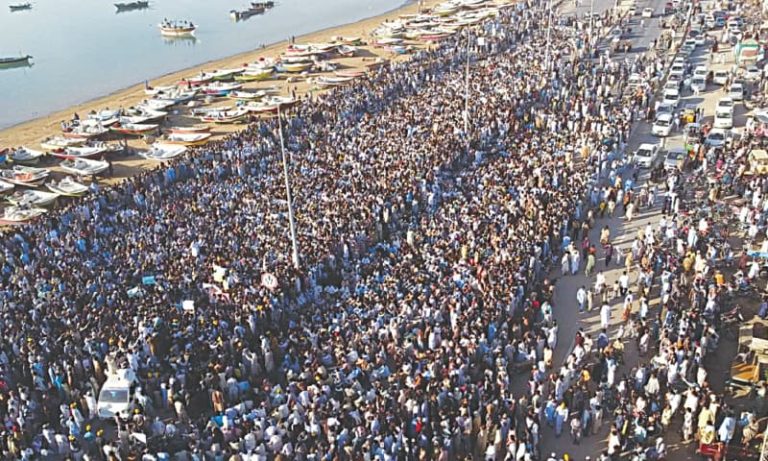
A mass movement is currently underway in Gwadar under the leadership of Maulana Hidayat-ur-Rehman. Before we talk about this movement, let’s go back to the past of Baloch movements.
This was November 2006. Baloch leader Sardar Akhtar Mengal had announced a long march under the name of “Lashkar-e-Balochistan” from Gwadar to Quetta against Pakistani policies.
The martial law administration of Pakistan under President Gen. Pervez Musharaf didn’t waste a second to detain Sardar Akhtar Mengal at his home in Karachi. Dozens were arrested, including Habib Jalib Baloch, the central general secretary of the party, who had gone to Gwadar to organize a march. Due to these arrests, the announcement of long march by Sardar Akhtar Mengal proved to be a mere announcement.
Mama Qadeer Baloch has been campaigning for the recovery of Baloch missing persons for over a decade. He has also carried out the longest long march on the issue. As a result, hundreds more Baloch were forcibly disappeared despite Mama’s lengthy struggle.
A session on the “Baloch”, organized by Sindh Literature Festival in March this year was cancelled due to “unknown” reasons. As far as I know, this session was cancelled due to pressure from Pakistani intelligence agencies. The Pakistani military establishment did not want any dialogue on the Baloch national question in a big city such as Karachi. They had earlier attempted to stop Prof. Shaheed Saba Dashtiari from speaking during a similar programme at the Karachi Press Club. However, Prof. Saba Dashtiari persisted in speaking and was eventually killed for this “crime”.
What did Nawab Akbar Khan Bugti do? He also demanded the rights of Balochistan. Did he ask for extortion or shares from the industries of Lahore or Sialkot? But they also hit him, which he did not know.
The Baloch National Movement (BNM) used to be a dynamic pillar in Baloch national politics. Undoubtedly, it is still the largest non-parliamentary party. What happened to this party is a tragic chapter in our modern political history. Hundreds of party workers, including party leaders, were killed and abducted.
The Baloch Students Organization Azad (BSO-Azad), the largest student organization, was declared a terrorist organization and banned in the country. Two chairmen of the organization went missing and former chairperson, Banuk Karima Baloch was killed last year during exile in Canada.
What is Maulana Hidayat-ur-Rehman asking and doing which above mentioned personalities and parties have not asked or done? But this time the attitude of the state is different. Maulana has been sitting on a sit-in in Gwadar for the last one month, during which he has also staged public rallies. Not a single person has been touched yet.
Baloch political activists do remember that in 2009 at a public rally in Turbat, the Pakistan Army opened fire on Altaf Baloch, an activist of the Baloch National Movement (BNM) and killed him. Similarly, the Pakistan Army had attacked the memorial service held in memory of Shaheed Mir Jan Meeral in Tump and Banuk Karima Baloch was evacuated from the scene with great difficulty.
This does not mean that I want to defame or undermine the Gwadar sit-in or I want bloodshed. But some questions do emerge in mind, whether the Pakistan Army and establishment have changed its policy or Maulana is so powerful that the army is reluctant to touch him. There are a few more questions. Such as the sudden coverage of the Gwadar sit-in by the Pakistani media, the Jamaat-e-Islami the most important ally of the Pakistan Army intensifying the Gwadar protest, the Balochistan government’s blessings and the deployment of police in Gwadar instead of the FC (Frontier Corps). If it had stopped at this point, my restless heart might not have been more anxious, but the attitude of the army’s paid Sardar Yar Mohammad Rind and the tweet of Pakistani Prime Minister Imran Khan have changed the atmosphere.
With regard to the Pakistan Tehreek-e-Insaf (PTI) and the Balochistan Awami Party (BAP), a theory can be drawn that as the clouds of political change in Pakistan are deepening and the heart has stopped beating, these two parties will make an anti-establishment narrative for the next elections. PTI in particular; but what are the motives behind this soft policy of the army that considers Balochistan as its own property?
Maulana Hidayat-ur-Rehman, who belongs to the working class, may have good intentions and sincerely want a permanent solution in Gwadar to painful questions like “Where are you coming from and where are you going to?” Their struggle against the economic massacre of fishermen and people may be beyond doubt.
However, when pro-ISI accounts on Twitter are seen campaigning in support of the Gwadar protest, the suspicion arises; the question arises. This suspicion is further strengthened when the Pakistani media declares the Gwadar protest as a movement of Jamaat-e-Islami and Maulana remains silent and doesn’t justify his position.
In the history of Pakistan, fake campaigns like the Nizam-e-Mustafa movement, the movement for restoration of democracy and the movement for restoration of the judiciary have been launched.
Is it just a coincidence that nationalists currently facing enforced disappearances, exile and the worst massacres are being brutally crushed, but they are still blamed? The “Mulla leadership” of the recent Gwadar protests is being highlighted and is being interpreted as a failure of the nationalists. Attempts are being made to give the impression that the struggle for “civil rights” of the people of Gwadar is merely a separate entity that has nothing to do with the Baloch national movement.
According to my understanding, these are not mere coincidences; a deliberate effort is being made to bring the Baloch into the so-called “national mainstream”. The case of our daughters like Sami Din Muhammad Baloch and the Gwadar movement is being attempted to be considered as separate issues.
These emotional youth, who are unaware of the troubles that befell the nationalists, get angry at the question of Anwar Sajidi. However, the question has been our aim. From Nawab Yosuf Aziz Magsi to Saba Dashtiari, our notables Baloch elders have taught us to ask questions.
We should support Maulana Hidayat-ur-Rehman’s movement, The People’s Struggle should be supported at every forum. Masi Zaini’s steadfastness is our pride. However, this support should not be unconditional. The Baloch youth should always keep their eyes open. The Baloch National movement has had to make immense sacrifices to get here. It cannot be sacrificed to any Al-Badri, Al-Shamsi, Insafi or military aspirations.
JSFM expressed hope that the international partner countries of USA will also take similar decisions to stop and isolate CCP (China) from further human rights violations against Uyghur Muslims, Hindus, Tibetan Buddhists and Christians in the region. “This move will help contain communist dictator President Xi Jinping’s regime from further expansion in Asia.”
Zafar Sahito, Founder and Chairman of JSFM, said in a statement that Chinese Communist Party is following autocratic laws to seek control over the world by direct interference in Asia, and other poor countries of the world. “President Xi Jinping is supporting fundamentalists, dictators and radical Islamist groups to blackmail the whole world,” Sahito said in his statement.
He further added that Communist China’s ambitious projects such as OBOR (One Belt One Road), especially the CPEC (China-Pakistan Economic Corridor) is a death warrant for historical nations that are enchained in the slavery of China, her friend Pakistan and other non-democratic countries of South Asia and Central Asian region. “China with a huge population (labor force) having limited natural resources, water and agricultural land is looking for newer markets to meet its supply chains by using debt-trap as a tool of slavery,” explained Zafar Sahito.
Of particular concern are China’s recent economic deals with Iran and its support to the Taliban, through Pakistan as a proxy, to take over Afghanistan. These developments are a constant threat for the world at present, and also for the future generations.
“The people of Pakistan-occupied Sindh and Balochistan suffer brutal atrocities on a daily basis and loot of their national resources continues to increase as Punjabis of Pakistan have sold the natural resources of our rich land to the Chinese Communist Party (China). World super powers must take note of these inhuman barbarism by the expansionist evil forces,” Zafar Sahito explained further in his statement.
Zafar Sahito also said that PLA’s (People’s Liberation Army) mischief on China’s boundaries with India is an act of criminal war against a democratic nation. “Constructing dams on River Indus to stop fresh water flow downstream towards India and Pakistan-occupied Sindh (POS) is totally illegal and that this matter needs urgent attention of the United Nations.”
China’s biological weapon (COVID-19) is still killing innocent people around the world, CCP (China) must not only be boycotted but also be brought to international Criminal Court of Justice for its crimes against humanity, announced Zafar Sahito.
During November 2021 the Balochistan Liberation Front (BLF) carried out sixteen lethal attacks against the Pakistani forces in which more than nineteen Pakistani soldiers were killed and dozens injured. Two attacks were carried out on Pakistani military construction company, Frontier Works Organization (FWO), wherein a check post was destroyed and weapons sized. One BLF sarmachaar (freedom fighter) embraced martyrdom while defending Balochistan against occupying forces of Pakistan.
01 November 2021 BLF sarmachaars (freedom fighters) set fire to the machinery of military construction company Frontier Works Organization (FWO) in front of Murad Bakhsh Hotel, Sang Bazaar in Hoshap area of Kech district.
04 November 2021 BLF snipers attacked a Pakistan Army post in the Moch Kaur area of Tump and killed one military personnel. In another attack on this day a state informant Dosten was targeted and killed in Washbud area of Panjgur district. Meanwhile, a man Chakar (son of Abdul Wahid) resisted and tried to save the culprit from which he was injured. “We have no enmity with him but no one must try to save traitors because they are equally complicit in Pakistan’s war crimes and Baloch genocide. Dosten (son of Fazal, resident of Washbud), had been a supporter of the Pakistan Army and the local death squad in informing the insurgents and identifying their relatives,” BLF said in its media statement.
05 November 2021 A personnel of so-called Counter Terrorism Department (CTD), Imtiaz was attacked and killed by BLF sarmachaars. CTD is involved in Baloch genocide along with Pakistan Army by staging a new tactic of “Fake Encounter”. For this purpose, police are being recruited in CTD by giving greed. Many Baloch have also been recruited. “We warn all Baloch not to be a part of any Pakistani organization including CTD which is directly involved in the massacre of Baloch. Some people tried to save Imtiaz during the attack. During the scuffle Imtiaz pulled out his pistol and tried to target the Baloch freedom fighters. Imtiaz’s pistol was seized and he was killed.”
On this day BLF snipers killed a Pakistan Army personnel in Jawan Taak area Gichk, district Panjgoor.
07 November 2021 BLF sarmachaars attacked Abdaruk check post of the Pakistan Army at main road in Apsaar Turbat, Kech district. Two army personnel were killed and one was injured in the attack. In another attack BLF snipers killed a Pakistan Army personnel in Jawan Taak area Gichk, district Panjgoor. On this day BLF sarmachaars carried out another attacked at the Alangi check post of Pakistan Army with automatic heavy weapons in Mashkay, district Awaran that inflicted heavy losses to the occupying forces.
13 November 2021 Major Gwahram Baloch, spokesman for the Balochistan Liberation Front (BLF) paid tribute to Shaheed Shah Mir Baloch. He said that on 13 November in the mountains of Kolwah, the Pakistan Army tried to block the path of the sarmachars. “A clash broke out between the occupying forces and the sarmachars in which the Baloch sarmachar Shah Mir Baloch alias Shay Shapkoli was seriously injured and died on the way to the hospital.” Five enemy soldiers were killed and several others were injured in this clash.
Major Gwahram Baloch said that Shah Mir Baloch alias Shay Shapkoli, resident of Kolwah Shapkol fought valiantly against the occupying army for more than an hour. “Combat helicopters arrived on the scene to assist the Pakistan Army and Shaheed Shah Mir was wounded and managed to escape from the siege of the enemy army. He was being taken for treatment but could not survive and attained martyrdom.”
Major Gahram Baloch said that Shaheed Shay Shapkoli had been associated with the Baloch national movement since 2012 and was the second lieutenant in BLF. “Shaheed Mir Baloch was a very brave fighter. He fought against the enemy army by serving in many areas and on the fronts of Ormara, Kulanch, Balgatar, Awaran, Jhaoo and Kolwah.”
15 November 2021 BLF attacked a Pakistan Army outpost at Kalato area of Jhaoo, district Awaran with rockets and heavy weapons. The occupying army suffered casualties and financial losses.
16 November 2021 A convoy of Pakistan Army vehicles was hit by a remote-controlled bomb in Mikk area of Gichk district Panjgur. A vehicle was destroyed in the attack and all the army personnel in it, were killed and injured.
In another attack on this day at around 5:30 PM BLF sarmachars first killed a Pakistan Army personnel by sniper rifle on a check post in Ganda Dar area of Tump, then hit the check post with LMG and A1 grenade launcher, killing a number of forces at this outpost.
19 November 2021 Balochistan Liberation Front (BLF) spokesman Major Gwahram Baloch claimed responsibility for the attack on a Pakistani military construction company, saying that on Friday, 19 November, in the Apsar area of Turbat city, sarmachaars attacked the military construction company Frontier Works Organization’s (FWO) construction site and set fire to machinery and other equipment. “Here the military company is building a road that goes from the main army camp in Turbat to the military camp in Apsar. Construction under Pakistani occupation is an attempt to prolong exploitation and slavery. Baloch people should stay away from them.”
21 November 2021 Attacked a military outpost in Raghai with a sniper rifle in Baloch Abad, Raghai of district Washuk and killed a military personnel. The outpost was attacked with rockets and sophisticated weapons, killing or injuring other personnel.
23 November 2021 Five Pakistan Army personnel were killed in the attack at Tump and weapons were seized. Balochistan Liberation Front (BLF) spokesman Major Gwahram Baloch claimed responsibility for the attack on Pakistan Army in Kech district. “At around 5:40 PM on Tuesday, sarmachaars (freedom fighters) attacked a military post in Tumpe Kulaho. Five army personnel at the checkpoint were killed in the attack. Frightened by the intensity of the attack, the other three soldiers fled from a nearby river. After that, the sarmachaars entered the check post, seized all the weapons and set the check post on fire.” Later on other troops arrived from the nearby outposts with the help of armored vehicles, which were also repulsed by the sarmachaars.
28 November 2021 BLF attacked a Pakistani outpost at cinema chowk in Turbat city. One army personnel was killed in this attack.
The central spokesperson of Baloch National Movement (BNM) said that on 10 December — the International Human Rights Day, demonstrations were held in Germany and Netherlands against the Baloch genocide and atrocities committed by Pakistan in Balochistan. Protesters held pictures of Baloch martyrs and ‘enforced disappeared’ persons, chanted slogans and distributed pamphlets to the locals.
Addressing the protest in Amsterdam, BNM Netherlands Zone President Keyya Baloch said that “…today we have gathered here on the occasion of International Human Rights Day to show the world that a humanitarian crisis has arisen in Balochistan. The Baloch are being deprived of their basic human rights.”
He added that “the Baloch have been demanding the right to life for the last seven decades. Today thousands of people have come to the streets in Gwadar demanding the right to live with dignity. Human Rights Day is being observed all over the world but the families of those who have been forcibly disappeared in Balochistan are still protesting. We want the international community to take notice of human rights violations in Balochistan.”
Addressing the protesters, Abdul Ghani Baloch, a senior member of BNM Netherlands, said: “We have gathered here for our rights and our struggle is also for human rights.” Munawar Baloch, Deputy General Secretary of BNM Netherlands Zone, said: “The purpose of our protest is to show the world that we Baloch are human beings of the same flesh and blood. Our only demand is that we be given the right to live.” BNM member Imran Hakeem Baloch in his address said that two days ago the bodies of two enforced missing persons were dumped in Western Balochistan.
Baloch National Movement (BNM) demonstration in Germany against Pakistan’s human right violations in Balochistan on December 10, the International Human Rights Day. (Photo: News Intervention)
BNM members Jabbar Baloch, Jasim Baloch, Badal Baloch, Amjad Baloch and BRP’s Abdul Jalil Baloch also addressed the protesters in Münster, Germany.
Jabbar Baloch said that Pakistani forces were abducting, disappearing and killing political and social activists in Balochistan. “There are torture cells in all Pakistan Army cantonments. People are kidnapped and kept there for years. Dr. Deen Mohammad and Zakir Majeed have been in the secret prisons of the Pakistan Army for 12 years, so are countless women and children. Similarly, sons of the Sindhi nation are also in torture cells. In the last two decades, human rights violations have reached their peak in Balochistan and Sindh. Thousands of people from different walks of life have been forcibly disappeared.”
Jasim Baloch said that on this international human rights day, “we appeal to the world to play its role in liberating us so that we can live like other nations of the world. We receive mutilated dead bodies daily under the occupation of Pakistan.”
Addressing the protesters, BRP’s Abdul Jalil said, “I would like to draw your attention to the atrocities being perpetrated by Pakistan. Thousands have gone missing. Due to the silence of the world, Pakistan has got immunity to commit crimes. The world powers and the world media should not ignore Balochistan because we are losing our loved ones on daily basis.”
Paying homage to Banuk Karima, Badal Baloch said that “this day reminds of the human rights that every individual is entitled to. But, we are slaves to a country that does not follow any international law. On the other hand, the world is silent on Pakistan’s terrorism. Baloch villages are being burnt down and forced to relocate. We dedicate our today’s program to Banuk Karima Baloch as she gave a new shape to the movement and included Baloch women in this movement. Banuk Karima with her blood and sacrifice has given a boost to the Baloch resistance.”
Amjid Baloch while paying homage to Banuk Karima Baloch said that she may have been physically separated from us but her sacrifice is a beacon for us and she is with us. “She has conveyed the message of national liberation in every corner of Balochistan. We have been in the throes of oppression for seventy years. The Pakistan Army does not consider us Baloch as human being. There are many human rights laws in the world but sadly they are absent in Balochistan.”
Founder of Muttahida Qaumi Movement (MQM) and Sindh’s mass leader Altaf Hussain urged Indian Prime Minister Narendra Modi, UK PM Boris Johnson and the UN Secretary General António Guterres to support the ongoing freedom movements in Sindh and Balochistan. Hussain’s voice echoed the pain of Sindhi and Baloch who suffer violent attacks on a daily basis at the hands of Pakistani security forces.
“The people of these two Pakistan-occupied territories (Sindh and Balochistan) are in a miserable state and looking towards UN, UK and the world’s largest democracy India, for help. The democratic countries must not ignore the legitimate call from the people of these two Pakistan occupied territories and must offer support for their freedom as per the charter of the UN,” urged Altaf Hussain during his address to MQM congregation in London to mark the Martyr’s Day.
Hussain termed partition of the Indian subcontinent as “biggest mistake” and said that the unfortunate turn of events was responsible for millions of deaths, rapes and families falling apart. Addressing PM Modi, the MQM founder said: “The partition of India was the fault of our forefathers, they committed a huge sin and we, the Mohajirs, are paying the cost of that enormous sin. India must open doors for Mohajirs. I promise we will reverse the mistake and repay the debt of kindness by our deeds.”
Delving deeper into history Hussain explained that the partition of India was not facilitated by the poor Mohajirs but by Muslim Nawabs, feudal lords and the rich elite who had become agents of the British. “…they divided India while those who had lived together for thousands of years became enemies of each other. In a similar manner, today’s Sindhi elite have become agents of Pakistani Punjab and the Pakistan Army, and use the Sindhi card only to keep Sindh enslaved for their vested interests. Sindh has been turned into a satellite colony of Punjab and her land and resources are being robbed by the perverts of Pakistani military.”
Altaf Hussain recalled how British Empire occupied the Indian subcontinent by adopting a policy of divide and rule that kept Hindus, Muslims, Sikhs fighting with each other. “There were freedom fighters such as Subhash Chandra Bose, Bhagat Singh who attained martyrdom during their struggle for India’s freedom. Several other Hindu and Muslim freedom fighters laid down their lives for freedom. But the British policy of “divide and rule” was to divide people of India on the basis of religion. Today, history has proved that Maulana Hussain Madani and Maulana Abul Kalam Azad and other like-minded dignitaries were correct in saying that a nation is not formed by religion but it is related to geography. There are no adherents of any one religion or creed in the geography of any country. No nation is a unit but consists of people belonging to different religions and beliefs.”
Hussain exhorted Prime Minister Narendra Modi and the people of India to help liberate Sindh in the same way Indians helped liberate East Pakistan (now Bangladesh). “We promise that we will not form a union with Pakistan but will form a union with India like the European Union.”
Altaf Hussain explained that terror-exporting devilish military of Pakistan has converted Pakistan a safe haven for terrorist organisations such as Taliban, ISIS, LeJ, etc. on the pattern of Afghanistan. “The peace of the region and the entire world is seriously at stake. If India and other democratic countries stay silent on the appeal of people of Pakistan-occupied Sindh (POS) and Pakistan-occupied Balochistan (POB) then it will be tantamount to allowing the demonic military of Pakistan to play with the lives of the millions of people all over the world.”
Pakistan has become an open threat to global peace and is tormenting the whole world through terrorism. “Just a few days ago, hundreds of policemen were killed and injured by those who were shouting slogans in favour of extremist organisation TLP (Tehreek-e-Labbaik Pakistan). But the Pakistani military hugged them and provided monetary support to their terrorist activities. Likewise, the military hugged Taliban terrorists and has provided them safe haven and jobs.”
On the other hand, this devilish Pakistan military imposed sanctions on Muslim Mohajirs and used brutal force to stop them from performing the rituals on Martyr’s Day. The manner in which the paramilitary Rangers brutally tortured MQM workers, sisters, journalists and photographers on Martyrs’ Day in Azizabad, Karachi is indescribable, added Altaf Hussain.
Addressing the Muslims of India, Altaf Hussain said that Indian Muslims must consider India as their homeland, be with the government and the people. “You must treat the Hindus with love, the Hindus of India do not hate you, if that had happened then more than 200 million Muslims would not have lived in India today.”
Addressing the Mohajirs in Pakistan, Hussain said that they should create unity and harmony among themselves and be ready to make all kinds of sacrifices for their survival and better future of future generations. “Otherwise, our next generations will be left as slaves in the occupied territories.”
It seems the Pakistanis live with the most confused state of mind in the world. Most concepts of the modern simple political science are either misinterpreted or taught to the general public in a manner so as to confuse them. For instance, let’s take the concept of ‘state’– the most common topic of political science. We understand ‘state’ differently that the rest of the world, eg. the Pakistani academia, bureaucracy, political elite and even journalists often frequently spread misconception regarding ‘state’.
Did you not hear that the ‘state’ has decided to take stern action against TLP (Tehreek-e-Labbaik Pakistan)? The ‘state’ has changed her narrative towards terrorists? The ‘state’ has entered into an agreement with TTP? Even, Nawaz Sharif, the three times Prime Minister of Pakistan makes a statement that “there is a state above the state in Pakistan”. There are questions like these and many more, where the word ‘state’ is often reciprocally interchanged with the various authorities such as police, army and intelligence agencies.
Let’s start with the basic definition of a state. A populace that lives in a specific territory, is governed by an authority (government) having internal and external sovereignty is called a state. Modern scholars also include ‘international acknowledgment’ as one of the ingredients of state. The state has three main branches/pillars for the dispensation of her work. These are executive (government), parliament and the judiciary. The executive has various subordinate institutions to manage its affairs, eg. police, intelligence services, army, local administration and so on.
So how does a state operate? The basic function of a state is to enforce the collective wisdom of the society. And how do we gauge the collective wisdom? This ‘collective wisdom’ could only be enforced by the chosen representatives of the masses. For that purpose, general elections are held after every five years. The people bestow their trust to their elected members of parliament to enforce collective wisdom by making laws as per their aspirations. These laws and policies are enforced by the government. The government acts only as a representative of the parliament likewise parliament is a representative of the people. The government needs validation of all her acts by the parliament, otherwise, it stands to disqualify.
Now let’s come back to the misconception in Pakistan.
We often come across phrases like the Pakistan government has decided to indulge in talks with TTP etc.? The prime question is to whom do we consider a government? Whether these talks are arranged/initiated by the official representatives that are ‘elected ministers’ or have been initiated by the Pakistan Army chief and DG-ISI? In Pakistan, it is an open secret that the talks/dialogues with TTP, TLP, terrorists etc. are arranged and conducted by the Pakistan Army and their security agencies.
Neither these agreements are ever presented in Pakistan’s parliament for a debate nor parliament has the power to summon the draft of such agreement. If the agreement is conducted by the Pakistan Army and ISI then how could it be called that Pakistani ‘state’ has done something? Simply because the army, police, ISI etc. are only subordinate institutions that could never be considered as a state. They are state institutions rather be a state.
Any decision taken by or any agreement conducted by these institutions has not been attained the same sanctity as taken by the government and acknowledged by the parliament. The reason behind such rationale is that the state shows her intention only through the government. Furthermore, when decisions are taken other than the government, it eventually undermines democracy. Ultimately, the state losses its respect in people’s hearts and resultantly its constituent units/ provinces dismember themselves from it. The process ends up with the annihilation of state. Bangladesh (East Pakistan) is an example.
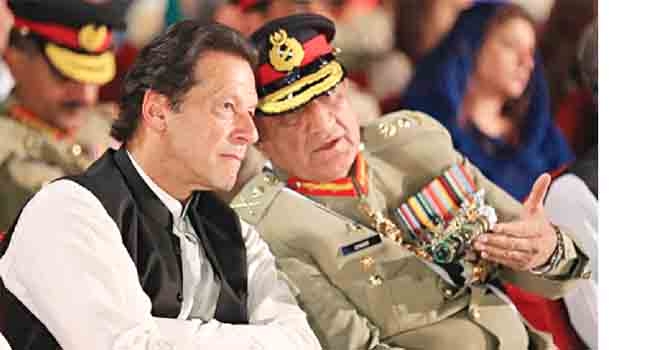
Our conduct has badly destroyed our state image to the world. Such disfigurement may cause us an irreparable loss for the rest of our future. The world, unfortunately, has mi-conceptualized her conduct towards Pakistan too. For instance, the international forums, instead of engaging in a dialogue with the state (government) of Pakistan, call upon the Pakistan Army chief for all negotiations. Look at the recent history. The meeting with the Crown Prince of Saudi Arabia, the meeting with American officials, the finalization of American withdrawal from Afghanistan and support of the army for such withdrawal, the support of the Afghan government, dealing with China over CPEC etc. Even now, the business community inside the country seeks some guarantees for economical stability from the Pakistan Army chief. The list continues and questions arise!
Whether these events have the approval of Pakistan’s parliament? Whether they are discussed and approved ? Whether the general public is bound to honour them when they didn’t get assent from the collective wisdom? What do these incidents suggest? Who represents the real state in Pakistan?
The people have respect for a state only. They may have some affiliations with various departments/institutions. They may even sacrifice their lives for these institutions but the only binding force which ties them in a relationship is the state, not an institution. Because the institution may collapse but the state sustains. In order to keep a state strengthened, sustainable and inevitable the state needs to first deconstruct and then reconstruct the concepts that would have an alignment with the world.
The misconception could be avoided by the encouragement of a grand debate across Pakistan. Modern scholars may initiate some steps for the fixation of such misconceptions. Furthermore, the government should ought to restore her authority by honouring only those steps taken by her, which are ratified by the Pakistan parliament and those that are truly represented by the ‘collective wisdom’ of the populace.
We use cookies on our website to give you the most relevant experience by remembering your preferences and repeat visits. By clicking “Accept All”, you consent to the use of ALL the cookies. However, you may visit "Cookie Settings" to provide a controlled consent.
This website uses cookies to improve your experience while you navigate through the website. Out of these, the cookies that are categorized as necessary are stored on your browser as they are essential for the working of basic functionalities of the website. We also use third-party cookies that help us analyze and understand how you use this website. These cookies will be stored in your browser only with your consent. You also have the option to opt-out of these cookies. But opting out of some of these cookies may affect your browsing experience.
Functional cookies help to perform certain functionalities like sharing the content of the website on social media platforms, collect feedbacks, and other third-party features.
Performance cookies are used to understand and analyze the key performance indexes of the website which helps in delivering a better user experience for the visitors.
Analytical cookies are used to understand how visitors interact with the website. These cookies help provide information on metrics the number of visitors, bounce rate, traffic source, etc.
Advertisement cookies are used to provide visitors with relevant ads and marketing campaigns. These cookies track visitors across websites and collect information to provide customized ads.
Necessary cookies are absolutely essential for the website to function properly. These cookies ensure basic functionalities and security features of the website, anonymously.
Cookie
Duration
Description
cookielawinfo-checkbox-analytics
11 months
This cookie is set by GDPR Cookie Consent plugin. The cookie is used to store the user consent for the cookies in the category "Analytics".
cookielawinfo-checkbox-functional
11 months
The cookie is set by GDPR cookie consent to record the user consent for the cookies in the category "Functional".
cookielawinfo-checkbox-necessary
11 months
This cookie is set by GDPR Cookie Consent plugin. The cookies is used to store the user consent for the cookies in the category "Necessary".
cookielawinfo-checkbox-others
11 months
This cookie is set by GDPR Cookie Consent plugin. The cookie is used to store the user consent for the cookies in the category "Other.
cookielawinfo-checkbox-performance
11 months
This cookie is set by GDPR Cookie Consent plugin. The cookie is used to store the user consent for the cookies in the category "Performance".
viewed_cookie_policy
11 months
The cookie is set by the GDPR Cookie Consent plugin and is used to store whether or not user has consented to the use of cookies. It does not store any personal data.