Home Blog Page 332

Didn’t Supreme Court miss something in Shaheen Bagh verdict?

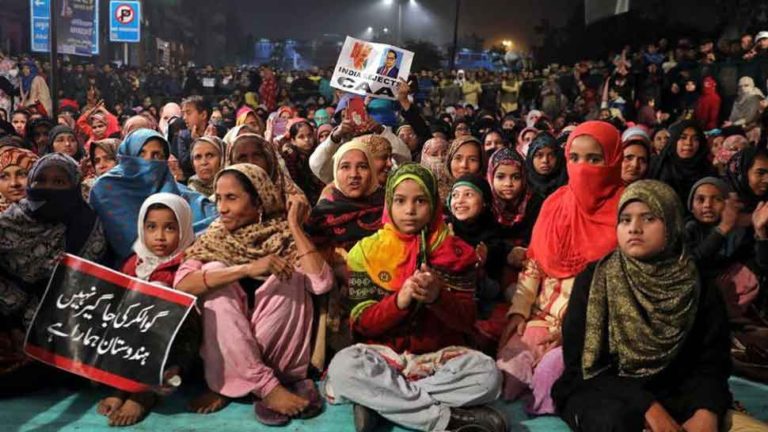
The verdict of the apex court in a petition filed by BJP MLA Nand Kishore Garg has mostly focused on the constitutional and administrative aspects of the last winter’s Shaheen Bagh sit-down agitation that had caused great inconvenience to the public in a crowded part of Indian capital for a long time. The sit-down strike ended in March and the verdict has come seven months later. The long time gap is reflective of rather low priority with which the apex court treated the matter.

The court verdict has not touched on the political and social parameters inherent in the case obviously because the petitioner had not made any direct reference to those areas in his petition. The argument of the petitioner was as this: “It is disappointing that the state machinery is muted and a silent spectator to hooliganism and vandalism of the protesters who are threatening the existential efficacy of the democracy and the rule of law and had already taken the law and order situation in their hand.” This was the first part of the petition and in the second part the petitioner had urgently approached the court that public places must not be allowed to be abused and misused for ulterior and mala fide purposes such as staging a protest against the constitutional amendment in the heart of the capital city and thereby causing incalculable hardships and difficulties to the common people.” The first part of this sentence is loaded with political undertones which the apex court has not taken cognizance of. Hardships and difficulties to common people are the fallout of certain activity by the specific people. The court has addressed the fallout and not the source of the hardship.

Those not disposed to examine the court verdict critically will argue that the court has responded to the plea of the applicant and decreed that public places are not to be used for protest rallies. Therefore, the Supreme Court verdict remains confined to law and order aspect and the issue of causing public inconvenience only. In simpler language, the verdict conveys that it is an administrative matter. There are clear rules and regulations set forth how a democratic state is expected to deal with such situations.

In the larger perspective, one may say that the government has failed to take recourse to the established law of the land in handling the situation in Shaheen Bagh, and as mildly hinted at by the court verdict has it tried to hide behind the court for its inactivity. This is precisely what the court has meant by the comment “Authorities have to act on their own and cannot hide behind courts.” The Supreme Court has censured the government is mild and polite words.

But it has to be noted that the Supreme Court has not reacted to the plea of the petition that “hooliganism and vandalism of the protesters (of Shaheen Bagh) are threatening the existential efficacy of the democracy and the rule of law and had already taken the law and order situation in their hand.” A serious charge of “threat to the existential efficacy of the democracy and the rule of law” has been very conveniently overlooked. A deeper and impartial analysis of the incident should have been attempted to arrive at the crux of the issue.

The apex court of India enjoys supreme powers because of the democratic dispensation of our country. But when there is a petition before it alleging that an existential threat has been posted to the efficacy of democracy and the rule of law in the country, the Supreme Court is obliged to examine whether there is a threat to democracy or not. In either case, it has to justify its ruling. The Supreme Court has simply brushed the matter aside.

Who is threatening democracy and why and how is the crucial issue that arises from the contents of the petition? The least that the Honorable Court could have done was to ask the petitioner to elucidate the charge of threat to democracy and ascertain how the “state machinery was muted and a silent spectator to hooliganism and vandalism of the protesters.” No elucidation is not reflected in its verdict.

The narrative becomes more intricate when we find that the lockdown was implemented by a particular community in a particular area with particular geography and demography. It is not saying too much that the method and manner in which the protest sit down was conducted wore communal complexion. There has been a protest against CAA and domicile rule in some more parts of the country but the protests at Shaheen Bagh resembled the pattern of protests simultaneously held at a couple of Muslim majority towns in the country. It is also worth noting that the entire protest activity was meticulously planned and carried out through agents thoroughly briefed beforehand. For example, anti-national and communal slogans were raised under the banner of the national flag which meant the abuse of the national icon.

The government has now the report of the inquiry commission on the Shaheen Bagh incident. The report is not publicized obviously because of the finger of responsibility points towards a particular community. It is also said that collaborators had travelled to Shaheen Bagh from as far as Kolkata and Trivandrum. Antecedents of some of these collaborators are known to the intelligence authorities. What had brought them to Shaheen Bagh and what was the mission they were assigned and by who? The court verdict does speak of the responsibility of the government in curbing the illegal protest but it does not reprimand the Delhi government for its failure in controlling the situation which was reported to have been soft paddling with the miscreants.

What is more surprising is that the Supreme Court has not taken cognizance of the type of slogans that were raised by the protestors. Moreover, how the media was not allowed by the protestors to enter the cordoned-off area and talk to those who were on sit down strike speaks a lot about the intentions of the protestors. If they were genuinely protesting they would have allowed the media to perform its normal role so that their case would receive a national response.

The fact of the matter is that a widespread anti-national movement by the radicals with roots outside India has been behind the Shaheen Bagh agitation. The agitation was meticulously planned. The women were particularly motivated to leave their homes and kitchens and enjoy the privileged biryani that was served to the sitting mobs for nearly two months. Who funded their catering service, how did they abandon their homes and the daily chores of life and felt relaxed and comfortable in a state of prolonged protest are some of the intriguing questions that ask for an answer.

Finally, the threat to the efficacy of the democratic dispensation lies in mobs violating the law passed by the parliament through due process and the state government choosing to become a silent spectator to the scenario till law and order are taken by the mobs in their hand. The civil society has a right to dispassionately and objectively debate the verdict of the Supreme Court on Shaheen Bagh incident.

Pakistan Army and its deep seated desire to ‘control’ Civil Government

Whatever be the constitutional position, one thing is clear that in the final analysis, political sovereignty in Pakistan resides … where the coercive power resides… which is the ultimate authority in the decision-making process in Pakistan. They decide when to abrogate the Constitution; when it should be held in abeyance; when elected governments should be sacked; and when democracy should be given a chance. Behind the scenes, they also decide whether an elected prime minister shall live or die.2 — Roedad Khan

The battle-lines have been drawn in Pakistan between a combined opposition on the one side and the establishment and government on the other. Pushed to the wall by a spate of accountability cases, Pakistan Muslim League Nawaz (PML-N) leader Nawaz Sharif in several speeches since September 20, 2020 has strongly criticized the establishment for involvement in politics. He has accused it for being ‘a state above the state,’ and described the opposition’s struggle as being against a ‘parallel state’ that had imposed an incapable person on the country through a rigged election process. The opposition has formed an alliance called the Pakistan Democratic Movement (PDM) whose first leader is Maulana Fazlur Rehman of the Jamiat Ulema-e-Islam (JUI-F). While Nawaz and the PMLN have a large vote bank in Punjab, the Maulana is expected to pitch in with street power of his Deobandi religious cadres, especially in Khyber-Pakhtunkhwa and Balochistan. Already an impressive alliance, in case the PPP remains committed, then the addition of its Sindh vote bank would be formidable.

The establishment and government have retaliated with their usual repertoire of tricks — arrests of opposition leaders, filing of cases, trying to create splits in parties and between parties and so on. PM Imran Khan and his ministers have reacted by accusing Sharif of being anti-Pakistan, of serving Indian interests and the opposition wanting to create a rift between the government and the armed forces.

In such a heated atmosphere, it would be useful to step back and look at some historical insights and into the background of the distorted civil-military relations in Pakistan.

In most democracies, civil–military relations are subject to laid-down guidelines and protocol, with the armed forces being responsible to the executive. In Pakistan’s hybrid democracy, however, civil–military relations have been the central issue in governance with the army dominating the civilian governments.

Such a state of affairs could never have been imagined when Pakistan had been created. At the reception given by Jinnah on August 14, 1947 Asghar Khan (later Air Marshal) and Akbar Khan (later Maj. Gen.) complained that they were disappointed that the higher posts in the armed forces had been given to British officers who still controlled their destiny. According to Asghar Khan, ‘the Quaid who had been listening patiently raised his finger and said, “Never forget that you are the servants of the state. You do not make policy. It is we, the people’s representatives, who decide how the country is to be run. Your job is only to obey the decision of your civilian masters.”’3

Could any politician, including current PM Imran Khan have the temerity to say this to the army chief today? The answer has to be a resounding no. Hence, democratic governance in Pakistan instead of being a tripod of the executive, legislature and judiciary looks more like a garden umbrella in which the army is the central pole around which the other organs of the state revolve. Consequently, civilian governments in Pakistan have invariably taken a backseat on crucial issues like national security objectives and strategies to implement them.

The key to the army’s dominance was the advice given by Maj. Gen. Sher Ali Khan Pataudi to Gen. Yahya Khan in 1969 that the army’s ability to rule lay in its being perceived by the people as ‘a mythical entity, a magical force, that would succour them in times of need when all else failed … the army was the final guarantor of Pakistan and its well-being.’4 Every military ruler has made this the cornerstone of his policy. The generals know that they cannot allow the army’s charisma to fade, even if it means sacrificing a government or a leader.

In its essentials, the tussle between civil and military authorities in Pakistan is not just about power and supremacy. It is about the contempt that the military holds the politicians in and about their belief that left to themselves, the political class will destroy Pakistan one way or the other, or, at the minimum, compromise its vital security interests.

A few examples will suffice. A telling comment were the instructions given by the then commander-in-chief Ayub Khan to Pakistan’s first military attaché in Washington DC, Brigadier Ghulam Gillani, in 1952, barely five years after Pakistan was created. He was told that his main task was to procure military equipment from the Pentagon, and he need not take either the ambassador or the Foreign Office into confidence because in his view, ‘these civilians cannot be trusted with such sensitive matters of national security’.5

Another example is what Gen. K.M. Arif wrote about Zia-ul-Haq: ‘Like many other soldiers, he had contempt for politicians; however, his dislike of politicians … was rooted in a knowledge of the seamier aspects of their personal and public behaviour … Zia was convinced that most politicians had a price; and experience confirmed his opinion that only a few were prepared to rise above their petty personal ambitions.’5

Lt Gen. Hamid Gul probably expressed the army’s sentiments well when he told Iqbal Akhund, ‘[A] democratic government by its very nature tended to compromise, and political compromise might sometime run counter to the national interest. So… there must be some means of defining and promoting the national interest, some means of rising above political partisanship and compromise on issues of high policy – such as Afghanistan, Kashmir, or relations with India.’6

Contempt for politicians apart, the army, since the inception of Pakistan, has not really believed that democracy was suited to Pakistan. The key element in the ‘Rawalpindi Conspiracy Case’ hatched in 1949–51 by Maj. Gen. Akbar Khan was his open scorn for politicians ‘whom he blasted for incompetence, indecision and corruption’.7 Seven years later, Gen. Ayub Khan stated: ‘We must understand that democracy cannot work in a hot climate. To have democracy we must have a cold climate like Britain.’8

Echoing Ayub but using Islam instead of climate, Zia at a press conference stated: ‘Our present political edifice is based on the secular democratic system of the West, which has no place in Islam … In Pakistan neither anarchy nor Westernism will work. This country was created in the name of Islam and in Islam there is no provision for Western-type elections.’9 Musharraf gave his own twist by stating, ‘Our democracy is not mature in the country. I think many politicians do not behave in a mature manner … I have a belief that democracy has to be modified to an environment; that is the reason of my retaining the power of dismissing an assembly.’10

Democracy apart, one crucial issue that would come to the fore in the weeks ahead would be the behavior of the army should the religious cadres of the Maulana hit the streets. While the army’s discipline and chain of command has held over the decades, it is useful to remember that there have been several instances where the army has refused to open fire on and under the influence of Islamists. For example, in the 1977 Pakistan National Alliance (PNA) agitation, which was dominated by the religious parties and led to Bhutto’s ouster, the army declined to shoot on protestors in Lahore.11 On 26 September 1995, Maj. Gen. Zahirul Islam Abbasi, along with thirty-five officers, was arrested for plotting to assassinate the corps commanders, during a conference, as well as the cabinet.12 Between 2004 and 2007, there were numerous instances of mass desertions and refusal to fight in the Frontier Corp units deployed to target militants in the then Federally Administered Tribal Areas (FATA).13 There were two attempts to assassinate Gen. Pervez Musharraf in which armed forces personnel were involved.

In May 2011 the army arrested Brig. Ali Khan and four other officers for links with the UK-based Hizb-ut-Tahrir (HT) which believes in establishing an ‘Islamic Caliphate’. Also, the attack onthe Mehran Naval base (May 22, 2011) and the earlier October 10, 2009 attack on the GHQ revealed that the attackers had inside knowledge and knew where the blind spots were. In May 2016, a naval tribunal sentenced five officers to death in the Karachi Naval Dockyard attack case of September 6, 2014. The five were charged with having links with the Islamic State, mutiny, hatching a conspiracy and carrying weapons in the dockyard.14

Such incidents can be termed as isolated and stray, but it would be a mistake to dismiss them out of hand. They are reflective of the weakening of discipline on account of Islamisation of the army that can grow given the trajectory of radicalization in the country. It would certainly raise questions about how the army would deal with the Maulana if push came to shove.

The conundrum faced by the army is that if it does not interfere in the election process, in the formation of governments and allows the civilians’ space to govern, the government will want to control matters that the army has come to believe is its preserve like defence and foreign policies. This would be anathema since the army does not trust the civilians to do the right thing; hence its constant efforts to engineer and ‘select’ the ‘right’ kind of government, like that of Imran Khan. However, without strengthening an independent electoral system and civil governments, without giving them space to govern, the country will continue to face confrontations like the one that could possibly be brewing. It is precisely this meddling in civilian space and in engineering governments that the opposition has come together to fight. However, as history indicates, the opposition would have a mountain to climb to push the army away from its domination of the civilian space.

Ultimately, however, Pakistan has paid a huge cost for the sake of its army’s domestic ambitions. The army would do well to heed the warning of the first C-in-C of the Indian Army after partition: ‘No army which concerns itself with politics is ever of any value. Its discipline is poor, its morale is rotten and its reliability and efficiency is [sic] bound to be of the lowest order. You only have to look at certain foreign armies which are constantly mixed up in politics to realize the truth of what I have to say15—Sir Roy Bucher.

Endnotes

  1. Some sections of the article have been excerpted from the author’s book- Pakistan: Courting the Abyss, NOIDA, Harper Collins India, 2016
  2. Roedad Khan, Pakistan: A Dream Gone Sour, Karachi: OUP, 1997, p. 179.
  3. M. Asghar Khan, We’ve Learnt Nothing from History, Pakistan: Politics & Military Power, Karachi: OUP, 2005, p. 3.
  4. Roedad Khan, ‘The Role of the Military-Bureaucratic Oligarchy’, Dawn, 25 August 2001, cited in Husain Haqqani, Pakistan Between Mosque and Military, Lahore: Vanguard Books, 2005, p. 54.
  5. Mushahid Hussain and Akmal Hussain, Pakistan: Problems of Governance, New Delhi: Konark Publishers, 1993, p. 30.
  6. Gen K.M. Arif, Working With Zia, Karachi: OUP, 1995, p. x.
  7. Iqbal Akhund, Trial and Error The Advent and Eclipse of Benazir Bhutto, Karachi, OUP, 2000 pp. 137–38.
  8. Ayesha Jalal, The Struggle for Pakistan, A Muslim Homeland & Global Politics, Massachusetts: Harvard University Press, 2014, p. 79.
  9. Tariq Ali, The Clash of Fundamentalisms – Crusades, Jihads And Modernity, New York: Verso, 2002, p. 183.
  10. Daily Telegraph, 18 October 1979, cited in Tariq Ali, Can Pakistan Survive: The Death of a State, London: Penguin Books, 1983 p. 138.
  11. ‘Musharraf Favours Tailored Democracy’, The Nation, 16 June 2003, cited in International Crisis Group ‘Unfulfilled Promises: Pakistan’s Failure to Tackle Extremism’ 16 January 2004
  12. Husain Haqqani, Pakistan Between Mosque and Military, Lahore: Vanguard Books, 2005, p.122.
  13. Brian Cloughley, A History of the Pakistan Army: Wars and Insurrections, Karachi: OUP, 1999, p. 355.
  14. Anatol Lieven, Pakistan, A hard Country, London: Penguin Books, 2012 pp. 175–76
  15. Malik Asad, ‘Five “IS-linked” navy officers get death sentence in dockyard attack case’, Dawn, 24 May, 2016.

This article was first published by Vivekananda International Foundation (VIF).

Tarek Fatah: Turkey must be expelled from NATO

A conflict that goes back almost a millennium, in a region few Canadians could locate on the world map, has forced Ottawa to choose sides between Turkey and Armenia. Notwithstanding centuries of conflict between medieval Iran, the Turkish Caliphate and Tzarist Russia, Armenia has the distinction of being the Middle East’s only Christian country.

On its west, Armenia shares a border with Turkey, home to the unforgivable Armenian Genocide of 1915 that killed or uprooted a million, driving them to death, scattering them across the globe, some as far away as Kolkata, India and Boston, while others took refuge in Turkey’s Arab colonies.

In 1918, after the end of the First World War, Christian Armenia and its eastern neighbour Azerbaijan (Shia Turks) both joined the USSR as Soviet Socialist Republics. During the Second World War, tens of thousands of Armenians and Azeris fought side-by-side in the Red Army to successfully stop the Nazi Wehrmacht from reaching the oil-rich Caspian Sea port city of Baku.

Today we are back to square one with both Armenia and Azerbaijan trying to exert power in Nagorno-Karabakh, an Armenian-populated enclave surrounded by Azerbaijan.

Since then, Nagorno-Karabakh has legally been part of Azerbaijan, but only in name. The population has refused to accept Azeri rule and have the backing of the Armenian government.

Considering the fate of non-Muslims or minority Muslims in Islamic countries, one cannot blame the people of Nagorno Karabakh for refusing to live as non-Muslims under Muslim Azerbaijan.

Case in point being Black Muslim Darfuris facing genocide by Arab Janjaweed of Sudan; Muslim Kurds being subjugated by Muslim Turkey; Balochistan’s 50,000 ‘enforced disappearances’ by a Muslim military, and the suffering of Christians and Hindus in Islamic Pakistan. The list goes on and on.

The two sides fought a war that ended in 1994. Negotiations between Armenians in the enclave and Azerbaijan went on for decades but never resulted in a peace treaty.

That is until July this year when Turkey egged its fellow Turks in Azerbaijan to launch an attack on Nagorno-Karabakh, whose residents refer to the territory as the Republic of Artsakh.

As the clashes between both sides took shape in a land and air war, all major nations called for an immediate ceasefire, except Turkey that opened its borders to let Syrian and Pakistani jihadi fighters to join the ranks of the Azeri Turkish regular army.

However, Islamabad has denied reports that its forces are deployed inside Azerbaijan.

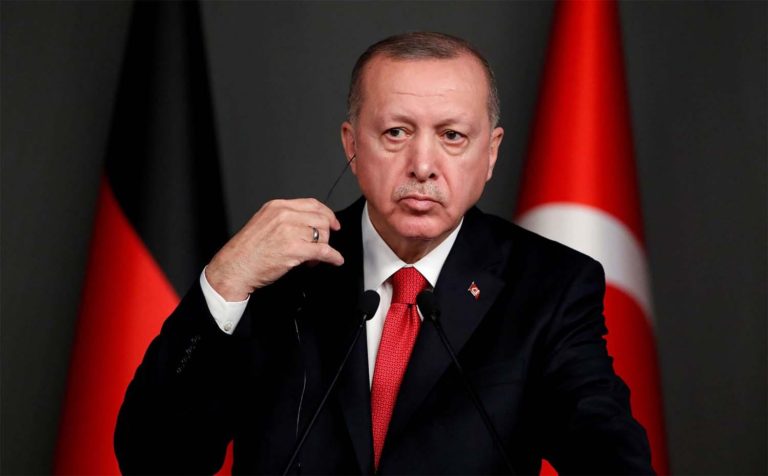
Turkey’s Erdogan denounced the call for a ceasefire and, according to reports, has lent its US-supplied F-16s to Azerbaijan’s forces along with drones that are equipped with Canadian technology.

This forced Ottawa to act. On October 5, Foreign Affairs Minister Francois-Philippe Champagne halted all military export permits to Turkey.

The reaction by Turkey was swift. The foreign ministry in Ankara accused Ottawa of “double standards” arguing: “There is no explanation for blocking defence equipment exports to a NATO ally while.”

NATO ally? That’s quite rich for Turkey’s pan-Islamists to invoke NATO as their defence.

The only role Turkey has played in NATO since the collapse of the USSR is that of a Fifth Column. A country that has been a conduit for ISIS jihadis, the Muslim Brotherhood. A country that deploys refugees to threaten Europe and Greece while occupying Cyprus and festering war in Libya, is no NATO ally.

Time has come for Canada to ask for Turkey’s expulsion from NATO. Turkey is a menace to Greece, Cyprus, Egypt, Syria and Libya. It has eyes on Bulgaria, Rumania and the Balkans, which it had to relinquish in the Lausanne Treaty that is approaching its centennial.

Don’t be surprised if Erdogan annuls the century-old treaty to re-establish the Ottoman Caliphate that will make Central Asia its Turkic backyard after Armenia, the only obstacle, is eliminated.

Pakistan’s move on Gilgit-Baltistan is Chinese compulsion

0

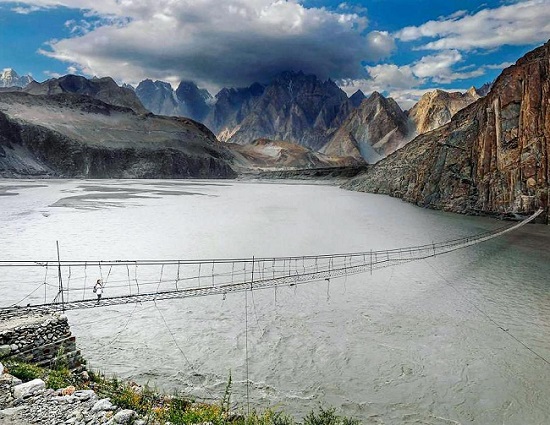
Part of the erstwhile princely state of J&K, Gilgit-Baltistan (GB) that covers an area of 72,921 square km, is an unfortunate piece of land whose people have been worst affected due to what Pakistan refers to as the “unfinished agenda” of partition. Not only was Gilgit-Baltistan (GB) occupied by Pakistan in 1947, but Pakistan handed over the Shaksgam Valley spread over 5,180 square km to China by Pakistan in 1963 for enabling construction of the Karakoram Highway.

A multilingual region with a rich and historical socio-cultural and ethnic diversity, Gilgit-Baltistan is surrounded by the Hindu Kush and the Karakoram mountains and has a population of 1.8 million and its location is unique. In addition to India and Pakistan, Gilgit-Baltistan shares its borders with Afghanistan and China. It is rich in natural resources which have been exploited by Pakistan, but successive governments have failed to use part of this income generated for the development of the area or upliftment of its residents.

For the last few years, Gilgit-Baltistan has remained frequently in news since the much touted US$46 billion China-Pakistan Economic Corridor (CPEC) connecting the Kashgar area in Xinjiang Autonomous Region (XAR) of China to the Gwadar Port in Pakistan runs through this region. Islamabad has been so taken in by the promises of an influx of revenues due to CPEC that it has already handed over operation of Gwadar port to China, but rather than benefit the locals they are facing unemployment since Chinese construction companies have brought along their own workforce.

Chinese naval activities in Gwadar port and unreasonable restrictions imposed on fishing in the area has hit the fishermen very badly. Thus, there is a general consensus amongst the locals that the CPEC will leave out people from tangible benefits. Residents of the area also apprehend that Chinese domination of Gwadar will lead to widespread displacement of locals and disrupt their way of life.

Residents of Gilgit-Baltistan have grown frustrated with both the Chinese as well as their own government since local resources of the area are being plundered in the most reckless manner. Activists and locals are also alarmed by the huge ecological imbalance that CPEC will cause in the region. However, Islamabad doesn’t seem to be concerned!

Pakistan is now planning to declare Gilgit-Baltistan as its fifth province, a move that has rightly raised concerns in India as the region is part of J&K. Even the people of this region think that constitutional amendment to change the status of the region is designed to help the Chinese rather than the locals as it’s believed that it is China’s concern about the unsettled status of Gilgit-Baltistan that has prompted Pakistan to change its status.

According to an earlier report published in Dawn newspaper, Pakistan is mulling to elevate the constitutional status of the region in a bid to provide legal cover to the CPEC. Experts are of the firm belief that making Gilgit-Baltistan its province is also meant to clear the decks for declaring what it refers to as ‘Azad Kashmir’ (Pakistan-occupied Kashmir or POK) as another province in an attempt to remove all barriers of the conflict.

British Kashmiris under the banner of Kashmir Voice International have condemned Pakistan’s move to integrate Gilgit-Baltistan as a fifth province of the country. They have rightly assessed that this move was a U-turn and “derogatory to the spirit of movement”. They contend that the move would lead to more political instability in Kashmir.

Hardline Hurriyat leader Syed Ali Shah Geelani who is a strong supporter of J&K’s merger with Pakistan surprised everyone when he came down heavily on Pakistan for trying to change the status of Gilgit-Baltistan.  Hurriyat’s representative Abdullah Gilani in Pakistan urged the top brass of Pakistan government to maintain its consistent policy on Kashmir. In our view, this move is laden with disastrous consequences. Pakistan risks not only weakening its position and losing moral high ground but also demoralizing Kashmiri people. “We, therefore, earnestly urge the government of Pakistan to rethink the decision granting provisional provincial status to Gilgit and Baltistan keeping in view all aspects, particularly, the possible detrimental repercussions it would have on the future of Kashmir.”

The polls in Gilgit-Baltistan were to be held on August 18, but Pakistan’s election commission on July 11 postponed them due to the ongoing Coronavirus pandemic and has announced that elections for the legislative assembly of Gilgit-Baltistan will be held on November 15. But India has vehemently opposed Pakistan’s decision to hold general elections in Gilgit-Baltistan and said any action to alter the status of the militarily-occupied region has no legal basis.

Diamer-Bhasha Dam is a highly controversial hydropower project in POK, because of its ecological implications. It will inundate large tracts of land, rendering thousands of people homeless. According to a report, at least 31 villages will be flooded, 3,115 houses destroyed and 1,500 acres of agricultural land inundated by the reservoir.

The area has very little in terms of fertile agricultural land, which if absorbed by the construction of the dam could result in serious food deficit in the region. POK has been facing food shortage in the past; only when the federal government issues directives the other provinces supply the required food material. Also, the dam is located in a seismically sensitive zone and God forbid, should this area experience an earthquake of an intensity similar to the one that hit POK in 2005, the consequences would be horrific!

As a case for future scenario building, POK is immensely significant as its strategic geographic location has consistently been “leveraged” by Pakistan to fulfil its “strategic and economic objectives”. POK shares its borders with several countries – the Punjab and NWFP provinces in Pakistan to the west, the Wakhan Corridor of Afghanistan in the north-west, XAR (Xinjiang Autonomous Region) of the People’s Republic of China to the north and India’s Jammu and Kashmir to the east. It is situated in the vicinity of the two fastest growing economies of the world, but remains extremely backward.

Of course, to what extent China may agree to such a plan remains to be seen. Pakistan’s incorporation of Gilgit-Baltistan as a fifth province of the republic would stand to help China consolidate its significant investments in the region. But at the same time, given the timing New Delhi would irrespective of how the story actually played out in reality suspect Beijing to be a backer, if not outright instigator of this move. This, in turn, could lead to significant hardening of India’s position in the standoff in eastern Ladakh, at a time when diplomatic options to resolve the crisis look fewer with each passing day.

We have nerves of steel to win the guerilla war against Pakistan: Dr Allah Nazar Baloch

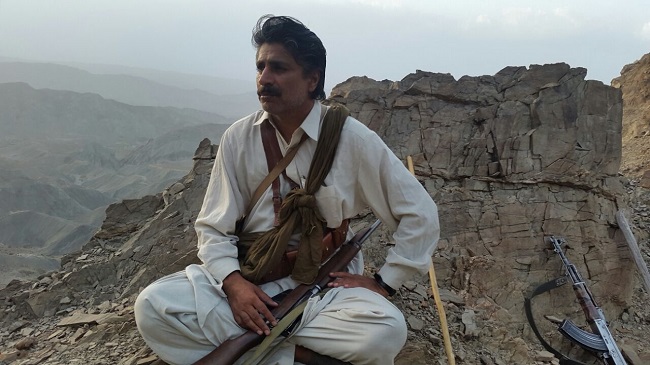
Balochistan’s pro-independence leader Dr. Allah Nazar Baloch came down heavily on Pakistan calling it “coward” and an arrogant nation high on power that only understands the language of force. “Our enemy only understands the language of force. We have a coward enemy that is neither aware of its own power nor ours. We fully know our capabilities as well as our enemy’s,” Dr Allah Nazar said in his statement on Wednesday.

“They (Pakistanis) are on a high with arrogance and will never realize that wars are not won with larger numbers or sophisticated weaponry but by nerves of steel, intellect and mass support. This is a nerve-shattering war for the enemy. Because the war zone is Baloch nation’s natural habitat, therefore the Baloch will not suffer as much fatigue and exhaustion as the Punjabi Army of Pakistan. Baloch nation will turn victorious with use of its intellect and wisdom,” said Dr Allah Nazar.

Dr Allah Nazar Baloch commands respect across South Asia and his words have the power of motivate millions in the Indian subcontinent. “The Punjabi state of Pakistan never ever considered the Bengalis (who played a pivotal role in the creation of Pakistan) as humans let alone equals. Bengalis, despite being in the majority, were declared as a minority in order to be ruled over by Punjabis. When Bengalis saw the reality of Pakistan and chose the path of freedom, they bought down the mighty and so-called pious army of Pakistan onto its knees,” he added in his statement.

Dr. Allah Nazar further added: “Today we are waging a guerrilla war. Several so-called Baloch nationalists are calling this war as counterproductive in order to dishearten the common people of Balochistan. We know that like Pakistan, they could also foresee their fate and future which is uncertain and dark.”

The revered Baloch leader explained that in comparison to Pakistan, the Baloch Sarmachaars (freedom fighters) are in a more advantageous position in several ways. “The geography of Balochistan is a heaven for guerrilla warfare. The guerrilla fighters are like fish in the ocean of masses. For the last twenty years, Baloch guerrillas have remained under the protection of the ocean of Baloch masses as well as the geography of Balochistan. Despite using all tricks of barbarity, Pakistan has failed to suppress the popularity and love for Baloch guerrillas.”

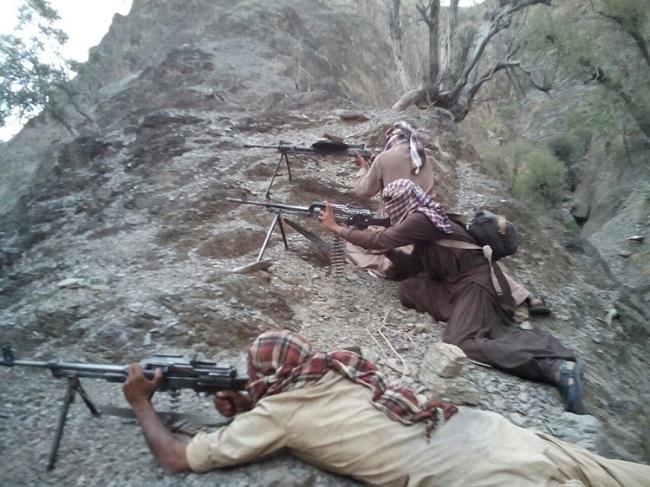
Baloch Sarmachaars (freedom fighters) in action. (Representative photo/News Intervention))
Baloch Sarmachaars (freedom fighters) in action. (Representative photo/News Intervention)

He said, only those people make comparisons on the basis of numerical strength and sophisticated weapons who are unaware of the history of guerrilla warfare. “Guerrillas use their weaknesses as their strength: they are small against the big; hidden against the visible; mobile against the slow. The guerrillas use light weapons yet they force the heavily armed enemy to take heavier casualties with their strong nerves. They use their enemy as their prime supplier of ammunitions, and provisions,” said Dr Allah Nazar.

Baloch history is full of daring fables. Even a cursory look at the last twenty years clearly prove that Pakistan has completely failed in suppressing the Baloch in rural and urban guerrilla warfare. Even today thousands of Baloch fighters are in the mountains of Balochistan and attack their enemies like cheetahs at night with sharp and vigilant eyes. Whereas there is no scarcity of trained guerrillas, sleeper cells, and reserved forces in the cities and towns.

Dr. Allah Nazar said that it is the need of time that our neighboring countries and international powers support both the political and armed wings of Baloch national freedom struggle. “The geography of a free Balochistan and a nation with secular values and vast natural resources can play a vital role in international affairs. And Baloch have the capacity to contribute to perpetual peace, prosperity, and development not only for the region but for the entire world,” he said.

Pakistan violates international laws by inflicting Collective Punishment on Balochistan

The policy of collective punishment has a historical background behind it. Collective punishment has been used as a war crime at different times in history by the powerful against their opponents. It is basically a kind of punishment that is given to the whole population to avenge an individual’s mistake. So the individual who has committed a ‘wrong’ faces punishment along with his family, friends and neighbours, who neither have any control over the individual’s actions nor had any supporting hand behind the wrong committed by individual. Such collective punishments are inflicted upon the whole society by powerful regimes in order to create a fear psychosis amongst the masses.

Examples of such collective punishments can be found in the history and also in the present. In the past, Kings used to harm entire society as a punishment for the wrong committed by a single member of the family, in order to strengthen their rule. The countries, on the other hand, also used such brutal type of punishments during war against innocent civilians of the enemy country. For instance, Germany during the World War-I bombarded civil population of Poland killing thousands of innocent people. Also take the example of world’s superpower USA that dropped two atom bombs on Japan on the 6th and 9th August 1945 that killed millions of innocent Japanese. In every corner of world, collective punishment has been used against opponents and is still being used in several countries.

However, such cruel punishments are also used by some countries against a section of their citizens who are fighting for their community’s independence. The families of these freedom fighters are tortured in an effort to pressure them. Collective punishment, as quoted above, is used as a tool against freedom fighters to make them surrender forcefully or to stop them from launching serious attacks on the occupying military forces.

Currently, such unjust punishment is used by the security forces of Pakistan in different parts of Balochistan where freedom struggle is on its historical peak. Hundreds of inhabitants of Balochistan, mostly from the Baloch residential areas, have been compelled to leave their homes. Millions of Baloch houses have been burnt on the suspicion of Baloch freedom fighters living inside or on the allegation of Baloch freedom fighters seeking shelter in these houses. Generally speaking, most of the parents, siblings and even relatives of these Baloch freedom fighters are tortured, which is against rules of war and Geneva Convention of 1949. The Geneva Convention 1949 has several articles which discourage collective punishment.

According to Geneva Convention’s Article 87, all forms of collective punishment are prohibited. The Convention further reads that whole community should not be harmed for the wrong done by a single person as the whole community is not responsible. The Geneva Conventions are a set of treaties established in the mid-20th century to enact laws and protocols for humanitarian treatment during wartime. Pakistan is one of the signatories of this document. The international community should come forward with concrete steps in order to make sure that the international laws are followed in letter and spirit. The situation in Balochistan on account of brutal and collective punishment is worsening with each passing day.

Occupied Balochistan needs the immediate concern of international community, as entire Baloch population is bearing the brunt of collective punishment. Pakistan should be made responsible before international communities and Court of Justice as to why a signatory has been given free hand. Why a signatory member challenges the rules and regulations prescribed for equal safeguard and protection of common people during war time situation. A country such as Pakistan is not only violating Geneva Conventions but also breaching international laws operating documents such as the International Covenant On Civil And Political Rights etc.

Dr Allah Nazar calls upon Baloch, Sindhi, Pashtuns, Mohajirs and POK (Kashmiris) to jointly fight against Pakistan’s Punjabi imperialism

Baloch nationalist leader Dr Allah Nazar Baloch said in a statement on Tuesday that Baloch, Sindhi, Pashtun, Pakistan-occupied Kashmiri people and the Mohajirs who believe in Sindhudesh should establish a common platform to get rid of Punjabi imperialism. “We should come together because Pakistan is not a state but a source of terrorism to the world and epicenter of atrocities on oppressed nations. Pakistan does not meet the needs of a state in its own structure, but was established by occupying the land of Baloch, Sindhi and Pashtun nations and has been exploiting their resources,” said Dr Allah Nazar Baloch in his statement.

Pakistan’s presence on the world map means the presence of terrorism and chaos in the world. As long as this state is established and exists in this way, development, prosperity, peace and stability in the region and in the world will remain a distant dream. And the whole world, including the Baloch, Sindhi and Pashtuns will not be able to get rid of terrorism and religious fanaticism.

Dr. Allah Nazar Baloch explained that all the political parties in Pakistan talk according to the intentions of the establishment and hence none of their programs include a roadmap for the emancipation of oppressed nations. “They want the army to occupy the lands of our oppressed nations, so that they get their share. That is why they sometimes talk about the federation. But even their verbal statements do not align with historical truth. Because a federation is formed by the voluntary accession of nations. Whereas Pakistan was established against the will of the people and with the blessings of earlier Western masters; by occupying the lands of different nations. Calling such an artificial adjustment a “federation” is nothing but a joke with history,” said Dr Allah Nazar Baloch in the statement.

He added that it is time for the Baloch, Sindhi, Pashtun, Mohajirs and the Pakistan-occupied Kashmiris to fight on a common platform to get rid of Punjabi imperialism. “We will not only get rid of Pakistan by struggling on a common platform but also pave the way for peace in this region. Since the source and centre of terrorism is Pakistan and Pakistan’s current structure and existence is a threat to the whole world, and we, the subjugated nations are the most affected by this oppression. Our children, mothers, sisters, elderly and other vulnerable people are being victimized by the brutal policies of Pakistan,” said Dr Allah Nazar Baloch.

The Baloch nationalist leader further added that Pakistan has crossed all the boundaries of oppression on all occupied and oppressed nations. “Abducting people, forcible disappearances, torturing and dumping the mutilated bodies of those who are martyred is being carried out on a daily basis by Pakistan Army and intelligence agencies.”

“Pakistan’s baseless outcry over the Kashmir issue is beyond comprehension, as Pakistani Army’s own hands are stained with the blood of millions of Baloch, Pashtuns and Sindhis. It is Pakistan that has killed three million Bengalis and the entire world had been witness to their crimes. In addition Pakistan’s brutal army had raped thousands of Bengali women during the Bangladeshi freedom war,” said Dr Allah Nazar Baloch in his statement.

The statement further said that Pakistan was using terrorism as a foreign policy and blackmail as a tool to gain supremacy in the region. “Pakistan’s intervention in Afghanistan and support to the 40 years of civil war to keep Afghanistan under its control has devastated the country. Pakistan’s policy of intervening and weakening Afghanistan is still going on,” said Dr Allah Nazar in his statement.

Dr Allah Nazar added that Baloch political leadership has always made it clear to the world that Pakistan is the epicenter of terrorism in the world and especially in this region. “With the existence of Pakistan, the dream of peace and security in the world and in the region can never be achieved. The sooner the world understands this, the better and more beneficial it is to the world,” said Dr Allah Nazar in clear terms.

Sindhis are furious over Pakistan’s forcible takeover of Sindh islands

Sindh is blessed with rich coastal belt situated in the south-western part of our country. It is spread over an area of 338 km, which is one of the largest areas of mangroves and the seventh largest delta in the world. There are approximately 300 small and big islands located on the Sindh coastal belt. Bhundar (Bundal) and Dingi are the twin islands in this belt that are spread over an area of 12,000 acres. These twin Islands are at one hour ride from Karachi Sindh and are under ownership of Port Qasim Authority.

Pakistan’s federal government has always tried to take over the coastal belt of Sindh. However, as per the Pakistani constitution, the federal government has no authority to control or establish cities on Sindh’s islands or commission any other mega projects without permission of the Sindhi people or the Sindh government.

Article 172 of Pakistani Constitution which is about (Ownerless property) clearly says: Clause 1– Any property which has no rightful owner shall, if located in the province, vest in the government of that province and in every other case, in the federal government. Clause 2 – All lands, minerals and other things of value within the continental shelf or underlying the ocean (beyond) the territorial waters of Pakistan shall vest in the federal government.

Around 300 big and small islands are located on the Sindh coastal belt. These Sindh islands are home to rare plant and animal species.

This clearly shows that the federal government’s action is not only against the constitution of Pakistan, but also against international conventions and agreements which provide social, economic and cultural sovereignty to indigenous people as stated in the UN charter of UNDRIP (United Nations Declaration on the Rights of Indigenous Peoples). The Convention 169 states about FPIC (free, prior, informed, consent). of the indigenous people before enacting project on their land.

Pakistan federal government’s taking over the Bhundar (Bundal) and Dingi islands through ordinance is a clear violations of basic human rights of Sindhi people. It’s a crime against historical Sindhi nation and their land.

Why is this issue being raised now?
The federal government of Pakistan had always tried to take over the coastal belt and these twin islands of Sindh. Even earlier in 2000 and 2006 during regime of military dictator Gen. Pervez Musharraf such attempts were made but Sindhi people strongly condemned these attempts and the projects were stopped. In 2019, PM Imran Khan visited China and finalized few deals with Chinese President Xi Jinping. One deal was about Diamer Basha Dam which is now part of CPEC (the people of Sindh have already rejected that project but government of Pakistan is continuously ignoring Sindhi people’s demands) and also a deal about these Bhundar (Bundal) and Dingi islands and the coastal belt of Sindh.

China will invest in these twin islands to build mega cities like Hong Kong. But these deals are still hidden and secret. The people of Sindh are afraid that these Bhundar (Bundal) and Dingi islands and the coastal belt have already been sold to the CCP (China’s Communist Party).

China’s presence in our region is continuously increasing. There are many Chinese companies that are already working in Sindh mostly in Port Qasim Authority, Karachi Stock Exchange and the energy sector. They are negotiating to buyout the Karachi Steel Mills, and the deal is in the pipeline.
Just a few days before the federal Ministry for Maritime Affairs advertised the post of chairman of The Pakistan Islands Authority (PIDA), under an ordinance to constitute the body aimed at developing barren islands in the territorial waters of Sindh.

Pakistani ordinance for the development of Pakistan Islands Development Authority (PIDA). This ordinance arms Pakistan to takeover Bhundar (Bundal) and Dingi islands of Sindh, and subsequently sell them to China.

Sindhi people are also against this project because this is against our will and we have concerns that the demography of Sindh will be changed forever. Sindhi people will be reduced to a minority in their own land. And not only this, but this mega city and “so called” development will deprive around a million fishermen of their livelihood and they would suffer extreme poverty. The mangroves around these islands are assets of Sindh and Pakistan’s federal government and the Punjab province have no right to destroy lives of Sindhi people and the ecology of Sindh. It should be protected because mangroves save local Sindhi people from tsunamis and cyclones. These Islands are property of local Sindhi people. Pakistan and Punjab province is forcefully trying to occupy and sell lands of Sindh to China against the will of Sindhi people.

This presidential ordinance and Pakistan Islands Development Authority (PIDA) ordinance consists of 25 pages in which it is clearly mentioned that can not be challenged in Pakistani Courts. We, the people of Sindh, have no choice but to appeal in international court of justice, UNO or civilized nations of world that they take notice of these atrocities of Pakistan/ Punjab against historical Sindhi nation.

China has entangled itself with Ladakh misadventure

Diplomatic parleys to diffuse the situation between India and China in eastern Ladakh are being carried out with great urgency. Towards this end, the sixth virtual meeting of the Working Mechanism for Consultation and Coordination (WMCC) on border affairs was held on October 1st. The thrust was to take forward the “five-point consensus” between foreign ministers of both countries in Moscow on September 10. The said consensus had called for a dialogue to ensure quick disengagement, maintaining proper distance between troops of the two sides and easing tensions, abiding by all agreements and protocols on border management, continuing dialogue through the Special Representatives mechanism and the Working Mechanism for Consultation and Coordination (WMCC) and working on new confidence-building measures once the situation eases. The WMCC culminated with diplomatic niceties being exchanged by both sides and no headway made.

Notwithstanding the firmed in positions from which the two sides are refusing to budge there seems to be an urgency, especially on the part of the Chinese to ensure that the situation does not escalate on the military front. China is insisting on “implementation of the steps outlined after the last meeting of the senior commanders so as to avoid misunderstandings and to maintain stability along the Line of Actual Control (LAC).” The military commanders, in their last meeting, had agreed to stop troop build-up, exercise restraint to ensure that the situation on ground is not changed and avoid any actions that may complicate the existing posture.

It is quite apparent that India, while grappling with a serious confrontation with China along the LAC, is pursuing a mature policy involving both diplomatic as well as military channels. Indian forces are also showing remarkable restraint in not escalating the matter to an unacceptable level. The international community is keenly monitoring the situation. There is a universal consensus with regard to the righteousness of the Indian posture.

The Chinese motives, sadly, seem to be self-serving and multifaceted. Many believe that the face off in Eastern Ladakh is a diversion for other more critical problems that the country is facing. Take for example the clash in Galwan in mid-June; it started with the Chinese attacking Indian troops with spiked clubs after an agreement between the military commanders had been reached. The result was many casualties on both sides. The Indian side declared 20 brave soldiers were martyred, while the Chinese did not declare their losses that were reported by other channels to be much more. The clash turned international attention towards the area of conflict and, in the meantime, China introduced the ’Hong Kong Security Law’ whose application got lost in the melee. Thus, the draconian security law escaped international scrutiny. Undoubtedly, there are many wheels between wheels so far as the Chinese are concerned.

All, however, is not well with the Chinese game plan too. While attention from some issues is being diverted the multiple fronts that have been opened are becoming a deep concern for the country. Only time will tell whether the Chinese moves emerge as a sound policy or a strategic blunder. The fact is that most of the world is looking at China with a fair degree of trepidation for causing so much turmoil after having spread COVID-19.

It cannot be denied that the Chinese tried and tested strategy of ‘military coercion’ has reaped good results in the past, very much so against India too. So, does war remain an option for China? It is something that the obdurate, egoistic leadership of the country would wish for considering the weak wicket that it finds itself on presently. A war would divert attention from serious domestic issues of COVID, food insecurity and a nearly shattered economy, among others. It would resurrect a spirit of nationalism, make the people forget their anger and look up to the leadership with awe.

However, this time round, China misjudged the resolve of the present government and the military capability of  India. The Chinese leadership has realised that India is no longer a push over as it was in 1962.

China’s People’s Liberation Army (PLA) last fought a war 40 years ago in 1979, against an ill-equipped but highly motivated Vietnam and got literally demolished in the bargain. The present day leadership of the Chinese army has not seen a single shot fired in their lifetime. They only know how to commit organised brutality against unarmed Tibetans and Uyghurs.

PLA lacks confidence and is unprepared for war with any army, least of all with well trained, well equipped, motivated Indian forces. Things were okay so long as the “push and shove” drama was being played out along the LAC, an all out conflict would be too much for the PLA to handle. President Xi Jinping is desperately trying to overcome the shortcomings but it does not seem to be feasible in the short term. China is now stuck between the devil and the deep blue seas.

So far as India is concerned, the message is loud and clear. The government of India wants Beijing to move its troops back to their original position and restore status quo ante along the LAC. India is not ready to even speak about the 1959 definition of the LAC as China is insisting upon presently.

Indian Army has already moved in additional troops, weapons and equipment to aggressively match up to the Chinese build-up. Besides, the Indian Air Force has been keeping a strict aerial surveillance in the disputed region. India is and will remain well poised to face any threat posed by the Red Army on our Northern Frontier and also a two front war, if forced on us. In view of India’s strong resolve, China should realise that escalation of the situation will prove to be counter-productive. Now the question arises – who will blink first?

New military calculus on the J&K border

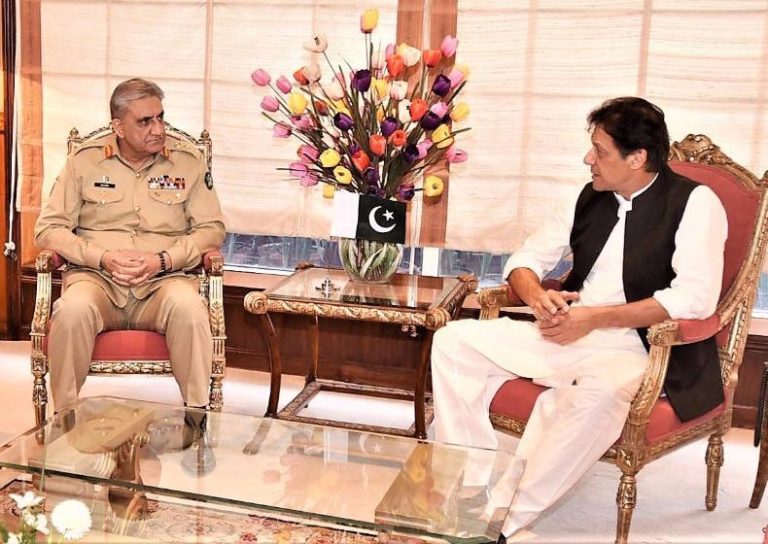
The masterstroke of Modi government’s Kashmir policy namely the J&K Reorganization Act has put Pakistan in utter disarray. It has shattered many of its self-created myths. Its biggest embarrassment is how to arrest the fast dwindling trust that it supposed the valley-based Kashmiris reposed in her bombast. That is why in a recent golf play sideline, Pakistan Army’s Gen Qamar Javed Bajwa had quipped to one or two confidants that there were no deaths following the Indian Reorganization Act 2019 in Kashmir and “things cannot be allowed to go like that. Something has to be done.”

Pakistan exhausted all options of possible reaction to India’s Kashmir move. The OIC did not come to its rescue. The Arab countries gave her a cold shoulder. China firmly told her not to involve her regular troops inside Kashmir and Russia admonished both China and Pakistan not to precipitate the conflict in Ladakh region.

The Islamic radical organizations spearheaded by Let, JeM, The India Front and the splinters like Ansar, HuM etc. remained Pak Army’s last resort. Therefore, when the Army Chief called the second meeting on 16 August at GHQ, he had ordered video conferencing with the chiefs of these jihadist organizations also.

Finally, Pakistan decided to accelerate infiltration and intensify border firing and shelling at as many vulnerable points as is possible. The strategy is to convey an impression to the Kashmiris that Pakistan will not show any relent in its designs of disturbing the border peace. We have seen that during the summer Pakistan has been increasing border firing all across the long border from Gurez and Telel down the vulnerable points along the Krishnaganga Valley and the Rajouri-Poonch-Mender sector. At some places on the LoC, Pakistani troops are at advantageous positions like Krishna Ghati in Poonch or Nowgam sector in Kupwara district. The aim is multifold; to give support to infiltrating jihadist, to keep Indian troops on tenterhooks and thus reduce pressure on Sino-Indian border in Eastern Ladakh, and most importantly to provoke India into major retaliatory action so that Pakistan can go to the international community and cry wolf. However, India is not going to be provoked into an emotional reaction and Kashmiris of the valley are not expecting any big favourable result from intense Pak firing.

Of late, and on the instance of China, Pakistan has decided to integrate the region of Gilgit-Baltistan now under its illegal occupation into the mainland. The Pakistan Election Commission has been directed to take legal and administrative steps in this connection. The decision is of the Army and not the civilian government. China has been insisting on Pakistan to define the status of Gilgit-Baltistan because CPEC (China-Pakistan Economic Corridor) passes through the region which China has formally recognized as disputed. Incorporation of Gilgit-Baltistan has deeper ramifications than just the Chinese angle.

Before we proceed to deal with that part of the analysis, let us have a word on the increasingly worsening situation on the border in Kashmir. Firing and shelling have been a long term policy of Pakistan to scare the local population on the Indian side so that clandestine infiltration of jihadists is not detected and not challenged. The departure of locals from the border enables Pakistan to concentrate more on the strategy of digging tunnels through which arms and ammunition could be transshipped. Pakistan has also increased drone-dropping of arms and ammunition. Together with that, local Kashmiri terrorists trained in PoK or training camps in higher reaches of Kashmir have intensified their attacks because in the 16th August meeting of the Pak Army top brass at GHQ it was decided to send the “tanzeem” meaning terrorist organization volunteers to the launching pads on the night of 20-21 August for infiltration. Pakistan’s ISI deliberately leaked the Operation Plan to convey a message to the Kashmiris that Pakistan is fully seized of their “problems”. India has very wisely concentrated on the developmental programmes as well as mass contact programmes in Kashmir Valley and people are increasingly getting disenchanted with Pakistan’s bombast.

In some circles it is hotly discussed that to put an end to Pakistan’s calumny once for all and stop the border firing and shelling, Indian military planners should consider recapture of Gilgit-Baltistan and cut off the area from the reach of Pakistan. Their narrative is that India should leave Muzaffarabad untouched but forge an entry upstream Krishnaganga by building a new bridge for the passage of Indian troops to Gilgit region. Thus with Indian troops in Gilgit and at Uri, the entire Krishnaganga Valley becomes somewhat encircled or isolated and insecure and any attempt of infiltration can be easily thwarted. Recapture of Gilgit will give us access to Wakhan and Afghanistan. This would also thwart the forays of PLA, and China will think twice before making any adventure. This plan has to be meticulously discussed and analyzed at the highest planning level at the Army Headquarters. We need a formidable assault force with equally formidable war machinery to bring this plan to completion. We have a legal caveat in taking Gilgit-Baltistan as it is our area illegally occupied by China.

It is rather surprising that a very interesting and perceptive reportage filed by the Hindustan Times of 23 September has gone somewhat unnoticed by ordinary commentators though, of course, echelons at the army headquarter will have taken note of it. It merits a mention at this point. Tasking up the thread that it was General Bajwa who conceived the idea of integrating Gilgit-Baltistan, the HT writes that Moeed Yusuf, Special Assistant to Prime Minister Imran Khan on National Security Division and Strategic Planning, has been a principal player in Islamabad’s decision to revoke the notional autonomy granted to Gilgit-Baltistan (GB) and incorporate the disputed region as one of Pakistan’s five provinces, Pakistan watchers in New Delhi said, describing Pakistan’s young National Security Adviser as one of the project’s key driving forces. Looking at the assimilation of Gilgit-Baltistan into Pakistan mainland, Islamabad takes into consideration the usually choked and overcrowded Straits of Malacca in the Indo-Pacific which provides passage to nearly 80 per cent of the world trade.

Pak Army has also in its view the opposition by the local people to the CPEC which according to their calculation will one day pose a serious threat to the environment and ecology of the entire region as work progresses and pollution sits.

The effort to change Gilgit-Baltistan’s disputed status also fits in well with Moeed Yusuf’s long-standing project to turn the Line of Control with India into an International Border. Back in 2009 when he was still an academic and building his ties to the establishment in Pakistan and the United States, Moeed Yusuf had advocated converting the LoC into the International Border, with both sides maintaining sovereign control over the respective parts of Jammu and Kashmir.

A Pakistani watcher has observed that Moeed Yusuf had visited New Delhi in 2018 where he had been exploring the possibility of formalizing the LoC as the international border between the two countries. “By then, he had actually entrenched himself in the establishment in Washington via the US Institute of Peace and worked closely with the Pakistan Army and the Inter-Services Intelligence,” he said. In December 2019 Imran Khan picked him as a special adviser but not without some murmur in the Pakistani bureaucracy. Even one South Asian expert at the USIP namely Dr Christine Fair also alleged that Yusuf had been sharing sensitive information with Pakistani agencies using his position and access within the USIP. Creditably, as part of a sensitive Pakistan establishment, his understanding and familiarity with the American system helped to position him as the main strategic thinker for the Pakistani leadership, particularly on dealing with the US Administration, Congress, bureaucracy and the think tanks.

A close reassess of Yusuf’s line of thinking suggests that he would not mix up the issues but treat the solution of Kashmir problem irrespective of its element of violence. But what the Indian policy planners are convinced is that Moeed Yusuf does not favour Pakistan opting for the mediation of the US on Kashmir because knowing the propensities of the US policy planners, he is very much apprehensive that the US  could come up with the Trump-like Middle East Plan. That would spoil  Pakistan’s case.