Home Blog Page 331

Machhal Mela: Testimony of Army-Civil Bonhomie

0

Nestled in the upper reaches of North Kashmir’s Kupwara district, Machhal ‘bowl’ is remote area situated in close proximity to the Line of Control (LoC) with a number of small hamlets. Life here isn’t easy–while this entire area gets cut-off from the rest of the world due to extremely heavy snowfall during winters, Pakistan Army’s reprehensible policy of ceasefire violations and targeting civilian areas often results in death of innocent villagers and destruction of their property.

All this takes a heavy toll on the physical and mental wellbeing of the hapless residents. But, with the Indian Army deployed in this area stepping-in to help better the lot of locals, things are now looking up. While the army has always been extending a helping hand to its needy brethren from its own meagre resources, commencement of Project Sadbhavana has greatly enhanced the scope of such assistance and has helped in making a quantum improvement in the quality of life of the locals.

Over the years, 56 Rashtriya Rifles, which is located here has built an excellent rapport with the villagers and besides executing infrastructural improvement projects with local assistance, this unit of valiant Marathas has also been encouraging children and youth to engage in healthy sporting and activities. So, what started off as a small-scale experiment in organized outdoor activity more than a decade ago evoked such an enthusiastic response from local youth that since 2010, cricket and volleyball tournaments between teams representing different villages and even mohallas are held every year.

Indian Army’s Northern Command tweeted about the Machhal Mela. The annual sports and cultural event provides a good platform for the local Kashmiri youth to showcase their talent.

For the last one decade, prize distribution for these prestigious tournaments conducted under aegis of the Indian Army, along with other cultural events and amusement activities for small boys and girls have taken the shape of a grand event, which locals refer to as ‘Machhal Mela [fair]’. In the runup to this much-awaited event, a total of 21 teams representing various villages of Machhal bowl participated in Machhal Cricket Premier League and in a nail-biting finish, Tiger Sports, Dhudi defeated Royal Challengers to emerge as this year’s champion. In the annual Machhal Volleyball Premier League, a total of 10 teams clashed for the title and while Madin Mohalla Macchal won the tournament, Machhal Sports Team secured second position.

Just like in the past, Machhal Mela this year too was a grand affair which was attended by a about 1,500 locals- both young and old alike. Col. Pranay Pawar, Commanding Officer of 56 RR which organised Machhal Mela welcomed chief guest Maj Gen Amardeep Singh Aujla, GoC Vajra Division and the locals who had come to attend the event. This was followed by a welcome speech delivered by Master Shaukat Harray, a local teacher who conveyed the people’s gratitude to the army for readily extending all possible assistance to alleviate the problems being faced by villagers especially during severe winters.

Thereafter, the variety programme started with students from the local madrassa displaying their excellent musical abilities by singing a group song on the theme of nationalism. Not to be left behind, a group of school girls won the hearts of the audience with an impressive rendition of ‘Ae Watan’- a famous patriotic song which, going by the applause that followed, demonstrated that it was highly appreciated by the locals.

Another presentation that deserves special mention was a challenging medley of Hindi and Kashmiri music presented by Sabir Ahmed Mir. A resident of Mishri Bahi village with 95 percent eyesight disability, Sabir is a living testimony of the famous adage, ‘when there’s a will, there’s a way’, and his confident and amazing performance stole the audience’s heart and Sabir will certainly serve as a source of inspiration to others.

After an enthralling group dance by school girls on a Kashmiri song, games for young children from amongst the audience commenced. The crowds cheered the young boys trying to outrun each other while precariously balancing lemons placed on a spoon which was clenched between their teeth and when small girls competed with each other to win the race by being the first to reach the finish-line and eating one of the many jalebis that were strung across there.

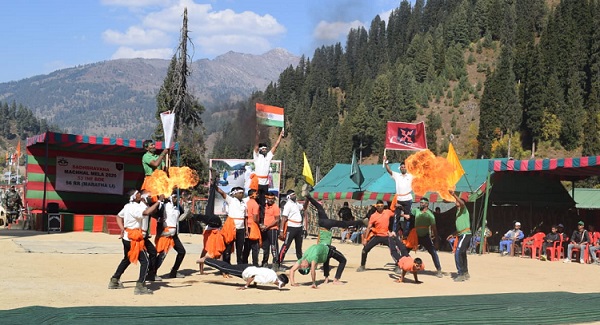
An impressive march past by students of Machhal High School marching smartly to the tune of “Kadam-Kadam Badhae Ja” served as a befitting grand finale of events presented by the young boys and girls. Thereafter the versatile Marathas of 56 RR, dressed in their traditional attire regaled the locals with an impressive display of Zumba, lazim and acrobatics.   

In his address, the chief guest complimented the locals for fully cooperating with the army and gave out details of various projects that had been requested by them and were being undertaken by the army for improving the quality of life in far flung areas and remote villages. He also congratulated the participants for putting up such a great show and encouraged the winners by presenting them with prizes.

As the crowds dispersed and made their way home, the people could be seen stopping now and then to wish every army man they passed by with a loud “Jai Hind” or waving them goodbye and the personnel of 56 RR reciprocating with similar enthusiasm. From this spontaneous display of mutual affection one thing was clear- like elsewhere in J&K, the army-civil bonding in Machhal too was perfect!

BRAS attacks Pak convoy at Ormara, Pak Army officer among 15 killed

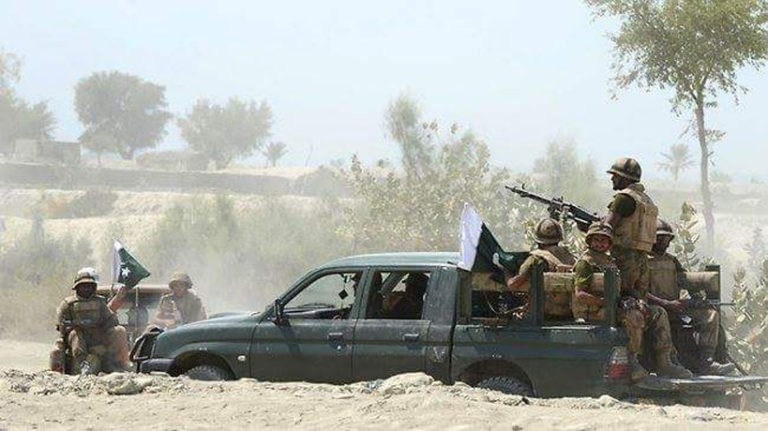
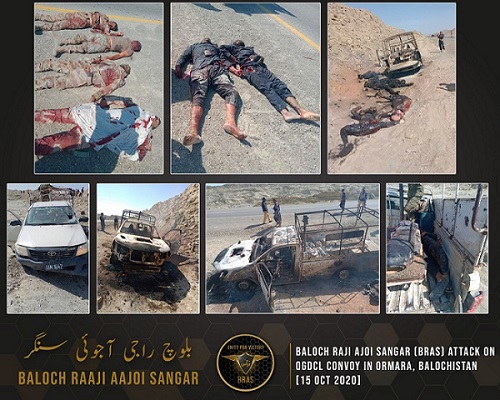
Baloch Sarmachaars (freedom fighters) attacked a convoy of Pakistani oil and gas exploration company OGDCL (Oil and Gas Development Company) on Thursday at Ormara and killed fifteen personnel including a Pakistan Army officer. BRAS (Baloch Raaji Aajoi Sangar) took responsibility of the Ormara attack and said in a media statement that companies such as OGDCL along with China are at the forefront in looting Baloch natural resources of Balochistan.

“The attack was carried on the exploitative corporation OGDCL’s convoy when it was on its way from Gwadar to Karachi under security of 128 and 133 wings of Pakistani Frontier Corps. In the attack 15 personnel, including an officer of Pakistani Army, were killed and several were injured,” Baloch Khan, BRAS spokesperson said in a media statement. BRAS is the umbrella organization of Balochistan’s four revolutionary Sarmachaar groups, Balochistan Liberation Front (BLF), Baloch Liberation Army (BLA), Baloch Republican Army (BRA) and Baloch Republican Guard (BRG).

BRAS Sarmachaars attacked the Pakistani convoy near Buzi Top in Ormara, (Ormada) which lies on the coastal highway between Gwadar and Karachi. The attack completely destroyed the convoy of Pakistani oil and gas exploration company OGDCL and all Pakistani security personnel deployed for the convoy’s security were killed by Baloch freedom fighters.

The BRAS spokesperson added that Pakistani forces are involved in the genocide of Baloch people, while, on the other hand Pakistani companies such as OGDCL continue to exploit Baloch resources as part of their strategy to strengthen their grip over Balochistan.

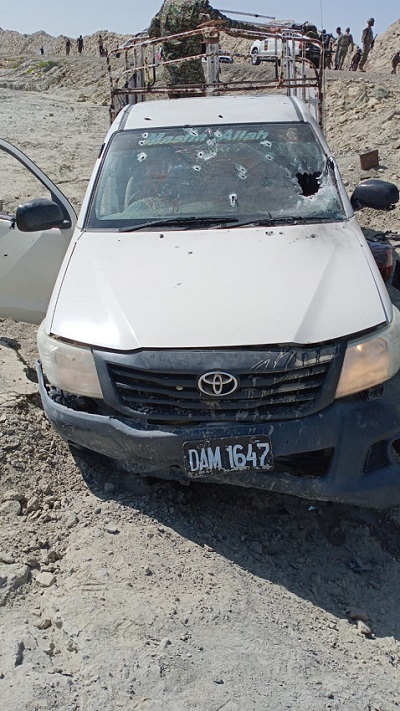
Despite being heavily guarded by Pakistan’s Frontier Corps the BRAS Sarmachaars (freedom fighters) attacked Pakistani convoy at Ormara and killed 15 personnel. (Photo: News Intervention)

“Despite several warnings the OGDCL continues to be involved in exploitative projects in Pasni, Gwadar, Kharan, Lasbela and Och areas of Balochistan. OGDCL has commenced several new projects of drilling for oil and gas in Balochistan. We have made it clear several times that the resources of Balochistan belong to Baloch nation and only Baloch nation has the right to decide about the use of these resources,” BRAS said in its statement.

“Baloch nation is fighting the war for its independence currently, and any organization or corporation, whether Pakistani or international, that deals with the occupying (Pakistani) forces will be dealt with iron fists and will be considered an enemy,” BRAS spokesperson said in his statement.

Baloch Khan, BRAS spokesperson warned all such companies including OGDCL to immediately halt its projects. “We also want to inform China that Baloch nation completely rejects all Chinese agreements with the Pakistani occupying forces and they stand null and void. BRAS will continue to unite the Baloch national forces to attain the freedom of Balochistan,” Baloch Khan said in his statement.

https://twitter.com/NewsIntervene/status/1316731500931346433
News Intervention was the first to tweet about BRAS attack on Pakistani convoy at Ormara.

Pakistan had forcefully occupied Balochistan on March 27, 1948 and Baloch people have been fighting for their independence ever since then. Pakistan Army and its intelligence agency ISI use the most brutal methods to suppress Balochistan’s freedom struggle. Over the last decade more than 40,000 Baloch people have either been forcefully abducted or killed and dumped. The China-Pakistan Economic Corridor (CPEC) is yet another instrument to plunder Balochistan’s natural resources, which the Baloch revolutionaries are opposing tooth and nail. The BRAS attack on Thursday at the OGDCL convoy is part of ongoing freedom struggle of the Baloch to defend their motherland.

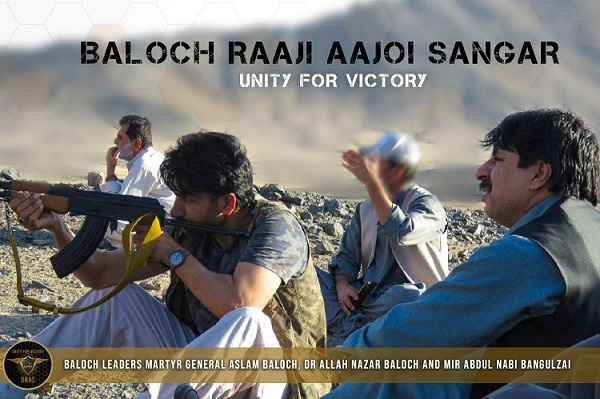
Baloch revolutionaries who have galvanized Balochistan’s freedom struggle.

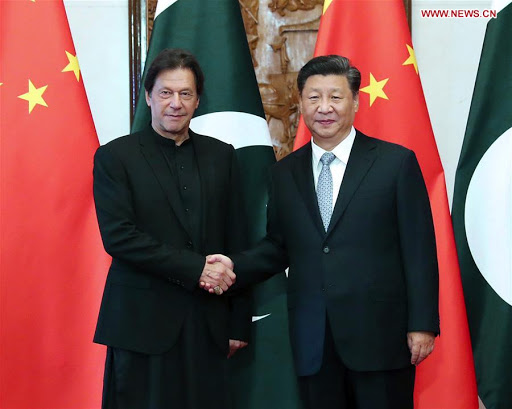
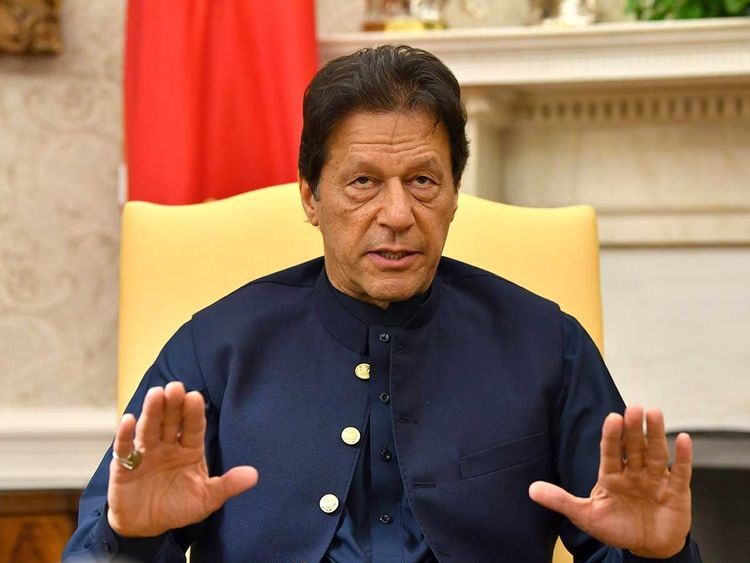
Imran Khan is riding Chinese bandwagon to suck India into a two front war

Pakistan has maintained a diplomatic silence with respect to the tension between India and China along the Line of Actual Control (LAC). However, behind the curtain, it is quite pleased with the course of events and is egging China along while maintaining a poker face. The mask, however, comes down on numerous occasions when Pakistan’s Prime Minister Imran Khan lets loose his signature diatribe against India and metes out veiled threats of a nuclear escalation over the issue of Kashmir. Behind these innuendos lingers the attempt to pressure India with threat of a two-front war involving both China and Pakistan.

Post the abrogation of Article 370 and bifurcation of the state of Jammu and Kashmir into two Union Territories Imran Khan went across the world, hat in hand, attempting to garner support for his anti-India crusade. He has berated even the United Nations for remaining quiet on the issue of atrocities against Muslims in India. The “Islam in danger card” is played by him blatantly to get support from the Muslim nations; but, he has not succeeded in his evil designs.

However, through his constant haranguing he seems to have been successful in convincing Chinese President Xi Jinping that the new status of Ladakh is against Chinese interests. He has also played the bogey of a possible Indian attempt to regain Gilgit-Baltistan to fuel Chinese insecurities with regard to the China-Pakistan Economic Corridor (CPEC). This is one reason, among others, behind the aggressive posture that China has adopted in the Eastern Ladakh sector.

Multiple means are being applied by Pakistan to keep the two front war option alive. While the Pakistani prime minister does not go beyond  innuendos, retired generals and so-called defence experts of Pakistan are put to use to give direct warnings. A retired General of Pakistan, Lt General Asad Durrani, who has also been chief of the notorious Inter-Services Intelligence (ISI) has talked about a combined China-Pakistan effort against India on the Kashmir issue.

Pakistan is using many covert means to assist all weather friend China in the ongoing situation. It is quite obvious that Pakistan sponsored terrorism is all but over in Kashmir but the country is not willing to relent in its efforts and is using all means available to keep the terrorist pot boiling over there. Ceasefire violations are frequent and so are desperate bids to infiltrate terrorists. Innovative methods like use of UAVs (unmanned aerial vehicle) to provide arms and ammunition to the small indoctrinated local cadre are being resorted to. Most of the weapons and equipment being thus transported is of Chinese origin. Frantic efforts are being made to reengineer violent disruptive activities like stone pelting with the larger aim of going back to the times of Hartals (strikes) and Bandhs (lockouts). The objective is to keep the Northern Command of the Indian Army, that is responsible for both Kashmir and Ladakh theatre, under constant strain on all fronts.

Apart from the foregoing, Pakistan is also providing assistance to China in the military as well as the psychological operations domains. Military assistance is forthcoming mainly in the form of sharing of intelligence. While China has all means for technological and electronic intelligence Pakistan assists with the provision of human intelligence as collected over time by the ISI. An article in The Print dated 11 August 2020, says that, “as per US intelligence, China had a much better understanding of Indian troop positions and movements ahead of the 15 June Galwan Clash in Ladakh. The assumption is that Pakistan had shared its intelligence on Indian Army with China, thereby making a valuable addition to Chinese operations.”

It is well known that China has blocked Twitter, though many over there access it through VPN. For its psychological operations in this sensitive domain, China is relying on “good friend” Pakistan. Many accounts emanating from Pakistan that were earlier operating in Urdu language have now converted to Chinese. In an article on the subject carried by the Hindu newspaper, an example has been given of one  such account, ‘xiuying637’, that was earlier run as ‘hinaarbi2.’ Though suspended now, it was tweeting information related to the Chinese military and the border clash. The information was in favour of China. “Many of the ‘Chinese’ accounts that mushroomed on the social media this summer and spread false information about the border clash with India have been traced to Pakistan, in what is believed to be a coordinated disinformation campaign aimed at India,” says Ananth Krishnan, the author of the aforementioned  article in the Hindu.

Thus, Imran Khan’s fascination with “bleeding India” continues as does his hallucination of sucking India into a two front war. He feels that such a situation would portray him as a strong leader and resurrect his failing political career. He is not fooling anyone, since his weak political position and dependence upon the Pakistan Army for his survival is known to all. Not surprisingly, now people like Farooq Abdullah have been incorporated in such evil machinations. It is not difficult to understand where his statements like “hope that Article 370 will be restored with Chinese help” are coming from.

India is not likely to be cowed down by such infantile tactics. The Northern Command of the Indian Army has proved beyond doubt that it is capable of meeting the twin challenge of Chinese aggression in Ladakh and increase in terrorist activity in Kashmir quite easily. India is well prepared for a two front war too, more importantly, the whole world backs India. The manner in which Imran Khan is manipulating China is a double edged sword that will ultimately fall upon him. The world is fed up with China; when the country goes down it will take Pakistan along. If Imran Khan does not relent from his war mongering and consistent threats of “consequences” he will end up with egg on his face as has happened so many times in the past.  

Balochistan: World must intervene to stop Pak atrocities

Today’s Balochistan is the “hub” of human rights violations. Pakistan has occupied Baloch land and has a history of indulging in human rights violations across occupied Balochistan. And all proof of Pakistan’s grievous violations of Baloch rights can easily be traced everywhere across Balochistan. Victims of such heinous violations do not belong to a family, rather spread across entire communities.

The policy of arbitrary arrest and detention, unlawful and illegal abductions, kill and dump are not new to the region. Thousands of Baloch have gone missing and many still continue to be disappeared, and taken to unknown locations. Under the kill and dump policy many Baloch have lost their precious lives. While those who remain at undisclosed places are coping with severe physical and mental torture in torture cells.

Recently a mass graveyard was found in Khuzdar’s area at Tootak that had more than one hundred fifty dead bodies of missing persons inside it. The period of National Party government led by Doctor Abdul Malik Baloch between 2013 and 2015 ended with the throwing off of the dead bodies of Baloch students, engineers, doctors, masters and farmers in various parts of Balochistan. Even after National Party’s term ended the government continues with its massive human rights violations. Today, it’s at its peak. The establishment has brought a “speedy growth” in human rights violations.

With every passing day there’s evidence of the breach of human rights in Balochistan by security forces of Pakistan and it’s controlled groups like the Death Squads. The Pakistani security forces and Death Squads act on their own without any consideration to their own laws or any international law. For these people, laws have no meaning and their violations are never considered a crime or an offence by the Pakistani authorities. Whether it is security forces or the Death Squads they continue to breach the international laws of which Pakistan is a signatory. They commit human rights violations with having any mercy.

Balochistan after it’s forced occupation by Pakistan on March 27, 1948 is still witnessing the killing of its inhabitants at the hands of occupied forces. Basic fundamental rights given by Pakistan’s own constitution have been made conditional and strict punishments are doled out at the whims and fancies of security forces stationed in Balochistan.

Every corner of Balochistan is burning on account of human rights violations. Even forests are not left untouched and are burned. Mountains are bombarded and village after village are bulldozed. It’s really heartbreaking, when infants, kids and women face such cruel and inhuman punishments at the hands Pakistani security forces. Pakistan’s supreme court never listens and judgment delivered by the judges on issues of human rights violations in Balochistan are not given much value.

In this scenario, the occupied Baloch land needs help from international communities who hold themselves before the world as protector and guardian of human rights. Until and unless international communities intervene for the cause of safeguarding human rights abuses in Balochistan, the Pakistani security forces will not, at their own, halt their atrocities on Baloch people. The United Nations Organization (UNO) can play a vital role by sending special investigation teams under it’s own umbrella. Apart from the United Nations, other noble communities from the developed world need to change their policies about Balochistan. World should come up with some meaningful steps that can prove helpful in halting the human rights violations in Balochistan.

Islamist Pakistan is carrying out slow genocide of Sindhi Hindus

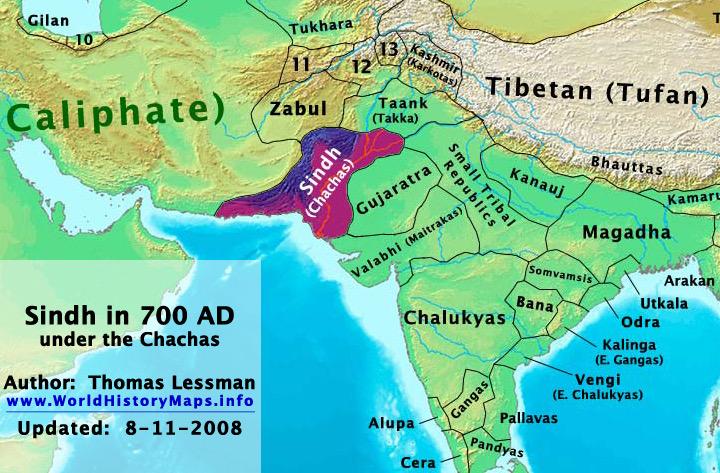
The story of killing Sindhi Hindus and vandalizing temples in Sindh starts from 712 AD, when Arabs attacked Sindh and Muhammad bin Qasim killed the last Hindu King, Raja Dahir Sen of Sindhudesh. Muhammad bin Qasim’s sole purpose was to loot gold from temples and the vast wealth of Sindh. After the conquest of Sindh, the Sindhi girls were taken to Arab countries and sold in the streets as slaves. All these atrocities are still going on in Sindh, rather they have increased since Pakistan was created in 1947.

Jinnah played the role of a puppet in the hands of British due to his ignorance and ego. He was instrumental in India’s partition on the basis of this fake two nation theory, and as a result an unnatural Pakistan was created on the world’s map. “Islamic Republic Of Pakistan”, means a country only for Pak (pure) people — only Muslims.

In 1947, the population of Sindhi Hindus was 12.14% and now that percentage has dropped to 1.85%. Militancy and sectarianism started from the beginning of Pakistan’s creation as ISI was created in 1948 and it kept on increasing with every passing year. It increased substantially from 1980, and since the 1990s a war is waged against Sindh and Sindhi people’s identity as “Sindhiat”.

Map of Sindhudesh in 700 AD.

In fact, Hindus are not minority but real owners of Sindh and descendants of the Indus civilization and Raja Dahir, our last Sindhi Hindu king of Sindhudesh. Sindhi (Hindus or Muslims) in Pakistan are often treated as second class citizens, they are systematically discriminated and dehumanized. In reality Sindh has been occupied by Punjab in the name of Pakistan and central government. Sindhi Hindus face more atrocities due to enmity of Pakistan with India and the radical Islamist ideology.

At the time of creation of Pakistan in 1947, there were 428 historical Hindu temples but now only 20 Hindu temples remain. As per one report of the All Pakistan Hindus Rights movement (PHRM), 95% of all Hindu temples in Pakistan have been converted to mosques or madrassas.

Recently within a year’s time, while world is fighting with China-COVID-19 Pakistani Islamist radical groups with support of military establishment and Pakistani government are continuously destroying, demolishing, and looting Hindu temples. In 2019 and in 2020 till now, five Hindu temples have been vandalized.

In 2020 the issue of a Hindu temple being constructed in Islamabad was highlighted, it made news as the first Hindu temple construction was announced in Islamabad. But what happened? No surprise as Islamist Jihadi mobs desecrated the temple construction site and the Islamic republic of Pakistan halted the construction of temple and referred the issue to the “Council of Islamic Ideology”.

The rise of Taliban-led insurgency in Pakistan has been an influential and increasing factor in persecution and discrimination against Sindh and especially Sindhi Hindus. The world’s top terrorist organizations and Jihadis like Hafiz Saeed and these so called “good Taliban” are free to establish madrassas in Sindh– a task that has been given to these culprits by the Pakistani intelligence agency ISI.

Several Hindu girls living in Pakistan are routinely kidnapped, forcibly converted and married to Muslims. Religious persecution especially forced conversions remains the foremost reason for migration of Hindus from Pakistan. Religious institutions like Bharchundi Sharif and Sarhandi Pir support forced conversions and are known to have support and protection of the ruling political parties of Sindh and Pakistan’s military establishment.

According to the National Commission of Justice and Peace and the Pakistan Hindu Council (PHC) around 1000 Sindhi Hindu women and Christian girls were converted to Islam and then forcibly married off to their abductors / rapists. This practice is reportedly increasing in the districts of Tharparkar, Umerkot and Mirpur Khas in Sindh and other parts of Pakistan. According to another report from the Movement for Solidarity and Peace, about 1,000 non-Muslim girls are converted to Islam each year in Pakistan. Amarnath Motumal, the vice chairperson of the Human Rights Commission of Pakistan says that every month, an estimated 20 or more Sindhi Hindu girls are abducted and converted. Since 2014 till now 3800 legal cases of forced conversion were reported mostly involving Sindhi Hindu girls.

A decade back, 57 Hindus were forced to convert by their employer as his sales had dropped after Muslims started boycotting his eatable items as they were being prepared by Hindus. Since the impoverished Hindus had no other way to earn and needed to keep the job to survive, hence they converted to Islam. Recently an accident was reported from Sanghar, Sindh where 171 poor Sindhi Hindus were converted to Islam because of poverty and lack of basic human rights .

Everyday two or three cases are reported from the Thar desert area wherein Hindus are murdered or suicidal accidents are reported, which is nothing but ethnic cleansing of Sindhi Hindus, an engineered and planned slow genocide.

Has Atal Tunnel got Beijing worried?

If I say that Global Times [GT] serves as Beijing’s ‘unofficially-official’ mouthpiece it would amount to stating the obvious, but this has to done in order to make ‘correct’ sense of op-eds that appear therein. So, when a piece written by Song Zhonping, who has been described as a “Chinese military expert and commentator” [Atal Tunnel to have limited benefit to India in wartime] appeared in October 4, 2020, it did come as a surprise for a host of reasons. 

Firstly, the title of the article gives the reader an erroneous impression that the Atal Tunnel is military oriented project and has some relation to the current Ladakh standoff, but the reality is entirely different. The announcement of linking Manali with Keylong, which falls on the route to Leh through a 9.02 km long tunnel was made two decades ago when Sino-Indian relations were gung-ho and so the military implications of this tunnel were never the driving force behind this project. Au contraire, this venture was initiated with the primary aim of providing travellers a means of reliable surface communication that not only reduces travel time but also avoided delays en route due to perpetual landslides and other hinderances due to the vagaries of weather.

So, unlike in China where military convenience supplants public necessity, in India it’s the other way round and therefore, any military advantages accruing from Atal Tunnel are only incidental.

Yet, while the author has opined that this tunnel would be of “limited benefit to India in wartime,” he has contradicted himself by listing out its numerous advantages. He accepts that, “with the Atal Tunnel opened, Indian troops can be deployed quickly to the border” and that the “transportation of military supplies could go through this tunnel as well.” Lastly [and most importantly], admitting that “it’s true that its introduction could greatly reduce the distance from the rest of India to Leh,” he has honestly concluded that “its usefulness as both a combat readiness tunnel and strategic channel has clear strategic significance to India.”

However, while acknowledging that “the tunnel will be of great help to Indian troops and their provision of supplies in peacetime,” the author feels that “it has no benefit in wartime, especially if military conflict breaks out,” and his view is based on the premise that “the Chinese People’s Liberation Army[PLA] has means to make this tunnel unserviceable.” He goes on to support this opinion by mentioning about there being a “certain gap in combat effectiveness between China and India, especially in terms of India’s systematic combat capability” and concluding that “India is far from reaching China’s level.”

If the PLA has the capability to interdict Atal Tunnel, surely the Indian Army would be aware of this threat and so, wouldn’t it be presumptuous to assume that it still wouldn’t take appropriate actions to deny PLA the opportunity to render the tunnel unserviceable? That preconceived notions can lead to serious troubles is amply clear from Chinese President Xi Jinping’s precipitous action of ordering PLA to intrude across the Line of Actual Control [LAC] in Ladakh in the belief that New Delhi wouldn’t make any hue and cry. New Delhi’s strong resolve not to cow down and the Indian army’s proactive step of occupying dominating heights along the LAC with preparations to stay put as long as it is necessary has shocked not only Xi Jinping but the entire Communist Party of China [CPC]!   

So going purely by statistics, if the author is referring to technological disparity between Indian Army and the PLA when he mentions “systematic combat capability,” then his views are correct. But if victory in war was an unalienable and sole function of the comparative technological index of opposing forces, then why couldn’t the far more technologically superior US-led NATO forces in Afghanistan overwhelm the Taliban that has only rudimentary technology at its disposal? Why instead of winning this much-hyped war on terror, the US has been forced into making a shameful exit by ending its two-decade old war against the Taliban through a Faustian deal that it will ultimately regret? 

Therefore, while technology definitely helps during war, but victory comes to the side with greater grit and courage. I do not wish to get into a comparison of an Indian Army soldier with his PLA counterpart, but suffice it to say that dealing with an unprincipled adversary like the Pakistan Army and fighting terrorists patronised by Rawalpindi to wage proxy war in Jammu and Kashmir, ensures that a ‘jawan’ [soldier] of the Indian Army is baptised by fire. Such is his motivation that he even certain death in the line of duty doesn’t deter him. The May 5 Galwan incident bears testimony to the fact that even though unarmed and outnumbered, Indian soldiers stoutly held their ground and fought like tigers till they fell. That Beijing hasn’t yet released information regarding the casualties that PLA suffered in this incident clearly indicates that the figures are too embarrassing to reveal!

For long, Beijing has been behaving like an international ‘bully’ and unfortunately, also getting away with it. But with New Delhi not acceding to Beijing’s totally unreasonable demand of halting development and upgradation of roads and administrative facilities in Indian territory, as well as that of matching PLA build-up on the LAC with a similar deployment has really peeved Beijing as these retaliatory actions could well embolden other states who are the victim of China’s unjustified intimidation to resist Beijing’s highhandedness.

Xi and the CPC need to appreciate that unlike China, India has never attacked another country and in keeping with its historically peaceful demeanour, New Delhi is prepared to go to any extent in order to avoid an armed conflict. But at the same time Beijing shouldn’t forget that if driven against the wall, the Indian armed forces will fight back with unimaginable fury, the PLA’s so called much touted [but never demonstrated] “systematic combat capability” !

Tanveer Ahmed’s family sits on protest in POK, demands his safe release

Senior journalist Tanveer Ahmed’s family, friends and well wishers began a sit-in from Sunday at Dadyal, Mirpur in Pakistan-occupied Kashmir (POK) as part of their protest campaign to demand for his safe release from the custody of Pakistani authorities. Tanveer Ahmed was arrested on August 21 when he pulled down the Pakistani flag from Maqbool Bhat Sqaure, Dadyal, he continues to be under arrest ever since then.

Several people from Pakistan-occupied Kashmir (POK) belonging to different walks of life attended the protest camp site and expressed solidarity with the family members of Tanveer Ahmed. “We have come here to demand the release of Tanveer saheb from police custody,” a protester at the sit-in site told News Intervention. Another protester said the Pakistani state has a history of rough handling Kashmiris.

“If my husband Tanveer Ahmed is not released soon then we will set up this sit-in protest camp right outside the Mirpur jail,” wife of Tanveer Ahmed told News Intervention. She further added that Tanveer Ahmed was arrested when he took down a foreign country’s flag from the main chowk …”and after his custody Tanveer saheb has been brutally tortured and his health is now in a critical condition due to these intense tortures.”

The court had earlier rejected Tanveer Ahmed’s bail application and the Pakistani authorities have continued to torture him in custody. Reliable sources within POK said that Pakistani intelligence agents and the local administration have forced Tanveer Ahmed to sign an apology that he had refused from the first day.

People from all walks of life sitting in to demand the release of senior journalist Tanveer Ahmed from Pakistani custody in POK (Pakistan-occupied Kashmir). Photo: News Intervention

Tanveer Ahmed’s family has appealed to human rights organizations and social activists all around the world to raise their voice and demand for the safe recovery of senior journalist Tanveer Ahmed. Hashtag #ReleaseTanveerAhmed can be used by everyone on the social networking websites to express appeal for Tanveer Ahmed’s safe recovery.

Tanveer Ahmed soon after his arrest on August 21, 2020. His health has deteriorated since then. Tanveer Ahmed was arrested by Pakistan after he pulled down Pakistani flag at Dadyal, POK (Pakistan-occupied Kashmir) on August 21. (Photo: News Intervention)

Atal Tunnel: India’s strategic achievement adds to China’s discomfort

On Saturday, October 3, 2020 Prime Minister Narendra Modi inaugurated the Atal Tunnel. It holds huge strategic and social significance for the country and specifically for Himachal Pradesh and the Union Territory of Ladakh. The Atal Tunnel will reduce the road journey from Manali to Lahaul- Spiti and onwards to Ladakh by at least four to five hours. More importantly, it will enhance all weather connectivity to Ladakh and thus mitigate, to a great degree, the challenge of logistic build up for both military and civilian purposes.

There are two feeder routes available for Ladakh, the Rohtang axis and the Zojila axis. Of these, the Rohtang axis is more secure and less prone to closure due to snowfall in winter. The Zojila axis remains accessible only for about 140 days in a year.

The Atal tunnel has added to the viability of Rohtang axis and positioned it as the main feeder for Ladakh. The earlier movement of stores, stocks and troops from Pathankot to Tandi (near Keylong) was a three days journey one side; but now due to the Atal Tunnel it has been reduced to two days. The overwhelming impact of the reduced turnaround time needs no emphasis. Henceforth, “winter stocking” for Ladakh will not remain as big a nightmare for the Indian Armed Forces as it has been since independence.

PM Narendra Modi inaugurating the Atal Tunnel in Rohtang, Himachal Pradesh on October 3, 2020. Click on the link to watch full video.

In addition, the tunnel will be a boon to the residents of Lahaul-Spiti who remain cut off from the rest of the country in winters for nearly six months due to heavy snowfall. It is also expected to give a big and very welcome boost to tourism and winter sports in both Himachal Pradesh and Ladakh.

It is notable here that the Indo-China War of 1962 was lost by India not because of lack of  bravery of its soldiers or force deployment but because of an inability to meet the logistic requirements. Much has, of course, improved after that. The opening of the tunnel is a very big step towards achieving fool proof logistic capability. This, by itself, reflects the huge strategic dimension of the project.

The 9.02 km-long-tunnel, built by the Border Roads Organisation (BRO) is an engineering marvel. Located at a breathtaking altitude of a little more than 3,000 metres (10,000 feet) above sea level, it is the world’s longest highway tunnel. Cutting through the mighty Pir Panjal range of the Himalayas under the Rohtang Pass, it boasts of ultra-modern specifications. It is horseshoe shaped with an overhead clearance of 5.525 metres and a single-tube double lane configuration supporting a roadway of 8 metres. The south portal of the tunnel is located 25 km from Manali and the north portal is located near village Teling, Sissu, in Lahaul Valley. It cuts 46 km between Manali and Leh and the travel time by about 4 to 5 hours.

The tunnel has been so named since it was envisioned by Shri Atal Bihari Vajpayee when he was the prime minister of the country. The decision to construct the strategic tunnel was taken by the NDA-I government on June 3, 2000, and the foundation stone for the access road to the south portal was laid on May 26, 2002. It is sad to note that the project progressed at a snail’s pace till it was given a strong push by the NDA-II government post-2014.

In his inaugural address, Prime Minister Narendra Modi said, “Atal Tunnel will give new strength to India’s border infrastructure. It is an example of world-class border connectivity. There have been demands to improve border infrastructure but for a long time, such projects either could not get out of the planning stage or got stuck midway….people who live in the mountains would know the significance of cutting down travel time by four or five hours,” he added.

Also present in the inauguration were Defence Minister Rajnath Singh, Chief of Defence Staff (CDS) General Bipin Rawat, Army Chief General MM Naravane and Himachal Pradesh Chief Minister Jairam Thakur.

The great significance of the Atal Tunnel gets reinforced by the fact that it has invoked great displeasure from China. As usual, the misinformation campaign was spearheaded by the Global Times, the biggest propaganda tool of the Chinese Communist Party (CCP). An article titled, ‘Atal Tunnel to have limited benefit to India in wartime’, written by some Song Zhongping admits that with the opening of the Atal Tunnel, Indian troops can be deployed quickly on the border and transportation of military supplies can also go through. The propaganda starts beyond this admission. He goes on to say that, “The Chinese People’s Liberation Army has the means to make this tunnel unserviceable. It is better for India and China to coexist peacefully with each other. India should restrain itself and refrain from provocation as no passage exists that can enhance India’s combat capability.”

The obtuse and graceless article clearly proves that the Chinese are totally disconcerted with the development and more so since it comes at a time when India has taken a firm stand along the Line of Actual Control (LAC) in Eastern Ladakh. The report also says that New Delhi has identified 73 strategic roads along the China-India border that they will continue to build throughout the winters.

Undoubtedly the Atal Tunnel will be a game changer for the Indian Army particularly in the current scenario of clashes between the Indian and Chinese military in Ladakh. Logistically, it has put the Indian Army in a highly comfortable position.

There is, however, a need to further enhance connectivity. The building of a tunnel at the Zojila Pass in Jammu and Kashmir-Ladakh region should be taken up on priority. Even on the Rohtang axis full all-weather connectivity can be ensured only by building tunnels to negotiate the Baralacha, Lachung La and Tanglang La passes. Definitely, experience gained in this project will make future projects easier. What is required most is the political will.

Pak Army refuses to give Baloch martyr bodies to family: Reasons & Repercussions

According to reports, on September 6, in pursuance of a major military operation against the Baloch freedom fighters Pakistani Army, in the dark of night, entered the famous Makran mountain range Mazanband from different directions in large numbers. The army was joined by its local spies and death squads. Informants may have informed the army of the presence of a large guerrilla camp of Baloch freedom fighters there, so the army entered the Mazanband ranges with a huge preparation.

No training camp of the Baloch freedom fighters (Sarmachars) could be found in the area. However, unaware of the presence of the army, two Sarmachars came there in the afternoon and got trapped in the enemy’s encirclement. The exchange of fire between the two sides continued till the sunset and then silence prevailed. Both Sarmachars were martyred while fighting the enemy with bravery. In this clash, Sarmachars also inflicted heavy casualties on the occupying Pakistan Army but the army as usual concealed heavy casualties inflicted on it.

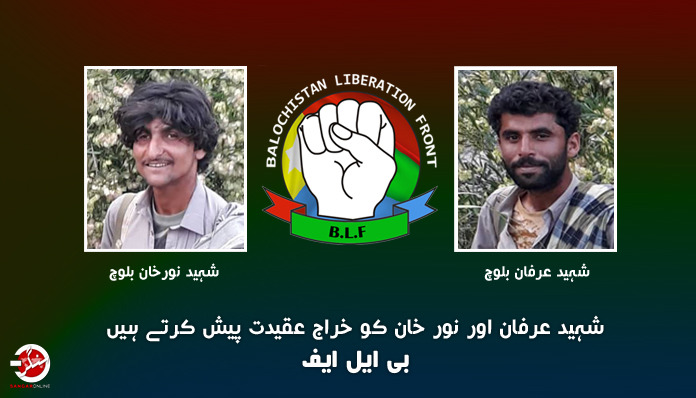
However the death of a Pakistan Army officer, who was killed by the Baloch freedom fighters in Mazanband was reported from another area while the body of an informant namely Munir Ahmed (son of Abdul Rashid), a resident of Tump, was brought by the army and handed over to his family members. Another injured informant was taken to Kech district for treatment. News of his hospitalization also began to circulate. Pakistan Army then released pictures of the bodies of the two martyred Sarmachars (freedom fighters) in the media. On the other hand, the spokesperson of Balochistan Liberation Front (BLF), Major Gwahram Baloch, while confirming the martyrdom of two martyred Sarmachars (freedom fighters) in the clash with the Pakistan Army revealed the identity of martyred freedom fighters as Captain Irfan Baloch, alias Imdad (son of Shaheed Ghulam Mustafa) and Noor Khan Baloch alias Barmash (son of Noor Bakhsh).

Martyr Captain Irfan Khan Baloch with his mother.

The military personnel came to Tump with the bodies of both the martyrs and the informant. As the identities of the martyrs were revealed, so their family members went to the military camp in Tump to receive the bodies of the martyrs, but instead of handing over the bodies to them, army asked them to wait. The family members of the martyrs waited there for a long time, during which the military personnel mocked them in various ways to harass them so that they would return home without receiving the bodies of the martyrs in fear or despair. But the family members of the martyrs waited patiently. Between ten and eleven o’clock in the night, the family members were finally told to go home as the bodies of the martyrs would be handed over to them the next morning.

It is said that after the family members of the martyrs left, the army dug two pits with a tractor and buried the bodies of the martyrs in them. In the morning, when the family members of the martyrs came to collect the bodies, the army showed them two graves. The family members of the martyrs then demanded that they should be allowed to open the graves and establish the identity of the bodies of their martyrs. They not only wanted to reassure that the bodies buried were indeed of their martyrs who sacrificed their lives for the freedom of the homeland but also to offer the funeral prayers of those brave sons of soil with respect and in accordance with Islamic beliefs.

Pakistan Army refused to allow the alleged graves of the martyrs to be opened or their identities to be established, or for the funeral prayers to be offered and their burial to be done with respect. This led to public outrage against the army and the protest spread from Tump to Makran. The family members of the martyrs held a press conference in Turbat, Kech and also staged a sit-in protest at Shaheed Fida Chowk. Human rights activists, political and social circles also joined the protest in support of the demand of the family members of the martyrs. Even though this demand and protest echoed in Karachi, but despite all this the Pakistan Army refused to hand over the bodies of the martyrs to their family, which not only outraged the public but also cast doubts about the nature of weapons used against the martyrs and the treatment of their bodies.

Doubts are being expressed and all sorts of rumors are circulating. The question is, what does the Pakistan Army want to hide or reprove by burying the bodies of Baloch martyrs in the dark of night? Although this is not the first time that the occupying Pakistani Army has refused to hand over the bodies of Baloch martyrs to their family members for cremation and burial, such incidents have taken place before. The bodies of martyr Akbar Khan Bugti and his comrades were similarly refused to be handed over to their family for cremation and burial.

I examine the reasons for this savage act of not giving the dead bodies of martyrs to their family for funeral and its repercussions on the Baloch society and freedom struggle.

1: Some quarters are expressing concern that the Pakistan Army may have used any prohibited weapons, gas or materials against Irfan Baloch and Noor Khan Baloch and to in order to hide their crime, they have denied handing over the bodies of the martyrs to their family, so that the family of the martyrs do not expose the war crimes of the Pakistan Army by conducting postmortem of the bodies.

2: Shaheed Irfan Baloch and Shaheed Noor Khan Baloch despite being only two men, not only fought bravely against the heavy contingent of the Pakistan Army for more than three hours, but also killed one of their officers and a key informant, including several army personnel. It is possible that the military personnel, outraged by their heavy casualties, desecrated the bodies of the martyrs as an expression of hatred and mutilated them. That’s why the army didn’t hand over the bodies of martyrs and buried them in the dark of night to cover up their crime. They buried them so that no one could see the evidence of army’s hatred and savagery on the corpses. They were Sarmachars (freedom fighters) who inflicted heavy blows on the Pakistan Army during the war. And, due to which the hatred of Pakistan military personnel towards the martyrs and the insult and desecration of corpses due to this hatred at the hands of an unprofessional and uncivilized enemy like the Pakistani Army is not merely a speculation. Instead such a barbaric and an uncivilized act is sure because in case of the assassination of Shaheed Hayat Baloch the whole world has witnessed a glimpse of the Pakistani Army’s barbarism, hatred and animosity towards the Baloch people and its unbridled atrocities in occupied Balochistan.

3: One of the reasons may be that the Pakistan Army wants to bury the Baloch martyrs like unowned people and make them an example so that they can spread fear and terror among the Baloch people and prevent them from conscious struggle and resistance for national liberation. If this is the motive behind this war crime and uncivilized act of the Pakistan Army, then it has failed miserably in achieving this objective because the family of the martyrs and the Baloch people, instead of getting terrorised and being fearful are overwhelmingly standing against such inhuman acts of enemy and they are raising their voice against the army and have chosen the path of protest and resistance. By watching the video message of Shaheed Irfan Baloch’s mother on social media, the army will surely be ashamed and upset over the failure of its brutal strategy.

4: Instead of handing over the bodies of Shaheed Irfan Jan and Shaheed Noor Khan Baloch to their family for funeral, the purpose of burying them secretly in the dark of the night is also to prevent public participation and public mobilization on the occasion of funeral prayers of martyrs. Probably because the occupying Pakistan is terrified of the political and national consciousness and mobilization of the Baloch people. If the purpose of not giving the bodies of the martyrs was to stop mass mobilization, then the army has failed miserably in this purpose as well. People will now pay homage to the martyrs by attending the funeral of the martyrs from Tump and its vicinity. However, due to not handing over the bodies of the martyrs, mass mobilization and protests have spread from Kech to Karachi and people from different areas have condemned the Pakistan Army in the media. The martyrs are being paid homage for their great and proud sacrifice.

Indeed, when there is a bad purpose and ill intention, the intellect stops working and the results of all the measures are inverse. The reaction of the family members of the martyrs and the Baloch people on the issue of uncivilized act of the Pakistani Army of not handing over the bodies of Shaheed Irfan Baloch and Shaheed Noor Khan to their family has put a positive impact on the Baloch society and Baloch independence movement. Such barbaric act and strategy of Pakistan Army further exposed Pakistan’s colonial occupation in Pakistan-occupied Balochistan and its hatred and enmity against the Baloch nation. Not only this, it has also magnified the need for national independence to the Baloch nation, which has led the family of the martyrs and the Baloch people to take the path of protest and resistance instead of being frightened and silent.

Pakistan’s crime-orgy continues across Balochistan

During September this year, Pakistan Army conducted more than 50 military operations in Gichak, Wadi Mushky, various areas of Awaran, Duraski and Dasht areas of Kech, Mand and Tump of occupied Balochistan. These military operations were Pakistani state-sponsored barbarism in Balochistan where gunship combat helicopters shelled and bombed innocent Baloch people along with the ground forces.

According to the available data, 30 people have been abducted by the Pakistani forces during the ongoing operations. The full details of missing persons are yet to come. Also, during the month of September fourteen bodies were recovered of which ten people were martyred due to firing by the Pakistani forces while the exact cause of deaths of others is still being ascertained. A man was rescued from Kech district who was abducted by Pakistani forces a year and a half ago.

During their operations, Pakistani forces looted 258 houses and took away all their belongings while 208 houses were set on fire. The occupying forces of Pakistan burned a large number of forests in Gichak, Wadi Mushky, different areas of Awaran, Ragha, Draski Mand and Dasht, including forests across more than 50 km in Dasht and several kilometers in Tump. Hundreds of cattle have also been killed during these operation during shelling of gunship helicopters by the Pakistan Army.

These statistics are for the month of September this year, and it’s not impossible to estimate the war crimes of the occupying state of Pakistan from these statistics.

Pakistani forces destroyed dozens of human settlements through simultaneous use of gunship helicopters during their ground operations in various areas of Awaran, Mushke Valley, Gachak, Kolwah, Draski and several areas of Ketch, Dasht, Mazanband and Tump. Hundreds of cattle were also killed in this barbarism.

Further, on one hand the state’s barbarism continued, and on the other hand a Baloch journalist, activist and artist Shahina Shaheen was killed by her husband Mehrab Gichki in Kech district. Local sources said that Shahina Shaheen’s husband is a special operative of a religious terrorist group backed by Pakistan.

Shahian Shahin, journalist and women rights activist was murdered by her husband Mehrab Gichki on the instructions of Pakistan-sponsored Lashkar-e-Khorasan. (Photo: News Intervention)
Shahina Shahin, journalist and women rights activist was murdered by her husband Mehrab Gichki on the instructions of Pakistan-sponsored Lashkar-e-Khorasan. (Photo: News Intervention)

And just like no action was taken against the killer Pakistani forces of Hayat Baloch, no action has been taken against Shahina Shaheen’s killer husband Mehrab Gichki who is backed by the Pakistani forces. Protests and demonstrations against the brutal killing of Shahina Shaheen and Hyat Baloch are still on across Balochistan but alas, where’s justice in the fate of the unfortunate Baloch!

Regarding Shahina’s killer, the local administration openly protested in front of the people in Turbat and said that he is influential, there is nothing we can do, so there is no justice for the murder of Baloch daughter.

Similarly, sources say that the military personnel accused in Hayat Baloch’s murder have shifted back to the military camp and the SSP has been clearly asked to take action against protesters and bring them to the police station if need be.

In fact, this is everyday situation across Sindh, Pashtunistan and Balochistan. Even in Pakistan-occupied Kashmir (POK) the atrocities are increasing with each passing day.

Baloch Sarmachaar’s Last Bullet

However, just as state barbarism is on the rise in occupied Balochistan, so are the true lovers of the land, the Baloch children, making history with their blood and defeating the occupying enemy on the battlefield. There are dozens of examples in the struggle for independence of Balochistan and the ongoing Baloch revolution that after a long battle with the enemy, when the bullets of Sarmachaar (freedom fighters) are about to run out, they save the last bullet so that they do not fall into the enemy’s hand alive. This philosophy of the Baloch national struggle has paralyzed the enemy mentally.

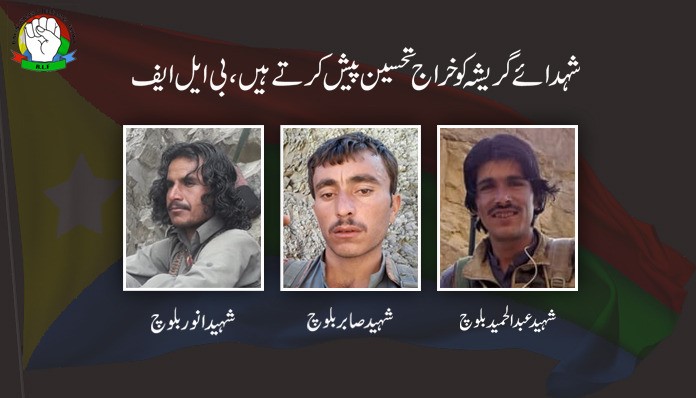
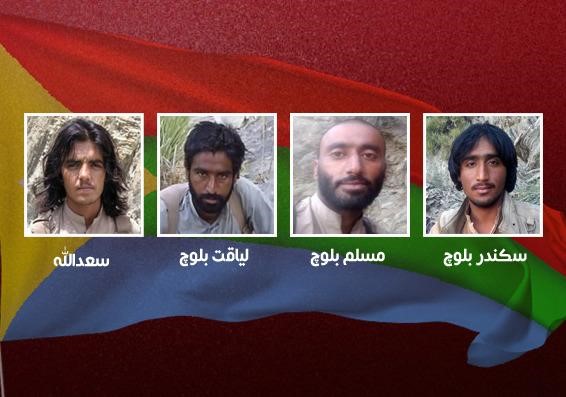
On Friday, September 18, a confrontation took place between the Baloch Sarmachaars (freedom fighters) and the occupying Pakistani Army in Koraghe Kalan, which led to a two-way clash. In the clash, four BLF commanders, Muslim son of Muhammad Hussain, Second Lieutenant Sikandar son of Muhammad Ibrahim, Mansoor son of Mullah Abdul Qadir and Saadullah, fought valiantly against the enemy army and were martyred. His martyrdom came as the Pakistani military had been conducting military operations in the area for the past two weeks.

In this operation, in violation of the laws of war, the occupying Pakistani forces targeted the civilian population with gunship helicopters. During this time many Baloch homes were set on fire and livestock looted. Paying homage to the martyrs, BLF spokesman Major Gwahram Baloch said in a statement issued in the media that Shaheed Muslim Baloch is the younger brother of martyred BLF commander Suleman and nephew of BLF leader Dr Allah Nazar. Shaheed Sikandar Baloch is the nephew of Dr. Allah Nazar and Shaheed Mansoor is the nephew of Dr. Allah Nazar Baloch. Commander Suleman and Safar Khan Baloch, brother of Dr. Allah Nazar, were martyred by the Pakistan Army on June 30, 2015 when they attacked their house along with his guests and 15 other comrades.

It should be noted that these four Baloch youths kept the honour of the philosophy of keeping last bullet for themselves. It is said that two Sarmachaars (freedom fighters) were martyred while fighting with the Pakistan Army and Shaheed Muslim Jan and his companion saved the last bullet for themselves after their bullets ran out and embraced martyrdom.
The local Pakistani administration confirmed that 20 army personnel were killed on the spot and more than 20 were injured in the clash.

Let me shed some more light on the philosophy of keeping the last bullet for themselves by the Baloch Sarmachaars.

On June 30, 2015 Mehi area of Meshka Valley, the hometown of Baloch national leader Dr. Allah Nazar Baloch was attacked by the Pakistani Army in which 15 Baloch children were martyred, including the elder brother of Dr Allah Nazar and his other family members. This war has a special significance in Baloch history. The nephew of Dr Allah Nazar, Suleiman alias Shaheq Baloch, fought with the Pakistan Army all day. After fighting heroically, Suleiman was seriously wounded and he and other comrades were left with a gun and two bullet magazines. Putting the gun aside for a while, Suleiman filmed these historic moments with a Sarmachaar where he smiles in the video and says that “our destination is freedom”. Suleiman recorded his message for the nation, other Baloch youth and his mother. He then continued to fight bravely against the Pakistan Army, and when the bullets ran out he adopted the philosophy of firing last bullet onto himself and embraced martyrdom.

His younger brother Muslim Jan applied this same philosophy along with the other comrades once again on September 18, 2020, when they embraced martyrdom. Each such martyrdom brings the Baloch goal of national liberation closer.

More than fifty close relatives of Dr. Allah Nazar Baloch have been martyred in the Baloch national struggle. Pakistan’s policy has been to target the relatives of Baloch leaders and put pressure on them. Under this policy, the Pakistani military has targeted, martyred or kidnapped many leaders and relatives of militants. But in response, hatred against Pakistan has increased among the Baloch people. Due to this hatred, state atrocities and patriotism, the Baloch national movement has gained strength and has been going on uninterruptedly for the last twenty years.

On September 28, the Pakistan Army launched a long operation in Dasht-e-Mazanband area of Ketch district. In this operation, SSG commandos also landed alongwith gunship helicopters. Local state informants were also with them. But the Baloch warriors once again annihilated the enemy.

Captain Irfan alias Imdad son of Shaheed Ghulam Mustafa resident of Konshaqlat, Second Lieutenant Noor Khan alias Barmash son of Noor Bakhsh resident of Khairabad were martyred while fighting valiantly.
Major Gwahram Baloch said in a statement that the martyred soldiers fought valiantly against the enemy in the areas of Sedan Pir and Gandhadar, killing more than 15 Pakistan Army personnel and injuring several others.

Munir Ahmed, son of Abdul Rashid, a resident of Tump, was also killed in the same clash. But as usual, the Pakistani Army kept the bodies of the two Baloch children with them for two days instead of handing them over to their families and mutilated them after martyrdom. Residents of the area staged a sit-in in front of the state army camp in Tump for two days, but the Pakistani Army did not allow the bodies to be flown and their last rites were not performed according to Islamic traditions.

Rahim Baloch, an advocate, intellectual, former chairman of BSO and former central secretary general of BNM said in his tweet that Pakistan is even scared of the bodies of Baloch. Despite public protests, Pakistan Army refused to hand over the bodies of Shaheed Irfan Baloch and Shaheed Noor Khan to their heirs for final rites and buried them without a funeral like that of Shaheed Akbar Bugti. Such insult to the martyrs is unbearable.

Baloch nationalist leader Akhtar Nadeem said in his tweet that Baloch resistance would continue till independence. “On the battlefield and on other fronts, the Baloch children are proving it by sacrificing their lives. Shaheed Irfan and Shaheed Noor Khan set another example in Mazanband Dasht. I pay a great tribute to them.”

https://twitter.com/AN_Baluch/status/1311232318372184064

Similarly, BNM Chairman Khalil Baloch in a statement said that the martyrdom of Baloch children in Dasht by the Pakistani state and desecration of their bodies was an inhuman act and said that the nations were in a state of war. “I respect the values of nations. The Baloch have fought many wars against the occupiers over the last seventy years. Two decades have passed since the current war, but so far no body of any enemy soldier has been desecrated because the Baloch are a vibrant and decent nation and the armed forces of the Baloch nation abide by their national values and international law. On some level, we consider the desecration of a corpse an unforgivable crime.”

In September, when state repression by Pakistan was at its height, the Pakistan Army burned 50 km of forest in Mand and Tump. The same process was repeated in Gichak and Draski.

Click on the link to watch full video

The ongoing war crimes of Pakistan across Balochistan are still not effectively being highlighted by Balochistan’s pro-independence political parties in front of the world, which is certainly a matter of grave concern. It’s required that the Baloch liberal leaders and Baloch activists in different organizations are given an effective strategy. Otherwise, even in this modern age, the crimes of the occupying state of Pakistan will continue to increase on Balochistan. At present the global situation is not in Pakistan’s favor and effective diplomacy to expose Pakistan’s war crimes against Balochistan must be our top priority.