Home Blog Page 333

Pak Army, the closet political party of Pakistan

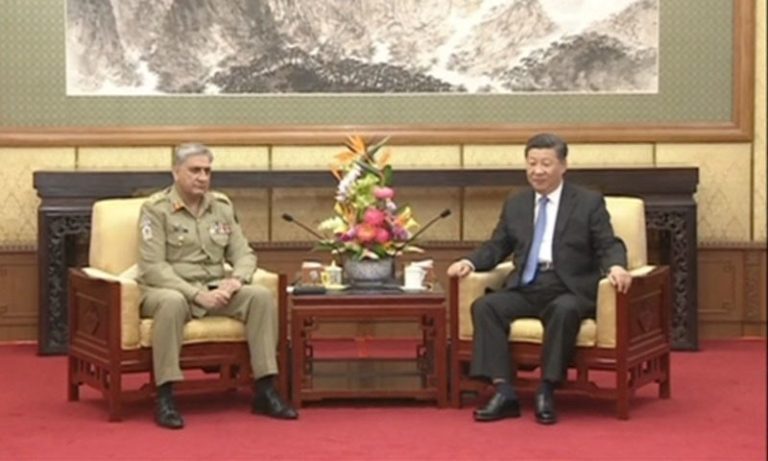
When Gen Qamar Javed Bajwa was appointed Pakistan Army chief in November 2016, the general consensus was that the scales tipped in his favour since he was apolitical. Probably that’s why even though he superseded four Generals who were senior to him, his elevation was well-received as it portended at least a decline, [if not an end] to the military’s growing interference in the country’s political and foreign policy affairs. Gen Bajwa didn’t disappoint either because within a month of becoming the army chief, while addressing a gathering of senior officers of Rawalpindi garrison, he has been quoted by the media as telling them that “The army has no business trying to run the government,” and making it clear that “The army must remain within its constitutionally defined role.”

However, a lot of water has flowed down the Indus since then and the General whom the world had assessed to be an ‘apolitical’ person, turned out to anything but that. The first serious manifestation of Gen Bajwa’s latent proclivity for politics came to the fore during the 2018 general elections, when even before polling began, everybody knew that it would be cricketer turned politician Imran Khan’s Pakistan Tehreek-e-Insaf (PTI) party would come to power since it had the blessings of Rawalpindi. Now whether this allegation is true or not is a moot point, but even though PTI ‘won’ the elections and Imran Khan did become the Prime Minister, the common refrain is that Khan was ‘selected’ (by the military) and not ‘elected’ (by the people)!

So, it was but natural that when Khan extended Gen Bajwa’s tenure by three years, this contentious decision was largely seen as quid pro quo for PTI’s election victory. Signed by the Prime Minister himself, this notification ran into problems with the judiciary and though it finally saw the light of day, it exposed how the army was a law unto itself. Moreover, citing “regional security environment” to justify this decision makes it look all the more suspicious because it clearly implies that Pakistan Army has a leadership void at the top level as none are professionally competent enough to replace Gen Bajwa. This is something that even the most rabid Pakistan Army baiter won’t accept! So, at the end of the day it’s not Pakistan or its people but only Gen Bajwa who has won!

In a clear departure from convention, Gen Bajwa has got himself nominated as a member of the newly created National Development Council headed by the Prime Minister giving Rawalpindi the opportunity to expand its writ by getting the right to officially meddle in the economic affairs of Pakistan. Therefore, it was not at all surprising when Gen Bajwa held at least three closed door meetings with business honchos in Karachi and Rawalpindi, purportedly for finding ways to ‘fix’ country’s ailing economy. Gen Bajwa himself justified these meetings by saying “National security is intimately linked to economy while prosperity is function of balance in security needs and economic growth.” But if this was the case, then what’s really surprisingly is why no one from the Ministries of Finance or Commerce were present during these meetings- unless the military wanted it to be so?  

But the General who just four years ago held that “the army has no business trying to run the government”, now has no qualms in doing exactly this- as is evident from the secret meetings that Gen Bajwa has been holding with opposition party members. In a country like Pakistan where the army has always been calling the shots, politicians of all colour and hues know very well that in order to survive they need to remain in its good books. So, even though it’s undesirable, but while politicians cozying up to the army isn’t something unusual in Pakistan- but political parties holding secret meetings with the army [with his intelligence chief in attendance], certainly is!

What makes this whole issue of secret meetings even murkier is Director General Inter Services Public Relations (DGISPR) Maj Gen Babar Iftikhar’s revelation that “In both meetings he [PML-N leader Mohammad Zubair] talked about Nawaz Sharif and Maryam Nawaz.” Whereas Zubair has denied this, but the fact of the matter is that if this wasn’t the case, then why was information regarding this meeting kept under wraps by ISPR? Even if we believe Maryam Nawaz “that the meeting was convened to discuss the Gilgit-Baltistan issue,” it’s paradoxical that when she strongly feels that “the political leadership should not be called nor should it go to discuss such issues,” as “these decisions should be made in parliament, not in GHQ [General Headquarters],” then why did her party functionary Zubair have not one but two secret meetings with Gen Bajwa?

I hold no brief for Pakistan Army, but since Zubair has complained that “Such meetings are secret; I don’t understand as to why the army spokesperson needs to talk on it,” it’s obvious that besides Gilgit-Baltistan, there was certainly some talk about Nawaz and Maryam during these meetings. Why else is Zubair so riled by Maj Gen Iftikhar’s disclosure? So, there are good reasons to believe the DGISPR’s revelation that “During these meetings, whatever was discussed, the army chief made it clear to him [Zubair] that whatever their [Nawaz and Maryam’s] legal issues are will be solved in Pakistan’s courts, while the political issues will be solved in the parliament.”

Maj Gen Iftikhar’s seemingly innocuous statement may have been made to discredit Nawaz Sharif, who just a couple of days earlier has lambasted the army in his video link All Party Conference speech by saying, “Our struggle is not against Imran Khan… today, our struggle is against those who installed Imran Khan and who manipulated elections to bring an incapable man like him into power and thus, destroyed the country.” Whether the attempt of the not-so-experienced Pakistan Army publicity chief to humiliate Nawaz Sharif and the PML-N has succeeded or not is not the issue; but in his exuberance, the DGISPR has inadvertently ended up scoring a self-goal!

Two years ago, when Justice Shaukat Aziz Siddiqui of Islamabad High Court alleged that Pakistan Army’s Inter Services Intelligence [ISI] was manipulating the judiciary and that “their personnel get benches formed at their will,” the army sought Supreme Court intervention “to ascertain the veracity of the allegations and take actions accordingly.” The expected happened and Justice Siddiqui who was pipped to become Chief Justice of Islamabad High Court was sacked by the President of Pakistan on the recommendations of the Supreme Judicial Council (SJC) under Article 209(6) of Pakistan Constitution. However, as this clause is meant to remove judges who are “incapable of performing the duties of (his) office or (has been) guilty of misconduct” it emerges that the judge’s remarks were unfounded.

If the army’s non-interference in the country’s judicial process is an established fact and Gen Bajwa is ensuring that “The army has no business trying to run the government,” then why did Zubair secretly seek the military’s indulgence in sorting out some legal and political issues that compelled the army chief to remind him that the same would be resolved in courts and parliament? After all, Zubair is no political greenhorn- besides serving as Chairman of Privatisation Commission of Pakistan with the status of Minister of State, he has also been the Governor of Sindh and so he surely knows his onions and wouldn’t have requested assistance in resolving political issue and legal issues if the army had no control over the judiciary or legislature!

Pakistan Army’s bid to manipulate the legislature and judiciary is not new. Is it not true that in 1994, the then Interior Minister Naseerullah Babar admitted in Parliament that “it was the ISI that had disbursed funds to purchase loyalty of conservative mass and nationalist public figures to manipulate the General Elections held in 1990?” Isn’t it also a fact that Gen Pervez Musharraf himself admitted that the then army chief Gen Raheel Sharif had helped him leave Pakistan by “influencing the courts” and went on to explain that it was only after the army chief “got the government to relieve the pressure that they were exerting, the courts gave their judgement and allowed me to go abroad for treatment” ?

Therefore, even though Gen Bajwa’s may have purportedly snubbed Zubair by telling him that “the army should be not be dragged into these (political and legal) matters,” the fact of the matter is that Rawalpindi always did-and still continues to exercise substantial influence over the functioning of the country’s state institutions, with special focus on the legislature and judiciary. Why else would it hold secret meetings with opposition political parties? If it was a well-intentioned act aimed at bringing unanimity amongst political parties on the issue of Gilgit-Baltistan’s future and the army was playing the role of facilitator, then why was it kept a secret and why wasn’t the Prime Minister incorporated in these parleys? Lastly, what was the need for DGISI Lt Gen Faiz Hameed to be present during a meeting if it had an exclusively political agenda?

Though Federal Minister for Railways Sheikh Rashid Ahmed who attended one such meeting may have gone on record to say that Gen Bajwa had made it absolutely clear to the opposition that the army should not be dragged into politics, but when the army chief starts holding secret meetings with a senior politician functionary, then discerning who exactly is dragging whom into politics becomes impossible!

Tailpiece: During the hearings on Gen Bajwa’s extension, when the Attorney General mentioned that “The oath of an army officer says that they would lay down their lives if need be. This is a very significant thing,” Chief Justice Asif Saeed Khosa shot back saying, “‘I will never involve myself in any political activities– this sentence is also part of the oath” and then delivered the coup de grace with his parting shot that “It is a very good thing [for army officers] to stay away from political activities”! But then, some people never seem to learn.

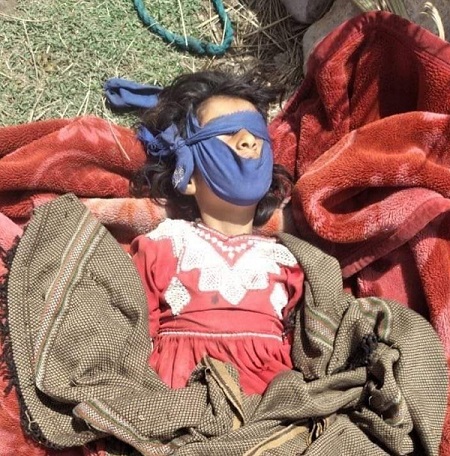
Pakistan’s disrespect to Tump martyrs has exposed its barbarism: Dr. Allah Nazar Baloch

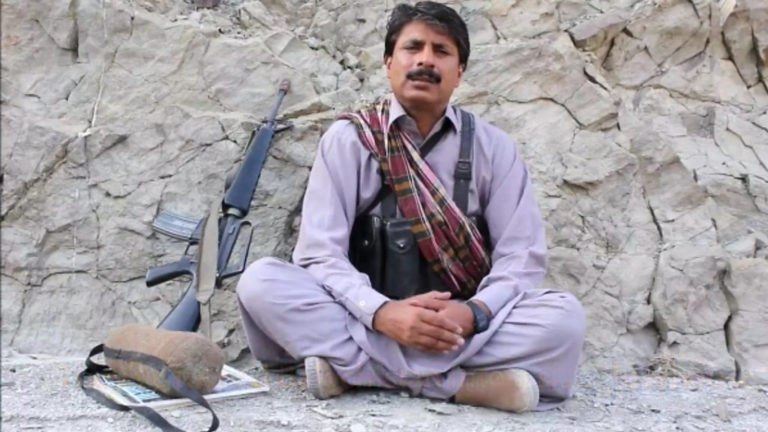
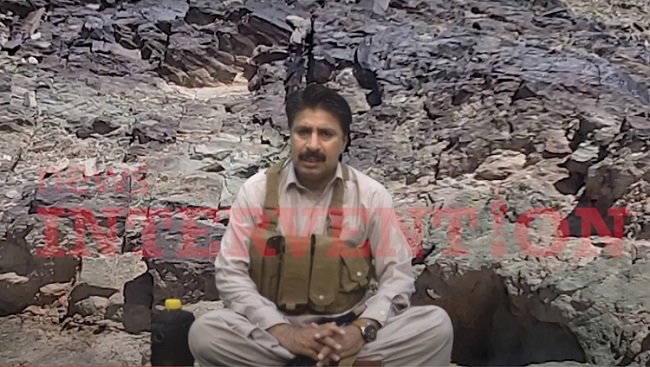
Dr Allah Nazar Baloch criticized the Pakistan Army in strong words for desecration of the dead bodies of Baloch sons by burying them in a trench, calling this act as unethical and inhumane. Dr Allah Nazar is the pro-independence leader of Balochistan who is leading Balochistan’s independence struggle against Pakistan.

“By disregarding international norms, war ethics and laws, not only exposes the barbarism of Pakistan but it also makes the belief of the Baloch nation stronger that living a life within this state is an utmost humiliation and disgrace for Baloch people,” said Dr Allah Nazar Baloch, expressing his anger over the treatment Baloch martyrs by the Pakistan Army in Tump.

Dr. Allah Nazar said that not handing over the dead bodies of martyrs to their families raises the suspicion that Pakistan had used chemical weapons. “Because, in the battlefield, despite having a huge number of personnel armed with modern weapons, the death toll of the enemy is always much higher.”

He added that it is disgusting that Pakistanis drag the dead bodies of Baloch martyrs for miles. “Instead of handing the dead bodies to the families they (Pakistan Army) burn the dead bodies of martyrs and disgrace them by digging trenches with tractors and dumping them. They use the terms like Islamic, democratic, and Reyasat-e-Madina (the city-state at the time of the Prophet PBUH), yet it never awakens the conscience of religious leaders and they don’t dare to speak against all these evil deeds. They never see the contempt for Islam and humanity by the army. The so-called Baloch nationalists (Pakistani parliamentarians) are also a partner in these crimes because Baloch youth are not sacrificing their lives for one particular class or region, in fact, their sacrifices are for the greater cause of Balochistan where Baloch are taking part without discriminating on the bases of colour, caste, and race,” said Dr Allah Nazar Baloch.

Dr. Allah Nazar further explained that Pakistan had been violating war rules and ethics for the last twenty years, but the Baloch guerrillas, despite being a weaker opponent against a powerful enemy, had given top priority to all international rules and conventions. They never disgraced the dead bodies of killed soldiers. Following the international conventions, the surrendered soldiers, after going through fair trials, were released alive. But there is not a single example from Pakistan. It indulges in enforced disappearance of innocent people and keeps them in torture chambers for years. It is implementing the policy of collective punishment on the entire Baloch nation, said Dr Allah Nazar.

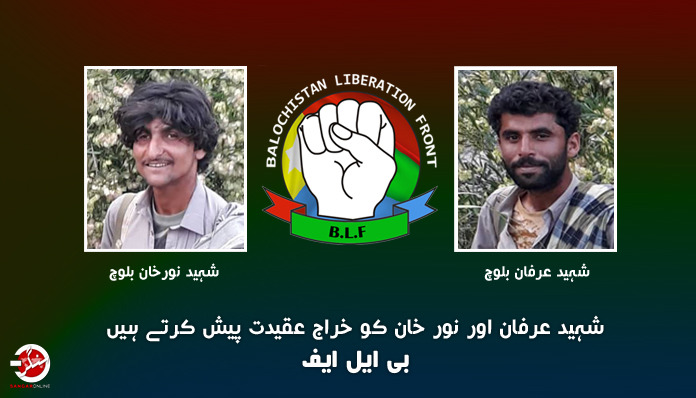
Martyrs Irfan Baloch and Noor Khan Baloch whose dead bodies were not handed over to their families by the Pakistan Army, rather dumped inside a trench dug up by a tractor at Tump, occupied Balochistan.

Dr. Allah Nazar said that the incident in Tump is not the first; Pakistan had been involved in war crimes, human rights violations, and genocide for a long time. “We don’t regret that Irfan Baloch and Noor Khan Baloch embraced martyrdom, but we resent the fact that we are fighting against an enemy that has no ethics and humanity left in it. The coward enemy, instead of handing over the Baloch martyrs bodies to their families, dumped them in a trench which further exposes the war crimes of Pakistan. Pakistan should realize that war crimes and barbarism would not make the Baloch nation surrender and keep them enslaved forever. There is not a single instance in human history where living nations were kept enslaved indefinitely with inhumanity and terror.”

NCSE – Current Poll Statistics on Politics and Climate Change

The National Center for Science Education reported on a new poll on climate change action and acceptance. Both relatively correlated facets of the same undergirding issue about respect for the climate science.

“A new poll on climate change action ‘shows that the political landscape among voters appears to be shifting,’ according to the Guardian (September 23, 2020). But when it comes to opinions about the existence and causes of climate change, which the poll also investigated (PDF), a wide partisan divide is still apparent,” NCSE reported.

If asked about climate change happening or not, 14% of the respondents were unsure; 14% of the respondents denied, answered in the negative; the final 72% affirmed or accepted climate change is happening. One important part was missing from this partitioning question.

The aspect of whether or not this is anthropogenic or human-induced was probably left out to see some of the nuances of the factual state of affairs in the minds of the public. That is to state indirectly, is the civilian non-professional public informed or not? In another analysis, this also measures the degree to which the public trusts scientists as a class, in particular climate scientists, and then the research coming out of the institutions and laboratories.

When asked the reason for climate change “happening” based on the ‘assumption’ of its happening, 59% of the respondents agreed it’s mostly due to the activities of human beings. 30% think that it’s due to natural changes in the environment, while another 12% are “not sure.” Human responsibility acceptance of the fact of anthropogenic climate change different from political identification to political identification.

87% of Republicans agreed on climate change happening. 60% of Independents and 38% of Democrats. So, 62% of Republicans, 40% of Independents, and 24% of Democrats are factually incorrect, scientifically misinformed, or in denial about the facts of human-induced climate change.

NCSE concluded, “The poll was conducted online on September 8-9, 2020, among 1517 registered voters in the United States. The sample was weighted based on census data for registered voters by age, gender, race, educational attainment, census region, and Hispanic ethnicity. The 95% credibility interval for the survey is +/ 2.6%.”

With files from the NCSE.

Photo by Luke Stackpoole on Unsplash

Allegations of Terrorism Against Toronto, Canada Couple

According to CBC News, a Toronto-area woman has received allegations of leaving the country to join a terrorist organization.

The Public Prosecution Service of Canada alleges Haleema Mustafa was leaving Canada to join a terrorist group. She has been charged with two offences related to terrorism. She appears in court this week. She had been arrest by police in Markham, Ontario.

Based on the Criminal Code Section 83.18 of Canada, any participation in terrorist activities of a terrorist group are illegal. These are the charges facing Mustafa. One spokesperson for the RCMP has not commented to the CBC so far.

Ikar Mao, Mustafa’s husband as of December 2019, was charged with two terrorism offences too. He is in custody with a denial of bail. The details of Mao’s case “are covered by a court-ordered publication ban.”

CBC News stated, “The couple left Toronto in June 2019 bound for Turkey. According to Turkish records reviewed by CBC, they were arrested because of fears they were attempting to join the Islamic State in neighbouring Syria.”

Mustafa and Mao were taken in by the Turkish authorities in Sanliurfa. It’s a border town seen previously functioning as “a launch point for foreign nationals looking to cross into Syria to join the Islamic Sate.

The Conservative government of Canada in 2013 (at the time, in other words) amended the Criminal Code of Canada to make attempting to travel or travelling to take part in acts of terrorism illegal, criminal.

“The Islamic State has suffered a series of military setbacks in recent years as a coalition of Western nations and armed fighters in Iraq and Syria has helped to dismantle much of the group’s so-called ‘caliphate,’” CBC said.

Photo by Hermes Rivera on Unsplash

Why Balochistan’s story remains hidden from the world?

Balochistan is unknown to the world not because Baloch people have been subjected to atrocities since 27th March1948, when Pakistan forcibly annexed this nation or that the Baloch are not resisting the perpetrated injustices with all the meager resources available to them. It is unknown because the exigencies of the world and that of the comity of the nations the United Nations Organization (UNO) do not correspond to the needs of the people being oppressed there. The Baloch and their struggle has been relegated to obscurity by the world more interested in appeasing dictators and state armies which are ready to serve the world powers with loyalty and dedication.

The world is in the habit of being immune to the pain of people being oppressed by states and pay no heed to human rights violations. UNO which represents the world also reflects this attitude and the UN hasn’t in all these years even tried to make Pakistan comply with conventions on enforced disappearance and tortures that it brazenly refuses to sign. This attitude has encouraged Pakistan to flout all laws and norms regarding human rights and civil liberties in Balochistan.

The situation in Balochistan is no secret because even the Chief Justice of Pakistan’s Supreme Court laments the human right abuses and extra-judicial killings by the premier intelligence agencies, the Army and the Frontier Corps. Chief Justice of Pakistan’s Supreme Court has on record blamed Pak Army and ISI, summoned them to court but the abductions, killing and subsequent dumping has not only continued but increased substantially. As if to prove their point these institutions with the start of the UN Working Group on Enforced or Involuntary Disappearances (WGEID) mission’s visit on September 10th 2012, have started dumping the brutally tortured bodies of hitherto missing persons. The Pakistani state wants to ensure that next time around there would be no fact-finding missions here to uncover their atrocities and excesses against the Baloch people.

I’m here to highlight the atrocities and excesses that have been committed against Baloch people since the last 72 years. If the world and the UNO continue to ignore the sufferings of Baloch people it would tantamount to being complicit in the slow-track genocide being committed in Balochistan by the Pakistani state. The world should awaken to the plight of all the oppressed nationalities being subjected to atrocities and excesses by the majorities or the minorities wielding state power.

The Baloch people have persisted with their struggle for self determination without external support or for that matter even moral support of the world which should have by now learnt to support the oppressed wherever they may be. We appeal to the conscience of the world to help Baloch get their inalienable right to freedom from Pakistan, as before Balochistan’s forcible annexation on 27th March 1948 the Baloch attained their independence on 11th August 1947 from British colonial rule.

Balochistan which is hidden from the eyes of the world is currently suffering from a serious humanitarian crisis. In occupied Balochistan Pakistan Army continues to embarrass humanity. Pakistan’s inhuman atrocities in Balochistan are suppressed, because there is a total media black out.

The world’s longest and most peaceful protest has been going on for more than ten years at Quetta, Balochistan. It’s for those who have been forcibly disappeared by Pakistani state agencies and forces for demanding national liberation.

More than 40,000 Baloch political and social activists are currently abducted from Balochistan and thousands have been extra-judicially killed during the last eighteen years. International human rights organizations are not being given access to Pakistan-occupied Balochistan and they seem helpless.

Our appeal is to human beings across the world, and the civilized democratic countries to speak against the atrocities and oppression in Balochistan for the sake of humanity.

Pak’s policy of suppressing Gilgit-Baltistan will not be acceptable

Pakistan government has been spreading the propaganda that if Gilgit-Baltistan becomes a province of Pakistan, the people of Gilgit-Baltistan will get their rights. It is worth pondering over the question as to what rights have been given to Gilgit-Baltistan or to the Pakistan-occupied Kashmir (POK) till date.

Let’s first look at the pages of history. Bengal became separate from the subcontinent as part of the existence of Pakistan in the name of Islam and Kalma. And then, as a reward to the Bengalis, it was said that these ‘black-skinned’ fish and rice-eating low-standard Bengalis have begun to show their eyes to us and so “we” will change their race.

When it comes to truth, these contractors of Islam and people who don the military uniform accuse “others” as being agents of India, and then these “others” are portrayed as enemies of Islam. History has shown that Pakistan Army raped millions of Bengalis, and today the same history is being repeated across Balochistan and in Pakistan-occupied Kashmir (POK). But revolutions can never be subdued by the tactics of colonizers.

The insidious Pakistani Biharis who played the role of front line of Pakistani establishment from the platform of Al-Badr and Al-Shams in crushing the Bengali uprising and revolution against Pakistan are still in the camps of Bangladesh. They are no longer called Pakistani Biharis or Bengalis. Nor are they called Indians. They no longer have an identity. Yes, of course, the brutal Pakistan Army have changed the generations of these Pakistani Biharis and brought them to the brink of destruction.

Today, the people of Pakistan-occupied Kashmir (POK) and Gilgit-Baltistan must think and learn from these historical facts.

Bengalis won their own country Bangladesh when they were deprived of their rights by Pakistan. But the question that needs to be asked is what will happen to the rights of the outsiders who are still calling themselves as Pakistani Biharis in the refugee camps in Bangladesh ?? When will Pakistan give rights to these Pakistani Biharis?

Occupied Balochistan is also known as a province of Pakistan. From the formation of Pakistan till today, Baloch have been fighting for their rights but instead of giving them rights, they are being made to ‘disappear’. Their mutilated bodies are thrown away. Their houses are burnt down. Innocent Baloch people are branded as traitors and forced to beg for life. The Baloch have no right to the natural resources of their own land. Balochistan continues to suffer from poverty and unemployment and famine, despite being rich in gold, silver, gas, copper, gypsum, chromite and coal. Balochistan has far larger reserves of natural mineral resources than Burundi or Congo.

However, the Pakistanis continue with their barbaric policy of Baloch genocide.

If becoming a province gives rights to the people, then why have the Baloch not got these rights till date? That is why the oppressed people of Kashmir and Gilgit-Baltistan must realize that there are some people who want to enjoy being in the Pakistani Parliament. These people have been bargaining interests of the nation for their own personal interests and these people are, in fact, national traitors. They are the traitors of Gilgit-Baltistan and Kashmir.

International law says that every nation has the right to maintain its identity, so why should Gilgit-Baltistan become slaves of Pakistan.

The same is true of Khyber Pakhtunkhwa. From the Babra massacre to the present day, from Bacha Khan to Manzoor Pashteen, Pashtuns have been abused and shot dead for demanding their rights. Numerous Pashtuns have been declared as traitors and branded as Afghan, American and Indian agents.

Pashtuns have been demanding their rights for seven decades. Isn’t Khyber Pakhtunkhwa a province of Pakistan? The same is true of the Pakistanis scattered in Karachi who gave up everything at the time of partition and came to Pakistan. These are the same people who made the greatest sacrifices during the creation of Pakistan. And yet they were massacred on a massive scale in the Jinnahpur plot and were called Indian agents.

The situation of Sindhis is similar. The feeling of deprivation is increasing day by day. The condition of Thar is worse than that of Ethiopia. The situation is worse in Sindh. In Sindh, those who talk about Sindh land rights are disappeared and they are killed. Isn’t Sindh a province of Pakistan? Where are the rights of Sindhis? Why Pakistan has not been able to give rights to the Sindhis till today?

Baba Jan was jailed by the Paksitanis for demanding rights for people of Gilgit-Baltistan. It's been a decade since Baba Jan has been in jail.
Baba Jan was jailed by the Pakistanis for demanding rights for people of Gilgit-Baltistan. It’s been a decade since Baba Jan has been in jail.

All these statements of Pakistani government which claim that people of Gilgit-Baltistan will get their rights if Gilgit-Baltistan becomes a province of Pakistan, is full of lies. In order to break chains of a nation’s slavery, a few of the oppressed people have to raise their voice so that the nation can be freed.

Kashmir’s freedom is only for namesake. This freedom means nothing when all decisions are taken by the GHQ Pakistan.

If it was a matter of rights, then why were Iftikhar Karbalai and Baba Jan, who spoke for the basic legitimate rights of the people of Gilgit-Baltistan, put behind bars? Why and on what basis have they been banned?

If Pakistan wants to give rights to Gilgit-Baltistan, then first of all release Baba Jan and Iftikhar Karbalai who spoke for the people’s rights of Gilgit-Baltistan. Freedom of Baba Jan and Iftikhar Karbalai is their fundamental right. The policy of suppression in Gilgit-Baltistan will not be unacceptable.

USCIRF – Sudan Repeals Apostasy Law with New Act

With the passage of the new Fundamental Rights and Freedoms Act coming out of Sudan, there has been the formal repeal of its apostasy law, which becomes a basis for the furtherance of religious and non-religious freedom of belief and practice in the world. Sudan made a formal move for the respect of international human rights.

The USCIRF or the United States Commission on International Religious Freedom took the decision of the “transitional government” as a positive.

Indeed, the Vice Chair of USCIRF, Tony Perkins, stated, “Sudan’s transitional government continues to live up to its commitment to justice, peace, and freedom. These new measures are important to protect the freedom of the Sudanese people to freely choose and practice their faith without punishment.”

Principles of freedom, justice, and peace bind to international human rights in modern formulations of ethics. The Fundamental Rights and Freedoms Act provides more freedom of religion and freedom of belief for citizens of Sudan with startlingly rapid or swift changes including the repeal of the apostasy law, an end to female genital mutilation (“banning”), the end of flogging, abolition of the guardianship law, and permission for non-Muslims to drink alcoholic beverages.

These are stark changes demarcating a clear message and transitional point for the modernization and secularization of significant portions of Sudanese culture.

“While the full text of the legislation has not yet been made public, reports indicate that the apostasy law was replaced by an article that prohibits hate speech, however the status of Sudan’s blasphemy law remains unclear,” USCIRF reported.

Anurima Bhargava, another Vice Chair of the USCIRF, applauded the efforts and “historic steps” of Sudan in the protection of religious and belief freedom as well as ‘safeguarding the rights of women and girls.’ Bhargava spoke to the need for “wide, immediate, and effective implementation of these reforms.” The repeal of the blasphemy law and laws regulating hate speech were encouraged for repeal as well because of the standards set forth by international human rights.

Both Perkins and Bhargava travelled to Sudan in February of this year to “assess religious freedom conditions.” Based on the Sudanese progress since 2019 with the transitional government, they have been working – the Sudanese government – on the most egregious violations of international human rights delivered by the former regime.

“USCIRF recommended in its 2020 Annual Report that the Department of State maintain Sudan on its Special Watch List (SWL),” USCIRF stated, “This was the first time since 2000 that USCIRF has not recommended Sudan for designation as a ‘country of particular concern’ for systematic, ongoing, and egregious violations of religious freedom. In December 2019, USCIRF released a report entitled Apostasy, Blasphemy, and Hate Speech Laws in Africa, which explains how overbroad or vague hate speech laws can operate as blasphemy provisions and similarly restrict the freedom of religion or belief.”

With files from the USCIRF.

Photo by Awab Husameldin on Unsplash

USCIRF – Central and West Africa Fulani Religion Tensions Aggravated

The United States Commission on International Religious Freedom or the USCIRF compiled and published a report on tensions of a religious nature in the Fulani communities in central and west Africa.

An escalation in violence in Fulani communities has been directly connected to religion in this area Africa, predominantly Muslim communities “with cattle herding and livestock rearing.” The Fulani are one of the largest ethnic groups internationally with members of the diaspora from Sudan to Senegal.

In a bidirectional experience of violence, they have been perpetrators of violence against civilians and civilian victims of violence in a number of countries.

“Although the extent to which religious ideology contributes to driving this violence remains a subject of debate, the trend of increasing violence by and against Fulani groups is clearly aggravating religious tensions in countries such as Nigeria and the Central African Republic, USCIRF, stated.

The reportage is mixed with noting religion as a factor in the violence after the fact while, at other times, noting violence coming from Fulani groups and then this “aggravating religion tensions in countries.”

The 2020 Annual Report of the USCIRF has designated Nigeria, in particular, as a Country of Particular Concern because of its “ongoing, systematic, and egregious religious freedom violations.”  The U.S. State Department made the formal recommendation of placing the Central African Republic on the Special Watch List as well.

With files from the USCIRF.

Photo by Lenny Miles on Unsplash

3 army soldiers martyred, 5 injured in Pak firing at LOC in Kupwara and Poonch

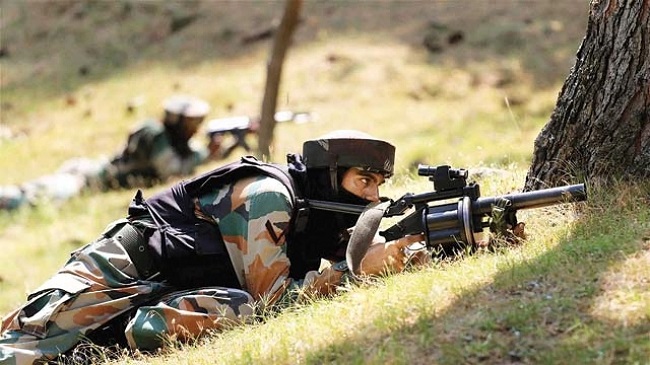
Srinagar/ October 1: The armies of India and Pakistan on Thursday exchanged heavy artillery fire along the Line of Control (LoC) in twin border districts of Jammu and Kashmir – Kupwara and Poonch – in which three soldiers were martyred while five others suffered injuries were evacuated for medical attention.

Two soldiers were also martyred and four others injured in cross border shelling in Line of Control (LoC) in Naugam sector of Kupwara district.

Kashmir-based Defense spokesperson Lieutenant Col Rajesh Kalia said that Pakistan initiated an unprovoked ceasefire violation along LoC in Naugam Sector, Kupwara on Thursday morning by firing mortars and other weapons that claimed two fatalities while fours other soldiers were also injured who were being evacuated to hospital.

“Pakistan initiated an unprovoked Ceasefire Violation along LoC in Naugam Sector, Kupwara today morning by firing mortars & other weapons. Two soldiers fatal. Four soldiers injured, being evacuated. Befitting response being given,” said Lt. Col. Rajesh Kalia.

He identified the slain soldiers as Havaldar Kuldeep of 15 Sikh Light Infantry and Rifleman Shubham, Unit 8 JAK Rifles.

Meanwhile another soldier was martyred while another suffered injuries in Krishna Ghati sector of the Poonch district of Jammu region after Pakistan resorted to indiscriminate and unprovoked ceasefire violation.

Jammu-based Defense spokesperson Lt. Col. Devender Anand said, “On 30 Sept 2020, Pakistan Army resorted to unprovoked ceasefire violation on the Line of Control (LoC) in Krishna Ghati Sector, District Poonch (J&K)”.

He said the troops deployed there gave befitting response during which two army personnel were critically injured who were subsequently moved for medical facilities, however one among the injured namely Lance Naik Karnail Singh succumbed to his injuries.

“Own troops responded strongly to the enemy fire. In the incident, Lance Naik Karnail Singh was critically injured and later succumbed to his injuries,” Lt Col. Devender Anand said. He identified the slain soldier as Lance Naik Karnail Singh.

While paying tribute to the slain soldier, Jammu-based Defense spokesperson said that Lance Naik Singh was a brave, highly motivated and a sincere soldier. He added that nation will always remain indebted to him for his supreme sacrifices and devotion to duty.

Inside story of the Dasht Forest Fire in Balochistan

What led to massive fires in the Dash Forest on the night of September 19/20? Was this the result of Global Warming or Climate Change? Or there’s some other angle? Watch this news analysis to understand the inside story of Dash Forest Fire in Balochistan.

Click on the YouTube link to watch video.