Home Blog Page 5

Yet another bomb blast in Pashtunistan, two Pashtuns killed dozens injured

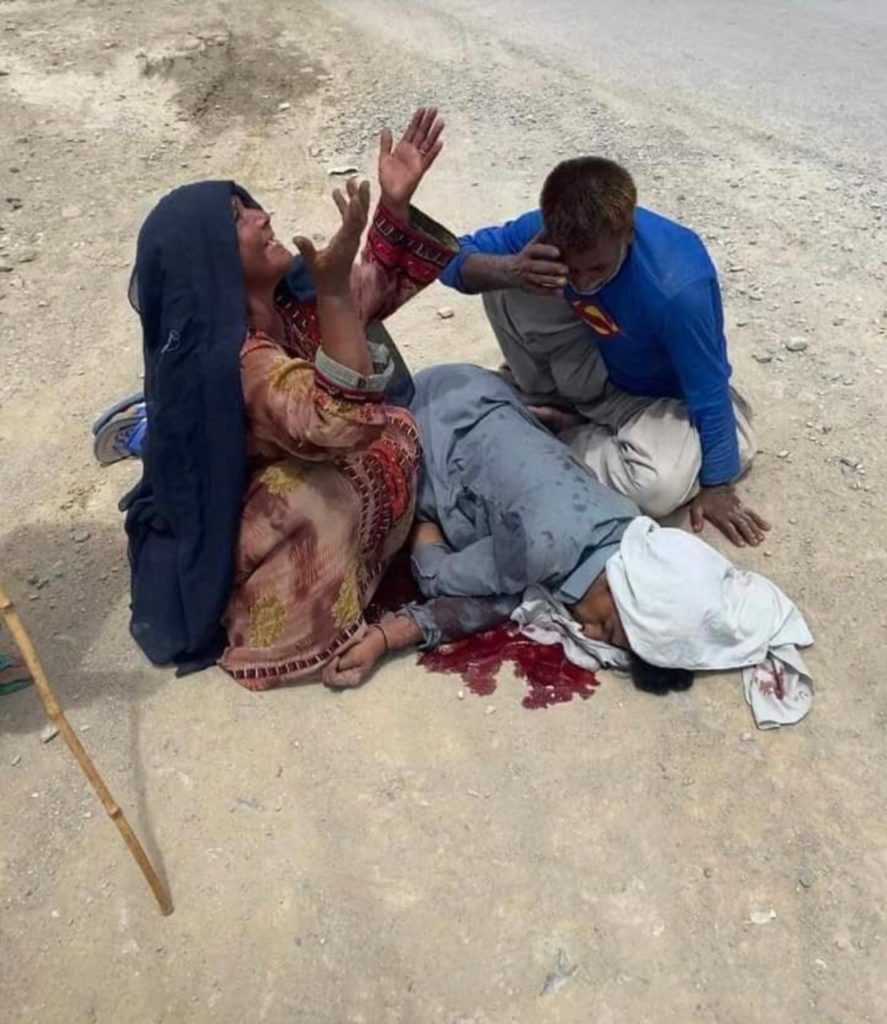
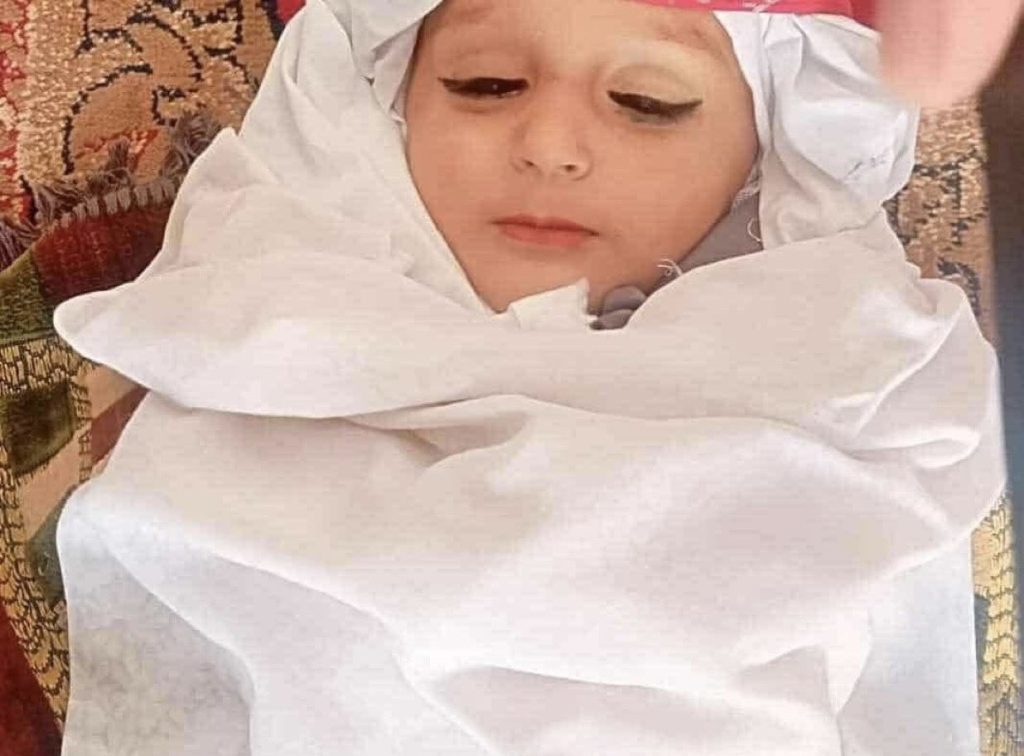
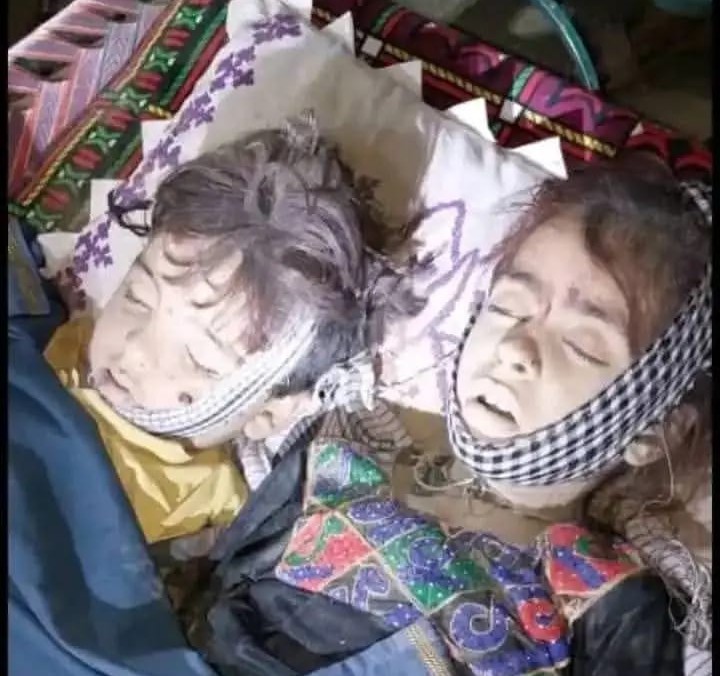
A powerful explosion happened near the Wana Bazaar in South Waziristan, Khyber Pakhtunkhwa Thursday afternoon killing two Pashtuns and seriously injuring several others. This bomb blast occurred just a day after indiscriminate firing on a Frontier Corp vehicle at Banda Daud Shah in district Kark, Khyber Pakhtunkhwa in which four Pakistani soldiers were killed.

The entire Pashtunistan is grappling with drone attacks, bomb blasts and machine gun firings by the Pakistan Army or their proxies that kills innocent Pashtuns. The Pashtun Tahafuz Movement (PTM) reports that over 75,500 Pashtuns have been killed in Pakistan due to this violence. Over 5.7 million Pashtuns have been displaced from their homes, with around 2.3 million Pashtuns unable to return to their homes and villages in Pashtunistan due to violence and instability. PTM records say that there have been over 9,237 bombings across Pashtunistan.

BRAS attacks Pak Army camp in Panjgur, kills 22 Paki soldiers, captain injured

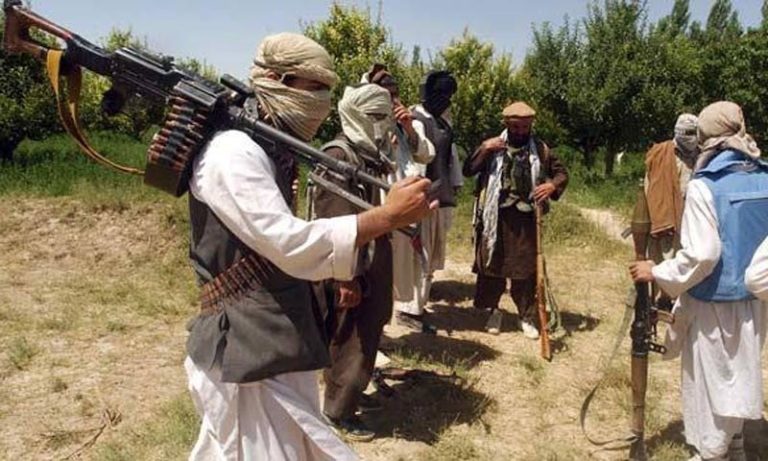
Baloch Raaji Aajoi Sangar (BRAS) eliminated twenty two Paki soldiers and inflicted serious injuries on over fourteen during their attack on a base camp of Pakistan Army at matin goran area in district Panjgur of Pak-occupied Balochistan on August 1. Captain Usman of the Pakistan Army was among those injured during this attack. BRAS is a joint front of different regiments of Baloch sarmachaars (freedom fighters) who have come together to fight for Balochistan’s independence from Pakistan.

“This operation was carried out at around 6 PM (local time) on August 1, when BRAS attacked main camp of 91st Wing of occupying Pakistan Army in goran at Panjgur and its adjacent outposts from three directions. In the two hour clash, freedom fighters took control of a large part of camp, including two important posts. As a result of coordinated attack on enemy camp, occupying army suffered heavy casualties, while its headship and communication structure were badly affected,” Baloch Khan, BRAS spokesperson said in a statement.

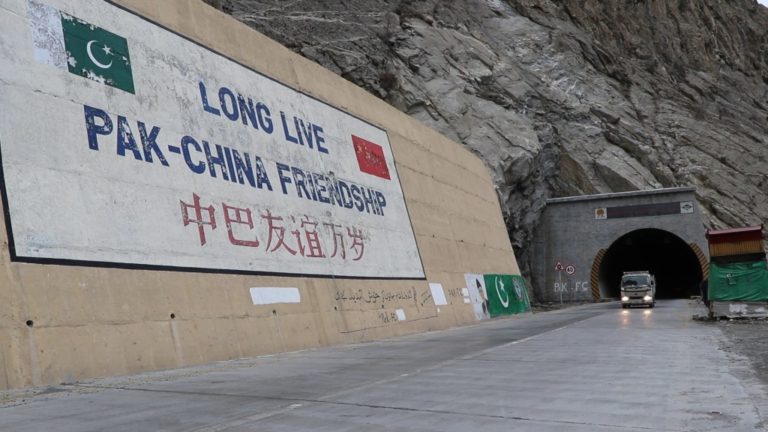
BRAS sarmachaars (freedom fighters) seized Pakistan Army’s weapons and modern war equipment that included Kalashnikovs, G3s, machine guns, night vision devices, thermal scanners and other equipment. “Other squads of BRAS fighters made fronts on the CPEC route at two locations to prevent the Pakistanis from sending reinforcements. However, enemy army (Pakistan Army), as usual, showed cowardice and could not reach to the aid of its besieged personnel. BRAS fighters also targeted and destroyed spy cameras that dealt a further blow to their intelligence set up.”

BRAS sarmachaar Sangat Ameer (Baba) embraced martyrdom during this battle. He joined Baloch Liberation Army (BLA) in 2014 and served as an urban guerrilla for two years in organizational and military service. In 2016, Sangat Ameer (Baba) joined the mountain front and served as a camp commander on Kolwah front.

Baloch Yakjehti to continue protests in Islamabad until Paki regime releases Mahrang Baloch and others

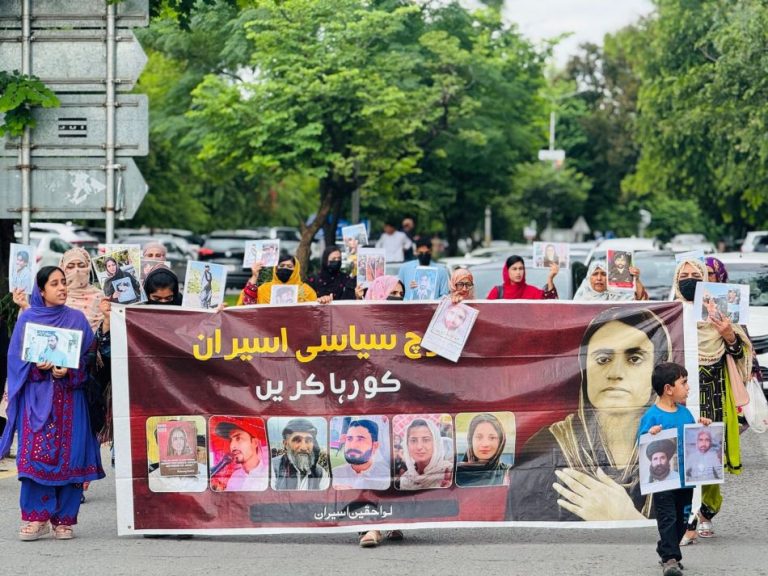
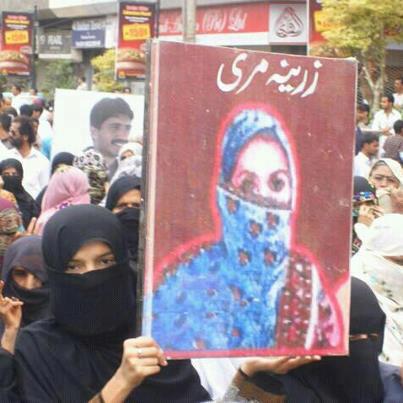
Baloch Yakjehti Committee (BYC) announced Sunday to continue their sit-in protest against the illegal detention of innocent Baloch activists till the time all of them are released by the Pakistani regime. The Baloch Yakjehti Committee (BYC) protesting at Islamabad includes Baloch mothers, sisters, daughters and the elderly who continue to brave the sweltering heat, rain and thunderstorms over the last nineteen days demanding that BYC activists be released unconditionally as there are no grounds for their detention. 

“Today marks 19 days since Baloch families arrived in Islamabad, demanding the release of Baloch Yakjehti Committee (BYC) leaders and an end to enforced disappearances ….despite mistreatment and constant harassment, these mothers, children, and elders remain steadfast in their demands,” said Baloch Yakjehti Committee (BYC) in their statement. Baloch Yakjehti Committee (BYC) is a conglomeration of activists and intellectuals who are fighting for the human rights violation of Baloch by the Pakistani regime. BYC’s leader and organiser Dr. Mahrang Baloch was arrested by the Pakistani regime on March 22, 2025 and remains under illegal detention since then. 

Dr. Mahrang Baloch during her hearing at the puppet courts in Balochistan. Pakistani regime arrested Dr. Mahrang Baloch on March 22, 2025 under fabricated charges of abetting violent activities. Dr. Mahrang continues to be illegally detained despite no evidence against her. (Photo: News Intervention)

During Sunday’s press briefing at Islamabad the BYC activists raised the issue of illegal extension of the police remand of Dr. Mahrang Baloch, Bebo Baloch, Gulzadi, Mama Ghaffar, Shahji, and Beberg Baloch at the Quetta Anti-Terrorism Court. BYC activists said that the (Pakistani) police could not present any clear evidence against the detained BYC activists, “…despite this the court has yet again extended their physical remand for twenty days. Legal experts are of the opinion that remand beyond fourteen days under the Anti-Terrorism Act (ATA) is possible only on the basis of solid evidence, which was not available here.” 

Baloch activists said that despite the absence of any credible evidence, Dr. Mahrang Baloch and her colleagues remain under unlawful detention on baseless charges of terrorism and for peacefully advocating human rights. “(Pakistani) judiciary’s repeated extensions of their remand underscore its complicity in state oppression and the worsening human rights crisis in Balochistan.” Baloch activists strongly criticized the inhumane behavior of the Islamabad police and district administration, adding that the Baloch students and youth participating in the sit-in are being harassed, their families are being pressured, and attempts have been made to use force to end the sit-in despite the protest being completely peaceful.

Balochistan continues to be under illegal occupation of the Pakistan Army so the entire administration, provincial government and even the courts are mere puppets at the hands of GHQ Rawalpindi. There being no rule of law, the judgements and orders are typed in Rawalpindi/Islamabad and stamped by the puppet judges installed in the courts of occupied Balochistan.

Swat Valley Pashtuns demand Referendum against Pakistani regime and Pak Army

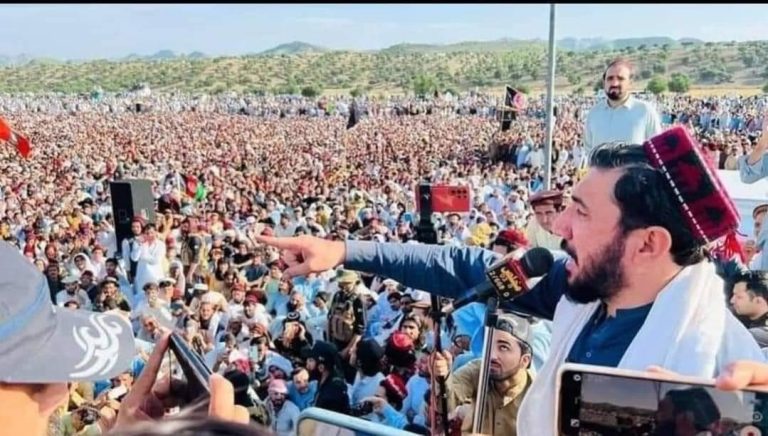
Swat Valley demanded public referendum against Pakistan Army’s terrorism, oppression and tyranny and the Pakistani regime’s colonialism across Pashtunistan. Swat Valley was protesting against Rawalpindi’s military operations conducted across Khyber Pakhtunkhwa in the name of peace. Pashtuns were out in the streets on Friday against Pakistani regime’s violence, enforced disappearances and targeted killings of innocent and unarmed Pashtuns across Khyber Pakhtunkhwa. That the Swat Valley is demanding referendum against oppressive Pakistani regime is indicative of the fact that unease and discontent is deep within the Pashtun psyche.

“This war may be a game of power, plunder, and earning dollars for them, but for us, it is a matter of life and death. That is why the Pashtun nation’s resistance is the path of truth and justice,” said the Pashtuns of Swat Valley in a social media post. Pakistani regime used massive force to disrupt peaceful Pashtun protests and demonstrations (Aman Pasoon) held across Khyber Pakhtunkhwa on August 1. The police acting on direct instructions of GHQ Rawalpindi lathi charged local PTM (Pashtun Tahafuz Movement) leaders at Bannu and arrested dozens of protestors. Over the last fortnight there have been reports of killings at Bannu, Bajaur, Tirah Valley and other areas in Waziristan. And all these killings by the Pakistani soldiers have been unprovoked. 

Pakistani regime arrests PTM leaders during Pashtun peace march

Pakistani regime used massive force to disrupt peaceful Pashtun protests and demonstrations (Aman Pasoon) held across Khyber Pakhtunkhwa on Friday. The police acting on direct instructions of GHQ Rawalpindi lathi charged local PTM (Pashtun Tahafuz Movement) leaders at Bannu and arrested dozens of protestors. Pashtuns were out on the streets across Pashtunistan to protest against the targeted killing of innocent and unarmed Pashtuns by the Pakistani soldiers. Over the last fortnight there have been reports of killings at Bannu, Bajaur, Tirah Valley and other areas in Waziristan. And all these killings by the Pakistani soldiers have been unprovoked. “These generals and colonels (Pakistan Army officers) want to loot our natural resources. They send their men to steal minerals from Pashtunistan… and when we protest against the loot these soldiers shoot unarmed Pashtuns,” a local PTM leader told News Intervention requesting anonymity.

https://twitter.com/NewsIntervene/status/1951309143328911529

Pashtunistan has massive reserves of marble, granite, chromite, manganese, nephrite, garnet, quartz and emeralds that is worth billions of dollars. Rawalpindi sends Pakistan Army soldiers to illegally extract these minerals. When local Pashtuns oppose this plunder Rawalpindi announces ‘security operations’ from Waziristan to Bajaur. These unannounced ‘security raids’ are conducted to forcibly displace Pashtuns from their homes and homeland and seize control of their land and resources.

The demonstration on August 1 was against Pakistani regime’s treacherous policies, fake security operations, illegal land encroachments, and the systematic loot of Khyber Pakhtunkhwa’s natural resources. Despite the intense heat, short notice, and state pressure, hundreds of thousand Pashtuns participated in this protest movement.

Pashtuns demanded that Pakistani regime put an unconditional end to military operations, drone attacks and bombings on the homes of ordinary people. “The killing of innocent Pashtuns, oppression and brutality in military jails, looting of minerals, imposing inhumane curfews, targeted killings, incidents of missing persons must stop immediately,” said the PTM leader. Pashtuns demanded permanent peace, prosperity, employment, and their ownership rights over minerals in Waziristan, along with an end to the economic wars of Punjabi hegemony.

Deal Pakistan firmly, Pak Army doesn’t understand polite language

Just the other day, Pakistan’s Foreign Office [FO] issued a statement in which it accused New Delhi of launching Operation Sindoor “without any verifiable evidence or a credible investigation” into the Pahalgam terror attack. It simultaneously declared that “as a responsible country, Pakistan remains committed to peace, regional stability, and a meaningful dialogue for resolution of all outstanding issues, including the core dispute of Jammu and Kashmir [J&K].” However, Islamabad’s assertions failed to impress as they weren’t supported by ground realities.

By declaring The Resistance Front [TRF] a designated Foreign Terrorist Organisation [FTO] and Specially Designated Global Terrorist [SDGT] for perpetrating the Pahalgam carnage, Washington has univocally endorsed India’s claim that TRF was responsible for the April 22 Pahalgam terrorist attack in J&K. As the US Department of State follows a stringent inquiry process before designating Foreign Terrorist Organisation [FTO] and Specially Designated Global Terrorist [SDGT], how did Islamabad assume that anyone would believe its claim that there was no “credible investigation” of the Pahalgam slaughter?

Furthermore, in its report released on Tuesday, the UNSC Sanctions Monitoring Team has mentioned that “The [Pahalgam] attack was claimed that same day by The Resistance Front [TRF], who in parallel published a photograph of the attack site.” This report also mentions that the “claim of responsibility [by TRF was] repeated the following day,” and has taken cognisance of two undeniable facts: One, “the attack could not have happened without Lashkar-e-Taiba [LeT] support,” and two, that “there was a relationship between LeT and TRF.” Hence, isn’t Islamabad’s claim of no credible investigation laughable?

Hollow Pledge
Next is Islamabad’s pompous declaration that “as a responsible country, Pakistan remains committed to peace, regional stability, and a meaningful dialogue for resolution of all outstanding issues including …J&K.” Unfortunately for Pakistan, the day Pakistan’s Foreign Office [FO] made this lofty statement, the Indian army thwarted an infiltration bid across the Line of Control [LoC] by Pakistan-sponsored terrorists in the Poonch Sector of J&K, killing two heavily armed infiltrators. Doesn’t this incident outrightly debunk Pakistan’s claim of being a “responsible country” and committed to peace and resolution of all
outstanding issues through “meaningful dialogue”?

Rawalpindi’s Terrorist Fixation
There’s a general consensus amongst level-headed military analysts that the three-and-a-half decade old so-called “armed struggle” in J&K sponsored by the Pakistan Army hasn’t given any tangible results in achieving the proclaimed “Kashmir banega Pakistan” [Kashmir will become part of Pakistan] objective.

Au contraire, Rawalpindi’s proclivity for harbouring, arming and using terrorists as ‘strategic assets’ for waging proxy war against its neighbours has had irreversible adverse effects for Pakistan- an admission that’s come from the very horse’s mouth!

In 2010, while speaking at the Atlantic Council of the United States Pakistan’s ex-President and former army chief Gen Pervez Musharraf admitted that what he referred to as the “Kashmir dispute” was “causing a lot of terrorism and extremism within our society.” Conceding that it was “religious militancy in Afghanistan [and] religious militancy in Kashmir,” Gen Musharraf accepted that due to this “religious extremism went on the rise [in Pakistan], and because of that TTP [anti-Pakistan terrorist group Tehreek-e-Taliban Pakistan] also came about.” But Gen Musharraf isn’t the only one who spoke about the adverse effects of Pakistan turning into a breeding ground for terrorists.

Readers would recall that during his 2019 visit to the US, the then Prime Minister of Pakistan Imran Khan had disclosed that “when you talk about militant groups, we still have about 30,000-40,000-armed people who have been trained and fought in some part of Afghanistan or Kashmir.” Admitting that Islamabad “did not tell the US exactly the truth on the ground [sic],” he revealed that “our governments were not in control” and “there were 40 different militant groups operating within Pakistan.”

While Gen Musharraf’s disclosure leaves no room for any doubts that J&K is experiencing “religious militancy” [a euphemism for terrorism], Khan’s candid revelation that governments in Pakistan “were not in control” over militant groups is an unambiguous acceptance of the fact that terrorists enjoyed patronage of the country’s powerful army. Unfortunately, despite the people of Pakistan suffering immensely due to religious extremism, the situation hasn’t changed even today, and Pakistan Army chief Gen Syed Asim Munir has only helped harden religious extremism by his Hinduphobic remarks.

During his address to the Convention for Overseas Pakistanis on June 16, Gen Munir maintained that there were “stark differences between Hindus and Muslims.” He also tried to whip up communal sentiments by saying, “Our forefathers believed that we were different from Hindus in every possible aspect of life’ and pointing out that “Our religion is different, our customs are different, our traditions are different, our thoughts are different, [and] our ambitions are different…” That the Pahalgam terrorist attack in which Hindu tourists were killed after being subjected to religious profiling occurred just six days after Gen Munir’s portrayal of Hindus as existential enemies of Muslims is no coincidence. It was a well-planned operation conceived by Pakistan Army’s spy agency Inter-Services Intelligence [ISI] and executed by its proxies to arouse emotions and trigger anti-Muslim sentiments in India that would culminate in communal violence. And all this was done just to prove that Gen Munir’s absurd claim of intrinsic Hindus-Muslims non-compatibility was true.

India’s Response
Even though Indo-Pak talks have yielded no positive results in the past, some still feel that New Delhi should restart the dialogue process with Islamabad to usher normalcy in relations and bring about peace between the two neighbours. Those who espouse this school of thought contend that one should never give up hope and their unbounded optimism deserves appreciation. However, since depicting “Hindu India” as an existential threat to the Islamic Republic of Pakistan suits both Pakistan’s polity and military, to expect Islamabad and Rawalpindi to smoke the peace pipe with New Delhi would be delusional.

Considering Pakistan’s compulsion of keeping the Indian hegemony bogey alive amongst its masses, India’s present stance that talks and terror can’t go together, any terrorist attack will be construed as an act of war, and water and blood too cannot flow together is the best available and most comprehensive alternative. While military pressure would curtail, if not completely end, terrorist activities; suspension of trade and commerce will definitely hurt Islamabad more in financial terms and could well prod a near bankrupt Pakistan to rethink its self-debilitating strategy of using terrorism as a foreign policy tool.

New Delhi’s decision to hold Indus Water Treaty [IWT] in abeyance is perhaps the most effective means to knock some sense into Rawalpindi as unregulated water flow would have serious consequences on Pakistan’s agriculture sector and hence cannot be disregarded. And it’s here that New Delhi must take a leaf out of Islamabad’s book by refusing to entertain any request or even threats to restore the status quo.

The Indus Water Treaty [IWT] preamble clearly mentions that this agreement was made “in a spirit of goodwill and friendship” and since Pakistan has willfully violated both these basic considerations, India is well within its rights to hold this treaty in abeyance till Islamabad [and more importantly Rawalpindi] mends it ways.

India has been accommodative to the extent of even making reconciliatory moves to normalise relations with Pakistan for more than 75 years without achieving any success. As such, continuing this approach is tantamount to reinforcing a failure and an exercise in futility. That’s why New Delhi’s decision to deal firmly with Pakistan needs to be pursued vigorously, as it exemplifies the popular “laaton ke bhoot baaton se nahi maante” Hindi adage that closely matches the “rod is the logic of fools” proverb. Given Pakistan’s obduracy, doesn’t this approach make more practical sense?

Pakistan Army is killing Pashtuns to loot the mineral wealth of Khyber Pakhtunkhwa

The Pakistani regime has stepped up its offensive against Pashtuns in Khyber Pakhtunkhwa with incidents of targeted killing, firing and bombings happening on a daily basis. On July 29 soldiers of the Pakistan Army started indiscriminate firing on peaceful protestors at Bajaur and killed two Pashtuns. All approach roads to Bannu have now been blocked and the Paki soldiers have launched a massive search operation (in the garb of security measures) to nab any dissenting Pashtun who opposes Rawalpindi’s loot of minerals in Khyber Pakhtunkhwa.  

“An unannounced curfew has been imposed in Bannu by these wardiwale dahshatgard (terrorists in uniform of the Pak Army). Nobody is allowed to step out of their homes. Everything is blocked. Pashtuns will not tolerate this, inshallah we will fight back,” a Pashtun activist told News Intervention requesting anonymity. This new wave of attack on unarmed Pashtuns in Bajaur and Bannu and other districts of Khyber Pakhtunkhwa continues despite assurances of ceasefire by the Paki regime. 

Pakistan Army’s new-found policy to eliminate Pashtuns silently and steadily is an effort to curb all dissent and resistance in Pashtunistan in order to loot mineral resources and marble wealth spread across Khyber Pakhtunkhwa. Several industry estimates suggest that Pashtunistan has massive reserves of marble, granite, chromite, manganese, nephrite, garnet, quartz and emeralds that is worth billions of dollars. Whenever Pashtuns oppose the plunder of their resources Rawalpindi announces ‘security operations’ from Waziristan to Bajaur. These unannounced ‘security raids’ are conducted to forcibly displace Pashtuns from their homes and homeland and seize control of their land and resources.

Pashtunistan has massive reserves of marble, granite, chromite, manganese, nephrite, garnet, quartz and emeralds that is worth billions of dollars.

The Pashtun National Jirga – a conglomeration of several Pashtun tribes, has called for a unified protest on August 1, Friday after the namaz. 

“On Friday, August 1, after Friday prayers, all leaders and people of the Jirga in their respective regions and districts should raise their voices against the ongoing operations and massacres targeting the Pashtun homeland. A demand should be made for the immediate cessation of these operations. If this demand is not met promptly, the Pashtun National Jirga will make new decisions for future practical steps,” said Barkat Afridi, spokesperson of the Pashtun National Jirga in a social media post. 

Social media is abuzz with Pashtuns urging their brethren across Khyber-Pakhtunkhwa to start a long march towards Islamabad. “In Bajaur, Khyber Tirah, North Waziristan, South Waziristan Upper, South Waziristan Lower, Bannu, Orakzai, Hangu, Kurram, Mohmand, F.R. Peshawar, Tank, Lakki Marwat, Zhob, Sherani, and all other war-torn areas of the Pashtun belt against oppression, tyranny, terrorism and military operations, on Friday, August 1, 2025, after Friday prayers, the Pashtun people will march in every district and tehsil, in every village, mosque, or road, towards the tehsil headquarters or the main market square of the tehsil to hold a public uprising,” said Pashtun Jirga in its letter.

Kashmiris must understand that Pakistan is their real enemy

Murders Most Foul
Even though nearly three months have elapsed since the gruesome Pahalgam terrorist attack in which 26 tourists were shot dead, the picturesque Baisaran meadows, once bustling with tourists, remains a desolate spot. However, it’s not only Pahalgam but the entire J&K region that’s experiencing a substantial drop in tourist footfall, and since tourism is the main source of income for locals, the Pahalgam massacre has resulted in many losing their only source of livelihood.

While this isn’t the first time that tourists have been targeted in J&K, it’s the unprecedented barbarity of the Pahalgam massacre that’s discouraging people from coming here, and there can be no two views that the masterminds of this carnage sitting across the Line of Control [LoC] were well aware of the adverse impact this attack would have on tourism. It would have also been known that such a dastardly act would enrage the international community. So, why did Pakistan Army’s spy agency Inter-Services Intelligence [ISI] which oversees Rawalpindi’s proxy war approve such a heinous act?

Fooling Kashmiris?
It’s been amply clear throughout that the so-called “freedom struggle” in J&K was just a ploy to mislead Kashmiris, disguise Rawalpindi’s proxy war and an attempt to give terrorism a cloak of legitimacy. The first clear indication of the Pakistan Army’s malevolent intent became apparent as early as January 1990 when it communalised this “armed struggle” by using its sponsored terrorists belonging to Jammu & Kashmir Liberation Front [JKLF] for indulging in a bloodbath resulting in forced exodus of the minority indigenous pandit community from the Kashmir Valley.

Unfortunately, the prevailing euphoria of “azadi” [independence] at that time had so intensely gripped the people in Kashmir Valley that no one really gave this dangerous and perverse development the importance it deserved. The second instance came just a few months later when three Pakistan-sponsored Hizbul Mujahideen [HM] terrorists barged into the house of All J&K Awami Action Committee chairman Mirwaiz Maulvi Mohammad Farooq in Srinagar and shot him dead.

Besides being a revered religious preacher, Mirwaiz was also a prominent political leader who espoused separatist ideology and that’s the reason why his murder by Pakistan sponsored terrorists defies logical explanation. But since Mirwaiz refused to serve as Rawalpindi’s minion and made no secret about his disapproval of Pakistan usurping the so-called Kashmir movement, he became an existential threat to the Pakistan Army’s proxy war and was hence swiftly despatched. That the assassins were able to gain unfettered access into the Mirwaiz’s bedroom and after his murder simply walk away became public knowledge clearly indicated that the assailants were locals and known to the household staff. Furthermore, even though names of the terrorists involved in this murder and their affiliation with Hizbul Mujahideen was known to the people, this barefaced attempt on the part of ISI to hijack the so-called ‘Kashmir movement’ just to suit Rawalpindi’s motivated agenda didn’t cause any significant public resentment.

The ‘Enemy’ Within
Many accuse the people of Kashmir for failing to vociferously oppose ISI’s highhandedness and the endless orgy of senseless violence that it perpetrated through its sponsored terrorists. While this is definitely true, but in an environment where the so-called ‘mujahids’ have no qualms in snuffing out lives of their own brethren who show even the slightest sign of disagreement, remaining silent, though undesirable, becomes an imperative act of self-preservation. 

But rather than the silence of the people, it’s the manipulation by the separatist camp in J&K that’s the biggest culprit responsible for the sorry state of affairs prevailing in Kashmir. In the garb of working for the better future of Kashmiris, All Parties Hurriyat Conference [APHC] has been shamelessly promoting Pakistan’s self-serving agenda even when it goes against public interest. Eulogising and justifying terrorist violence against hapless civilians, enforcing poll boycott as well as enforcing frequent and prolonged shutdowns and violent protests are but a few examples of how APHC (Hurriyat) leaders have been making life for daily wagers hell by depriving them of their livelihood.

What’s most sickening is that APHC (Hurriyat) leaders have been doing all this on orders of their benefactors for pecuniary considerations, just to buttress Pakistan’s narrative of there being no normalcy in Kashmir. The younger generation may not be aware, but elders will agree that over the years APHC (Hurriyat) leaders have made a killing by promoting anti-people activities in J&K as desired by the ISI.

APHC (Hurriyat) is also guilty of misleading locals by unashamedly peddling lies. An example: It claimed that Mirwaiz Mohammad Farooq was killed by Indian security forces/ intelligence agencies. This untruth was exposed in 2011 by none other than former APHC (Hurriyat) chairman Abdul Gani Bhat when he publicly admitted that the Mirwaiz and many other separatist leaders were “not killed by the army or police” but were “targeted by our own people. While APHC’s failure to officially rebut this revelation establishes its veracity, its failure to condemn the killing of upright separatist leaders by terrorists on orders from ISI just goes to prove how easily money can silence conscience.

Punishing Kashmiris?
The people of Kashmir have suffered enough, and they now need to identify those who are working against their interests by ruining the present and wrecking future prospects through motivated acts of violence. They need to understand that if the terrorists wanted to do something to further Pakistan’s false claim of normalcy eluding Kashmir, then they could have done so through some other act of violence. The people of J&K need to ask why were tourists in Pahalgam singled out and shot in front of their family members after being subjected to religious profiling. The answer is simple.

There’s no doubt that due to corrupt practices like taking hefty bribes for facilitating issue of Pakistani visa and securing medical seats in PoJK, APHC (Hurriyat) has lost its ability to marshal large crowds and organise protests. The ISI too has realised that with waning public support, it has lost its Kashmir plot. It knows that development and progress in Kashmir will further discourage locals from being indoctrinated into picking up the gun. The ISI is also seized with the potential repercussions of the further widening of the already yawning gap in the quality of life that exists between residents of a fast-developing J&K vis-a-vis and impoverished PoJK (Pak-occupied Jammu Kashmir).

As mentioned earlier, the ISI would definitely be aware that killing of tourists would draw international criticism, but as they say, desperate times call for desperate measures. So, in order to impair progress in J&K, what could be better than striking at Kashmir’s tourism industry which is the prime driver of its economic growth? Thus, it’s patently clear that the main objective of the Pahalgam terrorist attack was to hit J&K’s tourism industry by intentionally promoting fear psychosis to keep tourists away.

That the locals would lose their main source of livelihood post the Pahalgam massacre mattered little to ISI, because if Pakistan really cared for the people of Kashmir, it wouldn’t have targeted tourists in Pahalgam massacre in the first place. The people of Kashmir need to seriously consider this aspect.

ISI perceives overwhelming local endorsement of Article 370 abrogation, public rejection of the shutdown and protest culture as well as the dwindling number of local youth joining terrorist ranks as an affront and views public rejection of APHC (Hurriyat) as an unpardonable ‘betrayal’ meriting retribution. This explains why it is now openly punishing the people of Kashmir by orchestrating violent acts specifically aimed at terrorising tourists to deprive Kashmiris of their main source of livelihood. And now that Pakistan has openly revealed its true colours, isn’t it abundantly clear as to who’s the real
enemy of the Kashmiri people?

Pakistan Army fires upon peaceful Pashtun protestors at Tirah Valley, kills seven

Pakistan Army fired upon peaceful Pashtun protestors at Tirah Valley in Khyber Pakhtunkhwa on Sunday killing seven Pashtuns and injuring over twenty others. Ironically the Pashtuns had gathered at Tirah Valley to protest the death of a child who was killed in mortar fire by Pakistani protestors. In response the Pakistani soldiers opened indiscriminate fire on the Pashtun protestors.

Pashtuns have been protesting against Pakistan Army sponsored terrorism for the last several years. Peace marches, demonstrations, gathering, strikes have become a common occurrence across Khyber Pakhtunkhwa. The famous slogan “Yeh jo dhashatgardi hai iski peeche wardi hai” (The terrorism across Pashtunistan is the handiwork of Pakistan Army) has been coined by Pashtuns to protest against the Pakistani regime’s violence against Pashtuns.

Baloch Liberation Army (BLA) kills 40 Paki soldiers, Major Ziad and commandoes eliminated

The Baloch Liberation Army (BLA) has killed over forty Pakistan Army soldiers, including commandoes and officers in multiple attacks during the last few days across Pakistan-occupied Balochistan. BLA is fighting for Balochistan’s independence from Pakistan and has killed thousands of Pakistani soldiers over the past decade.  

In the first wave of attack BLA targeted Paki soldiers at Kohak in Kalat on July 25 and eliminated nine Pakistan Army soldiers. “…(the), occupying Pakistan Army tried to advance in the Kohak area of Kalat which was ambushed and targeted by freedom fighters. This attack continued for more than forty minutes, in which nine personnel of occupying Pakistan Army were eliminated on the spot, while several injured personnel escaped. In these clashes, Sangat Sohaib Baloch alias Ameer Bakhsh attained the status of martyrdom,” said Jeeyand Baloch, spokesperson of Baloch Liberation Army (BLA) in a statement.  

A couple of days earlier BLA had attacked Pakistan Army across Mastung, Kalat, Zamuran, Buleda and Quetta killing twenty three soldiers that included Major Ziad and a death squad agent at Noshki. ‘Death Squads’ are a front for the Pakistan’s intelligence agency ISI who carry out targeted killings of Baloch freedom fighters and intelligentsia. 

Muawiya Jamaldini was a death squad agent and was leading an armed gang in Noshki involved in targeted killings of Baloch youth and elders. “They were forcibly disappearing youth and harassing the families of Baloch martyrs. The agent was involved in blackmailing women, land grabbing and extortion under the patronage of occupying Pakistan Army.

BLA’s intelligence wing, ZIRAB, was monitoring every movement of agent Muawiya Jamaldini. Muawiya Jamaldini neutralized for committing treason and atrocities against Baloch people. ZIRAB is also monitoring other associates of the gang whose fate will soon be like Muawiya Jamaldini,” said BLA spokesperson in his statement. 

BLA killed the ISI-backed death squad agent Muawiya Jamaldini (right) in their offensive at Noshki, Pak-occupied Balochistan.

On July 19 the Paki forces had launched a large-scale military offensive in the mountain range of Noshki, supported by a fleet of helicopters and drones. In this battle BLA freedom fighters eliminated seven Pakistani soldiers, while four BLA fighters embraced martyrdom.