Home Blog Page 148

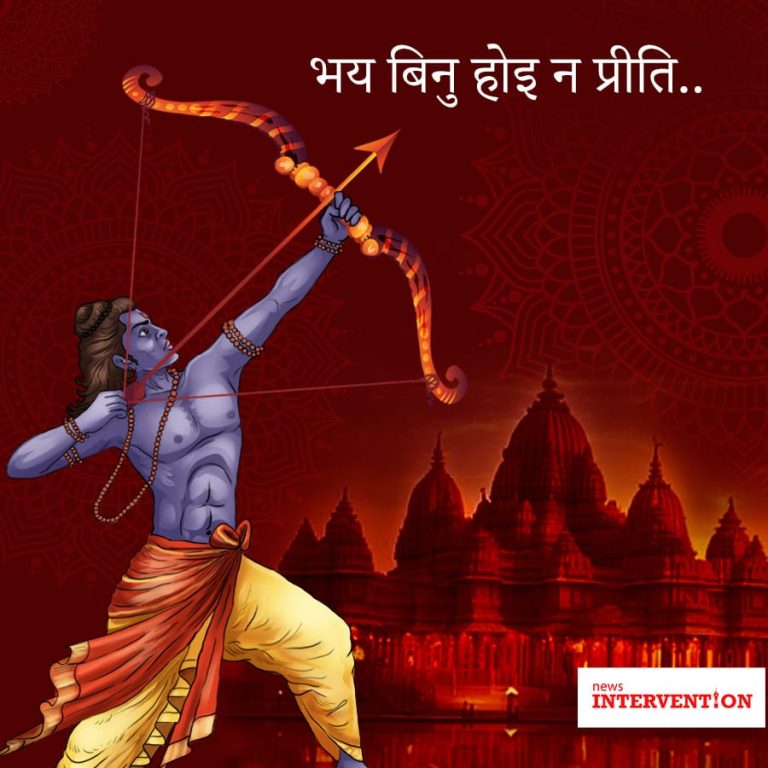
Celebrations continue in Ayodhya after Ram Temple Pran Pratishtha

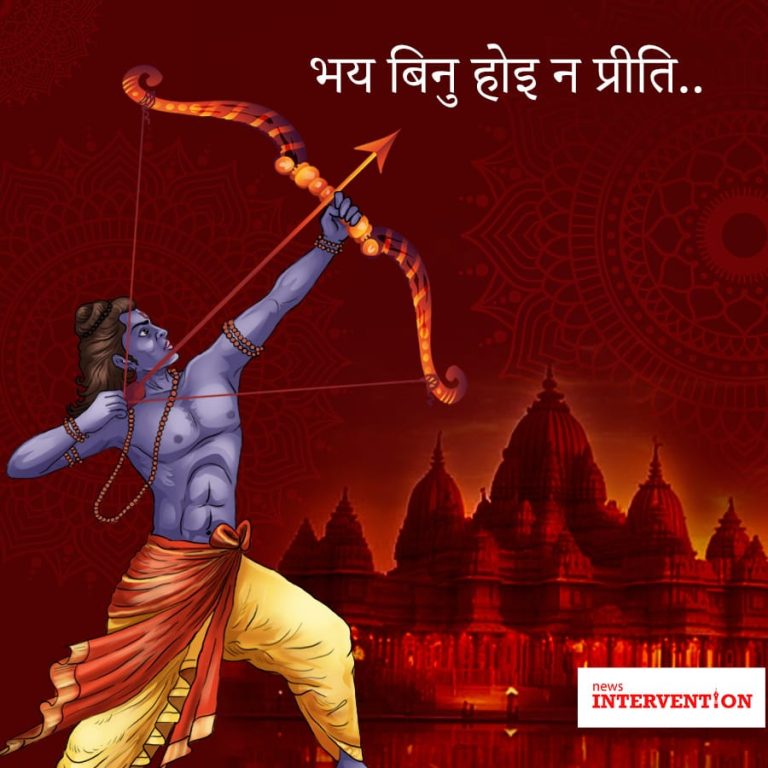
The much awaited consecration of Ram Lalla’s idol took place today in Ayodhya’s Ram temple. January 22, 2024, marks a monumental moment in Indian history as Prime Minister Narendra Modi performed the puja along with aarti, joined by RSS chief Dr. Mohan Bhagwat, Uttar Pradesh Governor Anandiben Patel, and Chief Minister Yogi Adityanath.

Ram Lalla’s birth occurred during the auspicious Abhijit Muhurta, under the Mrigashirsha Nakshatra, Amrit Siddhi Yoga, and Sarvaarth Siddhi Yoga. These favorable combinations reoccurred on January 22, 2024. The sculptor Arun Yogi Raj from Karnataka crafted the Ram Lalla’s idol. Chanting of mantras awakened Ram Lalla, followed by Vedic chants and a grand consecration ceremony with over 50 musical instruments. The main consecration ritual took only for 84 seconds, marking the end of Ayodhya’s anticipation.In the preceding seven days, the city echoed with chants of five lakh mantras. Vedic rituals and auspicious ceremonies began on 16 January, performed by 121 Vedic ritual specialists from Kashi. Between chants and the sound of conch shells, PM Modi consecrated Ram Lalla’s idol, ending a wait of nearly 500 years.

Post-consecration,  Ram Lalla’s eyes were unveiled, and PM Modi applied kajal to the deity. The Prime Minister then showed Ram Lala his reflection in a mirror, followed by offering bhog. In the auspicious moment, PM Modi consecrated Ram Lalla’s idol, resonating with the chants of “Jai Shri Ram” in Ayodhya. Helicopters showered flowers on the Ram Temple premises, marking a historic date—January 22, 2024. Vedic scholars performed the consecration ceremony following traditional procedures, guided by Prime Minister Narendra Modi. A huge group of actors and celebrities  graced the historic event. Saryu ghat has been illuminated with thousands of diyas and the city chants “Jai Shree . Ram”. P.M. Modi stated that today is not just a day of triumph but of humility too.
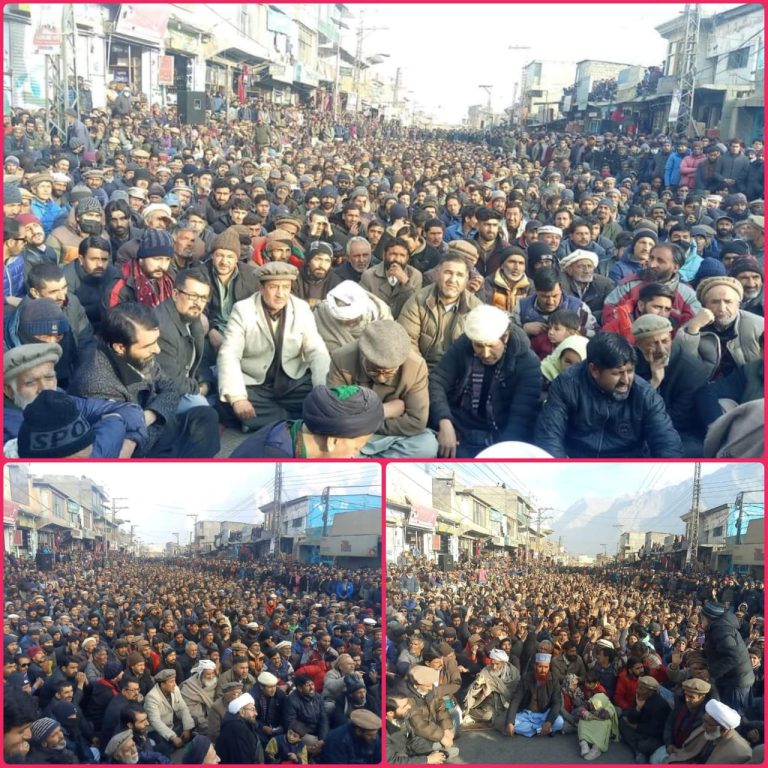
Pak-occupied J&K Kashmiris to observe First Black Day on 5 Feb

For the past thirty years, every year on 5 February, Pakistan occupied Jammu and Kashmir (POJK) and Pakistan occupied Gilgit-Baltistan (POGB), observed a day of solidarity with Kashmir, referring to it as “Kashmir Day.” On this day, government offices remain closed, and both official and unofficial events are held in all major cities of Pakistan, POJK, and POGB. The Kashmiris from POJK, who were living abroad also protested against India in front of Indian embassies, portraying leaders of the freedom conference as heroes while condemning their own Indian government and military as oppressors.

One of the main reason for this was the lack of awareness among the Kashmiris of POJK and POGB. Also, the propaganda of Pakistan played a key role in keeping them alienated. In the nineties, during the ongoing conflict in Sri Nagar under the banner of jihad, the Jamaat-e-Islami, a jihadist partner of the Pakistani establishment, led by Qazi Hussain Ahmed, declared 5 February as a Black Day on the official calendar, aligning with their demands. In the nineties, without the presence of social media, the people of POJK and POGB relied on Pakistan-controlled television to understand the Kashmir conflict.

The narratives presented on controlled media portrayed Islamabad as heaven, Muzaffarabad and Gilgit as paradise, while Srinagar as hell. Over time, with the advent of social media, perceptions shifted, and common people in Pak controlled territories, began to understand that Sri Nagar was progressing more than Muzaffarabad, and Delhi was considered a better place than Islamabad. Slowly, the hollow significance of the 5th of February began to fade.

How perceptions evolved in POJK regarding 5 February

This notion became more fervent in 2023. Throughout the year, 2023 the non-governmental organization in POJK protested against electricity bills, increased wheat flour prices, taxes, and abolition of subsidies. The historical protest continued for a year. Seeing no redressal of their demands, the Joint Action Committee, in its latest meeting this month, announced a complete shutdown and wheel jam strike from Nilam to Bhimber on the 5th of February. This announcement posed a significant challenge to the Pakistani establishment. Pakistan never thought it would witness such a day. For years, on the 5th of February, people carried away with the emotions of Kashmiri Jihad, observed a Black Day against India. However, this time, Kashmiris chose to observe a Black Day against Islamabad instead of Delhi. Times are changing, and perceptions are evolving.

Apparently, the expected protest on the 5th of February is likely to resonate globally against Pakistan. Accordingly, those who have been lying to people for years will now have their mask of empathy removed, and Pakistan will be exposed to the world.

Protests are intensifying in Pakistan-occupied Jammu and Kashmir. People have been withholding electricity bill payments for eight months. Sit-ins are ongoing in various cities. Hatred against Pakistan is escalating. Today, the non-governmental Azadi group from Pak occupied Jammu and Kashmir is demanding facilities similar to those in Srinagar. Whether understood or not, this is Pakistan’s worst defeat.

Now, Kashmiris have realized the reality of Pakistan. The connection between Pakistan and the people of Kashmir is weakening. Those who once considered Muzaffarabad as paradise and Sri Nagar as hell are now demanding facilities similar to those in Sri Nagar for Muzaffarabad.

Baloch teen returns home after 17 months of abduction by Pak Army

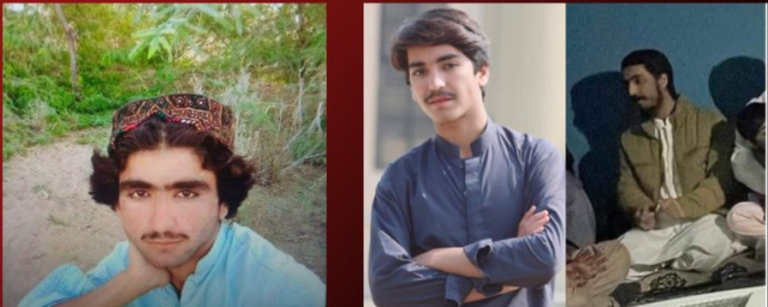
In an expectational circumstance, a young man named Shahid Hussain who was a victim of enforced disappearance in Mastung by the oppressive Pak Army was recovered and returned to his home on 20 January 2024 which is nearly seventeen months after his disappearance.

While the return of some of the victims of forcibly disappeared individuals in Pak-occupied Balochistan is made, on the other hand, many individuals are reported missing, such as another young man who was taken into custody by the CTDC on January 19 in the Jafarabad district of Balochistan and has not been seen in public since. The chain of enforced disappearances only continues to grow in various regions of Pak-occupied Balochistan, including incidents reported in Quetta, Gwadar, Kech and Awaran alone in January of the current year.


Since March 27, 1948, Balochistan has been forcibly occupied and subjected to a systematic assault on humanity by the oppressive Pak Army. Since then, the Baloch people have faced frequent home invasions, torture, enforced disappearances, kidnappings for ransom and target killings.

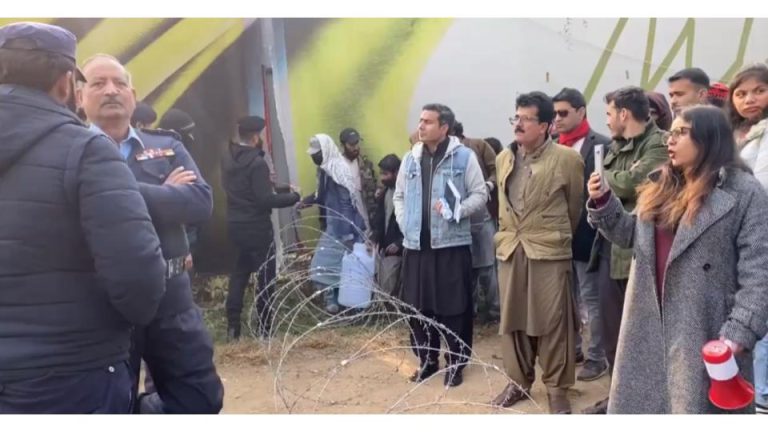
Islamabad police manhandles Baloch Yakjehti conference participants

Islamabad, Pakistan: A peaceful conference organized by the Baloch Yakjehti Committee (BYC) was disrupted by Islamabad Police, leading to the detention and injury of several participants. The “International Conference of the Oppressed” aimed to discuss human rights issues faced by various groups, including the Baloch people.

Reportedly, Police, under the influence of Pakistan Army, hindered the event in various ways, including:

  • Confiscation of equipment: Speakers, chairs, tables, and other essential items were taken away before the conference.
  • Restricted entry: Attendees were denied entry, preventing full participation.
  • Physical altercations: Participants, including speakers like Professor Manzoor Baloch and Advocate Imran, were allegedly manhandled and subjected to physical force.
  • Blockades and security restrictions: Roads were blocked and the event venue surrounded by barbed wire, further limiting access and movement.

Baloch conference

Reportedly, upon returning from the lunch break, participants of the Conference were met with police violence, adding another layer of brutality to the situation. The BYC condemned the police actions, calling them “a blatant attempt to silence dissent.”

Dr. Naseem Baluch, Chairman of BNM, strongly condemned the behavior of Islamabad police towards Professor Manzoor Baloch, Advocate Imran, and others. He emphasized the absurdity of a 4th-grade police officer treating a professor in such a deplorable manner, calling it the real face of colonialism. Dr. Baluch urged collective condemnation of such actions and appealed to the international community to hold Pakistan accountable.

Dr. Naseem Baluch stated, “This behavior towards professors and advocates is unacceptable. It exposes the true face of oppression in Pakistan.”

Despite these challenges, the BYC managed to conduct the conference. Dr. Mahrang Baloch, leader of the BYC, declared, “Despite these disruptions, we consider this a victory. We stand firm against oppression, and our voices will not be silenced.” The conference aimed to raise awareness about the plight of oppressed Baloch communities and sought support from the international community.

The Baloch Yakjehti Committee urges the world to amplify their voices against the ongoing challenges faced by the Baloch people from March 27, 1948 when Pak Army forcefully occupied the resource rich region Balochistan.

Since then, innocent Baloch civilians have been subjected to grave injustices such as daily home invasions, kidnappings and abductions for ransom, enforced disappearances, staged encounters, torture, and humiliation at checkpoints.

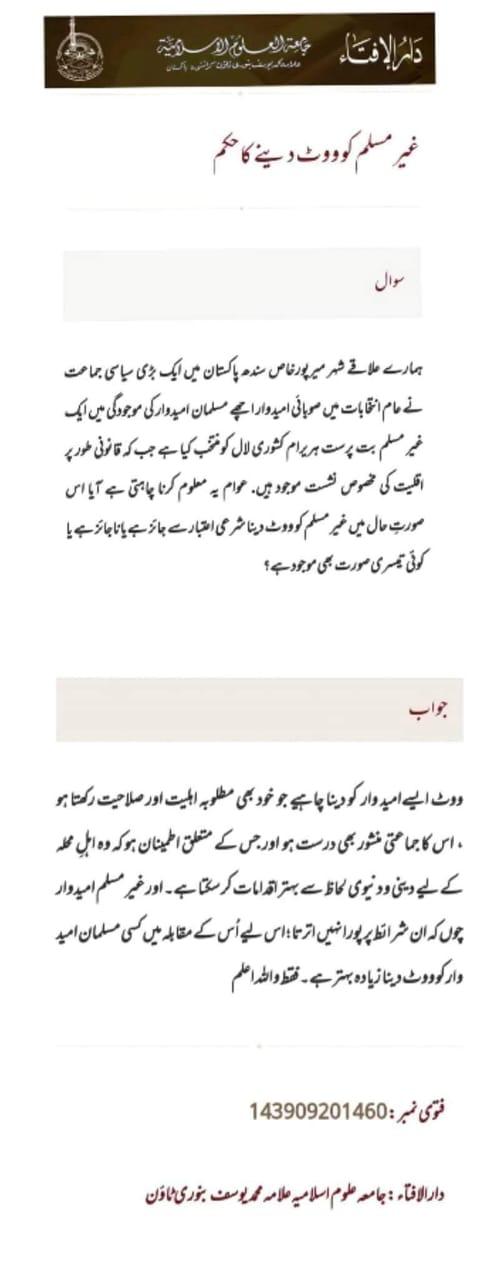
Radical clerics issues fatwa for voting Hindu candidate in Sindh elections

In a disconcerting development, the Darul Ifta at Jamia Uloom Islamia Banauri town has issued a fatwa against voting for Hindu candidate in the upcoming general elections, citing an inability to fulfill Islamic law requirements. The fatwa specifically addresses the candidacy of Hari Ram Kishori Lal in Mirpurkhas, Sindh, and advises Muslims not to vote for a Hindu candidate. Notably, Hari Ram Kishori Lal is a PPP candidate for the Provincial Assembly from PS-45 (Mirpurkhas-I). 

This raises profound concerns as it challenges the democratic rights of individuals in a country with a Muslim majority. Such religious edicts not only undermine the principles of democracy but also reveal the deep-seated bigotry within radical clerics in Pakistan. What is particularly striking is the selective application of these fatwas, as these so-called religious experts conveniently remain silent on the matter of accepting votes from non-Muslims.

It is ironic that while these clerics advocate for political participation by individuals from religious minorities, they deny reciprocity by discouraging Muslim voters from supporting minority candidates. This hypocritical stance exposes the underlying bias and raises questions about the true essence of inclusivity and democratic values within certain segments of Pakistan’s religious leadership.

This discriminatory mindset is not only a disservice to the principles of equality and freedom but also perpetuates a cycle of religious intolerance that hampers the harmonious coexistence of diverse communities.

Pak Army books Manzoor Pashteen again in controversial 3MPO case in Pakistan

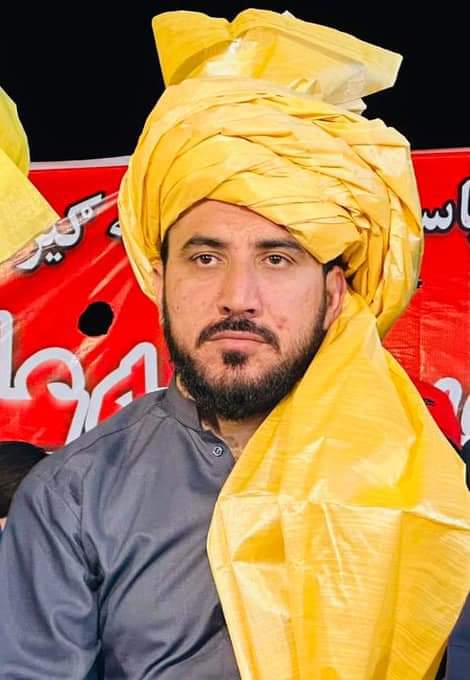
Manzoor Pashteen has once again been implicated in a controversial 3MPO (Maintenance of Public Order) case leading him to further incarceration after recurring arrests.On January 19, DC of Chakwal detained Manzoor Pashteen for 14 days.

Notably, after facing two consecutive arrests in fake cases registered against him by Islamabad police, PTM Chief Manzoor Pashteen was granted bail on January 5. While he was being released, Jhelum Police abducted him from the gates of Adiala prison.

The arrest was illegal as no reason for detainment was conveyed to Pashteen or his organisation waiting for him outside the jail. He was implicated in a 3MPO case in Jhelum, under which he was arrested on remand of 14 days. Now when the 14-day remand of Pashteen ended on January 19, he has again been charged with fresh 3MPO case by DC Chakwal. Interestingly, 3MPO has been vehemently used by the Pakistan Army and the police in Pakistan to suppress the voice of dissent.

Pakistani establishment exploiting 3MPO

It must be noted that since day one of the arrest of PTM Chief Manzoor Pashteen, the Pakistani establishment has exploited the legal machinery to keep him away from the masses. In each case he is implicated in a way that he is kept arrested. Post utilisation of every provision, a fresh case is laid upon him to repeat the same procedure. This process is being carried out on the dictates of Pakistan Army, which is using its strong hold over the law enforcement machinery. After Islamabad Police, Manzoor Pashteen’s case is being picked up by the Punjab Police.

Nonetheless, Pashteen has again been arrested for 14 more days. And the way Pakistan’s mockery of legal provisions is happening, it doesn’t seem easy for Pashteen to ultimately get released in the short term. To the worse, despite persistent efforts and demands of Pashtun Tahafuz Movement, no human rights organisation has taken cognizance of this absolute violation of human rights and persecution of Pashtuns.    

Release of PTM activists after being arrested for protesting against Pak atrocities on Afghan refugees

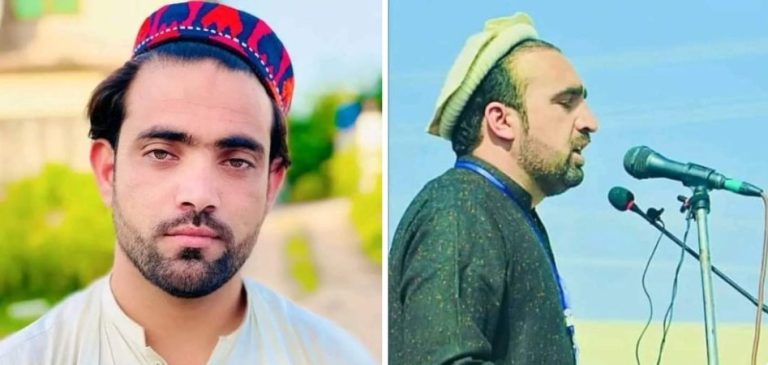
Eid-ul-Rehman Wazir and Zakeem Wazir, both the activists of Pashtun Tahafuz Movement (PTM), have been released from Bannu Central Jail after being among those arrested in October of the previous year. Alongside them, Geelaman Wazir was also detained during the same period. However, despite their release, Geelaman and another PTM member, Noorullah Tareen, continue to remain in custody.

Noorullah Tareen, serving as the Provincial head of PTM in Sindh, was arrested by the police from Sindh shortly after the detention of Eid-ul-Rehman, Zakeem, and Geelaman. These arrests took place during a period when the PTM activists raised their voices against the alleged illegal crackdown on Afghan refugees in October.

As Eid-ul-Rehman and Zakeem Wazir regain their freedom, the fate of Geelaman and Noorullah Tareen remains uncertain, awaiting their release from detention. The arrests drew attention due to the activists’ vocal advocacy against the mistreatment of Afghan refugees, emphasizing ongoing concerns related to human rights and freedom of expression in Pakistan.

Mahrang Baloch organizes awareness campaigns in universities & colleges about Pak atrocities

In a bold move against the Baloch genocide, Mahrang Baloch and fellow activists in the fourth phase of the movement aim to raise awareness nationally and internationally against the ongoing rights abuses, enforced disappearances, and extrajudicial killings by the Pak Army in Pak-occupied Balochistan. For this movement, several initiatives are being undertaken, and one such initiative is organizing a conference beyond borders for oppressed people and launching various awareness campaigns in universities and colleges.

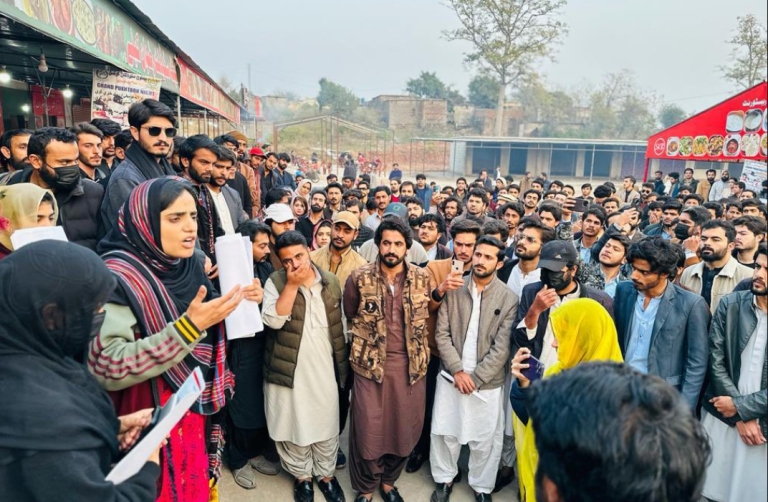
In the recent post by Mahrang Baloch, it can be seen that Mahrang Baloch and other activists are actively interacting with students in universities and colleges and raising awareness campaigns. It aims to educate people nationally and internationally about the ongoing Baloch genocide.

The group passionately appeals to the global community, especially the youth of Pakistan and worldwide, to support the campaign against Baloch genocide and encourage the spirit of Baloch women by supporting them and raising a collective voice for every victim of the atrocities by the Pak Army.

This ongoing conflict in the Balochistan region has claimed many innocent lives till now, and the list only continues to grow. The urgency of this situation cannot be overestimated. Balochistan has been forcibly occupied by the oppressive Pak Army since March 27, 1948. Since then, innocent Baloch civilians have been subjected to grave injustices such as daily home invasions, kidnappings and abductions for ransom, enforced disappearances, staged encounters, torture, and humiliation at checkpoints.