Home Blog Page 153

Conversion of Hindus in Pakistan: Religious coercion and systemic challenges

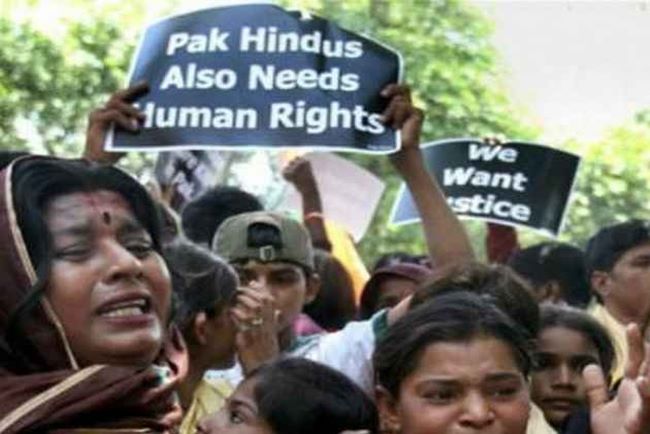
Hindus are being coercively converted to Islam in Pakistan at a faster pace, in a pursuit of Islamising the entire populace. In an attempt of that, 14 members of a Hindu family have been converted at a single event in Sindh’s Daharki. The entire family including the children were converted by the infamous Mian Javed Ahmad Qadri of Bharchundi dargah. Qadri is notoriously involved in the conversion of Hindu population in and around Daharki.

In the territories controlled by Pakistan, Sindh has the biggest population of Hindus. And hence, it is unfortunate that Sindh is the only region which witnesses the most frequent cases of forced Hindu conversion. The biggest facilitators of these illicit and inhumane conversions are people like Qadri who at the behest of religion organise the most unsacred façade. Apart from Javed Ahmad Qadri, Pir Ayub Jan Farooqi aka Pir Ayub Jan Sirhandi is also a radical bigot who has vowed to convert all the Hindus in the most populous Hindu districts Umarkot (Amarkot) and Tharparkar, the region where he operates.

Simply put, these hate mongers who disguise themselves as Maulanas or Pirs are on a zealotry where they want an ethnic cleansing of all other minorities. However, these Maulanas are not the only ones to be blamed as their ideas and bigotry gets approval from a political entity that calls itself a ‘state.’

Precarious condition of Hindus in a zealot political system

Whether it is judicial system, the administration or the political system, these bigots get a refuge for doing such coward acts of forced conversion. In most of the cases even the FIR are not registered. The minor girls who get abducted are proved as adult on the basis of the forged document and the legal system enjoys being ignorant. This is all happening not because of any lawlessness but a validation of an ideology by the political system that Islam is the only truth and mere existence of any other religion is anti-Islam and that there is no harm in purge of any other religion.  The biggest example of this is the selection of a candidate to the post of caretaker PM who has in the past gavin the statement that could strengthen the courage of these criminals.

It must be remembered that the caretaker PM of Pakistan, Anwar-ul-haq Kakkar wrote a fanatic tweet back in 2020 which says, “We are waiting all Hindus to be persuaded to the enlighten truth of Islam will wait for a millennium no hurry.” The statement itself speaks that the most liberal idea of Pakistan’s political system is to provide a time period for the end of pluralistic society.

So, it must never be thought that at any point of time in future, this precarious situation of Hindus can get any better in Pakistan unless strict measures are taken by the international organisations. The international community and specially those working in the domain of human rights need to address this worsening condition of Hindus and other minorities in Pakistan, but at first they would have to have faith in a fact that Pakistan is no state and is just an entity which is blinded by the religious hatred.    

Baloch Long March sparks a global movement against atrocities by Pakistan

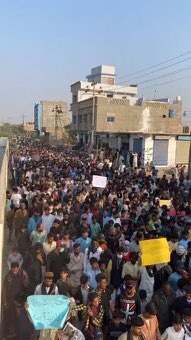
In an inspiring display of unity, thousands of Baloch, including women and children, flooded the streets of Malir, Karachi, demanding an end to enforced disappearances and human rights violations in Pak-occupied Balochistan. The protest, organized by the Baloch Yakjehti Committee, has transformed into a mass movement with overwhelming nationwide support.
The rally in Malir, Karachi, is not merely a local outcry; it is a resounding condemnation of the ongoing Baloch genocide. Despite the Pak “establishment’s” attempts to quell the Baloch Long March through force, the movement has only gained strength, fueled by the unwavering support of the public.

This grassroot movement has transcended borders, with the Balochistan diaspora staging protests outside the White House. Waheed Baloch, a former speaker of the Balochistan Assembly, emphasized that their protests are against the 75 years of atrocities committed by Pakistan in Balochistan.

“We’re protesting against the atrocities that have been done to Balochistan by Pakistan for the last 75 years. We’re protesting here in support of those Baloch families that were abducted and missing. For the last 75 years, Pakistan has forcefully occupied Balochistan,” declared Waheed Baloch.

Sufi Laghari, a member of a Sindhi foundation, criticized Pakistan’s habitual blame on India. He stated, “One of the biggest failures of Pakistan is that they always blame India…thousands of people in Balochistan have disappeared; do you think it is sponsored by India? These are useless weapons they’re using. These are just blames, games and fake theories…This is going to be the end of the story for Pakistan, and we are going to get freedom soon”.

In the face of adversity, Sammi Baloch, a young protester outside the White House, passionately voiced her concern for the Baloch people who have suffered atrocities and human rights violations for decades.

“We are here because many Baloch people have been murdered and they have been genocided and kidnapped by the Pakistan Army. Today we are here to stand with them and their families because what happened to them is atrocious and is a human rights violation,” expressed Sammi Baloch.

Her impassioned plea resonated with the painful history of Pak-occupied Balochistan, a land marred by relentless oppression and heinous crimes against its people since the dawn of occupation in 1948.

Since March 27, 1948, the Baloch people have endured relentless oppression, facing home raids, disappearances, staged encounters, target killings, torture, and kidnappings for ransom. The Long March, ignited by the extrajudicial killing of Balaach Mola Bakhsh, persists in its demands for the release of missing persons, the disarmament of the Counter Terrorism Department (CTD), and accountability for the Army’s transgressions.

It’s a heartfelt request to reveal the harsh truth of the Baloch people’s oppression. They endure a planned genocide without the simple right to peacefully protest. May their voices travel far and wide, urging for immediate help and support from every corner of the world.

Pakistan Army-backed death squad abducts teen in Pak-occupied Balochistan

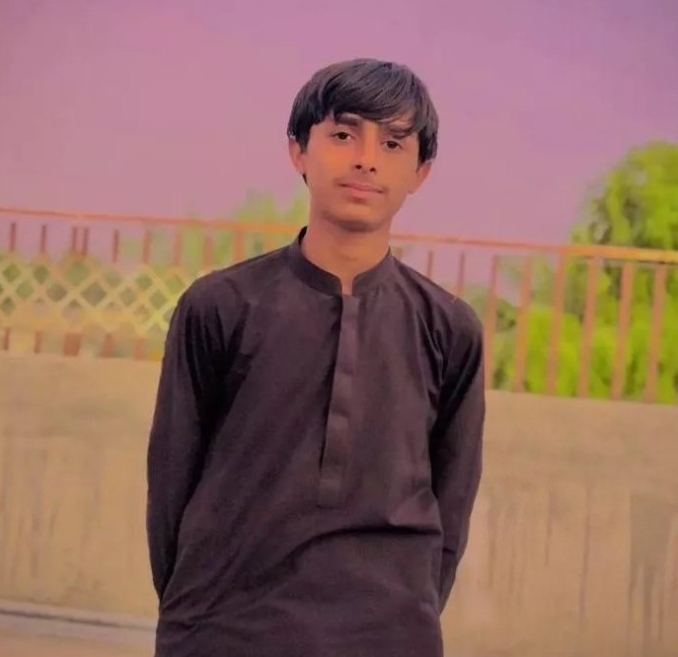
Yet another distressing incident of disappearance occurred in Gwadar. Balach, a teenager and son of Rauf has become the latest victim of enforced disappearance by the Pakistan Army-backed Death Squads. The relentless and ongoing nature of these disappearances highlights the critical need for attention and action to address this serious human rights issue, which affects individuals and families in Pak-occupied Balochistan.

The list of enforced disappearances only continues to grow with Taj Muhammad Sarparah’s family who has staged a sit-in protest in London for the disappearance of Taj and other missing persons, Kabeer Baloch who has been abducted for fifteen years now on March 27, 2009, along with two other BNP employees Attaullah Baloch and Mustaq Baloch, Ghulam Rasool son of Suleiman, Sohail son of Moosa, Uzair son of Mehr Dil and many more.

Since March 27, 1948, the Baloch people have experienced forced disappearance, daily home invasions, kidnappings for ransom, simulated encounters, target killings, and torture. The provinces of Pak-occupied Balochistan, rich in resources, have become a focal point of exploitation, with the Pak Army orchestrating a sinister plan to plunder the region’s wealth.

The world observes the Baloch people’s brave resistance and the cry for justice beyond the confines of Balochistan. This call won’t stop until the voices of the Baloch people are heard and they are released from the oppressive grip of the enemy.

Massive protest erupts against the arrest of Manzoor Pashteen in South Waziristan

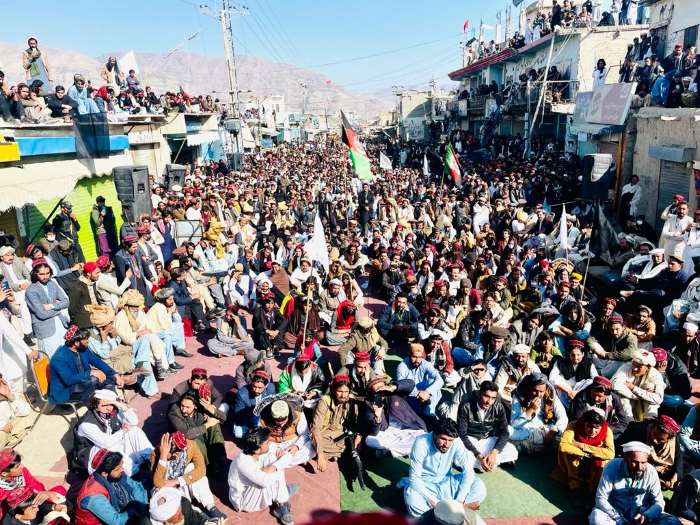
PTM holds a massive protest and long march to Wana, South Waziristan for the release of its leader Manzoor Pashteen and other activists.

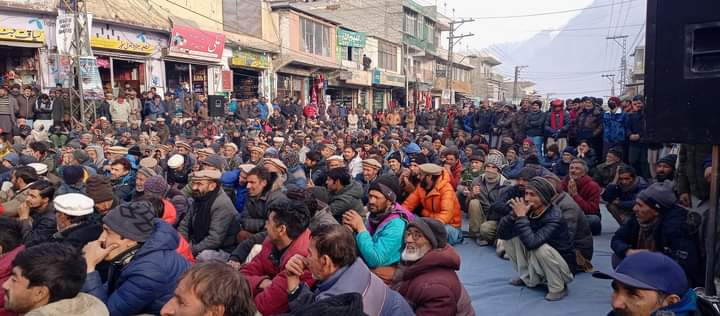
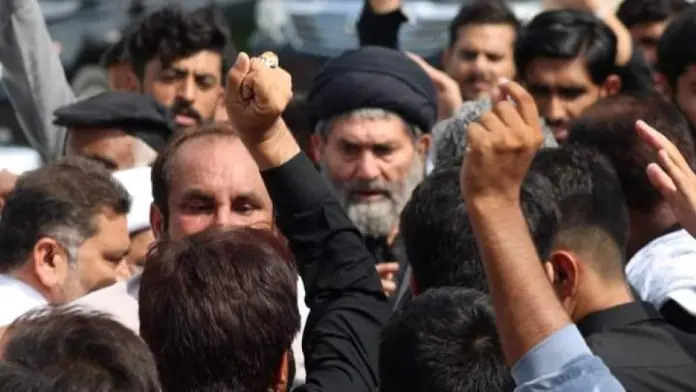
Manzoor Pashteen’s arrest and continuous manipulation of legal procedures to keep him captivated has come under strong criticism form the Pashtuns. Wana protest was attended by a large number of people who raised their unified voice against the oppression of the Pakistan Army. Wana protest and march was pre-announced, however, after Manzoor Pashteen was rearrested following his release from the Adiala prison, the participation and agitation augmented to a new level. Furious protestors from across Waziristan and nearby regions reached the protest site and voiced their concerns. The site of protest saw such a huge influx that people stood at the top of the buildings to hear the leaders addressing the gathering.

Interestingly, with the arrest of Manzoor Pashteen, it has become clear to the masses that they can only survive in Pakistan if they follow the dictats of Pakistan Army. In the case of protesting or peacefully opposing the establishment, the citizens would be treated akin to the terrorists.

Notably, Manzoor Pashteen has been arrested for the third time in just one month. After he was arrested on December 3, while embarking to Turbat, he was granted bail and was rearrested by Islamabad police. And now when he got bail in those cases, he has again been arrested by the Punjab Police at the gates of Adiala prison. The absolute suspension of human rights and exploitation of legal machinery has infuriated the oppressed Pashtuns. Impunity in Pakistan Army’s action has made it evident that those who challenge their authoritarian regime are rendered helpless and are in fact tortured with the same instrument that would save them, the law.

Sindh police register false FIR against Mahrang Baloch & Manzoor Pashteen

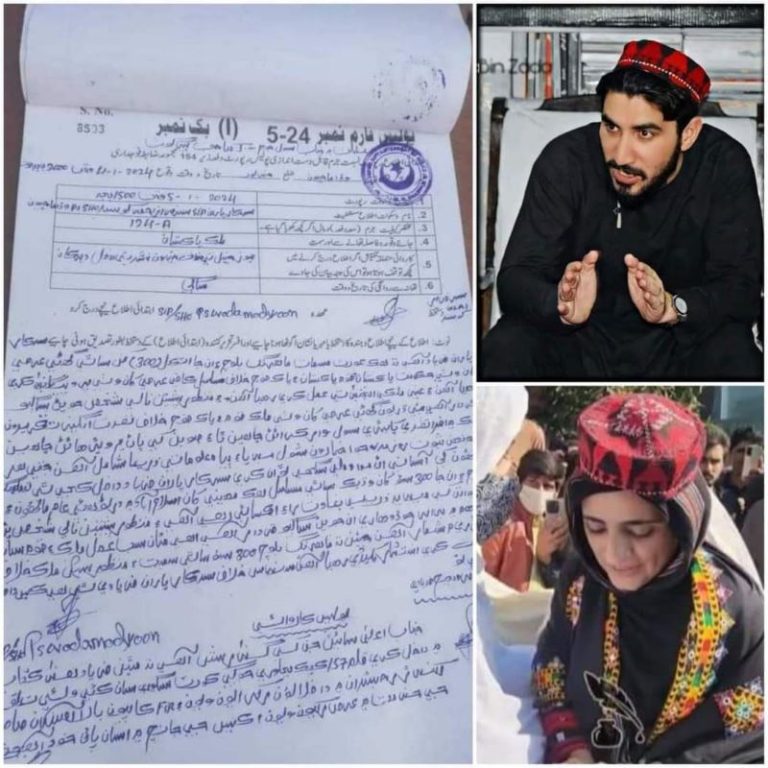
A significant development unfolded as Mahrang Baloch, a prominent figure from the Baloch Yakjehti Committee and PTM Chief Manzoor Pashteen have been booked in sedition charges in Kharipur, Sindh. Alongside Mahrang Baloch, nearly 300 unnamed campaigners advocating for the recovery of missing Baloch citizens, faced a sedition case at the Wada Machhiyoon police station in Khairpur district on Friday.

The First Information Report (FIR) filed by SHO Sarfaraz Khoso under Section 124-A of the Pakistan Penal Code alleged that Mahrang Baloch and her supporters incited the public to revolt against the state and military during recent protests in Islamabad, purportedly aligning with a foreign agenda.Notably, the FIR also implicated PTM chief Manzoor Pashteen, accusing him of instigating sentiments against the establishment.

However, latest report suggest that SSP Khairpur Dr. Samiulah Soomro has suspended the SHO after the deep concerns raised by the Baloch and Pashtuns.

After the FIR was registered, both Baloch and Pashtuns swiftly refuted the allegations, denouncing the FIR as baseless. They contended that neither Mahrang Baloch nor Manzoor Pashteen had set foot in Inner Sindh, asserting that the case against them was politically motivated to suppress nationwide protests organized by their respective organizations.

Interestingly, the action follows recent controversial statements made by caretaker PM Anwar-ul-haq Kakkar, who inaccurately cited the number of missing persons in a public statement and exhibited a lack of awareness regarding enforced disappearances. In another statement, he also reprimanded protestors to join the Baloch sarmachars instead.

Moreover, this move reflects a trend where Manzoor Pashteen faces recurrent arrest through fake FIRs, despite securing bail, indicating a concerning pattern of extra-judicial measures against peaceful protestors. The situation underscores the coercive tactics utilized by Pakistan, raising concerns about the stifling of dissenting voices in the country.

Pakistan Army forcefully abducts Baloch students from Balochistan University

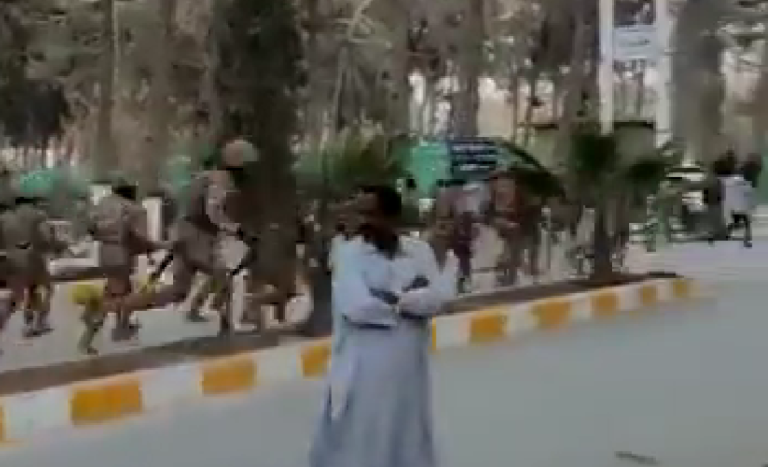
A disturbing video is circulating on social media. The footage shows a large contingent of Pakistan Army personnel deployed at the University of Balochistan. Resembling an Army training center, this battalion can be seen entering the university and abducting Baloch students by force. This incident highlights concerns about the violence of innocent individuals by the Pak Army. The Baloch community has faced oppression since the Pak “establishment” forcefully occupied Balochistan.

Sadly, this is not a lone incident, recently Fareed Baloch, a student at Punjab University LHR, was violently abducted by the Pakistan Army in plain clothes, right in front of university guards and cameras. These incidents have sparked a strong reaction and drawn attention to the area’s long-standing disappearance problem. Human rights organizations estimate that thousands of Baloch activists and civilians have disappeared as a result of the Pak Army’s actions, though exact numbers are still unknown.

These abductions not only violate fundamental human rights but also suppress the academic freedom of these individuals. This dire situation emphasizes how urgently the world needs to pay attention to and intervene on behalf of the Baloch people to look into these actions, protect their rights and ensure safety, and more importantly, hold those responsible accountable for these heinous violations.

The Pakistan Army has been occupying Balochistan with force since March 27, 1948. Baloch people are being targeted and watched over by the Pak Army, and anyone who might pose a question is either killed or kidnapped. It is a heartfelt call for justice for the people of Balochistan and shedding light on the Pak Army’s disregard for basic human rights.

Protests against wheat price hike across Pak-occupied Gilgit-Baltistan intensify

The skyrocketing wheat price and the new Finance Act 2023 has enraged the people across Pakistan-occupied Gilgit-Baltistan (POGB) to protest. Every corner of the region is agitated against the coerced imposition of unprecedented price hike of about 80%. In the latest development, people from Kundus valley of Khorkondus village carried out a protest rally raising slogans against their representative from Ganche III, Muhammad Ismail a.k.a Engineer Ismail, who is also the finance minister in the puppet government of POGB.

Meanwhile, the protest in Skardu against the puppet government’s decision to increase the price of wheat from Rs. 20 to Rs. 36 entered its 11th day today. Interestingly, this unprecedented hike in prices comes within a year of another hike which was imposed on June 2023. In June 2023, the wheat prices were increased to Rs. 20 from Rs. 12, which means that within a year the wheat prices have gone up from Rs. 12 to Rs. 36, a three-fold increase. So, whether it is indiscriminate hike in the wheat prices or the taxes of the imposition of Finance Act 2023, people of POGB are fed up with Pakistan’s policies which strives to worsen the condition of native Kashmiris.

Multiple protests across the region

During the protest at Shahid Yadgaar Chowk at Skardu, it was stated that if the wheat subsidy is not restored, the highway towards Islamabad will blocked. Furthermore, the slogans of “Gaddar numaainde…Murdabaad” [death to traitor representatives] were also hurled against the representatives of puppet government in Pakistan occupied Gilgit Baltistan (POGB).

Under the occupation of Pakistan, POGB has been suffering exploitation for more than 75 years. Accordingly, Pakistan induced regulations and policies that deprived the people not only from their resources but from their freedom of speech and expression. They were manipulated with a false dream that kept them alienated. But now when Pakistan is trying to attack and snatch their rights to basic amenities, people have started hitting the streets with sloganeering voices.

POGB populace is clearly arguing that Pakistan benefits from their resources and the subsidies and other rights of POGB are no alms but their right. They argue that POGB is a disputed territory and hence, has right to appropriate benefits from the occupying regime as per the UN Charter.

Meanwhile, protest reports also emerge from Yasin and Hunza. In Hunza, the protest has entered its third day while in Yasin, the protestors are sitting in front of the AC office. They are demanding the withdrawal of price hike failing which, they warned, there will be a long march.  

BLA continues armed operations against Pak Army inflicting heavy losses

Amidst the tumultuous landscape of Balochistan, the Baloch Liberation Army (BLA) emerged as a formidable force in 2023 by persistently engaging in armed operations to bring down the occupying Pak Army personnel as well as its collaborators, achieving significant victories throughout the year. The operations have resulted in the defeat of enemy forces that were routed on several fronts by the highly trained fighters of the Baloch Liberation Army.

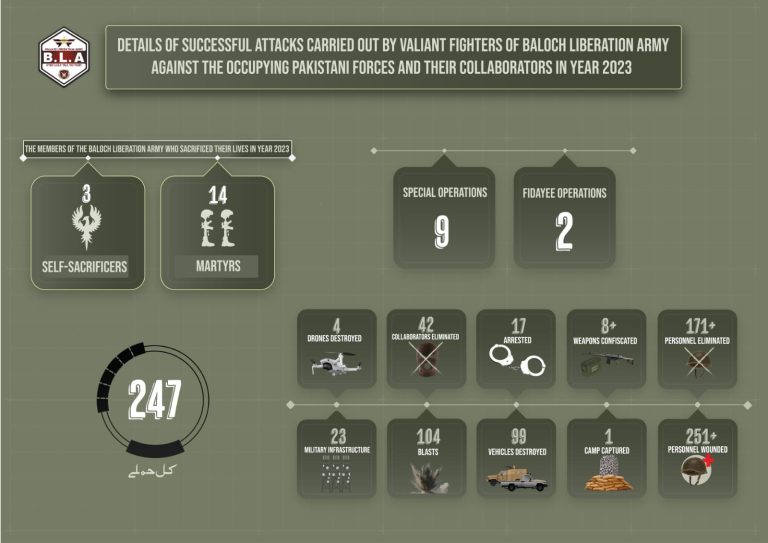
During these operations in 2023, the BLA executed 247 attacks on the enemy forces including 9 special operations and two self-sacrificing operations. These actions led to the elimination of at least 171 enemy personnel with an additional 251 injured. Furthermore, 42 collaborators, informants and agents were also neutralized during these operations.

Pak Army suffered significant material losses as a result of these operations, which also destroyed 99 cars and motorcycles. In addition, the BLA targeted attacks on four drones and twenty-three military installations.

Of the major operations, two self-sacrificing missions involving three fidayees were coordinated by the Majeed Brigade of the Baloch Liberation Army. One such operation occurred on June 24, 2023, when enemy forces suffered significant losses as Fidayee Sumaiya Qalandarani targeted a high-value military target in Turbat, Pakistan.

As part of the third phase of operation Zir Pahazag, another noteworthy operation took place on August 13, 2023. In Gwadar, BLA’s Majeed Brigade, under the leadership of fidayees Naveed Baloch alias Aslam and Maqbool Baloch alias Qayim, carried out a successful two-hour operation. Eleven Pak Army personnel and four Chinese nationals were killed in this operation, and many more were injured.

Seven operations were carried out by the BLA’s Special Tactical Operations Squad (STOS) and Fateh Squad during the year. Two personnel were arrested after the Fateh Squad raided an enemy camp near Quetta and took everything belonging to the enemy. Meanwhile, STOS targeted members of Pak Army subordinate organizations.

As a tragic reminder of the sacrifices made in the liberation struggle, 14 freedom fighters from the Baloch Liberation Army were martyred in 2023. These fighters included Martyr Mumtaz alias Mullah Behram, Martyr Ghanni Marri alias Hassan, Martyr Waleed alias Commando Bahar, and others.

Since 27 March 1948, the Pak Army has forcefully occupied the resource-rich region of Balochistan, and committed numerous atrocities against the Baloch people, causing them great suffering and violations of their human rights. There have been widespread military operations in Balochistan, as well as enforced disappearances, extrajudicial killings, torture, genocide and accounts from a variety of sources. Many Baloch families have been forced to relocate as a result of the Pak Army’s actions, which have instilled fear and intimidation in the community.

The ceaseless military actions have heightened tensions and jeopardized the basic liberties and rights of the Baloch people by specifically targeting activists, citizens, and dissident voices. Until the Baloch motherland is freed from the occupation of Pak forces, the BLA reaffirmed its determination to keep attacking these forces, as well as their collaborators.

No new year celebrations in POJK & Pak-occupied Gilgit-Baltistan; only massive protests

0

The contrast on both sides of the Line of Control [LoC] that delineates Jammu and Kashmir [J&K] and Pakistan occupied J&K [PoJK] couldn’t have been more pronounced. In J&K, a slew of development activities on war footing complimented by a humongous tourist influx were good reasons for its people to celebrate New Year. On the other hand, the beleaguered people of PoJK had nothing to cheer about and Pak-occupied Gilgit-Baltistan [POGB] residents were forced to usher 2024 with the announcement of a massive protest in all districts over spiraling wheat prices.

Anger amongst the people of POGB is justified as its puppet government installed by Islamabad has through a notification dated December 26, 2023 increased the price of wheat from Rs. 20 to Rs. 36 per k.g. with effect from January 1, 2024. While this inordinate hike is shocking, the government’s ludicrous stand that the extraordinary 80 percent hike won’t have any negative impact on the people is downright absurd. That’s why it’s not at all surprising that Tehreek-e-Islami [TeI] Gilgit Baltistan has called for public protests commencing from January 2.

ANI has mentioned that TeI leader Sheikh Mirza Ali had revealed that the government’s decision to hike wheat price was arbitrary and not arrived at through consensus after consultation with all stake holders as officially claimed. He also cited “symbolic protests” held against this move in six districts as proof of public dissent. Ali summed up the prevailing situation in POGB by saying, “There is no internet, there is no electricity and there are no facilities. I wish that this administration, rather than dropping a ‘bomb of inflation’ on us, could have tried to take control of load-shedding.”

For the impoverished people of PoJK who are being denied basic amenities by Islamabad, the wheat price hike comes on the heels of a unimaginable increase in electricity tariff that has led to widespread protests with the people collectively deciding not to pay their inflated electricity bills. Besides being attacked by the “bomb of inflation”, the people of PoJK are up in arms against continuing disempowerment through denial of their fundamental right to freedom of speech.

Discontent has been simmering in PoJK since long but the world doesn’t know much about it as Pakistani media either doesn’t report it, or does so in an extremely perfunctorily manner. An example is the massive public rights movement that has been going on in PoJK since May with widespread rallies against both the POGB and Pakistan governments.

Expressing solidarity with PoJK Awami Action Committee, students from PoJK also held protests in major Pakistani cities like Islamabad, Lahore and Karachi demanding revival of the student union, fee reduction and better hostel facilities. While these demands expose the inadequacy of educational facilities for PoJK students, their plea for creation of anti-harassment committees that include both male and female students highlights the discrimination students belonging to PoJK face within Pakistan.

Besides denying fundamental rights to the people, muzzling dissent in PoJK is also commonplace. An example is the sealing of the Central Secretariat of Gilgit Baltistan United Movement [GBUM] by the authorities in October, barely three weeks after its inauguration and arresting Shabbir Mayar who is General Secretary of Awami Action Committee and chief organiser of Gilgit Baltistan United Movement [GBUM]. Mayar rightly referred to these disturbing developments as “a blatant attempt by the state to keep non-state dissidents out of politics.” [Emphasis added]. Mayar’s arbitrary arrest has angered locals of POGB since it is obvious that it was an attempt to prevent him from speaking out against the recent targeted killing of a local teacher by assassins with backing of the establishment.

Despite growing opposition, there’s no indication that Islamabad is ready to give people of PoJK their fundamental right to freedom of speech.  To make matters worse for scribes, a new bill titled ‘Azad Kashmir [PoJK] Defamation Act 2021′ was tabled in the PoJK Legislative Assembly last month. Once it becomes a law [which it invariably will], any journalist found guilty of criticizing PoJK policies, departments and institutions in the press or social media can be imprisoned, and courts have to decide on such cases within 90 days. Such a draconian law applicable in only PoJK clearly indicates how Islamabad is marginalising the Kashmiri people.

The ongoing protests in PoJK have two interesting features. One, breaking social taboos, the women of PoJK have started assuming a greater role in the ongoing protests. Two, the students are also demanding that the control of PoJK resources should be given to its people. While large scale participation of women in protests will create additional headaches for law enforcement agencies [LEAs], this path-breaking trend will surely attract international attention on the institutionalised repression of people living in PoJK, which Islamabad can ill afford. And giving right of resources in PoJK to its people is unthinkable as it would annoy Beijing which is merrily exploiting the same!

Lastly, Islamabad which keeps accusing New Delhi of committing atrocities in J&K needs to revisit its own human rights records in PoJK. Defence of Human Rights [DHR], a respected and non-partisan Pakistani non-governmental organisation has in its 2023 report revealed that during the last year, PoJK recorded 20 enforced disappearances. Out of these, while 17 individuals abducted by Pakistan Army, its intelligence operatives and LEAs were subsequently released, two persons, though traced, continue to remain in illegal confinement, while one individual has been the victim of extra judicial execution. 

Pakistan needs to realise that just by naming PoJK “Azad” [free] Jammu and Kashmir it can’t fool the international community into believing that people here enjoy freedom. Conversely, PoJK residents are constitutionally debarred from questioning the legitimacy of PoJK’s alleged “accession” to Pakistan.Islamabad has always treated PoJK as a colony and though its people have grudgingly lived like second class citizens for more than three-quarters of a century, they are not prepared to do so any longer. 

Islamabad hence needs to wake up and smell the coffee before it’s too late!

Tailpiece: The sorry state of affairs and poor living conditions in PoJK are not hidden from the world. In 2017, residents of Simmranpur, a small nondescript village of 800 people in Kanpur district of Uttar Pradesh in India were greatly annoyed due to lack of basic amenities like electricity and water as well an indifferent village headman who refused to acknowledge these live problems.

So, the hapless villagers decided to draw attention of the authorities to both their pathetic condition and the apathy of their headman through an appropriate parallel. Accordingly, they took the collective decision of renaming their village “Pakistan occupied Kashmir,” andvowed to continue referring to it as such till the authorities improved their living conditions. The fact that this renaming incident had nothing whatsoever to do with politics says a lot.

But is Islamabad willing to listen? 

Manzoor Pashteen faces second arrest following bail release

In an exemplification of absolute lawlessness, Pashtun Tahafuz Movement (PTM) leader, Manzoor Pashteen has been rearrested for the second time at the gate of Adiala prison after getting bail from the court yesterday.

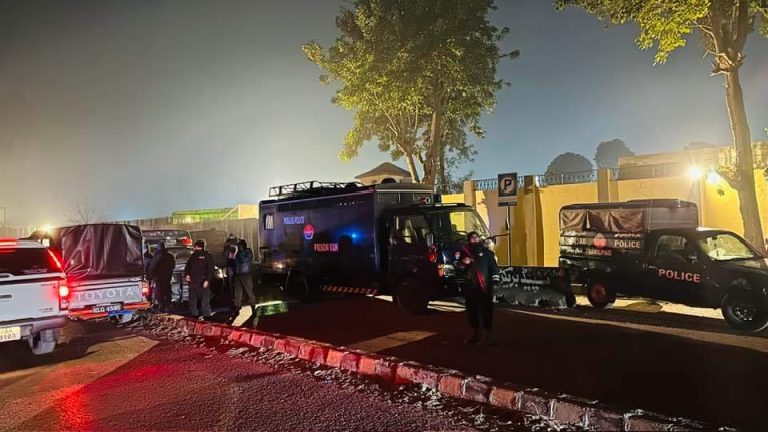
Manzoor Pashteen was granted bail in two cases that were imposed against him, including a Federal Investigation Agency (FIA) case. This time Manzoor Pashteen was arrested by Punjab Police. This is the second time that he has been arrested this way out of the prison gate. Last time, when he got bail from the ATC court, he was released. As soon as he reached the gate, he was arrested by the Islamabad police in two other cases. It was these two cases in which Pashteen got bail yesterday. The consecutive arrests and that too just after the bail raises apprehensions about the extra judicial methods being employed on the direction of Pakistan Army, as Pashteen has time and again made fierce attacks on the authoritarian control of Pakistan Army. Pashteen has conspicuously exposed the policies of Pakistan Army that instigated terrorism in Khyber Pakhtunkhwa.

https://twitter.com/QasimAchakzai6/status/1742973681452868078

Pakistan Army’s foul play

As per the PTM leaders and workers, Pakistan Army is directing the police forces to continue to press charges each time he gets bail from the court. Manzoor Pashteen has risen as one of the most influential Pashtun leaders, who is exposing the charade of Pakistan Army. Driven solely by the Pashtun cause, the PTM chief fights peacefully, devoid of any political motives. Pakistan Army is tormenting the legal procedures and exploiting the legal loopholes to keep Manzoor Pashteen away from the masses failing which, it fears, its authoritarian dominance could be thrown away just like the chaff is separated from the wheat.

Notably, Pashteen was arrested on December 3 after a deadly attack on his convoy, while he was en-route to participate in Turbat protest. Later he was presented to Anti-Terrorism Court, from where he got bail on December 26 completing his judicial remand. When he was released from the jail, Islamabad police rearrested Manzoor Pashteen from the gate on the basis of fresh charges. Now, after getting bail in those cases too, he has again been arrested. As this time Punjab Police has arrested him, the same procedure will be exploited to keep him captivated. This absolute suspension of human rights is concerning as it is evident that Pakistan Army controls every institution in Pakistan.