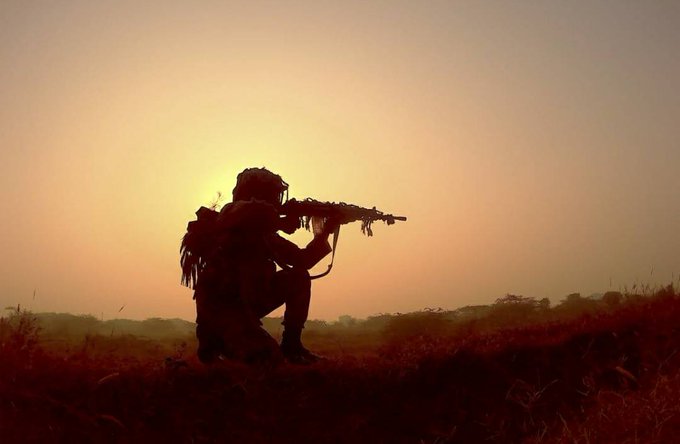
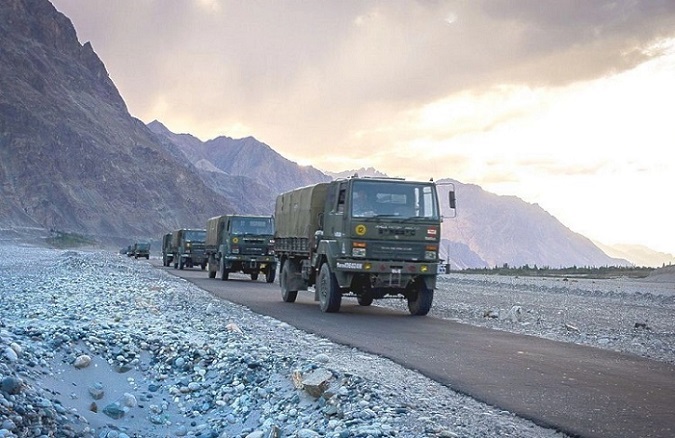
“Naam, Namak Aur Nishan,” is an ethos that calls upon Indian soldiers to strive for the good name of their country, the salt that they have partaken and the glory of the national flag or regimental standard, to the extent of making the supreme sacrifice of their lives when required. The Indian Armed Forces are particularly proud of their All India All Class (AIAC) character, a complete integration of all communities and faiths into a single mould — that of the Indian soldier.
Religion, caste, community etc. never figures in the scheme of things of an Indian soldier. The moment he joins service as a trainee recruit, he becomes a part of the noble fraternity and brotherhood of arms, leaving all else behind.
It is to the credit of the founding fathers of the Constitution of India that they remained sensitive to the need of recruiting only the fittest and the best in the Armed Forces of the country and precluded the services from “Reservation.” This provision has been assiduously upheld by successive governments, the judiciary and the senior military hierarchy as intrinsic to the good performance of the Armed Forces.
In order to live up to the faith reposed on the Armed Forces by the country, only the fittest and the best are selected across ranks from Sepoy (Indian Army soldier) to an Officer. The Army has a very impartial and effective recruitment policy, which has seen minimum or negligible court interventions in all recruitment including officers. For recruitment in the Army, fulfillment of criteria like requisite educational qualification, age bracket, health and physical fitness parameters etc. and then making it to the merit list is the only factor considered in an applicant.
Such is the fairness of the system that instances abound where wards of junior ranks (Sepoys and Junior Commissioned Officers) get selected in the officer cadre while wards of officers face rejection for not fulfilling the required criteria.
The recruitment process for Sepoys ensures that pro rata, all states, castes and denominations in our country are given equal share in the intake process by considering proportions of Recruitable Male Population (RMP) of each State. A state like Uttar Pradesh having a larger RMP gets more vacancies than a state like Punjab having a lesser RMP. Thus, a contention that equal opportunity is not given is grossly incorrect.
The argument is based on the existence of some Fixed Class composition units in the fighting arms. The army has regiments like the Gorkha Regiment, Jat Regiment, Sikh Regiment etc. which have soldiers coming from specific castes. This, however, does not impact the All India All Class (AIAC) character since the said classes do not get any extra benefits in the RMP (Recruitable Male Population) index. Also, the soldiers of these Regiments come from different parts of the country – a Jat Regiment will have intake from Haryana, Uttar Pradesh, Rajasthan etc. and a Sikh Regiment will have intake from Punjab, J&K, Haryana and so on. The process is organised by first filling vacancies of the Fixed Class composition units from the recruitment influx.
There are many good reasons for carrying on with this system. The first and foremost is that it has stood the test of time, not only in India, but in the best Armies across the world. Modern armies of other countries like the United Kingdom, Canada, Pakistan and many more also subscribe to the system. The UK has Irish Guards, Welsh Guards, Scottish Regiment etc. Pakistan has Punjab Regiment, Baluch Regiments etc.
The “Fixed Class” composition Regiments have noble and historic traditions. They have proved themselves in innumerable wars and battles and are great military assets. They have a history and a legacy that needs to be nurtured to maintain the cutting edge. Fixed Composition also facilitates parameters like ease of administration, kinship, religious/regional camaraderie, language, customs, eating habits and most importantly time-tested battle winning capability.
The Sikh Light Infantry (SIKH LI) that comprises of Mazhabi (Dalit) Sikhs is often quoted to reinforce the casteist angle of arguments. It is insinuated that the Regiment has been created to accommodate Dalit Sikhs and thus separate them from the Jat Sikhs who serve the Sikh Regiment.
The reality is that the SIKH LI will not wish to lose its character under any circumstances having created an enviable niche for itself by virtue of its valour and courage. SIKH LI has given three Chiefs and innumerable Generals to the Indian Army, including the incumbent Chief, General MM Naravane. Please watch the pride with which the incumbent Army Chief begins his addresses with “Sat Sri Akal” the traditional greetings of the Sikhs. There is no embarrassment evident in him or other officer of the regiment for having served with “low caste” Dalit soldiers. They are, in fact, so very proud of their Regiment and their men.
Glorifying the rich history and tradition of old Indian regiments and units actually manifests as force multipliers and meeting their intake requirement within the fold of the basic AIAC (All India All Class) composition. It is a true example of the artful Human Resource management of the Armed Forces.
The units that were raised after independence are based on the AIAC model. Thus, in the Indian Army of today, there are a large number of Mixed or All Class composition Regiments in fighting arms like Armour, Mechanised Infantry, GUARDS, Artillery, Engineers and all Services too. Even Infantry units like Mahar, Grenadiers etc are of Mixed or All class composition.
Sabyasachi Dasgupta, in his article, has spoken of a Public Interest Litigation filed against the Fixed Class composition of the President’s Body Guard (PBG). It is a matter of record, as accepted by the writer too, that the Judiciary does not find any reason to interfere with the internal affairs of the Armed Forces. The writer has said in the article, “The Supreme Court quashed the petition, saying that it did not want to “rock the army’s boat.” Surely, with a direction of this nature coming from the highest Court in the country there should be no reason to broach the subject again and again. In any case the PBG is a ceremonial Regiment dedicated to the office of President of India. Any changes in the composition of the unit can be affected only at the pleasure of the President.
Monumental successes achieved in post-independence wars is the result of the forces being given a free hand to run their affairs in the manner they deem fit. It is only befitting that the organisation of the selected manpower be left to the Army. To comment on the basis of peripheral knowledge with consideration of one sided aspects is not correct. It is surprising that after seven decades of independence when there should be talk of removing reservation altogether the opposite is being propagated for the Army.
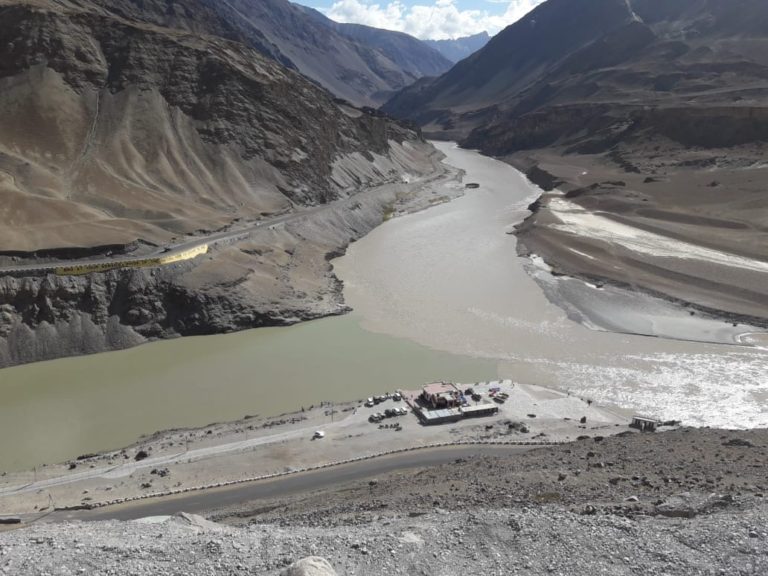
The situation along Line of Actual Control (LAC) between India and China in Eastern Ladakh has been subjected to interpretation by many through the medium of blogs, tweets and articles. There are some who describe it as a loss of face for India. Ajay Shukla, an Army veteran and presently consulting editor with a business magazine, understands it as an abject surrender to China. He has also accused the present government of camouflaging the actual situation and hiding illegal occupation of approximately 60 square km in Galwan valley, Hot spring, North of Pangong Lake, Fingers 4 to 8 and the Sirijap area.
Pravin Sawhney, yet another Army veteran and publisher of a magazine named “Force” has, in a recently released video, mentioned that China is emerging as a new superpower challenging USA. He goes on to suggest that China and its People’s Liberation Army (PLA) are invincible. He declares that, militarily, China is a big giant in six kinetic and non-kinetic domains to include strategic, operational and tactical wherewithal, supported by cyber warfare, information and psychological operations and the space force to which India is no match. He predicts that in the eventuality of a conflict with China all Indian airfields will be destroyed by missiles attack after administering a total communication blackout leading to decision paralysis and loss of command. He seems to be highly impressed by the Chinese Order of Battle (ORBAT).
The more well informed veterans including this writer feel that there is a congress of media and pseudo-intellectuals playing a doctored narrative possibly with the aspiration of an award by fifth columnists and enemy intelligence set ups that look towards lowering the morale of Indian political leadership, military hierarchy and people. The efforts are in tune with the Chinese military doctrine of “victory without war” as advocated by their strategist Sun Tsu. Chankya has said in 250 BC, “if you know your enemy well half battle is won.” So, let’s probe into the Dragon’s den. Chinese Military Commission is the supreme authority. Chinese President Xi Jingping, is the commander-in-chief of PLA.
Prior to 2016, Chinese had seven Military Regions (MR) which are Langzhau, Chengdu, Ghanshghou, Nanjing , Jinan, Bejing and Shenyang. Now, keeping in mind joint operations, all MR’s have been restructured into five theatre commands which are Northern, Western, Southern, Eastern and Central. We will be facing basically Western Theatre which includes Xinjiang & TAR (Tibet Autonomous Region). Eight Airborne corps and two Artillery Corps will be CMC (Central Military Commission) reserves with China. It has 18 Army Groups of Corps strength that it will need to mobilise from 1000 km away. They will be supported by indigenous Chinese fighter aircraft J-11, J-10 and J-17.
India has also come a long way from Indo-Pakistan War, 1965 when a single theatre command under Lt Gen. Harbaksh Singh was responsible for an area spanning from Rajasthan to Ladakh. We won a decisive victory even then. Northern Command was raised in 1972; 14-Corps was raised and located in Ladakh after Kargil war; recently the South-West Command has come up with the intention of ensuring that Northern Command can concentrate on its frontier along the LAC and the LOC.
India has the best tanks and mechanised elements operating in the high altitude regions of Ladakh. It is common knowledge that India has a robust missile programme that has been militarised under a Strategic Forces Command. India also has a Special Forces Command and capacity for Cyber/EW (electronic warfare). Robust airlift capability can ensure fast transportation of forces, and that is what C-17 Globemaster and C-130 J Hercules aircraft are meant for.
Indian Air Force has frontline 4/5 generation fighter squadrons equipped with SU-30 MKI, Mirage 2000, Jaguars and Tejas fighter aircraft to be further boosted with induction of state-of-the-art Rafale aircraft shortly.
If China possesses Dongfeng 3, 4, 5, 21 & 31 IRBMs (Intermediate Range Ballistic Missiles) / ICBMs, (InterContinental Ballistic Missiles), India has AGNI 3, 4 & 5 nuclear capable IRBMs (Intermediate Range Ballistic Missiles) and, of course, the Brahmos. India holds the capability to strike Bejing. Indian also posses TRIAD capability with Arihant launched B-15 & K-4 SLBM (Submarine-Launched Ballistic Missile).
Pravin Sawhney speaks highly of the capability of Chinese military satellites. He would be aware, as all of India and the whole world is, that India has reached Mars orbit before China. ISRO has time and again proved its credentials to the world. It created a world record by launching 104 foreign and Indian satellites in 2018. PSLV C-42 has already completed 45 successful launches. Anti-satellite missiles have already been developed by lndia. Four military satellites, GSAT-7, GSAT-7A, HYSIS, and MICRO SAT R are in orbit for Indian Armed Forces.
Above all, what is of prime importance is the quality of the “man behind the machine.” Israel completely knocked down three belligerent Arab countries well equipped with Russian Armour and weapon systems in 1948 , 1967 & 1973 fighting on three fronts i.e. Egypt, Jordan and Syria.
In the case of India and China, even if one concedes to a small edge in military capacity to China, it is the professionalism of the Indian Army, its commitment to the nation and its noble legacy that will prevail. The PLA is a politicised force used more for keeping the iron control of the Chinese Communist Party on the subjugated people. The Indian Army, on the other hand, created a new nation, Bangladesh, in a 14 days blitzkrieg while fighting on four fronts i.e. West Pakistan, East Pakistan, Chinese showing muscles in North and US Aircraft Carrier Enterprise Battle Group with Nuclear capability threatening in the Indian ocean.
In modern times also wars have not been won by machines alone, it has always been the human factor that prevailed and here India has a decided edge.
It would be in the interest of the nation to remain vigilant of the limited vision of a few who push inadequate knowledge only with the gift of the gab. India is and will remain well poised to face any threat posed by the Red Army on our Northern Frontier and also a two front war if forced on us. In the present scenario it is obvious that certain blood hounds are not happy with progress of a peaceful solution as it defies the orchestrated narrative.
This year 2020 is like living in the sequence
of a horror movie. Coronavirus, earthquakes, cyclones, riots and untimely
deaths, it’s happening all around us. After Irrfan khan, Rishi Kapoor and Wajid
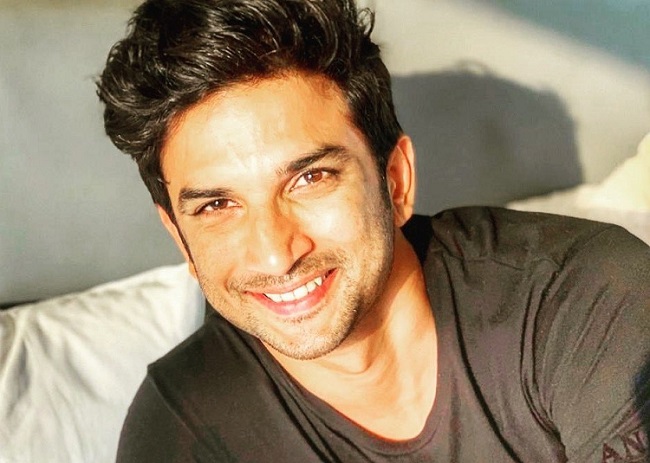
Khan, the current heartthrob of the Hindi film industry Sushant Singh Rajput was
found dead at his apartment in Mumbai.
The body of Sushant Singh Rajput was found
hanging from a ceiling fan at his Mumbai apartment fuelling speculations about
his suicide. At 34, Sushant Singh Rajput was a successful actor whose movies attained
both commercial success and critical acclaim, a rarity for any artist.
Sushant Singh Rajput was a highly successful
actor who won several awards for his role in Hindi movies and the popular TV
show Pavitra Rishta. His blockbuster movies include the likes of ‘M.S Dhoni–
the untold story’, ‘PK’ and ‘Kedarnath’. He was an inspiration and role model for
several youngsters. Sushant’s role in Chichhore was also highly appreciated.
The film had a message that suicide is not the solution of any problem. It’s
ironic that the actor’s life ended with speculations of his own suicide.
The COVID-19 pandemic has had an impact on everybody
across the world and people have to face challenges every day and also battle depression
and mental health issues. This has affected even successful actors like Sushant
Singh Rajput.
Sushant started his career with television
serials. His debut show was at Star Plus named “Kis desh main hai mera dil”.
Life is like uniform motion where we have to
face challenges and live. We should never give up on it. After all Sushant has performed
the great role in a movie like Chichhore, even then due to depression he
attempted suicide. Depression damages our ability to think and we forget how
much our family means to us. The man who broke stereotypes, defeated nepotism in
an industry with actual talent, has broken us all with his death.
Mental health is very crucial, it may destroy our daily lives and affect our health. The stress and anxiety affect the psychological thinking and may even cause death. Sushant Singh Rajput you will live in our hearts forever.
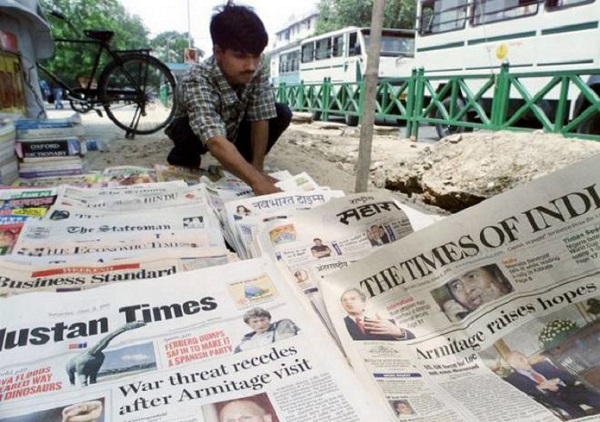
In three months flat, hundreds of journalists and camera persons have lost jobs in India’s big media industry that is considered to be among the largest in the world. Everyone wants a Pied Piper to kill the rats (read virus), but no one is offering hope. Sackings have grown faster, ostensibly because for almost three decades, India’s media industry rarely worked on any legal protection for journalists, especially those fired from jobs. The Working Journalist Act, passed by the government way back in 1955, worked well till the mid 80s. From here on, news organisations changed the hiring process to a consultant model where the owner had complete liberty to hire and fire, even imposing restrictions on journalists from joining competitive newspapers and news channels.
Journalist bodies, press
clubs and more importantly, the Press Council of India (PCI) or the Editors
Guild did not protest strongly, mostly remaining silent. Journalists too
happily signed on the dotted line in their appointment letters and never asked
the management about their crisis cover. When they were fired, they were happy
if the management offered a few months salaries along with the pink slip. If
there was no compensation, journalists rarely raised a banner of revolt.
As long as it was followed,
the Working Journalists Act worked like a protective rain gear which
journalists used whenever there was a crisis. Those who joined under the Act
were employees and their salaries were framed under multiple categories. Cash
in hand was less but the management did not sack at will. There was restraint.
Journalists covered under the Act could not be fired till 58 years of age. Then
came the consultancy model where salaries were hiked, sacking was at will.
Sometimes compensation was offered, mostly not.
The difference was in the
attitude. The owners of news organisations got bold and bolder. When they shut
shop, they just walked away and partied hard. Journalists who went to court
waited for decades. There were no definitive judgements. Journalists started
becoming vulnerable. Now, the levels of vulnerability have gone sky high.
“Once the sackings started
and magazines started shutting shop, journalists started falling like ninepins.
They realised, probably for the first time, they are no longer invincible,”
says Anthony Jesudasan, troubleshooter for Anil Dhirubhai Ambani’s companies.
Jesudasan’s understanding of the media is among the finest in India. He once
worked for The Times of India, published
a wildlife magazine, weekly and daily broadsheets, even headed a business
television channel and partly controlled a wire agency.
Jesudasan says that the prevailing climate in the Indian media market could even get worse, sackings could reach even 55-60 percent across all newspapers, television channels, magazines and portals. “It is a vicious cycle. If there are no revenues, the management will simply sack. India’s media market does not have a Pied Piper to solve problems.”
Private sector advertising revenue for the Indian market touched a record ₹72,000 plus crore last year but nearly 60 percent of that cake went to television channels, mainly entertainment, sports and news. The rest went to other segments like newspapers, magazines, and portals. But right from the start of 2020, advertising revenues started showing a dangerous, downward slide. And now, it has come to a trickle. The government at the Centre has cash, it spends a little over ₹1500 crore on advertisements per year. So do governments in the states. But there is a catch: Any negative reporting about the government means the cash tap could be switched off. In short, if you are solely dependent on government advertisement revenue, your independence — the foundation of journalism — will go for a toss.
There are many news
organisations across India which do not even mind such stringent, backbreaking
conditions offered by state governments and the one in the Centre. There are
other hidden help offered by many state governments to many newspapers and news
channels. But that is not accounted for. Many say it is hearsay but there have
been several examples when politicians in India have been found funding news
organisations. And no one battles an eyelid when these dubious news
organisations shut shop.
So let’s look at the size of
the market. India has over 5,000 newspapers, over a thousand magazines and 450
news channels, besides 2000 news portals. But barring a handful, almost all
news organisers are reeling under severe cash crunch. Sacking, not hiring, is
written on the wall. There is genuine fear in the air.
The National Alliance of
Journalists (NAJ) and Delhi Union of Journalists (DUJ) recently protested
against salary cuts and sackings but it did not cut ice. In private
conversations, owners of news organisations said they will continue to push for
more sackings using the nationwide lockdown announced to combat the spread of
COVID-19. For them, this was not an excuse for retrenchment and arbitrary pay
cuts, it was a genuine concern. The journalist bodies had no answer.
But then, a crucial question
still remains unanswered: If Coronavirus is a national crisis then it must be
accepted by media companies and their shareholders. Why pass on to vulnerable
employees? Many even remembered how the media houses had resorted to similar
pay cuts and sackings in 2016 when demonetisation hit India.
Fake news pandemic has eroded the credibility of several journalists and the media organisations.
Media veterans and analysts — in a recent statement — raised the issue of profits earned for decades by some of the big media houses in India and how, despite making such profits, they were offering pink slips. The veteran journalists raised the issue of The Times of India’s sackings and asked why the group should not have sacked people but kept them on payrolls (even with salary cuts). After all, employee costs are a small percentage of the huge profits the company makes. “Those sacked now include people who have dutifully worked for them for over two decades, contributing to the growth and wealth of the company,” said the note.
This statement was in reference to the newspaper group closing down its Sunday magazine section. One of its senior journalists, Nona Walia, had written in her Facebook post about the lay-offs: “The entire team of Sunday magazine of Times of India asked to leave. Got a call from my boss Poonam Singh. Sacked after 24 years from a company I served with love for more than two decades. Wow.”
Former Times of India’s Delhi resident editor Anikendra Nath Sen says
Indian media markets will not offer hope for sometime now, maybe a year or two
before things start looking up. “It’s a very bad situation. Everyone is
downsizing, no one is saying when they will fill up the slots again. Newspapers
in India sell way below their original cost of printing, and the deficit is
covered by advertisements. It’s the Rupert Murdoch model where the real cost is
always hidden. And once advertisements drop, the paper cuts size and
journalists are shown the door.”
Sen says big buck editors and CEOs who take lots of cash home are rarely sacked, the ones who lose jobs are journalists. “So many have started asking what value do these editors or CEOs bring to the table. They are not Shah Rukh Khan or Amitabh Bachchan who can carry a whole movie on their shoulders. So why pay them in crores?”
Market analysts say in India
those in the upper slot in the media industry always try hard to downsize staff
to earn brownie points from the management. The hidden message is simple: The
more you save money, the more you go up the corporate ladder. So the fear of
losing a job stays. Worse, Indian newsrooms today work under pressure, under worries.
Journalists rarely raise flags to ask questions. Incorrect news stories often
pass the desk because of editorial pressures or political pressures. Routinely,
scandals and controversies involving politicians, political parties and
corporate captains are dropped.
It is all about keeping the
head above the water, keeping the publication or news channel below the radar.
A senior editor of a top newspaper recounted how he drew flak after he used an
eight column banner headline for a health related issue severely impacting his
city. The chief minister of the state did not like the headline and there were
fears of government advertisements drying up. Worse, the editor was hounded by
his colleagues who wanted him not to write such provocative headlines. “For you
it is a headline, for us it is our survival. If the advertisements stop, our
salaries will not come,” the reporters pleaded with the editor.
“I could not sleep that
night,” the editor told me during a recent conversation at his residence.
Some of the senior editors,
now almost retired, say India lacks powerful editors. It is rumoured that the
current crop of editors pick up their jobs because of powerful push from
corporate captains or political leaders. “Managements now want a name on the
chair. Rest, everything is done through some backroom mechanisation. The grip
of politicians and corporate captains have always been there on the editors,
but now that very grip has turned very strong, at times lethal,” says former Sunday and National Herald editor Shubhabrata Bhattacharya.
In short, the editor’s chair, once compared to be very close to that of the country’s Prime Minister’s seat in India, is seen as extremely vulnerable because of the very editor’s equation with the management. “Linking the media to the great Independence struggle is history. Today’s media business is not charity, it’s a cruel balance sheet. I am not against retrenchment. It is like any other business. What will the management do if a 46 page broadsheet is reduced to 16 pages because of lack of advertisements? All I seek is a little more respect when journalists are asked to leave because these very journalists gave their best to make newspapers and television channels, or magazines, successful brands,” says Kalyan Kar, former resident editor of the Times of India.
Kar says he sincerely
believes the role of the editor in India has diminished to a great extent
because editors have rarely risen to the occasion, be it abrupt sacking of
colleagues or slanted news coverage to suit a particular political party. “An
editor needs to carry his prestige on his sleeves. It rarely happens now. Editors
do not stand up for any cause anymore. Their voices do not matter, nor does it
matter when they resigned or when they are pushed out of office.”
For the last couple of years, editors of top broadsheets and news channels have been hauled over the coals for a host of reasons. Some have been caught on hidden cameras for demanding cash for slanted coverage, some have been fired for plagiarism, some have been caught on leaked tapes pleasing corporate captains and lobbyists, some have been pushed to prisons for taking cash from ponzi merchants and some have been blamed for sexual harassment. Some have even got into the business of making sweets and candy floss, some have been seen helping corporates get licences to start private medical colleges. For nearly a month, a series of WhatsApp messages have been circulating between Delhi and Mumbai about alleged scandals of two top editors of a top newspaper and how they were allegedly working closely with some ministers and bureaucrats to fix many things, including finalising top level transfers and getting other favours sanctioned by ministers and bureaucrats for friends (obviously at a cost).
“Where are those editors who
could keep owners waiting outside their office because they were busy writing
editorials? Today, the brand image of editors has been severely compromised.
They are not taken seriously by their management, and by their readers,” says
Kar.
Kar should know. Everytime
journalists are fired, social media goes into a total spin. But interestingly,
the dust settles within a week and life turns normal for everyone, including
those who lost their jobs. Unlike other parts of the world, journalists in
India have rarely learnt to pick up crossover communication jobs. Even if they
do, they fail miserably. Worse, journalists in India have rarely grouped
together to form companies on the British Broadcasting Corporation (BBC) model.
Tehelka, which started as a portal
and then shaped up into a magazine, did great journalism despite little cash.
But the magazine tanked when its editor, Tarun Tejpal, was embroiled in an
alleged rape case.
Then there are editors who
hate private corporations in the media business but they themselves do not know
what is the alternative.
The bottomline: The readers
get confused. India wants to see editors as powerful people who may go to bed
without supper but must carry a very powerful, truthful pen. Minus that,
everything is considered a bit of compromise of values. In current day India,
those firebrands editors have all but vanished.
Let’s consider the recent case of resignation of the editor of Anandabazar Patrika which triggered a storm in Kolkata. The editor, Anirban Chattopadhyay, put in his paper four days after Chief Minister Mamata Banerjee accused the 98-year-old daily for what she said was pulling down the image of the state with negative coverage of the government’s efforts to handle the Coronavirus and cyclone Amphan crises. An FIR was lodged against Chattopadhyay. The 62 year-old editor sent a reply through his lawyer and cited medical reasons for not visiting the police station. Many felt the editor should have been bold enough to visit the police station. There were others who criticised the editor for not standing up to the management when some of his senior colleagues were pushed out of jobs.
So what is the alternative?
If the newspaper industry is losing cash everyday, why should not the government reconsider its policy of deliberately depressing newspaper prices and forcing the dailies to depend wholly on advertisement revenues? On the flip side, see what the newspapers are doing: The dailies want removal of 5 percent customs duty on newsprint, a two-year tax holiday, a 50 percent increase in DAVP advertisement rates and a 100 per cent increase in budget spend for print media. But what largesse is it giving the employees? When the Hindustan Times sacked people, those doing the dirty job of handing the pink slips were no other than editors. So it’s actually a very vicious circle, journalists slice journalists. No one has any solutions, no one has any answers.
Then there are other issues that plague the Indian media. The country has a low literacy level and it adds huge readership every year. As a result, the Indian news industry — from the late 90s — started expanding rapidly and cluttered the space with multiple editions, new channels and vernacular media expanding into English. This, in turn, resulted in a huge recruitment drive, further fuelled by mushrooming news portals. So what happened? It turned the media sector into a large employer. But eventually, many media platforms shut shop and the rest were struggling to remain viable. And then came the pandemic which shattered the great Indian media market like a house of cards.
The problem is serious because the Indian media has not invested in grooming talent like international news corporations. A large chunk of media personnel have either a year long diploma or a two year degree from Journalism schools. Now when the crisis happened, not many could make a crossover to the corporate sector. In India, mainstream journalists have often treated corporate communications or public relations jobs as those below their dignity level. Today, credible journalists and media platforms are practically competing with paid influencers and sponsored social media campaigns.
Merely broadcasting video bytes and endless debates without any value addition hardly guarantees a dedicated viewership. (Representative photo)
The situation is worse in the
hinterland where vernacular reporters with low salaries are often forced to
gather advertisements from local companies by their news organisations, a
faulty and criminal model. In the big cities, editors often meet corporates for
funds for big ticket annual jamborees organised by news organisations for
awards ranging from Power Women to the Most Powerful & Popular Indian.
Those in the web news business
are also unhappy as top portals continue to cut salaries, making staffers go on
leave without pay or simply laying them off. The Quint has sent almost half its staff on leave without pay
besides enforcing pay cuts for the rest. Same in the case with the other
portals. The electronic media is the worst affected where hundreds work with a
million, virtual Damocles Swords on their heads. Many channels have shut shop
without blinking an eyelid. New players have entered the market only to
humiliate jobless journalists, asking them to work for a pittance.
Read this note posted on Linkedin by a former employee of News Nation channel: “Guys, in a very
unfortunate decision, News Nation has
sacked the entire English digital team yesterday. Many of my colleagues were
left with no job in the middle of this crisis. The team includes hard working
journalists and social media executives. They are looking for jobs. Fortunately
I quit the place a month before. But they need our help now. If anyone can help
them in their hour of need, will be appreciated. PS: News Nation sucks. Let’s boycott them. Raghwendra Shukla.”
The bottomline: Closures,
layoffs and retrenchments are not a new phenomenon and will stay. In the last
few years, scores of media employees have lost their jobs, with little or no
compensation. Routinely, the media industry, led by cash-rich and politically
powerful media houses, has flouted directives of the Hon’ble Supreme Court of
India to implement the 2011 Majithia wage board award for newspaper and news
agency employees. It would be pertinent to note that the recommendations of the
Majithia Wage Board are statutory in nature and are also applicable to all
contractual employees.
One thing is clear: The longevity of one’s innings at a newspaper, magazine or a channel does not matter. If a sack has to happen, it will happen. Second, Indian journalists will just not be able to form a team, raise cash and run a news platform. They will need serious funding. And they will have to generate alternate revenue models. Indian news platform owners run telecom companies, football and cricket clubs, departmental stores, even real estate business. Journalists will have serious troubles getting into such businesses. And finally, any news business cannot sustain on generating only news or views. Others will copy fast and upload faster. There needs to be solid juice, more and more ground level reporting which will require some solid cash flow.
Social Media has become a major source of news consumption. (Representative photo)
The issue once again returns to the big question: Who will open the purse? Like everything else in present day journalism in India, there are no answers. The absence of a proven revenue model in the digital space has prevented the Indian media from bouncing back. Global experts are sure that Indian media can be successful only if Google and Facebook pay fair share of their revenue with news publishers the way it happened in Australia.
Christian is a Philosopher that comes from Belgium. What identifies him the most and above all is simplicity, for everything is better with “vanilla flavour.” Perhaps, for this reason, his intellectual passion is criticism and irony, in the sense of trying to reveal what “hides behind the mask,” and give birth to the true. For him, ignorance and knowledge never “cross paths.” What he likes the most in his leisure time, is to go for a walk with his wife.
Scott Douglas Jacobsen:
Speaking of acoustic tolerance, or, rather, acoustics, if we’re looking at the
output of human beings, we’re auditory in terms of direct communication, more
so in terms of, hopefully, conscious intent. Whereas, there can be a
first-level superficial non-verbal language with the body, probably. But at the
level of the spoken word, there is a sense in which the quality of speech is a
great indicator of the quality of the mind. Not in all cases, but it’s a good
heuristic, I’ve found. Have you found the same?
Christian Sorenson: In fact, I would distinguish “three levels” of communication in
relation to language, respectively one “non-verbal or corporal,” and two others
that I will denominate as “analog and digital verbal.” In my opinion, although the
three of them will be given simultaneously, the “non-verbal and analog” ones,
would provide an “implicit formal symbolic” message regarding to the latter,
while the “digital” is going to contribute with a content that at the same
time, is “symbolically explicit” in its “significativity” and “symbolically
implicit” within its “significativeness.”
Jacobsen: Back to acoustics, a good mind is often referred to as a sound mind, as in, “He is of sound mind.” It is the use of an auditory term to describe a balanced intelligence. If anything, the world needs far more balanced intelligence and, as Evangelos Katsioulis correctly notes in an interview with also another smart person, Erik Haereid, humility. My sensibility is such that the world appears off-kilter with exaggerations in both some narrow applications of intelligence and in the ego. A sort of pseudo-Asperger’s Syndrome unhealthily combined with borderline narcissism (not formal NPD) en masse. What do you think the world needs?
Sorenson: First of all I believe that it is necessary to refer “more precisely” to “narcissistic personality disorder,” since this is a “diagnostic category” that as such, exists in the “Statistical Manual of Mental Disorders” (DSM-IV) of the “American Psychiatric Society,” which requires the “objective presence” of at least five symptoms within a series of other ten, in order to determine “its effective clinical existence.” In this sense, one of these would be the appearance of “overrated ideas about oneself,” which alone in itself is not a sufficient element to establish categorically this “diagnosis.” What follows from the above, therefore is that when speaking of “narcissism,” it must be distinguished beforehand what “are traits” from what is actually a true “personality disorder” of this nature. In relation to Katsioulis premise regarding “balanced intelligences,” it seems to me that it’s an “attractive and apollonian” proposal, though at the same time it is “not sensibly grounded” to reality, due to the fact that in its deep meaning it is an “absolutely fallacious explanation” in relation to what “exceptionally high intelligences” should be. Indeed, the vast majority of problems in the world lay on some kind “of imbalance,” but this has little to do with what “intelligence” is, because in itself “exists no function regarding any balance.” In other words, its “only and exclusive” property has to do with “knowing objectives” and behalf to “beings reality.” Then “homeostatic resources,” must be sought somewhere else, as for example may occur within “personality and characterological” factors. Another is the situation related to “correlations,” between “intelligence” and the two aforementioned, since in that case is possible to talk about the so-called “harmful imbalances.” In reason of this last, it’s factible to found an almost “perfect correspondence,” but “inversely proportional” due that its value is minus one. Using other terms, “When higher is the balance lack, then lower is the degree of intelligence found.” By this way, within “extremely high intelligences,” there is in fact an “implicit prevalence imbalance,” yet has to do with an “opposite co-valence” in its value, because “geniuses” in their most “original and proper essence,” are “rupturist” and therefore “misunderstood” socially speaking, cause they usually “live out of canons” and “ahead of their time.” Consequently and even though the latter leads to what I will name as an “auto-hetero mis-comprehension,” which is obviously linked to “disagreement arising” within themselves and with society, as ultimately “destabilization” also arrives, in some manner “anyway and anyhow,” they always reach “valuable results,” which “sooner or later” in time, will be “socially rescued” as “unique and necessary contributions,” since lastly “nobody, but except themselves” have been capable to arrive there, to that point. In another sense, it could also be said that “geniuses” unlike the rest of humanity, “acoustically speaking,” not only “are able to hear,” but besides also “are skillful for listening” other “registers of reality” that shouldn’t be accessible not even for highly intelligent ones. In my opinion, by striving to understand this last, and perhaps by trying “to socially harmonize” each other, yet nevertheless without “de-profiling” or “turning-off” their “alma mater,” we may arrive to something “substantially” speaking more relevant, and less absurd for the world. That is instead of pushing efforts towards “to fit them” into “Gaussian Bells,” in function of “self-complacency” and “self-recognition” complexes of some, in which they “sell cough syrups without being aware that they are made of herbs.”
Jacobsen: You mentioned Mozart in another interview. He simply sounds joyful to hear, often. What do you think is behind that phenomenon?
Sorenson: I would say that at the base of Mozarts compositions, there is a “free
and creative spontaneity” that “goes beyond all establishments,” and leads to “harmonious melodies,” since when they’re transmitted into “musical
scores,” they produce afterwards a “joyful and pleasant” circulation of energy.
Jacobsen: What do you believe is behind Mozart as a genius?
Sorenson: I feel there is an “irreverent and vitalist spirit” that ironizes with “canons
status quo maxims,” and “mocks of enlightened minds.”
Jacobsen: If Mozart lived on
into old age and died of more slow natural causes, what do you think would be a
culmination of the works for him? In other words, what do you think that we
missed out?
Sorenson: I “do not believe” that “he or his work,” would have been very different,
and therefore I feel that “rather than having lack of something” that we did
not see, what we actually lost “was the continuity of what he showed and taught.”
In this sense, it could be said that Mozart always lived like “an eternal child,”
who played and enjoyed “turning the world upside down.”
Jacobsen: When dealing with
someone “evil” or “bad,” etc., we can feel a sense of disharmony, of something
not quite right. Do you think there could be an analogous application of
auditory metaphors to the forms of disunity of mind and behaviour leading to
bad people in addition to the sense that we have about hose people?
Sorenson: I will denominate that sensation of “dis-harmony” and “dis-unity” as “evils aesthetic defects.” The “metaphor” of when listened would be similar to “rape feelings” as if it was “an imaginary phallus,” that in turn is “invested” by some kind of “implicit aggressive knowledge,” since in its meaning “does not distinguish” “the border” that exists between “knowledge and truth,” due to the fact that both “appear identified,” within the message. Therefore also, “unlike someone else” or rather said “better than anyone else,” “leaves no room for reasonable or methodological doubts,” and in consequence by being the only one “who knows that knows,” and “actually is knowing what is truly good for somebody,” uses language as a “seduction tool” for its own benefits, and with the sole purpose “of perverting through conviction,” as if it was “a “flipping” or somehow as if “a tapestry was put on its back.”
Jacobsen: Maybe, this is a general sentiment. When things exist autonomously through time, progress as if by nature herself, it’s a signal of things being set right rather than being built to fail. I suppose this could be a survival advantage. In fact, there might be some clues. Most people who have formal Narcissistic Personality Disorder a) leave a trail destruction behind them and b) tend to live life alone or end up alone if they haven’t ended up that way already. And people feel something is off about them (rightly). This seems like an embodied consciousness thing. Do you think this will make reconstruction in an artificial intelligence more difficult when it comes to intuition, sensibilities, and sentiments about disharmonies in all sorts of ways?
Sorenson: I believe that such forms “of consciousness” certainly are going to be
more difficult to be reconstructed as “artificial intelligence.” At the same
time, however I feel that by this it would be an excellent way to test if
whether human beings actually “possess any spirit or not,” since strictly
speaking almost everything, including “consciousness,” could theoretically be “symbolically
encoded” and eventually “translated” into “artificial intelligence,” that yes,
except if this “insight capacity” is of “a spiritual nature.”
Jacobsen: Thank you for the
opportunity and your time, Christian.
Sorenson: You are welcome, and I hope that “the spirit of time” continues
accompanying us.
Mir Mohammad Ali Talpur belongs to Talpur tribe, the most famous and influential Baloch tribe in Sindh. The Talpur tribe ruled Sindh from 1783 to February 17, 1843. British conquered the region on February 17, 1843 after the “Battle of Miani” a fierce battle between forces of the Bombay Army of British East India company, under Charles Napier and the Baloch Army of Talpur Amirs of Sindh that was led by Mir Nasir Khan Talpur.
Late Mir Ali Ahmed Talpur, the father of Mir Mohammad Ali Talpur and late Mir Rasool Bakhsh Talpur, uncle of Mir Mohammad Ali Talpur were influential politicians. Both brothers were known as Baloch nationalists, humble human beings, honest and influential politicians. Mir Mohammad Ali Talpur joined the Baloch freedom struggle in his youth. He joined Baloch national struggle for freedom in the 1970’s. He, along with other Baloch freedom fighters and people, migrated to Afghanistan and remained there until the fall of Dr Najeebullah’s regime. Mir Mohammad Ali Talpur saheb is widely respected by Baloch pro-independence nationalists as a committed comrade to the Baloch cause.
Dosten Baloch: We keep hearing news about “missing persons” of Balochistan. Why do people disappear or go “missing” in Balochistan?
Mir Mohammad Ali Talpur: The ‘Missing Persons’ issue in Balochistan is not a new one and it has been used as State policy there since 1973 to suppress the Baloch demand for their inalienable rights and their opposition to exploitation of resources of Balochistan. This crime against humanity has been employed by states in Latin America, Asia and even in Europe to suppress dissent but has failed to achieve their aims as people of Balochistan continue to resist despite threat to their lives.
Dosten Baloch: How do you see the ongoing Baloch struggle for freedom and its impact on regional relations?
Mir Mohammad Ali Talpur: Balochistan is not only geo-strategically important but is also has abundance and surfeit of resources which not only the regional powers but all would like a share in. So, anything that Baloch do for their rights is going to have an effect on all interested in Balochistan for one reason or the other. Some like China eye the resources and its strategic position for its own benefit so naturally it is actively working against Baloch struggle while those that oppose China’s plan think otherwise but because they oppose China’s plans this doesn’t make them friends of Baloch just because they oppose China not because of sympathy for Baloch but because of their own interests. Baloch struggle has to be independent and self-sufficient to maintain its effectiveness and dignity.
Dosten Baloch: What are the possible factors behind Pakistan’s recent military escalation in occupied Balochistan?
Mir Mohammad Ali Talpur:One doesn’t need to be a rocket scientist to understand why there is escalation of military activities in Balochistan. The resistance to the exploitation has stiffened and China wants immediate returns for its investments so all is being done to quell the resistance to the economic and political exploitation in Balochistan. The escalation will always be in proportion to the resistance.
Dosten Baloch: How is the CPEC (China-Pakistan Economic Corridor) affecting lives of people across Pakistan and in Balochistan?
Mir Mohammad Ali Talpur:The CPEC is a colonial venture and it will not in any way better lives of people in Balochistan and even in Pakistan a limited elite will reap benefits along with the military.
Dosten Baloch: Why are the Pashtuns so restless in Waziristan? What role could the Pashtun Tahafuz Movement (PTM) play in Pakistan and in South Asia in the near future?
Mir Mohammad Ali Talpur: For decades injustices have been perpetrated against Pashtuns under the guise of ‘war on terror’ and the PTM is a natural reaction to these injustices. What impact the PTM will have in the political scenario here and the region depends on persistence of the resistance to the injustices there. A resistance which challenges injustices can only have a positive political impact on the place where it is being waged and resistance has a natural spill-over effect in the region.
Dosten Baloch: In the wake of recent developments in Afghanistan (US-Taliban peace deal, terrorist attacks and Afghan government formation) do you think that there will be a fresh round of volatility across South Asia in the near future?
Mir Mohammad Ali Talpur: The Afghan peace has to come from efforts of Afghans and not from a tired and unsuccessful America which is anxious to run away from the mess it is responsible for since 1978. If the Taliban are allowed to gain control the consequences will not be different from their first round of rule. Peace in Afghanistan will only come when external interference there is completely stopped.
Dosten Baloch: How will the Coronavirus pandemic affect South Asian politics in the coming months?
Mir Mohammad Ali Talpur: The Coronavirus pandemic is not only going to change the South Asia it is going to change the world. Expecting changes in South Asia in the political context is expecting too much as the entrenched establishments here have no concern about the lives of people but are interested in confrontation. I do not see much of a change, of course, unless people put an end to these self-serving establishments but seemingly this is to remain a dream.
Dosten Baloch: How will the US-China tussle and US-Iran tussle affect Pakistan and the South Asian region?
Mir Mohammad Ali Talpur: When the elephants fight the grass gets trampled. The tussle between various powers will surely adversely effect Pakistan and South Asia because the countries of this region willingly become proxies as they have little or no concern for the welfare and well being of the ordinary people. The ordinary people are the grass here and it is they who will be trampled.
(This interview was first published in Sangar Media Group and is being re-published in News Intervention after due permissions)
The crisis created by Chinese incursions in Eastern Ladakh is now well on the path of resolution. At its peak is solicited considerable media attention. A large segment of the media completely understood the sensitivity of the situation and extended full support to the military and diplomatic initiatives being taken by the government. But, there are some who took a negative view that built the Chinese morale while causing tensions within India. They used misinformation and disinformation in equal measure in putting their negative views across. Sadly, some of these contrarians are army veterans who have retired from senior positions.
One name that prominently figures among them is Lt. Gen. (Retd.) HS Panag. All through the incursion imbroglio, he wrote a series of vitriolic articles, critical of the government and its handling of the situation. Notably, Gen. Panag has served in the Mechanised Infantry and, as such, remained in the plains with strike formations for most of his career. He probably had two tenures in J&K one of them being Army Commander of the Northern Command for a short period of time after which he was side-stepped to the administrative Central Command of the Indian Army. He would have, at best, paid a few cursory visits to the areas that he is now writing about so intimately. He retired about a decade back. A lot would have changed in policy and strategy during this period. Hence, the knowledge he is espousing on the subject is bookish, limited and outdated. Interestingly, Ajay Shukla, the second army veteran going overboard in his criticism of the government’s Ladakh policy has not served a single tenure in Ladakh.
In his article titled, “China believes India wants Aksai Chin back. PLA has likely secured 40-60 sq km in Ladakh,” dated May 28, 2020 the General has quoted “reports” to give long and in-depth information of the situation in Ladakh. In a latter paragraph he says, “In the absence of any government or military briefings, there are speculations galore about the details of the incidents on the LAC……” If there had been no official briefings then how did the General get such in-depth information of the situation? He is an Army veteran and a freelance writer, not a reporter of a news channel who has cultivated “own sources.” In his writings, therefore, he is expected to restrict his views within the parameters of the official information being given on the national security issue. To write anything otherwise amounts to rumour mongering and when the rumour goes against the policies of the government it becomes dissension.
He goes on in the article to list inadequacies in our Intelligence and information gathering apparatus which, he says, led to the Indian Army being surprised.”It was the failure of the Research and Analysis Wing (R&AW) to detect the build-up of the PLA formations,” he says in the article. A responsible analyst will make a statement of this nature only when he has specific and irrefutable information to substantiate it. It is a very serious insinuation to make on the basis of conjecture.
The remainder of the article is common military knowledge but the crunch comes in the end “Last but not the least, once the status quo has been restored, we must hold the Narendra Modi government and the military accountable for the intelligence failure, the loss of territory, if any, that has taken place, and the asymmetry with respect to our capability vis-a vis China.” It is here that the intention of the writer becomes apparent which is to embarrass the government, the military leadership and the nation. What could be his motivation to do so? Who would benefit? These are questions that need to be addressed.
The second article by Gen. Panag came on June 4, and was titled, “India’s Fingers have come under Chinese boots. Denial won’t help us.” In this article he wrote, “Having seized the initiative by securing approximately 40-60 square km of Indian territory in three different areas, China will be negotiating from a position of strength….if diplomacy fails, China has come prepared for a border skirmish or a limited war.” A statement of this nature coming from a senior retired General of the Indian Army would build the morale of the Chinese sky high and be used as a leverage in negotiations. What was the intention of the General when he made this statement? If he cares for India could he please explain as to how it would have helped the Indian effort?
He then goes on to give lengthy explanations aimed more at exhibiting his personal knowledge instead of having any value. While doing so he also lets out certain tactical and strategic policies that were followed by the Indian Army in his times. To be sharing this professional knowledge in public is not only inappropriate, but also amounts to a violation of the “Official Secrets Act.”
Once again it is in the conclusion of the article that the clear intention of the writer comes out “….to be in denial and acquiesce to explain the loss of territory to “differing perceptions” will open pandora’s box, and in future, result in loss of more territory, possibly at Chumar, Demchok, Fukche, Kailash Range, Hot Springs, along the Shyok River and in Depsang Plains. Who knows China may apply the same logic at Tawang in the near future?” On the one hand he is again attempting to embarrass the government. On the other hand, he is giving a clear hint to China as to what it should be doing to further hurt India.
In his third article dated June 11 and titled, “PM Modi’s silence on LAC stand-off is benefiting China. India must change its script,” Gen. Panag, instead of expressing relief in the wake of the diffusing situation, chose to attack Prime Minister Narendra Modi directly. While conceding the success of the governments “military and diplomatic” approach he concludes, “In the current crisis, the Modi government and the military have lost credibility and the battle of perception, and have literally endorsed China’s stand. It has also sent wrong signals to the international community… denial and obfuscation do not help.” Once again, a strong and wholly unsubstantiated statement.
It is interesting to note that Gen. Panag finds unlimited space for his long self-ingratiating expositions only in a news website called “The Print.” This website was created in 2017 by Shekhar Gupta, a journalist known for holding bias against the current political dispensation in power. The fact that the General is okay with alignment to a particular lobby instead of remaining unbiased in the national cause, as someone of his seniority and stature should be, is very sad indeed. One hopes that he is not giving vent to his frustration for not having completed a tenure as Army Commander, Northern Command. It would be so much better for the senior veteran to enjoy his retired life rather than giving unsolicited advise in open media channels. By his false and unsubstantiated statements, Gen. HS Panag has weakened India.
The unfolding Corona pandemic disaster in India’s capital Delhi is a reminder to voters that freebies aren’t the yardstick to elect a government. Just before the assembly elections this year, Arvind Kejriwal had announced free bus rides, free metro travels and multiple other sops to Delhi’s voters. He had gloated on his mohalla clinics; declared his medical infrastructure as unprecedented. After winning the elections by a mile, he had preened in front of national media that his government had still made profits in each of his five years of first term.
Both apparently were a lie. If he had made profits for five years, his coffers wouldn’t have run out in just two months of lockdown. If freebies were just a matter of “Rs 150 crores,” as he said to a TV channel the other day, Delhi wouldn’t be struggling for beds at this grave hour.
Let’s look at it in real figures. Delhi presently has a shortfall in thousands of beds where symptomatic patients could be quarantined. If we go even by Kejriwal’s own estimate that only Rs 150 crores of freebies were spared, just imagine the boost it could have given to Delhi’s Corona battle—hotels could have been turned into quarantine centres, paying guest houses likewise, and Delhi would’ve done one thing which is now a worldwide truism: Quarantine, Quarantine and Quarantine.
Now hospitals are burdened with unmanageable mix, dead bodies are in the corridors and horrific images are being flashed in our living rooms. Paramedical staff is being persecuted to the extent that even the Supreme Court has asked Kejri government to spare the “warriors” in this raging “war.” The lashing by India’s apex court is a scathing indictment of his government.
Delhi health minister Satyendra Jain estimates at least 50,000 Coronavirus patients in the Capital by June-end. Experts put this figure to 100,000. Even if we go by the fatality rate of 3%, it means 16,000 people would be Corona’s fatal victims in the Capital. That’s damning. Death would literally be dancing on Delhi’s streets.
All along, Kejriwal and his men have flipped and flopped in their measures. Some days the lockdown is lax, on other days suffocating. Some days Delhi’s medical help wasn’t for outsiders, later it was withdrawn. Wine shops had an early reprieve. Tablighi Jamaat fiasco was met with a manufactured response. Kejriwal and his odd-even methods had a play too. Then there was this migrant fiasco where thousands marched on to Delhi’s Anand Vihar bus terminus only to be told no-go. He is further not in best of terms with his neighbouring states. Clearly, this man is at his wit’s ends.
It’s important that Delhi recovers. Delhi is the engine which drives at least the north India’s economy. It’s a hugely dense mega city with sizeable lower-class population. Social distancing or home quarantines aren’t an option with them. How do you quarantine a mildly infected young kid when his grand parents share the space with him?
The only option is to seek quarantine facilities outside the box. It’s still not too late to look at hotels and paying guesthouse for those extra few thousand beds. Corona is shattering Delhi to pieces. If it’s beyond Kejriwal and his government, he must ask Centre to take over and impose President’s Rule. You just can’t be a bystander and leave everything “ram-bharose” when the stakes are this high.
With several retired defence officers commenting on the current standoff between the Indian Army and People’s Liberation Army (PLA) of China in Ladakh, there’s no dearth of views on how this issue should be resolved, both at the diplomatic and military levels. Veterans have gainfully drawn upon their intimate knowledge of the area as well as past experiences, and painstakingly correlated the same to the current situation. As a result, most have come out with articles that provide the reader with a holistic view of this seven-decade old problem along with a balanced assessment of the prevailing situation and some judicious recommendations on what the government needs to do.
His piece titled “India’s Fingers have come under Chinese boots. Denial won’t help us,” (The Print, June 4, 2020), is very informative, but his premature conclusion that “China now has the upper hand in talks,” indicates the possibility of preconceived notions or anti-establishment prejudices influencing his rational thoughts. The ‘upper hands’ observation of his is based on the assumption that with PLA “Having seized the initiative by securing approximately 40-60 square km of Indian territory in three different areas, China will be negotiating from a position of strength and will try to impose unacceptable conditions–no further development of border infrastructure on the Indian side–to restore status quo on its own terms. ”
Furthermore, by adding that “…if diplomacy fails, China has come prepared for a border skirmish or a limited war,” he seems convinced that Beijing won’t back-off this time and if required, will even use force to get what it wants. Coming from a man who by virtue of previous knowledge, he may know Ladakh and PLA like the back of his hand, however it is not understood as to how he arrived at the precise prognosis of impending doom. Using the analysis with regards to terrain and sharing the strategy behind construction of certain roads and tracks amounts to violation of Official Secret Act. The General needs no explanation that veterans wear the rank post-retirement and are subject to Army Act for divulging any information that amounts to threat to National Security.
Whether or not China has really succeeded in “securing approximately 40-60 square km of Indian territory” can be seriously contested because it has been assumed that Chinese having come till Finger 4 means, LAC getting straightened 20 km to the North as well as South, thereby resulting loss of 40-60 square km. This assertion may not hold good, but when it comes from a former Army Commander, people tend to take it as a gospel of truth. This is no less than rumour mongering and propaganda because it is not backed up by truth. Moreover, when he makes the situation appear irretrievable without even awaiting Indian Army’s riposte, is to say the least, not only misleading but also something certainly not expected from a person of his standing and military experience. How could this former Army Commander ever forget that just within five years of the 1962 debacle, Indian Army (IA) gave a bloody nose to the Chinese in Nathu La? Even in the field of military diplomacy, the Indian Army proved its acumen by paying back the PLA in its own coin during the 2013 Daulat Beg Oldi (DBO) intrusion in Depsang Valley of Ladakh.
Indian tanks during a military drill in Ladakh. (Representative photo)
Let’s briefly recall the 2013 DBO (Daulat Beg Oldi) standoff, which occurred in an area claimed by both India and China. As part of confidence building measures (CBMs) both Indian Army and People’s Liberation Army (PLA) patrolled this area but didn’t establish any permanent posts here. However, in April 2013, a platoon of PLA set up a camp in Rakhi Nula and when they refused to withdraw, the Indian Army also established a camp just 300 metres away from the PLA camp. While this ‘eyeball-to-eyeball’ stalemate continued, in a proactive action that surprised the whole world, the Indian Army did a ‘Rakhi Nala’ on PLA by establishing its own camp in the Chumar sector, 500 km South of DBO (Daulat Beg Oldie). Unnerved by this move, China in a “quid pro quo”, agreed to abandon its camp near DBO in return for a similar action by India in Chumar.
The former Army Commander’s complaint that “… rather than evolving a clear strategy and broadly sharing it with the nation, the Narendra Modi government and the military have gone into ‘denial’ about any loss of territory, attributing the present situation to differing perceptions about the LAC” is surprising. How can a government which is in the thick of a territorial dispute with its neighbour disclose even its “broad strategy” by sharing it with the nation? In a subsequent piece titled ‘PM Modi’s silence on LAC stand-off is benefiting China. India must change its script’, (The Print, June, 11, 2020) he has been more specific by demanding that the “Modi government should take Parliament and the nation into confidence within the limits of security.” He also considers it “prudent for the Prime Minister to address the nation and military spokespersons to give formal briefings, at least once or twice a week.”
When the Home Minister has already given out the government’s strategy of using dialogue to resolve the issue and the army has quantitatively and qualitatively augmented its force level in the area (which is an unambiguous indication that while India is hoping for the best, it is at the same time prepared for the worst), what else is there to tell the nation? In addition, with External Affairs sources further clarifying that “This will be a long haul and small steps need to be taken to resolve the situation,” it’s absolutely clear that New Delhi is prepared to weather it out rather than look for an expedient and hasty face-saving exit. So, what more information on New Delhi’s strategy for handling this face-off is required to be told to us? Furthermore, when bullets aren’t flying and there’s no conflict on, what exactly do we want the military spokesperson to tell us during his weekly formal briefings? More so, minute-to-minute update is also likely to give out the patterns and modus operandi which is detrimental to operational security. It is advisable that no matter what his political orientation is post-retirement, no matter what personal interests he has chosen to serve and no matter what his personal beliefs are, he cannot act against the ethics of the organisation that made him what he is today.
So, since we have a lot of experience as far as incursions in Ladakh are concerned and know that these are long-drawn-out affairs, let’s not jump the gun by tilting windmills and start shouting from rooftops that ‘all’s lost’! The former Army Commander, who would have many who served under him or gained from his blessings has no reason to seek confidential information from them. This is no less that spying or subverting the serving individuals. The veteran General must grant that even those who are donning the uniform today and holding appointments as Commanders at different level are equally competent and have similar nationalistic fervour as his generation had had.
In fact, factoring in the advancements in Indian Army and the technologies prevalent, they are better informed, better trained and have better strategic perceptions. Once the curtain gets raised, he is sure to face serious embarrassments but by then he would have done damages not behoved from a person whom Army and the nation gave so much. If one analyses his personal and professional history while he was in service, lot of dark spots would emerge. There can be lots of questions against how he handled different facets of Northern or Central Command, what were the strategic contributions made by him or what conditions were created by him to strengthen the positions on Eastern or Western fronts. He is known to have spent more time measuring the size of the eggs. All those follies can be left for the future to analyse.
Tailpiece: The former Army Commander is of the view that “In the current crisis, the Modi government and the military have lost credibility and the battle of perception, and have literally endorsed China’s stand.” While I have no comments on this remark as far as the government is concerned, but as a veteran, the very thought of a former Lt. Gen. questioning the credibility of the very army he served in, is extremely distressing! The information that he carries with him was shared in his capacity as Army Commander and he has to exhibit responsibility towards preserving and protecting it. Personal preferences apart, we all are expected to stand above the bottom lines of morals and ethics and to set right examples for future generations of the Armed Forces.
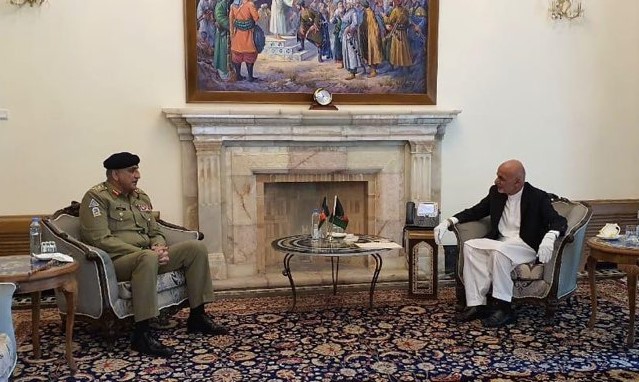
Prima facie Bajwa’s visit seems very crucial for Afghanistan, America and Pakistan, but when looked in the light of recent developments this visit seems to serve only the interests of Pakistan and Taliban. As can be seen that despite the agreement between US and Taliban, there is no change in the internal turmoil and violence in Afghanistan. According to the official figures of the Afghanistan government, more than 3,800 attacks have taken place killing 420 people and injuring thousands of others.
Let’s have a look at some of the developments in recent past. On May 13, around 24 people were killed in the maternity hospital attack in Kabul, including two new born, mothers and nurses. On March 30, around 21 security forces were killed by Taliban in Thakar province. Fighting against security forces for their political aspiration is one thing but killing innocent newborn babies and attacking hospitals are heinous crimes and this is what Taliban backed by Pakistan has always done in Afghanistan for attaining their political aspiration.
Killing of innocent also includes names like Tetsu Nakamura, a Japanese physician and philanthropist who had devoted his 19 years for Afghanistan where he built canal projects from the Kunar River in eastern Afghanistan and was credited for transforming the desert of Gamberi on the outskirts of Jalalabad into lush forests and productive wheat farmlands. Tetsu Nakamura had also constructed two hospitals and two mosques. On December 4, 2019, as Nakamura was heading to work in his aid vehicle in Jalalabad, Afghanistan, he was assassinated by gunmen along with his bodyguards and driver.
Also look at Pakistan’s connection with Taliban. Taliban is supported by various small groups like the Quetta Shura, Haqqani network, Hzeb-e-Islami Gulbuddin and smaller al-Qaeda group among which the leader of Quetta Shura is quite often regarded as the head of Taliban. It’s quite clear by name ‘Quetta’ in Quetta Shura that it works from Quetta, Balochistan or it has something to do with Quetta. Quetta Shura was introduced by Mullah Omar who served as Taliban’s Chief for several years. He had graduated from Darul Uloom Haqqaniya in Khyber Pakhtunkhwa, Pakistan. A contemporary of Osama bin Laden, Mullah Omar had ordered Taliban to destroy the Buddha of Bamiyan.
According to a retired General of the United States Army, Stanley A. McChrystal, the Quetta Shura is directing the Afghani Taliban insurgency. In a report to President Obama in 2009, he stated that it posed the greatest threat to his troops. He said, “Afghanistan’s insurgency is clearly supported from Pakistan. The Quetta Shura conducts a formal campaign review each winter.” In September 2009 US Ambassador to Pakistan Anne W. Patterson said, “In the past, we focussed on al-Qaeda because they were a threat to us. The Quetta Shura mattered less to us because we had no troops in the region, now our troops are there on the other side of the border, and the Quetta Shura is high on Washington’s list.”
These claims becomes more important when one looks at what the Pakistani senator Abdul Rahim Mandokhel from Zhob in northern Balochistan had stated. “The whole war in Afghanistan is being launched from here,” Abdul Rahim Mandokhel had said. A report submitted by author Matt Waldman to London School of Economics (LSE) claims that Pakistan’s relationship with the Taliban ran far deeper than previously realised.
Based upon these evidence, it’s clear that Pakistan’s ISI and their senior government officials believe that Quetta Shura (Taliban) would be valuable assets if Taliban would somehow regain power after a withdrawal of US forces from Afghanistan.
Interestingly, just after two days of Ghani-Bajwa meeting, Ashraf Ghani has stated that the release of Taliban prisoners will be completed shortly. So has Pakistan and the Taliban once again stepped forward in their proxy war? It still looks like conundrum for now!
We use cookies on our website to give you the most relevant experience by remembering your preferences and repeat visits. By clicking “Accept All”, you consent to the use of ALL the cookies. However, you may visit "Cookie Settings" to provide a controlled consent.
This website uses cookies to improve your experience while you navigate through the website. Out of these, the cookies that are categorized as necessary are stored on your browser as they are essential for the working of basic functionalities of the website. We also use third-party cookies that help us analyze and understand how you use this website. These cookies will be stored in your browser only with your consent. You also have the option to opt-out of these cookies. But opting out of some of these cookies may affect your browsing experience.
Functional cookies help to perform certain functionalities like sharing the content of the website on social media platforms, collect feedbacks, and other third-party features.
Performance cookies are used to understand and analyze the key performance indexes of the website which helps in delivering a better user experience for the visitors.
Analytical cookies are used to understand how visitors interact with the website. These cookies help provide information on metrics the number of visitors, bounce rate, traffic source, etc.
Advertisement cookies are used to provide visitors with relevant ads and marketing campaigns. These cookies track visitors across websites and collect information to provide customized ads.
Necessary cookies are absolutely essential for the website to function properly. These cookies ensure basic functionalities and security features of the website, anonymously.
Cookie
Duration
Description
cookielawinfo-checkbox-analytics
11 months
This cookie is set by GDPR Cookie Consent plugin. The cookie is used to store the user consent for the cookies in the category "Analytics".
cookielawinfo-checkbox-functional
11 months
The cookie is set by GDPR cookie consent to record the user consent for the cookies in the category "Functional".
cookielawinfo-checkbox-necessary
11 months
This cookie is set by GDPR Cookie Consent plugin. The cookies is used to store the user consent for the cookies in the category "Necessary".
cookielawinfo-checkbox-others
11 months
This cookie is set by GDPR Cookie Consent plugin. The cookie is used to store the user consent for the cookies in the category "Other.
cookielawinfo-checkbox-performance
11 months
This cookie is set by GDPR Cookie Consent plugin. The cookie is used to store the user consent for the cookies in the category "Performance".
viewed_cookie_policy
11 months
The cookie is set by the GDPR Cookie Consent plugin and is used to store whether or not user has consented to the use of cookies. It does not store any personal data.