Home Blog Page 362

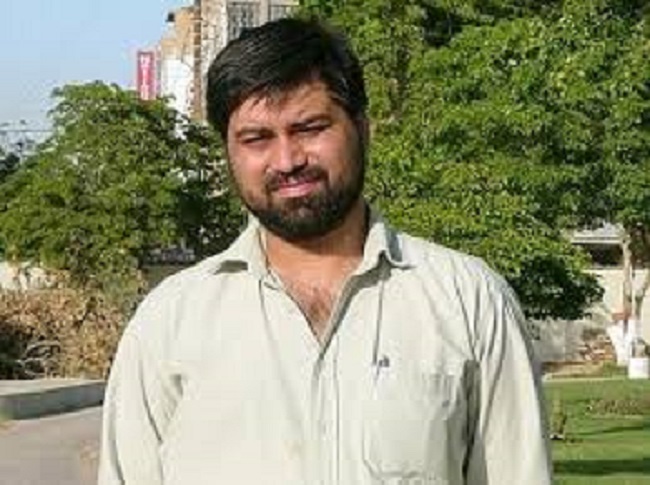
Remember Syed Saleem Shahzad? ‘Anyone Could Have Killed Him’

On May 29, 2011 Pakistani journalist Syed Saleem Shahzad, was scheduled to participate in a talk show being conducted by Duniya News channel in its Islamabad studio at 6 PM. He was well known for his uncanny ability to interview reticent commanders of various terrorist groups including al-Qaida; one of his notable scoops being an interview with a Pakistani terrorist named Ilyas Kashmiri who had left Kashmir ‘jihad’ and aligned himself with al-Qaida. What made this interview so special was that Ilyas Kashmiri had been officially declared ‘dead’ by the US, having purportedly being ‘droned’ some months earlier!

But it was Shahzad’s explosive report revealing that al-Qaida had carried out the daring May 22 attack on PNS Mehran, a heavily guarded high security Pakistani naval base in Karachi which made him a media sensation. Though this claim appeared preposterous because al-Qaida had no known reasons for targeting the Pakistani defence establishment, but Shahzad gave an extremely vivid and equally convincing account of the developments leading upto and culminating in this attack. It was this very report by him on this incident that was the topic for discussion on Duniya TV that day.

In his report published a few days earlier, Shahzad had revealed that Pakistan Navy had unearthed a cell of al-Qaida sympathisers within PNS Mehran base and had arrested about 10 serving naval personnel who were its members. al-Qaida sought their release and had even despatched its representative named Abdul Samad Mansoor to negotiate the same with naval authorities.

Surprisingly, the Pakistan Navy gave Mansoor an audience and negotiations did take place but after its refusal to set the prisoners free, an enraged al-Qaida retaliated by attacking PNS Mehran.

Whereas the revelation that Pakistan Navy entertained al-Qaida’s demand for negotiations was in itself extremely embarrassing, Shahzad’s disclosure that some naval ratings posted at this base had assisted the attackers by providing them with maps and secret information regarding the security setup within PNS Mehran only added to discomfiture of the armed forces. This report couldn’t be denied as it was obvious that the heavy security forces’ casualties (18 dead and 16 injured) and lost 2 P3C Orion aircrafts could have only been since the attackers had ‘inside’ information!

But TV viewers who were anxiously waiting to hear Shahzad drop yet more ‘bombshells’ regarding the May 22 attack were in for a big disappointment when he failed to turn up for the show. Subsequent inquiries revealed that he had left home in his car at about 5.30 PM but when Duniya New contacted him at 5.42 PM, his mobile was switched off and the mystery of Shahzad suddenly disappearing while travelling on a busy road during the rush hour in the country’s capital only deepened with the passage of time.

Despite the news of his inexplicable disappearance going viral, no news of Shahzad was forthcoming till June 1, when his brother-in-law Hamza Ameer received a phone call from Margalla Police Station that Shahzad’s abandoned car had been found parked on the bank of Upper Jhelum canal. After reaching the police station, Ameer was also informed that Shahzad’s dead body had been recovered from the canal near Mandi Bahauddin town on May 31, which is about 120 km from Islamabad.

What made this entire incident even more suspicious was that despite the news of Shahzad gone missing making headlines, the police had declared him ‘lawaris’ (unidentified and hence unclaimed) and after post mortem, the body had already been buried by Eidhi Foundation on police directions. Even after nine years, no one has been able to give any plausible explanation as to how Shahzad ended up 130 Kms away from his destination, and why was he buried with such undue haste? 

Dr Farrukh Kamal who headed the three-member autopsy team confirmed that “There were at least 17 wounds, including deep gashes…The ribs from the left and right sides seemed to be hit with violent force, using a blunt object. The broken ribs pierced Shahzad’s lungs, apparently causing the death,” establishing beyond any doubts that this was a homicide. It took the Pakistan government more than two and a half weeks to institute a commission of inquiry but when its report was released six months later, no one was any wiser.

So, who could have killed Shahzad and why?

The Shahzad Commission Report has concluded that “in all likelihood, the motive behind the incident was provided by the writings of Saleem (Shahzad). What is not so clear is the question of who had that motive and actually acted upon it.” But, besides his writings, Shahzad had left behind a vital clue as he had sensed that something could go ‘wrong’ and just nine days before his abduction and murder, Shahzad had told ‘The New Yorker’ correspondent Dexter Filkins “Look, I’m in danger, I’ve got to get out of Pakistan.”

Human Rights Watch (HRW) has acknowledged that “Shahzad had previously complained of threats by ISI agents for his reporting on links between the ISI and al-Qaeda. In October 2010, Shahzad sent an e-mail to Human Rights Watch outlining a recent meeting he had with the ISI and asking for the e-mail to be released if he or his family were harmed. Shahzad asked Human Rights Watch to make details of the meeting public “in case something happens to me or my family in future.”

Human Rights Watch also revealed that “…On October 19, 2010 Shahzad sent an email informing Human Rights Watch that he had been threatened by the ISI at an October 17 meeting at the ISI headquarters in Islamabad with the Director-General of the Media Wing of the ISI, Rear Admiral Adnan Nazir, and another ISI official, Commodore Khalid Pervaiz. Shahzad wrote that the meeting ended with the following comment from Rear Admiral Nazir, which Shahzad construed as a death threat: I must give you a favour. We have recently arrested a terrorist and recovered a lot of data, diaries and other material during the interrogation. The terrorist had a list with him. If I find your name in the list, I will certainly let you know.”

Since Hameed Haroon, publisher ‘Dawn’ and President of the All Pakistan Newspapers Society, was also a recipient of this email, he presented full details of the same during his deposition before the inquiry commission. But if Shahzad had thought that his revelation would help nail his murderers, he was sadly mistaken. In fact, by noting that “The commission’s failure to get to the bottom of the Shahzad killing illustrates the ability of the ISI to remain beyond the reach of Pakistan’s criminal justice system,” HRW’s Asia Director Brad Adams has aptly summarised the sorry state of human rights and institutionalised violence against media persons in Pakistan.

But instead of cleaning its own house, ISI resorted to a smear campaign, which only added greater credence to the allegations of it having orchestrated Shahzad’s abduction and murder. Some snippets from ISI representative Brig Zahid Mehmood Khan’s deposition before the commission that exposes ISI’s desperation.

  • Purported telephonic transcript of Nawaz Khan, an internal al-Qaida operative (who was supposedly in contact with Shahzad) and Ilyas Kashmiri’s front man revealed that the latter had “cursed Saleem (Shahzad) for the damage that he had done to their (terrorist) network and remarked that a bad man had only met his fate.” Brig Khan said that this “speaks volumes of the Ilyas Kashmiri group’s enmity with Saleem and provides evidence for al-Qaida’s possible involvement.”
  • An ISI statement before the commission reads, “Why in this case – from President Obama to every man worth a name in the US felt disturbed? Was he (Shahzad) a pawn who could be used at an appropriate time to further use the US objectives and create a wedge between (the) establishment and other segments of society?”
  • In his deposition, Brig Khan also said, “Though I do not have any concrete evidence, but Saleem Shahzad in my presence stated that he was approached by Indian Intelligence Agency (RAW) and now he has to present a paper in UK on which he wanted the inputs of ISI. He also stated that he is in contact with the intelligence agency in UK…”
  • While clarifying on the threat issued by him to Shahzad, Rear Admiral Adnan Nazir of ISI said, “it is correct that the above quotation (about a ‘hit list’ being found on the person of an arrested terrorist) is a part of this e-mail,” which the Rear Admiral admitted had also been received by him. He went on to say,” I did not respond to this e-mail. Though I found that the quotation portion of the e-mail was wrong and false, but I did not find it expedient to respond.”

From the above it’s apparent that ISI wants people of Pakistan to believe that Shahzad was an al-Qaida sympathiser, an American ‘pawn’, a RAW operative and even an agent of UK’s intelligence agency- all rolled into one, and so could have been killed by either the al-Qaida, CIA, MI-5 or RAW but certainly not the ISI. It wants the public to believe that Shahzad was not summoned by ISI but it was he who insisted on coming over to have a cup of tea with them, which was odd that the ISI was breaking bread with an al-Qaeda sympathiser who was also an American pawn and associated with the spy agencies of UK and India!

But while the people may or may not empathise with ISI, the inquiry commission has in its report has shown great sympathy by noting that ISI “bore the brunt of blame (for Shahzad’s murder) right from the day one.” No wonder that even after six months of deliberations, the commission opined that “It does not allow us to safely conclude that the ISI was the culprit behind this incident.”

With this, yet another commission of inquiry on a journalist’s death in Pakistan has once again determined (to use HRW’s Asia Director Brad Adams words), that “just about anyone could have killed him!”

Tailpiece: While the ISI may be excellent at the cloak and dagger game, but when it comes to storytelling, they’re downright awful!
Conversation with Christian Sorenson on Advice For and About the Gifted

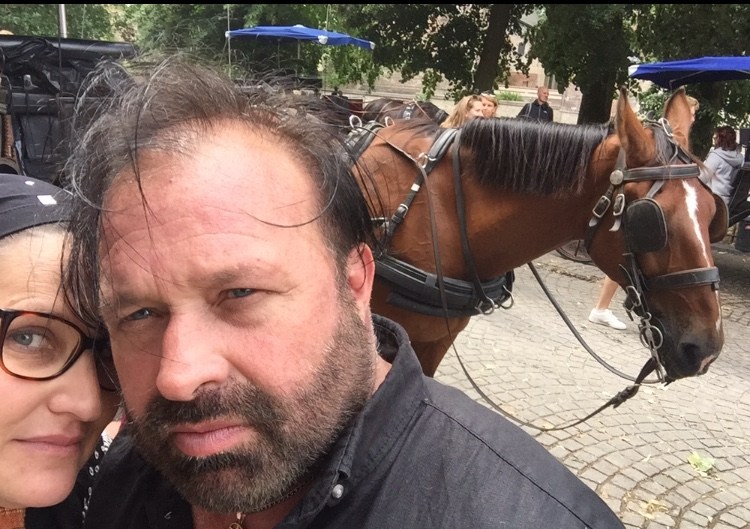
Christian is a Philosopher that comes from Belgium. What identifies him the most and above all is simplicity, for everything is better with “vanilla flavour.” Perhaps, for this reason, his intellectual passion is criticism and irony, in the sense of trying to reveal what “hides behind the mask,” and give birth to the true. For him, ignorance and knowledge never “cross paths.” What he likes the most in his leisure time, is to go for a walk with his wife. 

Scott Douglas Jacobsen: What is a proper definition of gifted?

Christian Sorenson: I feel that “gifted,” is “someone with different and superior cognitive capacities,” that leads him to “see and interpret” the “surrounding world,”

 including itself, and the “problems” that these offer, from a “unique perspective,” and therefore formulates “creative” and “simple irreducible responses,” in front of “complexities of any nature.”

Jacobsen: What are the levels of gifted?

Sorenson: In my opinion the “levels” are respectively of moderate, high, very high, exceptional, profound, and incommensurably gifted.

Jacobsen: What should one expect in each level of giftedness?

Sorenson: I believe, there is a “turning point” with “profound giftedness,” since up to that level only exists the ability to solve “increasingly complex problems.” Therefore, from this last, besides that it is also possible to solve them in their “maximum depth,” and in a “more integrative-related way,” it is factible to arrive to “levels of consciousness” that are beyond “three dimensions.”

Jacobsen: What are the types of issues of the various levels of gifted?

Sorenson: In general, up to the level of the “exceptionally gifted,” they are “highly successful” academically and occupationally speaking, and for that reason, they are also “socially valued.”

The problem begins with the “profounds,” since they are socially “very discriminated and rejected,” for being seen usually as “strange individuals.” They tend to have “low academic performance,” normally are “undervalued” in their abilities, almost “never integrate” normally into the world of work, and used to be also “unsuccessful” in their personal lives.

Jacobsen: What are the most accurate, reliable measurements of intelligence now?

Sorenson: I think that those “measurements” that are carried out by “professionals,” psychologists and psychiatrists through “mainstream test” such as Wechsler and Stanford-Binet scales, which in other arrive to valid, reliable and “realistic IQ scores.” The rest are “games,” without any “professional psychometric basis,” that yield “fanciful and inflated results,” which apart from creating “false expectations and parallel realities,” are far above “mainstream tests,” and “rather closer to god.”

Jacobsen: How can parents provide for the advanced intellectual needs of the gifted?

Sorenson: I feel that first of all “not being scared,” and giving a family environment of “much affection and understanding” to them. And secondly, worrying about “integrating them” into an means of children with “similar capacities,” since in that way they will able to develop at their own rhythm their “full cognitive potential” and thus mature emotionally in “freedom and harmony.”

Jacobsen: What happens when needs of the gifted aren’t met?

Sorenson: “Failure” occurs, a feeling of “frustration arises,” and “low self-esteem” is reached.

Jacobsen: What are stellar programs and organizations that parents can look towards?

Sorenson: I think it is a good idea to look for “special schools” for gifted children, “conservatories” of music and art, and psychological therapy of “family systemic orientation.”

Jacobsen: Mensa International, Intertel, Triple Nine Society, Prometheus Society, and Mega Society are listed as the most reliable high-IQ societies. What other communities can exist for the gifted and talented?

Sorenson: Schools that promote fine arts, literature, and science, and organizations with specific sports disciplines.

Jacobsen: Any recommended books on the subject from beginner to advanced?

Sorenson: From my point of view, rather they would be two movies “Good Will Hunting” with Matt Damon and “Rebel Without a Cause” with James Dean, and the book “The Name of the Rose” of Umberto Eco.

Jacobsen: Thank you for the opportunity and your time, Christian.

Sorenson: You are very welcome.

Image Credit: Christian Sorenson.

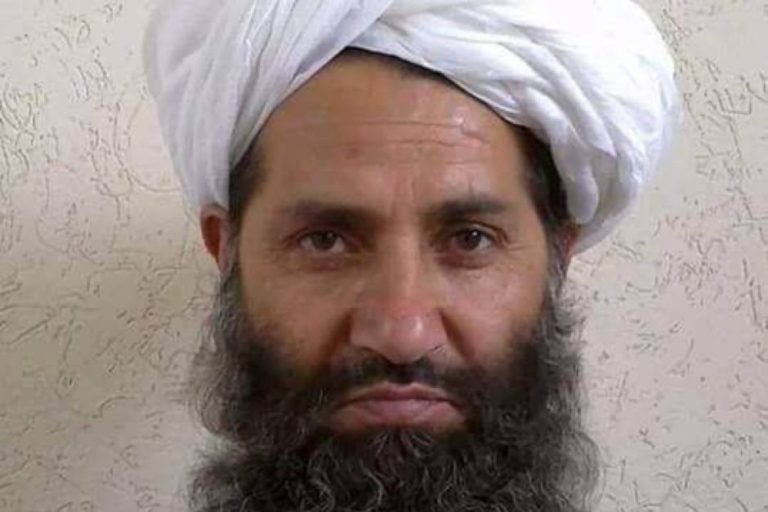
Taliban Chief Mullah Hibatullah Akhundzada could be dead due to Coronavirus

Mullah Hibatullah Akhundzada, Chief of Taliban, could be dead due to the novel Coronavirus infection in Afghanistan, a senior Taliban insider told News Intervention. The Taliban insider added that soon after contracting COVID-19, Mullah Hibatullah had developed severe respiratory complications.

“It may be possible that Taliban could keep Mullah Hibatullah Akhundzada’s death under wraps for some time before a formal announcement,” the Taliban insider added. He further explained that delaying a formal announcement could be tactic to prevent a power struggle among the senior Taliban fighters.

Taliban group has not made any formal announcement about Mullah Hibatullah Akhundzada. Ironically, local reports within Afghanistan say that Mullah Omar’s son Mullah Yakub has been appointed as the interim leader of Taliban. Just last month Mullah Yakub was appointed as the military chief of Taliban after a reshuffle in Taliban’s top leadership.

After the death of Mullah Omar, who was Taliban’s former chief and a close associate of terrorist Osama bin Laden, Taliban has been riddled with factionalism. Infighting among its senior fighters to grab control of this fundamentalist organisation has been a common occurrence.

Antifa planned the US riots, India must be wary of a repeat show

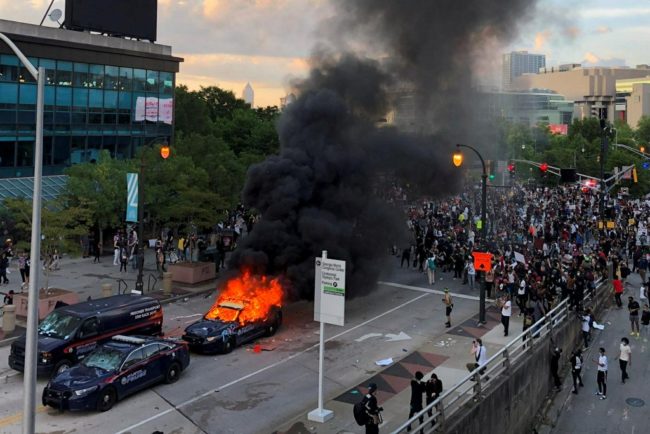
The riots in United States have spread across the nation. From Minneapolis to Dallas, Los Angeles to Atlanta, New York to Portland, 40 cities are under curfew. National Guard have been called out in Washington DC and 15 other states. Today is just one week since George Floyd was murdered.

Innocents are confused at the clockwork precision of multiple riots. All four concerned police officers were fired the next day. The offending police officer with his knee on George’s throat has been charged with third-degree murder and second-degree manslaughter. The Federal Bureau of Investigation (FBI) is holding its own investigations. Yet the violence has bubbled over.

The United States suffers from racial discrimination. That’s a truth. Blacks might be up to 40% of the entire population but they carry little weight. That’s a truth. Most jailed in the US prisons are blacks. That’s a truth. But could we call it spontaneous riots when pallets of bricks, of same size and standard, shape and colour, are spotted across the rioting cities?

Donald Trump’s government has gone public in naming the alleged conspirator. Trump has blamed the riots on “Antifa and the Radical Left”. Attorney General William Barr, in a statement, has claimed that the “violence (is) instigated and carried out by Antifa and other similar groups.” National Security Adviser Robert O’ Brien has told CNN that the violence “is being driven by Antifa.” Anti-Fascists in short is Antifa.

The principal funding of Antifa, and Black Lives Matter groups, is by George Soros and his Open Society Foundations in which he has stuffed $38 billion for operations in 120 countries. He has been funding terror activities and disruption of government around the world for decades. He pledged one billion dollars last year against “resurgent nationalism” and openly named India’s Narendra Modi as the man on his radar. This was in the wake of the Citizenship Amendment Act (CAA).

Everything you want to know about George Soros you could find in this article of mine I penned early this year. His alleged role in overthrowing elected governments; the prime ministers and presidents who have openly accused him of coup d’etats; and his control on media as revealed in Wikileaks, among others. This man, in essence, is part of global cabal which through bankers control the world governments and sees existential threat in “nationalism” which runs counter to their “profits and profits only” agenda of free trade. They fear the likes of Modi and Trump, like darkness would to light.

Invariably they succeed. They succeeded in Libya and Iraq; Ukraine and Egypt; those Arab Spring revolutions; countless Latin American and African countries; and nearly succeeded in Syria. The “pro-democracy” movement in Hong Kong is one such manifestation. The “anti-CAA protests” in India, before it was halted by Covid-19, is another.

The standard method is to bring people on streets, make police duck, splash it in media they control and bring the elected government on its knees. This is what’s being attempted against Trump now. This is what surely would be resumed on Modi after Covid-19. They work on a country’s fault lines  which exist in every country of this world. In US, its’ Whites vs Blacks. In India, it’s Hindus vs Muslims. Before long the country is torn asunder.

Trump has moved swiftly. He has announced his intention to declare Antifa as a domestic terrorist organization. Barr has announced a similar resolve. Once done, Antifa and Open Society Foundations would be prosecuted and the assets of their backers seized. The international banking system could be cut off to Soros and his octopus of affiliated groups.

More importantly, the alleged tie-ups between Antifa and the Democrat party could be laid bare in public. It’s apt to remember that Minneapolis is run by the Democrats. And that Democrat-candidate Joe Biden and his campaign staff have made donations to the Minnesota Freedom Fund. The group donates to pay bail fees for those who are arrested in Minneapolis, a city of Minnesota. President Trump’s campaign finds it “disturbing” that Biden’s team “would financially support the mayhem.” He has called upon Biden to condemn the riots. Biden incidentally is for free-trade or is pro-China compared to hawkish Trump who openly berates the Middle Kingdom

The US presidential elections are slated for November 3. Minnesota is critical. In the 2016 elections, Hillary Clinton had won narrowly by a 1.5 per cent margin. Trump had struggled to attract African-American voters. Only 8% of this group had voted for him in 2016.

Knowing how Trump is raising trade barriers against China; and how it could win him another presidential term this year; and how Modi could follow his best friend in raising the stakes against China; which is important for these pirates of “open trade” there is little wonder that US cities are burning.

Or that similar would be the fate in India after Coronavirus.

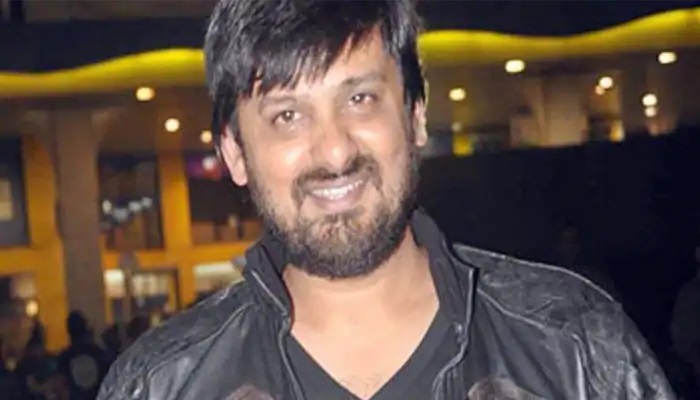
After Irrfan Khan & Rishi Kapoor, musician Wajid Khan bids adieu to mortal world

The year 2020 is like living the sequences of a horror movie. Fear of World War-III, Delhi riots, Coronavirus pandemic, lockdown, locust attack, the list seems to go on and on. We have also witnessed the demise of Hindi Cinema’s two brilliant actors, Irrfan Khan and Rishi Kapoor, and now there’s news about the death of music composer Wajid Khan, one of the Sajid-Wajid duo.  The sudden demise of Wajid Khan due to a kidney infection came as a rude shock to music lovers.

It was hard to believe that Wajid Khan who worked along with his brother in Hindi film’s music industry is no more with us. He gave numerous hit songs to Hindi film industry which are unforgettable. Wajid Khan was also known for his always smiling face which gave positivity to others and encouraged them. From his first track, ‘Pyar kiya toh darna kya’ in 1998 to his last known track, ‘Tajdar- e-haram‘ in 2018 he made a lasting impression and place in people’s hearts.

I still remember how people went crazy on the title track of Dabang-1 that was ‘hud hud dabang dabang’, a song that gave so much energy and positive vibes that people of all age groups loved this track.

People have expressed their grief and condolences through tweets in memory of Wajid Khan. Akshay Kumar remembered Wajid Khan as “talented and ever smiling”. “Shocked at the passing of Wajid Khan. A bright smiling talent passes away. Duas, prayers, and condolences,” tweeted Amitabh Bachchan. Abhishek Bachchan wrote in his tweet: “Rest in harmony, my friend. Had pleasure of working with both Sajid-Wajid most loving and brilliant.”

Priyanka Chopra tweeted: “Terrible news. The one thing I will always remember is Wajid bhai’s laugh. Always smiling. Gone too soon. My condolences to his family and everyone grieving. Rest in peace my friend. You are in my thoughts and prayers.”

Karan Johar wrote: “Wajid Khan, your music will always live on.” Preity Zinta tweeted: “I will miss you and our jam sessions forever. Till we meet again.” It’s believed that Wajid Khan sent a voice note to Mika Singh saying ‘dua krein mere liye’ (pray for me) before his death. It is hard for us to believe that we will never see this amazing musician duo together ever again. It is indeed a bad year for the Hindi film industry.

China: The Paper Dragon’s Dance

An old Chinese story titled “The Wolf of Zhongshan,” talks about a wolf which had been shot by a hunter. As it was running away injured, it met a kind-hearted person who saved the wolf from the hunter. After the hunter left, the wolf said to the kind-hearted person, “You have saved me. Now I am hungry. Since you have come this far helping me, let me eat you.”

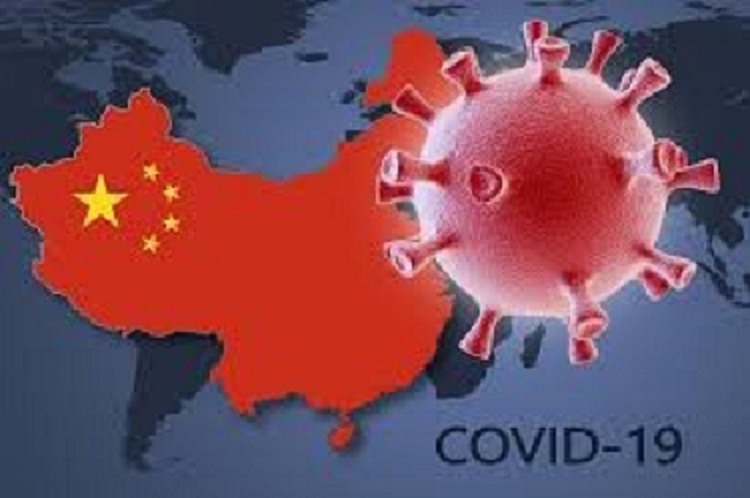
Why has China, the second largest economy of the world, has suddenly started to flex its muscles? Why are they opening so many flanks with so many countries simultaneously? There is an economic, political or territorial issue that has been raised with several countries, almost simultaneously. What does China hope to accomplish when its own economy has been ravaged by the Wuhan Virus?

From times immemorial, world leaders, under pressure because of a weak economy or a weak political position, have waved the flag of ‘National Security’ and indulged in sabre rattling to divert attention from their internal challenges. Are we seeing the same in China today?

Let us look at the challenges China is facing:

  • Credibility Challenge: China has a serious credibility issue with the rest of the world, reeling under the impact of Coronavirus pandemic. Political leaders around the world have started blaming China for not being transparent about the origin of this virus. What should worry China is that the average individual in each country is angry with China and the first reaction will come against “Made in China” goods. This is an emotional and a sentimental reaction and once deep-rooted, will be difficult to change in a short time. Calls to stop buying Chinese products and even to uninstall Chinese apps should be a cause for serious concern in China.
  • Diplomatic Challenge: When there is pressure diplomacy normally comes to the rescue.
    1. Chinese officials have been reacting with threats as can be seen in their stopping imports from Australia.
    2. They have been threatening Taiwan and there is cause for worry in Taiwan in case China decides to unilaterally take military action.
    3. The recent amendment of the National Security law to govern Hong Kong is another case in point.
    4. Racist comments against African people in parts of China has resulted in a reaction from Africa.
    5. Finally, the Chinese government officials are aware that US elections are round the corner and therefore understandably rhetoric will be high and loud. This is the time when they need to keep quiet and wait for the elections to be over. Instead Chinese officials are issuing threats of retaliation to America when they comment or support Hong Kong or Taiwan.
  • Geographical and Territorial Challenge: China has always wanted to expand its boundaries by attempting to take over lands of other countries that it claims.
    1. Gathering a number of military personnel on the border of India and raising territorial and boundary issues at this point of time is one more flank that China could have avoided opening. After encroaching into Indian territory, the Chinese found that unlike in the past, Indian political resolve was strong, and the Indian Army pushed back. This resulted in some fisticuffs though no damage was done other than to the Chinese ego. Soon thereafter, the Chinese leadership started to wave the peace flag.
    2. The Spratly Islands is a contentious issue in the South China Sea.
    3. The China-Pakistan Economic Corridor (CPEC) that goes through Indian territory will be the first casualty.
    4. The One Belt One Road (OBOR) project has also become a question mark in most countries. Citizens of these countries were expecting large investments into their country, but they can see that they will get nothing. China is sending its own equipment, its own people and its own material for these roads. Even the food their workers’ eat comes from China!
  • Economic Challenge: China has powered its way into every nation given its financial might and during this pandemic its companies, supported by state institutions, are looking for cheap acquisition of lucrative companies around the world. This has been picked up by most countries and restrictions are being imposed to ensure that good companies are not sold because of the pandemic.
    1. The financial cost of the Coronavirus to the world economy varies between US$ 5 trillion to US$ 9 trillion. Some countries are threatening to recover this from China. While it is unlikely that any compensation will ever be paid, the sentiment behind these claims is more important.
    2. Most international companies in China are starting to evaluate how they will re-engineer their supply chains so that they are less dependent on manufacture of their products within China. This will have serious impact on China which relies on mass production.
    3. China has launched a trial of digital yuan in Shenzhen, Suzhou and Chengdu, and the Xiong’an New Area. It will be interesting to see the reaction of the US government as it will see this move as a threat to the US Dollar, the only global currency. The only other person who had challenged the US Dollar when he started trading oil in Euros was Saddam Hussain.

No one likes a bully, and no one likes to be threatened. Trade and commerce are always a two-way street. There could be trade imbalances between countries and these can be corrected. No country can stop buying from another and assume that there will not be a reaction from the other country.

China is powerful because the world started to buy its products putting money in the hands of the Chinese citizens thus powering their own economy. If the factory of the world stops selling its goods, the impact on the country will be clear and obvious.

President Xi Jinping has asked his country “to make mental and material preparations for changes in the external environment that will last a relatively long period of time.” This could mean that China will be more aggressive and confront its challenges with retaliation rather than conciliation and cooperation.

Has China got caught up with its own hype of having a large economy (which is slowing down), of having a large well-fed and satisfied army (which could be reluctant to get into a fight) and an invincible leader (who could be facing serious challenges from within)?

Only time will tell.

Facilitators of Pak Army will not be forgiven: BLF

Balochistan Liberation Front spokesman Major Gwahram Baloch told media from an undisclosed location that Baloch freedom fighters (Sarmachaars) stopped and checked seven local vehicles on the main road in Awaran, Peerandar on Saturday, May 30, after receiving secret information.

After arrest of three local vehicles that were carrying rations for the Pakistan Army, the goods in them were seized and the drivers were released with a final warning. These vehicles were carrying rations from Awaran to Manguli Mashkai military camp of the Pakistan Army. “We once again appeal to the vehicle owners to refrain from supporting the Pakistani Army involved in the Baloch genocide,” said Major Gwahram Baloch.

Major Gwahram Baloch further added that the transporters should refrain from assisting the Pakistan Army, otherwise they would be responsible for all the losses.

Chinese scientists had been experimenting on artificial insertions in Coronaviruses: US Army Veteran

Lawrence Sellin, Ph.D. is a retired US Army Colonel, who previously worked at the US Army Medical Research Institute of Infectious Diseases and conducted basic and clinical research in the pharmaceutical industry. He is a veteran of Afghanistan, Iraq and West Africa and trained in Arabic & Kurdish. In this interview with News Intervention and Sangar Media Group Lawrence Sellin demystified the origins of Coronavirus and also explained the geostrategic undercurrents in South Asia.

Vivek Sinha / Dosten Baloch: You have been quite vocal in saying that novel Coronavirus is man-made and it has been made in the labs of China. What makes you so sure about the origins of Coronavirus?

Lawrence Sellin: The narrative that the COVID-19 pandemic was the result of a naturally-occurring disease outbreak was never a scientifically viable conclusion.
The argument was that a precursor of SAR-CoV-2, the Coronavirus responsible for the COVID-19 pandemic, while circulating in a bat population, mutated, acquiring the ability to infect humans. It was then transmitted to people either visiting or working in the Wuhan Seafood Market, perhaps through an intermediate animal host, like pangolins, the scaly anteater.
It was, however, already known by the end of January 2020, that the initial patients hospitalized between December 1st to December 10th, 2019 had not visited the market and bats were not sold there. It has also been found that pangolins were not the intermediate host animals.
The theory that the Wuhan’s Huanan Seafood Wholesale Market was the first source for animal–human viral transmission is now totally discredited, even by the Chinese Centers for Disease Control and Prevention.
Furthermore, the structure of SAR-CoV-2 is different in some very significant ways from any of the close Coronavirus relatives so far identified.
Much of the scientific inquiry related to the origin of SAR-CoV-2 has centered on a particular component of Coronavirus structure called the spike glycoprotein, which carries the ability for the virus to bind itself to a human cell and gain entry.
Although the scientific consensus says that SARS-CoV-2 came from bats, the binding component appears more closely related to pangolins, which likely explains the initial claim that pangolins acted as an intermediate host. There exists another structure in SARS-CoV-2 called a furin polybasic cleavage site that is not found in any of the closely related bat Coronaviruses.
The probability of those two structural components evolving together in nature is very low. In contrast, experiments artificially inserting such components into Coronaviruses have long been done by Chinese scientists.
Given the significant differences between the structure of SAR-CoV-2 and naturally-evolving bat Coronaviruses, the burden of proof is now on China to prove it was a natural outbreak.

Vivek Sinha / Dosten Baloch: Experts cite various research papers published in reputed journals such as ‘Nature’ to buttress their claim that Coronavirus was not synthesized by humans in any Chinese laboratory. Your comments.

Lawrence Sellin: If you exclude the massive amounts of Chinese propaganda, the argument that SAR-CoV-2 is naturally-occurring is based largely on a single, but widely-cited, Nature Medicine article entitled “The Proximal Origin of SAR-CoV-2,” supported by a few Western scientists with possible vested interests in the outcome and linked to a nearly endless regurgitation of the same argument by the mainstream media.
Although it is simply stated as a conclusion, no one has provided any credible evidence that SARS-CoV-2 evolved naturally.
It appears to be same formula that has been used for creating the politically-motivated “wide scientific consensus” of climate science or the now discredited COVID-19 epidemiological models, all efforts meant to stifle debate by labeling any contrary views as conspiracy theories.

Vivek Sinha / Dosten Baloch: Anyone who synthesizes a bio-weapon prepares the antidote first. So if COVID-19 is all man-made then why haven’t we seen its vaccine yet?

Lawrence Sellin: I have never said that SARS-CoV-2 is a bio-weapon. No doubt the Chinese military is interested in such work, but I think SARS-CoV-2 was more likely the product of risky experimentation that accidentally leaked out of the laboratory.

Vivek Sinha / Dosten Baloch: How will the crisis in Hong Kong, China’s tensions with Taiwan and its strained relations with the US affect geo-political scenario in South Asia?

Lawrence Sellin: There will be global diplomatic and economic retribution against China. China is intentionally raising the tension in areas where it already has significant leverage like in Hong Kong and Taiwan. They will be used as bargaining chips to reduce the effectiveness of any coming retribution.
The US trade relationship with China will change significantly, which will create opportunities for new trading partners or an increase in trade with traditional partners, like India. China’s position is South Asia is primarily affected by progress of the China-Pakistan Economic Corridor (CPEC) and China’s relationship with India, both of which are in bad shape.
It is likely that an unofficial anti-China block will emerge in the Asia-Pacific region focused more strongly on countering Chinese economic and military hegemony.  

Vivek Sinha / Dosten Baloch: Why is China taking up aggressive postures around its neighborhood? Is China’s transgression into Ladakh a strategic move by Beijing to shift world’s attention from Wuhan’s virus labs?

Lawrence Sellin: Chinese aggression in Ladakh is one element in the strategy I described, to raise the stakes in nearby regions where it has greater influence and reduce the number of concessions it will be required to make, obliging the global community to settle for less retribution.

Vivek Sinha / Dosten Baloch: Baloch revolutionaries have ensured that China’s dream project CPEC remains practically defunct. What impact will this have on Balochistan’s freedom struggle?

Lawrence Sellin: The coming backlash against China for which there will be a trickle-down effect on Pakistan, creates a window of opportunity for the international community to increase its support for Balochistan independence, which would be a regional strategic game-changer. An independent, secular and democratic Balochistan would reduce Islamic extremism, constrain drug trafficking and provide a friendly neighbor for Afghanistan with access to the sea.

Vivek Sinha / Dosten Baloch: Do you think the coalition government in Afghanistan will be able to bring peace in the war-torn country? How much (and in what form) will the Pashtun unrest in Waziristan affect the internal politics of Afghanistan?

Lawrence Sellin: I do not think the Taliban will settle for anything less than total control of Afghanistan, making civil war likely even in the absence of the US and NATO forces. Pakistan will maintain its support of the Taliban in order to make Afghanistan a Pakistani-client state. Pakistan will also continue to promote extremism and use terrorism as an instrument of its foreign policy, which will only increase regional instability. So, Pakistan will continue on the road to destabilizing itself. Pashtun unrest will remain a factor in the internal politics of Afghanistan and may be a center for Taliban resistance and an anti-Pakistan insurgency, especially if those elements link up with the Balochistan independence fighters. Pakistan’s international position will be significantly weakened having tied its future so closely to China.

Vivek Sinha/ Dosten Baloch: What are the possible factors behind Pakistan’s recent military escalation across Balochistan?

Lawrence Sellin: The COVID-19 pandemic has diverted the world’s attention away from the human right abuses Pakistan is committing in Balochistan. Islamabad has used the distraction to increase its subjugation of the Baloch and crush their aspirations for independence. No doubt Pakistan is trying to consolidate its stranglehold on Balochistan in preparation for a possible collapse of the China-Pakistan Economic Corridor (CPEC) and to seal off Afghanistan as the withdrawal of US and NATO forces approaches.

Women Writing History: A Coronavirus Journaling Project

The National Women’s Museum is launching a Women Writing History: A Coronavirus Journaling Project. Reported from Alexandria, Vermont, the Women Writing History: A Coronavirus Journaling Project is a project to ensure women’s voices are not left out of the Covid-19 melodrama seen all around the world.

It is a project featuring women from all over the world. There are women and girls from all over who can participate in this initiative. The main goal would be the recording of daily thoughts and experiences of women during the coronavirus pandemic. Here we come to women’s lives as assumed excluded from the historical record, it depends on the era, but this has happened in the past if we take into account the farther back in history moments in time.

Holly Hotchner, the President and CEO of the National Women’s History Museum, stated, “Despite being more than 50% of the population, women have largely been left out of the history books. When they’re included at all, their stories are often episodic components woven into a larger narrative centered on the experience and accomplishments of men… Sociologists and economists warn us that the COVID-19 pandemic is and will disproportionately affect women’s lives more so than men, and we want to ensure that women’s stories are recorded and shared, so that future history books are informed by women’s experiences during this global health crisis. This project really speaks to who we are as an institution. There’s an urgency to record women’s history as it unfolds.”

Women Writing History: A Coronavirus Journaling Project is a project not confined to particular demographics or people. It is intended for and will include women from all backgrounds, cultures, ages, and social and economic circumstances as a living history for including in keeping a journal. The increments for the journaling have been listed as 30, 60, 90, and 120-day increments, while “any longer or shorter increments” being fine as well. In this, we can see the importance of the journalistic efforts of women and the importance of maintaining historical records from a once in a century event.

“Journals can be written, orally recorded, video recorded, a series of photographs, or original artworks—the primary goal of this project is to capture the female voice and how the pandemic has impacted daily lives and perspectives.” The National Women’s Museum said, “Journal entries might provide a summary of one’s day, descriptions of the ‘new normal,’ coping techniques, explorations of challenges or even moments of joy, or inside views of how learning and working routines have altered.”

The particularly important and seminal aspects of this history for the future generations will be the essential and healthcare workers who have been encouraged to contribute their journal entries for future generations. These journals are intended to be used as part of a living archive of the Covid-19 lives of women for presentation “online and physical exhibits, articles, publications, and scholarly research.”

Those interested in participating in Women Writing History: A Coronavirus Journaling Project should begin by filling out the participation form by clicking here. There is an FAQ here.

The National Women’s History Museum was founded in 1996 as the only women’s history museum in the United States devoted to the diverse contributions of women to the history of America (FacebookTwitter and Instagram).

Photo by Gift Habeshaw on Unsplash

Death Squad pumps bullet in 4-yr old Bramsh, kills her mother. Does the world even care?

Widespread deaths and killings in Balochistan have become normal. There’s hardly any discussion about the deaths in Balochistan. But on May 26, something, rather unusual, happened even in the context of Balochistan that sent shock waves throughout the population of Makran.

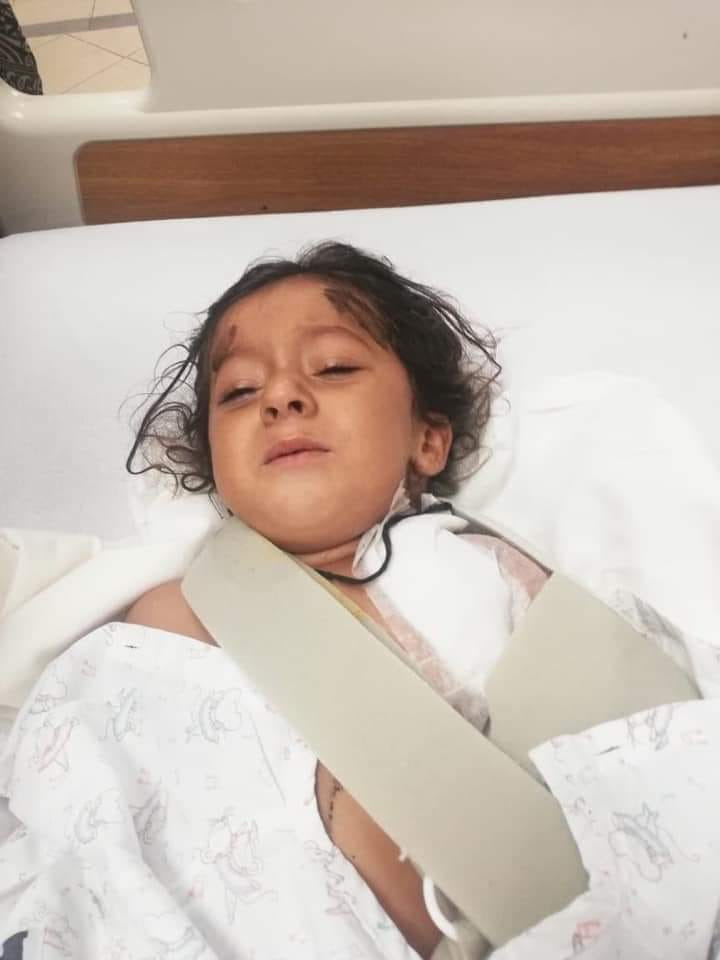
Disturbing news of a woman’s violent death and her 4-year old daughter’s injury emerged from Turbat, the largest city of Makran. It was apparently a case of armed robbery. During the incident, a woman Malik Naz was shot upon and her 4-year old daughter, Bramsh, was seriously injured when a bullet ripped through her collar bone. In the scuffle, one of the so called “robbers” was captured by the local residents.

In Balochistan, locals enjoy sleeping in front of their homes under open sky, especially during the summers. Several Baloch people insist on having a large open compound in front of their house which is then marked by outer walls. Malik Naz’s house was also like this, and she was sleeping in the compounded of her house under open sky, which is quite usual for a hot place like Turbat on a seemingly normal night.

“It was at around 3 AM when some armed men jumped in, woke us and ordered all the men to step aside away from the women,” said an eye witness of the incident. “I disobediently ran quickly inside the house. The so called ‘robbery’ had all the hallmarks of the usual operations carried out by the (Pakistan) Army to forcibly ‘disappear’ people. So, thinking that I would be kidnapped, I jumped out of the window to the other side of the house and ran for life. In the meant time I also shouted for help.”

Locals of Dannuk then quickly responded to the call of young men and gathered near the house. Local Baloch people then surrounded the house from three different directions and called for the armed men to surrender as they had no chance of fleeing the scene.

“We were still confused whether these men were there for the sole purpose of committing robbery or to forcefully ‘disappear’ a person,” said a relative of deceased analysing the connections between the killers and Pakistan Military intelligence. “Malik Naz was also one of the ones who did not take commands from the armed men and resisted them which made them fire point-blank at her,” said the uncle of deceased Malik Naz.

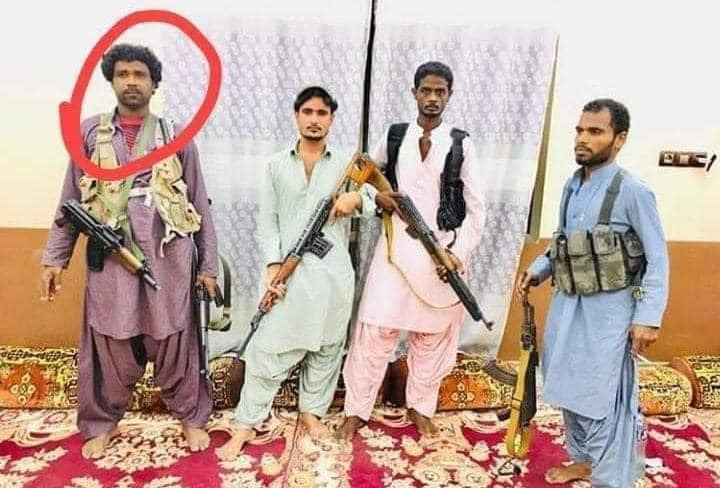
After gun shots were fired the Baloch locals surrounding the house jumped inside the compound and successfully captured one of the ‘robbers’ while others managed to flee from the scene. The captured man was identified as Altaf Mazar.

Death Squad member Altaf Mazar (extreme left) who killed Bramsh’s mother Malik Naz at Turbat, Balochistan

Later, after being arrested the confessions of Altaf Mazar to the locals revealed the link between Altaf and his group of ‘Death Squads’. Death Squads in Balochistan is the term used for groups which are supported by the Pakistan Army. The army and its intelligence agencies are now increasingly outsourcing their job of killing and abduction to these criminal groups. They are often paid well and are allowed to carry heavy weapons and terrorize local people. They are also used as tools during the election manipulation to force locals to vote for the Pakistan Army’s henchmen, who then end up in Balochistan’s Parliament.

According to Altaf Mazar, he was working under Sameer Sabzal, who is also a member of the Balochistan Awami Party and during the last elections did the army´s job of forcing locals to vote for Zahoor Buledi, the current Minister of Finance of Balochistan. He can be seen in various pictures and videos with this Minister Zahoor Buledi. The minister denies knowing him.

Head of Death Squad Sameer Sabzal (extreme right) with Zahoor Buledi (centre), Balochistan’s Minister of Finance

Within a few days of this incident Sameer Sabzal posted an Instagram story in which he shared a seeming threat from ISI. Translated into English, Sameer Sabzal’s post reads: “All Pakistanis are requested to keep a close watch on their sons and daughters and to check whether they are being lured into a conspiracy against the state of Pakistan and it’s security forces or not. All people are herewith warned that everyone who uses social media to share posts deemed against the state of Pakistan and its security forces are under close watch and will face extreme repercussions because for the safety and peace of the state no one will be forgiven.”

On the other hand, Bramsh, the four year old child of deceased Malik Naz was rushed to a hospital in Karachi. Turbat city with a population of more than one million still lacks quality medical services.

Sameer Sabzal (centre), Head of the Death Squad, with Pakistan Army officers

The police have registered a case against two perpetrators namely, Altaf Mazar and Basit Faiz.

Balochistan has been plagued by this present wave of armed conflict that has been going on for the last 20 years, but this continues to be ignored outside Balochistan.

Human rights organizations report of more than 8000 extra judicial killings, and another 45,000 plus Baloch people have been made victims of “enforced disappearance”. Thousands are internally displaced and still several brutal human rights violations continue to be committed by the Pakistan military and its contractors. But nothing of these gets reported either in the international media or the local media.

In fact, Balochistan is one of the world’s most violent conflict zones that continues to remain in the grip of Pakistani troops, allegedly in far greater numbers than ever.

The Balochistan conflict seems to be too complex and labyrinthine to be fully comprehended by the world, which it seems to have grown weary of conflicts and wars that do not affect it directly. But for those Baloch locals who continue to live with this horror day in and day out, this conflict takes a different shape.

World has no answer to 4-year old Bramsh’s question that why she has a bullet in her chest and why her mother had to die at the hands of Pakistani Death Squads.