Home Blog Page 368

People are disappeared at will in Balochistan: Mir Mohammad Talpur

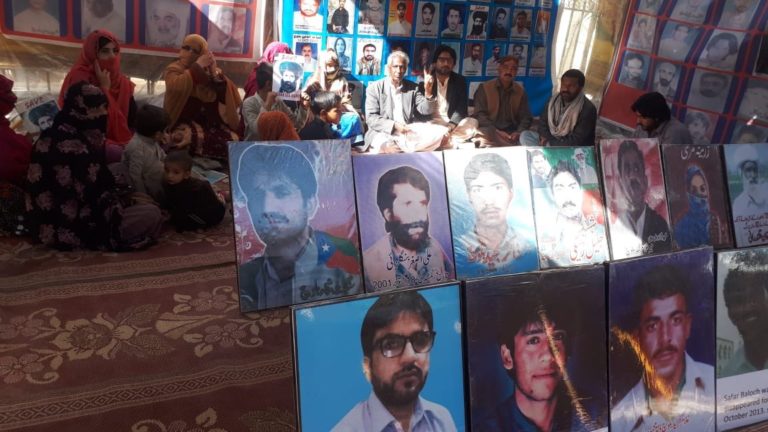
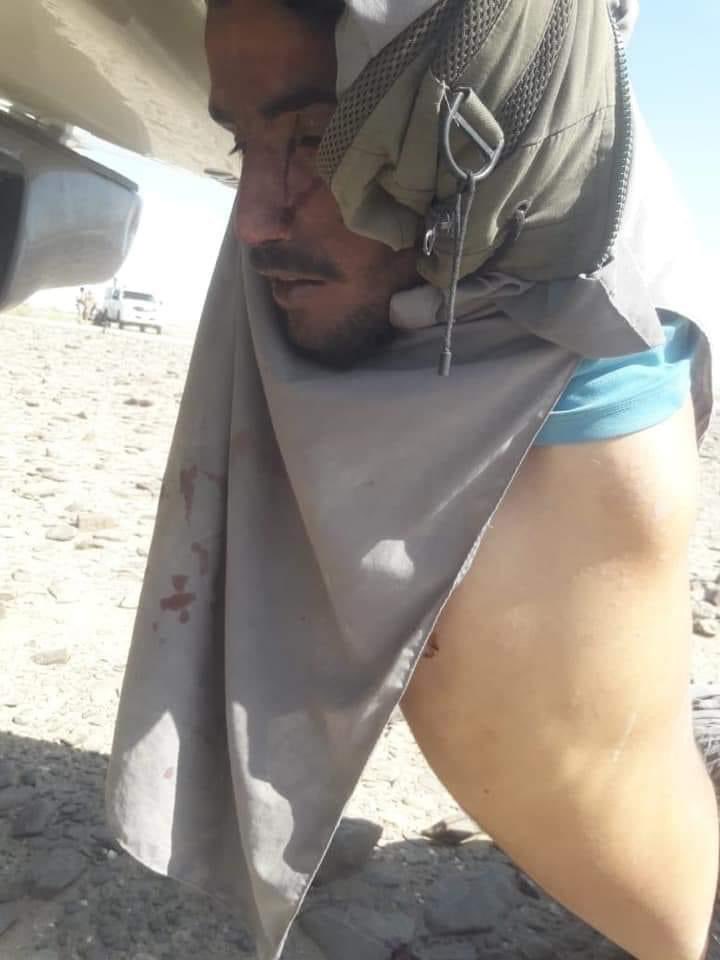
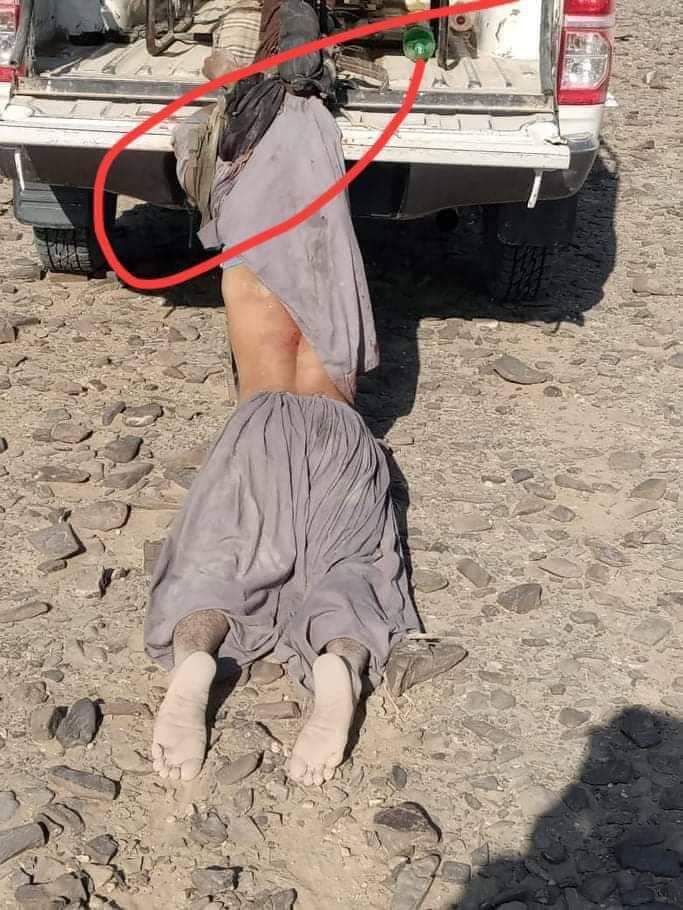
The scourge of ‘enforced disappearances’ in Pakistan has severely eroded the foundations of society’s conscience and confidence. This crime against humanity has been going on for so long and so systematically in Balochistan that it has come to be considered as a normal state of affairs. But a vast majority remain unperturbed by the atrocity inflicted on the victims and all those connected to them.

Bertolt Bretcht in his 1935 poem “When evil-doing comes like falling rain” has put this attitude very poignantly: “The first time it was reported that our friends were being butchered there was a cry of horror. Then a hundred were butchered. But when a thousand were butchered and there was no end to the butchery, a blanket of silence spread. When evil-doing comes like falling rain, no body calls out “stop!” When crimes begin to pile up, they become invisible. When sufferings become unendurable the cries are no longer heard. The cries, too, fall like rain in summer.”

The confidence has been eroded because no one is exempt, be it Ms. Gul Bukhari, Comrade Wahid Baloch or Idris Khattak because those who commit this crime enjoy complete immunity in the prevailing culture of impunity for such crimes.

Pakistan has still not signed the “International Convention for the Protection of All Persons from Enforced Disappearance” because of reservations, especially regarding Section 26 which allows United Nations’ body to conduct surprise visits to check for ‘missing persons’. To date it has not criminalized ‘enforced disappearances’. All this certainly gives the confidence and immunity to those who are involved in this heinous crime.

Are surprise visits really an issue? Let’s see how the UN Working Group on Enforced or Involuntary Disappearances (WGEID) fared in its September 2012 visit here. A junior minister in the National Assembly criticizing it said, “It would be the first step leading towards the disintegration of the country.” The Chief Justice refused to meet as the matter was sub judice and the Inspector General of FC (Frontier Corps) Balochistan declined too.

The icing on the cake was that on 24th September 2012 the Parliamentary Committee on National Security decided that in the future no United Nations group would be allowed to visit Pakistan to discuss “sensitive issues”. Senator Raza Rabbani asked the foreign and interior ministries to abstain from welcoming international intervention in local issues.

Apparently, it is futile to insist Pakistan to sign it because although Pakistan has ratified the Convention on Torture in 2010, those who ‘pick up’ people and the police of the area, violate it with impunity both in practice and spirit.

The scourge of ‘enforced disappearances’ in Balochistan isn’t a recent phenomenon either. Baloch have been its victims since 1960s when Sher Mohammad Marri began resisting injustices against his people. I know Marris’ of that era who were picked up, tortured but were lucky to be released. This approach, however, changed during the 1973 Balochistan insurgency as most of those picked up were never heard of again. Asadullah Mengal son of Sardar Ataullah Mengal and Ahmad Shah Kurd were picked from Karachi in 1976 and there was no information about them.

My own friend Duleep Dass and Sher Ali Marri were picked up by the army at Belpat, Balochistan in 1975. We never heard of them again. My Marri friends Bahar Khan Lalwani, Shafi Muhammad Badni, Dost Muhammad Durkani and Allah Bakhsh Pirdadani were picked up and suffered the same fate. The same fate awaited those who were picked up from Mengal and other areas.

The last wave of disappearances began in Balochistan in 2002; Asghar Bangulzai was picked up and is still missing. Dr. Allah Nazar too was picked up with others in 2005 but was released in a near-death condition. The vicious and vile ‘abduct, kill and dump’ ‘policy’ began in 2008 and has claimed thousands of victims.

There never has been prosecution let alone punishment for those responsible for ‘enforced disappearances’. During Iftikhar Chaudhary’s tenure as Chief Justice of Supreme Court, high profile hearings on missing persons were held but to no avail. During a hearing on 20th March 2013 in Quetta the DIG of Criminal Investigation Department (CID) Balochistan Feroze Shah submitted a report. He told the Bench that, “Following the statements of 12 missing persons after they returned home the Balochistan police asked the Frontier Corps to trace the whereabouts of the accused army men including two Lt Colonels, six Majors and two Subedars”. (Daily Times March 21st 2013) Not even a Subedar was punished.

The disease of ‘enforced disappearances’ can never remain localized because with nothing to deter the perpetrators they make systematic use of it.

Moving on, in January 2017 bloggers Salman Haider, Asim Saeed, Waqass Goraya, Ahmed Raza Naseer, and Samar Abbas were disappeared and later released. No charges or court trial pointed out that they were incarcerated, tortured for criticizing the establishment’s policies; no one was held accountable for messing up their lives.

The situation for the victims of enforced disappearances has worsened as now even Courts refuse to take cognizance of the issue and people are now disappeared at will. The National Commission of Human Rights here is dysfunctional because they who disappear people do not want even an internal body to question them. The Commission for Missing Persons confounds the issue rather than solves it.

In the past few months some missing persons like Sagheer Baloch, Mohammad Atta Baloch, Abdul Wahab Baloch have been released as were Comrade Wahid Baloch and some others before. Release certainly is a relief for the victims and families and probably a consolation for the politicians who have agreed to support the government on condition of release of missing persons.

However, these releases raise more questions than answers. It is essential to know who disappeared them, why were they disappeared, where they were kept, why weren’t they produced before courts, why were they tortured, has anyone been held responsible for the trauma the victims and their families suffered, why do the released victims refuse to speak of their ordeals?

Unless these questions are answered and more importantly those responsible for the disappearances are named and punished the scourge of ‘enforced disappearances’ will continue unabated. They will release a couple and disappear a dozen knowing that they can do this with impunity. Moreover, it is downright dishonest to say that the abductors are ‘unknown persons’ for only a state institution which knows it can get away with this brazen illegality, keeps doing it.

More significantly it is not that all those disappeared are only kept indefinitely incarcerated because some of them like Gazzain Qambarani and Sulaiman Qambarani who were abducted in July 2015 from Qilli Qambarani ended up being displayed as terrorists killed in encounter on 13th August 2016. Again, on March 4th two students, Hizbullah Qambarani and Hassaan Qambarani, were taken away from Qilli Qambarani in broad daylight; Hassan is brother of Sulaiman and their families fear the worst.

In the transient euphoria generated by release of a few lucky ones the mass of missing persons keeps getting forgotten and forsaken and sadly those reported as killed in encounters get as much justice as did the hundreds of victims of notorious Rao Anwar did in Karachi. These disappearances and killings have dire consequences for the society and individuals because an atmosphere of fear and insecurity prevails and people are denied the safe environment conducive to development of a society necessary for a peaceful and civilized life.

Above all these ‘enforced disappearances’ undermine the very basis of humanity by dehumanizing society as a whole.

(Special Thanks to Mir Muhammad Talpur saheb and VoicePk for permitting News Intervention to re-publish this article)

Pakistan Army abducts two Baloch students, they are now “missing”

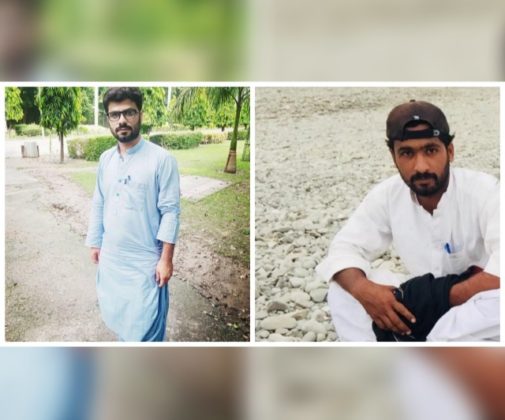
Pakistani Army abducted two Baloch students on Sunday from Turbat city of district Kech, occupied Balochistan and took them to an unknown location.

According to details provided by local Baloch residents, two students Nasir  son of Pahlan and Janzahaib son of Rafiq were abducted by the Pakistan Army from Turbat Absar as part of Pakistan’s policy of harassing innocent Baloch people.

As per local Baloch residents, Nasir is a student of Bahauddin Zakaria University in Multan Punjab and Janzahaib studies at Uthal University in Balochistan. Both were arrested without any instigation by the Pakistani army and have now “disappeared”.

This phenomenon of “enforced disappearances” by Pakistani security forces has given birth to the decades-long “Missing Persons” crisis in occupied Balochistan. Around 30,000 innocent Baloch people have went missing at the hands of Pakistani security forces over the last several years. Even as the world is fighting Coronavirus pandemic Pakistan Army has continued its military operations across occupied Balochistan and is fighting innocent Baloch people with sophisticated weaponry and helicopter gunships.

Trusting Pakistan was a major strategic blunder for the US: Lawrence Sellin

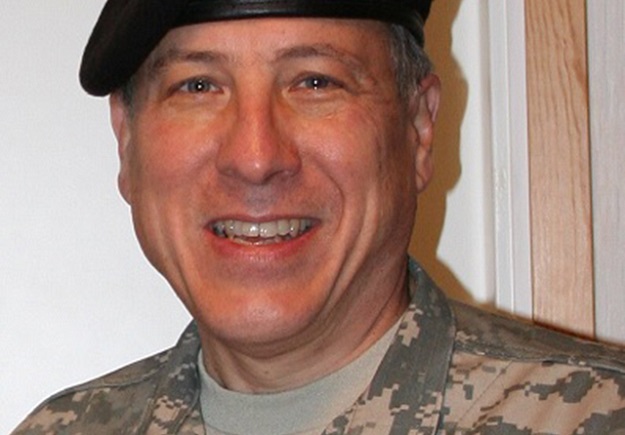
Lawrence Sellin is a retired US Army Colonel. He is a veteran of Afghanistan, Iraq and West Africa and trained in Arabic & Kurdish. In this interview with Sangar Media Group and News Intervention, Lawrence Sellin gave fresh insights and an objective analysis on an array of geostrategic issues of South Asia.

Dosten Baloch/VivekSinha: US & NATO joint attack toppled the Taliban regime in Afghanistan because Taliban had given refuge to Osama bin Laden. However, after this US-led attack on Afghanistan, it was Pakistan that gave a sanctuary to the same Osama bin Laden along with Al Zawahiri, Mullah Omar and thousands of other hard core jihadists, and yet US rewarded Pakistan with billions of dollars. Isn’t this a huge contradiction in US’ policy and narrative? If yes, then what is the reason for this contradiction? If no, then how do you explain this contradictory policy of the US?

Lawrence Sellin: It is a huge contradiction, but an explainable one.
A lack of awareness by the United States of the extent of Pakistani duplicity was already evident in the 1980s when the Central Intelligence Agency (CIA) outsourced the funding and supply of the Mujahideen fighting the Soviet Union to Pakistan’s Inter-Service Intelligence (ISI), who gave preference to pro-Pakistan Islamists rather than Afghan nationalists, which eventually led to a Taliban takeover of Afghanistan.

The American approach to Pakistan after 9/11 was based primarily on wishful thinking, in which the application of a proper combination of bribery and arm-twisting would convince Pakistan to support the goals of the U.S. and NATO in Afghanistan. It did not. Pakistan continued its support for the Taliban and other extremist groups.
Trusting Pakistan was a major strategic blunder for the United States.

Dosten Baloch/VivekSinha: Pakistan Army promotes and uses the ideology of Islamic jihad as a state policy and exports it in the form of terrorism to Afghanistan, Balochistan and Kashmir. Why Pakistan isn’t being made accountable for creating this ‘mess’, like the other non-state jihadists on world forums?

Lawrence Sellin: Unlike stateless extremist groups like al-Qaeda and the Islamic State, Pakistan is officially part of the world community of nations, even though Pakistan uses terrorism as an element of its foreign policy. Because of its status as a nation-state, Pakistan can leverage alliances, for example, with China as well as use international institutions like the United Nations to avoid responsibility for its reckless behavior by framing any use of terrorism as an insurgency or a response to religious oppression. In actually, Pakistan is a state sponsor of terrorism.

Dosten Baloch/VivekSinha: The joint forces of US & NATO attacked and destroyed ISIS Caliphate for its human rights abuses, war crimes, terrorism and crimes against humanity. Pakistan Army commits these same crimes in Balochistan. Pakistan Army plunders, rapes, murders, bombs and burns the villages across Balochistan with impunity. Pakistani security forces have displaced civilians, and continues to forcibly abduct and disappear Baloch people, it also tortures, kills and dumps them. Why do the US, UN and other global human rights organisations not take notice of such war crimes by Pakistan in Balochistan?

Lawrence Sellin: The US, the UN and global human rights organisations do not take notice of war crimes committed by Pakistan in Balochistan for the same reasons I described earlier. Being part of the international community, Pakistan claims that it is within its rights as a sovereign nation to suppress “dissent” within its territory. Such claims are seldom challenged internationally regardless of the extent of the human rights abuses because, quite frankly, so many other nations are doing similar things and no one wants to open Pandora’s Box.

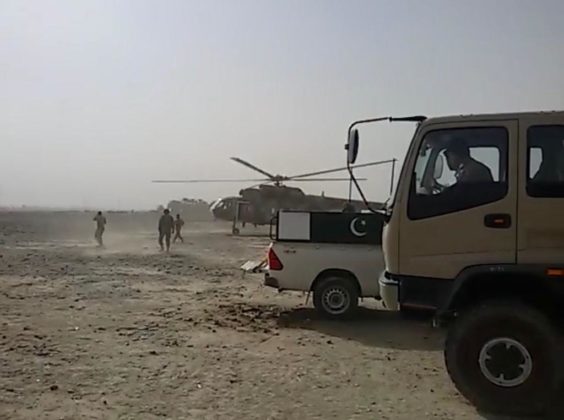
Pakistan Army has been using helicopter gunships to shoot at innocent civilians in Balochistan.

Dosten Baloch/VivekSinha: Isn’t this right time to support Baloch freedom struggle for an independent, secular and democratic Balochistan and thereby root out Islamic extremism and jihad from the entire region?

Lawrence Sellin: I have long thought a secular, democratic and independent Balochistan could provide enormous benefits to South Asia, both as a bulwark against the spread of extremism and jihad, particularly emanating from Pakistan, but also as an inspiration to oppressed ethnic minorities in the region, who have been subjected to human rights abuses.

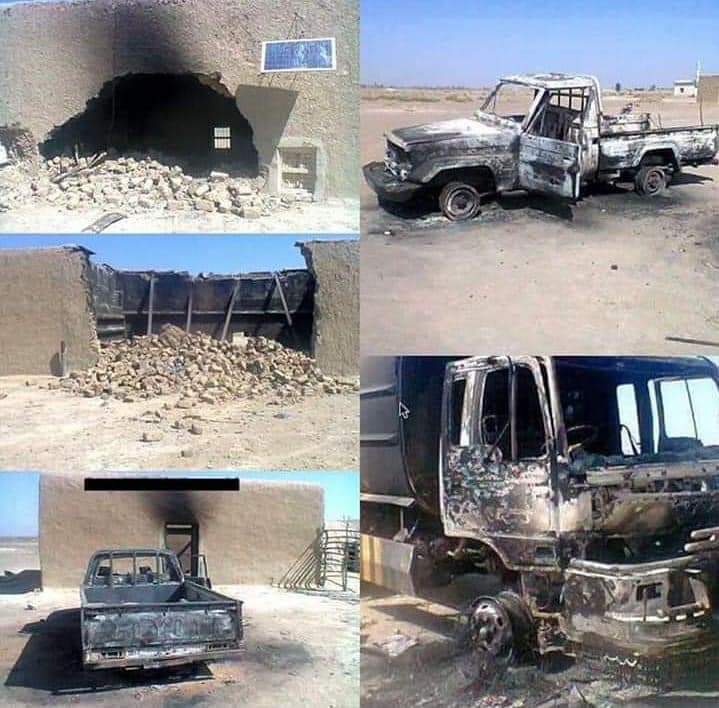
Footprint of destruction after the relentless attacks by Pakistan Army in Balochistan

Dosten Baloch/VivekSinha: While the US has struck a deal with Taliban and has formed a road map to exit Afghanistan, Pakistan’s ISI has begun spreading its tentacles in Afghanistan’s government formation. Do you think US exit from Afghanistan coupled with Pak’s active involvement will push Afghanistan to pre-9/11 days? If this happens how could it affect South Asian politics?

Lawrence Sellin: Yes, unfortunately a return of Taliban control of Afghanistan appears likely. It would cause a significant shift in the regional strategic dynamics favoring the China-Pakistan alliance to the detriment of India. It will also be a huge encouragement to extremist groups within Pakistan and elsewhere in the world.

Dosten Baloch/VivekSinha: Pashtun Tahafuz Movement (PTM) is gaining momentum across Waziristan that was once jihadists’ main launching pad of Pakistan. Isn’t this the right time to support and turn it into a movement for Pashtuns joining in from Afghanistan?

Lawrence Sellin: I support the Pashtun Tahafuz Movement (PTM) and ethnic self-determination for Pakistan’s politically oppressed groups. The Durand Line has always been an obstacle to Pashtun self-determination, an artificial border that Pakistan wants to maintain. The time to reconsider the legitimacy of the Durand Line is long overdue.

Dosten Baloch/VivekSinha: Kurds, like the Baloch people, are one of the largest ethnic groups that do not have their nation and continue to be persecuted. What impact can the developments in South Asia have on the Kurds’ armed resistance in near future?

Lawrence Sellin: A Pakistani victory in Afghanistan through its proxies, the Taliban, will have a negative impact on the self-determination of the Kurds, Baloch, Pashtuns and other oppressed minorities in the region. Pakistan’s alliance with authoritarian China will only add to an anti-democratic effect. 

Dosten Baloch/VivekSinha: India has begun to assert its rightful claim over Pakistan-occupied Kashmir (Gilgit-Baltistan). How does the West look at these recent developments in Kashmir?

Lawrence Sellin: Gilgit-Baltistan is an Indian territory and has always been considered as such, making Pakistan’s occupation illegal. Unfortunately, like its avoidance of responsibility for its use of terrorism as an instrument of its foreign policy, Pakistan has so far successfully leveraged its position as a nation-state and has used international institutions like the UN to avoid responsibility for its illegal occupation of Gilgit-Baltistan. Regrettably, I do not expect a major change in Western ambivalence towards Pakistan’s reckless disregard of international law.

Dosten Baloch/VivekSinha: Coronavirus pandemic, pro-democracy protests in Hong Kong and China’s frigid relations with Taiwan. How will these developments affect South Asia? Do you see the possibility of international borders being redrawn?

Lawrence Sellin: In the short term, I do not anticipate borders being redrawn. Significant strategic change in South Asia will occur if the Taliban take control of Afghanistan with the negative consequences I have already described. China’s regional ambitions in South Asia might be set back due to international retribution resulting from the Coronavirus pandemic and China’s role in its origin and spread.

Dosten Baloch/VivekSinha: If Republicans led by Donald Trump come back to power do you expect a fresh trade war between US and China? If this happens how will it affect the existing world order?

Lawrence Sellin: If President Trump is re-elected I do not expect a major change in US foreign policy. There will be a continued readjustment of the trade relations between the US and China with a focus on fair trade, rather than free trade. Like in South Asia, China’s global ambitions will be set back because it will be rightfully blamed for the Coronavirus pandemic. Although I do not now see a major change in the world order, I do expect the US to continue to improve its relationship with India at both an economic and military level to oppose Chinese regional aggression and maintain a balance of power in South Asia.

Dosten Baloch is Editor-in-Chief of Sangar Media Group.
Follow him on Twitter @DostenBaloch1
Sangar Media Group: @DailySangar

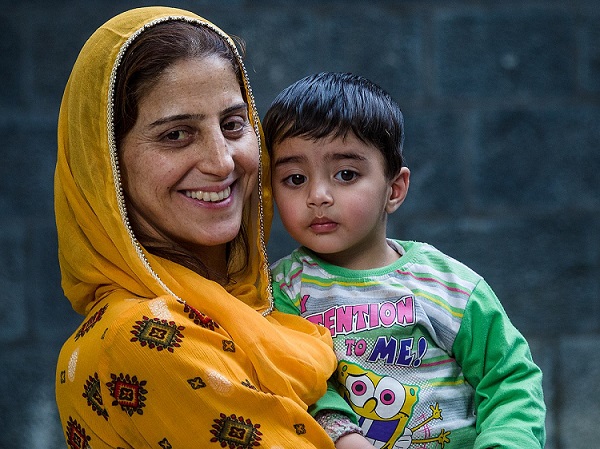
Empowered mothers of Kashmir can change the course of history

Mother’s Day is being celebrated on May 10, with great enthusiasm despite the lock down restrictions. Messages extolling mothers are flowing on social media; each family has a special programme in place to honour mothers. The love and honour that is being showered on motherhood is well justified since a family can be only as good as the mother of the house; it is she who instills the right values in her children and steers them in the right direction.

Kashmir has a chequered history of foreign conquest and social turmoil. Through all such difficult times the mothers of Kashmir have acquitted their responsibility with exemplary resilience and courage. They have made supreme sacrifices during long periods of violent disorder and successfully overcome insurmountable challenges to keep their families intact, safe and morally righteous.

The cult of terrorism, disruption and divisiveness that Kashmir is facing may well be the most formidable challenge for the Kashmiri mothers so far. It is all the more ominous due to the involvement of a determined foreign inimical power ready to go to any immoral and evil extent to gain control of the region. In its evil designs, the enemy finds support from such locals who are ready to sell their soul and their people for money and political power. The enemy has found in the youth of the region a lucrative target in furthering its evil agenda.

It cannot be denied that the Kashmiri youth, especially teenage boys, have lived under continuous shadow of the gun. A disrupted education and an uncertain future has had a negative impact on their young minds. It has instilled in them a sense of insecurity and  victimhood, giving rise to negative emotions of frustration and anger.

Happily, the scenario is changing, Kashmir today is standing on the cusp of unprecedented progress and development triggered by the recent political change. Now, people have complete freedom to chart out their destiny in the manner that they consider best. The entire Nation is standing firmly in support of their fellow citizens of Kashmir.

It is time for the people of Kashmir to introspect, to look at reality in the face and to be honest with themselves. It does not serve any purpose to remain emotionally suppressed. Problems like lack of economic opportunities, unemployment and bad infrastructure are not specific to Kashmir alone. They are prevalent in other parts of the country and the world. The idea is to work consistently towards removing these road blocks and also evolving despite them.

We have many examples of Kashmiri youth excelling in competitive exams and other fields like sports. Their laudable achievements are directly contributing to the betterment of Kashmiri society as they serve as a source of inspiration for others. They have made their families and especially their mothers proud. In every society the energy of young blood has to be diverted towards gainful purposes, in Kashmir, this is literally an existential need.

The challenges that Kashmir faces today can be overcome by involvement of the mothers. They need to shoulder the huge responsibility of saving their wards from inimical and evil designs of the enemy and also guide them towards gainful activities. It is only they who can break the lure of self destructive activities like stone pelting and ultimate graduation to becoming terrorists.  They can guide the youth towards the path of honest hard work to achieve prosperity and stature.

The women of the state have every reason to feel empowered and confident now that the shackles that were constraining them stand removed through the latest political developments in the region. They now have full-fledged rights to land and property in the state which was earlier denied to them. Women can now take full advantage of central schemes like Rashtriya Mahila Kosh (RMK), Support to Trainees and Employment Programme (STEP), Swayam Sidha Women Empowerment Programme (SWEP) etc. Benefit and empowerment for women is also bound to flow from the flagship central schemes like Beti Bachao, Beti Padhao; Sakhi, Nirbhaya and others.

Such initiatives will strengthen the hands of the mothers and also ensure that the mothers of tomorrow are more integrated and productive members of society. Kashmiri mothers need to take full benefit from the opportunity that has come their way and leverage the same to carve out a progressive society for themselves and their families.

The scope of the challenge is so huge that mothers cannot be expected to face it alone. They require the support of the Kashmiri civil society as a whole. It is here that leaders, elders, intellectuals, religious teachers’ et al have a big role to play in support of the mothers.

While mothers exercise the most essential element of soft power, it is the elders who will have to articulate the negative impact of the foreign sponsored terrorism and impress the same upon the younger generation. Hence the need for a new, dynamic, selfless, nationalist, motivated leadership that can work hand in hand with the mothers.

It is also time for the youth to realise that it is the mother who is the most distressed and shattered when her son meets an untimely and avoidable end in a gunfight with security forces. Any act of a son that brings tears in the eyes of the mother and breaks her heart is a sin, a sign of ingratitude towards one who has sacrificed her everything to ensure that he lives a long and happy life.

Mothers are the pillars of strength in all societies, if they take a lead others have no option but to follow. History is replete with instances of women having changed to course of society and the same can happen in Kashmir too. It is hoped that on Mother’s Day, the great women of the great land of Kashmir will pledge to save their children from the curse of mindless violence and will, once again, emerge victorious.

Extended Conversation with Angelos Sofocleous on the Context Now

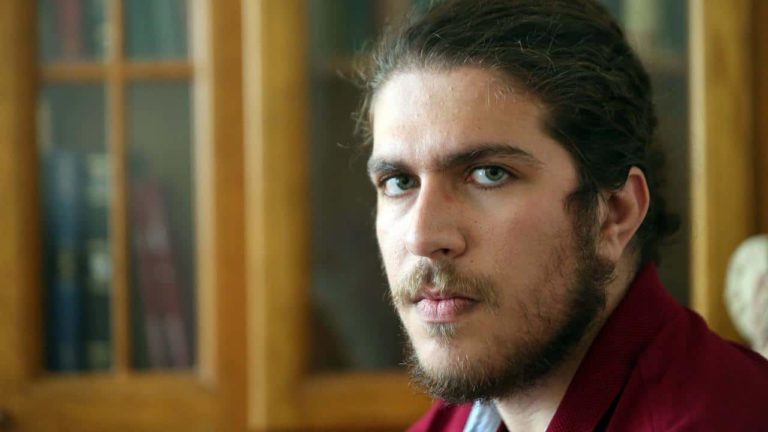
Angelos Sofocleous, M.A. is a Philosophy Ph.D. student at University of York who works as an Interviews Editor at The Definite Article, Deputy Science Editor at Nouse Philosophy, and the Editor-in-Chief at Secular Nation Magazine. Here we talk more in-depth about updates since December, 2018 on the fallout of the reactions to a tweet and an article.

Scott Douglas Jacobsen: We’ve written a decent amount together. In fact, we have seen a development of secularism in Greece and in its education, and some of the aspects of personal and professional history for you (bumpy). Mario Zucconi quoted you and I in EU Influence Beyond Conditionality: Turkey Plus/Minus the EUOne of the most recent, relevant developments came in the form of firing or considered resignation from several positions as editor or leader followed by some opprobrium in public. You were President-Elect for Humanist Students, which has a triplet setup for incumbent and leaving presidents. Recently, you were a hated person. Some stood by you. Some still hate you. What was the feeling in the interlude since the last interview in 2018?

Angelos Sofocleous: Let me first start with a recollection of what had happened, for reminding those who were following the case when it happened, and informing those who will hear about the incidents for the first time.

On August 21st 2018, I retweeted a tweet reading “RT if women don’t have penises”. The original tweet was accompanied by an article from The Spectator titled “Is it a crime to say ‘women don’t have penises’?” The retweet was part of other statements and articles that I had written about sex, gender, and the transgender movement which included certain criticisms of the movement as well as suggestions on how it can be improved so that society can achieve overcoming sex and gender stereotypes. Through my statements, I also wished to express and support the view that humans are a dimorphic species; that is, a human being can be a male or female, allowing for certain cases of intersex individuals who, however, seem to be unrepresented, underrepresented or even misrepresented by the transgender movement.

Despite me deleting the retweet a day after, I was forced to resign from the position of President-Elect of Humanists UK, and a few days later I was fired by Ry Lo and Sebastián Sánchez-Schilling from the position of Assistant Editor of Critique, Durham University Philosophy Society’s journal, and by Anastasia Maseychik from the position of Editor of The Bubble, a Durham University magazine. These dismissals were found to be ‘unfair and undemocratic’ by Durham Students’ Union as they did not follow the procedures outlined by Durham Students’ Union, did not give me an opportunity to explain my views, did not gather a vote of no confidence from their members, and did not give me an opportunity to appeal the decision. Durham Students’ Union called for the journal and the magazine to apologize. The SU too, as did the magazine, but I have not yet received an apology from the journal.

As I noted in my resignation statement from Humanists UK “[my] views were taken to be ‘transphobic’ by individuals who cannot tolerate any criticism, either of their movement or their ideas, and are unable to engage in a civilized conversation on issues they disagree on. These are individuals who think they hold the absolute right to determine which ideas can be discussed and what language can be used in a public forum.”

“Living in a free society and being present and active in a public forum means that one often witnesses comments that she may judge as offensive, divisive, or derogatory. Living in a democracy means that one will often offend and get offended. That’s the price one pays for being a member of a democracy and not existing into her own bubble.”

The incident with the Durham University Philosophy Society journal was cited in the Supreme Court of the United States case R.G. & G.R. Harris Funeral Homes, INC., V. Equal Employment Opportunity Commission and Aimee Stephens. The Supreme Court explicitly says:

“In the U.K., Angelos Sofocleous was dismissed from Durham University’s philosophy journal Critique because he used his social media account to share another individual’s comment noting that “women don’t have penises.”

[…] As this Court rightly stated in Barnett, “[i]f there is any fixed star in our constitutional constellation, it is that no official, high or petty, can prescribe what shall be orthodox in politics, nationalism, religion, or other matters of opinion, or force citizens to confess by word or act their faith therein.” This Court should adhere to that same principle today, and refuse to compel the R.G. and G.R. Harris Funeral Homes, or anyone else, to believe that men can be women.”

My deleted retweet was not taken favourably by Durham University’s Philosophy Department either. Following the incidents, I was bullied and harassed by Dr Clare Mac Cumhaill, an academic at the Department. Dr Mac Cumhaill had called me in her office and told me I had no freedom of speech for my views, was illegally in possession of my Bachelor’s grades which she used to belittle me, threatened me with expulsion from the University, falsely accused me of misgendering someone on Twitter, and other equally appalling and unfounded accusations. Prof Sophie Gibb, then Head of Department, was dismissive of my allegations and did not act according to the rules and regulations, and Prof Stephen Mumford, current Head of Department, recently issued a non-apology saying “I am sorry that you feel we fell short in your case.” after a complaint of mine against Dr Mac cumhaill and the Department was upheld following an investigation by the University’s Student Conduct office.

Such an apology is by no means an apology for various reasons:

a) An apology is not honest or heartfelt if it’s communicated via a third party. The mere fact that this was sent to the Student Conduct Office which then sent it to me leaves me doubting whether the Philosophy Department understood what they did wrong and why they needed to apologize. It feels as if Stephen Mumford, the Head of Department (HoD) was forced to issue the apology.

b) There was no reason for Stephen Mumford to mention that “While your complaint was not upheld”, other than out of spite and wanting to stress that the Department did nothing wrong, regardless of the fact that they did not follow procedure and acted against both University and Department rules and regulations, and included a number of lies and inaccuracies in their statement to the complaint and review investigators which I am exposing as I further appeal my case.

This is particularly weird to me as in my culture such a thing would never happen. An apology will never be communicated via a third party but directly to the person to whom you are apologizing or publicly so that the parties involved have assured each other that the issue is settled and that the apology has been received as intended.

c) “I am sorry that you feel that we fell short in your case”. This is a clear usage of a gaslighting technique and victim blaming. Stephen Mumford shifts the blame from the Department to me, essentially saying that the problem is not that they fell short in my case but my feeling that they fell short in my case. “I am sorry that we fell short in your case” is the appropriate response. To put it bluntly to make this point clear – “I am sorry I raped you” and “I am sorry about how you felt after I raped you” communicate two entirely different things, the latter alleviating any blame from the perpetrator.

d) The letter puts a lot of emphasis on the need of the Department to process things quicker. That was the least of my concerns regarding the harassment and bullying I received and I am surprised the Department is putting so much focus on that. The point of my initial complaint and the review request was about harassment and bullying. Regardless of the fact that this took a lot of time and that the Department allegedly decided to issue an apology to me 12 months ago (which was never communicated and I question whether such a decision was even taken), there are far more important issues with my complaint, some of which are of legal nature.

e) The complaint was not from, or on behalf of, the academic against whom I initiated the complaint. My complaint was primarily against the academic and only secondarily against the Department.

Due to the inadequacy of Durham University and Durham University Philosophy Department to deal with this case adequately and with respect, as well as the horrible and evil behaviour I experienced from Claire Mac Cumhaill, I am now appealing the outcome of my complaint to the Office of the Independent Adjudicator and also seeking legal advice due to the severity of the harassment incident and what this has caused me.

You said in your question that I was “a hated person”. This was indeed true – I faced a lot of hatred on Twitter and other social media, as well as in Durham University. This is also a symptom of depression – feeling that everyone hates you, that everyone wants to hurt you. In my case though it was not just an unjustified feeling of mine, but something true as I was experiencing, on a daily basis, people telling me how much they hated me or expressing hatred in their own vile ways. What for? For a deleted retweet.

There is this quote: ‘If you have haters, you must be doing something right’. This is by no means a rule as it can be easily misapplied and we can think of cases where this is not true. However, for a lot of time before the ‘women don’t have penises’ incident, although I was involved in activist circles and was publicly expressing my views on a variety of topics, I did not have any haters, I had never received a death threat, no one was disagreeing with me, and no one was exposing me publicly. Because of this, I felt I was doing something wrong. The fact that these things weren’t happening did not show that I was right in what I was saying, rather that I had not done enough to get outside my bubble and my comfort circle. You aren’t much of an activist or an opinion writer if you are only active within your own circles – you have to get out.

Once people started hating me, I realized I was doing something right – not that my ideas were right but that I was getting outside my bubble. A good analogy would be that I was previously within fans of my own football team and I felt comfortable and safe being in between them, but now I had gotten into the playing field, ready to get into an ideological battle with individuals who disagreed with me.

However, we don’t necessarily need to think of debate as two sides which are polar opposites of each other. Philosophy is the quest to truth and in a philosophical debate all sides should strive to build onto each other’s argument to reach a truth or a consensus.

Being hated is the price one pays for striving to be a public figure or expressing their opinions publicly. If you imagine you are speaking at an audience of a thousand individuals for years on a variety of topics, it is extremely unlikely if not impossible that there will not be something which offends someone or is hurtful to someone. Your job as a public figure is not to make everyone feel comfortable – we are not in kindergarten. Rather, your aim is to spark conversation and debate and give food for thought to individuals as well as the opportunity to challenge you.

Do your own thing. Haters will hate you anyway.

Jacobsen: Looking back, what were the long-term effects of these to your mental and emotional well-being?

Sofocleous: I fell into major depression. The backlash of that single retweet was immense. I would never have thought that I would make national news because I said “women don’t have penises”. It was so comical but at the same time it was something that had a huge negative effect on me. I felt that my whole life and my future in journalism and academia was collapsing.

What pushed me into depression was certainly the actions of Andrew Copson and Hannah Timson from Humanists UK, Ry Lo and Sebastián Sánchez-Schilling from Critique, and Anastasia Maseychik from The Bubble. And of course the compliance of Prof Sophie Gibb and Prof Stephen Mumford to me experiencing severe distress, bullying and harassment within their own Department. However, it was Claire Mac Cumhaill’s bullying and harassment that pushed me into depression.

No person who has not experienced depression can understand what depression is like. When you experience depression, you feel surrounded by a black fog, losing all connection to yourself, other people, and the world. The world of depression is gray, colourless, with no meaning or hope. You feel immense guilt all the time, as well as that everyone hates you.

Everything takes an incredible amount of effort to be done. Getting out of bed, making a cup of tea, getting in the shower; it’s all a struggle. You feel unable to concentrate on or pay attention to anything and focusing on getting things done seems impossible.

The weeks after I was bullied and harassed by Claire Mac Cumhaill in her office, the gas system at my house stopped working. I couldn’t even make the effort of informing the landlord or telephoning the gas company. I ended up washing dishes in the shower, which had an electric boiler, and slept feeling the cold of Durham, even though fixing the gas system was just a phone call away. The bathroom light was faulty too and wouldn’t turn on. It was a special light, not one which I could find at a supermarket. I showered with my phone light for weeks until I managed to make the effort to inform my landlord that the bathroom light needed to be replaced.

Everytime I went out; to the grocery store, to an event, to the library, to a lecture – I felt this fog around me and was unable to pay attention to anyone or anything people were telling me. I felt that people hated me and that everyone knew about the incidents and turned themselves against me. This is the world of depression, a place which I wouldn’t wish my worst enemy to experience.

The incident with Clare Mac Cumhaill took place in October 2018. I only lasted for two more months in Durham and left in early December 2018 due to the fact that I couldn’t continue belonging in a Department in which I felt I was hated and marginalized. I continued my studies as normal as I could do work from home. I only returned to Durham in February 2018, to complete a module I had during that term, and in August 2018, to complete my dissertation.

In September 2019 I contacted Clare, expressing to her how horrible I felt after the meeting we had and how her actions have pushed me into depression. Not only she denied any of my allegations, but she did not even have the slightest courage or decency to apologize for what had happened.

Now, this is very strange to me due to the fact that, in my culture, if someone tells you that you have done something that made them feel horribly bad, you apologize even if you don’t feel you have done anything wrong. This is the kindness and respect for fellow human beings that I’m talking about. If you tell me that I did something that hurt you, I will apologize, even if I think that I did nothing wrong or acted with good intentions (as Clare claimed). An individual who does not respond to another’s bad emotional situation which she caused is nothing else than wicked.

Nevertheless, I also learned a lot of lessons: People can be vile and evil – some people want to see you suffer and get joy from seeing you suffer. Some people like to experience schadenfreude in its most absolute form. There were people that were emailing my University to expel me. How can any human being wish that for another individual? One would have thought that with the development of modern civilization and democracy we would get rid of the animal inside us, but that will never happen.

We will always organize ourselves in tribes and form mobs to attack members of the other tribe. The only thing that has changed is that instead of these happening in the fields with real weapons, it takes place over the Internet with keyboards.

Twitter will be an excellent tool for future historians in understanding the toxicity of human nature.

Also, it was a good coincidence that while I was experiencing depression, I was attending the “Phenomenology and the Cognitive Sciences” class. Phenomenology is the branch of philosophy that studies subjective experiences of emotions of people. The seminar leader, Dr Benedict Smith, was excellent and the topic particularly interesting and exciting. Some of the classes were about the phenomenology of mental illnesses, one of them on the phenomenology of depression. I researched more and more into the phenomenology of depression as this helped me better understand my condition and also found comfort realizing that other individuals had the potential of understanding what I was feeling. One of the things you will find if you look at narratives of people who have experienced depression is the disappointment and loss of hope due to the feeling that no one is able to understand what depression is like. Indeed, it is not something one can fully describe – that’s why we are using these metaphors which are close to what we are feeling (emptiness, black fog, colourless, gray, numb) but can never accurately depict it.

Due to the fact that I became interested in the phenomenology of depression, I chose to complete my dissertation on that particular area and now I’m pursuing a PhD which focuses on the phenomenology of depression. I would like to take the opportunity to thank those who pushed me into depression because without them I wouldn’t be pursuing a PhD in this extremely interesting area of philosophy.

Jacobsen: Some happenings in the interim, too, included the restriction, in some manner, on freedom of expression, as reported by Dan Fisher in “Terror Tactics Triumph, Silence Freedom of Speech at Bristol University.” What happened?

Sofocleous: Correct. Because of the incidents following my retweet, the Bristol Free Speech Society had invited me to be a speaker at their panel discussion event in February 2019, in which three panelists would discuss freedom of speech, each having a different approach.

While the event was scheduled to take place, less than a week before the event, Bristol Students’ Union contacted the Bristol Free Speech Society informing them that I was disinvited as a speaker saying that I was no longer allowed to be present on the panel amidst ‘security concerns’. Bristol SU never said what those security concerns were nor how they were justified. My appearance on the panel was announced weeks before the event but no student society, organization, or individual student had protested against my participation or had called for me to be disinvited.

The Bristol SU was merely succumbing to the global paranoia that currently takes place in universities in which people get de-platformed and disinvited from giving speeches or participating in conferences just because they might offend someone.

It is funny to me how the act of speaking or voicing your opinion can be a ‘security concern’. The neo-liberal will immediately reply to this: Yes, but what about Hitler? He was voicing hateful, and obviously wrong, opinions.

The neo-liberal is correct. Hitler was, in fact, voicing deeply hateful and divisive opinions which were wrong beyond doubt. However, if we think that we would get rid of Nazism simply by banning the Nazi party or by fining or putting Hitler and his peers in prison for hate speech we would be very wrong.

We would be very wrong because we would ignore the system through which Nazism arose and developed. No hateful idea appears out of nowhere. We should treat a dangerous and hateful idea like a virus. Now, with the emergence of a global pandemic, the virus analogy is as timely as ever.

Dangerous ideas are viruses. But they cannot be treated in the same way as we treat biological viruses.

One would think that we need to restrict the idea to a certain area in society in a way that it cannot spread through society, as we would do with a biological virus. The thing with viruses is that they are not able to organise themselves in a way which is similar to how human societies organise. A virus can simply be marginalised to a certain part of the body where it affects healthy cells at a minimum level, and subsequently be exterminated. The viruses themselves are not going to organise and fight back to the healthy part of the body.

Think about how the majority of countries deal with the coronavirus. They impose a lockdown, and citizens in those countries face legal consequences if they do not isolate themselves at home. In order for a biological virus to be fought, people need to be isolated so that the virus does not spread and those who have the virus are strictly isolated so that they do not spread it onto others. Take the island of Spinalonga in Greece, for example. Spinalonga served as a leper colony. People with leprosy were sent there to be treated and to not infect the healthy population of Greece. The illness is restricted within a geographical area and is controlled.

However, we cannot do the same with a social virus. If you decide to marginalize or isolate individuals who follow a hateful ideology, those individuals still have the opportunity to fight back against ideologically healthy individuals. The fact that YouTube or Facebook bans individuals with unscientific or hateful ideas may restrict their ideas from spreading, but it does nothing to prevent those ideologies from emerging through other parts of society or in real life. White supremacists and fascists will still find ways to organize themselves and infiltrate society.

What is important to note here is that by attempting to punish individuals or making an ideology illegal, we are not reaching the root of the problem. It is as if we discover that a particular disease stems from unhealthy practices (eating certain kinds of animals, in the COVID-19 case) and yet we continue those practices. We need not simply try to eliminate coronavirus cases or find a vaccine, but to examine why and how the virus emerged in the first place, and once we identify the reason(s), we fight so that we create a society which does not have those kinds of threats.

In a similar manner, a hateful and divisive ideology is part of the system in which it exists. It comes from how children are educated, from biased history books, from false family narratives, from the agenda of political parties. If we want to kill a beast we must find it in its lair and not in the wild.

With a social virus, the antibodies can be developed beforehand through education. Education is for social viruses what a vaccine is for biological viruses. If enough individuals are taught logic, rational thinking, how to respect other people, how to argue with others, how to be kind toward each other, how to value human life and show admiration toward anything alive, including nature, then society will develop ‘herd immunity’ toward any hateful or divisive ideas.

So, with the above thoughts in mind, I decided to attend the scheduled event of Bristol Free Speech Society as an audience member. The event organizers were planning on holding the event without me as a panel member. However, as soon as some members of the audience realized that I was present, they called for me to appear on the panel.

The President of the Bristol Free Speech Society, listening to people’s demands, asked whether there is anyone from the audience who objected to me being on the panel.

No even one person from an audience of 200 people had any objection in me being present on the panel. All committee members of the Society favoured me being on the panel, as well as the other panel members. As responsible adults who can take matters into their own hands, people showed their power and decided that there was no risk associated with me being on the panel.

Bristol SU had acted in a patronizing manner, treating its own students like children who have the need to be disciplined and do not know to judge for themselves whether they want to listen to certain views or not.

The event went on as normal and everyone treated each other with respect and kindness, as human beings do when they grow up in a civil environment in which they learn to challenge and not cancel each other’s ideas. Universities and Student Unions so often succumb to the tiny minority of students who think they have the right to dictate what is discussed in a public forum and have the privilege to feel offended by little and unimportant things.

Being de-platformed from an event on free speech is the absolute example of the current state of universities in the UK. You can’t get more ironic than that.

Jacobsen: Following from the previous question, why were you considered a security risk within the confines of the event? This may relate to legitimate reasons of uncivil, violent protests from the left or the right, or from illegitimate reasons for the perception of words as violence when done in a controlled panel setting in which the topic, the speakers, and the time and place are known well ahead of time, i.e., if you don’t like it, then don’t go to it.

Sofocleous: It is everyone’s right to protest against the appearance of any individual who has been invited to speak at any institution, private or public. What individuals cannot do is restrict that individual from speaking or trying to ‘de-platorm’ them.

This is the beauty of being a citizen of a democratic country. You have the right to listen to all kinds of opinions and views, challenge them, ridicule them, follow them, unfollow them, without any one forcing you to believe one thing or another. When a dangerous idea appears, you challenge it and attack it publicly with reason and evidence and attack it to its core.

The fact that people from all over the political spectrum might respond to certain people speaking with violence is a huge problem. We have witnessed people entering lecture rooms or conference venues and disrupting an otherwise peaceful talk. If they disagree with what the speaker is saying, they can sit in a civil manner amongst the audience, take notes, form their questions, and then challenge the speaker during the Q&A and demonstrate in front of everyone why the speaker is so obviously wrong.

We must not succumb to people who use violence as their form of protest in these circumstances. Any historical period in which ideas were silenced or censored is a dark period. We should not let that happen again.

There were no legitimate reasons for uncivil or violent protests to take place due to me participating in the panel.

I am not a criminal, I have done nothing to justify such an abhorrent behaviour by the Bristol SU, and their stance only adds to confirming the already troubled state of free speech in UK universities.

And if there were legitimate reasons for uncivil or violent protests, this is not something that should concern the panel members, but this is the Bristol SU’s problem. If someone is offended because I speak my views on freedom of speech, then they might consider isolating themselves at home and not accessing social media because they are the kind of people that will get offended by anything. And not only they will get offended by anything but they will tell you to stop talking because they are offended.

If Bristol SU was worried that there would be protests at the event, then they should have given themselves enough time to assure police presence at the event. They had not cited security concerns until the last minute which puts their motives and aims into question.

There were never any legitimate reasons for there being any protests at the event and Bristol SU’s reaction was wholly unjustifiable.

Jacobsen: David Verry in “Banned speaker joins panel to speak at Bristol free speech event” stated, “Sofocleous complaining that the ‘authoritarian’ SU had ‘de-platformed’…SU had asked for a delay.” Reading this reportage by Verry, the language of “delay” seems too downplayed and “authoritarian” seems overplayed. With some time to reflect on the event, what seems like the correct orientation for the interpretation of the events’ proceedings?

Sofocleous: There was no reason for the SU to ask for the event to be delayed. The fact that they waited until the last minute to ask for the delay shows that they were ill-intentioned and not interested in providing a space in which ideas and views could be presented and challenged, but rather they wanted to present the event as a threat to everyone involved and to the University.

Bristol SU did, in fact, act in an authoritarian and patronizing manner. Students at the University of Bristol, one of the best universities in the country, are bright enough to decide for themselves whether they want to attend an event or not and whether they want to follow an idea they listen to or not.

As I told you earlier, there were no protests at the event, or any disruption caused by any student. This is what happens when responsible, civil, and kind adults decide to discuss an issue. They will respect the other’s opinion and will challenge it publicly. They won’t be scared of the idea or try to marginalize it. As I supported, marginalizing ideas or isolating individuals who hold them is not conducive to battling those ideas and making them disappear from society.

Let’s finally get this straight: You will never get everyone to agree with you. So the best thing you can do is learn to argue and debate. Violence is not the answer.

We talked before about the individuals who will read the tweet – “Women’ don’t have penises” – while others will skim the article, and fewer will read the entire set of the arguments into the view for you, including on Keingenderism. Lucy Connolly in UNILAD, in an article entitled “Student Who Said ‘Women Don’t Have Penises’ Was Barred From Free Speech Debate,” recounted the statement by the Bristol Free Speech Society:

We are saddened to inform you that due to Student Union bureaucracy we have been forced to cancel the invitation we extended to Angelos Sofocleous to be on our panel discussion on free speech. We have given the SU plenty of notice for this event. But they felt it proper to cancel his attendance in the last minute, citing “security concerns”. For context, Angelos is a full time student at Durham University who lives amongst students on campus. We leave it to the public to reach their own conclusions with regards to the SU’s intentions.

Taking a generous view, what were the positive intentions of the SU and the Bristol Free Speech Society? I state a “generous view” because I would assume individuals within the BFSS or the SU wuld argue for good intentions or working for the greater good insofar as they deem it, see it.

Sofocleous: The Bristol Free Speech Society, being a student society which is affiliated to the Bristol Students’ Union, is bound to follow certain rules and regulations of the SU. Societies in most UK universities must submit a speakers’ list to their SU for approval when they are hosting a guest speaker. This is also what the Bristol Free Speech Society had done on this occasion. Because of my retweet, Bristol SU decided that I was a security threat and called for my de-platforming and for the event to be postponed.

Bristol Free Speech Society acted in accordance with the SU’s rules and regulations. Me being amongst the audience members was not something that went against the rules and regulations, nor my eventual participation on the panel. SUs cannot decide for their students. If more than 200 students decided that they wanted to see me on the panel, then Bristol SU saying no to that would be nothing else than patronizing and disrespectful to its own students.

Bristol SU wanted to obviously avoid any protests taking place at the event and within its premises. They also wanted to protect their students from supposedly dangerous ideas.

Nevertheless, I fail to see the relation between words and violence. Certainly, people might call for violence with their words, and that’s a crime. But, as I said earlier, any comments that are misrepresentative or derogatory toward certain groups cannot be dealt with simply be censoring or de-platforming. When someone utters deeply xenophobic or racist insults this is just the result of an ill political, educational, societal, family system. If we want to change the situation, we need to attack the system, not merely the individual who is a victim of the system.

SUs and Universities should be champions of free speech, not the ones who will suppress it.

Obviously, in their terms, they were acting in good intention and protecting the greater good. However, this behaviour is no different from the behaviour of religious fundamentalists who send death threats to people or authoritarian regimes who get rid of their opponents.

Religious fundamentalists and authoritarian regimes, too, act in good intentions, in their terms, and say that they protect the greater good.

However, I fail to see how any individual or organization which de-platforms or censors anyone can act for the greater good. This is not to say that they are evil – to say that would be a false dichotomy. They are just not acting for the greater good. Period.

Jacobsen: What were the negative consequences of the aforementioned “positive intentions”? I ask because this goes back to the old aphorism on good intentions leading to bad consequences.

Sofocleous: As I said, I don’t think these individuals or organizations are evil or they want to hurt people with their censorship. But what they are doing goes against any notion of democracy and freedom. It doesn’t have to be about intentions – because they have neither good nor bad intentions.

They just want to satisfy the tiny minority of students who might get offended. But, of course, it is impossible to find a topic which won’t insult or offend someone. Israel-Palestine, global warming, veganism, colonialism, capitalism, communism, transgender issues, homosexuality – it’s impossible to pick a topic in each of these that won’t offend someone. Does this mean we have to stop arguing in order to not hurt people’s feelings? No.

Dangerous ideas exist in society and we must come to know about them. That’s the only way we are going to confront them. Because if these ideas exist and emerge from underground we will not be ready to battle them. Let’s face them, challenge them, and eradicate them while there is still time.

The bad consequences of Bristol SU’s actions is that they are appeasing a student generation which has learned that it has the right to determine which ideas others can and cannot hear. This generation also thinks that it has the right to never feel uncomfortable or even slightly distressed, or be protected from ideas they do not like. Universities should mirror society – but the way universities are currently managed and operated only present an elite and privileged form of society, which differs substantially from how the real world operates or functions.

Jacobsen: The tweet became the main point of focus for much of the reportage over the last while now, even for stuff on the free speech event, or as if a super-dangerous conspiratorial secret plot to have you – a surreptitious tweeter and panel participant. This is in spite of other interesting writing and news on Mars colonization, clarification in The Spectator on the free speech campus event, or running for Communications Officer in the University of York GSA, etc. You’re a busy person with an intellectual life insofar as I knew and know you. In other words, the idea of ‘opinions being expressed on Twitter.’ Your views tend to come in essays, interviews, and articles, not tweets. The tweet may be offensive to some, but not all. That’s the main point. If individuals wanted to review the personal opinions of yours, they can review some of the articles relevant to the subject matter deemed important by them. As far as I can tell, this was not done by either the SU or the BFSS. Any advice of reading your views before concluding on your moral worth based on one sentence from an old tweet?

Sofocleous: I said earlier how I thought Twitter will be valuable for future historians. The modern world has become incredibly fast-paced. Speed-read a book. Form your opinion about someone’s views in 240 characters or less. Double-speed your podcast. Digest your daily news in 5 minutes. Get notifications about every email, every Facebook notification, every Twitter mention, every Instagram like – it’s become incredibly exhausting and we cannot keep up with it.

The world has been divided into good and bad people, everyone you don’t agree with is a fascist and everyone calls each other names or derogatory terms all the time. We have become extremely polarised and yet we feel that we need to belong somewhere and adjust to whatever our ideology dictates. We were never as individualistic as we are now, in the history of humankind. Yet, we have lost ourselves. Unfortunately, this comes at a cost of being unable to have a civil discussion with another human being

Let’s take the time and get to know others, have a discussion with them about their views, their opinions, their background, their upbringing, their ideas, their dreams about life. We will find that we share more than what divides us.

Let’s not conclude one’s moral worth in a single tweet – we can do much better than that!

Jacobsen: What’s next?

Sofocleous: That we have to not conclude someone’s moral worth from a sentence they uttered does not mean that we should not strive for justice to be served to those who, having evil intentions, wanted to harm us.

For this reason, I am continuing my appeal to the Office of the Independent Adjudicator against the University of Durham and specifically Dr Clare Mac Cumhaill for her harassment and bullying, and Prof Sophie Gibb and Prof Stephen Mumford for being complicit to harassment and bullying and for doing absolutely nothing to correct Clare’s behaviour.

I will also be taking legal action.

Other than that, I am continuing my PhD in Philosophy at the University of York, focusing on the phenomenology of depression. Alongside, among other things, I am involved in some publications (Nouse, Secular Nation, The Definite Article), I am active within the Cypriot reconciliation movement, and doing research on a paper and a book review which I’m writing.

Image Credit: Newcastle Chronicle/Angelos Sofocleous.

After Riaz Naikoo, who will take reins of Hizbul and sign his own death warrant?

Now that the media has given slain Hizbul Mujahideen (HM) “operation commander” Riaz Naikoo a larger-than-life image, the question presently doing rounds is, who will replace him? Even though it’s immaterial who does, but yet a section of the media and some Kashmir ‘experts’ seem to be quite concerned about this non-issue. Had anyone even heard of Naikoo before he replaced his slain predecessor Sabzar Ahmad Bhat killed by the Indian security forces in an encounter in 2017? The answer would be a big “No” and even though the media houses tried to outdo each other by showing how many personal details they knew about him; many still got their facts wrong.

For example, it appears that Zee News must have taken considerable pains to dig out Riaz Naikoo’s past as well as his passions to educate its readers that “…before joining the terror ranks, Naikoo worked as a mathematics teacher at a local school. He was known to have a passion for painting roses before he picked up the gun at the age of 33.” What bearing does Naikoo’s being a teacher or his fondness for painting have on his role as an Hizbul Mujahideen operative who was responsible for the killing of innocent Kashmiris and migrant labourers? After all, wasn’t Benito Mussolini a school teacher before he grabbed power and became a cruel dictator, and didn’t Adolf Hitler who ordered extermination of Jews have a liking for painting?

The news report went on to say that “Riaz Naikoo took over as the commander of Hizbul Mujahideen after the outfit’s poster boy and commander Burhan Wani was killed in a gunfight with the security forces in the Kokarnag area in Anantnag district on July 8, 2016.” What’s really surprising is that this news channel, which did such thorough research about this ‘passionate painter of roses’, ended up bungling facts. Firstly, Naikoo didn’t replace Wani, but Zakir Rashid Bhat, alias Zakir Musa, who left Hizbul Mujahideen to form the Ansar Ghazwat-ul-Hind, secondly, Naikoo took charge as the ‘operation commander’ of Hizbul in 2017  and not 2016 as stated in the Zee News report.

But Zee News isn’t the only channel that went wrong with facts and the focus of reports. Several news providers seemed to be more interested in talking about Naikoo’s life and dealings before he joined terrorist ranks. Why? No one knows, because whether he taught mathematics or geography, if his pupils loved him or not, and was he fond of painting roses or sceneries ceased to matter the day he picked up the gun and turned it at his own people. Nor does the claim made by media that the death of a relative, (allegedly at the hands of security forces) compelled him to pick up the gun can condone the cold-blooded murder of several unarmed and innocent people that he ordered.

At times, excessive rage due to the loss of a near or dear one may so emotionally upset a juvenile that he may, on the spur of the moment, decide to get even with whom he considers to be the perpetrator by ‘paying back’ in the same coin. But how can one ever believe that a mature 33-year-old teacher with a passion for creativity, let anger to get the better of his rational self and nudge him to take to terrorism? Could this not be an attempt to justify his late entry into terrorism, which in itself betrays his lack of faith in the separatist agenda that he was required to espouse after being made “operation commander” of Hizbul Mujahideen?

Returning back to the question of Naikoo’s successor, you may be wondering as to why is a person who feels that it’s immaterial as to who his replacement is and considers this topic a “non-issue” should be contradicting himself by entering into this debate. But there’s a reason. One that will reveal the abject duplicity of separatist leaders and terrorist commanders; both relentlessly urge the youth to pick up guns and attain martyrdom while they keep their own family members out of harm’s way. While it is true that in a first in the 30 years long history of terrorism in J&K, Junaid Sehrai, the son of Tehreek-e-Hurriyat chairman Mohammad Ashraf Sehrai, joined Hizbul Mujahideen in 2018, but he has never been named by the police in any daring attack on security forces or their installations.

As per people who know Kashmir’s ground reality, Sehrai and Abu Majid alias ‘Dr Saifullah’ are the two contenders for the vacant spot created by Naikoo’s death. Experts opine that being the son of firebrand Jamiat-e-Islami ideologue, Sehrai has an edge but despite the nepotism issue, he’s certainly the ideal choice for two reasons; one, his picking up the gun disproves the accusation that separatist leaders push the sons of others into terrorism but keep their own well-protected, and two, Junaid Sehrai reflects the will of separatists to walk their talk and not hesitate in putting their own kith and kin in the line of fire. In short, Sehrai’s elevation as Naikoo’s successor will certainly give Hizbul Mujahideen a big boost!

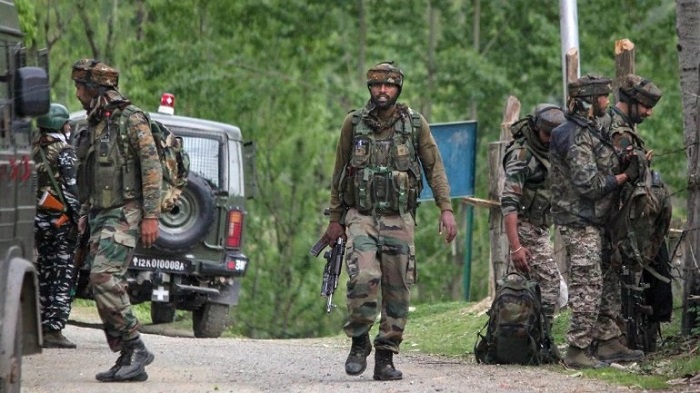
But, considering the fact that despite being into terrorism for more than a year but of not being heard of makes many believe that in consideration of his father’s position, Hizbul Mujahideen is not ‘exposing’ him to real danger. Some even claim that he’s already been sent across the Line of Control to ensure that he’s not harmed in any way. Taking up the job of ‘operation commander’ amounts to signing one’s own death certificate, because it’s just a matter of time before he is tracked down and dispatched by the Indian security forces– they got earlier Hizbul poster boy Burhan Wani, they neutralised the so called Hizbul icon Naikoo,  and so, there’s no doubt that the next in line too will meet the same fate as his predecessors.

So, despite the definite psychological advantage of Sehrai being selected to head Hizbul Mujahideen, it’s most likely that it would be ‘Dr Saifullah (who’s been given this moniker since he was a medical assistant before turning terrorist), who will be nominated as Naikoo’s successor. Because in Kashmir, despite all the big talk of sacrifice by both the separatist and terrorist leadership, ultimately, it’s the of ‘blood is thicker than water’ adage that prevails!

Baloch freedom fighters hit back at Pakistan Army, kill their Major and 5 soldiers

Baloch freedom fighters of the Baloch Liberation Army (BLA) bombed a Pakistan Army convoy at Kech district in Occupied Balochistan and killed Major Nadeem Abbas along with six other Pak Army soldiers. Over the last one month Pakistan Army has intensified its military operations across Balochistan using heavy artillery and helicopter gunships. During April more than 100 military operations were carried out by the Pakistan Army’s death squads that have abducted and tortured innocent Baloch civilians including women and children. The attack on Pak Army convoy at Kech was a retaliation by Baloch freedom fighters to unprovoked military raids on hapless Baloch people.

Baloch Liberation Army (BLA) freedom fighters retaliated by hitting the Pakistan Army convoy at Kallag in the Tigram area of Kech with IEDs that led to the death of Major Nadeem Abbas and five other soldiers of Pakistan Army convoy, who had been harassing Baloch civilians including women and children.

Major Nadeem Abbas was directly leading the death squads of criminal gangs operated by the Pakistan Army in Kech, Balochistan. Major Nadeem provided security to drug dealers in the area and was involved in arming them against Baloch freedom fighters. Also, the death squads under protection of the Pak Army were targeting civilians during military operations in the area.

It is rather unfortunate that despite decades of brutalities on innocent Baloch people by the Pakistan Army the world hardly talks about human rights violations in Balochistan. Even the UN-led institutions have never questioned Pakistan over its “kill and dump” policy wherein Pakistan Army abducts Baloch people including women and children. These abducted Baloch people are subjected to inhuman torture and killed in cold blood by the Pakistan Army. The bodies are then dumped at remote locations in Balochistan.

During the last one month while the world was fighting Coronavirus pandemic, Pakistan Army diverted the millions of dollars it received as aid to inflict a reign of terror across Balochistan.

Dil Murad Baloch, Central Information Secretary of the Baloch National Movement (BNM), said that the aggression of Pakistani forces intensified manifold during April across Occupied Balochistan. He said that the Pakistani forces whisked away several people across Balochistan in more than 100 operations and raids. The heavily armed Pakistani Army convoys were supported by gunship helicopters in these military operations.

These brutal military operations were carried in Awaran, Kech, Panjgoor, Mashkai, Jhao, Mand, Dasht, Buleda, Zamuran, Parom, Kahan and Talli in Occupied Balochistan. Twelve Baloch were martyred by the Pakistan Army and its proxies. “In the Mand area of district Kech, the Pakistan Army men opened fire on Baloch people and killed a young man. The army shot two other persons and threw their bodies into a river during the operation in Kolwah. In Dera Bugti, a patient lost his life, while security forces refused to issue him a transport permit. In the same month, four dead bodies were found from different areas. The Pakistan Army looted more than 200 homes and set 50 homes on fire during their military operations in the month of April,” Dil Murad Baloch said in the BNM report.

“A humanitarian tragedy has engulfed Balochistan due to Pakistan’s policy of “collective punishment”. This humanitarian tragedy can be noticed in different forms, but its ugliest face is the number of abducted people by the Pakistan Army which is growing constantly,” BNM Central Information Secretary Dil Murad Baloch explained.

It’s in this background that the Baloch Sarmachars under the banner of Baloch Liberation Army (BLA) attacked the Pakistan Army convoy and killed six Pakistani soldiers including Major Nadeem Abbas.

“1 offr, (officer) 5 soldiers embraced shahadat as FC South #Balochistan vehicle was targeted with remote controlled IED while returning from patrolling in Buleda, 14 kms from Pak-Iran Border, to check possible routes used by terrorists in mountainous terrain of Mekran. #OurMartyrsOurHeroes,” DG ISPR confirmed the casualties in its tweet. The DG ISPR (Director General Inter Services Personal Relations) is spokesperson for Pakistan’s armed forces.

DGISPR’s acknowledgement of the fact that its six soldiers were killed yet terming Baloch freedom fighters as “terrorists” is rather unfortunate. It also means that Pakistan is not willing to stop its brutal human rights violations on the Baloch people. If the world does not question Pakistan for its brutal policies in Balochistan then Pakistan Army will not stop its oppression in Balochistan.

Conversation with Hari Parekh on the Hidden Population of Abuse Victims, Apostates

Scott Douglas Jacobsen: So, you’ve published an article in a peer-reviewed journal called The Journal of Interpersonal Violence. The paper is titled “Apostates a Hidden Population of Abuse Victims.” First, to define terms, what is an apostate? How is abuse defined?

Hari Parekh: Anapostate’ is the term used to describe people within religious families who once identified as religious or with a belief in God and have, now, ceased to believe in the existence of a God, gods, or having a religious faith or belief and now identify as non-religious. Each person has their reasons for embarking on this journey – completing this journey from religious to non-religious, and identifying as an apostate is not an easy journey, and it appears to not be the end of the struggles defined within an individual’s journey  Given the strong feelings families can have about the rejection of their shared faith, this can cause further complications for the apostate themselves. As such, this study aimed to inform the academic community and wider society of the possible victimisation that some apostates may face within religious households. We were looking at areas such as assault, serious assault, psychological abuse, as measured by the Conflict Tactics Scale by Straus et al (1996). The differences between the terms are highlighted in the paper – the variances within assault and serious assault can be the difference between being pushed against a wall or being threatened with death, for example. Adding to this, psychological abuse includes coercive control, stress, depression, suicidal ideation, for example. This study identifies that there is a higher risk of people being abused as a result of identifying as an apostate. Sadly, the study also identifies how victims do not have trust in their law enforcement officers to understand their plight.

Jacobsen: The study, itself, is not a meta-analysis. It is a single study with 228 people, 102 men-119 women. Why was the survey supported through Faith to Faithless?

Parekh: The study could not be a meta-analysis because it is the first of its kind! It is the first time that the academic community, and the non-religious community, can point to a piece of scientific evidence and say, “Here’s the evidence to show what is likely to happen to apostates within religious households.” Hopefully, this study is the catalyst for further studies, to look into the issue of abuse faced by apostates, and has the propensity to inform non-academic services such as governments and organisations such as the United Nations to raise awareness of the plight of apostates. The reason for the support of Faith to Faithless, initially? It was luck. I left my religious faith during my undergraduate degree at the University of Northampton. My experiences were positive as my parents have not wavered in supporting me, despite my decision. I consider myself to be an apostate-anomaly, being someone lucky enough to not have suffered the extremities and the abuse that participants have experienced within the study, for example. I worked with co-founders, Aliyah Saleem and Imtiaz Shams, at the time, and I was exposed to how much abuse people received as a result of leaving their faith. I formed my Master’s thesis around this issue because there was no other study highlighting this abuse within the academic sphere. I said to my supervisor, “We need to provide victims with a voice to show the academic community that we are failing victims.”

Jacobsen: For those who do not know the names Imtiaz Shams and Aliyah Saleem, what is their place in Humanists UK?

Parekh: They founded Faith to Faithless. It later became the apostasy service of Humanists UK, to support people who leave their religious faith. They are both amazing in their own right, do Google them! I support and work with such amazing people to raise awareness of apostasy as well.

Jacobsen: Why the gap in the research, in the academic community, i.e., not being able to do a metanalysis because of insufficient studies to take any data?

Parekh: There are academics such as Hunsberger (1983) and Hezbrun (1999) that touched upon the difficulties of apostasy, and even recently with Dr Simon Cottee. But, it’s so difficult to provide the academic community with an insight into the abuse of apostates, when most are hidden, and consequently do not want to upset the balance of their household. An individual who is doubting their religious faith has so many factors to contemplate on: whether they will leave or not, whether they will tell anybody or not, or whether they will publicly declare their apostasy or not, to name a few. The consequences of each scenario can be devastating, and such are the difficulties of apostasy. Several prominent activists have spent their life to inform society of the experiences of people who have left their religious faith. One would have hoped that the work of such activists would have culminated in further academic interest. However, this is the first opportunity for such activists to have academic evidence to solidify their work.

Again, the gap in the research might relate to many factors. First, it is one of the more nuanced and niche areas, whereby, if you’re not aware of the community or of this occurring in itself, then it’s not understood nor does it factor into the conversation of public opinion – again, a hidden population remains hidden until it gains recognition. Secondly, the role of religion and religious communities, and the way this organised structure can work for people suggests that it can provide a supportive, stable, and secure foundation to people’s lives. For the many, religious faith can provide a good foundational basis for one’s life; the concern grows for people who do not hold a similar perspective. Third, the political relationship that religious communities are likely to have upheld, such as bishops being in the House of Lords in the UK, strengthens the view that the role of religious communities, or the ideas of the religious, are less likely to be scrutinised as a result. Fourth, the nature of academia is not easy – we remain unclear as to whether there have been countless pieces of research submitted for publication that have not met the standards required? This is a common occurrence within academia. It is a common occurrence in academia anyways. That’s the point. If several activists are speaking of people going through the experiences, one of the major criticisms of the activists is no one has had the evidence to show it exists. How do you reach people, where you don’t know who, what, or how they are? How do you do that from a scientific viewpoint? It is a minefield in itself. The study was sent worldwide – we finally have a starting point to refer to.

Jacobsen: What were the general findings?

Parekh: The general findings are quite interesting to be fair. First, out of the 228 participants, we categorised them initially by the religious faith they identified with since birth. Despite having participants from faiths such as Hinduism, Judaism, and more, as they were not statistically significant they could not be utilised within the study. As such, we focused primarily on people identifying from Christian and Muslim faiths and people identifying as non-religious. From our participants, what we found was that those that identified as religious from birth were less likely to be religious now. For example, out of the 130 people that identified as Christian, only 12 people currently identify as Christian; of the 68 people that identified as Muslim, only 4 people currently identify as Muslim, and of the 18 people that were initially non-religious, 204 people currently identify as non-religious. So, we saw an increase of 1,033% in people identifying as non-religious and a 91-94% decrease in people identifying as religious. This appears similar to the trends we are seeing in society – the decrease in the number of people going to Church each week in the UK, and the rise in the number of people identifying as non-religious within the UK census also appears to support the data in this study. 

Second, we used the Conflict Tactics scale by Straus and colleagues to understand the levels of violence and abuse that victims have experienced. The terms of assault, serious assault, and psychological abuse were significant for Muslim-apostates more so than Christian-apostates. Due to these terms being interrelated to each other, we categorised this as assault within the study.  Interestingly, even though, we had lesser people from a Muslim heritage background take part in the study, they were more likely to experience such levels of violence and assault. It was really interesting, in itself, and the outcome of the study suggests a higher likelihood to be a victim as a result. Furthermore, there was no significant difference in negotiation. It was peculiar with the levels of violence. With negotiation, it suggests either that households are attempting to understand why their family member within the household would leave the religious faith? Yet, as there is a difficulty in being able to negotiate that stance, and trying to determine the consequences of having a family member that is not religious within the household and community, it appears difficult for households to reach a conclusion that maintains the household’s order. 

Third, out of the 154 people who were assaulted, only 9 people reported their assault to the police, which is only 5.8%. Then out of the 71 people who said why they did not report it, 44% believed that reporting this would be disrespectful to family dynamics and a betrayal of the family. 27% said that they thought the police would be unable to help them. 10% reported being threatened about the perceived repercussions by the family and community for reporting their abuse. So, here are victims openly stating, they could be at risk.

Jacobsen: Some Muslim scholars and others in the public arena and may look at the terms “honour” and “violence” with internal concern to their community as human rights violations in interpersonal violence or domestic violence as dishonourable as a culture. So, it would be termed “honour violence,” but they would see this as dishonour or dishonourable violence. How is the construct of honour construed in the household with a religion in which honour in played out in an IPV or a DV setting?

Parekh: It is a really serious and important issue to raise that the study aims to not generalise everybody within a Muslim or Christian household, in stating that “hi! All your beliefs lead to abuse and violence!” That would be wrong, and suggesting a link would be incorrect. People are human at the end of the day. Many people within religious faiths argue the factors highlighted within honour-based violence is completely against the fundamentals and the principles within the faith itself. That is a fair statement to make, however, this is not a simple issue. Honour-based violence by its nature is hidden and perpetrated by the people who are related to you, formed attachments with you, and this has the potential to cause further distress for the victim too. By its nature, it is targeted, specifically, at women and girls. With apostate-abuse, gender is not a factor. Its very nature is based on coercive control and collusion, acceptance, and silence within the family. For example, by making sure it does not leave the four walls of the religious household. The notion of honour, therefore, relates strongly with shame and guilt. Paul Gilbert and Jasvinder Sanghera’s research identified the amount of guilt and shame involved within honour-abuse and also reported how hidden this abuse is. The concerns regarding apostate-abuse have similarities with the abuse faced by victims of domestic violence, LGBTQ+ abuse, forced marriage and female genital mutilation. These are the same nuances we’re tackling. The level of shame means that abuse would be hidden so much more.

Jacobsen: Would one public service announcement or concern come in the form of anti-Muslim bigotry or anti-Christian bigotry utilizing some of this research in very obviously skewed ways to cast aspersions and stereotypes at the communities? Where the research is not looking at violence as a global phenomenon and problem, but one a form of violence with that cultural and religious flavour.

Parekh: That’s the concern Vincent Egan and I did have and do continue to have when I was doing my Master’s thesis. Publishing this piece of research too, we were looking at how this would be reflected, how people would interpret and understand it, moving forwards. That’s the thing in itself. Yes, the organisations helping to find people – Faith to Faithless, Peter Tatchell Foundation, Humanists UK, Council of Ex-Muslims of Britain – are very much involved in the non-religious communities and can provide opportunities to find people that are hidden. The research aims to identify that people are abusing people by using the veil of religion, culture, and tradition as a rationale, and this is not a good thing! Abuse is abuse. In talking about this research, as long as I am clear that the fundamental principle is not to demonise and, basically, negatively impact religious people or organizations. It is trying to bring awareness to a worldwide audience that there is abuse happening, and we are missing it. In conversations with people, I have found that there are people who are disgusted by people using their religious faith to manipulate and abuse people in that way. I think that’s a very strong argument for this. Yes, anyone can look at any research and manipulate it in a way that makes things suit an agenda of hate, which might not be favourable to those who created the initial study. However, as long as people read it clearly, we are saying, “We are not demonizing the religious faith. We are demonizing the way people use religious faith to abuse people. And by doing so, we are creating a hidden population of people who can’t be reached out to.” As people become more aware of the research, we can begin to openly talk about the issues of people being abused as a result. By not talking about this abuse, we would perpetuate the argument that this practice is okay and justified. We cannot – having even one person abused is a failure.

Jacobsen: What are the next steps for research?

Parekh: Having carried out the first study of its kind, there are several next steps for this research area. Firstly, we wanted to inform the academic community that apostate-abuse is occurring, and as such, we used categorised terms to categorise the religious faith of participants. For example, there are many denominations within Christianity and Islam that, future research should look at seeing whether those denominations vary the level of risk an apostate is likely to face. Secondly, we would need to gather data that also looks at financial abuse, sexual abuse, and despite gathering data on psychological abuse, we would still need to gather data on the specifics within such an umbrella term. Thirdly, further research is needed on the implications of apostate-abuse per continent, per region, per country, and how the criminal justice systems can accommodate this crime within their legal frameworks – this might also require further research into the devastating effects of blasphemy laws on the victim, such as Asia Bibi and recently with Mubarak Bala. Fourthly, research on how local law enforcement can improve their perception amongst victims that they would be unable to support victims would be an essential area for research – using a focus group to understand how police forces can improve their practice would be essential. Fifthly, looking into how larger organisations can apply this to their practice – such as how the United Nations or Amnesty International deems abuse and how they support individual nations too would be an investigative piece of research. Sixthly, working with religious organisations and religious communities to de-threaten the notion of apostasy may be one of the most significant areas from this study! That’s quite a lot, but the opportunities are pretty endless.  

Jacobsen: If we look at the ways in which academics can use analytic techniques to find relatively objective findings of the research in interpretation, there are internal views from a subjective perspective, in other words, of individuals within the research by yourself and Egan. In other words, those coming out of a religion internally to their mind while living in a home with IPV or DV ongoing, or at some point happening, having attitudes about it. What do they attribute these acts to?

Parekh: Looking at the personal responses by people who participated in the study, really provides a true reflection of their experiences; we have tried to provide a fair opportunity to provide the reader with an appreciation of the comments made by participants. The concerns of participants initially began with being concerned with not believing in the same religious faith or God that the household believes in. And, the consequences of this ranged between being asked to leave the family home, being ex-communicated from the home, facing threats of violence daily, to being beaten and receiving threats of being killed as a result. Using a religious faith as a rationale for abusing another human being is an expression of wanting to remain correct and right. When human beings begin to believe that they are correct, then this creates a concern, as history has shown. When a family member decides to become an apostate, this increases the chances of other family members feeling rejected – because their belief is more than just a belief in itself, but also embedded into their identity formation and sense of self. So, any challenge to that is a personal challenge, and such increases the chances of causing a personal threat reaction. I think the religious belief in itself might be used as a validation to all of the reason why. But again, we’re still looking at the behaviour of the person to abuse somebody else. So, that’s what we’re seeing. We’re seeing people threatened to be killed or abused in one way or another because of them not agreeing or accepting the same religious belief or faith as a family. I think the concern, therefore, is the view that just because you don’t believe nor agree with the belief of the family; you are not part of the family anymore is absurd. The personality of the person, the experiences, the attachments to family members; this is not a complete list, but all of these factors make us human. Having a difference of perspective does not change the person that the family have created. Being abused for having a difference of perspective is no different from blaming a person for being human – this is why we have a brain that can think! Being abused for thinking is extreme. Being human means we are fallible, and we need to appreciate that factor.  

Jacobsen: Hari, thank you for the opportunity and your time.

Parekh: Any time Scott!

Hari Parekh, has worked in the field of psychology for over four years. He obtained his BA (Hons) degree in Psychology and Criminology at the University of Northampton in 2015, and his MSc in Forensic and Criminological Psychology at the University of Nottingham in 2016. He has worked for the student sector of Humanists UK, holding roles of President and President Emeritus. Following this, he is the current European Chair for Young Humanists International, and the Volunteers Manager for Faith to Faithless. He is consistently invited to universities to talk about the psychological difficulties relating to apostasy.

When will UN open its eyes to Pakistan’s atrocities in Balochistan?

Grabbing the benefit of world’s attention towards Coronavirus pandemic, Pakistan Army has intensified its military operations in occupied Balochistan. Pakistani media is not only biased against the Baloch freedom movement but it is also under the immense pressure of army and intelligence agencies. Media is closely being monitored and controlled by Pakistan Army and intelligence services who have drawn a red line regarding reporting, discussions, and debates on the incidents of armed conflict, human rights violations, war crimes of security forces and their proxy militias in occupied Balochistan. If any media person or media house dares to violate the red line, it is made to face consequences.

The above said situation is rapidly treading towards the worst human tragedy. Though Baloch patriotic leadership is striving hard to get attention of global institutions like UNO, international bodies of the world community and neighboring countries like India and Afghanistan towards the worsening situation of Balochistan but it seems that world powers have their own priorities in the region and neighboring countries also have their own incapacity and expediencies. That’s why all of them persistently ignore the longstanding armed conflict of Balochistan where human rights violations and war crimes of Pakistan Army are increasing day by day.

The armed conflict in Balochistan traces its roots in the aftermath of World War-II when Great Britain in 1947 decided to free her colonies in the Indian subcontinent and Balochistan. But before doing so Britain decided to ensure the creation of a client state in the region for safeguarding her interests in the Indian subcontinent and vital regions of West Asia and Central Asia. So Pakistan was designed and created by Britain for that purpose.

British authorities knew that without incorporating Balochistan, the new state of Pakistan won’t be able to serve their purported interests. Consequently, before bringing Pakistan into being, British authorities promulgated the inclusion of British Balochistan province into the future state of Pakistan. This promulgation was made on June 29, 1947 just three days before a joint meeting of the members of Shahi Jirga and Quetta Municipality, summoned on July 1, 1947 to decide the future of British Balochistan. British authorities had purposefully made the said promulgation with an aim to sabotage the joint session of Shahi Jirga and Quetta Municipality members and they succeeded in doing so because after the said promulgation the joint session was never held.

Khan of Kalat, the sovereign of Balochistan, and Baloch people had strongly rejected the British authorities’ decision regarding British Balochistan’s inclusion in the future state of Pakistan because that was totally an illegal act. British Balochistan was not an Indian province, instead, it comprised of territories obtained by the British authorities on lease from Khan of Kalat and certain districts cut from the Pashtun region and included in the province. A month later, a joint meeting between Khan of Kalat and All India Muslim League’s leadership presided over by Viceroy of India, Lord Mountbatten, was held in Delhi on August 4, 1947.

Muhammad Ali Jinnah, Quaid-e-Azam Pakistan ordered the invasion of Balochistan soon after independence. Pakistan Army captured Balochistan on March 27, 1947 and Baloch people have been fighting for their independence since then.

Delegation of Khan Kalat had again raised the issue of the promulgation of British Balochistan’s illegal merger in Pakistan but the same was deferred on the pretense of shortage of time because Britain was about to free India eleven days later. So it was agreed that the legal status of British Balochistan territories will be determined and decided by Pakistan and Khan of Kalat through mutual negotiations as soon as Pakistan was created.

After the creation of Pakistan, the Khan of Kalat, time and again, agitated over the issue of British Balochistan’s illegal merger with Pakistan. But Pakistan, instead of settling that issue, had started exerting pressure on Khan of Kalat for accession. Under the pressure of Pakistan, when the proposal for accession to Pakistan was presented before the Parliament of Kalat State (Balochistan), it was unanimously rejected by both of the houses of Kalat State Parliament.

Being frustrated with the decision of Kalat Parliament, Pakistan decided to occupy the entire Balochistan using deceit, deterrence, and force. At first Pakistan, on March 17, 1948, announced illegal merger of Lasbella, Makuran and Kharan regions of Balochistan. Khan of Kalat, the then ruler of Balochistan, rejected Lasbella, Makuran, and Kharan’s unlawful merger with Pakistan, and termed it as an act of aggression. But Pakistan was backed by Britain and Commonwealth.

Therefore, Khan’s protest went unheard. Pakistan finally invaded Kalat, the capital of Balochistan on March 27, 1948. Baloch people resented Pakistan’s naked act of aggression and they started armed resistance against Pakistan on May 16, 1948, under the leadership of Agha Abdul Kareem Baloch, the younger brother of Khan of Kalat.

Since the forcible occupation of Pakistan in 1948, the Baloch have risen up time and again for freedom of Balochistan including the ongoing armed conflict in Balochistan. At present, it’s the 5th armed struggle of Baloch people for regaining their independence from Pakistan. It commenced on the eve of the new century and the new millennium. Pakistan, from the very beginning, responded to the Baloch aspiration with brute force.

Taking advantage of the world’s attention to the ‘War on Terror’ in Afghanistan and with the massive US military, monetary and technological support, Pakistan focused on the widespread use of military forces against the Baloch freedom movement. Pakistan Army and intelligence agencies not only targeted armed Baloch organizations but they equally targeted Baloch intellectuals, political leadership, political, social and human rights activists and journalists.

On August 26, 2006 the Pakistan Army assassinated a prominent Baloch leader Muhammad Akbar Khan Bugti, the chieftain of the Bugti tribe, who inhabited the natural gas-rich regions of Dera Bugti and Sui.

Pakistan is following a policy of slow but persistent genocide of Baloch people. In 2009 Pakistan’s security establishments formally began the policy of “enforced disappearances” and then “kill and dump” of the Baloch patriotic persons from all walks of life.

On April 3, 2009, a prominent Baloch leader Ghulam Muhammad Baloch, then president of Baloch National Movement (a pro-independence democratic party) was abducted along with his colleagues Muneer Ahmed Baloch and Sher Muhammad Baloch from the chamber of their lawyer Kachkol Ali (Advocate) at Turbat city in broad daylight. Six days later their severely tortured and mutilated dead bodies were found near Turbat.

Since then Pakistan’s Army and intelligence services are running massive military operations across Balochistan. They target civilian populations, they bomb, plunder, and burn the villages. They disappear people including Baloch youth, elderly men, women, and children. Thousands of Baloch have gone “missing” in the military dungeons.

Since 2009 more than five thousand mutilated dead bodies of missing Baloch people have been recovered across Balochistan and Karachi (Sindh). Hundreds of unidentifiable dead bodies have been recovered and buried through Edhi Foundation in a cemetery in the Dasht area near Quetta without conducting their DNA tests. Numerous mass graves have been discovered in different parts of Balochistan including mass graves found on January 25, 2014, in Tootak village of Khuzdar where more than 170 dead bodies were found dumped.

Now once again taking advantage of the world’s attention towards Coronavirus pandemic, Pakistan’s Army has launched a new series of brutal military operations all across Balochistan. There are continuous reports of military offensives in Awaran, Jhaoo, Kolwa, Keel-Kaur, Baalgatar, Buleda, Dasht, Tump, Mand, Zamoran, Shoor, Kalat, Kharan, Mashkay, Parom, Panjgur, Dera Bugti, Sui, Bolan and numerous other cities, towns and regions of Balochistan.

On the outbreak of Coronavirus pandemic, initially, Pakistan’s authorities intentionally allowed the spread of this highly infectious disease in occupied Balochistan by detaining Shia pilgrims of Punjab and Sindh (coming from Iran) at the border town of Taftan near Zahedan. If Pakistani authorities wanted, they could have shifted the pilgrims by airplanes from Tehran to their hometowns in Punjab and Sindh. But they didn’t. Because they had the ulterior motive of spreading the Coronavirus pandemic in Balochistan.

The pilgrims were detained for weeks in Taftan without ensuring proper healthcare, sanitation, and required physical distancing among them. Once the infection spread among the pilgrims in Taftan detention center, then all of them were moved by road to Quetta and kept there for weeks in Sheikh Zaid Hospital, then moved by road to Karachi, hundreds of kilometers far, spreading Coronavirus in the city to city on the way. What a ludicrous pretense!

After intentionally spreading Coronavirus in Balochistan, the Islamabad authorities announced sending more troops in Balochistan for combating the Coronavirus pandemic. Baloch patriotic leadership immediately denounced Pakistan’s intention of sending more troops and rightly said that combating Coronavirus pandemic requires efficient doctors, medical staff, personal protective equipment (PPE), medicines, testing kits, and ventilators. Instead, Pakistani rulers sent more troops and weapons rather than doctors and medical equipment.

On April 26, 2020 Pakistan Army along with armed mercenaries of its local proxies, whom the Baloch usually call ‘death squads’, besieged Yar Muhammad bazaar, a village in Parom area of Panjgur. Certainly, they were tipped off by some informant about the presence of Baloch freedom fighters (Baloch call them Sarmachaar i.e. the saviors). The army shouted and asked them to lay down their weapons but sarmachaars decided to fight the enemy instead of surrendering.

Exchange of fire started between the Pakistan Army and Baloch freedom fighters at about 3:00 AM and continued till 2 PM. Ground troops of the army had failed to kill or arrest anyone of them. So the army finally called for air support. Gunship helicopters came in and played the decisive role in killing four Baloch freedom fighters. According to a voice message shared by BLF (Balochistan Liberation Front) in media, Noora Baloch, commander of the besieged group of freedom fighters expresses his intent to fight the enemy till his last breath and the last bullet and urged his family, friends, colleagues, Baloch youth and leadership of BLF to continue the movement till the independence of Balochistan.

Major Noora's body being dragged by Pakistani vehicle in occupied Balochistan. A soldier of the Balochistan Liberation Front (BLF), Major Noora was martyred while fighting with Pakistan Army.
Major Noora’s body being dragged by Pakistani vehicle in occupied Balochistan. A soldier of the Balochistan Liberation Front (BLF), Major Noora was martyred while fighting with Pakistan Army.

After killing the freedom fighters, Pakistan Army personnel shifted their dead bodies to army garrison by dragging them behind the army vehicles. Obviously, the Pakistan Army wanted to spread panic and terror by demonstrating such savagery. The pictures of dragging dead bodies of Baloch freedom fighters became viral on social media. But none of the international human rights organizations took notice of such barbarism of Pakistan Army. No doubt Pakistan Army’s dragging and desecrating of dead bodies was a clear violation of international conventions and laws relating to armed conflicts.

Furthermore, it was against human dignity, decency, sanctity and humanity. It constitutes a war crime. Such savagery of Pakistan Army shows that there’s no difference between the Pakistan Army and Islamic extremist jihadists and terrorists. Pakistan Army, in uniform, commits same war crimes and crimes against humanity which the jihadists and terrorists commit without uniforms. There seems no difference between the Pakistan Army and the army of defunct Caliphate of Abu Bakr al-Baghdadi.

Does the silence of UNO, international human rights organizations and world community over Pakistan’s brutal military operations amid Coronavirus pandemic in Balochistan not amount to a tacit endorsement or encouragement of Pakistan? Are Baloch people lesser humans? If not then why UNO and world community do not make Pakistan accountable for war crimes in Balochistan? Why they don’t help Baloch people in their endeavor to get rid of jihadist Pakistan’s subjugation, genocide, oppression, and plunder? What’s their criterion for taking notice of armed conflicts? When will the UNO take note of ‘unnoticed’ armed conflict in Balochistan?

Pakistan is fighting a war against India and Afghanistan through its proxies. Pakistan is exporting terrorism in Afghanistan and India. Pakistan is openly harboring, training, funding, and facilitating the armed groups fighting in Afghanistan and India. Pakistan openly supports armed groups of both countries in the United Nations and other international platforms. But on the contrary Afghanistan and India seem hesitant to raise their voices in support of oppressed Baloch people on international forums and condemn Pakistan’s war crimes in Balochistan.

Sooner or later, the neighboring countries and the world community will have to accept the fact that support for an independent Balochistan is the only effective way of getting rid of Pakistan, its proxy wars, and jihadist terrorism in the region in particular and the world in general.

Gultari in Gilgit-Baltistan is the new terror launch pad in POK

Kashmir is back in the headlines. There have been back-to-back terrorist strikes in Kashmir Valley over the last few days that were followed by swift counter-terrorist operations by 21 Rashtriya Rifles (21 RR) of the Indian Army, and the J&K Police. This is enough fodder for media, both national and international, to swoon over Kashmir and question New Delhi’s ‘Kashmir policy’ through screaming headlines.

Ironically, long op-ed pieces are written about Kashmir’s internet shutdown, incarceration of local political leaders is talked about and laborious efforts made to produce justification for Islamist radicals brandishing a gun. And yet, hardly a word is written about terrorist nurseries being diligently raised in Pakistan-occupied Kashmir (POK). Feigning ignorance about terrorist camps in POK is strategic positioning by a large section of the media as this prevents any dialogue about terror infrastructure being built up by Rawalpindi so that the dominant world opinion can continue to pressurize New Delhi to remain on a back foot in Kashmir.

After Indian air strikes at Balakot on February 26, 2019 that demolished Jaish-e-Mohammed-led large terror nursery, Pakistan has now changed the base of these radical Islamic extremists. Pakistan’s new terrorist bases are in Gultari which lies in the Baltistan region of Gilgit-Baltistan. Gultari lies closer to the LOC in Kashmir Valley and it’s easier for Pakistan Army and its rogue intelligence agency ISI to sneak in Islamic radicals inside the Kashmir Valley.

Rather than talk about Gulatri being the new launch pad for Islamic terrorists and discuss about ways to demolish it, conscious efforts have begun to steer discussions towards providing a justification for the terrorist to pick up a gun. In effect, this also makes radical Islamists as role models and creates a shelf life for the terrorist even after his death. This is a well thought out stratagem.

And to further complicate matters, Pakistan Army is simultaneously running a massive military campaign replete with heavy artillery, sophisticated machine guns and helicopter gunships across occupied Balochistan against the common Baloch people.  

World must understand that a spurt in Islamist terror attacks in Kashmir Valley and continuous military operation in Balochistan are both being carried under tutelage and directions of Rawalpindi. And this does not augur well for the stability of South Asian region.

How?

A deeper analysis reveals that whenever Pakistan’s economy is under stress and its domestic situation threatens to spiral out of control then it plays a safe bet by attacking Kashmir through proxy Islamists that helps divert attention of its masses. Balochistan which refuses to buy Pakistan’s Kashmir narrative is punished by systematic attacks and all those who refuse to budge are ‘disappeared’. 

The terrorist attacks at Handwara and then again on the CRPF patrol party in Kashmir Valley is part of Pakistan’s strategy as it wants to divert attention of local Pakistanis from its gross mishandling of the Coronavirus pandemic. Several reports suggest that the Coronavirus pandemic has spread far and wide across Pakistan with more than 24,000 people infected and almost 2500 dead. Across the world, the number of infected people is growing at a rapid pace with each passing day.

In this scenario, when every country is grappling for ways to secure its citizens from COVID-19, Pakistan’s “selected” Prime Minister Imran Khan and the army generals have turned this pandemic into a money minting exercise. Islamabad has already secured aid worth $1.612 billion, which includes grants worth $1.4 billion from the IMF, $8 million from the US, World Bank’s $200 million and China’s $4 million. Yet, rather than utilize these funds to fight Coronavirus pandemic, Pakistan chose to fuel Islamic terrorism in Kashmir and launch military operations in Balochistan.

According to reports published by Balochistan’s Sangar Media Group, Pakistan Army had carried out more than 100 military operations in April across several parts of occupied Balochistan. More than 106 Baloch people have been abducted and ‘disappeared’. Latest reports say that during the first week of May several military operations had been conducted in Kech, Awaran and Panjgur districts of occupied Balochistan. And, these operations that “kill and dump” common Baloch people continues unabated.

Major Noora's body being dragged by Pakistani vehicle in occupied Balochistan. A soldier of the Balochistan Liberation Front (BLF), Major Noora was martyred while fighting with Pakistan Army.
Major Noora’s body being dragged by Pakistani vehicle in occupied Balochistan. A soldier of the Balochistan Liberation Front (BLF), Major Noora was martyred while fighting with Pakistan Army.

Similarly, funds received as aid by Islamabad to fight Coronavirus pandemic is being used to run and instigate Islamist terror attacks in Kashmir.

It’s rather strange that Pakistan calls Islamist terrorists as “freedom fighters” in Kashmir but calls common Baloch people as terrorists. It’s high time that the world must brush up historical facts and understand that Baloch people have a genuine and just case for an independent Balochistan.

Kashmir and Balochistan: A historical perspective

During British rule, Balochistan was a separate country that had independent relations with the British government, which were entirely different from what princely states such as Jammu & Kashmir had with the British. Balochistan attained its independence on August 11, 1947 that was four days before India and Pakistan became independent on August 15, 1947. Later on, Pakistan’s political leadership due to its skewed mind-set to be seen distinct from India, began observing August 14 as its independence day. Also, Pakistan in order to expand its territorial boundaries attacked both Kashmir and Balochistan.

Soon after independence, Pakistan instigated the passions of people living in Waziristan and other adjoining areas in the name of Islam and urged Muslim tribal to attack Kashmir on October 22, 1947. These Pakistani forces looted, raped and killed millions of hapless Kashmiris, a majority of them Muslims. Thereafter Maharaja Hari Singh, the erstwhile Maharaja of Jammu & Kashmir signed the Instrument of Accession with India on October 26, 1947 after which India sent it forces to defend Kashmir. Indian Army wrested Srinagar and parts of Kashmir Valley but Gilgit-Baltistan, Muzaffarabad, Mirpur and other areas of Kashmir Valley could not be retained, which are now known as Pakistan-occupied Kashmir (POK).

Balochistan had to suffer a similar cruelty at the hands of Pakistan’s Quaid-e-Azam Muhammad Ali Jinnah.

On August 4, 1947 a large conference was held at Delhi that was attended by Lord Mountbatten, Britain’s Viceroy of India, Khan of Kalat the Baloch Ruler, Mohammed Ali Jinnah and Liaquat Ali Khan. Balochistan’s status as an independent nation was recognized by Jinnah in this conference. Despite this agreement and Balochistan’s status as an independent sovereign nation, Pakistan attacked and occupied it on March 27, 1948. Baloch people have been fighting for their independence since this day.

Pakistan wants Balochistan for its rich mineral wealth and Kashmir for the water that flows in its rivers and for its geo-strategic location.

It’s high time the world’s superpowers and UN-led institutions begin a strict audit of the billions of dollars doled out to Islamabad as aid to fight Coronavirus pandemic. If funds meant to fight the virus are used to foment Islamic extremism in Kashmir and kill innocent Baloch people then the repercussions will be felt across South Asia.