Home Blog Page 384

Yes there’s a historical basis for the CAA in India

Independent India’s Citizenship Laws can be traced back to 1955. The Citizenship Act provided citizenship to those born in India and offered two ways for non-Indians to obtain Indian citizenship: People from the rest of undivided India would become eligible to apply for citizenship after seven years of residency in India whereas those from countries other than undivided India would become eligible after twelve years of residency in India. The Citizenship Act was amended in 1985 in the aftermath of the Assam Movement and then subsequently in 1992, 2003, 2005 and 2015. The 2003 amendment, in particular, introduced the notion of “illegal immigrants” (defined as those without proper travel documents or those who had overstayed the term of their Indian visas) into the Act and made them ineligible to apply for citizenship through registration or naturalization. These illegal immigrants could be deported and/or jailed. The 2003 Amendment also made it mandatory to ultimately compile a National Register of Citizens (NRC) – a move that was then supported by the Congress and Left parties. The latest amendment to the Citizenship Act came into being on 12th December 2019. The text of this amendment can be read here.

What makes this latest amendment stand out is that it, for the first time, permits people from the Hindu, Sikh, Jain, Jewish, Zoroastrian and Christian communities, originally from Pakistan, Bangladesh or Afghanistan to apply for Indian citizenship if these people had arrived in India before 31st December 2014, i.e., they had been living in India for five years. The Act specifically excludes Muslims. The constitutional validity of the Act has been challenged in India’s Supreme Court. 

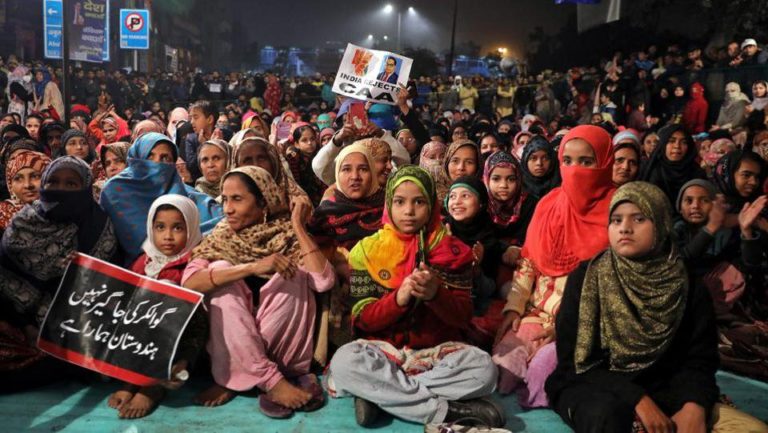
Sections of the media (including international media) and some countries have objected to this Act. Some people (particularly academics) have initiated signature campaigns against this Act. In India several rallies (some violent) have been held against this Act. These rallies have largely been instigated by some political parties and fringe groups. It is not always clear what these groups are agitating for – denial of citizenship to minorities from Pakistan, Bangladesh and Afghanistan or award of citizenship to Muslims from Pakistan, Bangladesh and Afghanistan. Before passing judgment on the Act it would be necessary to understand its rationale.

In April 1950 the then Prime Ministers of India and Pakistan (consisting of East and West Pakistan since Bangladesh had not been born then) entered into an agreement to protect minorities in their countries. The Nehru-Liaquat Pact (NLP) enjoined both countries to honour and protect the democratic, political, religious, cultural and economic rights of their minorities. This Pact had become necessary because although the partition of undivided India in 1947 was done along religious lines (whereas India opted for secularism, Pakistan became an Islamic Republic) both countries had significant religious minorities. The 1937 and 1945-46 elections in India had been conducted with separate electorates for different communities. The 1937 election did not have the creation of Pakistan as an objective of the Muslim League whereas the 1946 election specifically had this objective. The contrast between the results of the two elections was stark. For example, the Muslim League failed disastrously in the 1937 elections, but in 1946 it won 75 of the 85 Muslim seats in Punjab.

In contrast the Congress Party (mostly representing Hindus) won 58.23% of the total seats and 91 of the non-Muslim vote whereas the Muslim League won 26.81% of the total seats. It captured all Muslim constituencies in the central assembly as well as most of the Muslim constituencies in the provincial legislatures. More than anything else, this vote led to the formation of Pakistan. But, this could not obfuscate the fact that significant sections of the population in areas now in Pakistan voted for the Congress and significant sections of the population now in India voted for the Muslim League. In the mayhem and carnage of the partition not all Indian Muslims migrated to Pakistan nor did all Hindus and Sikhs in Pakistan migrate to India. Using comparable Census data from India and Pakistan the proportion of the population with Indian religious persuasions (Hindu, Sikhs, Jains and Buddhists) was 84.4% in 1941, 87.2% in 1951 (immediately after the partition) and 85% in 1991. The share of Muslims in India’s population was 13.3% in 1941, 10.4% in 1951 and 12.5% in 1991. By way of contrast in Bangladesh 29.6% of the population were Hindus, Jains, Sikhs and Buddhists in 1942, which fell to 22.8% in 1951 and subsequently to 11.3% in 1991. In Pakistan the population of Hindus, Sikhs, Jains and Buddhists fell from 19.6% in 1941 to 1.6 % in 1991 whereas the share of Muslims rose from 78.8% in 1941 to 96.7 % in 1991. (For details see chapter 2 of vol. 1 of Raghbendra Jha, Facets of India’s Economy and Her Society, Palgrave Macmillan, 2018.) These disparities have grown further since 1991. The share of Muslims in India’s population was 13.4 % in the 2001 Census and 14.2% in the 2011 census. Comparable figures are not readily available for Pakistan and Bangladesh.

This factual narration lays out the gross violation of the Nehru-Liaquat Pact by Pakistan and Bangladesh. Particularly in Pakistan, media has reported large scale kidnappings, conversions and forced marriages of young women. In India, the Muslim population has grown steadily and its mean per-capita expenditure is not very different from that of the Hindu population. (For details see chapter 9 of vol. 2 of Raghbendra Jha, Facets of India’s Economy and Her Society, Palgrave Macmillan). India has had Muslim Presidents, Vice Presidents, Governors, Chief Ministers, Chief Justices of the Supreme Court and the like. It is very hard to make the accusation of systematic discrimination against Muslims in India stick on.

By way of contrast, members of the minority community are facing dire conditions in Pakistan, Bangladesh and Afghanistan. They fear for their safety, dignity and livelihood and, except for small pockets, are not economically prosperous. Their forefathers did not participate in India’s freedom struggle for their progeny to end up in such hardship. Major leaders of India including Mahatma Gandhi had promised to give these people Indian citizenship should they ever choose to move to India. Some of these minority groups have fled to India, given that India has had a long history of providing refuge to persecuted minorities (Chapter 9 of vol. 2 of Raghbendra Jha, Facets of India’s Economy and Her Society, Palgrave Macmillan, 2018). 

The CAA does not take away any Indian’s citizenship. On the other hand, it provides refuge to persecuted minorities. This should be seen as a humane gesture. With a population of 1.3 billion India does not have the capacity to absorb other persecuted groups. In any case, there are many other Muslim countries where persecuted Muslims from other counties could go. The path to Indian citizenship is open to Muslims from any country, including Pakistan, Bangladesh and Afghanistan.

Finally, the Act needs to be seen as positive discrimination much like the affirmative action policy of the US and the reservation for Scheduled Castes and Tribes (SC/ST) in India. Those who are agitating against the Indian CAA should perhaps pay heed to how much SC/ST and other deprived groups have benefited from such positive discrimination. 

(This article was first published in Australian Outlook)
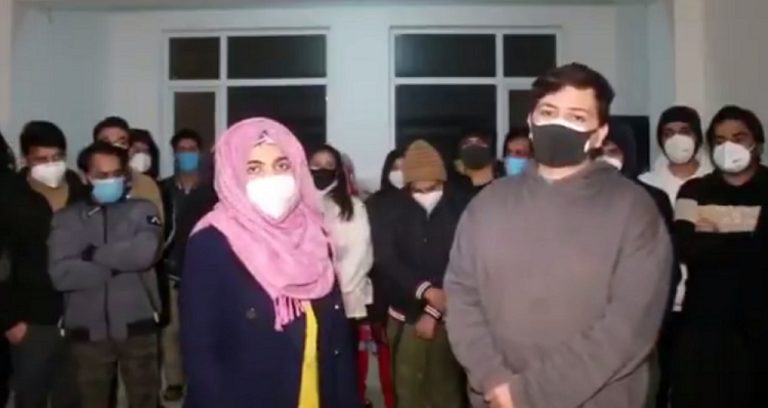
Pakistan abandons its students in Wuhan to please China

If Islamabad’s decision not to evacuate its students studying in Wuhan–the epicenter of the Coronavirus epidemic, reflects sheer irresponsibility then the reasons that it has given for doing so are even more appalling. How can a democratically government that’s supposed to be “Of, By and For the People,” abdicate its constitutional responsibility in such a casual manner? How can anyone ever expect that Special Assistant to Prime Minister on Health Dr Zafar Mirza’s pontification about the weird choice of ruling out evacuation from Wuhan on the grounds that “it is in the larger interest of the region, world, country” allay the genuine fears of effected students or their distraught parents?

Dr Mirza did speak about how the “(Pakistan) government cares about its citizens just as much as their own families.” But by going on to suggest that evacuation of Pakistani students from Coronavirus -hit Wuhan would amount to be taking “an emotional decision and become a reason for the spread of this disease,” he only ended up exposing Islamabad’s complete apathy for its own citizens. It’s no secret that Pakistan can’t survive without the political and financial support that it’s been receiving so generously from China and therefore, one can well understand Islamabad’s compulsion of faithfully toeing Beijing’s line.

But then, even subservience has a limit, which is why Islamabad’s inexplicable willingness to put its own citizens in peril is something that defies logical explanation. Dr Mirza’s apologetic defence of Islamabad’s decision against evacuation of its citizens from Wuhan on the grounds that “… this is China’s policy and this is our policy as well. We stand by China in full solidarity,” is really pathetic, to say the least. Furthermore, by saying “Right now the government of China has contained this epidemic in Wuhan city,” the Prime Minister’s Special Assistant on Health has committed the unpardonable sin of officially spreading misinformation amongst the people just to please Beijing.

To coverup the absolute abdication of its constitutional responsibility, Islamabad has (like always) avoided using the ‘bullet approach’ by being specific while justifying its actions and instead, is relying on the ‘buckshot strategy’ of peppering its domestic audience of a wide-ranging array of rather poor excuses. Dr Mirza categorically ruled out evacuation by saying that “If we act irresponsibly and start evacuating people from there, this epidemic will spread all over the world like wildfire.” But Foreign Office spokesperson Aisha Farooqui said that Pakistani nationals were stranded at Urumqi airport due to a flight delay adding that “Pakistani government was making an all-out effort for its citizens,” but didn’t elaborate what these “all-out” efforts were!

Today, almost everyone in authority in Pakistan is busy giving explanations ranging from the pedestrian to the bizarre, whereas Islamabad’s plea is that since no advisory on evacuation of people has been issued by the World Health Organisation (WHO) its stance is vindicated. Pakistan President Dr Arif Alvi has invoked Islam to justify Islamabad’s decision of leaving hundreds of hapless Pakistanis in China to their own device. Consider his tweet: “Prophet’s directions regarding disease outbreaks are a good guide even 2day. If you hear of an outbreak of plague in a land, do not enter it, but if the plague breaks out in a place while you are in it, do not leave that place” (Bukhari & Muslim). One wonders whether his tweet will help those stuck in China and will be able to comfort those who are staring coronavirus in its face and begging the Government of Pakistan to evacuate them.

With Pakistan’s Ambassador in Beijing Naghmana Hashmi saying that “medical facilities in Pakistan do not meet the standards (essential for tackling coronavirus)” and Special Assistant to Prime Minister on Health countering this by stating that Pakistan is fully prepared to combat any outbreak of coronavirus, things have become even more confusing. But the truth isn’t very hard to find. Islamabad may hide behind the absence of any WHO advisory on evacuation from areas where coronavirus infection has been reported, but when other neighbouring countries like India and Bangladesh have commenced evacuating their nationals from China, Islamabad’s refusal to follow suit makes no sense. However, a clue that could decode Pakistan’s refusal to consider evacuation of its nationals can be found in Dr Mirza’s “We stand by China in full solidarity” announcement.

With Chinese ambassador to Pakistan Yao Jing thanking Pakistan for extending unwavering support by honouring Beijing’s request against evacuation of its nationals, it becomes absolutely clear that the sole reason for Islamabad’s skewed decision on evacuating its nationals from coronavirus hit areas is to ensure appeasement of its “all weather friend.” As on date, at least five Pakistani nationals in China have contracted coronavirus and since Islamabad is not considering evacuating its nationals from there, this number could grow. One only hopes that good sense prevails quickly and unconditional subservience of Pakistani leadership is replaced by a sense of responsibility towards the people so that the mental and physical ordeal of the hapless Pakistani nationals trapped in China has a happy ending.

Tailpiece—It’s high time Prime Minister Imran Khan realised that no matter how ‘weatherproof’ or ‘sweet’ Islamabad’s friendship with Beijing may be, he has no moral right to play with the health and lives of Pakistani nationals just to keep China happy. The Pakistan Army may have abandoned its dead during the 1999 Kargil conflict, but it could do so because Rawalpindi isn’t answerable to anyone. The legislature is certainly accountable to the people and so, unlike the military, Khan cannot leave his countrymen in China to their fate. Let’s not forget that come what may, humans can never be rendered disposable by ‘larger’ interests!

Let’s ask Gods to solve the Goa Mining Crisis

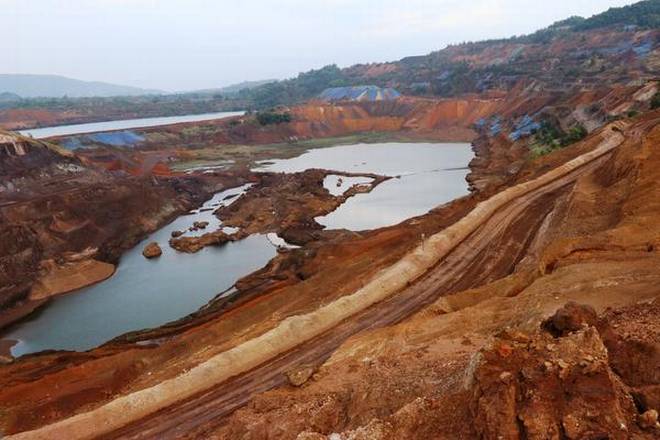
On paper, mining in Goa has been closed for exactly two years. In reality, the crisis has been tossed around — like a ping pong game — for almost seven years. Consider the latest case where the Supreme Court recently allowed the miners to transport nearly 10 million tonnes of iron ore to the ports for export. It will bring revenues worth Rs 3500 crore and help the beleaguered state government fill a portion of its coffers.

But the big question haunting the miners is: Where are the trucks to transport the ore and, more importantly, does the markets need such low-quality ore?

Worse, even if the trucks are procured from outside the state and put into work, is there a guarantee that work will start soon?

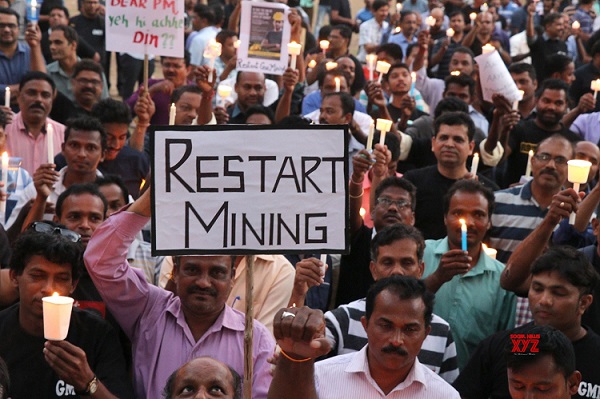
Frustrated at the state of affairs in the Goa mining sector, representatives of 40 village Panchayats recently petitioned the state government and the Centre to take action against those not in favour of mining. In their petition, they argued that Goa’s loss is someone’s gain.

Mining shutdown in Goa has only resulted in China’s gain.

And what is interesting is that the biggest beneficiary of the Goa shutdown has been two mining companies from faraway Australia, among them Fortescue Metals Group (FMG) — a public listed company — which have taken over the Goan orders and sending their low-grade iron ore to China. New Delhi’s loss, in other words, is Beijing’s gain.

So what do the miners in Goa do? They wait, wait and wait. A crucial hearing in the Supreme Court next Monday, February 10th , 2020 could solve the state’s long pending mining crisis. All eyes are on the apex court.

The Goa mining crisis is the perfect case of one step forward, two steps backward. Many times, lies have overpowered facts, and turned them into fiction. Consider the point made by the Retired Justice Shah Commission that illegal mining was spread over 550 hectares in Goa and caused a whopping loss of Rs 35,000 crores.

After many court cases, now the actual loss is yet to be computed — I mean a definitive figure — and the area now rests at 5 hectares. In short, the Supreme Court dismissed the Shah Commission findings and asked the state government to assess the losses. The NGOs — there are over 1000 and more in Goa — argued they wanted a six member committee supervised by the country’s apex court. The committee was formed with as many as four members who, reportedly, were heavily leaned towards the NGOs. And when the very committee said the matter should be handled by the state government, the NGOs argued that they did not want the report.

India’s Supreme Court has dismissed Shah Commission findings which claimed that illegal mining in Goa was spread across 550 hectares and had caused a whopping loss of Rs 35,000 crore. Even after several court cases, the actual loss is yet to be calculated and illegal mining spread in Goa now rests at 5 hectares.

Worse, arguments against miners are now not revolving around environmental damage that was once hyped across India. Now, the arguments revolve around mining acts and tweaking of the same as demanded by the miners and opposed by the NGOs, led by Goa Foundation. Slowly, and steadily, the NGOs have lost their cases and causes, only to file similar appeals in another court.

“We are deeply, deeply anguished at the disturbing trends in Goa. Liabilities are increasing by the day,” says Ambar Timblo, president, Goa Mineral Ore Exporters Association (GMOEA).

Timblo said in an interview in the Indian Capital that it is taking many, many months for the mining companies to counter what he called was blatant lies of the NGOs, and crucial time is lost. “We have got permission to ship the ore now. But for how long? It is like getting an appointment letter for three months with an uncertain future. We hope to get some clear answers from the Supreme Court.”

Timblo said the GMEOA has formulated a three point strategy and wanted New Delhi to react on the same. The three factors listed by the mining body include resumption of mining, judicious implementation of projects under funds collected and why dump sale of iron ore is actually impracticable because of market requirement of better quality ores.

The central government needs to listen and take action on the three-point agenda of the miners.

“Goa mining has a history of several decades and contributed immensely to the socio-economic upliftment of the communities and has contributed a major share in the state revenue. Now, the unemployment rate is almost 35% in the state (highest in India),” says Sauvick Mazumdar, secretary, GMOEA.

Reports emerging from Goa, say miners out of job and cash for nearly two years are on the verge of a total collapse. There could soon be a civil unrest, say reports reaching the national capital.

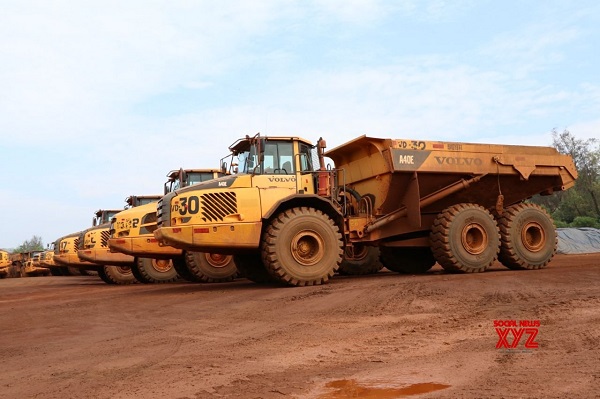
Mining trucks are sitting idle in Goa

The figures are horrifying. An estimated 300,000 miners are without salaries ever since the Supreme Court shut down iron ore mining in the coastal state. Another 100,000 people involved in ancillary business have been severely impacted. Mining was the largest employment generator in Goa.

“We have a very uncertain future,” Nilesh Cabral, minister in the Goa government, said in an interview. The minister said he fears unrest among the miners, without jobs for almost 22 months. “Shops have closed, trucks have disappeared, many high-value machines have gathered rust. This is very, very depressing. We want the Centre and the Supreme Court to intervene…We do not know what will happen if the miners turn violent and hit the streets. This is India’s biggest human crisis.”

Cabral said it is unfortunate that mining has been banned in Goa not because of environmental or health concerns but because of the interpretation of the laws: Extension of leases has been disallowed without an alternative solution in mind.

Many support Cabral’s point of view.

Putti Gaonkar, a leader among the miners, says the ban has had a far reaching collateral damage and shaved off a large portion from Goa’s GDP ever since mining stopped.

“We did everything needed, everything within our control. We went to Delhi and represented our case at the Prime Minister’s Office (PMO) last year. But nothing happened. Hundreds have lost their jobs, hundreds have seen their salaries halved, and many are just living on one meal a day. We are in a horrible, horrible condition. Those who pushed us out of jobs are sitting happy, their lives have not been impacted,” said Gaonkar, currently president of the Goa Rajya Kamgar Mahasang, a state level federation of 21 trade unions in Goa.

Worse, the state government has to rely on Sovereign Bond sale to meet its salary commitments to its employees. Shutting down of mining operations has caused a 40% slide in individual incomes, claim recent studies.

“India is waking up to the demands of students, no one cared for us when we sat on the footpath near Parliament for over a week. Goans are peaceful people, we are still peaceful. But how long?” asked Gaonkar.

Gaonkar should know. Intelligence reports generated by cops in Goa say there could soon be a spike in social unrest and crimes, which—in turn—could spell trouble for Goa’s tourism economy. This is not good news because the coastal state’s economy has been, so far, characterized by friendly service and a self-restrained law and order.

The Supreme Court will soon hear a petition of Vedanta Limited on its plea to extend its iron ore mining lease for 50 years, from 1987 to 2037, citing the Mines & Minerals (Development & Regulation) Act of 1957. Highly placed sources told this reporter the mining crisis was among issues listed for Prime Minister Narendra Modi, who met a host of industrialists to discuss ways to boost demand and jobs, and growth in the country. Vedanta chairman and promoter Anil Aggarwal was also present in the meeting.

The Supreme Court cancelled 88 mining leases in Goa on 7th February 2018 and ordered fresh mining leases and fresh environment clearances. The iron ore mines were shut following a petition by the Goa Foundation.

Gaonkar said before the first ban in 2012, mining contributed 25% to the state economy while effectively occupying only around 5% area in the state. After the ban, the contribution is less than 1%. Since mining was 100% export oriented, forex losses are significant, currently standing at a whopping $10 billion.

Supportive infrastructure comprising equipment suppliers, logistics and ancillary industry and the very crucial transport sector with trucks, barges, and jetties, have floundered. As per current estimates, more than 12,000 trucks and 150 barges and ancillary units are at a standstill.

Experts say Goa’s case is unique because it is the only state, which has a logistical arrangement for movement of iron ore from mines to ports through trucks, jetties and barges. In other states, where mining takes place, the primary means for transporting the ore are railway wagons. And the wagons are not always available because Indian Railways is on a perennial short supply. Besides, there are demands for wagons from the coal mining companies as well. So the advantage Goa had for being a unique mining state is now lost.

This is one side of the story. The other side is very horrifying.

Families of the miners have almost exhausted their meagre savings and have been subsisting on loans and doles from friends and well-wishers. Banks and NBFCs in Goa are heading for a slide. When mining was continuing, these very institutions eagerly extended credit lines because of stable collateral.

But in the absence of mining, the ability of miners to repay has vanished. This, in turn, has triggered a huge NPA crisis in the state. The miners, very sadly, are saddled with no hope, no cash. The owners of trucks and mining equipment are being hounded by banks for recovery of loans, which they cannot repay. Outstanding loans now standing at almost Rs 200 crore, 30% of which is from the co-operative banks. The late Chief Minister, Manohar Parrikar, had promised to waive it off. But it has not happened.

“We feel sad when we look at the students’ agitation and the way the nation, its politicians are reacting to it. There is a sense of urgency to it. I want to tell the students that their agitation is for the idea of India. Our idea of India is also in our hearts, perfectly in place. But hunger is important,” said Gaonkar.

Pakistan is desperate to counter India’s rapidly increasing military might

A few days back there were reports of a major counter-terrorist operation at the Indian military cantonment of Nagrota. Pakistani terrorists, who had probably infiltrated from Hiranagar, in district Kathua of the Jammu region were accosted at a poll plaza near Nargota cantonment. Three of the terrorists were reported killed while one security person was injured. It is appreciated that there were more than three terrorists in the truck and operations are on to find the remaining.

The intention of the terrorists is not known. They could have been instructed to carry out a terrorist strike on some military establishment in Nagrota itself. They also could have been on their way to Kashmir where, at present, there’s a huge deficit in the terrorist cadre. The foreign terrorist leadership has been neutralised by the Indian security forces in Kashmir and without that recruitment as well as motivation of local cadre becomes impossible. It is the foreign terrorists who used to compel the local youth into pursuing the path of terrorism by threatening them as well as their families of dire consequence on refusal.

Just before this operation a very serious security breach was unearthed in which a senior police officer was caught assisting movement of terrorists in Kashmir. The National Investigation Agency (NIA) is carrying out investigations to unearth the nexus which seems to be deep rooted.

The foregoing incidents are a chilling reminder of the determination of the inimical forces to keep the flame of terrorism alive in Jammu and Kashmir. They are a clear indication that the terror masters sitting abroad are attempting to find new and innovative methods to get their manpower, weapons and war like wherewithal across.

The Pakistani terror establishment seems to have gone into hyper mode after the Indian Republic Day celebrations on January 26th this year. While the celebrations were carried out with traditional grandeur, aplomb and festivity what was different and very critical for Pakistan was the number of “firsts” that were showcased in the impressive parade held at Rajpath in New Delhi.

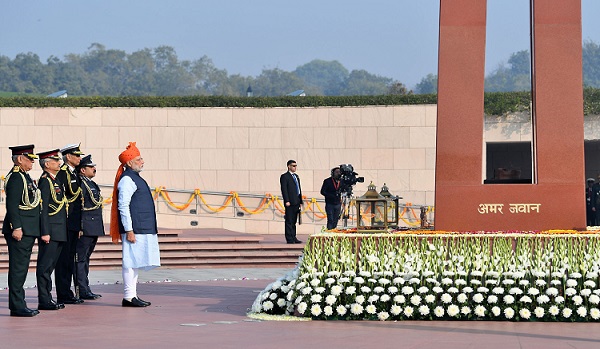
For the first time in the history of independent India, Prime Minister Narendra Modi paid tribute to the fallen soldiers at the “National War Memorial.” The magnificent National War Memorial enshrines the names of all brave sons of Mother India who gave their lives in operations after the country gained independence on August 15th 1947. A large number of the brave hearts whose names are enshrined in the National War Memorial have given their lives while fighting the cause of the nation in the Jammu, Kashmir and Laddakh. The significance of the War Memorial in reminding the people of India and the world about the perfidy of Pakistan is not lost to it.

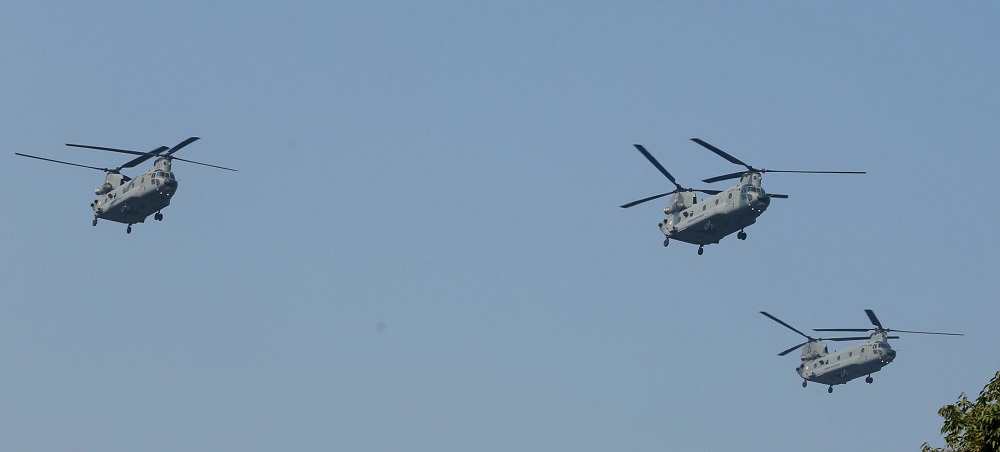
Another matter of great satisfaction is the fast track military modernisation of the country that was visible in the Republic Day Parade. On display was a large number of state-of-the-art military hardware that India has acquired in the last few years, during the NDA rule. This included the superb Chinook heavy lift helicopters and Apache attack helicopters acquired from the United States that are already operational in the Indian Air Force and are seen by strategic experts as great force multipliers.

Chinook heavy lift helicopters fly over Rajpath during the 71st Republic Day Celebrations in New Delhi on January 26, 2020. Photo: PIB

Also holding a place of pride in the parade was the Bhishma Main Battle Tank (MBT) that is being made in India on licence from Russia and forms the sword arm of the Indian Army in conventional operations.

Of great significance was the Artillery equipment on display, including the M777 Howitzer acquired from BAE systems that kick-started modernisation of artillery regiments in May 2017, the indigenously produced Dhanush Field Artillery Gun based on the Bofors design and inducted into service in mid-2019 and the K9 VAJRA-T 100 self-propelled tracked 155 mm howitzers being indigenously produced by Larsen & Toubro (L&T) at Talegaon, Maharashtra. These guns have filled a decades old gap in the military modernisation of the country.

The icing on the cake was the Shakthi anti-satellite platform that was successfully tested by India on March 27th, 2019 by destroying an old satellite on low earth orbit with a kinetic kill vehicle. India’s successful demonstration of ASAT capability puts her in the strategic league of a select few nations in the world like US, Russia and China.

The derivative of these firsts is that the stagnation in military modernisation has been replaced by a new urgency to cover the lost time. Creation of the post of Chief of Defence Staff (CDS) will ensure that the modernisation plans move ahead in a timely and professional manner.

Pakistan is well aware that the new equipment that is being inducted will be predominantly utilised to counter its vicious designs along the northern frontier of the country including the two Union Territories of J&K and Laddakh. From its reaction it becomes apparent that security of India cannot be assured only with procurement and provision of military wherewithal. Our inimical neighbour continues to vigorously pursue efforts toward keeping foreign sponsored terrorism ticking in accordance with its policy of bleeding India with low cost proxy and hybrid war.

Definitely our enemy is desperately searching for a credible counter to India’s increasing military might.  It is therefore attempting to bolster terrorism in Kashmir and also giving support to seditious activities in the main land. It is well known that financial and organisational support for the ongoing agitations for non-issues like CAA/NCR/NPR is coming from Pakistan.

While the security forces are poised to nullify the challenge being posed by cross-border terrorism and other conventional means, there is need for utmost urgency in identifying and exposing the perpetrators of seditious, anti-national activities. It is time for the leadership to show resolve and handle the emerging critical situation in a firm and righteous manner that upholds the principles of our Constitution. In this resolve the leaders can remain confident about the unmitigated support of all nationalist forces in the country.

3 Pakistan Army personnel were killed in two separate attacks at Bolan: BLA

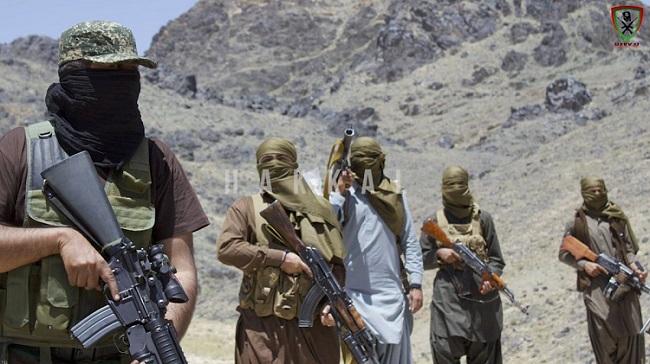
Jeeyand Baloch, Spokesperson of the Baloch Liberation Army (BLA) said in a statement that three Pakistani Army personnel were killed in two separate attacks in Bolan, Balochistan. “The Baloch Liberation Army (BLA) fighters targeted Pakistani Army personnel in two separate attacks in Bolan. This attack resulted in killing three Pakistani Army personnel and grievously injured two,” Jeeyand Baloch said. 

BLA fighters also killed the security personnel of an oil and gas exploration company in a sniper attack at Shamir Lat area of Bolan, Balochistan.

The second attack was carried out by BLA “Sarmachars” at the checkpoint of the Pakistani Army in Zardalu, Shahrag area. Two Pakistani Army personnel were killed and two more were injured in the attack.

The Baloch Liberation Army has already warned that such plundering projects by occupier Pakistani Army will not be allowed in Balochistan. “Our attacks on such projects and occupier forces will continue,” said Jeeyand Baloch. 

Pakistan has forcibly occupied Balochistan for the last seven decades and continues to plunder natural resources of the region. Pakistan Army and its rogue intelligence agency ISI have resorted to “kill and dump” policy in Balochistan where they target Baloch nationals who raise their voice against atrocities by the Pakistan Army. 

Mama Qadeer Baloch to intensify protests against “missing persons” of Balochistan

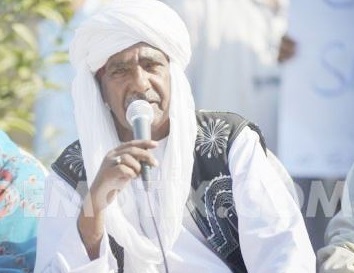
Mama Qadeer Baloch, Vice Chairman of the Voice for Baloch Missing Persons (VBMP), in a press conference at Karachi said that VBMP will hold a protest against the disappearance of “missing persons”. Mama Qadeer Baloch has been protesting against the disappearance of innocent people Balochistan from the platform of Voice for Baloch Missing Persons (VBMP) for more than a decade.

He elaborated about the details of protest at the Karachi Press Club, saying that on Thursday, February 6th 2020, at 2 PM local time a protest will be held in front of the Karachi Press Club by the Voice for Baloch Missing Persons (VBMP) and relatives of the “missing persons”. “We have demanded that all the missing persons should be released. If anyone is accused, they should be presented to the courts and let justice be delivered under the laws of the country but the government is not taking necessary steps.” Mama Qadeer Baloch appealed to the human rights organizations, students, political activists and others to participate in the demonstration for the “missing persons” of Balochistan.

My 4 sons and 2 daughters are ready to be sacrificed for Free Balochistan: Bibi Zeba Baloch

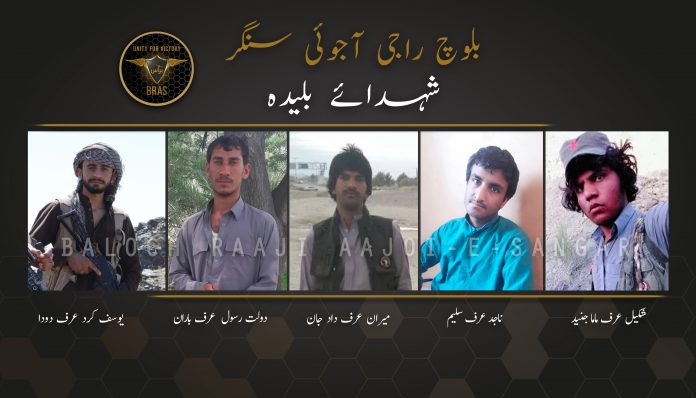
Bibi Zeba Baloch, the mother of Najid Jan who was among the five Baloch youths killed during a clash with Pakistan-supported local armed group in Zamran said that she felt proud for the martyrdom of her son. “I congratulate the whole Baloch nation,” Bibi Zeba Baloch said. 

In a video message to Radio Zrumbesh, Bibi Zeba Baloch said that Najid Jan was martyred for the land of Balochistan. “Najid Jan was not my son, rather he was a son of his motherland. Four months ago, I had dressed up Najid Jan as a groom with my own hands. Today his real mother– the land of Balochistan, has made him a groom once again. He has become a martyr for his mother land,” Bibi Zeba Baloch said in an emotional message.

Bibi Zeba Baloch, mother of martyr Najid Jan. Najid was among the five Baloch fighters who were martyred last week fighting Lashkar-e-Taiba terrorists at Zamuran in Balochistan.

She added in her message: “I do not grieve over the martyrdom of my son nor do I shed tears. My son has been martyred for his homeland. Other boys who were martyred along with Najid Jan are also my sons and I have same feelings for them, but martyrdom is essential for this war for freedom. Today, Najid Jan has been martyred. If motherland needs so, I have four sons and two daughters and I will sacrifice them for the motherland too.”

“I urge the friends of Najid Jan not to be cowards, do not let the fear get in your heart. This enemy (Pakistan) can not do anything to us, our homeland (Balochistan) will be free one day,” she said.

At the end of her message, Bibi Zeba Baloch said that she requests all the mothers of martyrs not to shed tears for the martyrs and don’t be upset. “Our children have been martyred for their motherland. At last pay the richest tribute to all martyrs.”

Pakistan Army “disappears” a person from Dera Bugti; armed attack on its Bolan check-post

Pakistani Army and their intelligence agencies have “forcefully disappeared” yet another person from Dera Bugti area of Balochistan on Monday morning and moved him to an undisclosed location. According to the local sources in Balochistan, Pakistan Army and its intelligence officials raided a house at Uch area of ​​Sui and forcibly arrested a person. The abductee has been identified as Shado (son of Nadha Bugti).

The term ‘forcefully disappeared’ is widely used in Balochistan to connote to the arrests made by Pakistani security forces as these arrested persons are not presented before the court of law and instead kept in military camps.

International campaign groups including Human Rights Watch and Amnesty International accuse Pakistani security forces as the perpetrators of ‘Enforced Disappearance’ in Balochistan. 

Further, a Pakistani check-post has been attacked by armed men in Bolan area of ​​Balochistan. As per local sources, unknown armed men attacked the Pakistani forces check post in Zurhalo area of ​​Shahrang where the Pakistani forces faced casualties. Incidentally, the Pakistani government officials have not confirmed this attack yet.

While, the Baloch separatist armed groups are active in the area, but the responsibility for the attack has not been claimed by any organization yet.

Budget 2020 lays new growth frontiers by its focus on common man

Indian budgets traditionally used to be announcement of changes in direct and indirect taxes, or subsidies. This budget in particular, stands out, as an attempt to charter a new course. The primary role of government is to define policies to create new vistas for growth, and empower entrepreneurs in society.

For instance, the most daring direction setting initiative in the General Budget 2020 is on agricultural front, vide ‘krishi-udan’. Let me elaborate on this. For several years now, the rural economy has been under distress, as a result of rising uncertainty in the agriculture sector. This affects the economy as 80% of farmers have small land holdings of 2 to 3 acres or less.

While about two lakh farmers have committed suicide (over the few decades), the only ways all past governments have responded, is through subsidies such as loan-waivers or providing free food, etc. In this backdrop, schemes like krishi-udan announced in this Budget 2020 can be a real trigger and game-changer and contribute towards 3 to 4 % fresh GDP growth by converting rural economy completely entrepreneurial.

Rural India, inhabited by two third population, badly awaits new wealth creation opportunities. The micro-level ideas like creation of storage in rural areas, owned by locals, may not attract much attention, yet this is how villagers would transform into being entrepreneurs.

Growth of rural prosperity would eventually set the course for reversal of migration from masses living in unhygienic slums in cities to being back to their native villages. When implemented in full scope, rural wealth creation initiatives can set the direction for growth for new generation farmers and people living in the villages.

Another first in this budget is the policy to initiate the charter for taxpayers, which has potency to make the whole taxation-machinery reduce to a minimal, and open a new vista of trust based tax collection system. Once again, this is a directional shift if implemented in truest spirit. Cost of tax collection is an overhead on the economy, which needs to be as low as possible. On the other hand, it would empower entrepreneurs, who prefer a genuine approach to grow and contribute to nation building. We have indeed come a long way from the era of license raj that treated entrepreneurs as a person of greed who needed to be punished.

Moreover, the environment of tax certainty and incentives would enhance reasons for global entrepreneurs to invest in long term growth story of India.

Many from the established large businesses, such as auto, pharma, etc, may feel disillusioned by this budget, as it would not help their existing activities. Their worry is real, as they have to be prepared for natural shifts taking place in the nature of the demand globally. For instance, preventive healthcare in the case of pharma or lifestyle etc. This is because the younger generations are concerned about sustainability and equity. No government can help them on issues related to business models.

Advantages offered to salaried income tax payees are quite obvious and would naturally help the economy in the immediate term through greater disposable money in consumer hands. A shot to GDP growth, a notch or two.

A lot remains to be done though, from immediate gains perspective. Speculation in real estate prices, which zoomed 1000% from 2004-14, although stagnant in last five years, still awaits policy-based corrections. This colossal price increase has been a substantial reason behind slowdown. A quick, back-of-the-envelope estimate suggests that every 10% reduction in real estate price can add more than 1% to the national GDP. Compared to the 10-fold price rise during 2004-14, even 50% fall would still be 5-times compared to the price of 2004. New and immediate job creations would come essentially from the infrastructure sector both in rural and urban areas, but they are short term solutions. One needs to estimate the real number of jobs this budget would create, based on proposed investments.

However, stable and quality job creations require domain specific incentives to the MSME (Micro, Small and Medium Enterprises), which is not obvious in this budget.

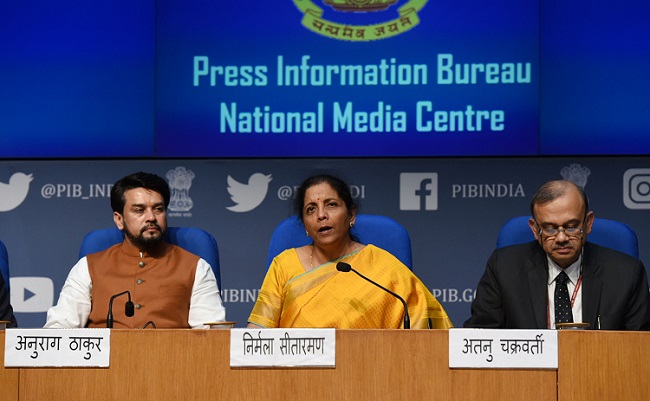
While critiques in days ahead would churn out gaps between what is proposed and what they would be able to achieve, one thing is certain. Finance Minister Nirmala Sitharaman and team clearly demonstrate how carefully they have been listening to diverse voices, and hold a 360-degree vision. From rural at one end to quantum at the other, they have tried to pay attention to every possible level of the economic ladder. Right from creating online educational opportunities in top institutes for disadvantaged individuals to individual solar pumps for farmers on one hand, to innovative initiatives like five archaeological centres to thinking about frontier technologies like Artificial Intelligence and machine learning is a tribute to Sitharaman’s effort to define the Mount Everest that India needs to climb. 

On the whole this budget represents a good comprehensive proactive approach, having breadth and depth, across the whole economy. Multiple new initiatives are encouraging.

However, the challenges lie in being truly effective and living upto declaration of removing conventional hurdles for entrepreneurs.

Long term challenges that remain to be addressed, however, are quite a few and would hopefully get the attention of policy makers someday, I hope. For instance: When would the nation be ready to develop multi level entrepreneurial ecosystem, which can easily identify each aspiring first-generation entrepreneur and ensure a specific pathway to break even and grow. The challenge is about how to create a million entrepreneurs, at all levels. Likewise, when would the nation be ready to honour knowledge as capital and India becomes a hub of pioneering innovations and excellence. So, although this budget is a step in the right direction, policy makers have a lot to do, to reach India to her fullest aspirations, that cannot be measured merely in quantitative terms.

Citizens demand safer, accessible and reliable public bus transport system in the capital

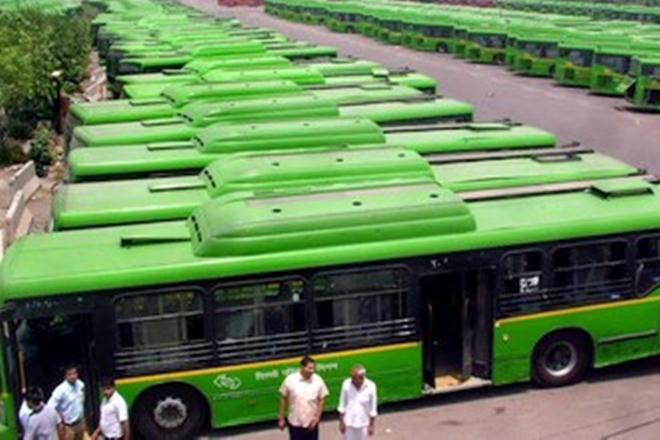
Delhi’s public bus transport system has been in Intensive Care Unit (ICU) for quite some time, if not in the comatose condition. In December 2019, Delhi Chief Minister Arvind Kejriwal had announced induction of 400 new low-floor AC buses. This expansion in the city’s fleet of AC buses came after almost a decade with the last batch being inducted during the 2010 Commonwealth Games. The scenario could not have been grimmer, with bureaucratic lethargy and policy makers skewed emphasis on Delhi Metro resulting in acute apathy towards putting in place an effective bus system in the city.

Despite this minuscule expansion in the fleet, the city will continue to face a massive shortage of 11000 buses in its public transport system. Currently, 5,930 buses, including 3,762 DTC and 2,204 cluster buses, are plying across the city. However, the bus transport system is not just about numbers, it needs complete overhaul at various levels to make bus transport attractive for commuters.

Citizen groups and public transport experts argue that merely inducting new buses would not be a sufficient move to improve the overall bus transport system in the city. “We need to leverage the inherent advantages of a bus transport system over other modes of transport like the Delhi Metro. A bus system is more flexible in terms of route rationalisation as per the passenger demand, affordable and serves more people. At a time when Metro has become largely unaffordable to poor and lower-middle class people, a robust bus system is the only way to provide a commuter-friendly and responsive public transport system. It’s part of a democratically elected government’s social commitment towards its people,” said Rajendra Ravi, Director, Institute for Democracy and Sustainability (IDS).

Experts are of the view that due to complex governance system in Delhi, with Centre and State on loggerheads on several issues, there has been no long-term bus transport policy in place. “Delhi needs more than 11000 buses, but no manufacturer has the capacity to provide so many buses in one-go, it will take several years or decades to bring so many buses on road. The situation could have been avoided had a comprehensive bus policy been prepared a decade back. Also, Delhi government doesn’t have any land available in their depots to park these buses and the existing laws prohibit developing any permanent structures in depots as the land has been leased by DDA,” said Dr. Sandeep Gandhi, an urban transport expert.

To make bus transport system attractive, it has to be promoted as a safe and reliable mode of transport which saves time and money. A dedicated bus lane, something on the lines of the recent experiment in Bengaluru, where a lane has been earmarked for buses in one of the busiest areas – the Outer Ring Road, should be developed in Delhi. Passenger safety, capacity building of drivers and conductors to improve the operation quality of buses has to be part of the overall policy to improve the bus transport system in the next one decade.