Home Blog Page 385

Pakistan Army “disappears” a person from Dera Bugti; armed attack on its Bolan check-post

Pakistani Army and their intelligence agencies have “forcefully disappeared” yet another person from Dera Bugti area of Balochistan on Monday morning and moved him to an undisclosed location. According to the local sources in Balochistan, Pakistan Army and its intelligence officials raided a house at Uch area of ​​Sui and forcibly arrested a person. The abductee has been identified as Shado (son of Nadha Bugti).

The term ‘forcefully disappeared’ is widely used in Balochistan to connote to the arrests made by Pakistani security forces as these arrested persons are not presented before the court of law and instead kept in military camps.

International campaign groups including Human Rights Watch and Amnesty International accuse Pakistani security forces as the perpetrators of ‘Enforced Disappearance’ in Balochistan. 

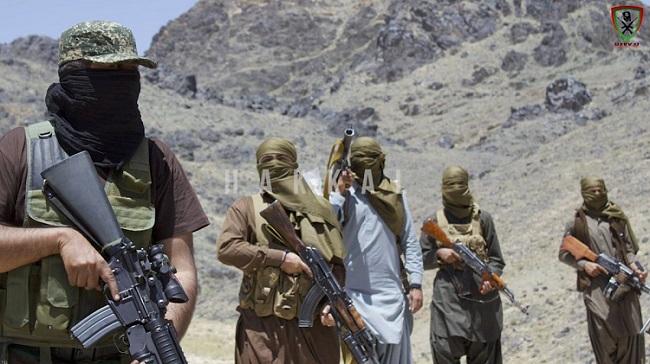
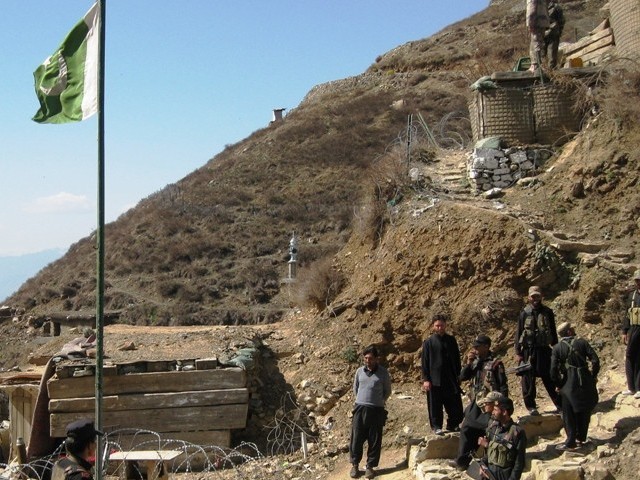
Further, a Pakistani check-post has been attacked by armed men in Bolan area of ​​Balochistan. As per local sources, unknown armed men attacked the Pakistani forces check post in Zurhalo area of ​​Shahrang where the Pakistani forces faced casualties. Incidentally, the Pakistani government officials have not confirmed this attack yet.

While, the Baloch separatist armed groups are active in the area, but the responsibility for the attack has not been claimed by any organization yet.

Budget 2020 lays new growth frontiers by its focus on common man

Indian budgets traditionally used to be announcement of changes in direct and indirect taxes, or subsidies. This budget in particular, stands out, as an attempt to charter a new course. The primary role of government is to define policies to create new vistas for growth, and empower entrepreneurs in society.

For instance, the most daring direction setting initiative in the General Budget 2020 is on agricultural front, vide ‘krishi-udan’. Let me elaborate on this. For several years now, the rural economy has been under distress, as a result of rising uncertainty in the agriculture sector. This affects the economy as 80% of farmers have small land holdings of 2 to 3 acres or less.

While about two lakh farmers have committed suicide (over the few decades), the only ways all past governments have responded, is through subsidies such as loan-waivers or providing free food, etc. In this backdrop, schemes like krishi-udan announced in this Budget 2020 can be a real trigger and game-changer and contribute towards 3 to 4 % fresh GDP growth by converting rural economy completely entrepreneurial.

Rural India, inhabited by two third population, badly awaits new wealth creation opportunities. The micro-level ideas like creation of storage in rural areas, owned by locals, may not attract much attention, yet this is how villagers would transform into being entrepreneurs.

Growth of rural prosperity would eventually set the course for reversal of migration from masses living in unhygienic slums in cities to being back to their native villages. When implemented in full scope, rural wealth creation initiatives can set the direction for growth for new generation farmers and people living in the villages.

Another first in this budget is the policy to initiate the charter for taxpayers, which has potency to make the whole taxation-machinery reduce to a minimal, and open a new vista of trust based tax collection system. Once again, this is a directional shift if implemented in truest spirit. Cost of tax collection is an overhead on the economy, which needs to be as low as possible. On the other hand, it would empower entrepreneurs, who prefer a genuine approach to grow and contribute to nation building. We have indeed come a long way from the era of license raj that treated entrepreneurs as a person of greed who needed to be punished.

Moreover, the environment of tax certainty and incentives would enhance reasons for global entrepreneurs to invest in long term growth story of India.

Many from the established large businesses, such as auto, pharma, etc, may feel disillusioned by this budget, as it would not help their existing activities. Their worry is real, as they have to be prepared for natural shifts taking place in the nature of the demand globally. For instance, preventive healthcare in the case of pharma or lifestyle etc. This is because the younger generations are concerned about sustainability and equity. No government can help them on issues related to business models.

Advantages offered to salaried income tax payees are quite obvious and would naturally help the economy in the immediate term through greater disposable money in consumer hands. A shot to GDP growth, a notch or two.

A lot remains to be done though, from immediate gains perspective. Speculation in real estate prices, which zoomed 1000% from 2004-14, although stagnant in last five years, still awaits policy-based corrections. This colossal price increase has been a substantial reason behind slowdown. A quick, back-of-the-envelope estimate suggests that every 10% reduction in real estate price can add more than 1% to the national GDP. Compared to the 10-fold price rise during 2004-14, even 50% fall would still be 5-times compared to the price of 2004. New and immediate job creations would come essentially from the infrastructure sector both in rural and urban areas, but they are short term solutions. One needs to estimate the real number of jobs this budget would create, based on proposed investments.

However, stable and quality job creations require domain specific incentives to the MSME (Micro, Small and Medium Enterprises), which is not obvious in this budget.

While critiques in days ahead would churn out gaps between what is proposed and what they would be able to achieve, one thing is certain. Finance Minister Nirmala Sitharaman and team clearly demonstrate how carefully they have been listening to diverse voices, and hold a 360-degree vision. From rural at one end to quantum at the other, they have tried to pay attention to every possible level of the economic ladder. Right from creating online educational opportunities in top institutes for disadvantaged individuals to individual solar pumps for farmers on one hand, to innovative initiatives like five archaeological centres to thinking about frontier technologies like Artificial Intelligence and machine learning is a tribute to Sitharaman’s effort to define the Mount Everest that India needs to climb. 

On the whole this budget represents a good comprehensive proactive approach, having breadth and depth, across the whole economy. Multiple new initiatives are encouraging.

However, the challenges lie in being truly effective and living upto declaration of removing conventional hurdles for entrepreneurs.

Long term challenges that remain to be addressed, however, are quite a few and would hopefully get the attention of policy makers someday, I hope. For instance: When would the nation be ready to develop multi level entrepreneurial ecosystem, which can easily identify each aspiring first-generation entrepreneur and ensure a specific pathway to break even and grow. The challenge is about how to create a million entrepreneurs, at all levels. Likewise, when would the nation be ready to honour knowledge as capital and India becomes a hub of pioneering innovations and excellence. So, although this budget is a step in the right direction, policy makers have a lot to do, to reach India to her fullest aspirations, that cannot be measured merely in quantitative terms.

Citizens demand safer, accessible and reliable public bus transport system in the capital

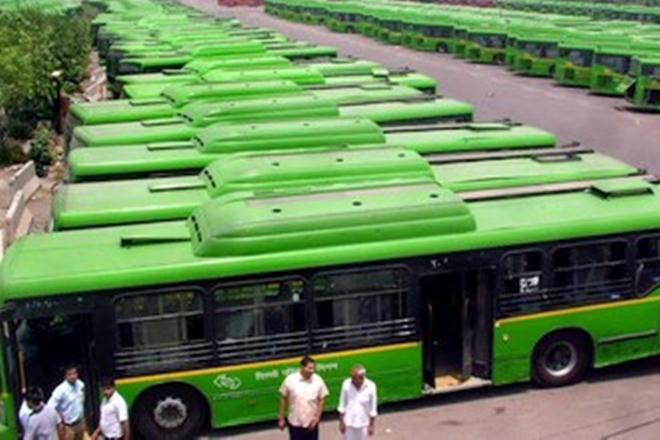
Delhi’s public bus transport system has been in Intensive Care Unit (ICU) for quite some time, if not in the comatose condition. In December 2019, Delhi Chief Minister Arvind Kejriwal had announced induction of 400 new low-floor AC buses. This expansion in the city’s fleet of AC buses came after almost a decade with the last batch being inducted during the 2010 Commonwealth Games. The scenario could not have been grimmer, with bureaucratic lethargy and policy makers skewed emphasis on Delhi Metro resulting in acute apathy towards putting in place an effective bus system in the city.

Despite this minuscule expansion in the fleet, the city will continue to face a massive shortage of 11000 buses in its public transport system. Currently, 5,930 buses, including 3,762 DTC and 2,204 cluster buses, are plying across the city. However, the bus transport system is not just about numbers, it needs complete overhaul at various levels to make bus transport attractive for commuters.

Citizen groups and public transport experts argue that merely inducting new buses would not be a sufficient move to improve the overall bus transport system in the city. “We need to leverage the inherent advantages of a bus transport system over other modes of transport like the Delhi Metro. A bus system is more flexible in terms of route rationalisation as per the passenger demand, affordable and serves more people. At a time when Metro has become largely unaffordable to poor and lower-middle class people, a robust bus system is the only way to provide a commuter-friendly and responsive public transport system. It’s part of a democratically elected government’s social commitment towards its people,” said Rajendra Ravi, Director, Institute for Democracy and Sustainability (IDS).

Experts are of the view that due to complex governance system in Delhi, with Centre and State on loggerheads on several issues, there has been no long-term bus transport policy in place. “Delhi needs more than 11000 buses, but no manufacturer has the capacity to provide so many buses in one-go, it will take several years or decades to bring so many buses on road. The situation could have been avoided had a comprehensive bus policy been prepared a decade back. Also, Delhi government doesn’t have any land available in their depots to park these buses and the existing laws prohibit developing any permanent structures in depots as the land has been leased by DDA,” said Dr. Sandeep Gandhi, an urban transport expert.

To make bus transport system attractive, it has to be promoted as a safe and reliable mode of transport which saves time and money. A dedicated bus lane, something on the lines of the recent experiment in Bengaluru, where a lane has been earmarked for buses in one of the busiest areas – the Outer Ring Road, should be developed in Delhi. Passenger safety, capacity building of drivers and conductors to improve the operation quality of buses has to be part of the overall policy to improve the bus transport system in the next one decade.

Budget 2020-21: Key Takeaways for Individual Tax Payers

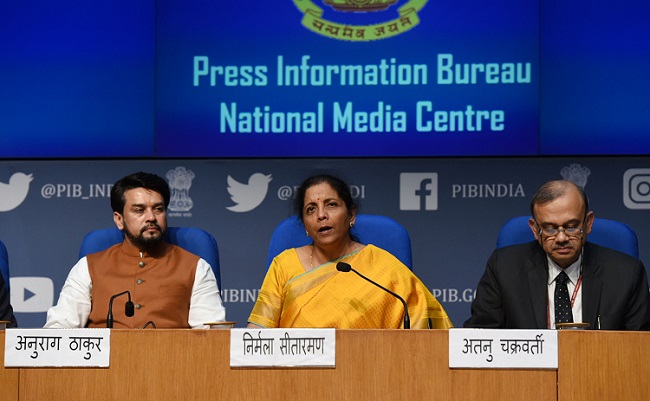
With a 160 minutes speech, the longest Budget speech by any finance minister so far, Finance minister Nirmala Sitharaman tabled the Union Budget 2020-21 in the Lok Sabha yesterday, aimed towards introducing a slew of measures to boost the economy suffering from a slowdown.

FM announced the launch of a new personal income tax regime wherein taxpayers will get certain tax benefits if they forego exemptions.  Personal income tax rates along with important sections such as Section 80C, deductions under Chapter VIA, standard deduction are critical elements that are watched closely by taxpayers.

Key Highlights:

– To introduce a new simplified personal tax regime

– No income tax for income up to Rs 2.5 lakh

– 10% income tax for those earning between Rs 5 lakh to Rs 7.5 lakh versus 20% earlier

Under the proposed I-T slab, Income between Rs 5 and 7.5 lakh will be taxed at 10 per cent, while those between Rs 7.5 and 10 lakh at 15 per cent. Those earning between Rs 10 and 12.5 lakh will pay tax at the rate of 20 per cent, while those between Rs 12.5 and Rs 15 lakh will pay at the rate of 25 per cent. Income above Rs 15 lakh will be taxed at 30 per cent.

However, the new regime will be optional and those who want to stick to claiming deductions will be allowed to do so.

Tax experts say that individuals will have to check if they will have greater benefit under the new tax rates. It depends on a case to case basis. However, individuals with business income cannot switch to the new tax rates and then back again to the old rates. But others can do so.

Also, the FM in her Budget 2020 speech has proposed for rationalization of tax treatment of employer’s contribution to recognized provident funds, superannuation funds and national pension scheme. The proposal is to provide a combined upper limit of Rs 7.5 lakh in respect of employer’s contribution in a year to NPS, superannuation fund and recognised provident fund and any excess contribution is proposed to be taxable.

The budget presented by finance minister Nirmala Sitharaman has brought in some major changes for investors. The dividend distribution tax (DDT) has been abolished at both the company and mutual fund levels. Instead, dividends will be taxable in the hands of investors and will be taxed at their slab rates. In addition, tax will be deducted at source (TDS) on mutual fund dividends in excess of ₹5,000 per year at the rate of 10%.

To simplify the entire process and lower tax rates, she announced that around 70 of more than 100 income tax deductions and exemptions have been removed. Also, PAN cards will be allotted instantly online soon with Aadhaar. ‘Vivad se Vishwas’ scheme will be introduced for direct tax payers whose appeals are pending at various forum. These new income tax related proposals will come into effect from financial year 2020-21.

Tapan Bose & his ilk must be shamed for comments on Indian Army

“Pakistan is not an enemy country, our armies are alike too, their army kills their people and our army kills our people, there is no difference between them.” These words were spoken by Tapan Bose, an activist and film maker from West Bengal. For good measure he added that “the ruling class of India and Pakistan are alike.”  

The statement should be ignored as being made by an ignorant person who’s attempting to gain some media limelight with sensational verbosity. However, it would compel a soldier to pause and wonder – Is this person actually convinced about what he is saying? How many more in the nation think the same way?

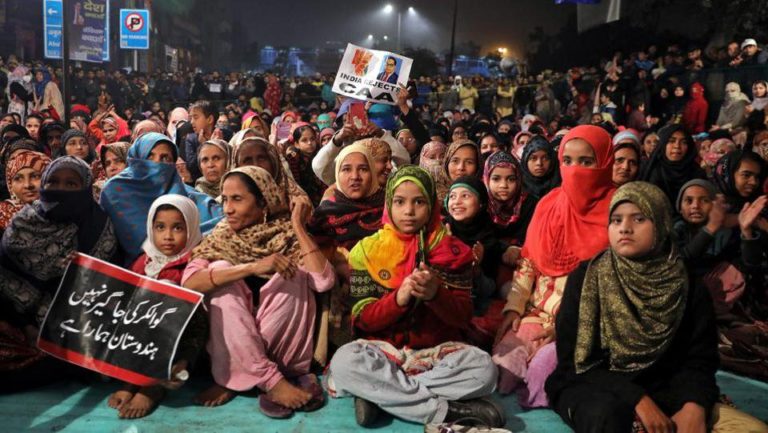
This is not about Tapan Bose alone; it’s about the proclivity among petty, media & limelight hungry elements that have no compunction in sucking the Indian Army into political debates even when the matter at hand does not concern the latter at all, as it was in this case. Tapan Bose had come to address an anti-CAA rally that has no connect with the India’s armed forces, but he knew that the best way to gain publicity would be to hound the Indian Army and that is what he did. Lo Behold! He was in the news throughout the day; objective achieved.

Do these people even pause for a moment to think what effect their loose words and utterances have on the soldiers deployed in the frontiers? The innocent soldier who is braving great odds, challenges, deprivation and even death is left wondering about the reasons that causes him to be subject to such abuse from his fellow countrymen whom he is sworn to protect. Young officers who command platoons and companies suffer pangs of guilt when their work is criticised and condemned in this manner. What face do they have to show to their soldiers whom they have to lead in combat?

A soldier would wonder whether this person (Tapan Bose) and others like him, have actually seen a border–the very volatile Line of Control (LOC). A soldier would also wonder if such persons have somebody from their family, a friend or acquaintance serving in the armed forces. If they had, they would not be speaking in this manner.

If Tapan Bose is so pained about the conduct of his country’s Armed Forces surely he could have spoken to some among the thousands of Bengalis who serve the force proudly in all ranks from a Sepoy to a General. The best person in West Bengal to clear his doubts would be General Shankar Roychowdhury, who steered the Indian Army as Chief of Army Staff from November 1994 to September 1997, at a time when Pakistan sponsored terrorism was at its peak in Jammu and Kashmir. The General has enough experience to clear all queries that Tapan Bose may have.

One wonders as to what kind of people from Pakistan Tapan Bose and his ilk have interacted with, apart from the many artists who throng to India to earn a living with song and dance? What has been their interaction with radicalised Pakistani hardliners, highly trained Islamic mercenary terrorists, war lords or designated terrorists? Are they even aware that such persons exist? Do they realise that the artists from Pakistan come to India to earn their bread and butter and have no option but to speak of their country’s yearning for peace?

The Indian Army has to bear the cross of an emotional engagement with the people of the country. On the one hand, affection touching the sky is expressed in an exhibition of national pride and on the other hand is the rock bottom in the case of people like Tapan Bose. Subjecting the performance of the army to a national debate is a welcome development in a democracy. The debate, however, needs to be orchestrated on the basis of the traditions that drive the force. Indian Army is a one million strong organisation comprising of normal citizens who hail from diverse social segments from across the country. They are well trained, balanced professionals who like to stay in the shadows while performing their duty. They are embarrassed by the adulation and perturbed by the brick bats.

Indian Army is a highly traditional organisation that has not changed the basic ethos and culture that it inherited from the British. This is a wise step since the system is time tested and has absorbed the collective wisdom to more than 200 years of a highly successful existence. The flip side is that the Indian Army is unable to comprehend the fatuous behaviour of the internet generation of today; it does not have the capacity to ignore the raving and ranting that passes off as discussion and discourse in the modern times. It fails to comprehend that independent India is very different from imperialist British India.

If matters are not taken in hand then the force may be compelled to initiate a process of psychologically hardening the soldier against such vicious attacks, but would that be good for the nation? Do we wish to change sensitive soldiers into hardened professionals akin to mercenaries? Can the likes of Tapan Bose withstand a reaction from a soldier?

The emerging society comprises of the young and the restless who are forever in search of new challenges and greener pastures. There is no dearth in the choice of professions or careers. Under these circumstances, finding a person who is ready to sacrifice all for the sake of the country has become a herculean task. If the gratitude of the nation for the sacrifices made by the soldier becomes questionable, who will join the forces?

Indian Army prepares every soldier to become a national asset, by and large army personnel perform well not only within the Army but outside of it in the civil stream also. If the likes of Tapan Bose start looking at them as murdering pariahs what would be the end result? It is time to introspect; it is time to give some breathing space to the Indian Army before it becomes too late.

BRAS launches ‘Operation Aas-Rech’ in Balochistan

BRAS, the coalition of armed groups of Balochistan, claimed responsibility for the killing of two Lashkar-e-Taiba terrorists at Zamuran attack.

Baloch Raji Ajoi Sangar (BRAS), a coalition of Baloch armed groups such as Baloch Liberation Army (BLA), Balochistan Liberation Front (BLF), Baloch Republican Army (BRA) and Baloch Republican Guard (BRG) has claimed the responsibility for the attack in Zamuran area of Turbat (Balochistan) on Thursday.

“BRAS fighters attacked the activists of Lashkar-e-Taiba, a religious extremist organization under the patronage of Pakistan Army in Zamuran, Balochistan. The attack resulted in killing 2 and injuring several other members of the organization. Their weapons and motorcycles were confiscated as well,” the spokesperson of the BRAS Baloch Khan said in the statement. 

Baloch Khan added that the Baloch fighters attacked the Lashkar-e-Taiba terrorists at Kulbar Shahab Dikk Jah area when they were on their way to Tump in Balochistan. Two terrorists killed by the BRAS attack were identified as Nawaz (s/o Saeed) and Asghar (s/o Majeed). Both were residents of PulAbad Tump, Balochistan.

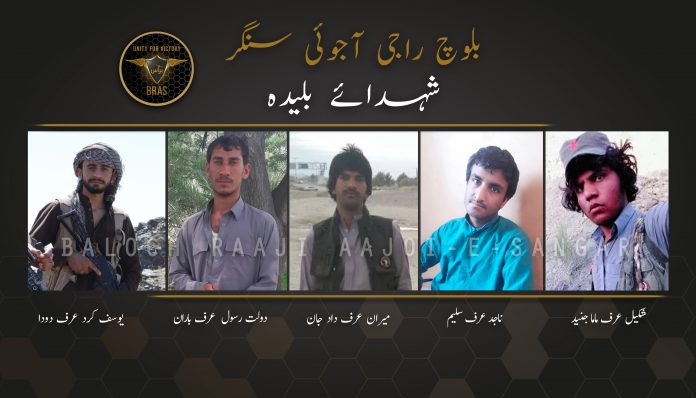
The spokesperson further added that both Nawaz and Asghar were directly involved in the attack on the BRAS comrades on Thursday. “The terrorist organization Lashkar-e-Taiba or the so-called ‘death squad’ of Pakistan government-sponsored criminals and the Pakistani military had jointly tried to surround our fighters. But Baloch Sarmachars bravely managed to break the siege and while in the battle, five of our soldiers were martyred. We want to clarify that all the terrorists of Lashkar-e-Taiba and members of these ‘death squad’ have been identified and such elements will no longer get dispensation of being Baloch or citizens of Balochistan.

The spokesman explained that for the purpose of eliminating all these enemy elements BRAS announces the launch of a large-scale operation called ‘Operation Aas-Rech’ under a comprehensive strategy.   

“We want to convey this message to Baloch people that they must keep distance from terrorists of L-e-T and the local death squads to avoid any kind of loss. We also want to convey a message to the families of these terrorists that if they are not the partners in crime with them then they should also stay away from them in public places, so that they can avoid becoming innocent victims,” Baloch Khan explained.  

Nirmala Sitharaman announces IPO for the LIC of India

Finally, a bold move from the Narendra Modi government. While presenting the Union budget on Saturday, Finance Minister Nirmala Sitharaman announced the listing of public sector insurance behemoth Life Insurance Corporation (LIC) of India on the bourses in the next financial year, as part of the government’s disinvestment exercise.

Sitharaman said that only a part of the government stake in LIC would be sold through an initial public offer (IPO). The move will enhance credibility, transparency and accountability in LIC’s functioning, which will then have to adhere to stringent disclosure norms.

“The government’s decision to list LIC is a welcome move. This will result in better governance and greater transparency given the disclosure requirements of listed entities. It will also contribute materially to the efforts of the government to raise funds through divestments,” Sandeep Ghosh, partner & leader — Financial Services Advisory, EY India said.

Until now, the LIC that holds savings and investments of millions of people, has been actively bailing out other ailing public sector companies. In 2018, when it decided to pick up stake in the NPA (non performing asset) ridden IDBI Bank, many eye brows were raised. In fact, the public sector life insurer has been consistently subscribing to CPSE shares during the disinvestment process, including those of Coal India, Hindustan Aeronautics Limited and The New India Assurance Co. Ltd.

“In 2015, LIC bought almost 50% of Coal India’s and 86% of Indian Oil’s issue size. A year earlier, it had bought roughly 72% of SAIL’s offer size and subsequently 5% of the government’s stake in BHEL through private placement, since going to the market had been ruled out,” a Pahle India study said. The capital of the LIC is also collected from insurance policies.

While on paper, the decision to list LIC is a bold move, but the jury is out on its efficacy. The exercise of launching an IPO for LIC will not be easy and the trade unions have already threatened to go on protest. That apart, it is to be seen whether it remains just another big announcement only on paper or some concrete action has taken place.

Let us not forget that the disinvestment target for 2019-20 was set at Rs 1.05 lakh crore. However, from what it appears today, it is unlikely to exceed Rs 60,000 crore, falling way short of the target. The government had expected a big bonanza from the sale of public carrier Air India. However, the divestment of Air India is yet to take of.

Can India act fast on pneumonia?

India was at the heart of a global forum in faraway Spain which discussed the looming dangers of pneumonia

The first ever global forum on childhood pneumonia didn’t trigger breaking headlines in India — the world’s most crowded market for news — even though the findings were very, very alarming.

The forum, which recently met in Barcelona, said an estimated nine million children could die in a decade unless world acts on pneumonia, driven by malnutrition, air pollution and lack of access to vaccines and antibiotics. In 2019, pneumonia killed a child every 39 seconds. The task to counter pneumonia is enormous, efforts need to be made across the world to avert such deaths, claimed speakers at the conference.

And India, sadly, is at the heart of it. 

Reports say child deaths from pneumonia are concentrated in the world’s poorest countries and it is the most deprived and marginalised children who suffer the most. Forecasts say an estimated 6.3 million children under the age of five could die from pneumonia between 2020 and 2030, deaths are deaths are likely to be highest in Nigeria (1.4 million), India (880,000), the Democratic Republic of Congo (350,000) and Ethiopia (280,000).

So what is the answer?

Vaccines — historically — have been one of the greatest public health tools to prevent disease. Helped by new technology and advancements in genomics, researchers work with improved global coordination. Yet, development of vaccine remains risky and expensive. The time taken is immense, it takes years because the vaccines undergo extensive testing in animals and humans. And then, it becomes available to the public. And then one has to wait and see if such vaccines work on a mass scale. If they don’t, it’s a failure despite undergoing so many tests. If they succeed, it is a boon for the world. “They may not help in the very early stages of an outbreak, but if we’re able to develop vaccines in time, they will be an asset later,” Richard Hatchett, the chief executive of the epidemic preparedness coalition, was quoted by the New York Times.

Doctor examines a child suffering from pneumonia. (Representational Picture)

Consider the case of China. It was in early January, Beijing reported cases of a strange, pneumonia-like illness. Interestingly, researchers at the National Institutes of Health (NIH) in Maryland readied themselves for a vaccine to prevent the new disease. What is significant is the fact that the scientists had amply clues that a coronavirus, almost similar to ones that caused the 2003 SARS outbreak and 2012 MERS, was the culprit. It was widely reported how, Dr. Barney Graham, deputy director of the Vaccine Research Center at the NIH, urged Chinese scientists to share the genetic makeup of the virus. The Chinese scientists posted the information on January 10, 2020, and Dr. Graham’s team within hours had pinpointed the letters of the genetic code that could be used to make a vaccine. Speedy coordination across the world is a must to counter epidemics, scientists have repeatedly warned. 

Now, a modelling by Johns Hopkins University says scaling up pneumonia treatment and prevention services can save the lives of 3.2 million children under the age of five. It would also create ‘a ripple effect’ that would prevent 5.7 million extra child deaths from other major childhood diseases at the same time, underscoring the need for integrated health services. Other causes of pneumonia deaths include malnutrition, and lack of access to vaccines and antibiotics. Of the total 8.9 million deaths from all causes that could be averted over the next decade, 3.9 million would be the result of greater efforts to reduce levels of malnutrition alone, said the study.

Pneumonia is caused by bacteria, viruses or fungi, and leaves children fighting for breath as their lungs fill with pus and fluid. It is the biggest single killer of children across the world. Although pneumonia can be prevented with vaccines and is easily treated with $1 antibiotics if properly diagnosed, tens of millions of children are still un-vaccinated – and one in three children with symptoms do not receive essential medical care.

Children with masks to ward off disease causing microbes. (Representational Picture)

But key measures like timely health interventions aimed at improving nutrition, providing antibiotics and increasing vaccine coverage, boosting breastfeeding rates could reduce the risk of children dying from pneumonia and prevent millions of child deaths from diseases like diarrhoea (2.1 million), sepsis (1.3 million), and measles (280,000).

Kevin Watkins, Chief Executive of Save the Children, raised a very important point: “The number of lives that could be saved is potentially far higher as the modelling did not take into account factors like availability of medical oxygen, or action to reduce levels of air pollution, a major risk factor for pneumonia. These results show what is possible. It would be morally indefensible to stand and allow millions of children continue to die for want of vaccines, affordable antibiotics and routine oxygen treatment.”

Agreed Henrietta Fore, Executive Director of UNICEF: “If we are serious about saving the lives of children, we have to get serious about fighting pneumonia. As the current coronavirus outbreak shows, this means improving timely detection and prevention. It means making the right diagnosis and prescribing the right treatment. It also means addressing the major causes of pneumonia deaths like malnutrition, lack of access to vaccines and antibiotics, and tackling the more difficult challenge of air pollution.” 

The Institute for Health Metrics and Evaluation says outdoor air pollution contributes to 17.5 per cent – or nearly one in five – pneumonia deaths among children under five worldwide. Household pollution from the indoor use of solid cooking fuels contributes to an additional 195,000 (29.4 per cent) deaths.

But this can be checked, and the deaths prevented, says Dr Seth Berkley, CEO of Gavi, the Vaccine Alliance: “Pneumococcal pneumonia is an easily preventable, often treatable disease – no parent should go through the agony of losing their child to this disease. Over the past decade we have made progress in boosting the number of children receiving lifesaving pneumococcal vaccine and it is vital that we keep up these efforts to protect the next generation against this deadly disease.”

She found instant support from Quique Bassat, Research Professor at the Barcelona Institute for Global Health (ISGlobal) and Chair of the Global Forum on Childhood Pneumonia. “The disease that kills most children in the world cannot be neglected any longer in terms of its scarce global research funding.”

Said Leith Greenslade, Co-ordinator of the Every Breath Counts Coalition: “Governments and international development agencies must act urgently to protect the most vulnerable children from malnutrition and exposure to air pollution, and ensure that they receive pneumonia-fighting vaccines and speedy diagnosis, child-friendly antibiotics and oxygen if they become sick. If they don’t, 9 million children’s lives are at stake.”

And let’s remember that 91 percent of the world population is breathing outdoor air that exceeds WHO standards. The scale of the air pollution challenge could potentially undermine the impact of scaling up pneumonia-related interventions. 

The world is getting together to prevent child deaths from pneumonia. As many as nine leading health and children’s organisations – ISGlobal, Save the Children, UNICEF, Every Breath Counts, “la Caixa” Foundation, the Bill & Melinda Gates Foundation, USAID,Unitaid and Gavi, the Vaccine Alliance – are getting together to create a bandwagon of help. Among many things, the group will soon announce a more affordable, PCV vaccine from the Serum Institute of India and ensure commitments from governments in high-burden countries to develop national strategies to reduce pneumonia deaths. 

The Group of Nine knows with each new outbreak, scientists typically have to start from scratch. Researchers took almost two years to develop a vaccine for human trials after the 2003 SARS outbreak in 2003. And by the time an epidemic caused by the Zika virus occurred in 2015, researchers had reduced the timeline to six months. This time, they hope the joint efforts will cut that time in half if they use the SARS vaccine template and swap it with enough genetic codes. Many are calling it Plug & Play. And it is working, which is good news for the researchers. And the world. Nations with high-risk need to pitch in more, they need to be brave and they must know there is no financial incentive in doing this, except it will be a great service to mankind.

Will India take the lead, and join hands with some of the world’s finest scientists and researchers?

New home for African cheetah in India and its Chhattisgarh connection!

After almost seven years, the Supreme Court on Tuesday lifted its stay on a proposal to introduce African cheetahs from Namibia into the Indian habitat on an experimental basis. With India’s own cheetahs vanishing, a plea for this had been filed by the National Tiger Conservation Authority (NTCA), seeking permission to introduce the African cheetah.

Removing the stay, the Supreme Court Bench decided to set up a three-member committee, comprising former director Wildlife Institute of India Ranjit Singh, DG of Wildlife Institute of India Dhananjay Mohan, and DIG, Wildlife, Ministry of Environment and Forests to ensure NTCA take all necessary precautions while implementing this plan. The Supreme Court has directed to conduct a proper survey to identify the best possible habitat for the cheetahs. Every effort should be taken to ensure that they adapt to the Indian conditions. Chief Justice Bobde, speaking for the Bench, also directed the committee to file a progress report every four months. The committee would help, advice and monitor the NTCA on these issues. The action of the introduction of the animal would be left to the NTCA’s discretion.

In May 2012, the apex court had stalled the plan to initiate the foreign cheetahs into the Palpur Kino sanctuary in Madhya Pradesh fearing they may come into conflict with a parallel project to reintroduce lions into the same sanctuary. The court was also worried whether the African cheetahs would find the sanctuary a favourable climate as far as abundance of prey is concerned. However, on Tuesday, a Bench led by Chief Justice Sharad A. Bobde gave the go ahead to the National Tiger Conservation Authority (NTCA) to take the plunge and bring the African cat to India.

Hunting of the last Asiatic cheetah in the forests of Koriya, Chhattisgarh

Maharajas in Central India have always been notorious for shikaars. In 1947, Maharaja Ramanuj Pratap Singh of Deoghar of Koriya, Chhattisgarh — who was infamous for shooting over 1,150 tigers — reportedly killed the last known Asiatic cheetah in India.

In that year, a few miles from Ramgarh village in the state, the Maharaja killed three of the animals — brothers — during a night drive. After that, the Maharaja’s kin continued to report the presence of a few stragglers in the forests of Surguja district, including a pregnant female, up until the late 1960s. Some more unconfirmed sightings were reported in 1951 and 1952, from the Orissa-Andhra Pradesh border and Chittoor district. The latter sighting is generally accepted to be the final credible sighting of a cheetah in India. In 1952, the cheetah was officially declared extinct from India.

Hopefully, this new strategy to conserve threatened species and restore the ecosystem brings back the Asiatic cheetahs in this world.

Shringla assumes charge as new Foreign Secretary; Sandhu goes to US as ambassador

India’s former envoy to USA, Harsh Vardhan Shringla has taken charge as the new Foreign Secretary. A career diplomat and a member of the Indian Foreign Service since 1984, during a diplomatic career spanning over 35 years, he has held a variety of positions in New Delhi and abroad. He has served Ambassador of India to the United States of America, Kingdom of Thailand and as High Commissioner of India to Bangladesh. He has also served in France (UNESCO); USA (UN, New York); Vietnam (Hanoi and Ho Chi Minh City); Israel and South Africa (Durban).

Shringla has served in the Ministry of External Affairs, New Delhi as Joint Secretary (Director General) responsible for Bangladesh, Sri Lanka, Myanmar and Maldives. He has also headed the United Nations Political and SAARC Divisions in the Ministry. Earlier, he served as Director of the Northern Division dealing with Nepal and Bhutan and as Deputy Secretary of the Europe West Division.

Shringla has graduated from St. Stephen’s College, Delhi University and has worked in the Corporate and Public Sectors in India prior to joining the Indian Foreign Service. He has pursued courses and published papers on conflict prevention, economic diplomacy, the Indian diaspora and India-Bangladesh relations. Shringla speaks French, Vietnamese and Nepalese apart from English and Indian languages. He is married to Hemal Shringla and has one son.

Taranjit Singh Sandhu goes to USA


Ambassador Taranjit Singh Sandhu

Seasoned diplomat Taranjit Singh Sandhu has been appointed as India’s Ambassador to the US, replacing Harsh Vardhan Shringla. A 1988 batch IFS officer, Sandhu’s appointment comes days before the expected visit of President Donald Trump to India. As the top Indian diplomat in Washington D.C., he has to deal with the ongoing Congressional hearings regarding India’s controversial Citizenship Amendment Act, 2019 (CAA). The other issue on the agenda will be to negotiate with the U.S. authorities, so that the number of H1B visas are not curtailed.

He had earlier also served as Deputy Chief within the Indian Embassy in Washington DC. The authorities will send Gopal Bagle to Colombo in place of Sandhu, who is presently dealing with duty on the Prime Minister’s Office (PMO) in New Delhi.