Home Blog Page 437

Poor voter turnout in Kashmir calls for introspection by local leadership

Polling has come to an end in Jammu and Kashmir after Shopian and Pulwama districts of the Anantnag constituency and the Ladakh constituency cast its votes on May 6th. The polling was spread over a month with the first phase taking off from Baramulla and Jammu on April 11th. Ladakh, as always, came out with full strength and witnessed a turnout of more than 63%. The Anantnag constituency also lived up to its reputation of rejecting the democratic process, the overall voter turnout there was a dismal 8.76%. It is notable here that the current elections have witnessed a considerable dip in polling at Anantnag, which registered 28.54% in the 2014 Lok Sabha elections. It can be said that there is no change in the thought process of the people over the last five years in this particular region of the state. The situation has, in fact, gone from bad to worse.

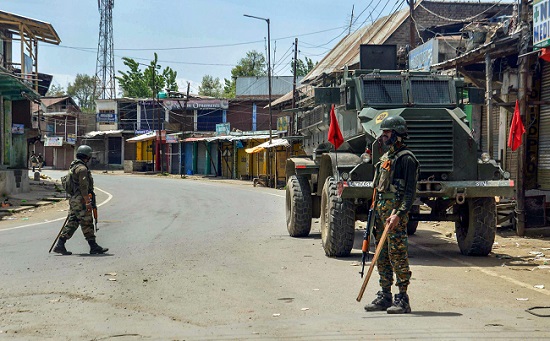
The security forces would have heaved a sigh of relief since, on their shoulders, lay the onerous responsibility of conducting an incident-free election. In Kashmir, the violence threshold was increased many months before the polls were to commence. Attempt by terrorists to up the ante was countered with an equally decisive and well coordinated response from the security forces. Relentless and sustained counter-terrorist operations registered great success and broke the back of foreign sponsored terrorism in the Kashmir Valley. It is for this reason that the desired degree of violence and intimidation by terrorists was not forthcoming during the polls. Undoubtedly, the security forces have risen to the challenge with their legendary maturity and commitment and carried out their task to perfection.

It is once again being said that low voter turnout was due to fear of the terrorists. The argument does not hold since those who voted have not suffered any adverse consequences. Kashmir is known to stand up against the forces of terror, this lack of enthusiasm for the polls builds the morale of forces that work against the interests of common man and it needs to change.

On the political front it is quite evident that in a few urban areas of the Kashmir Valley, the leaders have not been able to generate confidence amongst the people to come out and vote despite the platform of stability provided by the security forces. Once again the highly effective psychological campaign by divisive forces has been successful in offsetting the appeal of the local leadership for all out voting.

The mainstream leadership has failed to put aside all inter-party issues to address this evil agenda of inimical foreign forces. It has failed to infuse confidence among voters of areas that have traditionally witnessed a low turnout. Personal interaction, social and political discourse on the problems of the people and resolving them with all honesty, development, psychological conditioning was required to break the impasse that has been there for too long; apparently, it’s not been forthcoming.

Under the circumstances, there is a need to reassess that potential of traditional leaders of the local political parties of Kashmir Valley. If they cannot motivate their people to come out and vote then they demonstrate a lack of acceptance as leaders. This point will need to be kept in mind by the incoming government at the centre while chalking out the Kashmir strategy. There definitely exists a space for new leadership to take wings in the Valley.

For Jammu and Kashmir the Lok Sabha polls are a rehearsal for the forthcoming Assembly elections scheduled for the later part of the year. It is time for political parties and the administration to carry out yet another assessment of the situation and take corrective action to ensure a better show in the next polls.

Security will remain a critical aspect during the forthcoming assembly polls in Jammu and Kashmir. This is due to the determination of foreign forces and their “assets within the State” to scuttle the process. A twin strategy of political disruption and terrorist violence is invariably put in place for this purpose as was seen during the Lok Sabha polls. The effort is directed towards registering the presence of terrorists and intimidating people. The level is gradually increased as the dates of polling draw near. The modus operandi will be repeated in the forthcoming polls too.

Infiltration attempts have seen a perceptible increase in Kashmir valley since the last few months. The presence of terrorists in launching pads across the line of control has been registered. This is in view of the urgent need to fill up the depleted cadre well before the elections when they have an important role to play. The terror mongers have failed miserably on both counts till now, but they have not given up, hence, the need for enhanced vigilance and alertness.

A concerted drive for local recruitment of terrorists will be made, money will be invested freely to attract candidates; drugs will be provided in ample quantity. Movement of manpower and war like material from the Nepal border is likely to be resorted to. Fidayeen attacks on security forces, killing of innocent civilians followed by threats and intimidation can be expected; political leadership especially at the grassroots will be specifically targeted. Attempt will be made to malign security forces by involving them in engineered human rights violations. Many other innovative and devious means will be applied to create a situation of chaos and anarchy.

There is a need to prepare for a concerted onslaught on Indian ideals of democracy and freedom in the coming months. The existing model to counter the evil designs has paid handsome dividends. What is required now is a motivated leadership that leads from the front and with personal example, such a leadership will get the support of the administration, the security forces and people. No power can stand against such a collective will. It is hoped that the local leadership in Kashmir will introspect on its viability, potential, capability and acceptability to hold on to the mantle.
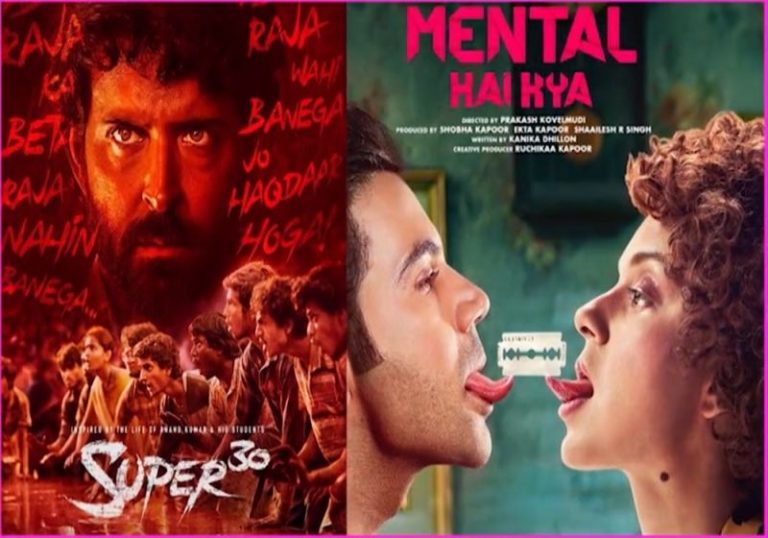
Super 30: Hrithik to ‘avoid’ any clash with Kangana

Hrithik Roshan has announced that his upcoming film Super 30 will no longer release on July 26, along with Kangana Ranaut-starrer Mental Hai Kya. Interestingly, Mental Hai Kya producer Ekta Kapoor had changed the release date of the film from June 21 to clash with Super 30 at the box office. Though she said that it was purely a “business decision”, however, fans of Hrithik and Kangana began fighting it out on social media, soon after news of the clash broke.

Kangana’s sister Rangoli Chandel claimed in a series of tweets that Hrithik was trying to bring the actress and Mental Hai Kya down with underhand PR tactics. Now, Hrithik has decided to take a step back and avoid the clash altogether. In a statement issued by him, he said that he has taken this step “in order to save (himself) from the personal trauma and toxic mental violence this would cause”.

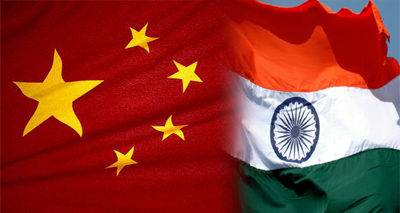
India and China sign protocol for export of Indian Chilli Meal

Commerce Secretary, Anup Wadhawan and Vice Minister, General Administration of Customs of China (GACC), Li Guo, held a meeting in New Delhi to discuss trade related issues of pending Indian request for clearance of agricultural products.

Both sides appreciated each other’s concerns and agreed to resolve market access issues expeditiously in order to achieve the vision of the leaders of both India and China by promoting a more balanced trade.

At the end of the meeting a protocol was signed for export of chilli meal from India to China.

China caves in to India’s diplomatic pressure

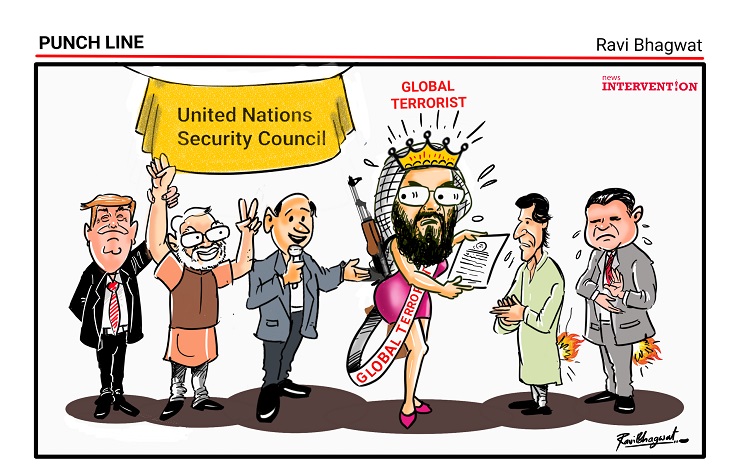
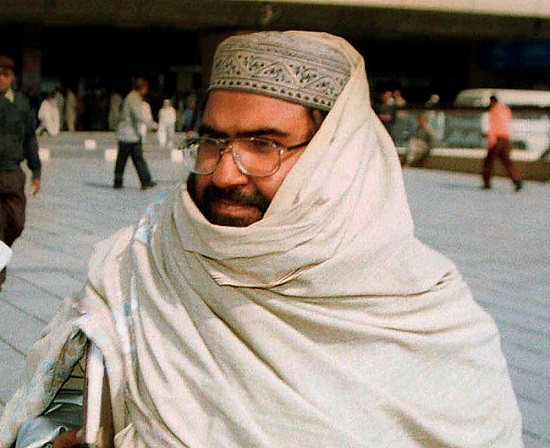
Jaish-e-Mohammad Chief Masood Azhar has been designated as a Global Terrorist by the United Nations Security Council (UNSC).

Proscription of Masood Azhar: Significance and the Aftermath

So, the world has finally realised that Masood Azhar is a terrorist! One wonders about the reason behind this enlightened thought especially so far as China is concerned. China has relented, not because of a change of heart, but because the international pressure and isolation was becoming unbearable. Its opposition to proscribing Azhar was perplexing the international community given that Jaish-e-Mohammad (JeM), the organisation that Masood Azar heads, has already been declared a terrorist organisation by the UNSC (United Nations Security Council) and China was party to the decision. As such, its obduracy in “protecting” Azhar was beyond any logic.

Pakistan, always in the lookout to secure brownie points, has attempted to reverse the very obvious diplomatic setback caused by the proscribing of Masood Azar. It is, quite comically, highlighting the omission in the UN statement about the JeM chief’s personal involvement in the spread of terror in Kashmir as also the role played by him in the terror attack at Pulwama. Apparently, Pakistan prevailed upon its all-weather friend China to do at least this much for it in the circumstance where the embarrassment became inevitable. 

The fact however remains that Masood Azhar is a prized asset for Pakistan. Apart from meticulously planning several terrorist attacks against India, he has succeeded in creating an army of Jihadis who are ready to lay down their lives at his command. Most of them are directed against India, particularly Kashmir. His importance lies in the fact that the then government of Pakistan along with its army and notorious Inter-Services Intelligence (ISI) had made several attempts to get him released from a jail after he was arrested in Kashmir in 1994. Five years later, the Indian government was forced to release him along with two others–Mushtaq Ahmed Zargar and Omar Sheikh, in exchange for the safe release of passengers of the Indian Airlines Flight IC-814, which was hijacked and taken to Kandahar in Afghanistan. Pakistan should have arrested the hijackers the moment they landed in the country, instead, it gave them and their leaders Masood Azhar a hero’s welcome.

Now that Azhar is declared a global terrorist, the government of Pakistan will be forced to arrest him and seize his assets. How the same will be done is a big question since Azhar has, in the past, threatened the Pakistan government of violence if it undertakes any such act. Secondly, he enjoys the support of the Pakistani Army. Therefore, the Pakistani establishment is cagey while taking any action against him.

Also, this declaration may well turn out to be a case of “too less, too late.” Masood Azar has been unwell for long now and remains under treatment in army facilities. He does not exercise effective control on his organisation which is said to be “looked after” by his relatives, from among whom, there are casualties reported during the Indian air strike on JeM camps in Balakot.

His proscription will not have anything more than salutary effect on the activities of JeM. The organisation will definitely do something big to prove that it continues to be strong despite the setback. It would, therefore, be necessary for the security forces in Kashmir and intelligence agencies across India to remain extra vigilant for the reaction. The need for alertness is necessitated even more due to the ongoing elections in India, which are now at a very sensitive stage. Another significant aspect is the advent of the holy month of Ramazan when a special brand of propaganda, supported by violence, is unleashed by terrorists in Kashmir.

On the diplomatic front India should move fast to leverage the proscription and get the international community to prevail upon Pakistan for some concrete action in eliminating the fundamentalist Islamist organisations operating in the country. In fact, the time has come to also expose the fault lines in this regard that exist in China.

China is a country that does not think twice before decimating any form of dissent against the state and in particular when there’s a religious overtone. The manner in which a crackdown has been carried out against the Uighur population in Xinjiang Province bears evidence to this reality. The Uighurs, an ethnically Turkic group of Muslims of the formerly independent Republic of East Turkistan, which is presently under China’s control and is called the Xinjiang Uighur Autonomous Region (XUAR) are unhappy under Chinese rule. Their freedom movement gained momentum since the early 1990’s. The Chinese authorities reacted with large scale arrests and summary executions. In 1998, the National People’s Congress passed a new criminal law that redefined “counter-revolutionary” crimes to be “crimes against the state”, liable with severe prison terms and even execution. Many restrictions on their religion, which include forbidding parents and guardians to allow minors to engage in religious activity that were not found elsewhere in China were imposed in XUAR. Due to this restrictive crackdown, the decade from 1998 to 2008 witnessed zero Uighur related violence, but eruptions have become common since 2009.

When China can be strict to the point of being brutal in quelling even a whiff of religion-based insurgency on its soil, surely, as a responsible world power, it needs to show sensitivity towards the problems being faced by other nations and regions across the world. With the ban in place, India should further this issue by emphasising that the delay in the process was rather unwarranted.

The proscription of Masood Azhar, though significant and definitely a feather in the cap of our foreign policy, should not create too much euphoria. The pressure has to be maintained on the terrorists operating in Kashmir and diplomatic efforts have to be further energised. The calls for opening a dialogue with Pakistan will gain momentum once the new government takes office in India. The situation will need to be studied deeply before taking any decision. One factor would be the existence of a noticeable change in the attitude and policy of the government of Pakistan post the proscription of Masood Azhar.

Big B and Emraan Hashmi to share screen for a thriller

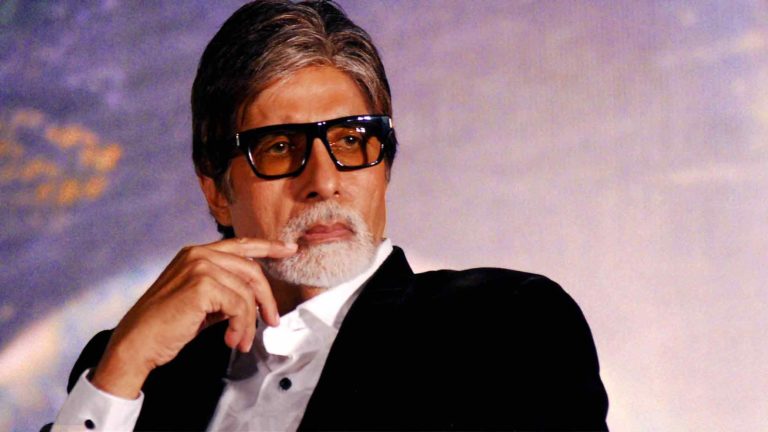
For the first time, Superstar Amitabh Bachchan and actor Emraan Hashmi will work together in a film.  Bachchan and  Hashmi’s untitled mystery thriller will go on floors on May 10. The film, produced by Anand Pandit Motion Pictures and Saraswati Entertainment Private Limited, will be helmed by Rumi Jaffrey. 

“We are extremely excited to commence the shoot of the film from May 10. Looking forward to seeing Mr Bachchan and Emraan onscreen for the first time. Given the subject of the film, I do believe we have a winner in our hands,” Pandit said in a statement. 

The film is scheduled to release on February 21, 2020.

Engaging Indian Diaspora in Africa to strengthen India-Africa trade ties

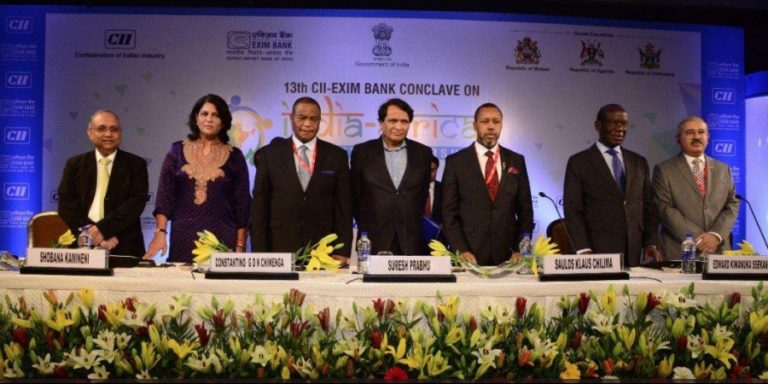
The Commerce Ministry and Indian High Commissions and Embassies of eleven African countries arranged an interaction over Digital Video Conference (DVC) over two days, on 3rd and 6th May 2019, with the Indian business community in Africa. The interactions with Indian Diaspora were held in Tanzania, Uganda, Kenya, Zambia, and Mauritius, Nigeria, Mozambique, Ghana, South Africa, Botswana, and Madagascar. This initiative was held in order to build an effective engagement with the Indian Diaspora in Africa in order to further deepen and strengthen India-Africa trade ties.

The DVC was attended by over 400 members of Indian business community in 11 African countries.

This initiative of the Commerce Ministry emphasizes the need for a multipronged strategy for further enhancing trade and investment ties between the two regions. Commerce Ministry recognizes that for formulating an effective export strategy it is imperative to engage the Indian business community in Africa for mutual gain for both sides as trade relations between the people of same origin instill greater confidence amongst trade partners.

The major issues highlighted by the Indian Business Community in these 11 countries are:

  • Improving the Line of Credit system and developing a facility for an affordable and competitive funding.
  • Setting up of Indian Banks/financial institutions in Africa
  • Enhanced Buyers’ Credit facility for promotion of trade between the two regions
  • Reviewing and liberalizing visa policies from both sides 
  • Need for direct flights between the India and African countries
  • Exploring the possibility of rupee trade to address the issue of shortage of dollars in region.
  • Creation of common database of buyer-suppliers in the two regions for facilitating matchmaking for enhancement of bilateral trade.
  • Development of a robust trade dispute settlement mechanism 
  • More frequent and structured country/sector specific trade exhibitions in Africa
  • Establishment of country chapters of FICCI or CII in Africa
  • Frequent visits of policy makers, chamber of commerce and investors for familiarization with local business and investment regime for informed decisions

India-Africa Trade

India’s total trade with the African region during 2017-18 was USD 62.69 billion (8.15% of India’s total trade with the World). India’s share of exports to African countries as a percentage of India’s total exports to the world was of the order of 8.21% in 2017-18.  Africa region’s share in India’s total imports from the World accounted for 8.12% in 2017-18.

African countries present immense opportunities for India with the world’s largest land mass, 54 countries, a population growing to be almost equivalent to that of India, huge mineral resources, oil wealth, a youthful population, falling poverty levels and increasing consumption patterns.

Thus, Africa has a huge demand for new business models for market entry, stable market access, entrepreneurship and investments in transport, telecom, tourism, financial services, real estate and construction. 

Yes I am a Nationalist and Proud to say so

General Elections in India are coming to the end of their long cycle. These elections have possibly seen one of the most accusative and repartee filled speeches from each politician of every party that I have heard in the past few decades.

Yet one word “Nationalism” or “Nationalist” seems to be a part of these elections as never before. All anti-BJP parties, journalists and political commentators are throwing this word as an accusation at the BJP and to all its followers as if being nationalist is a crime and something that should be scorned, derided and chastised at all costs.

Nationalism is a modern movement. Throughout history people have been attached to their native soil, to the traditions of their parents, and to established territorial authorities. It was not until the end of the 18th century that nationalism began to be a generally recognized sentiment moulding public and private. Nationalism is often mistakenly regarded as a factor in political behaviour.

A Nationalistic person is one who strongly identifies with their own nation and vigorously supports the nation’s, and therefore their own, interests.

Nationalist movements around the world have helped in creating an identity and uphold national interest. The first wave of nationalist movements happened in the middle of the nineteenth century leading to revolutions in Europe, which led to the unification of Germany and Italy. Towards the end of the nineteenth century a second wave swept Eastern and Northern Europe, as well as Japan, India, Armenia, and Egypt. India’s independence movement was also a nationalist movement like the anti-colonial movements in most parts of the World.

Nationalism and nationalist movements have been on the rise all over the world.

From the election of Donald Trump who unabashedly says that he is a nationalist to President Duterte in Philippines. From President Erdogan in Turkey to President Jokowi in Indonesia. From Prime Minister Shinzo Abe in Japan to Prime Minister Benjamin Netanyahu in Israel. More nationalist leaders will be elected in more countries around the world. Chinese and Russian leaders use a form of nationalism to rally their people in their communist countries.

The important factor to study and understand is why these nationalistic movements are happening around the world through democratically elected processes. These movements are not fascist or dictatorial movements that have happened because of the power of a gun.

Is this change happening because all other forms of governance have not delivered what they promised to the common people who have largely remained where they were in most countries around the world? Identification with the land of their birth is one certainty no politician can take away from the common man and therefore, there is every reason for citizens to have a nationalistic mindset.

The Economist magazine in its issue dated 4th May 2019 has an article titled “Nationalist fervour is likely to secure a second term for Narendra Modi.” The author of the article has no interest in the performance of the Modi Government, or all the social development schemes launched by him. They have no reason to applaud Ayushman Bharat, the largest health scheme in the world that will cover 500 million people. They have no interest in the strides India has made in the world or India’s successes in international diplomacy.

Like The Economist several other “liberal journalists” and “political commentators” have been trying to convince themselves that nationalism and nothing else will result in a BJP victory. Their convenient interpretation of nationalism is protectionism, isolationism, xenophobia and an anti-elite discourse. To these journalists all that matters is what is in it for them and their pampered tribe. An unprecedented outreach programme to the masses in India does not matter to these journalists and political commentators since such programmes do not directly benefit them.

The age-old negative definitions and connotations of nationalism must change. The positives of being a nationalist need to be accepted and the role of nationalism in making a country stronger must be recognised.

Nationalism has everything to do with the nation and must not have anything to do with any religion or economic grouping in the nation. It has nothing to do with who is in a majority or who is in a minority. It surprises me that nationalism in India is being linked to one religion by such journalists and political commentators.

These journalists and political commentators conclude very simply that nationalist fervour being “whipped up” during these elections will help Narendra Modi win a second term. Since this nationalistic movement will help Mr Modi and the BJP to come back to power with a resounding victory, it must be categorised as bad and unacceptable. Is their agenda being driven because of the needs of some political parties or are they genuinely functioning as responsible members of the powerful fourth estate?

The silent majority of Indians are consolidating their thoughts (and possibly their votes) against those that are trying to destabilise the country. This thinking could be against terrorists from across the border who have hurt India time and time again and for the first time Indians see a strong leader who will hit back hard. It could be against those who speak about breaking up India using the “tukde – tukde” (small pieces) slogan. Or it could be against those who are willing to pardon sedition and are further stating that they will remove the law against sedition.

What is clear is that the citizens of India are saying they have had enough of the double speak they have been hearing from politicians for the past seven decades. They have heard enough comments like “we strongly condemn such a dastardly act” or “we respect the resilience of the citizens.”

My question to all these journalists and political commentators is what is wrong in being a nationalist?

I am a nationalist and am proud to say so.

Is India on the brink of an economic crisis?

Air, petro, telephony and job crises are putting the country at risk. The US nonchalance is adding to India’s economic concern. The US, at the back of withdrawal of zero-duty entry for Indian exports, imposed the sanctions prohibiting purchase of oil from Iran. It is a move said to exert maximum pressure on Iran for following US dictat on nuclear issues. The Donald Trump administration pulled out of the landmark 2015 nuclear deal.

The move hurts India the most as Iran is the fourth-largest oil supplier after Iraq and Saudi Arabia. Iran supplied 23.5 million tonnes of crude oil in 2018-19 at a price and credit facilities no other suppliers offer. India imports 80 percent of its oil and 40 percent of gas. Domestic production has been declining for the last few years. The US move will further increase the oil prices. It will lead to severe inflationary situation in India. The US move is designed to benefit itself and its stakes in its allies. Indian diplomacy of hugging dignitaries has not helped itself.

Another detrimental impact on the economy is due to Jet Airways grounding and the deepening crisis of Air India. Air fares are shooting up at a time when Indian railways, despite efforts, is not performing at its best. The cost of travel and goods transportation is shooting up. Even international travel is bleeding airlines due to Pakistan ban on its airspace. It also reduces India’s capacity.

The Jet is a classic case. It shows that seemingly thriving organisations may be in the throes of a crisis. The BSNL, the official, telecommunication backbone is losing on its clientele because of poor services and heavy losses. The management says they do not have the cash flow to pay salaries to its 1.68 lakh employees. A sick BSNL, with about Rs 90,000 crore losses, according to Kotak Equities, may end the affordable communication and digital boom that the country has seen for the past few years.

Another classic case is of the international oil giant public sector ONGC. It was developed since 1950s as key to energy security. The Congress regimes since 1990s chipped away at the company in favour of private businesses looking to dig into profitable oil and gas sector. In 1992-93, 28 prime oil and gas fields discovered and developed by ONGC, despite protests from think tanks like planning commission, were given away to private businesses for a pittance. The government in 1991 forced ONGC to take a loan of $ 450 million from the World Bank. The WB told ONGC and Oil India to go into joint ventures with private and foreign capital, an unnecessary condition. That was the beginning. In between a private company virtually drilled out gas from ONGC field. The litigation has not helped ONGC. It was also forced to shell out Rs 8,000 crore to help loss making Gujarat State Petroleum Corporation to exit the Krishna Goadavari basin in 2016. The GSPC could not find gas in its fields. The losses were dumped on ONGC. The cash levels in ONGC came to a critical low in 2018 fiscal. It reduced by 90 percent in a year. It is now under a huge debt.

So, if India is losing jobs, its public sector is collapsing and private sector is “thriving”, there is much that does not meet the eye. The telecom, oil, aircraft manufacturing and many other works done by the public sector profitably is under threat. Even there have been questions on closure of HMT some years back instead of strengthening its operations. Its exit has helped watch manufacturing and other tool and instrumentation companies, once rivals of HMT.

There is nothing wrong in private sector rising. Should it be at the cost of manipulating losses of the public sector? The private gain is not an eyesore but the process takes the wealth from the people of the country to some chosen hands may be in a particular region.

A pertinent question arises. Are really the public sector at folly or the private sector is being made to thrive at its cost, particularly since 1992? It raises many questions for many international deals. So if the rupee is in crisis or repatriation of profits to foreign shores is increasing, it calls for a holistic look at policies. It is a national crisis, needs careful, immediate treatment and a detailed probe.

Public transport should be the most popular mode of travel: Venkaiah Naidu

The Vice President M Venkaiah Naidu has called for adopting a public transport-centric approach to decongest traffic-choked cities and combat growing vehicular pollution. He observed that our cities have been witnessing an undesirable shift from the use of public transport to private vehicles.

‘The average two-wheeler and car ownership levels in metropolitan cities which were 112 and 14 per 1000 population in 1994 are expected to grow to 393 and 48 respectively by 2021. This would mean 53 million two-wheelers and six million cars in the next 15 years in metropolitan cities,’ he added.

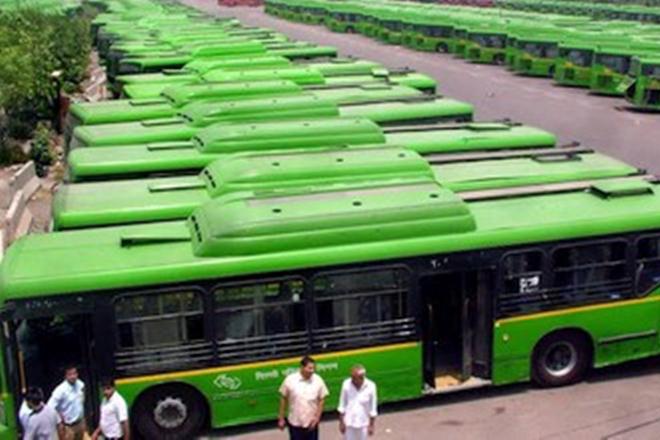
Speaking at the 25th Foundation Day event of Delhi Metro Rail Corporation (DMRC) in New Delhi recently, he said urban transportation solutions like the metro rails have the capacity to act as driving forces to take India’s quest for sustainable urban spaces to fruition.

Pointing out that urban transport was leading to growing air and noise pollution, he said that it was estimated to account for about 25 percent of the greenhouses gases worldwide and spending more time in the polluted atmosphere was adversely affecting the health of the people, the Vice President said and added that the need for clean urban mobility cannot be over emphasized.

Referring to the deleterious effects of global warming and climate change, he said “we need to swiftly move from fossil fuel based automobiles to electricity or battery based vehicular system”.

He said that a relevant infrastructure, especially in regard to charging of batteries had to be developed on an urgent basis to meet the emerging demand for electric vehicles.

Stressing the need to put in place an adequately developed reliable, affordable and accessible urban public transport system, Naidu called for steps on a war footing to make public transport the most popular mode of travel for all commuters.

The Vice President asked planners to provide hassle-free travel facilities and said that ensuring the last mile connectivity to commuters, especially for those travelling by metro and local rail networks.

He urged cities to increasingly focus on introducing multi-modal transit systems. “Public transport should take precedence over personalized motor transport and every stakeholder should work in that direction”, he added.

The Vice President also wanted city planners to make urban spaces safe for women, children and the elderly and make them completely barrier-free and accessible to the differently abled.