Home Blog Page 55

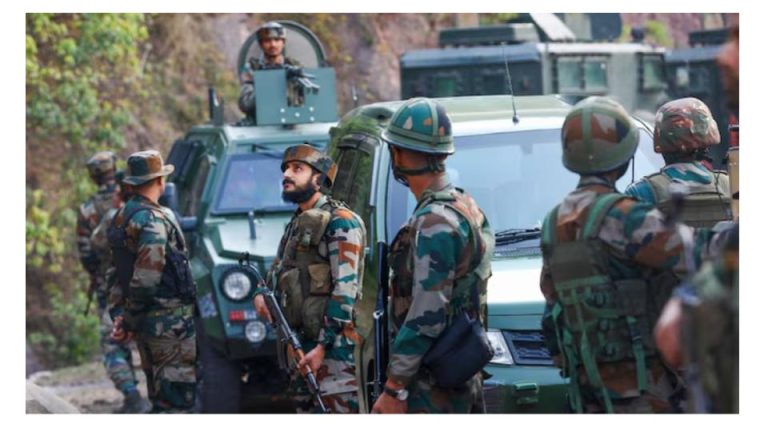
Pak backed terrorists attack Sunjwan Army camp near Jammu

A soldier sustained injuries after Pak-backed terrorists launched an attack on the Sunjwan army camp near Jammu Darbar in Jammu and Kashmir on Monday.

The attack occurred around 10:50 a.m. near the sentry post of the camp, which is under the jurisdiction of the 36 Infantry Brigade, according to the Army. The assailants targeted the sentry post, leading to the injury of one soldier.

In response, the Army has initiated a search operation in the area to locate the terrorists. The situation is still developing, and further details are awaited, as confirmed by an Army statement.

Last week, security forces successfully thwarted an infiltration attempt along the Line of Control (LoC) in the Gurez sector of Jammu and Kashmir’s Bandipora district on August 31. The operation involved a gunfight between the infiltrating terrorists and the Indian Army following the detection of terrorist movement near the LoC fence.

In a series of recent encounters, at least three terrorists were neutralized in Jammu and Kashmir’s Kupwara district. The Indian Army’s Chinar Corps reported that two terrorists were killed in an encounter in Kupwara’s Machil sector, while another was gunned down in the Tangdhar sector.

Heightened security ahead of elections

The tension between security forces and terrorists has intensified as the Union Territory prepares for Assembly elections, scheduled to begin on September 18. The elections will occur in three phases—September 18, September 25, and October 1—with results slated for announcement on October 4.

In the past three months, security forces have ramped up anti-terror operations in Jammu and Kashmir, and approximately 300 companies of paramilitary forces have been deployed in the region for election duties.

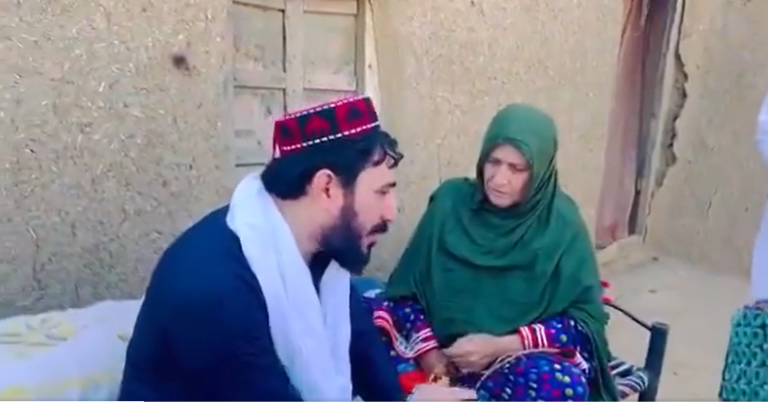
PTM leader Manzoor Pashteen mourns the murder of activist Umar Sherani

The brazen murder of Umar Sherani Murkai, a member of the National Democratic Movement’s (NDM) provincial organizing committee, has once again exposed the Pakistan Army’s relentless campaign of terror against those who dare to speak up for Pashtun rights. Manzoor Ahmed Pashteen, leader of the Pashtun Tahafuz Movement (PTM), visited Sherani’s home to express his grief and solidarity with the family. Sherani, a political activist known for his outspoken advocacy for Pashtun rights, was gunned down in cold blood just days ago in Dera Ismail Khan.

The PTM’s struggle against the heavy-handed and often brutal tactics of the Paki establishment has only intensified as the movement plans a significant national gathering on October 11. The PTM has been a vocal critic of the militarization of Waziristan through Operation Azm-e-Istehkam, and its condemnation of the occupied-govt’s inhumane policies has made it a prime target for Pak Army-sponsored violence.

The Pakistan Army’s systematic campaign of intimidation, abductions, and extrajudicial killings of activists is a clear violation of human rights and international law. This brutal crackdown not only reflects the Army’s long-standing disregard for the rule of law but also highlights its failure to respect the fundamental rights of the Pashtun people. Since the Army’s forceful occupation of the region in 1947, it has consistently trampled on the rights of the local population, using any means necessary to maintain its grip on power.

Paki establishment neglects PoGB, villagers die due to lack of medical infrastructure

The Pakistan-occupied Gilgit Baltistan (PoGB) region continues to suffer under the neglect of the occupied-authorities, with countless lives lost in remote villages due to the complete absence of medical infrastructure and inaccessible roads.

The local village head, highlighted the devastating impact of the lack of medical facilities on their community. “Our community has been living here for more than 100 years. We have lost countless lives because we have no medical facilities. We are forced to use wooden stretchers to transport the sick and injured, often carrying pregnant women for miles. More often than not, either the mother or the child, or both, do not survive the journey,” he said.

The situation is so dire that the only medical personnel who occasionally visit the village come once every two to three months. The villagers, already struggling to survive, must scrape together donations amounting to approximately PKR 20,000 to cover the medical expenses.

But the lack of healthcare is only part of the problem. Another local resident emphasized that the dire state of education is just as alarming. “Zero medical infrastructure is just one part of the problem. Education is also a major concern. We barely have any educational facilities. The only school is kilometers away, with just one struggling teacher trying to educate the students in the valley,” he said.

In another damning report, a resident expressed deep frustration with the occupied-government’s total indifference to their plight. “The government is doing nothing for our valley. We haven’t seen any officials, nor have we received any assistance. It has become nearly impossible for us to afford even one meal a day. They are even cutting down our forests, leaving us with no resources. When we speak out against deforestation, we are threatened with imprisonment by government officials. We fear retaliation. Look at our conditions: there is no dispensary, and the roads are in terrible shape. The lack of proper roads creates numerous problems for us,” he added.

This neglect by the occupied-govt, particularly the Pakistan Army, which has a stronghold in the region, underscores the systematic abandonment of the PoGB by the very authorities who claim to govern it. Despite being under Pakistan’s control, the region has been left to deteriorate, with no investment in infrastructure, education, or healthcare. The Pakistan Army’s focus on militarization and exploitation of the region’s resources has left the local population in a state of perpetual despair, with their basic human rights ignored and their voices silenced.

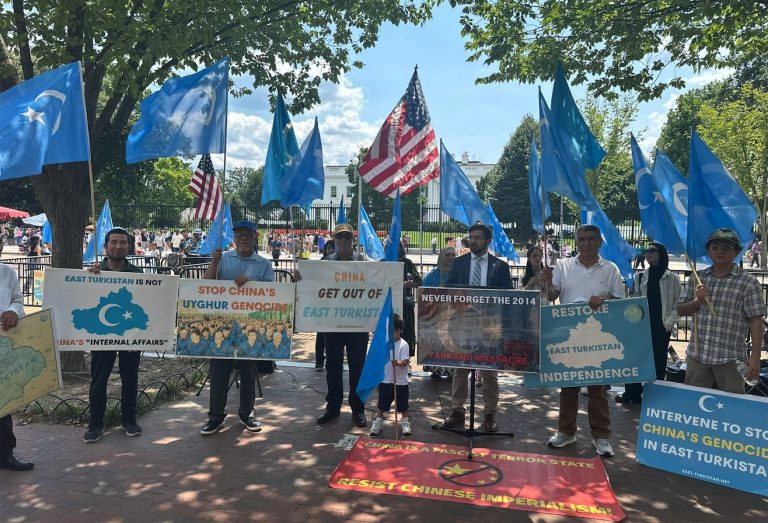
Uyghur leader urges Scandinavian nations to recognize & act against China’s genocide in East Turkistan

Shukur Samsak, the Interior Minister of the East Turkistan Government in Exile (ETGE), has issued a stark call to Scandinavian nations, urging them to recognize and take decisive action against the genocide being perpetrated by the Chinese Communist Party (CCP) in the East Turkistan region.

Samsak highlighted the severe impact of Beijing’s oppressive actions on the Uyghur and Turkic populations, which have been systematically targeted by the CCP’s brutal policies. He expressed deep frustration over the international community’s failure to adequately respond to what he described as an ongoing genocide.

In a post on X, Samsak did not mince words, saying, “The failure of Scandinavian nations to confront China’s ongoing genocide against Uyghurs and other Turkic peoples, and its occupation of East Turkistan, marks an unprecedented lapse in global ethical leadership and strategic foresight. This deliberate silence, despite overwhelming evidence and widespread international condemnation, signifies a monumental deviation from the core values of human rights and moral integrity that these nations have historically championed.”

Samsak’s words serve as a pointed criticism of the moral and ethical failure of Scandinavian countries to stand up against the CCP’s atrocities. He said that this inaction amounts to a “profound ethical betrayal,” effectively endorsing the systematic violence and oppression that millions of East Turkistan residents endure daily under Chinese rule.

Silence on China’s Atrocities

“By not formally acknowledging and condemning these grave injustices, Scandinavian countries not only undermine their legacy as vanguards of human dignity but also embolden continued impunity,” he said. This stark warning underscores the urgent need for these nations to move beyond conventional diplomacy and embrace a more assertive stance against China’s human rights violations.

Samsak urged Scandinavian nations to lead a groundbreaking international coalition that would impose stringent sanctions against Chinese officials responsible for the genocide. He also called for robust support for the East Turkistani struggle for independence, suggesting that such actions would not only challenge the status quo but also reassert Scandinavian leadership on the global stage.

“Such decisive actions will not only challenge the status quo but will also reassert Scandinavian leadership on the global stage. By aligning their foreign policy with the highest standards of justice and human dignity, these nations have the opportunity to set a transformative precedent for global ethical responsibility,” Samsak said. His statement is a call to redefine global leadership in the defense of human rights, urging Scandinavian countries to reaffirm their commitment to universal values that transcend national interests.

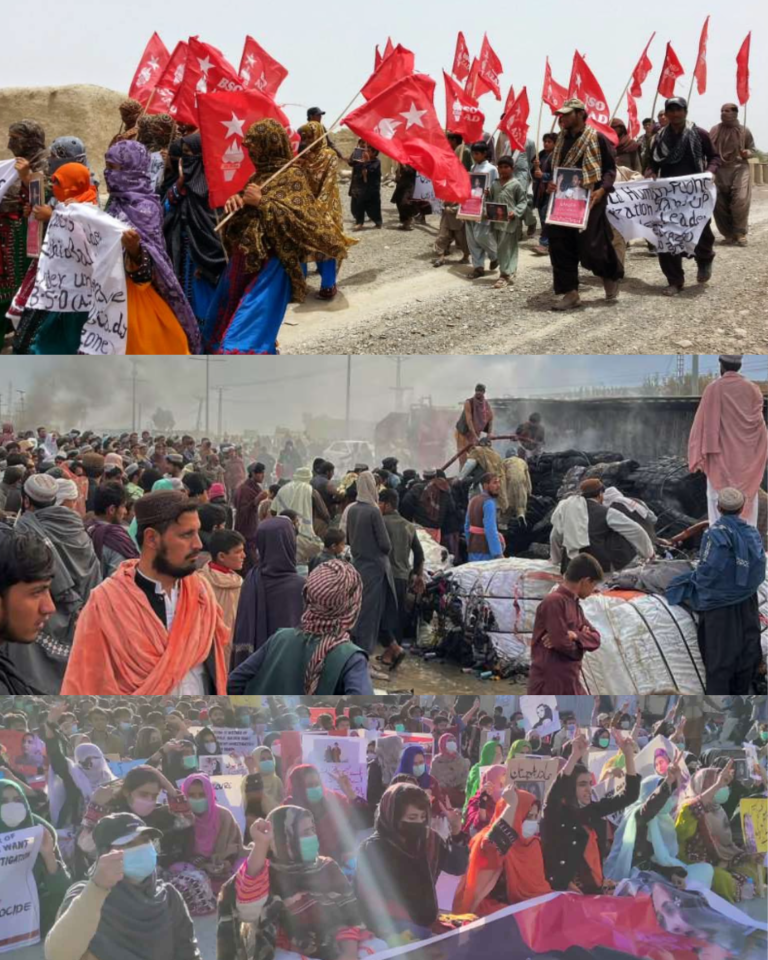
Understanding the driving forces behind Balochistan’s armed struggle

While Baloch Liberation Army [BLA] attacks against security forces, non-locals and Chinese nationals working on the China-Pakistan Economic Corridor [CPEC] projects are commonplace, Operation Herof carried out by this armed group on August 26 stands out for two reasons.

One, its scale has been unprecedented, and two, Pak Army’s phenomenally articulate media wing Inter-Services Public Relations [ISPR] has been unusually guarded while disclosing details about the multiple attacks and military casualties.

Operation Herof: Conflicting Reports

What one gathers from the ISPR statements is that while the Pak Army neutralised 21 BLA cadres and wounded several others, 10 security force personnel and four law enforcement agency [LEA] members lost their lives during clearance operations.

However, in a surprising departure from its well-established procedures and protocols, ISPR hasn’t disclosed the names of those army personnel who laid down their lives in the line of duty.  This glaring omission raises suspicion that there’s definitely something that the Pak Army is trying to hide.

On its part, the BLA initially posted the names along with photographs of 10 of its fighters who were killed during Operation Herof on social media. The dead include nine members of Majeed Brigade [BLA’s suicide squad] and one belonging to BLA’s Fateh squad.

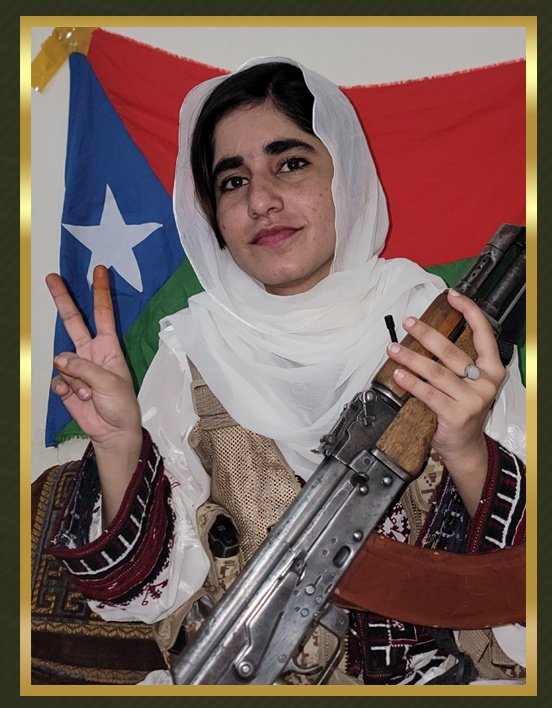
The deceased Majeed Brigade members include one 22-year-old female law student from Gwadar who detonated an explosive-laden vehicle at the Pak Army camp gate in Bela. The person who led this attack was a ‘second generation’ BLA fighter who followed the footsteps of his father and younger brother [both BLA cadres] who were killed in encounters with the Pak Army. 

The attackers included a former Pak Army who after deserting service had joined BLA, the relative of a BLA fighter who had been killed during the 2018 attack on the Chinese Consulate in Karachi and a cadre who was only 20 years old. While attacks on military targets during Operation Herof were carried out by the Majeed Brigade, the Fateh and Special Tactical Operations Squads of BLA set up roadblocks along major highways in Balochistan to prevent reinforcements.

BLA has stated that its fighters had not only completely overrun the Bela army camp but also prevented thwarted efforts of reinforcements to recapture it for 10 hours. BLA has also claimed that 130 Pak Army soldiers were killed during Operation Herof and it had lost only 10 fighters. On the other hand, ISPR has announced that while the Pak Army has sent 21 BLA fighters to “hell,” it has lost only 10 security forces and 4 LEA personnel. Furthermore, ISPR has neither confirmed nor denied that the army camp in Bela had been attacked.

While Pak Army fatalities claimed by BLA may well have been greatly exaggerated, could this armed group have also tried to play down the number of its own casualties as they are less than half of what ISPR has stated? So, isn’t it obvious that someone is definitely being economical with the truth?

ISPR’s claim of 21 BLA fatalities would undoubtedly be backed by as many body bags and the unversed would contend that with this physical evidence, there should be no reason to doubt the correctness of the Pak Army’s assertion. However, even though it may be in physical possession of the dead bodies of 21 Balochis, Pak Army watchers would still doubt ISPR’s declaration and there’s a compelling reason for this.

Extrajudicial Killings

The Pak Army has a notorious reputation for staging extrajudicial killings and passing off those murdered as terrorists just to cover up its military reverses and events that followed the 2022 abduction and subsequent killing of serving Pak Army officer Lt Col Laeeq Mirza Baig by BLA fighters in Balochistan’s Ziarat district gives an insight into the perverse mindset of the Pak Army.

In the aftermath of this abduction and killing, ISPR announced that nine terrorists involved in it had been killed and Pak Army’s swift action in bringing the perpetrators to book was widely applauded. This euphoria however came to an abrupt end when the Human Rights Council of Balochistan [HRCB] took to social media stating that “5 bodies out of 9 have been identified & all 5 persons are registered enforced disappeared persons who had remained in the custody of forces for months & years.” [Emphasis added].

HRCB supported its revelation by painstakingly comparing file photographs of persons subjected to enforced disappearances by the Pak Army with those of the alleged ‘terrorists’ supposedly involved in the kidnapping and killing of a Pak Army officer. The five murdered Baloch men were identified as the following:

·        Victim 1– Shams Satakzai, who was forcibly disappeared by the Pak Army in 2017.

·        Victim 2– Salim Karim, a student and resident of Panjgur, was abducted by the Pak Army in April 2022 when he was on his way to Quetta.

·        Victim 3– Dr Mukhtar, a physiotherapist by profession who forcibly disappeared on June 11, 2022 from Quetta.

·        Victim 4– Engineer Zaheer Bangulzai who was forcibly disappeared by security forces/ intelligence agencies from his office at Airport Road Quetta on October 7, 2021.

·        Victim 5-Shehzad Khuda Bakhsh, who was abducted by security forces on June 4, 2022.

So, could it be that in order to conceal the ignominy of having been overwhelmed by BLA, the Pak Army inflated BLA fatalities from 10 to 21? Similarly, could ISPR also have scaled down the Pak Army’s fatalities in this operation? ISPR’s failure to disclose the identity of the killed soldiers does endorse this suspicion because officially acknowledging the supreme sacrifice of only 10 soldiers while relegating others killed in action to anonymity could enrage their kith and kin creating an extremely embarrassing situation. 

In 2022, after ISPR’s announcement that the Pak Army had eliminated nine BLA cadres in the Ziarat incident, BLA issued a detailed and convincing statement that read, “Baloch Liberation Army takes utmost pride in its struggle and the martyrdom of our comrades during this struggle. BLA announces all martyrdoms of its members with great glory and honour. If any of our freedom fighters had lost their lives in this successful operation, we would have taken pride in making it public and paying rich tributes to them.” [Emphasis added].

Several reasons like lack of development, denial of rights, exploitation of the region’s natural resources and the ubiquitous ‘India hand’ are cited as causative factors that fuel separatist sentiments amongst the Baloch people. However, the Pak Army’s abhorrent practice of orchestrating widespread enforced disappearances and extrajudicial killings is one of the main factors that is not only sustaining but also propelling the armed struggle in Balochistan.

Media’s Perspective

After Operation Herof, this issue has figured prominently in the media. In its August 27 editorial, Dawn mentions that “The reasons behind this wave of disaffection that have led young middle-class men and women to protest are well-known; they pertain to human rights violations, poor socioeconomic conditions, and the denial of political rights. These factors provide a fertile recruiting ground for terrorist groups on the lookout for angry, frustrated elements to join their ranks.” [Emphasis added].

The News International editorial on the BLA attacks cautions that “… this [military] crackdown must be conducted with precision, ensuring that innocent civilians are not caught in the crossfire, as any collateral damage could exacerbate the very grievances that fuel such insurgencies,” and that “The state must ensure that counterterrorism operations do not further alienate the local population.” [Emphasis added]. Holding that “Accountability must also be a cornerstone of any strategy moving forward,” it clarifies that“This means not only bringing the perpetrators of violence to justice but also ensuring accountability for any human rights violations committed in the province.” [Emphasis added].

Writing in The Friday Times, Ejaz Haider has rightly opined that “Balochistan is not just about counterterrorism or counterterrorism operations. It requires a holistic approach that can ultimately lead to a political resolution of the problem.” By stating “Security forces don’t like getting their personnel killed. The desire for revenge runs high after such attacks he has made an explicit reference to Pak Army’s depraved and unprofessional mindset over-obsessed with vendetta. His incisive observation that For the most part the Baloch are angry and a sense of belonging cannot be bludgeoned into anyone”[Emphasis added]leaves nothing to the imagination.

To back its claim of having inflicted 21 BLA fatal casualties on BLA during Operation Herof with physical evidence, the Pak Army has most certainly murdered 11 unfortunate Baloch youth who had nothing to do with this incident. This in turn goes to prove that the Pak Army is in no mood to eschew its self-debilitating policy of enforced disappearances and extrajudicial killings in Balochistan.

However, old habits die hard. So, while rationalists continue flagging the serious perils of Rawalpindi institutionalising these brutalities as they are only further nurturing the ongoing armed struggle in Balochistan, the Pak Army remains unperturbed. And why should it bother? After all, during a media interaction in 2019, while answering a question on enforced disappearances in Balochistan, didn’t the then ISPR chief Maj Gen Asif Ghafoor, honestly reveal the Pak Army’s viewpoint by saying “We don’t want anyone to be missing, but war is ruthless. Everything is fair in love and war”! [Emphasis added].

Pashtun national jirga to address Pak Army atrocities on October 11 in Khyber

Khyber leaders have announced that a Pashtun National Jirga will convene on October 11 in Khyber district, a region that has long been battered by Punjabi Pak military operations under the guise of counterterrorism. This gathering is not just a customary assembly of elders—a traditional Jirga rooted in the Pashtoonwali code—but a critical response to the relentless suffering imposed on the Pashtun people by Pakistan military establishment.

The Pashtuns have endured unspeakable hardships during successive military operations, the most recent being Azm-e-Istehkam, which turned Pashtun territories into war zones. The Pashtun Tahafuz Movement (PTM) has consistently demanded the removal of landmines from these areas, a grim legacy of the military’s heavy-handed tactics. PTM leaders have condemned the Punjabi Pak military, for systematically terrorizing Pashtun lands through extrajudicial killings in staged encounters and the enforced disappearances of countless individuals.

The military’s brutal repression, marked by abductions and the unlawful imprisonment of Pashtun activists at undisclosed locations, has created a climate of fear. Many PTM activists have been murdered, their deaths still awaiting justice, as the military continues its oppressive campaign with impunity.

This Jirga aims to confront these atrocities head-on, as the Pashtun people unite to demand an end to the military’s reign of terror and the restoration of peace and dignity in their homeland.

Forceful abduction, rape & conversion of a minor Christian girl to Islam in Pakistan

In a harrowing incident that underscores the systemic failure of Pakistan’s legal and societal frameworks, a 12-year-old Christian girl was abducted, forcibly converted to Islam, and married to a Muslim man, as authorities displayed a disturbing delay in rescuing her. The case has spotlighted a troubling pattern of religious persecution and violence against minority girls in the country.

On August 9, Muhammad Asad abducted Fairy Shaukat, the youngest daughter of a widow and mother of eight children, from the Habibabad Mandi area in Pattoki Tehsil, Kasur District of Punjab Province. Despite repeated pleas for help, police forces were sluggish in their response, reflecting a broader systemic indifference to the plight of minority communities.

This incident is part of a distressing trend in Pakistan, where Christian and Hindu girls are abducted, raped, forcefully converted, and married off to their abductors. Such acts are not isolated; they form part of a broader pattern of violence and exploitation aimed at religious minorities. Even minor girls are vulnerable to forced religious conversion, abduction, trafficking, early and forced marriage, domestic servitude and sexual violence

The Paki establishment is the perpetrators of these crimes. Forced conversions and marriages are sanctioned by courts through the application of vague religious laws, which offer perpetrators legal cover to retain victims against their will. This legal system effectively empowers these vile abductors and undermines the rights and protections to victim minority girls.

Forceful abduction and conversion of Hindu woman into Islam in Sindh

A 28-year-old Hindu woman from Matiari district, Sindh, has become the latest victim of a deeply heart wrenching trend affecting religious minorities in Pakistan. Identified as Meera, daughter of Adoo Kolhi, she converted to Islam and adopted the name Shahnaz after marrying 25-year-old Waqar, son of Hashim Bhambhro, from Jhuddo Sindh.

Shahnaz said that her conversion and subsequent marriage have put her life in grave danger. She said that her relatives, including her brothers Dealo, Dhero, Chito, and Vero, have issued threats against her, causing her significant fear for her safety. Shahnaz has appealed to authorities for protection.

This case is a part of disturbing pattern where Hindu women are increasingly targeted. Daily, minority girls and women are abducted, raped, and forcibly converted, often being killed or married off to their abductors. These women are frequently coerced into testifying in court against their families, falsely claiming consent to the conversion under intense pressure.

Reports indicate that many girls are abducted, subjected to abuse, and coerced into conversion and marriage. Often, these victims face intense intimidation and threats, leading them to make statements under duress, further exposing the systemic exploitation of religious minorities.

Sindh, which has the highest population of Hindus in Pakistan, witnesses the majority of these forced conversion cases. The systematic Islamization of religious minorities has resulted in a severe decline in their population within the Islamic Republic.

The Pakistan’s legal and social systems are complicit in the exploitation of minorities. The ease with which such cases are manipulated and the lack of effective protection for victims reveal a disturbing alignment between societal norms and institutional indifference.

Retaliating to OP Herof, Pak Army mutilates & dumps 9 Baloch youth bodies

In a grim and alarming development, nine mutilated bodies have been discovered in various districts of Pak-occupied-Balochistan, highlighting the intensifying violence and brutality against the Baloch people. The discovery of these bodies is a stark reminder of the ongoing genocide being perpetrated by the Paki establishment against the Baloch population, with a clear escalation in the systematic oppression and human rights violations in the region.

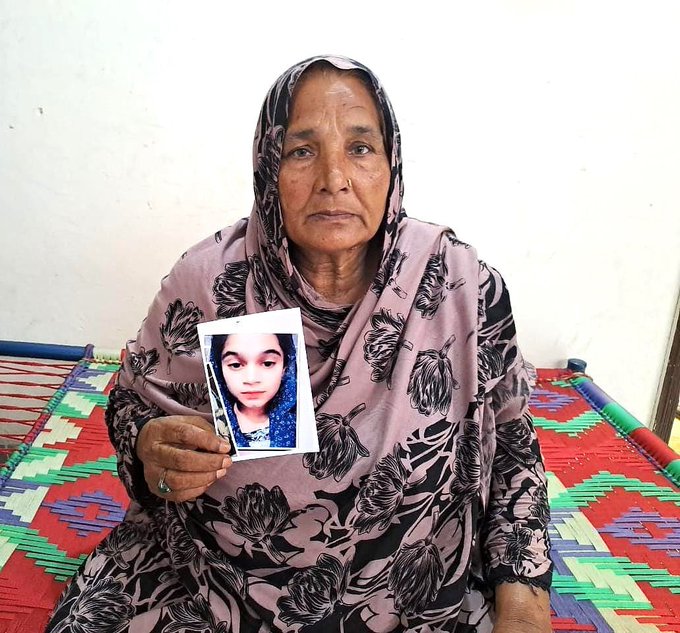
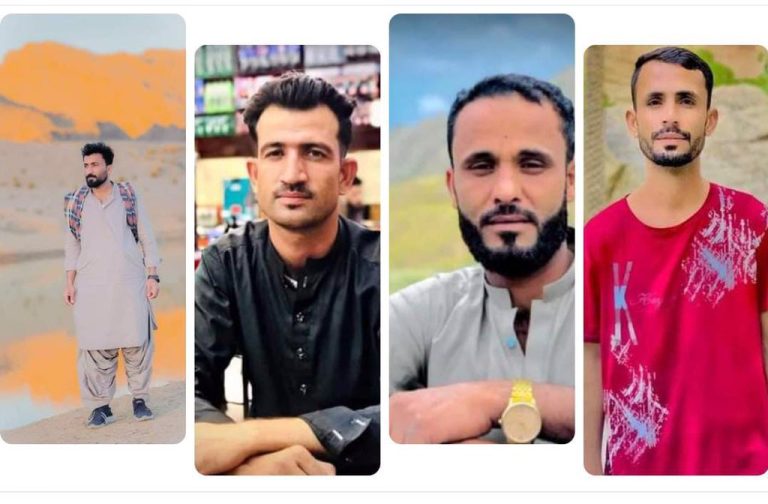
The bodies were found in two locations: five were recovered from different areas in the Khuzdar district, and four were exhumed from shallow graves near the Pyrex Saleh Sheikh Goth area in the industrial city of Hub. Among the victims, six have been identified as Fayyaz Jatak, Nisar Ahmed Zehri, Naeem Ahmed, Saeed Ahmed, Saeed Ghulamani, and Saeed Mira Ji, all of whom were forcibly disappeared by Pak Army and the Counter-Terrorism Department (CTD) over the past month. The identities of the remaining victims are yet to be confirmed.

This bloodshed is in retaliation to the August 26 attack on the Bela Army camp by the BLA, the pro-independence organization that launched Operation Herof. The attack caused significant damage to the Pakistan Army, resulting in the loss of over 130 personnel and extensive infrastructure damage.

The discovery of these mutilated bodies signals a renewed escalation of the Baloch genocide policy by the Pakistan Army. This disturbing trend reflects the occupied-state’s unyielding reliance on violence and repression to maintain control over Balochistan. The situation in the region is rapidly deteriorating into a full-blown humanitarian crisis, with innocent civilians, particularly young people, being brutally murdered and their bodies discarded without dignity or respect.

This pattern of violence has been a consistent tactic of the Paki establishment in its campaign against Baloch sarmachars. In many cases, forcibly disappeared individuals are later found dead, their bodies bearing signs of torture, only for the Army to label them as insurgents posthumously. This strategy, aimed at suppressing dissent and terrorising the Baloch population, has not only failed to quell the freedom movement but has also exacerbated the suffering of civilians, who bear the brunt of this relentless conflict.

The ongoing conflict in POB has reached a critical point, where the indiscriminate killing and enforced disappearances of civilians have become tragically routine. The discovery of these nine bodies is just the latest episode in a long history of Army-sponsored violence that has left countless families in mourning. This violence must stop immediately, and justice must be served for the countless lives lost in this conflict.

Operation Herof: Pak Army threatens families of fallen Baloch freedom fighters

The Pakistan Army has once again displayed its oppressive tactics by targeting the families of Baloch freedom fighters who have sacrificed their lives for the independence of their homeland.

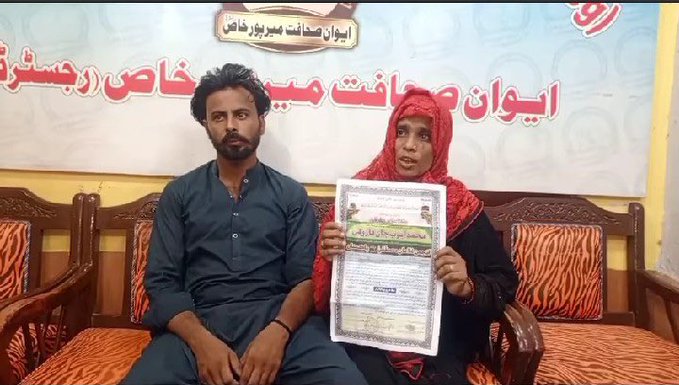
Reportedly, the Pak military and intelligence agencies are coercing the families of Baloch sarmachars involved in Operation Herof to publicly denounce the Baloch Liberation Army (BLA). These families are being pressured to create videos condemning the BLA, with threats of forced disappearances or even murder of their relatives if they refuse to comply.

This deplorable act is just the latest in a long history of atrocities committed by the Paki establishment against the Baloch community. Since the forcible annexation of Balochistan in 1948, the Pakistan Army has relentlessly oppressed the region, abducting and killing thousands of Baloch activists, students, and civilians. The Army has systematically exploited POB’s rich natural resources, leaving its people impoverished and marginalized, while suppressing any voices of dissent with brutal force.

In this latest incident, the families of those who participated in Operation Herof, a bold and significant resistance movement by the BLA, are being targeted. The operation, launched on the night of August 25 and 26, saw BLA forces block key roads and launch attacks on Pak military installations, resulting in the deaths of over 130 soldiers and intelligence officers.

Among the martyrs was Mahil Baloch, a law student from Turbat University who carried out a self-sacrificing attack on a central Pak military camp in Bela. Rather than acknowledging the deep-rooted grievances that drive such acts of resistance, the Pak Army has chosen to sink even lower by threatening the families of these brave revolutionaries.

The persecution of Baloch families is a stark reminder of the Army’s desperation to maintain its illegitimate control over Balochistan. The world must take notice of these gross human rights violations and stand in solidarity with the Baloch people, who continue to resist against the tyrannical rule of the Pakistan. The Baloch struggle for independence is a just cause, and the sacrifices made by their revolutionaries should be honored, not met with cowardly threats against their loved ones.