Home Blog Page 121

PTM urges UN action on Pashtun discrimination & human rights violations in Pakistan

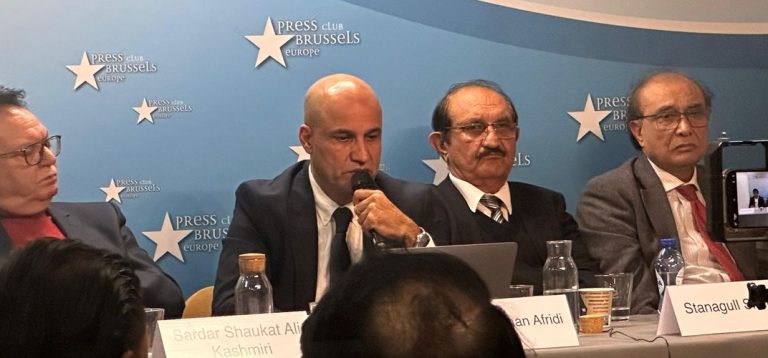
In a compelling address to the United Nations, Fazlur Rehman Afridi, the head of the legal committee of Pashtun Tahafuz Movement (PTM) Europe, highlighted how the Pashtuns face discrimination and egregious human rights violations in Pakistan. Afridi’s impassioned plea shed light on the alarming state of affairs faced by Pashtuns, who have been marginalized and subjected to grave injustices with impunity.

The speech underscored the prevailing atmosphere of impunity and disregard for the rule of law, which has relegated Pashtuns to second-class citizenship. Afridi emphasized the disturbing trend of profiling Pashtuns as terrorists, a stigma that has often served as a pretext for excessive use of force by Pakistani authorities.

Pashtuns face discrimination, abductions and enforced disappearances

Among the harrowing incidents cited by Afridi were cases of abduction and enforced disappearance of school-going children as young as 11 years old in Khyber Agency, Pakhtunkhwa. He condemned the abduction of 12 children without due process of law, highlighting the trauma inflicted upon innocent youth at the hands of security forces.

Furthermore, Afridi highlighted the plight of prominent PTM activists, Eidul Rehman, Zakim Wazir, and Gilaman Wazir, who were forcibly disappeared on May 31 2023 and subjected to extreme torture while in custody. The speaker also brought attention to the tragic loss of Pashtun lives due to indiscriminate actions by the Pakistani military, including the killing of four children and one woman in mortar shelling in Shiktoi, South Waziristan on September 6, 2023.

Instances of violence against Pashtun women, including the injury of eight women in South Waziristan due to indiscriminate firing by the Pakistani army, further underscored the urgent need for international intervention. Afridi mentioned the brutal firing over the peacefull protesting former MNA Mohsin Dawar on February 10, 2024. He said, “Former MNA Mohsin Dawar along with 14 of his party members injured and 4 others killed when Pak military fired straight bullet on them. Dawar was protesting peacefully against election rigging in his constituency.”

At last, Afridi culminated his speech with a plea for UN intervention to address the pressing issues facing the Pashtun ethnic minority in Pakistan. Afridi urged the UN to take decisive action to hold the Pakistani government accountable for its violations of human rights and ensure justice for the marginalized Pashtun community.

Grieving families of slain Baloch freedom fighters denied bodies; families stage protest

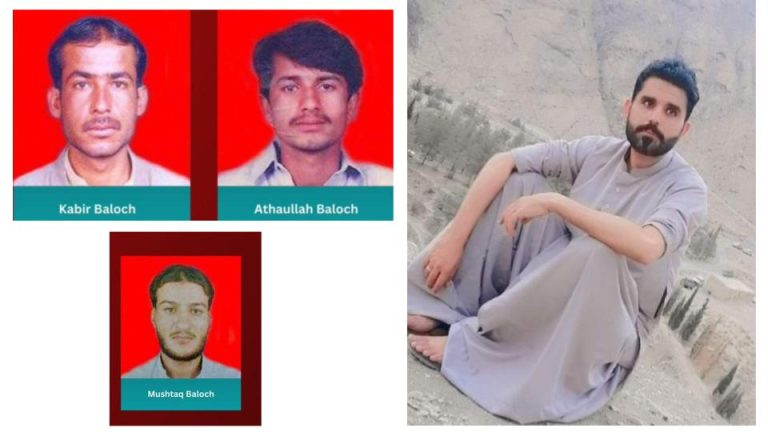
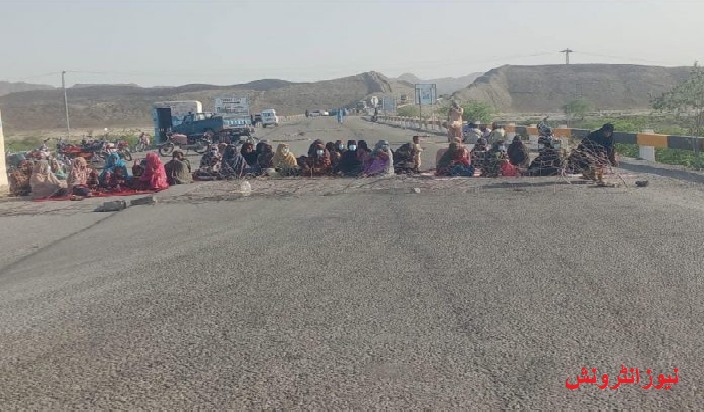
The bodies of Baloch freedom fighters have been kept at a hospital in Turbat for the past three days, sparking frustration among their families who have been waiting to claim them. On Wednesday, relatives of the deceased, accompanied by members of the Sol Society and political activists, gathered at the Teaching Hospital Turbat, anticipating the release of the bodies. However, their hopes were dashed as hospital authorities failed to hand them over.

Reportedly, the puppet authorities sought signatures, including video recordings, from the families on a form. This move was met with strong opposition, leading to a sit-in protest on the M8 Shahrah-e-Pakistan, disrupting traffic. Among the demonstrators were a significant number of Sol Society members and activists, standing in solidarity with the grieving families.

A hospital attendee revealed that the authorities insisted on obtaining signatures from the relatives, but their demands were rejected. This development follows a similar incident in January, where the Quetta administration conditionally handed over the bodies of Baloch fighters involved in the Machh attack, a move also rejected by political and social circles.

Baloch freedom fighters

The form presented to the families holds no legal weight as Pak ‘establishment’ is using such signatures for propagandistic purposes on social media and websites.

The situation escalated from the evening of March 25 when the Baloch Liberation Army’s Majeed Brigade launched a daring assault on Pakistan Navy’s second-largest naval base, PNS Siddique. The ensuing clash lasted for several hours, punctuated by intense gunfire and explosions until the break of dawn.

Spokesperson for the BLA, Jeeyand Baloch, confirmed that during the operation, four fighters of the Majeed Brigade, including operation commander Ayub alias Duda, Khalif alias Islam, Wajdad alias Nodan, and Murad Hasil alias Farhad, bravely fought until their last breaths, attaining martyrdom.

Baloch youths Shoaib & Zaman; victims of Pak Army’s brutal ‘Kill & Dump’ policy

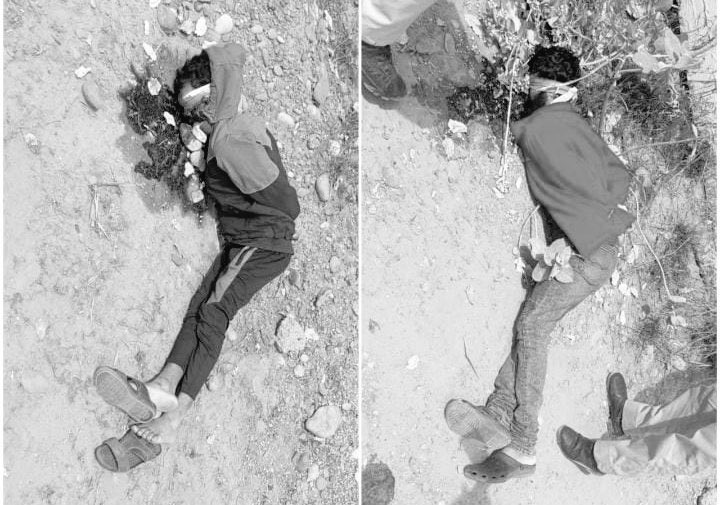
In a heart-breaking event, lifeless bodies of two young Baloch men, Shoaib and Zaman Baloch, were discovered. They residents of Lyari, Singolen, Karachi. The pair, hailing from humble backgrounds, were forcibly disappeared from their homes on August 17, 2023. Shoaib, a promising boxer and kite seller, leaves behind a grieving mother who worked as a tailor.

Their bodies, bearing signs of brutality, were found dumped, yet another tragic consequence of the relentless policy of enforced disappearances and extrajudicial killings plaguing the Baloch community under the oppressive Pak Army. The Baloch Yakjehti Committee condemned the ongoing violence against Baloch communities.

For Baloch families, the pain of waiting for their loved ones’ return only to receive their mutilated bodies is a traumatic reality. The systematic targeting and elimination of Baloch youths underscore the urgent need to address the humanitarian crisis unfolding in the region.

The deaths of Shoaib and Zaman serve as a stark reminder of the impunity with which Pak Army operate. Since the forceful and brutal occupation by the Pakistan Army in 1948, Balochistan has endured a painful environment. The innocent Baloch population has suffered countless atrocities. In addition to daily home raids, abductions, and a lack of essential infrastructure, Baloch youth are mercilessly shot, killed and their bodies are dumped.

Pakistani judges expose ISI of judicial interference

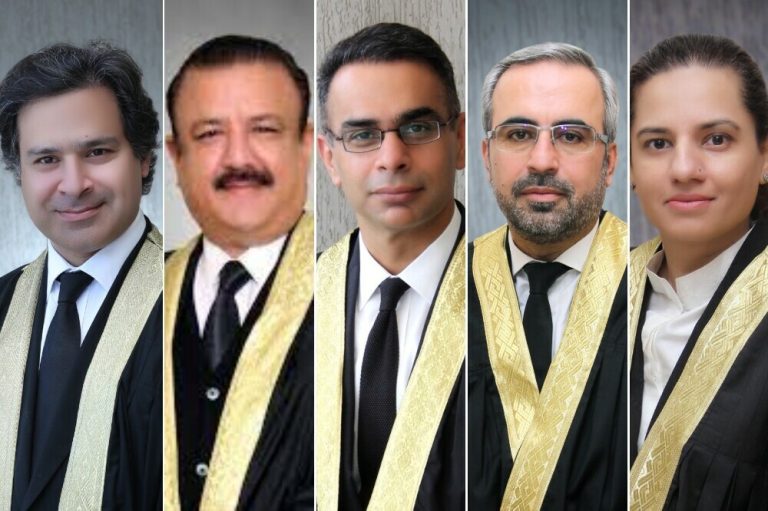
In a significant development, six senior judges of the Islamabad High Court (IHC) in Pakistan have made startling accusations against the country’s powerful Inter-Services Intelligence (ISI) agency. According to a letter dated March 25, which was made public on Tuesday, the judges have alleged interference in judicial matters by the ISI, including intimidation tactics such as secret surveillance, abduction, and torture of their family members.

The judges have called upon the Supreme Judicial Council (SJC), Pakistan’s judicial watchdog, to investigate these serious allegations. They emphasize the need to determine whether there exists a systematic policy implemented by intelligence operatives to coerce judges into engineering judicial outcomes in politically significant cases.

The letter, which has sparked widespread concern, particularly relates to cases involving the main opposition leader and former Prime Minister Imran Khan. Khan’s party, Pakistan Tehreek-e-Insaf (PTI), has accused the military of orchestrating a crackdown on the party ahead of last month’s general elections. The alleged interference in the election process has raised questions about the military’s role in Pakistani politics.

Notably, the allegations come on the heels of a recent Supreme Court ruling declaring the removal of former IHC judge Shaukat Aziz Siddiqui in 2018 as illegal. Siddiqui had previously accused the ISI chief and other military officials of manipulating judicial decisions, sparking a contentious legal battle.

After the shocking revelation, the interference of Pakistan Army and ISI in Pakistan’s politics and judicial process has become profoundly clear. Interestingly, the onus now rests on Chief Justice Qazi Faez Isa to address the concerns raised by the judges and take decisive action to protect the independence of the judiciary. The ISI and Pakistan military have not yet responded to the allegations, raising anticipation for their forthcoming statements on the matter.

Chinese company halts civil works in Khyber-Pakhtunkhwa after Besham suicide attack

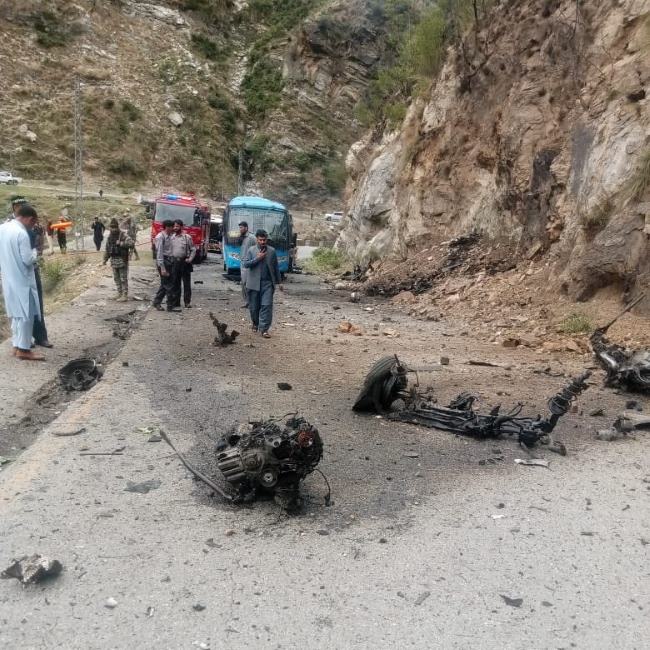
In the wake of a devastating suicide attack targeting Chinese nationals in Khyber-Pakhtunkhwa, a Chinese company has taken drastic measures in response to growing security concerns. Two days after the tragic incident that claimed the lives of five Chinese engineers at a hydropower project in the region, Power Construction Corporation of China (PCCC) announced the suspension of civil works and the layoff of hundreds of workers at another hydropower project within the same volatile province.

The fatal attack occurred at the Dasu hydropower project in Bisham city of Shangla district where the Chinese engineers were enroute to Islamabad. Another individual was also killed in the incident. So far, no group has claimed responsibility for the suicide bombing.

In response to heightened security risks, Chinese company PCCC halted operations at the Tarbela 5th Extension Hydropower Project in Swabi district and terminated over 2,000 workers. The decision was made in consideration of the safety of project personnel, as confirmed by the manager (administration) of PCCC.

While the layoff affects a significant portion of the workforce, it is emphasized that these workers have not lost their jobs under labour laws and are entitled to receive partial salaries until they resume duties. Efforts to bolster security measures for project employees are reportedly underway.

Chinese company reluctant to trust Pakistan

Despite the suspension of work, authorities assure minimal disruption to the completion timeline of the Tarbela extension project (T5), which is scheduled for May 2026 with funding support from the World Bank ($390 million) and the Asian Infrastructure Investment Bank ($300 million).

Following the latest attack, Pakistan’s Prime Minister Shehbaz Sharif has ordered a comprehensive joint investigation to swiftly apprehend those responsible and enhance security measures for Chinese personnel working in the country. While Pakistan and China both boast the normalcy and extend trust in each other on the diplomatic table, on ground reluctance of China is clearly visible from the recent incident.

Dr. Allah Nazar Baloch warns of devastating impact of CPEC on Baloch lives

Balochistan Liberation Front leader and former chairman of the Baloch Students Organization, Dr. Allah Nazar Baloch, has raised concerns about the potential impact of large-scale development projects, such as the China-Pakistan Economic Corridor (CPEC), on the Baloch people. In a recent statement on the social media platform X, he warned that these projects could be constructed at the expense of Baloch lives, citing examples like the construction of railway tracks over Baloch corpses in the past.

Dr. Allah Nazar Baloch emphasized the resilience and value of the Baloch people as a nation, urging global awareness of the atrocities committed by the Pak Army in Pak-occupied-Balochistan. He questioned the international community’s continued support for a military involved in what he described as war crimes.

Highlighting the determination of the Baloch nation, Dr. Allah Nazar Baloch underscored their enduring struggle for freedom, despite the potential for a prolonged battle. He stressed that the Baloch people will continue to resist efforts by colonial powers to exploit their resources and manipulate their population demographics.

Protest in Punjab (Pak) against abduction of Baloch student Khuda Dad Seraj

The Baloch Students Council Punjab staged a protest rally outside the Lahore Press Club regarding the forceful enforced disappearance and abduction of Baloch student Khuda Dad Seraj and the persistent abduction and genocide faced by Baloch students across the nation. Amidst chants and placards, the demonstrators demanded the safe release of Seraj, who has been missing for 20 days from Sargodha without any reason.

The rally, organized by the Baloch Students Council Punjab, drew attention to not only the enforced disappearance of Seraj but also to the broader issue of profiling and abduction experienced by Baloch students. Pamphlets were distributed to raise awareness about the unjust circumstances surrounding Seraj’s disappearance.

Despite their peaceful intentions, the protesters were met with hostility from the puppet Punjab Police, who attempted to disrupt the rally through force and violence. Yet, undeterred, the students stood their ground, refusing to back down until their demands for justice were heard. The clash with law enforcement saw two brave protestors unjustly detained, but their fellow students rallied around them, demanding their immediate release.

In a statement following the rally, the Baloch Students Council Punjab condemned the police’s heavy-handed tactics, emphasizing that they had followed all legal procedures and obtained permission for the demonstration.

Since the brutal occupation by the Pakistan Army in 1948, the region has been plagued by unrest. Daily raids, abductions, and a lack of basic infrastructure have become common, leaving the Baloch population to endure untold hardships and oppression.

Suspiciously missing girl found dead in POGB;locals demand more security

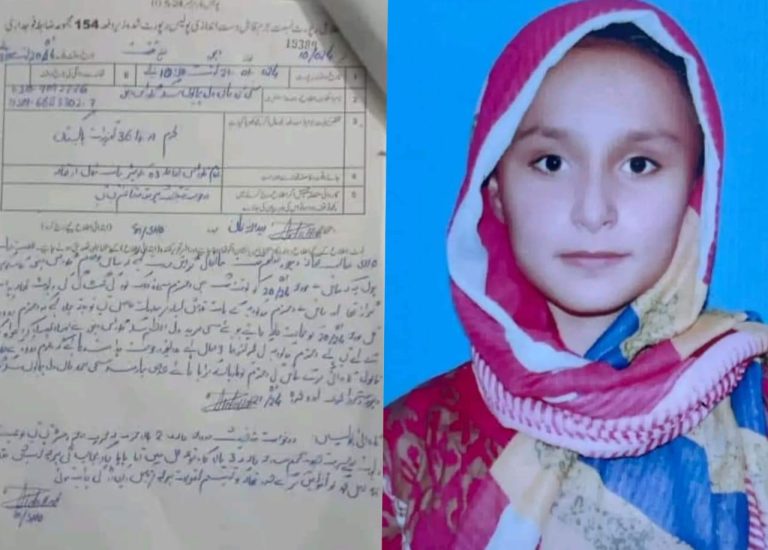
The body of a young missing girl has been discovered near a stream close to Danyor College in Gilgit, POGB. Identified as 18-year-old Inara, who hailed from Yasin, Ghizer.

Inara had been reported missing from Danyor for the past 24 days. According to authorities, the report of her disappearance was lodged at the Danyor Police Station on March 5.

The circumstances surrounding her death remain unclear, and investigations are underway to determine the cause.

Local residents expressed shock and grief over the tragic death of missing girl, highlighting the need for enhanced security measures in the area. The community awaits further updates from law enforcement regarding the ongoing investigation into Inara’s untimely demise.

POGB is grappling with multiple challenges crucial for the survival of the populace. The recent incidents of abduction adds more to the worse. Recently, a minor girl named Falak Noor was abducted from Sultanabad, Pak-occupied Gilgit. Later she was coerced into a marriage. The police has failed to bring back the girl, also it has not been able to take prudent actions.

Agitated people have decided to register their protest outside the Karachi Press Club under the aegis of Gilgit Baltistan Youth Alliance Karachi. The incidents raise serious concerns over the Islamabad-imposed governance of Pak occupied Gilgit Baltistan.

Islamic State Pakistan Province issues threat image targeting India, China & USA

The Islamic State Pakistan Province (ISPP), through its media arm Nashir, has issued a stark warning to several countries in a recent threat image publication. This move comes amidst growing tensions and ongoing security concerns surrounding the activities of the terrorist organization. The IS Pakistan threat image, titled “Who is next?” prominently features the names of four nations: the United States, Denmark, China and India.

Although, issuing threat remains the default characteristic of any terrorist organisation it increases their visibility and centrality in talks under the global security architecture. In fact it is the basis of their relevance. But the recent threat can not be ignored, specially considering the recent chaotic terrorist attack in Russia and an attack on Chinese nationals in Khyber Pakhtunkhwa.

The series of incidents highlight that US, India, China are at the potential risk. The recent attack in Russia is the largest in past decades. The attack at Crocus Consert hall in Moscow suburbs took lives of over 130 people. Soon after the attack ISIS-K took the responsibility of the deadly masacre.

Talking about India, it has recently nabbed the head of ISIS India from the North eastern state of Assam. With due consideration, it is suffice to say that India has launched an effective crackdown on the terror modules active across the country to which ISIS is no exception.

Apart from that, ISKP has recently released a Pashto magazine titled “Khorasan Ghag”, accusing the Afghan Taliban of normalising relations with India, which it considers against the Islam-based terror conduct.

Snapshot of the ISKP’s propaganda media outlet Al-Azaim

While US has been an archrival and a permanent entity on the hit list, Denmark’s historic resistance against the terror group has made it a potent target for ISIS.

China and ISIS

The fourth country mentioned in the threat image is China. Now China has been largely unaffected by the Islamic terrorism when it comes to the home, however, it has definitely been at the receiving end in various parts of the Asia.

After the TTP denied it’s involvement in the recent attack on Chinese engineers’ vehicle in Basham area of Khyber Pakhtunkhwa, that left 5 of them killed along with one other, there are strong suspicion that ISIS Pakistan province of ISIS-K must have been behind the attacks.

Also, this is not the first time that such an attack has been orchestrated by ISIS. 2017, ISIS-Kidnapped and killed two Chinese nationals within Pakistani territory. Additionally, Chinese nationals were subjected to a targeted attack in Kabul just last year.

The bone of contention between ISIS and China is still not determined. But considering the growing stature of China on the global scale with a strong military might and expansive influence across continents, a group of terrorist would need no moral ground to pose resistance, besides, the ISIS may use the persecution of Uyghur Muslims as it’s basis of friction.

So, threat looms large over the world and frequent attacks could give ISIS a revival through the Khorasan module, which was so far active in fragile security climate of Afghanistan, Pakistan only.