Home Blog Page 286

Congress dividing Punjab and ruining ‘Punjabiat’ for petty gains

1

The land of Punjab is going through one of the most unfortunate, sad and dangerous phases in its long and noble history. The current phase is unfortunate because Punjab and its people are beset with huge problems including lack of employment, faltering economy, dangerously deteriorating environment, drug addiction, an exodus of the youth due to unfettered migration, control of natural assets by the mafia and a host of other problems.

It is a sad phase because the political leaders of the land, who hold the responsibility to resolve its problems are overwhelmed with their own vested interest in grabbing power by any and every foul means possible. They have no compunction in misrepresenting facts and telling blatant lies if it suits their political purposes. They are unmindful of the repercussions of their hate filled diatribe on the people and least concerned about the huge problems faced by the region, to which they give only lip service in their blame game.

It is a dangerous phase because the utterances of the political leaders have the potential of engineering a divide between the various communities of Punjab that have coexisted peacefully for millennia. More serious is the space that these verbal misadventures are opening up for the very malicious and inimical enemy sitting across the border to increase its malevolent activities.

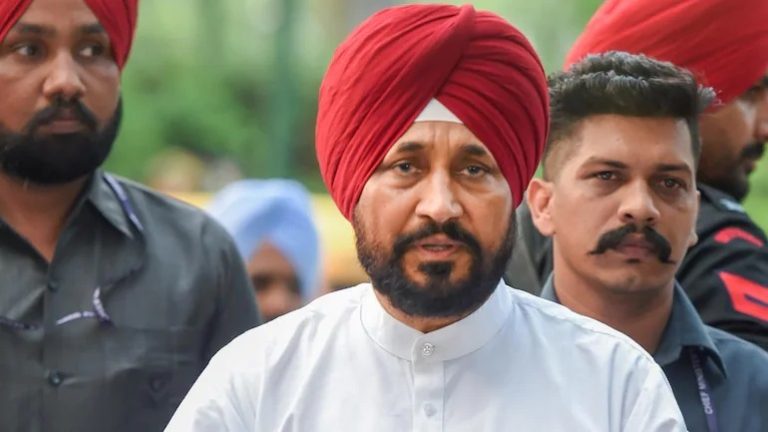
Punjab Chief Minister Charanjit Singh Channi, during his speech at the 16th session of the 15th Punjab Vidhan Sabha touched the lowest depth of unbecoming and degrading politics. In an attempt to attack the Shiromani Akali Dal (SAD), the CM used the most derogatory and unparliamentary language against the Rashtriya Swayam Sangh (RSS). The CM stated that the Akalis were the gateway through which the RSS managed to make inroads in the state and that the RSS has always been inimical to the interests of Punjab.

The statement does not stand the test of history or empirical evidence since the RSS has been functioning in Punjab for decades before the BJP came into coalition with the Akali Dal. Also, all through the coalition period the RSS, being a social organisation, has been working towards the social unliftment of Punjab independent of the politics of the coalition.

Charanjit Singh Channi failed to clarify as to how and why he felt that the RSS has “always been inimical to the interests of Punjab” thus leaving it as an unsubstantiated and immature remark that does not behove any political leader, let alone the CM of a state.

The complete address of Punjab’s CM lacked focus and was dependent only on an odious and insufferable diatribe that exposed his frustration and his insecurity. It seems that he has realised the abject failure of his earlier attempts to gain confidence of the people by giving doles and now wishes to make a bid for power on the basis of the famous “divide and rule” policy.

His poor performance in the Punjab assembly was followed up by yet another dangerous move, wherein, he has announced that the state government will provide Rs 2 lakh compensation to the 83 people who were arrested for violence in Delhi on January 26 this year during farmers’ tractor march.

It is quite evident that Chief Minister Charanjit Channi is misusing his high office in a manner that spells disaster for Punjab and he needs to be checked before it is too late. He needs to be legally challenged for his hate speech against the RSS, the BJP and also the SAD. Further, union government needs to assess the impact of such hate mongering on the communal harmony of the sensitive border state and how it has the potential of escalating into a security issue, both internal and external.

Regarding compensation to the agitators under arrest, a clarification needs to be taken as to how the tax payers money can be used to compensate such people who are facing criminal charges? In fact, the entire dole packages announced by the CM need to be brought under CAG scrutiny to identify the means by which they can be fructified by the government already reeling under the worst ever financial crisis.

The overall election campaign in the state, by all parties in the fray except the BJP, is based on blame game and stringent statements that are leaving the people insecure and disturbed. In this information mayhem it is only the BJP that is maintaining its dignity. The party has openly admitted its mistake in staying allied with the SAD; it is working hard to give good leadership options in all 117 constituencies and a wholesome election manifesto to the people.

BJP has always been in favour of the farmers’ community in Punjab and across the country. It understands that there are some segments among the Punjabi farmers who have reservations on the provisions of the three farm laws. It is sensitive to their problems and has kept open doors for talks to resolve all issues. The party is sure that, sooner than later, the farmers will understand the genuineness of its efforts and the matter will be amicably sorted out.

The BJP is showing the path to a healthy and positive election campaign in the state, it is doing so because its stature as the largest political party in the world does not allow it to opt for low level and divisive politics as the other small and marginal parties are indulging in.

While the regressive election campaigns of the opposition parties may be accepted with a pinch of salt, the dangerous path that the ruling Congress party has adopted cannot be allowed to go uncontested since the repercussions on the security, economy and social fabric of the state can be disastrous.

Engineering of a community divide in the “land of Gurus and Pirs” is something that no Punjabi can tolerate. Any attempt to divide Punjab and Punjabiat is unbearable. The misguided election policy of the ruling party, for which it has made its incumbent CM a scapegoat, cannot be allowed to go on unfettered. It is a directionless meteor that will cause vast damage when it falls. This caution needs to be well understood.

Indo-Pak War 1947-48: History and its current ramifications

0

On 27 October 1947 the Indian Army landed in Srinagar airport, and thus began what is historically referred to as the Indo-Pakistan War, 1947-48.  The war witnessed many iconic battles over two campaigning seasons in areas ranging from Zoji La to the Kashmir valley, Poonch and Mendhar, etc. The newly created state of Pakistan put in all the military might that it could muster but, in the end, it had to accept an ignominious defeat.

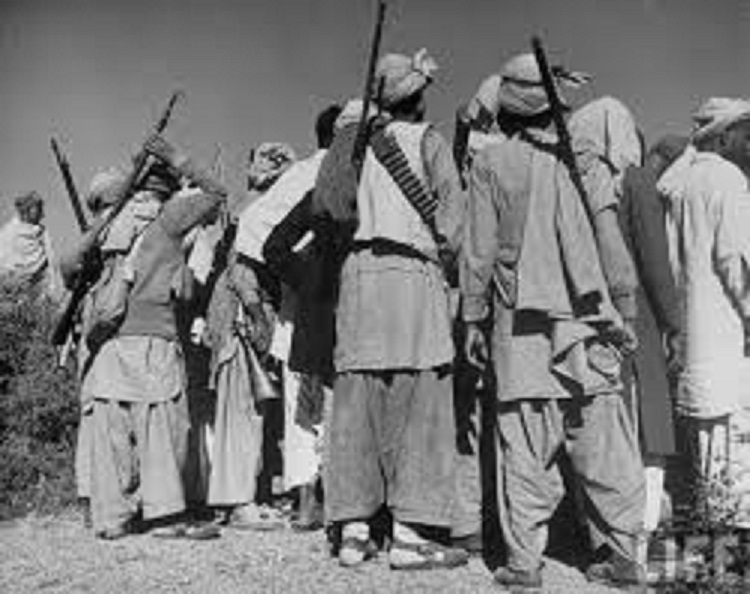
The  high point of the war was 27 October 1947, when, post the accession of the Jammu &Kashmir Princely State to the Indian Union by Maharaja Hari Singh, the Indian troops landed at Srinagar airport and saved the people of Kashmir from the ongoing large scale massacre, rape, loot and arson at the hands of the mercenary hordes of Kabilies (Tribals of the North West Frontier Province) sent by Pakistan under the leadership of its army officers to annex Jammu and Kashmir. If the Indian Army had not reacted, Srinagar would have been a huge, desolate graveyard and the history of the Kashmir Valley would have changed forever.

Before the Indian Army landed in Srinagar and opposed the tribal onslaught, the invading hordes had laid waste everything that came their way. They pillaged Baramulla for four days in the most inhumane manner. The men and children were tortured and killed while the women were raped and carried back as sex slaves. Even the nuns of the convent there were raped and killed ruthlessly.

The Kashmiri Pandit community was identified for special treatment involving the most depraved form of torture and cruelty possible. Whole families committed mass suicide in the face of this brutal and merciless onslaught by jumping from roof tops or throwing themselves into the running waters of the Jhelum River.

The Indian troops who fought the war had only safety and security of the people of Kashmir in mind, without any thought about how politics would play out in the long run. Their concern was to ensure that the barbarians were thrown out in the shortest possible time without causing any further damage. In this, they were singularly successful, but not without paying a heavy price including loss of lives of many soldiers.

Even under such terrible conditions the human spirit prevailed. A 19 year old boy, Maqbool Sherwani, went about on a cycle spreading a message that the Indian Army was on the doors of Baramulla. This information restrained the mercenaries and saved thousands of lives. In fact, it stalled the march to Srinagar and literally saved the city from a fate even worse than that of Baramulla. When the Pakistanis realised that young Maqbool had misled them, they shot and crucified him. The young boy, with his courage and presence of mind, etched a place for himself in history for all times.

The people at that time were full of praise for the Indian forces as they are even today. They still remember with respect, admiration and pride the courage and sacrifice of the Indian forces in 1947.

It is notable here that the Instrument of Accession signed by Maharaja Hari Singh was no different in content and spirit than what had been signed by other princely states, but due to some misconceptions the then government of India agreed to conduct a referendum or plebiscite to determine the future of the state. This plebiscite or referendum was to determine the relationship between the state and the government of India and not the accession which was legally accomplished in India’s favour.

Pakistan took advantage of the anomalies that emerged from the decision to hold a plebiscite to keep a considerable territory of the state under forcible occupation. Sadly, the territories under forcible occupation of Pakistan, defined as Pakistan Occupied Jammu and Kashmir (POJK), are suffering immensely under the iron hand of a repressive state.

The popular sentiment against Pakistani repression came to the fore on 22 October 2021 when  thousands of people of POJK took to the streets and staged protests to mark the ‘Black Day’. The protestors, under the banner of a prominent party ‘National Equality Party – Jammu Kashmir Gilgit Baltistan’ (NEPJKGBL), highlighted the atrocities being committed by the Pakistani regime and vowed to continue their struggle for the liberation of POJK from Pakistan. The protests, including marches and candlelight vigil, were carried out in the capital city of Muzaffarabad and a number of other parts of POJK. “October 22 is the darkest day in the history of Jammu and Kashmir. On this day Pakistan invaded J&K and killed thousands of innocent civilians including the elderly, children and women. Girls were abducted to be sold in Pakistani markets. Pakistani atrocities continue and so does our resistance,” said NEPJKGBL Chairman, Professor Sajjad Raja.

The demand for freedom of POJK from the Pakistani yoke finds resonance in international circles through the efforts of the diaspora of the region who staged protests at the UN and other prominent places demanding an end to Pakistani occupation and hegemonic policies in their home land.

The biggest protest by far is against the creation of a terror hub in POJK by Pakistan to keep alive its terrorist activities in Jammu and Kashmir. These brutal terrorists belonging to organisations like Lashkar-e-Taiba and Jaish-e-Mohammad have made life totally insecure and miserable for the people living there. 

Pakistan has attempted consistently to change the situation in the erstwhile state and now union territory of J&K in its favour through acts of terrorism and psychological operations to indoctrinate the people into the path of radical Islam. All such evil machinations have been rejected by the people who root for strong, democratic India. Yet, Pakistan loses no opportunity to create problems.

Pakistan now needs to realise that it is no longer possible for it to mislead the people of Kashmir with fallacies, misinformation and outright lies. The people of the state are well aware of its past evil machinations and quite sure about what they want in the future.

China rakes up border issue with India to hide its domestic mess

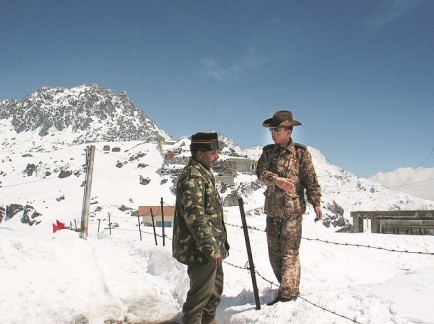
China has, once again, opted to take a hard stand in the long standing dispute along the Line of Actual Control (LAC) with India. A series of meetings, including the last corps commanders meeting in early October this year have not yielded any forward movement. It is quite clear that the PLA will hold on to the existing friction points all through the coming winter especially in Depsang, Demchok and Hot springs.

Another matter of concern is the new Land Boundary Law promulgated by China which is slated to be effective from 1 January, 2022. It stipulates that the sovereignty and territorial integrity of the country are sacred and inviolable and the state shall take measures to strengthen the border defence and support economical and social development in border areas. The law has a direct implication in all areas along the LAC where borders are not defined and such areas of Gilgit-Baltistan that Pakistan has illegally ceded to China. “China’s unilateral decision to bring about a legislation which can have implication on our existing bilateral arrangements on border management as well as on the boundary question is of concern to us,” said the Indian External Affairs Ministry spokesperson Arindam Bagchi.

China is hell bent on pursuing the aggressive and masochist policy chalked out by President Xi Jinping on taking over dictatorial control in 2013. In a bid to pressurise India, the Chinese state owned propaganda machinery has launched a malicious campaign on the Galwan incident. Its social media platform, Weibo, has uploaded images of Indian soldiers taken captive in the clash. What China conveniently wishes to sideline is the fact that it lost a much larger number of soldiers in the clash and that the Indian side had held captive its highest ranking officer in the misadventure. Even at a conservative estimate by independent agencies the Chinese casualties stand at 45 plus. The prisoner exchange was done not because of Chinese benevolence but to facilitate release of their senior military commander in Indian custody. It is also being said that the Chinese soldiers faced panic attacks due to the ferocity of the Indian troops. Apparently, the propaganda campaign is in support of the Chinese decision to stand fast in the region; it is more to build morale of its own troops who now have to, unwillingly, face the harsh winter.

China wishes to create an impression that it has been very magnanimous in the negotiation process and has given to India more than what was due. “Instead of misjudging the situation, the Indian side should cherish the hard-won situation in China-India border areas.” This is a very obvious attempt to put down India, sadly, it finds support within the many so-called strategic experts in India who give a one sided view (in favour of China).

While the political leadership is opting for a hard posture all is not well in the rank and file of the Chinese Army. It is reported that the Chinese military commander of the huge western theatre, General Zhang Xudong, has died due to a heart attack. He was only 58 years of age, the physical conditions in the region and the tension of command probably led to his untimely demise. He was quite a favourite of President XI Jinping and had been sent there after sacking two of his predecessors in a short period of nine months. The present incumbent, General Wang Haijiang, is the fourth commander to head the western theatre since the stand-off began which indicates a huge leadership crisis there. There are reports of widespread digestive ailments among the soldiers deployed in the western theatre.

It is with this rag-tag strength that China aspires to hold out against the battle hardened Indian Army whose soldiers have had multiple tenures in the region and are quite adept in adapting to the difficult conditions. The seniors are experienced and the younger lot is eager to learn.

The economic situation in China is far from satisfactory. Its economy is yet to recover from the COVID backlash and may never attain the earlier heights, there is a palpable food and electricity shortage while the threat of another round of COVID looms large. Lack of funds have put ambitious projects like the Belt Road Initiative (BRI) in jeopardy; the massive loans given to defunct and bankrupt states like Pakistan are not likely to find returns.  

Politically speaking, there is the tenuous situation in Tibet, Hong Kong, Xinjiang, etc., to contend with. As China prepares for the next Winter Olympic Games, the Tibetan freedom fighters around the world are raising strong voices against the terrible human rights record of the country.

The Indian Army is in a strong position and is unwilling to succumb to the pressure tactics being applied by the Chinese. While China is closing all doors for negotiation, the Indian side is quite clear about the finality of its objective of restoring the status of April, 2020. It is willing to achieve the end state with a patient, resolute and responsible response.

India has laid emphasis on a multi-pronged approach to resolve the issue. Her response, very correctly, is based on a regular dialogue at multiple diplomatic and military levels. The Indian side goes to meetings very well prepared and reminds China of its commitments. The meetings invariably culminate with a disconcerted Chinese leadership playing around with words and scuttling the process. Then comes the perennial attempt at building psychological pressure. It is very important to highlight here that the build up of a doomsday scenario, as is done by a few within the Indian media, is only helping China prolong the negotiation process.

China is following a path which can only cause it more loss, pain and humiliation since India is not likely to blink anytime in the future. The Indian Army is no pushover and to constantly tease it can have serious consequences. This has been amply demonstrated in both Ladakh and the North-East. It would be best for the neighbouring country to read the writing on the wall and readjust its policy in a manner that is beneficial for both countries.

Gen Bajwa is dragging Pakistan into a dark political abyss

Pakistan is in a state of instability and flux, yet again. On the one hand Prime Minister Imran Khan is under pressure from a resurgent opposition that is nipping on his toes in the Senate and other platforms and, on the other hand, the politically all powerful Pakistan Army is preparing for a change of guard.

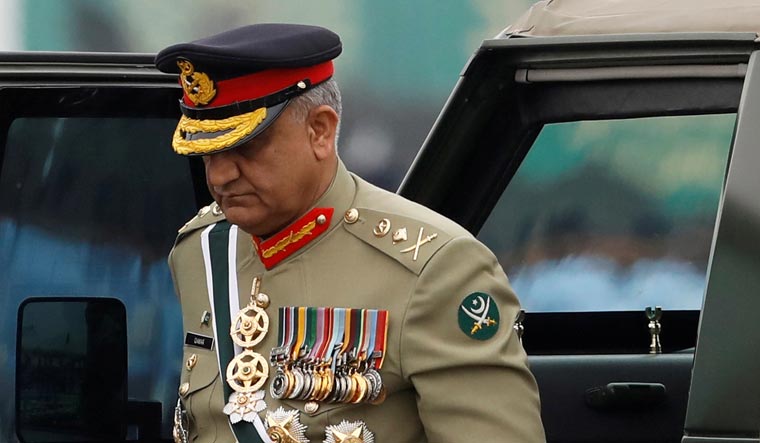
The incumbent Pakistani Army Chief, General Qamar Bajwa, is posturing to procure for himself yet another extension; in such a scenario he will have to remove the very powerful current corps commanders, including Lt. General Faiz Hameed.

Lt. General Faiz Hameed has recently been removed from the post of the Director General of the notorious Inter-Services Intelligence (ISI)  and appointed corps commander of the Peshawar Corps. Though fourth in seniority, he will be a strong contender to the Chief’s chair if Bajwa retires or is removed.

Though nothing can be said with certainty about the inner machinations of the Pakistani deep state, rumour is that General Bajwa has serious differences with Lt. General Faiz Hameed due to the proximity of the latter to Prime Minister Imran Khan and because of certain actions that he took in Afghanistan.

Hameed went to Afghanistan without prior sanction from General Bajwa, an intolerable breach of discipline that would invite serious action in any professional army. That he has not been ousted is a surprise and probably the result of his political clout. Hameed is also under cloud for the alleged abduction of activists and journalists in Pakistan by the ISI under his watch. The public of Pakistan no longer tolerates such extra-judicial interventions from the Army and many are speaking against such activities.

It is also seen, in hindsight, that his support to the Taliban and its newly installed leadership (that he helped hoist) was an immature gaffe that left the government of Pakistan embarrassed and the Pakistan Army red faced, more so, since no country came forward to recognise the Taliban regime in Afghanistan. This could be a big reason for his removal from the ISI.

As far as Imran Khan is concerned, the shocking defeat that his party suffered in the Senate polls in March 2021, compelled him to seek a vote of confidence in Parliament. He is now doing what he does best – clutching at the apron strings of the Army hierarchy, with the intention of gaining support for his re-election in 2023. His chances are very bleak since many in the deep state consider him to be a liability that should not have been elevated to the high position in the first case. Now, which devil in the Army will he sell his soul remains to be seen, and here, the importance of Lt. General Faiz Hameed starts becoming apparent .

General Hameed. thus, cannot be thrown aside as a spent cartridge. While commanding the Peshawar Corps responsible for the western border of the country with Afghanistan he will have his hand on the pulse of the region. He will control the Khyber Pass on the Afghanistan-Pakistan border and also keep an eye on the Wakhan corridor which juts into Xinjiang. No more needs to be said about the extent of his power in the region. He will be in a dominant position in every decision taken, should there be any future interventions involving the UN or the international community especially the US and China in Afghanistan.  

If General Hameed gains power he will become an impediment in the aspirations of General Bajwa. This will cause a big power play in Pakistan and cause further instability in the country.

When the leadership of Pakistan should be joining hands to deal with the serious problems that the country is facing, each leader is looking at his own ambitions and aspirations. There is no unity of purpose and concerted effort. As a result, extremist and insurgent organisations are gaining attraction in a manner that can break the nation. This apart, the economic situation is going from bad to worse. The Financial Action Task Force (FATF) is poised to downgrade the country to the ‘Black List’ which will only add to its financial woes. Can Pakistan afford such a conflict in its leadership?

The common man in Pakistan is caught between the proverbial devil and the deep sea! What looms before the people is unending misery in a situation that can only degrade in the future since the quality and regressive ideology of the leadership remains the same. There is a critical need for change but no alternative is in sight. There are journalists and intellectuals like Khalid Umar, Ayesha Siddiqa, etc., who raise a voice but it gets suppressed in the maze of personal intrigue.

India has always maintained that instability in Pakistan is detrimental to her security. The situation at the moment is very alarming indeed. That things will take a turn for the worse is quite apparent from the manner in which attempts are being made to build on the hybrid conflict in Kashmir.  A big psychological campaign has been initiated as was seen by the hype created post the victory of the Pakistan’s cricket team against India in the T20 World cup. It seems that the Pakistani psychological machinery was ready to exploit the occasion should the result be in its favour and it did so with professional finesse. The message sent out was loud and clear, “Muslims of India and especially of Kashmir hold sentiments for Pakistan”. Pakistan is, once again, playing the “Islamic bonding ” card against India. 

India will need to keep a keen eye on the machinations of unstable Pakistan. Pre-emptive action will be required to ensure that these machinations do not have an adverse effect on the security situation within the country and especially in Kashmir. Simultaneously, the international leadership should be sensitised about the tenuous situation in Pakistan and the danger that it poses to the immediate neighbourhood and the world at large.  

Why is Kashmir civil society silent over Pak barrier on Srinagar-Sharjah flight?

0

In March 2019, when the center banned Jamaat-e-Islami (JeI) in Jammu and Kashmir under the Unlawful Activities [Prevention] Act, Kashmir Traders Association [KTA] was one of organisations that strongly condemned this decision. KTU General Secretary Bashir Ahmad disagreed with New Delhi’s assertion of JeI being “involved in anti-national and subversive activities in the country intended to cause disaffection,” as well as “in close touch with militant outfits,” by maintaining that it was “a religious organisation that worked for Kashmir even in difficult situations and helped everyone without differentiating between caste or religion.” 

At that time, some had criticised Ahmad for unnecessarily pushing KTA into an issue that was completely unrelated to commerce as it could convey an impression that instead of championing the cause of traders in Kashmir, KTA was delving in local politics. While this viewpoint has its merit, but since every organisation and association is made up of society members, local politics cannot be completely divorced from discussion, even if it’s not part of the aim and objective of an association.

So, the only way that an organisation or association can preserve its professional integrity and fair image is not by avoiding voicing opinion on contentious issues but in exercising due diligence and ensuring complete impartiality while doing so. The bottom line is that while discussion on unrelated issues is optional, standing up to defend the rights and promote progress of the organisation or association to which one belongs, is mandatory. Unfortunately, this is where KTA appears to have stumbled badly.

The November 1 agreement between a private Indian air carrier and Dubai-based Lulu Group to facilitate export of garden produce and handicrafts held the promise of the huge Middle East market being opened to farmers and artisans of Kashmir. However, even before this game changing initiative could give an unprecedented boost to horticulture and handicraft sectors could take wings, Islamabad played foul by unilaterally stopping Srinagar-Sharjah overflights.

Despite Kashmiri farmers and artisans being the biggest losers due to Islamabad’s unreasonable decision of closing its airspace for Srinagar-Sharjah flights, KTA hasn’t uttered a single word against this. Since its mandate includes promotion of trade, KTA should not feel offended if its stoic silence on the cancellation of overflight clearance is interpreted as tacit approval of Islamabad’s decision or even perceived as toeing the separatist’s line by dutifully overlooking Pakistan’s brazen perfidy.

What’s most amusing is that the entire pro-Pakistan lobby, which has otherwise been accusing New Delhi of following a policy to keep Kashmiris impoverished and thus economically dependent on the center is silent on Pakistan’s barefaced attempt to sabotage prospects of the people of Kashmir improving their financial status. The All Parties Hurriyat Conference is quiet and so is Kashmir’s civil society and its intelligentsia. However, this is understandable, because with gun toting ‘mujahideen’ ensuring that Pakistan’s motivated interests in J&K aren’t adversely impacted, enforced silence on the overflight cancellation issue is but natural.

On October 23, former J&K chief minister and National Conference leader Omar Abdullah had expressed his apprehensions on overflight clearance given by Islamabad to Srinagar-Sharjah flights. He had stated that “Regarding the Srinagar-Sharjah flight that has been announced today – has Pakistan had a change of heart & allowed flights originating from Srinagar to use its airspace? If not, then this flight will die the way the Srinagar-Dubai flight died during UPA2.” At that time, it was largely believed that he was just spewing pessimism as a political gimmick to undermine the center’s spectacular achievement. However, now that overflight clearance has been withdrawn by Pakistan, Abdullah’s prognosis has been bang-on!

Surprisingly, even at the cost of being ridiculed for peddling factual inaccuracies, People’s Democratic Party (PDP) president Mehbooba Mufti maintained her pro-Pakistan bias by blaming the center for this crisis by saying, “Puzzling that Government of India didn’t even bother securing permission from Pakistan to use its airspace for international flights from Srinagar,” adding that this was “Only [a] PR extravaganza without any groundwork.” Could it be possible that she isn’t aware that Home Minister Amit Shah himself had flagged off the inaugural Srinagar-Sharjah flight from the Sheikh ul-Alam International Airport in Srinagar on October 23?

The silence of those whose who look upon Pakistan as Kashmir’s benefactor and are serving its motivated interests, speaks volumes of how common Kashmiris are being betrayed by their own brethren who vociferously claim to be their well-wishers. Since this rot has set in within, the lot of Kashmiris isn’t likely to improve soon and so, one can only hope and pray that the people become more assertive to alter the debilitating equation prevailing in Kashmir Valley today!

Kashmiri leaders & their wicked proposal for talks with Pakistan

Kashmir’s ideologically defunct political leadership in general and the standard-bearers of dynastic rule, in particular, remain obsessed with the proposition that New Delhi should talk to Pakistan for resolving the Kashmir issue. They begin and end their media interviews with this mantra. They think that the world will consider them the victim of the rivalry between two sub-continental powers and in this way will earn sympathy for their cause.

Most of our reporters with popular channels and news outlets being of young age have found little time to go through some fundamental and unbiased literature on the Kashmir issue. They are easily influenced by the devious Kashmir leadership that is adept in the art of distorting history and projecting Kashmiris as the victimized lot. 

The rhythmic demand for talks with Pakistan suits the political and personal agenda of Kashmir’s leadership but there’s absolutely no short or long term advantage for the masses of Kashmiri people. Reiteration of this demand is to convey a subtle message to Pakistan that the Kashmir leadership recognizes Pakistan as a party to the dispute and not an aggressor as stated by the government of India in its 1948 petition to the Security Council. Will Farooq Abdullah care to read the statement of his father given to the Security Council at Lake Success in New York as part of Indian delegation?

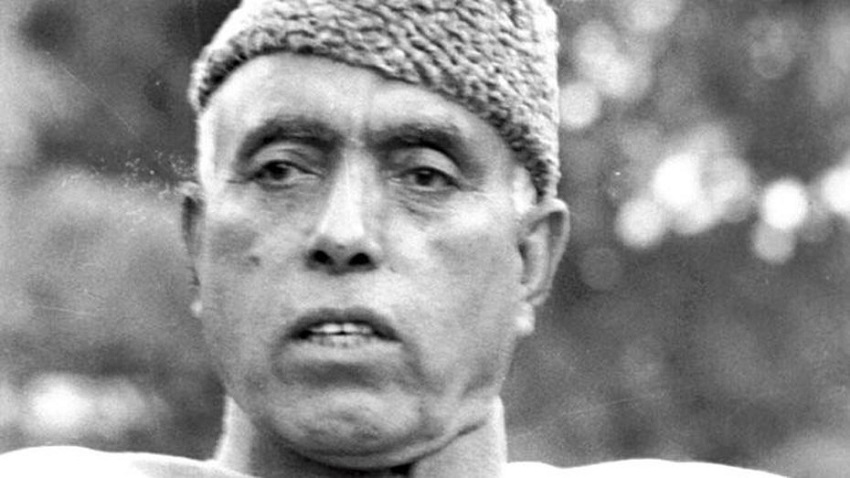
Sheikh Abdullah, founder of the political outfit National Conference that has a presence in certain pockets of the Kashmir Valley. (File Photo)

The second and more important objective of the wily leadership in harping on the Pak talks is to send a message to the Muslim population of the valley that the leadership though a beneficiary of the Indian largesse for seven long decades of independence does not go against their love for Pakistan. In doing so, they want to keep their voting constituencies in good humour knowing that the Union Territory is ultimately going to have elections for the assembly.

Beyond these two internal and external objectives, the demand for talks has no sense at all. Both Farooq Abdullah of National Conference and Mehbooba Mufti of PDP speak of New Delhi talking to Pakistan but they never utter a word of protest about Pakistan sending armed jihadists to kill the civilians in Kashmir and destroy her assets. If they think that Pakistan is not involved in these destructive designs, then why talk to them and not those who are behind the perfidy? They or their cronies are the conspirators and not Pakistan.

Farooq Abdullah has been the longest Chief Minister of Jammu & Kashmir after the demise of his father Sheikh Abdullah. He had also been a Union Minister of considerable influence. He is known for his bonhomie with Congress. May we ask Farooq why he never took the initiative of impressing upon the then central government of talking to Pakistan to resolve the Kashmir issue? It did not suit him then because money was coming in torrents and nobody dared to ask for the utilization certificates.

Moreover, we are aware that at a given point in time, Farooq Abdullah had designated an associate of his party, then an MP, to get into touch with Pakistan. Grapevine has it that this MP was shuttling between Srinagar and Islamabad on a monthly basis. What happened to that informal emissary and his mission? Why should not Farooq Abdullah come out with that story? His son Omar Abdullah once publicly said that the emissary was at his job. The people would want to know why it ended in a fiasco and now Farooq is again orchestrating talks with Pakistan.

We would also like to remind Farooq Abdullah that his illustrious father went to Pakistan in May 1964 with the offer of a confederation of three states (India, Pakistan and J&K) already kindled by the Indian Prime Minister Jawaharlal Nehru. Did not that formula meet the aspirations of the people of Kashmir? But President Ayub Khan of Pakistan, who had reluctantly agreed to meet the visiting Sheikh, rejected the proposal outright, and out of frustration, the Sheikh travelled to Muzaffarabad (POK) to lighten his agony by talking to the leaders of POK. Nehru’s death cut short the Sheikh’s visit to Pakistan.

The Sheikh must have told Farooq the story of his failed mission and also his assessment of the thinking of Pakistan. Pakistan rejected the proposal because it never agreed to the independent status for Jammu and Kashmir, neither then or at present. This should have been the eye-opener for Farooq Abdullah. But alas! Blind to ground reality, he has tried to be too smart forgetting that in politics there are bigger scoundrels at hand to play the game.

Mehbooba’s credentials are far bleaker and suspect. PDP was born from the womb of Jamat-i-Islami, particularly in South Kashmir. Ideologically PDP chief is not far from the Sheikh or Afzal Beg or Farooq Abdullah; however, she is crude in deception and chicanery. PDP known to have been created as a counterweight to National Conference agreed to become part of the Gupkar Gang and a signatory to the toothless memorandum because except for the signatories nobody in Kashmir remembered it beyond a couple of weeks.

These ‘pro-Pak talk leaders’ of Kashmir would do well to recollect the last phase of the life of staunch pro-Pakistani leader late Syed Ali Shah Geelani. Throughout his life, he swore by Pakistan, danced to their tune, got thousands of Kashmiri youth killed at the behest of Pakistan, filled his coffers out of Pakistani hawala money but was finally dumped as an irrelevant and spent force by his very Pakistani benefactors.

Defining the status of a relationship with a foreign country is the prerogative of the Ministry of External Affairs of the government of India. Omar Abdullah has been a Minister of State in the MEA. What did he do during his tenure to impress upon the central government to talk to Pakistan? Yes, he might have a role in prompting late Atal Bihari Vajpayee in undertaking the miscalculated bus travel to Islamabad against the saner advice of senior colleagues in the cabinet. Was this not a bold effort by the government of India to initiate talks with Pakistan? And what was Pakistan’s response? The Kargil war!

Why does not Farooq tell Pakistanis how shameful was their response to Vajpayee’s initiative for talks? Is that country worth talking about in a principled manner? Farooq should not fall so low as to be prepared to talk to a country that attacked Jammu & Kashmir state in 1947, remains in illegal possession of nearly one-third of its land and had sold five thousand square kilometres of its land as Aksai Chin to China.

It is these leaders who gave Pakistanis the licence of destroying and decimating Kashmiris. The task began with the decimation of the Kashmiri Hindus. Kashmir leadership is the victim of dual personality for which it has coined the phrase Kashmiriyat. The day it gets rid of Kashmiriyat will be the day of its redemption.

Chi Running: A Better, Safer Way to Run

Since our schooldays, we have been running in a particular non-scientific way, as told by our school Physical Training (PT) instructors — long steps, heel – toe roll and neck down. We were told that running is natural to us and there is nothing to teach.

As youngsters, majority of us could take all that pounding of feet for miles and miles in the most non-scientific ways, but not for too long. However, running injuries like shin fracture, plantar fasciitis etc. are normal if we continue running during our school days. Also, over the years during the course of our professional life and running, many regular runners and especially school gold medalists have to deal with an injury at some point in time. Thereafter, we get into the cycle of pains and injuries combined with long sitting hours on the jobs and sedentary life styles and we tend to refrain from running and look for other options to remain fit.

It’s not running that hurts our bodies, it’s the way we run that creates problems.

More than 80% of running injuries are caused by too much impact and overuse of the lower extremities. This is due to the fact that these are small muscles which are too often required to do most of the work. Knees, lower legs, ankles, feet and toes are by far the most common injury areas for runners.

As runners, we land around 170-180 times per minute. Our feet hit the ground and transfer forces that are 3-8 times our body weight. Therefore, if we are running inefficiently, with poor mechanics, we are basically punishing our body during every run, regardless of the distance. Getting injured or experiencing pain is common, but not inevitable! Running the right way and finding ways to eliminate pain and injuries are essentials for a long-term running lifestyle.

Normal Running Mistakes
Here are four mistakes that prevent us from reaching our potential as runners.
(a) We tend to overuse our lower body and run by over-relying on our legs for propulsion, which can lead to pain or injury.
(b) We don’t adapt our running technique to the terrain we’re running on, (i.e. hills, pavement, trail, wind, etc.).
(c) We don’t ‘listen’ to how our body is feeling, and adjust our technique accordingly.
(d) We don’t use our whole body to run in a unified way because we place too much emphasis on the legs. People don’t learn and work on what’s slowing them down and they continue to run in poor technique/posture, and finally get injured.

PT instructors in schools and most of the coaches in colleges/gyms also focus too much on speed, but not on technique or posture improvement. Majority of training schedules/trainers just focus on cardio-aerobic fitness or muscle strength.

Eliminate the two main causes of injury
There are two main categories of injuries: overuse and impact.
(a) Overuse
Overuse injuries are caused by using our muscles incorrectly or beyond their capacity.
(b) Impact
Impact injuries come from over-striding, which creates a heel strike and produces excessive braking motion.

Chi Running
Chi Running is a revolutionary approach to effortless, injury-free running which can eliminate injuries caused by overuse and impact. Founded by the renowned ultra-marathoner Danny Dreyer, it is based on the movement principles of T’ai Chi, which allows the energy that unites body, mind and spirit to move from your core into the limbs to create movement.

Since 1999, Chi Running has helped thousands of runners transform their technique – reducing, preventing and recovering from injuries. Runners of all ages and levels have improved their efficiency and performance, and now find running to be pain-free, easier, and enjoyable.

Col. Avdhesh Kumar (Retd.) with Danny Dreyer, founder of Chi Walking & Running, at Asheville, North Carolina, USA during his certification process.

Chi Running addresses all these issues about injury prevention and energy efficiency so that you can run better and faster. Chi Running combines the central movement principles of T’ai Chi with the sport of running by shifting the workload to our core muscles, and away from our legs, giving us more efficiency with less injuries. The two main themes underlying all the Chi Running materials are: energy efficiency and injury prevention.

Advantages of Chi Running.
(a) Setting us up for a lifetime of injury-free running.
(b) Build confidence in one’s abilities.
(c) Go farther or faster with less effort.
(d) Improve our body alignment for optimal efficiency.
(e) Lower impact to our joints.
(f) Reduce the work of our legs – at any speed.
(g) Build core strength with every step.
(h) Run with whole-body relaxation.
(j) Become more mindful in how we use our body.
(k) Become a highly efficient and adaptable runner.

Chi Running is one of the most publicly recognised training systems developed all over the world for running well. The books ‘ChiRunning’, ‘ChiWalking’ and ‘ChiMarathon’ have been published in more than 17 languages, and are always on the top ten list of bestselling books under fitness/sport category claimed by Forbes and Amazons.

Conclusion
Running is much more than simply “one foot ahead of another.”  We must introduce low-impact, efficient running techniques at an early stage to ensure a future of healthy and fit running citizens. The Chi Running technique emphasizes the proper biomechanics of running and helps eliminate the aches, pain and fatigue caused by improper running. Chi Running has helped thousands of runners improve their running form – reducing and preventing injuries, while decreasing recovery time. Runners of all ages and levels have improved their efficiency and performance, and now find their running to be pain-free, easier and more enjoyable.

Let us play our part in “Fit India” movement.

Kashmir Valley leadership responsible for ‘Kashmir conundrum’

0

Two years after he had introduced the J&K State Reorganization Bill in the Parliament and got it passed with a majority vote, Home Minister Amit Shah visited Jammu & Kashmir in its new avatar as J&K Union Territory minus Ladakh which has been made a separate entity and conferred Union Status as well.

For the Kashmir Valley leadership, the abrogation of Article 370 has been a surprise and a shock which they usually spoke about but never believed would be translated into action. A constitutional provision designated as “temporary” had almost been construed permanent and then absolutely inviolable. Such was the political and circumstantial adherence to the temporary Act that the local leadership warned that blood would flow if the special status was tampered with or that there wouldn’t be a single person to raise the tricolour in Kashmir if the Article was abrogated.

Nothing of the sort happened. Yes, public men and women suspected of whipping up anti-India passions and giving the episode a communal colour were detained and denied the opportunity to be adept rabble-rousers.  Preventive detention in the shape of house arrest is a mild and democratic way of handling obstructionists who believe in misleading the proxies, meaning the public, in what they call expression of freedom of speech. Kashmir could be a fine example of the misuse of democracy and especially the freedom of speech.

The Home Minister has met with several delegations in the valley and Jammu. He has personally heard their grievances. He has interacted with them. He has made an objective assessment of the ground situation. 

The trouble in Kashmir is the creation of valley-based leadership. Jinnah’s comment on Sheikh Abdullah was that he was not reliable but in this context, Nehru put all eggs in one basket. He had to remove and arrest the Sheikh on the night of 8-9 August 1953 for he would not want to be part of India even though he concluded an Accord in 1974 after conceding that 12 sal ham ne darbadari ki meaning we wasted 12 years.

With the sudden and almost senseless removal of Bakhshi Ghulam Muhammad from power under the dubious Kamaraj Plan, the then government at New Delhi laid foundation for alienation of Kashmir and its gradual distancing from accession. It was Bakhshi who had piloted the ship through storm after Sheikh Abdullah had reneged. Once the pilot was dropped there was no end to the ship tossing against the waves.

Sheikh Abdullah, founder of the political outfit National Conference that has a presence in certain pockets of the Kashmir Valley. (File Photo)

The Kashmir Valley leadership took full advantage of misusing Article 370 and Article 35A. Its plank was that India was trying to snatch the autonomy of sorts given to Kashmir in the Indian Constriction. In retaliation, as the leadership could not disarm the Centre, it turned its ire on the Jammu region as a whole and subjected it to discrimination in various ways. Protests and anger of the Jammu people did not help the Kashmir leadership see the reason. Besides, this leadership targeted the Kashmiri Hindu and Sikh minority also and stonewalled their role in the development of the state by denying them recognition as religious minorities. At the same time, it genially accepted the Centre’s policy of recognizing national religious minorities and Muslims at the top of the list.

In his autobiography, Sheikh Abdullah went to the extent of labelling Kashmiri Pandits as spies of the government of India. Three generations of the Sheikh dynasty ruled over Kashmir; their scions remained the ministers in the Central Cabinet; they enjoyed the freedom of grabbing large chunks of forest land and so did their blued – eyed boys and cronies, one and all in the name of service to the people of Kashmir, and yet not they but the Kashmiri Pandits who toiled to eke out a living were branded as India’s spies.

Valley leadership’s anti-India and anti-Jammu bias deepened while New Delhi continued to pour in huge instalments of money under the nomenclature of developmental projects. State bureaucracy seldom submitted utilization certificates despite repeated reminders and punitive measures by the CAG. The fate of the centrally sponsored developmental projects for J&K is better not to be talked about. In most cases contractors were approved, funds released, a fraction of work done and then the projects were abandoned for one reason or the other. 

Projects, viable or non-viable, were almost offered on a platter to the valley whereas the people of Jammu region had to struggle, go on dharnas, bring out protest rallies, faces lathis and run from pillar to post to make New Delhi shell out some small and non-descript projects for the region. Tourism in Jammu is a case in point. In employment, promotion, postings and senior positions in public sector enterprises etc. Jammu region was given a step-motherly treatment.

The Congress regimes never restrained their bias and parochial approach in serving the interests of the people without any discrimination. The rise of Theo-fascism in 1990 led to the ethnic cleansing of Kashmir and the extirpation of the entire Kashmir Pandit community which never figured in the narrative of the Congress.

Denial of state citizenship to lakhs of Hindus and Sikhs who could escape the genocide in Muzaffarabad, Mirpur, Kotli, Poonch and other areas now called POJK  in October 1947, when they had found safety in Jammu for more than seventy years is an unjustifiable and blatant violation of the human rights of the affected people according to the UN Charter on Human Rights of Refugees. On the one hand, Sheikh Abdullah went all the way to Lake Success, New York to tell the Security Council how the human and civil rights of Kashmiris were violated by Pakistan-sponsored invaders of the  Frontier and on the other he stubbornly denied citizenship of the refugees from the POJK. How could this paradox be resolved, was a headache for the policy planners in New Delhi. 

Kashmir Valley terrorists, crossing over to the other side of the LoC were received warmly by the retired Pakistan Army commanders in terrorist camps across POJK and even in such camps inside Pakistan. They were regular infiltrators and exfiltrators engaged in killing, kidnapping and mayhem in the valley. Many among them married in POK/Pakistan, raised families. The J&K government announced amnesty to them if they returned home, promised jobs, documentation and also said all criminal cases would be withdrawn against them and they would be rehabilitated adequately. Scores of them have been allotted accommodation, given jobs and other perks. Compare this munificence with the scurvy treatment meted out to Hindu and Sikh refugees from POK.

In a session of the last legislative assembly of J&K, the chief minister, Mehbooba replying to a question admitted that four to five thousand Rohingya Muslims from Myanmar had come to Jammu and the government provided them with some facilities. She did not go beyond that one sentence. But the reality on the ground is that no fewer than 89 thousand Rohingyas have been allowed to settle down in Jammu by the PDP government. Please note that they were settled along the international border in Samba and Jammu. Within weeks they were provided with Adhaar Card, ration card, identity card, power connection, admission in government schools to their children. How come the defenders of the Special Status for Kashmir allowed 89 thousand Muslims to settle down in the State and particularly in Jammu region? Isn’t it a clear attempt to bring about demographic change in Jammu? And still, Kashmir leadership cries at the top of its voice that the abrogation of Article 370 is intended to bring about change in the demographic complexion in Kashmir not a single outsider has been allowed to settle in Kashmir ever since the NDA government came to power in 2014.

All this narrative explains fully that abrogation of the two constitutional provisions was not only legal but highly desirable to ensure the human rights of the people and to see that violence is curbed and firm steps taken towards strengthening normalcy. Home Minister has categorically stated that the era of discrimination in Jammu is a past story. His emphasis on the development and active involvement of the youth of J&K is what should be given priority.

At the same time, his warning to the terrorists and Theo-fascists is loud and clear. No power on earth can separate Kashmir from India because Kashmiris have opted for accession to India, India has invested trillions of rupees in the all-round development of the erstwhile state and has helped raise per capita income in Kashmir which is around Rs, 9000/- perhaps the highest in the country. Indian army, paramilitaries and state police force have made great sacrifices in preserving the democratic and secular arrangement of the state. Kashmir has very strategic importance for India,  and Pakistan is steadily selling out chunks of Indian territories in northern Kashmir to the Chinese to embrace the “iron brother” who may or may not let her breathe one day because of tight embrace.

The heroes of Indo-Pakistan War, 1947-48

“We are heavily outnumbered… I shall not withdraw an inch but will fight to the last man.” These historic words need to be indelibly etched in the memories of all Indians since they framed the destiny of India post-Independence.

These words were spoken by Major Somnath Sharma, Param Vir Chakra (PVC), Posthumous, on November 3, 1947 when he along with his brave soldiers of 4 Kumaon challenged the Pakistani hordes in the historic Battle of Budgam. The brave troops of 4 Kumaon did not give an inch to the enemy despite many casualties including Major Somnath Sharma who fell to a hero’s death on the battlefield.

Equally motivating, though lesser known, is the story of Sepoy Dewan Singh of the unit who fought side by side with Major Sharma and exhibited courage beyond the call of duty. He was awarded Mahavir Chakra, Posthumously.

In the battlefront at Srinagar, the forceful stand of 4 Kumaon facilitated the landing of more troops. By 6 November, Indian forces had effectively defended Srinagar from all sides and eliminated the risk posed to the population by the barbaric hordes.

Before the Indian Army landed in Srinagar and opposed the tribal hordes, they had laid waste every living being that came their way. In Baramulla particularly, they surpassed all tenets of inhumanity in a pillage that lasted for four days. The men and children were tortured and killed while the women were raped and carried back as sex slaves. Even nuns of the convent were not spared; they were raped and killed ruthlessly.

After securing Srinagar, the Indian troops faced a big challenge at Shaletang where the enemy was preparing to launch a massive counter-offensive as a last ditch effort to take Srinagar. The brave Indian soldiers, instead of taking a defensive posture, decided to attack and thus was fought the historic Battle of Shaletang. The offensive was launched by troops of I Sikh, 4 Kumaon, 32 Field Battery and 7 Cavalry, the cowardly hordes of the enemy were taken by surprise and decimated in the short and swift battle as they fled the scene leaving behind their arms, ammunition and 300 bodies of their comrades. Lieutenant NG David and Dafadar Jage Ram were awarded Vir Chakra in this epic battle. Within two days, on 8 November, Pattan followed by Baramulla were recaptured.

These victories were merely harbingers of a conflict that carried on over two campaigning seasons (1947-48) and resulted in the total rout of the tribal and regular forces sent by Pakistan to forcibly occupy the state of Jammu and Kashmir that had legally acceded to the Indian Dominion.

The war witnessed the award of four more PVCs (Param Vir Chakra) and many other gallantry awards to the brave Indian soldiers who fought against terrible odds. The brave recipients of PVC were Lance Naik Karam Singh, 1 Sikh, in the Battle of Tithwal; Company Havildar Major Piru Singh, 6 Rajputana Rifles, also for the Battle of Tithwal; Second Lieutenant Rama Raghoba Rane, Corps of Engineers for the Battle of Jhangar and Naushera and Naik Jadunath Singh, 1 Rajput, for the defense of Naushera.

Also part of folklore is the bravery of Brigadier Rajendra Singh, Chief of Staff of the Jammu and Kashmir State Forces, who obeyed with his life the command of Maharaja to hold “the enemy at Uri at all costs and to the last man.” Brigadier Rajendra Singh was recipient of the first Maha Vir Chakra, Posthumous, of independent India.

Any talk of bravery and courageous tenacity exhibited during the war would be incomplete without mention of Brigadier Mohammad Usman. At the time of partition he declined to move to Pakistan despite being given the bait of becoming the Pakistan Army Chief. He did not relent from his spirit of nationalism and continued to serve the Indian Army. He was in command of the 50 Parachute Brigade during the war and was deployed in the Naushera-Jhangar sector. When Jhangar fell due to insurmountable odds of the Pakistani attack, Brigadier Usman vowed to take back the strategic location and did so within a period of three months. For his feats of valour and defence of Naushera he was nicknamed “Lion of Naushera.”

Brigadier Usman fell to a hero’s death on July 3, 1948 while defending Jhangar. He was awarded Maha Vir Chakra, Posthumously, and became the highest ranking Indian Army officer to have received this award during the war. His funeral was attended by Prime Minister Jawaharlal Nehru and his cabinet colleagues.

The saga of courage would remain incomplete without mention of  a civilian, Maqbool Sherwani, who put in a herculean effort to save Baramulla. When the Pakistani tribal occupation of Baramulla was at its peak and unspeakable atrocities were being committed by them, this daring boy, only 19 years old, went about on a cycle spreading a message that the Indian Army was at the doors of Baramulla. This information stalled the march to Srinagar and saved the city from a fate even worse than that of Baramulla. When the Pakistanis realised that young Maqbool Sherwani had misled them, they shot and crucified him. The young boy, with his courage and presence of mind, etched a place for himself in history for all times.

It merits mention here that the Indian Army fought the war in Jammu and Kashmir with full support of the local population inclusive of the Muslims, Dogras, Sikhs, Buddhists, Paharis and the many other communities who form part of the state. There was not even an inkling of separatist tendencies at that period of time.

There are certain anti-India vested interests within the country and out of it who work ceaselessly to distort history and belittle the sacrifices of the brave soldiers and the many civilians brutally killed by the invading hordes in 1947-48. The truth is that soldiers of the Indian Army and the people of Jammu & Kashmir displayed unparalleled gallantry and indomitable spirit in thwarting the evil machinations of a sadistic enemy who was conclusively defeated.

Ever thought of planning a meal?

Meal planners also help you check the fridge before you shop.

Amiyaa, a meal planner – distinctly different from the chalkboard variety – is making Indians sit up and take notice. But more importantly, one must first understand why meal planning is important for Indians. Shalini Chaudhary Goyal, who crafted Amiyaa, says her application (read App) is like a breakfast, lunch and dinner wallchart rolled into one. She says she is aware that meal planners are niche products in India and it has a way to go before it becomes mainstream. 

But Indians need to get used to it because they rarely plan their meals. A meal planner is not scary, it helps you think about cooking and also saves time, stress and, most importantly, cash.

In India, meal planners are a hit with wellness gurus, yoga teachers and weight-loss experts because it also helps cut food waste, a matter of serious concern for India. Nearly 40 percent of food produced in India is wasted every year, says the Food and Agricultural Organisation (FAO). This is a loss that occurs even before the food reaches the consumer. And then, household food waste in India is a whopping 68,760,163 tonnes a year. 

Hence meal planners have led to a new wave of interest. Meal planning or menu planning gets you an idea of what you are going to eat on a particular day and at a specific time. It is actually a detailed plan of foods the family is going to eat for the next few days. Making a week’s meal plan is workable and comparatively easy to start with.

Goyal says the Indian menu plan – it largely works through the internet – could work wonders in India, where the internet penetration rate is around 50 percent out of 1.37 billion people.

But then, Indians need to understand reasons why they should seek a meal planner. It saves time, health and cash.

After all, there could be days when spending just five minutes to decide the day’s menu could look impossible and one ends up cooking a pack of junk to satisfy the family’s hunger. And then, making a healthy meal at least 4 times every day is not a joke. Right?

(Representative photo)

At the same time, meal planners should not be confused with diet charts. Only qualified dieticians can prescribe options as per your food choice, health condition, and family food habit. But Goyal says her application will help develop a family menu plan and it could be easily aligned with personal diet charts and other health conditions and food preferences.

Amiyaa enables users to create distinctive meal plans, which are as per the unique tastes and preferences of their family members. It also provides helpful suggestions and triggers, which ease the decision-making process and also provides other engagement opportunities to the users.

Thanks to Amiyaa, you do not have to ask what to cook today, something which is routine in Indian homes. “Even when someone else is undertaking the cooking of the food, the menu planning is still done by the woman of the house with little or no participation from the other family members. The homemaker by the nature of her role is multi-tasking and thus this everyday decision-making becomes an unacknowledged source of anxiety for her. Meal Planning is of help as it enables a situation of readiness be it with respect to the menu, ingredients, recipe knowledge and preparation for the said meal,” says Goyal.

Shalini Chaudhary Goyal has crafted Amiyaa– a meal planning App.

Goyal says meal planning is making a plan of meals with optimal nourishment and nutrition for every member of the family within the available resources.

“A balanced meal plan of the day should ideally include all five groups of food namely vegetables, fruits, grains, protein, and dairy. Each food group provides the body with different nutrients; therefore, by including foods from all five groups in our daily meals we can make sure that we get the required nutrients needed for our bodies to function effectively and stay healthy. However, most of our effort each day goes towards managing family’s expectations of taste, preferences, diet requirements and our familiarity of recipes to be cooked and hence we continue to operate in our comfort zones (stress included) along with taking care of our other responsibilities,” says Goyal.

(Representative photo)

Goyal is clear that a meal planner should not dictate anyone’s life. Working across seven days gives you flexibility. It helps you to ease work and family life situations. It offers infinite possibilities. In short, it simplifies your kitchen work. Cooking dinner plus an extra portion for lunch at work the next day is a great way to minimise cost and waste.

It even helps you check your fridge before you shop.

And the biggest challenger for a meal planner in India? Getting Indians hooked on it. Meals are important for Indians but they rarely think about food while eating.

Can Amiyaa change the trend?