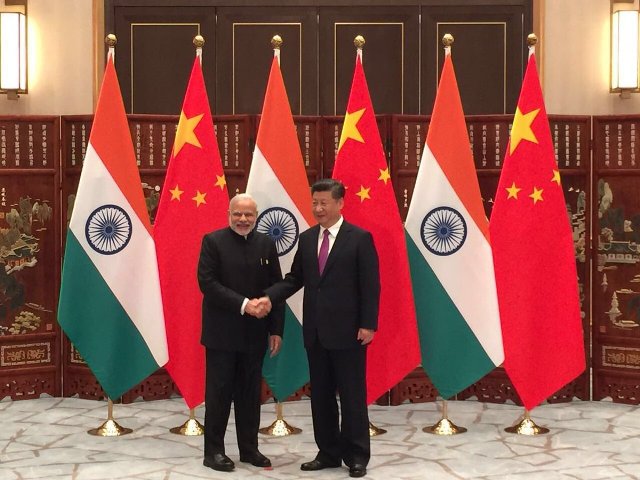
The Chinese reaction to QUAD meeting in the US has reflected its worry over the alliance which it views as a challenge to its authority. That the QUAD identified soft power as its main agenda left China relieved, yet considerably scratchy. It had earlier dismissed the alliance as “so much froth in the Sea”. Post the meeting in the US, Chinese spokespersons opined that the alliance will not last.
Either China is harbouring a wrong perception of QUAD or it is putting up a brave face. The ground reality is that QUAD will not only survive, it will also evolve and prosper. In fact, it will not be the only trajectory thrown by the US towards China in the near term, as is evident from the resurrection of the AUKUS (Australia, United Kingdom and United States) alliance which has a larger military significance than the QUAD. If India and Japan were to give support to AUKUS while being effective members of QUAD, there would be a 360 degree net around China involving both hard and soft power.
While the world gets its act together, the internal situation in China is deteriorating at a fast pace, especially so, on its economic front. It’s much touted Belt Road Initiative (BRI) is in tatters. Countries like Pakistan, where the China-Pakistan Economic Corridor (CPEC) has been created under BRI, are in no position to pay back the huge amounts taken as loan for the projects. It is often said that China will occupy the real estate, but then, of what use is real estate that gives no returns? It will require money for maintenance, thus incurring more losses, before it is finally shelved as non-productive.
Internally, huge Chinese companies are facing bankruptcy with billionaires being executed and jailed. These actions are in line with the so-called concept of “common prosperity'” created by President Xi Jinping, ostensibly for building an equitable society. It involves forcible transfer of the assets of Billion Dollar Chinese companies to the common people who have been badly impacted due to the COVID created recession and are now grappling with loss of jobs, extreme poverty levels and huge disparities of income. There are visuals available of Chinese people forcibly occupying headquarters of former Corporate houses and demolition of half constructed towers of infrastructure companies.
Xi has a personal
axe to grind since his future is to be decided in 2022 when he completes his
two terms and the maximum age limit of 68 years. Can Xi afford to be brazen
with the world while his own house is in absolute disorder? The manner in which
he is going about trying to remain afloat may well backfire on him quite badly.
India will need
to look at the larger Chinese picture with great sensitivity. While she has
gained the support of the west and its Indo-Pacific allies, the immediate
neighbourhood remains a matter of concern. China has Pakistan as a viable tool
to contain India; India sadly, has nothing to show to offset the Chinese
advantage.
Chinese interest in Afghanistan is well known and in direct conflict with India’s deep relationship with the country nurtured over decades of engagement. India will need to have a stake in the foreign investments called for by the new government in Afghanistan first to secure her considerable assets in the country and then to shore up her economic presence in the country. India has a disadvantage in the form of the China-Pakistan alliance that is taking advantage of shared borders.
The problems of
Chinese interventions in other neighbouring countries like Sri Lanka, Nepal,
Bangladesh and Myanmar persists. For India it is essential to explain to these
countries the folly of falling into the debt trap that China is so assiduously
creating within them.
In the next step comes the Indo-China border conflict that periodically escalates into high levels of tensions taking both countries to the verge of an all-out war. As the time for President Xi Jinping to leave draws nearer, there will be a high degree of desperation to cling to power, leading to the possibility of the border face-off escalating to unacceptable levels, only to feed his ambitions. India, therefore will need to be prepared for a big bang along the Line of Actual Control (LAC) in 2022. The trigger will be provided by India’s face-off on issues involving the neighbourhood and the Indo-Pacific region.
India cannot
afford to base her response on assistance coming from any outside resource be
it the west or other countries aligned with her to contain China. It is so
because even today all countries of QUAD are following an independent trade
policy with China while also remaining in the alliance.
Notable for
mention here is that Japan has a net trade surplus with China which it can ill
afford to ignore and Australia has trade relations with China far in excess of
what it has with India. The US wishes to contain China more in its role as a
business competitor than a strategic adversary. India, therefore, has a long,
lonely battle to fight against China along the “Hot Border” that it
shares with the country. It is best to stay alive to the reality that it can be
forced into a conflict at any time and needs to remain prepared accordingly.
Staying prepared
does not imply that India should shed the option of building bridges with its
neighbour. That, in fact, should get the biggest thrust. We need to replicate
the policy being adopted by other QUAD members. It would also not be in the
interest of India to look at China from the same prism that it looks at
Pakistan with, even though the two countries seem to be tied together with an
umbilical cord. There may be some lessons to be learnt from the manner in which
Russia has resolved its disputes along the border and in other aspects with
China, but then, the matter stops at the dictum, “it takes two to clap”.
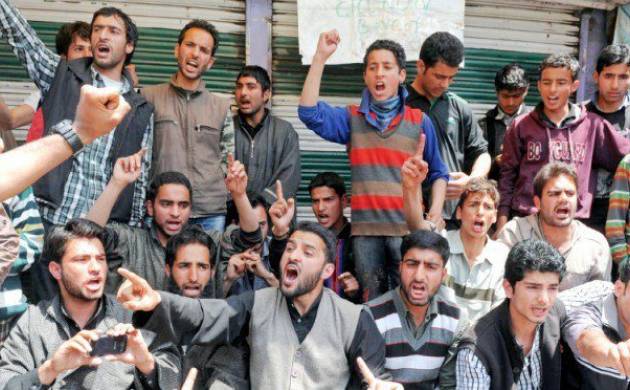
The people of Kashmir, over the last three decades, have contested foreign sponsored terrorism with utmost resilience and heroism. Recently, with a limited and parochial objective of registering their waning presence, terrorists brutally murdered innocent members of the minority community in Kashmir. Those killed mercilessly included a pharmacist, Makhan Lal Bindroo, of the Kashmiri Pandit community; Supinder Kaur, a Sikh principal of a school; Deepak Chand, a Hindu teacher in the same school and Verindra Paswan, a simple hawker from Bihar who had come to the beautiful land to earn a meagre living.
With this dastardly action, the evil terrorists and their masters across the border intended to break the spirit of the people. They failed miserably in their attempt. The biggest riposte came from Dr. Shraddha, daughter of the late Makhan Lal Bindroo. In a spirited address to the media, the video of which has gone viral across the world, the young lady conveyed to the terrorists the folly and futility of the mindless killings that they are indulging in. She shed no tears and showed no fear as she ripped apart the terrorists and exposed them for the mindless and vicious killers that they are.
This is the youth of new Kashmir – educated, bold, ideologically committed, nationalist and aspirational. It is this young generation which will propel the region out of the debilitating shadow of the gun towards new heights of glory. There is a miniscule segment among this lot who continue to be lured by false promises of the terrorist cadre. They are the weakest link in the chain, the lowest scum with no capability to chart out a future as is being done by a vast majority of their contemporaries. In time they will get overwhelmed and will be compelled to shed their wrong path.
The government of India and its various institutions in Kashmir are leaving no stone unturned in assisting the youth in their push towards a better life. The Indian Army, in particular, has been putting in maximum effort in this direction. In its latest initiative under its flagship welfare scheme “Sadbhavna” the Army has collaborated with Mewar University to provide quality education to the talented but underprivileged youth of Jammu and Kashmir. Mewar University is a well reputed autonomous body set up by the state government of Rajasthan. This is one among many such initiatives taken by the Indian Army earlier towards providing quality education to the youth of J&K in reputed education institutions across the country.
300 students have been selected on merit to attend higher education courses in the University in Chittorgarh, Rajasthan. The students were felicitated by Lt. General D.P. Pandey, Commander of the Srinagar-based Chinar Corps who urged them to take full advantage of the facility being provided. He also handed over a cheque of Rs. 2.5 crore to Ashok Kumar Gadiya, Chairman, Mewar University.
Thus, the Army has given to Kashmir 300 more Dr. Shraddhas. Can the imbecile terrorists and their evil masters match this thrust towards peace and prosperity?
The Indian Army’s welfare initiative Sadbhavna has been doing yeoman service for the last almost three decades. It touches all aspects that impact the day to day life of the people be it medical treatment, infrastructure development, etc. Youth empowerment, however, is a Key Result Area (KRA) of Sadbhavna. Army Goodwill Schools have been instrumental in meeting the pressing educational requirements since the time when the government education infrastructure collapsed under the terrorist threat. Now, even though things are much better, the Goodwill Schools continue to function and produce some of the best results in the Union Territory (UT) for the CBSE examination.
In an effort to involve
the youth in gainful and constructive activity, the Army has established a
number of Youth Employment Guidance Nodes (YEGN) that provide information
regarding employment opportunities. Vocational training centres have also been
set up where the employed teachers hail from within the local population,
making them more acceptable to the people in addition to creating more
employment.
The most
significant initiative through Sadbhavna in higher education is the ‘Kashmir
Super 30’ project launched in 2014 by the Army and modelled after the
well-known ‘Super 30’ programme of Bihar. It has achieved excellent results
year after year. Such has been the success of the programme that it has now
been converted to Super-50.
The government at the central as well as the state level is putting in all effort to give a boost to education and employment in the UT. Many top institutions like IIT, IIM, IMC and Central Universities have been opened in the region. They have supplemented earlier initiatives like the J&K Entrepreneurship Development Institute (EDI), whose building in Kashmir has been attacked by terrorists on a number of occasions. It is funded by the state employment department to assist youth in setting up business ventures.
While efforts are
being made in a dedicated manner, many challenges persist. Anti-national
elements are hell bent upon disrupting the development process by spreading
misinformation. Concerted efforts are being constantly made to indoctrinate
more and more youth to the path of terrorism, sadly, some of the weaker and
more vulnerable boys get entrapped. This venomous ideology is designed to
destroy the future of Kashmir; it has to be vigorously contested.
More effort is needed to reach a level where the situation becomes proactively good. Though education is available, unemployment continues to be a reason for worry in the UT of Jammu & Kashmir. The government is doing its bit but more is required.
The positive and upwardly mobile environment among the youth in the UT is palpable. It is very important to maintain the momentum, stay constantly engaged with the youth and give them the much required boost for better prospects in life. The army and the government are doing what they can; a bigger effort needs to come from the civil society.
A few weeks after Taliban’s takeover of Kabul, Afghanistan on 15 August 2021, Pakistan’s selected Prime Minister Imran Khan praised the Taliban victory as ‘breaking the shackles of slavery’. Pakistani pro-Taliban groups and Pakistani media termed the victory of Taliban as the victory of Islam! But is this really a victory of Pakistan, or it’s the beginning of its downfall?
Let us look at some key points to assess the situation.
Pakistan, at its core, is a fundamentalist/radical Islamist ideological country that sponsors terrorism. However, Pakistan shows to the world that it is a progressive and secular country and it officially denies enforcing Shariah law in the country. This is a charade.
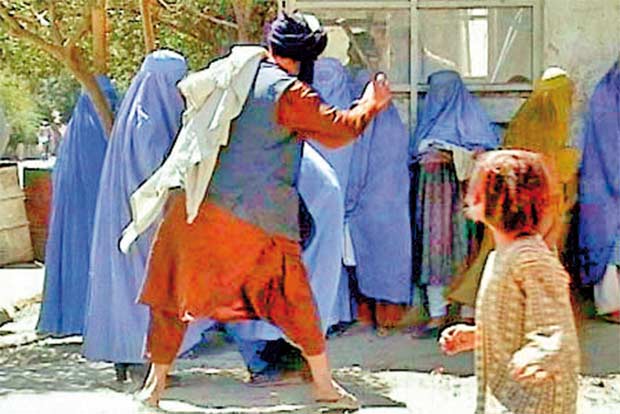
Taliban flogging the women.
Now at this time when the Taliban is becoming stronger in the region, they are putting pressure on Pakistan to impose Shariah law failing which Pakistan will face severe consequences.
2. BRI (Belt and Road Initiative) & CPEC (China-Pakistan Economic Corridor) China’s multi-billion investment (read loans) in Pakistan on BRI and CPEC projects is on very high interest rates. Recent attacks by TTP on CPEC project is a clear indication of their motives. Due to this fight between Pakistan and Islamist TTP, expansionist CCP’s (China’s Communist Party) ambition are getting sandwiched, which is slowing the progress on CPEC projects. China has stopped injecting more money into Pakistan’s economy. Although Pakistan continues to offer amnesty to TTP leadership and is begging them to stop attacks on CPEC projects, yet TTP is loud and clear on their demand of Sharia law implementation in Pakistan.
China, of course, is trying its best to solve this problem. Recently Beijing threatened Pakistan government that if TTP is not handled by Pakistan then China will carry out attacks against the TTP on Pakistan’s soil by themselves. This situation can make Pakistan surrender to the TTP’s demands and officially implement shariah law in Pakistan. If not, then Pakistan and China will suffer at the hands of their own Frankenstein monster–Taliban.
3. Unsafe Pakistan Pakistan is infamous for its gross human rights violations, sexual assault on women and children and human trafficking. Pakistan routinely persecutes the religious minorities on its soil and has become an unsafe place to live in.
4. Regional Freedom Movements Pakistan is an unnatural country that was created on the basis of ‘Two Nation Theory’ and on false ideology. This theory has already been proved false in 1971 when East Pakistan (now Bangladesh) left Pakistan. Now the struggle for self-determination by Sindh, Balochistan and Pashtunistan is putting strains on Islamabad. These historic nations are chained to slavery to the Panjabi Pakistan in the name of federal government. Panjabi Pakistan’s atrocities and exploitation of the national resources of enslaved historical nations continues to grow every day. The sentiment over national identity crisis is increasing everyday.
5- National political crisis After ‘winning the election’, Imran Khan, PTI Chairman took oath as selected Prime Minister of Pakistan. From day one since he sat on the PM’s chair, Imran Khan said that all opposition political parties’ leaders would be punished for their crime of looting Pakistan’s money over the last seventy years. Due to his harsh statements, which continues till today, all opposition parties that practice, believe and take part in Pakistan’s electoral politics are treated as enemies. Due to this situation Pakistan is going through a critical political crisis internally. A clear division is seen all the time even on Pakistan’s national issues and interests.
6. FATF (Sword of Damocles) The FATF (Financial Action Task Force) is the Sword of Damocles that has been hanging over Pakistan’s head since long. Pakistan is currently on FATF’s grey list and has been warned that lack of compliance with international regulations on terror financing will result in the country being downgraded to the black list. Only Iran and North Korea are currently blacklisted. Blacklisting by FATF will isolate Pakistan financially by severely impacting its borrowing credentials.
Pakistan is the
only country in the world that hosts thousands of terrorists, runs terrorist
training camps for global jihadis and has an army that openly controls many of
these terrorist groups and carries out terrorist attacks against sovereign
nations.
7. Other international developments
(A) AUKUS agreement signals a paradigm shift in strategy and policy across the region. Although the USA, UK and Australia (AUKUS members) have said in a statement that the agreement is not about confronting the CCP.
(B) QUAD meeting visit by the Indian Prime Minister Narendra Modi to the US this month during the UNGA session in New York USA. This meeting is also important regarding the presence of USA in Asia.
(C) In US Congress, Secretary of State Antony Blinken said that the US would assess its ties with Pakistan and Afghanistan, after hard questions were asked to him by at least four Congressmen about the future of Afghanistan. These Congressmen criticized Pakistan’s role in the war against terrorism.
(D) Presence of Israeli submarines equipped with nuclear weapons (unconfirmed) in Middle East waters to control trade routes to Asia. USA, Australia, EU, Japan, India and Arab countries are together on such operations.
(E) In the 20th Shanghai Cooperation Council summit, Pakistan’s PM asked for help from member countries to invest in Taliban-controlled Afghanistan. The main stakeholder China is also willing to help to complete the BRI project by supporting the Taliban.
(F)WhilePakistan’s economy is collapsing, the value of dollar is increasing, and Pakistan’s debt is at its peak.
(G) Recently on 27 September, 22 Republican Senators moved a bill in the US Senate that seeks to assess Pakistan’s alleged role in Afghanistan before and after the fall of Kabul and during the Taliban offensive in Panjshir Valley, amid a widely spread social media campaign worldwide hash tagged #SanctionPakistan.
Pakistan has been completely isolated and is left with only a few friends internationally. There are only few survival options left with the Panjabi Pakistan.
BLF’s July-September 2021 Quarterly Report and list of its armed activities against occupying Pakistani forces in Pakistan-occupied Balochistan
The Balochistan Liberation Front (BLF) was formed to reinstate the separate Baloch identity and regain Balochistan’s sovereignty from occupier Pakistani regime. With its establishment, BLF, along with armed struggle, began to create political and ideological awareness about the Baloch nation and has endeavored to bring Baloch people from all walks of life together to join the armed struggle, so that the masses consciously, politically and ideologically get involved in the resistance. Because, the struggle for independence is impossible without the participation of masses.
On the fundamental principle of freedom for occupied Balochistan, BLF is educating Balochistan to be ideologically and politically aware. Ideologically motivated BLF fighters, along with armed resistance are expanding the independence struggle with political awareness across Balochistan.
Balochistan is now destroying the occupying Pakistan state’s army and responding in a befitting manner to their parliamentarian tools, death squads, religious extremists including countering the occupying state’s propaganda machinery and its fake narrative.
Organization’s fundamental principle is to ensure vetting and educating BLF fighters enough so that the weapon in their hands must remain a weapon in the hands of a revolutionary and their steps may never sway defending motherland.
Today, across the length and breadth of Pakistan-occupied Balochistan, BLF’s brave fighters are present on the ground with their revolutionary weapon in defense of their country against Pakistan’s regular army and other security forces. Certainly, fighting on various fronts at once against Pakistan Army, federalists, local agents, informers, death squads, drug dealers and religious extremists is difficult. But at every given moment, BLF fighters are sacrificing their lives and vigorously leading the Baloch national struggle on the principles of the organization towards the ultimate goal.
The Balochistan Liberation Front (BLF) carried out forty eight lethal attacks against the Pakistani forces during the third quarter of 2021 from July till September in which more than seventy nine Pakistani soldiers were killed and dozens injured. Three attacks were carried out on Pakistani military construction company, Frontier Works Organization (FWO), two attacks were made on mobile phone towers, and one attack was carried out in Karachi on Chinese engineers.
July 2021
2nd July 2021: BLF fighters attacked the construction site of Frontier Works Organization (FWO), a military construction company near Turbat Airport, district Kech, Balochistan. FWO’s machinery and other equipment were burned in the attack. At the same time, BLF fighters targeted FWO residential tents, causing casualties to the occupying military company. “We warn local contractors not to support the occupying state in these projects, otherwise, they will be responsible for the loss of life and property,” BLF said in its media statement.
The company is trying to build a road
from the airport to D-Baloch and a new settlement called the Mirani Housing
Scheme, five kilometers along the same route, where a conspiracy to resettle
non-Baloch is being carried out. These lands of Mirani Housing have been
obtained free of cost by tricking the local population into building a
university.
5th July 2021: BLF fighters attacked the executives of Pakistani Military Construction Company Frontier Works Organization (FWO) working on the CPEC route in Teertej area of district Awaran, Balochistan. At the same time, BLF fighters fired several rockets and attacked a Pakistani military outpost with heavy weapons in Jikk area of Teertej, district Awaran, Balochistan, causing heavy casualties.
Pakistani Military personnel deployed on the route of the CPEC project are occupying all the settlements and agricultural lands. BLF warned local contractors to stop taking FWO partnership contracts and refrain from state projects, otherwise they would be responsible for their own losses.
8th July 2021: BLF fighters targeted a military post in Zamri-Kaur area of Zamuran in Bulaida, district Kech, Balochistan with heavy weapons, causing heavy casualties to the occupying forces.
10th July 2021: BLF fighters attacked the Pakistani military and workers of the company erecting a fence on the Iran-Balochistan border in Chokkaap area of Mand, District Kech, Balochistan. Five Pakistani personnel were killed and two were injured in this attack.
11th July 2021: BLF snipers shot and killed a Pakistan Army soldier at a military check-post near Dozzrah, in Apsi-Kahn area of Tump, district Kech, Balochistan. BLF fighters also targeted two Pakistani military vehicles with a remote-controlled bomb in Sardasht area of Kulanch, Pasni, district Gwadar, Balochistan. One Pakistani vehicle was badly damaged in this attack, killing five military personnel and seriously injuring three others. One of the dead was a Captain of Pakistan Army.
12th July 2021: BLF fighters attacked Pakistani military personnel when they were on security patrol for the workers erecting a fence on the border in Chukkap Mand. Three army personnel were killed.
16th July 2021: The BLF fighters fired several rockets at a Pakistan Army post in the Cheyri Bazaar area of Gomazi, district Kech, Balochistan. The rocket landed inside the check post, causing loss of life and property to the occupying army. This check post was set up by occupying the house of martyred BLF fighter, martyr Captain Jahangir.
23rd July 2021: BLF fighters fired several rockets at a Pakistan Army post in the Sari Bazaar area of Gomazi, district Kech, Balochistan and inflicted heavy causalities to the occupying army.
24th July 2021:The BLF snipers shot and killed one Pakistani military personnel at a military check post in Baanpeer-Kandag area of Apsi-Kahn area of Tump, district Kech, Balochistan.
28th July 2021: BLF fighters attacked the vehicle of Chinese engineers at Sher Shah area of Karachi in which two Chinese were seriously injured. Under the guise of development projects, China is not only a partner of Pakistan in the plunder of Baloch national resources but also fully supports Pakistan in the Baloch genocide, including war crimes against the Baloch nation.
“We are not at war with any foreign power, including China, but any state or group including China if it supports Pakistan or Pakistani occupation of Balochistan, looting of resources and committing war crimes, will be targeted,” BLF said in its media statement.
August 2021
1st August 2021: BLF sarmachaars (freedom fighters) attacked a military post at Zrankoli Kaur (river) in Awaran district with rockets and heavy weapons. In the half-hour battle, the Pakistani forces have suffered heavy loss of life and property.
2nd August 2021: A landmine was planted at a check post set up to provide security to a military convoy at Sehr in Jhaoo Tehsil of Awaran district. As the troops entered the post, they were hit by a landmine, killing one and injuring three.
5th August 2021: At around 6 PM, BLF sarmachaars (freedom fighters) attacked a Pakistani military check post guarding the China-Pakistan Economic Corridor (CPEC) route in Omari Khan area of Saami, district Kech, with a sniper rifle and killed an army personnel.
6th August 2021: At around 2 AM, the BLF freedom fighters simultaneously attacked two check posts set up for the security of a Pakistan Army camp on the route of the CPEC project in Goraan area of Panjgur district. Sarmachaars fired rockets and heavy weapons at both checkpoints. Soldiers at the two checkpoints were killed and wounded. After the fierce attack, as soon as the BLF fighters came close to capturing both the outposts, the air support of the occupying forces arrived. Despite this the Baloch sarmachars defeated the enemy forces and reached their safe hideouts.
Pakistani forces tortured innocent Baloch people during an operation in Peerandar and Daraj Kaur. The Sarmachaars then targeted a Pakistan Army vehicle with a landmine in the Daraj Kaur area of Awaran. The occupying forces suffered casualties in the attack.
7th August 2021: At Saturday evening, a Pakistan Army personnel was killed by a sniper rifle at a military post on Hamzahi Koh Mountain between Bagh-e-Zawa and Aspi Kahn. The outpost was later targeted with automatic weapons. There are several military outposts in these areas near the border, which are also providing security to fencing companies.
8th August2021: On Sunday evening, BLF sarmachaars attacked Pakistan Army posts in Azian and Barat areas of Tump in Kech district with sniper rifles, killing two Pakistan Army personnel.
9th August 2021: BLF sarmachaars attacked a military post in Baragen Ghazi area of Jhaoo area in Awaran district at 5 pm with rockets and heavy weapons. Occupying army suffered heavy casualties.
11th August 2021: In Dandar area of Kech district, BLF Sarmachaars attacked the Pakistan Army with rockets and heavy weapons due to which the occupying forces suffered casualties in this attack.
Military post in Kannechi area of Kolwah in Awaran district was targeted by the BLF Sarmachaars with heavy weapons, killing and injuring the personnel inside the post.
Sarmachaars also attacked a military camp outpost with sniper and rockets in the Dokop area of Mand in Kech district. The occupying Pakistani forces have suffered heavy casualties in the attack.
13th August2021: BLF Sarmachaars (freedom fighters) hurled grenades at the military check posts at the Hospital Methag (Mohalla) in the Sangani Sar area of Turbat, the capital of Kech District, and at the military checkpoints on the Rakhshan Kaor (River) bridge in Panjgur. Occupying forces have suffered casualties in these attacks. Sarmachars detonated a remote-controlled bomb in Dasht area of Quetta at a vehicle of enemy Pakistan Army. The vehicle was completely destroyed and four personnel on board were killed on the spot and the rest were seriously injured.
The Pakistan Army camp in Manguli area of Wadi Mashkay, district Awaran, was targeted by BLF Sarmachaars with rockets and heavy weapons. Three rockets landed inside the camp, while personnel guarding the camp’s security fronts were hit by heavy weapons, killing two personnel on one front. The rocket also caused heavy casualties to the forces.
At 9 PM, BLF Sarmachaars fired rockets and A-1 shells at the check post of the Pak Army main camp at Buleda, Bit, killing three soldiers.
14th August2021: BLF Sarmachaars hurled a hand grenade at a military check post at Apsar Apdork River in Turbat, Kech. The grenade fell inside the check post, killing and injuring military personnel at the check post.
In the industrial
city of Hub Chowki in Balochistan, Pakistani military check post, at the Meenar
along the bridge at Hub Chowki was targeted by Sarmachaars with automatic
weapons. Occupying forces suffered casualties in the attack.
15th August 2021: BLF freedom fighters attacked Frontier Works Organization (FWO) personnel with heavy weapons on the CPEC route near Faiz Hotel in Hoshab, district Kech, killing two personnel.
19th August 2021: Five Paki soldiers were killed and several others were injured in a half-hour battle with the Pakistan Army in Chibi area of Jhaoo in Awaran district.
20th August 2021: BLF Sarmachaars targeted the Ufone Tower in Ziarat Machi in Gwadar, at 2 AM, and set fire to all the machinery and equipment.
21st August2021: BLF Sarmachaars ambushed a convoy of Pakistan Army in Solair area of Washuk district and attacked it with heavy and modern weapons. After the attack, BLF freedom fighters laid a landmine on the way of the vehicles coming to the aid of the enemy army, which completely destroyed a Vigo vehicle of the forces and killed all the eight personnel on board. Several troops were also killed and wounded in the attack on the military convoy.
22nd August 2021:BLF snipers shot
dead a military personnel at an army post at Chatuk-e-Dun area of Buleda Bit, district Kech.
23rd August 2021: BLF Sarmachaars shot dead a military personnel with a sniper rifle, at a military check post on Nokain Raah in the Dasht area of Kech District.
26th August 2021:A military man was shot dead by a BLF sniper at an Pakistani check post in Pensin Kaur area of Dasht in Kech district on Monday evening.
Major Gwahram Baloch, spokesman of the Balochistan Liberation Front (BLF) paid rich tributes to Ssarmachaar (freedom fighter)Imam alias Daggar. Major Gwahram said that Imam had been associated with the BLF since 2010. “He had been ill for some time and died under treatment. We appreciate his sacrifice and his hard work for the defense and liberation of the Baloch land.”
September 2021
1st September 2021: BLFSarmachaars targeted a military post in Gajjali area of Mashkay Valley with rockets and heavy weapons, completely destroying the post. The Pakistan Army men at the checkpoint were killed and wounded.
2nd September 2021:In Gwadar’s Ziarat Machi area, Ufone tower was
attacked once again damaging cell phone tower and other machinery.
Two weeks ago, the tower was attacked and machinery was burnt. It had been repaired and its security was being handled by the Pakistan Army. The BLF sarmachaars attacked it at 5 PM and set it on fire once again.
6th September 2021: On Monday morning, BLF Sarmachaars detonated a landmine at a Pakistan Army vehicle between Rodka and Ashal in Kolwah. A pick-up truck in a military convoy was hit, killing four soldiers and seriously injuring three others.
7th September 2021: A Pakistan Army personnel was killed by a sniper rifle attack on a military check post at Jhal Jhaoo, Soor Ata Muhammad Bazaar in Awaran district. A sniper rifle
attack on a military post in the Bakaad area of Buleda killed an
occupying army personnel.
9th September 2021: BLF Sarmachaars ambushed a convoy of five Pakistan Army motorcycles and a vehicle at Sardakin Aap, an area between Buleda and Parom. The motorcycles in the convoy came under heavy attack, killing six personnel and injuring others. After the attack, three combat helicopters arrived in the area to assist the convoy and pick up the deaf bodies.
14th September 2021: BLF Sarmachaars attacked a military post in the Marwar area of Gomazi with rockets and automatic heavy weapons. The occupying Pakistani forces suffered heavy casualties in the attack.
16th September 2021: BLF snipers killed an army personnel at Gushanag Army camp check post and targeted the adjoining post and the camp with heavy weapons and rockets. Rocket shells fell inside the camp, causing heavy casualties to the forces. Sarmachaars ambushed a convoy of Pakistan Army consisting of three vehicles and two motorcycles in Turbat city. Two Pak army men were killed and three injured in this attack.
18th September 2021: BLF Sarmachaars hurled a grenade at a Pakistani military post at Cinema Chowk in Turbat, killing two army personnel. A military check post at Noko Hotel in Nondarah area of Jhaoo was attacked with heavy weapons, killing the occupying Paki army personnel.
19th September 2021: BLF Sarmachaars fired rockets and heavy weapons at a Pakistan Army check post on the CPEC project route near the Peri Hotel in Balgatar, causing heavy casualties to the forces.
25th September 2021: Balochistan Liberation Front (BLF) spokesman Major Gwahram Baloch claimed responsibility for the attack on a military convoy in Awaran district and said in a statement to media that the Baloch freedom fighters ambushed a Pakistan Army convoy in Kannera, Peerandar area of Awaran district. Sarmachaars targeted four vehicles and four motorcycles of the military convoy. A vehicle came under heavy attack and the soldiers on motorcycles also came under attack. Eleven personnel were killed on the spot. The Sarmachaars then fired heavy weapons and rockets at other vehicles in the convoy. Eleven personnel were killed and several others were injured in the attack.
28th September 2021: BLF Sarmachaars killed four Paki soldiers and wounded another in the Kech district. Major Gwahram said that Pakistan Army was erecting a fence on the border in Chukap Kaur (river) area of Mand. Throughout the day, military personnel provide security to the fencing personnel and return to the military camp in the evening. On Tuesday morning, the Sarmachars occupied the military front in Siah Kaur. Four Pak Army personnel coming to the post were attacked. One soldier was killed and another fell into a nearby mountain stream.
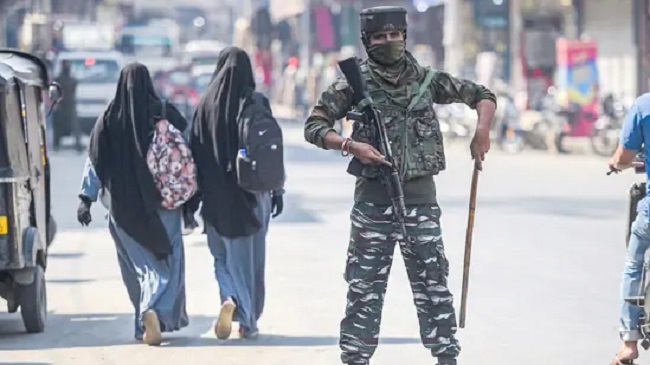
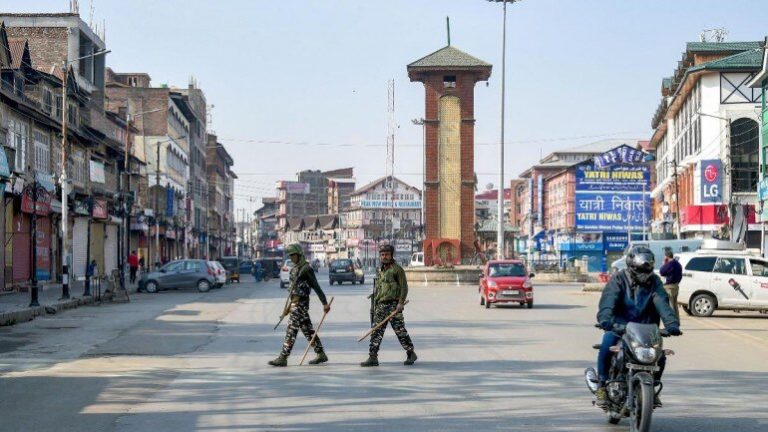
The continuing killing of minority community members and ‘non-locals’ in Kashmir Valley has made it abundantly clear that this barbaric trend has approval of those from across the Line of Control [LoC] who are masterminding the so called ‘armed struggle’ here. What’s even more disturbing is the perfunctory response of various local organisations and groups who are otherwise extremely vocal in condemning violence in Kashmir. A hitherto unknown group calling itself ‘The Resistance Front’ [TRF] has taken responsibility for these attacks, but it hasn’t explained as to how exactly its targeting of innocent people from the minority communities and ‘non-local’ migrants contributing to the success of their ‘armed struggle’?
Extinguishing
human lives can never be justified, no matter how grave the provocation might
be – most certainly not when the victims happen to be innocent civilians who
have nothing to do with the ongoing conflict or violence in Kashmir. Au
contraire, while targeting people on basis of their religion or because
they happen to be ‘outsiders’ eking out an honest living in Kashmir are
undisputedly acts of terrorism. So, public silence on this bloody pogrom is tantamount
to tacit approval. So, despite what TRF might say, the fact of the matter is
that while there are no positives of such killings, its negatives are plenty.
There are no doubts that such killings will have an adverse effect on the entire commercial ecosystem in Kashmir Valley, and the worst hit will be the tourism sector that is just recovering after a tourist drought due to the Covid pandemic. Though tour operators have been giving a host of assurances, and I too had tried to play down security threat to tourists by citing past statistics, but yet I failed to convince two of my friends, who have since cancelled their upcoming Kashmir trip due to security concerns. I’m sure that due to repeated incidents of non-locals being targeted in Kashmir Valley, there must be many more who’ve decided to shelve their visit plans.
Secondly, by targeting minority communities, the TRF (The Resistance Force) has sent out the signal that there’s no place for non-Muslims in Kashmir. Whereas the majority of Muslims in Kashmir Valley may not share this brazenly communal viewpoint, it nevertheless makes ‘outsiders’ wary. Anyone planning to set up an industrial unit here will perforce have to bring along non-local experts to train and guide locals in operating machinery and other production related procedures. However, since non-locals are specifically being targeted in Kashmir, this negative trend will make those desirous of setting up industrial units here think twice!
Thirdly, such targeted killings of people belonging to minority communities will surely encourage fundamentalist forces like Islamic State of Iraq and Levant-Khorasan [ISIL-K] which are desperately trying to gain entry into Kashmir Valley and turn it into a ‘caliphate’. The people of Kashmir shouldn’t forget that if such radical groups that follow their own skewed interpretation of Islam and sharia succeed in establishing themselves here, Kashmir will face the onslaught of sectarian violence and lose its centuries old unique cultural and social values.
Lastly, targeting of migrant workers by TRF (The Resistance Force) could well generate anti-Kashmiri feelings in the states to which the victims belong and so Kashmiris working outside the Union Territory of J&K may become unfortunate targets of retaliatory violence. As this has happened in the past, its repetition cannot be ruled out. Thus, the ultimate losers will be the people of Kashmir since they would be deprived of much-needed employment opportunities within Kashmir and not be welcome in some other parts of the country.
While TRF may wax eloquent on how it’s fighting for the wellbeing and bright future of the Kashmiri people, but the reality is that by targeting minority communities and non-locals, it is doing just the opposite. How damaging such killings are, is evident from the fact that even Pakistan, which otherwise keeps praising terrorists in Kashmir by referring to them as “freedom fighters” and “rebels” hasn’t mentioned a word in support of TRF or its activities.
This is why the Hurriyat and JKCCS needs to take a serious note of the senseless and self-debilitating violence of targeted killings by the TRF. If this is not done and TRF allowed a free run, then in the days to come, it’s the people of Kashmir who will have to pay a heavy price!
For quite some time the Bhartiya Janata Party (BJP) has not been feeling comfortable in Jammu’s urban as well as rural sector. Most of the BJP cadre are passionately nationalists and dedicated, but the discrepancy lies in the lack of towering leadership. The divided and divisive upper crest of the organization sends misleading signals to grassroots workers. The party does not grow and does not catch on an initiative.
The party’s central leadership gave the state wing the freedom of managing its affairs as it deemed fit. That is the democratic approach to which the BJP High Command has always stuck. But the sensitivity of J&K, its chequered history of pre and post-independence period and particularly the terrorist phenomenon through which the state has been grappling since 1989-90, all put together demand that important policy matters and crucial administrative decisions have perforce to be taken in unison. In other words, it means that some amount of functional freedom or even decision-making option may necessitate partial curtailment.
In the previous election, BJP had won 25 assembly seats, the maximum number of seats captured by the BJP in the electoral history of the state. People of the Jammu region pinned great hopes on this prospect. The BJP High Command, in its haste to be in the government in one way or the other, coalesced with PDP led by Mufti Saeed and after his death by his daughter Mehbooba Mufti. Kashmir watchers, pro or anti-Indian opinion makers one and all were surprised by this disastrous decision. With no trust in the local leadership’s advisory or consultative acumen, the central leadership of BJP committed a Himalayan blunder whose consequences can be understood from what our security mechanism is facing today. By our over-politicized psyche, I am afraid; we are stretching the patience of our jawans too far.
Inexperienced and almost raw in dealing with the smart Kashmir Valley political hawks and their complex political maneuvering, the Jammu region BJP legislators including its small segment of the Council of Ministers had no idea of how the PDP Chief Minister and her hawkish ministerial team would take them inconsequential rather non-descript stakeholders in the power-sharing mechanism of the coalition government. Their imbecility was pitiable and their servility inexplicable. Not to speak of the Jammu region, they were not allowed even the space to put a streetlight in their residential complexes. All expectations of ushering in a new era of development in the Jammu region gradually dimmed and finally disappeared. The Jammu-based legislators remained confined to their quarters and the coffee house. The irony is that at a point in time when the Deputy Chief Minister fell from favour and was going to be replaced by the BJP High Command, he begged the chief minister to intervene and save his skin.
Jammu BJP was in shambles. Everybody began complaining that BJP did nothing for Jammu. Disgruntlement against the local BJP chapter was rampant and people would not spare even the central government. How, after all, could they mete out such a scurvy treatment to Jammu when our enemy was spreading its tentacles clandestinely in the vulnerable and sensitive borders of the state. PDP was busy cultivating Jamat-e-Islami cadre to fortify its constituency and the National Conference (NC) was lamenting the loss of dynastic power. The state BJP was a house divided against it. Whatever little or big developmental work was done during the past five years was done by Dr Jitendra Singh minister of state in the Prime Minister’s Office (PMO) in his constituency through his effort and dedication as the MP.
This situation could not go on for too long especially when the agenda for delimitation of constituencies was vigorously pursued; to be followed by elections to the assembly. This time BJP senior echelons have shown that they take the Jammu political chessboard very seriously. A decision that has far reaching implications for Jammu’s status and significance on the political chessboard of Jammu & Kashmir has been taken at the right time. This could perhaps mean ushering in a new era of giving the Jammu region its rightful place in the political contest of the State.
Devendra Rana, the provincial president of National Conference (NC) along with Mr Salathia, senior NC leader former minister and about a dozen top ranking NC activists of Jammu have resigned from the National Conference and joined BJP. Mr Rana has been a staunch NC leader with a good following in Jammu though most of the Jammuites wondered why he towed the anti-BJP-led NDA government. Nobody believed it could be his conviction. His departure from the NC (National Conference) and immediate attachment to BJP indicates that the shift has been meticulously planned for quite some time and that at the end of the day an understanding was reached. What that understanding could be is not known as yet but given the stature, experience and the circumstantial take of things, one can presume that he is placed at a key position wherefrom he can purge the BJP of its rot, give it a clear and definite roadmap after due consultation with the Prime Minister and the Home Minister and party echelons.
Devendra Singh Rana, we hope, understands that a crown of thorns, and not of pearls, has been placed on his head. A huge and very complicated task awaits him. The Jammu BJP needs metamorphosis if it wants to play any historic role. This is the time when that role has to be initiated. Jammu BJP cannot and will not function like a divided house. The new structure of Jammu BJP under construction has to understand its responsibility to the nation. The epicentre of J&K politics and eco-hub has to shift to Jammu. It has to become a sprawling model of the north-Indian industrial hub, a co-terminus of cross-Himalayan connectivity grid, a tourist destination of unique human and natural synthesization.
The new political structure has to evolve with a vision of Jammu catering to the needs of the other two regions namely Kashmir and Ladakh also. Trade and commerce is the vital connecting link among them which is bound to receive a big boost once the Jammu-Baramulla 4-lane road and rail link are established by 2022. Jammu line will be extended to Rajouri–Poonch–Mendhar and Baramulla terminal will serve Rafiabad, Kupwara and Lolab Valley rail link one day. This rail and road connectivity will immensely enhance the commercial, social and political importance of Jammu and will also contribute to the rapid growth of the economy of the region. The emerging Jammu leadership has to have a vision and must come out of the cocoon. Why should not the terrorist moles and subversive dens in Jammu get decimated? Why should the border towns of Samba, Kathua etc. become the entrepot for jihadists from across the border? Why should Jammu’s security be jeopardized for undisclosed reasons? The problems of Jammu have to be resolved by the people of Jammu and the people have to understand who is best qualified to represent their aspirations.
Defence Ministry and policy planners in India were unnecessarily impatient to respond positively to the Pakistan Army’s offer of ceasefire in Jammu & Kashmir in February last year. Such strategic decisions should never be taken in haste or under an impulse. Was it not important to condition the ceasefire with no infiltration component?
Pakistan
wanted a respite on her border with India to upgrade its military and
intelligence involvement in the Afghan conundrum. She got it, thanks to our
misplaced eagerness.
India’s impatience sans deep introspection emanated from the outcome of our eyeball to eyeball stance with China on the Eastern Ladakh border. Our whole hog concentration on the Ladakh border did not make China change its deportment but Pakistan did find time to finalize a blueprint for the takeover of Kabul through the joint but covert operation with the Taliban.
Pakistan trounced the US as she has been doing in the past just because she has lavishly humoured moles in the Pentagon. In this perfidious trickery, of which the Doha dialogue is the high watermark, Pakistan emerged as the top gainer.
Pakistan’s Afghanistan gambit
The sudden visit of ISI chief Faiz Hameed to Kabul and securing the Interior Ministry portfolio for Sirajuddin Haqqani, son of the founder of Haqqani network late Jalaluddin Haqqani, and cooling down the heightened spirits between the two rival groups (Haqqani and Baradar) showed that Pakistan was playing a larger than its size role in what was unfolding in Afghanistan. How long will the ISI brokered reconciliation last remains to be seen.
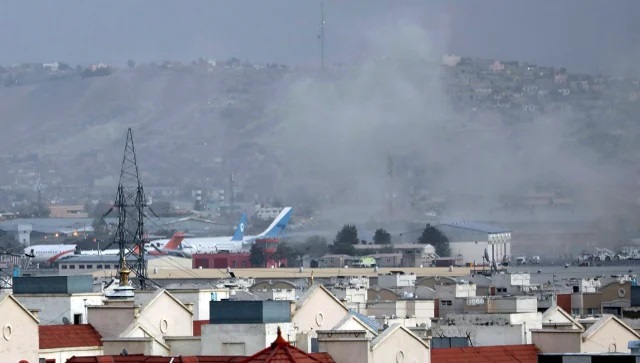
Explosion outside the Kabul Airport, Afghanistan on August 26, 2021. (Photo: AP)
Two or three weeks after the formation of the council of ministers of the Taliban regime, Pakistan took in hand two important missions. One is to secure formal recognition of the Taliban regime by more and more countries, and the other is to buttress its Kashmir operation by harnessing the Islamic jihadist factor.
Pak foreign minister Shah Qureshi knocked at the door of some Islamic countries to plead for the recognition of the Taliban. He began his mission with a visit to Tajikistan where he was snubbed by the veteran Tajik President Imomali Rahmon. The Central Asian Republics all gave him a cold response. Central Asia has divorced religion from politics. India miserably failed to dovetail her interests to this phenomenon in good time.
Nevertheless, Pakistan’s “iron brother” China would not fail her, not for any steel-frame fraternity but China’s own long range economic and strategic interests. Earlier, China invited a nine-member Taliban delegation headed by Mullah Baradar to Beijing for talks about providing support to cash starved Taliban. She has committed about US$ 31 million by way of aid under various heads. At the same time, China has indicated her willingness to recognize the Taliban regime at its proper time.
President Putin has been blowing hot and cold in the context of Moscow’s policy towards the Taliban. He cannot accept them because Russia rejects terrorism, and she cannot reject them outright lest the Taliban mend the fence with the Americans which is a near possibility. The statement by various leaders that recognition of Taliban depends on their performance is the ostrich like excuse of hiding the head in a dune and believing nothing wrong is going to happen.
Some observers think that there are some hidden clauses in the Doha Agreement. There are questions like why the Afghan State forces were functionally crippled forcing them to desert or surrender to the Taliban in large numbers? Why was President Ashraf Ghani dumped so ignominiously and the way made for the Taliban to walk unhindered into his palace? Why the Americans walked away from Bagram airbase in the dead of night leaving an enormous war machine for the Taliban to loot? How the pro-America Afghans were left unprotected in a lurch, speaks of the imbecility of the planners of the Afghan war. The American defeat in the Afghan war was not inevitable but was invited.
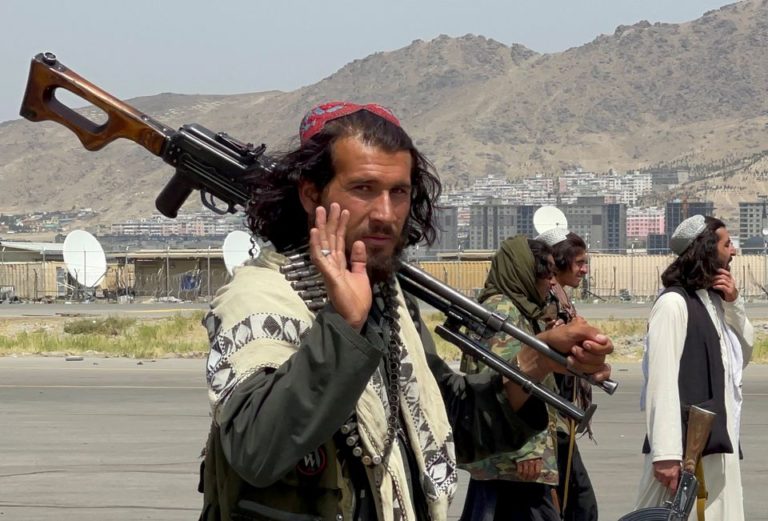
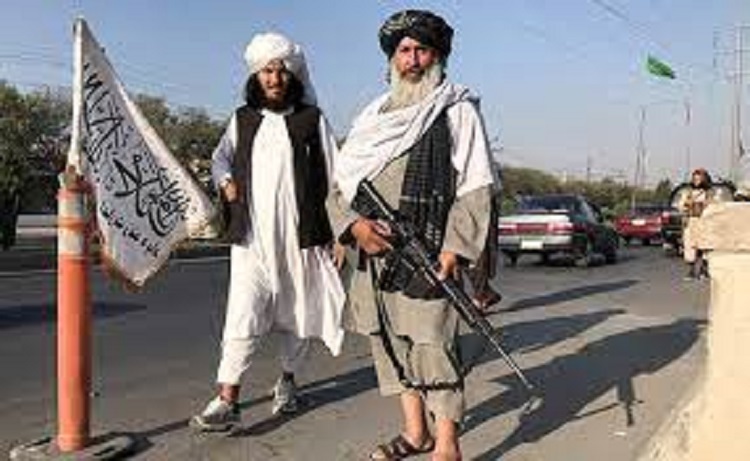
Taliban on the streets of Afghanistan
After the fall of Kabul, the question that is hotly discussed in political, academic and media circles in India is whether, after stabilizing the administration in Kabul, the Pakistani handlers of Taliban will induce them to “liberate Kashmir from the domination of the infidels?” The Islamic mission of uprooting infidelity (kufr) from the face of the earth to convert it into Dar-al-Harab is what was drilled into the ears and minds of the Taliban students in the religious seminaries of Pakistan where they have received their education and training.
We have been closely monitoring the mixed reaction of the Taliban to this question. More matured and meaningful among the Taliban leadership believe that Taliban have a history of not fighting on the soil of a foreign country but remaining content with their own and national affairs. That may give some make-believe relief to Indian think tanks.
But
on the other hand, the rabid anti-India Haqqani network is emboldened to
announce Kashmir as their next mission. The Haqqani network is the creation of
ISI which funds it for undertaking the subversive task of seriously hurting
Indian interests in Afghanistan. A couple of attacks made on the Indian embassy
in Kabul or on some infrastructural projects completed by Indian construction
companies in Afghanistan were undertaken by the Haqqani network on the behest
of ISI. The destruction of the Buddha statue in Bamiyan and massacre of Hazara
Shias of North-Western Afghanistan, too, were the handiwork of the same Haqqani
network.
The Haqqani network served as the master key in the hands of ISI which Islamabad used deftly to hoodwink the Americans who had been insisting on the decimation of the network.
Pakistan-sponsored Haqqani group in Kashmir
The ground situation motivates the Pakistani spy agencies to look for collaboration of the battle-hardened gunmen of the Haqqani group to exacerbate terrorist activities in Kashmir. Though the LeT– the Kashmir-centric terrorist group based in Pakistan are fully trained and equipped to take subversion to any extent in Kashmir, yet the Haqqani network has the capability of providing Kashmir chapter of Pakistani jihadist groups the wherewithal that would boost their morale and hone their guerrilla warfare in Kashmir.
Pakistan has been preparing for a drastic change in its war tactics necessitated by the surprising success of General Rawat’s Operation All-Out in Kashmir, which thinned the numbers of the home bred terrorists, dried up fresh recruitments and choked funding sources to a great extent. Under the revised strategy, the ISI has replenished the PoK (Pakistan-occupied Kashmir) and Khyber-Pakhtunkhwa based terrorist training camps mostly with Punjabi suicide bombers and recruits who now wield highly sophisticated weaponry left behind by the runaway Americans at Bagram airbase in Afghanistan.
Under revised tactics, The Resistance Force (TRF) is the name given to the new terrorist outfit now active in Kashmir. It is derived from the well-known LeT outfit and given a different name because LeT is designated by the UN and the US State Department as well. The newly recruited youth from Pakistani seminaries are instructed to carry only a small China-made pistol which can be easily hidden under garments. The specified targets are (a) Kashmiri Hindus (Pandits), (b) Kashmiri Sikhs (c) Kashmiri Muslims alleged to be the sympathizers of India (d) People (of any faith) from outside Kashmir but having business or service interests in Kashmir and residing in Kashmir.
It is to be noted that making this categorization of their targets is to give out an impression that the TRF (The Resistance Front) is fighting India’s diabolic policy of effecting demographic change in Kashmir. This is what leaders like Farooq Abdullah and Mehbooba Mufti are openly and publicly preaching. By floating this propaganda and publicizing fabricated allegations against their victims, as in the case of ML Bindroo (about which they issued a handbill also on their organization’s letterhead) they want to legitimize their heinous crimes in the eyes of the ordinary Muslim citizens of Kashmir. This is precisely what the Hizbul Mujahideen was doing in the 1990s. Unauthenticated reports suggest that the TRF (The Resistance Front) has prepared a hit list of 250 known and prominent Pandits and Sikhs of Kashmir. The Sikh leadership of Kashmir valley is reported to have warned the terrorists and their internal as well as external supporters not to force every Sikh of Kashmir to become another Hari Singh Nalwa. These are not at all good portents.
The travesty of this massive perfidy is what one may characterize as typical Kashmiriyat. A news channel showed some Kashmiri Muslim youth– boys and girls–vociferously denigrating the barbaric acts of the TRF (The Resistance Front) and entreating the victimized Pandits and Sikhs not to leave Kashmir but face the challenge boldly. Haroon Rashid, the Srinagar-based reporter of the prestigious Hindi daily Dainik Bhaskar, reported that from two prominent mosques in the city of Srinagar, the Imams in their Friday prayer address advised the non-Muslim religious minorities of Kashmir not to leave Kashmir as their neighbours would protect them. They also exhorted the Muslims to demonstrate against destabilizing the peaceful life in Kashmir.
These are good signs of building confidence and the Hindus and Sikhs should welcome it. But is it really going to help? We respect the mosques but we regret the trust deficit when same mosques were used in 1990 to chase the Kashmiri Pandits out of their homes and hearths. What would really help is that the entire population of the city of Srinagar and the towns of Kashmir pours out on the streets massively and demands full protection of the entire Kashmirian society against the Pakistan-sponsored mayhem and perfidy. These protest rallies have not to be only in support of the minorities but in support of the general public in Kashmir that has been held hostage for the last seventy five years to a false slogan of “Islam in danger”. The revolution through terror eats up its children. That is the harsh verdict of history.
As General Qamar Bajwa, the all powerful chief of the Pakistan Army, prepares to drift into retirement and ignominy, he would be ruing the day he decided to place all his political eggs in the basket of Imran Khan and his political party, the Pakistan Tehreek-e-Insaaf (PTI).
The concept was in line with the thought process of the “establishment” (Pakistan Army) to transfer all responsibility to a weak and pliable political entity while keeping all authority with itself. From experience, General Bajwa had noted that big leaders like the Bhuttos and Nawaz Sharif could be controlled only to an extent and were quite prone to showing their claws from time to time. Such a situation was considered to be unsuitable, he therefore homed in on Imran Khan and hoisted him at the helm through a rigged election in mid-2018. What Bajwa had not contended for was the complete lack of acumen and ineptness of Khan.
The biggest impact was felt in the crucial domain of foreign affairs. It is well known that Pakistan survives on doles from the West, Middle East and China; it is perpetually looking for loans from West controlled financial institutions like the IMF, World Bank, Asian Development Bank etc. Imran Khan has managed to annoy the West and the Middle East (including all weather friend Saudi Arabia). China too is quite frustrated but continues to hold Pakistan’s hand due to its own geo-political compulsions.
The Pakistan Army realised Khan’s political naivety and obtuseness in October 2019, when he was called upon to build world opinion against the constitutional changes in the status of Jammu and Kashmir brought about by the Indian parliament. Imran, at the behest of the Pakistan Army, left no stone unturned to raise the issue with US President Donald Trump, UN Security Council, IOC (Indian Ocean Commission), UNHRC and several countries, but all in vain. He also gave a nuclear threat to India but ended up being mocked. His diplomatic clumsiness was crowned by the disastrous speech in the United Nations General Assembly (UNGA), after which, he was labelled as, “the first contemporary Muslim leader to exalt the cult of Jihad.” His haphazard diplomacy exposed him as a blubbering fool rather than a strong leader. The stunned Pakistan Army is now feeling helpless due to complete absence of support from the international community for Pakistan’s position on Kashmir.
On the economic front, the Financial Action Task Force’s (FATF) “grey listing” of Pakistan is a ghost that simply refuses to go away. The lack of a coherent financial policy further accentuated by the COVID crisis has left Pakistan reeling. The stock market has crashed; credit ratings have plunged, inflation is unstoppable and unemployment is at a peak with even the educated getting desperate. Pakistan is presently grappling with a huge financial, food and health crisis apart from other issues.
Politically, Khan has been unable to break the backbone of the big political parties in Pakistan, as was mandated by his military masters. Instead, the parties have become stronger and are giving stiff opposition to the extent of stalling proceedings in the parliament.
Pakistani media is under constant pressure by both the government and the Pakistan Army but has exhibited commendable resilience. In this regard also Imran Khan has turned out to be a cropper in the eyes of the “establishment.”
With the extended term of General Bajwa coming to an end, a power struggle is being played out within the Army. There are rumours of Bajwa attempting to stage a coup and becoming a military dictator. Fortunately for the country, he does not have the necessary support within the Army to take such a big step. This is another indication of his being viewed as a failure by his own people.
As the succession battle rages, General Bajwa has already put his cards on the table by appointing a Shia officer, Lt. Gen. Azhar Abbas, as Chief of General Staff (CGS). This puts General Abbas well into the contention with the support of the outgoing chief. The other two contenders are Lt. General Faiz Hameed, chief of the notorious spy agency Inter services Intelligence (ISI) and the Rawalpindi Corps Commander, Lt. General Sahir Shamshad. Lt. General Faiz Hameed has now come into controversy with rumours of his having been shot by his wife and wounded in the process. Things are bound to get ugly and the new incumbent, after sitting on the chair, is bound to take a tough stand to build his credibility and stature.
The instability in Pakistan can have a direct and critical effect on India, particularly Kashmir, considering that the region remains the best conduit for diverting public attention from internal issues. A big indication of the emerging Pakistani thought process and strategy is the sudden spurt in targeting of civilians in Kashmir. Staging of terror attacks in Kashmir in the near future is well within the realm of possibility.
It is noteworthy that stability on the western border with Afghanistan has given the Pakistan Army and ISI leverage to concentrate on the Line of Control (LOC) with India. This has resulted in a spurt in infiltration attempts; Pakistan has created a new modus operandi of facilitating infiltration without breaking the ceasefire.
The attempt by the Pakistani leadership to divert attention from internal instability of the country by increasing engagement in Kashmir is unlikely to fructify since the government, the security forces and, most importantly, the people of Kashmir are well aware of these evil designs and will not allow them to succeed. It is, however, very important to stay vigilant.
Prime Minister Narendra Modi of India can create history if the 1,000-year-old institution of “Islamic Madrasas” is scrapped. One Country, One Curriculum is the recipe of communal harmony and peace in India. Before the Uniform Civil Code, India needs a Uniform Education Code. One secular curriculum for all.
When there be 3,60,000 young minds stuck in the curriculum developed in the 1700s in 3,000 madrassas in the Indian capital alone, you can’t dream to take the nation ahead with millions enrolled in the 600,000 madrasa countrywide with additionally 40-50 lakh mosques with attached makatab or madrasa.
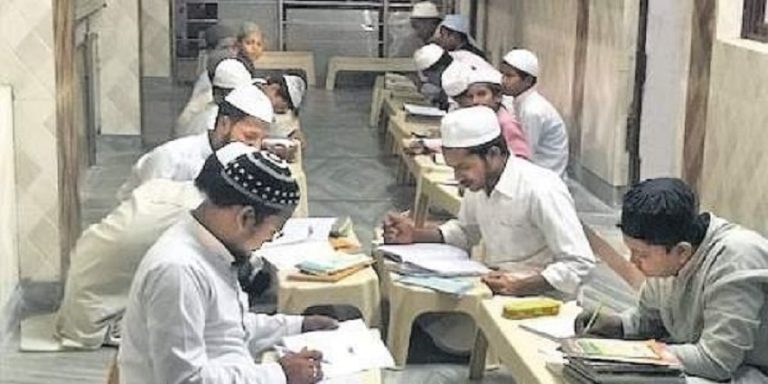
What is taught in Madrasas? A madrasa is an exclusivist religious school, where MUSLIM children are taught Quran, the Sharia, Hadith, Islamic history of invasions (Jihad). The institution of Islamic madrasas in India is as old as the history of Islam in India, say 1000 years. The syllabus teaches the students to hate all non-Muslims, especially the Hindus who being idolaters are dubbed as hateful human beings, called ‘kaffirs’.
Ghazwa-i-Hind (the goal of establishment of Islamic rule across India through Jihad) is also taught in almost every madrasa, both in India and Pakistan. Madrasas produce indoctrinated minds, full of hate, fear and false pride. This derelict institution can’t be reformed. Outright scrappage is the solution. Helping them, is writing your own obituary.
The UPA (United Progressive Alliance) government initiated an ill-thought plan. A “Scheme for Providing Quality Education in Madrasas” (SPQEM) in 2009-10 to encourage madrasas and Maktabs to introduce formal subjects i.e. Science, Mathematics, Social Studies, Hindi and English. The scheme is STILL ongoing in 18 states in the country. So far under SPQEM, over 21,000 madrasas spread over different states have been given Rs. 1,138 crore.
Only in the Uttar Pradesh there are 18,27,566 children in 8,584 madrasas, as per government of India figures. That is mindless stupidity. Core Islamic scripture as taught can’t be made secular and humanistic. This scheme initiated by Congress is a sheer loss of time and exchequer and it must be scrapped forthwith.
Why Madrasas can’t be reformed? Islamic teaching and modern education can’t coexist. Would the students of madrasa trust science which says earth is spherical and revolves around the Sun or, will they believe in the Quran which says, earth is flat and the Sun sets in murky water of a lake? How can you teach them harmony and love when they learn from Quran that all IDOLATORS are consigned to eternal hell-fire?
What the Modi government must do immediately? 1. All madrasas must be nationalised, registered and the state should have the writ to appoint teachers, administrators and curriculum over there. Their financials and source of income need to be scrutinised. All the madrasa be converted into modern schools open to all the communities. Community exclusive, organised and institutionalised religious education must be scrapped for any religion. ALL children must be taught uniform curriculum. 2. All the mosques must be monitored through CCTV recording to check what it being taught and fed. It is not a coincidence that every riot in Indian cities starts on Friday after Juma prayers. If China and Egypt can control mosques, why can’t India, the counry with second largest Muslim population? If you don’t control the mullah, mosque and madrassa, peace and communal harmony in India will remain a pipe dream.
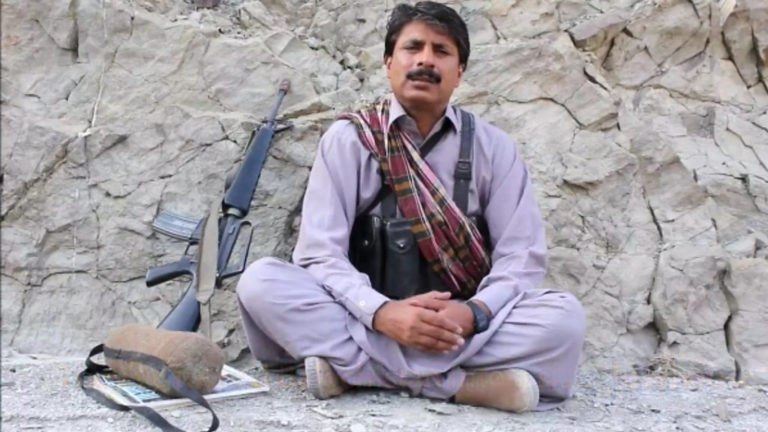
Balochistan’s pro-independence leader Dr. Allah Nazar Baloch has strongly condemned the Pakistan Army for firing mortars on Baloch children at Hoshaab, which killed Raamiz Baloch and Allah Bakhsh Baloch. Dr Allah Nazar added that the civil bureaucracy is complicit with Pak Army in these heinous crimes.
“Whenever the Pakistani military commits a war crime, it is the civil bureaucracy that steps in to whitewash the military’s crimes,” said Dr Allah Nazar Baloch in his statement.
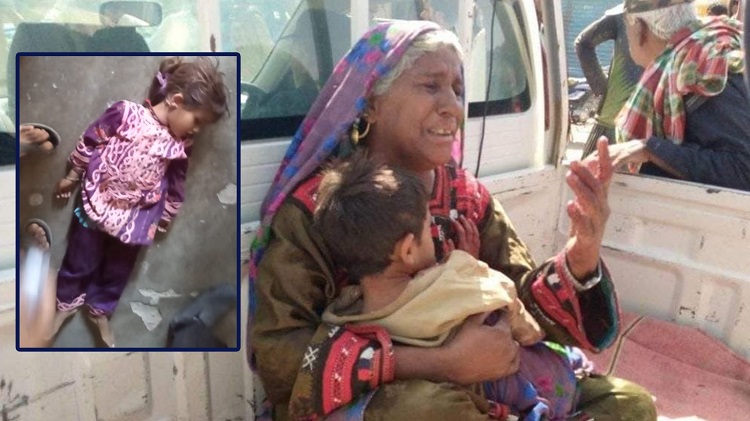
Baloch mother with the dead body of her child who was killed by Pakistan Army. (Photo: News Intervention)
Dr. Allah Nazar Baloch explained that despite the barbarism of Pakistani regime and threats of dire consequences by the army, the Baloch are holding sit-ins with the dead bodies of their children which is a clear evidence that Balochistan has refused to bow down to the terror of Pakistan Army. “People are not intimidated by military threats and their dire consequences. The unarmed people have made the final decision to be brave in front of the enemy for their honor and survival. But here the civil bureaucracy, in the guise of Balochism, is crossing all limits by proving themselves loyal of their masters, to mislead and lure the people and attempt to acquit the army from its crimes.”
“The state of Pakistan is trying to provoke us in making a wrong and emotional step by infuriating us with such targeted killings and mortar shelling on the civil population, but we will decide and react to everything according to time and circumstances of our choice,” said Dr Allah Nazar Baloch. He further explained that the struggle for Balochistan’s independence is a long journey and requires patience. “The tolerance of the people and their stand with pro-freedom organizations for two decades has made the occupying army lose its senses. That is why the Pakistan Army exposed its ugly face through killings like that of in Dannuk, Buleda and in Hoshaab.”
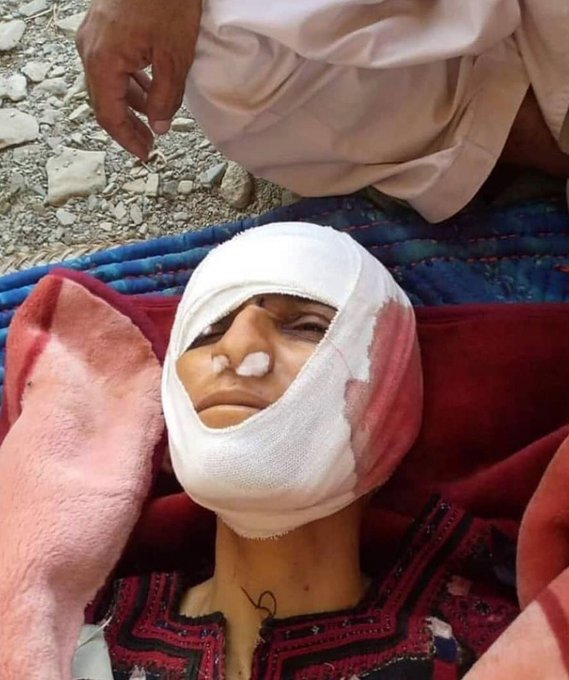
Dead body of Taj Bibi who was murdered in cold blood by Pakistan Army in Kech, Balochistan. (Photo: News Intervention)
The Baloch leader said that Pakistani regime has banned Baloch nationalist politics and is trying to fill this vacuum with state sympathizers.
“At times the state may provide a temporary relaxation to the people, but in its core it wants to continue to repeat such incidents with strength and impunity. The political parties that are also speaking the language of civil bureaucracy on the killing of children in Hoshaab should know that people do not keep the bodies of their children at chowks to seek compensation, but they have been forced to hold sit-ins in order to expose the Pakistani war crimes to the world. Here the civil bureaucracy and local parties seem to be selling out the people’s bold protest for a few rupees, which is utterly disgraceful,” said Dr Allah Nazar Baloch castigating the civil bureaucracy.
Dr. Allah Nazar Baloch added that Pakistan can kill our children, destroy our homes, make life miserable for us but it will definitely not be able to extinguish the flame of freedom that’s burning in the hearts of Baloch. “Those who support the Pakistani state and do not speak of Baloch survival, and honor, they will earn humiliation and disgrace in history by participating in Pakistan’s war crimes. It is guaranteed that Baloch nation will be victorious.”
We use cookies on our website to give you the most relevant experience by remembering your preferences and repeat visits. By clicking “Accept All”, you consent to the use of ALL the cookies. However, you may visit "Cookie Settings" to provide a controlled consent.
This website uses cookies to improve your experience while you navigate through the website. Out of these, the cookies that are categorized as necessary are stored on your browser as they are essential for the working of basic functionalities of the website. We also use third-party cookies that help us analyze and understand how you use this website. These cookies will be stored in your browser only with your consent. You also have the option to opt-out of these cookies. But opting out of some of these cookies may affect your browsing experience.
Functional cookies help to perform certain functionalities like sharing the content of the website on social media platforms, collect feedbacks, and other third-party features.
Performance cookies are used to understand and analyze the key performance indexes of the website which helps in delivering a better user experience for the visitors.
Analytical cookies are used to understand how visitors interact with the website. These cookies help provide information on metrics the number of visitors, bounce rate, traffic source, etc.
Advertisement cookies are used to provide visitors with relevant ads and marketing campaigns. These cookies track visitors across websites and collect information to provide customized ads.
Necessary cookies are absolutely essential for the website to function properly. These cookies ensure basic functionalities and security features of the website, anonymously.
Cookie
Duration
Description
cookielawinfo-checkbox-analytics
11 months
This cookie is set by GDPR Cookie Consent plugin. The cookie is used to store the user consent for the cookies in the category "Analytics".
cookielawinfo-checkbox-functional
11 months
The cookie is set by GDPR cookie consent to record the user consent for the cookies in the category "Functional".
cookielawinfo-checkbox-necessary
11 months
This cookie is set by GDPR Cookie Consent plugin. The cookies is used to store the user consent for the cookies in the category "Necessary".
cookielawinfo-checkbox-others
11 months
This cookie is set by GDPR Cookie Consent plugin. The cookie is used to store the user consent for the cookies in the category "Other.
cookielawinfo-checkbox-performance
11 months
This cookie is set by GDPR Cookie Consent plugin. The cookie is used to store the user consent for the cookies in the category "Performance".
viewed_cookie_policy
11 months
The cookie is set by the GDPR Cookie Consent plugin and is used to store whether or not user has consented to the use of cookies. It does not store any personal data.