Home Blog Page 290

Punjab CM faces heat over unsavoury remark on farmer agitation

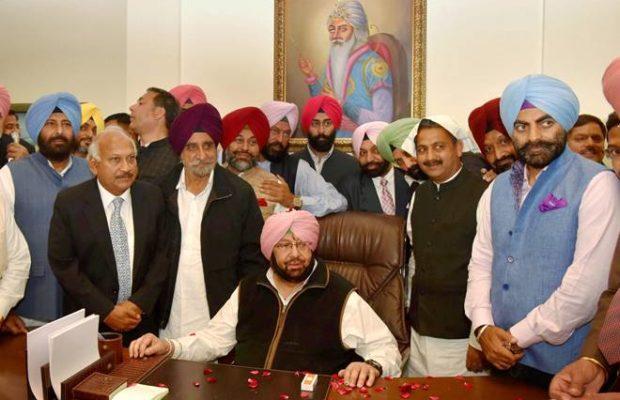
The remark made by Punjab Chief Minister Amarinder Singh that farmers should not disturb Punjab and instead shift the protest to Delhi continues to generate heat in poll bound Punjab.

The BJP Media Adviser in Punjab, Jaibans Singh, has said in a video message that if Congress party is disturbed then it should leave Punjab. “It is the people who are Punjab and not the Congress party,” said Singh in the video. He further observed that there are many more protests going on against the Punjab government like the strike by contractual employees of the Punjab Roadways and the teachers protest across Punjab.

“Half of Punjab is closed, people cannot move out of their houses because of the protests against the state government, on top of it, the ruling Congress party is going through an internal crisis, the President of the Congress party is in open rebellion against Chief Minister Amarinder Singh,” said Jaibans Singh. Stating the there is anarchy in Punjab and that the government is paralysed Singh suggested that the Congress chief, being unable to control the situation, should step down.

The Aam Aadmi Party (AAP) has also termed the Punjab Chief Minister’s statement as irresponsible. AAP has further objected to the conduct of a public meeting by the Chief Minister despite the diktat by farmer union leaders to all political parties to refrain from campaigning till the assembly elections are formally announced. The AAP leadership has asked the union leader to either rein in all parties or remove the diktat.

Ironically, the Congress stands firm on statement made by Chief Minister Amarinder Singh and is accusing the opposition of giving a political twist to the same.

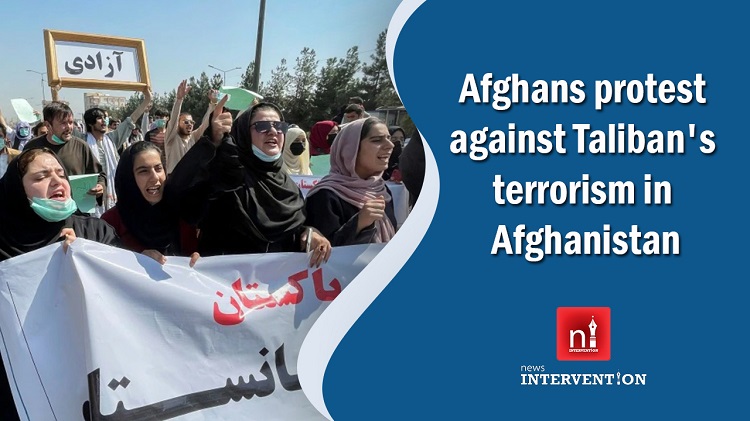
Afghans protest against Taliban’s terrorism in Afghanistan

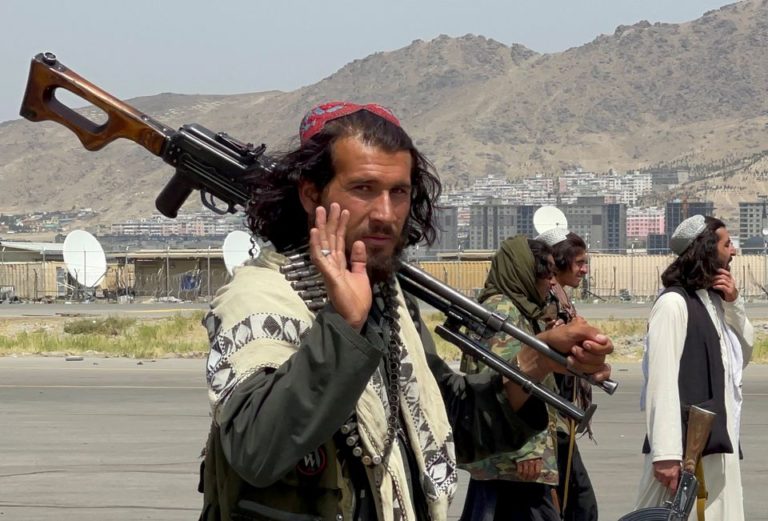
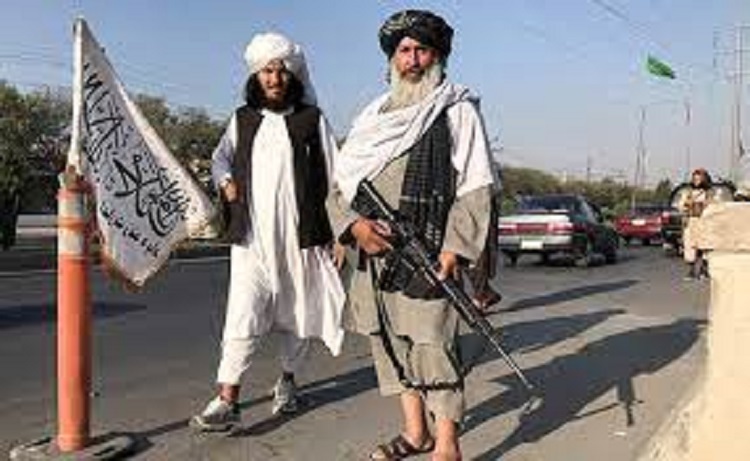
Public anger is rising amongst Afghans, against the Taliban’s forceful capture of Afghanistan. Despite Taliban’s ongoing terrorist activities, the Afghan people (including women) have continued to protest in large numbers.

The Afghan demonstrators chanted slogans against Pakistan and said that Taliban had taken over Afghanistan with the help of Pakistan. The Taliban had to fire in the air to disperse the protesters. Participants in this rally said that the march was peaceful but the Taliban threatened to kill them and the journalists. Thereafter some journalists were beaten.

Click on the YouTube link to watch our video report

Afghan protesters said that the Taliban used abusive language and ordered them to disperse quickly. ‘Taliban said go away or we will kill you all’ Afghan people have rejected Taliban’s forcible occupation of their country, but the Taliban are forcibly suppressing these voices and spreading lies about Afghanistan through their friends in big media houses.

Pak Army spreads canards about India to hide its corruption

Ever since its creation, Pakistan has found a convenient ‘whipping boy’ in India for two reasons. One, by portraying its eastern neighbour as a ‘Hindu nation’, it becomes very easy to arouse communal passions and ingrain the idea of it being a grave threat to the Islamic Republic of Pakistan. So, it’s not at all surprising that despite India’s indubitable secular credentials, Islamabad has consciously been misleading its own people and the resultant indoctrination has helped those in power to divert public attention from their own failings and incompetence by blaming anything going wrong in Pakistan on New Delhi’s devious machinations.

Secondly, an anti-India environment prevailing in Pakistan helps Rawalpindi in grabbing the lion’s share of the country’s meagre budget as well as exercising extraconstitutional powers and enjoying a host of perks and privileges like free land allotments. So, the Pakistan Army works overtime to portray India as an “existential enemy” and sell the narrative of Pakistan Army being the sole bulwark that has withstood a ‘hegemonistic’ India and prevented it from realising its avowed objective of annihilating Pakistan.

However, since Pakistan’s so called ‘existential enemy’ hasn’t never initiated military action against any country, leave alone Pakistan, fear psychosis of an ever-looming invasion by India being fueled by Rawalpindi has generated a lot of resentment within domestic intelligentsia. So has its burgeoning defence budget. Rawalpindi’s allotment for Financial Year 2021-22 has increased by 6.2% from the previous year, and accounts to a whopping 16% of overall government expenditure.  Nevertheless, since the army in Pakistan has always enjoyed a ‘holy cow’ status, any criticism of its inordinately high budget allocation has always been more or less muted.

Yet, coming at a time when Pakistan’s already tottering economy is further shrinking due to Covid pandemic, the current US$8.78 billion defence budget has got people talking. In his report [Government makes heavy interest payments’, Express Tribune, August 27, 2021] the newspaper’s economic correspondent Shahbaz Rana warns that The federal government’s spending on interest payments on debt and the defence jumped to nearly Rs4.1 trillion in the last fiscal year – which was Rs538 billion more than its net revenues, pushing the country deeper into the debt trap.” As one would have expected, this grim reminder of the harsh reality facing Pakistan has gone unnoticed.

Isn’t it ironical that Pakistan Army’s prodigious expenditure to ‘defend’ the nation against a non-existent ‘existential enemy’ is actually bankrupting the country? But then, Rawalpindi knows very well that in order to continue enjoying a lavish budget outlay, freebies and absolute power, the army has to create an illusion of insecurity, even if it is by tilting at windmills. This became obvious in 2015, when the Pakistan Army’s media wing Inter-Services Public Relations [ISPR], statement after the corps commander conference presided over by Pakistan Army’s chief, read- “The Conference also took serious notice of RAW’s involvement in whipping up terrorism in Pakistan.”

Pakistan Army’s specific mention of India’s intelligence agency was unusual. In its editorial of May 11, 2015, The Hindu noted: “Usually, the Pakistan Army does not play the blame game directly. But in a departure from practice, a formal meeting of Pakistani corps commanders in Rawalpindi on May 5, blamed India’s external intelligence agency, the Research and Analysis Wing (RAW), for “whipping up” terrorism in Pakistan.” Even the news report in Dawn mentioned, “it’s unusual for a corps commanders’ conference to directly point fingers at the hostile intelligence outfit.”

Pakistan Army’s “concern” was also tantamount to conceding that its own military intelligence agency Inter-Services Intelligence (ISI) had failed to thwart RAW’s alleged campaign of “whipping up terrorism in Pakistan.” But then, Pakistan Army never had any qualms in following the ‘cutting the nose to spite the face’ approach- remember how it disowned the dead bodies of its own soldiers killed in combat during the 1999 Kargil conflict!

Over the years, Islamabad has concocted an imaginative narrative on RAW’s alleged support to terrorist activities inside Pakistan. It has been alleging that RAW operatives were working out of Indian consulates in Afghanistan, in tandem with the country’s National Directorate of Security [NDS]. Pakistan claims that RAW was sponsoring a host of terrorist groups- from Tehreek-e-Taliban Pakistan [TTP] to Baloch groups fighting against Pakistan Army’s excesses against their people and indiscriminate exploitation of the region’s natural resources.

In fact, if Islamabad is to be believed, then each and every terrorist act within Pakistan, be it the broad light abduction of a journalist in Pakistan’s national capital, a bomb blast in Lahore, an arguably controversial ‘suicide attack’ on a bus in Khyber Pakhtunkhwa, or even a terror attack on Karachi’s stock exchange has been orchestrated by RAW.

Today the Ashraf Ghani government which [according to Islamabad and Rawalpindi] was in cahoots with New Delhi and RAW, is gone, and NDS has ceased to exist. India has vacated all its consulates in Afghanistan and ‘Pakistan-owned’ Taliban now sits in the seat of power in Kabul. So, if Islamabad’s allegation of New Delhi sponsoring terrorism in Pakistan with active support from the Ghani government and help from NDS has even an iota of truth, then with the fall of Kabul, all should have been ‘quiet’ on Pakistan’s western front. But it isn’t so. Even though India had shut down all its consulates in Afghanistan by August 10 and evacuated its complete embassy staff [which according to Islamabad was teeming with RAW agents] by August 17, yet there is no respite in terrorist attacks in Pakistan.

Two weeks after evacuation of complete Indian embassy staff from Afghanistan, an IED blast in South Waziristan’s Asman Manza area killed a Pakistan army soldier. This was followed by another suicide attack by TTP on a Frontier Corps check post in Mastung area of Quetta a week later, in which four Pakistan security force personnel were killed. So, with no Indian presence in Afghanistan, Islamabad can now no longer use New Delhi and RAW as its ‘whipping boy’. In fact, these continuing attacks completely demolish Pakistan’s puerile and unsubstantiated claims of New Delhi playing the villain in Pakistan.

Lastly, by saying “It is up to Pakistan, and Pakistani ulema and religious figures, not the Taliban, to decide on the legitimacy or illegitimacy of their [the TTP’s] war and to formulate a strategy in response,” even Taliban Spokesperson Zabihullah Mujahid has clearly specified that TTP is very much a product of Pakistan’s ‘home grown’ terrorism. Since Islamabad and Rawalpindi can no longer use the RAW fig leaf to hide their incompetence, it would do both a lot of good to accept reality and focus their energies to tackle the scourge of terrorism rather than waste time in fabricating pathetic excuses! 

Tailpiece: Now that the chickens have finally come to roost, it’s high time Islamabad introspected on former US Secretary of State Hillary Clinton’s sagacious advice regarding the perils of “keeping snakes in the backyard”!

Exemption from Religious Indoctrination: “God helps those who help themselves”

0

By Fotis Frangopoulos (Greece)

Another decision by the Ministry of Education and Religions was recently issued in Greece to regulate exemptions from the ‘lesson’ on religion in schools.

It is the second decision in two months and the latest in a long series of decisions and circulars on the same subject.

And once again the rulings by local and European judiciary have been ostentatiously ignored! Specifically, these are three decisions by the Personal Data Protection Authority, α decision from the Council of State (CoS)—the Greek Supreme Administrative Court, and the judgement of the European Court of Human Rights in the case of Papageorgiou and others v. Greece).

Ignoring them is not a figure of speech, it is literal: the new decision announces its intentions by making no reference to these important decisions in its preamble as is routinely done with other regulations, laws, presidential decrees, etc.

To make matters worse, the “Equivalent course of a related subject”, as defined by the CoS in its 1749/2019 judgement, has not yet been implemented.

Why did the ministry violate its own announcement of 05-09-2019 which stated: “Obviously, the Ministry will comply with the decisions of the Independent Authorities and the Judiciary.”?

The ministry’s attitude is long-standing and cross-party and it is dictated, to the detriment of education, by

  • the so-called “red lines” of the Orthodox high clergy, and
  • the guild interests of theologians (and the religious bias of some of them).

It is also reminded that, after an appeal by parents, students and the Atheist Union of Greece, the content of the course is examined against the ECtHR criteria for whether it conveys information or knowledge in a critical, objective and pluralistic way according to the established terminology of the ECtHR in its case law.

Following the CoE decision on a hardcore, confessional/catechist ‘lesson’, the ministry can no longer claim that the way the ‘lesson’ is taught can get more attractive to students.

So instead of providing a “more attractive” lesson, the ministry continues and intensifies its policy of deterring parental exemption by stipulating an off-putting and arduous exemption process. (From this year on, the parents’ signature on the application for exemption must be officially certified by a state’s service!)

A point to emphasize:

Parents and students now know what to expect from that ‘lesson’. In addition, there is an obvious effort to impose this lesson on parents and students in contravention of their rights and to the detriment of real education.

After the announcement of the European Court judgement in the case of Papageorgiou v. Greece, the plaintiff Petros Papageorgiou stated:

“The “ball” is therefore thrown to the people’s court. They should awaken from apathy and indifference, be informed of their freedoms and rights, and at last decide what their “religious conscience” is, without conventions and evasions.”

“God helps those who help themselves” is an ancient Greek saying for parents and students who do not want indoctrination but real education.

As in previous years, parents will be informed about their right to exemption and how to exercise it.  They should not remain apathetic but should massively exercise their right to exemption this year.

Furthermore, they must not succumb to the passivity and couldn’t-give-a-damn attitude to which the ministry pushes them with the constant introduction of bureaucratic obstacles.

This latest decision about exemption has already been appealed to in the Council of State by parents and students and it seems that it will also be appealed to in the ECtHR.

AAI is monitoring the situation and supports the information campaign for an exemption process that is quick and easy and for the implementation of alternative lessons of equal value for those who choose to opt-out. It is also exploring possibilities for further strengthening of the campaign.

Απαλλαγή από τα θρησκευτικά: “Σύν Ἀθηνᾷ καὶ χεῖρα κίνει”

Πρόσφατα εκδόθηκε ακόμη μία απόφαση του υπουργείου παιδείας και θρησκευμάτων στην Ελλάδα με την οποία ρυθμίζεται, μεταξύ άλλων, η απαλλαγή από το ‘μάθημα’ των θρησκευτικών.

Είναι η δεύτερη μέσα σε δύο μήνες και η τελευταία σε μια μακρυά ακολουθία αποφάσεων και εγκυκλίων για το ίδιο θέμα!
Και για ακόμη μια φορά αγνοούνται επιδεικτικά τρεις! (3) αποφάσεις της Αρχής Προστασίας Δεδομένων Προσωπικού Χαρακτήρα, απόφαση του Συμβουλίου της Επικρατείας,  και η απόφαση του Ευρωπαϊκού Δικαστηρίου Δικαιωμάτων του Ανθρώπου στην υπόθεση Παπαγεωργίου και άλλοι κατά Ελλάδας.

Το αγνοούνται δεν είναι σχήμα λόγου αλλά κυριολεξία: η νέα απόφαση το δηλώνει ότι τις αγνοεί καθώς, στο προοίμιό της, δεν υπάρχει καμμιά αναφορά σε αυτές όπως συμβαίνει με άλλους κανονισμούς, νόμους, προεδρικά διατάγματα κτλ.

Και φυσικά δεν έχει οργανωθεί ακόμη το “ισότιμο μάθημα συναφούς αντικειμένου”, όπως έχει ορίσει το ΣτΕ στην απόφασή του 1749/2019.

Γιατί το υπουργείο παραβαίνει την ίδια του την ανακοίνωση της 05-09-2019 σύμφωνα με την οποία:
“Αυτονοήτως το Υπουργείο θα συμμορφώνει την πολιτική του με τις αποφάσεις των Ανεξάρτητων Αρχών και της Δικαιοσύνης.”;

Η στάση του υπουργείου είναι διαχρονική και διακομματική και υπαγορεύεται, σε βάρος της παιδείας, από

  • τις λεγόμενες “κόκκινες γραμμές” της ορθόδοξης ιεραρχίας, και
  • τα συντεχνιακά συμφέροντα των θεολόγων καθηγητών (και την θρησκευτική μεροληψία κάποιων από αυτούς).

Υπενθυμίζεται επίσης ότι, μετά από προσφυγή γονέων, μαθητών και της Ένωσης Αθέων, το περιεχόμενο του μαθήματος εξετάζεται στο ΕΔΔΑ για το αν μεταφέρει πληροφορίες ή γνώσεις με κριτικό, αντικειμενικό και πλουραλιστικό τρόπο σύμφωνα δηλαδή με την πάγια ορολογία του ΕΔΔΑ στην νομολογία του.

Μετά και την απόφαση του ΣτΕ για σκληρό, ομολογιακό/κατηχητικό ‘μάθημα’, το υπουργείο δεν μπορεί πια να ισχυριστεί ότι ο τρόπος διδασκαλίας του ‘μαθήματος’ μπορεί να γίνει πιο ελκυστικός για τους μαθητές.

Αντί λοιπόν για ‘ελκυστικότερο’ μάθημα, το υπουργείο συνεχίζει και εντείνει την πολιτική του για απωθητική και επίπονη διαδικασία απαλλαγής.
(Από φέτος η αίτηση των γονέων για απαλλαγή θα πρέπει να φέρει βεβαιωμένο και το γνήσιο της υπογραφής τους!)

Ένα σημείο που πρέπει να τονιστεί:

Οι γονείς και μαθητές πλέον ξέρουν τι να περιμένουν από το ‘μάθημα’. Επιπλέον, είναι ολοφάνερη η προσπάθεια να τους επιβληθεί η παρακολούθηση αυτού του μαθήματος σε βάρος των δικαιωμάτων τους και σε βάρος της πραγματικής παιδείας.

Μετά την ανακοίνωση της απόφασης του Ευρωπαϊκού Δικαστηρίου στην υπόθεση Παπαγεωργίου κατά Ελλάδας ο ενάγων Πέτρος Παπαγεωργίου είχε δηλώσει:
“Το ‘μπαλάκι’ πετιέται λοιπόν στον κόσμο. Να ξυπνήσει από την απάθεια και αδιαφορία του, να είναι πληροφορημένος για τις ελευθερίες και τα δικαιώματά του, και να αποφασίσει επιτέλους και χωρίς συμβατικότητες και υπεκφυγές για το ποια είναι η “θρησκευτική του συνείδηση”.

“Συν Αθηνά και χείρα κίνει” λοιπόν για τους γονείς και μαθητές που δεν επιθυμούν ενδογμάτιση αλλά πραγματική παιδεία:

Όπως και τα προηγούμενα έτη, θα ενημερωθούν για το δικαίωμα σε απαλλαγή και για τον τρόπο να το ασκήσουν.
Δεν πρέπει να μείνουν απαθείς αλλά πρέπει να κάνουν μαζικά χρήση του δικαιώματός τους για απαλλαγή που παρεμποδίζεται.
Πολύ περισσότερο, δεν πρέπει να υποκύψουν στην παθητικότητα και τον ωχαδερφισμό στα οποία τους ωθεί το υπουργείο με την συνεχή παρεμβολή γραφειοκρατικών προσκομμάτων.

Η τελευταία απόφαση για την απαλλαγή, έχει ήδη προσβληθεί από γονείς και μαθητές στο Συμβούλιο της Επικρατείας και όπως φαίνεται θα προσβληθεί και στο ΕΔΔΑ.
Η ΑΑΙ παρακολουθεί την κατάσταση, υποστηρίζει την εκστρατεία ενημέρωσης και εξερευνά τις πιθανότητες για περαιτέρω ενίσχυση της προσπάθειας.

Fotis Frangopoulos grew up paying little attention to religion as the majority of people. He rejected Christianity in his late teens when he read about the way it was enforced by Roman emperors, how it destroyed the Hellenic civilization and established the Dark Ages. By 2010 Fotis had gotten fed up of only words and theory but no action about state and church entanglement as well as the undeserved status and privileges that religions enjoy. He became a founding member of the Atheist Union of Greece (AUG) and served as president for 2013–2018. He is the instigator and key operator of most AUG’s campaigns such as: the questionnaire and proposal to the political parties for the separation of Greek State and church, the conference for state-church relations, official complaints to authorities about the practice of illegally recording students’ religious views in public education and two litigations about the latter and the indoctrinating religious class taught in public schools. In 2018, he edited, and the Union published, the “Dialogue about the Jerusalem Holy Light” about a Dark Ages scam that is nowadays indulged by the Greek government. Since the summer of 2019 he is a member of the Atheist Alliance International board.

Image Credit: Fotis Frangopoulos.

BJP Punjab makes new appointments to strengthen organisation structure

With an eye on the Punjab state assembly elections due in early 2022, the Punjab BJP unit has appointed Colonel Jaibans Singh as the party’s State Media Advisor. Colonel Singh has vast experience in the information and media domain and he writes extensively on issues related to J&K and Punjab. He is also the Chief Editor of thepunjabpulse.com, a digital information platform that covers Punjab.

Col. Jaibans Singh (retd.) has been appointed as the State Media Advisor of BJP Punjab.

BJP Punjab has also inducted other office bearers, which include Harinder Singh Kahlon (Jalandhar) as State Spokesperson (TV); Kuldeep Singh Kahlon (Amritsar) as panelist for the debates; Dr. Jaswinder Singh Dhillon (Amritsar) as state co-convener of intellectual cell; Nirmaljit Singh (Mohali), Jagmohan Singh Saini (Patiala), Kavita Sarowal (Patiala), Jeevan Mahajan as special invitees; Sukhpal Brar (Faridkot) and Baljinder Singh Dakoha (Batala) as co-convenors of Panchayati Raj Cell.

By appointing this new set of office bearers the BJP Punjab has vested high level responsibility on all the prominent Sikh faces of Punjab who were taken into the party fold on 16 June 2021. This move indicates the seriousness with which the party is pursuing its policy to create a Pan-Punjab signature post its break up with Shiromani Akali Dal (SAD) earlier.

Why the World Can’t Win the War on Terror

The Agony
As the twentieth anniversary of the horrific 9/11 terror attacks approaches, memories of this wanton act of terrorism perpetuated by Al-Qaeda that extinguished 2,977 innocent lives belonging to more than 90 countries, gives one a sickening sense of revulsion. This depressing feeling is further exacerbated by the realisation that despite international outrage against this despicable act of terrorism and the much-hyped US led global war on terror, in the two decades that have elapsed, no meaningful results have been achieved. Au contraire, America’s shambolic exit from Afghanistan has only proved that in the war on terror, it’s ultimately the ‘bad guys’ have won and that too, hands down!

The Irony
While the world mourns the dead of 9/11, Taliban is busy celebrating its ‘conquest’ of Afghanistan. This is the same Taliban whose name still figures in UNSC’s ‘Consolidated List’ of designated terrorist organisations in accordance with UNSC resolution 1267; it’s the same terrorist organisation whose leaders were hosted by UNSC permanent member China, and it’s the same Taliban with whom UNSC permanent member America signed the Faustian Doha Agreement of 2020, handing over control of Afghanistan to this UNSC proscribed terror organisation. Lastly, as per Islamabad’s own admission, it’s the same Taliban whose rank and file were provided safe-sanctuaries in Pakistan ever since the 2001 US intervention in Afghanistan.

The Guilty Trio
While America’s ignoble withdrawal from Afghanistan has essentially sounded the death knell of the grandiose global war on terrorism, Washington has no one else but itself to blame for failing to marginalise, if not wipeout, Taliban. Washington today can’t pretend being unaware about Islamabad’s unholy nexus with this proscribed terrorist group and anyone claiming otherwise should be asked a simple question — why didn’t the US provide Islamabad with prior information regarding its Abbottabad operation to take out Al-Qaeda founder and 9/11 mastermind Osama bin Laden? While Pakistan Prime Minister Imran Khan did claim in 2019 that Pakistan had provided intelligence regarding Laden’s whereabouts, his claim was more to hide the ignominy of Islamabad being intentionally kept out of the loop!

The correct answer has been provided by none other than former American Defence Secretary and ex-CIA chief Leon Panetta. Speaking of how US intelligence agencies had discovered that Laden was holed up in Abbottabad, which “is a centre for their intelligence services and the Pakistani West Point [Pakistan Military Academy] is located there as well,” Panetta candidly admitted that “I find it very difficult to believe that there wasn’t somebody in Pakistan who was aware of this compound.” He went on to add, “Because of that concern and that lack of trust, very frankly, we decided not to inform the Pakistanis about the location of bin Laden and we did not inform them about the operation that we conducted because we were concerned that if we did that, it was likely bin Laden would be advised to move.”

So, with what face can Washington still deny being unaware of Islamabad’s nexus with terrorists?

Harbouring or assisting criminals is a punishable offense and common sense suggests that the same would be equally applicable to designated terrorist groups as well. However, even though Pakistan has been consistently admitting hosting Taliban, the international community has failed to take any action against what patently amounts to ‘state sponsored terrorism’.

  • Former Pakistan President and ex-army chief Gen Pervez Musharraf proudly proclaimed that “Kashmiris who came to Pakistan received a hero’s reception here. We used to train them and support them. We considered them as mujahideens who will fight with the Indian Army. Then, various terrorist organisations like Lashkar-e-Taiba rose in this period. They were our heroes.”
  • Musharraf admitted to Pakistan’s role in internationalising Islamic terrorism by saying, “We brought mujahideens from all over the world, we trained them and supplied weapons to them. We trained the Taliban, sent them in [Afghanistan]. They were our heroes. Haqqani was our hero. Osama bin Laden was our hero. Ayman al-Zawahiri was our hero….”
  • In 2016, Sartaj Aziz [who was the then Pakistan Prime Minister’s adviser on foreign affairs] admitted that Pakistan was hosting Taliban leaders saying that “We have some influence on them [Taliban] because their leadership is in Pakistan, and they get some medical facilities, their families are here.”
  • In 2019, Prime Minister Imran Khan revealed that “when you talk about militant groups, we still have about 30,000-40,000-armed people who have been trained and fought in some part of Afghanistan or Kashmir” -a clear admission that Pakistan is still providing safe sanctuaries to terrorists.
  • Just a few days ago, Pakistan’s Interior Minister Sheikh Rashid proudly proclaimed: “We are the custodians of Taliban leaders. We have taken care of them for long time. They have got shelter, education, and a home in Pakistan. We have done everything for them.”

In 2018, former US President Donald Trump rightly accused Pakistan for having double crossed Washington by tweeting, “They give safe haven to the terrorists we hunt in Afghanistan…” Unfortunately, no one took note of [or had the guts] to admit that Islamabad had been backstabbing the US in Afghanistan for two decades! So, Washington has no reason whatsoever to blame others for the Afghanistan fiasco.

While the US and Pakistan are undoubtedly guilty of either nurturing terrorism directly [Pakistan] or indirectly [US], Beijing too has a lot to answer for its duplicity on dealing with terrorism. While it claims to have ‘zero-tolerance’ for terrorism and uses this façade to justify religious persecution of Uighur Muslims of China’s Xinjiang Autonomous Region, it has a completely different take on terrorists elsewhere. Readers would recall that despite three [US, UK and France] out of the five permanent UNSC members and a host of other countries seeking designation of Jaish-e-Mohammad chief Masood Azhar as a global terrorist, China thwarted this move for a record four times by putting this proposal on “technical hold.”

When Azhar was finally designated a global terrorist, rather than hail this decision as a major victory for anti-terrorism forces, Pakistan’s Foreign Ministry Spokesperson Dr Mohammad Faisal took great pride in admitting that this happened only after the removal of “all political references, including removal of attempts to link it with the terror attack in Pulwama and maligning the struggle of the Kashmiris.” Could there be a more brazen institutional attempt to whitewash a terrorist’s filthy deeds?

Prognosis
The international community maintained a stoic silence while Pakistan shamelessly continued to nurture terrorists and provide them safe sanctuaries [including Osama bin Laden]. The world looked the other way when Taliban violated all norms of civilized behaviour by launching an unprovoked offensive against armed forces of the democratically elected government of Afghanistan. The world didn’t get worried when Pakistan’s Interior Minister admitted that despite being UNSC designated terrorists, Taliban terrorists wounded while fighting Afghan government forces were being treated in Pakistani hospitals.

One had expected that the international community would act with due responsibly by demanding an explanation from Taliban for initiating violence in which thousands have died, been injured or displaced- demanding action against its fighters who had murdered 22 Afghan Army commandos after the latter had surrendered. So, while the international community definitely has the moral responsibility for helping war-torn Afghanistan, but then, it’s incumbent on Taliban to reciprocate by sincerely following internationally recognised laws and conventions.

However, since Taliban hasn’t yet shown any inclination to walk its talk, one had expected that the international community would collectively pressurise Taliban into respecting globally acceptable norms of conduct. Unfortunately, rather than do so, some countries seem to be in a mad rush to exploit the situation to further their own vested interests by cajoling, imploring and even seducing Taliban with promises of recognition as well as aid. With the international community more than willing to bend backwards to humour an obdurate Taliban by overlooking its transgressions, and the ominous way in which things are shaping, future prospects aren’t very encouraging.

Reality Check
In May this year, Taliban clarified that it would not intervene on Kashmir as “The policy of the Islamic Emirate is clear that it does not interfere in the internal affairs of other countries.” However, after coming to power, it’s made a clever variation by invoking the religious angle and saying, that being Muslims, it is Taliban’s right to speak out for Muslims living in Kashmir and any other country. When taken in isolation, there’s nothing disconcerting about this; but when related to Al-Qaida’s congratulatory message to Taliban on its victory, Taliban’s new approach acquires a more menacing connotation.

In its message congratulating Taliban, Al-Qaeda has also given a call to liberate “The Levant, Somalia, Yemen, Kashmir and the rest of the Islamic lands from the clutches of the enemies of Islam.” Given its congenital proximity with Pakistan, Taliban’s so called “right to speak for Muslims” portends big trouble, especially since it does not mention East Turkestan or religious persecution of Uighur Muslim of Xinjiang in China. 

The biggest threat to the world however comes from Taliban’s success in Afghanistan, as it serves as an inspiration to fundamentalist terrorist organisations all over the world as is evident from Al Qaeda’s message to likeminded terrorist groups that “These events [in Afghanistan] prove that the ‘Way of Jihad’ is the only way that leads to victory and empowerment”!    

Click on the YouTube link to watch video report

Geelani was the architect of dark and turbulent period in Kashmir

1

“It is a real tragedy that Geelani was buried in India and not in Pakistan.” This statement posted on Facebook by Indu Jalali, a Kashmiri Pandit lady living in Europe, aptly summarises the widespread sentiment at the demise of Kashmiri separatist, Syed Ali Shah Geelani, at age 91, on September 1, 2021.

Geelani was the kingpin of separatism in Kashmir. In order to remain relevant he chose to become a stooge of Pakistan and proverbially ‘sold his soul to the devil’. For a better part of his life he sang the tune that Pakistan’s Inter-Services Intelligence (ISI) wanted him to sing and made pro-Pakistan and anti- India statements at its behest. His open bias towards Pakistan created strong doubts within Kashmir about his political motives.

Pakistan, however, started washing its hands off him far back in 2015, when he was dumped unceremoniously due to political expediency.  He boycotted the Eid Milan Party hosted by the Pakistan High Commissioner in New Delhi that year, ostensibly in protest against non-inclusion of Kashmir in the talks between Prime Minister Narendra Modi and Nawaz Sharif at Ufa in Russia. In actuality, he was expressing his frustration at being marginalised. Later, he started singing the Pakistan song all over again even though Pakistan refused to respond. It is astounding that after being used like a puppet, he continued to show servility to Pakistan. Later, in 2020 Pakistan relented and awarded him the Nishan-e-Pakistan which also heralded the culmination of the relationship.

In the late 1990s the All Party Hurriyat Conference (APHC) was not averse to a negotiated settlement of the Kashmir issue, with Pakistan as a party to the talks. It was in constant touch with New Delhi. Such a thought process was not acceptable to Pakistan’s Inter-Services Intelligence (ISI) and as a result on April 24, 1998 Geelani, with the support of ISI, wrested control of APHC from Mirwaiz Umar Farooq. Geelani then went on to become the architect of a dark, turbulent period in the history of Kashmir.

The constituents of Hurriyat realised the danger of continuing with Geelani in their fold and attempted to sideline him. However, their internal contradictions became their curse and a split within the conglomerate in 2003 put Geelani, once again, in the driving seat after the unceremonious removal of then chairman Mohammad Abbas Ansari and suspension of the seven member executive committee.

In July 2020, finally Hurriyat won the battle against Geelani when he resigned from the organisation. The move was widely perceived as the case of “an irrelevant person leaving an irrelevant organisation.” Thus came to an end the Hurriyat chapter of his lifetime and, as in the case of Pakistan, much before his demise.

Syed Ali Shah Geelani's resignation letter quitting from Hurriyat Conference
Syed Ali Shah Geelani’s resignation letter quitting from Hurriyat Conference

There are two aspects in which Geelani caused irreparable harm to Kashmir and its people in the pursuit of his unbridled ambition. The first is his alignment with Pakistan and through Pakistan with Saudi Arabia which resulted in the Saudi-sponsored Wahabi/Salafi concept of Islam replacing the enlightened Sufi culture of the Kashmir Valley. The second is the loss of childhood, education and aspirations of two generations of Kashmir’s youth who were sucked into the politics of divisiveness and disruption that he advocated. It is now quite clear that Geelani was one of the masterminds of the stone pelting era which ruined so many Kashmiri youth.

No self respecting leader who is fighting for the freedom of his people would bow before a government that he is fighting against. Revolutionaries are made of sterner stuff, they do not succumb to human frailties, Geelani sadly, was not made of such stern stuff; he had no compunction in using facilities provided by the Indian nation while castigating it openly. He was looked after, free of cost, in the best government hospitals like AIIMS. His children received the best possible education in India and are pursuing lucrative professions in Pakistan, Saudi Arabia etc. far from the miseries of Kashmir. His “selfless sacrifice” has definitely been good for his family.

In pursuance of his evil agenda, Geelani also became a very rich man. At the face of it, he maintained that a collection of Zakat (religious contribution) was his source of funds. In actuality, he got vast funds through Hawala transactions from Pakistan and other countries with the annual amount running in crores of Indian rupees. He was badly hit by demonetisation, and by National Investigation Agency (NIA)’s probe into his organisation’s illicit and criminal funding of terror and disruptive activities in Kashmir Valley.

After many decades in politics Geelani does not have anything substantial to show as an achievement. Even his children understand the futility of his cause and have moved on to other professional pursuits. His legacy will probably pass on to Masarat Alam, a man lacking in intellect and ideology and more suitable for rabble rousing politics. He has no role to play in the “New Kashmir.”

In the end Geelani was a sad, embittered and dejected man who witnessed, during his lifetime the complete dismantling of all that he stood for including his friendship with Pakistan and his association with the APHC. Though in a state of dementia he witnessed the historic changes (for the better) brought about post the abrogation of Article 370 and Article 35A.

Geelani had in him the acumen to do something for his people. After all, he fought and won three elections before treading the path of separatism. Even while holding on to his political ideology and principles he could have been of value to his people by following a moderate approach. As a moderate he would have been in a better position to present his case. Sadly it was not to be and now the times of a dogmatic, obdurate, self serving and double-faced leader has come to an end. For the Kashmiri youth his life represents a true example of what should not be done.

How and Why Taliban 2.0 captured Afghanistan

Taliban takes over Afghanistan without resistance. Is it possible for the 300,000-strong Afghan Army, equipped with latest military technology and air support to surrender in just nine days to around 50,000 Taliban who neither had modern weapons nor the air force? Taliban had access to only the land routes and yet they occupied Kabul without any resistance!!

Click on the YouTube link to watch our special report

What is the inside story? Watch News Intervention Special Report to understand How and Why Taliban 2.0 captured Afghanistan.

Global e-cigarette awaits big FDA decision

Indian health ministry to keep close watch

Health ministry officials in India are waiting with bated breath to see the much-awaited call of the Food and Drug Administration (FDA) of the United States on vaping products.

The FDA will take the much-awaited call on September 9, 2021. There are rumours that some of the vaping products could stay in the market and some could be totally pushed out of the market. 

The FDA’s shakeout of e-cigarettes will have severe implications for India which had in September 2019 completely banned e-cigarettes. The decision — an ordinance — was taken to check potential health risks to India’s youth.

The ordinance came in place without any deliberations in Parliament. Tobacco experts said the government had largely ignored evidence regarding health risks and disastrous lessons from India’s previous experiences with bans. 

(Representative photo)

The Health Ministry, which has Mansukh Mandaviya as the new health minister, is waiting for the FDA decision so that the Indian government can revisit the ban and find possible ways forward.  

So what will happen on September 9, 2021. Experts say the decision would be significant and would have serious implications on the world vaping market, ostensibly because of a series of rulings that have already begun to reshape the industry. 

The challenge lies with manufacturers of vaping products, they must demonstrate their products are in the interest of public health and push the all-powerful FDA to think about the advantage of adult cigarette smokers switching to a less harmful option.

Else, the youth will continue to get hooked on cigarettes. 

Last year, the FDA allowed flavoured e-cigarette cartridges back on the market after a temporary restriction. 

“We are working furiously on application review in order to move on from sort of a Wild West unregulated marketplace,” the FDA’s acting commissioner, Janet Woodcock, was quoted by the Wall Street Journal at a congressional hearing in June. “We intend to use [our] authority to protect kids and optimize public health.” 

(Representative photo)

Health ministry officials in India, who had asked all e-cigarette manufacturers in 2019 to take their vaping products off the market, will now follow the FDA move seriously.

Across the United States, over 500 companies had filed 100 applications for some 6.5 million products. These companies were asked by the FDA to submit scientific evidence demonstrating that each product was less harmful than cigarettes and that cigarette smokers would be more likely to stop smoking if they used it. 

What is also important is that the FDA is considering the products’ appeal to young people and to first time smokers. This is something the health ministry in India will also be seriously observing before taking any steps relating to vaping.

Some of the world’s top e-cigarette manufacturers like Juul Labs Inc., Reynolds American Inc, NJOY Holdings are waiting with bated breath to see what FDA unfolds post September 9, 2021.

India, which has always lacked data and evidence from India, will obviously take lessons from the call of the FDA and draw some meaningful lessons, claim highly placed sources in the ministry. It could, claim sources, revolve around two frameworks of harm reduction or abstinence. The one mentioned later helps the government point out risky behaviour and ensures incentives to make them stop. It may not work in India but it does not prevent the government from going ahead and imposing penalties like sin tax. And then, the harm reduction theory works by providing less risky alternatives. 

The sources say health ministry officials in India are studying the impact of Electronic Nicotine Delivery Systems (ENDS) in the United States and the United Kingdom and how it had consequences in the society. Several policy changes messed the show in the US whereas in the UK, the use of ENDS as an alternative to far more dangerous traditional cigarettes worked well.

So what do the experts say? Nicotine is far from being harmless. However, one must remember that it is an extremely addictive substance that can adversely affect the heart, respiratory, and circulatory systems. But it’s definitely not the most harmful substance in a cigarette. 

And it is because regular cigarettes deliver 7,000 other chemicals (arsenic, benzene, ammonia, lead, etc) to the lungs along with nicotine, and therein lies the biggest danger. In short, ENDS or e-cigarettes cut out all of the other chemicals. A shift to e-cigarettes has helped adult and youth smoking to decline, even the most popular quitting aid. Underage vaping is nearly non-existent in Britain, as against the US.

All eyes on FDA, something big will happen on September 9, 2021.

Afghanistan: The Plot Thickens

When something completely unexpected happens, we ascribe it to providence. But when there are a series of such occurrences revolving around a single event, it’s but natural to suspect that something’s amiss and in absence of any rational explanation, conspiracy and cover up theories abound. The latest such issue that’s caught the world’s attention is the crisis in Afghanistan.

An unexpected capitulation
That the qualitatively and quantitatively far superior US trained and equipped Afghan National Army [ANA] would collapse like a house of cards is something that defies logical explanation. There are many hypotheses regarding this debacle. US President Joe Biden contends that ANA had lost the will to fight, and though Lt Gen Sami Sadat (who commanded ANA’s 215 Maiwand Corps in South Western Afghanistan before he was summoned to Kabul to head Afghan special forces) accepts this, he in turn blames the US led coalition forces by saying, “we ultimately stopped fighting because our partners already had!”

Then there are others who blame undue political interference by Kabul, widespread corruption within political and military circles and lack of integration within ANA due to persisting ideological differences within its rank and file. Some even believe that it was the basic human survival instinct that completely overwhelmed ANA’s sense of military responsibility and thus precipitated this inexplicable debacle. These factors have undoubtedly contributed to ANA’s capitulation, but the insinuation that it was survival instinct that compelled Afghan army officers and soldiers to give up without a fight, though a very reasonable explanation, doesn’t fit into the scheme of things in this case.

Survival instincts manifest themselves where there are some chances of getting out alive, even if it’s only a hope against hope. But in this case, there was none. Two months to the day before Kabul fell, Taliban summarily executed 22 Afghan Special Forces commandos who had surrendered after running out of ammunition in Dawlat Abad town in Faryab province near Afghanistan’s border with Turkmenistan. Graphic videos showing the unarmed commandos surrendering and thereafter being mercilessly mowed down by gunfire on the streets went viral on social media sending out a clear signal to Afghan forces that their lives wouldn’t be spared even if they surrendered like the unfortunate commandos did.

Therefore, logically speaking, since surrender by ANA was tantamount to facing certain death at the hands of Taliban, survival instincts should have instead spurred ANA to fight and defeat Taliban as this was their only hope of staying alive. Furthermore, since they had the necessary wherewithal required to do so, fight rather than flight gave them a better chance of survival. So, it wouldn’t be too farfetched to suspect that there was some sort of secret deal between Kabul and Taliban, or even the US and Taliban that led to Afghan army’s sudden collapse despite numerical superiority, sophisticated weaponry and lethal air power in the form of fighters and attack helicopters, at its disposal.

Besides this abject surrender, what’s equally intriguing is that ANA took no action whatsoever to destroy or disable hi-tech US weapons and equipment it held something that even a greenhorn soldier would do instinctively. Moreover, since all one has to do in order to render such equipment unserviceable is to set the equipment on fire or just smash its control panels [either manually or by using grenades]; the argument that ANA didn’t have the time or expertise to do so, isn’t convincing. So, there are good reasons to believe that sophisticated weapon systems and other state-of-the-art warlike stores were intentionally left unscathed as part of some underhand deal that was linked to immunity from reprisal by Taliban. In this case, there’s an extremely high probability of Pakistan Army’s Inter Services Intelligence (ISI) involvement aimed at surreptitiously siphoning functional military hardware across the Durand Line!

Emergence of Islamic State of Iraq and Levant- Khorasan (ISIL-K)
The August 26 bomb attack at Kabul airport that left 13 US soldiers dead and 18 others wounded has once again brought ISIL-K back into limelight. The US acted with lightning speed and within 48 hours claimed to have ‘droned’ a planner and facilitator involved in the August 26 attack. While there are no reasons to doubt Pentagon’s claim but the speed with which it was able to locate and neutralise a planner and facilitator of the August 26 attack hiding in Afghanistan’s faraway Nangarhar province, which is a strictly ‘no-go’ area for both US forces and Taliban, does raise suspicions. Washington’s refusal to name the ISIL-K terrorists ‘neutralised’ makes things sound even more suspicious. So, could it be that this claim was merely made to assuage public anger in America against the killing of 13 US soldiers?

Ever since its creation in 2015, besides engaging in a long-drawn turf war with Taliban, ISIL-K has carried out several attacks against targets in Afghanistan which included hospitals, holy shrines and congregations of Shi’ites, educational institutes, wedding ceremonies and aid workers. It has also carried out a few small-scale strikes in Pakistan and has even attracted some recruits from India. Its attempts to make inroads into India through terrorist groups in Jammu and Kashmir are underway but haven’t made any worthwhile headway. However, in the six years of its existence, ISIL-K has never targeted US troops in Afghanistan before the August 26 attack and there’s a logical reason for this.

The UN monitoring group has determined that though it “continues to pose a threat to both the country [Afghanistan] and the wider region,” ISIL-K has suffered considerable “territorial, leadership, manpower and financial losses during 2020 in Kunar and Nangarhar Provinces.” Accordingly, ISIL-K wisely chose to accord more importance to consolidation and regaining lost ground rather than dissipate its resources by attacking US troops and suffering further losses in the ensuing reprisal. With the Ashraf Ghani government now out of the scene, ISIL-K has only Taliban to contend with for supremacy and so, antagonising Uncle Sam and making one more enemy makes no sense at all. This is why the claim of ISIL-K having orchestrated the Kabul blast needs to be taken with a rather big pinch of salt.

Afghanistan-based terrorists attack Pakistan Army soldiers
On August 30, Pakistan Army’s media wing Inter Services Public Relations [ISPR] announced that two soldiers were killed when terrorists from inside Afghanistan fired at a military post in Bajaur district. The ISPR statement on this incident also mentions, “Pakistan strongly condemns the use of Afghan soil by terrorists for activities against Pakistan and expects that existing and future setup in Afghanistan will not allow such activities against Pakistan.”

This unprovoked attack is indeed despicable and hence Pakistan Army’s angst is understandable. However, since Pakistan, has all along been backing Taliban to the hilt by overlooking its rampant wrongdoings and instead is singing paeans in an attempt to get the international community to approve Taliban’s military takeover of Kabul, for it to indirectly admonish Taliban, which is yet to form the government and take stock of the situation, is by any standards, overdoing it! So, could it be that this public show of fury is merely to convey the impression that Pakistan continues to be a ‘victim’ of trans-border terrorism and divert global attention from Islamabad’s devious role that created the current Afghanistan crisis?

At a time when Taliban conducting an inquiry to investigate Islamabad’s allegation of anti-Pakistan activities being carried out by Tehreek-e-Taliban Pakistan [TTP] from Afghanistan soil, wouldn’t it be suicidal for TTP to carry out a cross-border attack at this crucial juncture? It may be argued that Pakistan Army wouldn’t have sacrificed two of its soldiers just to play terror ‘victim’ or divert international attention and this argument makes sense.

However, since military posts have field defences to protect soldiers from hostile fire, for terrorists to be able to kill two soldiers manning the well-fortified Bajaur post and that too through a long-range ‘standoff’ attack, though possible is rather difficult to achieve. But then, there’s always the possibility that these soldiers may have actually been shot by terrorists elsewhere in the restive Bajaur Agency and are being shown as being killed in the military post near the Afghanistan border?

Though this may sound outlandish, but when an army can abandon and disown its own soldiers killed in action during the 1999 Kargil conflict just to deny involvement of its soldiers in the intrusions, it can certainly shift an encounter site for keeping up pretences! 

Tailpiece
The way US, Pakistan and Taliban are playing games in Afghanistan there are bound to be many more surprises in the days to come and the following lines of TS Eliot aptly describe the emerging situation there:  

“There will be time, there will be time
To prepare a face to meet the faces that you meet;
There will be time to murder and create…
And time yet for a hundred indecisions,
And for a hundred visions and revisions
Before the taking of a toast and tea.”