Home Blog Page 330

Pakistan force stops the Oct 22 rally in Gilgit-Baltistan

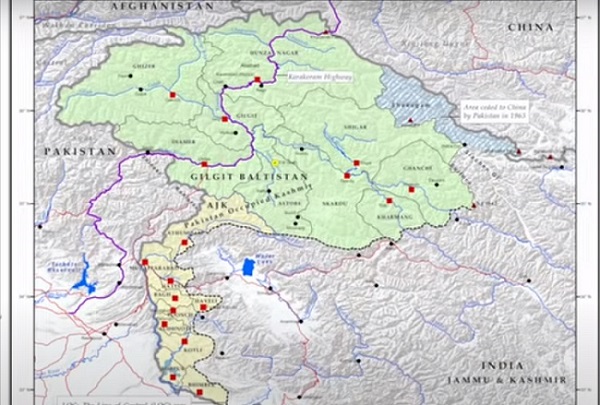
Pakistan forcibly stopped a rally in Gilgit-Baltistan in its latest effort to curb free speech in the region. This rally in Gilgit was called by the National Equality Party JKGBL (Jammu Kashmir Gilgit-Baltistan and Ladakh) to create awareness amongst the people of Gilgit-Baltistan about the Pakistani invasion on the erstwhile princely state of Jammu & Kashmir on October 22, 1947.

“The National Equality Party, JKGBL, had announced a peaceful rally in Gilgit against the October 22, 1947 Pakistani invasion and occupation of the state. However, before the time of the rally, Pakistani agencies and police held National Equality Party JKGBL central vice chairman Ghiasuddin Gilgit and party workers hostage at gunpoint at the Palace Hotel, while workers of all banned terrorist organizations were let loose in the city to harass and intimidate the peaceful political workers,” said the National Equality Party JKGBL in its statement.

The National Equality Party JKGBL (Jammu Kashmir Gilgit Baltistan and Ladakh) has strongly condemned this naked state terrorism by Pakistan and said that such measures cannot demoralize them. The National Equality Party JKGBL further added that they would expose Pakistan’s terrorism to the world and make the world aware of the true face of Pakistan.

The people of Gilgit-Baltistan have been protesting against Pakistan’s efforts to declare Gilgit-Baltistan as its fifth province. Massive protests have been going on across the region against Pakistan’s move and Kashmiris see this move as a direct sell out of Gilgit-Baltistan to China. Islamabad and Rawalpindi are under immense pressure from China to not allow any rally, protest or demonstration in any part of Gilgit-Baltistan that may give a hint to the outside world about the real state of affairs in Gilgit-Baltistan and POK (Pakistan-occupied Kashmir).

In fact, before October 22 1947 when Pakistan attacked the princely state of Jammu & Kashmir with its ill-intention to capture Kashmir, the entire state of Jammu & Kashmir was ruled by Maharaja Hari Singh.

First Pass of the World Intelligence Network 5 to 7 Sigma Societies

Finishing the loose ends of this 84 “active” high-IQ society listing, this is article five of six with a first-pass analysis of the World Intelligence Network from claimed sigmas 5 to 7 (inclusive).  The World Intelligence Network was founded by one of the few ever-present personalities of the high-IQ international communities, Dr. Evangelos Katsioulis, who remains the President alongside Manahel Thabet as the Vice President. The first pass simply goes from the website links. The second pass looks through search engines. Thus, the first pass should be considered less reliable, though direct reportage of the status based only on the information from the link on the World Intelligence Network website. The second pass has found some societies to be active to different degrees and in interesting ways. Here goes:

At 5 sigma, the Mega Foundation Society of Gina LoSasso (Dr. Gina Langan) and Christopher Langan connects to a dead Facebook link. Thus, on the first pass alone, the Mega Foundation Society looks defunct. The OlympIQ Society of Evangelos Katsioulis connects to an internal World Intelligence Network website and seems functional. Presidents have been Evangelos Katsioulis and Thomas B. Its Vice presidents have been YoungHoon Bryan Kim, George Petasis, Jonas Högberg, and Jonathan Wai. Internet officers have been Evangelos Katsioulis and Jonas Högberg. Its membership officers have been Evangelos Katsioulis, Jonathan Wai, and Jan Willem Versluis.[1] The Pars Society of Baran Yönter leads to a dead website and looks defunct on the first pass. PolymathIQ Society of Ron Altmann seems defunct on the first pass. The Sigma V Society of Hindemburg Melão/Hindemburg Melao seems functional, though potentially paralytic with members including Hindemburg Melão Jr., Petri Widsten, Alexandre Prata Maluf, Rauno Lindström, Peter David Bentley, Bart Lindekens, Joachim Lahav, Marc Heremans, Staffan Svensson, Will Fletcher, Guilherme Marques dos Santos Silva, and Lloyd King. The Unicorn Society of Hindemburg Melão seems online, though potentially defunct, uncertain, on the first pass.

At 5.33 sigma, the Ultima Society of Ivan Ivec seems defunct on the first pass.

At 6 sigma, the Giga Society of Paul Cooijmans seems functional on the first pass with members including Andreas Gunnarsson, Thomas Wolf, Evangelos Katsioulis, Rick Rosner, Matthew Scillitani, Heinrich Siemens, Scott Ben Durgin/Scott Durgin, Dany Provost, and Rolf Mifflin, Paul John – possibly others. The Nano Society of Ivan Ivec seems defunct on first pass leading to a dead website. The Sigma VI Society of Hindemburg Melão seems online with unknown activity on the first pass with members and prospective members including Hindemburg Melão Jr., Petri Widsten, Alexandre Prata Maluf (Prospective member, wait for the new norm of the Sigma Test VI), and Peter David Bentley (Prospective member, wait for the new norm of the Sigma Test VI).

At 6.27 sigma, the One in Five Society of Huck Nembelton leads to a dead website and seems dead on the first pass. The Universal Genius Society (UNIGEG) of Brennan Martin leads to a dead link and appears defunct on first pass.

At 6.66 sigma, the Grail Society of Paul Cooijmans appears functional and inactive with a website on the first pass.

At 7 sigma, the Tera Society of R. Young of New Zealand on the first pass contains an active, functional website, i.e., seems non-defunct.

The sixth, of six, article(s) will cover these 5 to 7 sigma societies in more depth. Links will be provided to the other articles for ease and the summary statement on this research followed by a statement on the next set of research.

[1] The members include Dr. Evangelos G. Katsioulis, MD, MSc, PhD, Bart Miles, Laura N. Kochen, D.X.J., Christophe Dodos, Steve Schuessler, George Ch. Petasis, A.F., Jonas Högberg, Mari Takishita, J. W., Thomas B., Jan Willem Versluis, Alexander Prata Maluf, Dr. Christopher Philip Harding, Oliver Q., Wayne Zhang, Martin Tobias Lithner, Miguel Angel Soto-Miranda, M.D., Hever Horacio Arreola Gutierrez, Wang Peng, Takahiro Kitagawa, Andreas Andersson, Lee HanKyung, M.D., Julio Machado, Misaki Ota, Erik Hæreid, Santanu Sengupta, Qiao Hansheng, Dr. Benoit Desjardins, MD, PhD, Wen-Chin Sui, Yaron Mirelman, JMoriarty, Fan Yiwen, Zhibin Zhang (张智彬), Chen Anping, Dr. Yasunobu Egawa, Ph.D., Raymond Walbrecq, Junlong Li(李俊龙, Prof. Vernon M. Neppe MD, PhD, Nth Bar-Fields, Susumu Ota, Li Shimin, Marios Prodromou, Rickard Sagirbay, Dan Liu (刘丹), YoungHoon Bryan Kim (김영훈), W. C., Jo Christopher Montalban Resquites, Entemake Aman, Daniel Shea, Yaniv Hozez, Ζeu Ζoug(宗震), and Sio.

Its Subscribers are Gaetano Morelli, Anonymous O.S.2,  Anonymous O.S.3, Yi Junho, Frederick Goertz, Iakovos Koukas, Anonymous OS.007, Altug Alkan, James McBeath, Anonymous O.S.10, Anonymous O.S.11, Nikolaos Katevas MDs, BSc, MSc, PhDc, Jose Gonzalez Molinero, Frank Aiello, Watcharaphol Chitvattanawong (วัชรพล ชิตวัฒนวงษ์), and Sandra Schlick.

Photo by Maximalfocus on Unsplash

Sindh Police stands up to Pak Army in ‘Naya’ Pakistan

It seems that Prime Minister Imran Khan’s bid to unveil a ‘Naya’ (new) Pakistan hasn’t impressed opposition political parties. This is why 11 opposition political parties in Pakistan announced the creation of an alliance called Pakistan Democratic Movement (PDM) last month to oust the Pakistan Tehreek-e-Insaaf (PTI) government. But not many took the PDM seriously because Khan had already announced that his government not only enjoyed “excellent” and “most harmonious” relations with Rawalpindi, but also that the two “work together [and] the military completely stands by all the democratic government’s policies.”

Those who know Pakistan will agree that there couldn’t have been a more forceful way to convey the message that Khan’s position was unassailable!

It’s quite possible that it was his inflated ego and survival instinct that spurred the PTI chief to cite the army’s backing rather than his popularity as raison d’être of his political ‘invincibility’. Similarly, Pakistan Army chief Gen Qamar Javed Bajwa in his address during the passing out parade of cadets at Pakistan Military Academy Kakul on October 10, mentioning that “We continue to support the government, whenever asked to, as per the law and guidelines of the constitution,” may have been mere reiteration of the well known and universal fact that besides defending the nation’s borders, armies are also required to assist the government during major calamities and in maintenance of law and order.

However, many analysts opine that this seemingly irrelevant and out of context statement being made by the army chief at the ‘cradle’ of Pakistan’s military leadership has a subtle significance as it endorses Khan’s claim of the army and government in Pakistan being “on the same page.” But rather that have a positive impact, Khan’s ‘boast’ of enjoying the military’s support and Gen Bajwa’s ‘academic’ revelation on the army supporting the government has only further fueled speculation of a possible quid pro quo.

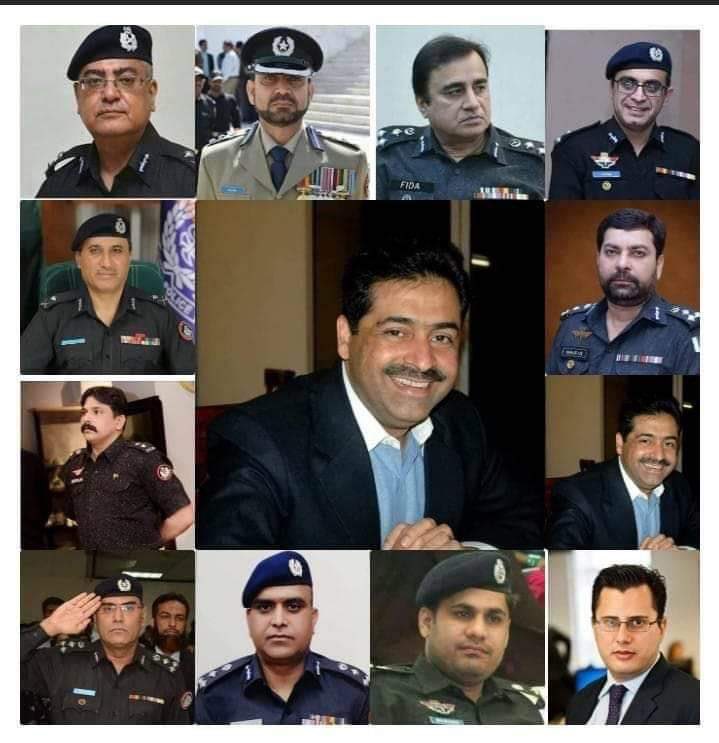
Sindh Police officers who have applied for mass leave to protest the high-handed behaviour of Pakistan Army and the ISI (Inter-Services Intelligence)

But by his incessant declarations about having the army’s support, Khan has unwittingly vindicated former Prime Minister Nawaz Sharif’s public assertion that Pakistan Army chief “Gen Qamar Javed Bajwa ended my government. He rigged 2018 elections and imposed incapable Imran Khan on the nation (sic).” Similarly, Gen Bajwa’s out of place statement on the army’s support to the government is seen as a ‘return-gift’ to Khan for extending the army chief’s tenure by three years by invoking legislation to overcome its legal illegitimacy and widespread objections from opposition parties.

When it comes to the issue of wielding power and authority in Pakistan, the military has indisputably always been ‘numero uno’. So, even though Rawalpindi has always been playing ‘king-maker’ and installing pliable Prime Ministers who would readily accept the military’s supremacy, but still there were instances of run-ins between the two. Those who riled the army by trying to be assertive and earned Rawalpindi’s wrath and lost their jobs includes Prime Ministers Zulfikar Ali Bhutto, his daughter Benazir Bhutto Zardari, and more recently, Nawaz Sharif.

Though the Pakistan Army has regularly been exceeding its brief by manipulating the country’s institutions, it has never been so brash in its dealing before. Today, we find a high court judge accusing ISI of getting “benches formed at their will,” a peaceful crusade for securing rights of ethnic minorities like the Pashtun Tahafuz Movement [PTM] being publicly threatened by being told that“their time is up” and idioms like “all’s fair in love and war” and “war is very ruthless” being used to trivialise the rather solemn issue of enforced disappearances in Balochistan and elsewhere.

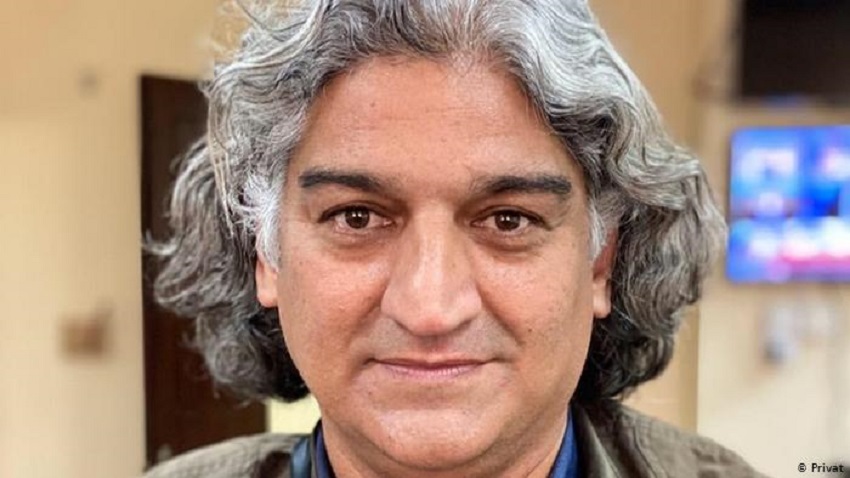
Today, even journalists are not safe in Pakistan anymore as is evident from the recent abduction of senior Pakistani journalist Matiullah Jan. A vocal critic of the military establishment, Jan was abducted in broad daylight in Islamabad in July by a group of men and in the CCTV footage that captured this incident, some of the kidnappers were seen wearing black police tee-shirts. However, the police outrightly denied that its personnel were involved and this claim is logical because of three reasons.

Pakistani Journalist Matiullah Jan was forcefully abducted from Islamabad on July 21. He was later on released.
Pakistani Journalist Matiullah Jan was forcefully abducted from Islamabad by the ISI on July 21. He was later on released.

One, if it wanted to arrest the scribe, then the police could easily have got a warrant for this purpose. Two, if the police wanted to abduct Jan, then why not pick him up from his home in the dead of the night instead of doing so in broad daylight- and that too from in front of a school which was functioning at that time? Lastly, where does one find the kidnappers flashing their identity by wearing uniforms of the organisation they belong to?

It may not have been officially declared, but even a child in Islamabad knows that Jan’s kidnapping was the handiwork of ISI.

The claim made by PDM (Pakistan Democratic Movement) leaders during a press conference that Sindh’s Inspector General of Police [IGP] Mushtaq Ahmed Mahar had been kidnapped by Rangers and forced to order arrest of PML-N leader Capt (Retd.) Safdar, is a very serious one. Whereas this allegation may seem farfetched, but with Gen Bajwa ordering an enquiry into this incident, it’s absolutely clear that IGP Sindh Province was indeed ‘abducted’ and the orders for this illegal action came from some military authority because though a paramilitary force, the Rangers are commanded by army officers.

Over the years, people in Pakistan may have got used to the highhandedness of the army, but it seems that for the Sindh Police, the ‘abduction’ of an IGP rank officer and coercing him to sign an arrest warrant has proved to be the proverbial straw that broke the camel’s back. That’s why it’s not at all surprising that more than 15 police officers of various ranks ranging from Station House Officers to Additional Inspector Generals have submitted identical leave applications to “protest the humiliation meted out to Sindh police” and terming this decision “a spontaneous and heartfelt reaction made on an individual rather than collective basis.”

Policing is a thankless job and as such police men all over the world develop a remarkable degree of resilience and aren’t easily provoked. So, even though Sindh Police has termed the decision of its officers to proceed on mass leave a “spontaneous” but individual reaction “because every single member of the department felt an acute sense of disrespect,” the reality is quite different. Under the present dispensation, just like all other state institutions, the police too are being continuously embarrassed by the army’s self-serving one-upmanship drive to project itself as the country’s sole patriots and as such, ‘abduction’ of IGP Sindh has only served as the tipping point.

With the influence that the army wields in Pakistan and its innate ability to make offers that can’t be refused, it’s obvious that the Sindh Police crisis will blow over very soon. But this is no consolation since this incident confirms the existence of ‘Bajwa-Khan nexus’ in which Rawalpindi is acting as Islamabad’s ‘capo’ that is willingly arm-twisting ‘uncooperative’ police officers into issuing arrest warrants against Khan’s political enemies. So, the high court judge’s complaint about the army’s interference in the judiciary may well be true!

So, it’s time that the discerning people of Pakistan took a more realistic view of the prevailing situation and instead of tilting windmills or worrying about non-existent external threats, unite to identify and fight the enemies of democracy within! 

22 Oct 1947: Pakistan continues to propagate fake history of Kashmir

1

In the year 712 AD Raja Dahir Sen, our last Maharaja of Sindhudesh, was killed by Arabs when they invaded Sindh. In order to legitimize their attack on Sindhudesh, Arabs gave several reasons and the most famous was that Raja Dahir Sen was a Hindu tyrant ruler who persecuted innocent people in name of religion and he looted and massacred Muslim traders, and so poor victims wrote letters to Arab caliphs who then came to rescue the people of Sindh. So till today history books in Pakistan teach us that Arab invader Muhammad bin Qasim was our liberator and a “Hero”!

But Muhammad bin Qasim just looted the temples, killed thousands of innocent people and abducted daughters of Sindh as slave to be sold on in the Arab streets. Hundreds of Sindhi girls were presented as “gift” to royals and several thousand Sindhi women were sold on the Arab streets.

History is two-edged sword, historical boundary precedents play a central role in the outbreak, character, and long-term consequences of territorial disputes. The general concept about history is that it is written by the rulers or by the occupiers who then insert lies and twist facts to suit their political and ideological agenda, rather than present facts before the people. History written by Arab invaders, Persians and Pakistani Muslim Scholars (mostly) support their ideology and justify their political narrative. This is clearly visible in the case of Sindh and Sindhi people, and also how our history has been distorted by writing fictitious stories about our last King Raja Dahir Sen of Sindhudesh.

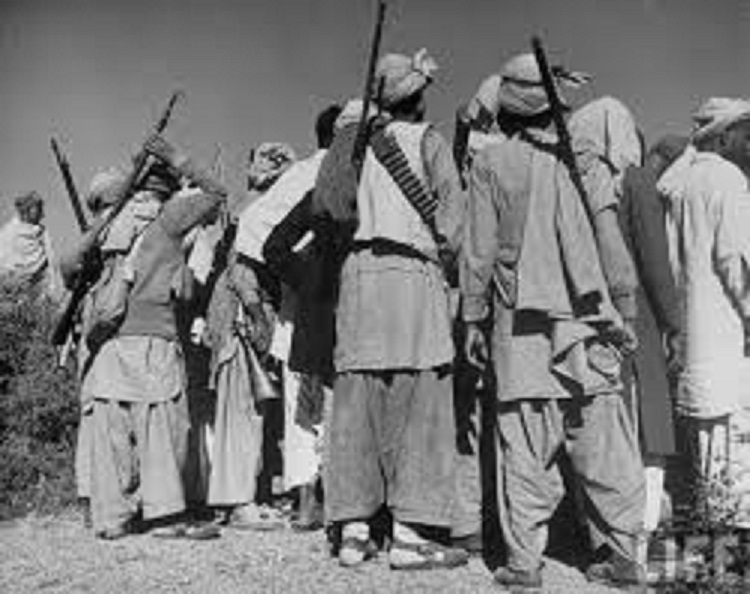
This same story has been repeated by Pakistan in the case of Jammu & Kashmir. On October 22, 1947 tribesmen and Pakistan Army attacked and invaded Jammu & Kashmir and yet lies, twists and misleading propaganda against the last Hindu Maharaja of Jammu & Kashmir Hari Singh has been circulating. It has been propagated that Maharaja Hari Singh was a tyrant and he was persecuting innocent Muslims of Kashmir and to liberate Kashmiri Muslims a lashkar (militant’s group) of approximately 20,000 tribesmen with the support of Pakistan military entered J&K. However, it is never mentioned that this Pakistani lashkar looted, vandalized places of worship, raped thousands of women and massacred hundreds of thousands of innocent Kashmiris in the name of Jihad (holy war). Yet in the history books of Pakistan these tribal lashkars are known as liberators and messiah!

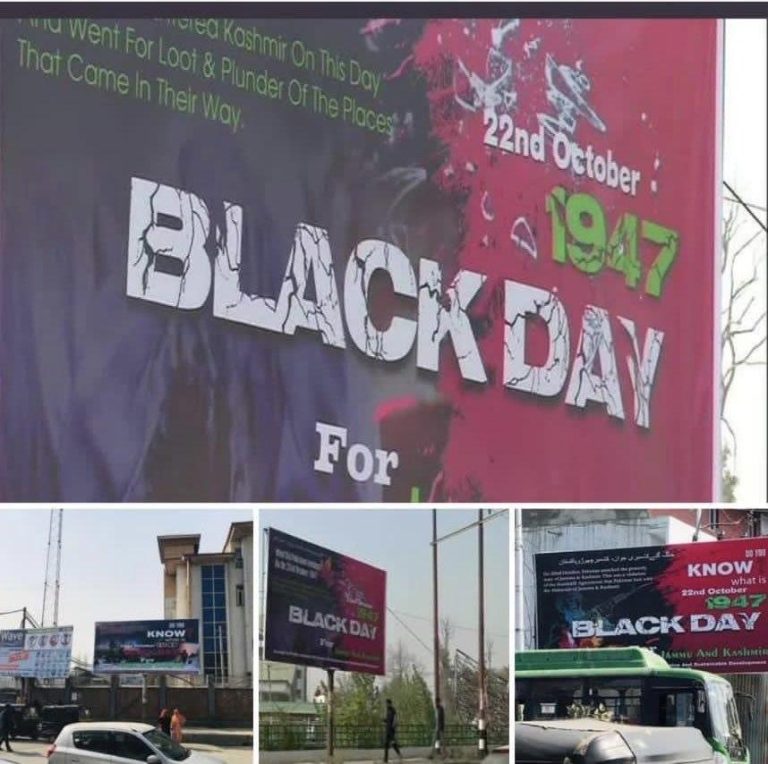
October 22, 1947 is observed as Black Day in Jammu & Kashmir. On this day Pakistan-sponsored tribals attacked Jammu & Kashmir.

Indo-Pakistan war of 1947-48
Also known as the Kashmir war, this war was fought between India and Pakistan over 1947 to 1948. Pakistan precipitated the war a few weeks after its creation by launching tribal lashkar (militia tribesmen) in an effort to capture Kashmir. The inconclusive result of the war still affects the geopolitics of both countries. On 22 October 1947, Pakistan’s Pashtun tribal militias crossed the border of the state. These local tribal militias and irregular Pakistani forces moved to take over Srinagar. They kept on looting and plundering Kashmir till they reached Baramulla, where they halted for a few days. During this time Maharaja Hari Singh made a request to India for assistance and subsequently signed the instrument of accession with India.

General Tariq real name (Major General Akbar Khan) of Pakistan Army was in charge of the attack on Jammu & Kashmir, the plan was famously called as the armed revolt inside Kashmir against a non- Muslim tyrant ruler who is persecuting Muslims of Kashmir. Words such as “Hindu”, “tyrant” and atrocities against Muslims ignited the naïve people and tribesmen to fulfill their religious obligation jihad (holy war). But they started attacking and looting homes of both the Hindus and Muslims, even places of worship were not spared and they entered and took whatever they could lay their hands on. These jihadi lashkars vandalized Mandirs (temple) and desecrated several Masjids (Mosques).

In their lustful search for gold, silver and money the tribal attackers dug up the stone floors of shops, homes and temples. Several Hindus thought that since the attackers are Muslim so they would spare mosques and hid their gold and valuable things there but the tribal attackers did not spare the mosques also. In fact, the first President of “Azad Kashmir” Sardar Ibrahim Khan appointed by Pakistani military praised the invaders.

“Tribesmen played an important role in the movement of Azad Kashmir, They came all the way from different parts, from settled and unsettled areas of tribal territory to fight in Kashmir. Suleman Khel tribesmen came all the way from Afghanistan to take part in this Jihad but when the Indian Army came in the region on the request of Maharaja Hari Singh and encountered the tribesmen they retreated with great speed. They disintegrated into smaller groups and vanished leaving the territory entirely defenseless. All the tribesmen reached Abbottabad safe and sound,” said Sardar Ibrahim Khan the first president of Azad Kashmir (Pakistan-occupied Kashmir) in his statement soon after the tribal attack on Jammu & Kashmir.

This statement of Sardar Ibrahim Khan totally exposes the aggression and involvement of Pakistan military wherein they started the war and then the agenda against Kashmiri people about capturing of Kashmir. It was not India rather it’s Pakistan that started the war and yet till today the Pakistani history books and media portraits that it was India that massacred Muslims in Kashmir. Pakistani media and history books talks about November 6, 1947 when a few Muslims were killed in Kashmir in reaction to the slaughtering of hundreds of thousands Hindus and Sikhs and mass rapes by the Pakistani tribesmen and the Pakistan Army during the fortnight October 22, 1947.

I want to salute Muhammad Saeed Asad, author of “Wounded Memories” and Dr Shabir Choudhry, author of “Tribal Invasion and Kashmir” for their efforts to bring out truth through their invaluable books.

Muhammad Saeed Asad who interviewed the people who had either suffered during the tribal attack on Kashmir or witnessed the carnage writes, “This ill-fated and pre-conceived plan of the 22nd of October 1947 was designed to dismember our body. It totally disintegrated our society. It turned our history on its head and it buried our dignity.” In another place he writes; “Many eye-witnesses of the time along with a number of writers have opined that the tribal invasion of Kashmir was an ill-thought out and idiotic plan, which has proved fatal for Kashmir and Kashmiris in my opinion, there remains no doubt and there is no room for a second opinion that the planners and perpetrators of the tribal invasion on Kashmir, stand out as enemy number one of the Kashmiris, I would go further to say that if this invasion didn’t take place, a dispute on Kashmir would not have arisen.”

Muhammad Saeed Asad writes further; “The planners of the tribal invasion and their Kashmiri agents are the original and actual culprits of Kashmiri people, it is important for the nation to identify these criminals, bring them forth and make them stand in the court of time … I have strong hope that the new generation of Kashmir will not remain ill-informed or misdirected, as to who are foremost in killing their future and the enemy of their future.”

And just like the wrongs in Kashmir, Pakistan committed similar crimes in Sindh. Look what has happened with the people of Sindh, their history was been destroyed, they were used in a fake two nation theory, Pashtuns were used by Pakistani military in name of Jihad” and people of Bangladesh (earlier East Pakistan) were trapped by falsities of Pakistani Muslim narrative. However, Bangladesh attained its freedom in 1971. The people of Kashmir and Muslims of India should read these books and try to understand the reality, and not fall for the only narrative creative by Pakistan. Because the history books of Pakistan and their media is misleading and fake.

Second Pass of the World Intelligence Network 3.13-4.8 Sigma Societies

To the micro-fraction interested in such an analysis in this series, let’s continue, please, the World Intelligence Network lists a significant number of high-IQ societies, which comes in two lists. One states 65 active high-IQ societies; another lists 84 “active” high-IQ societies. “Active” is the presumptive status of the 84 high-IQ societies claimed, as such, for the World Intelligence Network. Based on the first three articles, “active” is not true. Perhaps, it was, but not anymore. These series of inter-related articles focus on the second list, as it’s, purely and simply, longer – 84 in contrast to 65. The original idea was four articles based on two segments of the societies and then a first pass & second pass analysis of the societal status. This idea could be extended with further thought now into the claimed higher sigma societies beyond 4.8.

This fourth article covers the second pass or second review of the World Intelligence Network “active” high-IQ societies between sigmas 3.13 and 4.8. The first pass reviews the website links to see the status directly from the World Intelligence Network. The second pass looks at the world’s largest search engine with keyword searches, i.e., Google searches. The President of the World Intelligence Network is Evangelos Katsioulis and the Vice President/Vice-President is Manahel Thabet. The publication for the World Intelligence Network is Phenomenon run by co-editors Lord Graham Powell/Graham Powell and Krystal Volney. Here we go again, dear reader:

At 3.13 sigma, the Ludomind Society of Albert Frank and Peter Bentley appears mentioned in an article by Albert Frank hosted on the web domain of Paul Cooijmans entitled “Ludomind, A New Society.” The article states:

Ludomind was founded in 1999 by Albert Frank.

In 2003, it became an International Society, (re)founded by Peter Bentley and Albert Frank. The goal of the society is – without any exception – to present BEAUTIFUL puzzles. The members must of course specify if they are the author of the puzzle, or give the origin. A puzzle may never come from a (active or inactive) test.

Besides, the puzzles may not be (too) cultural, may not be related to a language (some members don’t speak English), and must not need high academics knowledge.

To become a member, ALL of the following conditions are needed:

– An estimated I.Q. > 150 (this condition is the less important)

– To have created or selected ONLY beautiful puzzles

– To be active – this means to present a puzzle minimum from time to time

– To accept, on the mailing list, to send mails only – without any restriction – concerning puzzles. The SesquIQ Society appears defunct…

… The URL is: http://www.ludomind.gui.pro.br/

The URL is defunct. One can find a copy of the article: http://users.skynet.be/albert.frank/ludomind1.htm. The same URL is defunct. “Eight Unusual High IQ Societies” by ‘bkivey’ mentions the society, which states the 150+ IQ (S.D. 16) requirement for membership. The World Genius Directory lists the society, while the link there, too, is defunct. AtlantIQ Society lists Ludomind in its dead societies section. Thus, on the second pass, and the first pass, Ludomind appears defunct. One can find numerous references to SesquIQ Society without legitimate links to a valid web domain leading to a second pass conclusion of the defunct status of it. However, its old website stated:

About SesquIQ:

          ”Sesqui-” means one and a half, (sesquicentennial is 150 years), so using a play on the prefix and an acronym, adding “sesqui” to the average IQ of 100 is therefore 150. Pronounced ( ses kwi’ ku ). Our first purpose is to put learned knowledge into action, to live-out our philosophy of productivity.

Membership Requirements:

          (i) Verifiable 150 IQ (99.9%+ as scored on a legitimate supervised IQ test), or 360 SQ. (ii) Personally and physically involved in a productive action which has universal value to Nature. (iii) Dissertation explaining your activity in detail. (iv) Must be polite, honest, compassionate, fair, ethically moral, peaceful, and logically minded. (v) Online members must submit an update of their activity twice a year to be reviewed for continuing membership.

At 3.2 sigma, the ISI-Society of Jonathan Wai seems defunct on its first pass while functional and active on its second pass[1]. Its current administrators are Stanislav Riha and Braco Veletanlic. Its distinguished members are Laurent Dubois, Hindemburg Melao Jr., Philip J. Carter, Evangelos G. Katsioulis, Petri Widsten, Carlos P. Simoes, Xavier Jouve, David Udbjorg, Hernan R. Chang, Umit Soygenis, Vernon M. Neppe, Luis Enrique Pérez Ostoa, Edward Close, Marco Ripà, Paul Freeman, Paul Moroz, Mark van Vuuren, Adrian Klein, Niranjan C. Bhat, Jason Betts, Beatrice Rescazzi, and Simon Olling Rebsdorf. The Smart People Society appears defunct on first pass and second pass.

At 3.26 sigma, the Epida Society of Fernando Barbosa Neto appears active, online, and functional. Its President is Andrew Aus; Member Officer is Erdem Yilmaz; and, vice-membership officers Michael Baker and Phil Elauria.[1] The World Intelligence Network describes the society as follows:

Epida is a high IQ society founded on 09/01/2010 for people with an IQ equal to or higher than 152 on a scale using a standard deviation of 16. This is to say that 0.06% of the world population would qualify.

The word ‘Epida’ actually embodies the minimum criterion for admission. How so? An IQ of 152 is 3.25 standard deviations above the mean, 3.25 is equal to 3 + 1/4. Realizing that the first letter of ‘plus’ is ‘p’ and the first letter of ‘division’ is ‘d’, and replacing these symbols with these letters in ‘3+1/4’ one obtains ‘3p1d4’. Replacing the numbers with their similarly-shaped letters in the western alphabet, one obtains Epida!

In the forum, there are discussions on the topics of intelligence, puzzles, science and philosophy.

Although, its copyright on the web domain states “2012,” which leads to questions about the degree of activity if “active.”

At 3.33 sigma, the sinApsa Society of Marin Filinic appears defunct on first pass and second pass. One only receives a “.swf” file – be careful with “.swf” files in general.

At 3.66 sigma, the SPIQR Society of Marco Ripà appears functional while inactive or on an old platform on the first pass. It has a listing on the World Intelligence Network with the statement:

sPIqr is an international society, founded on 18th February 2010 with the purpose of bringing together people who pass the 99.98 percentile in two or more selected IQ tests.

The acronym sPIqr derives from the Italian pronunciation of the crest S.P.Q.R., that is, “Senatus Populusque Romanus”. Furthermore, pi=3.1415… is the relationship between the diameter of a circle and its perimeter. In the mind of humankind, the circle has always represented the ideal of perfection. Obviously sPIqr also contains the letters “IQ”, which indicates the core element of this kind of virtual cafe.

The purpose of the sPIqr is to make people aware of how important the inclusion of gifted children is within the school system. Very often these brilliant children have to face up to a hostile environment that doesn’t allow them to fully express their abilities.

sPIQr Society appears online, functional, and with an active member listing on the second pass[3]. Ripà is active on YouTube on a channel devoted to interests of his and talks by him.

At 3.73 sigma, the Coeus Society of Martin Tobias Lithner looks defunct on the first pass as well as the second pass. The Hall Of The Ancients (HOTA) of Brennan Martin looks defunct on first pass and second pass. The RationalWiki website states:

Founded by a psychic and advocates pseudo-eugenics as well as authoritarianism, oh boy. Apparently all decisions for the common man should be made by the smartest .001% of the population. If Mensa is the Rolex of high IQ clubs then this one is the totally legitimate “Rollex” that you bought from the flea market.

The Vertex Society of Steven Wagner-Damianowitsch appears defunct on the first pass with a new use for the web domain. However, based on correspondence with Steven Wagner-Damianowitsch, Vertex Society is active, though small in membership, with 29 members in its 14 years in existence. The sigma of 3.75 for the membership (not precisely 3.73) may explain this low membership. Its non-defunct (second pass found) website states:

Fellows Society for Exceptionally and Profoundly Gifted (FSEPG) – Vertex, is an International Nonprofit Association gathering individuals with scores above IQ 160 SD16 on professional, standardized tests of intelligence – a rarity of 1/11,000 or 3.75 standard deviations above the mean – as far as intelligence can be reliably measured. It is one of the very few associations whose members are selected by means of professional, standardized, supervised intelligence tests only, which makes the society entrance claim undoubted as per standards of the scientific community.

FSEPG Vertex also fills an enormous gap. Up until the foundation of Vertex, there have existed no societies with entry requirements between 3 and 4 standard deviations.
Societies, many of which ambiguous with regard to the validity of their admission tools, often clutter at the same cut-off points, providing no gradation, and introducing confusion.

As FSEPG Vertex is aimed at the opposite, it was deemed useless unless being strongly based on the use of professional tests only, and providing finer gradation to the properly qualified members of the HIQ community. It is on these two principles that Vertex Society has been founded on and to which it is pledged to adhere.

Founded in the summer of 2006.

The Vertex Society Distinguished Research Fellow is Angelica Partida Hanon. Its research fellows are Martin M. Jacobsen, Evangelos Katsioulis, Thomas Chittenden, and Silvio Di Fabio. Its Distinguished Fellow is Stephan W.D. Its society fellows include Stephan W.D., Joshua A. Patterson, Vittorio Emanuel Lestat, Eduardo Correa da Costa, Angelica Partida Hanon, David Lubkin, Nathan Bourgoin, Paul Laurent, Stephen D. Flax, Marios Prodromou, Martin M. Jacobsen, Joseph Getti, Bernhard Junker, Milos Tatarevic, C. Vnt, Thomas Joseph Hally, Wayne Zhang, Evangelos Katsioulis, Hideharu Kobayashi, Aubrey Ellen Shomo, John Argenti, George Christos Petasis, Thomas W. Chittenden, Kevin J. Curley, Jeremy Leland Hauger, Dr. Jürgen Koller, Thomas Dalsgaard Nielsen, Andreas Kounis-Melas, and Silvio Di Fabio.

At 4 sigma, the Camp Archimedes Society of Fivos Drymiotis and Lestat seems defunct with a website disabled on the first pass and the second pass. The Epimetheus Society of Ronald K. Hoeflin appears functional and potentially active, though uncertain on the latter point; this is based on first pass and second pass review. Ronald Hoeflin has been a busy man.[4] The Ergo Society of Luis Enrique Pérez Ostoa seems defunct. As with the sinApsa Society, one only receives a “.swf” file – be careful with “.swf” files, not necessarily this one. RationalWiki describes the Ergo Society:

The people who devote days of their life to finishing complex puzzles are the real heroes. Ergo was set up to reward these self-sacrificing doyens of high IQ societies with free access to more complex puzzles for them to solve, ostensibly to assist with norming. Don’t think too hard about that concept or it starts to resemble unpaid work.

On first pass and second pass, the Ergo Society is defunct. The HELLIQ Society of Evangelos Katsioulis appears functional and active, though segmented from the World Intelligence Network web domain as a website.[5] Its website states:

HELLIQ Society is the new millennium high IQ society for the profoundly gifted homines intelligentes. Founded on the first day of the third millennium (01/01/2001) by Dr. Evangelos Katsioulis MD, HELLIQ functions as an entirely web based superior intelligence community.

HELLIQ Society is the 2nd member society of the World Intelligence Network (WIN)

Terminology

Helliq members are symbolically referred to as HELLIA.

The first component of the Society name is meant to be highly related with the Greek word for GREEK, which is HELLENIC and also with the Greek word for the sun, which is HELIOS. The Society name consists of two components: the first component consists of the first four letters, HELL, before the second IQ component. The number of letters of the component HELL- corresponds to the minimum number of standard deviations (4) on an intelligence performance required for membership.

Its presidents have been Marc-André Groulx, Thomas B., Stephan Wagner Damianowitsch, and Evangelos Katsioulis. Its vice-presidents have been Wayne Zhang, Evangelos Katsioulis, Djordje Rancic, D.T., Ph.D., and Thomas B. Its web officers have been Evangelos Katsioulis, Stephan Wagner-Damianowitsch/Stephan Wagner Damianowitsch, and David Bergman. Its membership officers have been Evangelos Katsioulis, Bruno Alpi, and Tan Kaijie. On first pass and second pass, the HELLIQ Society is not defunct. The Prometheus Society of Ronald K. Hoeflin looks functional, active, and longstanding. Its current President is Maco Stewart. Its current Editor position is vacant. Its current Membership Officer is Maco Stewart. Its current Treasurer is Brian Schwartz. Its current Internet Officer is Karyn Huntting Peters. Its current Ombudsman(/woman/person) is Shannon Hasenfratz Gardner.[6] Prominent members have been Ronald Hoeflin, Marilyn vos Savant, Karyn Huntting/Karyn S. Huntting, and Dan Barker. On the second pass, one can see a boasting of over 100 members worldwide. However, some previously functional links on the website are no longer functional. On first pass and second pass, the Prometheus Society is not defunct. Next, the Sigma IV Society of Hindemburg Melão appears to have members, though seems inactive at this time, i.e., paralytic.[7] It has 171 subscribers and 14 members. Its website states:

Founder: Hindemburg Melão Jr.
 
Theoretical Cut-off: 99,997%

 
Admission Criteria: IQ above 164 or equivalent true rarity in the following tests (only these tests):

Members: Sigma Test, Sigma Test VI, Sigma Associations Test, Sigma Analogy Test (+s4)

Subscribers: members of Sigma II

The Tetra Society of Mislav Predavec looks active. It has a decent number of members. Its “functionaries” are membership officer Frandix Chun Him Chan and the founder & president Mislav Predavec.[8] On first and second pass, the Tetra Society seems non-defunct.

At 4.01 sigma, The Platinum Society of Hindemburg Melão seems defunct on first and second pass. The AtlantIQ Society lists the society as a dead society, too.

At 4.27 sigma, the Eximia Society of Patrick Kreander seems defunct. The UltraNet Society of Gina Losasso and Christopher Langan appears defunct on the first pass. On the second pass, Gina Losasso should be, respectfully, Dr. Gina Langan, which is not the listed name or qualification on the World Intelligence Network website. Same with Dr. Ronald Hoeflin too. Others had truncated academic titles too. The “UltraNet Society” should be the Ultranet of the Mega Foundation, where the Ultranet appears to have moved to the platform of Patreon devoted to the noble stated aim of the assistance of the severely gifted.

At 4.8 sigma, the GenerIQ Society of Mislav Predavec seems defunct on the first pass, though with a website on the second pass with unknown levels of activity. Its website states:

Founded in the year 2002, with the main goal to register and gather individuals with highly developed abilities of strict logic, abstract thinking, and reasoning, this society in its kernel has the intention to create a competitive but friendly environment for its members and visitors as well. This society has not an intention to build itself a temple, nor make a shrine to its members in an elitistic manner of discriminating intelligence of other people, but to tease the brains of people who are aware of their high intellectual potentials.

In fact, there are not many people out there who have proven their outstanding intelligence at the level 1 out of 100,000 or 1 out of a million people, they can be counted on fingers of one hand, or two maybe. The list of admission tests which this society recognizes and accepts as a proof of someones IQ is not very long, but that is to be expected since there exist more tests than members.

At the moment, the society has 19 full and 15 prospective members from 20 countries on 5 continents.

The Incognia Society of Luis Enrique Pérez Ostoa appears defunct on first pass and second pass. The Mega Society of Ronald K. Hoeflin looks active, functional, and longstanding.[9] Its officers include Administrator Emeritus Jeff Ward, Administrator Brian Wiksell, editors Richard May and Ken Shea, and Internet Officer Daniel Shea. Unfortunately, there was significant controversy within the Mega Society leading to the Mega Society suing for stoppage of the use of their name many years ago based on the requisite legal documentation. The evidence and outcome is in the legal documents available on the Mega Society website.[10] Another aspect of the Mega Society with some potential for cold water required at this time because of widespread misinformation. Some individuals took the Mega Test, in particular, under pseudonyms or fake names & real names for two attempts rather than once. The reality of the matter, the most legitimate test scores should be the real name and the first attempt on any given test, especially in consideration of experimental or alternative tests. Over the Mega Test, several individuals garnered minor fame for the scores: Marilyn vos Savant, Rick Rosner/Rick G. Rosner, Chris Langan/Christopher Michael Langan, John H. Sununu/John Henry Sununu, Keith Raniere, and Solomon W. Golomb. The individuals who took the test twice while using fake names for one of the attempts were Rick Rosner posing as “Richard Sterman” and Chris Langan/Christopher Michael Langan presented as “Eric Hart.” Rosner/“Sterman” scored 44/48 on the first attempt on the Mega Test. Langan/ Hart” scored 42/48 on the first attempt on the Mega Test. Marilyn vos Savant scored 46/48 on the first attempt on the Mega Test – higher than anyone on the first attempt and under the real name. Thus, there is no king of the Mega Test; there is the Queen, though: Marilyn (Mach) vos Savant. The scores on the Mega Test on the sixth norming for Langan/“Hart,” Rosner/“Sterman,” and vos Savant, for the 42/48, 44/48, and 46/48, would be, on S.D. 16, IQs of 174, 180, and 186, respectively. Subsequently, in issue 206 of Noesis: The Journal of the Mega Society, David Redvaldsen published an article or republished an article entitled “Do the Mega and Titan Tests Yield Accurate Results? An Investigation Into Two Experimental Intelligence Tests.” In it, he produced a different set of norms of the Mega Test and the Titan Test. Redvaldsen’s norms would earn Langan/“Hart,” Rosner/“Sterman,” and vos Savant, IQs of 163, 167, and 170+, respectively, on an S.D. of 16. Therefore, on the Mega Test scores, and on an S.D. of 16, between the Redvaldsen norming and the sixth Hoeflin norming, the first attempts – the truer scores on the Mega Test, even ignoring the use of a fake name and the status of an alternative test and not a mainstream test, though a higher quality one – would yield IQs between 163 to 174 for Langan/“Hart,” 167 to 180 for Rosner/“Sterman,” and 170+ to 186 for vos Savant, respectively. Other scores claimed in the 190s, 200s, or even 210, would amount to irresponsible/naive journalism and media hype in mostly minor and medium-sized media outlets in regards to the Mega Test. Redvaldsen reviewed the Titan Test, too, as per the title of the republication. Wikipedia is an unreliable source of information in some, even many, cases. As far as I can tell, “C. Minor” stipulated on the Rick Rosner Wikipedia page does not exist, which claims a tie on the Mega Test and Titan Test scores by the, at the time, 15-year-old person. Do not take the statement of “irresponsible/naive journalism and media hype” from me, alone, to the heart of the matter, the idea of the highest possible general intelligence test score seems worth abandoning to some degree. To take this from an interview with Dr. Ronald Hoeflin, no single highest IQ can be claimed, legitimately, or, at least, seriously, as follows, in “An Interview with Dr. Ronald K. Hoeflin on “The Encyclopedia of Categories,” Family History and Feelings, Upbringing and Giftedness, and Aptitudes (Part One)” (2019); Hoeflin states:

The Guinness Book of World Records abandoned its “Highest IQ” entry in 1989 because the new editor thought (correctly) that it is impossible to compare people’s IQs successfully at world-record level. The highest childhood IQ I know of was that of Alicia Witt, who had a mental age of 20 at the age of 3. Even if she had been 3 years 11 months old, this would still amount to an IQ of over 500! At the age of 7, she played the super-genius sister of the hero in the 1984 movie Dune. On a normal (Gaussian) curve such an IQ would be impossible since an IQ of 201 or so would be equivalent to a rarity of about one-in-7-billion, the current population of the Earth. But it is well known to psychometricians that childhood IQs using the traditional method of mental age divided by chronological age fail to conform to the normal curve at high IQ levels. The Stanford-Binet hid this embarrassing fact in its score interpretation booklet (which I found a copy of in the main library of the New York Public Library) by not awarding any IQs above 169, leaving the space for higher IQs blank! The CMT avoids the embarrassment of awarding IQs of 500 or more by having a maximum possible IQ on Form A (the harder of the two CMTs) of 181. Leta Speyer and Marilyn vos Savant, both of whom I had dated for a time, had been listed in the Guinness Book of World Records as having world-record IQs of 196 and of 228, respectively, Marilyn having displaced Leta in the 1986 edition. Leta felt that the 228 IQ of Marilyn was fake, but I was aware that these childhood scores could go well beyond 200 IQ because they fail to conform to the normal curve that Francis Galton had hypothesized as the shape of the intelligence curve in his seminal book Hereditary Genius (first edition 1869, second edition 1892). I was unable to contact Alicia Witt to see if she would be interested in joining the Mega Society. I should note that the three key founders of the ultra-high-IQ societies (99.9 percentile or above) were Chris Harding, Kevin Langdon, and myself. Harding founded his first such society in 1974, Langdon in 1978, and myself in 1982. Mensa, the granddaddy of all high-IQ societies with a 98th percentile minimum requirement, was founded in 1945 or 1946 by Roland Berrill and L. L Ware, and Intertel, with a 99th percentile minimum requirement, was founded in 1966 or 1967 by Ralph Haines. I don’t care to quibble about the precise dates that Mensa and Intertel were founded, so I have given two adjacent dates for each. In its article “High IQ Societies” Wikipedia lists just 5 main high-IQ societies: Mensa, Intertel, the Triple Nine Society, the Prometheus Society, and the Mega Society (minimum percentile requirements: 98, 99, 99.9, 99.997, and 99.9999, respectively; or one-in 50, one-in-100, one-in-1,000, one-in-30,000, and one-in-1,000,000; dates founded: roughly 1945, 1966, 1979, 1982, and 1982; founders: Berrill and Ware, Haines, Kevin Langdon, Ronald K. Hoeflin, and Ronald K. Hoeflin, respectively.

To claim the smartest person in the world is far too premature, even now, and, in many respects, illegitimate, as an example in the case of the Mega Society, the most authoritative source stipulates the same, i.e., the creator of the Mega Test, the Titan Test, the Ultra Test, and the Power Test, and the founder of the Prometheus Society (1982), the Mega Society (1982), the Top One Percent Society (1989), the One-in-a-Thousand Society (1992), the Epimetheus Society (2006), and the Omega Society (2006), or Dr. Ronald Hoeflin, as per the above statement. Marilyn vos Savant, Rick Rosner/Rick G. Rosner, Chris Langan/Christopher Michael Langan, John H. Sununu/John Henry Sununu, Keith Raniere, and Solomon W. Golomb took the Mega Test. As far as I know, at least, Rosner, of the aforementioned, took the Titan Test. He scored perfect on it. Rosner is the only individual to ever achieve this on the Titan Test, which is before the compromise of the Titan Test. The first Hoeflin norming of the Titan Test is on an S.D. of 16 and would yield an IQ of 190+ if a perfect score or 48/48. However, with Redvaldsen’s norming, 48/48 would correspond to an IQ of 168+, which makes Rosner’s Titan Test perfect score corresponding to an IQ of 168+ to 190+ on an S.D. of 16 between the Redvaldsen norming and the first Hoeflin norming, respectively. The Mega Society takeaway: Both the Titan Test and the Mega Test have been officially compromised; the Ultra Test and the Power Test are accepted for membership purposes of the Mega Society now; vos Savant is the Queen of the Mega Test, while Rosner is the King of the Titan Test; its flagship publication, Noesis: The Journal of the Mega Society, continues to publish irregularly under the editorial leadership of Ken Shea and Richard May, previously under Kevin Langdon. An addendum: Granted, these are higher quality alternative tests, though not mainstream general intelligence tests, which can make all the difference. Next, the Omega Society of Ronald K. Hoeflin seems functional and longstanding with an unknown activity level.[11] The Pi Society of Nikos Lygeros is active and functional on the first pass and second pass with extensive data on its website. Lygeros almost contains an overwhelming database of material there.

Thank you for your attention.

[1] Two categories not included in these listings were hidden members and removed members because these provided zero data, except an additional n to the N. Full members of the ISI-Society include Bruno Alpi, Mari Donkers, Paul F. Kisak, Mateusz Kurcewicz, Dieter Wolfgang Matuschek, Jesmond Debono, Roger Kircher, Robbie Dawson, Mike Hess, Alberto Matera, Karl Wilhelmson, Andre Valentic, Michael Ronnlund, Santanu Sengupta, Djordje Rancic, Barry Howard, Anna-Karin Burman, Enrico di Bari, Grant J. Fisher, Glenn Prince, Florian Schroder, Reinhard Matuschka, Edward Vanhove, Terry Strobaugh, Nileon Dimalaluan Jr., Mick Dempsey, Antoniou Constantinos, Torben Sorensen, Jörg Zurkirchen, Marc Heremans, Maria Casillas, Tommy Smith, David Bergman, Keith Takishita, Arne Blak, Marco Roger Graf, Andreas Gunnarsson, Martin Dresler, Robert Brizel, David Giltinan, Stefan Lindberg, Pawel Bulacik, Karin Lindgren, Dylan Taylor, Jonathan May, Jan Merolant, Gilad Skyte, Christian Hohenstein, Tetsuji Nishikura, Georg Michael Strasser, Andrew McGowan, Jean-Eric Pacaud, Rahul Horé, Bart Lindekens, Eric Avendaño, Matthew Dascombe, Bill Clark, Magnus Adamsson, Patrick Allain, Uros Petrovic, Alan O’Donnell, Thomas B., Kirk Butt, Mikael Andersson, Juha Varis, Xavier Reinhard, Pawel Janic, Isaac Ifrach, Vidar Sinding, Chris Chsioufis, Joseph Tomlinson, Richard Stephenson, Robert Bergelson, David Holler, William Handyside, Peter Ingestad, Achim de Vivie, Denis Quéno, Ulf Westerlund, Tommi Salokivi, Christopher Galiardo, Dan Duval, Ashish T. Vaswani, Ian Dowling, Walter Yazdani, Reejis Stephen, Hideharu Kobayashi, Chris Wales, Koji Ito, Adam William Kisby, Jan Glowaski, Ryan Sloan, Collette Carlson Kisby, Kasper Olsen, Romain Simoni, Kaj H. Forsell, Frédéric Lion, Richard M. Riss, Masaaki Yamauchi, Pamela Staschik Neumann, Christos Apostolidis, Thierry Bourret, Jean Loup Agache, Patrick J. Maitland, Joseph Limpert, Andrzej Figurski, Gary Robinson, Gerasimos Politis, Thomas Faulkner, Pedro López, Frederick Fritz Reitz, Shi-hyung Lee, André Ruo, Andreas Wolf, K.Siong Eng, Joe Fitzgerald, William F. Hamilton III, Walter van Huissteden, Papageorgiou G. Pantelis, Konstantinos Ntalachanis, Waddaah, Ivan Ivec, Marcus Gemeinder, Armin Becker, Peter Uebele, Chivorn Kouch, Henrik Hjort, Vittorio E. Lestat, Jani Kristian Savolainen, Panuwat Srimuang, Fivos R Drymiotis, Neil Z. Miller, Thomas Hally, Wayne Guy Butterfield, Aris Giachnis, Sandra Schlick, Alan Willis, César Tomé-López, Chris Haerringer, Wayne Zhang, Serge Miserez, Tobias Lindberg, Athanasios N.Nikolakopoulos, Todd H. Fox, David Lubkin, Ole Mose, Paul Laurent, Maco Stewart, Greg A. Grove, Andrés Leonardo Gómez Emilsson, Okay Karakas, Todd Emslie, Jyrki Leskelä, Martin M. Jacobsen, Daniel Solis, Dallayce Bright, Blake Woodward, Julie Tribes, Eric Lionel Pratte, Gérald Grossmann, Heo Hoon, Didier Jacquet, Justin Benedict, Jamie Stroud, Anna Ayanova, Han-Kyung Lee, Aaron Light, José Gutiérrez Sáez de Castillo, Robert Herceg, Nate Durham, Frederik Kerling, Erik Dellcrantz, Rudimar Schmitz, Anirban Bhattacharyya, Don Watson, Gi Beom Bae, Jan Snauwaert, Dong Su Ryu, Rodrigo Garcia Kosinski, Burak Yulug, Chris Liggett, Jan Antusch, Anthony William Lawson, Dany Provost, Thuy-Vi Ton That, Hope Hanson, Robin Bourbon, Antonio Rada García, Takeshi Amagi, Jeff Goldman, David Quint, Yusaku Hori, Pablo Fernández González, Hakan Erdil, Craig Albrecht, Perry Choi, Stefan Majoran, Gabriel Silvasi, Shinji Okazaki, Christian Croona, Ivo Rubic, Christoph Gersdorff, Jeff Leonard, Øyvind Torsen, Ernie Marasigan, Paul Landuyt, Aleksandra Vidanovic, Richard Lemyre, Richard Sharp, Joshua Sparks, Maciej Slowinski, Luka Banic, Afsin Saltik, Jarl Victor Bjørgan, James T. Keating, Patrick J. McShea, Shack Almon, Wesley Sampson, Leonardo Casetta, Francisco Rodriguez, Carlos Lourenco, Jürgen Koller, Elizabeth Anne Scott, Dong Khac Cuong, Yoshihito Niimura, Torbjoern Brenna, Ryan Jackson, Andrea Gelmetti, Lasse, Theodosis Prousalis, Fernando Sánchez, Silvana Paredes, José González Molinero, Gary Barnett, Jonatas Müller, Nikhil Dhamapurkar, Gary Song, Jérôme-Olivier Billet, Jacqueline Slade, Warren Tang, Martin Tobias Lithner, Alex Stamatiades, Baku Saito, Kaloyan Kraev, Grant Meadors, Adam Robert Kowal, Darb, Ivan Yovev, Cui Bingyu, Patrick John Kreander, Jon Scharer, Eddie Sudzilovsky, Michael Baker, Andrew Aus, Martijn Tromm, Jingzhi Yang, Rodrigo Mate, Zhiyong Tu, Alexander Herkner, Hever Horacio Arreola Gutierrez, Brad Schmaltz, Akshay Goel, Sunder Rangarajan, Adílio Gomes da Silva, Wang Yue, Hiromitsu Tsugawa, Robert Rose-Coutré, Andreas Andersson, Ina Bendis, Jeffrey Rosenthal, Wang Yang, Brennan Martin, Shi Li, Victor Sanchez Martin, James Gordon, Sérgio Duarte da Silva, Jingbo Zhang, Miguel Angel Soto-Miranda, Clement M. Lee, Silvio Di Fabio, Nikolaos Ulysses Soulios, Yui Yamaguchi, Tom Högström, Kimmo Kostamo, Ryuta Arisaka, Ting Fu, Bo Østergaard Nielsen, John Argenti, laolu Osunbayo, George Walendowski, Andrew Rigg, Nguyen Thai Hoang, Wayne Cooper, Peter D Rogers, Jonas Hiller, Liu Jiapeng, José Zumaquero, Anja Jaenicke, [Omitted by request], Göran Åhlander, Louis Sauter, Kim Chow, Julio Machado, Claus-Dieter Volko, David B. Olson, Panagiotis Karabelas, Konstantinos Ntatsis, Nicolò Pezzuti, Konstantinos Kolokotronis, Arjan van Essen, George Ch. Petasis, Yuki Yamanaka, Jonathan Englert, Igor Dorfman, Vicente Lopez Pena, Paul Merino, Ivan Rasic, Erik Hæreid, Kei Suzuki, Raymond Mulvey, Iakovos Koukas, Kamil Tront, Romeo Cairme, Jr., Dalibor Marinčić, Theo Leworthy, Victor Hingsberg, Johnathan Machler, Alexandru Georgescu, Gareth Rees, Burkan Bereketoğlu, Noriyuki Sakurai, Jeremy Buras, John Kaspo, Jakub Oblizajek, Alican Yavuz, Dimitrios Sourlas, Charles Rykken, James McBeath, Thom Devine, Woo Chun Onn, Mohd  Faizal Bin Azman, Lukáš Puškáš, Vsileios Nikolousis, Filippo de Donatis, Sai Praveen Srinivasan, Andre Gangvik, Måns Kämpe, Emmanuel F., Trevor Simpson, Frederick Goertz, Alessandro Campana, Alessia Iancarelli, Ujjwal Dey, Jérôme Kelber, Rabi Rashmi Roy, Samyak Shrestha,  Daniel Fourie, John Zadeh, Simon Chatzigiannis, Jung-su Yi, Robert T. Bucci Jr., Niko Vilhunen, Taher Hansen, Sung-jin, Kim, Michael D. Mehlman, Saif Lalani, Antonio Fortunato, Andreas Olausson, Marcus Olander, Lee Sunggil, Gabriel Garofal, Seiryu Yamane, Hiroki Fujiwara, Kim Jin Seok, Logan Smith, Ed Fernandez, Christopher Angus, Joachim Lahav, Yuhui Sun, Chuanchuan Li, Bruce Nye, Javier Río Santos, Dionysios Maroudas, Rodrigo Cerqueira Cunha, Altuğ Alkan, Shota Miura, Igor Bogdanic, Waichiro Horiuchi, WeiJie Wang, Zhang Yang, Koyo Yoshihara, Soojung Bae, Ashraya Ananthanarayanan, Elcon Fleur, Taemin Song, Naoki Kouda, Guocheng Wu, Richard Sheen, Jan Claes, Natalie de Clare, Kathy A Kendrick, Nobuya Nakagawa, Sam Thompson, Stefano Pierazzoli, Kaishi Terashima, Shuji Yamada, Anders Hellström, Yun Dong Yeo, Makoto Takenaka, Naomi Takenaka, Wang Zhangyuan, Federico Calarco, Daisuke Fujimori, Kenzou Oohashi, William J. Novalany, Steven Grieco, Haoran Zhang, Giulio Cosio, Edison Yin, Oscar Holtner, Jiwhan Park, Luca Fiorani, Naoki Kawabe, Danfei Gu, Hanane Benfreha, Takahiko Kei, DongSu Kim, Kazuhiko Watanabe, Tomohiko Nakamura, Mikihiko Fukunaga, Maciek Matys, Stergios Protogerou, David Espinoza, Keith Blanton, Niels Ellevang, Yuri Matsuo (Hosaka), Akinori Oomoto, Gheorghe Alin Petre, Xiaoming Cai, Chihiro Hamazaki, Fernando Pardo, Alessandro Canzonieri, Hua Weixiang, Shenglei Chen, Iwane Hiroyuki, Johan Kennebjörk, Takashi Egawano, Georgios Kyriakakis, Fabio Castagna, Gildas Sidobre, Qiwei Qin, Roberto Giammattei, Hidenori Ohnishi, Alexi Edin, Valeria Chiara Lanari, Kiyoshi Sasamoto, Takayuki Hiraga, Satoshi Aoki, Ryo Kawai, Konstantinos Vlachopoulos, Rafael Parrilla Blanco, Francesco Carlomagno, Satoki Tsuji, Jaidip Singh Chauhan, Shinobu Kakimoto, Noah, Kyung Suk Min, Arturo Escorza Pedraza, Wakamatsu Tomohiro, Taisuke Uchida, Christopher Travis Park, Veronica Palladino, Yohei Furutono, Hong xu Zhu, Suei Ting Jhao, Terence P Blackburn, Shojun Yamazaki, Tetsuhito Karasumaru, Song Yuan Zhuang, Anthony Brown, Lorenzo Malica, Sao Yoma, Wong Tai Wai, Xu Chen, Andrea Dalboni, Zhengxinxin, Mark Strobl, Denis Manuel Walch, Ensong Zhang, Bryne Tan, Kenjirou Uesaka (kamisaka), Masahiko Okamoto, Michinori Ando, Marios Prodromou, Yushi Iwai, Anshika Ashok Verma, Tsukimi Yuki, Chiho Jimba, Kounosuke Oisaki, Chihiro Takeuchi, Jewoong Moon, Kentaro Takiguchi, Ziyuan Wang, Joe Bolognese, Ryuichi Onuki, Christian Sorensen, Akihiro Yamada, Annelie Oliver, Jiahao Wang, Jo Christopher M. Resquites, Yukun Wang, Nicos Gerasimou, Alessandro Zerillo, Weng Yang, Joseph Hayes, Jinhua Ren, Huanyun Chen, ZhongLin Leo, Ryoji Tanaka, Hiroki Hirabayashi, Thomas J Hally, Tin Chun Bun, David Kelly, Junxi Niu, Akitomo Kibihara, Byunghyun Ban, Junshuo Chang, Wang Yang, Deng Yue, Qichen Huang, Zhang Wenxuan, Shaopin Wang, Takumi Omote, Masashi Asano, Aníbal Sánchez Numa, Wing Yuk Wong, Maximilian-Andrei Druta, Tatsuki Chiba, Yaoita Kento, Yingyi Ding, Nitish Joshi, Hiroki Kaya, Kenta Onoda, Sheng Hu, Akira Miyamoto, Silva Huang, Ritoprovo Roy, Lee Junho, Genki Sugiura, Wei Lai, Maki Hashida, Koji Takahashi, Hiroyuki Shigeta, Keigo Morishita, Tatsuhiko Ogata, Masumi Kawauchi, Carlo Maina, Nam Kyu Ha, Koki Morioka, Toshihiro Kawasaki, Frank Aiello, Zhuohao Yuan, Jonas Haas, Yao Xu, James Dorsey, James Richard Lorrimore, Barry Beanland, Yu Lin Lu, Gaetano Morelli, Nikolai von Boetticher, Eugene Kim, and Jeffery Lee Humphrey.

Also, there are  a smaller number of subscribers including Leonardo Gomes, Stanislav Hatala, Guner Rodop, Phil Randolph, Bruno Alessi, Jeremy Whitley, Michael Fassbender, Kelly Dorsett, Alan Wong, Ingerid Annette Huseby, Matthew Campbell, David Coldwell, David Testerini, Robert Blais, Neoclis Neocleous, Lars Lowe Sjösund, L. Lin Ong, Shawn Clinton, Miguel Castro, Christian Sohl, Andreas Sjöstrand, Shailendu Shroff, Kai Verh, Jim Calkins, Samantha Hamblin, Shaun Sullivan, Eric Stillwachs, Alisa Meesomboon, Michael Tedja, Cedric Johnson, Steve Sunabacka, Julia Zuber, Richard Cadle, Omar Abdallah, Jean Bai, Drew Sanner, James Marshall, Tayo Sandono, Scott Silveria, Nomar Alexander Norono, Rodríguez, Henning Droege, William Heacock, Nuno Jorge Mesquita Baptista, Mike Tarnower, Lim Surya Tjahyadi, Jonathan Childers, Tonny Sellén, John Thomas McGuire, Shailaja Suresh, Chaena Lee, Therese Waneck, Jaegyeong Park, Mathias Dedic, Daisuke Inami, Sajan Bhaskaran Nair, Zhang Shijian, Sudarshan Murthy, Masao Shimada, Layne Walton, Teruyuki Mochizuki, Wang Ziyu, Sriram Balasuramanian, and Baosong Chen.

[2] The stipulated members from the website as follows: President: Andrew Aus (ENG), Membership Officer: Erdem Yilmaz (TUR), Vice-Membership Officers: Michael Baker (USA) and Phil Elauria (USA), Honorary Members: Martin Tobias Lithner (SWE), Brennan Martin (NZE), Mislav Predavec (CRO), Marco Ripà (ITA), and Evangelos Katsioulis (GRE), Full Members: Fernando Barbosa Neto (BRA), Adam Kisby (USA), Paul J. Edgeworth (USA), Michael Baker (USA), Nikhil Dhamapurkar (IND), Zachary Timmons (CAN), Gerasimos Politis (GRE), Pamela Staschik-Neumann (GER), Joshua Sparks (USA), José González Molinero (SPA), Deron K. Holmes (USA), Jonatas Müller (BRA), Brendan Harris (CAN), Thiago Cruz Silva (BRA), Giulio Zambon (ITA), Leif E. Agesen (NOR), Giorgio Milani (ITA), Phil Elauria (USA), Armin Becker (GER), Marios Prodromou (CYP), Yusaku Hori (HKG), Rudolf Trubba (CZR), Edmund James Koundakjian (USA), Jon Scott Scharer (USA), Francisco Rodriguez (HON), Yoshiyuki Shimizu (JAP), Gary Song (CAN), Alexander Herkner (GER), Paul Laurent Miranda (SPA), Guillaume Chanteloup (FRA), George Stoios (GRE), Lim Surya Tjahyadi (INA), Juan Gonzalez Liebana (SPA), Erdem Yilmaz (TUR), Hever Horacio Arreola Gutierrez (MEX), Ron Winrick (USA), Torbjorn Brenna (NOR), Ken Jarlen Olsen (NOR), Aaron Ellison (USA), Kyodou Lee (CHN), Gaetano Morelli (ITA), Sunder Rangarajan (IND), Bowen Wang (CHN), James Richard Lorrimore (UNK), Willian Talvane Arestides Ferreira da Silva (BRA), Yu Lin Lu (TWN), Jarl Victor Bjorgan (NOR), Vjeran Misic (B&H), Joseph Anthony Tomlinson (USA), Christine Van Ngoc Ty (FRA), Ryoji Honda (JAP), Jadesom Leonardo Haenich (BRA), Igor Dorfman (ISR), Graham Powell (ITA), Ting Fu (CHN), Solomos Nikolaos (GRE),  Beau Clemmons (FRA), Barry Beanland (DUB), John Argenti (USA), Nicolò Pezzuti (ITA), George J. Walendowski (USA), Nuno Norte de Sousa Silva (POR), Ole Mose (DEN), Martijn Tromm (NLD), and Jorge Del Fresno Viejo (SPA), Prospective Members: Aman Bagaria (IND), Constantí Cabestany (SPA), Nomar Alexander Norono Rodríguez (VEN), Andrea Toffoli (ITA), Lena Carlota Ruiz (CAN), Julia Zuber (GER), Subscribers: Nuno Jorge Mesquita Baptista (POR), and Nathália Geraldo (BRA).

[3] The Full Members List constitutes 130 members with hidden members removed with a rarity of 1/5,443 per member: Adrian Wojcik, A. G. Gonzàlez, Alessandro Campana, Alessandro Caruso, Alessandro Guardascione, Alexandru Georgescu, Andrea Casanova, Andrea Casolari, Andrea Dalboni, Andrea Gelmetti, Andrea Forti, Andrés Robles Jimenez, Andrew Aus, Anthony Brown, Antonio Del Maestro, Arne Andre Gangvik, Arturo Escorza Pedraza, Bernhard Junker, Christian Sorensen Feliu, Christine VNT, Claus-Dieter Volko, Dalibor Marincic, Daming Gao, Dan-Yang Sun, Deron K. Holmes, Didier Jeandrevin, Didier Jacquet, Dionysios Maroudas, Donatello Puliatti, Edoardo Perrone, Eirini Skliva, Emmanuel F., Enrico Rossetto, Enrico Strona, Eric Salinas Garcia, Erik Haereid, Evangelos Katsioulis, Fernando Barbosa Neto, Filip de Meulenaere, Filippo de Donatis, Francesco Concas, Francisco A. Retamal Reinoso, Frederick Goertz, Gabriel Garofalo, Gabriele Tessaro, Gaetano Morelli, Gary Song, Gaspare Delle Fave, George Ch. Petasis, Gerasimos Politis, Gianluigi Lombardi, Gianmaria Ruozi, Giulio Coci, Giuseppe Di Nunzio, Göran Åhlander, Hever H. Arreola Gutierrez, Iakovos Koukas, Ivan Ivec, Javier Rio Santos, Jawdat Wehbe Wehbe, Jiseong Kim, Jo Christopher M. Resquites, John Argenti, José Gonzalez Molinero, Juan Gonzalez Liebana, Juho Karenlampi, Kamil Tront, Keni Gripshi, Klemens Großmann, Kota Akishige, Liu Jianpeng, Lorenzo Malica, Luca Codeluppi, Luca Farinelli, Luca Fiorani, Manahel Thabet, Marc-André Nydegger, Marco Ripà, Marios B. Prodromou, Mattia Pedota, Michael Baker, Jr., Michele Sergi, Miroslav Radojevic, Nicholas Hadjiyiannis, Nicola di Bona, Nicolò Pezzuti, Nikolai von Boetticher, Nikolaos Soulios, Pamela Staschik-Neumann, Paul Laurent, Pietro Ferraro, Raymond Walbrecq, Ricardo Rossello, Rick Farrar, Roberto Enea, Roberto Farah, Roberto Mattei, Roberto Stella, Rudolf Trubba, Samyak Shrestha, Sandra Schlick, Shenglei Chen, Simone Mazzoccoli, Simon Olling Rebsdorf, Sriram Balasubramanian, Stanislav Riha, Stefano Pierazzoli, Steffen Bode, Stephan Wagner Damianowitsch, Sudharshan Moorthy, Takatsugu Muroya, Thomas Fishbeck, Tim Roberts, Tomohiko Nakamura, Torbjorn Brenna, Valeria Chiara Lanari, Valerio Stancanelli, Varidh Katiyar, Vasileios Nikolousis, Victor D. Sanchez Martin, Vincenzo Iovino, Watcharaphol Chitvattanawong, WeJie Wang, Yaniv Hozez, Yan Leduc-Chun, Yao Xu, Yohei Furutono, YoungHoon Kim, Yui Yamaguchi, Zhang Yang, and ZhiHang Li.

The Prospective Members Listing is a rarity of 1/70 people with 85 members where the hidden members have been removed: Alessandro Canzonieri, Alessandro Pacitto, Alessia Iancarelli, Alexander Herkner, Alican Yavuz, Andrea Tesone, Andrea Toffoli, Andrew Hayles, Annelie Oliver, Barry Beanland, Beau Clemmons, Burkan Bereketoglu, Cesare Mazzaferro, Christopher Angus, Chiang Li Ching, Cindy Smith, Clifton Palmer McLendon, Constantì Cabestany Monge, Corinna Mazzillo, Donato Stolfa, Emanuele Gianmaria Possevini, Fabrizio Bertini, Fabrizio Fadini, Fatih Kiratli, Ferran Pericay Turnes, Flavio Furlan, Gabriele Nunnari, Gianmarco Bartellone, Giorgio Poli, Gregor Carter, Gyuri Kim, Hiromitsu Tsugawa, Hyunsik Matthew Cho, Ivan Siano, Jakub Oblizajek, Jaysal Bhatt, Jeremy Christian Buras, Jewoong Moon, Jihwan Han, Jin Young Park, Johnathan Machler, José Gutierrez Sáez, Juha Starck, Jung-su Yi, Juwone M. Gim, Karim Serraj, Kei Suzuki, Kim Chow, Landon Tyler Bennett, Leonardo Caregnato, Lorenzo Buschi, Martina Bonciani, Masaaki Yamauchi, Massimo Caliaro, Michela Fadini, Michele Tedesco, Mike D., Miriana Lallo, M. K. Benazzi Jabri, Moreno Casalegno, Nicos Gerasimou, Nomar A. Norono R., Norberto Costa, Noriyuki Sakurai, Nuno Silva, Okay Karakas, Roberto A. Rodriguez, Roberto Canino, Romeo Cairme, Jr., Ronen Sabo, Rosario Alessio Ronca, R. K., Savvas Tsigas, Simone Forchiassin, Sung-Jin Kim, Teresa Denora, Therese Waneck, Tim Griffith, Troitsky Nemovich, Vincenzo D’Onofrio, Vitaliano Di Grazia, William Smith, and Yu-Lin Lu.

[4] Its membership listing as follows: Don Stoner, Genius Society, The Mind Society, alliqtests.com, Guilherme M. S. Silva, Chris Eichenberger, Enigmadness.com, Stevan Damjanovic, Victor Lestat, Richard May, Kevin Langdon, Dallayce Bright, John C. Fila, Ph.D., Patrick J. Maitland, Thomas R. Caulfield, Jr., Terry Stickels, Adam Kisby, Dany Provost, Jyrki Leskelä, Richard M Riss, Bruno Alpi, Andreas Albihn, Jan Antusch, Kenneth E. Ferrell, Dan Hogan, Jeff Christopher Leonard, Brennan Martin, Ron Padova, Martin Tobias Lithner, and Thomas Imondi.

[5] Its members listing as follows: 01. Dr Evangelos Katsioulis, MD, MA, MSc, PhD, 02. Bart Miles, 03. Laura N. Kochen, 04. Andy Wininger, 05. Jean-Eric Pacaud, 06. Thomas A. Smith Jr., 07. L. K., 08. Thomas B., 09. Andrzej Figurski, 10. André Valentic, 11. J. W., 12. M. T., 13. Ira Gibson, 14. George Ch. Petasis, 15. Alexandre Prata Maluf R.I.P., 16. Stephan Wagner Damianowitsch, 17. Mateusz Kurcewicz, 18. Tan Kaijie, 19. Alberto Matera, 20. Marcus Voyer, 21. D. X. J., 22. Anonymous H22, 23. Jason Young, 24. Joseph Tomlinson, 25. Michael Rönnlund, 26. Muhammad Faisal Tajir (prospective member), 27. Jonas Högberg, 28. Djordje Rancic, 29. Marc-André Groulx, 30. Robert Brizel, 31. F. S., 32. Henrik Eriksson, 33. Marc Heremans, 34. David Bergman, 35. Arne Blak, 36. Steve Schuessler, 37. Thomas Hallgren, 38. Maria Casillas, 39. A. F., 40. Jan Willem Versluis, 41. D.T., Ph.D., 42. Bruno Alpi, 43. Francisco Javier Guerra Prieto, 44. Dr Jason Betts, 45. Rudolf Trubba, 46. Hever Horacio Arrreola Gutierrez, 47. Wayne Zhang, 48. Chris Harding, 49. Santanu Sengupta, 50. Brendan Harris, 51. Didier Jacquet, 52. Martin Tobias Lithner, 53. G. U. L., 54. Jean-Loup Agache, 55. Marios Prodromou, 56. Yoshiyuki Shimizu, 57. Rodrigo Erazo Hermosilla, 58. Miguel Angel Soto-Miranda, M.D., 59. Anonymous H59, 60. Dong Khac Cuong, 61. Eduardo C. da Costa, 62. Jan Antusch, 63. Eva, 64. Wang Peng, 65. Bertrand Frederic Evertz, 66. Bernhard Junker, 67. Yan Detao, 68. Anonymous 30, 69. Minjae Kwon,70. Ruediger Ebendt, 71. Afsin Saltik, 72. Liu Jiapeng, 73. Satoki Takeichi, 74. Tadayuki Konno, 75. John Argenti, 76. Jiseong Kim, 77. Xu Hanwen, 78. Kila Lau, 79. Chen Jingjing, 80. Anonymous 34, 81. Erik Hæreid, 82. Thomas W. Chittenden, PhD, DPhil, 83. Dr Manahel Thabet, PhD, 84. Zhongzhen Wu, 85. Sherwyn Sarabi, 86. Noriyuki Sakurai, 87. Jaime, 88. Erikson dos Santos, 89. Anonymous H89, 90. Sandro Zanin, 91. Dario C, 92. Jung-su Yi, 93. Anonymous H93, 94. Anonymous H94, 95. Youngjin Kim, 96. S. B., 97. William Michael Fightmaster, 98. Jinsung Kim, 99. Yi Junho, 100. JooYoung Kim, 101. Gabriele Tessaro, 102. Frederick Goertz, 103. Gabriel Garofalo, 104. Nikolaos Katevas MDs, BSc, MSc, PhDc, 105. Naoya Kitano, 106. Gaetano Morelli, 107. WenGao Ye, 108. Wittawas Ratchatajai, 109. Anonymous H109, 110. Cho Sanghyun, 111. Bae Gibeom, 112. Seung-Su Lee, 113. YoungHoon Bryan Kim (김영훈), 114. Hiroki Tsubooka, 115. Haakon Mathias Dedic, 116. Anonymous H116, 117. Anonymous H117, 118. Lu Junhong (卢俊宏), 119. Moto Kobayashi, 120. Waichiro Horiuchi, 121. Anonymous H.121, 122. Xie Yanxi, 123. Anonymous H123, 124. Masahiro Nishimura, 125. Ryo Taniguchi, 126. Koyo Yoshihara, 127. Anonymous H127, 128. Dao Thanh Chung, 129. Tetsukimi Brian Beppu, 130. Ryo Matsui, 131. Motohiro Goto, 132. Zhong Jinshuo, 133. Qin Bin, 134. Nobuo Yamashita, 135. Jeongtae Kim (김정태), 136. Robin Spivey, 137. Yoshitake Yamamoto (山本 祥武), 138. Mario Angelelli, 139. Yu Wakabayashi (若林友), 140. Sawayanagi Yosirou, 141. Yoon Dong Yeo, 142. Sam Thompson, 143. Sadateru Tokumaru, 144. Makoto Takenaka (竹中 誠), 145. Daichi Hashimoto, 146. Yuxiang Dai (戴宇翔), 147. Mikihiko Fukunaga (福永幹彦), 148. Eri, 149. Hiroki Yoshizawa, 150. Keita Nakano (中野 恵太), 151. Roger Dagostin, 152. Hua Weixiang (华为翔), 153. Edison Yin, 154. Anonymous H154, 155. Gouichi Motoyoshi, 156. Shiroyuki Hori, 157. Onishi Yozo, 158. Morita Shiga (志賀 盛太), 159. Akihito Tanaka, 160. Liu Xin (刘欣), 161. Koichi Omura (大村 光一), 162. Weiming Xie, 163. Haoran Zhang, 164. Danfei Gu (顾单飞), 165. Anonymous H165, 166. Masanao Otaka, 167. Hiroshi Araki, 168. Dr. Soumei Baba, Ph.D., 169. Hiroaki Hatano, 170. Susumu Ota, 171. Kihiro Inno (印野 希宏), 172. Yuta Yamamoto, 173. Tomohito Yamada, 174. Takahiko Kei, 175. Koichiro Kimura, 176. Kanae Matsumoto(松本 香苗), 177. Naoki Kawabe (川辺直樹), 178. Yoshihisa Kimura, 179. Tomo Hirasawa (平澤 朝), 180. Gheorghe Alin Petre, 181. Naoto Tani, 182. Tatsuya Maruyama, 183. Marina Inamoto, 184. Kyoichi Yamanaka, 185. Takamitsu Endo (遠藤貴光), 186. Yuta Miyamoto, 187. Makoto Takahashi (高橋 誠), 188. Snježana Štefanić Hoefel, 189. Tomohiko Nakamura (中村 友彦), 190. Yukino Asayama (ユキノ アサヤマ), 191. Kuniho Takahashi, 192. Weida Feng (冯威达), 193. Keishi Ishii (石井啓嗣), 194. Andrea C., 195. Anonymous H195, 196. Rickard Sagirbey, 197. Shintaro Michi (道 慎太郎), 198. Ryota Yuasa, 199. Shino Sawai, 200. Kazuma Takaishi, 201. Shinji Morihiro, 202. Ryunosuke Nakamura, 203. Flaviano Cardella, 204. Christopher Garcia, 205. Yoshihiro Maki, 206. Hiroko Tanaka (田中裕子), 207. Takumi Kitajima, 208. Yuna Fumioka (文岡佑奈), 209. Yusuke Hayashi, 210. Naofumi Ohmura (おおむら なおふみ), 211. Lunavidere Yuki Tsukimi (月見裕貴), 212. Yohei Terashima, 213. Satoshi Aoki, MD, 214. Yoshihiro Seki ( 関 佳裕 ), 215. Kento Masuno, 216. Anonymous H.216, 217. Daiki Shuto (首藤 大貴), 218. Junlong Li (李俊龙), 219. Michio Oyama, 220. Hirofumi Ohta (大田 浩史), 221. Yohei Furutono, 222. Kohnoshin Miyajima, 223. HaYoung Jeong, 224. Shouchen Wang (王首辰), 225. Entemake Aman (阿曼), 226. Takashi Egawano, 227. Hiroyuki Kataoka, 228. Ogawa Yoshiyuki, 229. Shoya Taguchi (田口 将也), 230. Anonymous H230, 231. Masaharu Kurino, 232. Hayato Kusuno, 233. Naoki Tanaka, 234. Arata Osaki (尾﨑 新), 235. Kyung Min Kim, 236. Masao Shimada (島田マサオ), 237. Masahiko Kudo (工藤 昌彦), 238. Yosuke Ito, 239. Yuta Suzuki, 240. Satoshi Sakuma, 241. Yuki Suzuki, 242. Daniel Persson, 243. Adrian Wójcik, 244. Makoto Nishi, 245. Mitsutoshi Kiyono,  246. Shohei Nagayama, 247. Ngoc Minh Nguyen, 248. Hong Jin, 249. Kotaro Narita (成田 幸太郎), 250. Kazuya Maeda (前田 一弥), 251. Takashi Imahiro, 252. Tiberiu Nicolas Sammak, 253. Anonymous H.253, 254. Cristian Birlea, 255. Noah (のあち), 256. Ryota Abe (阿部 涼太), 257. Takayuki Okazaki, MD, PhD, 258. Ayaka (朱花), 259. C. D., 260. Watcharaphol Chitvattanawong (วัชรพล ชิตวัฒนวงษ์), 261. M. S., 262. Anonymous H.262, 263. Saori.Y, 264. Ryuichi Sameshima (隆一 鮫島), 265. Yuze Chen, 266. Vikramdip SIngh Chauhan, 267. Naoki Kouda, 268. Serge Korovitsyn, 269. Tetsuhito Karasumaru, 270. Huiquan Liu (刘慧泉), 271. Mitsumasa Okamoto, 272. Dr Yatima Kagurazaka, MD (やちま), 273. Aki Okabayashi M.D., 274. Michael Lunardini, 275. Yukihiro Takahashi (Lotta), 276. Anthony Brown, 277. Shinichiro Ishii, 278. Y Hamaguchi, 279. Yusaku Matsuda, 280. Kodai Minami, 281. Stian Eiesland, 282. Nozomu Kimura, 283. Katsumi Takahashi, 284. ZhiHang Li, 285. K. Suto, 286. Suyeong Lee (이수영), 287. Kamil Tront, 288. Ivan Yovev, 289. Kohei Tsutsumi (堤 昂平), 290. Hiroki Onodera, 291. Kazusa Shobu, 292. Kevin Wang (王凯文), 293. Chan-Young Hong (홍찬영), 294. Nicola Di Bona, 295. Toshizou Horii, 296. Anonymous H.296, 297. Anonymous H.297,  298. Leszek Mazurek, 299. Takao Shiotsuki (塩月崇雄), 300. Jin Nozawa, 301. Kounosuke Oisaki (生長 幸之助), 302. Anonymous H.302, 303. Jewoong Moon, 304. Yukun Wang (王宇坤), 305. Wu Siqian, 306. Mizuki Ejiri (エジリミズキ), 307. Go Tanuma (田沼 豪), 308. Shuichi Watanabe, 309. Narise Saara, 310. Kazuma Matsudo, 311. Kota Akishige, 312. Makoto Hida, 313. Moe Uchiike, 314. Kento Yaoita, 315. Ryoji Tanaka (田中 良治), 316. Takayuki Inada (稲田 喬之), 317. Tin Chun Bun (田俊彬), 318. Zhang Wenxuan(章文暄), 319. Benoit D., 320. Satoki Sugiyama (杉山怜希), 321. Dae Galjangguun, 322. Chihiro Nishiyama (西山 千尋), 323. Kohei Kikuchi, 324. Masakaze Mizutani (水谷 優風), and 325. Håkon Rosén, 326. b 327. Kazuki Maeda, 328. Shuji Kikuchi, and 329. Jiaxin Kowk.

[6] Its listed past presidents, past editors, past internet officers, past treasurers, past membership officers, past ombudsmen, and appointed positions as follows:

Past Presidents

RONALD K. HOEFLIN, PHD (Founder) | May 84 – Jul 84

JEFFREY WARD | Jul 84 – Aug 87

PATRICK HILL | Aug 87 – Feb 88

DAVID WYMAN | Feb 88 – Feb 90

GRADY TOWERS | Feb 90 – Apr 90

RICHARD MAY | Apr 90 – Oct 98

FRED VAUGHAN | Oct 98 – Feb 99

FREDRIK ULLEN, PHD | Feb 99 – Apr 01

STEVE SCHUESSLER | Apr 01 – Mar 03

FRED BRITTON | Mar 03 – Oct 17 *

KARYN HUNTTING PETERS | Sep 16 – Oct 17 **

KARYN HUNTTING PETERS | Oct 17 – Mar 18 **

WALLACE RHODES | MAR 18 – NOV 19 ***

* Britton on sabbatical Sep 2016 – Oct 2017; resigned Oct 2017

** Acting while Britton on sabbatical Sep 2016 – Oct 2017

*** Resigned without completing term in Nov 2019

Past Editors

RICHARD MAY | May 84 – Jul 84

GREGORY SCOTT | Jul 84 – Apr 85

ANTON ANDERSSEN, JD | Apr 85 – Apr 89

ROBERT DICK | May 89 – Jan 90

GRADY M. TOWERS | Jan 90 – Apr 91

ROBERT DICK | Apr 91 – Jun 91

MONTY C. WALKER | Jun 91 – May 93

ROBERT DICK & DAN BARKER | May 93 – Sep 94

ROBERT DICK | Sep 94 – Aug 96

FRED VAUGHAN | Aug 96 – Jun 99

JAMES C. HARBECK | Jun 99 – Apr 01

MICHAEL CORRADO | Apr 01 – Mar 02

FRED VAUGHAN | Mar 02 | Feb 05

VACANT | Feb 05 – Oct 06

STEVAN DAMJANOVIC | Oct 06 – Sep 08 (Guest Editor) *

VACANT | Sep 08 – Jan 09

GREG DECUBELLIS | Jan 09 – May 11

VACANT | May 11 – Aug 12

DAN HOGAN | Aug 12 – Jun 14

KARYN HUNTTING PETERS | Jun 14 – Oct 17 **

ANDREW CLARK | Oct 16 – Mar 18 (Acting) ***

ANDREW CLARK | Mar 18 – Apr 19 ****

* Indicates a non-Member holding the position of Editor/Officer

** Appointed by Britton to fill vacant position

*** On becoming Acting President, Peters appointed Clark as Acting Editor

**** Resigned without completing term in Apr 2019

Past Internet Officers

FRED VAUGHAN | Nov 96 – Nov 99

FREDRIK ULLEN, PHD | Jan 99 – Mar 99

STEVE SCHUESSLER | Mar 99 – Apr 01

Past Treasurers

GREGORY SCOTT | May 84 – Aug 84

GARY R. BRYANT | Aug 84 – Jan 86

RICHARD ADAMS | Jan 86 – Nov 87

JALON LEACH | Nov 87 – Aug 96

BARRY KINGTON | Aug 96 – Oct 97

FRED BRITTON | Oct 97 – Mar 03

Past Membership Officers

ROBERT DICK, PHD | May 84 – Feb 99

GINA LOSASSO, PHD | Feb 99 – Nov 99

BILL MCGAUGH | Nov 99 – Apr 01

ALFRED SIMPSON | Apr 01 – Mar 18

Past Ombudsmen

RICHARD MAY | Aug 84 – Dec 94

HAROLD NICKEL | Dec 94 – Nov 97

GUY FOGLEMAN | Nov 97 – Dec 99

VACANT | Dec 99 – Jan 00

JOHN D. MARTINEZ | Jan 00 – Jan 01

JEFF PLEW, MD | Jan 01 – Mar 03

JOHN C. FILA, PHD | Mar 03 – Jun 14

MACO STEWART | Jun 14 – Mar 18

Appointed Positions

MACO STEWART & THOMAS BAUMER | Co-chairs, Membership Committee

[7] Its membership list as follows: Hindemburg Melão Jr., Petri Widsten, Alexandre Prata Maluf, Rauno Lindström, Peter David Bentley, Bart Lindekens, Joachim Lahav, Marc Heremans, Staffan Svensson, Will Fletcher, Marko Korkea-Aho, Kevin Yip, Kristian Heide, Patrick Allain, Muhamed Veletanlic, Albert Frank, Enrico di Bari, Richard Crago, José Antonio Francisco, Brian Daniel Appelbe, Reinhard Matuschka, Emilio López Aliaga, Donald A. Martin Jr., Gustavo Marcel Borges Monzon, Daniel Lapointe, Herbert Kimura, Tetsuji Nishikura, Mikael Andersson, Marc Fauvel, Christian Hohenstein, Anton Dilo, Dieter Wolfgang Matuschek, Darko Djurdjic, Guilherme Marques dos Santos Silva, Lloyd King, Juha Varis, Ulf Westerlund, and Marcelo Penido Ferreira da Silva.

[8] Its 80 members listed as follows: Glenn Alden (NOR), Takeshi Amagi (JPN), John Argenti (USA), Andrew Aus (UK), Gi Beom Bae (KOR), Michael Baker (USA), Cedric Bernadac (FRA), Jérôme-Olivier Billet (FRA), Li Bingming (CHN), Torbjörn Brenna (NOR), Tomasz Bucki (POL), Dario C. (ITA), Frandix Chun Him Chan (HKG), Christoffer Collin (SWE), Eduardo Correa da Costa (BRA), Eugenio Correnti (FRA), Milan Čebedžić (SRB), Jesmond Debono (MLT), Giuseppe Di Nunzio (ITA), Vincenzo D´Onofrio (ITA), Ladislav Dubravský (SVK), Rüdiger Ebendt (GER), Paul J. Edgeworth (USA), John Fahy (USA), Kenneth E. Ferrell (USA), Marin Filiniæ (CRO), Frederick Goertz (USA), James Huntley Gordon (USA), Erik Hæreid (NOR), Heo Hoon (KOR), Yusaku Hori (HKG), Leon Hostetler (USA), Ivan Ivec (CRO), Liu Jiapeng (CHN), Yi Junho (KOR), Bernhard Junker (GER), Adam Kisby (USA), Iakovos Koukas (GRE), Vasyl Kovalchuk (UKR), Domagoj Kutle (CRO), Tomas Lagerberg (SWE), Jeff Christopher Leonard (USA), Jim Lorrimore (UK), Johan T Lindén (SWE), Patrick J. Maitland (AUS), Stefan Majoran (SWE), Dalibor Marinèiæ (BIH), Paul Laurent Miranda (ESP), Jose Gonzalez Molinero (ESP), Tomohiko Nakamura (JPN), Caspar Nijhuis (NED), Gaetano Morelli (ITA), Marc Andre Nydegger (SUI), Jakub Nowak (POL), Konstantinos Ntalachanis (GRE), Shinji Okazaki (JPN), Papageorgiou Pantelis (GRE), Thalis Papakonstantinou (GRE), Chris Park (USA), Luis Enrique Pérez Ostoa (MEX), Nicoló Pezzuti (ITA), Nikola Poljak (CRO), Mislav Predavec (CRO), Marios Prodromou (GRE), Theodosis Prousalis (GRE), Denis Queno (FRA), Caner SaKar (GER), David James Smith (USA), Moon Seong Soo (KOR), Dong-Su Ryu (KOR), Franco Sent (MLT), Charles Schatz (SUI), Santanu Sengupta (IND), Jorge Antonio Sosa Huapaya (PER), Satoki Takeichi (JPN), Gabriele Tessaro (ITA), Joseph Tomlinson (USA), George Walendowski (USA), Yui Yamaguchi (JPN), and Wayne Zhang (CHN).

[9] Some of its listed members and qualifiers, and/or contributors (running back to early 2000s) to Noesis: The Journal of the Mega Society, Circle, Titania, and Titanic in the past several years include Werner Couwenbergh, Marcel Feenstra, YoungHoon Kim, Kevin Langdon, Richard May or “May Tzu,” Daniel Shea, Jeff Ward, Rick Rosner, Ken Shea, Mark Kantrowitz, Chris Cole, Marilyn vos Savant, John H. Sununu, (the late) Solomon W. Golomb, Brian Wiksell, Chuck Sher, David Seaborg, Kevin Kihn, Jeffrey Matucha, James Kulacz, Jadzia Bashir, Tal Brooke, Rex Hubbard, Ray Faraday Nelson, Andrew Beckwith, Sam Thompson, Ruediger Ebendt, Carl Masthay, David Minster, Miriam Berg, Darien De Lu, Howard Schwartz, Jay Wiseman, Marcel Feenstra, Ron Yannone/Ronald M. Yannone, Wallace (Dusty) Rhodes/Wallace Rhodes, Bob Griffths, Richard Badke, Tal Brooke, Richard Ruquist, Charles Schwartz, Garth Zietsman, Michael Edward McNeil, R. Fred Vaughan, Patt Wilson McDaniel, Brian Schwartz, Chris Harding, Joseph Chieffo, Albert Clawson, Dale Adams, Tom Hutton, Rev. Dr. George Byron Koch, Ian Williams Goddard/Ian Goddard, Frank Nemec, Daniel Heyer, Robert Dick, Karyn Huntting Peters, A.W. Beckwith, Valerie Zukowski, Michael C. Price, Glenn Morrison, Glen Wooten, Edward O. Thorp, Lenore Langdon, Nicholas C. Hlobeczy, John Ostendorf, Dean Inada, Christopher Harding, Lee, Charles W. Trigg, Joe Griffith, Myrna Reid Grant, GFS, NPR, Fred Metcalf, Paavo Airola, David Niven, John Burrows, Joe Griffith, Eugene Jackson and Adolph Geiger, Alfred S. Posamentier and Ingmar Lehmann, Ed Harshman, Des MacHale, Paul Sloane, Dai Takeuchi, Linda S. Gottfredson, Neil J. A. Sloane, John J. Watkins, Nancy Melucci, Marcus Hanke, N. E. Genge, Joe Griffith, Rand Lewis, Arthur S. Hulnick and Oleg Kalugin, Stephen J. Spignesi, Joey Green, Laura Bush, Nadya Labi, Jill Perry (Caltech Media Relations), Robert W. Allen, Lorne Greene, and George Henry Moulds, Patric Hadenius, Betsy Hills Bush, Rhonda Hillbery, James Bamford, Don C. Johnson, Ellen Simon, Don Walsh, Bryan Curtis, Michael Holt, H.W. Corley, J. R. O’Neil, Michael Erard, Holbrook L. Horton, Lewis R. Aiken, Jean Kumagai, Jim DeBrosse, Colin Burke, Ron Knott, Gerald E. Bergum, David von Drehle, Layman E. Allen, Russell Ash, Joseph S. Madachy, Albert Frank, Mac Anderson, Rob Fess, Jerzy Luberda, Yaron Givli, Bill Corley, Miodrag Petkovic, Eugene Ehrlich, Albert Frank, Brian Schwartz, Chris Langan, Jeffry R. Fisher and Karen Ferrara, Nikos Lygeros, Gary Sockut, Grady Tower, Jim Ferry, Mike Hess, Sol Waters, Charles Petrizzi, Charles Tart, Robert Low, Miriam Berg, Hank Pfeffer, Celia Joslyn, James Randi, Darryl Miyaguchi, Paul Cooijmans, Bob Park, Celia Manolesco, Paul Maxim, Cyril Edwards, Anthony Robinson, Ludmilla Stukalina, Melih Yalcinelli, Robert Hannon, William Sharp, Alan Aax, Peter Schmies, H. Scott Morris, Pete Pomfrit, LeRoy Kottke, D.H. Ratcliffe, Clive Price/Mike Price/ M. C. Price, Norman Hale, Marcel Feenstra, Kevin L. Schwartz, Philip Bloom, Geraldine Brady, Anthony J. Bruni, Chris Cole, Robert Dick, George Dicks, Eric Erlandson, Marcel Feenstra, James D. Hajicek, Ron Hoeflin, Kjeld Hvatum, Johan Oldhoff, A. Palmer, Dr. P. A. Pornfrit, Carl Porchey, Keith Raniere, Steve Sweeney, S. Woolsey, Jeff Wright, Carlos Biro, N. Harvey Lavery, Kevyn Vander Jeenius, Geraldine Brady, Robert D. Russell, Norman Hale, Carlos Biro, N. Harvey Lavery, Kevyn Vander Jeenius, Geraldine Brady, Robert D. Russell, Norman Hale, Jeffrey Wright, M.N. van der Riet, Ken Wood, Donald Scott, Marshall Fox, Daryl Inman, John Mathewson, Andrew Egendorf, Louis K. Acheson Jr., John McAdon, William H. Archer, H. Herbert Taylor, Johannes D. Veldhuis, H. W. “Bill” Corley, Arval Bohn, Donald E. Frank, Hughes Gervais, Dirk E. Skinner, Donald Scott, Ferris Alger, Carl J. Porchey, Cedric Stratton, ‘James Tetazoo,’ Phillip Bloom, Avrom A. Rosen, John Springfield, Stefan Giesecke, Ray Wise, Karl G. Wikman, Edgar M. Van Vleck, Avrom A. Rosen, William I. Hacker, William Sharp, Steve Hoberman, A. Palmer, Willy W. van Roosbroeck, Steve Sweeney, Peter Adrian Wone, William H. Archer, Jane Clifton, Bill Irvin, Grace LeMonds, Dean L. Moyer, Gina Kolata, Andy Soltis, Darlene Wade, Donald McFarlane/McFarlan, Roland S. Phelps, Robert D. Russell, Barry Kington, Eugene H. Primoff, Daniel L. Pratt, Marvin Lee, Gary H. Memovich, Joshua Taylor, Rush Eikine, Christine E. Splan, Uri Wilensky, Keith Andrew Tuson, Joseph O’Rourke, William Hacker, Leonard R. Weisberg, Sherry Haines, David W. Kelsey, Jane V. Clifton, Francis Simon, Ferris E. Alger, Laura van Arragon, Norris McWhirter, and others, probably, who I missed – with some as co-authors, article submitters, or letter writers to Noesis: The Journal of the Mega Society, Circle, Titania, and Titanic (working with the resources available). Also, some organizations republished or published materials in there, too.

[10] Documentation and hyperlinks from the Mega Society website includes “A Short (and Bloody) History of the High-IQ Societies” (Darryl Miyaguchi), Judgment in The Mega Society v. Chris Langan (March 2003), and National Arbitration Forum Decision (ICANN arbitration, The Mega Society v. Dr. Gina Lynne LoSasso d/b/a Mega Foundation, January 2004) [Ed. Hyperlinks are active.].

[11] Omega Society’s listed members as follows: Adam Kisby, Angell O. de la Sierra, Brian M. Schwartz, Brian Wiksell, Dany Provost, David Michael Fabian, David Smith, John Fahy, Kemin Tsung, Patrick J. Maitland, Richard May, a.k.a. May-Tzu, Robert S. Munday, and Ken Shea.

Photo by Francisco Ghisletti on Unsplash

Triangle of China, Pakistan, Iran & the OBOR are potently dangerous for world

This story starts from 1950, when plans were conceptualized for having a corridor from the Chinese border to Pakistan-occupied Balochistan and Sindh to their deep water ports Gwadar and Karachi into the Arabian Sea. In 1959 the construction of Karakoram Highway was carried out by China, and in 2002 when China began construction at Gwadar port in occupied Balochistan and completed it in 2006, China was just waiting for an opportunity to enter the region fully and get complete control of the coastal belt.

In 2011 when US-Pakistan relations went bad and a “disastrous year” was declared the alliance collapsed due to trust deficits and suspension of aid was announced. This situation continued over next year also, and finally it was in the year 2013 when China entered this region with a swag and a Memorandum Of Understanding on cooperation for long term plan was named– China-Pakistan Economic corridor (CPEC). The CPEC was conceptualized as a US$ 46 billion project that was a collection of infrastructure projects inked by two governments. In 2019 it touched US$ 62 billion and now it is a multi- billion investment project with the recent US$ 400 billion agreement between Iran and China wherein China would buy Iran’s crude oil for 25 years. This agreement is also part of “CPEC” because this pipeline will cross from occupied Sindh and Balochistan.

So before it was only the Arabian Sea through Gwadar and Karachi, but now various islands and the Persian Gulf, adjoining coastal belts and their various islands are also going into the hands of China.

Before going to this triangle of nexus let’s have a brief look on these three countries.

Expansionist China
Officially the People’s Republic of China (PRC) is a one party state led by the Chinese Communist Party (CCP), best known as expansionist, autocratic and debt-trapping country. Political dissidents and human rights groups have often denounced and criticized the Chinese government for widespread human rights abuses, political repression, suppression of religious and ethnic minorities, censorship and mass surveillance. China has initiated the largest transcontinental infrastructure investment project in modern history known as the OBOR (One Belt One Road) formerly know as BRI / B&R (Belt and Road Initiative). Due to China’s policy of trapping nation states into a debt trap, its dubious diplomatic history and human rights violations by CCP, the whole world is concerned over OBOR being a form of neocolonialism.

Radical Iran
In 1979, the Islamic Republic of Iran established the “Islamic Revolutionary Guard Corps” (IRGC) supporting Hezbollah in Lebanon, Hamas, PIG and PFLP-GC in Palestine while supporting Iraqi Shias militias too. In 1990 Iran’s links and support was reported for al-Qaeda and various Taliban groups.

Chinese President Xi Jinping (left) with Iran’s Supreme Leader Ayatollah Khamenei (right)

Pakistan
Pakistan was created by the British to serve their interests in the region by a fake two nation theory in 1947. The theocratic fascist nation has never respected real democracy, freedom of expression, freedom of organizations, association and speech. These fundamental human rights as declared by the UN’s charter of human rights have been denied since the creation of this unnatural state in the name of the federal government of Pakistan that continues to be dominated by Punjab / Pakistani military. Historical secular nations of Sindhi, Baloch people and Pashtuns remain in chained slavery and are suppressed though fascism, arbitrary arrests, abductions, enforced disappearances, inhuman state torture, illegal detentions, extra judicial killings and assassinations by state agencies and military to abstain the political struggle of these oppressed nations aimed at securing their secular, cultural identity, national independence and rights.

It is the Pakistani state that nourished Islamist extremism, terrorism and barbarism by hosting al-Qaeda chief Osama bin Laden for several years. Around 54 of the world’s top wanted terrorists enjoy safe paradise of Pakistan and 40 to 50 thousand Taliban fighters are still present under the shadow of Pakistani intelligence agencies.

Imran Khan (left), Prime Minister Pakistan with Xi Jinping (right), President China.

CPEC projects details in Pakistan
Thar -I Project, Thar -II Project and coal mine, Thar Engro Coal Power Project, Matiari -Lahore Transmission Line, LPG pipe line from Gawadar to Nawabshah, Port Qasim Project, electric line from Karachi to Punjab, among others.

Hyderabad Chamber and Commerce Agreement with China 2018
Wind power 5 projects, nine lakh tonne fertilizer product (5 units in Sindh),
12 lakh acre agricultural land for buying of live stock and farming. Railway projects and highway projects. Karachi – 4 canal project worth billions of dollars. Port Qasim oil and gas storing facilities, biotechnology project, artillery joint ventures factory. These projects are just few examples.

The latest move came in 2019, when Pakistan prime minister Imran Khan visited China and signed a new deal of mega cities projects on twin islands of Sindh against the will of Sindhi nation. Imran Khan also signed a deal for financing of the controversial Basha Diamer Dam to control waters of the River Indus. These two deals are now part of the CPEC.

Why Fundamentalist Pakistan and radical Iran are chosen by the CCP?
Pakistan’s long-standing rivalry with India and Iran’s rivalry with Israel and America are the main reasons that CCP chose Pakistan and Iran, even as there are several other factors. Pakistan and Iran in their political and psychological essence are extremists and terrorist states because their foundations are based on the theory of Islamic nationhood. And this sectarianism had been used as launchpad of Islamist terrorism against neighboring countries like Afghanistan (despite presence of American troops) and India being the future leader of Asia and a strategic partner of the US.

Iran’s and Pakistan’s intelligence agencies and military trains and facilitates Islamist extremist groups and uses them freely to interfere in the internal matters of India, Israel, Afghanistan and the US. Entire world knows for sure that terrorist organizations like the Islamic Revolutionary Guards Corp, al-Qaeda-ISIS, Haqqani Network, Lashkar-e-Jhangvi, Lashkar-e-Taiba, Jaish-e-Mohammad, Jamaat-al-Dawa are sponsored by Iran and Pakistan to terrorize the entire humanity. After CCP investments in Pakistan and Iran these all militant groups are now in the hands of China. In fact, these terrorist groups are already being hired by the CCP to safeguard the “CPEC” and “OBOR”.

The other reason to serve Chinese president Mr. Xi Jinping’s ambitions to extend its economic and strategic influence across Eurasia, Arabian Sea and Persian Gulf are to get hold of key locations to confront western countries, specially when American warships are tangling regularly with the Iranian forces. Nearly 100 projects are cited in agreement of China-Iran deal, arranged and facilitated by Pakistan. Pakistan and Iran saving their corrupt skin are ready and willing to go down at any level and bringing CCP against emerging Indian democratic influence in South Asia and the new Arab- Israel friendship wave.

Both Pakistan and Iran are nuclear powers, but before their own national interests they have always played into other’s hands and now they are in the service of CCP. Freedom movements of occupied nations are going on in Pakistan and Iran, but due to the presence of China in the region, Pakistan and Iran can easily crush these nationalist freedom movements. CCP knows that USA and West dream of a new world order which will bring prosperity to humanity and for free democratic nations and so it wants to control these free nations. Expansionist China, radical Iran and Islamic fundamentalist Pakistan have formed a triangle and its existence would cause a great harm to global security and peace in the future as it’s much dangerous than a nuke and is a much bigger threat to world peace and security than that of North Korea.

Expansion of military assistance, training and intelligence sharing with Iran and Pakistan by the CCP is also alarming for America and India too. China is the world’s largest importer of oil and gas that will benefit from Iran as it gets 75% oil from abroad. This is one of the main reason that CCP is continuously supporting and lobbying for Iran and Pakistan in UNO and other platforms.

After Chinese Coronavirus biological attack on the world, whole world is suffering, millions have lost their loved ones, hunger is increasing day by day, world economy and job markets are going down, new wave of recession has struck. Yet due to its money power CCP is buying international organizations and influencing the UNO to its advantage.

Do you need security for coal, or elephants?

A proposed elephant reserve has become the proverbial Achilles’ heel for the Chhattisgarh government which is now faced with a peculiar dilemma: Is an elephant corridor more important than the coal buried deep under earth that India needs very badly?

The previous forest cover for an estimated 260 elephants was 400 square kilometres but now it has been expanded by the Bhupesh Baghel led Congress government five times to almost 2,000 square kilometres, the move triggering protests from tribals living in the vicinity of the forests of the Lemru Elephant Reserve (LER) near the Hasdeo river in the state.

The move came after some intense lobbying by activist groups who wanted the habitat for elephants to cover over 4,000 square kilometres even as a large section of villagers from five districts were against it. The villagers have offered proof that revenue villages have been included in the proposed plan besides many located on the highways. Honestly, it does not make any sense.

The villagers allege that the local administration is pushing them to give nod to the plan in the gram sabha—a mandatory proceeding in the scheduled areas. They villagers are ganging up against such a move. They are in no mood to give up, arguing the elephant project would displace them and also deprive them of the forest rights. Also, a ban on mining and industrial activities will deprive them from the growth opportunities.

The slugfest is turning out to be India’s biggest environmental debate. At the heart of it is the big buck question whether elephants need such a huge forest cover and, equally and importantly, would the state governments now completely stop hawking coal mines located in deep forests. 

The Indian government has always been at loggerheads with the country’s environmentalists who have demanded huge tracts of forest cover for the animals. Sadly in India, decisions relating to environmental issues are all political. Worse, political parties – when in power – try their level best to cancel or reverse decisions made by the previous governments. As a result, decisions about expanding or shrinking an animal habitat is always mired in controversies. And sadly, every time the commercial aspect of the cases — ranging from coal and iron ore mines to oil fields — are ignored.

A herd of elephant in a forest. (Representative photo)

So let’s check some figures here. The per capita electricity consumption in India is estimated at about 1200 units a year and there is a huge disparity between rural and urban areas. It is half of Brazil, one fourth of China and sixth of Russia among BRIC nations. On account of unreliability of much hyped renewable energy, coal is the most economical solution to ensure uninterrupted electricity to 1.3 billion population of India that has fifth largest coal reserves in the world. Also, India is the world’s second largest coal importer after China. 

Following protests from the Chhattisgarh government, the Union Ministry of Coal had to rework the list of mines to be auctioned for commercial mining and now 38 blocks will go under the hammer instead of the 41 mines announced earlier. It is important to note here that it has already made a dent in potential royalty revenues for Chhattisgarh where the Congress government has announced ambitious plans for the agriculture sector while it is failing to attract investments into mining and allied industries.

The revision in the list includes addition of three blocks — Dolesara, Jarekela, and Jharpalam-Tangarghat (in Chhattisgarh) — and withdrawal of five blocks in an ecologically sensitive zone near the Hasdeo River: Morga South, Fatehpur, Madanpur (North), Morga-II, and Sayang (in Chhattisgarh).

“Accordingly, 38 coal mines are offered for auction for commercial mining under 11th tranche of auction under the Coal Mining (Special Provisions) Act, 2015, and the first tranche of auction under the Mines and Minerals (Development and Regulation) Act, 1957,” the Ministry of Coal said in a statement.

Trucks ferrying coal from an open-pit coal mine. (Representative photo)

The Centre had started the coal mine auction — for commercial mining and sale by private companies — in June. The bidding terms were liberalised to attract foreign players, non-mining entities, and large miners. In May, it amended the Coal Mines (Special Provisions) Act, 2015, to simplify the auction process and attract significant investor interest.

In Chattisgarh, one side of the story is about forests and elephants. 

The other side revolves around the issue of companies operating coal mines for the state utilities in the area. Among those is the Adani group, which is a mine developer and operator (MDO) — it means the company is developing the mine for someone else and not for itself — in the region. There are close to 40 such contracts under the new generation model of outsourcing where different mining companies operate as MDO contractors for state-owned mining assets. The Ahmedabad-based Adani Group has won mining contracts from the governments of Rajasthan, Maharashtra and Chhattisgarh and has a string of such operations in Chhattisgarh, which has one of the country’s largest coal deposits.

So let us evaluate what Adani is doing in Chhattisgarh. It has won the contracts legally, and is operating legally, there are no illegality issues. If coal has to be mined, it is natural for a company to get rid of trees from the zone and compensate with larger afforestation elsewhere. The coal block operated by Adani is for power generation companies of Rajasthan, Maharashtra and Chhattisgarh government. Adani will not take the coal and sell it for commercial purposes. If private contractor Adani is present in Hasdeo Aranya it needs to be mentioned here that it is because of successive government’s decision to offer the mines to private firms to make most of the country’s nearly five billion tonnes of coal reserves. What is surprising is that the private sector is often pilloried in India by activists and politicians instead of state utilities. For example, the Kolkata-based PSU Coal India, which is the world’s large coal mining firm, also has massive operations in Chhattisgarh but faces no opposition from local activists advocating for Lemru Reserve.  

Herd of elephants crossing a forest road. (Representative photo)

Coal plays an important role in a country’s economy. In India, it accounts for close to half of freight revenues for Indian Railways and it keeps the tariff for passengers low. Also, state governments and local administration earns heavily from royalty and other levies from coal mining firm. For instance, mineral-rich Chhattisgarh alone earned over ₹Rs 14,000 crore as revenue from coal mining in the last five years. Also, mining activities generate huge employment since every direct job in the sector creates 10 more indirect jobs. Short sighted idea of increased area for elephant reserve will have an immense impact on Chhattisgarh economy in the long term as mineral rich districts such as Surguja, Korba and Surajpur in Chhattisgarh while lakhs of locals will lose their forest rights. 

So if the plans go through, mining will stop. 

The Hasdeo Aranya is a large forested corridor that stretches over 1500 kilometers through central India. No one knows why the government allowed this area to be mined for coal when it was a traditional hub of tribals and elephants. And also, no one knows why the forest cover for the elephants went up five times from 400 to 2000 square kilometres.

If genuine demands of forest covers are met, India will just not be able to mine any minerals from any of its forests. 

Consider this one. As per the global estimates, the home range for female Asian elephants can stretch up to 400 square kilometers and almost double that for a male. Unlike the African elephants which are generally savannah inhabitants, Asian elephants tend to travel through dense jungle dwellers. Central India holds 10% of India’s total population of about 27,000 wild elephants.

Now there are some who feel the decision could go horribly wrong and have raised their voices. Among them is Chhattisgarh Health & Rural Development Minister TS Singh Deo, a popular face of Congress in Chhattisgarh. Deo is openly advocating the cause of the villagers. He knows how the entire region of Sarguja had voted Congress in the 2018 state polls to end a 15 year-old BJP rule. Deo is not a greenhorn, he is a root man who helped the Congress party win all 14 seats of Sarguja, his own home. Deo is the titular maharaja of the erstwhile the Sarguja State with deep grass root reach. His stand against the government’s decision has also signaled that all is not well in Baghel government. The Congress party is already in turmoil in neighbouring state Madhya Pradesh where Jyotiraditya Scindia overturned Kamal Nath government to pave path for BJP.

“I will stand with the villagers and I know including the villages located far-away in the elephant reserve has no rationale and no technical logic,” Deo said in a telephonic interview. He said he has already organised as many as 20 Gram Sabhas where he interacted with the villagers to gauge their minds. “All were unanimous that the decision is wrong.” He said he openly told the villagers that they were free to take their own call to either side with the project or oppose it. Deo even assured the villagers that he would join if there was any agitation planned against the move of the state government to expand the forest cover.

“The villagers must be included in the reserve for their livelihood,” said Deo, adding the state government’s decision could soon blow up into a full fledged controversy.

After Deo’s vocal opposition, state forest minister Mohammed Akbar has mellowed down. He issued statements saying that locals will not have to leave their villages on account of Lemru Reserve and the state government will ensure sufficient availability of food and water in the protected areas. “But elephants constantly migrate in search of food and the state government cannot merely offer compensation for losses owing to the human-elephant hostility,” the minister said in a telephonic interview from Raipur.

India needs a genuine answer to its big environmental issue. The nation must decide what should come first: Elephants or Coal?

BLF releases July-Sep report, reiterates pledge to free Balochistan from Pak occupation

The core reason for establishment of Balochistan Liberation Front (BLF) has always been to reinstate the separate Baloch identity and regain motherland’s sovereignty from the occupier Pakistan. With its establishment, BLF, along with armed struggle, began to create political and ideological awareness about the Baloch nation and has endeavored to bring Baloch people from all walks of life together to join the armed struggle, so that the masses consciously, politically and ideologically get involved in the resistance. Because, the struggle for independence is impossible without the participation of masses.

On the fundamental principle of freedom for occupied Balochistan, BLF is educating the Baloch nation to be ideologically and politically aware. Ideologically motivated BLF fighters, along with armed resistance are expanding the independence struggle with political awareness across Balochistan.

Baloch nation is now destroying the occupying Pakistan state’s army and responding in a befitting manner to their parliamentarian tools, death squads, religious extremists including countering the occupying state’s propaganda machinery and its fake narrative.

Organization’s fundamental principle is to ensure vetting and educating BLF fighters enough so that the weapon in their hands must remain a weapon in the hands of a revolutionary and their steps may never sway defending motherland. 

Today, across the length and breadth of Pakistan-occupied Balochistan, BLF’s brave fighters are present on the ground with their revolutionary weapon in defense of their country against Pakistan’s regular army and other security forces. Certainly, fighting on various fronts at once against Pakistan Army, federalists, local agents, informers, death squads, drug dealers and religious extremists is difficult. But at every given moment, BLF fighters are sacrificing their lives and vigorously leading the Baloch national struggle on the principles of the organization towards the ultimate goal.

Balochistan Liberation Front (BLF) is the embodiment of its martyrs and nation’s unaccounted for sacrifices and if God wills, the struggle, with the organization’s principles and values will soon reach the destination.

BLF activities are published by “Ashoob” with excerpts from the statements of BLF spokesperson Major Gwahram Baloch

During the third quarter of 2020, twenty (20) lethal attacks were carried out on Pakistani forces. More than sixty one (61) soldiers were killed and dozens more injured. BLF destroyed seven Pakistani military vehicles while eight BLF fighters embraced martyrdom defending their mother land.

Martyrs of Balochistan Liberation Front (BLF)

“We pay homage and offer tributes to martyrs Abdul Hameed, Sabir Baloch and Anwar Baloch. On July 5, during a journey in Gresha area of Khuzdar district, the Pakistani state backed death squad and the BLF fighters came face to face and a skirmish erupted in which three of our fighters were martyred,” the BLF said in its quarterly report for July-September 2020.

BLF revolutionaries Abdul Hameed, Sabir Baloch and Anwar Baloch attained martyrdom on July 5 during their fight with the Pakistani forces at Gresha in district Khudzar, Pakistan-occupied Balochistan (POB).

Martyr Lieutenant Abdul Hameed (alias Shahzeb is son of Noor Jan of Bedreng Gresha), Martyr Sarmachaar Sabir Ali Baloch (alias Muheem is son of Sawali of Gresha Gumbud) and Martyr Sarmachaar Anwar Baloch (alias Javed is son of Sharif of Mashkay, Kahndari). All three martyrs were serving in the BLF’s armed platform for Balochistan’s struggle for independence.
The BLF fighters were on their way from Loop area in Gresha when they were attacked by the Pakistani state backed death squad. During this clash, the other BLF revolutionaries managed to escape safely and also inflicted damage on the enemy.

The death squads are involved in robberies and killings across Balochistan. However, many of them have been identified in different areas and soon the BLF fighters will teach them a lesson for committing atrocities on the Baloch people under Pakistan Army’s instructions.

Second Lieutenant Zahoor Ahmed Baloch Martyred

“We pay homage to Zahoor Baloch one of our brave fighters who was martyred during a mission. On August 27, 2020 Second Lieutenant Zahoor Ahmed (alias Ishaq Baloch, son of Sabzal Baloch, resident of Gwash Awaran) was swept away in a flash flood due to heavy rains while returning from the mission, due to which he was  martyred. The martyred fighter has been carrying out his responsibilities from the platform of BLF since 2013, rose to the rank of Second Lieutenant and laid down his life for the defence of the land. Appreciating his services, the organization pledges to carry out its mission of independence (Azad Balochistan) and assures to achieve the ultimate goal,” BLF said in its quarterly report for July-September 2020.

Second Lieutenant Zahoor Baloch attained martyrdom on August 27, 2020.

Martyrdom of Muslim, Sikandar, Liaqat and Saadullah

On Friday, September 19, 2020 at Raaghey Kalan, BLF fighters and the occupying Pakistani Army came face to face that led to a two-way clash. In this clash, four BLF Fighters, Commander Muslim (son of Muhammad Hussain), Second Lieutenant Sikandar (son of Muhammad Ibrahim), Liaqat (son of Mulla Abdul Qadir), and Saadullah were martyred while fighting valiantly against the enemy army.

“We pay tribute to the martyrs who sacrificed their precious lives in the struggle for the independence of Balochistan. Their martyrdom came as the Pakistani military has been conducting military operations in the area for the past two weeks. A large-scale military operation was conducted in Raaghey, Gichak and surrounding areas. In this operation, violating the laws of war, the occupying Pakistani forces targeted the civilian population with gunship helicopters. Meanwhile, the homes of many ordinary Baloch had been set on fire and livestock have been looted,” BLF said in its quarterly report for July-September 2020.

Shaheed Muslim Baloch is the younger brother of martyred BLF commander Suleiman (alias Shayhaq) and is the nephew of BLF Chief Dr Allah Nazar. Shaheed Sikandar Baloch and Shaheed Liaqat are the nephews of Dr. Allah Nazar Baloch.

Shaheed Javed Baloch

Shaheed Javed Jan, alias Zubair Baloch (son of Muhammad Hasil, resident of Dasht Keel-Kaur) was injured in a road accident in the month of July but unfortunately could not recover and was martyred on July 11. Javed Jan had been fighting for the independence of Balochistan since 2016. Shaheed Javed Baloch was good at poetry along with being an armed revolutionary.

Martyr Javed Baloch was a gifted poet who used his pen along with the gun to fight for Balochistan’s independence

Shaheed Irfan and Noor Khan

On September 29, Captain Irfan (alias Imdad Baloch, son of Shaheed Ghulam Mustafa and resident of Konsh-Kalat), Second Lieutenant Noor Khan (alias Bramsh, son of Noor Bakhsh and resident of Khairabad) were martyred while fighting bravely with the enemy army in the mountain range of Mazanband in Kech district of Balochistan.

Gunship helicopters along with Pakistani ground forces conducted operations in the Mazanband mountain range while SSG commandos were also deployed.

Martyred BLF soldiers fought valiantly against the enemy in the areas of Sedan Pir and Gandhadar, killing more than fifteen Pakistani Army personnel and wounding many more.

Noor Khan Baloch (left) and Captain Irfan Baloch (right) of the Balochistan Liberation Front (BLF) were martyred in Mazanband, Pakistan-occupied Balochistan (POB) while fighting with the Pakistan Army.

State informer Munir Ahmed (son of Abdul Rashid and a resident of Tump) was also killed in this clash. Shaheed Captain Irfan and Shaheed Noor Khan had defeated the Pakistani soldiers several times on the battlefield before.

“We pay tributes to them for their martyrdom and pledge that the blood of the martyrs will turn into a free Balochistan,” BLF said in its quarterly report.

Logo of the Balochistan Liberation Front (BLF)

July 2020: BLF attacks on the occupying Pakistani force

12 July 2020 – Sniper attack on Pakistan military checkpost that killed one Pakistani military personnel. Fired several rockets and attacked at the camp with automatic weapons in Bulor area of Hoshaab, district Kech, Balochistan inflicting heavy causalities to the occupying forces.

14 July 2020 – Ambushed Pakistan military convoy which consisted of five military vehicles with rocket launchers and automatic weapons in Mok-e-Kandag area of Gichk, district Panjgur, Balochistan. More than twenty Pakistani military personnel were killed including an officer in this attack and all the military vehicles were destroyed.

19 July 2020 – Sniper attack on Pakistan military checkpost that killed one Pakistani military personnel. Fired several rockets and attack with automatic weapons in Goshanag area of Kolwah, district Awaran, Balochistan inflicting heavy causalities to the occupying forces.

25 July 2020 – Ambushed Pakistan military convoy consisting of two military vehicles with heavy and automatic weapons in Pidrak area of district Kech, Balochistan. Six military personnel were killed and two were injured in this attack.

30 July 2020 – Hurled two hand grenades at Pakistani military checkpost in Sultan Chowk, district Mastung, Balochistan due to which two military personnel were killed and several got injured.

Attacked Pakistan military checkpost with sniper rifle, and heavy weapons in Manguli area of Wadi Mashkay, district Awaran, Balochistan. Three military personnel were killed in this attack and one was injured.

30 July 2020 – Attacked Pakistani army patrolling team with automatic and heavy weapons in Nondra area of Jahoo, district Awaran, Balochistan. The attack took place as a group of ten ground military personnel were advancing towards Daraj Kaur (river). In the fierce ambush, four Pakistani army personnel were killed on the spot and two others were injured.

August 2020: BLF attacks on the occupying Pakistani force

2 August  2020 – Sniper attack on Pakistan military checkpost with heavy weapons in Shapkol area of Kolwah, district Awaran, Balochistan. Two military personnel were killed in this attack.

6 August  2020 – Fired two rockets on a Pakistan military checkpost in Jahoo area of district Awaran, Balochistan. Several military personnel were killed and injured as both the rockets landed on the military check-post.

Attacked Pakistan military check-post with sniper rifle and killed one military personnel in Bal Nigwar area of Dasht, district Kech, Balochistan.

Attacked the Pakistan military camp with rockets and heavy weapons in Mashkay Gwarjak area of district Awaran, Balochistan and inflicted heavy casualties on the occupying forces. After the attack, the occupying army’s combat helicopters also started flying but they did not find any success.

13 August 2020 – Sniper attack on Pakistan military checkpost that killed one military personnel in Dil Murad Damb area of Jahoo, district Awaran, Balochistan.

Attacked Pakistan military checkpost at water supply in Dandaar area of  district Kech, Balochistan with rockets and heavy weapons. Two rockets landed inside the checkpost inflicting heavy causalities to the occupying forces.

Attacked the Pakistan military camp with rockets and heavy weapons in Mastung district of Balochistan and inflicted heavy casualties on the occupying forces.

14 August 2020 – Skirmish erupted between Pakistan military and BLF fighters, which lasted for around an hour. BLF fighters fired several rockets and responded with heavy weapons. 11 Pakistani military personnel were killed and a number of others were injured in Hikaan area of Gishkaur, district Awaran, Balochistan.

Ambushed Pakistan military convoy consisting of 5 military vehicles with heavy and automatic weapons in Draaj Kaur area of Jaho, district Awaran, Balochistan. Five military personnel were killed and three were injured in this attack.

16 August 2020 – Sniper attack on Pakistan military checkpost that killed one military personnel in Thazina Damb area of Kharan, Balochistan.

26 August 2020 – Attacked Pakistan military checkpost with automatic and heavy weapons in Ziarath Dann area of Pirandar, district Awaran, Balochistan and inflicted heavy causalities to the occupying forces.

September 2020: BLF attacks on the occupying Pakistani force

3 September 2020 – Attacked Pakistan military convoy with a remote-controlled bomb in Zamuran, Puganzan area of Tehsil Bulaida, district Kech, Balochistan causing severe damage to one of the vehicles. Three military personnel were killed and four injured.

6 September 2020 – Attacked the Pakistan military camp with rockets and heavy weapons in Mashkay Nokjo area of district Awaran, Balochistan inflicting heavy casualties on the occupying forces. In response military fired several mortars in populated areas.

19 September 2020 – In Raaghey Kalan, BLF fighters and the occupying Pakistani Army came face to face that led to a two-way clash. 

In this clash, four BLF Fighters, Commander Muslim, Second Lieutenant Sikandar, Liaqat, and Saadullah were martyred while fighting valiantly against the enemy army.

“We pay tribute to the martyrs who sacrificed their precious lives in the struggle for the independence of Balochistan. Their martyrdom came as the Pakistani military has been conducting military operations in the area for the past two weeks. A large-scale military operation is conducted in Raaghey, Gichak and surrounding areas,” BLF said in its quarterly report.

During this operation, violating the laws of war, the occupying forces targeted the civilian population with gunship helicopters. Meanwhile, the homes of many ordinary Baloch were set on fire and livestock were looted.

22 September 2020 – Shaheed Javed Jan (alias Zubair Baloch son of Muhammad Hasil resident of Dasht Keel-kaur) was injured in a road accident in the month of July but unfortunately could not recover and was martyred on 11th July.

29 September 2020 – Capt. Irfan (alias Imdad Baloch) and Second Lieutenant Noor Khan (alias Bramsh) were martyred while fighting bravely with the enemy army in the mountain range of Mazanband in Kech district of Balochistan.

Pakistan is getting away with murder, FATF must act

Even though the Financial Action Task Force [FATF] plenary virtual meeting to decide whether Pakistan should be excluded from the international terror financing watchdog’s ‘grey list’ is scheduled to be held from 21 to 23 October, Pakistan Foreign Minister Shah Mehmood Qureshi already seems to be in a celebratory mood. Perhaps that’s why while addressing a public gathering in Multan last Saturday, he confidently announced that “very soon Pakistan will be on the ‘white list’ of the FATF.”

If what Qureshi said is true, then Islamabad needs to be congratulated for being able to exorcise the ghoul of terrorism that had been wreaking havoc both within Pakistan as well as in the neighbourhood for all these years. This would have also meant that Islamabad has ultimately been able to prevail over Rawalpindi to abandon its more than three decades old covert policy of nurturing terrorist groups like the Haqqani network and Lashkar-e-Taiba as ‘strategic assets’ for waging proxy wars against its neighbours. But since such a drastic turn of events seemed quite unlikely, Qureshi’s unbounded optimism wasn’t shared by many and in the end, the nay-sayers were the ones who were proved right.

Barely two days after Qureshi’s confident announcement, the Asia/Pacific Group on Money Laundering [APG] in its first ‘Follow-Up Report on Mutual Evaluation of Pakistan’ stated that out of the 40 FATF recommendations, Pakistan was found to be “largely compliant” on nine parameters, “partially compliant” on 25 and “non-compliant” on four. So, since it was “fully complaint” only on one parameter, the APG obviously ruled that anti-money laundering [AML] and counter-terrorist financing [CTF] actions taken by Pakistan are not yet sufficient to justify a re-rating” by FATF. Therefore, the timeline of “very soon” mentioned by Qureshi for making it to the FATF white-list would, at least for now, remain an undetermined variable.

Islamabad’s complaint of being a victim of terrorism is undoubtedly true and so, sympathising with the people of Pakistan who are facing the brunt of vicious terror attacks is but natural. However, without meaning to imply ‘serves them right’, it’s also necessary to highlight the fact that Pakistan is reaping the bitter harvest of its nearly four-decade old vile policy of nurturing terrorist groups for its own self-serving interests and Pakistan’s woes won’t end till this practice continues. Readers would recall that when asked during an interview given to Der Spiegel, “Why did you form militant underground groups to fight India in Kashmir?” Pakistan’s former President and ex-army chief Gen Pervez Musharraf’s nonchalantly replied “They (terrorist groups) were indeed formed.”

Gen. Pervez Musharraf, former Army Chief of Pakistan.
Gen. Pervez Musharraf, former President and Army Chief of Pakistan.

But while he acknowledged the military’s role in creating “underground groups to fight India in Kashmir,” Gen Musharraf tried to shift onus for this serious crime against humanity on the legislature by saying, “The government turned a blind eye because they wanted India to discuss Kashmir.” However, since these terrorist groups were created when Pakistan was under martial law with Gen Zia ul Haq as the dictator, the ‘government’ that Gen Musharraf so glibly accuses of having had “turned a blind eye” to their creation was none other than the Pakistan Army itself!

Pakistan Prime Minister Imran Khan, on the other hand, is busy peddling a sob-story with all the trappings of a magnificent Greek tragedy. His story goes thus: A devil incarnate [America] disguised as a virtuous Angel beguiles an innocent simpleton [named Pakistan] to join him in the fight against an evil entity which the devil identifies as Satan [Russia]. But once his dirty work is done, the devil goes home leaving the poor simpleton with an unmanageable horde of savages [terrorists] that the devil and simpleton had jointly created to defeat Satan. So, while the devil thrives, the savages run riot and make life hell for the poor simpleton and his countrymen. But the unkindest cut comes when the devil callously accuses the simpleton, who is fighting tooth and nail against these savages of “all hue and colour” and making immense sacrifices of “not doing enough” in this war!

So, there was nothing unusual in Khan showing no signs of remorse while admitting during a talk show at the US Institute of Peace in July last year, that “We had created these jihadi groups in the 80s. We had indoctrinated them in the idea of jihad, that foreign occupation in Afghanistan, it was a religious duty to fight them. So, all these groups, including Al-Qaeda, arrived in Pakistan.” He then had the audacity to blame Washington’s post 9/11 anti-terrorism policy for turning terrorist groups against the Pakistan Army by saying that these groups “who had closed ranks for the Pakistan Army because they were created by the Pakistan Army…turned against the Pakistan Army because Pakistan Army was then trying to neutralise them.”

What needs to be highlighted here is that when the Americans wanted ‘mujahideens’ to fight the Russians in Afghanistan in the early 80s, they didn’t have to point a gun at Gen Zia’s head- au contraire, the dictator was so blinded by the lucre of dollars that this Faustian deal would yield that he chose to disregard the numerous negative fallouts of turning Pakistan into a veritable breeding ground for spawning terrorists with a fundamentalist mindset.

So, when the Pakistan Army willingly allowed terrorism to flourish on its soil, why blame the whole world for the sorry state of affairs that subsequently gripped Pakistan? US Secretary of State Hillary Clinton’s remark that “You can’t keep snakes in your backyard and expect them only to bite your neighbours; you know, eventually those snakes are going to turn on whoever has them in the backyard” aptly sums up the flipside of Rawalpindi’s dangerous obsession of nurturing terrorists.

That even after being given one year at its disposal, Islamabad has only been able to fully comply with one parameter out of the 40 pointed out by FATF, clearly indicates the importance that Pakistan attaches to taking effective AML/CTF actions. Whereas its lackadaisical attitude should have been a matter of grave concern for the international community, but in a world where motivated agendas have replaced core human values of uprightness and integrity, Pakistan knows that on the FATF front there is no further downside.

The saddest part about combatting terror financing is that despite the most conclusive evidence being available, a country flagrantly involved in financing terrorism can escape being blacklisted if it is able to muster support of merely three out of the 39 nation strong FTF member states. So, with China and Turkey ready to extend support to Pakistan as a reward for Islamabad’s willingness to serve as a lackey of these countries, and Malaysia doing likewise just to remain in the good books of Turkey, where’s the need for Pakistan Army to dismantle the terrorist infrastructure that serves as its ‘strategic assets’?

Tailpiece: In 2019, while speaking at the United States Institute of Peace, Prime Minister Imran Khan admitted that “we still have about 30,000-40,000-armed people who have been trained and fought in some part of Afghanistan or Kashmir.” This revelation raises two questions- one, if Pakistan doesn’t provide safe sanctuary or sustenance to terrorists [as it claims], then how come it has such a mammoth congregation of armed terrorists with combat experienced on its soil? Two, even if we peg the number of these terrorists at 30,000 [the lower end of the figure band indicated by Khan] and fix the daily expenditure on their subsistence at a measly US$ 2 per person, the annual financial outlay on maintaining these terrorists would still amount to a whopping US$ 21.6 million (₹158.6 crore). FATF needs to ask Islamabad the source of such a princely sum of money!

FATF can maintain its credibility only by blacklisting Pakistan

Pakistan’s Prime Minister Imran Khan, in the last few days, has become quite vocal in airing his deep concerns about the possible blacklisting of the country by the Financial Action Task Force (FATF) in its plenary meeting scheduled for 21-23 October, 2020. “If Pakistan is put on FATF’s blacklist, then like Iran, deals will end. No international financial institutions will deal with us. It will impact the Pakistani Rupee and when Rupee starts to fall, we do not know how much it will fall. We do not have foreign reserves to save the Rupee. When Rupee falls, everything will become costly–electricity, gas and oil. Once we are on the blacklist, our entire economy will be destroyed due to inflation,” Khan is reported to have stated in an interview given to a prominent news channel recently.

The statement and concern is more a product of political survival than a concern for the country. Being quite wary of the possibility of being blacklisted, Imran Khan is preparing his country for the worst and simultaneously trying to put the blame on India and his political opponents. “Who is trying to put us on the blacklist? It’s India. For two years, India has been trying to blacklist Pakistan by lobbying with the international community,” Khan is saying to everybody and anybody ready to listen to him. He is also voicing his concern about a hale and hearty Nawaz Sharif creating problems while sitting in exile in London and adding, for good measure, that the former premier is taking advantage of the humane act by his government in allowing him to leave the country for medical reasons.  Khan is also leveraging the situation to put pressure on the Senate of the country which is dominated by the opposition and has rejected some FATF related bills.

That things are not good for Pakistan is quite evident by the fact that the Asia Pacific Group (APG), which is the regional arm of the FATF, has retained Pakistan in the enhanced follow-up list on the premise that the country has failed to curb terror funding and money laundering. The APG has opined that Pakistan has completely failed to implement the FATF’s technical suggestions.

Notably, since coming on the FATF grey list in 2018, Pakistan has been given a number of deadlines to fulfill its commitments, improve transparency in financial dealings and take action on the financing of terrorism. Even in February 2020, FATF was quite vocal in its censure of Pakistan. Its press release dated February 21, expressed, “concerns about Pakistan’s failure to complete its action plan in line with the agreed timelines and in light of the terrorist financing risks emanating from the jurisdiction.”

Pakistan has done little since the February session of the FATF when it was again placed on the grey list instead of being blacklisted, as should have been the case. Whatever little has been done in matters concerning money laundering and tax evasion is with a distinct political bias directed against the political rivals of the ruling party like Nawaz Sharif and Asif Ali Zardari.

Also in February 2020, in order to reduce pressure, the Pakistani government as directed by the Pakistan Army formulated a brazen plan of getting a lower court to convict the terrorist Hafiz Saeed for two terror crimes. The conviction coincided with the visit of UN Secretary General, Antonio Guterres to Pakistan. The sentence held no consequence since it was liable for appeal in a higher court, but it was enough for the friends of Pakistan in the FATF (mainly China and Turkey) to ensure that the country continues in the grey list for another six months instead of being blacklisted. The February deadline, orchestrated by “good friend” China was supposed to be the last.

Blacklisting by the FATF is a devastating nightmare for Pakistan and yet the country is showing no inclination to mend its ways. There are two reasons behind this. The first is the confidence that its “friends in the organisation”  will bail it out yet again. Three out of the 36 votes in the organisation can keep it out of the blacklist and such support is available from China, Malaysia and Turkey. The second reason behind this confidence is the assurance that good friend China and some other Islamic nations will  come up in support should the blacklist sanctions be put in place. After all, the country is managing quite comfortably despite being on the grey list because of these friends.

In the meantime, Pakistan is working hard to pass new laws in compliance with its Anti-Money Laundering/ Countering Financing of Terror (AML/CFT) obligations and give its friends some leverage in the upcoming plenary session of FATF.

Pakistan has been able to ward off the FATF blacklist for too long now while failing to stand by its promises made to the organisation and to the world. Since the last plenary session in February there has been a firm conviction across the world that if Pakistan fails to comply by October, the global body will put the country in the ‘Black List’ along with North Korea and Iran.

As things stand, Pakistan is far behind in implementing the recommendations from FATF and is, as usual, taking superficial actions to avoid the blacklist, or better still, get its name cut from the grey list itself. It is hoped that FATF will take a firm and righteous stand this time and not allow Pakistan to blatantly steer itself off the hook yet again. If Pakistan succeeds in its nefarious designs then the very credibility of the international organisation will get jeopardised. India is directly affected by the terror activities that emanate from Pakistani soil and needs to move fast and strong if she wishes to check the malevolent designs of the neighbouring country.