Home Blog Page 391

Ministry of Environment, Forest and Climate Change claims big achievements in 2019

The Ministry of Environment, Forest and Climate Change (MoEF&CC) recently shared key highlights of the work done by the Ministry in the year 2019. In its report, the ministry claims that India’s leadership and commitment on environmental issues under the guidance of Prime Minister Narendra Modi has led to landmark achievements. With significant developments such as India for the first time ranking among the top ten countries in the Climate Change Performance Index (CCPI) goes further to prove that all efforts and activities being currently undertaken by the country under the Ministry of Environment, Forest and Climate Change (MoEF&CC) are setting a tone of vast improvements.

Some of the major highlights of the Ministry in the year 2019 are outlined below:-

Environment:

  • Air pollution is one of the biggest global environmental challenges of today. A time bound national level strategy for pan India implementation to tackle the increasing air pollution problem across the country in a comprehensive manner in the form of National Clean Air Programme (NCAP) was launched on 10th January, 2019.
  • Third Indo-German Environment Forum with the theme “Cleaner Air, Greener Economy:” held in New Delhi in February. The one-day event through panel discussions and parallel sessions focused on challenges, solutions and necessary framework conditions of air pollution control, waste management and circular economy as well as implementation of NDCs and SDGs based on Paris Agreement and Agenda 2030 of UN respectively.
  • In a significant first, India piloted resolutions on two important global environment issues relating to Single-use Plastics and Sustainable Nitrogen management at the fourth session of United Nations Environment Assembly (UNEA) which was held in Nairobi from 11th to 15th March 2019.UNEA adopted both the resolutions with consensus.
  • India Cooling Action Plan (ICAP) Launched in March this year. India is one of the first countries in the world to develop a comprehensive Cooling Action plan which has a long term vision to address the cooling requirement across sectors and lists out actions which can help reduce the cooling demand. Cooling requirement is cross sectoral and an essential part for economic growth and is required across different sectors of the economy such as residential and commercial buildings, cold-chain, refrigeration, transport and industries.
  • In order to strengthen the implementation of environmentally sound management of hazardous waste in the country, the Ministry amended the Hazardous and Other Wastes (Management & Transboundary Movement) Rules, 2016 vide notification G.S.R. G.S.R. XX (E), dated 01 March 2019. The amendment has been done keeping into consideration the “Ease of Doing Business” and boosting “Make in India” initiative by simplifying the procedures under the Rules, while at the same time upholding the principles of sustainable development and ensuring minimal impact on the environment.
  • On World environment Day, Union Minister for Environment, Forest and Climate Change, Shri Prakash Javadekar launched a people’s campaign #SelfiewithSapling urging all to join and plant a sapling and post the selfie with the sapling on social media. Shri Javadekar stressed that ‘Jan Bhagidari’ is integral towards tackling the environmental issues and environment protection has to be a people’s movement.
  • The country has leapfrogged from Bharat Standard IV to Bharat Standard VI for vehicle emission norms and from 1st April 2020, vehicles will be BS VI compliant. There is also a strong push for use of e-vehicles by introducing multiple policy interventions and incentives.

Forest & Wildlife:

  • A Memorandum of Understanding (MoU) was signed in February between MoEF&CC and University of British Columbia (UBC), Canada for next 10 years in New Delhi. Both the institutions shall explore opportunities for future collaborations in the field of forestry science through their respective organizations namely Indian Council of Forestry Research and Education, Wildlife Institute of India, Forest Survey of India, Indira Gandhi National Forest Academy and Directorate of Forest Education, Dehradun, Uttarakhand, India and University of British Columbia, Vancouver, Canada.
  • A dedicated“Asiatic Lion Conservation Project” with a budgetary contribution of Rs 97.85 Cr from Central Government was launched in February . The Asiatic Lion endemic to Gir landscape of Gujarat, is one of the 21 critically endangered species identified by the Ministry for taking up recovery programmes.
  • ‘Not all animals migrate by choice’ campaign launched to raise awareness on illegal wildlife trade.
  • On the occasion of International Tiger Day, Prime Minister Narendra Modi released the results of the fourth cycle of All India Tiger Estimation – 2018 in New Delhi on July 29th, 2019. The count of tigers in India has risen to 2967, in 2018, according to this census.
  • In a major boost towards promoting afforestation and achieving green objectives of the country, the Ministry handed over Rs.47,436 crores of Compensatory Afforestation Fund anagement and Planning Authority, CAMPA funds to various states in August. Important activities on which the fund will be utilised will be for the Compensatory Afforestation, Catchment Area Treatment, Wildlife Management, Assisted Natural Regeneration, Forest Fire Prevention and Control Operations, Soil and Moisture Conservation Works in the forest, Improvement of Wildlife Habitat, Management of Biological Diversity and Biological Resources, Research in Forestry and Monitoring of CAMPA works etc.
  • With efforts towards protecting and conserving Snow Leopards, the First National Protocol on Snow Leopard Population Assessment in India was launched on the occasion of International Snow Leopard Day in October.
  • Draft amendment to the Indian Forests Act withdrawn to remove any misgivings, thereby enriching the livelihood of tribals and forest dwellers.

Forest and tree cover increased by more than 130mh in the last four years: Javadekar

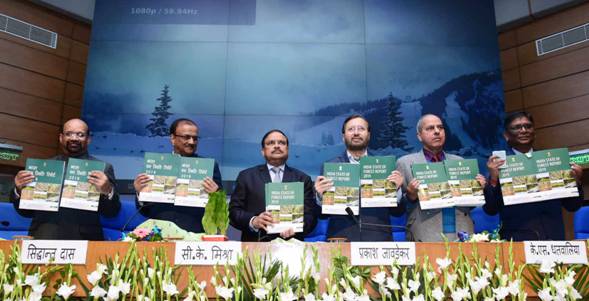
The Union Minister for Environment, Forest and Climate Change, Prakash Javadekar recently released the biennial “India State of Forest Report (ISFR)”, in New Delhi. The report is published by the Forest Survey of India (FSI) which has been mandated to assess the forest and tree resources of the country including wall-to-wall forest cover mapping in a biennial cycle. Starting 1987, 16 assessment have been completed so far. ISFR 2019 is the 16th report in the series.

Announcing the results the Union Minister said that India is among few countries in the world where forest cover is consistently increasing. Shri Javadekar told that in the present assessment, the total forest and tree cover of the country is 80.73 million hectare which is 24.56 percent of the geographical area of the country.

The Environment Minister further said that as compared to the assessment of 2017, there is an increase of 5,188 sq. km in the total forest and tree cover of the country. “Out of this, the increase in the forest cover has been observed as 3,976 sq km and that in tree cover is 1,212 sq. km; Range increase in forest cover has been observed in open forest followed by very dense forest and moderately dense forest and the top three states showing increase in forest cover are Karnataka (1,025 sq. km) followed by Andhra Pradesh (990 sq km) and Kerala (823 sq km).”, said the Minister.

Area-wise Madhya Pradesh has the largest forest cover in the country followed by Arunachal Pradesh, Chhattisgarh, Odisha and Maharashtra. In terms of forest cover as percentage of total geographical area, the top five States are Mizoram (85.41%), Arunachal Pradesh (79.63%), Meghalaya (76.33%), Manipur (75.46%) and Nagaland (75.31%).

The Mangrove ecosystems are unique & rich in biodiversity and they provide numerous ecological services. Mangrove cover has been separately reported in the ISFR 2019 and the total mangrove cover in the country is 4,975 sq km. An increase of 54 sq Km in mangrove cover has been observed as compared to the previous assessment of 2017. Top three states showing mangrove cover increase are Gujarat (37 sq km) followed by Maharashtra (16 sq km) and Odisha (8 sq km).

The total growing stock of India’s forest and TOF is estimated 5,915.76 million cum of which 4,273.47 million cum is inside the forests and 1,642.29 million cum outside. There is an increase of 93.38 million cum of total growing stock, as compared to the previous assessment. Out of this the increase in growing stock, there is an increase of 55.08 million cum inside the forests and 38.30 million cum outside the forest areas.

The extent of bamboo bearing area of the country has been estimated 16.00 million hectare. There is an increase of 0.32 million hectare in bamboo bearing area as compared to the last assessment of ISFR 2017. The total estimated green weight of bamboo culms is 278 million tonnes, slowly an increase of 88 million tonnes as compared to ISFR 2017.

Under the current assessment the total carbon stock in country’s forest is estimated 7,124.6 million tonnes and there an increase of 42.6 million tonnes in the carbon stock of country as compared to the last assessment of 2017. The annual increase in the carbon stock is 21.3 million tonnes, which is 78.2 million tonnes CO2 eq.

Wetlands within forest areas form important ecosystems and add richness to the biodiversity in forest areas, both of faunal and floral species. Due to importance of wetlands, FSI has carried out an exercise at the national level to identify wetlands of more than 1 ha within RFA.  There are 62,466 wetlands covering 3.8% of the area within the RFA/GW of the country.

General Bipin Rawat assumes charge of first Chief of Defence Staff

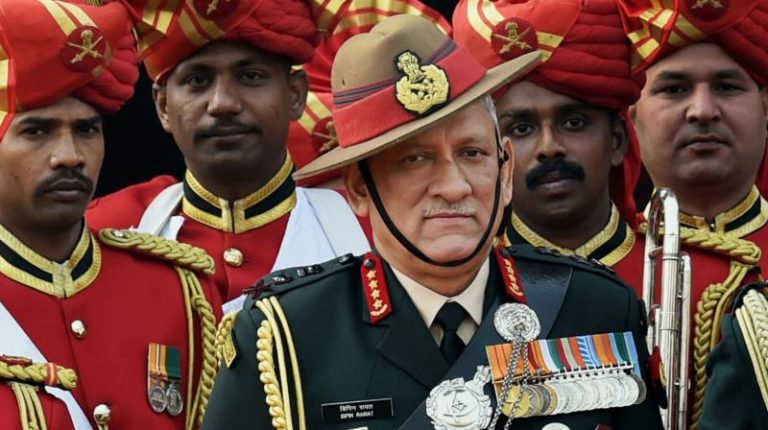
General Bipin Rawat assumed office of the Chief of Defence Staff (CDS) today. As the CDS, General Rawat will be the Principal Military Advisor to the Raksha Mantri on all Tri-Services matters. He will also head Department of Military Affairs (DMA). The CDS will have a key role in ensuring optimum utilisation of allocated budget, usher in more synergy in procurement, training &operations of the Services through joint planning and integration. The CDSwill facilitate indigenisation of weapons and equipment to the maximum extent possible while formulating the overall defence acquisition plan for the three Services.

Interacting with media persons, General Rawat vowed to work to create more synergy among the three Services. “The CDS is mandated to facilitate integration, ensure best economical use of resources allocated to the Armed Forces and bring uniformity in the procurement procedure. I want to assure you that the Army, Navy and Air Force will work as a team and the CDS will ensure integration among these,” he said.

Earlier, General Rawat inspected the Tri-Service Guard of Honour at the South Block Lawns. Chief of the Naval Staff Admiral Karambir Singh, Chief of the Air Staff Air Chief Marshal R K S Bhadauria and Chief of the Army Staff General Manoj Mukund Naravanewere also present on the occasion. General Rawat also laid wreath and paid homage to the martyrs at the National War Memorial.

Ex-Chief of the Army Staff General Rawat, is an alumnus of National Defence Academy, Defence Services Staff College, Wellington; Higher Command, National Defence College. He also attended the Command and General Staff Course at Fort Leavenworth in the United States.

During his distinguished career in the Army, General Rawat commanded an Infantry battalion along the Line of Actual Control in the Eastern Sector, a Rashtriya Rifles Sector, an Infantry Division in the Kashmir Valley and a Corps in the North East. General Rawat had also commanded a Multinational Brigade in the Democratic Republic of Congo. As an Army Commander, he commanded a theatre of operations along the Western Front and was appointed the Vice Chief of the Army Staff before assuming office of Chief of the Army Staff.

During the span of over 41 years in the Army, General Rawat has been awarded several gallantry and distinguished service awards.

Kashmir’s New Year Resolution: Defeat Divisive Forces

0

Kashmir is in the thoughts of every Indian, be it the politician, the intellectual, the strategist, the businessman or the common man. These thoughts are all positive since everyone wants that the region to witnesses an era of much needed peace and each person is ready to contribute in his own small way to bring this peace.

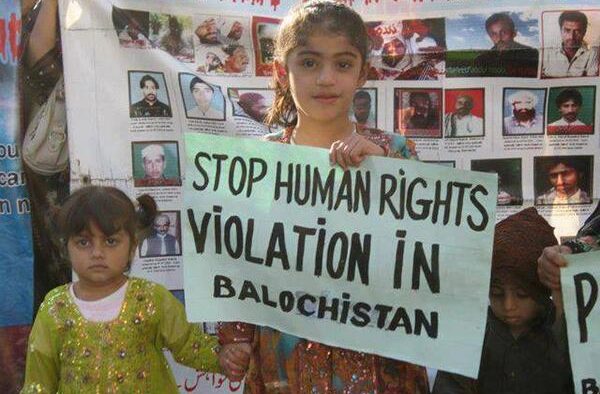
A big hindrance to this feeling of positivity comes from a small set of Leftists, pseudo-intellectuals and bleeding hearts, who spread venomous and jaundiced narratives of divisiveness, hate and prejudice with regard to Kashmir. To give an example, in recent times the Baloch Diaspora has been using the term “collective punishment” in the context of the massive Human Rights violations that the government of Pakistan and the Pakistan Army are heaping upon the hapless people of Balochistan. This term relates to the deplorable abuse of women and children of their land, marked with illegal detentions, torture and disappearances. Nothing of this sort is happening in Kashmir. There is, in fact, minimal violence being reported from the region. Yet, a highly volatile term like collective punishment is being used most brazenly.

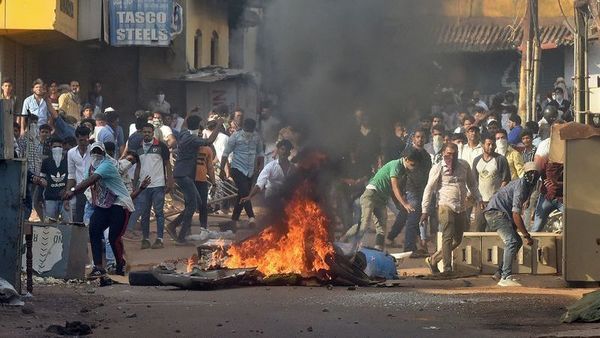
The propagandists often say that Kashmir is specially targeted as a land where violent protest is a way of life and where the people are all anti-national. The manner in which India has reacted to the mindless violence witnessed during the recent protests against the Citizenship (Amendment) Act, 2019 (CAA) puts paid to the aforementioned line of argument. The attendant violence has been strongly criticised in all discussions and articulations, even as protests have been upheld as a legitimate expression in a vibrant democracy like India. It has been said openly that the violence was engineered by certain anti-national forces. The aforementioned makes it clear that violence during protests is unacceptable anywhere and everywhere in the nation and that Kashmir has never been singled out for any special censure. It is also notable that whenever the matter of violence in Kashmir is spoken of, it is said that the same is the handiwork of a few foreign-sponsored anti-national elements; never is it said that all Kashmris are responsible for the same.

There is another aspect that the people of Kashmiri should be wary of. Anti-national elements across the country have made it a habit to use Kashmir as a tool to whip up passions to further their evil agenda. In most protests, ‘Kashmir’ is raised as a slogan in a manner similar to that used by foreign sponsored anti-national elements in the Valley. This is a very clever and immoral design to isolate the Kashmiri people from their own land. The reality is that the Kashmiri people have every opportunity to voice their concerns and their opinions. Further, they are vibrant and politically aware; they know what is good for them and what is not. They do not need the help of a faceless, treacherous set of people who have their own axe to grind and are bent upon ruining the nation. The people of Kashmir should understand the environment and counter the hollowness of the shrill divisive rhetoric, provocative sloganeering and jaundiced writings. 

That Kashmir today is looking at an era of peace and development is quite visible from the manner in which things have played out post the re-organisation of the state into two manageable Union Territories under direct control of New Delhi and considerable dilution of the divisive Article 370 and Article 35A. There were many who had predicted total chaos and mayhem should the government of India “Dare” to tinker with Article 370. The predicted chaos is nowhere to be seen. New Delhi did impose certain restrictions but soon it was apparent that these were also not required and they were removed.

As part of damage control, the existing environment of peace is being project by anti-Kashmir forces as a proverbial “Lull before the Storm.” This idea is coming not from Kashmir but outside of it. It is being given maximum traction by Pakistan and in support of the neighbouring country are, most unfortunately, some perfidious elements within India, mainly in the information domain. Happily, the obdurate propaganda stands exposed by the fact that the people have, for many months now, gone about their work without any upheaval.

A more pragmatic assessment of the situation would lead to a conclusion that the people, especially the youth, are quite relieved. Earlier they were being held at ransom by the foreign terrorist elements and were constantly under fear of retribution, if seen as non participative in local Azadi (freedom) movement.  They were receiving no support from the local leadership which was quite content to play with both India and Pakistan due to certain vested interests. Now, the terrorists have no capability to force the Kashmiri youth onto the self-destructive path of terrorism and the self serving leaders have been rendered powerless. The youth are now looking at the evolving situation with a fair degree of positivity and have become apathetic to the cult of terrorism, divisiveness and disruption. This is the very real and very positive element that is slowly gaining roots in the environment of Kashmir.

After great sacrifice, the courageous people of Kashmir have defeated such forces that wished to annihilate their identity and their very existence. In the most difficult of times they had rooted for democracy and a proud place within India. In this fight they were ably supported by the nation, especially so the security forces. The Indian Army, in particular, shares a unique bond with the people created by common cause and common suffering. The encouraging situation in Kashmir indicates that the hard work and sacrifice has paid good dividends. The challenge now lies in defeating those attempting to create mistrust and distrust and root for what is righteous, justified and beneficial for the people of the land. It has to be ensured that peace gains firm roots. This New Year Kashmir must resolve to convincingly defeat those creating mistrust and divisiveness

Alexa, what’s happening in the Saradha Scam?

There’s a joke doing the rounds in Kolkata: Ask Alexa for Saradha.

Nearly a decade after it erupted and triggered an Ebola-type scare across Bengal, India’s biggest Ponzi Scam is going one step forward and four steps backward. A little over 500,000 people impacted by the scam remain unpaid, their cash (read savings) lost forever. Gullible farmers, fishermen and office-goers have lost close to $1.2 billion (₹ 8,570 crore) in the scam that erupted during the fall of 2010.

And now, the case is acquiring interesting hues.

Sudipta Sen

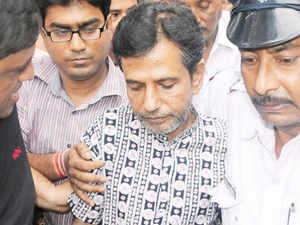
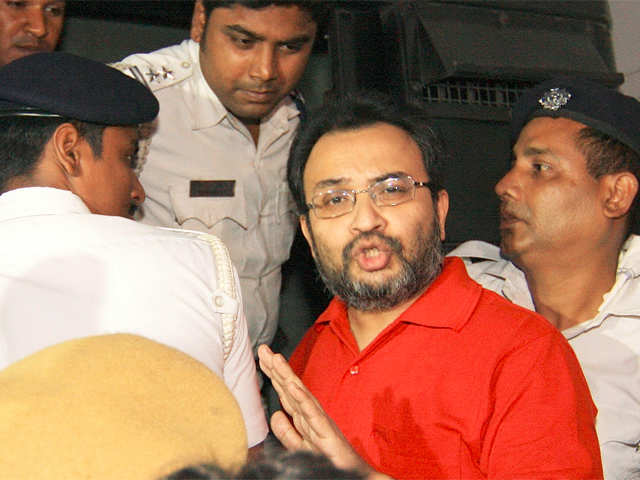
The main accused, Sudipta Sen, promoter chairman of Saradha Group of companies, has repeatedly told judges he is guilty, cashless and should be punished. He has 293 cases against him and has spent a little over seven years in jail. And till date, the CBI has not been able to conclusively say where did the cash disappear. But punishment for Sen, claim highly placed sources in Kolkata, is far away because no one knows where the cases are heading. Sen is troubled with the courts because of this delay. His lawyers are troubled with their client. Sen’s lawyers have urged him repeatedly to clear his legal dues. And then he needs to pay the bail bond in case he wants bail from all the cases. That would be a little over ₹1.2 crores. Sen has not responded, he has told his lawyers all his properties and cash has been seized by officers of the Central Bureau of Investigation (CBI) and he has some loose cash for making phone calls. Jail authorities have confirmed Sen makes call to two handsets in Kolkata but refused to share details. Sen, who named his company after Ma Sarada, the holy mother and wife of Bengal’s greatest saint, Ramakrishna Paramahansa, has turned into a mental wreck, claim jail officials.

Sen has told the CBI that he paid many top policemen and politicians loads of cash to keep his company away from any investigations. He has confessed that cash given to top editors were meant to generate breaking news and launch channels and news magazine, and club owners took cash to fund teams by hiring footballers from Africa and parts of Asia. Sen has repeatedly said he is guilty and that he did splurge cash taken from investors. But he has not given any written statement — remember he was arrested seven years ago — till date to show where all he spent the cash. But he has repeatedly said he is guilty and cashless. In some courts, like the one in Barasat, he took help from the state’s Legal Aide.

But those in Kolkata who claim to have observed Sen from close say he wanted to be the state’s biggest money changer and styled himself as the state’s new Jagat Seth, a powerful banker who lived in Murshidabad, Bengal, during the time of its ruler, Nawab Siraj-ud-Daulah in the early 18th century. What is interesting is that Sen, almost like Jagat Seth, would rarely show up in daytime and preferred all meetings in the night. He splurged cash as if there was no tomorrow, buying news channels, newspapers, magazines, hotels, resorts and football clubs. Yet, very little is known about Sudipta Sen. He is in his mid-fifties, a reclusive man, described by people as soft spoken and charming. Some say he is the son of a man called Bhudeb Sen, who used to run a chit fund called Sanchayani in the 1980s and which went bust 10 years ago. The Saradha chit fund was launched in 2006. It is rumoured that Sudipta Sen had plastic surgery done in the 1990s to change his looks.

Obviously, he was the apple of Trinamool’s eye because of his big-buck donations. In many places, Saradha agents employed wives of local police officers as representatives to prevent investors from raising an alarm against such dubious investment programmes. In cash-starved Bengal, Saradha’s growth was phenomenal. There was a time when many joked: “There is a bit of Saradha in everyone in Bengal”, the lines borrowed from the mid-90 SAIL advertisement. Sen, claim his former colleagues, loved to hear stories about himself. But eventually, Saradha collapsed.

CBI officers agree investments made by Saradha are lost cash but if the money Sen and his men sent abroad using hawala channels can be tracked, some cash could still return to India. But CBI’s job has been made tough by TMC politicians in Bengal who have reportedly egged on their party workers and the local police to remove files with vital links from Saradha offices. Before he escaped from Kolkata, Sen posted a letter to the CBI, saying two ministers from the governing TMC pressured him to pay them large sums in return for protection from government regulators.

Sen was initially saddled with 293 cases, and then the CBI clubbed 195 cases into 4 cases. As of now, there are 98 cases pending against Sen. The promoter-chairman of Saradha Group of Companies was given a three year jail term in 2014 but he is out of it, having completed the term in Presidency Jail. Sen is thinking smart. He knows in all the cases filed by the state government, he will get a maximum of seven years, which he has already spent in the jail. So he has hopes that he will be a free man by 2020. But then, the CBI has not had the last say on Saradha. Top CBI officers are still struggling to get details of Sen’s dealings with some of Bengal’s influential leaders. Sen has given the CBI a written statement and said he not only paid politicians but also top cops, but it does not include some “crucial information”. Sen has told CBI that he handed over his papers to the Special Investigation Team (SIT) of West Bengal Police but the SIT has not offered any clue to CBI about the existence of those information, allegedly concealed in a pen drive, handsets, laptop and a red coloured diary.

Till date the CBI officers have not been able to lay their hands on any of those material mentioned by Sen.

It is evident that Sen desperately wants the cases to get over so that he knows for how long he has to stay in prison, and if there is life beyond that. Sen has not been keeping good health, he has been in and out of hospitals while serving his jail term. But sadly, his demand has generated no response. The West Bengal government, Kolkata Police, West Bengal Police, West Bengal CID, CBI and ED are all silent. The last two named have said — unofficially — they will put a seal on the cases soon and file the final charge sheets. As many as seven charge sheets have been submitted by the CBI, there is one more to be submitted before the investigating agency will drop the lid on the cases. There are high chances that a few more legislators of the Trinamool Congress, officers of Kolkata Police, West Bengal Police and some influential people of the state could find their names in the charge sheet. This is one part of the case.

Rajeev Kumar

Rajeev Kumar, former Kolkata Police Commissioner, had been running from CBI to evade his arrest. Kumar is now the Chief Secretary of Bengal’s Information Technology department.

The other part revolves around the former Kolkata Police Commissioner Rajeev Kumar. Now Kumar, ADG (CID), once on the run from the CBI had spent many tough nights under cover at the homes of his friends and relatives, has a new job. Kumar is now the Chief Secretary of Bengal’s Information Technology Department, a post traditionally reserved for IAS and not IPS officers. The move triggered instant speculations within the corridors of Nabanna, the blue and white coloured state government headquarters close to the Ganges. Some bureaucrats said posts meant for IAS should be reserved for them because those in the IPS are groomed differently, and they have a different mindset. Worse, IPS officers headed for such non law and order posts need clearances from the Central government and such clearances are given only for three months. In Kumar’s case, no such rule was followed in Bengal. State Chief Minister, Mamata Banerjee, did not allow the speculations to reach the newsrooms of television channels in the city. And now, for some strange reasons, Kumar is no longer in the headlines. No one is even discussing the fact that CBI could call him a co-accused for allegedly shielding the corrupt and allegedly destructing evidence against the city’s powerful politicians, corporate captains, football club owners and media gurus. In short, no one knows where the investigation is heading in the Saradha Ponzi Savings Scheme, a devious combination of financial illiteracy and political protection.

Consider some of the points emerging out of Kumar’s conversation with officers of the CBI. Kumar — head of the SIT — has admitted there were some flaws in the probe conducted by the SIT. He reportedly admitted that bulk of the investigation took place at the neighbourhood police station and the SIT did not have a complete grip on the investigation, conducted by Arnab Ghosh, a senior office officer now posted in Malda bordering Bangladesh. But he also made it clear that he was not responsible for the lapses and he was led astray by a number of officers working on the case. Kumar also said he had drawn up a list of influential people who were to be questioned for their alleged role in the Saradha scam and submitted the same to the Supreme Court. But then the CBI took over the case and nothing was heard about the envelope. Now, the rumour doing the rounds in Kolkata is that Kumar was brought in because of his unflinching loyalty towards the state government. The investigation — claim highly placed sources in Kolkata — went for a toss while SIT continued its probe. Crucial evidence went missing, files, laptops, handsets and pen drives with vital information collected from Sen’s office also went missing.

Kunal Ghosh

The other crucial angle in the case revolves around former TMC MP and journalist Kunal Ghosh, who also spent a fair amount of time in jail following his arrest some years ago on charges of laundering cash collected from gullible investigators. Ever since he has been released, Ghosh has launched a web channel and has been singing like a canary, opening cans and cans of worms to highlight the extent of cash that was collected by Ponzi operators in Bengal and its neighbouring Jharkhand and Odisha states. When the CBI officers got Ghosh and Kumar face to face for a meeting, Kumar could not answer a host of issues raised by Ghosh. These issues were about those very missing documents, handsets, laptops, diaries and pen drives of the Saradha group. Now Ghosh has informed the CBI that it was at the behest of the SIT that the documents were allegedly destructed to save a number of influential people in Kolkata. Kumar has denied the charge but could not answer how could documents collected by officers of the SIT could go missing from the custody of Kolkata Police. What’s interesting is that Ghosh even agreed to do a narco test on himself and Kumar but the latter rejected the offer.

Kunal Ghosh, accomplice of Saradha Scam main accused Sudipta Sen. When CBI officers got Ghosh and Rajeev Kumar, former Kolkata Police Commissioner face to face for a meeting, Kumar could not answer a host of issues raised by Ghosh.

In the last one decade, an estimated 25 people have committed suicides in West Bengal, including agents of Saradha and Rose Valley chit fund companies. There are high chances that more investment firms will collapse, the West Bengal Association of Small Savings Development Officers has even warned of riots in the days to come. The Securities and Exchange Board of India, or SEBI, says the scams have resulted in at least $5.5 billion (₹39,241 crore) in losses and affected 3.3 million people in West Bengal, making it one of the biggest financial fraud cases in India. As per the national Serious Fraud Investigation Office (SFIO), 53 companies are in default, the largest of which is the Saradha Group which promised returns as high as 100% in three years in order to lure deposits from villagers of West Bengal, who lacked easy access to banks. SEBI said several ponzi operators have confessed using the cash to acquire villas in Jordan and Dubai, invest in oil businesses in Qatar and acquire rights of diamond mines across Africa. But to trace the Rs 6,000 crore Saradha raised from gullible investors is becoming a very tough exercise for the CBI officers. Much of the cash, the officers reckon, has already been wired to Asian and European tax havens.

The CBI has probed many. Some answers have come, others have not. Former Bengal sports minister, Madan Mitra, says he has nothing to hide but has had difficulties in answering the Trinamool top brass as to how his son got a Ferrari from Sen and whether he took cash from Sen to repair temples in his constituency, Bishnupur. Mitra also did not say whether he took cash from Sen to organise a soccer match involving Argentine superstar Lionel Messi. In Kolkata, veteran actress and director Aparna Sen — now a staunch critic of PM Narendra Modi — has not answered whether she actually spent some ₹3.5 crore to renovate her office and took a salary of over ₹800,000 when her last drawn salary was ₹200,000. Rathikanta Basu, former I&B secretary, also must answer how he managed to sell his Tara channels to Saradha for a little over ₹65 crore when the market value was less than ₹15 crore. Manoranjana Gupta, a journalist turned entrepreneur, must answer whether the Assam channels she sold to Saradha were actually worth ₹40 crore.

It’s been 10 long years.

Former RAW officer’s satire on the violent agitations against CAA

0

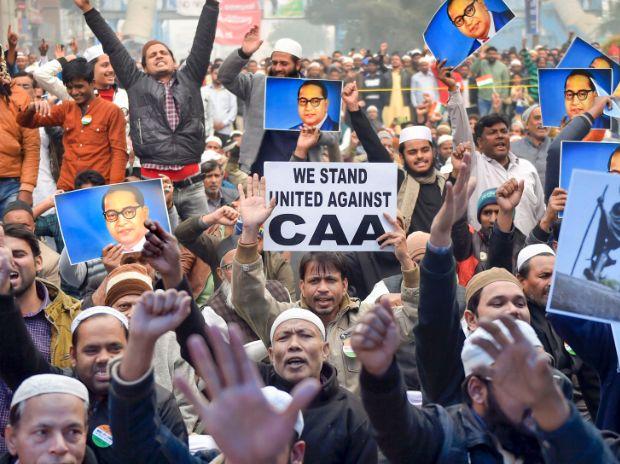
This is a season of lots of fun amidst animal passion working overtime. It has left many muddle-headed, unsure of whether to laugh or to cry. New Delhi brought the CAA (Citizenship Amendment Act) hoping to end the untold miseries of Hindu refugees and earn some brawny points from compassionate Indians but its assessment went awry. The Act caused a neurological disorder, leading people to react in weird ways. Of course, goondas and politicians did not get affected, for their brains had no cerebrum. They went on doing their job efficiently – burning vehicles, destroying property, attacking policemen and inciting criminals to resort to mindless violence.

For once, in independent India, an Act specifically mentioned about Hindus. It was too much for the ‘sickular’ conscience of misguided Indians to digest. So, they began talking and behaving awkwardly. Students who were supposed to study fought guerilla war with stones and petrol bombs. Young girls in teens shrieked while boys indulged in arson and looted shops. They wouldn’t care whether they would die because there was always a beautiful life after death. Actually, most of them did not know why they were hurling stones when they had been asked to join a fair or ‘some’ gathering. The reaction of boys during Bihar Bandh organized by Tejashwi Yadav was of course the ultimate. They said they had joined the Bandh to get Laloo Yadav released.

Those who had enrolled in the IIMs and IITs to prepare themselves for heading companies, managing startups and joining industry hit the streets like trade union workers. Far away, in Boston and Chicago, Indian Americans – mostly Muslim students, doctors, computer professionals etc. marched denouncing the Act but they were careful not to raise slogans that would prompt the US police to deport them back to India, ending their American dream.

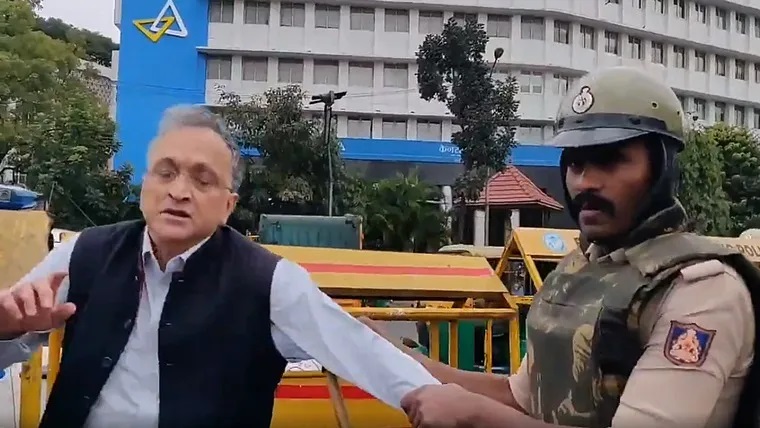
What struck as hilarious was Ramchandra Guha’s antics. Instead of writing history which he is extremely ‘good’ at, he stood at a road crossing attempting to explain to the media why he was there. The reason certainly couldn’t be the Act because he is educated and must have read its provisions. Maybe, it was the awful civic conditions in Bangalore that he was upset with. A couple of policemen on duty in the area shoved him away, thinking he was probably a vagabond. This hugely upset Kiran Mazumdar Shaw, MD of Biocon Limited. She was furious how Gandhi’s biographer could be manhandled in this manner. Have a heart, Ms. Shaw. Most policemen can’t even recognize Yeddyurappa, their chief minister. Surely Guha does not figure in the rogues’ gallery hanging in police stations for policemen to know his eminence. William Dalrymple, the ‘famous author’, stretched his literary creativity a bit too far. He discovered straws of the ‘beginning of emergency’ in Guha’s 30 minutes’ detention. Generally, Dalrymple is credited with writing after “enormous, painstaking research”. He should have also tried to excavate facts and circumstances that had led to emergency in 1975. By not doing so, he has let down his fans including me. In pre-emergency swoop by the police, leaders were not detained for 30 minutes nor chief ministers felt apologetic.

Ramchandra Guha was detained for 30 minutes by the Police during his anti-CAA protests in Bangalore.

Nobel laureate Venkatraman Ramakrishnan also fell a victim to insidious spell cast by the CAA. He had a strange vibe that the Act would make 200 million Muslims feel unsafe. Borrowing an expression from his kitchen, he warned ‘the Act was not a good recipe for harmony’. Wish, he had concentrated more on research in chemistry and made us feel proud by getting one more Nobel Prize rather than commenting on a subject that he was obviously not familiar with. Arundhati Roy, the Booker Prize winning author, lived upto her reputation of always putting her foot in her mouth but this time this foot was a bit heavier. She asked, “Are we going to stand in line to comply with NRC?”. One doesn’t know whether she jumps the queue while checking in and passing through the immigration at the airports. Priyanka Gandhi, the poster girl of the Congress, echoed similar angst while speaking in her protest rallies. One can understand Priyanka’s reaction. She may not be familiar with standing in line for ration, water etc. because of her royal lineage.

It was a mystery why the ‘Award Wapsi Gang’ was not active again on the CAA. On checking the list, I realized that Modi had intentionally excluded likely withdraw-ees since May 2014. But he made one mistake. He awarded Padma Shri to Urdu writer Mujtaba Hussain who has decided to return the honour but who knows? He writes comics and maybe, he is playing a prank. The most sidesplitting comment came from the Progressive Urdu Writers’ Association of Hyderabad. It accused that ‘killers of Gandhi yesterday are killing youth today’. But you thought Nathuram Godse was long dead and policemen involved in allegedly firing at students were yet to pass out from their new training centre at Nagpur run by Mohan Bhagwat!

Illiteracy is not all bad. Sample these examples. Kamal Hassan, Kollywood’s rejected scion, thought the CAA is a ‘new law to check the infiltration’. Actor Siddharth said he would pay any price to prevent Modi from placing ‘Indian democracy’ under Sotheby’s hammer as ‘it was not for sale’. Very patriotic of the actor. TM Krishna, the Carnatic music vocalist, asked Bangaloreans to ‘hit the street screaming against the Act … to keep our society alive’. Must admire his out-of-the-box suggestion. One hopes, he knows the limits of hitting streets in protests. They can easily turn streets into battle fields. Actor Farhan Akhtar opined that the Act was discriminatory and justified it by saying ‘if everything is ok with it, why would so many people turn up not just in Mumbai but also in Delhi, Assam and Bangalore.’ Directors Anurag Kashyap and Anubhav Sinha thought CAA was ‘fascist’ and ‘divisive’– very difficult expressions to be correctly understood by babies in law who are capable of mounting only churlish fair on a 70 mm screen. Md. Zakariya, director of Malayam Movie “Sudani from Nigeria’ and his co-writer Muhsin Purari boycotted the national film award ceremony to protest against the alleged police violence in Jamia Milia Islamia University. Maybe they mistook Jamia students for ‘Sudani’.

But they are artists — impressionable and emotional. What about the sun-dried, street obsessed West Bengal Chief Minister Mamata Banerjee? Like Jawaharlal Nehru who had taken Kashmir issue to the UN in 1948 and agreed to hold referendum to decide J&K’s final status, she has also given a call for UN-monitored referendum on CAA. Birds of the same feather flock together. Her opposition has taken a viral shape, affecting many people of healthy minds. Father Dominic Gomes, vicar general of archdiocese of Kolkata and the teachers and Dean of Humanity of Presidency University are the worst hit as they are unable to read CAA clearly. Uddhav Thackeray, Maharashtra’s green horn chief minister, created a new version of history. He saw a repeat of Jallianwala Bagh massacre in the police action at Jamia Milia. It is not his fault. He is a professional photographer. In his preoccupation with learning his new job he may have picked a wrong lens that showed policemen as General Dyer and Muslim students pelting students as Sikhs and Hindus dying in heaps!   

Alas! If the agitation is petering out. All this fun will be gone.                                       

India must assist Balochistan in its fight against Pakistan’s atrocities

Balochistan, the most restive province of Pakistan, has entered into a new era of violence and dissent. Inputs of atrocities being committed on innocent civilians by the Pakistan Army and its sponsored terrorists are coming out frequently despite an attempt to keep the situation under wraps. The root of the problem lies in the fact that the people of Balochistan have never accepted their forcible merger as a province of Pakistan. The beleaguered nation has been fighting for independence for many decades.

Historically, Balochistan has remained a sovereign nation for millenniums. It was illegally and immorally split by the British; first the western part was merged with Iran by the British in 1879, later, in 1893, the British merged the Northern part with Afghanistan, once again illegally. In 1928, when Iran was under the monarchical rule of Shah Reza, it forcibly occupied the remainder of the western region. The Eastern part remained a principality under British protection and its main ruler was the Khan of Kalat.

In 1947, when the British left the sub-continent after partitioning it into India and Pakistan, Kalat-Balochistan remained a free and independent country. That was the time when India should have taken the initiative to merge the region with its union. Sadly, this did not happen.

On March 27, 1948, seven and a half months after partition, Pakistan invaded and occupied Kalat. Pakistan Army arrested the elected representatives of Balochistan, abolished the Baloch government and illegally merged it as a province of Pakistan. The aging Khan of Kalat, Mir Ahmadyar Khan, approached India for protection but the same was not provided by the Jawahar Lal Nehru-led government. Thus, Balochistan was forcibly inducted into the state of Pakistan.

Ever since, Balochistan has been struggling for its rights; this struggle has taken the form of an open rebellion and a demand for independence. Many have lost their lives, honour and property in an environment of deplorable violation of human rights. Leaders and activists, including Mir Suleman Dawood Jan, the 35th Khan of Kalat, are living in self imposed exile and fighting at international forums for the rights of their oppressed people.

The Baloch people observe 13th November, as “Baloch Martyrs Day.” On this day, every year, they pay respects to those among their people who attained martyrdom in the very legitimate fight for independence. Thousands of Baloch political activists, including women and children, have been killed in the decades long freedom struggle. A large number are missing and are allegedly lodged in detention centres by the police and army.

The media blackout and state sanctions against free press in Balochistan have emboldened the forces to commit more atrocities and suppress Balochistan’s democratic voice.

The November remembrance is followed by sustained activism in the month of December. This year, on 10th December that is internationally observed as the Human Rights Day, the focus was on atrocities being committed by Pakistan Army and other forces under their command on Baloch women and children. “Pakistan is committing war crimes in broad daylight and before the eyes of the world. We do not ask our enemy to spare the freedom fighters and political workers, but we have always said that the world should bind Pakistan to respect the laws of war. Our women, children and the elderly are being abducted and killed by Pakistan’s armed forces,” says Dr Allah Nazar Baloch, heads the Balochistan Liberation Front (BLF) that has been fighting for Balochistan’s independence for several years. He openly accused Pakistan of committing war crimes.

The Baloch leaders look upon this policy of forcible abduction followed by rape and murder as a form of “collective punishment” aimed at crushing the freedom movement by breaking the will of the Baloch people.

The Baloch leadership in exile is consistently highlighting the plight of their people across the world and especially in forums associated with the United Nations. Baloch human rights groups gathered in London recently to accentuate the overlooked plight of the people of Balochistan. This apart a conference titled, “The humanitarian challenges in Balochistan” was held at Germany by three organisations dedicated to the Baloch cause, namely, Baloch Human Rights Council (BHRC), Baloch Human Rights Organization (BHRO) and the Human Rights Council of Balochistan (HRCB). Also in December, about a week after the Human Rights Day, members of the Baloch Republican Party (BRP) and Baloch Republican Students Organization (BRSO) held a protest in the South Korean city of Busan.

The message emanating from all forums is the same. It constitutes an appeal to the international community to intervene to stop Pakistan from committing atrocities at such a large scale and accede to the Baloch demand of total freedom.

The exiled Khan of Kalat, Mir Suleman Dawood Jan emphatically roots for a referendum to be held in Balochistan. He is certain that over 90% people will vote in favour of freedom. Why then is Pakistan keeping the region under its control forcibly?

Pakistan needs to be compelled by the international community to stop the systematic and organised campaign of violence that is specifically targeting women and children. Pakistan also needs to be stopped from tinkering with the culture, identity and way of life of the Baloch people. Once atrocity is stopped then the issue of the constitutional rights of the Baloch people can be arbitrated in accordance with the historical realities that govern the region.

Baloch leadership is making fervent appeals to India for support. It wants Indian intervention to stop atrocities being committed by the Pakistani military forces and to assist in the freedom struggle. They feel that if India could do so for Bangladesh it can do so for Balochistan also.

Pakistan cannot be allowed to literally annihilate an entire race with the use of brute force. Presently its actions in Balochistan can be categorised as crimes against humanity, genocide and ethnic cleansing. India has a particular responsibility to come forward and assist in every manner possible. It is the duty of the country to do so in concert with its policy of maintaining humanity and freedom at all costs.

Canada: Interview with Pastor Josh Loeve – Lead Pastor, Centre Church

0

Pastor Josh Loeve is the Lead Pastor of Centre Church. Here we talk about Christianity, Centre Church, and more about Canadian society and religious faith.

Scott Douglas Jacobsen: So, let’s start on a fundamental issue within Christian doctrine or theology across denominations, what is the truth and the orientation around that within a Christian context for Centre Church and yourself? In other words, what is truth? How does your church live this out?

Pastor Josh Loeve: What is truth? Let’s talk about this in the religious sense, the Christian sense, we see, ultimately, Jesus is embodying Grace and Truth. When I speak about grace in the context of the church, I would speak of the person of Jesus.

In terms of science and all of that, I don’t know if I will touch on all that. In the context of Christianity, it is the death and resurrection of Jesus, and forgiveness of sin. To me, it is the highest truth.

That is what Christianity is, basically, hinging on: Did Jesus die? Did he rise again? If no resurrection, then there is no Christianity. So, really, the truth hinges on that pivotal part of history.

For me, when we speak of truth and the Christian landscape, that is what we are talking about.

Jacobsen: In Centre Church, what are the theological implications of this? What are the implications for community?

Loeve: Wow – those are huge questions [Laughing].

Jacobsen: [Laughing].

Loeve: The implications for the community are huge. Our purpose in the community is to lead people into a life centered on Jesus. The implications of that truth is that we believe when a person centers their life on Jesus and are forgiven.

Things like shame go away. There is a community of putting Christ at the center of our lives or first in our lives. We put him first. We model his life. What that means, it affects the relationships that we have; it affects the way we interact with the community around us.

It affects the way that we use our money and lead our homes. It affects every area of our lives. The implication of that truth is that we extend forgiveness, as this is a great gift. So, we are generous to the world around us.

From that position of centering Jesus on our life, we are able to model that out to other people of the grace that He extended and gave to others. It has implications in every area.

I could exhaust that list. For me, it has implications in every area.

Jacobsen: If we are looking at an ordinary Sunday service, how is this fundamental basis of theology and scriptural reading built into the things that are spoken about in an ordinary service? Also, the in-between things and the before and after of a service.

As anyone who has gone to a church or been part of a church community knows.

Loeve: I know there is a high emphasis on Sunday service. But what do the other 6 days of the look like? How that impacts our Sunday service and that truth, it is that everything that we do on weekend service is about Jesus.

Again, it hinges on the death and resurrection of Jesus. So, every Sunday, we give people an opportunity to hear that message. We challenge people to live out that reality. So, Jesus is the central theme of all of our services.

In particular, the sermons on a weekend. He is the central message of the sermons. We have a commitment to connect the Message of Jesus to those who have never heard the Message, or those who are seeking, starting, or returning.

Someone seeking answers for God that we want to get everything out of the way as to what Jesus looks like. Those who are wanting to start again. They are starting a journey with Jesus again. We want to empower them.

Or those who are returning. Those who want to return after 20, 30, 40 years. That is the implication. We want to bring that to as many people as possible.

At Centre Church, the focus is on people who are seeking, starting, or returning.

Jacobsen: Within Centre Church, what are some other derivative fundamentals of the faith for the community and you?

Loeve: Fundamentals, we have some values that we have built. These are biblical values. That we rely on. One of them is authentic community. So, I will work that into the community.

Centre Church is small groups. We meet in homes throughout the week to discuss the weekend’s message or different books about the Bible and contextualizing scripture. Things like that.

Then we have another values intent on discipleship. Discipleship is this process of helping people to grow to be more like Jesus. We need that through our serving teams.

We are a portable church. On a week, we have about 40 to 45 volunteers who do everything from run the kids’ classes to set up the environment as we are a portable church, to leading us in music, or to production teams, and small group leaders.

So, that is our intentional discipleship. Through that, we want people to serve each other, as Jesus served others. Those are 2 of our values out of 5. We live through those values.

Jacobsen: For many churches leaders in North America, they lament the lack of men within the church. How was this manifested in some of the churches that you’ve seen in the Lower Mainland [Ed. British Columbia, Canada]?

Loeve: Personally, I am not looking at those stats. I am not lamenting those things. We have a healthy contingency of both men and women in our church.

We empower both men and women into positions of leadership. So, we’re not trying to – or I am not trying to – be more edgy, cynical, or abrasive to bring more men into the doors of a Sunday service.

We believe God calls people into church through invitations to our church. I don’t think that I am lamenting. As a matter of fact, I think we see mostly men who are coming through the doors looking for purpose, looking for meaning, and addressing the truths about who God is.

Since day 1, we are a 4-and-a-half-year-old church. Not once have I thought, “Gosh, I wish we had more men here.”

Jacobsen: [Laughing].

Loeve: But we are having a healthy contingency of men and women. It is really exciting. It is really on God and on us. He has brought the right people through the door to connect with us.

I cannot speak to other churches. I do not really hear that discourse happening amongst other pastors. I think there is a lot of pastors who have seen an influx in Cloverdale into their churches. They are having to lead and pastor them.

Not once have I said, “Are they men? Or are they women?” [Laughing]

Jacobsen: [Laughing].

Loeve: I felt people are coming through the doors looking for meaning and purpose and wondering who God is. I think there is a lot of people in process who belong to different churches.

Jacobsen: There are a lot of different definitions of God. There are many, many gods on offer. What definition of a god or God makes most sense to you – either emotional appeal or philosophical solidity to you?

Loeve: I believe in the Trinitarian God of the Bible. God the Father, God the Son, and God the Holy Spirit, one God in three persons. I hold to the biblical text in terms of my view of who God is, and, in terms of the emotional appeal, when I was 17-years-old; I had a profound about something we spoke about in our earlier [Ed. pre-interview] conversation.

I had a transcendent experience with God. That was in a much more charismatic church than we are today. There was emotion attached to that. But, for me, I look at the biblical text, “Who is God defined there?”

A lot of my perspectives of who God is and the fleshing out of who God is, is defined by the biblical text, which is, as I said, the Trinitarian God.

Jacobsen: What have been atheist and theist counters to those? How do you respond to them?

Loeve: I think in terms of an atheistic response to that. I have heard a lot of criticism against my beliefs. But one of the things, too, is that part of the Christian perspective is that God is the one who opens up the eyes and ears of those around us while we carry the Message.

Our responsibility is to carry the Message. Yes, there are many different countering messages against the person of Jesus or against the death & the resurrection, against the validity of the Bible, and the list goes on, and on, and on.

So, we can wrestle with them and Christians still wrestle with those questions. To me, though, it rests on the Death and Resurrection of Jesus. When it comes to criticism against the Bible, I bring it back, “What about the resurrection of Jesus?”

We can take a historical perspective and in Gospel accounts of Matthew, Mark, Luke, and John if the New Testament. To me, if a critique outside of that, as a first conversation, typically, I start here because Christianity hinges on the Resurrection.

I focus on it, as Christianity hinges on it. That is the “truth” that we talked about in the beginning of this. It affects all of our churches. It is the truth that Christianity hinges on. Again, I, generally, field criticism around that.

I think that’s what people really should be having conversations around.

Jacobsen: How do you make a split between sacred and secular values in Canada now?

Loeve: A lot of the Christian worldview was a part of Canada, as it was formed as a nation. So, yes, the lines are, definitely, blurred. I think what I can say about that. We love the benefits of the Judeo-Christian worldview, but just don’t love all the things about it.

I think there is still a lot of benefits. Some of those benefits are focused on the family, the sovereignty of the individual. These are Christian values that come out of that worldview. I think that’s, maybe, one of those sacred values that had become one of the benefits for the secular community.

Where I think there is a great contrast between the secular and the sacred is in general belief in God, often, I see this in the idea of hope for the future, where people place their hope. Seculars tend to place hope in science and human determination.

The sacred is placing their hope in a God who controls the universe. So, it is where we place our hope, where we place our trust, it is one of the areas. The idea of hope with competing values of sacred and secular.

There are a lot of different areas where relationally. I see this often. There is a separation between sacred and secular, whether divorce and remarriage, or views around sexual orientation. This is where we see secular and sacred competing with each other as well.

Jacobsen: Within the domain of the sacred, there are the formally or the anti-divine within most Christian theologies. Those have to do with things like angels and fallen angels, and demons, and the Devil, and so on.

How does this fit into your general framework for understanding the world? For example, if you’re taking into account a God who controls the world, maintains and manifests the world, what of these other forces more or less counter to that?

Loeve: First of all, I would say, “Yes.” You are, in some ways, explaining a supernatural world that interacts with our world. I don’t know all specific examples in how that plays out. I think C.S. Lewis tried to play a little bit with that in The Screwtape Letters.

In terms of “hell,” for instance, a lot of people question whether hell is a literal place. I think for most of us as human beings; hell is a real place of suffering, cancer, relational separation. So, I would say that we see some of that evil itself. We see the effects of evil.

We see the effects of good. However specifically each one of those interacts with the world around us, I am not really sure. However, that is one of the effects of evil on the world. I do see the effects of good in the world.

I can share story after story of the effects Jesus has had on people in our church. That would be the divine interacting with the natural world. I don’t know, specifically when and how all those moments happen.

I do know good exists. I do know evil exists. I do see them interacting with our world. In terms of how, I know we talked earlier in our conversation about if this is just a figment of our imaginations as human beings. I would say, “Human beings can be quite evil, quite malicious, to one another. But I do think there is a driving force behind evil and a driving force behind the good.”

I think that’s what we are obsessed with as a culture. I think that’s why Avengers, Marvel comics, and Star Wars, and all this stuff.

Jacobsen: [Laughing].

Loeve: We are so fascinated by it because we love that story. We love and we hate it at the same time.

Jacobsen: [Laughing].

Loeve: I always find that fascinating. Why do we want the good to win? I do think that these ideas are not just constructs of the human imagination. They seem to have permeated – the ideas of good and evil – thought, and have permeated cultural norms.

I think there is a cause for that. That morality was placed in human beings, which is a Christian perspective. God created the world and created human beings with that type of moral compass, and gave option and allowance to evil.

Jacobsen: What one or two examples, as a closer to the conversation today, come to mind in terms of this, as per the argument, of the intervention of the divine or the supernatural into the natural, or the anti-divine or the demonic into the natural?

Loeve: [Laughing] an example that comes to mind is a couple that came to our church a few years back. He was struggling with addiction. Their marriage was done. She came to church. Her friend invited her. It happened to be the church in an elementary school.

She was a teacher at the elementary school and felt comfortable enough to come. She was, as far as I know, not an agnostic and would probably identify as an atheist. She connected with Canada Service with the sermon preached on the Sunday morning, and felt the love and support of the community.

She said, “I have not met people who have loved and supported me this way before.” We began to mention the Message of Jesus to her. Her husband came a couple weeks later. She was mad about it. Because this was her thing.

But when you’re going through a separation, [Laughing] you’re not always wanting to see the other person.

Jacobsen: [Laughing].

Loeve: But he heard the Message and began to get over some of his addictions. They did begin to move back together. They have been part of the community for 2 years. They are part of a small group and serve on a team.

I am going to have the privilege of marrying them.

Jacobsen: Congratulations.

Loeve: When I look at all these events that had to happen, and all the different components, the right timing and the church being in a school that had to be comfortable for her to come. I look at all these events.

It is hard for me to say, “I cannot deny God having a hand in that.” I can hardly pick a Netflix show.

Jacobsen: [Laughing].

Loeve: Yet, I see this relationship rise from the dead. This is where I see the effects of the divine and Jesus working in our church, and in the people or the lives of the people within our church.

Jacobsen: Any recommended authors, speakers, or organizations?

Loeve: Yes, I really enjoy Ravi Zacharias. I appreciate his choice to what we call Apologetics and Christianity. He is answering the questions rather than debating or speaking at people. Ravi Zacharias is one of those people.

There is a local pastor in the area who wrote The Problem of God named Mark Clark. I think he is a very smart guy. He grew up in an atheist home and had a radical transformation with Jesus. Village Church is the name of that church.

Jacobsen: It is a fast growing one.

Loeve: He is abrasive. He’s solid in his doctrine, but he just loves people as well. I think that’s just a great guy. I would probably recommend some of his resources. Those two guys in terms of Apologetics and talking about atheists, what we’re talking about right now, too.

There are a lot of others, like William Lane Craig [Laughing]. He is another guy out there. He is a pretty interesting guy. But that is just within the Apologetics landscape.

Jacobsen: Any final feelings or thoughts in conclusion based on the conversation today?

Loeve: If someone is reading this, and if they are truly searching for answers, I think there are places to wrestle with competing opinions and beliefs. There are churches that can be places of refuge, and not just places of opposition.

I think it is really important in these conversations. I don’t think the church is as closed to conversations and questions as they are pegged as. I work at Centre Church. I know a lot of other churches, where there is a lot of good dialogue and pastors willing to step up to answer the questions.

I would encourage people reading this or listening to it. To know that there are places that pastors are willing to have conversations like this, to hear different and competing opinions and ideas, there’s also just places where we would love to pray and walk alongside people.

I think more than being right and wrong. There’s also an element of being human together. We can find solidarity together. I want people to know that there are places where they can come and wrestle with life’s big questions.

There are a lot of pastors wrestling with these.

Jacobsen: Thank you very much for the opportunity and your time, Pastor Josh.

Photo by Edwin Andrade on Unsplash

HR crisis waiting to erupt at India’s state-run banks

At a time when several public sector banks have been hit by scams leading to fire-fighting by the government and the Reserve Bank of India, a full-blown human resources (HR) crisis is waiting to erupt. And nobody seems to be giving it any serious thought.

While finance minister Nirmala Sitharaman has chalked out a merger plan for public sector banks to bring in much-needed reform measures in these banks, precious little is being done to fix issues relating to HR practices and retention of talent.

Harsh truth that nobody seems to be talking about

There are few competent leaders in these banks, who can steer through the troubled and challenging times. More importantly, these banks and their heads come under the ambit of the Central Vigilance Commission and the Central Bureau of Investigation. Bankers have pointed out that most leaders are unwilling to take any concrete measures to steer clear of any possible controversy.

What is worrisome is the fact that most of the over 8 lakh employees at these public sector banks are “unhappy and frustrated” that negotiations on wage revisions remain inconclusive even after over 30 rounds of talks. Though the government decided to pay a part of the arrears as a Diwali bonanza, it failed to bring cheer.

In August, Sitharaman announced the merger of 10 state-owned banks to create four big lenders. While the merger exercise cuts the total number of banks to 12 from 27, critical questions on leadership and competent staff who can steer these newly formed amalgamated lenders remain unanswered.

“You need even more deft handling and very able teams to ensure that the exercise goes on smoothly… After all, you are talking about public money,” a senior bank official told News Intervention.

Three officials from different mid-level public sector banks that News Intervention spoke to echoed similar sentiments — the worst affected are smaller and mid-level banks.

“Many people who are experts in their domains are being taken on board on contract but they are limited to the big lenders such as the State Bank of India or Punjab National Bank. Nobody is willing to join the smaller brands and that is a scary thought,” a retired official said.

Former finance minister Arun Jaitley had floated an idea to hire talent directly from the country’s business schools. Needless to say, there has been no progress in this direction. 

Bank Unions

Bank unions have called for a strike on January 8 to oppose the merger. C.H. Venkatachalam, general secretary, All India Bank Employees’ Association (AIBEA), said the merger of these banks will lead to more havoc. “What was the need to merge… We need more banks and more branches; with a merger, we will land up closing many bank branches,” he said.  In a statement, he said, “Withdraw the decision on merger of Banks: Recently Government has announced merger of 10 banks into 4 banks thus closing down 6 nationalised Banks. This is a wrong step and will affect customer service, employment and jobs. This will not help to recover the bad loans in the banks.” 

Bank Board Bureau and its role

The Bank Board Bureau (BBB) was set up in 2016 to address these HR issues with a thrust on chalking out schemes for recruitment and better pay packages. Besides the board was to look into ways that would ensure enhanced professionalism with growth opportunities for the existing staff.

Its first chairman Vinod Rai underlined the need to improve pay packages for talent retention. Issues relating to employee stock ownership plan (ESOP), out of turn promotions and ways to increase overall pay packages to ensure retention of talent have been discussed from time to time but no concrete steps have been taken.  

Immediate attention needed, bring in HR reform

Jobs at these banks no more attract bright competent youngsters as they did even a couple of decades ago. Reason? The relatively lower salary scale, the work environment and lack of career path.

Reforms need to start with people to ensure the health of these banks already groaning under the weight of huge non-performing assets. Gross non-performing assets in public sector banks crossed Rs 10 lakh crore in March 2019, up from Rs 2. 2 lakh crore in 2014.

Sitharaman and her team need to fix this on a priority basis or else state-owned banks will keep struggling and drawing talent will be a tall ask.

Modi govt must assuage Muslim fears on the Citizenship Amendment Act

0

In order to ensure that the wellbeing of its citizens as well as national interests aren’t compromised, every country in the world formulates its own citizenship policy and in this regard one of the main ingredients common to all nations are laws that prevent illegal influx of migrants. Recently, the Indian government passed the Citizenship (Amendment) Act 2019 or CAA, which makes select religiously persecuted minorities belonging to certain neighbouring countries eligible to seek citizenship of India. The CAA applies to Hindus, Christians, Sikhs, Parsees, Buddhists and Jains belonging to Pakistan, Afghanistan and Bangladesh who have entered India on or before December 31, 2014 and stayed in the country for five years.

Is CAA a good or bad legislation, legal or illegal, is something that I would not delve into. Yet, as a very ordinary and average person, my personal reaction to the CAA controversy was defensive. However, after getting rid of my emotions, I realised that it was unusual haste with which the CAA has been passed that has given rise to apprehensions that it will be used in conjunction with the National Register of Citizens (NRC) to target Indian Muslims, who are India’s largest minority and declare them “illegal immigrants.”

The failure of the government to explain the rationale behind CAA and NRC in practical terms has resulted in widespread agitations across India and this is very unfortunate because if the government had shown a little patience and taken all communities into confidence, the violence that we are witnessing today wouldn’t have taken place!

At its core, the NRC is an official record of those who are legal Indian citizens and includes demographic information about all those individuals who qualify as citizens of India as per the Citizenship Act, 1955. The register was first prepared after the 1951 Census of India and since then it has not been updated until recently. Along with the Constitution of India, the Citizenship Act 1955, is the exhaustive law relating to citizenship in India. The original Act has been amended at various times by the Citizenship (Amendment) Acts of 1986, 1992, 2003, 2005, 2015 and 2019. The 2003 amendment mandated the government of India to construct a National Register of Citizens (NRC).

The Citizenship Act of 1955 (promulgated by the then Congress government) provides for compulsory registration of every citizen of India and issuance of National Identity Card to him. The Citizenship Rules of 2003 (promulgated by the NDA government led by Atal Bihari Vajpayee) was framed to prescribe the manner of preparation of NRC to facilitate the implementation of the provisions of the Act of 1955.

It therefore emerges that while the CAA is meant to grant Indian citizenship only to those who are eligible, the NRC is aimed at drawing a distinction between genuine registered Indian citizens and illegal immigrants who have entered the country through dubious means. Thus, NRC is nationality specific and not religion specific In fact, these two laws are as different as an apple and an orange.

The government has clarified that “CAA has nothing to do with NRC and it does not apply to Indian citizens, including Muslims. It applies to only six religious communities facing persecution in Pakistan, Bangladesh and Afghanistan.” It has also been clarified that no migrant will automatically become citizen of India as per the CAA, and each eligible person will have to apply online; the refugees will have to fulfil all other conditions for registration and naturalisation as Indian citizen. This Act does not take away the citizenship of an Indian national of any religion. When the draft of the proposed law on pan-India implementation of the NRC is prepared, it would be discussed and it will come before the people.

Regardless, a nation found on the principles of secularism and on the concept of “unity in diversity” is at the cusp of turning into a majoritarian, ethnocratic state. The challenge, we are being told, is to save the secular fabric of the country and the ‘soul’ of the constitution from the unconstitutional assaults of few, but it looks like the country is moving in a new direction, whether for good or bad, we will get to know later.

The Narendra Modi government has abolished many laws like the Article 370, which granted special status to the erstwhile state of Jammu and Kashmir. Apprehending large scale violence in Kashmir after abrogation of Article 370, New Delhi took stringent measures to prevent any loss of life and property and its proactive actions proved beneficial. However, just the opposite happened in the case of NAA and NRC due to which violence has erupted across India in which more than two dozen lives have been lost and property worth thousands of crore rupees destroyed.

When well-informed, the public acts very responsibly and this is evident from the support that all sections of society, irrespective of the community gave to the Triple Talaq annulment bill as it was a positive step towards empowering women.

Babri Masjid verdict is another example of how the minority community behaved responsibly. While some sections tried to turn it into a communal issue, the majority of Muslims accepted the court directive and this made this minority community stand tall.

However, NRC and CAA have upset the applecart and it remains to be seen how the centre navigates its way through these challenges and brings everyone together to fulfil the dream of an inclusive, peaceful and prosperous society. Though India and Pakistan were partitioned on religious lines, the patriotism of Indian Muslims has always been unquestionable and possibly this is what upsets those with vested interests who are trying to further their communal agenda.

So, if the government of India is really serious about its slogan of “sab ka saath, sab ka vikas” (with everyone (and) for everyone’s betterment), then it needs to take appropriate measures to assuage fears of the Indian Muslim that neither he, nor Islam is being unfairly targeted by the laws being enacted by the government.