Home Blog Page 404

Intellectual bankruptcy in a new avatar: Economics Nobel 2019

Deployment of charitable funds to poor as efficiency management tool is an outdated prescription to fight poverty. Economics Nobel 2019 limits itself to wealth distribution, instead of recognizing and empowering poor with wealth creation.

As an Indian, it is a matter of great pride to see someone
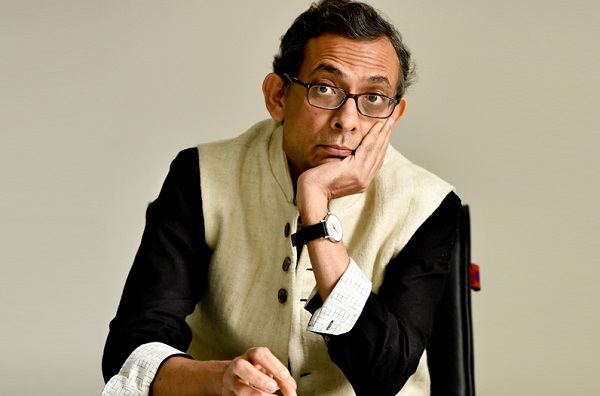
(Abhijit Banerjee) with Indian origins being honoured by a Nobel Prize, along with two other eminent economists (Esther Duflo and Michael Kremer). Poverty becoming mainstream discussion issue, is a matter of greater happiness.

However, an objective analysis is equally necessary, whether such awards are truly genuine or they are being used to divert direction of research away from investigating root causes of poverty; and ensuring that talents remain fully dependent on grants to merely study poverty or cause incremental gains. It is amazing to see how these western economists (whose ideas define and drive global economy) stay blind to their own masses slipping into unprecedented poverty, while study of ‘aid to poor in developing countries’ remains their chief concern. Imagine, what they would be doing in a prosperous world.

After declaration of the Economics Nobel for the trio, I read the much talked about book “Poor Economics: rethinking poverty & the ways to end it” by Abijit Banerjee & Esther Duflo, and also other related literature.
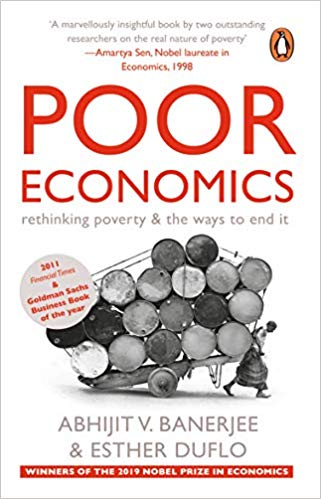
The book “Poor Economics: rethinking poverty & the ways to end it” written by Nobel Laureates Abhijit Banerjee and Esther Duflo

Truly, this book is full of narratives based on field experiences from real lives of poor from a few countries. It summarises status of an individual, family, village or a situation. These stories are largely anecdotal in nature and occasionally there are some contrasting views of other economists, social reformers etc. While interesting to read, these stories do not lead to clear conclusions.

For instance, one of their major “findings” is —

What is striking is that even people who are that poor are just like the rest of us in almost every way. We have the same desires and weaknesses; the poor are no less rational than anyone else—quite the contrary. Precisely because they have so little, we often find them putting much careful thought into their choices: They have to be sophisticated economists just to survive. Yet our lives are as different as liquor and liquorice. And this has a lot to do with aspects of our own lives that we take for granted and hardly think about.”

This conclusion, while stating that those who are poor, are no different from those who are not (hardly a new insight), does not address the real issue. In fact, what goes wrong in economy that makes certain people remain trapped in poverty? At best, one can define this book as a marvelous compilation of exhaustive case studies of status of people living in poverty, from several countries. In authors’ own words, “This book…represents our attempt to knit together a coherent story of how poor people live their lives.”

Here is another piece from Dr Abhijit Banerjee’s talks:

We were in a village in Morocco talking to a guy who was standing in front of his house. He was telling us about his life and to get the conversation going we asked him, suppose you had some small amount of money what would you do with it? And he said, “I am going to buy some food.” And then we asked him what would he do if he had some more money? He said, “I will buy more food.” So we were very persuaded that this was a hungry man. We walk into his house and see that he had a television, a parabolic antenna and a DVD player. So we asked him what is this? He said, entirely without missing a step, “television is more important than food.”  

Dr Abhijit Banerjee continues:  “One advantage of being a development economist is that you get to spend a lot of evenings in random villages. One thing uniform across the world is that an evening in a village is very boring. There are no movie theatres. No music halls. No place to go. There is one tea shop. You can go there. You have been there before. All the other people have been there for years. They have talked to each other for years and they say the same things more or less. Somebody says something, other says, oh yeah, and then they are silent.”

So what does this tell us?

Here is another one from Dr Banerjee: “We asked a migrant construction worker from Orissa, on a visit back home, why he didn’t stay longer in the city. He explained that he could not take his family there: The housing conditions were too insalubrious. On the other hand, he did not want to stay away from them for too long. Most cities in the developing world have very little planned housing for the very poor. The result is that the poor have had to squeeze themselves into every piece of land they can somehow grab from the city, often in a swamp or even a garbage dump. By comparison, the places where even the poorest live in villages are greener, airier, quieter; the houses are bigger; there is space for children to play. Life may be unexciting, but for those who grew up in the village, that is where their friends live. Moreover, a single male, going to the city for a few weeks or even a few months, does not need to actually find housing; he can sleep under a bridge or under some awning somewhere, or in the shop or construction site where he works. He can save the money he would have paid as rent and just go home more often. But he doesn’t want this life for his family.”

Shouldn’t real questions for a development economist be to find ways to create growth opportunities for these people in villages, instead?

Economics Nobel 2019 winners’ high point of work is in their designing a test-tool that can help fight poverty, as they put it. Their learning are empowered by hundreds of researchers using their methodology, of asking right questions to determine (in their own words) “we obtain a fuller picture of how the poor really live their lives, where they need help, and where they don’t.”

The tool is known as, Randomized Control Trials (RCTs), which give researchers, working with a local partner, a chance to implement large-scale experiments designed to test their theories.

When we think of the term ‘theory regarding poverty’, especially of the Nobel Prize winning order, one would naturally expect ‘profound understanding’ that would clearly point out root-causes of why and how people remain or become poor in any economy. As a consequence, it would offer solutions to ensure prosperity for people, not merely fighting against poverty. Actually, the work of this Economics Nobel citation is narrowly limited to how best to distribute aid to poor that in other words is wealth-distribution; instead of how to facilitate people in poverty with access and empowerment to create wealth. At best, it qualifies as a tool for managing aids, efficiently, to be used by social-reformers and social-activists. Management graduates are meant to do that all the time.

Lant Pritchett, an eminent economist at Harvard University, has this to say of the RCT (Randomized Control Trials): “It mostly seems a tool to guide that small part of the development process that is “charity” or “philanthropic” that is (a) going to give relative small amounts of money, (b) will not or cannot work though national (or state or local) governments, (c) has relatively “kinky” valuations (perhaps in part because they are rationing tiny resources) and (d) care about the ability of being able to attribute the gain in well-being causally to their specific intervention (rather than about indirect effects). Charity work is a good thing and if charity work can be done better guided by evidence from RCTs that is a good thing…. However, to confuse this tiny little segment of the world with the broader process of development is madness.”

The intellectual travesty with discipline of economics is eloquently expressed by Steve Forbes, the chairman of Forbes group, in his article “The Bankruptcy of Modern Economics”, published in Dec 2013 issue of Economist: “Nevertheless, central bankers like Ben Bernanke and his putative successor, Janet Yellen, claim we need more inflation, preferably an annual rate of 2% to 2.5%. That level would cost a family making $40,000 annually an extra $800 to $1,000 a year in higher prices. If you ever run across a central banker or an economist who shares this weird view, ask that person which elected body gave the Fed–or any other central bank–the authority to impose such a tax. Treasury assumes that a merchandise trade surplus is equivalent to a company making money and that a deficit is equivalent to sustaining a loss. If that were true, how did the U.S. become the mightiest economy in the history of the world while running trade deficits for 350 of the past 400 years? The final example of the intellectual illness of economics today is a proposal floated by the IMF that countries quickly introduce a one-time wealth tax of 10%. Put aside the fantasy of “one-time.” Where in the world did the supposedly bright lights of the IMF get the idea that destroying capital on a scale like that would aid economic growth? Sorry, IMF pooh-bahs, without capital creation and investment, we don’t expand.”

Triviality of the Economics Nobel Prize in 2019 becomes more pronounced in the backdrop of big unsolved paradoxes facing the discipline of economics, such as:

  1. What is the rationale behind negative interest rate prevailing in Japan, Germany and other countries for over two decades? How these negative rates are justifiable while other currencies have positive interest rates?
  2. Why one’s savings in a bank in India, remain totally unsecured, beyond Rs 1 lakh; meaning one can lose all deposit for no fault of own, in case a bank collapses? Where else can one keep one’s earnings, safely?
  3. Famous French economist Thomas Piketty (author of best seller Capital in the 21st Century), based on the data of the past two centuries, has convincingly established that capital of every country is increasingly concentrated in fewer hands, with every passing year. Referring to 2018 World Inequality Report, he said, ‘that the “most striking finding” regarding America is that, since 1980, the rise of the top 1% mirrors the fall of bottom 50%”!’ So, the larger question for economists is this: Is this systemic and consistent transfer of wealth from masses to a few due to breaching the fundamentals of free-market principles, legally? Is this not the cause of perpetually increasing poverty, world over, including erstwhile developed economies?
  4. These and many more, such as whether speculative currency-trade is an act of “intellectual-theft”, from undervalued currencies; or hijacking of stock-market through anomalies from original entrepreneurs and tech-innovators etc.

While at it, it’s worth adding that the other work of Michael Kremer (third recipient of Economics Nobel 2019), on “O-ring model of economic development’, deserves greater attention by theoreticians and practitioners. As one possible basis of why the world needs to move towards decentralized-economy, in place of currently dominant complex centralised structures.
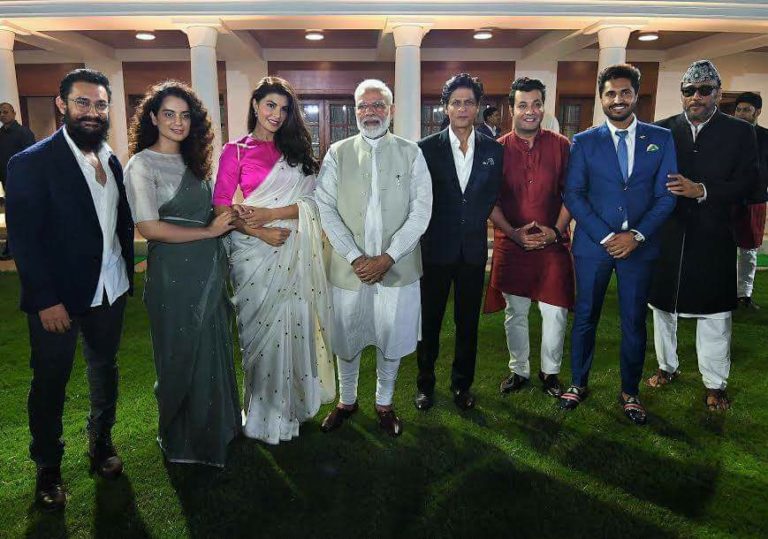
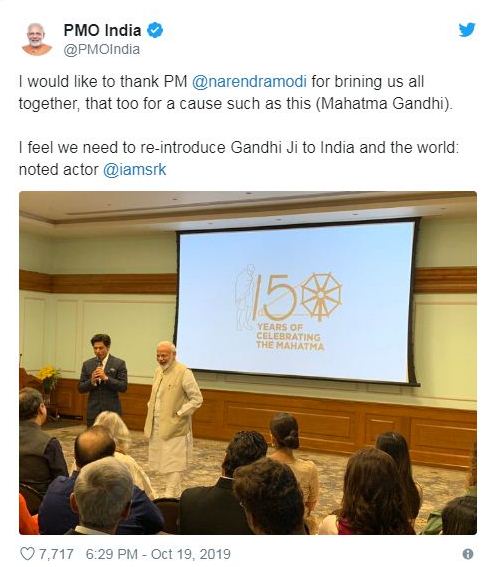
B-town stars meet PM Modi to support #ChangeWithin initiative

Prime Minister Narendra Modi on Saturday met Bollywood actors and filmmakers, including Shah Rukh Khan and Aamir Khan, to discuss initiatives to mark the 150th birth anniversary of Mahatma Gandhi and said plans are afoot to host an international entertainment summit in India.

In an interaction with them at his official residence here, the prime minister said as India celebrates its 75th Independence Day in 2022, the entertainment industry should showcase the inspiring stories of the country’s freedom struggle from 1857 to 1947 and the nation’s growth story from 1947 to 2022, a statement from his office said.

Referring to Gandhi, he said the power of creativity is immense and it is essential to harness this spirit of creativity for the nation. “Several people from the world of films and television have been doing great work when it comes to popularising the ideals of Mahatma.” He also released four videos on the theme ‘Gandhi at 150’.

Among those present in the meeting were Sonam Kapoor Ahuja, Kangana Ranaut, directors Rajkumar Hirani, Rajkumar Santoshi, Ashwini Iyer Tiwari, Nitesh Tiwari and producers Ekta Kapoor, Boney Kapoor and Jayantilal Gada. Others who were present included Ashwiny Iyer Tiwari, Jacqueline Fernandez, Karan Johar, Aanand L Rai, Kapil Sharma, Imtiaz Ali, Anurag Basu and Boney Kapoor.The cast of TV serial ‘Taarak Mehta Ka ooltah Chashmah’ – Dilip Joshi, Shailesh Lodha, Gurucharan Singh, Shyam Pathak and producer Asit Modi, also attended the session.Several film and TV personalities have featured in a special video on 150th birth anniversary of Mahatma Gandhi.

Speaking at the event, PM Modi said, “The power of creativity is immense and it is essential to harness this spirit of creativity for our nation. Several people from the world of films and television have been doing great work when it comes to popularising the ideals of Mahatma Gandhi.”

The prime minister told the gathering that they do great work but perhaps they were not aware of its global influence. “Your work has reached all corners of the world. On the part of the government, I am happy to help in anyway to ensure maximum impact of your creative initiatives,” Modi told the film personalities. He also appealed to those present to visit the Dandi museum as also the ‘Statue of Unity’ in Gujarat.

Recalling his interaction with the Chinese President at Mamallapuram recently, he said Xi Jinping had highlighted the popularity of Indian films such as ‘Dangal’ in China. He also mentioned about the popularity of Ramayana in South East Asia. He exhorted the film fraternity to utilise their soft power potential to promote tourism in India.

Speaking on the occasion, actor Amir Khan said “as creative people, there is much we can do”. “And, I assure the PM that we will do even more,” he said, according to the Prime Minister’s Office. Shah Rukh Khan said he feels that there is a need to reintroduce Gandhi to India and the world. “We are accustomed to being known as representatives from the world of entertainment. But, you have also added a spirit of responsibility to this by involving us in popularising the ideals of Gandhi ji,” said director Anand L Rai.

Bollywood celebrities, who attended the #ChangeWithin session hosted by PM Narendra Modi at his New Delhi residence, took to social media to thank him for the initiative. PMO’s official Twitter handle also shared a lot of photos and videos where PM Modi and the stars are seen talking about Mahatma Gandhi, his ideals and the initiative.

Not lax laws, rather biz captains’ insatiable greed responsible for corporate fraud 

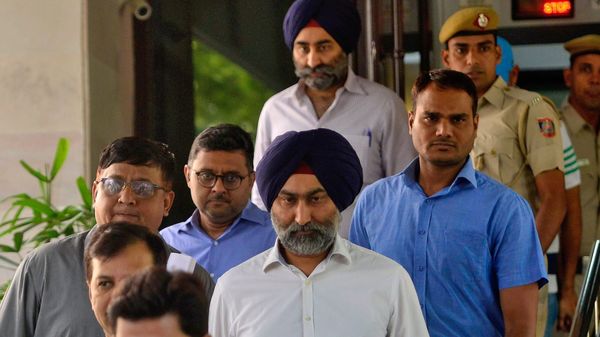
The arrest of billionaire brothers Shivinder and Malvinder Singh, once hailed as the Gen Next faces of India Inc, for gross misappropriation of funds is yet another blot on the corporate world’s image.

Just 10 years ago, it was a matter of immense pride for people to get a job at Religare Enterprises or Fortis Hospital. Today, many don’t want to touch them with a barge pole after a corporate fairy tale turned into a sordid saga of suspected corruption and financial fraud. 

The former promoters of pharmacy giant Ranbaxy have been charged with embezzlement and transferring funds to the tune of Rs 2,397 crore to Religare Finvest Ltd (RFL), a subsidiary of Religare Enterprises.

What is shocking is that this incident came close on the heels of another banking scandal that has spooked investors and the already-stressed financial sector: the Punjab and Maharashtra Co-operative (PMC) Bank scam. The crisis over allegations that the bank did not report all bad loans pushed the Reserve Bank of India (RBI) to impose a cap on withdrawals by depositors. The move threw depositors in disarray and reports emerged of the deaths of at least four account holders following the crisis.

Joy Thomas, former Managing Director of PMC Bank. He has now been suspended. (File Photo)

What’s worse, the PMC scandal hit the banking sector while it was still struggling to deal with the shocks suffered after the Infrastructure Leasing and Financial Services Ltd (IL&FS) crisis and the Punjab National Bank fraud.

India is no stranger to corruption and financial fraud. But the scale of the recent scams stunned even the most hardened industry watchers. The country has some of the most stringent corporate governance laws in the world but it has still been rocked by some of the biggest financial scandals in its history in recent times which have severely dented India Inc’s image. 

Each time there is a scam, the government, regulators and auditors, among other stakeholders, sit up and stress the need to reframe existing guidelines. But that’s a bit like locking the barn door after the horse has bolted. Already, the scale of the fraud is staggering: The banking sector’s non-performing assets (NPAs) sector ballooned to over Rs 10 lakh crore in March 31, 2018 from just Rs 7.11 lakh crore in March 2017. Of this, a large portion was due to wilful defaulters, which means that promoters of companies despite having the capacity to repay the debt, purposely did not repay the funds.

India first sat up and took notice of its corporate governance laws after a multi-crore fraud at the erstwhile Satyam Computers rocked India Inc a little over 10 years ago in January 2009. In a shocking revelation, its then promoter Ramalinga Raju disclosed a Rs 7,000-crore accounting fraud. Since then, the government has been focusing on strengthening corporate governance laws in a bid to boost the economy and encourage businesses to boom.

The Companies Act of 1956 was amended in 2013 bringing accountability and transparency in the functioning of companies, especially those which are listed on the bourses. Among other things, Issues dealing with accounting, the role of independent directors and promoters, as well as shareholders’ rights, were handled in depth. It provided more teeth to the Serious Fraud Investigation Office (SFIO) which could even arrest persons found guilty of corporate crimes. It dealt with issues such as insider trading and rights of minority shareholders. In case of financial crisis, rules for winding up companies were also laid down.

It seemed as if corporate India had finally become fool-proof.

The government has initiated processes which include regular scrutiny by tax authorities and banks on income earned, spends and even investments besides initiating know your customer rules along with mandatory quoting of Aadhaar and permanent account numbers for transactions.

The fact is nothing much has changed. Within months, the Kingfisher Airlines fraud hit headlines. The now-defunct airline promoted by Vijay Mallya was a tangled web of financial fraud which not only included non-payment of debt and service taxes but also employees’ provident fund payments. Mallya, who eventually fled the country in 2016, defaulted on loans worth over Rs 7,000 crore, of which of SBI’s exposure was Rs 1,600 crore. 

The Kingfisher case threw up new challenges. It laid bare systemic corruption and breach of rules by multiple stakeholders, including finance ministry officials. Globally, the corporate and financial worlds have witnessed massive jolts such as the Enron scandal and Lehman bankruptcy, but India has a record of financial scandals that are rarely seen in other developing countries. At a time when India is being tipped as one of the world’s major global players driving global economic growth, these scandals can dull the sheen of the country’s companies. India is aiming to become a $5 trillion economy but is in the throes of an unprecedented slowdown that has hit most sectors from automobiles to manufacturing.

If one analyses each of these corporate frauds carefully, a simple conclusion comes through: It is immense greed that has been the driving force behind these scams. It is easy to blame the government of the day or the regulators for such scams. Corruption has been deep-rooted in our system. If you look at the rule books, there is little scope for errors. Know your customer guidelines for banks, board-level decisions for big-ticket loans, accountability of independent directors and auditors, tax scrutiny and many more are already printed in bold in our multiple rule books.

Prime Minister Narendra Modi had made weeding out black money and corruption a major poll plank in his 2014 election campaign. More than 2 lakh companies indulging in large-scale tax violations have been deregistered. He also announced tougher measures such as demonetisation and the goods and services tax to tackle corruption, but it’s a long and difficult road ahead. 

“You have to engage to get engaged”, business honcho Talal Al Murad’s advice to youth for success

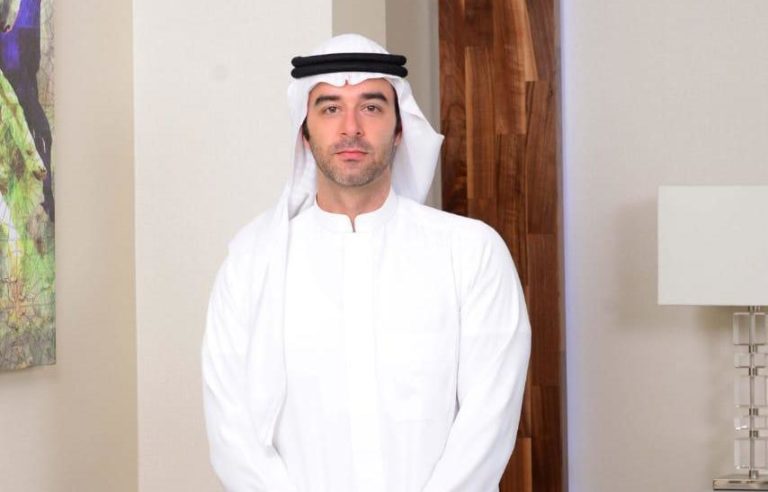
“I am a people’s person”, says Talal Al Murad of United Arab Emirates’ (UAE) well-known Al Murad group. With more than 3.5 lakh followers on Linkedin, Talal’s words look quite convincing. A successful second generation businessman, he is also a social media voice, mentor and thought leader.

During his recent visit to India and a brief maiden visit to New Delhi, he got a small yet good opportunity to know and feel the pulse of the city. “I am told that this month is full of festivities in India and when I landed in Delhi I could sense that as there was so much decoration and frenzy around. I found people in Delhi quite welcoming, open and friendly,” he shares. Talal was here to attend the inaugural ceremony of a stress management center in North Delhi Municipal Corporation (NDMC), established by Peacful Mind Foundation (PMF).

Coming from UAE’s one of the best known business families, Talal carries an important legacy of almost five decades. It was in 1970s that Abdullah Mohammed Al Murad, founder and the chairman of the group saw an opportunity to venture into photofinishing services and he soon became the sole distributor of Kodak services in the Gulf, laying a strong foundation for the Al Murad group. But that was just the beginning. Gradually, the group evolved into a conglomerate of companies in publishing, consumer and professional photo products and services, security and medical products, production studios, Arabic Television channel & FM Radio channels in four languages (Arabic, English, Hindi and Malyalam), Information Technology, AL Murad Real Estate, Sara Contracting and Interior Design and The Beauty Oasis Spa, soon to open at Al Murad Mall. Headquartered in Ajman, Al Murad group is now venturing into several new business domains under the leadership of Abdullah Al Murad.

However, young businessman and entrepreneur Talal feels that “titles don’t mean anything, Do what you love, have a vision and everything is possible.” He explains, “My interests are in keeping up with the ever-progressing technologies and currently applying them as solutions within our Group’s daily operations. As a team player, I firmly believe that one doesn’t just build a business- one builds people and then the people build the business.”

During his recent visit to New Delhi Talal Al Murad was felicitated by Dr. Nabhit Kapur, Founder, Peacful Mind Foundation (PMF)

A sports enthusiast and a former National level tennis player, Talal is also an influential mentor and caters to a global audience through social media. “A lot of youngsters approach me for guidance. I tell them you need to build your CV on your own, grab every opportunity to volunteer or work as intern and learn. Do as much as you can, it’s going to benefit you in future. If you want to be successful you have to engage with people who are decision makers. You have to engage to get engaged,” he shares.

During his short visit to New Delhi, he delivered a talk at Brain International School in Vikaspuri, visited MCD headquarters at Civic Centre and was also felicitated by Peacful Mind Foundation.

Though, not a frequent visitor to India, Talal is now hopeful that he will be coming to Delhi more often and would love to experience the winter season of Delhi and its spicy food.

Recent terrorist attack in Kashmir offers insight into Pak Army’s devious strategy

0

Whenever any Prime Minister of Pakistan reads out a script on Kashmir, the chances of his prognosis going awry are virtually nonexistent. Reason? Because it’s not the Senate in Islamabad rather the General Headquarters in Rawalpindi that formulates and executes the nation’s Kashmir policy and all that the Prime Minister does is to faithfully parrot the script handed over by the army. This is why PM Imran Khan’s prediction in his UNGA (United Nations General Assembly) address that Kashmir will witness a “bloodbath” once restrictions are lifted needs to be taken seriously because after being routed on the diplomatic front on the Kashmir issue, an obdurate Rawalpindi is hell bent upon using muscle power to keep its battered Kashmir flagship afloat.

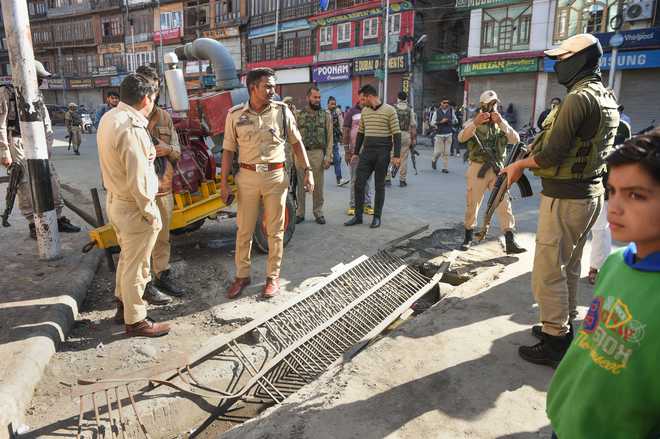
Two grenade attacks have rocked busy market places of Kashmir in the last two weeks but considering past statistical data, this isn’t something unusual. Yet what’s striking about these attacks is that while more than 20 persons have been injured in these two incidents, none of them are security force personnel and this raises the question: “how come?” The media hasn’t dwelt on this aspect at all and without caring to investigate, relied on the clichéd explanation that the grenade was actually aimed at security force personnel present in the area but it missed the target and injured civilians instead!

Though theoretically possible, the ‘target missing’ explanation needs to be taken with a pinch of salt for two reasons. One, a grenade is what in army parlance referred to as an “area weapon” as it designed to disintegrate into small fragments that fly out with immense velocity in all directions on detonation and can kill, maim or injure anyone who happens to be within its effective range.

The nature and extent of injuries confirm that in both these attacks, the hand grenade used were the standard Pakistan Army issue ‘Arges 84 P2A1’. Manufactured by Pakistan Ordnance Factory in Wah, it has (as per the manufacturer) an “effective range” of 30 meter radius and contains approximately 5,000 steel balls of 2 to 2.3 mm diameter. That’s why it’s very surprising that not even a single security force personnel was injured in both attacks as it implies that those who hurled these grenades missed their target by nearly a hundred feet. Isn’t it intriguing that trained terrorists could have such a poor aim?

Secondly, if the terrorists are genuinely worried about the safety of locals (as they claim), then isn’t it strange that they should choose to attack security forces in crowded places with grenades that shower 5,000 steel balls all around and can kill, maim or injure anyone who’s within 30 meters from the point of detonation? Will the terrorist sympathisers explain that if they believe that Kashmir is the most militarised place in the world, then why can’t terrorists find suitable military targets in isolated areas rather than attacking them in densely crowded places?

The answer as to why grenade attacks take place in crowded places is not hard to find because Khan has himself given a clear clue by his “bloodbath” prophecy. And it’s plain and simple. Places teeming with people were intentionally selected so as to evoke a reaction from security forces and thereafter blame them for killing or injuring innocent civilians and thereby project the forces as being a trigger-happy lot with no regards for human lives. Just imagine what our learned human rights activists would have said had the security forces opened fire in self-defence and there would have been some collateral damage due to crossfire?

After abrogation of Article 370, terrorists may not have gone in for any large-scale attack but that’s only because with the UNGA session and FATF (Financial Action Task Force) meet coming up, Pakistan didn’t want another Pulwama like incident to happen. In fact, Islamabad was so concerned about rogue elements amongst its terrorist ranks going ahead and doing something similar, that Khan continuously kept harping on the “false flag” operation scenario. But now that the UNGA session is over and the FATF meet underway, the coast is clear for the ISI to create situations to fulfill Khan’s “bloodbath” prophecy.

In order to prove Khan’s UNGA statement that “Kashmiris are caged like animals in homes,” terrorists have been intimidating, maiming and even killing people who have no other option but to come out and go about their business in order to make ends meet. A 65-year old shopkeeper was shot dead by motorcycle borne terrorists when he was closing his shop in Parimpora, Srinagar. As per police records till mid-September at least 40 incidents of people connected with apple trade have been threatened and even severely beaten up by terrorists.

In a heart-wrenching incident that occurred on September 6th, terrorists entered the house of a prominent apple trader in Dangerpora area of Sopore in North Kashmir and fired at four family members. The most abhorrent part was that the terrorists shot each victim in the leg turn by turn, not even sparing a 70-year-old man or a young girl who was only five years old. This gruesome act was meant to serve as a warning to others not to pursue apple trade and it did have a telling effect. But it seems that the terrorists’ bloodlust wasn’t satiated with maiming people by shooting them in their legs, because just the other day, in a horrific incident, the driver of an apple laden truck was killed and his vehicle set ablaze.

Once again, the media reported this incident with its stock explanation that the terrorists committed this ghastly act to deter apple growers, merchants and transporters from transporting the produce outside the state. But nothing could be more fallacious because what appears to be an act of madness has a definite a method. If the aim of terrorists was only to intimidate locals, then wouldn’t another round of ‘shooting in the leg’ or burning down apple laden trucks be good enough to send the intended message across? Why kill a driver who was merely making a living by ferrying apples? Now that yet another apple trader from Punjab and a migrant labourer hailing from Chhattisgarh being murdered by terrorists on Wednesday, it’s clear that there is a much more sinister motive behind these killings.

Once again, the answer lies in Khan’s “bloodbath” prediction. What needs to be noted here is that the driver murdered by terrorists belonged to Rajasthan and it wasn’t just coincidental that the victim happened to be an ‘outsider’. He was specifically killed in order to arouse anti-Kashmiri sentiments across the country so that Kashmiris working outside the state would be targeted by locals. With political parties and religious organisations eagerly waiting to pounce upon such opportunities for furthering their own motivated agendas, the killing of a non-Kashmiri in Kashmir has the potential of igniting violence and this is exactly why the ISI ordered terrorists to target an ‘outsider’!

When Pakistan Army chief Gen Qamar Javed Bajwa has announced that the Pakistan Army will “go to any extent” for the sake of Kashmir, it’s clear that the ISI would orchestrate a ‘no holds barred’ offensive to create unrest in Kashmir. Furthermore, with Khan using the UNGA platform to foment communal disharmony within our county by openly instigating our Muslim brethren, it’s important for us to shed our prejudices and unite to jointly thwart Pakistan’s fissiparous designs.

The people of Kashmir need to see through Pakistan’s game plan because if Islamabad really cares for the wellbeing of Kashmiris as it professes, then why would it direct the so called “freedom fighters” to use brute force to the extent of maiming and even killing innocent Kashmiris just to ensure that normalcy doesn’t return to the Valley? Lastly, the people of Kashmir should also realise that if they feel that they are still “caged like animals in homes,” then the real culprit isn’t the government but Pakistan-backed “freedom fighters” who at the behest of ISI are terrorising them into staying indoors!

Climate Change will impact agriculture and rural mortality in India

“We have to wake up to the fierce urgency of the now,” Jim Yong Kim, President of The World Bank has said on Climate Change.

There is a concern over climate change, yet glaciers are melting, sea is rising, dry areas are becoming drier and wet areas are becoming wetter, with regular floods, cyclones causing massive devastation.

Yes, we read about global warming, yes we are aware, but we are yet to take action despite acknowledging global warming as part of our social discussions. Despite this, we are still skeptical of those who are warning us about global warming and somewhere we tend to think that those concerned about global warming are overreacting.

Compared to developed countries, developing countries such as India are much more susceptible to this transforming climate as lives and livelihoods are majorly climate sensitive. India is already under the abnormal spells of dry extended summers, late monsoons and heavy rains that cause flooding, shorter winters and so on. India is totally unprepared and has no mechanism to adapt or even have the open mindedness to acknowledge this imminent danger.

However sensational it may sound, there is a clear threat to our lives and livelihoods mainly in the rural areas and the most affected would be our agricultural sector, which could witness string of crop failures due to unpredictability of nature.

According to the Inter-governmental Panel on Climate Change (IPCC) report, climate change refers to any change in climate over time, due to natural variability or as a result of human activity which results in greenhouse gas emissions.

The developed countries are better equipped to deal with these changes but the developing and poor countries who are not well equipped to deal with these changes will see transformation at an unprecedented scale.

India, which is in the middle of an economic slowdown, is one such country and it is already experiencing adverse impacts of climate change and global warming. India’s poor and vulnerable population are at risk.

It is projected that India’s population could reach 1.4 billion by 2025 and if agricultural production is adversely affected by climate change, livelihood and food security in India would be at risk. Agriculture in India is associated with employment. Many emerging studies have directly linked climate change to agriculture in India and have shown convincing evidence that weather and climate in global warming conditions can not only adversely impact productivity in agriculture but can significantly affect the mortality rate in rural areas.

About 700 million of one billion population of India resides in rural areas. The rural population directly subsists on climate sensitive sectors like agriculture, fishery and forestry. The adaptive capacity of dry land farmers, forest dwellers, fishermen is very low. Climate change is already impacting the eco systems as well as the socio-economic systems as shown by the National Communications Report of India to the United Nations Framework Convention on Climate Change (UNFCCC).

Robin Burgess, Olivier Deschenes, Dave Donaldson, Michael Greenstone in their research The Unequal Effects of Weather and Climate Change: Evidence from Mortality in India noted that extended periods of global warming will have weather shocks for the population and it will have varied effects on rural and urban populations. Their empirical research examined the effects of hot temperature days on productivity, wages and price for rural and urban areas of India. They found that hot weather sharply depresses agricultural yields and the wages of agricultural laborers in rural areas but exerts no impact on urban productivity, wages or prices.

Most think tanks and agencies have lowered India’s growth projections. The World Bank has drastically slashed India’s growth projections from 7.5% to 6% for the current financial year.

Unfortunately our government and policymakers along with other stakeholders look for growth boosters, they seem to look past the impact that climate change can have on the overall economy. They seem to be talking on this and making the right noises on all important economic issues but our preparedness for sustainable growth remains dismal with no serious thought being given to this issue.

It is time, we took this with utmost sincerity considering the fact India has been witnessing severe floods across the country for the last few years.

Lack of proper study of the emerging evidences and our denial of the impact of climate change can delay and damage our preparedness towards taking effective measures to combat this change. The issue of climate change needs proper response and we need to deal with it at the earliest.

Reaffirm Gandhi’s ideals on sustainable development: Pradhan urges global community

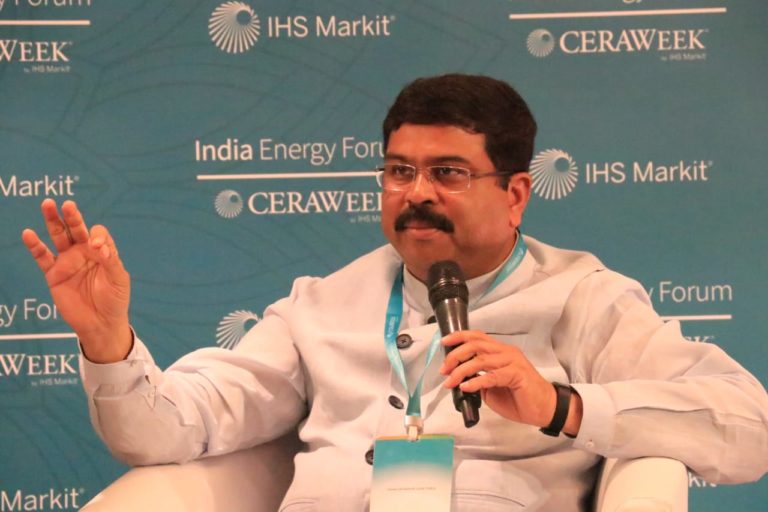
Union Minister of Petroleum and Natural Gas and Steel Dharmendra Pradhan has called for reaffirming Mahatma’s ideals which have traditionally influenced Indian way of life which is based on responsible and sustainable consumption.

Delivering the closing remarks at India Energy Forum by CERAWeek, Minister Pradhan said, “Indian society has, since times immemorial, been following sustainable energy practices with lesser emissions.  Much before the buzz words like “recycle, reduce or reuse”, it was Mahatma Gandhi who had appealed for responsible and sustainable consumption so that there is a better world for our future generations. I quote “Earth provides enough to satisfy every man’s need but not every man’s greed”. As we celebrate the 150th birth anniversary of Mahatma Gandhi this year, it is important to reaffirm these ideals.”

Calling India, an epicentre for global energy growth and innovation in energy sector, Minister Pradhan said, “Every segment of the energy value chain in India will be action packed. I urge my investor friends present here to take advantage of these enormous investment opportunities across the energy value chain in Indian market that will be epicentre for global energy growth and innovation.”

Speaking about Government’s commitment to make India, a low carbon economy, he said, “Our Government is committed to make India a low carbon economy, though our per capita carbon emission is far less than the world averages, particularly the OECD countries. Special thrust is being given to promote gas-based economy under the guidance of Hon’ble Prime Minister Modi”

Speaking about energy access, he said, “Universal access of electricity, universal access of clean cooking fuel, cleaner transport solutions etc. are driving the demand side action in India. India’s energy access programs since 2014 to reduce energy poverty is now seen as a template by many developing countries. India is pushing for Energy Justice on every global platform.”

Final nail in the coffin of Pakistani manipulations in Kashmir

Telecom network and landline connections in Jammu and Kashmir that have remained restricted in parts since August 5th this year, have been restored in full. All post paid mobile services are functional now. Since most people in the state have post-paid connections, it implies that telephonic connectivity stands restored.

It is reiterated that on August 5th, Indian Parliament passed legislations to reorganise the state of Jammu and Kashmir into two Unions Territories and to revoke certain temporary provisions of Article 370 of the Constitution that were causing a hindrance in the seamless integration of the state with the Indian Union.

 “When curfew is lifted there will be a blood bath,” said Pakistan’s Prime Minister Imran Khan during his address to the United Nations General Assembly (UNGA). He parroted this phrase and other hate-filled rhetoric with monotonous regularity all though his stay in the United States. That Pakistan was poised to respond with belligerence to counter the progressive changes in the state became quite evident by the behaviour of the country’s prime minister on foreign shores. Against this backdrop, the decision of New Delhi to impose certain restrictions was very well conceived and mature. The temporary restrictions successfully contained activities of foreign sponsored anti-national elements that, as was apparent, were determined to engineer subversion, violence and disruption.

The fall-out of this very mature decision is that the changeover is progressing in a very peaceful manner despite inimical countries trying their very best to orchestrate the “bloodbath” that they have been predicting so confidently. The negative reaction that Pakistan had planned was thus marginalised.

The restrictions have since been eased in a gradual manner since August 16th and by the first week of September most restrictions were removed.  Even after the restrictions were removed Kashmir Valley faced what is termed as an “internal curfew” which was the result of pressure being exerted by terrorists and other thugs and gangsters on the payrolls of Pakistan to keep businesses closed. These elements went from place to place threatening people of dire consequences if the “voluntary curfew” was opened. Kashmiris’ are adept at handling situations of this nature; brisk business is being done by shopkeepers by opening up before and after working hours and services like schools have been sending out assignments etc. in a work from home system. Ultimately, this plan by Pakistan also failed as miserably as its diplomatic initiative had failed.

It is important to realise that all nations would have carried out a deep study of Article 370, in legal and governance terms. If its removal had the potential of causing harm to the people or curbing their liberties the same would have been reflected very strongly by the international community. The world is quiet since it is convinced that seamless integration of Jammu and Kashmir with the Indian Union is in the interest of the people and there is no possibility of the Indian government ordering “genocide” as is being repeatedly said by Pakistan. The manner in which the restrictions have been removed also indicates the commitment of the government and the country to not cause inconvenience to the people any more that what is absolutely necessary. The lifting of restrictions will further convince the world that the reorganisation and restructuring is going well.

As the new structure comes in place, the government is likely to move with its ambitious plan to rehabilitate the region. There will be well directed initiative towards youth empowerment and economic upliftment. The message to the people is “You root for peace and democracy; the nation will work with you towards employment, development and prosperity.” Such a message which rates quality of life above all else is definitely in tune with modern day aspirations across the globe. The youth of Jammu and Kashmir will definitely relate to the same.

The next big step will be putting in effect the new dispensations of two Union Territories which is slated for October 31st, 2019. There is a need to remain alert and vigilant since Pakistan is unlikely to give way easily and is bound to create massive hurdles. The recent attempt to smuggle in large caches of arms into Indian state of Punjab with the help of drones was actually meant for Kashmir. It is indicative of the desperation that Pakistan is witnessing at the moment because of its inability to respond effectively. That it will do something drastic and destructive is not out of the realm of reality.

On a lighter note it can be said that the people of the state have proved that it is possible to live well without use of modern communication technology that dominates our lives and is not very good for us. The world will not fall apart if we do not use modern appliances, we will in fact, emerge reenergised from the digital detoxification. Parents across the country should now restrict their children from use of mobiles etc for specified periods. Adults should also restrict the use of their mobiles akin to the practice of fasting.

The people of Jammu and Kashmir need to strengthen the roots of democracy in their state; they need to integrate with their nation and onwards with the world. They need to optimise the resources that their nation is providing for their uplift and development. This aid is not a favour; it is a necessity to facilitate them in getting over the troubled era of foreign sponsored terrorism; they do not need to show gratitude, they simply need to put it to good use. It is hoped that the people of the region will continue with the cooperation that they have been extending over the last two and a half months and the new dynamic changes will become effective seamlessly. Such a situation would be the final nail in the coffin of immoral Pakistani manipulations.

Philosophical and Historical Foundations of American Secularism 7 – Presidents and Religious Affiliation

Dr. Herb Silverman is the Founder of the Secular Coalition for America, the Founder of the Secular Humanists of the Lowcountry, and the Founder of the Atheist/Humanist Alliance student group at the College of Charleston. He authored Complex variables (1975), Candidate Without a Prayer: An Autobiography of a Jewish Atheist in the Bible Belt (2012) and An Atheist Stranger in a Strange Religious Land: Selected Writings from the Bible Belt (2017). He co-authored The Fundamentals of Extremism: The Christian Right in America (2003) with Kimberley Blaker and Edward S. Buckner, Complex Variables with Applications (2007) with Saminathan Ponnusamy, and Short Reflections on Secularism (2019).

Here we talk about American freethinker, or not, presidents.

Scott Douglas Jacobsen: Over time, I have heard or more often read repeated mumblings and murmurings from some American freethinkers of the possibility of major leaders, including presidents, of the United States being closet atheists or agnostics. However, most of the former presidents lived in even more religious times than America now. In that social climate, they remained quiet because citizens – a hunk of them – vote via political affiliation in association with religion. 

If a Christian candidate, and open about it, a large sector of Americans seem to vote for them, as a Christian, as a Christian seen as a good person, and so on. How has the secular and philosophical landscape of Americans been influenced, impacted, by the voting records on religion? How many presidents, statistically, in American history were or are, probably, atheists or agnostics? What would be the fate of an open atheist or agnostic president for their political life? I recall the retort if you won the governorship, “Demand a recount!”

Dr. Herb Silverman: Religious beliefs of American presidents are difficult to determine, perhaps indeterminable. We can learn what they profess to believe and what church they attend, but I am often skeptical about what they truly believe. Let’s look at the last two presidents, Barack Obama and Donald Trump, both of whom are professed Christians.

Barack Obama had an atheist father and was raised by a secular humanist mother whose values he embraced. He used to say he was an agnostic, but he became a Christian when he ran for public office. At least Obama embraces some positive values of Christianity, like concern for immigrants and the poor, caring about your neighbor, honesty, and respect for the environment.

What Christian principles does Donald Trump embrace, unless you consider it Christian to nominate judges put forth by conservative white evangelicals? I know he disagrees with Luke 6:29: “If someone slaps you on the cheek, offer your other cheek.” I couldn’t find a biblical passage that says, “Slap him back ten times harder.” Nor does Trump follow Luke 14:1: “He who exalts himself will be humbled, and he who humbles himself will be exalted.” Many of us wish Trump would heed Proverbs 12:15: “The way of a fool is right in his own eyes, but a wise man listens to advice.”

Trump refused to disclose his tax returns because he claims they are under audit. He added, “Maybe I get audited so much because I’m a strong Christian.” Really? How much faith does that statement require? I think Donald Trump is an atheist because I can’t picture him believing in a power higher than himself. On the other hand, Trump might think that he is a god.

Given that presidents are usually smart and thoughtful people, I would think that quite a few who called themselves Christians did not believe most of the doctrines of their faith. There are at least 18 non-Christian presidents: George Washington (Deist), John Adams (Unitarian), Thomas Jefferson (Deist), James Madison (Deist), James Monroe (Deist), John Quincy Adams (Unitarian), John Tyler (Deist), Millard Fillmore (Unitarian), Abraham Lincoln (probably Deist), William Howard Taft (Unitarian), Dwight D. Eisenhower (no church until he became president). Many Unitarians also considered themselves Deists. Unaffiliated presidents are Ulysses S. Grant, William Henry Harrison, Andrew Johnson, and Rutherford B. Hayes. Probable nonbelievers include Martin Van Buren, Zachary Taylor, and Chester A. Arthur. If you include Quakers as non-Christian (which many Christians do), we can add Herbert Hoover and Richard Nixon.

Should the religious beliefs of a politician matter? They should if the person’s religious faith interferes with the duties and oath of office. I like what John F. Kennedy, the only Catholic president, said during his campaign: “I believe in an America where the separation of church and state is absolute.” And Kennedy governed as if he were an atheist, which I suspect he might have been because it appeared that he did nothing more than follow certain rituals. While I would like to see President Trump impeached and convicted, I worry about his successor. It would be Christian fundamentalist VP Mike Pence. At the Republican national convention, Pence said, “I’m a Christian, a conservative, and a Republican in that order.” This sounds like he would govern by imposing some of his unconstitutional Christian values on the rest of us.

When now-Senator Jamie Raskin (D-MD) testified at a Maryland State Senate hearing in 2006 in support of gay marriage, Republican State Senator Nancy Jacobs said: “Mr. Raskin, my Bible says marriage is only between a man and a woman. What do you have to say about that?” Raskin replied: “Senator, when you took your oath of office, you placed your hand on the Bible and swore to uphold the Constitution. You did not place your hand on the Constitution and swear to uphold the Bible.”

I would much rather see a non-religious American president than a religious one, who might pledge his or her highest allegiance to religion instead of to the oath of office. Religious conviction must never interfere with the purely secular responsibilities associated with holding the highest office in America.

While politicians are reluctant to come out of the closet as atheists, there have been some non-religious gains. A Congressional Freethought Caucus was formed in 2018. This was a milestone for nonreligious Americans in our continual struggle for inclusion in the political process and recognition as a constituency. The Caucus promotes public policy formed on the basis of reason, science, and moral values. It protects the secular character of our government by adhering to the strict separation of church and state. It opposes discrimination against atheists, agnostics, humanists, seekers, religious and nonreligious persons, and champions the value of freedom of thought and conscience worldwide. The Caucus also provides a forum for members of Congress to discuss their moral frameworks, ethical values, and personal religious journeys. The Caucus started with four members, and now has twelve, with more likely to join.

For people who want to contribute financially to local and national candidates who support secular values, there is now a Freethought Equality Fund PAC, which helps increase the number of nonreligious Americans running for public office. See http://freethoughtequalityfund.net

Scientific advancement isn’t just making people question God. It’s also connecting those who question. There are many atheist, agnostic, and humanist groups, along with Internet discussion groups and Meetups. “Nones,” those with no religious affiliation, is the fastest growing “religious” group in America, especially among younger Americans. The latest survey shows that over  23 percent of Americans are “Nones,” a higher percentage than for either Catholics or evangelicals.

In August 2019, the Democratic National Committee passed a resolution acknowledging the “value, ethical soundness, and importance” of non-religious Americans. The resolution mentioned that we advocate for rational public policy based on sound science and universal humanistic values. In addition, Sarah Levin, Director of Governmental Affairs of the Secular Coalition for America, was recently elected as a Co-Chair of the DNC Interfaith Council (not representing the nonpartisan Secular Coalition). In 2020, Democrats will need all the votes they can get, and they understand that they have more to gain by embracing the growing number of secular Americans than worrying about who might complain if they do.

There have been at least seven democratically-elected world leaders who have been atheists: Julia Gillard, former Prime Minister of Australia; Alexis Tsipras, Prime Minister of Greece; Francois Hollande, President of France; Zoran Milanovic, Prime Minister of Croatia; John Key. Prime Minister of New Zealand; Elio di Rupo, former Prime Minister of Belgium; Milos Zeman, President of the Czech Republic. Perhaps in the not-too-distant future we will have an American president who is an open atheist. Skeptical? Did you really expect to see a black American president in your lifetime?

Jacobsen: Thank you for the opportunity and your time, Dr. Silverman.

Photo by Sammie Vasquez on Unsplash

Balochistan leader Dr Allah Nazar condemns Turkey, supports Kurds

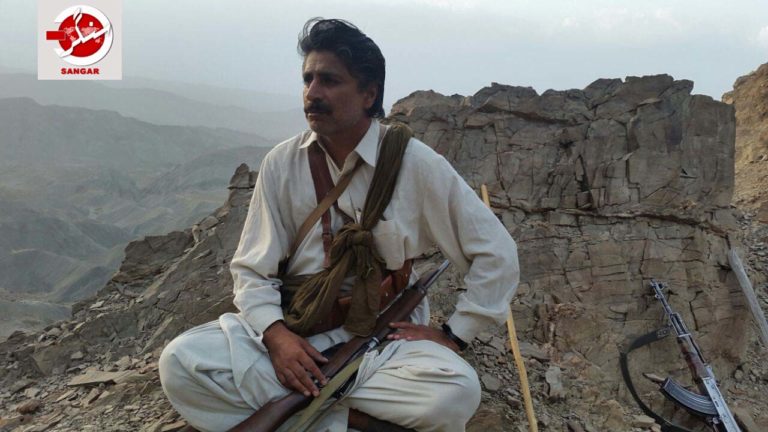
“As a nationalist, I believe that the Kurds will continue to fight for their land and national dignity with or without the USA and international support, but the shameful betrayal of the United States and other Western nations will echo throughout history,” said Dr Allah Nazar Baloch, leader of the pro-independence of Balochistan.

Dr. Allah Nazar Baloch condemned Turkey’s attack on the Kurds in the Syrian-administered areas, saying that the Kurds did not fight for Western arms and aid, rather to defend their national values and soil. “As a nationalist, I believe that without international or US assistance, the Kurds will continue to fight for their land and national dignity, but history will know the US and other Western countries as indebted to the Kurds,” he said.

Dr. Allah Nazar said that the Turks are an aggressive force and the Kurds are fighting to defend their land and values. When states like Iraq and Syria were disintegrating against ISIS, it was the Kurds who went ahead and repulsed ISIS by sacrificing their eleven thousand sons and daughters. They played an undeniable role in protecting the world.

The Kurdish mainland may also have been influenced by ISIS, because in terms of the balance of power and backing of some countries, ISIS was stronger than the Kurds in all respects. It was the powerful spirit of nationalism that defeated ISIS and proudly maintained humanity and human dignity in that area.

Elaborating further, Dr. Allah Nazar Baloch said: “I do not consider the Kurds as a coalition of West in the Middle East but the vanguard of human dignity and nationalism.” He added that the Kurds are fighting against the axis of evil including Turkey and their ideology of Daesh to safeguard human dignity.

When the West was helpless in front of ISIS, the Kurds fought a historic battle and defeated ISIS. Had the Kurds not had a strong frontline based on human rights, liberty and respect for humanity in the Middle East, the religious terrorists of ISIS would have not only engulfed the Middle East but all of mankind could have been at their mercy of ISIS and suffered in some way, he explained.

Dr. Nazar Baloch said that the world powers, including the United States, should immediately review their policies regarding the Kurds. If the United States left the Kurds alone, it would certainly hurt the Kurds but this brave nation will continue to face any aggression, including Turkey, but most of all it will be a greater loss for world peace and humanity. Thus the whole of humanity will have to suffer its consequences. Nationalists and freedom-seeking forces throughout the world would now think a thousand times before they become part of any alliance with the US and the West against terrorism.

He said the ban on sale of weapons to Turkey by some European countries is a good development but it is insufficient. Despite continued reservations and links to ISIS, soft conduct towards Turkey will lead to further complications in the future. Support for the sale and transportation of ISIS oil by close family members of Turkish President Tayyib Erdogan has become a global media buzz, but the reaction from global powers has been null. This has only emboldened Turkey in its recent attack on Kurdish populations. Over the last five days, thousands have been displaced and hundreds have been killed and injured. Although Turkey’s hatred and revenge against the Kurds is not new, as a major nation of the world, they (Kurds) have every right to statehood in accordance with global principles and this will also further guarantee peace in the region.

The Baloch Pro-Independence leader said that Pakistan’s support for Turkey’s aggression is not surprising as both countries have a historical kinship in adopting and supporting religious extremism along with occupying and subjugating other nations with complete disregard for human lives. They both had always been in bed with Islamic fanatics and extremists. Turkey is the backbone of a global terrorist organization like ISIS and Pakistan is the creator and current facilitator of various religious fanatic terrorist organizations. The world powers must take immediate and drastic actions against such countries instead of facilitating their crimes.

This news was first published in Sangar Publication.