Home Blog Page 407

Kashmiri separatism in doldrums as the myth breaks

1

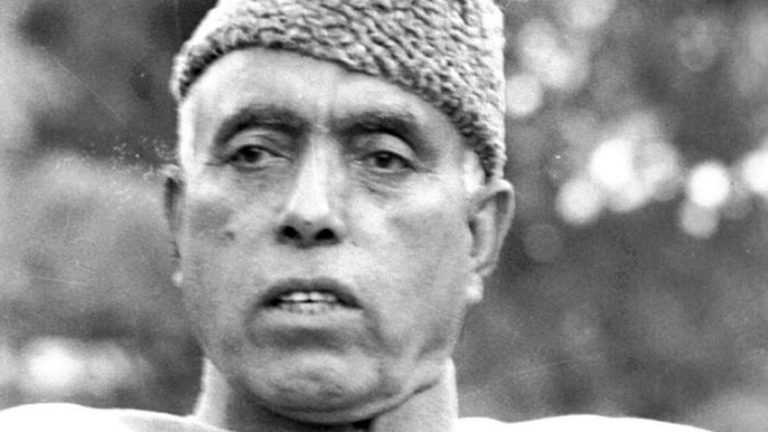
The moment the word “separatist” is used in India, it conjures the image of Syed Ali Shah Geelani, Mirwaiz Umar Farooq and their colleagues at the All Party Hurriyat Conference (APHC) in Kashmir, who subscribe to this ideology. Use of the ideology of “separatism” as a political tool in Kashmir, however, goes as far back as 1931 when some Muslim pressure groups based in Lahore unleashed a fierce propaganda against the ruling monarchy in Jammu and Kashmir with Maharaja Hari Singh at its helm. The propagandists found in Sheikh Abdullah an able conduit to further their activities. He was, at that stage, a budding revolutionary and leader of the Muslim Conference.

What is notable here is that while the whole of India was fighting to gain independence from the British yoke, Sheikh Abdullah and his ilk in Kashmir were fighting for “separation” from the princely state of Jammu and Kashmir. As such, separation from India was definitely not an agenda for the people of Kashmir Valley or its political leaders.

In fact, Sheikh Abdullah realised, all too soon, that the people of Jammu and Kashmir could not be made subservient to the Sunni Muslims since the state constituted of great political and cultural diversities with many other religions, cultures, dialects etc. The secular bonds simply could not be broken. He, therefore, changed the name of his political organisation from Muslim Conference to National Conference and opposed the idea of Pakistan.

It is notable that all through the Pakistan-sponsored tribal invasion of Jammu and Kashmir, the people of the region supported the Indian Army to repel this attack. In fact, the Kashmiri people were very anti-Pakistan because of the brutal atrocities that the invading hordes of Pakistani mercenaries heaped upon them.

Sheikh Abdullah, as chief minister of the state and with a brute majority in the state assembly started speaking in 1953 about revocation of Jammu Kashmir’s accession, which was a good six years after Jammu and Kashmir had been firmly embedded as an integral part of India. This was due to Sheikh Abdullah’s personal ambition and not because of any demand from the people. Jammu Kashmir had acceded to India on 26October, 1947.

Sheikh Abdullah could not get what he wanted and he was arrested. His arrest did not cause much disruption in the state including the Kashmir Valley. This gave a clear indication of the people not being with him on the issue of secession from the Indian Union.

The current situation of separatism came by in 1987 due to the self-serving politics of new and emerging leadership. It was limited only to the Kashmir Valley and followed the political model set by Sheikh Abdullah.  

Thus, the “ideology of separatism” has always been the handiwork of a few local political players in their attempt to gain power and has always been used for playing dirty, self-serving politics at the local level in the Kashmir Valley.

The fatuousness of the current separatist ideology becomes apparent from the disparate demands that are made under its ambit. Some separatist leaders want freedom while others wish to align with Pakistan. None have a practical road map for running of the state under any of the said options. The entire ideology reeks of anarchism.

Separatists have dissected the people of Kashmir into small sub- groups: Sufi versus Wahhabi; Shia versus Sunni versus Pahaari; Urban versus Rural etcetera. The number of groups existing now are too many to count.

It’s good that most of the separatist leaders are now under scrutiny of the National Investigation Agency (NIA) for terror funding. Many like Yasin Malik, Asiya Andrabi, Shabir Shah, Masrat Alam have been arrested while others like Mirwaiz Umer Farooq, Syed Geelani are being questioned. These leaders have admitted to the formation of a Joint Resistance Leadership (JRL) that illegally extorted funds from the people, especially the business community. The investigation process has received a boost in recent days by the arrest of one Zahoor Watali who is the kingpin for Hawala transactions of the separatists for foreign funding. Crucial electronic and documentary evidence is now available to establish the pattern of raising, collection, transfer and use of funds for terrorist and separatist activities.

The money received has been utilised to spearhead violent agitations in the Kashmir Valley by issuing “Protest Calendars” leading to economic shut down for months on end. It has also been established, that these leaders have misused the funds for personal purposes like funding the education of their children abroad. They have been confronted with evidence of their investment in many properties and commercial ventures mostly Benaami (on names of others).

The misfortune of the Kashmir Valley is aggravated by “separatism” being exploited as a political tool by foreign powers to fan divisive and disruptive activities. All terrorist groups operating in the state have maintained affiliations with some separatist group.

Dissatisfaction with the democratic processes is the product of deliberate propaganda. It is given wind by misrepresentation of facts. In actuality, the people want democracy and vouch for it in all elections from grass roots upwards.

It becomes quite apparent from the foregoing that the Indian Union has had little role to play in the basic ills of corruption, nepotism, and political brinkmanship on the basis of which secession is sought through the ideology of separatism.

The arrests, charges and choking of funds have caused a state of complete disarray in all sections of the separatist conglomerate. True to form, the so-called leaders have thrown ideology to the winds and have got into self preservation mode. Those screaming against India the loudest have suddenly become most accommodative.

It can be said with a fair degree of confidence that the myth of separatism in Kashmir now stands broken for all times to come. Democracy is gaining firm roots in the state inclusive of the Kashmir Valley. Today, the word “separatist” evokes a feeling of dreadfulness and dismay among the common, normal and hardworking people of Kashmir. This is because they look upon separatists as a set of people whose only contribution to their society is disruption and divisiveness leading to terrible economic loss and social suffering.

With the separatists in doldrums, Pakistan has been divested of its political control in the Kashmir Valley, the resultant effect is quite visible from the desperate utterances of Prime Minister Imran Khan at home and in foreign shores. Fortunately, the international community is fully aware of the ground situation and is not paying any heed to his diatribe. It is high time Imran Khan too reads the writing on the wall and divert his energy to issues more critical for his nation like economy, internal security etc.
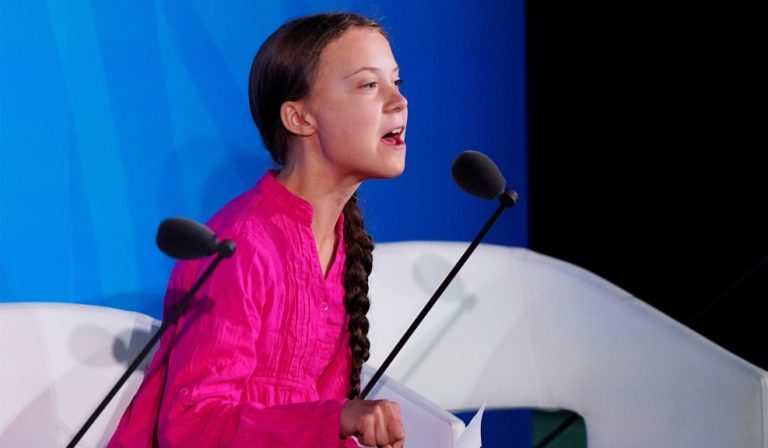
Yes Greta, Environment Protection and Development can happen Together

World leaders and policymakers are finally feeling the pressure as talks on climate change gain ground especially in the wake of the Global Climate Strike. It is indeed worrisome as environmentalists and scientists warn of regular droughts and floods besides deadly storms as a result of rising sea levels, melting ice and severe heat waves.  

The Population Council in one of its papers earlier said that “…climate change and climate induced disasters pose a significant challenge to poverty reduction, health and development in many developing countries, including India.” Many have warned that the floods in Kerala, Orissa, Assam and Bihar have been caused due to climate change and in the years to come the situation will only worsen.

While the issue of climate change first gained momentum in the late 1970s, precious little has been done so far. The landmark Paris Agreement in December 2015 — represented by leaders around the globe – was thrashed out seeking to reduce global greenhouse gas emissions. The journey on this path, as we all know, has not been smooth.

It is time we analysed why we have failed. The fault lies in the way our discourse has taken shape. It has always been made to feel that economic development and nurturing environment can never go hand in hand. In India, environmentalists and industrialists have often been at loggerheads.

Recently I noticed several of my friends on social media take a pledge not to buy new clothes and start reusing their old clothes to preserve nature. Many others are trying to change their eating habits—turn vegetarian or even vegan, where one does not consume milk or milk products.

In my hometown Kolkata, a city known for food especially its fish, a vegan movement has caught much attention. The Kolkata Vegans, as they call themselves, urged the Bengali community to give up eating fish. Now nobody would want to change her eating habit all of a sudden.

Let me talk about another incident. There have been protests by farmers and non-governmental organisations (NGO) over the proposed Greenfield international airport at Greater Noida in the Delhi-NCR (National Capital Region). While the farmers’ compensation issue has been resolved and the Allahabad High Court has even dismissed the dispute cases, the more pressing one relating to environmental hazards needs to dealt with delicately and effectively.

Let me note here that the environmental issues cannot have such knee jerk solutions or top down approach. What we discuss in air-conditioned seminar halls in the country’s big cities needs to be resonated in the remotest corners of the country. It needs deliberations and well formulated holistic approach.

All stakeholders including environmentalists, policymakers and economists need to be brought on one platform to thrash out a solution that is acceptable to all. Why can’t our policymakers follow a simple drill — for example, if we need an airport around Delhi, the decision-makers can seek help of the environment scientists in identifying the plot of land, which can be developed into an airport yet will have no negative bearing on environment. Why do our babus and political leaders go in for environment clearances at a later stage? Does it not require to be done just after conception?

Environmentalists including activists, scientists and policymakers need to have regular interactions to chalk out the best possible path for economic development while preserving Mother Earth. We need to do that to ensure that thousands in our country get jobs while nurturing the environment simultaneously. Environmentalists, industrialists and policymakers need to be on the same page and not confront one another as a routine exercise. 

Tarek Fatah, renowned author, columnist and activist recently wrote in his column in Toronto Sun, “…The steam engine and the airplane went hand in hand with penicillin and insulin. Next time you visit a physician, remember what your grandparents accomplished was extending human life, eradicating poverty, providing literacy and individual liberties like never before.”

And just a thought before I wind up. While the 16 year old Swedish environmental activist Greta Thunberg’s speech has shaken the world and her anger is justified, we need to nurture and respect our own nameless and voiceless environmentalists who toil to nurture nature in their own small way. Build awareness across the spectrum.  

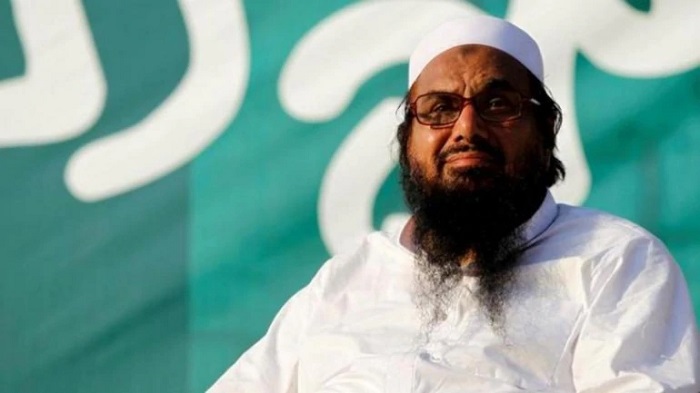
Pakistan’s heart continues to bleed for terrorists like Hafiz Saeed and his ilk

Advocacy of human rights with a carefully cultivated “holier than thou” persona has become the focus for Pakistan’s Prime Minister Imran Khan. Amidst ranting of a nuclear holocaust his heart bleeds constantly for the “atrocities being committed by the fascist Indian state” on the people of Kashmir.

While the world has refused to take his ranting seriously, what is becoming more apparent is his hide-and-seek game with the international community as far as Mumbai terror attack mastermind and Jamaat-ud-Dawah chief Hafiz Saeed is concerned. Within a month of Counter Terrorism Department (CTD) arresting Saeed in connection with a terrorism financing case on July 17 this year, Pakistani authorities swiftly moved the United Nations to allow him to use his bank account for his family’s “basic monthly expenses.” It is baffling to figure out the purpose behind Pakistan writing a letter to the United Nations Security Council (UNSC) which, quite appallingly, approved its request as no objections were raised by member countries by the deadline of August 15.

Nevertheless, Pakistan has scored a self goal by approaching the United Nations in a blatant show of its apathy for a terrorist. The recent development has not only left its foreign policy mandarins shamefaced, but also exposed their shady character. 

This comes at a time when Imran Khan is beseeching the international community against possible blacklisting of his almost bankrupt country by the inter-governmental Financial Action Task Force (FATF). Pakistan, has been placed on the grey list of countries whose domestic laws are considered weak to tackle challenges of money laundering and terrorism financing and has time till mid this month to get the decision revoked. The Paris-based body is holding its week-long plenary meeting from October, 13 when Pakistan’s fate will be sealed. Pakistan, which has been reeling under double-digit inflation, high interest rates and massive discontentment as unemployment rises, will be dealt a major body blow if it is blacklisted by FATF.

It should be recalled that the Asia Pacific Group (APG) under the Financial Action Task Force (FATF) during its meeting in Bangkok last month had placed Pakistan in the Enhanced Expedited Follow-Up List (Blacklist) for its failure to meet 21 of the 27 action parameters. Out of 118 UN- designated terrorists, Pakistan could show action against only five, including Hafiz Saeed. The agency noted that no demonstrable action could be shown against individuals like Masood Azhar, Rauf Azhar and Zakiur Rehman Lakhvi or groups such as Lashkar-e-Taiba, Jaish-e-Mohammed, Falah-e-Insaniat, Haqqani network or Daesh (Islamic State).

Last year also, Pakistan had made a mockery of its so-called avowed commitment to the implementation of the United Nations Security Council 1267 sanctions regime on terrorists when it freed Saeed from the purported “house arrest” with the lame excuse that the Lahore court did not merit his detention. If that was not enough, Pakistan allowed Saeed to open the first office of his political group Milli Muslim League (MML) in Lahore.

What makes Saeed such a formidable force that Pakistan wants to protect the UN-designated terrorist, who carries a $10 million American bounty on his head for terror activities? Well, Saeed is an important asset for Pakistani establishment which uses his influence to carry out terror activities in Kashmir and elsewhere. Whilst LeT remains banned in Pakistan, the political arm of the group, Jamaat-ud-Dawah (JuD) continues to function unhindered.

Saeed enjoys the support of the powerful Pakistan Army and ISI as well. In fact, Pakistan Army chief Gen Qamar Javed Bajwa had come in full support of him when he appeared before a parliament forum last year and said that Saeed, like every other Pakistani, had the right to raise the Kashmir issue.

Approaching the UN Security Council is nothing but a false show by Pakistan that it has choked all funds to Saeed who desperately needed money to meet his expenses. In the letter, Pakistan has described Saeed, a designated global terrorist, as an assistant professor of engineering and technology in Lahore. In its overzealousness in garnering support for Saeed, Pakistani foreign ministry officials convincingly forgot that the establishment had only a few months ago arrested him on charges of terror financing. The latest development is another concrete proof of the deepening nexus between the establishment and the terrorists and terrorist organizations in Pakistan.

Pakistan’s steadfast support to terrorists like Saeed and his ilk, that too when the FATF meet is scheduled next month, is something hard to digest. Either it is not aware of the impending dangers or it is confident that it will manage to extricate itself out of the mess. In the event of Pakistan being downgraded further and blacklisted by FATF, not only will it lose its power to approach major international banks for loans, no country or institution will be permitted to invest in the country. Can Pakistan afford this? In the 36-member FATF, Pakistan needs at least 15 votes to escape the humiliation and getting blacklisted, which looks highly unlikely.

It is high time the global community sees through the shenanigans of Pakistan whose Prime Minister Imran Khan has proudly claimed to be hosting 30,000 to 40,000 terrorists and has threatened nuclear war with India. Khan also boasted that “40 different militant groups” were operating from Pakistan. What more evidence does the international community need when the Prime Minister of Pakistan has himself claimed that his country is the hub of terrorists!  The world’s major powers have time and again failed to practice what they preach in their so-called war against terrorism. The problem is every country looks at terrorism through its own prism. For example, Iran is a ‘number one nation of terror’ according to President Donald Trump who carefully avoids a question on Pakistan as a terrorist country.

One is left with a feeling that some powerful countries don’t really want an end to terrorism!  Until and unless the world comes round the view that terrorism offers the biggest challenge to the mankind and requires concerted action, the war against terrorism is not going to succeed.

Pak’s poor show at UN: Imran Khan removes Lodhi, appoints Akram as new UN envoy

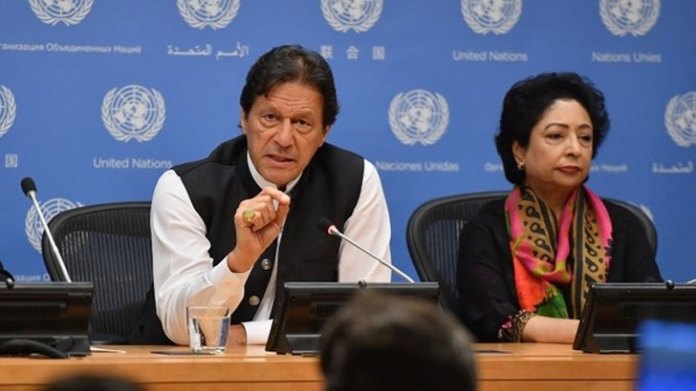
After the recent UN fiasco, Pakistan’s Prime Minister Imran Khan has removed Pakistan’s permanent representative to the United Nations, Maleeha Lodhi. The development came a day after Prime Minister Khan returned from New York, where he faced widespread criticism for his maiden address to the UN General Assembly last week. The Pakistan Foreign Office gave no reason for Lodhi’s removal in a statement on Monday.

Replacing Maleeha Lodhi, Munir Akram, known for his hard anti-India stand, has been appointed as Pakistan’s new permanent representative to the United Nations. “Ambassador Munir Akram has been appointed as the Permanent Representative of Pakistan to the United Nations in New York, in place of Dr. Maleeha Lodhi,” the Foreign Office said.

“It has been an honour to serve the country & am grateful for the opportunity to do so for over four years. Representing Pakistan at the world’s most important multilateral forum was a great privilege. I had planned to move on after UNGA following a successful visit by the PM,” Lodhi said in a tweet.

However, Munir Akram’s track record has been quite dubious. Known for his hard anti-India stand, Akram, 74, earlier served as the Permanent Representative of Pakistan to the UN from 2002 to 2008. He was dismissed by the then president Asif Ali Zardari over his disagreement in presenting the case of assassination of Benazir Bhutto to the United Nations. Bhutto, who was assassinated in 2007, was Zardari’s wife. Akram had also courted controversy after he was accused of domestic violence by his partner Marijana Mihic in December 2002 while serving as Pakistan’s ambassador to the UN. The case was reportedly settled out of the court and he was not charged with the crime due to his diplomatic immunity. The Foreign Office statement said Akram is likely to join soon and would be stationed at the UN’s New York headquarters.

Among other transfers approved by Imran Khan include appointment of Khalil Ahmad Hashmi, presently serving as Director General (UN) at Ministry of Foreign Affairs (MoFA), as Permanent Representative of Pakistan to the UN in Geneva.

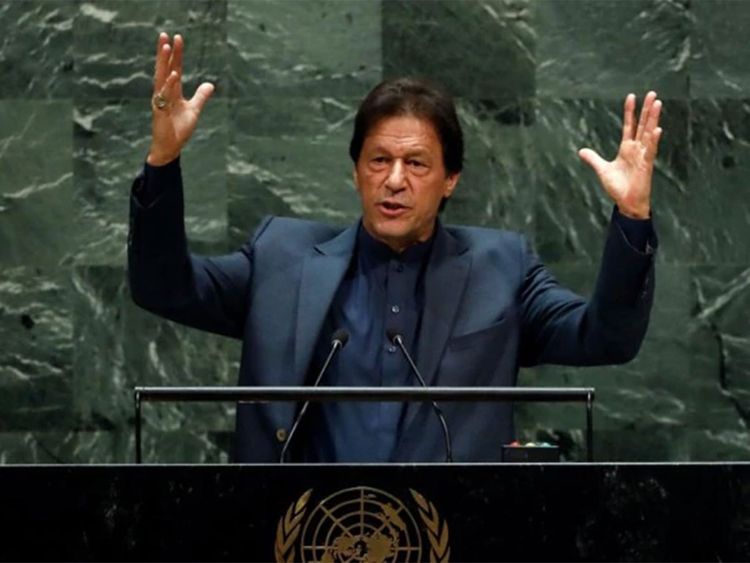
Earlier, Khan delivered his maiden speech at the 74th UN General Debate on Friday and in his almost 50-minute address, devoted half of his time to India and Kashmir, drumming up hysteria over nuclear war.

India exercised its right of reply to the statement made by Khan later on Friday and fend off the allegations made by the Pakistan PM.  Strongly hitting back at Pakistan Prime Minister Imran Khan’s rant at the UN General Assembly, India has said its citizens do not need anyone else to speak on their behalf and “least of all those who have built an industry of terrorism from the ideology of hate.”

“Every word spoken from the podium of this august Assembly, it is believed, carries the weight of history. Unfortunately, what we heard today from Prime Minister Imran Khan of Pakistan was a callous portrayal of the world in binary terms. Us vs Them; Rich vs Poor; North vs South; Developed Vs Developing; Muslims vs Others. A script that fosters divisiveness at the United Nations. Attempts to sharpen differences and stir up hatred, are simply put – ‘hate speech’,” First Secretary in India’s Permanent Mission to the UN Vidisha Maitra had said.

Indian Army signs MoU with Bank of Baroda for banking services

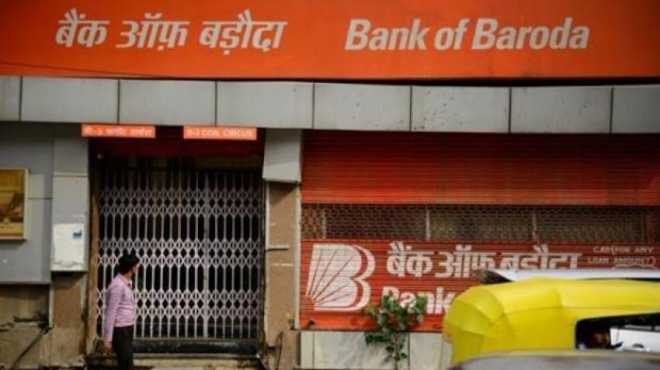
Indian Army and Bank of Baroda, the 2nd largest Public Sector bank, have entered in a Memorandum of Understanding (MoU).  This MoU lays down the basis on which banking services would be provided by Bank of Baroda to serving and retired personnel of the Indian Army.  The ceremony was chaired by Lieutenant General Ashwani Kumar, Adjutant General.  The MoU was signed by Lt Gen Harsha Gupta, Director General (Manpower and Personnel Services) and Shri VS Khichi, Executive Director, Bank of Baroda in presence of Shri PS Jayakumar, Managing Director, Bank of Baroda.

Some salient features of this MoU include Free Personal Accident Insurance (Death & Permanent Total Disability) cover of Rs 30 lakhs, Free Air Accident Insurance (AAI) cover of Rs 15 lakhs to Rs 50 lakhs and overdraft facility upto three times of monthly net salary.  The features are also applicable for pensioners of Indian army upto the age of 70 yrs.

Bank of Baroda has extensive national and international presence having 9500+ domestic branches and presence in 24 countries.  Through this MoU, bank has assured a new and customized banking experience for serving and retired personnel of Indian Army.

Imran Khan– Pak Army’s pawn or extremist politician?

The United Nations General Assembly (UNGA) week is over, and theatrics of the “selected Prime Minister of Pakistan” Mr Imran Khan can now be analysed. So much desperation, so much bluster and open nuclear threat in the speech from Imran Khan at the UN General Assembly is unprecedented and deserves condemnation from everyone.

What was Imran Khan’s real agenda and what was he trying to talk about? Who was he addressing in his rambling speech littered with so much abuse, so much rhetoric, and so much frustration and anger? Someone summarised that in Mr Khan’s speech he used Narendra Modi 12 times, Kashmir 25 times, Terrorism 28 times and Islam 71 times! Using terms like bloodbath is unacceptable.

Leaders of Pakistan and the Congress party have realised that when nothing works, blame the RSS. Raising the matter of RSS at United Nations was ridiculous since Mr Khan and his band of merry men have absolutely no understanding of the work being done by the RSS. They are simply parroting what they hear from the leaders of the Congress party in India.

Talking about Hitler and Mussolini and comparing them to the RSS and warning the international community from the most haloed podium of the United Nations General Assembly went down very poorly with most world leaders. Everyone was surprised to see the Prime Minister of a country raving and ranting well beyond his allotted time, trying to plead for help while threatening the world.

Khan has openly encouraged the terrorists being supported by his Army in Pakistan to indulge in Jihad and has therefore justified and given permission and encouragement to the terrorist organisations and the Pakistan Army to start sending terrorists into India. At the same time, he is also making an impartial appeal about how Islam is a religion of peace and how Pakistan has been the biggest sufferer of the war against terrorism.

When did Jihad, an Arabic word which literally means striving or struggling, especially with a praiseworthy aim become a term synonymous with terrorism, destruction, revenge and death?

What is interesting is the way Mr Khan tried to take the position of a leader of Islam in the world when he tried to explain, in a desperate tone, how people who follow Islam get offended when the world says anything against their religion. It is another thing that everyone who is not a believer is a kafir. Not once did he say that it is necessary for people who follow the religion to make any changes to themselves. He has conveniently put the entire blame of all the problems of 9/11 and thereafter on the rest of the world. He strongly condemned the use of the words radical Islamic terrorism but did not even once suggest that the responsibility for reining in the jihadists lies with leaders like himself.

His speech the previous day at the Asiatic Society was the same as the one he made in the General Assembly and to be fair to him, he did say that the Asiatic Society speech was a practice speech. He had nothing new to talk about except Kashmir, Islam and how the world needs to so much more for the religion.

Earlier, Imran Khan, sitting with his tasbih while talking to President Trump is a picture worth thinking about. His body language gave away his nervousness. He was appealing to the most powerful man in the world while praying to Almighty God hoping that there would be a miracle. He was desperate for a positive comment that he could take back home something like “winning the World Cup” after his first meeting with President Trump that was apparently set up at the request of the Crown Prince of Saudi Arabia.

Not once did he talk about the incredible poverty of Pakistan, the major shortage of power, water, fuel and food supplies. He chose not to speak about the illiteracy and the very poor health record of his country. He ignored the impassioned pleas of Balochistan and the other suppressed minorities in Pakistan. He did not speak about the bankruptcy his nation is facing because of corruption and mismanagement and conveniently laid the blame for Pakistan likely to be blacklisted by the Financial Action Task Force (FATF) on India.

Imran Khan has returned to Pakistan empty handed. His supporters and that large number of journalists were expecting a miracle from his trip to the US. He had assured them that nothing short of a revocation of Article 370 would be acceptable to him! Not only did he not get anything from the world leaders who did not believe a word that he spoke with but also his borrowed plane from Saudi Arabia refused to take him back owing to a technical error and he had to fly home on a commercial plane.

While lending a plane to Mr Khan, Saudi Arabia also assured India that they will ensure that India will not face a shortfall of a single drop of oil. To add insult to injury Saudi Arabia has just announced a US$100 billion investment package in India (Mr Khan would have happily sold the entire Pakistan for 25% of this amount to Saudi Arabia).

Imran Khan needs to stop terrorism once and for all, which will be tough, now that he has unleashed these forces. He needs a buy in from Pakistan Army which still seems to be motivated by Bhutto’s threat of hurting India with a “thousand cuts.” If the Pakistan Army is on his side, he needs to shut down his factories of terrorism. Not only will the world heave a sigh of relief but also his own people, who by his own admission have been the biggest sufferers.

If Imran Khan truly wants to attain the stature as a world Leader he must work for the people of Pakistan. He must focus on building his country and bring back the credibility his country used to enjoy in the world around three decades back. He must work towards normalising relations with India rather than keep competing with and threatening India. A supportive India can do a lot for his broken and impoverished country. Trade must be resumed, and people-to-people interaction must be improved. A safe Pakistan can open the doors to millions of tourists who would love to visit Pakistan. The economy of Pakistan must be revived.

And, only an economically self-reliant Pakistan can hope to find a respectable place amongst the comity of nations.

Is Imran Khan the “selected” Prime Minister being propped up by Pakistan Army? Or the leader of the Muslim world? Or the leader of the Radical Islamist movement? Or the playboy who won the Cricket World Cup and built a cancer hospital? Or the leader of Tehreek-e-Insaaf who Pakistan had thought would deliver them from all the challenges of the previous leaders? Or is he simply “Imm the Dim” as he is popularly called by some political commentators?

Will the real Imran Khan please stand up to be counted?

New Delhi must foil Pakistan’s plan to target Kashmiri youth

0

“When curfew is lifted there will be a blood bath,” said Pakistan’s Prime Minister Imran Khan, in the course of his address to the United Nations General Assembly (UNGA). He parroted this phrase and other hate-filled rhetoric with monotonous regularity all though his stay in the United States. It is quite apparent that these phrases had been embedded in his drug induced mind. What the prime minister conveniently ignored is that curfew has been lifted totally from more than 90% areas of Jammu and Kashmir for more than two weeks now. In the few remaining pockets restrictions have been eased to a great extent. So, he was telling half-truths at a forum as distinguished as the UNGA, which is quite a shame.

There remains not an iota of doubt that this rhetoric has been prepared by the Pakistan Army for him to blurt out everywhere and anywhere. It is quite apparent that the Pakistani Generals are looking towards their stooges in Kashmir to create violent disruption to further their evil game plan.


Earlier, such responsibility lay with the terrorists that the Pakistan Army was able to infiltrate into the Kashmir Valley. Ever since the Indian Army has stopped this flow by strengthening the Line of Control and with incisive counter-terrorist operations in the hinterland, the perpetrators of terror have been left with no other option but to indoctrinate the local youth to do this dirty work for them.

Money power and psychological pressure by invoking a false sense of religious responsibility has been used to push the youth of the Kashmir Valley towards the self-destructive path of stone pelting when they are in their early teens and then graduate to terrorism as they grow older.

For India, the situation brings forward an urgent need to engage with the youth and wean them away from their desire to pick up the gun for a non-existent, self destructive cause, at the behest of Pakistan. There is a need to look deeply into the reasons behind the frustration that leads the youth towards pursuing mindless violence, and then take all necessary steps to stop the same.

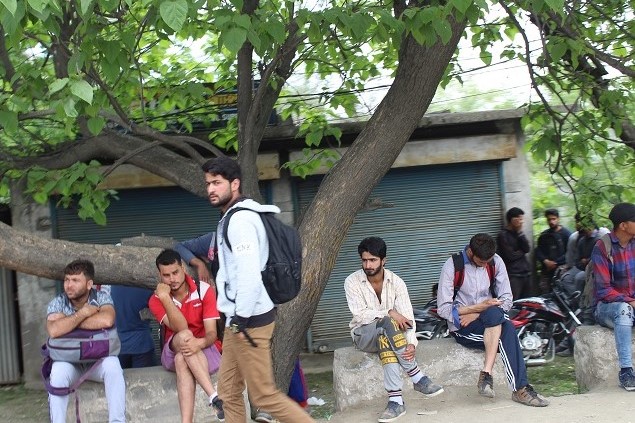
Lack of economic opportunity is a major reason behind youth following this debilitating path. In Kashmir 71% of the population is under the age of 35 of which almost half is currently unemployed, this is a major cause for a deep sense of uncertainty. Add to it the continuing environment of conflict and we have in hand a young and frustrated populace. The prevalent feeling of desperation, anger and helplessness can easily be exploited as is being done by Pakistan.

The political and social leadership of the country is well aware of the malevolent designs that Pakistan harbours for the youth of the Kashmir Valley and many positive steps have been initiated to control this malaise. Infrastructure in terms of schools, colleges, community development centres, ITIs etc. is being established to impart quality education and generate self-employment opportunities. To ensure quality education at the school level, the process of making 43,000 teachers permanent under Sarva Shiksha Abhiyan has begun and honorarium of Anganwadi workers has been increased from Rs 3,600 to Rs 4,100. Sports are an intrinsic part of child development, and as such, a good amount of stress has been laid in this arena, a fund of Rs 250 crore has been set aside for building sports infrastructure; each Panchayat will soon have a playground to encourage the young to channelise their energies in the right direction and also pick up sports as a career.

The government has launched a number of schemes to provide employment to youth in the state. 50,000 new jobs will be generated for the youth of J&K; focus will be on enhanced recruitment in central government jobs like paramilitary forces etc. Also, Juvenile Justice Board and Child Welfare Committee will be constituted in every district.

The recent reorganisation of the state into two Union Territories has given to business houses an incentive to set up business ventures in the region and many companies have already expressed interest. “As many as 31 companies from other parts of India, have submitted Expressions of Interest (EOIs) to the state government, to set up their units in the Valley,” says an author, Junaid Katju, in his article “Is Kashmir getting industrialised” carried by The Quint. “The interested companies have also demanded five to fifteen-year tax holidays. Sources said the state administration has almost finalised the proposal and was in the process of identifying land to set up the new companies,” he adds. The companies belong to diverse sectors like defence, skills and education, tourism, IT, technology, infrastructure, renewable energy, manufacturing and hospitality.

It cannot be denied that the way ahead is full of challenges. At every stage an attempt will be made to pull back the forward movement. Functioning at a highly industrialised and urbanised scale is something new for the people and they will take time to adapt. Politics of disruption and divisiveness being perpetrated on the strength of unlimited foreign funds is yet another area of criticality.

The government’s wish is to stay fully involved in the process of strengthening democracy and work towards economic recovery of the region and it is for this reason that it has converted the region into two Union Territories.

It is hoped that the youth of the region, especially those of the Kashmir Valley will correctly comprehend the changes that are in the pipeline and will come forward to fulfil all such aspirations that have remained dormant due to the long and debilitating shadow of the gun. It is time to shift primacy to the socio-economic dimension and relegate politics to a distant second or third position. A positive approach will definitely negate Pakistan’s plans to exploit the youth of the region to further its evil agenda.  

There’s an Agenda behind anti-ISRO Propaganda

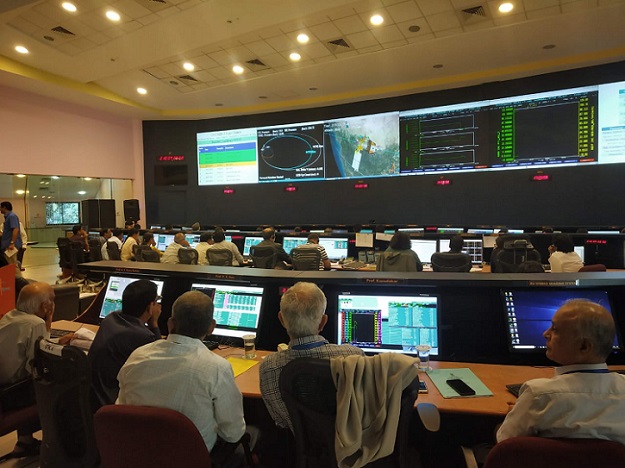
Is the Chandrayaan-2 mission really a failure? Well, no one in the world of space science other than a few in our own backyard have said so. A few days ago, one of the leading English newspaper of India, on its front page, gave space to a few voices who thought that Chandrayaan-2 was not a success. Let us delve a bit into the allegations levelled against the ISRO (Indian Space Research Organisation) scientists who had spearheaded Chandrayaan-2.  

Genuine Concern or Propaganda?

According to Tapan Mishra, adviser to the ISRO chairman, the cause for failure is leadership. He comes out on social media and shares his thoughts on leadership and rocket science. Another “senior scientist” explains, “moon landing was the stated high point of the Chandrayaan-2 mission” and so according to him as the project did not succeed in moon landing and the success of Chandrayaan-2 is a laughable matter.

Another scientist, who has not been named in this mischievous news report, claims he has experience on moon missions and alleges that the “failure” of Chandrayaan-2 is because of a technical mistake. Now after all that has happened, he advises that ISRO should have used single thrust engine rather than five. All these responses came after ISRO chairman Dr. K. Sivan said Chandrayaan-2 was 98% successful.

Look at the pattern of statements coming from a bunch of scientists and the priority with which such comments are given space by a few media establishments. It seems as though their sole intention is to denigrate and undermine the name and fame of ISRO. They emerge as fringe voices who do not have the best interests of the advancement of science and technology in the country. It is evident that for them, their publicity is more important than a nation’s mission. Giving space to such voices on the front page of a national newspaper confirms that there is indeed a nexus to undermine ISRO. Why? Because ISRO has won accolades from the scientific fraternity from the world over. National and international experts have come out in support of ISRO and the efficacy of the mission. This ‘front page’ agenda to defame ISRO’s efforts and mission surely indicate attempts at nefarious propaganda against an institution that is India’s pride.

All those who measure the success of Chandrayaan-2 only on the basis of Vikram Lander’s soft landing on moon’s surface, need to answer a simple question: Which country in the world succeeded in its first attempt to land on the moon?

Chandrayaan-2 — The Success Spectrum

Success doesn’t come without learning and learning is a by-product of failure. JK Rowling, the famous British author in her Stanford speech had said, “If you have not failed in your life then by default you are a failure.”

Today we have enough details to look into the journey of Chandrayaan-2 and study the mission from various aspects. If one looks at the graph of moon Lander’s descent, it is almost perfect as per the calculations by ISRO scientists. Moreover, the scientific journey of Chandrayaan-2 is not merely about the final 300 meters, rather about the findings and learning from the journey of the mission. It is about all those 3,84,000 km —the distance of moon from earth.

Let us look into the history of moon missions. Till date, only three countries on this planet have been able to perform a soft landing on the moon’s surface — USA, Russia (erstwhile USSR) and China. And, till date, no country in the world has ever landed on the southern pole of the lunar surface.

The southern pole of the lunar surface is of special interest to the scientific community due to indications about the possible presence of water and ice in that region. ISRO dared to do it in it’s very first ever attempt and we must be proud of it. It is timely to recall that NASA (National Aeronautics and Space Administration) had to endure eight unsuccessful attempts and two partially successful missions before it could successfully land of moon’s surface. On record, it says that there were 17 unsuccessful attempts by NASA before it was able to successfully land on the moon’s surface and take first images of the moon.

Similarly Russia (erstwhile USSR) landed on the surface of moon only after six unsuccessful attempts. In the history of lunar missions, only about 50% of the missions have been successful. With such data at our disposal, how can one say that Chandrayaan-2 mission was a failure?

Let us also look at the aspect of the cost of the mission. USA spent $288 billion (considering inflation) on Apollo-11 mission which aimed to send humans on the moon. Whereas Chandrayaan-2 cost us merely $147 million! All other countries who have attempted to reach the moon have spent exponentially more than what ISRO and India have spent on the Chandrayaan missions.

Moon landing is a different ball game

Moon landing is not easy. Israel tried and failed. Japan pushed forward and paused. Even the European Union explored it and exited. But no one has been as accurate as ISRO in the mission parameters.

In the case of a software or a hardware there is an ecosystem for one to test, validate and redesign a system. Space missions aren’t like this and there are no ready-made testing or staging environments. It is all about predictions of an unknown territory and unknown environmental conditions. The real test happens in the space itself.

When an object is in space, humans cannot control its behaviour and it has to deal with its own algorithms. When somebody who claims to be a scientist and terms Chandrayaan-2 a failure, then they must remember a simple point: In science there are no failures but there is always a learning. Learning from each mission adds not only to better equip future missions but also adds to the country’s technological repertoire.

Saudi Arabia to invest USD 100 billion in India

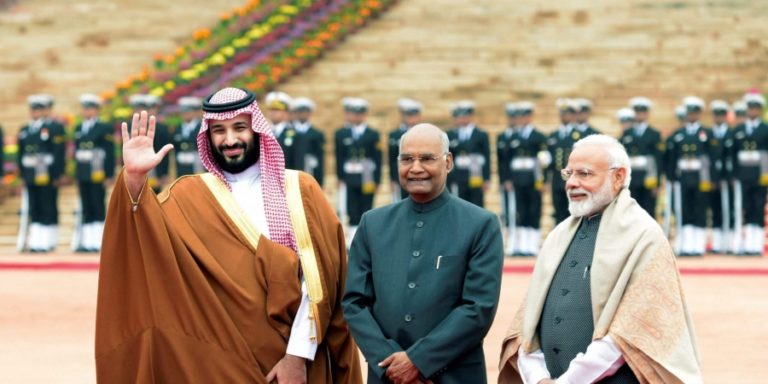
Saudi Arabia, the world’s biggest oil exporter, is looking at investing USD 100 billion in India in areas of petrochemicals, infrastructure and mining among others, considering the country’s growth potential. Saudi Arabia is a key pillar of India’s energy security, being a source of 17 per cent or more of crude oil and 32 per cent of LPG requirements of India.

Saudi Ambassador Dr. Saud bin Mohammed Al Sati has said India is an an attractive investment destination for Saudi Arabia and it is eyeing long-term partnerships with New Delhi in key sectors such as oil, gas and mining.

“Saudi Arabia is looking at making investments in India potentially worth USD 100 billion in the areas of energy, refining, petrochemicals, infrastructure, agriculture, minerals and mining,” Al Sati said in an interview.

The envoy said more than 40 opportunities for joint collaboration and investments across various sectors have been identified between India and Saudi Arabia in 2019, adding the current bilateral trade of USD 34 billion will undoubtedly continue to increase.

“There is huge untapped potential available in merchandise trade, particularly in non-oil trade and we are enhancing cooperation in economic, commercial, investment, cultural and technological fields,” the envoy said.

He said Saudi Arabia’s biggest oil giant Aramco’s proposed partnership with Reliance Industries Ltd reflected the strategic nature of the growing energy ties between the two countries.

The envoy said investing in India’s value chain from oil supply, marketing, refining to petrochemicals and lubricants is a key part of Aramco’s global downstream strategy.

“In this backdrop, Saudi Aramco’s proposed investments in India’s energy sector such as the USD 44 billion West Coast refinery and petrochemical project in Maharashtra and long term partnership with Reliance represent strategic milestones in our bilateral relationship,” he said.

The envoy said the vision 2030 of Crown Prince Mohammed bin Salman will also result in significant expansion of trade and business between India and Saudi Arabia in diverse sectors.

Exhibition on Mahatma Gandhi and Leo Tolstoy inaugurated in Russia

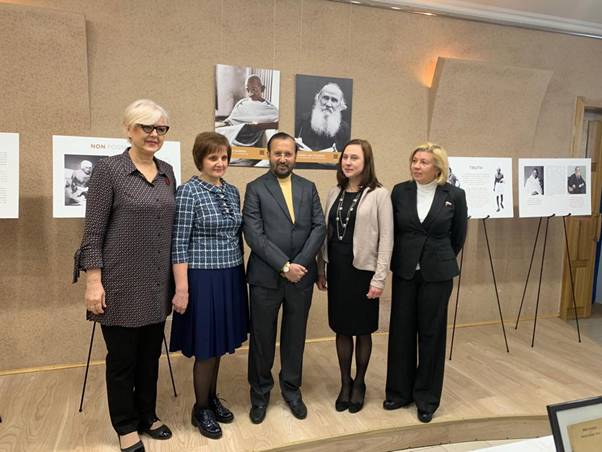
Union Minister for Environment, Forest and Climate Change (MoEF&CC), Prakash Javadekar inaugurated a unique exhibition on Mahatma Gandhi and Leo Tolstoy at Yasnaya Polyana, the birth place of Tolstoy in Russia. The exhibition presented and highlighted their correspondence and their thought process in a very artistic manner.

Local Duma member, Natalia Pilyus, Director of Tolstoy Cultural Centre and over 100 academicians were present on this special occasion.

The Minister, who is on a visit to Russia to attend the Shanghai Cooperation Organization meeting also, inaugurated a special day-long seminar organised to pay tribute to Mahatma Gandhi as part of 150 years of celebrating the Mahatma.

Addressing the gathering, Javadekar said Leo Tolstoy had a great influence on Mahatma Gandhi. “Leo Tolstoy’s message of love, no greed and truth found resonance in Gandhi Ji’s thought process,” the Minister said, adding “Gandhi ji wrote five letters to Tolstoy and sought his guidance. Gandhi Ji was then in his 40s and was working as a Lawyer and activist in South Africa then and Tolstoy was in his 80s.”

Recalling upon the deep rooted bond that was shared betweenboth GandhiJi and Tolstoy, the Minister said,”There was love and affection between Gandhi and Tolstoy and it is visible in their correspondence as well as their exchange of books”.