Home Blog Page 414

India need not fall prey to Pakistan’s psychological warfare in Kashmir

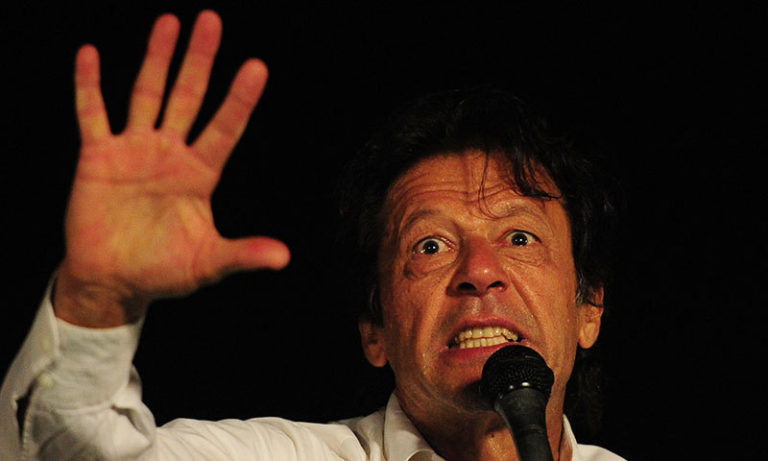
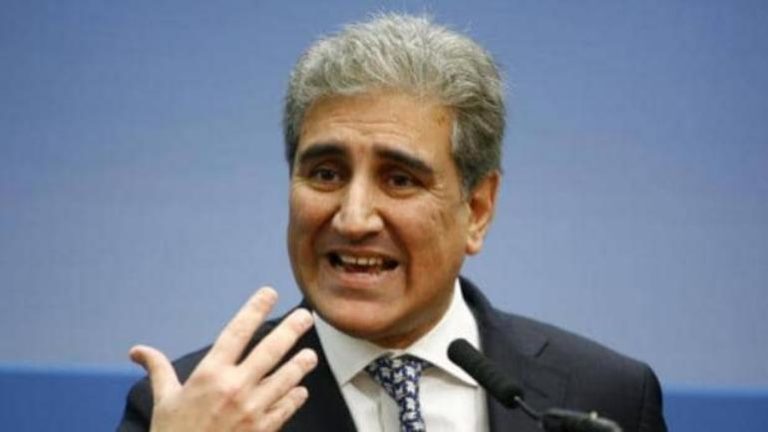
“We see threat of humanitarian crisis and threat of conflict and the UN should play role to protect people of Kashmir. I demand that UN should expedite efforts for lifting of curfew,” said Pakistan’s Foreign Minister Shah Mohammad Qureshi after his alleged telephonic conversation with UN Secretary-General Antonio Guterres. “India ignored several Security Council resolutions on Kashmir and refuses to negotiate with Pakistan to settle the dispute,” said Arif Alvi, President of Pakistan. “India, in fact, encouraged terrorism through the Constitutional changes for which Pakistan is not responsible. Indian government is living in a “fool’s paradise” if it thinks that it can improve the situation in Kashmir by revoking Article 370,” he added.

The aforementioned statements from the topmost echelons of the government of Pakistan clearly indicate that Pakistan has got over its initial shock and is now putting a comprehensive strategy in place to counter the reorganisation of the state of Jammu and Kashmir carried out by India. The main element of the strategy is, quite obviously, creation of international pressure by showing the Indian government as an aggressor in Kashmir, using undue force to subdue the people there.

Pakistan is building a sophisticated psychological narrative to this end with full support of its media. “It is equally true that there is no room for ‘appeasing’ India, and Pakistan’s battle must follow a clear diplomatic route at world forums, where India’s hubris and atrocities in IHK (Indian Held Kashmir) must be highlighted,” says Dawn a well known Pakistani English newspaper in its editorial. In the same editorial the newspaper also extols the Pakistani prime minister to keep open the window for dialogue but with the aforementioned statement it has highlighted its actual thought process. 

Moneeb Ahmed Barlas, a Pakistani columnist who identifies himself as an independent researcher in public policy and international relations has recently written an article “Half widows of Kashmir” which has been carried by the Pakistan-based English daily Express Tribune on August, 25, 2019. “Above all, the plight of these women shows how conflicts can tear apart families and scar memories forever. It is an indignity that should prick everyone’s conscience and should compel them to protest against the tyranny of Indian forces in the Kashmir Valley,” says Moneeb in his article.

There is nothing new in the article since the subject has been covered extensively by others before him over many years. What is of significance is the consistent focus on “prick everyone’s conscience and should compel them to protest against the tyranny of Indian forces in the Kashmir Valley.” It indicates that the piece is part of the larger psychological game plan. It gains significance as a psychological warfare tool in the hands of Pakistan to focus international attention to what is being projected as the “eternal suffering of the women of Kashmir.”

The narrative will start from the concept of half widows and then be built up to the current situation where allegations of “atrocities” on women and children will be stage managed. The perception will be given a big boost by organising all women agitations in certain places. In other words, Pakistan will attempt to associate Kashmir with Palestine and accuse the world of insensitivity to the plight of the “freedom loving people.”

Interestingly, his article, like others by Pakistani writers on the subject, does not even refer to the fact that a major portion of these so-called half widows in Kashmir are those whom Jihadi terrorists who infiltrated from Pakistan forcibly married and then abandoned.

Yet another psychological warfare narrative that Pakistan is playing out is creation of a perception of India is going in for what it terms as a “false flag military operation.” According to Pakistani “experts” this would entail India putting the blame for violence in Kashmir on Pakistani infiltrators and then carrying out limited military operations in Pakistani territory. Pakistan is attempting to create a scare about the region coming under threat of a nuclear flashpoint. An expert in the art of lobbying in the United States, where such activity is recognised as a bona fide political process, Pakistan is getting papers written on the subject by various think tanks. The next step will be issuing of a statement by some US Congressman.

It is quite clear that Pakistan is now creating diabolic psychological narratives to weaken Indian resolve to give to the people of Jammu and Kashmir such political and democratic rights and freedom that have been denied to them since independence of the country.

In consideration of the aggressive narrative being prepared by Pakistan to pressurise India, the decision to impose certain restrictions in the state, especially on the use of the internet and smartphones for social media, bears strong merit.

It is very sad that the opposition in the country, especially the Congress that has for long remained in agreement for abrogation of Article 370 is now assisting Pakistan by creating hurdles in the process to negate its evil intentions. The recent drama enacted by Rahul Gandhi of going to Srinagar airport and then flying back on not being permitted to get in is nothing more than a photo opportunity and political brinkmanship.

It seems as if the opposition parties are wishing that the reaction within the state is one of violence so that they can revel in the discomfiture of the government simply to earn a few brownie points. This cannot be deemed to be a nationalist view.

It would be so much better if the opposition gives to the government the confidence that it will ensure the complete absence of violence as a reaction to the decision taken through the democratic process. Politics can resume in a peaceful manner the moment a suitable environment for the same is in place. If the opposition within the country would stand steadfast with the government then the psychological narratives being prepared by Pakistan would not be able to take off at all.
Economic crisis calls for careful diagnosis and immediate treatment

There is a quandary. There is policy uncertainty. Is the economy growing, in a thaw or on a downslide? Does it need revival or should it be on a sprint? Is it spirited or dispirited? There are questions galore and the answers could be as varied as the questions. It is also alleged that the economists are also divided – pro-government, anti-government, Marxists, non-Marxists, pessimists, optimists and so forth.

Does it mean that there is no problem with the economy? Does it mean that all discussions are mere bunkum? Or is it a way to keep the reality in shroud or avoid discussion? India needs an answer and it is eluding. It may be a transition that all are unable to judge. There are definitely issues. Many sectors are thawing. The reason is difficult to understand.

The latest to thaw is the popular biscuit industry. One of the largest biscuit-makers is mulling laying off 8000-10,000 workers. It can be due to intense competition with many new entrants or it may be because the company has not come out with new products which are in demand in the market. While the company’s crisis may be affecting over 50,000 people, it need not necessarily be a national crisis. Identifying a snack with national crisis like fall in purchasing power is dodging the question of full meal.

As per Amit Basole and Deepankar Basu, researchers from University of Massachusetts, US, this is to be compared with the overall rural household-level data from four Consumer-Expenditure Surveys of National Sample Survey – 1987-88, 1993-94, 2004-05 and 2009-10. They say that rising expenditure, like on cooking fuel caused a decline in calorie intake. The study reflects today’s reality as well. They state that the relative price changes, occupation pattern alteration and a 10 percent increase on fuel between 1987-88 and 2009-10 caused 0.7 percent and 10 percent decline in calorie intake. The fuel price has increased over 13 to 15 percent during the past about six years. It has hit calorie intake further. While rupee is hitting eight-month low of Rs 71.80 and petrol prices are skyrocketing, it hits consumption at every level, food included.

While the officials blame it on external factors like Donald Trump engineered trade war, economists blame flip-flop policies of jacking up costs or prices of government managed items and services – fuel or railways or highway tolls or CBSE schools and higher education fees – each of it affects food consumption or calorie intake.

Continuous inflationary situation, which the price index may not be mirroring, limits consumption, expenditure pattern, consequently production and growth parameters. It hits official revenue collection and government expenditure pattern that provide the only stimulus amid a host of uncertainties in perspective planning of industries, managing falling sales and job cuts.

Every day the figures are becoming too stark. Direct tax collection has slowed to 4.7 percent between April 1 and August 15 as against a required rate of 17.3 percent. This shows the fallacy of projections in inflation-hit economy or is it failure power of the reasoning.

India needs to have dialogue on the tax system. It needs to have a will to lower the tax rates to boost purchases, production, growth and higher revenue realisation. A bureaucratic budget is smothering all that. Not only direct and indirect taxes even penalties like on car speeding are aimed not at spurring growth but revenue realization. Empowering the constabulary to raise revenue historically has been disastrous. The government has to junk Manmohanomics and ensure free flowing economy.

Government should be efficient manager, be impartial, allow freedom of business and leave decision of how much tax to pay to the people. Coercion and dispossessing people of their earnings and wealth does not ensure that needed freedom. The government’s own arm Reserve Bank in its monetary policy review on August 7 has eloquently said, “Overall there is evidence of domestic demand slowing down further. Investment activity has been losing traction”.

Unfortunately, its suggestions are away from reality and contrary to the inflationary situation. It has flawed prescription of reducing interest rates (for increasing credit) while it should be increased to check inflation and boost savings. The UPA government did the same mistake in the wake of 2008, global sub-prime meltdown. It led to a situation of officially looting the banks by large corporate, now called NPA crisis. The RBI is repeating the 11-year-old mistake of the then finance minister P Chidambaram. Lowering interest rates even then did not raise the domestic consumption. The RBI in its policy review accepts deceleration of private consumption, considered mainstay of growth. It even connects fall in consumer price index (CPI) to absence of demand that boost sales and industrial activity. It finds slump in rural and urban demand.

RBI’s other observations are eye-openers. Total kharif area sowing is 6.6 percent less than a year ago. It means an impending farm crisis and further food price rise. The industrial activity, RBI says, continues to be weak in May 2019, impacted mainly by manufacturing and mining. It translates into what rightist and leftist economists sum up as job losses. The slowing down of capital goods import to 5.8 percent is summarized as key indicator of investment activity contraction in June.

It has faltered once again on protecting savings or boosting it. A nation that has grown on the traditional wisdom of growing on savings unfortunately is devastated through imposition of taxes on interest accrual – hedging against inflation. It is not income.

Repeated goof ups across regimes are surprising. The economy, let the nation accept, is on a downslide and needs revival. It is looking for a professionally efficient doctor.

Chidambaram was rough to journalists who were critical of his working as Finance Minister

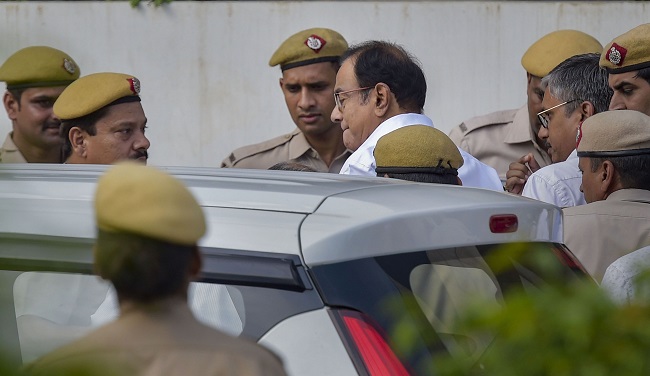
P Chidambaram, Congress leader and India’s former Finance Minister, faces the toughest challenge of his life today. A journalist who has covered finance ministry during Chidambaram’s tenure reminisces about the past. 

It appears there will be no immediate respite for Congress leader and former Finance Minister P Chidambaram, who is currently in the Central Bureau of Investigation’s (CBI) custody. His petition for bail in the money laundering and corruption case related to INX Media was dismissed by Supreme Court on Monday. The lawyer-turned-politician who has always portrayed supreme self-confidence often bordering around arrogance perhaps never imagined life could take such a sharp turn for him. As a friend of mine casually said that Chidambaram had typically worn confidence or perhaps over confidence, but insiders said he appeared a tad shaky after his bail was rejected by the apex court.

I first met him in 2004 sometime in July, after he presented the Union Budget. It was a customary post budget interview, which I had to do along with my editors. Chidambaram had just been given charge of the finance ministry by the then Prime Minister Manmohan Singh. However, before I could ask him the questions, I almost had to go through a short interview myself in which I had to answer a couple of questions on finance. Later a senior official of his team told me that that was a routine drill. “He would check how much you know and then proceed,” he had said. In fact, Chidambaram often displayed arrogance.

On another occasion, he had suddenly decided to hold a press conference. Naturally, those covering the finance ministry had to rush to North Block at a short notice. The presser started much later than the scheduled time. What irked media persons was Chidambaram’s rude announcement that he would not take any questions. He read out what was written as a press statement and that was distributed to the journalists. A few journalists threatened a walkout. An unsettled Chidambaram said people who did not wish to be part of the proceedings were free to leave. There were rumblings but no one dared to boycott the presser.

These were not isolated incidents. 

During UPA-II era, the Indian economy and particularly the health of Indian public sector banks was on a decline. After Chidambaram returned to North Block as finance minister — he also served as India’s home minister for over three years— he had the daunting task of putting things in some order. The non-performing assets (NPAs)–- loans that do not fetch returns— at public sector banks were rising at an alarming level. I was with Hindustan Times at that time and had done a news report indicating the crisis like situation in the state-owned banks. There was no problem with the data that was given in the story. The problem was a picture that we had carried. It was a picture of a smiling Chidambaram. I was promptly called to the finance ministry and handed over a long corrigendum, in which Chidambaram, the finance minister, complained how the story and the picture had no correlation and it was grossly misleading for the readers. 

Many other journalists who covered finance ministry during his tenure complained about his strong likes and dislikes. While he hosted warm and lavish gatherings for journalists covering his ministries, he would also take note of those invited. Many names would get struck off at the whims while others had to go through the humiliation to show their press cards at the entry and the name would then be matched with the list given at the gate. So much for the warm invite!

Cut to the present.

Let me begin with a disclaimer. I am no BJP fan. But at a time, when the pitch is getting sharper for press freedom and many have registered their protest against current finance minister Nirmala Sitharaman for barring journalists to enter the North Block without prior appointments with officials, a few who have covered the ministry during the UPA-I era would recall that things were not very different then too. Of course, PIB (Press Information Bureau) accredited journalists never needed prior appointments to enter the North Block but negative coverage of the ministry or the minister when Chidambaram was in the driving seat were taken up “internally” often the journalists were “marked”. Chidambaram would even decline to talk to those who wrote stories which “did not go down well”.

“People were scared of him, journalists were scared too…and if you wrote things that put the finance ministry in a not-so-good-light, Chidambaram often would take drastic steps to ensure that you had a rough time,” recalls a journalist friend, who has also been covering the ministry for over two decades.

Yes, Chidambaram loved the media. He loved being in the news but he had his strong biases. He was never kind to journalists who were not his “friends” and one had to be very careful while covering the ministry with him as the minister.

Dharmendra Pradhan: India to become top energy consumer in 10-years

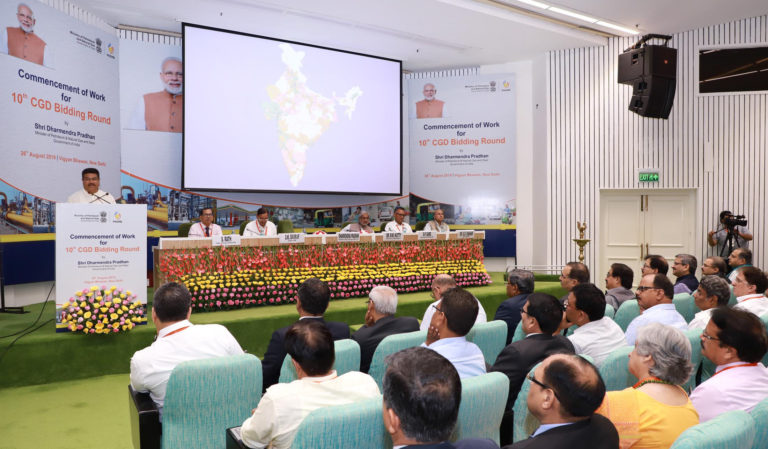
Minister of Petroleum and Natural Gas & Steel Dharmendra Pradhan has launched the commencement of work for 10th City Gas Distribution (CGD) bidding round which will cover 50 Geographical Areas (GAs) in 124 districts. Prime Minister Narendra Modi had launched the 10th CGD bidding Round on 22nd November, 2018.  Pradhan had distributed Letters of Intent to 12 successful bidders of the round on 1st March, 2019.  After the completion of the 10th round, over 70% of the country’s population and 52.73% of the area will be covered under the CGD. As per the minimum work program approved by the PNGRB for the 10th round, 2.02 crore PNG domestic connections will be provided, 3578 CNG stations will open, and 0.58 lakh Inch-km steel pipeline will be laid.

Speaking on the occasion, Pradhan said that with the 9th and 10th rounds, the country is making a giant leap in the CGD. He said that in last 5 years, the number of domestic PNG connections, CNG vehicles and CNG stations have more than doubled. He said that India is the 3rd largest energy consumer of the world, and will become top consumer in a decade. The government aims to provide reliable, affordable, sustainable and universal access to clean fuel to all. The present share of gas in the energy mix in the country is 6.2% compared to 24% globally, and the aim is to increase share of natural gas to 15% by 2030. The Minister said that with rising consumption of energy in the country, the share of CNG will increase the most. He said that the country will continue to harness multiple sources of energy, including fossil fuels, renewables, EVs and gas. The hydrogen fuel driven vehicles have already been introduced in the national capital and several auto manufacturers have introduced new CNG models, the minister added. Even the coal will continue to have relevance, as Coal gasification plants are being set up. On the policy enablers to promote gas usage in India, he said that CGD has been granted ‘public Utility’ status.

The minister said that over 5 lakh crore rupees are being invested in gas infrastructure, which includes exploration, distribution, marketing, regasification, pipeline network laying, etc.  Domestic gas production was 32.87 billion cubic metre in 2018-19, and is likely to go up to 39.3 billion cubic metre in 2020-21. Present LNG terminal capacity of 38.8 MMTPA will be augmented to 52.5 MMTPA in next 3-4 years. Long term contracts have been signed for importing LNG, and its sources are being diversified. The gas grid presently is 16,788 km, and work is in progress for additional 14,788 km.

He said that suitable ambience is being created and bold policy decisions are being taken to ensure that country moves on the path of progress, import dependency comes down, and our farmers(Annadatta) become Urjadatta. On the issue of waste to energy, Pradhan said that ethanol blending in petrol has gone upto 6% from 1%, and we have to take it to 20%. Bio-diesel is being promoted so as Recycle Used Cooking Oil (RUCO). 2G ethanol plants are being set up to convert surplus foodgrains into fuel. Compressed Bio-gas is another field of development. Reiterating the Government’s commitment to meet the COP-21 targets, the Minister said that the country will leapfrog next year from BS-IV to BS-VI. He said that the issues concerning the setting up of Gas infrastructure are being sorted out in consultation with the state governments.  The Minister also stressed on conservation and efficiency aspects, saying that new PNG burners can save upto 40%, compared to retrofitted burners.

Arun Jaitley passes away at 66

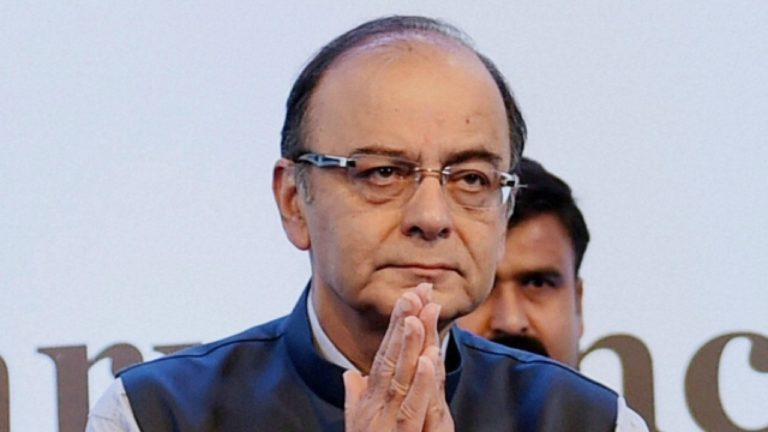
Senior BJP leader and former finance minister Arun Jaitley passed away at the age of 66 on Saturday. A lawyer by profession, Arun Jaitley had been an important part of Narendra Modi’s cabinet during his first tenure as prime minister. He held the Finance and Defence portfolios, and often acted as the chief troubleshooter of the government. He did not contest the 2019 Lok Sabha elections because of his ill-health.

AIIMS issued a statement on Arun Jaitley’s death. As per the statement, “It is with profound grief that we inform about the sad demise of Shri Arun Jaitley, Hon’ble Member of Parliament and former Finance Minister Government of India at 12:07 pm on August 24, 2019. Arun Jaitley was admitted in AIIMS, New Delhi on 09/08/2019 and was treated by a multidisciplinary team of senior Doctors.”

Jaitely was admitted to AIIMS following complaints of breathlessness and restlessness. He was shifted to the Intensive Care Unit at the All India Institute of Medical Science on August 9 and had been declared haemodynamically stable. A hemodynamically stable patient has a stable heart pump and good blood circulation. The authorities at AIIMS did not issue any bulletin on Jaitley’s health condition since August 9.

Jaitely was not keeping well for quite some time. He had undergone renal transplant on May 14 last year with Piyush Goyal filling in for him in the finance ministry at the time. Jaitley, who had stopped attending office since early April 2018, was back in the finance ministry on August 23, 2018. Earliers, in September 2014, he underwent bariatric surgery to correct the weight he had gained because of a long-standing diabetic condition.

Jaitley’s demise, after the death of ex-foreign minister Sushma Swaraj, has sent a shock wave in BJP.

Amir Khan’s daughter Ira to direct a theater production

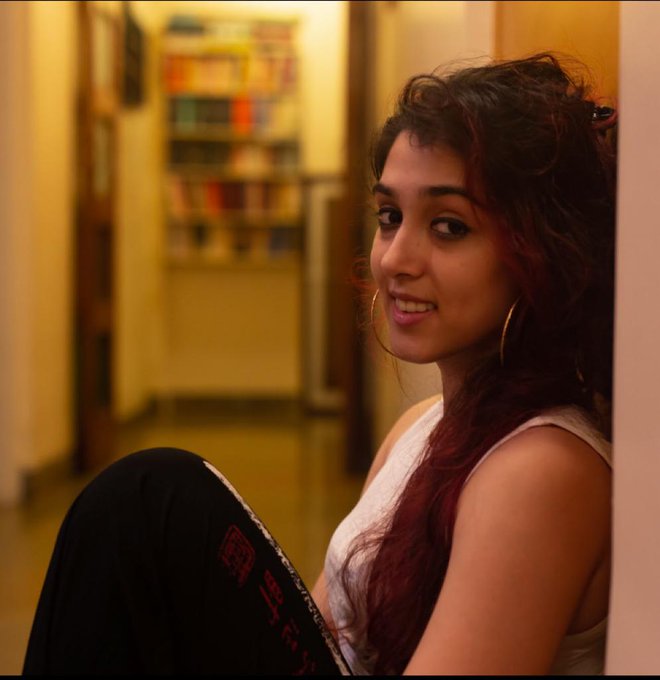
Ira Khan, Aamir Khan’s daughter from his first wife Reena Dutta, is all set to take a big step in the entertainment industry. However, unlike her superstar father, Ira will not pursue acting, she will, in fact make her debut as a director of a theater production that is titled ‘Euripides Medea.’ T The showcase will premiere in December this year and will also be showcased across several cities pan India.

Though Ira hasn’t announced her association with the project formally. However, Bollywood trade analyst Taran Adarsh shared the news on social media and he wrote: “Ira Khan – daughter of Aamir Khan, to make her directorial debut with a theatre production titled Euripides Medea. Will be showcased in select Indian cities… Rehearsals for the play will start soon. Premieres December 2019.”

Ira Khan, for quite some time, kept a safe distance from showbiz. However, recently, she has been grabing headlines, be it for her bold photoshoots or her cosy picture with boyfriend Mishaal Kirpalani. It was only a few months ago in June this year when Ira confirmed her relationship with Mishaal and it became the talk of the town. Reportedly, Mishaal is a music composer and the two have been dating for quite some time now.

First World Youth Conference on Kindness held in New Delhi

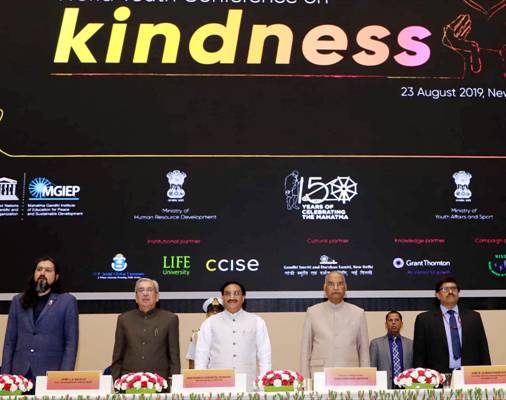
The first World Youth Conference on Kindness was recently organised by the UNESCO Mahatma Gandhi Institute of Education for Peace and Sustainable Development and Ministry of Human Resource Development on the theme ‘Vasudhaiva Kutumbakam: Gandhi for the Contemporary World: Celebrating the 150th birth anniversary of Mahatma Gandhi’ and was held at the Vigyan Bhavan in New Delhi. The conference saw participation from approximately 1,000 youth representing over 27 countries such as Asia, Africa, Latin America, and Europe.

The President of the Republic of India, Ram Nath Kovind inaugurated the Conference. Union Human Resource Development Minister Ramesh Pokhriyal ‘Nishank’ also graced the occasion.

This conference was organised with the aim to impart critical competencies (i.e. empathy, compassion, mindfulness and critical inquiry) in global youth to inspire, empower and enable them to transform themselves and build long-lasting peace in their communities. Inspired by Mahatma Gandhi, the conference aimed to provide global youth and policymakers an innovative, engaging and inspiring platform to come together and strive to discover ground-breaking pathways to achieve the United Nations’ Sustainable Development Goals (SDGs).

Addressing the gathering, the President said that Mahatma Gandhi was not just a great leader and visionary, he was one who personified certain timeless ideals and values. We could place Gandhiji in a time machine and transport him to any period of human existence and we would find him to be relevant. This is also true of the times we live in. Gandhiji remains extremely relevant to our present day concerns such as need for peace and tolerance, terrorism and climate change.

The President said that the strife and violence that we see in the world today is often based in deep-rooted prejudices. These make us see the world through the binary of “us versus them”. Following Gandhiji’s footsteps, we must let ourselves and our children interact and engage with those whom we tend to define as ‘them’. Greater interaction is the best way to develop a sensitive understanding, which can help us overcome our prejudices.

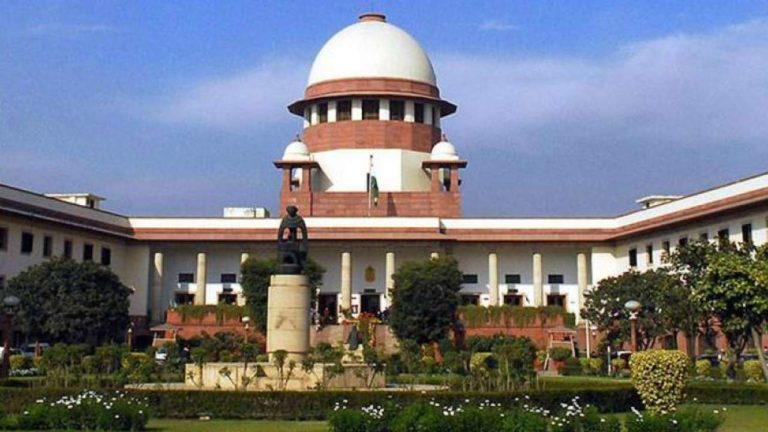
Triple Talaq: SC issues notice to Centre on plea against new law by Salman Khurshid

The Supreme Court has agreed to examine the validity of a newly enacted law which makes the practice of instant divorce through triple talaq among Muslims a punishable offence entailing imprisonment of up to three years.

A bench of justices N V Ramana and Ajay Rastogi issued notice the Centre on a batch of petitions which has sought to declare The Muslim Women (Protection of Rights on Marriage) Act 2019 as “unconstitutional” on grounds that it allegedly violates the provisions of the Constitution.

“We will examine this,” the bench told senior advocate Salman Khurshid, who was appearing for one of the petitioners.

Khurshid told the bench that there were many dimensions, including making the practice a punishable offence and jail term of up to three years, which was required to be examined by the top court.

Terror watchdog FATF puts Pakistan on ‘enhanced blacklist’

The Asia Pacific arm of FATF (Financial Action Task Force) – global watchdog for terror financing and money laundering, has put Pakistan in the “Enhanced Expedited Follow Up List” for the country’s failure to meet its prescribed norms. This is just one step short of Islamabad being put on the Black List by FATF. This step is a big blow to Prime Minister Imran Khan and Pakistan Army brass who have been intensely lobbying in international diplomatic circles to convince that the nation has taken steps to curb Islamic terrorism flourishing in its soil.

The FATF’s Asia Pacific Group was not convinced by Islamabad’s efforts and found that Pakistan was non-compliant on 32 of the 40 compliance parameters of terror financing and money laundering. The FATF APG meeting was held in Canberra, Australia and the discussions lasted over seven hours over two days.

“Asia Pacific Group of the FATF has placed Pakistan in the Enhanced Expedited Follow Up List (Black List) for their failure to meet the required norms,” said an Indian official who is privy to the developments.

On 11 effectiveness parameters of terror financing and money laundering, Pakistan was adjudged as low on 10. The official said despite its efforts, Pakistan could not convince the 41-member plenary to upgrade it on any parameter.

Pakistan will now have to take credible steps against Islamic terror groups operating from its soil to avoid being put on the FATF Black List in October, when the 15-month timeline ends on the FATF’s 27-point action plan. FATF’s black list would make it almost impossible for Pakistan to get monetary aid or funds from foreign donors. The country’s already devastated economy is expected to go into a tailspin of collapse if this happens.

Marriage has irretrievably broken down: Zambian govt. toughens stand on Vedanta KCM issue

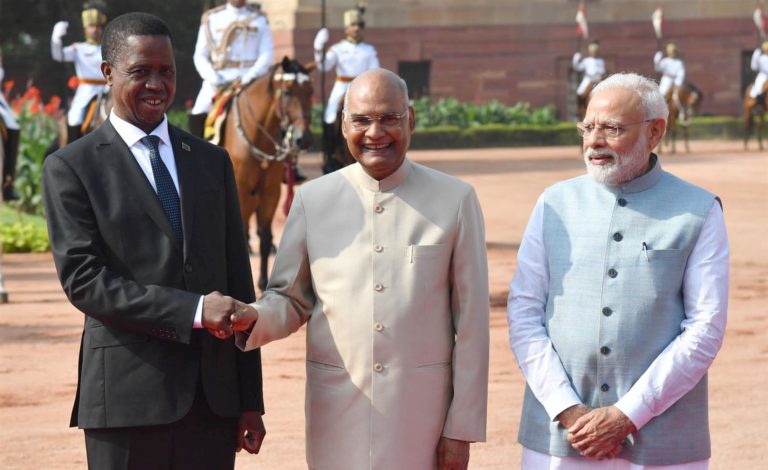
Despite taking up the matter at the highest levels, during the recent visit of Zambian President Edgar Lungu’s visit, and even India backing Vedanta group, it seems the issue of KCM between Zambian government and Anil Agarwal’s Vedanta group has not find a way out.

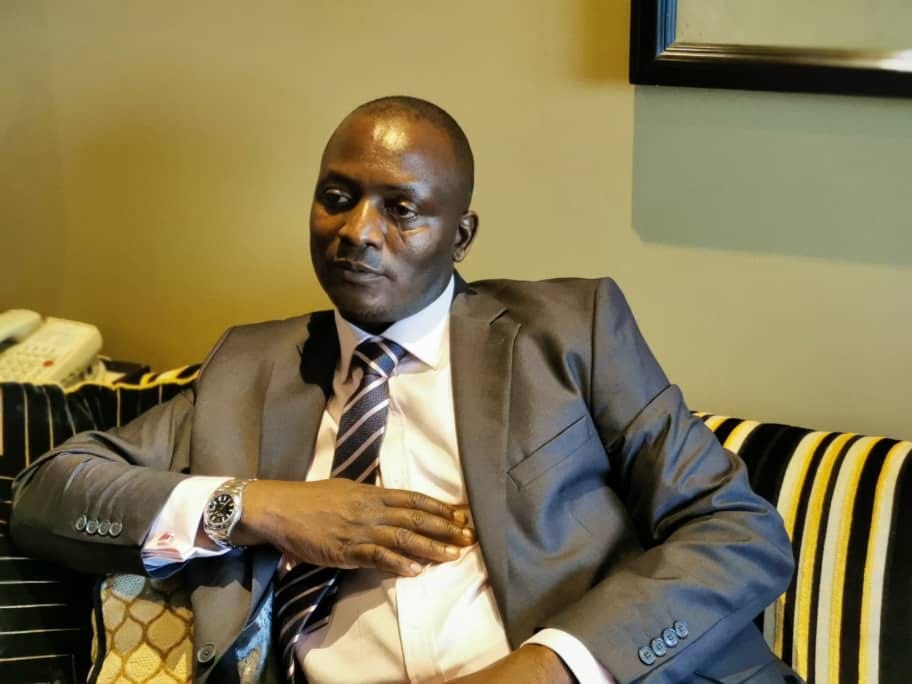
Zambian Mines and Minerals Development Minister Richard Musukwa, speaking on the sidelines of the 3-day state visit, said that Vedanta has extensively lost the social licence to operate in communities such as Chililabombwe and Chingola adding that the ‘marriage has irretrievably broken down’.

Mining tycoon Anil Agarwal’s Vedanta group has been doing rounds of reconciliatory meetings with Zambian government at various levels, as it is on the verge of losing the highly profitable Konkola Copper Mines (KCM), for allegedly defaulting on tax payments and violating operational licence. Zambia is Africa’s second biggest copper-producing country after Democratic Republic of Congo.

Earlier, in a statement ahead of President Lungu’s visit, Vedanta had said that its relationship with Zambia is a long-standing one, reinforcing the mutually supportive relationship between India and Zambia. Vedanta’s Chairman Anil Agarwal’s message to President Lungu during his visit was “Vedanta welcomes you to India, and thanks you for your leadership and direction as our teams work together to resolve the KCM matter.”

“I want to express my deep and humble appreciation to you, Your Excellency, for the manner in which you were willing to engage with us in Lusaka last week,” Agarwal said. He added ,”Your leadership and stature meant that we should be on track to resolve KCM’s future in a way that will benefit Zambia and the Zambian people.”

For quite some time, Anil Agarwal’s Vedanta group is trying to save their business by trying to enter into reconciliation with the government. However, the Zambian government has kept a tough stand for quite some time. Just a few months back President Edgar Lungu had said that the government is resolved and determined to part ways with Vedanta group of companies who are currently running Konkola Copper Mines (KCM). “Zambians wanted Vedanta out of the Copperbelt, out of this country. The Zambians people have decided that they want a responsible investor,” President had said during his visit to Ndola.

Meanwhile, Indian government continues to put its weight behind Vedanta. Recently, during the State Visit of Lungu, V. Muraleedharan, Minister of State for External Affairs, hoped that the stand-off between the Zambian Government and Vedanta will be resolved soon.

However, it seems the Zambian government has further toughened its stand on the issue. Mines and Minerals Development Minister Richard Musukwa said that Zambian government has reiterated that the debacle about Konkola Copper Mines (KCM) is a subject of the court process. “As a government of laws we are inclined to allow the due process of the law to take its course.” He however says Government is willing to listen to any progressive talks that structures a user friendly exit mode for Vedanta.

Musukwa said the decision to liquidate KCM was premised on securing the company from total collapse and protecting the jobs of the people because Vedanta had in principle walked away owing to the negligence as evidenced by its inability to exploit and develop its primary sources of its ore materials and payment of contractors and suppliers and other obligations.

The Cabinet Minister said government is determined once the court processes are concluded to urgently secure a credible investor in an open and transparent manner. “A new investor should have the capacity to inject fresh capital to operationalise the KDMP project and both underground and upper orebody resources which are believed to have huge life line which will in turn provide job security.” He added, “The investors should lead to the transformation of the host communities in terms of infrastructure such as roads, health and education.”