Home Blog Page 476

Breaking News: How Journalism Got Jacked

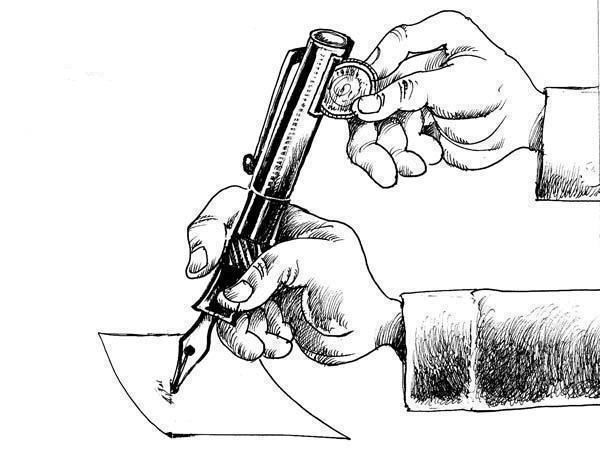
Corporate media, driven by its intense urge to maximize profits, has begun to spin public perception for money and routinely dishes out ‘infotainment’ as news.

If there is a crisis of democracy it is not due only to the ignorant masses making poor decisions or being misinformed by politicians and quacks, as the mainstream media class would have us believe. The corporate media is itself deeply implicated in what the public thinks about why the masses are deceived, which is really rather ironic, given the non-democratic nature of commercially-driven journalism.

American revolutionary Tom Paine (1737 – 1809) authored the two most influential pamphlets in inspiring the rebels in 1776 to declare independence from Britain. Paine’s founding belief was that an informed American citizenry would be capable of self-government.  A free press was inscribed into the United States constitution from the start, as a check on government that would also serve to expose and deter corruption and cronyism.  Journalism is so important that it has been regarded as an integral part of the machinery of government itself. In 1841, Thomas Carlyle famously wrote, “Burke said there were Three Estates in Parliament; but, in the Reporters’ Gallery yonder, there sat a Fourth Estate more important far than they all” (On Heroes and Hero Worship).  From its inception, journalism was subsidised by government without content-based discrimination, which explains why the abolitionist movement started in weekly newspapers and pamphlets and why the women’s suffrage movement owes much to its coverage in the print media.  

Media is our public discourse, the conversation we have about our society.  Today huge multinational media corporations spin public perceptions for profit.  TimeWarner, Disney, Comcast or 21st Century Fox decide what is newsworthy and what isn’t. This conflict of interest means that journalists are unable to perform the vital function of holding the most powerful people accountable.

In 1933 approximately sixty million people tuned in to President Roosevelt’s radio address.  Mass media had connected an entire nation to a single message.  The following year Congress passed the Communications Act, which gave corporate broadcasters monopoly rights to government airwaves. Once broadcasting became a commercial enterprise, government regulations were implemented to prevent corporate monopolies from seizing control of the discourse.  However, Ronald Reagan oversaw a massive dismantling of government regulations, giving giant corporations carete blanche to snap up the airwaves. Reagan raised single-company ownership limits, scrapped license renewal for broadcasters, relaxed limits on advertising during children’s programming, and dumped the requirements that political candidates get equal airtime. Today, mass media conglomerates generate over $236 billion a year in advertising revenue. Anywhere between 40-70% of what we consider “news” originated in a corporate public relations department. 

Thomas Carlyle in The French Revolution (1837) commented: “A Fourth Estate, of Able Editors, springs up, increases and multiplies; irrepressible, incalculable.” Since 2008, over 166 U.S. newspapers have closed down or stopped publishing print editions and over 35,000 jobs have been cut from the news media sector. Media de-regulation has meant that an ever-larger proportion of “news” is concentrated in ever fewer hands, with a homogenizing effect on the public’s perception of what is real, important, or true. As the media giants have consolidated their power, they have wielded it to kill messengers bearing real news from Gary Webb to Julian Assange, Sibel Edmonds and Bradley Manning. Their counterparts from the mainstream media (for whom defense contracting is a major source of revenue) spin public perception of messengers critical of establishment power and official policy. These little gadflies are swiftly discredited, their ‘leaks’ and revelations re-framed to suit the image of accused power-brokers: Webb was a fraud, Assange a rapist, Manning a treacherous coward, Along with the ostensible message, the public get the subtext: dissidents will pay. “Sibel who? Meh, I ain’t got time for all this. Lemme scan the headlines.”

Politicians are dependent upon big media for airtime.  Meanwhile, the media depend upon politicians to de-regulate the industry. Between 1998 and 2005, $400 million was spent by media corporations lobbying politicians and making political donations. Bill Clinton could be counted upon to sign the 1996 Telecoms Act into law, ushering in a rapid consolidation of major media companies owning everything from book publishing, music labels and television, to radio, outdoor advertising and film studios. As a result of these massive mergers, local media owners got squeezed out. 

Despite its reputation for integrity, The New York Times has capitulated to the military-industrial complex. Nowadays journalists’ access to Pentagon officials and the information (propaganda) they provide during wartime is contingent upon cooperation, which means embedding and not straying from the ‘talking points’ provided.  Embedding insures that war reporters see who and what the U.S. military or their allies want them to in conflict zones.  It is like visiting Pyongyang except with American chaperones and fewer parades.

The Federal Communications Commission (FCC) is the U.S. body charged with regulating the media and preventing monopolies. While his Dad was busy trying to sell the war (invasion) in Iraq to Congress, Michael Powell was heading up the FCC, and working hard to disengage the last remaining brakes on media ownership. Millions protested against Powell’s plans, which would have allowed all media content (newspaper, radio and television) in one town to come from the same source.  When Kevin Martin took over as head of the FCC in 2005, he held a series of public “consultations” on the question of cross-media ownership, and then completely ignored them. Despite huge public outcry at the prospect of lifting the cross-media ownership ban, Martin sided with media conglomerates and removed it anyway, in blatant dereliction of his FCC duty. On July 7, 2011 a Federal Appeals Court intervened and overturned Martin’s cross-ownership rule, on the grounds that Martin had breached the public interest.

Largely as a result of the corporate media’s focus on profits over journalism, “infotainment” now routinely replaces actual news.  The line between reporting and advertisement has also blurred.  It is difficult to distinguish whether we are being sold a story or a product and many apparent ‘news’ items are little more than free publicity for a product, such as when a news story discusses a new drug ‘breakthrough’ you’ve never heard of but in reality it is a thinly veiled advertisement written in a style resembling editorial content. 

So the crisis of democracy does not rest exclusively on the shoulders of the unwashed working classes. If the masses are kept ignorant, this is largely in the hands of giant corporations who produce commercially driven journalism. 

If you want to learn more, there are some excellent documentaries from alternative, non-corporate journalists who make it easy to become media savvy.  Among them I can recommend:  Why We Fight, Project Censored: the Movie, Control Room, Shadows of Liberty and Manufacturing Consent

Hurriyat’s politics of Disruption, Distortion and Divisiveness have no takers in Kashmir

The advent of New Year normally leads to assessments of the year gone by and predictions on what the coming year would bring with it. Such an exercise by the Hurriyat Conference, the Separatist conglomerate operating in Kashmir, would build a very dismal and gloomy picture indeed. It is well known that the Hurriyat has been steadily losing its clout and relevance over the last few years, since people have seen through its self-serving and disruptive policies. The year 2018, in particular, has witnessed the stature of the conglomerate hit an all time low with the fortunes of brand Hurriyat witnessing a solid nosedive. The conglomerate is now finding it difficult to stay afloat.

The blame for such a situation coming to a pass lies squarely upon the senior leadership of the conglomerate that has exhibited an inability to stitch together a worthwhile political initiative.

While there is a lot of talk of the government not coming forward to open dialogue with the “stakeholders” in Kashmir, what is being sidelined is the fact that the Hurriyat, in 2018, has been approached for talks through multiple conduits but has consistently been turning down the proposals.

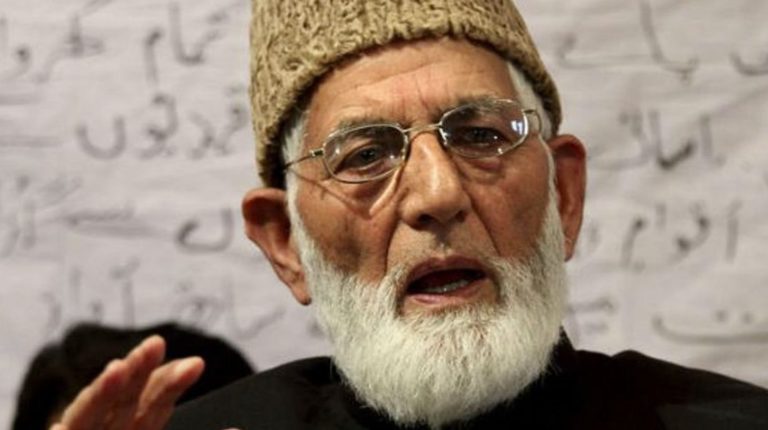
Dineshwar Sharma, who has been appointed as an interlocutor by the NDA government, has made multiple attempts to open talks with the Hurriyat which have been rejected arbitrarily. In June 2018, Hurriyat leader Syed Geelani ruled out a meeting with Sharma and thus closed the chapter altogether. In November 2018, Home Minister Rajnath Singh reiterated Centre’s offer for talks. He, in fact, expanded the scope by expressing readiness to talk to those who may not necessarily be “like minded.” Unfortunately, there were no takers among the Hurriyat to his offer.

The actual reason behind this reluctance to get to the negotiating table is the investigations into the illicit and criminal funding of terror and disruptive activity in the Kashmir Valley that have been going on since late 2017.  The Hurriyat leadership is at the centre of this investigation, its financial conduits have also been choked thus adding to its woes.  When asked about the Hurriyat’s concerns over the NIA’s multiple investigations, Mirwaiz Umar Farooq said: “The government should decide whether they want to arrest us or talk to us.’’ Hurriyat is, evidently, looking to leverage talks as a method the escape the heat of the investigations.

With no offer of talks in the horizon, Hurriyat has very little to offer to the common man in Kashmir who is looking for peace and stability. It has, instead, attempted to cause disruption and divisiveness to which end it sent out a strong appeal for boycott of the Urban Local Bodies and the Panchayat elections. The appeal was given in August, 2018, by Syed Geelani, much before the elections were even announced. “Participation in the elections is tantamount to treason,” he had announced rather grandly. To the eternal embarrassment of the party the elections were successfully conducted by December-end with no incident of violence reported. The people, candidates and voters alike, simply disregarded the boycott call given by the Hurriyat. Even threats by the Hizbul Mujahedeen (HM) that came in tandem with the boycott call were treated with disdain. It is notable here that the Hizbul Mujahedeen is a terror organisation aligned with the Hurriyat. Pulwama, considered to be the hotbed of terrorist activity, witnessed as many as 151 candidates in the fray for the Panchayat elections.

The Hurriyat is now trying desperately to save face by saying that the boycott call was a success. The reality on ground is entirely different. Voting percentage stands at 33% and the elected representatives have already taken over their responsibilities. In the near future this strong willed initiative by the government is expected to be a game-changer in Kashmir.

Hurriyat’s favourite tools of Bandh (lockout) and Hartal (strike) also witnessed a drastic set back in 2018. People refused to get roped into this disruptive activity and spoke openly against it. The situation is being read as a clear indication of the rejection of Hurriyat brand of politics by the people who have rooted for a more stable and peaceful life. Such is the situation that in, November 2018, the Hurriyat has publicly admitted to the need to look for alternatives to ‘Hartal politics.’ 

An incident of mob violence at Pulwama in December, 2018, that led the death of a few civilians due to firing in self defence by security forces was exactly what the Hurriyat was looking for it to resurrect its dwindling fortunes. It called for the statutory Bandh and a march to the Badami Bagh cantonment in Srinagar but the initiative failed to take off. The year, thus, ended rather tamely for the Hurriyat.

The Hurriyat has failed in its objectives and for this it has its own duplicity and anti-national brand of politics to blame. The contradictory behaviour of its leaders is there for all to see. They neither wish to talk nor do they wish to participate in the democratic process. This makes them out and out anarchists who have absolutely nothing to give to their people.

When it suits them, the leaders garner favour from the central as well as state government for their family members and also extended alliances. But for the common man the only recipe they have is disruption, distortion and divisiveness. They have created road blocks for all attempts to free the troubled region from the shadow of the gun and usher peace, prosperity and development which the people yearn for. They have set up a trail of allegations against both the government and the security forces through a well orchestrated propaganda campaign.

The people are quite fed up by the obscurantist political line followed by Hurriyat which lead to great economic and human loss. They have, by now, seen through the corrupt, self serving and warped practices of the organisation. It would not be an exaggeration to say that the conglomerate stands totally exposed and irrelevant. It best recourse for 2019 would be to learn from the mistakes committed in 2018 and before that, restructure its policies and align them with the actual aspirations of the people.

Banal Defenses: Crux in Lay Apologetics

By Scott Douglas Jacobsen

Andrew Sullivan, prominent and long-time essayist, declared every person has a religion. By implication, this would include atheists, as most see themselves, likely, as a-religious within the referent frame of a-theism. This seems more wrong than right, and also appears to miss the basic nature of religion: handed down answers, or, rather, assertions bequeathed with dogma; where with a-religiosity, values become discovered, obviously confined within the cognitive-emotional bounds of living as a human being. Thus, the first-answer as to why everyone leans towards common values and the Golden Rule, within constraints.

He has written and published hundreds of articles in a variety of publications. In the view of Sullivan, the modern atheists take on the garb of a quasi-religion through their “attenuated form of religion,” as this is a “practice not a theory” view of religion (Sullivan, 2018).

He views the denial of God as absolute as others’ faith in God, but, in fact, he contradicts himself with the denial of God as views while the religions of those who believe in God amount to actions. This retains the similar tactical flavor of prominent evangelists of everything becoming referred back, in some manner or other, to Christianity or God.

He points to the values individuals live by in the world, including daily rituals, meditation, and prayer. He even points to secular people with Buddhist practices as part of their view of the world. Atheism does not imply Buddhism or Buddhist practices; it implies a non-belief in God. That’s it.

Sullivan stated, “In his highly entertaining book, The Seven Types of Atheism, released in October in the U.S., philosopher John Gray puts it this way: ‘Religion is an attempt to find meaning in events, not a theory that tries to explain the universe’” (Sullivan, 2018).

Religion becomes Confirmation Bias writ worldview. Sullivan argues for this as part of a self-knowledge of every individual member of the human species of their own individual demise, of absolute finality.

Thus, the reconciliation with the world comes in the form of the assertion of “meaning in events” and not as an attempt to “explain the universe” (Sullivan, 2018). He, quoting Gray, in essence argues for a why rather than a functional-how of the universe, of which religion provides the explanatory filler and, presumably, the evolved necessity of a search for meaning gives the cognitive filter.

He asserts, “This is why science cannot replace it. Science does not tell you how to live, or what life is about; it can provide hypotheses and tentative explanations, but no ultimate meaning” (Sullivan, 2018). Take the temporality of the claims of science, this, to him, likely implies lack of ultimate meaning in time; take the spatial limits of the human body, this implicates a void in ultimate meaning in space; examine the limitations in mentation of all human beings, this derives eventual emptiness to meaning from the self and imaginary inventiveness of human beings.

The gap between the infinite, absolute, or ultimate meaning and any finite temporal or spatial meaning leads to a conclusion that religion gives ultimate meaning. However, when we look closer on the assertion of science not being capable of replacing religion, we can see the finite explanations of religion, in its practices – as Sullivan argues religion is actions.

Meaning does not exist as a constituent element of the universe, but, rather, in the relation of consciousnesses to the universe. Meaning remains derived rather than fundamental in this sense and, ultimately, constructed and finite, as this comes from the fundamental substructure of a mind’s transactional relationship with the cosmos (and other minds).

But even in the theories propounded by some sects of religions as natural world truths, they contradict the knowledge of the natural world provided via science, which remains the largest reliable set of epistemologies to derive better functional explanations of the cosmos. In this, religion becomes non-ultimate too; indeed, its assertions of the ultimate in meaning amount to assertions, of which non-religious people make commitments.

But back to the how of the universe, science works on the level of engineering to a significant extent, to the hows of the universe, but not on the whys. Art, literature, music, and religion comprise – not always practice – but sets of expression of the internal landscape of consciousness and perception in such a way as to have others see the world and feel about the world as the artist or writer sees and feels reality. None of this seems ultimate, including religion and its by-products.

The claims to the ultimate often are wrong as well. An ultimate meaning to the universe with the resurrection of the dead following the forgiveness of sins starting with the Fall in the Garden of Eden and the virgin birth of the Son of God, and then the death, burial, and resurrection of Christ as the Saviour of Humankind.

To this assertion of ultimate meaning in avoidance of an extrapolated heat death of the universe in an immensely deep time into the future, or the ultimate meaning in the transcendence of death via atonement of Original Sin to this, we can ask a question, “What direct empirical evidence for the Garden of Eden?” (Sullivan, 2018) Answer: none. Whence Original Sin?

Outside of literary import, akin to Shakespeare or European folktales and legends, e.g., King Arthur and Merlin and so on, the purported ultimate meaning provided within the, for example, Roman Catholic Christian Church tradition of Sullivan becomes non-evidenced and, thus, probabilistic, at best, and, by implication, non-ultimate, i.e., no ultimate meaning in it.

The sensibility of the transcendent and ultimate in meaning becomes a placeholder for chauvinism in specific religions and particular theological assertions within the faith: “Our faith, our religion, harbors ultimate meaning in theology, in practices, in scriptures, and in community living, unlike the non-religious or, even especially, the irreligious” (Sullivan, 2018).

It simply amounts to arrogance and chauvinism cloaked in another guise of the religious, in this case, Sullivan. Temporal and spatial, and cognitive, limits bound the nature of the discussions, discourses, and dialogues possible for human beings, and then claims to ultimate and transcendent simply tend to mean parochial religious assertions and limits of understanding, and reaffirmations of traditional religious practice.

Characteristic of the fearmongering of equality for others while still the dominant faith demographic by a long shot in much of the West, especially where Sullivan is housed in America. A slight loss in prominence breeds a reactionary tone in addition to the regular unfolding of epithets.

Sullivan states, “Seduced by scientism, distracted by materialism, insulated, like no humans before us, from the vicissitudes of sickness and the ubiquity of early death, the post-Christian West believes instead in something we have called progress — a gradual ascent of mankind toward reason, peace, and prosperity — as a substitute in many ways for our previous monotheism” (Sullivan, 2018).

Secularism becomes post-Christian, which implies theocratic-leaning as more Christian or the reduction in the reliance on faith-based initiatives for health and secular means by which to achieve better material and wellness conditions becomes post-Christian, even with most of the nation adherent to a Christian narrative, as in America.

Even besides these concerns, Catholics may want to work less on demonizing others as a distraction of the horrific sexual scandals and abuses of nuns, of children, and others, and more on the asking of forgiveness of their victims, the national potentials they’ve destroyed through denial of contraceptives and family planning, the women who they have denied livelihoods in their opposition to safe, legal, and equitable abortion – as the Guttmacher Institute shows legalization lowers the rates of abortions (true pro-life, thus, should become pro-choice), imposition of theocratic rule in constitutions, and illegitimate abuse of religious privilege in societies to maintain political power, und so weiter(Guttmacher Institute, 2018).

Non-religion becomes “scientism” and “materialism.” On “scientism,” this term is a covert epithet of the non-religious and started with Friedrich von Hayek in 1943. Materialism relates to the outcomes of public relations and the industry devoted to the fabrication of wants, where I agree with him.

The campaigns to get kids to nag parents for unnecessary junk or to get pregnant women to smoke are evils, and a result of deliberate materialistic advertising and marketing campaigns to delude the public – and vulnerable sectors to boot.

As Sullivan correctly notes, “We have leveraged science for our own health and comfort” (Sullivan, 2018). Indeed, one big impediment to the reproductive health rights and technology of women has been the Roman Catholic Christian Church. Rather than focus on his own backyard, Sullivan, instead, aims at prominent writers and then criticizes abstracts including “reason.”

As has been said by others, perhaps, we need pessimism of the intellect and optimism of the will, but we should remain wary or chary of the obvious moral goods being ignored in the real manifestations of their consequences in the directly implicated deaths and injuries of millions of women through simple rejection of contraceptives, abortifacients, family planning and associated educational provisions, safe and legal abortion, sexual education including consent, and so on.

Sullivan argues humans are religious creatures. This seems, in part, true, but, probably, more reliant on superstition and ignorance and myths as we remain an evolved and cognitively flawed species. He also argues humans seek meaning as part of our nature. This, once more, seems to identify a bug in what we may view as a benefit or a plus.

It depends on the orientation of the meaning sought by the individual or the group. As well, he draws attention to some non-religious individuals with too much emphasis on reason. This begs the question as to what reliance on emotionalism can derive for the truths about the world outside of the social relations.

In fact, this Vulcanization of the opposition – the non-religious – seems like another stereotype and asserted with thin evidence, except within the general derogatory statements about and odd opposition to the fundamental premises of rationalism with “reason.”

But this leads back into the notion of religion as actions or practice, mainly; however, Gray and Sullivan seem flat wrong here. Religion, in most contexts, amounts to beliefs plus suggested practices, where core a priori beliefs necessitate the faith and suggested practices can be adhered to varying degrees of seriousness: Jesus rose from the dead (core belief) and can perform miracles with enough serious and sincere prayer (suggested practice). Muhammed is the last Prophet of the one true God, Allah, (core belief) and the Hajj is an incredibly important Pillar of Islam to partake in the life of a sincere Muslim believer (suggested practice).

Someone without these, in either case, simply lacks traditional religion. Otherwise, what defines the boundaries of religions, exactly? If nothing, then religion simply becomes moot as a concept. But we tend to realize the distinctions and, intrinsically, understand religion as real phenomena and the contents of it, and practices from it. The common phrase or description of these actions is the moving of the goal posts.

One can see this angle from prominent pastors and theologians in North America who see the negative implications of the term “religion” and then work to distance their particular denomination from it: “That’s not Christianity. That’s religion.”

Giving the game away, of course, religion is seen as bad by the public more and more, based on well-documented evidence in history and evidence right into the present, and then garners a bad public persona. Christianity then, must, get separated from it. Same for other traditional religions.

Another methodology is simply to denude the term “religion” of context by moving the goal posts to such an extent as to leave anything with long-term adherence as a religion: materialistic pursuits, practicing meditation in a secular context even, or utilization of the tools of science and medicine for the improvement of human wellbeing defined in modern and secular terms.

Selectively quoting some prominent non-believers in history, Sullivan tries to mount the argument with appeals of various forms, including emotional. Without formal religious institutions or, in some modern lines of thought, old Disney films and European folk tales to give structure, order, and meaning, what will become of the world and the nature of being? Are these attacks on traditionalism? Are these assaults on the fundamental substructure of the world, of being itself?

The same as has happened in proportion to the reduction of religious fundamentalism, more freedom of thought and story-making, and meaning-making, and focus on secular notions of well-being: societies become better. Some may point to the United States of America as a high standard of living nation while also retaining high religiosity; we can simply extend the examination internal to the nation.

As it turns out, the most religious states in America have the worst health and wellness outcomes, in general, compared to the more secular ones. Thus, the benefits come with the secular offerings and technological advancements as applied to the standard secular concerns for human wellbeing, e.g., vaccinations, healthcare, better food, easier lives, cleaner working conditions, maternal and infant care, reproductive health technologies, and so on.

This comes, in fact, from a rejection of the non-answers or excuses for the problems of the real world before us, often provided in the form of religious orthodoxy. The argument cropping or popping up more and more is the notion of atheists or non-religious people generally practicing a Christian metaphysics in spite of their protestations to the contrary.

That is to say, from these chauvinists’ views, to behave in a decent and honorable manner, you must be acting in a way reflecting Christianity; therefore, you owe a debt of gratitude to Christianity for behaving well and, in fact, only behave well since you act in a purportedly Christian way.

This is simply a way of saying even ‘atheists’ aren’t atheists because they are Christians or ‘atheists’ who are truly Christians acting out a Christian metaphysics who claim that they aren’t Christian. Assumption: if you act in a good way, then you are Christian; if you act bad, then you are a non-believer. Even if you are a purported or self-proclaimed non-believer, you act as a non-believer with a Christian metaphysics. The chauvinism is “anything Christian good” – presumably, even that chauvinism, though “pride goeth before destruction, and an haughty spirit before a fall” – and “anything bad is not Christian” (The Bible: King James Version, 2018).

No one should play by the rules set out here because a) they’re false as our values predate the mythology of Christianity and b) it’s a simple dishonest Sophist tactic. Ethics is apart from religion. It can be incorporated into the moral systems, myths as guides, and stipulations of the faith, but hundreds of millions of people act well without religion and build better, more functional, and healthier societies with less religion as a heuristic – based on decades of evidence, thus not a hunch but not an axiom either.

There’s a joke among some Westerners with Indian heritage that their parents claim everything came from India. You point to some discovery in scientific or technological marvel, then the punchline is the parent claiming that this came from India.

One can also hear the notion, by analogy, that – quite astonishingly with a straight face said – separation of church and state came from Christianity, as a ‘miracle,’ seen in the statement, purportedly, by Jesus, “Render to Caesar the things that are Caesar’s; and to God the things that are God’s,” which is from Matthew 22:21 (2018).

This one takes tremendous amounts of gumption and myopia on the part of the speaker, ignorance – if believed – on the part of the listener, and complicity in the gumption, myopia, and ignorance if journalists or others repeating it, at least uncritically.

Following the foundation of Christianity, we find one of the largest theocracies ever founded in the history of the world with the conversion of Emperor Constantine to Christianity. The same idea can be seen in the analogy. The claim would be this is not true Christianity or real Christianity; that is to say in the former context, everyone behaving good acts in a Christian metaphysics.

Anyone not acting in such a way isn’t a Christian and, therefore, we come to the fallacy known as No True Scotsman. The sloppiness of the arguments is tiresome and the presentation of individuals making these arguments as our public intellectuals and best minds is both a travesty and a shame.

But even taking the issue of homosexuality, one which remains controversial for the hierarchs of the Roman Catholic Christian Church. Not in my words, the church’s own doctrine and positions, richly endowed statements on it, too.

As stated by the Vatican, the proper beliefs are “Sacred Scripture” placing homosexuality and homosexual acts as “acts of grave depravity,” “intrinsically disordered” or “objectively disordered,” “contrary to natural law,” “do not proceed from a genuine affective and sexual complementarity,” where “homosexual persons are called to chastity” and “under no circumstances can they be approved” (The Vatican, n.d.).

Thus, the hard beliefs behind the firmly suggested practices are chaste sexual lives of homosexuals: men and women. Presumably, anyone engaging in this, within the tradition of Sullivan, become non-Christian; hence, sexually active homosexual (Roman Catholic) Christians becomes an impossibility, especially troublesome as the Good, to some, marks a Christian metaphysics – noted earlier.

Then Sullivan with the banal notions of religion as necessary for human beings states, “Liberalism is a set of procedures, with an empty center, not a manifestation of truth, let alone a reconciliation to mortality. But, critically, it has long been complemented and supported in America by a religion distinctly separate from politics, a tamed Christianity that rests, in Jesus’ formulation, on a distinction between God and Caesar. And this separation is vital for liberalism, because if your ultimate meaning is derived from religion, you have less need of deriving it from politics or ideology or trusting entirely in a single, secular leader. It’s only when your meaning has been secured that you can allow politics to be merely procedural” (Sullivan, 2018).

One need merely look, briefly, at the crypto-theocrats within the midst of the United States creating havoc and suffering in the lives of millions of women through blockades to fundamental human rights, as per a statement by Human Rights Watch, of equitable and safe access to abortion. Women get them anyway. However, in the rather desperate and clandestine process, women die and acquire varieties of injuries from unsafe abortions due to restrictions on the “equitable and safe access to abortion.”

To Sullivan’s (2018) question in his soliloquy, “So what happens when this religious rampart of the entire system is removed?” He asserts illiberal politics. In fact, the affirmation of fundamentalist Christianity has been an impediment to the liberal politics for a long time, straight into the current moment.

Christianity as illiberal in this interpretation, not in some abstracted and idealized notion but in the illiberal implementation of adherents since its foundation, whether now or with the majority of the German populace as Christian decades ago. That’s not “anchored in and tamed by Christianity”; that’s fanned flames of illiberalism by Christianity, from its origins (Sullivan, 2018).

Secular and humanistic frameworks have been the taming force on Christianity. The impotence of Christians’ love, rather than the simple love, has been a force by which the liberalism has flourished; whereas, when they could, Christians were burning people at the stake or imposing their religion as the state religion, including many who wish to impose Christianity as the state religion in the US and elsewhere – to save souls.

Christianity and Christian mythology formed an early cult in recorded history. Now, the more direct attacks on its supremacy are met with some spurious, but not all, arguments posited by Sullivan and others.

Some decent observations by Sullivan come from the idea of “tribalized… religion explicitly built by Jesus as anti-tribal. They have turned to idols — including their blasphemous belief in America as God’s chosen country” (Sullivan, 2018).

He seems correct here. Sullivan takes the stance of reduction in Christianity leading to the Trump Administration and others, or Christian truths. Then he uses this to equate or place on the same platform social justice activists, say a Martin Luther King, Jr., with President Trump.

Plentiful important moral work has been done by individual Christians and mass mobilizations by Christian ethical visionaries, but also in a secular social justice framework as well. The issue here is an ascendance not of social justice but, rather, of the obvious, of which the analogs are not many: Christian theocratic hopes tied to negative nationalism or populism. To link this to social justice activists, it amounts to poor journalism as a false equivalency characteristic of simply not seeing past the prejudices of the time.

One prior example of a Christian theocracy was mentioned, Constantinian Christianity is seen in the Roman Empire with the conversion of Emperor Constantine. Another can be seen in fundamentalist Evangelical Christians within the US.

The Bible is steeped in supernaturalism and with political acts and even concluding on a political execution. It is an ancient cult built over centuries. As a political tract and supernatural mythological, and quasi-historical, text, the orientation of Christianity has been political with the “kingdom of God” not necessarily as an other-worldly spatial location, but as a physical location and “kingdom” of the time as some kingdoms were around at the time, including the Roman.

Christianity never truly saw a split between politics and religion in this sense. Hence, the theocratic impulses seen throughout Christian history is the rule and not the exception.

He, once more, asserts, “It is Christianity that came to champion the individual conscience against the collective, which paved the way for individual rights. It is in Christianity that the seeds of Western religious toleration were first sown. Christianity is the only monotheism that seeks no sway over Caesar, that is content with the ultimate truth over the immediate satisfaction of power. It was Christianity that gave us successive social movements, which enabled more people to be included in the liberal project, thus renewing it” (Sullivan, 2018).

The liberal movements, such as the Enlightenment, were a reaction to the superstition and bigotry of Christianity. The liberalism is anti-Christian in this sense. Now, to the modern fundamental claim of the individual or the purported ‘divine’ individual, or the individual conscience, as bound to the Christian faith, this assertion tends to come from individuals spewing epithets and complaining about identity politics and virtue signaling.

But if we take a moment to reflect, we can note some of the original identity politics in religious identification and virtue signaling prayers and other religious practices. This seems ironic. The Christian identity is one of a group, of a collective in the Body of Christ.

The idea of the social and moral worth of the individual started, in part, with democratic norms and institutions, but, as one can glean from the ideals imagined in Kallipolis by Plato or in the opinions of women by Aristotle, only for a select group of people – most often men.

Plato would be considered progressive for the time; Aristotle would be seen in some of the worst sexist terms today. In Christianity, the focus isn’t on the individual as an idea, but on an individual, Christ, and the collective as an idea, the Body of Christ.

Then the response pivot to this may be a divine spark or soul in each person. But this also predates Christianity, including Egyptians and the Chinese with the conceptualization of a dual-soul and in Aristotle, once more, with a tripartite soul. Epicureans saw the soul as tied to the material body. Platonists saw the soul as an immaterial substance. Duly note, each predating or co-existing with Christianity and having a notion of ensoulment of each individual human being.

The fundamental distinction is in the selection of values and ideas: to the non-religious, they’re chosen; to the religious believer, they’re pre-selected by authority and then given in advance. Sullivan et al simply miss this, often to the detriment of modernity based on their primitivity.

References

Guttmacher Institute. (2018, March). Induced Abortion Worldwide. Retrieved from https://www.guttmacher.org/fact-sheet/induced-abortion-worldwide.

Sullivan, A. (2018, December 7). America’s New Religions. Retrieved from nymag.com/intelligencer/2018/12/andrew-sullivan-americas-new-religions.html.

The Bible: King James Version. (2018). Matthew: 22:21. Retrieved from https://www.biblegateway.com/passage/?search=Matthew+22%3A21&version=KJV.

The Bible: King James Version. (2018). Proverbs: 16:18. Retrieved from https://www.biblegateway.com/passage/?search=Proverbs+16%3A18&version=KJV.

The Vatican. (n.d.). Catechism of the Catholic Church: Part Three, Life in Christ. Retrieved from www.vatican.va/archive/ccc_css/archive/catechism/p3s2c2a6.htm.

Scott Douglas Jacobsen is the Founder of In-Sight: Independent Interview-Based Journal and In-Sight Publishing. He authored/co-authored some e-books, free or low-cost. If you want to contact Scott: Scott.D.Jacobsen@Gmail.com.

Original publication in Humanist Alliance Philippines International.

Photo by Naail Hussain on Unsplash

Sheila Dikshit’s new innings could be a game changer for Delhi politics

For Congress, with not even a single MLA and MP from Delhi, Sheila Dikshit’s re-entry into active politics could be a shot in the arm for the upcoming Parliamentary and Assembly elections in Delhi.

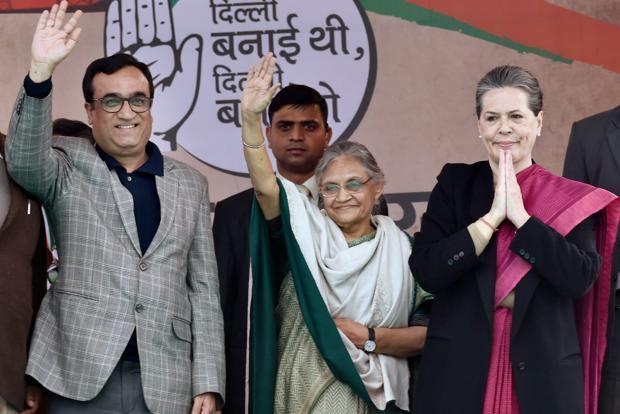
After putting his papers twice in the last 19-months, Delhi Pradesh Congress Committee Chief, Ajay Maken has been finally relieved from his responsibilities. Maken, 54, has been instrumental in keeping the Party afloat during the last 3-years, after the humiliating defeat of Congress in 2015 Assembly elections and revolt by senior leaders like Arvinder Singh Lovely – who subsequently quit the party due to differences with Maken and joined BJP but came back early last year. Maken’s exit is likely to make way for veteran politician Sheila Dikshit, who underwent a heart surgery in August 2018. If happened, this could prove to be a game changer for the Congress, which currently doesn’t have even a single MLA in the State Assembly or MP in any of the seven Lok Sabha seats.

Bolstered by the recent victory in three Assembly elections, Congress Party, to a large extent, has gained the lost dynamism and putting Sheila Dikshit as the face of Delhi Congress, could be a politically opportune decision of the party. With 15-years of commendable work on her side and the ghost of Commonwealth Games no more haunting her, she could be the most trusted and acceptable name in the Delhi unit of Congress.

However, utilizing the political charisma of Dikshit, for Lok Sabha (2019) and Delhi Vidhan Sabha Elections (2020), will require different political strategies and alignments. While the Congress and AAP might enter into a pre-poll alliance in the upcoming Lok Sabha elections in Delhi or multiple states, however, for the subsequent Assembly elections in Delhi, Congress should fight elections alone with a free hand to Dikshit.  

Congress got a humiliating defeat at the hands of Aam Aadmi Party (AAP) in 2015, made possible by a strong wave in favour of AAP and shifting of a major vote base of minorities and Dalits from Congress to AAP. During the last three years, the popularity wave of AAP has been on a downswing and Congress has a good chance to bring back its loyal voters.

With BJP’s Delhi unit, under the stewardship of Manoj Tiwari, having failed to make much of a mark and is still as complacent as it was just after winning the previous Lok Sabha elections by 7-0, Congress has enough opportunity to capture the lost ground. What matters is how prudently and strategically, it utilizes the political appeal of its senior leaders like Sheila Dikshit.

Pakistan Army disowns and refuses to take back its dead soldiers

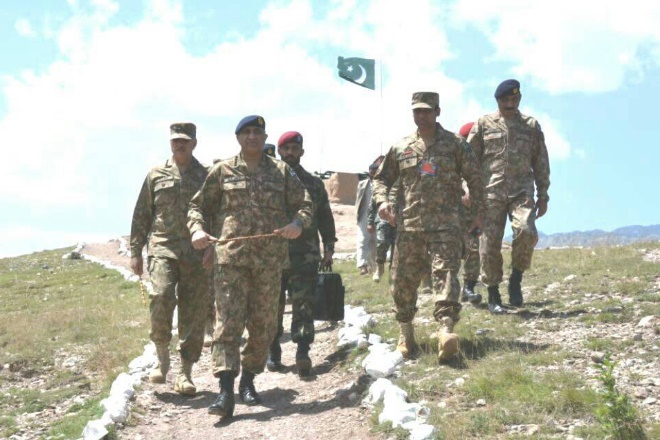
Combatants of the Pakistan Army’s Border Action Team (BAT), who sneaked inside India on New Year Eve, were killed in retaliatory crossfire. The Pak Army now refuses to take back its dead soldiers.

The lines “Theirs not to make reply, theirs not to reason why, theirs but to do and die” in Lord Alfred Tennyson’s famous poem ‘The Charge of the Light Brigade’ appositely immortalises a soldier’s unconditional commitment while following orders even in face of certain death. So, when a Border Action Team (BAT) comprising Pakistan Army regulars and terrorists was ordered to stealthily cross the Line of Control (LoC) on New Year’s Eve, kill any unsuspecting Indian soldier and bring back their severed heads, none of the members of this BAT would have questioned this macabre order even though it flagrantly violated international law, military ethics and the soldier’s code of conduct.

It is also unlikely that Commando Naik Anwar of Pakistan Army’s elite Special Services Group (SSG) and a member of this BAT would have had any inhibition when he was tasked to behead Indian soldiers killed by BAT and bring back their severed heads. Au contraire, it appears that he took this task rather seriously because when his corpse was subsequently found, besides an AK rifle and other warlike stores, not one but two large carving knives were found on him. In fact one can picture Naik Anwar beaming with pride on being assigned the duty of beheading a ‘kafir’ (non believer)  and carrying back his severed head for all to see. Perhaps he may have also contemplated taking a ‘selfie’ to show his friends and relatives back in his village.

An improvised explosive device (IED) also found near Naik Anwar’s body suggests that the BAT intended to booby trap the dead bodies of Indian soldiers with this IED. This has been a standard drill adopted by BAT with the aim of causing more casualties on Indian troops when they are in the process of retrieving the bodies of their dead comrades. Crossing the LoC in Kashmir Valley is not very difficult as dense vegetation in the area interspersed with nallahs (drains) facilitates unobserved movement of small parties even during day. Intense ‘covering fire’ by Pakistani posts assisted the BAT in crossing the LoC but to its bad luck, this movement was detected by the vigilant Indian soldiers and the soon the hunters became the hunted.

On coming under effective fire from the Indian side, the BAT knew they stood no chance and so they hastily retreated back leaving behind the dead bodies of Naik Anwar and another Pakistan Army soldier whose identity hasn’t yet been ascertained. The Indian side has since asked Islamabad to take back these dead bodies but there is no news of any response from the other side.

However, going by past experience, the chances of Pakistan accepting these two bodies are extremely remote and readers would recall that the Pakistan Army had refused to take back the dead bodies of its soldiers during the Kargil War of 1999. Therefore, as there is a precedence of the Pakistan Army disowning its dead, Naik Anwar and his buddy will, in all probability, end- up being buried on Indian soil without the fanfare and flourish due to soldiers killed in action.

Had the BAT attack succeeded, Naik Anwar would have been the one to commit the gory crime of beheading and mutilating a soldier’s dead body. But back home he would proudly exhibit the severed head and would have been felicitated as a hero for giving the Indian Army a New Year ‘gift’ that it ‘deserved’ for inflicting heavy losses on Pakistani soldiers in retaliatory actions to ceasefire violations. But Naik Anwar and his associate weren’t destined to return home, either on their own feet or draped in the crescent and star. Despite the fact that he would have caused irreversible mental trauma to the near and dear ones of the decapitated soldier, the thought of soldiers (even though they may belong to Pakistan Army) who lay down their life for their country but end up as unclaimed corpses does evoke pity.

This incident also reminds one of the closing lines “And I will leave no one behind. Dead or alive, we will all come home together.  So help me God,” with which commanding officer 1st Battalion 7th Cavalry Lt Col Hal Moore ends the address to his troops before they are airlifted to fight in Vietnam as depicted in the movie “We Were Soldiers.” Lt Col Moore may not have exactly spoken these words but they appropriately epitomise the sacred duty and onerous responsibility that army officers have towards the soldiers they command, especially when they are sent to their death. But saying anything more on this issue would be unwarranted because whether to accept or disown bodies of its dead soldiers is the sole prerogative of the Generals of the Pakistan Army and none of my business!

Sabarimala: Propaganda being packaged as Gender Equality

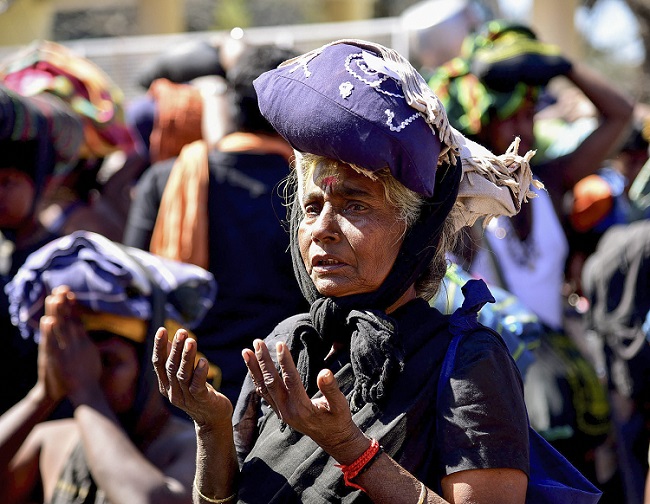
There are several temples in India that celebrate a woman’s menstruation. Barring women, in the age bracket of 10 to 50 years, to enter Sabarimala Shrine was never about menstrual taboo or gender discrimination. Forcing these women into the temple is playing cheap politics in Kerala by spreading falsehoods.

India is closely watching what is happening in Kerala’s world famous Sabarimala Shrine, which is in the news from September 28, 2018 when Supreme Court permitted young women to enter the shrine.

There are umpteen queries regarding the practice of this unique temple which is being showcased as a centre of gender discrimination but to unearth the real facts one needs to delve a bit deeper into the facts. The strange theories of discrimination and differentiation being propagated have no place in this discourse. Kerala is a land of thousands of temples that follow their unique practices.  Any attempt to see these temples through the biased prism of ‘gender only’ can bring in catastrophic results.

Let’s first get to the facts and history.

The Sabarimala Temple is distinct in several aspects, such that the deity, Lord Ayyappa who is the son of Lord Shiva and Mohini (Vishnu) is a perpetual celibate. Moreover, the deity opted the wilderness and permitted the devotees to visit him once in a year, after observing the religious penance of 41 days. The (Mandala Vrat), the religious penance, brings in a drastic change in the diet of the devotee and further revamps the daily course of the devotee.

The devotee accepts mudra from a Guru and abstains from carnal pleasures, adheres to the religious practices strictly, the religious penance changes the course of life for 41 days, which is considered as a re-inventing period of Self. The penance and the Darshan (sight) of Lord Ayyappa are inseparable and the penance culminates with the Darshan (sight) of Lord. The custom has been continuing from time immemorial, the “Darshan” in Sabarimala is strictly based on the “Mandala Vrat” (religious penance) of 41 days.

It’s absolutely wrong to propagate that women are totally prohibited from entering the Sabarimala Shrine. As per the customs, the girl child below 10 years and women who are past the age of 50 have Darshan (sight) of Lord Ayyappa. This is because the Lord Ayyappa who is a perpetual celibate (Naishtik Brahmacharya) sees women only in two forms one as a child and the other as a mother. This custom has nothing to do with a woman’s menstruation or any discrimination arising out of it.

In fact, there are several temples which celebrate the menstrual cycle of Goddess in Kerala, such as the Chengannur Temple.

Out of Devotion to Lord Ayyappa, the women as such, never tried to forcibly enter the temple, rather waited for their turn, to visit the temple again after their childhood visit. This “long wait” has never been considered as a “forcible ban” which the women folk tried to break all these years, rather it came from their inner hearts, it was a self imposed restriction born out of supreme devotion to the Lord Ayyappa. The practice is not part of any discrimination rather a unique practice of a unique temple. There are several other temples which give preference to women over men, like the Attukal Temple. The famous Mannarasala Nagaraja Temple, appoints only a woman as its Chief Priest and no man can ascend to the said position. These practices are unique temple practices based on the localized custom and traditions, the issue of discrimination doesn’t arise at all.

The Supreme Court’s five-judge Bench on 28 September 2018, ruled in favour of the entry of women irrespective of their age in the Sabarimala Ayyappa Temple. The Supreme Court struck down the Kerala Hindu Places of Public Worship (Authorisation of Entry) Rules, 1965 which violated the right of Hindu women to practice religion, being un-Constitutional.

The State of Kerala and the Travancore Devaswom Board which is administering the shrine backed out from preferring a Review Petition before the Supreme Court. The State of Kerala had ignored the religious faith of the millions of Ayyappa Devotees and had submitted affidavits which suits their political ideology and compromised their duty to properly inform the Court. The discharging of duty to the Apex Court is of utmost important and it very much included the duty to inform about various unique practices prevailing in the same geographical area and the uniqueness of the temple rituals in Southern India.

The temples like Attukal Bhagwati temple has its place in the Guinness book of Records for the largest gathering of women devotees in the world for Pongal festival. It’s pertinent to mention that men are not allowed in this gathering for offering Pongal. If this gathering is viewed through the prism of gender, then the men should also be allowed and this would shatter a unique festival of women. No one ever demanded it because it’s a unique practice respected and revered from immemorial past. The preference given to women over men shall not be seen as putting men on a lower pedestal rather as a unique ritual. But the way things are going now, they sow the seeds of apprehension such that gender is being dragged everywhere and false notions of patriarchal chain is being brought in out of sheer ignorance.

In order to understand a society and its practices, it needs to be closely observed, and it has to be practically felt. Any superficial assumptions without deep understanding about a society may bring in terrible results.

When a matter is being considered by the Hon’ble Supreme Court especially in a Review, the administration should have exercised utmost caution rather than stir up the boiling pot. The devotees and various organizations have preferred Review Petitions before the Supreme Court and the same shall be considered on 22 January, 2019. Since the apex court has decided to hear the Review Petition it would have been a great service to the society had the government exercised restraint till the matter is decided by the Supreme Court. It should not have used State machinery to push atheist women into the temple ignoring the fervent pleas of Ayyappa Devotees to not do so. It’s easy to ignite a fire, but it’s a mammoth task to douse the flames. A little restraint would have served the goals of justice and the spirit of democracy.

Trapped for profit: Rat-hole coal mining in Meghalaya

Despite the recent tragedy there seems to be little political inclination and administrative alacrity to ensure that illegal rat-hole coal mining is fully banned in Meghalaya.

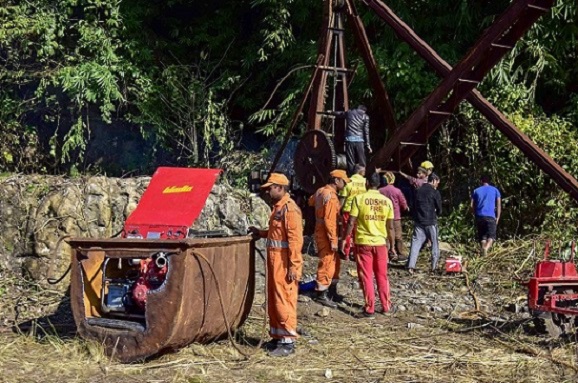
The horrific incident in Meghalaya, where 15 miners have been trapped in a rat-hole mine, flooded with water, for more than two-weeks now, is a grave man-made disaster. Equally shocking is to see the reprehensible way it is being handled. Apathetic rescue attempts by the administration, deliberate delay in making arrangements and the insensitive approach of the National media – has reaffirmed the thought that lives of poor people has no value in this country. As already so much time has been wasted, it will be nothing short of a miracle if the 15 miners trapped some 300-odd ft deep in East Jaintia Hills are found alive.

The ghastly incident is an outcome of deadly-mix of several factors – deliberate non-implementation of a judicial judgement, unholy nexus of administration and mine owners, political sentiments against the ban and unavailability of any viable employment opportunities in the region. This prepared the ground which was kept fertile by vested interests for rat-hole mining, which is thriving illegally in Meghalaya.

Human cost of Rat-Hole coal mining

Rat-hole mining is a hazardous method of mining for coal, with tunnels that are only 3-4 feet in diameter, leading to pits ranging 10-300 sq. mt deep. It is hard to believe that such dehumanizing and exploitative form of activity still continues and on such a large scale. There are also reports that, local mine owners have also been using children as labourers in these mines. According to surveys conducted by NGO Impulse, around 70,000 children in the age between 7 to 17 are working in these private mines as casual labor under private contractors without any security to their lives (Impulse: An exploratory study of children engaged in Rat Hole Mining in the coal mines of Jaintia Hills, 2012), many coming from Nepal and Bangladesh. As these coal mines, do not operate under any regulations like the Coal Mines (Nationalisation) Act, no safety arrangements are made for the labourers, who are precariously risking their lives everyday, for a paltry sum of Rs. 500 to 2000.

Environmental cost of mining

Meghalaya has 576.48 million tonnes of coal reserve spread across East Khasi Hills, West Khasi Hills, East Garo Hills, Jaintia Hills and South Garo Hills. The Jaintia Hills, where the incident has occurred, is one of the seven districts of Meghalaya and occupies the eastern part of the state. It is a major coal producing area with an estimated coal reserve of about 40 million tones. Sutnga, Lakadong, Musiang Khliehriat, Ladrymbai, Rymbai, Byrwa are main coal bearing areas of the District. The mining activity has caused severe and permanent environmental degradation in the region. Particularly, unsystematic shallow mining is one of the most important factor water body due to waste dumps. As a result, the National Green Tribunal (NGT) had put a ban on coal mining in April 2014, which has also been upheld by the Supreme Court.

There is little doubt that the Court’s order was never fully implemented, otherwise this tragedy would not have taken place.  Another loophole in the judgement that is being exploited with connivance is that the Court has allowed for the transportation of the already extracted coal. Recently, the Supreme Court on December 4 allowed the transportation of an estimated 176,655 tonnes of coal already mined.  Miners are taking advantage of this clause and continuing mining more coal. The profitability in mining business is so high that all people’s representatives from this region, whether in state Assembly or in the Parliament, are against the ban. Infact, the six-party-led state government is in favour of an exemption for Meghalaya from the mining laws.

While, the rescue teams, comprising members of the Odisha Fire Service, the National Disaster Response Force (NDRF), the Indian Navy and miners, continue to make efforts to look for the trapped labourers, there seems to be little political inclination and administrative alacrity to ensure illegal mining is fully stopped in the region.

India’s murky path to hope in 2019

The country needs a politico-economic vision and not blank rhetoric. Hopefully, 2019 will be harbinger of a new era.

The year 2019 comes with hopes for India, but the path is murky. Economy needs a new path, resuscitation and people-oriented policies. It’s time to rethink. Manmohanomics has failed the governments and the people. The BJP that followed the Manmohanomics is wondering whether it has lost the way or not. The Congress does not know what the economic outlook should be. No political party has been able to spell out a new vision. None yet has a plan for resuscitating the economy. The regional parties are fighting a battle of existence be it TMC, TDP, BSP, SP, or the Left. None apparently has an ideology.

Nobody has a plan for the farmers, for the people, for boosting production, increasing purchasing capacity, strengthening the rupee and reducing petrol prices when international prices come down. People of India are in a quandary. They do not know who would have a plan for the farmers or how to reduce the influence of corporate that has ruined the banking system and caused rise in prices.

Education is becoming expensive every day. It is causing severe uncertainty and negativity among the youth. Jobs are eluding them. There is no plan to cleanse the education system. High tuition fee, high coaching costs and fleecing of students by private universities have become the norm. Some such universities or institutes levy indiscriminate financial penalties, which in many cases are at least half of the tuition they are supposed to pay.

The ensuing General Elections in 2019 means there will only be an ‘interim’ budget for the first half of this year. People may know the figures but not its importance. Indians are wondering whether economy is liberated or under control of the government as the new RBI (Reserve bank of India) governor Shaktikant Das says. They are failing to understand why the government needs to have slices of the RBI assets, over which no government has any claim. The society is now discussing why banks should give any dividend to the government, which is a mere custodian of people’s deposits. As per good banking practices, earnings should be reinvested to incentivise the depositors and not be given to anyone. The taxes despite reduction in GST (Goods and Services Tax) are at high levels. Tax on income is being paid by the lowest paid employees or other small businesses. High taxes and tax terror are stymieing economic activities.

It is also being asked how corporate social responsibility covers funding for sculptures. While on the one hand the petrol prices are being increased and so the taxes, profits of oil companies phenomenally rise, how come they are funding activities that are neither related to business nor social good?

Overall quality of life is deteriorating. A Gallup survey in September, 2018, finds that Indians’ ratings of their current lives nationwide are the worst in recent record, an average of 4.0 on a 0-to-10 scale in 2017 – down from 4.4 back in 2014. The Gallup survey finds decline in the percentage of Indians who rate their lives positively enough to rate it as thriving. Only 3% of Indians consider themselves thriving in 2017 compared to 14%  in 2014. The living family wage in India remains almost flat in the Rs 17,300-17,400 a month or years. Wages paid to low-skilled workers decreased to Rs 10,300 a month in 2018 from Rs 13,300 in 2014. Food has become expensive even in rural areas. “Beginning in 2015, rural Indians began reporting increased difficulty paying for food,” says the Gallup report. Over 28% rural Indians reported not having enough money to pay for food at some point that year. About 18% urban people reported similar hardship. It has increased every year. About 41% of rural people and 26% in urban areas said they were not able to afford food in 2017. The Gallup survey supports the rural dismay. Suicides by farmers continue. Debt level remains high despite loan waivers. No mechanism has evolved for paying remunerative prices to the farmers. Even the difference between MSP (minimum support price) and the actual prices that they were getting called ‘bhavantar’ in MP and Chhattisgarh did not mitigate their woes.

Post demonetization cash crunch has caused severe distress. But officially there is growth. The IMF World Economic Outlook predicts Indian economy will grow at 7.3% in 2018 and 7.4% in 2019, up from 6.7% in 2017. It is projected to be higher than China’s economic growth at 6.6% in 2018 and 6.2% in 2019, down from 6.9% in 2017. But the volume of Chinese economy is many times larger than India’s.

The New Year does not seem to make much of a change whatever the poll outcome. The nation is looking for a solution. Would 2019, before or after the polls find out the cherished path? It is not easy. The US withdrawal from Afghanistan and Syrian would pose new challenges.

The country needs a politico-economic vision and not rhetoric. The new generation politicians irrespective of their affiliations are clueless. The distrust in them is reflected in the high number of votes polled as NOTA in the recent state assembly polls. The NOTA voters do not want anyone or feel everyone is equally ineffective. It is a sad statement on the lack of vision across the political spectrum. If people are drifting away to the opposition conglomeration, it indicates not a gain for any party but the lack of an alternative. The visionary alternative which could be the people’s choice is not there. That is the crucial issue. The election is still over two months away. Could there be a change? But if the manifestos of 2014 are any indicator, it seems manifestos are mere “jumlas” and have lost most of their meanings. The promises are not delivered. The reforms are for the corporate and not the people. More the reforms and more the slogan of make in India, the country is being flooded with foreign produced goods, high profit repatriation, high trade deficit, job losses and a crisis of confidence despite higher government expenditure. The erstwhile Planning Commission at least was guiding to a path, NITI Ayog seems to be still looking for one.

Nobody today knows what would be the path to revival of Indian economy. Yet there is a hope. The 2019 may become a watershed in Indian politics and who knows a new leadership and vision may emerge out of a hopeless situation.

Caste-ing a Spell

Politicians across parties are falling back on the voter’s “Caste” to lure them into their fold in politically charged Haryana–the Indian state that shares its borders with Delhi.

With development issues nowhere in sight, it seems parochial and divisive issues of religion and caste are going to dominate the upcoming Assembly and Parliamentary elections in Haryana. Recently, an advertisement, carrying the photo of a BJP Mayoral candidate in the Karnal Municipal Corporation elections, held on December 16, 2018, along with the photos of Prime Minister Modi and Haryana Chief Minister Manohar Lal Khattar (A Punjabi by caste, but  always claims to be a Haryanavi) with BJP’s symbol printed therein, clearly indicated about the growing importance of caste as a political factor in the elections.

The advertisement, requesting to vote for a BJP candidate, reads – “Vote for BJP, because – Got the first Punjabi CM in Haryana in 52 years . If you make a mistake today, will not get the chance again in the next 60 years . Some persons of a particular caste want to dethrone the Punjabi Chief Minister by putting and firing the gun on someone else’s shoulder.  Appeal to the Punjabi community –Support the Punjabi Chief Minister openly.” By getting this advertisement published to garner support for the  mayoral candidate of Karnal,  just on the day of voting and  requesting the voters’ favour on caste basis, throws up several pertinent questions. Is it not a direct violation of the code of conduct? Is it not a case of inciting caste hatred in the society during elections? Who got this published? If there is no involvement of BJP and its mayoral candidate in its publication, will the party and the candidate dare to demand for a vigilance enquiry? Will the election commission take note of it and order an enquiry or just close its eyes and ignore the incident?  There are scores of questions without any clear answers.

An equally pertinent question here is to ask whether BJP is the only party trying to use caste factor for political gains. The answer definitely is No. If we look back towards 90s, Prime Minister VP Singh in 1990, under the current political circumstances and to downsize the political height of Devi Lal as well as scatter the Hindu base of BJP, he used caste division in the shape of reservations to OBC. In his Independence Day speech on 15th August 1990, Prime Minister V P Singh announced – “In the memory of Dr. Bhimrao Ambedkar the government has recently taken a decision to give reservation to the backward classes in jobs in government and public sector.” However, the V P Singh government had to die an unnatural death due to its reservation decision, but the stigma of class rift is still visible and will perhaps remain always alive as a weapon of politics in India .

Aam Aadami Party (AAP), claiming to be a party with difference, an outcome of Anna Hazare movement, got power reigns of Delhi in the name of providing corruption-free rule and a clean political atmosphere. However, gradually, AAP also succumbed to religious and caste based forces to strengthen their political space. Now, AAP is beating the drum of names deletion of a particular community from voters list in Delhi, allegedly by the BJP due to caste politics. Aam Aadmi Party (AAP) convener and Delhi Chief Minister Arvind Kejriwal alleged that the BJP had got deleted half of the voters from the Bania ( Kejariwal’s  caste ) community in Delhi as a part of the ongoing revision of electoral rolls. The AAP chief alleged  that 4 lakh out of 8 lakh Bania voters had been struck off the rolls. BJP’s representative, who also hails from Bania community, Union Minister Vijay Goel has accused Arvind Kejriwal of playing caste politics. In a tweet Kejariwal asked Vijay Goel, “ Why the BJP got struck off 4 lakh names  out of 8 lakh Bania Voters ? The business of traders has failed due to BJP’s  wrong  policies like GST, therefore Bania community is not going to vote in favour of BJP this time. But, would you get their names struck off to win?” In response to it, BJP’s Vijay Goel wrote,“Bania’s of Delhi are annoyed that Arvind Kejariwal and his party think them fools. Will the Vaish (Bania) community believe in AAP’s allegation that BJP had got their names struck off? Reality is that two Vaish leaders are the ministers in BJP’s central government.”

AAP is also girding up its loins to fight assembly elections, 2019 in Haryana and for this AAP convener and Delhi Chief Minister Arvind Kejriwal has started sharing about the development work done by AAP in Delhi, particularly in the field of education and health. But, can development work alone ensure votes? No. If that had been the case, Bansi Lal, called Haryana Nirmata, in Bhiwani, Bhajan lal’s family in Hisar and former CM Bhupender Singh Hooda’s candidate in Rohtak assembly seat, would never had lost.

During his rallies, Kejariwal never forgets to remind the people of Haryana that every leader and political party has been fetching the votes by dividing the people into caste segments. Ironically, no matter, publically how much he shows and announces that he is totally away from caste based politics, but on the ground, he has allowed to align the caste votes through his trusted lieutenants. Dr. Sushil Gupta, an AAP  member of Rajya Sabha has been entrusted with the work of consolidating Bania voters in Haryana through Vyaparik Sammelans (Traders Conventions ). Also, party’s state president, Naveen Jaihind, a Brahmin by caste, is uniting the Brahmin caste by organizing caste based programs and getting himself honoured on these platforms to woo his own caste votes . After such program in Panipat, where Brahmins have gifted a car to Naveen Jaihind,  a latest program was organized at Bhiwani on December 23, wherein  he was honoured  with ‘Parshu Ram Farsa’  by his  caste representatives.  According to senior political analyst and a former President of Indian Medical Association, Haryana  Dr.Shyam Sakha Shyam says , “Kejariwal’s School and Hospital rally campaign will have no major impact on vote fetching in caste based voting pattern in Haryana. But, his speech, reminding people about the caste dividing scenario created by other political leaders, will surely divert the Bania Community from BJP to AAP. However it will not pave the way to the power seat. ”

BJP in the state is also working on various caste alignments. The political analysis of the Municipal Corporation elections held in December 2018 in Haryana reflects that BJP has a planned and undeclared elusion from Jats to attract the non-Jats. Out of all the Mayoral candidates fielded by BJP in the five Municipal Corporations none was Jat. And the most surprising thing was that despite of being a Jat dominated belt not even a single ward member was made its candidate on all the 22 seats by the BJP in Rohtak Municipal Corporation. However, 9 Jat ward members won by defeating BJP candidates.

The political analysts consider that the avoidance from Jats and showing affinity towards non-Jats is not a recent decision taken only for Municipal Corporation elections, rather it’s part of a well-planned policy of BJP since last four years in Haryana. On one hand, BJP’s own Member of Parliament, Raj Kumar Saini is driving a regular campaign of bifurcating Jat and non-Jat communities under his anti Jat reservation stir to oppose reservation to Jats, and the BJP high command is calmly watching its outcomes with closed eyes. On the other hand, the Jat reservation leader, Yashpal Malik, President, All India Jat Sangharsh Samiti is getting full support of BJP’s union cabinet minister, Birender Singh on all the occasions. It is the most suitable win-win situation for BJP. According to Krishan Swarup Gorakhpuria, a political thinker and social activist, “Since the beginning of Jat stir, it was the political  game of BJP leadership to divide the Jat and Non-Jat .”

Thus we see that every party is sharpening its caste weapons to fight the upcoming political battle.

A Ban on Muslim Veiling Is Consistent with Liberalism

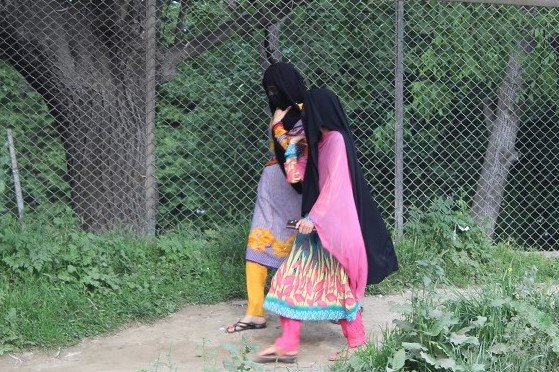
For the purposes of this argument, I am going to begin from several starting premises.  First, that the principles I defend apply to any form of religious ‘modesty dress’ which is imposed on biologically-defined groups by community or family pressure. This means we can set aside endless hairsplitting over whether the principles ought to apply to a hijab, burka or niqab.  Second, the question whether or not Islam actually requires veiling or not is immaterial, since interpretations of what counts as “truly Islamic” are endless and cannot be resolved by any means other than consensus or fiat. Female veiling is indisputably a Muslim cultural practice, irrespective of whether it is truly “Islamic”. I hope these caveats will be sufficient to prevent detractors from misdirecting the debate to tangential issues irrelevant to my arguments. 

What are the limits to the power that can rightfully be exercised by society over individual women who wish to adhere to religious dress codes? How can their desire to conform to a religious dress code be balanced against the rights of other women who wish not to conform to religious community pressure? Even fierce critics of a state ban on religious ‘modesty’ dress admit without hesitation that there are plenty of Muslim women who (due to legal, quasi-legal, or illegal-but-hidden forms of familial and/or community pressure) wear the veil involuntarily.

Historically liberals have protected both freedom of religion and freedom from it – i.e. the right of people to dress as they please. Freedom to dress however one pleases must include the freedom of people not to be told how to dress by religious authorities or others in their communities or families. Liberalism does not require us to accept the double standard by which we bar our government from “telling people what to wear” while giving conservative religious authorities freewheeling power to do so. We know only too well from the testimonies of liberal Muslim and ex-Muslims who have been liberated from family and community pressures how difficult, indeed even dangerous, it can be to dissent from community-imposed customs.

In the first Chapter of On Liberty (1859), the architect of political liberalism, John Stuart Mill, was at pains to expand the protection of the individual beyond protection from the state to a full protection from oppression by “the will of the most numerous or most active part of the people; the majority, or those who succeed in making themselves accepted as the majority.”[1] Mill argued that the abuse of power by a tyrannous majority is as dangerous as any other abuse of power. The tyranny of the majority, while it may at first operate through the mechanisms of state, can become an even more formidable social oppressor than the state because it is more insidious and “leaves fewer means of escape, penetrating much more deeply into the details of life.”[2] For these reasons Mill urged that protection must extend beyond protection from the magistrate to protection also against:

the tendency of society to impose, by other means than civil penalties, its own ideas and practices as rules of conduct on those who dissent from them; to fetter the development, and, if possible, prevent the formation, of any individuality not in harmony with its ways, and compel all characters to fashion themselves upon the model of its own.”[3]  

The purpose of J.S. Mill’s famous 1859 essay was to establish “the nature and limits of the power which can be legitimately exercised by society over the individual.”  Mill argued for “one very simple principle, as entitled to govern absolutely the dealings of society with the individual in the way of compulsion and control.” This harm principle has been the uncontroversial mainstay of liberal democracies for over one hundred and fifty years. It states: “The only purpose for which power may be rightfully exercised over any member of a civilized community, against his will, is to prevent harm to others.”  Countries that applied the principle have seen a gradual expansion of individual liberties to minorities of all stripes, except the most intolerant groups whose treatment of (yet other) minorities is in conflict with the very tolerance from which they wish to benefit.

The harm principle is a necessary condition for state interference with the individual’s liberty, but not a sufficient one, since allowing certain kinds of harm can sometimes be in the general interest. For example, competition in a free market economy means that some job candidates or entrepreneurs will lose, but allowing economic competition arguably produces more benefits to the general welfare than banning it. Here the harms suffered by individuals by allowing a free market are arguably insufficiently grievous to require dismantling a market economy.

Whether to resist an oppressive government or domination and violence from other individuals, the liberal ‘harm principle’ has consistently served to protect the ‘moral space’ minimally necessary for  “pursuing our own good in our own way.”

Notably, no French, Belgian or Austrian Muslim who chooses to ignore the official ‘ban’ on religious dress risks being subjected to physical violence, incarceration indoors or loss of citizenship. Defenders of Muslim dress concede that, if they cannot wear religious dress, some Muslim women risk the (worse) fate of being confined indoors by controlling husbands or family members. This is supposed to be an argument against aban, yet it explodes the myth that Muslim women from conservative religious families possess autonomy. As such it serves as more evidence of the extent to which Muslim women are controlled under Islam’s conservative customs. This only bolsters the case in favour of state protection for individual women who wish to resist family or community religious pressures.  It should therefore be taken as evidence weighing on the side of those who support a ‘ban’, since it implies that veiling is the thin edge of the wedge – the visible indicator of social control over women that in fact extends much deeper beyond what is visible to the public.

Fashionable left-leaning opinion is that a state would be ‘intolerant’ to restrict religious dress (never mind that no country fully bans it, and other countries besides France uphold only partial bans). Under French policy, no woman is permitted to leave her home hidden behind a full-face Islamic veil without risking a fine and anyone found forcing a woman to cover her face also risks a steep fine.  In Austria, from October of last year, whoever violates a similar rule faces a maximum fine of 150 Euros.

In Britain, The LibDems pledged in their party platform to “guarantee the freedom of people to wear religious or cultural dress” and former Schools secretary Ed Balls has claimed it is “not British” to tell people what to wear in the street. I am sure most liberals would agree. I certainly do. This is exactly why we should consider implementing a restriction on wearing the hijab/niqab/burka. Such a policy would overturn an existing restriction on how women can dress that is enforced on many women and girls by family members. Patriarchal religious customs do tell women exactly what to wear, and forbid them from wearing anything else. A policy limiting religious dress would merely tell one particular subset of Muslim women (religious conservatives) not to wear one particular thing.

By contrast, the liberal state would not impose an opposite (but equally restrictive) rule to that of religious authoritarians because it would not positively prescribe what women must wear. Its sole purpose would be to overturn an existing rule that does so. Under such a policy, this particular religious ‘gender uniform’ would not be allowed, but anything else would be permitted, including long dresses or feminists with burkas bearing slogans such as “This is a sexist uniform”.  At present, because of extra-judicial executions/punishment that would be carried out in response to the latter, no such feminist statement (whether by a Muslim or a non-Muslim) is permitted (even in allegedly ‘liberal’ Western Europe). This shows how far liberal freedom of expression has already been eroded by de facto punishments and intimidation.  Therefore the ban would remedy a situation that already exists in order to expand individual liberty to groups to whom it is presently denied.

In a country that has grown ultra-paranoid about “race” (and has conceptually conflated it with religion), it is necessary to clarify the liberal values we ought to be defending without embracing simplistic responses to complex problems.  Criticism of Muslim veiling does not stem from misguided xenophobia or intolerance towards ‘otherness’.  On the contrary, it stems from a more consistent, principled defense of individual liberty for all persons, including Muslims. The right to assert one’s “otherness” must include the liberty to dissent from group ‘identity’ or ‘community standards’. Religious communities are not homogeneous. Many Muslims argue that the veil is not mandated by Islamic traditions. Communities are not made up of identical individuals who unanimously agree with “their own” community’s customs or the meaning of its symbols. Only racists think of people as undifferentiated members of ‘culture’ in this way.

However, “coming out” from one’s culture of birth often comes at a very steep price. In 2017, one Birmingham Hijabi found this out the hard way when she made the mistake of thinking she was allowed to ‘twerk’ in public while wearing a hijab. The threats and vitriol she received for doing so were reliable indicators that the hijab does not mean whatever the wearer wants it to mean. For many, it has a uniform cultural meaning that is enforced by dominant members of a community (i.e. a tyranny of the majority). If all members of a community were truly willing adherents of the rule, then examples would not need to be made of ‘deviant’ individuals such as the Birmingham girl.

Muslim theologians, from the late Moroccan scholar Fatima Mernissi to UCLA’s Khaled Abou El Fadl, and Harvard’s Leila Ahmed, Egypt’s Zaki Badawi, Iraq’s Abdullah al Judai and Pakistan’s Javaid Ghamidi, have clearly established that Muslim women are not required to cover their hair. One of the main ways in which mainstream religious conservatives have responded to scholarly theological critiques of the veil is to argue for its practical benefits instead.  As John Shahryar has argued, the claim that the hijab somehow protects women against sexual harassment and/or violence is by no means a minority view. Eminent Islamic clerics like Egypt’s Sheikh Yusuf al-Qaradawi—widely considered a spiritual leader of the Muslim Brotherhood and much of Sunni Islamic thought—and Ayatollah Sayyed Ali Khamenei—the supreme religious and political authority in Iran and one of Shia Islam’s main sources of jurisprudence—have endorsed this view. Many mainstream conservative Muslim clerics and pseudo-social scientists—like Zakir Naik — who openly suggests that women who don’t wear the hijab are asking for sexualized harassment or violence. They falsely correlate a woman’s right to wear what she wants in the West with a high incidence of sexualized violence there when the real difference is owing to the underreporting of violence against women in Muslim majority countries where (a) a stigma is attached to victims, and (b) patriarchal religious authorities are uninterested in collecting data since it is not so much a ‘crime’ as a ‘mistake’ on the victim’s part.

Western law assumes that adult males are responsible moral agents and therefore capable of sexual self-control. Liberal democracies should not be supplanting their own legal system with determinist theories that treat adult males as incapable of moral agency. The just way to protect women from predatory males is to use the law to punish men who molest women. If, on the other hand, men cannot control their own actions, then they do not deserve the rights enjoyed by other adults and should not be permitted to drive, vote, hold public office, smoke, drink alcohol, buy property or marry.  

Individuals in any community may wish to dissent, rebel or contest the meanings of sacred cows and “shared values”. In practice, ‘community’ can be both socialization and oppression. Genuine liberals have always feared a tyranny of the majority and have regarded it as at least as dangerous to individual liberty as state coercion, if not more so. The French, including many French Muslims and ex-Muslims, acknowledge the existence of religious intolerance and give it importance. If we concede that religious dress codes are involuntarily adopted by a subset of British citizens, then the state is justified in interfering with the practice, since the purpose of the interference would be to prevent harm to others and to protect individual liberty where it is threatened.    

Under liberalism, the conditions for interfering with individual liberty are quite strict. In the case of restricting religious dress, there is little doubt that religious dress does harm those who are coerced to adopt it, and the harm caused to this minority from religious compulsion is not in the public interest. This provides the justification for making exceptions to the general rule of religious freedom. As George Suchett-Kaye argued in a recent Conatus News piece on ‘tolerance’, where the reasons for rejecting the freedom to dress religiously are stronger than the reasons for its acceptance, there is a valid case for restricting it. The same principle applies to analogous cases such as whether religious liberty ought to extend to allowing a particular religion to sacrifice virgins or to enforce alcohol or pork bans on non-believers. Courts in liberal states have traditionally ruled against religious practitioners where the exercise of their religion is instrumental to harming others or restricting their liberty.

While the state ban on public religious veiling denies those Muslims who do choose to adopt it one means of symbolic religious expression in certain public spaces, this particular form of religious freedom of expression in turn conflicts with the freedom of other Muslims not to adopt religious dress. There is nothing controversial about limiting the freedom of expression of individuals to those behaviours that do not deny it to others.  The same would be true of any other form of self-expression. So for example, you cannot listen to your music so loud that others cannot listen to theirs. You cannot smoke cigarettes if your doing so will force others to passively “smoke”. You cannot drive over a certain speed limit because doing so endangers the lives of others with whom you share the roads. The freedom of one group cannot be so pervasive and intrusive that it encroaches upon the freedom of others.

It need not be this way, but for the present time, veiling is not only a symbol of individual expression, like a T-Shirt or a tattoo.  Its primary theological significance often makes it exactly the opposite. It denies individual women self-expression or sexual autonomy and instead defines them chiefly in terms of their biological difference to men, as a generic group. If any group less despised than women were required to wear a modesty uniform because of their biological differences to another group, then this would be glaringly obvious.  Modest religious dress only reinforces a form of sexual apartheid that contributes to denying many other rights to women and girls. (When was the last time you saw a woman in a burqa riding a bicycle?) The veil may be said to symbolize many things, but it is without doubt a sign of religious conformity and obedience, since stigma and/or punishment often accompany its rejection. If interfering with the practice of veiling will prevent harm to a sub-set of Muslim women for whom it is not a choice, then this justifies state interference in the practice.  

What would the godfather of liberalism have said about a ban on religious dress?

John Stuart Mill’s 19th century England presented a different set of religious issues to those of multicultural Britain today, but Mill considered three cases contemporaneous to his writing that offer a prism through which we can discern how he might have responded to the question of a state ban on Muslim veiling. 

First, he considers whether a ban on eating pork would be acceptable in a Muslim minority country like his own.  He concludes that the ban on pork-eating would be unacceptable since many would want to resist the ban because they do not accept Muslim disgust as legitimate grounds for preventing other people from eating pork.  

Next Mill looked at the Christian Puritans’ ban on various forms of recreation, such as music and dance.  Mill remarked that the moral and religious sentiments of Puritans were inadequate grounds to restrict other peoples’ leisure activities.

Finally, he considered the Mormon minority in the United States, who practiced (male only) polygamy and were persecuted for it. Mill’s response was that interference in the Mormon way of life would be unjustified on the condition that the practice is undertaken with the full consent of all participants.  He also stipulated that it should be permitted only if people living in Mormon communities were free to leave.

Mill’s various responses to these cases illustrate that mere offence or distaste is nota good reason for society to constrain what people do. The Mormon example can be extended to any case in which a host society seeks to change the practices of a minority when those practices are not enforced on people against their will.  If we accept that religious dress codes are sometimes forced on people against their will, then the state is justified in interfering with the practice, as it would be in cases where the practice of male polygamy did not have the full consent of those impacted by it.

The Anglo-Austrian political scientist and philosopher, Karl Popper (1902 – 1994), recognized the danger in censoring intolerant attitudes. He thought it preferable to counter them with rational argument and balance them by public opinion. However, he believed that society has a right to suppress intolerant attitudes if their spokespersons refuse to engage in rational argument and refuse their followers the right to hear alternative views. He concluded that:

“Unlimited tolerance must lead to the disappearance of tolerance. If we extend unlimited tolerance even to those who are intolerant, if we are not prepared to defend a tolerant society against the onslaught of the intolerant, then the tolerant will be destroyed, and tolerance with them.” [Karl Popper, The Open Society and it’s Enemies, 1945]

No one should be made, by legal or political force, to conform to ideological values that are not his or her own, so Ed Balls may be right is saying that it isn’t “British” to tell people what to wear (or not to wear) in the street, but that goes for Salafi-Wahhabists and fundamentalists as well as for us. 


[1] John Stuart Mill, ‘On Liberty’, Chapter 1 in Collini, Stefan, Ed., On Liberty and Other Writings, Cambridge University Press, 1989, p. 8. 

[2] Ibid.

[3] Ibid.