Home Blog Page 316

India must challenge China from a position of strength

As the eventful year 2020 came to a close, one is reminded about a huge public outcry that was triggered by the so-called Chinese intrusions in eastern Ladakh mid-year. Suddenly a bevy of self appointed “strategic experts” surfaced to give an impression that China was rapidly engulfing Ladakh. The matter excited media and public interest as suddenly as it came making it very apparent that we, as a nation, lack strategic depth in our thought process. For many in India, national security is no more than a TRP generating media hype that gives an opportunity to make a fast buck, mainly by hounding the government.

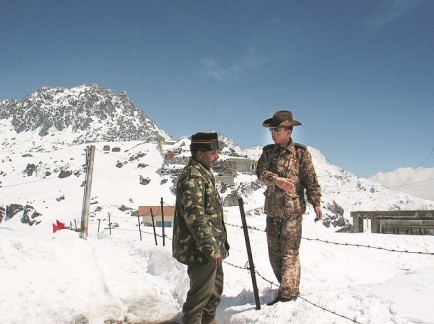
This piece is being written as a reminder that despite the media meltdown on the subject, not much has changed along the Line of Actual Control (LAC) in Eastern Ladakh, except that extreme control conditions are making it more challenging for the deployed troops to man their posts. The Chinese are sitting where they were earlier and showing no intention of moving back despite Indian insistence for restoration of the status quo ante.

Undoubtedly, China is losing diplomatic space globally while India is gaining ground for her righteous stand. The apprehensions that India voiced about the Belt and Road Initiative (BRI) are today being accepted globally, much to China’s discomfiture. Anti-China sentiment has gained traction over the preceding year with friction witnessed in the country’s relations with the United States, Japan, Australia and, of course, India. US President Donald Trump has played out his last card against China recently with the US Congress passing  the Tibet Policy and Support Act (TPSA). The big takeaway of the Act is that it will  block Chinese intentions of controlling the succession plan of the Dalai Lama. The TPSA also gives to India an opportunity to rethink her Tibet policy and put in place the necessary course corrections.

Despite the aforementioned diplomatic accretions, for the serious thinkers, the Chinese threat to India continues to be very real and very potent. In hindsight, considering the mdi-2020 intrusion it becomes necessary to give due credence to the Indian refusal to cow down to Chinese pressure. It was so because Indian military infrastructure in the Ladakh region has grown to an extent where thwarting Chinese expansionism has become feasible. The build up of Indian infrastructure was, incidentally, the main reason for the Chinese aggression in the first case. It was something that China did not like and continues to not like. Increased volatility on the LAC therefore is very much on the cards once the weather opens up.

For India, the threat remains more potent since the collaboration between China and Pakistan is becoming stronger by the day. With the US and Middle East countries like Saudi Arabia and UAE cooling towards Pakistan, the economic dependence of the country on China has increased exponentially. In recent time the two countries have joined together to corner India on the Kashmir issue. The hawkish posture that Imran Khan has adopted on Kashmir is largely based on Chinese support. China will continue to use Pakistan as a cat’s paw against India and up the ante at will.

Such aggressive and collaborative military presence on two fronts leaves India with no choice but to keep its military deployment along the crucial frontiers at a very high level. Open conflict can be discouraged only with a credible deterrent on ground.

It, however, has to be admitted that all is not well with Chinese expansionism in Pakistan. Recently attempts by the federal government of Pakistan along with the China CPEC authority to cordon off large sections of the Gwadar port with a barbed wire fencing on the pleas to improve security were thwarted by the Provincial Government of Balochistan. “The local people will not be kept away from decision making about Gwadar and a decision about fencing would now be taken after taking the local people into confidence over the issue,” said Ziaullah Langove, the Home Minister of Balochistan while reversing the plans to create Pakistan’s first “sealed city”. Pakistani intelligentsia has, since long, been cautioning against too much dependence upon China. “Chinese assistance in the development of the province’s infrastructure and the port of Gwadar has been significant but involvement of its people in projects and sense of ownership is crucial,” says Talat Masood, a senior geo-political analyst of Pakistan, while adding that the nation should make serious attempt to develop a self-sustaining economy.

Pakistan may be the most significant protagonist in the Chinese game plan against India but it is not the only one. China is playing a larger game at the regional level. It has greatly increased efforts to isolate India in her own neighbourhood. The degree of success being achieved can be gauged by the tensions that India is facing in her relations with Sri Lanka, Nepal and even Maldives and Afghanistan. So, while the West, US, Japan, Australia, etc., can rest easy with Indian support, India is facing a host of problems created by China.

The situation can blow up into full scale hostilities at any time. India therefore needs to have credible military counter measures in place. This is the best time for the government to act since there exists across India a strong anti-China sentiment. The spate of foreign visits by the Indian Army Chief, General M.M. Naravane along with the restructuring of the armed forces and equipment procurement are positive steps in the right direction, but more needs to be done on an urgent basis.

The issue at hand is lack of strategic foresight. Will the fractured Indian political environment stand together at least for national security? The earlier examples do not give much confidence in this regard. The backlog in equipment is so large that unprecedented measures are required to cover it. Would the government be able to generate the will to face the challenge?

India cannot legislate what China and Pakistan will do, she can only be prepared to respond to Chinese malevolence with strength. The challenge is to create the required strength to do so.  

Kashmir Valley shuns Pakistan’s efforts to derail DDC elections

0

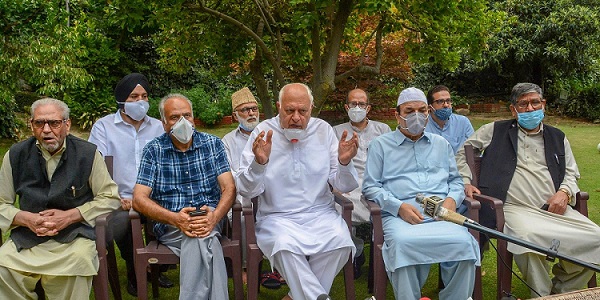
The Union Territory of Jammu & Kashmir has witnessed a paradigm shift in its socio-political environment in recent times. Of great importance is the successful and incident free conduct of the District Development Council (DDC) elections that began on 28 November and culminated with the counting of votes on 22 December. This period and some time before it witnessed extensive cross border firing by Pakistan quite obviously with the intention of infiltrating terrorists and disrupting the elections.

“There are terrorist launch pads and terrorists across the Line of Control (LoC) making desperate attempts to infiltrate into Jammu and Kashmir to disrupt normal democratic processes,” said Army Chief, General M.M. Naravane in a press conference on 28 November. The overwhelming response of the Indian Army put paid to whatever the enemy sought to gain from his misadventures.

The terrorists operating in Kashmir were instructed by their masters sitting across the border to intimidate the people from casting their votes and also to increase the threshold of terrorist initiated violence. Accordingly, on 1 December, unknown terrorists lobbed a grenade on a CRPF location in Sopore, district Baramulla, the grenade exploded outside the main gate and caused no injuries. Again on 6 December terrorists struck at a police party of Zadibal police station, Srinagar and injured one policeman and a civilian. This was a clear indication that the terrorists were attempting strikes to ward off the pressure from their masters but these were half-hearted attempts. They were obviously scared of launching head on operations. The polls continued undeterred. Security forces maintained the pressure and many hideouts were busted during this period leading to seizure of weapons, explosives and war like stores that were to be used to disrupt the elections.

The first major counter terrorist operation during the period took place on 9 December, at Tiken area of Pulwama in which three terrorists were killed. They were said to be affiliated with the al-Badr terror outfit. The killed terrorists were identified as Merajuddin Lone, Umer Ali and Owais Farooq. One of them was from village Dadsara in Tral, that is known to be a bedrock of terrorism with many known terrorists hailing from there.

Earlier the death of a terrorist from the village led to massive funeral processions with thousands of people joining in. In a significant departure from earlier times there was no activity witnessed in the village this time. Nobody demanded burial of the body in the local cemetery and no shut down was called. Reports suggest that not many people even visited the family of the terrorist to offer condolences. The bodies were buried as per COVID protocol in Baramulla.

Earlier, on 26 June, the Jammu and Kashmir Police had tweeted that for the first time since 1989, there were no Hizbul Mujahideen terrorists left in the Tral area of Pulwama district thus putting a lid upon the Burhan Wani and Zakir Musa era when this region resonated of separatist tendencies. The present response in village Dadsara indicates that the changeover is complete and irrevocable.

With terrorists unable to impact the poll process the terror masters activated their over ground workers and told them to dissuade the people from voting. On 10 December, reports were received that some miscreants in Anantnag were dissuading people from voting. “Some miscreants were found dissuading people from voting in Anantnag during the fifth phase of the DDC elections today. When the media reached, miscreants started to worsen the situation. The police separated the media from the area and the situation was brought under control”, said Jammu & Kashmir State Election Commissioner (SEC) K.K. Sharma at a press conference. An FIR was registered by the police and investigations initiated.

Beyond the aforementioned incident, there was no Syed Geelani and his ilk seen on the streets provoking people to fail the elections, there were no violent demonstrations leading to crowd control actions by the police. Even the social media was not as active in bullying the people as it used to earlier, it is so because hundreds of accounts have been closed due to proactive surveillance by the Cyber Cell of the JK Police and restriction on use of spectrum. The active accounts were being operated from Pakistan as a part of the propaganda campaign of ISI. 

However, a setback came by on 14 December, when terrorists opened indiscriminate fire on a leader of the Peoples Democratic Party (PDP) and killed his Personal Security Officer (PSO), Manzoor Ahmad. It was quite apparent that with the polls almost coming to an end the terrorists were desperate to show results. The best that they could do was to attack a single political leader and that too in a stand-off manner.

Thus, the DDC polls culminated successfully with no major incident of violence reported and voter turnout registered at an all time high in J&K. “I congratulate all the candidates who have won the DDC elections. With the active participation of people, the voting percentage was higher, and polling was peaceful. Results were declared for 278 seats and deferred for two seats,” said State Election Commissioner K.K. Sharma while heralding the culmination of this very challenging project.

Lieutenant Governor Manoj Sinha, had a special word of appreciation for the security forces led by the Indian Army. “I am happy that except for one or two very small incidents, District Development Council (DDC) elections were conducted in a very peaceful, free and fair manner. Despite cold weather, Jammu and Kashmir Police and Armed Forces contributed in a big way during these elections,” he said.

The successful conduct of DDC polls suggests that Kashmir has changed for the better; the people are now pursuing their aspiration in a secure and free environment. Even places earlier steeped in separatist ideology due to misleading inimical forces are witnessing a change of heart. The positive changes and stability that the region is witnessing are raising hopes of an early switchover from the status of Union Territory to statehood as has been promised.

Public anger brewing against Pakistan Army, interior minister Sheikh Rashid threatens critics

With the announcement of Pakistan’s Minister for Interior Sheikh Rashid that, “cases will be registered against people using foul language against the armed forces within 72 hours” makes two things evident. One, that public criticism of the armed forces, [which till very recently was something unheard of in Pakistan], has now reached tipping point, and two, that the people have started rejecting Rawalpindi’s self-assumed role of being Pakistan’s exclusive conscience-keepers.

Rashid’s threat of throwing the book at those who use “foul language” at Pakistan Army also indicates that despite compelling evidence regarding the rampant use of strongarm tactics to ‘discipline’ detractors through abductions [and at times even assassination] by its spy agency Inter-Services Intelligence [ISI], such intimidatory measures are no longer scaring the public.

However, the Interior Minister’s warning of legal action against those demeaning the armed forces comes as no big surprise. Readers may recall that in September 2019, PTI senator Amjad Ali Khan tabled a proposed amendment to Pakistan Penal Code [PPC] seeking to criminalise any act that “intentionally ridicules, brings into disrepute or defames the Armed forces or a member”.

The statement of objects and reasons submitted alongwith proposed PPC amendment bill elucidated that “The purpose of this amendment is to prevent hatred and disrespectful behaviour against the Armed Forces”. But what this document hasn’t clarified is the necessity for adopting such a drastic measure that could well curb freedom of expression guaranteed to Pakistani citizens by Article 19 of the Constitution!

One doesn’t have to be a Sherlock Holmes to deduce that in actuality, the PPC amendment bill has been prepared by the government on the obvious instructions of the army and then tabled in the senate as a private member bill. The reason for following such a convoluted process too is not very difficult to discern. Currently, the main issue that purportedly “ridicules, brings into disrepute or defames the Armed forces” is its alleged role in manipulating the 2018 General Elections to ensure that Pakistan Tehreek-e-Insaf [PTI] party comes into power so that its protégé Imran Khan becomes Prime Minister.

The ongoing political controversy in Pakistan centres around the issue of whether Khan has been elected by people or ‘selected’ by the Pakistan Army. Hence, introducing PPC amendment bill to protect the army from slander in effect amounts to a serious conflict of interest, since through it, the PTI government is seeking to defend its own legitimacy by silencing criticism of Rawalpindi’s dubious role in this issue. But by going ballistic and publicly threatening legal action against those criticising the army, the Interior Minister has unwittingly also accepted that intensity of public anger against the army is such that the situation is desperate, which justifies institution of desperate measures like stifling freedom of expression.

Rashid’s awkward attempt of saving Pakistan Army from disparagement must have certainly caused immense embarrassment to an army, that despite its long history of unconstitutional acts like overthrowing democratically elected governments, had still remained beyond reproach for more than seven decades and got used to the same. But now, with Khan’s efforts to divert public attention from the ‘elected’ versus ‘selected’ debate by saying that “the sort of language that is being used for the army today is the kind that India’s propaganda machine uses against the army” finding no takers, the ‘army can do no wrong’ cookie has finally crumbled!

But while Khan is certainly playing Pakistan’s emotive and age-old anti India rant, Nawaz Sharif too isn’t an  angel of virtue and there’s no doubt he certainly has an axe to grind with the army. After all, he has been ousted from office by the military twice- the first time, by a military coup, and the second time in what may believe indirectly [through the judiciary]. So, while his broadside at the military may be motivated, still his allegations can’t be summarily dismissed as the unjustified ranting and raving of a prejudiced person seeking vengeance and political rehabilitation. The reason for this is elementary- if Sharif’s allegations genuinely lacked any substance, then why would the 11 political parties that have come together under the Pakistan Democratic Movement [PDM] umbrella, jeopardise their own credibility as well as antagonise the military establishment by endorsing a false claim?

However, the million-dollar question that remains unanswered is whether the PDM’s allegations of the army’s involvement in manipulating election results are true? While it would be naïve to expect finding any concrete evidence to either substantiate or disprove this allegation, there’s no dearth of credible indicators as evident from a few references of the many post-election observations made by very respected organisations and personalities as enumerated below:

  • Reputed Pakistani journalist, scholar and author Ahmed Rashid mentioned that “For the first time, not just the elite, but the public is aware of the Army’s major role. It’s now talked about at the village level.”
  • Human Rights Commission of Pakistan reported that military’s security agencies had put pressure on candidates of Nawaz Sharif’s PML-N party to switch loyalties and return their tickets.
  • According to BBC, nearly 17,000 PML-N party members face criminal cases for breaking ‘unspecified’ election rules.
  • Justice Shaukat Siddiqui, a senior sitting judge of Islamabad High Court revealed that the Chief Justice of Pakistan [CJP] had asked him to ensure Nawaz and Maryam Sharif were denied bail until the 2018 elections were over. Though the CJP [expectedly] denied the same, but by saying that, “The real power appears to rest with Pakistan’s military and the judiciary, which sees undiluted democracy as a threat”, Ahmed Rashid has buttressed Justice Siddiqui’s assertion.

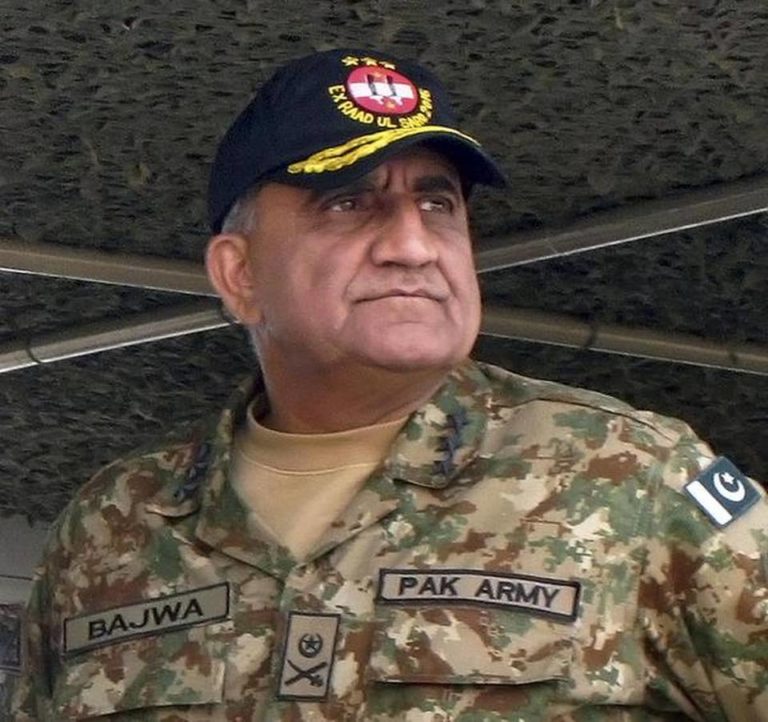
By saying that Pakistan’s Armed Forces have never indulged in politics and would not do so, Interior Minister Rashid has outrightly dismissed Justice Siddiqui’s admission that “Today the judiciary and the media have come in the control of the ‘bandookwala’ [army]” and that the “judiciary is not independent.” But Imran Khan’s allegation that Sharif became chief minister of Punjab by “polishing General Zia’s shoes” not only belies his Interior Minister’s claim, but is also an unambiguous reaffirmation of the fact that Pakistan Army has a long history of filling political posts with their ‘selected’ candidates. So, if such manipulation [as per Khan’s own admission] could take place in Gen Zia’s time, then why couldn’t this have happened during Gen Bajwa’s tenure?

But all said and done, there’s a need for Islamabad to put extraneous issues aside and ensure that justice is done and Sharif is brought to book. Accordingly, it’s heartening to hear Rashid telling the media that in order to facilitate the former prime minister’s deportation, his passport, which would expire on 16 February wouldn’t be renewed. However, the bad news is that according to PTI, “[when] asked about cancelling retd. Gen Pervez Musharraf’s passport, Rashid said his department had not received any such application”. Since just like Sharif, Gen Musharraf, too is a ‘proclaimed offender’, Rashid’s puerile excuse justifying non cancellation of Gen Musharraf’s passport exposes a clear discriminatory bias against the former prime minister and a definite benevolent concession to the former army chief.

This in turn goes to strongly suggest that Imran Khan may after all, actually be a ‘selected’ and not the elected Prime Minister of Pakistan!

Hazara slaughter at Bolan is Pakistan’s filthy act to play the victim

Pakistanis are adept in the art of being aggressors and playing the victim card simultaneously. Even their naked acts of mass slaughter are sold upon as ‘terror attack on Pakistan’ that eventually helps Rawalpindi continue with its nefarious activities. The butchery of Shia Hazaras, in a new year on January 3, at Bolan in occupied Balochistan is the latest in this series.

Pakistan Army directed its proxies in Islamic State (IS) to slaughter unarmed Hazaras in the Mach area of Bolan district in an effort to divert world attention from its ongoing military operations across occupied Balochistan, where it continues to kill unarmed Baloch people.

Let’s recount the sequence of events. The attack on unarmed Shia Hazara coal miners took place on Sunday morning at Machh in Bolan. This attack was swiftly condemned by Pakistan Prime Minister Imran Khan and almost immediately the Islamic State (IS) took responsibility for this attack on Shi’ite Hazara community. Media across the world reported it as a terrorist attack in Pakistan.

The real story is entirely different, however.

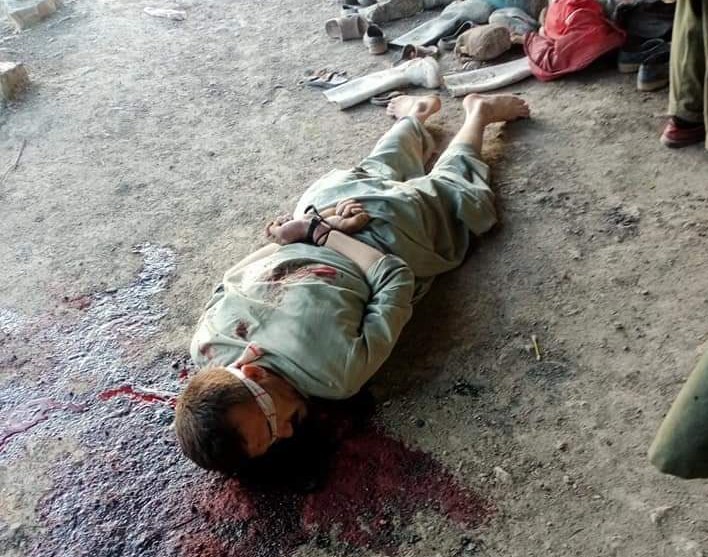
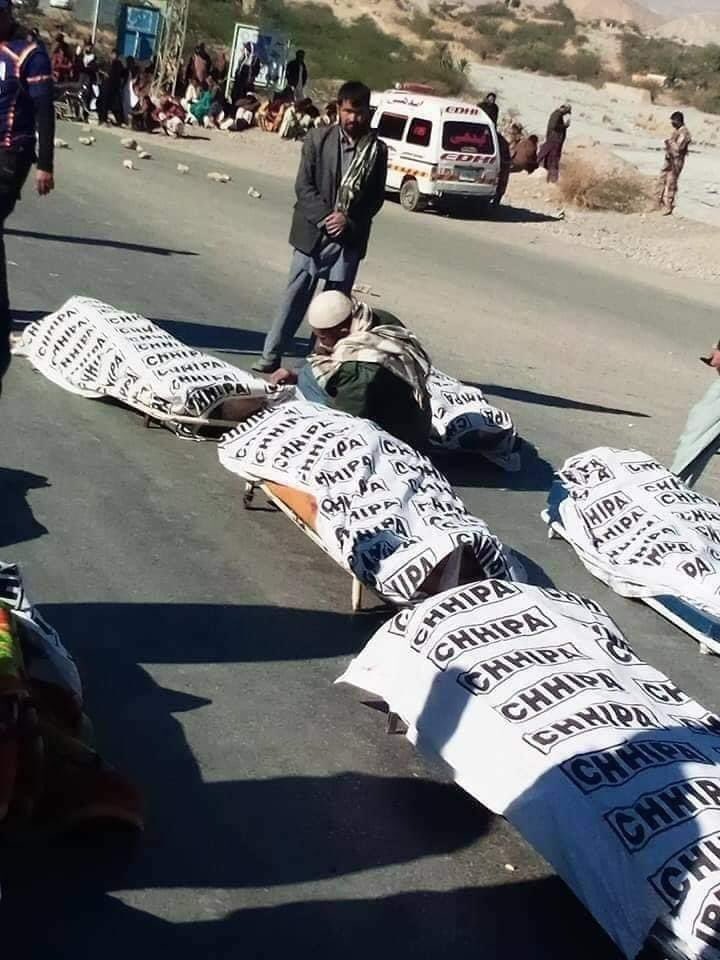
Dead bodies of Shia Hazaras lie on the road at Bolan in occupied Balochistan.

Over the last fortnight entire Balochistan had erupted in protests after the cold blooded murder of Baloch human rights activist Karima Baloch by the ISI in Toronto, Canada. When Pakistan’s usual tactics failed to deter Baloch people from holding massive rallies and protests against the killing of Karima Baloch it deployed its regular armed soldiers to fire upon unarmed Baloch people at Bolan.

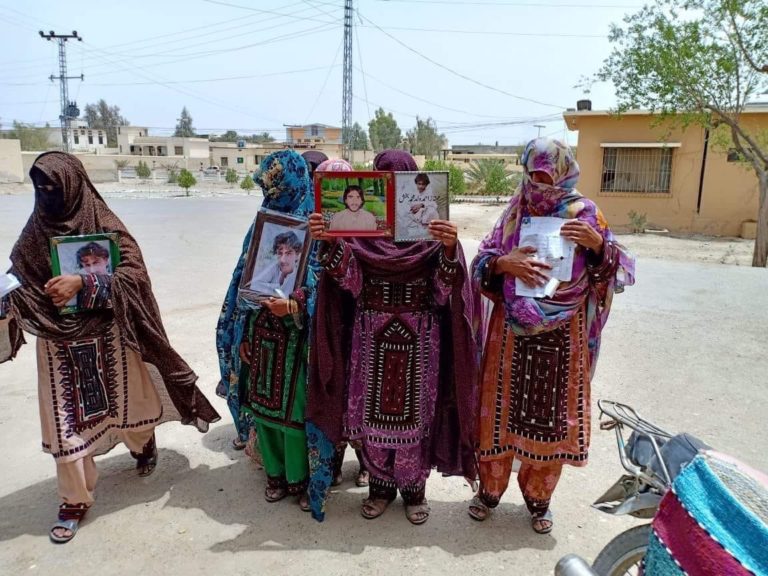
Pakistan Army has been using helicopter gunships and sophisticated weapons to shoot and kill unarmed people at Bolan. Pakistani security forces also burnt vast forests of Gharbog Sujawal in Sarawan. A couple of days ago Pakistan Army demolished the entire Mehi village at Mashkay. Mehi village is the birth place of Balochistan’s pro-independence leader Dr Allah Nazar Baloch. Dozens of people from these areas have been picked up by the Pakistan Army and transferred to an unknown location. The Baloch National Movement (BNM) in its latest statement has confirmed these attacks.

The spokesperson of Baloch National Movement (BNM) said that ground and aerial operations of Pakistan Army has been going on for several days in different areas of Bolan and gunship helicopters have been shelling continuously. “This operation is being further expanded. Most areas of Bolan and Machh are under heavy siege by the Pakistani Army and all means of transportation are closed. So far, dozens of people have gone missing by the Pakistani military,” said the BNM spokesperson. He added that Pakistani barbarism has intensified across a wide area. “…the operation has been expanded in different areas of Bolan including Cheesan, Pod, Mian Kaur, Shahrag and surrounding areas in Mach and Bazgar, Jambro, Talang, Kaman, Jhalawan, Loni and Mejdari.”

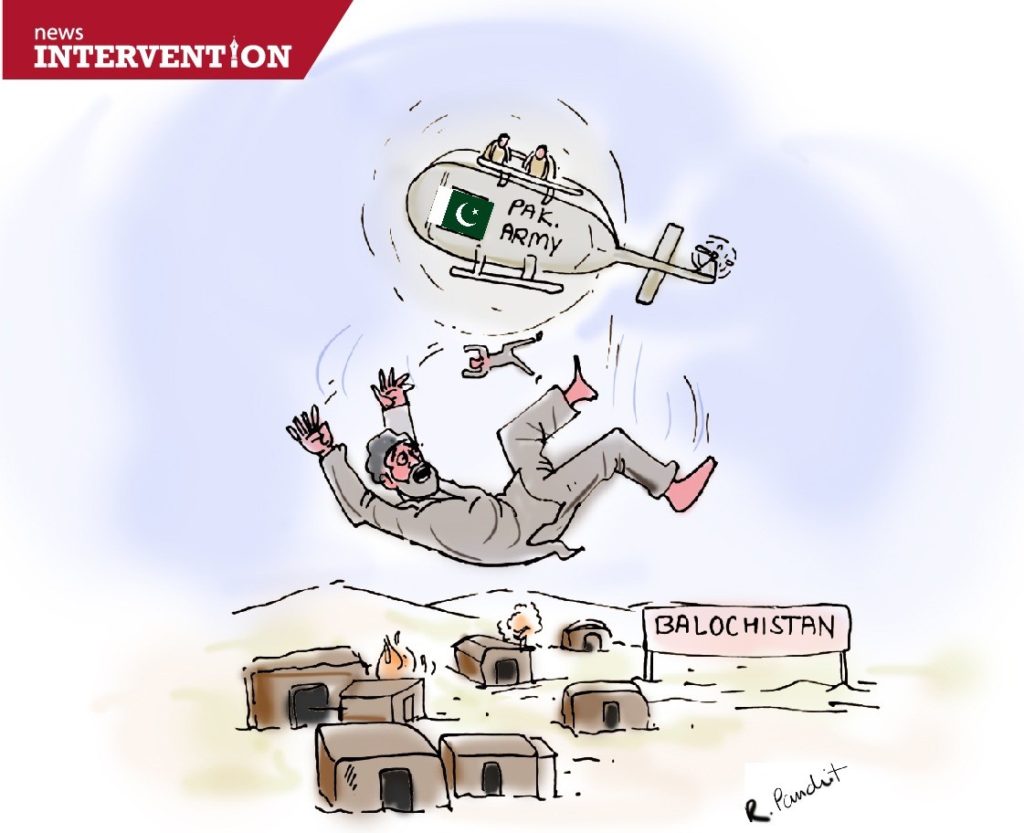
An illustration depicting Baloch people being thrown down form Pakistan Army helicopters in occupied Balochistan.
This is how Pakistan Army throws off alive Baloch people from helicopters to kill them in occupied Balochistan.

Despite internet blockade and a gag order on media all these news had begun to trickle to the outside world. Coming on the heels of Karima Baloch’s cold blooded murder Pakistan would have found it hard to defend itself on international forums.

It was in this situation that Pakistan decided to play its victim card and pulled its sympathizers in the Islamic State (IS). The hapless Hazaras around Bolan in Balochistan became the soft target for Rawalpindi. Hazaras were chosen as they are Shias and the slaughter of Shias would not garner much sympathy from the majority Sunnis, and so their killing would surreptitiously be labeled as a terrorist attack on Pakistan. This would then justify Pakistan Army’s atrocities in Bolan and other areas of Balochistan.

Shia Hazaras have always been the soft target of ISI’s Islamic jihadis that have killed Hazaras earlier at Quetta, Mustong and Bolan. Even earlier while on their religious pilgrimage to Iran, the Shia Hazaras had been slaughtered by Pakistanis.

It’s time the world wakes up to these shenanigans of Pakistan and labels it as a terrorist state. The Pakistani regime, Pakistan Army and its rogue intelligence agency ISI have fooled the civilized world for too long.
This is not the first time Shia Hazaras have been murdered by Pakistanis in occupied Balochistan and if the world stays mum then Shia Hazaras may be targeted yet again by Rawalpindi.

Modi must not concede to unreasonable farmer demands

0

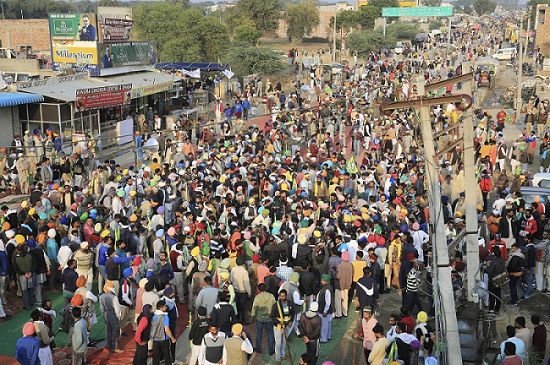
Indian farmers, mostly from Punjab, parts of Haryana and western UP, are holding the nation to ransom. They have blocked road and rail access to Delhi from neighbouring states by lining up hundreds of tractors along the route and bringing people at the protest sites. The genie of mob-protest to settle grievances that the Punjab chief minister released so triumphantly has started taking its toll also on telecommunication networks and lives of misguided protesters. Worse consequences are to follow.

Strangely, agitators’ anger is against the Acts that allow farmers to sell their produce anywhere in India, engage voluntarily in contract farming and permit traders to stock unlimited produce to reduce wastage, export surplus and keep prices stable. Neither Minimum Support Price (MSP) nor Agriculture Produce Market Committee (APMC) have been abolished. Still, APMC bosses and middlemen won’t back off unless the Acts are repealed and MSP is protected by law.

Since the farm Acts are not cast in stone, they may have flaws but these need to be discussed and negotiated with an open mind. Issuing ultimatums won’t help.

Agitators also had the option of approaching courts to get the Acts declared unconstitutional or wait to replace NDA with a government that would repeal them. But they chose not to take these courses, for they neither had respect for public order nor believed in law, Constitution and judicial process. They must understand that their protest is causing a daily loss of ₹3,500 crore, and supplies of grains, fruits, raw material and movement of troops and fighting equipment for soldiers in forward areas are getting severely disrupted. Moreover, there is an urgency for the economy to stabilise so that it meets the twin threat from the coronavirus pandemic and Chinese aggression. The irony is that courts don’t want to restrain them from protesting and Prime Minister is too democratic to use tanks and artillery to clear roads of squatters.

The leaders behind the protests are rich and wield enormous political clout in their states. They can afford to carry on the spectacle until the Prime Minister loses his nerves. One has to visit the protest site to see their affluence, stockpile of supplies and how picketers are being pampered with choicest of cuisine, health food, warm clothes, massage chairs and cozy shelters. Their confidence has grown manifold from the support they draw from opposition political parties, kisan union leaders, civil right activists, Khalistanis, Naxalites and Muslim fundamentalists who have their own sinister agenda to pursue. Modi must not concede their unreasonable demands but should also not shy away from rectifying omissions and incorporating provisions that clarify misgivings. He can’t let down the promise of a second Green Revolution to usher in.

Bulldozing Dr Allah Nazar’s village is a war crime: Major Gwahram Baloch

Pakistan Army and its Death Squads have raided Mehi village at Mashkay, Balochistan and bulldozed all the houses, said Major Gwahram Baloch, spokesperson of the Balochistan Liberation Front (BLF). Mehi village is the birthplace of Balochistan’s revered pro-independence leader Dr Allah Nazar Baloch.

“This is not the first time such barbarism has been committed here. Even earlier Mehi village has been targeted and destroyed several times. When people try to resettle in this village, the army and its proxy Death Squads burn down and bulldoze the houses. Because Baloch national leader Dr. Allah Nazar Baloch belongs to this village. It’s his hometown. The Pakistan Army is constantly targeting the civilian population in frustration and defeat at the hands of Baloch sarmachaars (freedom fighters),” explained Major Gwahram Baloch.

Dr Allah Nazar Baloch, Chief of Balochistan Liberation Front (BLF) and revered leader of Balochistan's Freedom Struggle against Pakistan. (Photo: News Intervention)
Dr Allah Nazar Baloch, Chief of Balochistan Liberation Front (BLF) and revered leader of Balochistan’s Freedom Struggle against Pakistan. (Photo: News Intervention)

Major Gwahram Baloch further added that there’s a complete media blackout in Balochistan and internet services have been suspended since 2017. The international community must hold Pakistan accountable for the worst human rights violations in occupied Balochistan and support the Baloch national struggle for independence against Pakistan’s forced occupation.

IQ Reportage in the Popular Media – Fads and Fun of a Dying Popularity

…a hypothetical source of individual differences in general ability, which represents individuals’ abilities to perceive relationships and to derive conclusions from them. The general factor is said to be a basic ability that underlies the performance of different varieties of intellectual tasks, in contrast to specific factors, which are alleged each to be unique to a single task. Even theorists who posit multiple mental abilities have often suggested that a general factor may underlie these (correlated) mental abilities… [postulated in 1904 by Charles Spearman].

American Psychological Association

One of the most striking findings in psychology is that almost all cognitive abilities are positively related – on average, people who are better at a skill like reasoning are generally also better at a skill like vocabulary. This fact allows scientists and educational practitioners to summarize people’s skills on a wide range of domains as one factor – often called ‘g’, for ‘general intelligence’. Despite this, the mechanisms underlying ‘g’ and its development remain somewhat mysterious.

“What this so-called ‘g-factor’ means is still very much up for debate,” explains researcher Rogier Kievit of the Cognition and Brain Science Unit at the University of Cambridge. “Is it a causal factor, an artefact of the way we create cognitive tests, the result of our educational environment, a consequence of genetics, an emergent phenomenon of a dynamic system or perhaps all of these things to varying degrees?”

Association for Psychological Science, “Cognitive Abilities Seem to Reinforce Each Other in Adolescence

Thanks to work pioneered by Charles Spearman, we know that in Western populations performance on a range of mental tasks seems to reflect a more basic mental ability, a “general intelligence” or simply g.

You can’t see g – it’s a statistical reality more than anything else, but it’s very robust, and modern research suggests that the g factor accounts for roughly half the variability in performance within and between people on all kinds of mental tests. Being strong verbally doesn’t guarantee you will be mathematical too, but it tips the odds strongly in your favour…

…The analysis covered nearly 100 datasets from 31 cultures including Thailand, Uganda, Papau New Guinea, Guyana – from every inhabited continent and world region save Europe and Australia. The median sample size was 150, but due to some very large samples Warne and Burningham were working with 50,000 participants in all. They wanted to explore which cultures and which sets of tasks featured performance variation that could be reduced down to one factor akin to g, and which would firmly resist…

…Using Warne and Burningham’s rules, between three quarters and four-fifths of the datasets immediately yielded just one factor that explained variability in participants’ performance across different tests. In other cases, two underlying factors emerged, but these were similar enough to also end up reducing to one factor in a second round of analysis, saving one single exception.

British Psychological Association, New cross-cultural analysis suggests that g or “general intelligence” is a human universal” (Alex Fradera)

Intelligence remains a fascinating topic for some, while intelligence quotient or IQ continues its decades-long slide into cultural minor relevance, if not irrelevance, to most of the public. Nonetheless, from time to time, there emerges a number of popular writings on the subject. These can include listings of the who’s who in the history of IQ or the smartest such-and-such at a particular there-and-then. The purpose of this article is to provide some clarification based on the reportage done. In turn, this particular article is for journalists.

One of the more relevant facts is the diminishment within the popular discourse about IQ. Another is the potential for mistakes in the reportage or a conflation of a number of different factors about IQ as estimated about historical figures and of contemporary people. If looking at historical figures, especially far historical figures, an important point for journalists in this domain are the considerations of the estimations of the historical figures versus real measurements.

Which is to say, historical figures cannot have been measured, by and large, because they existed before the era of formal IQ testing. As well, even if they lived in the era of the heights of respect and drive for IQ testing, they may not have been measured. Both seem as if relevant and important considerations here. Similarly, we can take the cases of the modern measurements of individuals with the claims to the highest recorded IQ scores. Some important items to consider, including terminology. On terms, there exist expert and reliable professional association views on the subject matter.

The ones relevant here include Assessment of Intelligence, Deviation IQ, Intelligence, IQ, Measures of Intelligence, Percentile, Population Standard Deviation, Ratio IQ, Stanford–Binet Intelligence Scale (SB), Standard Deviation, Wechsler Adult Intelligence Scale (WAIS), Wechsler Intelligence Scale for Children (WISC), and Z-Score/z-score. Although, the American international diminution continues apace and, in consequence, its institutions. The American Psychological Association remains a respected organization in psychology. All definitions from the American Psychological Association (APA) dictionary:

Assessment of Intelligence: the administration of standardized tests to determine an individual’s ability to learn, reason, understand concepts, and acquire knowledge.

Deviation IQ: the absolute measure of how far an individual differs from the mean on an individually administered IQ test. This is the approach now most commonly used in standard IQ tests. A reported deviation IQ is a standard score on an IQ test that has a mean of 100 and a standard deviation specific to that of the test administered, usually 15 or 16 for intelligence tests. The test scores represent a deviation from the mean score rather than a quotient, as was typical in the early days of IQ testing.

Intelligence: n. the ability to derive information, learn from experience, adapt to the environment, understand, and correctly utilize thought and reason.

Intelligence Quotient: a standard measure of an individual’s intelligence level based on psychological tests. In the early years of intelligence testing, IQ was calculated by dividing the mental age by the chronological age and multiplying by 100 to produce a ratio IQ. This concept has now mostly been replaced by the deviation IQ, computed as a function of the discrepancy of an individual score from the mean (or average) score. The mean IQ is customarily 100, with slightly more than two thirds of all scores falling within plus or minus 15 points of the mean (usually one standard deviation). More than 95% of all scores fall between 70 (two standard deviations below the mean) and 130 (two standard deviations above the mean). Some tests yield more specific IQ scores, such as a verbal IQ, which measures verbal intelligence, and a performance IQ, which measures nonverbal intelligence. Discrepancies between the two can be used diagnostically to detect learning disabilities or specific cognitive deficiencies. Additional data are often derived from IQ tests, such as performance speed, freedom from distractibility, verbal comprehension, and perceptual organization indices. There are critics who consider the concept of IQ (and other intelligence scales) to be flawed. They point out that the IQ test is more a measure of previously learned skills and knowledge than of underlying native ability and that many participants are simply not accustomed to sitting still and following orders (conditions that such tests require), although they function well in the real world. Critics also refer to cases of misrepresentation of facts in the history of IQ research. Nevertheless, these problems seem to apply to the interpretation of IQ scores rather than the validity of the scores themselves.

Measures of Intelligence: a series of norm-referenced tests used to determine an individual’s ability to learn, reason, understand concepts, and acquire knowledge.

Percentile: the location of a score in a distribution expressed as the percentage of cases in the data set with scores equal to or below the score in question. Thus, if a score is said to be in the 90th percentile, this means that 90% of the scores in the distribution are equal to or lower than that score.

Population Standard Deviation: (symbol: σ) a value indicating the dispersion of scores in a complete population of interest, that is, how narrowly or broadly the scores deviate from the mean. In many research settings, the population standard deviation is estimated from the sample standard deviation, but when information about the full set of units is known, it can be calculated directly.

Ratio IQ (from “Intelligence Quotient”): In the early years of intelligence testing, IQ was calculated by dividing the mental age by the chronological age and multiplying by 100 to produce a ratio IQ. This concept has now mostly been replaced by the deviation IQ, computed as a function of the discrepancy of an individual score from the mean (or average) score.

Standard Deviation: a measure of the variability of a set of scores or values within a group, indicating how narrowly or broadly they deviate from the mean. A small standard deviation indicates data points that cluster around the mean, whereas a large standard deviation indicates data points that are dispersed across many different values. The standard deviation is expressed in the same units as the original values in the sample or population studied, so that the standard deviation of a series of measurements of weight would be in pounds, for example.

Stanford–Binet Intelligence Scale (SB): a standardized assessment of intelligence and cognitive abilities for individuals of ages 2 to 89 years. It currently includes five verbal subtests and five nonverbal subtests that yield Verbal, Nonverbal, and Full Scale IQs (with a mean of 100 and a standard deviation of 15) as well as Fluid Reasoning, Knowledge, Quantitative Reasoning, Visual-Spatial Processing, and Working Memory index scores. The Stanford–Binet test was so named because it was brought to the United States in 1916 by Lewis M. Terman, a professor at Stanford University, as a revision and extension of the original Binet–Simon Scale (the first modern intelligence test) developed in 1905 by Alfred Binet and French physician Théodore Simon (1873–1961) to assess the intellectual ability of French children. The present Stanford–Binet Intelligence Scale (SB5), developed by U.S. psychologist Gale H. Roid (1943–  ) and published in 2003, is the fourth revision of the test; the first and second revisions were made by Terman and U.S. psychologist Maud Merrill (1888–1978) and published in 1937 and 1960, respectively; and the third revision, by U.S. psychologists Robert L. Thorndike (1910–1990), Elizabeth P. Hagen (1915–2008), and Jerome M. Sattler (1931–  ), was published in 1986.

Wechsler Adult Intelligence Scale (WAIS): an intelligence test for individuals 16 to 90 years of age. The WAIS was originally published in 1955 (revised in 1981) as a modification of and replacement for the Wechsler–Bellevue Intelligence Scale (WBIS, 1939), which consisted of subtests that yielded separate verbal and performance IQs as well as an overall IQ. The third edition (WAIS–III, 1997) included seven verbal subtests (Information, Comprehension, Arithmetic, Similarities, Digit Span, Vocabulary, Letter–Number Sequencing) and seven performance subtests (Digit Symbol, Picture Completion, Block Design, Picture Arrangement, Object Assembly, Matrix Reasoning, Symbol Search). Depending on the specific combination of subtests administered, the test yielded a Verbal Comprehension, a Perceptual Organization, a Processing Speed, and a Working Memory index score; a Verbal IQ, a Performance IQ, and a Full Scale IQ with a mean of 100 and a standard deviation of 15; or both index scores and IQs. The current version, WAIS–IV (2008), retains most of the subtests of the WAIS–III but has modified some and added three new ones (Visual Puzzles, Figure Weights, and Cancellation). Irs core battery of 10 subtests yields a Full Scale IQ and index scores on the same four domains of cognitive ability (verbal comprehension, perceptual organization, processing speed, and working memory). [David Wechsler]

Wechsler Intelligence Scale for Children (WISC): an intelligence test developed initially in 1949 and standardized for children of ages 6 years to 16 years 11 months. It currently includes 10 core subtests (Similarities, Vocabulary, Comprehension, Block Design, Picture Concepts, Matrix Reasoning, Digit Span, Letter–Number Sequencing, Coding, Symbol Search) and five supplemental subtests (Word Reasoning, Information, Picture Completion, Arithmetic, Cancellation) that measure verbal comprehension, perceptual reasoning, processing speed, and working memory capabilities, yielding index scores for each as well as a Full Scale IQ with a mean of 100 and a standard deviation of 15. The most recent version of the test is the WISC–IV, published in 2003. [David Wechsler]

Z-Score, or z-score: the standardized score that results from applying a z-score transformation to raw data. For purposes of comparison, the data set is converted into one having a distribution with a mean of 0 and a standard deviation of 1. For example, consider a person who scored 30 on a 40-item test having a mean of 25 and standard deviation of 5, and 40 on an 80-item test having a mean of 50 and a standard deviation of 10. The resulting z scores would be +1.0 and –1.0, respectively. Thus, the individual performed better on the first test, on which he or she was one standard deviation above the mean, than on the second test, on which he or she was one standard deviation below the mean.

Most IQ tests have an average or a mean set at 100. The standard deviations, typically, include one of 15, 16, or 24. To be 2 standard deviations above the average or mean of 100, this would be IQs of 130, 132, or 148, respectively. Journalistic reportage should differentiate between these terms and the meanings. If, for example, a confusion between an IQ of 130, 132, and 148, as if on a standard deviation of 15, then the rarities would be the differences between 1 out of 44 people, 1 out of 61 people, and 1 out of 1,455 people. The difference between 1 out of 44 people and 1 out of 1,455 people is large, easily noticeable in rarities, but not if confusing the standard deviations and the numbers.

Another common confusion is the degree to which alternative tests become confused with mainstream intelligence tests. For the mainstream intelligence tests, these are developed by professional psychologists and measure general intelligence better than alternative tests by a large margin, for the most part. Some alternative tests may garner titles as alternative intelligence tests in some future, as in measuring a scientific construct or psychological construct called general intelligence, or g.

Mainstream intelligence tests tend to reasonably measure g between IQs of 40 and 160 on an SD or standard deviation of 15, which means 1 out of 31,560 people in the not-so-gifted to the gifted ranges, respectively, incorporating the regular range or most people. Alternative tests, typically, become interesting to the high-IQ communities in the ranges above 160 on an SD of 15. Some will measure in SDs of 15, others 16, still others 24. These remain cautionary notes.

The alternative tests can be found in domains of specialized measurement, e.g., verbal, numerical, and spatial tests, or some admixture, and, often, untimed tests, even timed tests, too. In addition, as far as I know, most or all alternative tests are online, through mail (e.g., USPS), and/or non-proctored or without a qualified and trained professional to observe the person. Some tests are taken under pseudonyms or fake names, several times.

The mainstream intelligence tests can be found in domains of timed, proctored, multi-factorial examinations based on large sample sizes running through decades and decades of rigorous methodological administration, analysis, restructuring based on analysis, and re-administration in new and improved forms. The alternative landscape is vast while the mainstream intelligence test landscape seems smaller while being decent in size. Some posit the gold standards of the mainstream intelligence test world in the Wechsler Intelligence Scales and the Stanford–Binet Intelligence Scales with an apparent stronger preference for the former of the two.

Another difference should be made between ratio IQs/childhood IQs and adult IQs/deviation IQs. The definitions of which remain above, where the Wechsler Adult Intelligence Scale (WAIS) measures deviation IQ, Wechsler Intelligence Scale for Children (WISC) measures ratio IQ, and Stanford–Binet Intelligence Scale (SB) can measure both, presumably, if measuring from ages “2-89.” A critique about single scores claimed, as in IQ scores, measuring everything about a person retains a semblance of another common misunderstanding about intelligence tests. In that, the multi-component ones, as in the aforementioned mainstream intelligence tests, measure a variety of strengths and weaknesses of a person to come to the final IQ score, which means a composite is the IQ score.

Which is to interpret, an IQ score represents multiple mental factors coming to a multi-variable composite called the IQ score, where the sub-tests measure particular factors of cognition commonly linked by the general factor in intelligence, g. Thus, an IQ score is anything but solely singular, when comprehending the full-scale mainstream intelligence test scores meaning both a multiple factors test and then made into a singular composite, the IQ score.

People can have average composite IQs while having extraordinary strengths in verbal ability and extraordinary weaknesses in mathematical ability, such is the nature of human nature expressed in cognitive battery tests of the most reliable and valid kinds. Unfortunately, some inherit deficits across all cognitive domains requiring an expression of g; others, if lucky, come with congenital strengths in all relevant domains requiring an expression of g. Both kinds of cases are uncommon if not rare.

Even if finding the test taken, knowing the person took an IQ test, took an alternative test versus a mainstream intelligence test, a good rule of thumb is to examine if the test was the first time or the second time, or nth time, taking it. A second attempt or nth attempt on a test provides feedback to the test-taker about the goodness or badness of the scores for them. They adjust, think more, and send in the new answers to the test constructor. Invariably, these scores turn out higher more often than not, where second attempts, third attempts, and more, on, in particular, alternative tests lead to highly inflated scores on the examination, which leads individuals to claim IQ scores not belonging to them. In and of themselves, alternative tests tend to create, in general, inflated scores. Another cautionary note to the general chary tale.

In addition, the sources of information can be tainted, e.g., Wikipedia, which remains decent while not overwhelming in quality. There can be conflicts of interest in attempts to claim a placement in the Wikipedia system, including in relevant articles of IQ, whether societies or personalities, or in theme. As reported in “World Intelligence Network Sigma 1.33 to 7.00 Addendum II – Defunct Societies,” the five main reliable high-IQ societies appear to be Mensa International, Intertel, Triple Nine Society, Prometheus Society, and Mega Society.

Wikipedia seems as if a decent resource. Although, individuals want to be a part of societies and try to cheat on tests. As shown in the United States, parents want their kids to do well, so pay for admissions officers to help their kids cheat into the top schools in their country. This was a national scandal quickly erased from public consciousness in America. This shortness of cultural memory remains part of the reason for its relative diminishment.

Similarly, others want to place their organizations alongside societies with longer-term histories. In “World Intelligence Network Sigma 1.33 to 7.00 Addendum II – Defunct Societies,” I stated:

Looking again, United Sigma Intelligence Association, formerly United Sigma Korea, has been newly listed on the Wikipedia listing for high-IQ societies.

However, the webpage link appears defunct based on the webpage being created by, and the inclusion of the United Sigma Intelligence Association or USIA on the high-IQ societies webpage by, an account associated with the United Sigma Intelligence Association: ‘Usiassociation.’

As a Conflict of Interest stated on the record, the “draft article” was removed by an ‘Arjayay.’ While, the dead link statement continues on the main high-IQ society webpage. This may have happened on Wikipedia before with others, as Wikipedia is old now.

Thus, the linked articles fairly placed on the Wikipedia listing, without a COI called out or illegitimate listing because of a conflict of interest, include, as before, Mensa International, Intertel, Triple Nine Society, Prometheus Society, and Mega Society.

Those are the safe bets.

[Ed. December 12 2020: ‘58.227.250.85’ edited the “High-IQ society” article listing on Wikipedia immediately before ‘Usiassociation’ and after the COI or Conflict of Interest claimed by ‘Arjayay.’ Given ‘58.227.250.85’ exists, and ‘Usiassociation’ was deleted immediately after the COI claim, there may be a link to ‘Usiassociation’ and ‘58.227.250.85,’ as ‘58.227.250.85’ has existed since February 4, 2020, and only edited articles including “High-IQ society,” “Prometheus Society,” “Kim Ung-Yong,” “Ronald K. Hoeflin,” “Christopher Langan,” “Youngsook Park,” and then, recently, “High-IQ society,” again. It would appear reasonable to assume a connection to ‘Usiassociation’ and, thus, USIA in this case too, or a link between ‘58.227.250.85,’ ‘Usiassociation,’ and USIA/United Sigma Intelligence Association. Furthermore, ‘58.227.250.85’ is a South Korean IP address.]

[Ed. December 26 2020: On December 21 to December 24 2020, the same pattern, in spite, of repeated COI claims continued only by the same IP Address from South Korea editing solely or purely for United Sigma Intelligence Association (USIA), formerly United Sigma Korea (USK), to force its content onto the listing. On December 21 2020, ‘202.78.236.194’ and ‘Kinu’ reverted to the original five high-IQ societies: Mensa International, Intertel, Triple Nine Society, Prometheus Society, and the Mega Society. On December 22 2020, the same ‘58.227.250.85’ reverted to add the United Sigma Intelligence Association or USIA back to the listing of “High-IQ society.” ‘Kinu,’ the same day, reverted the edits from ‘58.227.250.85.’ On December 23 2020, ‘58.227.250.85’ reverted the edits the day prior to the same additions of the United Sigma Intelligence Association or USIA. The same day, ‘Kinu’ reverted them. On December 24 2020, ‘58.227.250.85’ reverted to add the United Sigma Intelligence Association or USIA once more. ‘Nieuwsgierige Gebruiker’ reverted, so as to remove United Sigma Intelligence Association or USIA, on the same day. On December 24 2020, ‘Kinu’ blocked ‘58.227.250.85’ “with an expiration time of 1 week (anon. only, account creation blocked).”]

There can be a deep desire for the placement in these listings; hence, the incessant attempts at inclusion on the listing in Wikipedia. That’s on editorial attempts at manipulation in a persistent manner ignoring COI claims and requests to stop with a ban required to halt it. On factual matters, some pages have apparent wrong information with recent placement repeated through them, e.g., in regards to a personality entitled “C. Minor,” who, as far as I know, doesn’t exist and cannot be found in high-IQ communities or listings. In the article entitled “Ronald Hoeflin,” it states:

The Guinness book of World Records has since retired the category of “highest IQ” after concluding that IQ tests are not consistent enough to designate a single world record holder. Note now while a 15-year-old C. Minor is the only one to complete The Mega Test and Titan Test flawlessly, and to perfectly and ethically pass either one in a single attempt, conservatively implying a correspondence at or well above IQ 199-208 and the highest global level of fluid intelligence – without any age-correction and prior to any precision norms or protonorm extrapolations whatsoever – simultaneously, the High-Range IQ Tests of at least two other reputable authors suggest that one to possibly two other individuals are too close to the same IQ range to differentiate without further testing innovations, and are subject to change in relative ranking over time. One such individual of former World Record acclaim, Marilyn vos Savant – also one of Ronald Hoeflin’s highest scorers – with Minor, was additionally profiled in New York magazine. This article also discusses Hoeflin and the Mega Society (the author of the Esquire article, Mike Sager, later used it as part of a book.) The Mega Test has been criticized by professional reviewers of psychological tests. In 1990, Hoeflin created the Titan Test, also published in Omni. After Rick Rosner used several eponymous and pseudonymous submissions to become the first to find a complete score on this test early on, it would be well over a decade before a teenaged C. Minor would surpass Rosner by clearing the test on a first-attempt basis without rule violations.

In the page entitled “Rick Rosner,” it states:

Rick completed Hoeflin’s Titan Test and is the first individual to have answered all 48 questions correctly, with a 15-year-old C. Minor later having done the same, thereby becoming the only individual to match Rosner’s Titan and surpass his Mega scores in a single attempt. He achieved an IQ score of 192 in the high-range IQ test Mathema by answering 13 of 16 questions correctly, as well as 190 on the CIT – Form 3E by answering 76 of 78 questions correctly, ranking him second in the United States and third globally behind Minor, as well as Dr. Katsioulis of Greece – even without inclusion of either age corrections or any additional IQ 200+ results, of which Minor is the singular global proprietor in any data stratum.

These kinds of Wikipedia manipulations (lies) can make fact-checking difficult in addition to ensuring robust presentation to the public. Indeed, as with some trust cases based on recommendations for interviewees within the high-IQ communities, as this happened to me, Guillermo Alejandro Escarcega Pliego of the Hall of Sophia recommended an interviewee, which became a multi-part interview for a non-peer-reviewed journal, In-Sight: Independent Interview-Based Journal, the IQ score was not verified by Pliego (as admitted by Pliego later), where this became a need to compile, re-edit, and then singularly publish and qualify the publication offsite in Medium, in “Interview with Jaime Alfonso Flores Navas on Mexican and American Identity, IQ, Prostitution, Theory of Life, Women’s Rights, and Morality, and Love, Life, Death, and Meaning.” In the article, I prefaced:

*Compiled interviews from the Summer, 2020.*

Jaime Alfonso Flores Navas interview recommendation from Guillermo Alejandro Escarcega Pliego, the Founder of the Hall of Sophia, originally published through In-Sight Publishing. However, the claimed IQ score was not confirmed, while the accepted recommendation based on standards of trust came with this presentation as an assumption or that an IQ score was confirmed by Guillermo, so the publications were respectfully removed from In-Sight Publishing after acknowledgment of this fact by Guillermo, i.e., the scores never confirmed in the first place, at all. To respect scores of others who confirmed or had a public listing of a score, the interview is published, with further editorial work on it, here, rather than In-Sight Publishing’s main platforms; this seems as if a reasonable balance between the promise for an interview to Navas and the unconfirmed score, and to others with publicly available test scores and interviews. It shall remain here. If you wish to support the work of Pliego, then you can send an email to noetiqsociety@icloud.com or submit Mexican Pesos — potentially, other currency — to PayPal at https://www.paypal.com/paypalme/LuzPliego, which is under the name “María de la Luz Escarcega Pliego,” presumably Guillermo’s mother, even grandmother, or guardian. Navas talks about his experiences and views here.

However, some reportage can have changes, too. In that, positive contributions to the journalistic archives can have positive developments to the communities in which one orbits. For example, as a non-member of these communities, after writing “The High-IQ Rankings: or, the High-IQ Directories, Listings, Rankings,” some praised the work. In one case, there was the creation of not only one, but three, new “registries” or rankings with different criteria in as little as five days after publication, by Domagoj Kutle/Domagoj Domo Kutle of CatholIQ High IQ Society and VeNuS Society.

Those were the World Genius Registry/WGR – I/WGR, the World Genius Registry – II/WGR – II, and the World Genius Registry – III/WGR – III, where their total set, as presented to community, includes World Genius Registry, VeNuS, 2 x 3, ToTem, VeNuS-S, WGR – II, WGR – III. These seem like positive contributions to their respective communities, as thousands continue to value and participate in high-IQ communities around the world for intellectual camaraderie or a sense of distant belonging. Indeed, as with other efforts, In-Sight: Independent Interview-Based Journal of In-Sight Publishing was the template for the USIA Research Journal of United Sigma Intelligence Association, formerly United Sigma Korea, where I am the former Executive Director and Editor-in-Chief of the association based on a formal resignation in 2020.

Similarly, Deus Vult of CatholIQ High IQ Society/Catholiq – with interviews, the format in double columns, bold interviewer text and non-bold interviewee text, even font and font size may be the same, including some of the same interviewees in its issues – appears to have taken some of its essence, its deep nature, outside of restriction of freedom of expression via restriction of heretical (to Roman Catholicism) content in it, from In-Sight: Independent Interview-Based Journal of In-Sight Publishing. Individuals practicing the occult or Freemasonry should not apply, as the organization discriminates against them in admissions. It’s a Christian-only (all denominations) organization[1]. Similar to the defunct AtheistIQ Society, a high-IQ society, apparently, only for atheists in the high-IQ communities at the time.

Thus, the publication or newsletter, Deus Vult, remains partially adherent to freedom of expression (written communication without heretical content) and dependent on Christian, Roman Catholic in particular, standards, rather than independent, based on the anti-masonic “Declaration on Masonic Associations” stipulated in the admissions criteria for Catholiq from November 26 1983 by Joseph Card. Ratzinger, then-prefect, and Fr. Jerome Hamer, O.P., then-Titular Archbishop of Lorium Secretary, which harkens back to the Roman Catholic Church’s hostility to Freemasonry formally instantiated in 1738 running into the present. To this day, the Freemasons permit Roman Catholics to become brothers in the craft; whereas, the Roman Catholic Church does not permit Roman Catholics to become Freemasons.

Anyhow, knowing some of the norms and setting standards for consideration of the scores can be important, too, the baseline considerations of the qualitative strength of confidence in claims. There are relevant examples examined before. Two claimants to the highest IQ in the world: Iakovos Koukas and Evangelos Katsioulis. Koukas from Greece. Katsioulis from Greece. The scores claimed seemed extraordinary. Thus, an eventual analysis in “The High-IQ Rankings: or, the High-IQ Directories, Listings, Rankings”:

In short, even if verified as accurate scores, as a premise of assuming trust in the scores claimed, the scores themselves, by individuals, can be claimed as inflated beyond the real metrics. Indeed, when on psychometric validity and reliability grounds, these remain alternative tests.

As such, these alternative tests lack the depth of reliability and validity found in the mainstream intelligence tests developed over decades and decades, even more than a century, so alternative tests compared to mainstream intelligence tests, including, as was noted to me, an alternative test (NVCP, NVCP-E, NVCP-R) made into a mainstream intelligence test.

Which is to say, as was described succinctly by one individual, the French branch of Harcourt Assessment acquired Pearson Education and made the NVCP-E, in particular, into the EPC, while the one highest-IQ claimant claims the score on the NVCP-R, not the NCVP-E. Both from Dr. Xavier Jouve; both test constructor and tested knew one another.

Indeed, Katsioulis took the NVCP-E twice and the NVCP-R twice for a first attempt and a second attempt on both tests as stated in “General information“:

IQ 205 , sd 16, NVCP-R [Rasch equated raw 49/54] • 2002
IQ 196 , sd 16, Qoymans Multiple Choice #3 [ceiling] • 2003
IQ 192 , sd 16, NVCP-E [Rasch equated raw 35/40] • 2002
IQ 186 , sd 16, NVCP-R [Fluid Intelligence Index Score] • 2002
IQ 183 , sd 16, NVCP-E [Fluid Intelligence Index Score] • 2002
IQ 183 , sd 16, Cattell Culture Fair III A+B [ceiling-1] • 2003
IQ 180+ sd 16, Bonnardel BLS4 – 2T [ceiling] • 2003
IQ 180+ sd 16, WAIS-R [extrapolated full scale] • 2002

Thusly, and if assuming a reasonable principle of first attempts resulting in lower scores, one comes to the first attempt on the NVCP-E at an IQ of 183 (S.D. 16) and on the NVCP-R at an IQ 186 (S.D. 16), and a second attempt on the NVCP-E at an IQ of 192 (S.D. 16) and on the NVCP-R at an IQ of 205 (S.D. 16).

In turn, as with the WAIS-R and the Bonnardel BLS4 – 2T scores listed above, and if assuming the seriousness in the effort of the experimental psychologist, Dr. Xavier Jouve, while ignoring relational conflict of interest between the two of them, we can come to the IQ scores from the mainstream intelligence tests at 175+ (S.D. 15), on the WAIS-R and the Bonnardel BLS4 – 2T, to 177.81 (S.D. 15) to 180.63 (S.D. 15), on the NVCP-E (first attempt) and NVCP-R (first attempt), respectively.

Since done by an experimental psychologist, this seems more serious than the MATRIQ and the score of Iakovos Koukas, though a first attempt on the MATRIQ.

One can see some of the highest claimants with WAIS, or a trusted mainstream intelligence test, score at 164 (S.D. 15), or 4.27-sigma, for Dr. Iakovos Koukas and 175 (S.D. 15), or 5.00-sigma, for Dr. Evangelos Katsioulis, while each, individually, claims a sigma of 6.93-sigma on MATRIQ and a 6.53-sigma on NVCP-R, respectively.

However, the WAIS-R scores for Katsioulis match the NVCP-E and NVCP-R first attempt scores far more than the MATRIQ first attempt and the WAIS score for Koukas.

Nonetheless, the N on all tests remains too low. Those with specific psychometric reliability and validity relate to the mainstream intelligence tests, as in aimed at measurement of the proposed scientific construct or psychological construct of general intelligence.

Thus, you see the massive differential between alternative tests and mainstream intelligence test scores for two of the highest-IQ in the world claimants.

Also, prior reportage can become obsolete slowly, or rapidly. In an original second-part of an interview with Mega Society member and Giga Society member, Dr. Heinrich Siemens, we both, in “Conversation with Dr. Heinrich Siemens on 195 IQ (S.D. 15), CIT5, Cooijmans, Conscientiousness, Mennonites, Plautdietsch, God, the Three Sonnets Test, and Tweeback Verlag: Linguist (2),” wrote:

Scott Douglas Jacobsen: Some news since the previous coverage. As noted in the prior interview, on the legendary Titan Test, you scored 45/48. Furthermore, you have “performed very well on HRIQ tests of Ronald K. Hoeflin, Paul Cooijmans, Jonathan Wai, Theodosis Prousalis, and others” with “some results… above 5 sigma or 5 standard deviations.” With the recent news, as stated on the World Genius Directory [Ed. Ranking], you scored 195 S.D. 15 on the Cooijmans Intelligence Test 5 or the CIT5, which corresponds to a score of 28 out of 40. A cognitive rarity of 1 in 8,299,126,114 based on the preliminary (September 2020) norms statistics on the CIT5. Any early feelings on the achievement?

Dr. Heinrich Siemens: It feels great. To be honest, I do not believe in statistics in these high ranges. What does it mean that I have outscored 8,299,126,113 of the adult population, when there are only 7,800,000,000 people living on earth, including many non-adults? The problem is not the lack of data, but the fact that a priori there is not enough data to make significant statements. But even if Paul should change the norm, the raw score of 28/40 on an extremely hard test and the membership in the Giga society will remain and I am proud of that.

Note, the September 2020 timing of the norm statistics for the CIT5/CIT-5. As the test norms became more established, Dr. Siemens retained the same 28 out of 40 raw score on the CIT5, naturally, while the score would change in accordance with further data for the test, in the new norms.

In that, the previous IQ 195 on an S.D. of 15 before becomes an IQ of 190 on an SD of 15 based on December 21 2020 norms rather than September 2020 preliminary norms. Both scores qualify for the Giga Society membership. While an IQ of 190 on an SD of 15 becomes 1 out of 1,009,976,678 people in the general population, and an IQ of 195 on an SD of 15 becomes 1 out of 8,299,126,114 people in the general population. It’s a noticeable difference in the statistics. Indeed, as Dr. Siemens cautioned, he doesn’t believe in the statistics in the high-range (“To be honest, I do not believe in statistics in these high ranges.”), as per some of the aforementioned reasons.

In turn, as with conflicts of interest, multiple attempts, alternative tests versus mainstream intelligence tests, or simply changes in the norms, we come to different scores for the individuals. These seem as if fair points of caution and care in the popular reportage of scores and information harvesting for journalistic work. Furthermore, there exist a number of controversies within the history of the high-range testing community and in the high-IQ societies.

Some earlier reportage seemed as if a good placement for some analysis of the Mega Test of the Mega Society[2], the Mega Society (East)/Mega Foundation (also Ultranet, Mega International), and some of the controversy seen in the popular reports there. By far, the most controversial figure to emerge out of the Mega Test was Keith Raniere or “Vanguard” of NXIVM. Any popular reportage, now, can cover the cult founded by Raniere and fallout with the potential for life imprisonment for his crimes, including sexual trafficking.

This “earlier reportage” becomes an analysis with some minimal standards, as given or implied above. When reporting, a good set of principles is working to find the mainstream intelligence tests, first attempts, under the real names, proctored if possible, and looking for up-to-date norms with large sample sizes. In the case below, in “Second Pass of the World Intelligence Network 3.13-4.8 Sigma Societies,” it’s an alternative test based on individuals with minor fame tied to first and second attempts, pseudonyms/fake names used, on an SD of 16, and so on.

Unfortunately, there was significant controversy within the Mega Society leading to the Mega Society suing for stoppage of the use of their name many years ago based on the requisite legal documentation. The evidence and outcome is in the legal documents available on the Mega Society website.[10] Another aspect of the Mega Society with some potential for cold water required at this time because of widespread misinformation. Some individuals took the Mega Test, in particular, under pseudonyms or fake names & real names for two attempts rather than once. The reality of the matter, the most legitimate test scores should be the real name and the first attempt on any given test, especially in consideration of experimental or alternative tests. Over the Mega Test, several individuals garnered minor fame for the scores: Marilyn vos Savant, Rick Rosner/Rick G. Rosner, Chris Langan/Christopher Michael Langan, John H. Sununu/John Henry Sununu, Keith Raniere, and Solomon W. Golomb. The individuals who took the test twice while using fake names for one of the attempts were Rick Rosner posing as “Richard Sterman” and Chris Langan/Christopher Michael Langan presented as “Eric Hart.” Rosner/“Sterman” scored 44/48 on the first attempt on the Mega Test. Langan/”Hart” scored 42/48 on the first attempt on the Mega Test. Marilyn vos Savant scored 46/48 on the first attempt on the Mega Test – higher than anyone on the first attempt and under the real name. Thus, there is no king of the Mega Test; there is the Queen, though: Marilyn (Mach) vos Savant. The scores on the Mega Test on the sixth norming for Langan/“Hart,” Rosner/“Sterman,” and vos Savant, for the 42/48, 44/48, and 46/48, would be, on S.D. 16, IQs of 174, 180, and 186, respectively. Subsequently, in issue 206 of Noesis: The Journal of the Mega Society, David Redvaldsen published an article or republished an article entitled “Do the Mega and Titan Tests Yield Accurate Results? An Investigation Into Two Experimental Intelligence Tests.” In it, he produced a different set of norms of the Mega Test and the Titan Test. Redvaldsen’s norms would earn Langan/“Hart,” Rosner/“Sterman,” and vos Savant, IQs of 163, 167, and 170+, respectively, on an S.D. of 16. Therefore, on the Mega Test scores, and on an S.D. of 16, between the Redvaldsen norming and the sixth Hoeflin norming, the first attempts – the truer scores on the Mega Test, even ignoring the use of a fake name and the status of an alternative test and not a mainstream test, though a higher quality one – would yield IQs between 163 to 174 for Langan/“Hart,” 167 to 180 for Rosner/“Sterman,” and 170+ to 186 for vos Savant, respectively. Other scores claimed in the 190s, 200s, or even 210, would amount to irresponsible/naive journalism and media hype in mostly minor and medium-sized media outlets in regards to the Mega Test. Redvaldsen reviewed the Titan Test, too, as per the title of the republication. Wikipedia is an unreliable source of information in some, even many, cases.

With the change for Langan/“Hart,” Rosner/“Sterman,” and vos Savant, to an SD of 15, the IQ score ranges, in actuality, become 159.0625 to 169.375 for Langan/“Hart,” 162.8125 to 175 for Rosner/“Sterman,” and 165.625+ to 180.625 for vos Savant, on the Mega Test on an SD of 15. If rounding for them, then IQ 159-169 for Langan (rather than 195-210, no S.D. stipulated, as reported in Wikipedia, which comes mostly from a self-report of Langan in First Person with Errol Morris in which he claims an IQ between 190 and 210), 163-175 for Rosner, and 166+-181 for vos Savant on an S.D. of 15. In terms of cognitive rarity range, this means, on the Mega Test IQ, on the first attempt and real name: 1 out of 23,863 to 1 out of 472,893 people for Christopher Langan; 1 out of 74,883 to 1 out of 3,483,046 for Richard Rosner; and, 1 out of more than 184,606 to 1 out of 29,943,596 for Marilyn (Mach) vos Savant. Therefore, and as shown before, no king exists for the Mega Test, but a queen does on some of the more minimal standards.

Out of the three, only Rosner took the Titan Test, as far as I know only on the first attempt (against what appears misinformation on Wikipedia based on interpolation of a narrative about “C. Minor”), which would provide a different score, or range of scores, if taking both the Hoeflin and Redvaldsen norms into account at the same time. Rosner would be the king of the Titan Test with a perfect score. However, these are some of the better tests in the alternative test domain. One can see similar distortions in the historical record via popular media about William James Sidis who showed precocity, came into and left the world bright as these aforementioned, while a mythology formed around him, too. He was merely a man if you look closely enough.

Hence, in consideration of the world’s highest IQ, the world’s highest measured IQ, we can place skepticism in the claims, especially in more popular journalistic reportage about the smartest person in the world, smartest man in the world, smartest woman in the world, and so on. Among the highest in the world may be justifiable if stipulating the reasons for considering as such, including reasonable filters to come to such a conclusion, as provided above. Similarly, as noted in some of the rankings article, when compiled, the number of 6-sigma scores (IQ 190 on SD 15) or higher is far higher than statistically expected by a long shot, as noted in “The High-IQ Rankings: or, the High-IQ Directories, Listings, Rankings”:

The rarities out of the general population implied by the sigmas including and after 6.00 to, for example, 6.80-sigma would mean the following, as examples:

  • 6.00-sigma is 1 out of 1,009,976,678 people in the general population.
  • 6.07-sigma is 1 out of 1,525,765,721 people in the general population.
  • 6.13-sigma is 1 out of 2,314,980,850 people in the general population.
  • 6.20-sigma is 1 out of 3,527,693,270 people in the general population.
  • 6.27-sigma is 1 out of 5,399,067,340 people in the general population.
  • 6.33-sigma is 1 out of 8,299,126,114 people in the general population.
  • 6.40-sigma is 1 out of 12,812,462,045 people in the general population.
  • 6.47-sigma is 1 out of 19,866,426,228 people in the general population.
  • 6.53-sigma is 1 out of 30,938,221,975 people in the general population.
  • 6.60-sigma is 1 out of 48,390,420,202 people in the general population.
  • 6.67-sigma is 1 out of 76,017,176,740 people in the general population.
  • 6.73-sigma is 1 out of 119,937,672,336 people in the general population.
  • 6.80-sigma is 1 out of 190,057,377,928 people in the general population.

And so on, given the rarity past somewhere between 6.67-sigma to 6.73-sigma, and given the number of people who have lived on the planet in the history of the species, even in the present day, the scores on alternative tests compared to mainstream intelligence tests become inflated by the nature of the rarities claimed in addition to the number of individual test-takers claiming scores above or at 6-sigma.

Therefore, these imply an inference of inflation of scores at the high-end or in the high-range alternative tests on the assertion of the premise of measuring g.

The various directories, listings, and rankings were analyzed with the compiled ranking as follows, incorporating “ESOTERIQ Society of Masaaki Yamauchi (incorporative of some of the Giga Society of Paul Cooijmans), GENIUS High IQ Network of Dr. Iakovos Koukas, GFIS IQ List/Dinghong Yao IQ Ranking List of Dinghong Yao, GIFTED High IQ Network of Dr. Iakovos Koukas, Hall of IQ Scores of Konstantinos Ntalachanis, Hall of Sophia of Guillermo Alejandro Escárcega Pliego, HRIQ Ranking List of Qiao Hansheng, Mahir Wu Ranking List of Mahir Wu, Real IQ Listing of Dr. Ivan Ivec, Svenska IQ-Listan of Hans Sjöberg and Alexi Edin, VeNuS Ranking List of Domagoj Kutle/Domagoj Domo Kutle, WIQF Listing[2] of Marco Ripà and Dr. Manahel Thabet, World Famous IQ Scores of Dr. Ivan Ivec, World Genius Directory of Jason Betts, and World Highest IQ Scores of Mislav Predavec”:

Compilation Ranking

  1. William James Sidis at unmeasurable sigma (no test named)
  2. Konstantinos Ntalachanis at 8.67-sigma on D.O.S. and at 6.00-sigma on Monster IQ Test
  3. Wen Luo at 7.73-sigma on RIDDLES
  4. Dr. Iakovo Koukas/Iakovos Koukas at 6.93-sigma on MATRIQ
  5. Dr. Evangelos Katsioulis/Evangelos Katsioulis at 6.53-sigma on NVCP-R and at 6.06-sigma on Cooijmans Multiple-Choice #3
  6. Dr. Heinrich Siemens/Heinrich Siemens at 6.31-sigma on CIT-5
  7. Yukun Wang at 6.31-sigma on RIDDLES
  8. Tor Arne Jørgensen at 6.27-sigma on MATRIQ
  9. Rick Rosner at 6.13-sigma on Mathema
  10. Mislav Predavec at 6.13-sigma on Logicaus Strictimanus 24 (LS24)
  11. Dr. Christopher Harding/Dr. Christopher Philip Harding at 6.06-sigma on Stanford-Binet
  12. Junxie Huang at 6.00+-sigma on FREE FALL (Part II) and at 6.00+-sigma on Challenger
  13. Tanxi Yu at 6.00+-sigma on Numerus
  14. José González Molinero/Jose Gonzalez Molinero at 6.00+-sigma on FREE FALL (Part II)
  15. Matthew Scillitani at 6.00-sigma on Psychometric Qrosswords
  16. Mahir Wu at 6.00-sigma on Silent Numbers
  17. Kenneth Ferrell at 6.00-sigma on Hieroglyphica
  18. Dany Provost at 6.00-sigma on PIGS1°
  19. Wen-Chin Sui at 6.00-sigma on Numerus Classic
  20. Marios Prodromou at 6.00-sigma on MACH
  21. Thansie Yu at 6.00-sigma on N-World
  22. Dong Kha Cuong/Cường Đồng at 6.00-sigma on Numerus
  23. Thomas R. A. Wolf at or above 6.00-sigma (no test named)
  24. Andrea Gunnarsson at or above 6.00-sigma (no test named)
  25. Scott Ben Durgin at or above 6.00-sigma (no test named)
  26. Rolf Mifflin at or above 6.00-sigma (no test named)
  27. Paul Johns at or above 6.00-sigma (no test named)
  28. Christopher Harding at or above 6.00-sigma (no test named)
  29. Kevin Langdon at or above 6.00-sigma (no test named)

Former ESOTERIQ Members

  • (YoungHoon Kim/YoungHoon Bryan Kim at 6.00-sigma or higher, potentially, formerly a member; no longer on the listing.)
  • (Cavan Cohoes at 6.00-sigma or higher, potentially, formerly a member; no longer on the listing.)
  • (Tanxi Yu at 6.00-sigma or higher, potentially, formerly a member; no longer on the listing.)
  • (Luca Fiorani at 6.00-sigma or higher, potentially, formerly a member; no longer on the listing.)
  • (Jose Molinero at 6.00-sigma or higher, potentially, formerly a member; no longer on the listing.)
  • (Junxie Huang at 6.00-sigma or higher, potentially, formerly a member; no longer on the listing.)
  • (Sanghyun Cho at 6.00-sigma or higher, potentially, formerly a member; no longer on the listing.)
  • (Dawid Skrzos at 6.00-sigma or higher, potentially, formerly a member; no longer on the listing.)

As you can see, some members aren’t a part of ESOTERIQ anymore. Some norms changed sigmas or the interpreted IQ scores, as with Dr. Siemens. Others were on the list, but appear on the list under a different pronounceable name, e.g., Tanxi Yu versus Thansie Yu (also known as Tianxi Yu). The same issues will arise in the reportage. However, if more boundaries and standards are internally placed in journalistic processes, then the reportage can improve over time, in terms of accuracy and performing an important public service in democratic societies. One need simply look at a sampling of the articles available online to note this. Simply looking, and as a final note, at the number of individuals who write on the subject, there are many, indeed – happy researching and writing to you:

[1] Its main page states: “Catholiq is exclusive 99.9% high IQ society founded in 2017, on Pentecost. Catholiq is open to Christian individuals of all denominations who have an Intelligence Quotient in the top 99.9% of the general unselected adult population (I.Q. 147 sd15). Membership or participation in Masonic and Occult associations is forbidden for members of Catholiq.”

Its President and Founder is Domagoj Kutle. Its vice presidents are Dalibor Marincic, Kirk Raymond Butt, Philip Power, Patrick O’Shea, Mislav Predavec, Stephan Wagner Damianowitsch, Iakovos Koukas, and Thomas Hally.

[2] Footnote [9] of “Second Pass of the World Intelligence Network 3.13-4.8 Sigma Societies” states:

Some of its listed members and qualifiers, and/or contributors (running back to early 2000s) to Noesis: The Journal of the Mega Society, Circle, Titania, and Titanic in the past several years include Werner Couwenbergh, Marcel Feenstra, YoungHoon Kim, Kevin Langdon, Richard May or “May Tzu,” Daniel Shea, Jeff Ward, Rick Rosner, Ken Shea, Mark Kantrowitz, Chris Cole, Marilyn vos Savant, John H. Sununu, (the late) Solomon W. Golomb, Brian Wiksell, Chuck Sher, David Seaborg, Kevin Kihn, Jeffrey Matucha, James Kulacz, Jadzia Bashir, Tal Brooke, Rex Hubbard, Ray Faraday Nelson, Andrew Beckwith, Sam Thompson, Ruediger Ebendt, Carl Masthay, David Minster, Miriam Berg, Darien De Lu, Howard Schwartz, Jay Wiseman, Marcel Feenstra, Ron Yannone/Ronald M. Yannone, Wallace (Dusty) Rhodes/Wallace Rhodes, Bob Griffths, Richard Badke, Tal Brooke, Richard Ruquist, Charles Schwartz, Garth Zietsman, Michael Edward McNeil, R. Fred Vaughan, Patt Wilson McDaniel, Brian Schwartz, Chris Harding, Joseph Chieffo, Albert Clawson, Dale Adams, Tom Hutton, Rev. Dr. George Byron Koch, Ian Williams Goddard/Ian Goddard, Frank Nemec, Daniel Heyer, Robert Dick, Karyn Huntting Peters, A.W. Beckwith, Valerie Zukowski, Michael C. Price, Glenn Morrison, Glen Wooten, Edward O. Thorp, Lenore Langdon, Nicholas C. Hlobeczy, John Ostendorf, Dean Inada, Christopher Harding, Lee, Charles W. Trigg, Joe Griffith, Myrna Reid Grant, GFS, NPR, Fred Metcalf, Paavo Airola, David Niven, John Burrows, Joe Griffith, Eugene Jackson and Adolph Geiger, Alfred S. Posamentier and Ingmar Lehmann, Ed Harshman, Des MacHale, Paul Sloane, Dai Takeuchi, Linda S. Gottfredson, Neil J. A. Sloane, John J. Watkins, Nancy Melucci, Marcus Hanke, N. E. Genge, Joe Griffith, Rand Lewis, Arthur S. Hulnick and Oleg Kalugin, Stephen J. Spignesi, Joey Green, Laura Bush, Nadya Labi, Jill Perry (Caltech Media Relations), Robert W. Allen, Lorne Greene, and George Henry Moulds, Patric Hadenius, Betsy Hills Bush, Rhonda Hillbery, James Bamford, Don C. Johnson, Ellen Simon, Don Walsh, Bryan Curtis, Michael Holt, H.W. Corley, J. R. O’Neil, Michael Erard, Holbrook L. Horton, Lewis R. Aiken, Jean Kumagai, Jim DeBrosse, Colin Burke, Ron Knott, Gerald E. Bergum, David von Drehle, Layman E. Allen, Russell Ash, Joseph S. Madachy, Albert Frank, Mac Anderson, Rob Fess, Jerzy Luberda, Yaron Givli, Bill Corley, Miodrag Petkovic, Eugene Ehrlich, Albert Frank, Brian Schwartz, Chris Langan, Jeffry R. Fisher and Karen Ferrara, Nikos Lygeros, Gary Sockut, Grady Tower, Jim Ferry, Mike Hess, Sol Waters, Charles Petrizzi, Charles Tart, Robert Low, Miriam Berg, Hank Pfeffer, Celia Joslyn, James Randi, Darryl Miyaguchi, Paul Cooijmans, Bob Park, Celia Manolesco, Paul Maxim, Cyril Edwards, Anthony Robinson, Ludmilla Stukalina, Melih Yalcinelli, Robert Hannon, William Sharp, Alan Aax, Peter Schmies, H. Scott Morris, Pete Pomfrit, LeRoy Kottke, D.H. Ratcliffe, Clive Price/Mike Price/ M. C. Price, Norman Hale, Marcel Feenstra, Kevin L. Schwartz, Philip Bloom, Geraldine Brady, Anthony J. Bruni, Chris Cole, Robert Dick, George Dicks, Eric Erlandson, Marcel Feenstra, James D. Hajicek, Ron Hoeflin, Kjeld Hvatum, Johan Oldhoff, A. Palmer, Dr. P. A. Pornfrit, Carl Porchey, Keith Raniere, Steve Sweeney, S. Woolsey, Jeff Wright, Carlos Biro, N. Harvey Lavery, Kevyn Vander Jeenius, Geraldine Brady, Robert D. Russell, Norman Hale, Carlos Biro, N. Harvey Lavery, Kevyn Vander Jeenius, Geraldine Brady, Robert D. Russell, Norman Hale, Jeffrey Wright, M.N. van der Riet, Ken Wood, Donald Scott, Marshall Fox, Daryl Inman, John Mathewson, Andrew Egendorf, Louis K. Acheson Jr., John McAdon, William H. Archer, H. Herbert Taylor, Johannes D. Veldhuis, H. W. “Bill” Corley, Arval Bohn, Donald E. Frank, Hughes Gervais, Dirk E. Skinner, Donald Scott, Ferris Alger, Carl J. Porchey, Cedric Stratton, ‘James Tetazoo,’ Phillip Bloom, Avrom A. Rosen, John Springfield, Stefan Giesecke, Ray Wise, Karl G. Wikman, Edgar M. Van Vleck, Avrom A. Rosen, William I. Hacker, William Sharp, Steve Hoberman, A. Palmer, Willy W. van Roosbroeck, Steve Sweeney, Peter Adrian Wone, William H. Archer, Jane Clifton, Bill Irvin, Grace LeMonds, Dean L. Moyer, Gina Kolata, Andy Soltis, Darlene Wade, Donald McFarlane/McFarlan, Roland S. Phelps, Robert D. Russell, Barry Kington, Eugene H. Primoff, Daniel L. Pratt, Marvin Lee, Gary H. Memovich, Joshua Taylor, Rush Eikine, Christine E. Splan, Uri Wilensky, Keith Andrew Tuson, Joseph O’Rourke, William Hacker, Leonard R. Weisberg, Sherry Haines, David W. Kelsey, Jane V. Clifton, Francis Simon, Ferris E. Alger, Laura van Arragon, Norris McWhirter, and others, probably, who I missed – with some as co-authors, article submitters, or letter writers to Noesis: The Journal of the Mega Society, Circle, Titania, and Titanic (working with the resources available). Also, some organizations republished or published materials in there, too.

Photo by Markus Winkler on Unsplash

Dr Allah Nazar condemns UNGA president for echoing Pakistan’s views on Balochistan

Dr Allah Nazar Baloch, the pro-independence leader of Balochistan criticized United Nations General Assembly president Volkan Bozkir for relying only on the Pakistani narrative on Balochistan. Dr Allah Nazar said that the president of UNGA should not fall for the Pakistani propaganda and risk being judgmental on Balochistan. He castigated Volkan Bozkir for calling Baloch as terrorists.

https://twitter.com/volkan_bozkir/status/1343312102782623746

The revered Baloch leader posted a series of tweets in reply to a tweet by Volkan Bozkir, the president of UNGA in which he had condemned the attacks in Bolan by Baloch Liberation Army (BLA). Dr Allah Nazar replied to Volkan Bozkir tweet and termed his views as “one-sided opinion”.

https://twitter.com/DAN__Baloch/status/1344034348090208256

Volkan Bozkir had tweeted his condemnation after Pakistani forces were targeted twice in Jhalawan and Thankk area of Bolan, in which at least 13 Pakistani personnel including JCOs of the Pakistani military were killed and injured. BLA had claimed responsibility for both attacks and said 13 personnel were killed and several others were injured in these attacks. Outposts of Pakistani military were also captured by BLA in the first attack.

https://twitter.com/DAN__Baloch/status/1344034349646290946

“President of the UN General Assembly’s condemnation of attack on Pakistani forces and terming Baloch as terrorists is his one-sided opinion,” said Dr Allah Nazar Baloch.

Dr Allah Nazar added that Pakistan is “committing genocide and war crimes in Balochistan” and the president of UNGA must not be judgmental by relying only on the Pakistani narrative. “Baloch are fighting for their freedom in accordance with the UN Charter which allows every nation to have a state,” he said.

The Baloch leader demanded that the United Nations must intervene as they did in East Timor and Bangladesh, and said that “…our (Balochistan’s) sovereign state was annexed by Pakistan by force.” “It is UNGA President’s responsibility to help Baloch in their freedom rather condemning our movement by favouring Pakistan which is a declared terrorist state,” Dr Nazar explained.

https://twitter.com/DAN__Baloch/status/1344034351437262849

US Law on Tibet brings hope for Sindh: Zafar Sahito

Washington DC: Jeay Sindh Freedom Movement (JSFM) has hailed the passage of a new US law in favour of Tibetan freedom and urged the passage of a similar American measure for the people of Sindh languishing under Pakistani military control.

The US Congress last week passed the Tibetan Policy and Support Act (TPSA) of 2020 and President Donald Trump formally signed it into law Monday. “The new US law for Tibet brings hope for the long-suffering people of Sindh in Pakistan,” said Zafar Sahito, Founder of Jeay Sindh Freedom Movement (JSFM).

“Just like Tibetans who have been suffering under Chinese occupation for seven decades, people of Sindh have also been brutalized by expansionist China & CCP’s closest ally Pakistan military for almost the same amount of time since 1947,” reiterated Zafar Sahito.

Zafar Sahito further accused Pakistan military of carrying out war crimes and crimes against humanity against the Sindhi people and has opposed Islamabad’s loot and plunder in Sindh. He said Sindh’s war crimes are similar to Beijing’s denial to Tibetans the right to sovereignty over their homeland. “Small wonder that Pakistan has long termed its relationship with China as higher than the Himalayas and deeper than the oceans, sweeter than honey and stronger than iron.”

He added that the US must censor Pakistan Army generals who are committing crimes against humanity in Sindh and seize their assets in the US. Sahito further pointed out that the family of former Pakistan Army General Asim Bajwa, who has the blood of thousands of Baloch patriots on his hands, acquired millions of dollars across businesses in the US.

“General Asim Bajwa is still Pakistan’s focal person in the multi-billion China-Pakistan Economic Corridor (CPEC) that aims to take away Sindh’s ports, islands and natural resources from the local people,” said Zafar Sahito. He further explained that Pakistan Army’s brutalities in Sindh have worsened in recent years as Pakistan has given control of the key port of Karachi in Sindh to China.

Zafar Sahito pointed out Pakistan-China-Iran nexus threatens not only Tibetan and Sindhi people’s national survival but also undermines democracy and human rights all over the world. The new US law, passed by President Trump, had bipartisan support in both the Houses by Representatives led by James McGovern, Democrat, and Chris Smith, Republican, and in the Senate led by Senators Marco Rubio, Republican, and Ben Cardin, Democrat.

A Legacy of affection lies in the Morgue

As suddenness of your recalls in dark come into my dreams
Unconsciously,
I run fast into the avenue of solitary
My feet feel as if, are confiscated and locked up
My breathings get pinged off via the throat
Meanwhile,
The war of survival and inexistence run parallel inside me
It takes me in a perturbing situation,
I’m surrounded by untamed souls
The flock of chirping birds seen flying overhead
As darkness gets dreadful
I can see the tall wild trees falling straight down
I shiver, the bizarre sweats spread over my sensations
When I tremble,
It frightens me more,
As suffocation of existence gets widen
I see a dead body enfolded in roses
I see a beautiful soul with life taking smiles
I see a wishful girl
With uncountable desires
But immortal
lying in a morgue
The darkness scattered around
Feels blessed with a fragrance of beauty
It lightens me
As I see, a scattered smile
It comforts me internally
I feel a frightening push muffled
The scary chirps entertaining
I see a dead body lying face to me
Getting me closer to the vistas of dawn
I mourn
It solaces me
I weep
It consoles me
As I move ahead
There I find
A legacy of affection lies
As I think of being surrounded with contents
There I can see a morgue
Where a legacy of affection rests.
(Dedicated to Banuk Karima Baloch)