Home Blog Page 375

Kashmir is most vulnerable to spread of COVID-19 from Pakistan & Iran

As the world grapples with the spread of COVID-19, the possibility of a rapid spread of Coronavirus across South Asia from Pakistan and Iran, where Chinese influence is more pronounced, is causing great concern.

China has a large presence in Iran and its influence is growing. It is the largest buyer of Iranian oil after US President Donald Trump re-imposed sanctions on sale of Iranian oil; China has also committed billions of Dollars investment in Iran. As such, visits by a large number of Chinese to the country is routine.

Chinese influence and presence in Pakistan needs no elaboration. A huge trading channel is running from Xinjiang in China to the Gawadar Port in Balochistan through Gilgit-Baltistan. A large numbers of Chinese are working on various CPEC related projects. They are moving around freely in almost all government offices, military establishments and commercial areas of Pakistan.

Coming back to the Coronavirus, it is widely believed that China discovered the first trace of this virus in November 2019. The highly contagious nature of the virus was also known by December 2019, yet, the totalitarian regime of the country managed to keep the matter under wraps. China declared the state of an epidemic in Wuhan only in late January. By then, movement of millions of people had taken place in and out of Wuhan; many came towards Iran and Pakistan causing a wide ranging spread of the infection.

Iran has already declared a considerable presence of the Coronavirus with more than 20,000 active case and more than 2000 dead. Pakistan, however, is tight-lipped about the impact; its quoted figures are too less in comparison to other countries like Italy, Spain, US and Iran, where there is direct Chinese influence; thus, they are not reliable.

There are reports of widespread infection within the Pakistan Army including the families of military personnel. The reason behind this possibility is not difficult to fathom, Pakistan Army personnel visit China frequently. Monitoring of trade movement from China and joint work of CPEC leads to close proximity of Pak Army personnel with the Chinese. Being elitist in nature the soldiers, especially senior officers of the army did not subject themselves to quarantine in time. Hence, the infection in Pakistan Army rank and file would definitely have originated from China directly. This is considered to be the strongest and most deadly strain of the novel Coronavirus.

Reports suggest that scores of Pakistani Army personnel have already tested positive and about 2000 are quarantined. Results of tests for a large number are awaited. The solders identified were serving in different areas of the country including Pakistan-Occupied Kashmir (POK) and Gilgit-Baltistan. Areas like Muzaffarabad, Domel, Bagh, Rawalakot, Kotli, Mirpur, Balochistan, Khyber Pakhtunkhwa, Rawalpindi, Muree and of course, Punjab have reports of cases flowing in.

To avoid media glare and also to prevent more infection to their army personnel, their families and among others of the Pakistani political elite, Quarantine facilities for all infected personnel of this category are being established in POK and Gilgit-Baltistan. In order to hide the deep design some affected civilians are also being allowed into the Quarantine areas.

Already 624 Covid-19 cases in POK and 77 cases in Gilgit-Baltistan have been reported. These are the result of interaction with Iran and forced interaction with the Chinese working on CPEC and in business ventures and also with the Pakistan Army. Now with a large number of military cases being quartered the region has been opened to a calamity. The poor people are in the cusp of yet another huge tragedy.

The spread of the virus in Jammu and Kashmir (mainly Kashmir Valley) is escalating. A sudden spurt in the last few days is being witnessed. As things stood on Sunday, 29th March, more than 30 positive cases with two deaths had been reported with doctors expressing worry of a large increase in coming days. It is believed that the virus came into the Kashmir Valley through Iran where a fair number of valley population goes for studies, business and pilgrimage. Another reason for concern is that one person from Kashmir who was part of a group that attended a Tablighi Jamaat congregation in New Delhi has died of the infection. Now efforts are on to trace all other attendees and quarantine them.

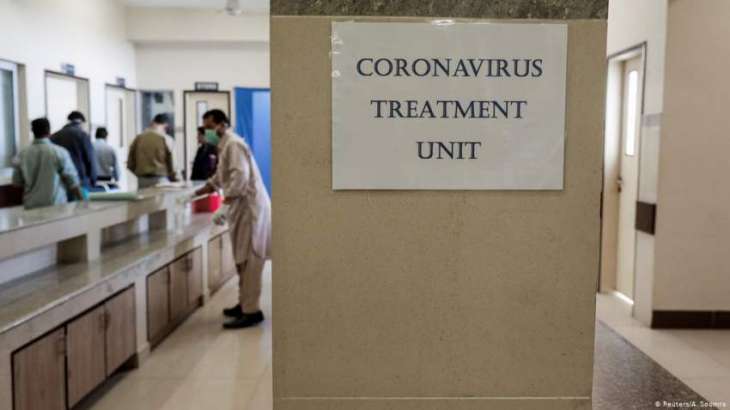
The Kashmir administration is putting in a herculean effort to control the situation. Facilities in the hospitals, mainly, SKIMS (Sher-i-Kashmir Institute of Medical Sciences) and chest disease hospital are being ramped up. Those who have a history of foreign travel within India and abroad are being identified and quarantined as are others who have come in contact with the first lot.

The Indian Army is helping in every way that it can; it has initiated a #CoronaMuktAwam campaign that is designed to create awareness on prevention and best practices through pamphlets, videos etc. and through social media. Those who are stranded are being looked after by the Indian Army. It is also providing infrastructure support to the civilian administration by transporting fumigation machines and chemicals by air and other such activities.

With Pakistani quarantine facilities so close to the Line of Control (LOC), proliferation from across to Kashmir also needs to be guarded against. Even a few infected clothes thrown on this side can have a devastating consequence and doing something of this nature cannot be put beyond Pakistan.

Jammu and Kashmir, therefore, will need to look at the challenge of controlling the spread by inimical means emanating from across the border. The best recourse in Kashmir is that all those who have a travel history should declare themselves and go into voluntary quarantine. The remainder population should, very strictly, follow the social distancing and lockdown norms. Vigil along the border should be heightened; extensive intelligence activity to counter all Pakistani moves will be required. The Coronavirus challenge is by far, most critical for India in Kashmir; it will require concerted effort to  be kept in control.
BLF slams additional Pakistani troop deployment in Balochistan under the cover of Covid-19

Balochistan Liberation Front (BLF) spokesman Maj. Gwahram Baloch said in a media statement that the move to send additional Pakistani troops to nine districts of Balochistan in response to the global outbreak of Corona virus is a shameful act.

Major Gwahram Baloch added that he wants his beloved and brave Baloch people, and the whole world to know that this deployment of additional Pakistani troops across occupied Balochistan was not being done to stop the spread of Coronavirus but to suppress the Baloch movement under the cover of combating this global pandemic. “This is a disgusting plan to intensify military operations against Baloch mass,” Maj. Gwahram Baloch said.

He explained that during this global pandemic, the Pakistani military generals and their civilian puppets are trying to repeat the same inhumane tactics with renewed intensity against the Baloch nation as they did after the devastating earthquake of 2013 in the areas of Mashkay, Jhao, Awaran, Raaghe and Makran. The world must never forget that in 2013 the Pakistani Army escalated its military operations against civilian population across earthquake-hit areas in the name of aid and rehabilitation of the earthquake victims. At that time, on the one hand Pakistan Army hindered international aid for relief and rehabilitation of the earthquake victims and seized relief goods and supplies sent by various NGOs, and on the other hand, they mobilized disguised Jamaat-ud-Dawa’s group of volunteers along with its local death squads and proxies. Due to this action thousands of earthquake affected families are still suffering and living in distress and had to migrate from their homes.

BLF spokesman said that in early days of the global outbreak of Covid-19 the disease was deliberately allowed to spread across Balochistan and now the Pakistan Army is increasing the number of troops under the garb of containing the virus.

Although most areas of Balochistan, including Quetta, already have numerous Pakistani military camps and checkpoints at short distances that raid civilian populations on a daily basis, loot homes, and detain youth, elders, women and children. “After these detained Baloch people have been detained they endure severe mental and physical torture. Therefore, we urge the United Nations, international aid agencies and other humanitarian organizations to not give any aid to Pakistan to control the Coronavirus. Rather do the relief work under their own supervision in the occupied Balochistan,” urged Maj. Gwahram Baloch.

Major Gwahram Baloch said that the people of Balochistan need doctors, trained medical staff, test kits, ventilators, masks, sanitizers and other medical equipment and medicines to prevent the spread of Coronavirus in Balochistan and not the Pakistani military.

Pakistan media’s insensitive reporting on Kabul Gurdwara carnage

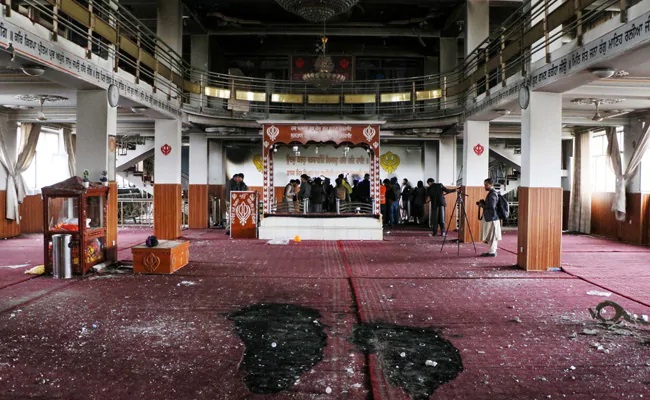
Wednesday’s carnage (March 25th, 2020) at Gurdwara Har Rai Sahib in Kabul that left 25 Sikh worshipers dead was a despicable act that has been widely condemned across the globe in the severest of terms. Yet, instead of adopting a somber tone and tenor while reporting this despicable crime against humanity, Pakistan’s ‘The Express Tribune’ instead chose to publish this piece under a highly insensitive headline (‘Indian citizen carried out Kabul Gurdwara carnage’; March 28, 2020). which was in very bad taste as it made light of a humongous human tragedy.

Foul Words

But this wasn’t all– the very opening sentence of the report wells up a feeling of utter disgust. It reads, “India, which routinely blames its neighbour of exporting terror, might be having a taste of its own medicine as a top English-language news channel of India has indicated in a shocking expose that terrorism might have been exported from a southern Indian state since 2016.” How could a well read and popular Pakistani daily like The Express Tribune be so callous and impervious to the sensitivities of the kith and kin of deceased worshipers, defies any logical explanation.

The only plausible reasoning is that this decision to abandon all acceptable norms of journalism and civility might have been influenced by the media house’s attempt to remain in the good books of the all-pervasive Pakistan Army! But, is currying favour with Rawalpindi at the cost of a newspaper losing its own credibility really worth it? One does empathize with Pakistani media since it is working under tremendous pressure. One understands the dangers of truthful reporting, which renowned award-winning Pakistani journalist Hamid Mir (who himself survived an assassination attempt for his factual reporting that incensed the establishment) aptly described as “naked censorship.”

Pakistan Media’s Dilemma

One also remembers how during his press conference in June 2018, the then Director General (DG) of Pakistan Army’s media wing Inter Services Public Relations (ISPR) Maj Gen Asif Ghafoor boasted that “We have the capability to monitor social media as to who is doing what.” As if this “spine-chilling” indirect threat wasn’t enough, he went on to brazenly violate an individual’s fundamental right to privacy by flashing a graphic with photos of journalists and other Pakistani nationals who according to him were using social media for spreading anti-state and anti-army propaganda.

The fact that Umar Cheema of ‘The News’, recipient of prestigious CPJ’s 2011 International Press Freedom Award was one of the alleged ‘delinquents’ just goes to show that the list of ‘offenders’ prepared by ISPR may have been influenced by extraneous considerations!

This unwarranted act of ‘media-bullying’ was rightly criticised by Asia programme Coordinator of US-based Committee to Protect Journalists (CPJ) Steven Butler who noted that “Displaying photos of journalists alleged to help push anti-state propaganda in Pakistan is tantamount to putting a giant target on their backs.” He also demanded an apology by DG ISPR, but since the army in Pakistan is a law unto itself, nothing of this sort ever happened and the country’s media (understandably) didn’t consider it prudent to raise their voices against the gross violation of media freedom and strong-arm tactics employed by the army to intimidate scribes and media houses.

Luckily, all isn’t lost because the media in Pakistan continues to show spine, both individually and collectively. Despite escaping death by a whisker in what is commonly believed to be a ‘hitjob’ by Pakistan’s spy agency Inter-Services Intelligence (ISI), Hamid Mir has always stood his ground when it comes to upholding ethical journalism and truthful reporting. Similarly, Cyril Almeida of Dawn too displayed immense moral courage and outstanding professional integrity in reporting about the government’s unhappiness on the army’s patronage to certain terrorist groups. At the same time, by publishing this explosive and damning report (which became famous as ‘Dawn leaks’) and refusing to back down and withdraw the article despite direct and indirect coercion by Rawalpindi, the Dawn management has made Pakistani media really proud!

Calling spade, a spade

Any confrontation on the irresponsible manner in which The Express Tribune has chosen to report on this incident is best avoided as it would serve no meaningful purpose. But at the same time, since this piece tends to divert the reader’s attention from the unspeakable barbarity unleashed by the Islamic State of Khorasan (IS-K), putting the record straight becomes a moral responsibility that can’t be shied away, even though it runs the danger of being misconstrued as politicising human tragedy. To start with, while one of the assailants was definitely an Indian citizen, he perpetuated this grizzly attack as a member of the IS-K and not in the capacity of being an Indian or at behest of a terrorist organisation patronised by New Delhi.

So, on what grounds has The Express Tribune so definitely concluded that this ghastly mass murder of unarmed and innocent worshipers amounted to India “having a taste of its own medicine”?

Also, while the newspaper may be right to some extent in saying that India “routinely blames its neighbour of exporting terror,” but does an Indian citizen’s personal decision to join IS-K actually translate into India “exporting terror”? Taking minor liberties while establishing correlations in order to arrive at deductions that endorse a particular line of argument may sometimes be acceptable in journalism, but just like elasticity, inferences too cannot be stretched beyond a limit. Accordingly, perhaps it would do The Express Tribune some good to educate its News Desk on this aspect!

Setting the record straight

Islamabad denies any links with IS-K and there isn’t much evidence of this as well. But this doesn’t mean that Rawalpindi doesn’t have any association with IS-K. Why much isn’t known about Pakistan Army IS-K nexus is simply because rather than having direct interaction, Rawalpindi’s communication with this terrorist group is completely done through its proxies. Besides several authoritative sources, details of IS-K and ISI symbiosis can also be found in a well-researched report titled ‘The Islamic State-Khorasan: Capacities and Future Prospects’, available on Canadian Government’s official website.

Though the ISI’s close ties with Haqqani network is a conclusively established fact, few know that in December 2017, IS-K entered into a working arrangement with the Haqqani network and according to sources, IS-K even agreed to pay it for “its support, including help in organising terrorist attacks in Kabul.” You would agree that as a proxy of Pakistan Army, the Haqqani brothers couldn’t have made any agreements with IS-K without obtaining explicit prior approval from Rawalpindi.

Next, as per Washington-based Middle East Institute, unlike all previous ‘amirs’ (chiefs) of IS-K, the current incumbent Mawlawi Abdullah aka Mawlawi Aslam Farooqi, is a former Lashkar-e-Taiba (LeT) commander. Now, with the LeT being the Pakistan Army’s ‘most favoured’ proxy, isn’t it obvious that the IS-K under Farooqi would obey ISI! Further, by revealing that “Faruqi (Farooqi) was an advocate of appeasement with Pakistan, in exchange for being granted a safe haven by the Pakistani authorities,” the Canadian report confirms that he’s completely subservient and furthers ISI interests without any reservations. This report further reveals that “Farooqi has spent most of his time inside Pakistan, as have most of the other senior figures in the organisation. According to IS-K sources, Pakistani intelligence have even started providing some financial support to the organisation.” With such damning evidence available, can the ISI still deny its unholy alliance with IS-K?

One may argue that since IS-K has carried out some attacks against civilians in Pakistan and the army has also taken retaliatory actions, there’s no likelihood of any nexus between the two. However, the Canadian government report rightly observes that even though IS-K may have attacked “non-state targets’, they haven’t targeted security forces of Pakistan and the mutual ‘friction’ is “either (because) both sides constantly are trying to renegotiate the terms of the agreement or that its implementation is a matter of dispute.”

In addition, since this report reveals that IS-K “has been able to move its main base from Afghan territory, where it was vulnerable to US air strikes, to the Tirah Valley in the tribal areas of Pakistan,” and that “it is also able to maintain several training camps in various locations throughout the tribal areas” the existence of ISI-ISK nexus is far-far beyond any reasonable doubt!

Mystery Deepens

IS-K claimed responsibility for the Kabul Gurudwara attack and identified the murderer by his nom de guerre ‘Abdul Khalid al-Hindi’ indicating that he was an Indian national. It also said that this attack was “revenge for the Muslims in Kashmir.” This purported reason for the carnage raises suspicions that there’s more than meets the eye, because even if one goes by IS-K’s demented sense of logic, attacking the Sikh community in faraway Kabul to avenge the alleged ‘atrocities’ committed by a ‘Hindu Government’ in India against the Muslim community in Kashmir makes just no sense!

But when the already heightened sense of insecurity within the Sikh community in Kabul is correlated with ongoing motivated opposition in India against the Citizen Amendment Act (CAA) that provides asylum to certain religiously persecuted minority communities (including Sikhs) living in countries neighbouring India, then a method definitely appears in the madness of perpetuating this carnage!

Tailpiece– The tragedy is that whether it be Kabul or Kashmir, it’s ultimately the Sikh community that’s always at the receiving end as far as senseless violence perpetuated by fundamentalists in the garb of ‘jihad’. Such a peaceful sect which embraces others without pre-conditions or reservations based on religion and ethnicity, feeds and takes care of them just like their own family members certainly deserves much better.

Last but not the least, no community grieving the loss of its near and dear ones deserves to be taunted by the fourth estate about getting “a taste of its own medicine!”

Modi may lose goodwill if daily wage earners are not protected

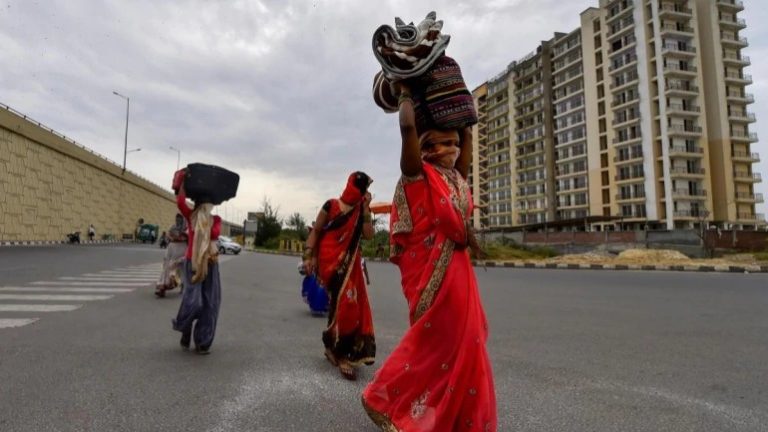
Prime Minister Narendra Modi received plaudits just about 10 days ago for showing unprecedented resilience in the face of adversity by imposing a 21-day national lock down. Even his critics and the opposition parties had to admit that in the wake of the spread of the killer Coronavirus, which could take thousands of lives, a lockdown was the only solution even if it meant a huge blow to the economy. What no one had then accounted for, was the mass migration of daily wage earners from urban centres to their homes in the tiny villages across the hinterland.

Heart wrenching news reports and pictures showing the plight of homeless and penny-less, desperate to return home started flooding social media handles, bringing much embarrassment to New Delhi.

While the government was quick to announce a Rs 1.7 lakh relief package under the Pradhan Mantri Garib Kalyan Yojana for the poor, who have lost their jobs due to the lockdown, it has not yet carved out any concrete plans to come to their aid to ensure their safe return to their respective homes or providing with shelter and food in case they wished to stay back.

The financial package is of no use if the benefits do not reach the eligible in time. Clearly it also does not address their immediate concern of food and shelter and when I say immediate, it means the next couple of days.

There has been no announcement on the implementation of the package either. Clearly that is no solution. All that the Centre and the state governments’ have done is to repeatedly urge citizens to help the poor.

And how will citizens help the poor on the road if no one is allowed to be on the road?

The government has to come up with a well thought out plan to rescue these workers, whose lives and livelihood need to be protected as much as those who have been rescued from other countries and brought back to the country.   

Until the government addresses the immediate problem of the millions, who were engaged in the unorganised sector, it will soon lose face and goodwill that it won after imposing the lockdown as a precautionary measure, despite the timely action taken including the Rs 1.7 lakh crore relief package and the Reserve Bank of India’s injection of Rs 3.74 lakh crore into the system.

In case steps – not monetary but that of a socially equitable nature — are not taken immediately, the debate will soon take a different turn. One needs to take extraordinary measures during extraordinary times.

Why can’t the government use schools and university premises to shelter the poor for the time being? Why can’t food be provided to them at these shelters? The government must mobilise its district administrators to take steps to ensure that the daily wage earners get their due.

The loss and uncertainty are difficult to quantify at this point but after all, the fight to overcome COVID 19 should not result in the loss of lives due to hunger. 

Baloch intellectuals express concern over kidnapping of senior journalist Sajid Hussain from Sweden

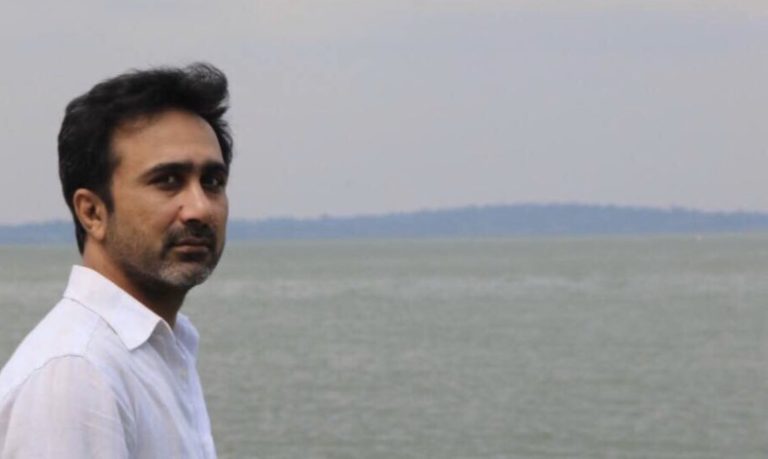
Baloch intellectuals have expressed serious concern about the sudden disappearance of Sajid Hussain, Chief Editor Balochistan Times from Sweden. It’s been a month since the senior journalist and writer Sajid Hussain has gone “missing” from Uppsala in Sweden. Dr. Murad Baloch, Secretary General of the Baloch National Movement (BNM) said that the Swedish government, journalist organizations and other international human rights organizations should help by raising this issue and help find senior Baloch journalist and writer Sajid Hussain.

Dr. Murad said that Sajid Hussain is one of the gifted journalists from Balochistan. He had worked in renowned Pakistani daily newspapers, ‘The News’ and ‘Daily Times’ as assistant news editor and city editor respectively.

“It is the obligation of the Swedish government, police and the authority of university to trace out Sajid Hussain, and demonstrate their efficiency in this regard, otherwise their passive attitude will constitute their vicarious guilt and culpability,” said Kachkol Ali, an Advocate.

Sangar’s Chief Editor, Dostin Baloch, strongly condemned the disappearance of Sajjad Hussain Baloch saying that the disappearance of senior Baloch journalist from Sweden is not only alarming, it’s a big question mark for the protection of journalists around the world.

Pakistan Army has been involved in routine abductions and killing of several journalists across Balochistan and due this, Sajid Hussain was also facing threats of persecution and escaped from Pakistan and sought asylum in Sweden. Being the Chief Editor of online magazine “Balochistan Times” Sajid Hussain has been highlighting and covering the actual position of Balochistan through his portal. He was living in Stockholm, the capital city of Sweden for the last four years and pursuing a master’s degree in Balochi language at Uppsala University. In order to fulfill his educational commitments, he had shifted to Uppsala on the 2nd of March and the same day he went out of contact. The local police in Sweden and related authorities had been informed about his mysterious disappearance.

Dr Murad Baloch explained that Sajid Hussain is the nephew of Shaheed Ghulam Mohammad Baloch, the founder of the Baloch National Movement (BNM). The family members and relatives of Baloch political leaders and workers had always faced state brutalities and barbarism in Balochistan. Baloch National Movement had named that policy of the Pakistani state as “collective punishment”.

Dr Murad Baloch added: “Sajid Hussain, besides belonging to a political family, is a renowned journalist. He has played a vital role in showing the real humanitarian crisis in Balochistan in front of the world. He has been writing in both Balochi and English languages in Balochistan Times. Furthermore, Balochistan Times also broadcasts a radio channel to give a voice to the voiceless people of Balochistan. His mysterious disappearance has shocked us extremely and we fear that Inter-Service Intelligence (ISI) is behind his abduction.”

Dr. Murad Baloch explained that political and human rights situation in Balochistan have gone worse over the last two decades. Thousands of people have been killed and are languishing in the Pakistani torture cells. Thousands of Baloch political activists in order to avoid this persecution have escaped from Balochistan and are compelled to seek asylum in European counties; journalists and human right activists are among these asylum seekers. The disappearance of Sajid Hussain has created an environment of uncertainty among thousands of Baloch political asylum seekers in Europe. The mysterious disappearance of a journalist would raise questions about the country that is proud about protecting refugee lives and show a great record of protecting human rights and values.

Sweden has ratified and singed International Covenant on Civil and Political Rights. Article 2 of the Covenant holds that each state party to the Covenant undertakes to respect and ensure to all individuals within its territory and subject to its jurisdiction the rights recognized in the present Covenant, without distinction of any kind, such as race, colour, sex, language, religion, political or other opinion, national or social origin, birth or other status.Where not already provided for by existing legislative or other measures, each state party to the present Covenant undertakes to take necessary steps, in accordance with its constitutional processes and with the provisions of the present Covenant, to adopt such legislative or other measures as may be necessary to give effect to the rights recognized in the present Covenant.

Since Shahid Hussain has gone “missing” from the territorial jurisdiction of Sweden, its thus the constitutional responsibility of Sweden to protect his right to life, liberty and security.

Even the Universal Declaration of Human Rights insists in Article 8: Everyone has the right to an effective remedy by the competent national tribunals for acts violating the fundamental rights granted him by the constitution or by law.

“Although I have no acquaintance with Sweden’s constitution and law, however I believe that Sweden being a civilized country, it has incorporated the provisions of the Universal Declaration of Human Rights and International Covenant on Civil and Political Rights into its constitution and laws of land. It is pertinent to refer here the International Bill of Human Rights – United Nations: Every human being has the inherent right to life. This right shall be protected by law. No one shall be arbitrarily deprived from life,” explained Advocate Kachkol Ali.

Sangar’s Chief Editor Dostin Baloch added that Sajid Hussain Baloch’s writings and journalism are not only for the Baloch people but also represent the freedom of expression and truth and his disappearance from Sweden is a serious concern for journalists around the world.

Dostin Baloch added the kidnapping and killing of journalists in Pakistan, including Balochistan, is a daily occurrence, but the disappearance of a senior Baloch journalist in foreign country is extremely surprising.

“We urge the Swedish government, including journalists around the world to take notice of the disappearance of Sajid Hussain Baloch, and try to find him,” said Dostin Baloch. He also a started a twitter hashtag #FindSajidHussain to connect journalists and human rights activists around the world. He also appealed to global media organizations, the IFJ and other World Federation of Journalists, to play a role to find Sajid Hussain Baloch.

“We are in touch with all the journalist organizations and Sangar Media organization will write letters to all journalists to help find senior journalist Sajjad Hussain Baloch,” Dostin Baloch said.

National Book Trust to launch ‘Corona Studies Series’ books

Realising the extraordinary psychological, social, economic and cultural significance of Corona Pandemic for the human society in times to come, National Book Trust, India, the national body for book publishing and book promotion under the Ministry of Human Resource Development, Government of India, is launching a publishing series titled ‘Corona Studies Series’ to document and to provide relevant reading materials for all age-groups for the post-Corona readership needs. “In response to the national crisis of this proportion, we believe that as a national institution it is our duty to take initiatives within our domain area to provide support in the form of new reading materials. The ‘Corona Studies Series’ seeks to be our long-term contribution to prepare and engage readers with the various aspects of the Corona times by bringing out affordable books in various Indian languages in the identified subject areas. It will also provide suitable platform to authors and researchers willing to contribute in this genre,” said Prof.Govind Prasad Sharma, Chairman, National Book Trust, India.

“We have been closely following the Corona-related developments and taking cues from the multi-dimensional initiatives of our parent Ministry of HRD’s(Government of India) initiatives to meet the challenges of the Corona Pandemic. As a body for reading promotion, we find that we have a significant role to play. Accordingly, we started #StayHomeIndiaWithBooks initiatives by uploading pdfs of some of our select and bestselling titles for free downloads, and we have been receiving tremendous response. Taking a comprehensive view, we are launching this publishing series. As the first step, we have set-up a Study Group comprising of someexperienced and young psychologists/counsellors to prepare books on the sub-series on ‘Psycho-Social Impact of Corona Pandemic and the Ways to Cope’. We hope to bring out both e-editions and printed editions of these books soon enough as support materials for the readers”, said Shri Yuvraj Malik, Director, National Book Trust, India.

“We have identified various areas for preparing suitable reading materials under the ‘Corona Studies Series’. Besides, the sub-series on the Psycho-Social Impact on various segment of population due to Corona crisis, we are preparing children’s books to let them know about Our Corona Warriors, and other story and picture books related to various aspects of Corona to create awareness. Also, books focused on art, literature, folklore, economic and sociological aspects, science/health awareness emerging out of the Corona pandemic, and the lockdown, are also in the pipeline”, said Shri Kumar Vikram, Senior Editor of National Book Trust, India, who is leading the Project.

The NBT Study Group comprises of Dr.JitenderNagpal, Dr.Harsheeta, Sq. Ldr (Rtd.) Meena Arora, Lt. Col. TarunUppal, Mrs. Rekha Chauhan, Mrs. Sonie Sidhu and Ms. Aparajita Dixit.

Fighting COVID-19: Supreme Court Judge Justice Ramana donates 3 lakhs

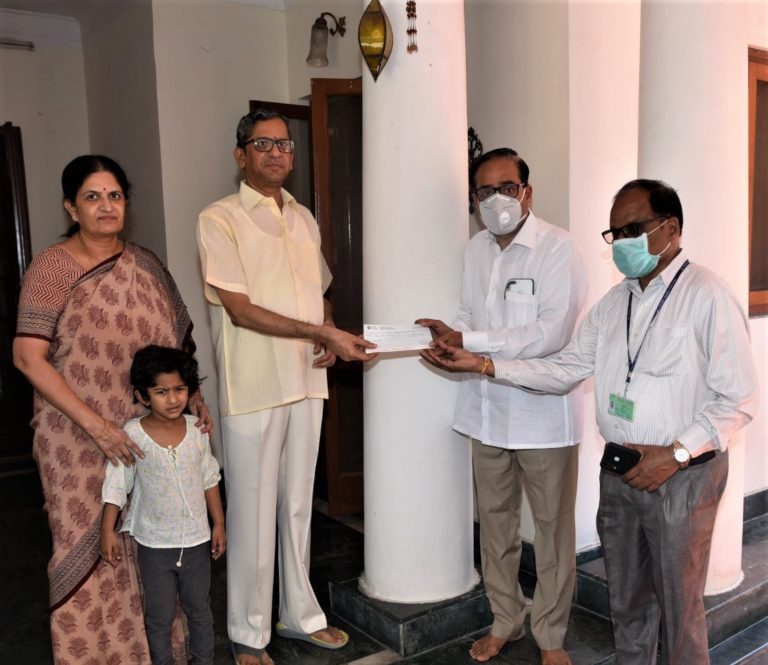
Supreme Court Judge Justice NV Ramana has made a contribution of INR 3 lakhs to relief funds in the wake of novel Corona virus outbreak in the country.

The second senior most Judge of the Supreme Court, Justice Ramana has made a contribution of one Lakh each towards the Prime Minister’s National Relief Fund as well as the Chef Minister’s Relief Fund of the States of Telangana and Andhra Pradesh. This donation made through cheques has been handed over by the Supreme Court Judge to the concerned officers stationed at the Andhra Pradesh Bhavan and the Telangana Bhavan in New Delhi.

Justice Ramana has requested the general public to abide by the instructions of government and take proper measures and follow social distancing method so as to effectively fight against COVID – 19 unitedly.

Prime Minister Narendra Modi had recently announced the constitution of the PM’s Citizen Assistance and Relief in Emergency Situations (PM-CARES) fund. This will be a dedicated national fund with the primary objective of dealing with any kind of emergency or distress situation, like posed by the COVID-19 pandemic. PM Modi asked people to contribute to the PM-CARES Fund so as to combat the novel coronavirus pandemic that has claimed 21 lives in India and over 25,000 across the world so far.

Hours after PM Narendra Modi announced a special emergency fund for the nation to fight crisis like COVID-19, dignitaries from various walks of life have come together to show their support in the form of donations. Since the announcement of the ‘PM Care Fund’ on Saturday, a large number of Indians including professionals, business owners, and civil servants have come forward to donate lump sum amounts to the relief fund. PM’s official Twitter handle even took to tweeting about those who made donations, big or small, with personalised thank you notes.

2005: When Baloch women & children stepped out of their homes

As the Baloch across the world are crying foul over the ‘abduction’ of their women and children by security forces, it is consoling to reminisce about the not-so-distant past when our women and children enjoyed a happier life with some significant powers.

Baloch women realized their power and freedom in 2005. It was the year when some Baloch men, who had previously angered the mighty Pakistani security forces because of their nationalistic politics, started to go missing — initially in dozens and then in hundreds.

Their sons and brothers and fathers staged demonstrations outside press clubs and filed petitions in the courts of law to demand the recovery of their loved ones. They too went missing.

Then came out the women. Along with their children.

It was the first time in the strongly patriarchal Baloch society that men, out of helplessness, allowed their women to go out in the public to campaign for the recovery of their missing male relatives. It worked.

As a journalist, and a relative or friend of several missing persons, I witnessed first-hand the power of women’s tears and children’s innocence. Holding the framed photos of their missing fathers and husbands outside press clubs, these women and children made perfect photo shoots for news photographers. Their teary eyes also evoked sympathy from the otherwise detached judges.

In 2007, I travelled along with several families of missing persons to Islamabad to appear for a Supreme Court hearing. The women had purposefully brought as many children as possible. They were all lined up in the front row in the courtroom with trained innocent faces. Their mothers sat behind them with pleading eyes. It worked magic.

The judge blasted at an interior ministry official who was in attendance: “This will not be tolerated any longer. Go and find the missing persons. All of them. Bring them to the court if they’ve committed a crime.”

Now hopeful that their missing relatives will soon be brought back, many families went to sightseeing on the scenic Islamabad hills after the court hearing. Having spent their entire lives in scrappy mud-houses in arid Balochistan villages, these women and children were awestruck by Islamabad’s lush greenery. They posed in front of random trees and bushes, recklessly spending their precious money on a rental photographer. They were celebrating their newly-gained freedom and power.

The missing men began to reappear.

The women and children had successfully brought about sympathy and attention to the issue of missing persons. The security agencies — now being consistently nagged by the human rights groups, media and courts — were forced to return back some of their spoils.

However, the intelligence agencies came up with a brutally intelligent idea in 2009. They initiated the now infamous kill-and-dump of the missing persons. On April 3 the same year, they picked up three Baloch leaders from Turbat and their bodies were found dumped nearby just a week later. It never stopped since then.

This new strategy didn’t allow time to Baloch women and children to bring to use their power of tears and innocence. But they came up with other tricks.

If you are from Balochistan, you often come to hear about stories of late-night or early morning military raids at a friend’s or a relative’s house. Mothers trained their children to wail and beg the personnel to spare their father from being dragged to a military jeep. The mother would hold out a copy of Quran to save her house from being burnt down.  These tricks seldom worked but they surely put the uniformed men in emotional distress.

Last week, the Baloch women and children were robbed of their all power.

On October 28, nine students – some of them as young as eight-year-old Aftab – went missing in Karachi. A women, Farah Baloch, who pleaded the personnel to spare them, was thrown off the third floor of the building in Gulistan e Johar breaking her back.

Dr Allah Nazar Baloch with his daughter Popal, who was kidnapped by Pakistani forces along with her mother. Popal was later released.

On October 30, four women and six children – including Dr Allah Nazar’s wife, Fazeela and his daughter, four-year-old Popal – were whisked away from Quetta.

What did they think of themselves? That they will not be touched because they were women and children? You happen to be Allah Nazar’s daughter and yet expect to be spared just because you are four years old? It was about time to teach them a lesson.

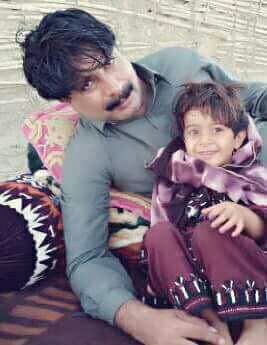
A year earlier, I saw on the Facebook a photo of Allah Nazar along with a little girl. It is one of those rare photos of him in which he is not carrying a gun. I did not know then who the girl is. On October 30, she became a missing person and I came to know her name is Popal.

She and her mother were released earlier today along with other women and children taken away from Quetta. But I wonder does she still have the power of innocence? Does she still have that effect on her father to make him pose with her without a gun slinging over his shoulder? Will she still be able to cry during a raid on her house?

This article was first published in Balochistan Times on November 3, 2017. It is being re-published in News Intervention as part of our #FindSajidHussain campaign.

Is Islamabad deliberately mishandling Covid-19 in Balochistan ?

In times of Coronavirus, when rumour mills are working overtime and social media is pregnant with stories of sinister plots and intrigue, one has learnt to be more discerning when it comes to believing conspiracy theories. Perhaps that’s why I didn’t think much of a piece titled “Pakistan is using Coronavirus as a Biological Weapon against Balochistan” written by Dr Murad Baloch that appeared in the media last week. I would probably have missed out the weighty import of Dr Baloch’s incisive insight had Pakistan Health Minister Zafar Mirza not tried to use the SAARC video conference forum on Coronavirus to rake up the issue of Kashmir in a rather fatuous manner.

However, it was a comment by a reader advising Mirza to focus more on tackling the Coronavirus pandemic in Pakistan rather than worrying about Kashmir that got me thinking. After seeing a proud man like Prime Minister Imran Khan literally going down on his knees and begging the world community “to think of some sort of a debt write-off for countries like us which are very vulnerable,” the reader’s suggestion made even more sense.

But from Islamabad’s clumsy effort to justify its Kashmir remarks made during the SAARC video conference it became more than evident that Khan’s “concern over poverty and hunger as a consequence of the corona pandemic,” was nothing but mere posturing necessitated by his promise of raising Kashmir on every occasion, despite being repeatedly humiliated!

Since Covid-19 spreads through humans, it would be reasonable to assume that transmission of this contagion is to some extent proportional to the population density of the region, as the data of Pakistan’s top two regions (in terms of population density) indicates. Punjab, which is Pakistan’s most populous province with a population density of 353 person per square kilometre has reported a total of 335 Coronavirus cases. Though Sindh, with a marginally lower population density (340 persons per square kilometre) has reported a relatively higher number of Coronavirus cases (421), this variation isn’t absolutely out of tune as this in all probability is due to a corresponding variation in the number of individuals screened. 

But surprisingly, Balochistan, which has an unbelievably low and only a two-digit population density of just 36 people per kilometre has reported a whopping 131 confirmed cases of Covid-19. Being grossly disproportionate to the miniscule population density by any standards, this unusually high number of Coronavirus infected cases should have set alarm bells ringing in Islamabad. But since no such thing has happened, and for Khan it’s business as usual as far as Balochistan is concerned, there are all the reasons to suspect that something is amiss. Failure of the government to institute appropriate preventive measures for arresting rapid proliferation of Coronavirus in Balochistan lends greater credence to Dr Baloch’s assertion that Islamabad is using Coronavirus as a biological weapon in Balochistan. 

But is this really so?

Whereas it’s highly improbable that Islamabad could anyway be involved in physically infecting Baloch with the novel Coronavirus, but there are bright chances that it may be achieving the same results through indirect means. Media reports of the squalid conditions existing in Balochistan’s Taftan Coronavirus camp reinforces suspicions that the sorry state of affairs is certainly due to something more than sheer apathy.

Quoting doctors, former inmates and other witnesses, ‘The Guardian’ details how due to “lax regulations on movement for those in the camp… Hundreds of people supposedly under lockdown left the camp to shop at local markets and stores, buying food and returning to the camp without any checks.” To make matters even worse, “No guidelines were issued for how those in quarantine could protect themselves from getting the disease, and there was no running water for people to wash their hands.” The ultimate tragedy is that even the condition of hospitals in Balochistan is no better, with a doctor describing the situation there as “depressing and disturbing.”

Islamabad could have been given benefit of doubt by assigning its failure to provide Balochistan with an effective setup for combating Coronavirus, to the unprecedented panic and chaos caused by COVID 19 outbreak. But considering its highly discriminatory past track record of dealing with the Baloch nationals there’s no scope of making any allowances in this regard.

Readers may recall that in third week of September 2013, Balochistan was hit by two massive earthquakes that killed nearly 700 people and left about 1,000 injured. But despite the widespread suffering caused, the government of Pakistan refused to allow international NGOs from undertaking the much-needed relief activities on the premise that following this disaster, Baloch militants were attacking security forces.

Whereas this is certainly true, but the fact that not even a single aid worker had been targeted by militants is something that Islamabad didn’t make public. While various NGOs of international repute like Doctors Without Borders (MSF) sought government permission for carrying out relief work here and Balochistan Chief Minister Abdul Malik Baloch himself wrote a letter to Islamabad seeking permission to allow international aid agencies to undertake relief effort, permission wasn’t granted and the quake-ravaged Baloch nationals were left to their own device for facing the fast approaching harsh winters.

With the needle of suspicion that Islamabad’s apathy towards Balochistan is motivated and directly pointing at it, the ball is squarely in Prime Minister Imran Khan’s court!

Tailpiece– Before take-off, the flight attendant invariably advises passengers that they must first wear their own face mask before trying to help others in doing so. Perhaps Khan will be a much happier man if he did the same and put Pakistan first by evacuating the 600 odd Pakistani students stranded in China’s Wuhan province and setting Balochistan in order before shedding crocodile tears on Kashmir!

Covid-19 Fallout: Economy may see negative growth in April-June Quarter

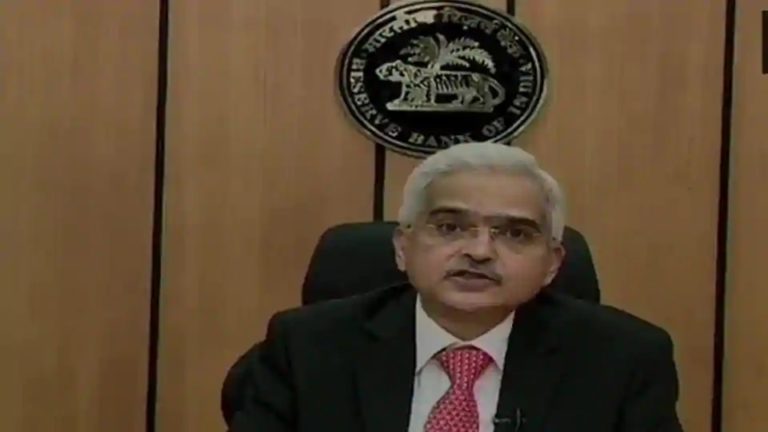
As Prime Minister Narendra Modi announced a three week lockdown, India needs to start preparing for no-growth or even a contraction of the economy in its very first quarter of the new financial year. While many think tanks and rating agencies have slashed India’s growth projections, RBI said on Friday that with an unprecedented situation arising due to the spread of COVID 19, it’s difficult to come up with any growth projection.

Needless to say that the unorganised sector, which employs over 75% of the country’s workforce will be the worst impacted. A State Bank of India report suggested that the total cost of the lockdown could be Rs 8.03 lakh crore.

Sectors such as hospitality, aviation, tourism, trade, and the micro, small and medium enterprises among others will witness the maximum income and job losses in the coming months. It is important for the government to start preparing a concrete package for these sectors immediately so that it can be rolled out right after life comes back to normal. The sudden lockdown, which has forced thousands of migrant workers to return to their home towns and villages, will lead to an exponential rise in the unemployment numbers.

The Reserve Bank of India (RBI) announced a slew of measures leading to an additional liquidity injection of Rs 3.74 lakh crore into the system –nearly 2% of the GDP. Finance minister Nirmala Sitharaman has already announced a Rs 1.7 lakh crore relief package for the poor.

Both these moves are much needed to combat the severe economic impact in the wake of the spread of the novel Coronavirus.

The monetary policy committee of RBI met on Friday, much ahead of its scheduled meet slated in April. RBI has reduced the repo rate—the rate at which banks borrow from RBI—by 75 basis points to 4.4% besides bringing down the mandatory cash reserve ratio (CRR) — the proportion of deposits banks have to mandatorily park with the central bank — by 100 basis points to 3% with effect from March 28 for a period of one year. This move alone will inject Rs 1.37 lakh crore into the banking system. The reverse repo rate, too, was lowered by 90 basis points.

This is also the time to go aggressive with Make In India programme to reduce dependence on imports.

If India has to reduce the shock of COVID-19, it needs to act fast and in addition, it may be a good idea for RBI to look at taking the non-conventional route to ensure that the economy is kick-started without much hiccup.