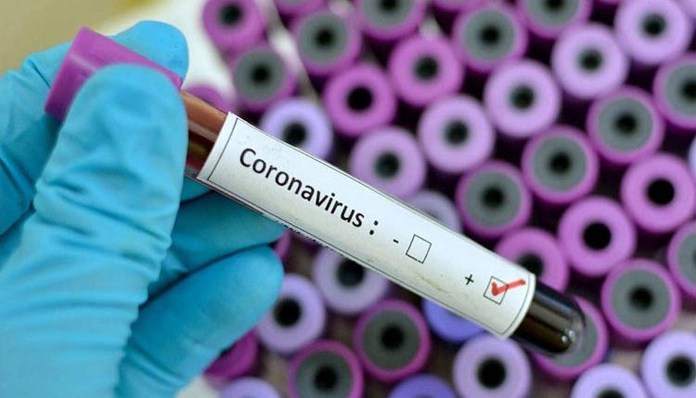
Pakistan is using the Coronavirus pandemic to inflict collective punishment upon Balochistan by deliberately facilitating the spread of this deadly virus among Baloch people, said Dr Murad Baloch, Secretary General, Balochistan National Movement (BNM). Coronavirus is the present day pandemic such that every country in the world is taking proactive measures to reduce the threat of COVID-19 —the disease caused due to Coronavirus, but the measures taken by Pakistan are based upon its animosity towards the Baloch nation.
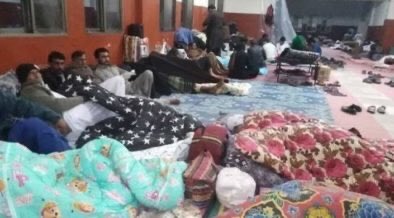
“The Baloch nation was already confronting a destructive situation created across Balochistan by the Pakistani state. Now Pakistan, following its policy of collective punishment, is helping in the spread of Coronavirus on the people of Balochistan. This is clear animosity of Pakistan with the Baloch nation where Pakistan instead of shifting the travelers coming back from Iran into bigger hospitals in the cities or in quarantine centers, is holding them in tents in Taftan and Quetta Hazargangi area. In this modern era, no one can imagine that people infected with such deadly diseases are kept in the open sky. In the civilized world, even animals are cured in a far better way,” Dr Murad Baloch said in a statement.
Does this look like a quarantine facility to treat Coronavirus pandemic?
Dr. Murad Baloch added: “The people infected with Coronavirus are being kept in Balochistan; rather than, sending them to their own areas. This is a willful attempt to spread the Coronavirus across Balochistan which fits perfectly into Pakistan’s planned Baloch pogroms and genocide. This is being used as a biological weapon against the Baloch nation.”
He explained that Balochistan has become a big prison for Baloch people, devastated with war, who continue to be exploited and face genocide. Besides the rampant killings by the Pakistan Army, thousands of Baloch people are dying in road accidents, hunger and poverty. An outbreak of Coronavirus will add up to the miseries of people of Balochistan.
He added that the Baloch areas in Pakistan, Iran and Afghanistan are severely affected by the Coronavirus. In view of the abhorrence and animosity of Pakistan toward the Baloch nation, no conscious soul would expect that Pakistan will take steps to curtail the spread of this deadly Coronavirus pandemic in Balochistan. Earlier also, during the 2013 earthquake in Awaran and Kech, Pakistan had stopped international NGOs to help the affected people in Balochistan. The Baloch people affected due to the 2013 earthquake are homeless till date, face atrocities and are being targeted in the military operations by Pakistani regime.
“On this occasion, we appeal to the World Health Organization (WHO) and United Nations High Commission for Refugees (UNHCR) that they should take effective measures for the Baloch refugees in Pakistan, Iran, and Afghanistan. Baloch refugees have been suffering for a long time and they hope to get full refugee status from UNHCR. If concrete steps are not taken in this regard then Pakistan may use Coronavirus outbreak against the Baloch nation to further exacerbate the humanitarian crisis in Balochistan.” Dr Marod Baloch appealed.
For Sri Aurobindo, behind every event that is happening in the world, there are forces at play. Some of these forces are dharmic, that is they tend towards the good of humanity; and others are asuric, destructive, striving to disrupt, to bring disharmony, to hurt even, and in general push for regression in human evolution.
This is nothing new. All great Scriptures, whether the Vedas, the Bible, or Buddha’s precepts, have said the same thing – the world is Maya (illusion); look behind appearances, search for Truth. Now if you take a glance at the Coronavirus epidemic in that light, it acquires a new dimension. On the medical angle, it is nothing compared to other deadly diseases, such as cancer, heart attacks, or AIDS. In India, for now, there are less than 0.0001% of the country infected. But just observe what comes along with the Coronavirus– fear, suspicion, mistrust, and a worldwide panic that seems to have gripped all, the governments as well as individuals. This is the very psychosis, which comes with asuric forces. We perceive also that the Coronavirus is bringing with it tremendous economic damage to the world. Airlines, businesses, even the governments might go bankrupt, and individuals are right now undergoing tremendous financial and psychological stress. This also is the Asura.
Now what Sri Aurobindo also says is that these hostile forces need vehicles, instruments, to do their harm. In the case of the Coronavirus, this instrument has been the media, both printed and electronic, which has, with sensationalism, hyperbole, and photo-shopping, amplified a million time the fears and concerns of people, putting pressure on governments, which all fell prey to this bloodsucking blackmail.
During the Second World War, Sri Aurobindo and his spiritual companion, the Mother, clearly indicated that Hitler was an asura, an evil force, and they put their spiritual power in play to help the Allies defeat him. It is therefore clear that while taking all hygienic and medical precautions, the Coronavirus needs to be fought on a spiritual and occult level.
For having a clear occult indication on how to fight this Coronavirus epidemic, we need to look at its origin. Well, it does come from China. We are not anti-Chinese per se, but whether the Coronavirus is man-made, because the Chinese eat all kind of animals, from vampires to snakes, which are killed alive before being sold; or if it is a biological weapon, which accidentally escaped from a research laboratory. There is no doubt about its source. On a very material level, it is a timely reminder to the West of China’s indomitable thirst for hegemonic dominance of the world. For example, 95% of the antibiotics consumed on this planet are made in China; so are most of the automobiles parts, computer chips, mobile phones such as the Apple etc. The world is therefore totally dependent on China today and this is a signal that it is a dangerous thing and the West needs to de-localize from the Chinese and re-localize – in India, for instance – a much more friendly, spiritual and democratic nation.
His Holiness the Dalai Lama often spoke of a ‘black karma’ of the Chinese, not only because they massacred nearly a million Tibetans but also because Mao-Tse tung, in his megalomania, killed 20 million of his own people. Is the Coronavirus which has paralyzed the whole of China and which will damage its long-term ambitions, such as a new Silk Road that crosses the Himalayas to reach the Pakistani port of Gwadar, and hence flood the western world with Chinese goods, a consequence of that black karma? The future will say.
At any rate, while India needs to take all sanitary precautions, it is She (India) only who can fight the invisible forces behind the Coronavirus. All the great gurus of the moment, His Holiness the Dalai-lama, Sri Sri Ravi Shankar, Amrita Anandamayi, Jaggi Sadhguru, the Shankarya, Gurumai, etc, should assemble together and performs pujas and yagnas; individually we can also fight the virus by repeating in our hearts the Mother’s prayer:
“In the name of the Divine,
For the sake of the Divine,
By the power of the Divine,
With the strength of the Divine,
To all adverse beings or forces,
I order you to quit this place at once and for ever”….
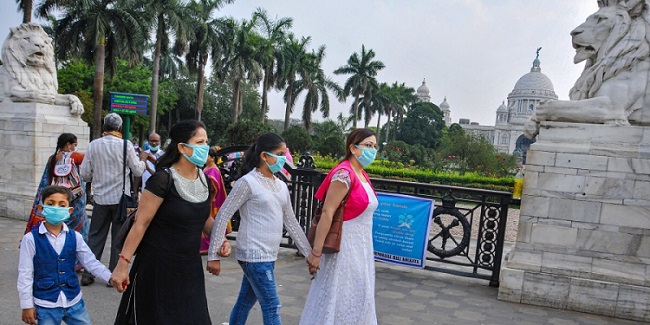
A young student’s open defiance of safety rules relating to the Covid-19, the highly contagious disease caused due to novel Corona Virus that has triggered a global panic has snowballed into a huge controversy in Kolkata where cosying up with the rich and powerful has often helped many violate laws.
On paper, it looked like a simple case of Gourab De, an 18 year-old student returning from London, and walking through the airport security net unaware of the crisis. What is important is the fact that he walked away from the airport in a flight that landed in Kolkata from Abu Dhabi despite being told repeatedly that he needs to do some mandatory tests because De was coming from the UK, a high Covid-19 zone.
But Gourab did no tests and went home. And then, he walked around some of the most congested places in the city and even visited a plush shopping mall for the next 48 hours. There are unconfirmed reports that he even partied with some of his friends. For those two days, his mother, Arunima De, a special secretary in the Home Department, went ahead and took part in several government meetings. Doctors at MR Bangur Hospital said Gourab confessed that some of his friends in London had tested positive.
And when the news exploded, many felt the boy defied rules only because he had an influential mother. Worse, when the tests happened eventually, the boy tested positive. The good news was that Gourab’s parents and the two drivers of the family on Wednesday tested negative for the disease. Their samples were sent to the National Institute of Cholera and Enteric Diseases (NICED), Kolkata on Tuesday night. However, state health department sources said they would be kept at the isolation centre in North East Kolkata’s Rajarhat for 14 days and tested again.
Doctors in Kolkata said they were aghast at the boy’s attitude and that of his parents who refused to admit there was a serious flaw in Gourab not getting himself checked and Arunima and her husband’s attending office. “We are keeping his parents in isolation because unless there is a minimum level of viraemia, it cannot be detected by tests. It means the virus may be there in your body, and this could spread to others. We call this window period. We will go for tests again,” Dr Arindam Kar, a critical care specialist, told reporters in Kolkata.
State health department officials are now tracking and putting in quarantine all the people the boy met in the two days he moved about in Kolkata, their job made difficult because not many are admitting they met the boy and his parents. Since the mother of the patient is a bureaucrat, senior state government officials have been isolated at home. And now, 17 co-passengers of Gourab have been put in isolation at home. The big question is: Would they have been quarantined if Gourab had not eventually given himself in for checkup and subsequent admission at the hospital?
So what gave him the power of defiance?
Gourab is presently admitted at Infectious Diseases (ID) hospital in Kolkata. A doctor and two health workers of MR Bangur Hospital, which the boy visited, and the family’s domestic help, have been put in home quarantine.
Authorities Wednesday sealed the area in Nabanna, headquarters of the state government, where Arunima De had a room. Though workers sanitised the state secretariat, an estimated 19 officials who worked with Arunima De, were apparently reluctant to work with her on the same floor.
Worse, fear has gripped the plush Upohar Housing Complex — a cluster of buildings with 15 to 16 floors — in South Kolkata where the family lives. A member of the complex’s housing association said all towers were being sanitised and it was grossly wrong on part of the parents not to intimate the association about their son. “It is because of their callousness, more than 500 families including many elderly people staying in the complex feel vulnerable,” said a member of the association. The member said the association was identifying all those who came in contact with Gourab through CCTV footage. Two domestic help, a yoga teacher, and security guards who were on duty for three days (Sunday, Monday and Tuesday) have been asked to go on leave for 15 days, two thermal guns have been arranged for checking the temperature of everyone entering the complex. “Everyone is very, very scared.”
So the big question remains as to why the family delayed their son’s visit despite being told twice to go to the Infectious Diseases (ID) hospital in Beliaghata, a densely populated neighbourhood that lies close to India’s biggest soccer stadium. The neighbourhood is also popular for being the home where Mahatma Gandhi spent the midnight hour of August 15, 1947 when India gained independence from the British rule.
This is just one side of the story.
Now reports are coming out that two top film stars of Bengal, including one Member of Parliament (MP), did not restrict their travel to London after the Corona virus scare spread panic across the world. Jeet and Mimi Chakraborty, a Trinamool Congress MP, returned on Tuesday from London, where there have been several cases of Covid-19. Chakraborty, however, said she has done the mandatory tests and would remain in home isolation for the next seven days and won’t even meet her parents as a precautionary measure. Still, the recent incidents drew sharp criticism for the Mamata Banerjee-led Trinamool Congress government, especially in the light of Banerjee’s initial comment on the issue and how she trivialised the scare and accused the Centre of using the Corona Virus scare to deflect from real issues.
Now, no one is answering how the stars travelled to London to shoot a film in the middle of a global crisis.
This is not all. Bengal has other serious issues to handle. Reports say a large number of construction workers have travelled back to their homes in Murshidabad and Malda from Kerala, where the total number of Covid-19 cases tested positive stood at 24, including two foreigners. One was from Italy and another from the UK.
“But there has been no screening at Howrah station where trains come from Kerala. This is a serious lapse,” said a top government official in Kolkata. The official, who spoke on conditions of anonymity, said all attention in Bengal — and also across India — was centred around airports. “The railway stations are not getting that kind of medical attention which is visible at the airports. So people coming from high Covid-19 zones are of high risk category.” As of now, no checks were conducted on those constructions workers who returned from Kerala, putting all of them — numbering a little over 1,000 — at risk with others in the region.
Bengal CM Mamata Banerjee, at a programme at Nabanna Wednesday, said: “People coming from foreign countries are welcome. But the disease is not. Please go for tests voluntarily. Even if you give a declaration that you are well, go for isolation for 15 to 27 days. If one does not do this and goes to a shopping mall or to a party, more people will be infected. I do not support this. Be it a VIP or a commoner, everyone coming from outside should go for tests. No one should use someone’s influence and avoid testing. Yesterday’s incident is a glaring example. He did not go for tests despite doctors urging him, and went around the city. This is reckless behaviour.” She further said shifts at government offices will end at 1600 hours so that staffers can beat the rush in buses and trains and reach home early. Banerjee did not comment on how Gourab avoided the tests, nor did she comment on how the film stars went to shoot abroad in the middle of a global crisis.
Strangely the West Bengal Education Board continues to conduct its examinations in Bengal
Banerjee also remained silent on why the West Bengal Education Board continued its annual examinations despite the Central Board of Secondary Education (CBSE) suspending such tests. Many teachers in Kolkata who protested against the move were told by school principals not to create panic. As a result, a large number of students and teachers continue to attend classes and appear for examinations in total violation of norms set by the Central government. “We have no choice. If we protest, we could be suspended,” said a harassed teacher in a telephonic conversation with this reporter.
Critics say the recent spate of incidents ranging from Gourab avoiding the mandatory tests to construction workers coming from Kerala and going home without being checked raise serious questions about the quality of the state government’s quarantine moves. Many feel the state government may not come out with the right number of Covid-19 patients and brush some figures under the carpet. Last year, many hospitals and newspapers allegedly scaled down dengue figures after 23 died from the mosquito-borne infection. The unofficial figure was double the official estimate. An estimated 44,000 contracted the virus. This reporter was told by an editor how the state government delayed government advertisements to a particular daily in Kolkata which had used a banner headline for dengue deaths. “The bottomline was clear, treat dengue but do not name it,” said a source.
Expectedly, now many now asking very, very pertinent questions like whether Gourab informed the airport authorities about his travel history from the UK? And also why is it the state government — till date — has not named officials who — so considerately — allowed him to go home when he already had symptoms and not done the mandatory testing. It is not immediately known if Gourab’s mother influenced the officials. Even if she did not, how come she went to office and had a series of meetings with other officials? And finally, how could Gourab, a student at Oxford University, not restrain his outdoors movement?
There is a deathly silence at the TMC headquarters. Kolkata has once again proved that entitled people from the powerful class can easily flout the law. And yet, no one will ask any questions.
Balochistan Liberation Front (BLF) is striving for a free Balochistan since its inception. The core reason for establishment of the Balochistan Liberation Front (BLF) has always been to reinstate the separate Baloch identity and regain independence for Balochistan from the occupier Pakistan.
Since its inception, the BLF, along with armed struggle, began to create political and ideological awareness and has endeavored to bring Baloch people from all walks of life together to join the armed struggle so that the masses consciously, politically and ideologically get involved in their freedom struggle. Because, the struggle for Balochistan’s independence is impossible without the participation of masses.
Among its several efforts to create awareness about Balochistan’s independence the BLF has been relentlessly educating each and every Baloch to be ideologically and politically aware. Ideologically motivated BLF fighters, along with armed resistance, are expanding the freedom struggle with political awareness across Balochistan. The impact of these efforts by BLF has been that Pakistan Army’s hold on Balochistan is now effectively being demolished. Balochistan is now responding in a befitting manner to Pakistan’s parliamentarian tools, death squads, religious extremists that includes countering the occupying Pakistani state’s propaganda machinery and its fake narrative.
BLF’s fundamental principle is to ensure vetting and educating Balochistan Liberation Front fighters so that the weapon in their hands remains a weapon in the hands of a revolutionary. The steps of these freedom fighters must never waver while defending Balochistan–their motherland.
Today, across the length and breadth of occupied Balochistan, BLF’s brave freedom fighters are present on the ground armed with weapons who are defending their Balochistan against atrocities of Pakistan’s Army and its other security forces.
It’s true that fighting simultaneously on several fronts against Pakistan Army, federalists, local agents, informers, death squads, drug dealers and religious extremists is difficult. But every given moment, BLF fighters are sacrificing their lives and vigorously leading the Baloch freedom struggle on the principles of the organization towards the ultimate goal of attaining freedom for Balochistan.
Balochistan Liberation Front (BLF) is the embodiment of its martyrs and nation’s unaccounted for sacrifices and God willing, this struggle, along with the organization’s principles and values will attain freedom for Balochistan. The journey is definitely long and difficult, but the destination of this revolutionary war is independent Balochistan upon which Baloch survival and national identity depends.
BLF spokesperson Gwahram Baloch detailed the efforts undertaken by their freedom fighters during the month of February 2020.
During the month of February, nine (9) attacks were carried out on Pakistani forces. More than thirteen (13) Pakistani soldiers were killed and more than a dozen injured. BLF freedom fighters attacked the camp of Pakistani military backed death squads and blew up a mobile network tower.
7th February 2020 – BLF freedom fighters attacked Pakistan military check-post with hand grenades in Main Bazar Turbat area of district Kech, Balochistan. One Pakistani military personnel was killed and three were injured.
12th February 2020 – Attack on Pakistani military check-post by BLF freedom fighters with rocket launchers and automatic weapons in Labach Dansar area, district Awaran, Balochistan. Three Pakistani military personnel were killed and two were injured in this attack. Another attack on Pakistan military check-post with rocket launchers and automatic weapons in Kaur-e-Datt area, district Awaran, Balochistan. Two Pak military personnel were killed and two others were injured in this attack.
BLF launched yet another attack on this day on the Pakistan military backed death squad camp with rocket launchers and heavy weapons in Labach Dansar area, District Awaran, Balochistan and inflicted heavy causalities to Pakistan forces.
13th February 2020 – Attacked Pakistan military check-post with rocket launchers and automatic weapons in Kuch area of Pirandar, district Awaran, Balochistan and inflicted heavy losses to the Pakistani occupying forces.
Another attack took place on a mobile network tower in Gazzi area of Pirandar, district Awaran Balochistan, which was used by the Pakistan military for communication purposes.
16th February 2020 – On this day, BLF freedom fighters attacked Pakistan military check-post with automatic weapons in Madag-e-Kalat area of district Kech, Balochistan. Two military personnel were killed and two were injured in this attack.
Attacked Pakistan military’s Miani Kalat check-post with rocket launchers and automatic weapons in Wadi Mashkay area, district Awaran, Balochistan. Two Pakistan military personnel were killed and three were injured in this attack.
19th February 2020 – Battle between Balochistan Liberation Front (BLF) freedom fighters and Pakistan military in Madag-e-Kaur area of district Kech, Balochistan. In this BLF fighters managed to escape and then surrounded the Pakistani military from the other side and attacked them. As a result three Pakistani military personnel were killed and two were injured in this attack.
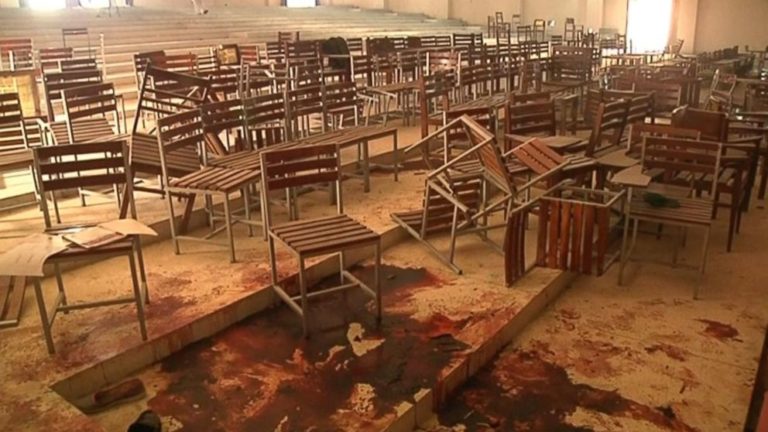
With the Tehreek-e-Taliban Pakistan (TTP) accepting responsibility for the heinous 2014 Army School Peshawar attack and its justification that “we targeted the school because the (Pakistan) Army targets our families (and) we want them to feel our pain,” there should have been no reason for anyone to doubt that this was the handiwork of depraved terrorists. Yet, right from the beginning, there’s always been a lurking suspicion in the minds of many that the Pakistan Army has been concealing something about this incident from the public.
The very thought of someone smelling a conspiracy in such a humungous tragedy is incensing. Yet, considering the irresponsible way in which the Pakistan Army has tackled this issue as well as its inexplicable actions, it’s but natural for apprehensions regarding some sort of foul play or cover up to crop up.
It all started when the then Director General (DG) of Inter Services Public Relations (ISPR) Maj Gen Asim Bajwa addressed a press conference after the APS (Army School Peshawar) attack and said, “We know who they (the perpetrators) are and who they were in contact with, but details cannot be shared due to operation reasons.” In anti-terrorism operations, there are times when even though known, the identity of attackers has to be kept secret for what the DGISPR rightly referred to as “operational reasons.” But in such cases the establishment intentionally feigns ignorance of the attackers’ identity in order to retain surprise and make terrorists complacent as this facilitates their successful neutralisation or apprehension.
But for DGISPR to boast about having identified both the attackers as well as their handlers and then citing “operational reasons” for not making their identity public, makes no sense at all. After all, the moment they came to know that the Pakistan Army had identified them, wouldn’t the perpetrators and masterminds of this carnage have taken enhanced security measures to evade being targeted? So, while the DGISPR’s announcement may have just been an attempt to showcase Pakistan Army’s exceptional intelligence abilities, but by not immediately revealing the identities of those responsible for this attack only raises suspicion of a possible ‘cover-up.’
Two days after the APS Peshawar attack, the TTP posted a video on their website in which a man identified from the accompanying caption as Umar Mansoor disclosed that he had masterminded this attack. The Pakistan Army however claimed that the real kingpin was Maulana Fazullah and that Mansoor had merely conveyed his instructions to Sadam Jan who in turn had actually planned the attack. Subsequently, the security forces managed to gun down Jan along with six “unidentified high value targets” in a “secret hideout” in Khyber Agency and killing the mastermind of the APS attack precisely ten days after the carnage was indeed a very big success for the Pakistan Army. But while the nation was busy celebrating the killing of Jan, rumours that he wasn’t the one who had planned the APS attack were also doing rounds.
What was being said was that the TTP operative Jan had been apprehended by security forces during an ‘intelligence-based operation’ shortly after the APS attack and he wasn’t the one who had masterminded the APS attack. But since the security establishment was facing flak for its failure to track down those responsible for the APS attack, the Pakistan Army came up with an ingenious plan: It portrayed Jan as mastermind of the APS massacre and then ‘neutralised’ him in an encounter to assuage public anger. To make the incident appear more convincing, the army also alleged that six other terrorists (who too were already in army custody) were also gunned down. But once again, it’s Pakistan Army’s penchant for oxymoron that raised suspicions on its claim– who has ever heard of “unidentified” but yet “high value targets”?
Shortly after the APS attack, Gen Pervez Musharraf and Jamaat-ud-Dawa chief Hafiz Saeed accused India’s Intelligence agency R&AW of supporting the attackers. But no one took this allegation seriously since Islamabad didn’t endorse the same. After all, since Rawalpindi had already identified who the killers and their masterminds were, it must have surely shared this information with the government and that’s why Islamabad’s silence on Indian involvement in this attack negates the Musharraf-Saeed allegation. But while speaking at the UN four years later, Pak Foreign Minister Shah Mehmood Qureshi alleged that the APS Peshawar attackers were “supported” by India. This unwarranted and unsubstantiated allegation once again gave the public an impression that Islamabad was trying to play down the TTP’s role in the APS massacre under pressure from the Pakistan Army!
Since terrorists are shorn of moral values, the news that former TTP and Jamaat-ul-Ahrar (JuA) spokesperson Ehsanullah Ehsan had undergone a change of heart and surrendered to the Pakistan Army came as a big surprise to many. He confirmed the TTP’s role in the APS attack and spoke about how anti-Pakistan terrorist groups in Afghanistan were enjoying Indian support. While what Ehsan said was music to Rawalpindi’s ears, but the public was baying for the blood of this man who had attempted to murder Malala Yousafzai and was member of TTP which had planned and executed the APS Peshawar attack. People expected that since almost all the students killed or injured were wards of service personnel, the army would bring Ehsan to justice with the speed and severity expected from a professional army.
But this was not to be and though it might sound unbelievable, but the fact is that even after nearly three years, the army didn’t even file a charge sheet against this self-confessed terrorist belonging to terrorist groups that were responsible for the deaths of hundreds of Pakistanis. When one compares this with the case of alleged Indian spy Kulbhushan Jadav who was arrested tried and sentenced to death in just 13 months, suspicion of something amiss in Ehsan’s case is but natural. Why was the Pakistan Army going so soft on Ehsan defies any logical answer!
In fact, the widespread distrust generated by partiality shown by Pakistan Army in Ehsan’s case was so intense that the kin of an APS attack victim even approached Peshawar High Court (PHC) with a request that the army should not be allowed to manipulate the system to enable his release. By admitting and taking cognisance of this plea and issuing a ruling debarring Ehsan’s release, PHC proved that it not only shared the complainant’s apprehension but also found merit in it.
However, since the army has the last word in Pakistan, Rawalpindi found a novel way of having the cake and eating it too by circumventing PHC’s ruling that prohibited Ehsan’s release from captivity– it simply allowed him to ‘escape’ from military custody! Since we haven’t heard of anyone being punished for dereliction of duty that resulted in Ehsan’s escape, there’s certainly much more than meets the eye and even though it may sound outrageous, the likelihood of a clandestine Pak Army-TTP nexus can’t be completely ruled out!
In June 2019, the Central
Board of Direct Taxes (CBDT) issued a notification directing that income tax
exemption on disability pension would be given only to such Armed Forces personnel
who had been “invalidated from service.” Military veterans in India considered
this notification to be discriminatory and approached the Supreme Court for
relief. The Supreme Court directed all parties to maintain ‘status quo’
on the matter vide its order dated August 30th 2019.
In the meantime, PCDA
(Principal Controller of Defence Accounts–Pensions), Allahabad issued a
circular, dated February 20th 2020, directing deduction of the said Income tax
in accordance with the CBDT notification. Accordingly, the State Bank of India (SBI)
debited as Tax Deduction at Source (TDS) the entire amount for the financial
year, from the pension of the disabled personnel for the month of February
2020. As a result such personnel received only Rs 100/- as pension for the
month.
There was widespread criticism
of the step taken by the SBI as the disabled pensioners were left with no money
to meet monthly expenses. Also, the action taken by PCDA, Allahabad and SBI constituted
a “Contempt of Court.”
Defence Minister Rajnath Singh
moved with exemplary speed, cutting through the bureaucratic red tape that his
ministry is infamous for, and got the order rescinded. Within two days, the
disabled veterans had their pension credited to their account. This prompt
action by the Defence Minister has won for him many hearts and accolades from
among the military veteran community.
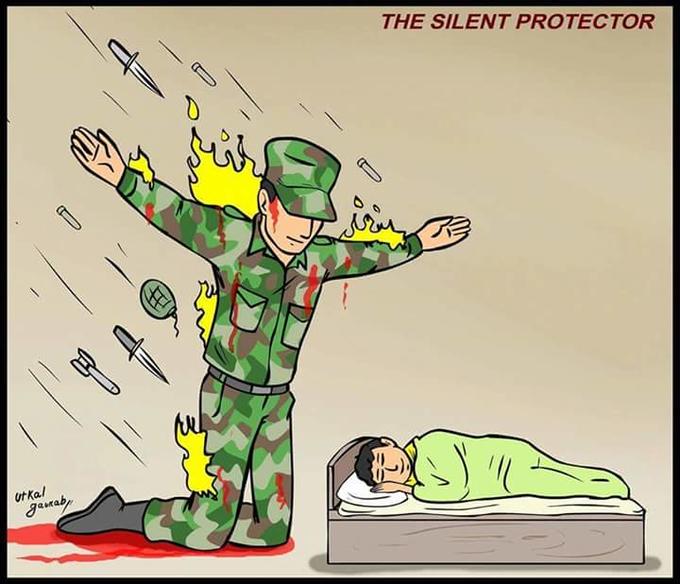
Soldiers lead a very tough
life indeed. They go through the extreme hardship due to the love bestowed upon
them by the nation and their families, as also, for the glory of their Units/Regiments
and the Indian Army. They spend their youth in hard conditions with the hope
that once they get back home after a distinguished service, they will be well
looked after and respected by the nation and the family for whom they have
sacrificed so much.
If serving soldiers see
military veterans being badly treated by the nation as well as by the families,
the very reason for hard work and sacrifice becomes redundant. Such a situation
where soldiers function without morale and motivation can be very dangerous for
the security of the nation. It is a danger whose negative manifestation would come
out only on the battlefield when the soldier does not exhibit the will to
fight. By then it will be too late to rectify the situation.
It is not the weapon/machine
but the man behind the weapon/machine who wins battles. The best of weapons and
training holds no value if the soldier does not have the desire to fight and
win. This has been the case over millenniums of warfare, well exemplified by small
armies winning over very large, well equipped ones.
Military veterans play the
biggest role in motivating the serving generation towards upholding the highest
tenets of military ethos and courage. They meet the serving soldiers
frequently, tell them stories of the times when they faced similar difficulties
and came out victorious. Veterans assist the serving soldiers in getting over
the insecurities that they face in pursuance of their very difficult task and
very hard life. If these veterans are left unmotivated what will they teach to
the younger generation?
For any government be it a
democratic, communist, fascist, dictatorship, monarchy and autocracy, keeping a
strong, well equipped and motivated Armed Force is the first priority. History
is replete with instances when rulers have failed to look after their soldiers
and have paid for it with decimation of their regimes.
It is known that leaders of
democracies have a need to show development for their political survival.
However, to go for development at the cost of defence is a blunder that no
nation can afford. In India, a system has evolved where the bureaucracy
controls all matters relating to the defence of the country. It is okay for the
bureaucracy to facilitate the upkeep of the forces in terms of weapons,
administration etc. The political leadership, however, cannot depend upon the
bureaucracy in matters pertaining to the leader-soldier-veteran relationship.
It is something that is very personal. When a nation loses a war, it’s never
the bureaucrat who is held responsible. The onus of the loss is put upon the
leader and the eternal shame comes to the lot of soldiers. Can there be a
bigger reason for maintaining a personal connect between the two?
India is a fledgling democracy
surviving in an inimical neighbourhood. There are many global forces that do not
wish to see the country prosper. Under such circumstances it is the Armed
Forces that need to be the strongest element of power projection. If the
military is strong, hostile voices will be automatically subdued.
It is, therefore, very
necessary for a Defence Minister of the country to take a lead in meeting the
aspirations and requirements of the serving as well as veteran community of
soldiers. In this the Defence Minister needs to get complete support of the
entire government apparatus.
A soldier does not like to
demand what little he needs, it is the leadership’s responsibility to
understand his needs to give beyond them and thus build a strong foundation of
the Armed Forces. If such circumstances are created then the soldier will
defeat the enemy even with bare hands.
The matter of removing income
tax exemption on pension being given to military veterans is just one of the
many pinpricks that are vitiating the relationship of the government with soldiers,
serving and veteran. There are matters like implementation of the One Rank One
Pension (OROP) scheme, curtailing of canteen facilities, shoddy implementation
of the health insurance scheme (ECHS) and many others that are causing an
avoidable friction between the government and the military veterans.
There is a perception that Defence
Minister Rajnath Singh will take affirmative steps towards bridging the gap
between veterans and the government. This perception needs to be turned to
reality. To start with let it be ensured that no soldier, serving or veteran,
ever has to go to court to get his dues from the government since there can be
no bigger shame than this in the holy relationship of the soldier with his
leader.
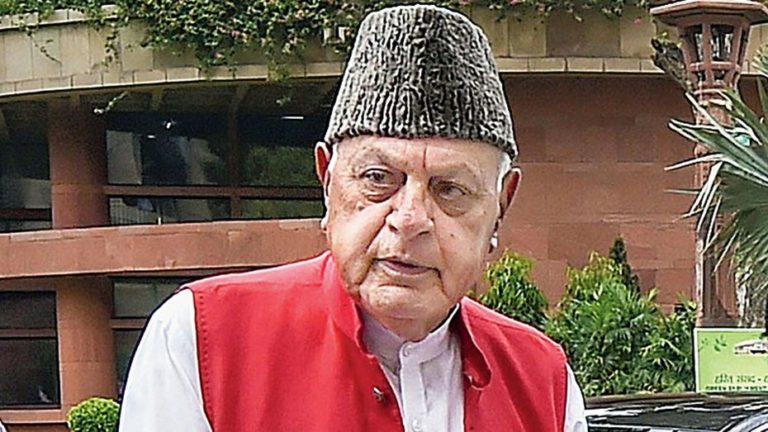
Permit me to speak to you candidly, Farooq Sahib. People in Kashmir call you an eccentric man. I agree with them but I know you have a method in the madness.
Despite all eccentricity that you may have, you have, through paternal legacy and conviction, rejected Kashmir’s Pakistan option. It is not to please the Indians but to care for your compatriots in Jammu & Kashmir who are emotional but not visionary.
New Delhi
has been soft as well as harsh to you, a mixed dosage, in your entire political
career. You have more friends in the rest of the county than in Kashmir just
because you have the art of making friends, not enemies. Observing and
inquisitive people look at personality not person necessarily. It is so true in
your case.
Your DNA
is a peculiar combination of emotion and rationality, of subtlety and blatancy,
of antics and polemics. These traits of character are rarely found in
contemporary Indian political culture.
For seven long months, you were put under house arrest and PSA (Public Safety Act) was also slapped on you. It was an unjustifiable action. But lately, you had made yourself an unusual and unexpected enigma. Your conscience must have chided you when once you said you were walking behind the Hurriyat. That statement made a political colossus turn into a diminutive. The minions around you in and outside your party let you down in the final analysis. Things worsened when you, in a bid to score a point over Mehbooba Mufti, began sending unsolicited pieces of advice to New Delhi to talk to Pakistan about Kashmir. Of course, you said that in good faith but you did not realize that you were playing with fire. Had you asked the militants to cease fire and let the two sides talk, it would have carried the desired weight.
Farooq Sahib, can you imagine what damage you did to the State, the country and your organization by joining hands with the assorted group of opposition and travelled all the way to Kolkata to join the camaraderie. It did not behove your stature. Your illustrious father Sheikh Sahib gave not a tuppence to these lumpen all his life. Why do you want to compromise your personality, prestige and ideology? What was your compulsion? Was it insurmountable?
After 5th. August 2019, many things have happened extensively affecting the erstwhile J&K State. Do you want to look back and open a plethora of laments or do you want to look forward and move ahead? Our understanding is that you, as a modern, forward-looking and a pragmatic politician, will opt for the latter choice.
A new
political atmosphere is developing in the country with ramifications for the
Union Territory of J&K. The spectre of the third political front is
emerging in J&K. Whether sponsored or indigenous is not the point. The
point to be highlighted is that you have the compulsion of familiarizing
yourself with the undercurrent. We are aware that the Home Ministry was working
on the double strategy of boosting the third front and negotiating with you
while you were under house arrest. The Home Ministry undoubtedly must be
working along with the formula that a known devil is better than an unknown
saint. Fortunately for Kashmir, you have chosen the right path of feeling the
mainstream pulse.
Where do we go from here? Militancy has destroyed Kashmir. Whether you connived at it out of day-dreaming or whether you were incapacitated to handle it adroitly and nip the evil in the bud etc. will remain contentious issues. These will get relegated to the dustbin of history. However, keeping your gaze fixed on the question what next in the light of what has happened, we may say that there is still a chance of redemption provided at this ripe age you decide to muster courage and take independent decisions.
The first
and foremost suggestion we would humbly make is that you distance yourself from
politics of negation as well as negative politicians. The Congress and the
Left, your old cronies, are a defunct, archaic and rejected lot. Either mend
them or shun them and carve your path. Don’t think that you were released from
house arrest on their plea. Keep them happy with goshtaba and biryani
because that is all they are worth.
Please think constructively how you can impress upon your colleagues, friends and vast masses of people in Kashmir to have trust in the secular democratic dispensation. Teach them to respect it and strengthen it. That can be done by making them compare their lot with the lot of the wide Muslim world of Arab Spring. We know this is a formidable task but great persons struggle only for a great cause. Your voice in the parliament should be the loudest, most sagacious and most pragmatic one as if the voice from the invisible. Don’t walk the footprints of minions, rather (to put it poetically) — apne dil ko kar apne chirag se roshan (enlighten your heart through the lamp in your heart).
Lastly, Farooq Sahib, you need to reach the vast Indian nation. Taking care of this historic nation also means taking care of your people in J&K as well. You may like to please Kashmiris by recounting to them the ideas of reviving the statehood of J&K. Nothing wrong about that but before doing so put this question to your conscience, “Wasn’t it possible to bring about a drastic change to the State when it was fast drifting away under subversion?” Neither the revival of the statehood nor the domicile issue and nor the resolution of the internal displacement logjam is of any priority. The priority issue is of existentialism of civilizational India. The priority is to understand and remedy the damage done by home-bred enemies to the nation.
Farooq Sahib, history beckons you to perform your historic role. Take it or leave it, the choice is yours.
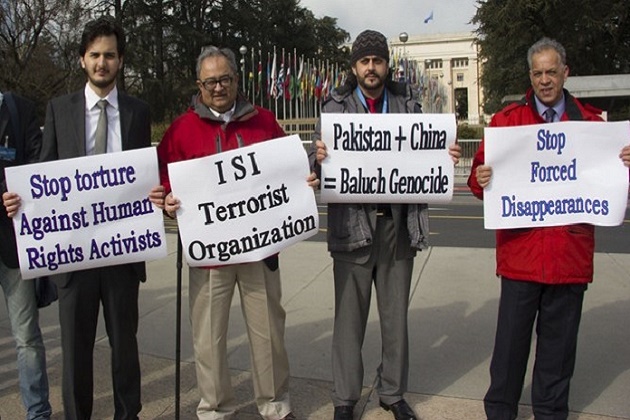
Even though United Nations High Commissioner for Human Rights (UNHCR) Michelle Bachelet Jeria’s decision to move the Supreme Court of India on Citizenship Amendment Act (CAA) clearly amounts to interference in a sovereign country’s internal affairs, I would still like to believe that her intentions were entirely honourable. Having said so, I would like thank her for showing concern and request Ms. Jeria to kindly take some time out and also approach the Supreme Court of Pakistan against Protection of Pakistan Act (PPA) 2014 that in the words of Human Rights Watch (HRW) Asia Director Brad Adams “runs roughshod over (human) rights provided under international law as well as Pakistan’s constitution.”
The provisions of PPA are so oppressive and disturbing that
in 2014, Adams opined that “Prime Minister Nawaz Sharif, as leader of the House
in the National Assembly, should withdraw this resolution and replace it with a
law that would fight terrorism while protecting basic rights.” Some of the
unnerving provisions of PPA enumerated in the 2014 HRW report are:
“The vague definition of terrorist acts, which could be used to prosecute a very wide range of conduct far beyond the limits of what can reasonably be considered terrorist activity.”
“The expansion of powers of arrest without warrant from the police to members of the armed forces or “civil armed forces acting in aid of civil authority” as it “violates the rights against arbitrary arrest under Article 9, and to privacy and the security of the home under article 17 of the International Covenant on Civil and Political Rights (ICCPR).”
“Shifting the “burden of proof” from government prosecutors to criminal suspects,” which “violates the fundamental principle of presumption of innocence embedded in Article 14 of the ICCPR (that ensures “the right to be presumed innocent until proved guilty according to law).”
“Providing effective immunity for abuses committed by security forces and judicial officials acting under the law, protecting them from any liability “for acts done in good faith during the performance of their duties.” This blanket immunity violates Article 2(3) of the ICCPR, which requires that governments ensure that any person whose rights or freedoms are violated “shall have an effective remedy, notwithstanding that the violation has been committed by persons acting in an official capacity.”
Empowering the government to determine the place of custody, inquiry, investigation and trial. This could permit detentions and prosecutions being conducted outside the established judicial system in violation of basic protections against arbitrary detention under Article 9 of the ICCPR and the right to “a fair and public hearing” under Article 14.
Certain other draconian provisions of the Protection of Pakistan Act (PPA) 2014 , on which International Commission of Jurists (ICJ) have expressed grave concern are:
Section 6, which permits preventive administrative detention without adequate safeguards and retrospectively authorises otherwise arbitrary or unauthorised arrests or detentions previously carried out, in violation of the right to liberty.
Section 9, which among other things, authorizes secret and unacknowledged detention, as well as in some cases, the nondisclosure of grounds for detention.
Section 3(2)(c), which allows arbitrary interference with the right to privacy.
Vague and over broad offences, defined in the Schedule to the Act, including Section 1(xiv) relating to cyber-crimes, internet offences and other offences related to information technology that “threaten the security of Pakistan,” which are open to abuse and could lead to the stifling of peaceful expression of political dissent.
Sections 15 and 5(5), which reverse the burden of proof in criminal proceedings in contravention of the presumption of innocence, a fundamental requirement for fair criminal proceedings, applicable to all accused persons no matter how heinous the crime with which they are charged.
Sections 8, 10, 17(2), and 17(3), which establish Special Courts and set out procedures for the operation of Special Courts that would expand the scope of secret hearings and do not meet human rights requirements for fair and public criminal proceedings before a competent, independent and impartial tribunal.
What should be of particular concern to Ms. Jeria is that even though Human Rights Watch (HRW) and International Commission of Jurists (ICJ) are autonomous bodies and independent of each other, the reservations expressed on Protection of Pakistan Act (PPA) 2014 by the Asia Directors of both these organisations are strikingly similar and pertain to Pakistan’s extremely poor record of human rights record. While HRW’s Asia Director Brad Adams has highlighted that “Pakistan has a long history of abuses of suspects in detention and should reject this vague and over-broad counter-terrorism law.” Sam Zarifi, who’s ICJ’s Asia Director maintains that “This law is more like a license for the Government (Pakistan) to continue its poor record of enforced disappearances, extrajudicial executions, torture and ill-treatment, and arbitrary detentions—all gross violations of human rights that are already committed at horrific levels in Pakistan.”
Tailpiece: By approaching the Supreme Court of India on the CAA issue, the United Nations High Commissioner for Human Rights has set a precedent and to prove that she isn’t parochial, Ms. Jeria is morally bound to show a similar concern for all those who have been stripped off their dignity and denied basic rights by the draconian provisions of PPA 2014!
A counter terrorist operation in village Khawjapora Reban, Shopian, on the morning of 9th March, led to the killing of two terrorists associated with Hizbul Mujahedeen. These terrorists were identified as Shabir Ahmad Malik alias Abu Maviya, resident of village Tungduno Yaripora, Kulgam who had been active since December 2017 and Amir Ahmad Dar resident of Wadina Melhoura who had been active since 2019.
The operation was carried out by a joint team of the Indian Army’s Rashtriya Rifles unit and JK Police on the basis of intelligence received about the presence of terrorists in the area. The forces had laid a cordon and were conducting a search when the terrorist opened fired upon them. The terrorists were killed in the ensuing operation.
One AK-47 Rifle, one UBGL (under barrel grenade launcher) and one Chinese pistol were recovered from the encounter site. Shabir Ahmad Malik alias Abu Mayiya was a Pakistan trained terrorist presently designated as the commander of his organisation and was involved in a large number of terrorism related cases in South Kashmir.
Earlier on March 5th, terrorists had attacked a police station in Warpora in Sopore, Baramulla, in which one Policeman Wajahat Ahmed Bhat and a civilian, Umar Subhan were killed. Another policeman Showket Ahmed Khanday was injured.
On March 6th, a Grenade was lobbed by terrorists at a police checkpoint near Maharaj Gunj Zaina Kadal Police Station in downtown Srinagar leading to a civilian, Ghulam Nabi Ahnger, sustaining injuries. The previous month of February had witnessed two Grenade attacks. The first was on Central Reserve Police Force (CRPF) personnel in Lal Chowk, Srinagar, on February 2nd that caused injuries to two CRPF soldiers and seven civilians. This was followed by another Grenade attack on a police station at Pulwama on February 15th, in which no casualty was reported.
Cease fire violations by Pakistan are unabated; in the last few days itself incidents of unprovoked firing from across the border have been reported in the Mankot area of Poonch where Pakistani rangers are resorting to fire with small arms as well and mortars. Earlier on February 3rd, a civilian, Manzor Ahmad, was reported killed in cross border fire at Tangdhar sector.
It is quite clear from the foregoing that pressure from the Financial Action Task Force (FATF) and successful visit of US President Donald Trump to India has, by no means, quenched the thirst of Pakistani war machinery to create trouble in Jammu and Kashmir. The Indian security forces are, very rightly, watching the situation with an eagle eye and have kept up pressure on the terrorism machinery both within Kashmir and on the other side of the border. There has been a tight check on infiltration despite the ceasefire violations (that facilitate infiltration), having doubled in 2019 from the previous year. 3,200 incidents of ceasefire violations are reported for 2019 as compared to 1,629 incidents in 2018. A marked increase was witnessed post abrogation of Article 370 and re-organisation of the state of Jammu and Kashmir.
Pakistan is nursing a red nose on having failed to generate widespread violence and disruption in Jammu and Kashmir post the re-organisation of the region. The situation has greatly increased the levels of desperation of the country’s terrorism strategists. On the one hand they are trying to infiltrate terrorists and on the other hand they are forcing their remnants in Kashmir to keep the flame of terrorism alive. The pathetic stand-off attacks with Grenades and the incessant ceasefire violations despite no tangible results is an indication of the high level of desperation.
For India, the criticality lies in the capacity of the government to fully leverage the willing acceptance of the new dispensation by the people. The government also needs to take full use of the constituency of peace created by the security forces towards ushering an era of peace and prosperity in the region. It is to the credit of the government that it has moved assertively in this direction.
The exercise for delimitation of constituencies for the Union Territory Legislature and the Union Parliament, which constitutes the first step towards integrating the region into the rich democratic fabric of the country, has already been initiated. A Delimitation Commission headed by former Supreme Court judge Ranjana Prakash Desai has already been constituted to redraw Lok Sabha and Assembly constituencies of the Union Territory Jammu and Kashmir among other states. Election Commissioner Sushil Chandra and state election commissioners of Jammu and Kashmir and the four states will be the ex-officio members. It is hoped that the process will be completed in a timely manner and will do justice to all the peoples of the Union Territory that has a diverse ethnic and geographic profile.
The decision of some Kashmir based leaders to float a new party indicates a desire to fill in the political space in a manner that gives more option to the people who have, for long, remained dominated by two family-led, feudal entities. It is hoped that a new and young leadership will also emerge and lead the region along the desired path of development and stability.
Meanwhile the administration under Lt Governor Girish Chander Murmu has established good governance and efficient administration for hassle-free and smooth public service delivery. He has put in place an effective grievance redressal mechanism that has helped the region pass through a particularly harsh winter without any serious problem. He has been proactively applying the development plans of New Delhi in the Union Territory and is putting in special efforts to woo investors into the region. He will surely have a stable administration in place for the democratic structures to function with.
Much has been achieved in Jammu and Kashmir even as much needs to be done to achieve the desired end state. The security forces need to keep the peace constituency in place even as the government needs to boost efforts to bring in desired democracy and prosperity.
As the Reserve Bank of India (RBI) imposed a month-long moratorium on the ailing Yes Bank with withdrawal restrictions, pundits have not wasted times in blaming the central bank. You ask anybody on the street, in your office or at a social gathering and (s)he has a view on the subject. Most, with or without understanding the subject, have not hesitated in blaming the RBI. Is RBI to blame?
First, let us understand the sequence of events.
No doubt that trouble was brewing at the private sector bank for the last few years and the level of Non Performing Assets (NPAs) – loans that do not fetch any returns– was steadily growing since 2016. The spotlight has been on the private sector lender since former RBI governor Raghuram Rajan’s order to all banks to clean up their books and disclose their NPA levels upfront. Problems were multiple and went beyond the NPA, which obviously had reached alarming levels. Serious loopholes relating to non-disclosure, divergence of funds, inadequate capital came to light.
In August 2018, the RBI refused to extend Rana Kapoor’s three-year tenure as the chief of the bank. By January 2019, a new CEO had been appointed to take charge of the bank.
Now, was the RBI unaware of these problems? The answer is No. As Rajan, in an interview with CNBC TV 18, had said that the Yes Bank had given enough notice and things could have been handled differently and much earlier. This is true. Yes, RBI could have acted earlier. But if it did, would the situation be any different?
But let us understand that the situation would not have been any different.
Anytime, if the RBI clamps down on a bank, especially the ones from private sector, there would be panic. If you are banking with a public sector lender, you typically tend to believe that your money is safer with the sovereign government being the majority shareholder. In case of a private sector bank, the case is different.
The RBI and the government – both have come out to assure the depositors and customers of Yes Bank that their money is safe and a revival plan is already being looked into.
The State Bank of India – India’s largest lender—has already picked up 49% stake in the crisis hit bank, once co-founded and promoted by Rana Kapoor.
Kapoor, a brash banker, went ahead and lent to companies such as the Dewan Housing Finance Corporation Ltd (DHFL), Anil Ambani Group and the Zee Group, which were ailing from within. Naturally there were lapses in the due diligence process.
Rewind to 2019. The RBI imposed restrictions on Punjab and Maharashtra Co-operative (PMC) Bank after serious irregularities came to light. The central bank came under scathing criticism. Again the same set of questions came up. Couldn’t the RBI act earlier? The central bank can act and acts only when things go wrong. So, as blasphemous as it may sound, but things have to go wrong for the RBI to take action. Similarly Global Trust Bank failed in 2004 and Oriental Bank of Commerce was immediately asked to take it over.
The timing of RBI’s action is always questioned and here we have to remember that panic will strike whenever the central bank intervenes. The RBI also has to see to it that unnecessary panic is not created and banks—public or private can operate as normally as possible.
Finally, after banks were nationalized, never has it happened that depositors of a failed bank have been allowed to suffer. Their money has always remained safe and protected.
India has a strong banking system compared to other countries, thanks to the RBI and let us not doubt that.
We use cookies on our website to give you the most relevant experience by remembering your preferences and repeat visits. By clicking “Accept All”, you consent to the use of ALL the cookies. However, you may visit "Cookie Settings" to provide a controlled consent.
This website uses cookies to improve your experience while you navigate through the website. Out of these, the cookies that are categorized as necessary are stored on your browser as they are essential for the working of basic functionalities of the website. We also use third-party cookies that help us analyze and understand how you use this website. These cookies will be stored in your browser only with your consent. You also have the option to opt-out of these cookies. But opting out of some of these cookies may affect your browsing experience.
Functional cookies help to perform certain functionalities like sharing the content of the website on social media platforms, collect feedbacks, and other third-party features.
Performance cookies are used to understand and analyze the key performance indexes of the website which helps in delivering a better user experience for the visitors.
Analytical cookies are used to understand how visitors interact with the website. These cookies help provide information on metrics the number of visitors, bounce rate, traffic source, etc.
Advertisement cookies are used to provide visitors with relevant ads and marketing campaigns. These cookies track visitors across websites and collect information to provide customized ads.
Necessary cookies are absolutely essential for the website to function properly. These cookies ensure basic functionalities and security features of the website, anonymously.
Cookie
Duration
Description
cookielawinfo-checkbox-analytics
11 months
This cookie is set by GDPR Cookie Consent plugin. The cookie is used to store the user consent for the cookies in the category "Analytics".
cookielawinfo-checkbox-functional
11 months
The cookie is set by GDPR cookie consent to record the user consent for the cookies in the category "Functional".
cookielawinfo-checkbox-necessary
11 months
This cookie is set by GDPR Cookie Consent plugin. The cookies is used to store the user consent for the cookies in the category "Necessary".
cookielawinfo-checkbox-others
11 months
This cookie is set by GDPR Cookie Consent plugin. The cookie is used to store the user consent for the cookies in the category "Other.
cookielawinfo-checkbox-performance
11 months
This cookie is set by GDPR Cookie Consent plugin. The cookie is used to store the user consent for the cookies in the category "Performance".
viewed_cookie_policy
11 months
The cookie is set by the GDPR Cookie Consent plugin and is used to store whether or not user has consented to the use of cookies. It does not store any personal data.